





Showing posts with label Quicksilver Messenger Service. Show all posts

Thursday, May 28, 2020

War/Peace: War In Peace


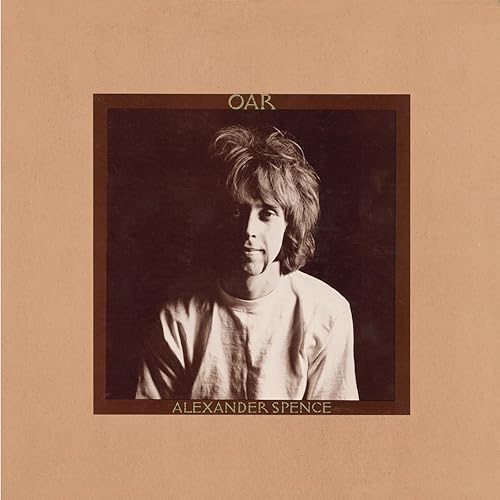
Alexander “Skip” Spence: War In Peace
[purchase]

I know that many people—and not only people in the 50+ demographic—think that the best era for music was the late 1960s-late 1970s. I’m not going to debate that now, but there’s certainly an argument to be made. And I think that there are those who would argue that much of the best music from that era was created because of, or enhanced by, the use of drugs. Yet, we also know that drugs also had negative effects—think of all of the great musicians from that era who died young from overdoses, or in other ways  directly or indirectly related to their addictions.

Then, there’s the group of musicians who stayed alive, but whose careers were cut short, or hampered, by drug related mental illness (although in many cases, the causal link between the drug use and the mental illness isn’t certain).

One such musician, who has been mostly forgotten over the years, is Alexander “Skip” Spence, who was briefly a guitarist in Quicksilver Messenger Service, then became the drummer in Jefferson Airplane, departing after their first album, in part because he wasn’t a drummer, to become a founding member of Moby Grape. But by 1970, his musical career was effectively over.

By most accounts, Spence was an excellent musician (on guitar and other instruments, including the drums that he learned to join the Airplane) and songwriter (writing, among other songs “You’re My Best Friend,” which appeared on Surrealistic Pillow, released after he left the Airplane, and Moby Grape’s “Omaha,” later covered by The Golden Palominos, with Michael Stipe on vocals). If you read about Moby Grape, you’ll find quotes from contemporary critics saying that they were the best band from the San Francisco area during that era—better than the Grateful Dead and Quicksilver and the Airplane. But despite the quality of Moby Grape’s debut album, a bunch of record company missteps and a disappointing second album, among other things, led to the band never breaking through.

Among those other things was Spence’s increasingly erratic behavior. While working on the band’s second album in New York, Spence, under the influence of LSD, and maybe other substances, took a fire axe and attempted to break down the hotel room doors of band mates Don Stevenson and Jerry Miller. He then went to the studio at the CBS building, where he was disarmed and wrestled to the ground. The album’s producer, David Rubinson, pressed charges, and after a brief period in jail, Spence was sent to Bellevue Hospital where he was diagnosed with schizophrenia.

During his six months in Bellevue, and despite not having access to a guitar, Spence had written a number of songs, and on his release, he was met by Rubinson (the same guy who pressed charges). Spence implored Rubinson to get him to a studio so that he could record the songs while they were still fresh in his mind. Showing how different the record business was in those days, Rubinson negotiated an advance from Columbia Records the next day, and Spence went to Nashville, on a motorcycle, to record the songs. Within six days, Spence cut nearly 30 songs, playing all of the instruments, singing all of the vocals and doing the arrangements himself. At this point, he was all of 23 years old.

Whittled down to 12 songs, the album, titled Oar, was released in May, 1969. Utterly unable to figure out what to do with its strange and eclectic music, Columbia simply ignored it, and it sold very few copies—it is often referred to as the worst selling album for the label to that point. (Hey, Richard Thompson’s first solo album, Henry The Human Fly, was considered the worst selling album at Warner Brothers Records, so that doesn’t necessarily mean that it is crap.) “When the people at Columbia heard it, Oar made no sense to them at all,” remembers Rubinson, who had sifted through the reels of tape, mixed the album and sequenced its dozen tracks. “It was so honest and real that the record company couldn’t relate to it. Neither could radio or critics. So they put it out, barely, and it sank without a trace.” To some, the album was the soundtrack to Spence’s mental illness, but to others, it was evidence of his emergence from it.

Over time, Oar gained admirers (and two reissues, with bonus tracks), including Robert Plant, Jeff Tweedy, Beck, Tom Waits, Robyn Hitchcock, Julian Cope, Chrissie Hynde, Mark Lanegan, and Jay Farrar (many of whom appeared on a tribute album, More Oar: A Tribute to the Skip Spence Album) and it appears in a number of “Best Album” lists.

“War in Peace” isn’t the best song on Oar, or the strangest, and it is actually quite listenable, if you aren’t concerned about understanding the lyrics. There’s some good electric guitar, including a bit at the end that is generally acknowledged to be an homage to (ripoff of?) Cream’s “Sunshine of Your Love.”  

Oar was Spence’s last album. He contributed a little to Moby Grape reunion albums and appeared sporadically at live shows both with Moby Grape and other bands, and he recorded a song (which was not used) for the X-Files soundtrack but his mental illness, drug and alcohol addictions and related physical health issues, prevented him from having any sort of a music career. At times, he was committed to mental hospitals, was homeless, and, for a time, was living in a house provided by his former Moby Grape band members, who appear to not to have held a grudge for that whole fire axe incident. Robert Plant helped with medical bills at times.

Spence died in April, 1999, of advanced lung cancer, at the age of 52. The last music he heard was a copy of the More Oar tribute album, which featured a cover of “War in Peace” by Mudhoney.

Wednesday, May 6, 2020

MUSICAL MYSTERIES: WHO DO YOU LOVE?

This is becoming topical, as the thoughts of our leaders turn to whether we, the great unwashed, albeit with very clean hands, can or should be crushed by the restarting wheels of industry. Which is more important, survival of the species or of the economy? With, as ever, the failure to appreciate the fairly solid link between the two. Maybe by both sides, but I am simply a medic, not a businessman. As I start writing, the Observer Sunday newspaper over here, the U.K., has published an opinion poll, stating a 4/5 majority wanting to err on the side of caution and to maintain the lockdown. However, many of the politicians are in the smaller subset, it seems and feels, with Boris uncharacteristically unforthcoming, with perhaps his throw of the dice having given him an unwelcome perspective, absent ahead of his hospitalisation. Anyway, one of the ideas out of lockdown is a concept of family 'bubbles', a named small list of family/friends with whom you may consort. So, who do you love? Enough?

The song is by Bo Diddley, the owlish rocker with glasses, often a bowler hat, funny shaped guitars and an unshakeable self-belief. Always looking for ways to aggrandise himself against his peers, the idea came to him as he witnessed a group of kids trying to outbrag each other. Full of arcane images to conjure up dread and a sense of mystery: rattlesnakes, skulls and graveyards, by showing he is the biggest baddest Daddy of all, he begs the question of his lover: Who do you love? With but one expected answer. Covered so many times over the years, I am sure we all think we know it, so the original may come as some surprise:

Bo Diddley

It doesn't even carry much of the trademark Diddley shuffle. That would come later. And it wasn't even a hit, at least for Bo. It took Ronnie Hawkins, the journeyman Canadian rocker, to get it charting, admittedly in his home country. The vocal is all swagger, dipping into a manic frenzy at each verse/chorus end. Not bad for 1963. Name mean anything? Ronnie Hawkins. And the Hawks. Yup, I can see that glimmer of recognition. Those Hawks, later the Band, with incendiary guitar from Robbie Robertson.This they reprised, with Hawkins, at their own zenith, for The Last Waltz.

Ronnie Hawkins & the Hawks

Fast forward another five years, and we are in San Francisco. Local hipsters the Quicksilver Messenger Service were so taken with the song it became the entire second side of their second album, extends and interpreted into six separate "suites, blending live performance with studio work-outs. Indeed, so keen were the band on Diddley, they included another of his songs, Mona, on the flip.   With twin lead guitars and access to all sorts of stimulants, this was a heady and ambitious project. Arguably no small amount of pretension but, hey, it was 1968.

Quicksilver Messenger Service

I confess I knew none of these versions as they dropped, my first exposure being via short-lived UK rockers, Juicy Lucy. I was 12 and found their 1969 rendition, as ever on Top of the Pops, sinister and exciting. This group were unusual for this country in that they included pedal steel guitar, via one Glenn Campbell, not that one and no relation. Sadly it has dated badly, and my rifle back into their catalogue prove disappointing likewise.

Juicy Lucy

Now I am all grown up, my tastes have broadened and I especially love covers. So, rather than penning words, here's some of my favourites, not all from expected sources.

Townes Van Zandt

Tom Rush

Carlos Santana (with the Fabulous Thunderbirds)


Dr. Feelgood

Dion DiMucci

So, decision time, who do I love? Who's going to be in my bubble? And how do make it happen?

Who?


Thursday, June 13, 2019

SAME NAME/DIFFERENT ARTIST: MICHAEL JONES

So which Jones do you want? Mick, Mick(e)y, Mike or Michael? And which do you expect?
Let's be honest, Jones isn't such an unusual name, to the extent potential siblings David and Thomas may turn up in related contributions, but with Jones, M, we really are spoilt for choice. But I am not going to touch on the Micks of that ilk, too obvious, so how about a brace of Mickys, additional e optional.

I don't know so much about Mickey Jones beyond his being the drummer in the Dylan goes electric tour of 1966. Yup, me too, I had always assumed that Levon Helm had that seat, but he had quit the transitional Hawks --> Band shortly beforehand. Jones, having been drumming for other giants of the counter culture like Trini Lopez, was hired, staying until the fabled motorbike crash that took Dylan off the boards for a while. Jones took the opportunity for a change in career, via a short spell with Kenny Rogers and the First Edition, yes, playing on that song. He then spent the remainder of his career playing bit parts in films memorable and unmemorable, playing characters credited and uncredited, like 'Burly Miner' in 'Total Recall' and 'Mechanic' in 'National Lampoon's Vacation'.

Micky Jones, however, was possibly instrumental in one of the best and most long-standing Jam bands these islands have produced, and certainly the best from Wales, being that principalities version of the Grateful Dead. What do you mean you have never heard of Man?


Man formed out of the ashes of a not entirely unsuccessful 60s band, the Bystanders, who had some minor chart success and were regulars on the radio, when 'needle time' restrictions required there to be bands willing to play live, often performing cover versions of chart hits. However as the dawn of the 70s approached, a core of that band, principally Micky Jones, on guitar and vocals, wished to try a new direction, having been vitalised by some of the music outpouring fro the West Coast of the U.S, Moby Grape, Quicksilver Messenger Service and the Dead, guitar bands with well-honed improvisational skills, able to freewheel a 3 minute LP track into a 10 -20 minute live behemoth, sometimes longer. Initially more popular in mainland Europe, particularly Germany, the style of gigging there, involving multiple sets over a single evening, on successive nights, as a 'residency', ring any bells,  assuring their jamming competencies were put to the test. A test they passed and surpassed. A regular line-up was never quite achievable, as Jones apart, there seemed almost a revolving door policy on several members, leaving or being sacked and being recruited on several occasions. One famous member was Deke Leonard, known in his own right, left and joined again on at least 4 occasions. Perhaps best known, in his later, sometimes contemporaneous bands, was drummer Terry Williams, later of Rockpile and Dire Straits.There always seemed someone available, old or new, able to dep at moments notice, their myriad live recordings bearing witness to an astonishing array of recruits, including one John Cipollina, erstwhile member of Quicksilver Messenger Service, a case of influence joining influencee. I got to hear the band at their peak period, the early 70s, during which the most characteristic studio recordings were made. 'Be Good to Yourself at Least Once a Day' exemplifies both their style and their attitude. Coming out in 1972, this record had 2 tracks on each side, each a free wheeling extemporisation around fairly simple themes. Live, of course, only the stag curfew held any limit. It was no secret they were fans of the weed, their best known song, 'Bananas', being a celebration, in its short vocal interlude, to cannabis sativa and why. The album also gives a good potted history of Welsh rock which, despite his having been in one of his 'between' (sacked) periods, was penned by Leonard.

                                                                                                   Bananas 1972

Between 1977 and 1983 the band retired itself, the flavour of the day no longer being for long hair, dope and guitar solos. But you can't keep a good man (ouch, sorry) down and they lurched back into life, still very much under the de facto leadership of Micky Jones. Recruiting, yet again, Leonard/ also on guitar, and longterm bassist Martin Ace, together with an only once changing drummer, this line-up lasted an astonishing 9 years, ahead of then recruiting a keyboard player back into the fold. Health issues then began to arise. Jones developed signs of a brain tumour in 2002, having to leave for treatment. Intriguingly, given the title of this piece, his place was taken by his son, George. Clearly not that one. When Jones Sr. returned, Leonard again left, so George stayed on. A further deterioration meant another absence, with Martin Ace's son, Josh, replacing Micky, until the band eventually split, in 2006. Micky Jones had further tumours and eventually died as a result, in 2010. Leonard had a number of strokes and died in 2017. Various other band members have also died, often of respiratory related conditions such as lung cancer or emphysema, should all that heavy duty spliffage leave you to draw any conclusions. End of the story?


Of course not! Man continue to play, now under the helm of last man standing Martin Ace, along with his son, and Micky's son, the latter 2 having spent a spell playing under the 'Son of Man' name, ahead of becoming absorbed back into the mothership. Sort of son is the father of the man, man!

                                                                                                   Bananas 2017

Here, should this extraordinary history entice, is a greater historical detail, from the band's own site. Meanwhile, as the band have always said, quite whatever it means, keep on crinting!!!

I like to eat bananas
'Cos they got no bones
I like marijuana
'Cos it gets me stoned

Be good!

Friday, January 4, 2019

Un-Sainted Nicks: Nicky Hopkins


purchase [No More Changes ]

Can you identify a musician's "signature style" just by hearing them play on a particular track?
For a vocal artist, it's pretty straight forward - their "instrument" is highly unique. But whaddabout a guitar player or a keyboard player? To the knowledgeable, a Fender sounds different from a Gibson. A country picker sounds different from a rocker and so on ... But what is it about their style, their sound that sets them apart?

In the case of Nicky Hopkins - need I say, one of the most sought after session keyboard artists throughout the 70s and 80s - it appears that it was personality more than keyboard fingering that set him apart. Great work, but could you identify him on a track just by hearing it?

I've been to the Keyboard mag site and an article titled "5 Ways to Play Like Nicky Hopkins" in search of an answer. Among other notes, they report one of his signature techniques involved: " a sus2 embellishing the third scale degree". If that tells you more than your ears tell you ... Wow! Their review of his style only gets more technical as it continues (beyond my ability to follow).

His Rolling Stone obituary said  he played "fast, accurate pounding piano lines to flesh out the sound of everything ...", as well as "skill, reliability and cheerful personality ensured he was the sort of session player untutored rockers could relate to". I want to believe that it is this that put him in such demand. When you play with others, how you fit in at the moment is as important as your speed or your technique.


My bad: I hadn't realized that Nicky Hopkins had passed - and it's been 25 years. I knew his name/fame primarily because of his session work with the Stones and the Kinks, but never delved particularly deeper than acknowledging his chops here and there. So ... let's post this under <Nick> but let it lead us into <In Memoriam>, even if he didn't pass this past year. (SMM might have missed him back when he did ... wait: SMM wasn't yet online back then!)

His Wikipedia page reveals so much more: all over the place, he was. The full list is overwhelming:


A taste below:


Art Garfunkel (above)


Jeff Beck (above)


The  Rolling Stones - Sympathy (above)


The Grateful Dead/Quicksilver (Edward the Mad Shirt Grinder)


the Who -the Song is over (above)


John Lennon -Jealous Guy

Tuesday, June 5, 2012

The Age of Aquarius: Fresh Air


Quicksilver Messenger Service: Fresh Air
[purchase]

In the late 1960’s, Quicksilver Messenger Service was a popular Bay Area band, but it has been overshadowed by its more successful contemporaries like The Grateful Dead, Jefferson Airplane, Janis Joplin and Santana. According to some accounts, the group was to be led by Dino Valenti, who wrote the song “Get Together” (under his birth name, Chet Powers). Unfortunately, before they really got going, Valenti spent almost two years in jail on marijuana possession charges. Instead, the band included David Freiberg, who later was a member of Jefferson Starship, guitarist John Cipollina, and guitarist and singer Gary Duncan, among others. For their fourth album, Just for Love, Valenti finally joined the fold, wrote most of the songs (this time under the name Jesse Oris Farrow), and their sound became more pop oriented.

“Fresh Air,” the single from the album, is Quicksilver’s biggest hit, reaching 49 on the Billboard chart. The song has a nice jam band feel to it, Marty Balin-esque vocals, good harmonies, a great Santanaish guitar solo from Cipollina and a piano solo from Nicky Hopkins, the great session musician, who was a member of the band at the time.

In the song, the singer tells a woman to “have another hit” of:

Sweet air;
Fresh air;
Sweet love; and
Sweet California sunshine

What I think he really is telling her to “have another hit” of:

Marijuana.

I could be wrong, but it was 1970, and considering the musicians involved, I’m going to go with that.

Saturday, May 1, 2010

Instrumentals: Edward, the Mad Shirt Grinder


Quicksilver Messenger Service: Edward, the Mad Shirt Grinder

[purchase]

Quicksilver Messenger Service circa 1969, from the one album they made while famed British session keyboardist Nicky Hopkins (a/k/a "Edward") was a member of the band. Hopkins played on hits by just about everyone on both sides of the Atlantic in the '60s and '70s (a partial list includes The Who, The Kinks, The Rolling Stones, The Jeff Beck Group, Rod Stewart, Cat Stevens, Donovan, Jefferson Airplane, The Steve Miller Band, Art Garfunkel, Jerry Garcia, The Beatles, and all four solo Beatles), but here he gets to stretch out on one of his own compositions.