












Showing posts with label fats domino. Show all posts

Thursday, March 10, 2022

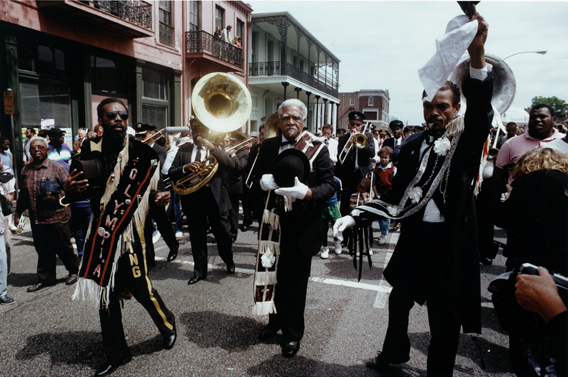
Marching: When The Saints Go Marching In

Although the month of March is named after the Roman god of war, Mars, while the English verb “to march” is derived a different source, the Old French “marcher,” meaning "to stride, march, walk," we here at SMM seem to insist on tying the two together, which is why most of the songs that would have marched into my consciousness for this theme already did so in prior years, leaving me not without options, but without options that I cared to write about. 

But one of the things about being among the last remaining regular writers on this site, which has gone through dozens since it started back in 2008, is that it is important to try to write at least once, if not more, for each theme, so I realized that Mardi Gras was just over a week ago, and therefore a discussion of “When The Saints Go Marching In” would work. And, in a tip of the hat to another of the other remaining regular SMM contributors (and recent birthday boy), Seuras Og, I’m going to model my post on one of his regular formats. 

Like many standards, the origins of the song are unclear. It seems that there were a number of gospel/spiritual songs with similar titles, but in 1923, the Paramount Jubilee Singers recorded a song similar to the one we all know and love, titled, “When All The Saints Go Marching In:”


Other recorded versions of the song, with varying lyrics, were recorded throughout the the 1920s and 30s, often becoming less hymn-like and more uptempo, but the song’s popularity really started when Louis Armstrong recorded a version in 1938, which also cemented the song’s identification with New Orleans:


There are probably thousands of covers of this standard, especially if you include every Dixieland or brass band that does it live (and on video....), but we will look at a few notable ones, in roughly chronological order: Here’s a peppy, folk approach from The Weavers in 1951:


Not surprisingly, Mahalia Jackson returned the song to its gospel roots in 1955:


Elvis Presley, and the rest of the “Million Dollar Quartet (Jerry Lee Lewis, Carl Perkins and Johnny Cash), did a loose rockabilly version that wasn’t released to the public until 1990:


In 1956, Sister Rosetta Tharp started turning “The Saints” into a rock ‘n’ roll song:


And Fats Domino finished the transformation in 1958:


Judy Garland and Liza Minnelli took a more pop approach when they performed the song in 1964:


The following year, Lester Flatt & Earl Scruggs, not surprisingly, took “The Saints” in a bluegrass direction:


Jumping forward a few decades, here’s a traditional take by New Orleans’ Preservation Hall Jazz Band from 1983:


In the mid-2000s, Bruce Springsteen regularly performed the song, in a pretty subdued arrangement, on his Seeger Sessions tour, with this version from 2006 being released on the Live in Dublin album:


Look, I could go on forever, and some of you may think I already have, so I’ll close this out with a version from New Orleans’ great Dirty Dozen Brass Band from 2012 that is pretty traditional (and a bit funky) and loads of fun:
Thursday, January 9, 2020

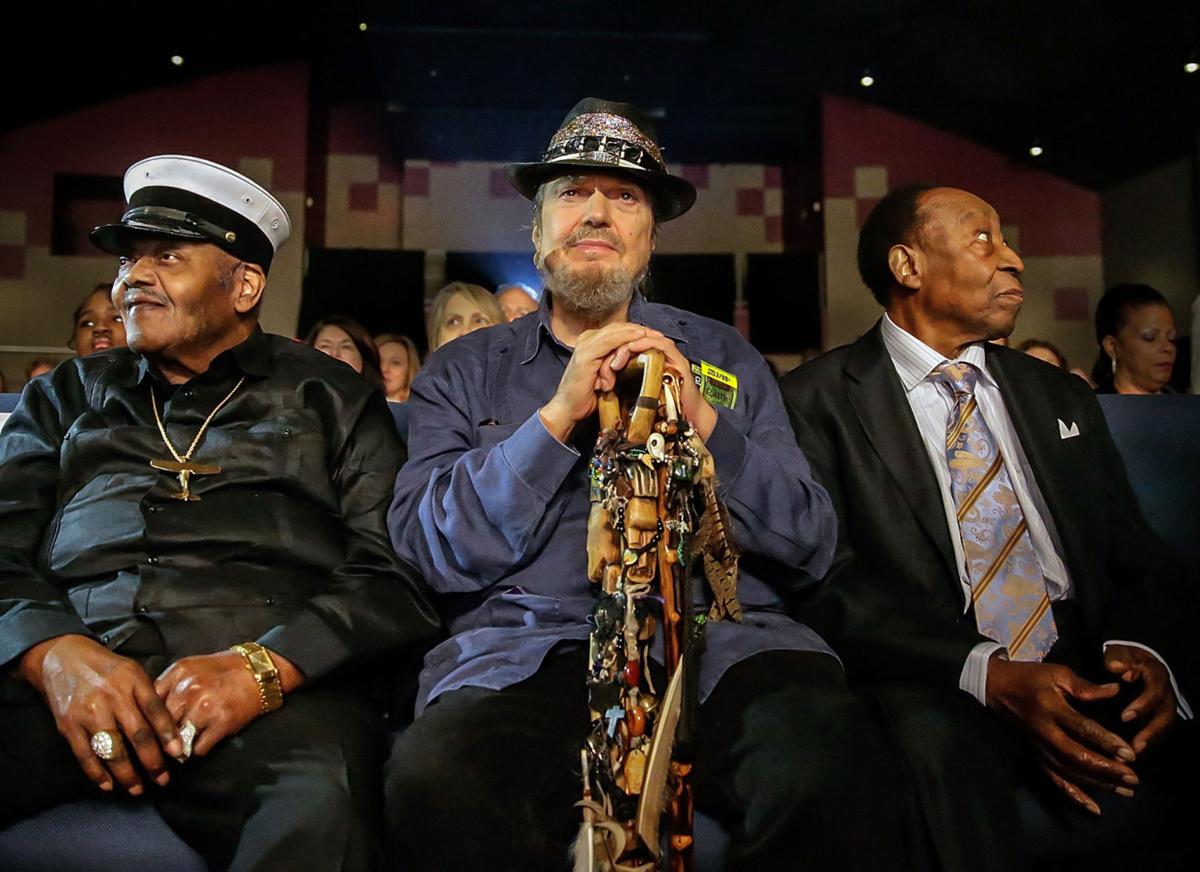
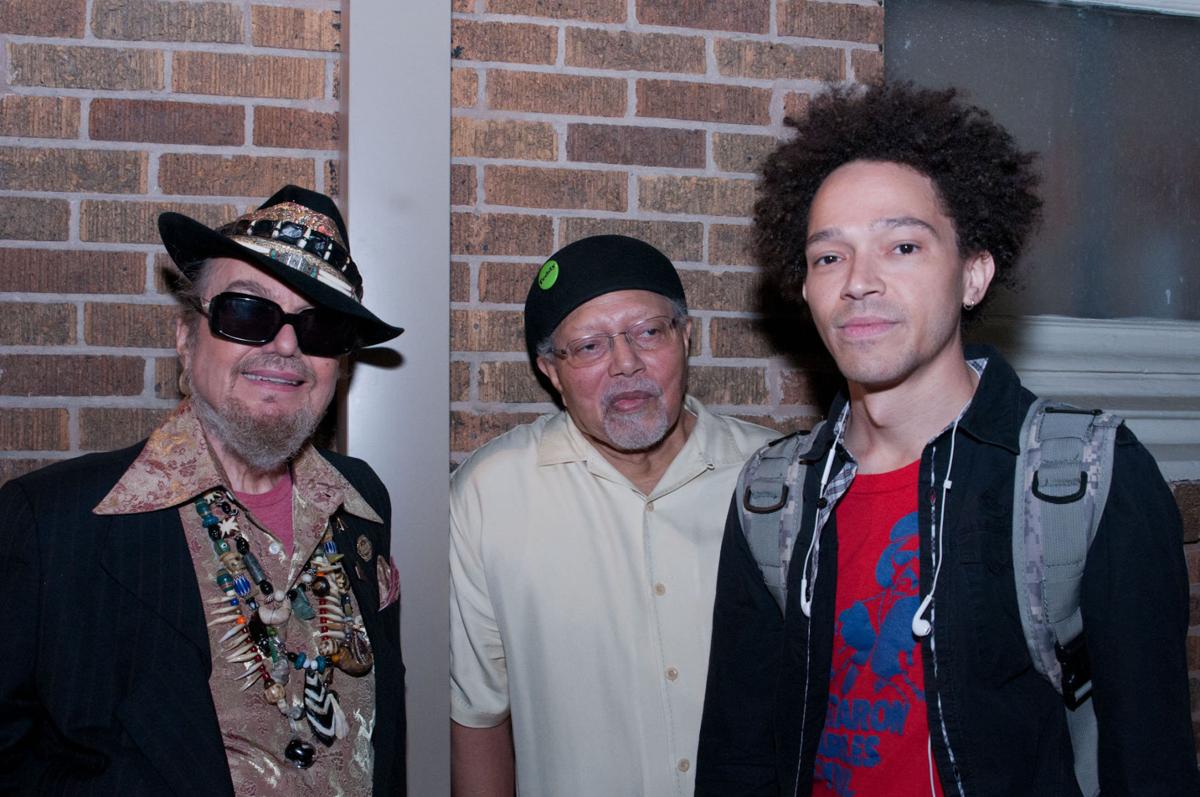
In Memoriam: Three New Orleans Icons


Fats Domino: The Fat Man
[purchase]

Despite Nashville’s self-proclaimed title as Music City, I think that New Orleans might have a stronger claim to the title (although Nashville certainly has a fair argument, and New Orleans already has some pretty good nicknames). I’ve written before about my interest and limited expertise in the area of New Orleans music, but it is fair to say that there are few places where so many types of music have developed and cross-pollinated over the years, and where music is so interwoven into the fabric of the city.

One of the reasons for this was Dave Bartholomew, who died on June 23, 2019 at the age of 100. Bartholomew rarely recorded under his own name, but instead was a trumpeter, composer, bandleader, arranger, and producer who, it could be argued, helped create both rhythm and blues and rock music. After an early career as a trumpeter and bandleader, Bartholomew connected with Fats Domino, and their co-written song, “The Fat Man,” kickstarted Domino’s career. Together, they had 65 singles on the Billboard pop chart from 1955 to 1964, including “Ain’t That A Shame,” “I’m Walkin’” and “Walkin’ to New Orleans.” Bartholomew also wrote or co-wrote "My Ding-a-Ling,” which was a hit for Chuck Berry, “I Hear You Knocking,” for Smiley Lewis, and produced Lloyd Price's recording of “Lawdy Miss Clawdy.” Among many, many others. And many of his songs were covered by artists including Elton John, Paul McCartney, the Rolling Stones, Hank Williams Jr., Elvis Presley, Dave Edmunds, and Cheap Trick. He was also name-checked by Elvis Costello in his song “Monkey to Man.”

Bartholomew remained active into his 80s, and in 2011, appeared in his first rap video –“Born in the Country,” a collaboration with his son, New Orleans hip-hop producer Don B, and grandson, rapper Supa Dezzy.

Dr. John: Right Place, Wrong Time
[purchase]

The young Mac Rebennack’s first studio session was supervised by Bartholomew, before he was Dr. John, and when he was still a guitar player. Rebennack started playing with Professor Longhair at the age of 13, and continued his career as a sideman and leader based in New Orleans, until 1960, when the ring finger on his left hand was injured by a gunshot at a gig in Jacksonville. This led him to switch to piano. At about this time, Mac also got involved with drugs and other illegal activities, and after a stint in jail, he ended up in Los Angeles as a studio musician, including being part of the fabled Wrecking Crew, and backing artists as diverse as Sonny & Cher and Frank Zappa (who fired him due to drug use).

In 1968, he adopted the persona of Dr. John, the Night Tripper, and released his first album, Gris-Gris, containing his particular brew of music, psychedelia, and voodoo. For the next few decades, he had a mostly successful career, with hit songs, exciting live performances, awards, guest appearances and star-studded collaborations, all focused on the varied music of his home city. One highlight was his 1973 album, In The Right Place, a collection of funky songs, including both “Right Place, Wrong Time,” and “Such A Night.” The album was produced by another New Orleans legend, Allen Toussaint, and featured the quintessentially New Orleans band, The Meters.

In later years, Dr. John explored many musical styles, including standards and classic jazz, but also collaborated on one of his last albums with Dan Auerbach. And, he played himself in the great TV show, Treme. Although a long-time heroin abuser, Dr. John had been clean since 1989 and died of a heart attack on June 6, 2019 at age 77.

The Neville Brothers: Fire on the Bayou
[purchase]

One of The Meters, who appeared on In The Right Place, was Art “Poppa Funk” Neville, who contributed keyboards. He was the oldest of four brothers, and began his musical career in his teens. By 1965, he had formed The Meters, which was later joined by brother Cyril. The Meters’ 1975 album, Fire In The Bayou, was a critical and popular success, and after all four brothers appeared on 1976’s The Wild Tchoupitoulas, an album of "call-and-response" style chants typical of Mardi Gras Indians, led by George “Big Chief Jolly” Landry, the Nevilles’ uncle, they formed The Neville Brothers. The group became a New Orleans institution, and for years, the New Orleans Jazz & Heritage Festival closed out with a Neville Brothers set.

In 1991, Art and Charles Neville inducted Dave Bartholomew into the Rock & Roll Hall of Fame. Neville later reunited with his Meters collaborators, and performed with both acts over the ensuing years. Neville retired from music in 2018, and died at the age of 81 on July 22, 2019, after years of declining health.

Monday, July 14, 2008

Heaven Week: My Blue Heaven


Fats Domino: My Blue Heaven

[purchase]


My Blue Heaven was written in 1927 by Walter Donaldson & George Whiting - it spawned numerous covers by artists such as Frank Sinatra, Glenn Miller, Al Jolson, and Fats Domino, who in 1956 charted with it at #19 on the US Hot Hundred, #5 on the R&B charts.

Outside of the incomparable Fats Domino, what makes this version special is his backing band, which includes master musicians like saxophonist Lee Allen and drummer Earl Palmer, players that helped define Rock and Roll. It just so happens that fellow SMM writer, LD, proprietor of The Adios Lounge, just posted a must-read Sideman Spotlight on Earl Palmer - go there and get knowledge on an important piece of Rock history.

By the way - if you hear the call of the Whip-poor-wills, know that you're late for dinner.