












Showing posts with label March. Show all posts

Thursday, March 10, 2022

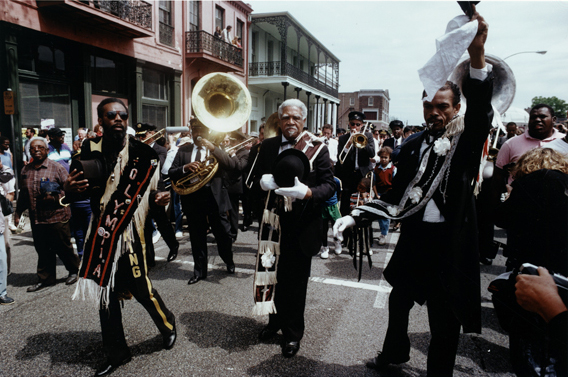
Marching: When The Saints Go Marching In

Although the month of March is named after the Roman god of war, Mars, while the English verb “to march” is derived a different source, the Old French “marcher,” meaning "to stride, march, walk," we here at SMM seem to insist on tying the two together, which is why most of the songs that would have marched into my consciousness for this theme already did so in prior years, leaving me not without options, but without options that I cared to write about. 

But one of the things about being among the last remaining regular writers on this site, which has gone through dozens since it started back in 2008, is that it is important to try to write at least once, if not more, for each theme, so I realized that Mardi Gras was just over a week ago, and therefore a discussion of “When The Saints Go Marching In” would work. And, in a tip of the hat to another of the other remaining regular SMM contributors (and recent birthday boy), Seuras Og, I’m going to model my post on one of his regular formats. 

Like many standards, the origins of the song are unclear. It seems that there were a number of gospel/spiritual songs with similar titles, but in 1923, the Paramount Jubilee Singers recorded a song similar to the one we all know and love, titled, “When All The Saints Go Marching In:”


Other recorded versions of the song, with varying lyrics, were recorded throughout the the 1920s and 30s, often becoming less hymn-like and more uptempo, but the song’s popularity really started when Louis Armstrong recorded a version in 1938, which also cemented the song’s identification with New Orleans:


There are probably thousands of covers of this standard, especially if you include every Dixieland or brass band that does it live (and on video....), but we will look at a few notable ones, in roughly chronological order: Here’s a peppy, folk approach from The Weavers in 1951:


Not surprisingly, Mahalia Jackson returned the song to its gospel roots in 1955:


Elvis Presley, and the rest of the “Million Dollar Quartet (Jerry Lee Lewis, Carl Perkins and Johnny Cash), did a loose rockabilly version that wasn’t released to the public until 1990:


In 1956, Sister Rosetta Tharp started turning “The Saints” into a rock ‘n’ roll song:


And Fats Domino finished the transformation in 1958:


Judy Garland and Liza Minnelli took a more pop approach when they performed the song in 1964:


The following year, Lester Flatt & Earl Scruggs, not surprisingly, took “The Saints” in a bluegrass direction:


Jumping forward a few decades, here’s a traditional take by New Orleans’ Preservation Hall Jazz Band from 1983:


In the mid-2000s, Bruce Springsteen regularly performed the song, in a pretty subdued arrangement, on his Seeger Sessions tour, with this version from 2006 being released on the Live in Dublin album:


Look, I could go on forever, and some of you may think I already have, so I’ll close this out with a version from New Orleans’ great Dirty Dozen Brass Band from 2012 that is pretty traditional (and a bit funky) and loads of fun:

Friday, March 13, 2020

superstitions: ubangi stomp


purchase [Ubangi Stomp ]


A confluence of auspicious days as I write/post. Today is Friday the 13th. Sunday is the Ides of March. Both of which go back a ways in history. One online source says Friday the 13th began being propagated in the 1300s, but is linked to the time of Jesus (the 13 disciples).

Personally, I am of two minds about superstitions - based on my experiences from a couple of decades in this world. No: I don't believe in them. On the other hand ... I wouldn't want to be on the wrong side if in fact one or more of them turns out to be "true".


I noted to the SMM team that there are some pretty weird superstitions in Turkish culture: spit on your new-born to ward off the evil? Again, I confess that my car sports the <de rigeur> blue bead/evil eye. I mean ... why not?

You've likely heard the term "Ubangi".  Maybe (like me in the days before politically correct took over) Ubangi Warriors, Maybe from  the "Bozo" (that's the clown) Travels the World recording? (Appears at about the 8 minute mark) Probably not in a positive light in these times, but it was perfectly acceptable when I was a kid: imitate the accent of a Ubangi warrior, imitate Ivan from Russia's limited English/accent. Aren't they the tribe that put plates in their lips to make them huge? Pretty wild, huhn? Did you know that they stomped on deformed babies to kill them? Welp... not so, but they had some such superstition that reverberated around the world.

Credited to Warren Smith, Ubangi Stomp is a [very classical] rock and roll piece that stems from the Ubangi stomping on deformed children superstition. Believe it or not.


Thursday, March 7, 2013

The March: The Liberty Bell March


[purchase the complete Monty Python]

I presume to consider myself to be a pretty funny person, and I like to believe that other people agree with me. If not, I’ve been operating under a serious delusion for a long time. Like musical taste, a sense of humor develops over time, and like musical taste, I suspect most of us who care about such things can point to certain influences on our senses of humor. Clearly, my father, a funny guy in his own right, was an influence on me, and Saturday morning cartoons (particularly Rocky & Bullwinkle, Underdog, Bugs Bunny and The Roadrunner), were an early source of humor. Later in my life, Mel Brooks and Woody Allen, the Marx Brothers, Borscht Belt one-liners, Saturday Night Live, SCTV, George Carlin, Richard Pryor, Johnny Carson, David Letterman and Seinfeld have all been sources that have shaped what I think is funny. And I’m sure I’m leaving some out.

But it is hard for me to imagine how different my sense of humor would be if it were not for Monty Python’s Flying Circus. The show aired on the BBC in 1969-1974. I first heard Python on a reel-to-reel tape played for me when I was 11 or 12 at summer camp in either 1972 or 1973 by one of the counselors in charge of the camp radio station (it was a very good camp, and among other things gave me my first taste of radio, something that has led, almost directly, to my writing for this blog). I didn’t know the name of the crazy Englishmen, or really understand everything that they were doing, but I knew that it was funny, and different from anything I had ever heard. In retrospect, what I heard was probably a recording of one of the troupe’s records.

It was not until 1974 that the Flying Circus came to the United States, in New York on Channel 13, the PBS station. I don’t recall whether I first heard about it from my friends, or from an article in the Sunday New York Times Arts & Leisure section, but I started to watch in on Sunday nights. I was hooked, and my friends and I began a life-long annoying tradition of reciting bits. This figures into the “how I met my wife” story, but that is, maybe, for another day. It took me a while before I put together the stuff I heard in camp and the TV show and realized that I had been unwittingly ahead of the curve.

My father, for some reason, never got Python, and to this day, it is a point of disagreement between us. (He also doesn’t get Letterman.) Dad was, however, good enough to take me to see “Holy Grail,” in New York City when it opened. I have to admit that even as a big fan, the 14-year old me was a little befuddled by the movie, and it took me a few years and a few re-watches before I truly appreciated its brilliance. And to this day, I still see things through the anarchic eye of the Pythons, who allowed me to understand that comedy did not have rules, and taught me about obscure British politicians and public figures of the late 1960’s and early 1970’s.

Oh, yeah—this is a music blog. The theme song for Flying Circus is an excerpt from Sousa’s “The Liberty Bell March,” chosen apparently because it was something completely different from the spirit of the show.

Tuesday, March 5, 2013

The March: The March

[purchase Live at the Wetlands]

No, that isn’t a typo—The title of the song is the theme for the week. One of the most noticeable things about a Robert Randolph and the Family Band concert is the joy in the music and in the attitude of the musicians. That has to be something that is ingrained in their personalities, and must also be fed by the fact that Randolph’s band includes two of his cousins and his sister on background vocals. Now, I know that many families are dysfunctional and don’t get along, but based solely on watching them on the stage, I would like to go to a Randolph family barbecue.

Randolph’s story is interesting. A pedal-steel guitarist who learned his craft in a church in New Jersey, Randolph was discovered at a “sacred steel” convention and was asked to join John Medeski and the North Mississippi Allstars in a project called “The Word,” which included gospel and original, but still gospel-sounding, music. Shortly after that album was released, Randolph and the Family Band released Live at the Wetlands, which included a version of “The March.” As you can see in the video (from a more recent performance), there is a dance associated with the song, and Randolph leaves his instrument to lead the audience in the dance.

My wife and I saw Randolph in 2003 at Roseland, with the just-breaking Los Lonely Boys as the opening act. As you can imagine, it was a great show. My son and I saw the band again at the Tarrytown Music Hall recently, and while it was a good show, it didn’t measure up to the memory of the Roseland gig. Maybe it was just an off night, or maybe my memory is playing tricks on me. Or maybe Randolph needs to be seen in a place where you can stand and dance, not sit in a seat, to be best appreciated.

Randolph often wears sports jerseys on stage, and is a New York Knicks fan. In fact, Madison Square Garden has, for a few years, featured him and the band as part of a “Friday Night Knicks” promotion, where his music is played. Unfortunately, the team has had a bad record on Fridays, and many fans think that there is a curse—which Randolph himself has apparently acknowledged (although others just blame James Dolan, the owner). But I don’t believe in those things, knock on wood.

Sunday, March 3, 2013

The March: Hello I Love You


Eric Escxis via Sound Cloud: HelloI Love You
[Purchase the Doors original]
 
 John Densmore's drumming with the Doors never left me in awe. Not when one of my other influences at the time was Ginger Baker, drummer of Cream. Most of Densmore's Doors drumming style strikes me as "military shuffle" - lots of snare and brush that's just right for this week's theme.

There's not much in the lyrics to Hello I Love You that support my choice of the song for military march.

  Her arms are wicked and her legs are long
  When she moves my brain screams out this song


It's a very rhythmic syllabication. Yet, it's the match of the lyrics to the musical rhythm that conveys the effect of a march - and the Jim Morrison factor.

The march as a musical form was intended to have an effect on soldiers. Often, the tempo and sounds (drums, wind instruments) work to keep soldiers moving forward together, to keep them pumped up. Curious, perhaps, that the Doors were among the most vocal anti-war groups of their time. To my mind, several songs on Waiting for the Sun are military-tinged: The Unknown Soldier and Five To One.

There have been numerous covers of Hello, including a recent version from Glee. The Doors in fact ended up getting sued by Ray Davies of the Kinks for ripping off the music from All Day And All of the Night to come up with Hello I Love You. The version here is yet another free download from SoundCloud and the posting person is Eric Escxis (https://twitter.com/Escx1s)

After the breakup of the Doors, the remaining members have tried their hands at various solo projects. Among other projects, Densmore was the driving force behind Tribaljazz, a project which appears to be ongoing. Check it out here http://www.johndensmore.com