Showing posts with label David Byrne. Show all posts

Monday, January 31, 2022

Boss: Little Johnny Jewel

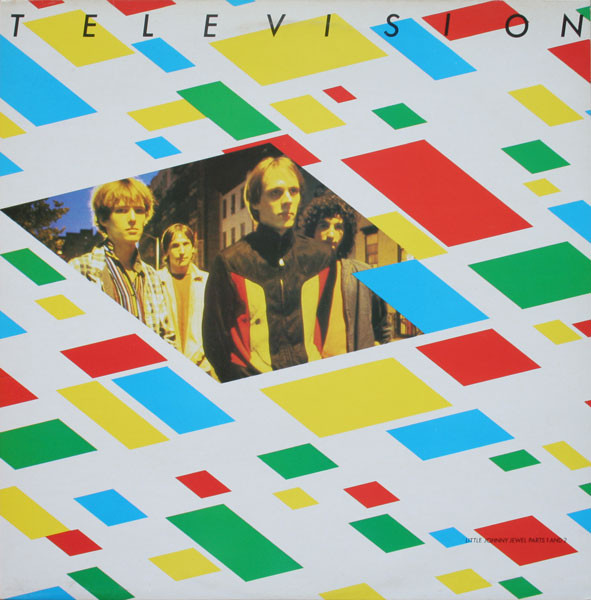
Television: Little Johnny Jewel
[purchase

I scanned my list of potential subjects for this theme (read my last post if you don’t know what I’m talking about) and decided again to write about a band that I hadn’t discussed before—Television. I’ve written about small-t television many, many times, here and elsewhere (not going to link, since there are too many), because watching TV is probably how I spend more of my leisure time than anything else, but I’ve never written about the band. While Todd Rundgren’s failure to ever be discussed in this space was very surprising, it is almost as surprising that Television has only been discussed twice—back in 2008 and 2009—and both times about the same song, “Marquee Moon.” Which happens to be an excellent song, but we’re going back to Television’s first release, “Little Johnny Jewel,” a single on their manager’s label, released in 1975. 

Although Television came up out of the same C.B.G.B. scene as the Ramones, Blondie, Patti Smith, Talking Heads, Richard Hell and the Voidoids and the Heartbreakers, among others, who I often played on the radio back in the 1979-1982 period when I was doing college radio, I had trouble connecting with the band then. As someone who grew up on classic rock and prog, I (eventually) came to understand the hard, fast ethos of punk that those other bands followed (although for some, that changed over time) as a rejection of the older forms of rock.  While I still loved what I grew up on, I also learned to love punk (and new wave). But Television’s meandering jams and guitar solos and stream of consciousness lyrics, sung by Tom Verlaine in a yelping voice that, to my ears at least, made David Byrne sound great in comparison, somehow didn’t fit in to the slots that I had in my head at the time. I couldn’t understand how they were in the same category as the Ramones, whose simple two-minute songs done at breakneck speed were nothing like the long songs that Television produced. 

Because of their timing, and their identification with the downtown NYC music scene, and because of the rough sound of their music, Television is usually lumped in with the punks, but interestingly, I’ve seen them referred to as both proto-punk and post-punk, which seems impossible without some sort of time machine. And yet, it makes sense, when you look closely. Television presaged punk both temporally and in their attitude, but their sound was not “punk” in the way that word is commonly used, so like “post-punk” bands, they embraced the brashness of punk, but not all of the sound. 

In my old(er) age, I’ve come to appreciate Television more and more. Maybe it is my more mature approach to music that is less interested in putting artists and their music in genre slots, so that I enjoy the connections that artists that seem very different actually have. I know, for example, that the first time that I heard “Impossible Germany,” by Wilco, one of my favorites, I was struck by how the intertwined guitar parts played by Nels Cline and Jeff Tweedy reminded me of Television’s Verlaine and Richard Lloyd. 

As mentioned above. “Little Johnny Jewel” was the first song released by Television, its 7 plus minutes split into two parts on a 45, and it’s an odd one. Opening with a bass line (from Fred Smith, who had replaced Richard Hell), before Billy Ficca’s drums and the guitars enter, the instrumental eventually resolves into a groove before the vocals begin. The song may be about Iggy Pop, whose real name was James Newell Osterberg, Jr., but his middle name is sometimes listed as “Jewel.” There’s a long instrumental guitar section featuring Verlaine soloing in the middle that sounds closer to psychedelia or even jazz than punk before the groove returns, along with the lyrics: 

Oh, Little Johnny Jewel
He's so cool
But if you see him looking lost
You ain't gotta come on so boss


Verlaine recalled in an interview: “Lou Reed asked me, ‘Why’d you put out this song? This is not a hit.’ I said, ‘What band playing a bar in New York, issuing their own single, is gonna have a hit?’” However, the single sold surprisingly well, and arguably kickstarted the New York punk movement.

Friday, May 21, 2021

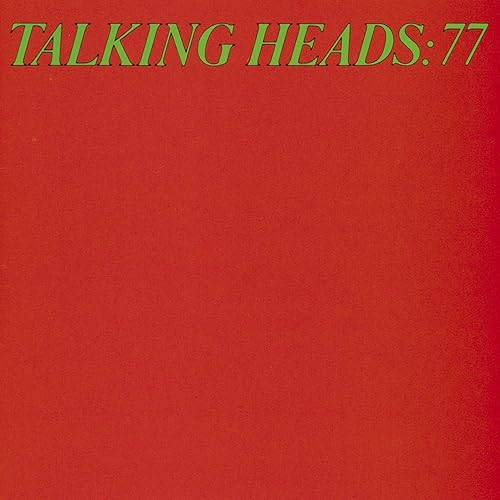
Head: Talking Heads


purchase [ Talking Heads:77 ]


It hasn't been easy finding a Talking Heads song that has not appeared on SMM before. A veritable Who's Who of SMM contributors over the years have brought them into play for topics from "Shadows", "Government", "Nonsense", "Tricky Beats", "Civics Lessons" and "Speak/Talk". There's more, but this kind of encapsulates a lot of what Talking Heads embodies: songs about tricky, shadowy government nonsense.

Figuring it's been too long since we visited them here, I took off from a comment that Jordan Becker raised not too long ago about one of his greatest musicial regrets: opting for a campus Springsteen concert in place of the Talking Heads back in '78. I might have done the same.

Jordan and I were both campus radio DJs (myself a few years earlier/older, at a time when the Talking Heads were not well-known but might have been found on campus radios across the US)

Drummer Chris Frantz (husband of bassist Tina Weymouth) notes in a bio that David Bryne was not easy to work with in a number of ways- often taking credit for work that wasn't exactly his to claim. I think you would have to agree that to many people he comes across as ...quirky. But that is part of the enduring value. Among Byrne's criticisms (of bandmates, the world, the way things are ...) was the fact that Weymouth, who had taken up the bass only a year before their first album  was developing too slowly/holding them back. Several critics note that it is her experimenting as she develops a personal style that adds to the quirkiness of their songs. 

I recently brought up the importance of lyrics (yes: Townshend; no: Fleetwood Mac), an area where Talking Heads shines. Check 'em out again for this one. Come to your own conclusions about the true meaning:


Incidentally, I mentioned this not too long back, but repeat: Byrne produces a provocative monthly music file that you can subscribe to:

David Byrne Radio  informative and eclectic every month


Oh! And of course:


Monday, November 16, 2020

Joe: Joey


Concrete Blonde: Joey
[purchase

One of the things that made Joe Biden a compelling candidate (other than the fact that most people look good by comparison to the lame-duck president) is the way he appears to relate to his family. Clearly, so much of Biden’s life was shaped by the tragic loss of his wife and child, and his attempts to continue to be there for them as a single father trying to make his way in the Senate. And we’ve heard about his second marriage, his support of one son through addiction and other personal issues, and having to watch another child die. . His sister is his closest political advisor, who ran all of his campaigns until this last one. Not to mention his relationship with his grandchildren, who he claims to call or text every day. There’s a genuineness to all of this, which again contrasts with the man he beat handily, whose children seem to be more like junior business associates, and whose third wife regularly slaps his hand away. 

Much of this can be explained, I think, by the relationship that the men had with their fathers. Mary Trump has described her grandfather (and the two-time popular vote loser’s father) in very cruel terms, and as a man who forced his children to fight for his affection and money. (He also was charged more than once with racist practices in his business and was arrested outside a Klan rally. We report. You decide). 

Biden, on the other hand, had a close, friendly relationship with his namesake father, who appeared to instill in his son respect for others, personal humility, and a resilient personality, but most of all, a belief that family is paramount. Hearing Biden speak over the past few months, it is clear that he’s no communicator in the way that President Obama was, but he does display an “everyman” charm, and an empathy that has been lacking in our president since the current impeached resident of the White House was sworn in before a small crowd. Biden often refers to his father, and wisdom that Joe, Sr. imparted to him, and he often starts these anecdotes by quoting his father calling him “Joey.” (You knew we’d get there eventually, right?) Which makes sense, in a family with two Joes. In fact, last summer, Jill Biden released a children’s book about her husband’s childhood, called Joey

The featured song, “Joey” is, for most of us, the only song by Concrete Blonde that we know, and it was released in 1990 on the band’s third album, Bloodletting. Written by singer Johnette Napolitano, it was the group's biggest hit, topping Billboard’s Modern Rock Tracks chart for four weeks and hitting number 19 on the Billboard Hot 100. The song is about being in love with an alcoholic, who Napolitano eventually revealed to be Marc Moreland of Wall of Voodoo. 

Formed in 1982 as Dream 6, and renamed at the suggestion of Michael Stipe after signing to IRS Records, the band failed to achieve much success after “Joey,” broke up in 1993, and has had occasional reunions over the years. Napolitano has released albums as a solo act and with other artists, and was even part of the Heads, a project with the members of Talking Heads, without David Byrne, which fizzled out after the requisite litigation. 

Joe Biden ran for president in 1998, with little success, dropping out after a series of plagiarism allegations, briefly tried again in 2008, but was overshadowed by Hillary Clinton and Barack Obama, and was asked to join Obama’s ticket in 2008, becoming Vice-President. He chose not to run in 2016, in part because of the death of his son Beau, and in part, I think, because there was a feeling that it was time for a woman to be president (which it was, and should have been). Biden has admitted regretting that decision. I have to admit that I thought that Biden’s dream of becoming President was over, and that someone younger would end up running in 2020. So, I was wrong. As it turned out, Biden’s message of empathy, competence, calmness and bipartisanship struck a nerve, and he won with an enormous margin in the popular vote, and a significant margin in the stupid Electoral College (winning a few states, though, by a slim margin). 

So, maybe Concrete Blonde has another comeback in them. Just ask Joey.

Monday, November 2, 2020

Hidden Places: Don’t Worry About The Government


Talking Heads: Don’t Worry About The Government
[purchase

I am sooooooo worried about the government. 

Four years ago, relying on pretty much every polling expert and pundit, and the clearly misguided belief that there was no chance in hell that my beloved country would elect a racist, sexist, selfish, pathological liar with no empathy, no interest in, or knowledge of, how the government works, and who would spend his time in office doing everything possible to enrich himself and his family, attempt to destroy any sense that the government was fair and cared about its citizens while fanning every sort of division and harping on imagined grievances, I was feeling pretty good as Election Day approached. Sure, I was surprised at the popularity that Trump seemed to be garnering, but I felt secure that we’d be electing a smart, caring woman who had devoted her life to public service. And I was comfortable that under Hillary Clinton, our country would continue bending the arc, if slowly due to the obstructionism of people like Mitch McConnell, toward a more fair and just future. 

Boy, was I wrong. 

And that’s why today, I sit in front of my computer, days before Election Day, facing the real prospect that Trump will be re-elected, whether fairly, or, more likely, due to the distortion of the Electoral College, or through fraud, and interference by sycophantic judges. Or some combination of them both. I’ve been voting in presidential elections since 1980, and never before have I had to consider that one candidate has refused to admit that he will leave the White House if he loses, or that one candidate has spent months trying to sow confusion by lying about the voting process, or that one candidate’s supporters actually have surrounded a campaign bus to prevent an appearance, or that one party has discussed ways to appoint electors contrary to the popular vote, or that there might be actual violence after the election, and on and on. 

I’m worried that even if Trump loses, he and his power hungry minions have created a playbook for future authoritarians to follow, because he’s exposed all of the ways that the Constitution and laws can be ignored, perverted or interpreted to lead to strong-man rule, when some or all of Congress and the Supreme Court is willing to roll over and not protect their prerogatives or perform oversight. And I’m worried that if he wins, with no concern about re-election, and with a compliant court system, that the march toward authoritarianism and kleptocracy and racism will continue unabated. 

I’m worried that the damage that Trump has already done will take years, even generations, to fix, and that a second term might be an existential threat to our democracy. 

And I’m worried about what I’m going to do in my spare time instead of deleting the hundreds of emails that I’ve been getting daily from Jaime Harrison. 

Like many of us, I think, to distract from this, compounded, of course, by the raging pandemic that this administration has failed to seriously try to combat, I’ve turned to television, even more than in the past, and last Friday, my wife and I watched David Byrne’s American Utopia on HBO. It’s a filmed version of the Broadway show, directed by Spike Lee, and it was great. I won’t get into the obvious comparisons between American Utopia and Stop Making Sense, considered by many to be one of the greatest music films of all time (which my then-future wife and I saw in an actual theater, on 57th Street in New York when it came out in 1984), or between it and the filmed version of Hamilton that recently ran on Disney+. If you’re interested in such comparisons, you have the same Google that I have…. (OK, here's one.)

American Utopia is a collection of songs, some from Talking Heads, some from Byrne’s solo and collaborative works, and a couple of covers, all performed by a talented group of musicians, singers and dancers, on a bare stage, all wearing essentially identical gray suits (of normal size) and no shoes, with some personal and political commentary by Byrne. For the most part, the songs are great (the Talking Heads songs tend to get the best reaction from the audience), the performances tight, and the choreography interesting and mesmerizing. And there’s a joy about the performances that is infectious. 

One of the older Talking Heads songs in the show is “Don’t Worry About The Government,” from the band’s first album, which is written from the point of view of a person (who some people believe is a government official) discussing his simple, comfortable, happy life. And it fits our “Hidden Places” theme when Byrne sings: 

I see the states across this big nation
I see the laws made in Washington, D.C
I think of the ones I consider my favorites
I think of the people that are working for me

Some civil servants are just like my loved ones
They work so hard and they try to be strong
I'm a lucky guy to live in my building
They own the buildings to help them along 

Almost every article that I read before writing this piece referred to the lyrics of this song as “ironic” or “sarcastic.” But here’s what Byrne himself said about the song, in an interview from 2019, before American Utopia opened on Broadway: 

It’s funny. When Talking Heads originally did that song, it was a song about living in a nice condo with modern conveniences and good plumbing and no cockroaches. It became the opposite of what everybody was doing in the folk scene at that moment. Everybody was snarling and angry, and this was a young guy who just wanted to live in a nice apartment! Everybody thought I was being ironic with the song because of the lyrics and the context. But I think people will see a certain truth to it now. It’s not a great virtue living in an apartment filled with cockroaches. You don’t have to have a penthouse, but people want to have a decent life. Everyone can accept that in some way. It’ll be seen and understood in another way with the passage of time. 

I’m hoping that, in a short time, I can stop worrying about the government every day, and that we can get back to the days when civil servants do their work, and people in government work for us.

Friday, June 22, 2018

Speak/Talk: Talking Heads Burning Down the House


purchase [ Speaking in Tongues ]

It seemed such a no-brainer to include Talking Heads Speaking in Tongues that I feared it had already been done here. It's been done lots of other places, but I'll bring it back from wherever in history it's been lurking for you. We're talking about 1983 here.

To start, I browsed the entire archive of Star Maker posts related to the Talking Heads over the years (of which there are about 20) and don't see that anyone has ever picked this one up.

Curiously, the Wiki tells us that Burning Down the House was their "lone top ten single on the US Billboard Hot 100." Me? I loved them and I still follow David Byrne through his mailing list/blog at http://davidbyrne.com/connect

Just about every one of their albums "went gold", so that's nothing to scoff at, and there's no denying that especially Tina Weymouth and David Byrne have written their names in the pantheon of modern music greats.

You are aware of course that their vocal style is pretty heavily built on talking imposed over a funky/new wave instrumental composition. Burning Down the House is no exception. The line itself apparently comes from a common audience chant of those years, which the band adopted/converted to their use.

And then there's the Tom Jones/Cardigans rendition of the same. One of his better outputs (unless you want to count Delilah!)


Friday, March 9, 2018

MAR* SONGS: Águas de Março


Or Waters of March, the english translation of what has been called the all-time best Brazilian song, in a 2001 poll. Written by arguably the best and certainly the best-known of Brazilian composers, the king of Bossa Nova, Antonio Carlos ('Tom') Jobim, in 1972, it has sustained myriad versions over the years since. Unusually, both the portuguese  of the original and it's translation were both written by Jobim. Bossa Nova seemed, in my youth, inescapably naff and forever attached to cheesy black and white travelogues. More recently it has seemed to attain a revisioned renaissance and  sits well alongside other latin dance and music forms, thanks in part to the dance music attuned stylings of bands such as Bossacucanova, the translation of which even I can work out.


It was Jobim's stepfather who encouraged his playing, after the he and his mother moved to Ipanema, yes that one, starting his nascent career playing in clubs and bars. Although now deemed to side most closely with jazz, in fact early influences and passions were derived from the classical field. Already big in Brazil, courtesy his writing partnership with Vinicius de Moraes, a celebrated poet, his wider breakthrough came with, in 1963, his collaborations with Stan Getz and the husband and wife team of Joao and Astrid Gilberto, including that song from Ipanema. Writing most of the music over the two volumes of Getz/Gilberto ensured worldwide recognition and many awards. The bossanova craze was in full swaying swing.


Aguas de Marco, as a song, has had a fascinating history, starting life as the 70s brazilian equivalent of a cover disc: a free and probably flimsy vinyl distributed with O Pasquim, a magazine of the day. Thereafter it was picked up by Elis Regina, later to work closely and to collaborate with Jobim, appearing on her 1972 debut. Jobim himself didn't officially release his own version until a year later, with the additional english lyric now attached to the verses in portuguese. This was then reprised, by both of them, another year later, on the seminal 1974 album Elis and Tom. (See top clip above.) Since then there have been a flood of versions from artists as varied as Frank Sinatra, Art Garfunkel and David Byrne. Unarguably now a standard, it was also purloined by advertisers, no doubt for a fat fee, but never, for me, the real thing.

So what are the waters of march? March is the rainiest month in Rio, and the words, more a tone poem of images than any narrative, are said to represent the torrents of water flowing down the steep hillsides of the city, flooding the gutters with all manner of debris. I encourage you to sift through the floodwater of what can so often be so much supper club and hotel lobby flotsam and jetsam, looking for the class of what this much maligned music style has to offer. Tom Jobim will always rise to the top.

                                                  Antonio Carlos Jobim 1927 - 1994

Still thirsty?

Thursday, May 4, 2017

Songs From Movies About Musicians: Girlfriend is Better

Talking Heads (from Stop Making Sense): Girlfriend is Better

[purchase CD]

[purchase DVD]

Director Jonathan Demme died last week, so it is only fitting that we include him in this theme. Demme could almost be the subject of his own theme here. He directed fictional films such as Something Wild, which made brilliant use of music. Bruce Springsteen won an Oscar for his song from Demme’s film Philadelphia. Demme also made music videos. But here I turn my attention to another form that Demme excelled in: the concert film.

Talking Heads and their leader David Byrne were great subjects for Jonathan Demme. The band came together in art school, and they always had a strong visual sense. Early in the movie, we see David Byrne in normal clothing. He looks skinny, almost emaciated, but man can he move! Girlfriend is Better is a dramatic moment in the film, because it is our first glimpse of the big suit. Demme shows it to us first in the form of a menacing shadow, and then lets us see the man casting the shadow. Suddenly, David Byrne is transformed into something other. When I saw the film in 1984, I did not know that Byrne was on the autistic spectrum, and if I had known, I would not have understood at the time. Now I know that people on the spectrum often feel that they are “other”, that they don’t quite fit in with a neurotypical society. They do however have much of value to contribute. To me now, the arrival of the big suit in the movie is a great visual expression of all of this.

I don’t want it to sound like the movie Stop Making Sense is some kind of manifesto. Taken as a whole, the movie is first of all a record of a great show. Beyond that, it is also a generous film that makes time not just for the music of Talking Heads, but also for spotlights on solo projects by members of the band, including Tina Weymouth and Chris Franz’ side project the Tom Tom Club. Even when David Byrne is on stage, Jonathan Demme’s camera finds other permanent and guest members of the band, and lets us get to know them through their performances. There was talk in the music press at the time of strains in the band, but the film shows a large group that knew how to be in perfect synch for their performances.

Thursday, December 3, 2015

Leftovers: It's Elemental/Once In A Lifetime


purchase [Once In A Lifetime]

The Element: Water redux

I really thought Retropath was headed down the right path when he started out to list the entire table of elements. I was seriously looking forward to the full 118.

Then again, considering the amount of time and energy involved in his somewhat quixotic endeavor, I was more inclined to simply complete the table of medieval elements along the lines of what J. David referred to.

Back at the time of the “It's Elemental” theme, I posted Hot Tuna's "Water Song" (Which I have since learned to play!). Without making distinction on the theme of the element of water - since the two songs are in rather different musical categories, I now realize I might well have posted Talking Heads' “Once In a Lifetime”.

For almost a decade, back in the 90s, I collected and re-re-listened to David Byrne and the band. I later relished Clap Your Hands Say Yeah, and Arcade Fire (although I haven’t seen anyone else group them with Talking Heads, I think so) as re-incarnations of the Talking Heads’ genre.


Still, Talking Heads would still take my category prize as the elemental band of its style. And critical to that catalogue would be “Once In a Lifetime” – not least for its relevance to “Plato and Aristotle’s” Elements: there's water running all the way through in its original MTV version here:


Sunday, August 14, 2011

2001: Broken Things


David Byrne: Broken Things

[purchase]

By 2001, new wave music had happened twenty years earlier. Talking Heads had made some of the most original music of the 80s, but now leader David Byrne was well into his solo career. Byrne had always thrived on defying expectations. By 2001, that could mean making heavily produced music, with live strings and other orchestration. In Byrne’s hands, this evoked the sounds of Brazil, and that was the basis for much of his 2001 album Look Into the Eyeball. Broken Things is something of a throwback to Byrne’s earlier sounds. Yes, there is a horn section, but it is used with great subtlety. This one has real bite, more so because of the music that surrounds it on the album. As for lyrics, Byrne has always been an elliptical writer, but the most important repair to be made in this song is emotional rather than physical.

Sunday, July 3, 2011

Independence: Independence Day


David Byrne: Independence Day

[purchase]

I am a firm believer that “none of us is truly free until all of us are”. From this point of view, the process of achieving our nation’s independence is ongoing. This week, an important step was taken. New York became the first state in the United States to legalize gay marriage by a legislative act. The states which previously recognized this right did so by court order. David Byrne’s song Independence Day, from 1989, is set in New York City, and it looks forward to this day. But in 1989, legal gay marriage seemed like an impossible dream. So, I thought this song was a perfect way to launch our weeklong celebration of independence here on Star Maker. New York State, I salute you. Let me be the first to wish our American readers a happy and safe Independence Day. To our Canadian readers, a belated happy Canada Day. And to all others, my best wishes for your independence and freedom, in what ever form they take.

Sunday, May 8, 2011

Deep Album Tracks => Speaking in Tongues: Loco De Amor


David Byrne: Loco De Amor

[purchase]

I have found Salsa music tremendously exciting since I first heard it. But there was also a certain sameness for me, because I couldn’t understand the words. So I always wished that someone would record an album of this music with words in English. In 1989, as Talking Heads were breaking up, David Byrne granted my wish with his album Rei Momo. Keep in mind that this was long before Latin artists started to cross over, and record English-language songs or albums themselves. Being based in New York City, David Byrne was able to work with some of the legendary musicians of salsa. Willie Colon was Byrne’s bandleader for this album. Loco de Amor is a co-write between Byrne and Johnny Pacheco, and the song features vocals by Celia Cruz. Since Rei Momo had no hits, I feel justified in using it for our Deep Album Tracks theme. But I should note that the song originally appeared on the soundtrack of Something Wild, and it was added to Rei Momo for the CD release.

Friday, June 19, 2009

Gender Benders: Now I’m Your Mom


David Byrne: Now I‘m Your Mom

[purchase]

I know a couple with two kids. When the kids had both reached the age of eighteen, the woman of the couple decided to do something she had always, apparently, wanted; she set about, with her husband’s approval, becoming a man. So now those kids have two fathers.

So, what David Byrne has imagined here is not impossible. Here is Byrne’s tale of a “new” mother, explaining to her daughter what happened to Daddy. To my knowledge, David Byrne is, and has always been, male.

Tuesday, December 2, 2008

Leftovers (Horns): Latin Edition


During Horns week I didn’t have the problem of submitting material too late to get it posted; I simply had more material than I had time. This would have been my last post, if the week had been longer.

Latin America has a rich musical tradition. Here, musical ideas brought from Africa by slaves were allowed to remain more intact than in the United States, and also melded with the musical traditions of the Native Americans of the area. Add European instruments to the mix, and, eventually, you get Latin American music as we know it today. And you get some of the most exciting music for horns found anywhere in the world. It was only natural that musicians working in other genres would occasionally be drawn to Latin sounds, and would produce wonderful music of their own as a result. Here are three fine examples.

David Byrne: Make Believe Mambo

[purchase]

In my post on “Mr. Jones”, I mentioned that Talking Heads’ last album sounded quite a bit like the solo album that David Byrne was working on at the time, Rei Momo. Byrne was exploring Latin music, and he was able to assemble a band of the finest Latin musicians working in New York at the time. Each song on Rei Momo explores a different style of Latin music, with the song I have chosen obviously representing the mambo. Incidentally, Rei Momo is a Brazilian term that means “king of the carnival”.

Kirsty MacColl: Mambo de la Luna

[purchase]

Kirsty MacColl made a name for herself in left-of-center pop in the 1980’s. When she sought to broaden her sound, she made a trip to Cuba to learn about the music there. The result was her wonderful album Tropical Brainstorm. Sadly, this was to be her final work; she died in a boating accident not long after the album was released.

Raul Malo: Takes Two to Tango

[purchase]

When Raul Malo of the Mavericks began his solo career, he wanted to celebrate his heritage. Malo was originally from Cuba, and he wanted to bring this music to an English-speaking audience. This song features guest vocals by Shelby Lynne, whose music is also well worth seeking out.

Tuesday, November 18, 2008

Tricky Beats: Polyrhythm, Part 2


In part 1 of this post, I discussed the polyrhythmic music of the Yoruba people of west Africa. Here, I will reveal what led me to seek out that music in the first place.

By 1980, I was sold on the music of Talking Heads. Three albums into their career, they had shown me enough that I wanted to know what was going to happen next. And at that point, the band seemingly broke up. Officially, they were on hiatus, with the promise to return, but we’ve all heard that before. So, I was nervous.

The band broke into three parts at that point. I dutifully bought the Tom Tom Club album. I sought out Jerry Harrison’s solo album. And I enjoyed them thoroughly. But nothing prepared me for My Life in the Bush of Ghosts, by David Byrne and Brian Eno.

David Byrne/ Brian Eno: Help Me Somebody

[purchase]

Well, not quite nothing. I did read about the making of the album in the New York Times, and in Musician magazine. And, in those sources, I heard the term polyrhthm for the first time. I learned that Byrne and Eno had been listening to African music, and had become inspired by it. I have shared with you some of what they were listening to.

For My Life in the Bush of Ghosts, Byrne and Eno created instrumental tracks inspired by the polyrhthms of African music. For vocals, they used found sounds, which in the case of “Help Me Somebody”, was a preacher recorded off the radio.

Talking Heads: The Great Curve

[purchase]

In 1981, I breathed a sigh of relief. Talking Heads were getting back together. Byrne and Eno brought the results of there musical explorations back to the band, and the result was Remain in Light.

To my ears, Remain in Light represents polyrhythmic music taken to its ultimate level. The song I have chosen perfectly illustrates this. King Sunny Ade took the job of some of the drums, and gave it to guitars, keyboards, and slide guitar. “The Great Curve” further spreads the rhythms to the horns, and to three overlapping vocal parts. Amazingly, despite the complexity of this music, Talking Heads did have a charting single off this album with “Once in a Lifetime”. Such was the power of music video and MTV at the time.

So, from something in part 1 of this post that I would imagine was unfamiliar to many readers, we have come to something I would imagine many of you have heard before. I hope you can hear it now with new ears. And thank you all for listening.


My personal journey into the music of Africa began a longer exploration of world music which continues to this day. If anyone else would like to pursue this further, I have provided some resources below to help you on your way.

- By far the best magazine I have found is Songlines. Each issue comes with a sampler cd of new world music releases. Songlines is published in England, and unfortunately, the exchange rates have driven up the price lately, but it’s well worth it if you can afford it.

- Afropop Worldwide is an invaluable online resource for all things pertaining to African music.

- Luaka Bop is the world music label founded by David Byrne after the breakup of Talking Heads.

- The other “pop“ musician who founded his own world music label is Peter Gabriel, with Real World Records.

And finally, a pair of blogs to check out:

- Benn loxox du taccu is Matt Yanchyshyn's
world music blog. It hasn’t been updated since he announced his engagement on Sept. 27, but the older links are still working as of this writing.

- Awesome Tapes from Africa is just what it sounds like. The sound quality varies, and not all of the music is great, but this music is not available otherwise, and the good stuff makes it worth it.

So that’s it for now. Enjoy your journey!