Showing posts with label Michael Stipe. Show all posts

Wednesday, November 3, 2021

CANDY/SWEETS: CANDY EVERYBODY WANTS

 I have never quite worked out whether my love for 10,000 Maniacs stemmed more from their name than their music. Certainly it was the name that first caught my eye, before their songs caught my ear. Like Cowboy Junkies*, another band I adore, emerging at much the same time, they had the canny ploy of linking their often downbeat and distinctly unaggressive music with an edgy sounding name. Hell, it was for that reason alone I owned T-shirts emblazoned with their band names. But, of course, I did love the music, discovering here that they were, sort of, the subject of one of my debut posts for this site, a galling 8 plus years ago. (Gulp, so, at a conservative estimate of of, say, three posts a month, that's north of 300 posts I've inflicted on you poor devils, should any have lasted the pace.....)

'Candy Everybody Wants' was the striking 2nd single from the 5th and final studio album the band did whilst Natalie Merchant was still a member, and was a commentary on the then prevalent US audience taste for sex and violence on screens big and small. (I say then prevalent, wondering if that has ever changed? As mainstream TV and films have become less reliant on at least the sex side of things, cable networks are eagerly, um, thrusting that opportunity on their hungry subscribers. Violence has never been out of taste, the flavours increasingly now for the graphic.) Merchant was never afraid of sociological polemic, and has remained a fierce and outspoken critic of many of the ills she perceives in society, from the military and guns to child abuse, alcohol and the environment, sometimes to the point of being perceived as almost  unbearably liberal and politically correct. 'Candy Everyone Wants' was co-written with the keyboard player, Dennis Drew, one of the co-founders of the band still with them today. It hit a respectable 67 on the singles chart, the album, 'Our Time in Eden', faring better, at 28. The band had also hit a vein of popularity in the UK, where it peaked at 33, figure a slight drop down from the more successful Blind Man's Zoo, which preceded it. Still enough for it to eventually go double platinum, mind.

I don't often print out chunks of lyric but think it is warranted here:

"We give them what they want
If lust and hate is the candy,
If blood and love taste so sweet,
Then we...
We givem what they want.
Hey, hey, We givem what they want".

Something I hadn't appreciated ahead of this piece, despite having the disc on my shelves, and generally being an avid reader of the credits, is that the brass on the song, and on the whole parent album, is provided by the JBs, surely finding this literate fare a world apart from the exacting schedule of their usual employer, James Brown. The fact raises both they and the Maniacs up in my estimation.

For a slightly different mood, below is the version from the MTV Unplugged concert, an orchestra providing the backing, but otherwise little different.

Whereas, from another live performance, old chum Michael Stipe turned up and joined in. Again, clearly not the JBs, but it looks a lot of fun. It was performed, hello again, for the MTV Inaugural Ball for Bill Clinton. (At the risk of descending into smut, with a title like that, I wonder if they did?!)


Finally, given the comments around the ongoing longevity of the band, how does it sound these days? Replacement singer, Mary Ramsey, was already within the wider pool of band associated musicians, featuring on viola and backing vocals on both 'Our Time in Eden' and 'MTV Unplugged.' As also the musical partner of the Maniacs erstwhile guitarist, John Lombardo, who had left the band in 1986, they were together performing as John and Mary, so it seemed logical to have them both incorporated back/fully into the band on Merchant's exit. Here is the song as performed on the 'Playing Favourites', which had the new version of the band play old and newer songs from both per and post Merchant days.


Here's the sweetshop.


*Hope you SWIDT! Candy? Teeth? (I'm here all week!)

Monday, November 16, 2020

Joe: Joey


Concrete Blonde: Joey
[purchase

One of the things that made Joe Biden a compelling candidate (other than the fact that most people look good by comparison to the lame-duck president) is the way he appears to relate to his family. Clearly, so much of Biden’s life was shaped by the tragic loss of his wife and child, and his attempts to continue to be there for them as a single father trying to make his way in the Senate. And we’ve heard about his second marriage, his support of one son through addiction and other personal issues, and having to watch another child die. . His sister is his closest political advisor, who ran all of his campaigns until this last one. Not to mention his relationship with his grandchildren, who he claims to call or text every day. There’s a genuineness to all of this, which again contrasts with the man he beat handily, whose children seem to be more like junior business associates, and whose third wife regularly slaps his hand away. 

Much of this can be explained, I think, by the relationship that the men had with their fathers. Mary Trump has described her grandfather (and the two-time popular vote loser’s father) in very cruel terms, and as a man who forced his children to fight for his affection and money. (He also was charged more than once with racist practices in his business and was arrested outside a Klan rally. We report. You decide). 

Biden, on the other hand, had a close, friendly relationship with his namesake father, who appeared to instill in his son respect for others, personal humility, and a resilient personality, but most of all, a belief that family is paramount. Hearing Biden speak over the past few months, it is clear that he’s no communicator in the way that President Obama was, but he does display an “everyman” charm, and an empathy that has been lacking in our president since the current impeached resident of the White House was sworn in before a small crowd. Biden often refers to his father, and wisdom that Joe, Sr. imparted to him, and he often starts these anecdotes by quoting his father calling him “Joey.” (You knew we’d get there eventually, right?) Which makes sense, in a family with two Joes. In fact, last summer, Jill Biden released a children’s book about her husband’s childhood, called Joey

The featured song, “Joey” is, for most of us, the only song by Concrete Blonde that we know, and it was released in 1990 on the band’s third album, Bloodletting. Written by singer Johnette Napolitano, it was the group's biggest hit, topping Billboard’s Modern Rock Tracks chart for four weeks and hitting number 19 on the Billboard Hot 100. The song is about being in love with an alcoholic, who Napolitano eventually revealed to be Marc Moreland of Wall of Voodoo. 

Formed in 1982 as Dream 6, and renamed at the suggestion of Michael Stipe after signing to IRS Records, the band failed to achieve much success after “Joey,” broke up in 1993, and has had occasional reunions over the years. Napolitano has released albums as a solo act and with other artists, and was even part of the Heads, a project with the members of Talking Heads, without David Byrne, which fizzled out after the requisite litigation. 

Joe Biden ran for president in 1998, with little success, dropping out after a series of plagiarism allegations, briefly tried again in 2008, but was overshadowed by Hillary Clinton and Barack Obama, and was asked to join Obama’s ticket in 2008, becoming Vice-President. He chose not to run in 2016, in part because of the death of his son Beau, and in part, I think, because there was a feeling that it was time for a woman to be president (which it was, and should have been). Biden has admitted regretting that decision. I have to admit that I thought that Biden’s dream of becoming President was over, and that someone younger would end up running in 2020. So, I was wrong. As it turned out, Biden’s message of empathy, competence, calmness and bipartisanship struck a nerve, and he won with an enormous margin in the popular vote, and a significant margin in the stupid Electoral College (winning a few states, though, by a slim margin). 

So, maybe Concrete Blonde has another comeback in them. Just ask Joey.

Thursday, May 28, 2020

War/Peace: War In Peace


Alexander “Skip” Spence: War In Peace
[purchase]

I know that many people—and not only people in the 50+ demographic—think that the best era for music was the late 1960s-late 1970s. I’m not going to debate that now, but there’s certainly an argument to be made. And I think that there are those who would argue that much of the best music from that era was created because of, or enhanced by, the use of drugs. Yet, we also know that drugs also had negative effects—think of all of the great musicians from that era who died young from overdoses, or in other ways  directly or indirectly related to their addictions.

Then, there’s the group of musicians who stayed alive, but whose careers were cut short, or hampered, by drug related mental illness (although in many cases, the causal link between the drug use and the mental illness isn’t certain).

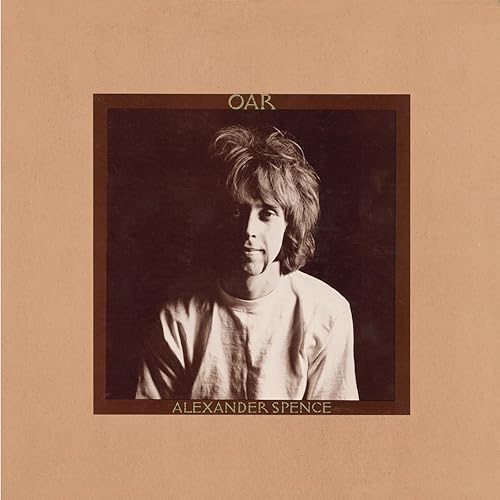
One such musician, who has been mostly forgotten over the years, is Alexander “Skip” Spence, who was briefly a guitarist in Quicksilver Messenger Service, then became the drummer in Jefferson Airplane, departing after their first album, in part because he wasn’t a drummer, to become a founding member of Moby Grape. But by 1970, his musical career was effectively over.

By most accounts, Spence was an excellent musician (on guitar and other instruments, including the drums that he learned to join the Airplane) and songwriter (writing, among other songs “You’re My Best Friend,” which appeared on Surrealistic Pillow, released after he left the Airplane, and Moby Grape’s “Omaha,” later covered by The Golden Palominos, with Michael Stipe on vocals). If you read about Moby Grape, you’ll find quotes from contemporary critics saying that they were the best band from the San Francisco area during that era—better than the Grateful Dead and Quicksilver and the Airplane. But despite the quality of Moby Grape’s debut album, a bunch of record company missteps and a disappointing second album, among other things, led to the band never breaking through.

Among those other things was Spence’s increasingly erratic behavior. While working on the band’s second album in New York, Spence, under the influence of LSD, and maybe other substances, took a fire axe and attempted to break down the hotel room doors of band mates Don Stevenson and Jerry Miller. He then went to the studio at the CBS building, where he was disarmed and wrestled to the ground. The album’s producer, David Rubinson, pressed charges, and after a brief period in jail, Spence was sent to Bellevue Hospital where he was diagnosed with schizophrenia.

During his six months in Bellevue, and despite not having access to a guitar, Spence had written a number of songs, and on his release, he was met by Rubinson (the same guy who pressed charges). Spence implored Rubinson to get him to a studio so that he could record the songs while they were still fresh in his mind. Showing how different the record business was in those days, Rubinson negotiated an advance from Columbia Records the next day, and Spence went to Nashville, on a motorcycle, to record the songs. Within six days, Spence cut nearly 30 songs, playing all of the instruments, singing all of the vocals and doing the arrangements himself. At this point, he was all of 23 years old.

Whittled down to 12 songs, the album, titled Oar, was released in May, 1969. Utterly unable to figure out what to do with its strange and eclectic music, Columbia simply ignored it, and it sold very few copies—it is often referred to as the worst selling album for the label to that point. (Hey, Richard Thompson’s first solo album, Henry The Human Fly, was considered the worst selling album at Warner Brothers Records, so that doesn’t necessarily mean that it is crap.) “When the people at Columbia heard it, Oar made no sense to them at all,” remembers Rubinson, who had sifted through the reels of tape, mixed the album and sequenced its dozen tracks. “It was so honest and real that the record company couldn’t relate to it. Neither could radio or critics. So they put it out, barely, and it sank without a trace.” To some, the album was the soundtrack to Spence’s mental illness, but to others, it was evidence of his emergence from it.

Over time, Oar gained admirers (and two reissues, with bonus tracks), including Robert Plant, Jeff Tweedy, Beck, Tom Waits, Robyn Hitchcock, Julian Cope, Chrissie Hynde, Mark Lanegan, and Jay Farrar (many of whom appeared on a tribute album, More Oar: A Tribute to the Skip Spence Album) and it appears in a number of “Best Album” lists.

“War in Peace” isn’t the best song on Oar, or the strangest, and it is actually quite listenable, if you aren’t concerned about understanding the lyrics. There’s some good electric guitar, including a bit at the end that is generally acknowledged to be an homage to (ripoff of?) Cream’s “Sunshine of Your Love.”  

Oar was Spence’s last album. He contributed a little to Moby Grape reunion albums and appeared sporadically at live shows both with Moby Grape and other bands, and he recorded a song (which was not used) for the X-Files soundtrack but his mental illness, drug and alcohol addictions and related physical health issues, prevented him from having any sort of a music career. At times, he was committed to mental hospitals, was homeless, and, for a time, was living in a house provided by his former Moby Grape band members, who appear to not to have held a grudge for that whole fire axe incident. Robert Plant helped with medical bills at times.

Spence died in April, 1999, of advanced lung cancer, at the age of 52. The last music he heard was a copy of the More Oar tribute album, which featured a cover of “War in Peace” by Mudhoney.

Tuesday, May 5, 2020

Musical Mysteries: What’s The Frequency, Kenneth?


R.E.M.: What’s The Frequency, Kenneth?
[purchase]

I know that my chosen song for this piece asks a question, but the answer to the question isn’t the mystery. In this case, it is the question itself, and the context in which it became famous, that is the mystery, albeit one that was solved years after the precipitating event, and the release of this song.

On October 4, 1986, newscaster Dan Rather was walking on Park Avenue in New York to his apartment after having dinner with a friend, when he was attacked and beaten by two “well-dressed” men, one of whom kept demanding, “Kenneth, what was the frequency?” Why Rather was attacked, why the assailant demanded to know the “frequency,” and kept calling Rather “Kenneth” were mysteries. Rather was quoted as saying, "I got mugged. Who understands these things? I didn't and I don't now. I didn't make a lot of it at the time and I don't now. I wish I knew who did it and why, but I have no idea." The New York Times article about the incident referred to the motive as a “mystery,” so I guess this officially validates my choice of subject.

The phrase, “What’s the frequency, Kenneth,” became part of popular culture afterwards, and in October, 1993, about 7 years after the event, R.E.M. recorded a song with that title, and included it on the 1994 album, Monster. According to Michael Stipe, the song isn’t directly about the Dan Rather incident, but is about the Generation X phenomenon in contemporary mass media, sung in character as an older critic whose information consists exclusively of media products:

I wrote that protagonist as a guy who's desperately trying to understand what motivates the younger generation, who has gone to great lengths to try and figure them out, and at the end of the song it's completely fucking bogus. He got nowhere.

Rather actually performed the song with R.E.M. on the Late Show With David Letterman. Based on that clip, it is no mystery why Rather did not pursue a singing career.

In 1997, the mystery was solved.

Just prior to the release of Monster in 1994, William Tager shot and killed an NBC technician, Campbell Montgomery, outside the sound studio of the Today Show. Tager had tried to enter the the studio with an assault rifle, and Montgomery died in an attempt to block him. Tager was arrested and reportedly told police that the television network had been monitoring him for years and beaming secret messages into his head. He apparently came to NBC looking for a way to block those transmissions.

Tager was convicted of murder and sentenced to 25 years in Sing Sing prison, not far up the road from where I’m sitting right now, and later told a psychiatrist that he was a time traveler from a parallel world in the year 2265. A convicted felon in the future, Tager said he was a test-pilot volunteer in a dangerous time travel experiment. If he was successful on his mission, his sentence would be overturned and he would be set free. The authorities in the future kept tabs on him via an implanted chip in his brain. During the examinations, Trager also confessed that he had attacked Dan Rather because he mistook him for the Vice President of his future world, one Kenneth Burrows. When Rather saw a picture of Tager in the newspaper, he identified him as the man who attacked him.

Of course, Dan Rather’s career took off after his coverage of the assassination of JFK in 1963, an event which some believe has never been properly solved. They’re wrong.

Thursday, May 18, 2017

Gold: The Golden Palominos


Golden Palominos: Boy(Go)
[purchase]

The legendary supergroups like Cream or Blind Faith or CSN&Y were attempts to join musicians famous from other projects into a, well, super group, but they often foundered due to the conflicting egos of the members. The Golden Palominos, often referred to as an “indie-rock supergroup,” was different, gathering changing groups of generally less famous artists for each album.

Originally founded in the early 1980s by Anton Fier, a drummer who had been an early member of, among other bands, The Feelies, the first incarnation of the Golden Palominos was filled with avant-garde musicians like Fred Frith, Arto Lindsay and Bill Laswell, many of whom were influenced by the “No Wave” movement and often had as much jazz influence as indie-rock. Their self-titled debut was experimental, noisy and even featured turntable scratching, a rarity outside of hip-hop in that era.

My introduction to the band was from their very different second album, 1985’s Visions of Excess, which was significantly more accessible. The original attraction was “Boy (Go),” featuring lead vocals from R.E.M.’s Michael Stipe, and guitar from Richard Thompson. The album also featured vocals from John Lydon (a/k/a Johnny Rotten) and supergroup veteran Jack Bruce, as well as the debut appearance of singer Syd Straw, who is on the list of people who should be way more famous. Despite the unusual roster of musicians, the album hangs together pretty well, and is never dull. Also, there’s a great cover of Moby Grape’s “Omaha,” also sung by Stipe.

The Golden Palominos put out albums every few years throughout the 1980s and 1990s, a few of which I own, with a constantly changing group of performers, including Matthew Sweet, T-Bone Burnett, Bernie Worrell, Bob Mould and Bootsy Collins, with Stipe, Thompson and Straw dropping by occasionally, joining core members Fier, bassist Laswell and guitarist Nicky Skopelitis for, not surprisingly, varied sounds and results. In 2012 Fier, and a different group of musicians joined Kevn Kinney of Drivin’ & Cryin’ for a new album, A Good Country Mile. That album includes a cover of a Jason Isbell written Drive-By Truckers song, “Never Gonna Change.” (Self-promoting side note—Drivin’ & Cryin’ was the band that Trucker Patterson Hood was opening for when he saw the incident that inspired the song “Opening Act,” which you can read more about here.)

Give Fier and his Golden Palominos sidekicks credit for pushing the envelope, trying new things and always making interesting music. They cannot be pigeonholed, and if that hindered them from gaining an identity and becoming a true “supergroup,” it never prevented them from following their muse wherever it took them. In a world filled with artists mining the same groove until it turns into a rut (thanks, Nick Lowe), it is refreshing, if not always easy, to listen to a project like the Golden Palominos that constantly challenges.

Friday, October 17, 2014

Same Artist, Different Version: Voice of Harold


R.E.M.: Voice of Harold
[purchase]

The first time I heard “Voice of Harold,” which is a version of “7 Chinese Bros.” from R.E.M.’s second album, Reckoning with completely different lyrics, I assumed that it was simply a joke by the band. But it turns out that the story is a bit more interesting.

I’ve always had a sense that, like many great artists, Michael Stipe was a bit high maintenance. (It turns out that Mike Mills, is, too—he took exception on Twitter to something that I wrote on another blog about The Baseball Project). Apparently, when the band was working on Reckoning, which was recorded after a long, exhausting tour, Stipe was having a bad day, and his attempts at laying down vocal tracks for “7 Chinese Bros.” were inaudible. Don Dixon, one of the producers (and a fine songwriter in his own right), was killing time, poking around the studio, and was on a ladder when he found a pile of albums that had been tossed away. He pulled one off the top and threw it down to Stipe, hoping that it would inspire him.

That album, The Joy of Knowing Jesus, by the gospel group The Revelaires, would have been totally forgotten, had Stipe not started singing the liner notes on the back of the cover over the music for "7 Chinese Bros.” Done in one take, Stipe essentially sings, word for word, the laudatory notes written by the wonderfully named J. Elmo Fagg, described as the “Founder and Leader of the Blue Ridge Quartet for 23 years.” A few times, Stipe starts singing on one line, then jumps to the next line, and back again, because he was cold reading the small print and probably lost his place. He even sings the production and art direction credits and the catalog number (“LST 390”).

For some reason, it is charming. Like many of the band’s lyrics at the time, the fact that they sometimes made no sense is immaterial to the reality of the mood they created.

I’ve been a fan of this band for many years, almost as long as it was possible to hear their music in New York, and although I knew that they were from Georgia, I initially never really thought of them as a “Southern” band, in the way that bands like the Allman Brothers or Lynyrd Skynyrd flaunted their Southern roots and used stereotypical Southern symbols and imagery. But as time went on, it became more obvious that R.E.M. came from a different Southern tradition, one of mystery and kudzu and fog, of outsider art and eccentricity. Much of which can be seen in their early album covers.

And maybe that is why “Voice of Harold” resonates. It connected the band to the gospel tradition, and the liner notes that Stipe somehow shoehorned into the music are oddly religious, evocative and proud—for example—

Chill bumps appear and I am frozen in the web 
They weave as they reveal their innermost selves 
With the outpouring of their hearts 

According to Dixon, after doing this take, Stipe was able to successfully record the vocals for “7 Chinese Bros.” I don’t know if The Joy of Knowing Jesus is, as the esteemed Mr. Fagg asserts (and Mr. Stipe repeats), “a must.” But to fans of R.E.M., “Voice of Harold” sure is.

Saturday, August 10, 2013

UNUSUAL COLLABORATIONS: ASHA BHOSLE & MICHAEL STIPE


The Way You Dream: Michael Stipe & Asha Bhosle
Purchase


I'd not heard this when this theme began, it almost coming as quite some surprise when I did. Let me explain. Perhaps it is the same elsewhere, but the joy of record shop browsing seems to now be a thing of the past. There are nearly no record shops left in the U.K., HMV barely hanging on by the skin of it's teeth, and a shadow of it's former self. I used to love record shops, flicking through the racks in the search for the new and unexpected, it being a constant and reliable way of killing any number of hours in strange towns. And browsing is something that just doesn't work on Amazon. Anyhow, another product of the current  financial meltdown and austerity are the the adverts for companies who will buy up your CDs, computer games and, unfeasibly, hair tongs. (Well, not mine. Clearly. Have you seen my hair?) They will "liberate the space", as if that is the problem, taken up by  your longingly acquired collection of Northern Soul for anything up to, oh, say, 50p a pop. The upside is that a whole new slew of record shops have appeared, selling such product, again at knock down prices.In order to address my addiction I have begun to frequent such, picking up a stash of otherwise unthinkable or, hitherto, unexplored. Very hit and miss, but fun!

I remember when "One Giant Leap" came out, and it's being received somewhat sniffily, as a clever clever attempt to cross genres, the sort of thing now near ubiquitous and, almost, old hat. I didn't bother then, so, imagine my pleasure, in downtown Burton-on-Trent, August 2013, to find it in the 3 for £5 slot. And it's good. It's better than good, shuffling such disparates as Baaba  Maal and Eddi Reader, Horace Andy and Maxi Jazz. OK, and Robbie Williams, but it was 2001. The selection and the unusual pairing I have chosen is Asha Bhosle and Michael Stipe. The latter, the vocal lynchpin of R.E.M. needs little fanfare, but the former may be less well known , at least outside of the South Indian landmass. Aficionados of UK indie may be aware, as she is the "Brimful" acknowledged within "Cornershop"s hit of whenever, "Brimful of Asha". A superstar in India over six decades, largely within Bollywood, she has a niche perhaps similar, in her homeland anyway, perhaps to Tammy Wynette, again perhaps thus explaining her appeal to the counter-intuition of the counter-culture.

A brief word about "One Giant Leap", the brainchild of Jamie Catto, a member of the "live musicians" electronica/dance band "Faithless", and Duncan Bridgeman, the original idea was of a multi-media presentation of the concept and genre of "World", perhaps doomed in it's scope and ubiquity, and certainly ahead of it's time. With hindsight it sits perfectly happily with "Afro-Celt Sound System", "Banco de Gaia" and other such stylistic fusions. I like it, and this track is a very good example of it's content. I commend it.