Thursday, June 28, 2018

Burn/Fire: B.B. King - Lay Another Log on the Fire


purchase [Another Log on the Fire]

Fame is fickle. B.B. King had it, C.L. Blast missed it. He had a knack for music - but no luck to go with it. B.B.King's <Another Log on the Fire> was penned by this man - Clarence Junior Lewis (aka C.L. Blast). And in fact, Blast at least once played with B.B. King, Otis Redding and others.
But he never made it to the "big time" on his own.


Because B.B. King played with him at one time, he may have picked up this song back then. Amazingly, IMHO, Blast's version of "Fire" is at least as good as BB's, so you have to wonder at the fickleness of fate.

Various sources note that Blast's [bad] luck included mis-management.
The story of the Juana label partially lays it out. Juana, a record label out of Atlanta, was poorly managed by Frederick Knight (of Ring My Bell Fame) and Blast was part of the line-up/artists signed up to the label.


From '55 to 80 or so, Blast worked without coming up with a major hit.
He did his military service in the late 50s touring and singing to fellow soldiers. In 1980, Atlantic/Cotillion (thanks, Arif Mardin) put out his first LP.

Blast, however, might take a Guinness record for number of labels a musician has worked with:
Fury, Atlantic, Columbia, Knight's Juana label, and United.

C.L.Blast also penned a few other songs, some of which you may have run across:
Love Don't Feel Like Love
What Can  I Do
If I Had Love You More
I Just Don't Know
And to his further credit, he collaborated on "Ring My Bell" with Frederick Knight.

The 1984 version of the song was recorded at Muscle Shoales studios.


Wednesday, June 27, 2018

Burn/Fire: Fire Door


Ani DiFranco: Fire Door [purchase]

I’m using this Ani DiFranco song, which mentions fire, as an excuse to write about the recent Clearwater Festival, where DiFranco performed. More to the point, though, the weekend was hot and sunny, and despite some precautions, I did get a little burned.

I’ve written about Clearwater before, and it is one of the regular musical highlights of the year for me. Every year is the same, but different, and not just because there are different acts. Like most years, it was a long weekend filled with great music, some of which are new discoveries. Like most years, we get there early, claim our spot at the main Rainbow Stage, and walk around the place, shopping, visiting the Activist Area, and taking in the beauty of the Hudson River. As usual, we ran into friends. And like most years, there is some weather issue—as noted, this year it was hot and sunny both days, which is better than rain, or high humidity, but can be uncomfortable.

This year, though, it seemed as if the festival bookers didn’t have as many big name acts as in the past, especially on Saturday (and some “regulars” such as Toshi Reagon and Josh Ritter were absent). I don't know whether that was a money issue, an editorial decision, or based on availability, or some combination, but it meant that we spent the weekend sampling lots of music from bands that we were unfamiliar with, often moving from stage to stage to catch partial sets. My wife and I (and our daughter who attended with us—another difference) spent more time apart because different things interested us. Because there were fewer “must see” acts on the main stages, I visited the Dance Stage multiple times, which I had never done, to hear Cajun and Zydeco music, and we spent time at the intimate Workshop Stage for the first time, which led to my favorite performance of the weekend.

So, here we go. On the bus ride from the parking lot to the Festival site, we overheard a group of young women bemoaning their hangovers, and their concern that it would affect their performance. Of course, we had to ask them about this, and they turned out to be singers from a band billed as “Upstate Rubdown,” but which at the Festival called themselves “Upstate.” In my exhaustive pre-Festival research, I had checked out their music, and they were on the list of bands that I wanted to try to see. But we began, traditionally, at the main Rainbow Stages with what I call the “old folkies show,” now called “Songs for Pete and Toshi,” to honor the founders of the event. It included, David Amram (87), Josh White, Jr. (77), Tom Chapin (73), The Kennedys, Mike & Ruthy, Tom Paxton (80) and the Don Juans (58 and 66), and Joanne Shenandoah (60).

After a bit of that, we decided to move to the smaller Hudson Stage to check out Upstate. And they were great, despite any lingering hangovers. My daughter described them as like Lake Street Dive crossed with the Staves. She also believes that she may have met some of the women we spoke to on the bus when she visited their alma mater, SUNY New Paltz, for an a capella event.

Next up on that stage was Making Movies, two sets of brothers, one of Panamanian heritage and the other of Mexican heritage, who rocked bilingually, and included many songs focusing on the newsworthy plight of immigrants. Their music reflected many influences, including various genres of rock, Latin and African music.

 
We then returned to the Rainbow Stage for husband and wife-fronted The War and Treaty, which melded blues, rock, R&B and gospel.


They were also excellent, but it was really hot, and I wanted to check out singer/songwriter Margaret Glaspy back at the Hudson Stage (where I could stand in the shade). She was good, too, and I particularly enjoyed her Lucinda Williams cover.


After that, I met up with my wife, and we browsed some of the environmentally focused vendors, before I plunged into the Dance Stage for Beausoleil avec Michael Doucet, and enjoyed their Cajun dance music (but not as much as my friend Frank, who was dancing hard, and sweating through at least his first shirt of the day).

 
I headed back to the Hudson Stage for Beth Orton, and while I was a fan of her early songs, I was not familiar with much of what she was performing, and I had some trouble connecting with some of the unfamiliar songs, which were pretty dark and downbeat.


So, it was back to the Dance Stage for C.J. Chenier and the Red Hot Louisiana Band, a hard rocking Zydeco unit, which filled the floor with joyous dancers (including Frank, sweating through another shirt).

 
It was finally time for the “headliners” at the Rainbow Stage, and we got to hear pop humorists They Might Be Giants. My daughter again pithily remarked at how much work they put into very silly songs.

 
After that, we took a brief trip over to the Sloop Stage, where festival regulars, The Kennedys, displayed their usual excellent singing, playing, songwriting, and storytelling.


But we returned to the Rainbow Stage to hear first night closer, Ani DiFranco, another regular Clearwater performer, who played an strong set that combined her distinctive guitar style with her broadly political, thought provoking songwriting. I don’t believe that she played “Fire Door,” but I wasn’t really listening for it—nevertheless, it is a fine song, about dealing with the aftermath of a relationship betrayal. She did start the set with “Little Plastic Castle,” which I love. So that was nice.


Not bad for Day 1, right?

Sunday promised to be even hotter, but undaunted, our trio of music lovers arrived early, set up at the Rainbow Stage, wandered around a bit and returned for a new feature. Choir! Choir! Choir!, a couple of Canadians who specialize in creating participatory choirs, invited all interested to the front of the stage to learn the background parts to the folk classic, “Turn! Turn! Turn!” My wife and daughter participated, because they have beautiful voices and love to sing. I sat back and listened, because as anyone who knows me knows, I cannot sing. At all. They had fun, although it was a bit disappointing in the end because the lead singers, some of the “old folkies,” didn’t seem to understand what was going on, and were even less rehearsed than the choir.


After that, my wife and daughter headed over to the Workshop Stage for a “harmony workshop” with the band Mipso, while I went to check out River Whyless at the Hudson Stage.


I enjoyed their folk rock sound, but decided to leave part way through their set to join my wife and daughter for two reasons—to hear Mipso, and to try to make sure I got a seat for the next performer at that small tent, Rhiannon Giddens. The tent was packed, with an overflow crowd standing and sitting around the edges. Mipso, a rootsy, folk rock band, played songs and answered questions from the crowd. What I heard made me want to check them out when they did a full set later in the day.


When they were done, a few people left, but the crowd size increased as the time for Giddens to take the stage approached. Luckily, I was able to get a seat.

Rhiannon Giddens is remarkable. Her latest album made my list of favorite music of 2017. She’s a MacArthur award winner, and her bio on their website begins:

Rhiannon Giddens is a singer, instrumentalist, and songwriter enriching our understanding of American music by reclaiming African American contributions to folk and country genres and revealing affinities between a range of musical traditions, from gospel and Celtic to jazz and R&B. 

During the next hour, she sang, played the guitar, banjo, and fiddle, and discussed each song with us, and they included everything that is mentioned above, including a song in Gaelic and one in Spanish.


Being able to see a genius with such prodigious talent in an intimate venue was one of the best things that I have ever experienced at Clearwater.

After a quick lunch, I checked out Terrance Simien and the Zydeco Experience at the Dance Stage (Frank, however, wasn’t there on Sunday—maybe he was doing laundry), and they provided some rocking Louisiana sounds.

Then, I checked out country rock legends Dave Alvin and Jimmy Dale Gilmore, who played some songs that I recognized, both originals and covers, while never missing a chance to say each other's full names.


I wandered back to the Hudson Stage to listen to Mipso, and their music was equally enjoyable in a larger setting.
 

It was now time for the headliners, so it was back to our base at the Rainbow Stage to hear an hour of Rhiannon Giddens, with a full band, including fellow former Carolina Chocolate Drop Hubby Jenkins on guitar (and lead vocals on a few songs). What the set lost in intimacy, it made up in power. As you can probably guess, her performances were the highlight of the weekend for me.

Next up was Jeff Tweedy, who I am also a huge fan of. Tweedy delivered a set of mostly Wilco songs, with a few covers, Loose Fur songs, and new songs mixed in. As much as I like him, I think that his solo act would be better in a small club than a large festival stage. His stage banter, though, mostly about his perceived personal and professional failures, was extremely amusing, as expected.

Finally, the weekend ended with an amazing, rocking set from The Mavericks, who are not only a great band to see live, they also seem to be enjoying themselves on stage as much as we did in the audience. I think that my daughter, who was not familiar with the band, is a fan now.


I grudgingly left during the Mavericks’ last song, to try to beat the crowd, sadly listening to the sound of them tearing the joint up fade away while we approached the buses, although I suspect the extra few minutes wouldn’t have made a huge difference in our exit time.

We returned home, exhausted, hot, burned and tanned, and in awe of all of the great music we heard over the weekend. It wasn’t the best lineup I’ve ever heard, but to some that is to some degree beside the point.

Tuesday, June 26, 2018

BURN/FIRE: BURN by RAY LAMONTAGNE

Now seems as good as any to fan the flames of the ultimate slow burn career of Ray LaMontagne, celebrating, roughly, his 15th year of recording. Unashamedly reflecting the music of the Laurel Canyon era; he was inspired to sing and write by the example of Stephen Stills, yet is more, way more, than the retro pigeon hole he is often placed. If the name means little, you will have heard his songs, seemingly of appeal to the commissioners of TV box sets, featuring in shows like 'Bones', 'ER'*, 'House' and 'Criminal Minds'.
 (Briefly changing the point, ain't that the dream job? I am forever shazaming away during TV nights, as husky blue-collar americana vies with quirky electronica to set the vibe onscreen, buying no few albums on the strength of the snippet heard, rather too often finding it to be their one moment in the sun, but hey, what can I do?)


'Burn' is from his 2003 debut, produced by no less than Ethan Johns in 2003. A largely low key acoustic affair, it took the glorious strings and brass settings of his next record, 2006's 'Til the Sun Turns Black' to fully showpiece his fragile charm. (*The clip from ER is the title track) A 3rd record, still with Johns, introduced a band setting, further developing the emotional palette, yearning enough in the raw form, exquisite when enhanced. Another song from this record, 'Gossip in the Grain' comes below. Entitled 'Sarah', it was also featured on/in 'House'.


A slight change of direction came with his next recording, self-produced and credited to Ray LaMontagne and the Prairie Dogs. Sensing some restlessness and, arguably, finding him treading water, it then took a brace of new producers to bring more out of him, firstly Dan Auerbach and then Jim James for his 5th and 6th respective discs. The former saw a echoes of a more distant past added to the colour scheme, 60s pop with Auerbach and a neo-psychedelia with James. To say 'Ouroboros' , the one helmed with James, was a radical departure might be no undestatement, with comparisons including Pink Floyd and 'Dark Side of the Moon'. OK, even with LaMontagnes's husky voice, but see how little understatement this is:


Here's what the singer had to say about it.

So where to go now? Well, he has just put out his latest. Back to his own production, I have yet to hear it but the reviews sound promising. Here's a great article from 'Uncut' magazine, travelling through his back pages with less of a pace, together with the new single.


'Part of the Light', including the above,  came out last month. Mine is in the post.

Last of all in this hardly covert fanboy tribute comes a clip that is a favourite of mine, showing our Ray, holding his head up in august company:


Friday, June 22, 2018

Speak/Talk: Talking Heads Burning Down the House


purchase [ Speaking in Tongues ]

It seemed such a no-brainer to include Talking Heads Speaking in Tongues that I feared it had already been done here. It's been done lots of other places, but I'll bring it back from wherever in history it's been lurking for you. We're talking about 1983 here.

To start, I browsed the entire archive of Star Maker posts related to the Talking Heads over the years (of which there are about 20) and don't see that anyone has ever picked this one up.

Curiously, the Wiki tells us that Burning Down the House was their "lone top ten single on the US Billboard Hot 100." Me? I loved them and I still follow David Byrne through his mailing list/blog at http://davidbyrne.com/connect

Just about every one of their albums "went gold", so that's nothing to scoff at, and there's no denying that especially Tina Weymouth and David Byrne have written their names in the pantheon of modern music greats.

You are aware of course that their vocal style is pretty heavily built on talking imposed over a funky/new wave instrumental composition. Burning Down the House is no exception. The line itself apparently comes from a common audience chant of those years, which the band adopted/converted to their use.

And then there's the Tom Jones/Cardigans rendition of the same. One of his better outputs (unless you want to count Delilah!)


Wednesday, June 20, 2018

Speak/Talk: Let's Give Them Something to Talk About


purchase the whole album! [Luck of the Draw]


There are few living that can play a slide guitar the way Bonnie Raitt does. She's played with them all: Clapton, Duane Allman, Ry Cooder, Lowell George and a number of others. But it isn't just her slide guitar - there's <something to talk about> in her vocals.


Without getting too deep into the #MeToo issue, you can assume that Bonnie Raitt has seen it all. She seems to have weathered it fairly well - I don't see her personal remarks about her man-handling over the years. Yes, she's been the subject of various public broadcasts, but mostly stayed (rightly) UN-affected. Let's Give Them Something to Talk About has gained some notoriety:

I have to note that the song was written by Shirley Eikhard, who you might want to explore, since she's written songs picked up by the likes of Anne Murray and Cher (in addition to Raitt).


Jennifer Love Hewitt

Rae Solomon


Brittney Spears

Cher


KT Tunstall & Daryl Hall

Saturday, June 16, 2018

SPEAK/TALK: DON'T SPEAK IN ENGLISH


There are a number of songs that, if it's the right word, celebrate FLLD, foreign language learning disability. At least I think that is what doughty old ex-pro gambler Chip is singing, at first to and then with winsome fiddler Rodrigues, and going on about. Or maybe not, but there seems quite a canon of songs around the apparent, um, boost that might be given to an ad-hoc liaison if one participant, usually the woman, contrives to talk dirty in foreign. The stuff of lone men without names, stalking the windswept borderlands, seeking what solace they can, after-hours in the cantinas, with dark-eyed damsels. Usually ahead of shooting everyone to bits. Or being shot. If cinema is slower to embrace such themes these days, americana certainly ain't lagging.

Chip Taylor actually was a professional gambler, it made more money than the sweatshop songwriting he was signed up for. And he was quite successful at that too, certainly more so than his original desire, of following his dad into pro-golf. Calling himself a tune-tailor, from the late 50s to a decade or so later he wrote songs that became hits for a remarkable diversity of acts. Perhaps the best known is 'Wild Thing', originally by Jordan Christopher and the Wild Ones, but memorably later picked up by UK west country band  the Troggs, and, thence, Jimi Hendrix. But he also penned 'Angel of the Morning' and 'Try (Just a Little Bit Harder)', demonstrating his cross-genre ease between rock, country and soul. But the horses and casinos paid more, at least until he was banned. So, at age 53, he picked up his guitar again. Carrie Rodrigues, a classically trained violinist who had switched to fiddle after witnessing a Lyle Lovett soundcheck, caught his eye and they became a team, putting out 4 duet albums between 2001 and 2006, his rough hewed outlaw tones blending with her sweeter voice and stunning playing. She has since built up a strong solo repertoire, although not beyond still performing the odd new song, as penned by, she says, "one of our greatest songwriters of all  time", erstwhile sparring partner Taylor. He himself continues to perform and produce music, in 2016 being inducted into the Songwriters Hall of Fame, at the same time as running his own label, Trainwreck Records.

Here's a nice version of Taylor and Rodrigues together, playing 'Wild Thing'.


Now, before we lose entirely my indulgence around the aphrodisiacal enticements of endearments en espagnol, we shouldn't forget the disappointment when it fails to materialise, as drawn into focus by Mssrs. Sahm, Meyers, Fender and Jimenez, the estimable tex-mex supergroup, the Texas Tornadoes and their complementary paean, 'She Never Spoke Spanish to Me', actually written by erstwhile Flatlander, Butch Hancock.


Instead of pointing you towards any of the songs featured here; it's easy to find 'em, I'm going to direct you to a song the Taylor/Rodrigues duo slipped out a couple of years ago. The epithet remains as strong as ever: 'Who's Gonna Build That Wall?'

Thursday, June 14, 2018

Speak/Talk: Talk Dirty (To Me)


Romeo Void: Talk Dirty (To Me)
[purchase]

Romeo Void briefly shone brightly in the New Wave world with a sound that mixed punk, dance, jazz and funk, fronted by the sexy, soulful voice of Debora Iyall. And yet, after a handful of successful albums, EPs and singles, a major label contract, and packed concerts, they broke up within 5 years. Iyall has maintained that the main reason that the band gave up was because she was overweight. In an interview in 2003, she stated: "Howie [Klein] sold us from 415 [Records] to Columbia Records, and they were like 'Who's this fat chick?' They decided that was as far as it was going to get, and pulled their support." Although Iyall has subsequently backed off that claim somewhat, and there is also evidence of “health issues” and intra-band tensions that helped to break them up, I don’t think that it is inaccurate to say that the perception that it would be hard to promote a band fronted by a heavy singer contributed to the band’s failure to have a longer career. (Didn't seem to stop Meat Loaf, who released Bat Out Of Hell on another label in the Columbia family, from making it big, though. Hmmmmm.)

Founded in 1979 at the San Francisco Art Institute, when Iyall, having recently seen Patti Smith perform, got together with fellow student, bass player Frank Zincavage. They added guitarist Peter Woods and drummer Jay Derrah, and christened themselves “Romeo Void.” Saxophonist Benjamin Bossi was added shortly thereafter, and Derrah left before the band recorded their first full album, leading to an almost Spinal Tap-esque parade of drummers.

I remember hearing Romeo Void’s first album, It's A Condition, in 1981 at WPRB, and being captivated by their sound. Back in the pre-Internet, pre-MTV era [technically, MTV started in August, 1981, but I didn't see it for a couple of years, because in those days, not everyone had cable, and not every cable system had MTV.]  I don’t recall seeing any pictures of the members, and literally had no clue what Iyall looked like. And I didn’t care. It was also clear that many of the band’s songs had sexual undertones, or overtones, for that matter. One highlight from the debut was “Talk Dirty (To Me)," which musically had all of the elements that made the band great, with overtly sexual, even kinky, lyrics. It foreshadowed the band’s most famous song, the Ric Ocasek-produced “Never Say Never,” released the following year, that featured the memorable chorus, “I might like you better if we slept together.”

Romeo Void’s biggest hit “A Girl In Trouble (Is A Temporary Thing),” came from their last album, 1984's more mainstream sounding Instincts, so it really seems that Columbia Records’ weight shaming based lack of support might have cost them a successful band.

Iyall ended up leaving the music business for years, teaching art and engaging in projects to work with and train fellow Native Americans, although she has, recently, dipped her toe back into recording and performing. I don’t believe that any of the other members of the band had much of a musical career outside of Romeo Void.

They were an excellent live band, too—here’s a clip of “Talk Dirty (To Me)” from a show in 1981, and you can see what I am talking about. No one seemed to care that the lead singer wasn’t a stick figure. It was about this time that I interviewed the band, something that I alluded to in another column, before they performed at Trenton’s City Gardens. Having done a bit more research into the club’s calendar, I believe that the interview was in March, 1982, when they played there, with local heroes Regressive Aid opening. There’s a reference in the City Gardens’ oral history book, No Slam Dancing, No Stage Diving, No Spikes, to the band coming to WPRB for an interview drunk in July, 1981, when school was out and I was in Europe, so I think that Randy Now, City Garden’s leader, has mixed up the two dates.

As I have mentioned, during the interview, Iyall acted really annoyingly, blurting out profanities and doodling penises on scrap paper, so if she was drunk, that makes some sense. In any event, she has noted in another interview, "I do like to be provocative, and I definitely have access to my sexuality, and as a topic I find it ripe.” She did, however, agree to do a station ID, which you can find here, along with probably way more than you ever want to know about my time at WPRB. 

In my early days on Facebook, I found that Iyall and I had a mutual friend, who herself is a sexually provocative performance artist, so it didn’t surprise me. Now, both of them block access to their friend lists, so I can’t see if that relationship has continued, but there are times that I want to reach out to Iyall and ask her if she remembers the interview, which all of us at WPRB involved in the event have not forgotten.

Saturday, June 9, 2018

Gems & Stones: Gary Lewis - This Diamond Ring


purchase [This Diamond Ring]


Most 60s music doesn't light my fire - except in that it is seminal. Some of the best of today's musicians were starting out then, so their early material is potentially of interest.

Gary Lewis (and his band, the Playboys) fall into that category - if you had been around then and listening to (AM) radio, you would have heard their "hits":
Everybody Loves a Clown
Save Your Love for Me
and of course, This Diamond Ring


As is often the case, when I set out to write something here, I end up learning some new things:
Gary Lewis is the son of Jerry Lewis and singer Patti Palmer.
This Diamond Ring, while making it into the "Top" lists in 1965 under the Gary Lewis name, was actually written by another musician whose name has always sort of bubbled under the surface - Al Kooper.

Al Kooper is a gem of sorts in his own right: 70+ years playing with and writing for most anyone who's anyone. Prolific to say the least, Kooper's done it all. His Wikipedia entry says "Kooper has played on hundreds of records." Hundreds, including Jimi Hendrix, Cream, Lynryd Skynyrd, Bob Dylan, he formed Blood Sweat & Tears.

As for the Playboys' rendition of the song he sold for $300, Kooper doesn't have a lot of compliments, writing in his "Backstage Passes .." book that he and the song's other writers were "revolted: at how they had made a "teenage [turkey] milkshake" out of a song that had a lot more soul in it. Hmmm. Maybe that why - besides the outdated 60s sound, I cant say I chose this one for love of it - more for the curiosities I came across in checking into its history.

Of further interest, Leon Russell was the arranger. Snuff Garrett, the producer is credited with doing a pretty amazing job not only with pushing Lewis's development as a musician but also with some excellent timing of their hits so that they didn't coincide with the Beatles' output, which was otherwise dominating the chart.

Lewis took a long break from music but has returned to performing - cruise ships, casinos, corporate events ...

Tuesday, June 5, 2018

GEMS & STONES: AMETHYST/LOW


Well, my tried and tested has again come up trumps, the old my i-tunes library search model. This at least has the advantage of knowing the songs shown, rather than a pretence based on some song that just happens to have amethyst otherwise mentioned, culled from '100 Best Songs with Gemstones in Their Title', those lists forever propagated in the once venerable Rolling Stone magazine. OK, I had a false start with Jade: Wayne Shorter being perhaps too old school for this site, and Opal: Bicep, which is maybe too new. And Lapis Lazuli brought nothing forth, even though I swear it is in a lyric I can't quite grasp right now, perhaps a Jim Morrison. (Answers to me in comments, please, it is too hot a day for me to be researching.)

I really rather like Low, the husband and wife team from Duluth, famously Mormons. Although they have been around for yonks, it is probably only within the last 5 - 10 years I have become aware of them, in part through the promotion given them through the patronage of others. (Robert Plant is a prominent fan, including 2 of their songs on his 2010 album, 'Band of Joy', saying, at the time of this, possibly, given his back catalogue, unusual choice:

"It's great music; it's always been in the house playing away beside Jerry Lee Lewis and Howlin' Wolf, 
you know. There's room for everything." 


Often slow and sombre, with sparse and understated arrangements, they have a mesmerising vocalist in each of Alan Sparhawk and Mimi Turner, otherwise guitar and drums respectively, but it is in duet harmony that the gem surely sparkles. I am sometimes minded of Richard and Linda Thompson's less cheerful moments in many of the arrangements, the voices melding both equivalently and equally melancholically. Bass duties have been provided by a variety of bassists over their 24 year recording history, but with Steve Garrington for the past 8. Keyboards, swathes of choral synthesised sound, are provided also by Garrington. As well as their own material they have also produced quite a selection of unlikely cover material, from Neil Young to the Smiths, Joy Division to the Trapp Family Singers(!). 'Amethyst' is from 2013's 'The Invisible Way', possibly my favourite of their output. Here is what UK online hipster resource, 'The Quietus' had to say about it.

I won't go on, the music says more than I possibly can. By way of a sign off, here is another song from the same album, 'Just Make It Stop', just to make me stop.


Amethyst, the song: here!


Friday, June 1, 2018

Gems & Stones: Diamonds Made From Rain


purchase [Diamonds Made From Rain]

I thought I knew a lot about Eric Clapton, so it surprised me to come upon one of his songs I don't recall having heard before.
That's one of the benefits of blogging here - digging around for gems.


Maybe if I more closely followed public media (I watch almost no TV), I would have known about the Cheryl Crowe/Clapton fling back around 1999. I guess it is public knowledge. But their relationship has little or no import on this theme or post. Except that it may have been a gem for either that neither you nor I know about, and it appears to have maybe been the spark for the song I've chosen.

A Google search for <Clapton Gems> brings up a 2017 Miami GEMS festival (with another scheduled for the Fall of 2018) - it appears to be a mix of film and music.
And considering Clapton's heavy touring schedule, it is no surprise that there seems to be no YouTube link to a 2017 GEMS festival/Miami event.

But .. Gems, Stones & Diamonds ... Stones that make you rich. Stones that you can pick up as you walk around are rarely those that turn you into a millionaire. It happens. But rarely, even if you live in Angola or Botswana.

Me, I have a collection of agates (some of them pretty decent) that I have found on the beach. But they aren't worth more than a $ or two - at most (kind of "dime a dozen" stones. But they are beautiful. And they have a different kind of value - they don't just show up without effort.
So .. the value of gems.

Agates are gems, but they aren't worth much.
But then again, diamonds are artificially over-priced stones (gems)
Good music is a gem that only you can place a value on: your wedding song, a song that brings tears to your eyes or a song you want to hear on your death-bed,
You define the value of a musical gem.

So ... here, we've got <Diamonds Made from Rain>

Clapton sings:
every stone that I have turned!
wash over me like diamonds made of rain
we can make diamonds from the rain
But the song appears to belong to Cheryl Crowe and not Clapton - apparently written about his infidelity?

And a cover -


Thursday, May 31, 2018

GEMS & STONES: RUBY, DON"T TAKE YOUR LOVE TO TOWN


Lawks, did I love this song, at least in it's Kenny Rogers edition, SWITD, both he and I being both too young to realise how utterly naff he would become as an artist. The croaky vocals, the nashville motorik shuffle of the drums, the bim bom bass and all those pauses, all absolutely terrific. (OK, I could abide without the girly chorus.) In truth, it wasn't even this version I heard first, I having been bought a curious E.P. of chart hits copied by almost soundalikes, including a shocking version of Elton's 'Your Song', all the more ironic as it was doing such work where dear old Reggie made his first steps in the biz. But, as ever, I digress, the KR version being still a song that gives me joy. I can't quite recall but have a sneaky feeling that he even sang the song sitting down, even from a wheelchair, do give the lyric that much more gravitas. Good taste was still an optional extra in those days.

The song actually has some history ahead of that. Written by Mel Tillis, it was first recorded by Waylon Jennings in 1966, and first a (country) hit for Johnny Darrell a year later. Both versions have distinctly differing arrangements from Rogers'. Clearly controversial for its day and its notoriously conservative C&W audiences, talk of 'crazy asian wars" raised eyebrows when the draft was sucking up young men for Vietnam. Those earlier versions passed me by, an ocean away, but Kenny Rogers fired straight into the UK charts and my consciousness in 1969, hitting the pole position and then staying in the top 20 for nearly half a year, selling a million copies along the way. And, although apparently a vehicle for rising star Rogers to break into the Nashville scene, for me, as a 12 year old, it was sufficiently uncountry to appeal to my youthful tastes. (It was a at least another 5 years before the Byrds and Flying Burrito Brothers could break me of my prejudice, country smacking then of my mother's Jim Reeves discs.)


In preparing for this piece I discovered a couple of other facts about the song. Or rather about a couple of response records, this being very much a then vogue. So there was 'Billy, I've Got to Go to Town' and, later still, 'Ruby Dean.' The former, sung by Geraldine Stevens, showed, of course, how Ruby's husband had got it all wrong and that she was and would remain ever faithful to her damaged man. The latter, odder still, not least as it was sung by R&B man, Bobby Womack, in which the voice of Ruby and Billy's son is seemingly entreating his mother to stop seeing other men. I'm wishing now for further contemporaneous song commentary from friends and neighbours. 'They always seemed such a quiet couple, kept themselves to themselves....' Even the police could do a version, and then, in true documentary style, the viewpoints of a retired detective and a criminologist. I, to this day, uncertain as to whether he he ever did put her in the ground or turned the gun back on himself. Both, maybe? A missed opportunity for Ruby, the movie, for sure.

There have been a number of subsequent versions, from acts as diverse as the Killers, Cake and Leonard Nimoy, all, especially the last, disappointingly karaoke. However, for me, it is always Kenny and his First Edition that is the absolute gem. I'm going to go listen to it again.

Get it here

Thursday, May 24, 2018

Gems & Stones: Neil Diamond

[purchase Hot August Night]

I’m willing to bet that the first time you saw The Last Waltz, there was a moment when you shook your head, surprised at what you were seeing on the screen. After seeing The Band play, then a guest spot from the rough and tumble rocker Ronnie Hawkins, who basically gave the guys their schooling in the music business, a brief excerpt from The Canterbury Tales (OK, that was kind of a head scratcher), and then performances from Dr. John, Neil Young, and the Staple Singers, out to the stage, in all of his blow-dried, tinted aviator glasses glory, strode none other than Neil Diamond.

WTF?

In 1976, when the concert was filmed, Diamond was not really considered part of the rock world at all—his music was too theatrical and bombastic, it would have seemed, to have shared the stage with the rest of the performers that night—the royalty of what is now called Americana music—folk, blues, and rock. And yet, there he is, strumming and belting away. Apparently, his inclusion in the show was the result of the fact that he and Robbie Robertson were friends and neighbors. Robertson produced the album from whence came “Dry Your Eyes,” the song that Diamond performed (and which Robertson co-wrote).

Not surprisingly, the decision to include Diamond was as strange to the other Band members as it was to us watching, especially, of course, Levon Helm, who wrote in his autobiography, "When I heard that Neil Diamond was going to play I asked, 'What the hell does Neil Diamond have to do with us?' Robbie called me up and said, 'Well, Neil is like Tin Pan Alley. That Fifties Brill Building scene, songwriters like Doc Pomus.'" Levon wasn't convinced. "Why don't we just get Doc Pomus?'"

The funny thing, though, is that Diamond’s performance was not bad at all.

Here’s the other thing about Neil Diamond—the guy is a hell of a songwriter and performer, whose career really did straddle the music business from the Brill Building era, through the early rock era, into the folk-rock sound before he veered completely off into the easy listening, glossy pop world of people like his former high school chorus mate, Barbra Streisand (apparently, though, they didn’t know each other all that well).

Diamond was inspired to write music by a combination of seeing Pete Seeger perform at his summer camp (!), when Diamond was 16, and the fact that girls seemed attracted to guys who could play guitar and write love songs. He also attended NYU on a fencing scholarship (!) He wrote “I’m A Believer” (among other songs) for The Monkees, He wrote songs that were recorded by Cliff Richard, Jay and the Americans, Elvis Presley and others before he really got his performing career going.

In his early performing years, he had hits with “Solitary Man,” “Cherry, Cherry,” “Sweet Caroline,” and “Holly Holy,” and “Cracklin’ Rosie,” among others. In 1971, Diamond released his album, Stones, which I am basically only mentioning because it fits the theme, although it was successful, and spawned singles “I Am….I Said” and “Crunchy Granola Suite.” And as far as I am concerned, that was pretty much the end for me, other than “Song Sung Blue” from his next album.

The real turning point for Diamond, though was the release, in 1972, of his double live album, Hot August Night, which, as Allmusic aptly states:

Captur[ed] all the kitsch and glitz of Neil Diamond, the showman. And that also means that it's not just loaded with flair, but with filler [and] attempts to write grand, sweeping epics that collapse under their own weight. Still, that's part of the charm of Diamond and while it can sound unbearable on studio albums, it makes some sense here, surrounded by his pomp and circumstance. That spectacle is the great thing about the record, since it inflates not just his great songs, it gives the weaker moments character. 

I actually remember listening to that album, often, in those days, because it was captivating. Looking back now, I think that much of the appeal was the strength of (some of) the songwriting, but also by Diamond’s utter confidence and power as a performer.

There’s a story about Diamond’s performance at the Last Waltz concert that has been denied by him, but is still pretty good, and certainly reflects Diamond’s belief in his performing prowess. Supposedly, after his one song, Diamond came off stage and said to Bob Dylan, "Follow that," to which Dylan responded, "What do I have to do, go on stage and fall asleep?"

Saturday, May 19, 2018

May/Might: Might As Well


purchase [Might As Well ]

I've never been so dedicated as to call myself a Dead Head, but I have spent many a happy hour groovin' to their sound.

And more than once I have noted here and in my now retired alternate blog (noted to the right side here for its inactivity for many a moon) my appreciation that the Dead have been pretty liberal in the way they allow dissemination of their product.

One of the best sources of Dead concerts is the Internet Archive, where there is in fact a dedicated channel to their live shows - much of it downloadable. Their message? Might as well let them record and share. Sharing our music is good.

I consider myself lucky in that I experienced some of the 70s free-flowing culture - frequently hitch-hiking up and down the East Coast, but not so much with abandon - I was generally headed to a place where I could lay my head on a known pillow.

There's a lot of funky stuff out there if you're willing to let it go and give it a try. The message being, "Might as well give it a try."

Decide for yourself if I read it right:

Never had such a good time in my life before
I'd like to have it one time more
Whoa! One good ride from start to end
I'd like to take that ride again, again!
Ran out of track and I caught the plane
Back in the county with the blues again
Great North Special been on my mind
I might like to ride it just one more time

The word <might> shows up not infrequently in the Dead's lyrics, most often not in terms of might, as in power, but as in might, not sure what the future brings.

Use the left-side Home/Search and plug in <might> as your search term to see what I mean.
https://www.whitegum.com/intro.htm

Another version by the Persuasions:

Friday, May 18, 2018

May/Might: She May Call You Up Tonight


The Left Banke: She May Call You Up Tonight 
[purchase]

When you think of the Left Banke, if you do, you probably think about “Walk Away Renee,” or maybe “Pretty Ballerina.” And maybe, just maybe, you think about “She May Call You Up Tonight.” After that, though, I bet you are drawing a blank. Certainly, those are three great songs that helped to define a style referred to as “baroque rock,” but after that, the Left Banke’s musical output is pretty much unknown.

I’m in the camp of people who know about those three songs, and basically nothing else about the Left Banke. Luckily, though, I have access to the Interwebs. Turns out, the band has one of those stories that is all too familiar. Early success, internal bickering, revolving door membership, even competing versions of the band, and various reunions over the years, with varying lineups. There are even some brushes with future fame—versions of the band included, at times, Michael McKean, better known as an actor, including as David St. Hubbins of Spinal Tap, and Bert Sommer, who played Woof in the original Broadway production of Hair in 1969-70 (and whose actual hair was immortalized on the Playbill). A young Steven Tyler sang background vocals on the band’s little-heard second album. But you cannot deny that the Left Banke’s sound was influential well beyond the band’s output or commercial success. You can hear their influence in early Linda Ronstadt, in Eric Carmen, and Belle & Sebastian, among many others.

I’m pretty sure, though, that while I may have heard the original version of “She May Call You Up Tonight” at some point, I really paid attention to it when I heard Richard Thompson do it live, with son Teddy, at the Tarrytown Music Hall. I remember thinking that it sounded familiar, but was totally unable to place it. There’s a recording of it, with Teddy, on 1998’s live album Celtschmerz. There’s also another version on Thompson’s Chrono Show album, featuring performances from his 2004 tour. The Wikipedia article for that album says that Thompson had been doing the song live since the 1970s, and it must have been something that the Fairport Convention crowd was into (Thompson has been quoted about his love for the Left Banke’s debut album)—The Albion Country Band, led by former Fairport member Ashley Hutchings, played it live in 1972 (with a gender change), with Richard and Linda Thompson guesting, Ian Matthews (who left Fairport in 1969) did a cover of it in 1980, and Linda Thompson did the gender-changed version of it on her solo album in 1985, after breaking up with Richard.

MAY/MIGHT: JUST AS THE TIDE WAS A'FLOWING

Disclaimer: This post might well contain folk music.


May, both the day and the month, is big in british folk, with any number of songs relating to happenings in the the days thereof, many more specifically to actual individual days. Why not so April or June? I don't know, and there probably are examples in and of each, but I suspect it has to do with the whole pagan shebang of Mayday, a date long important before any international workers apprehended the date. Walpurgisnacht and Beltane vie with the Floralia for the earliest affectations, each being, broadly, celebrations of spring into summer.  Thus, and unsurprisingly, many of the songs set in May are based around sex and fertility, with, often, the snatched deflowering of maidens fair, overtly or in allegory.


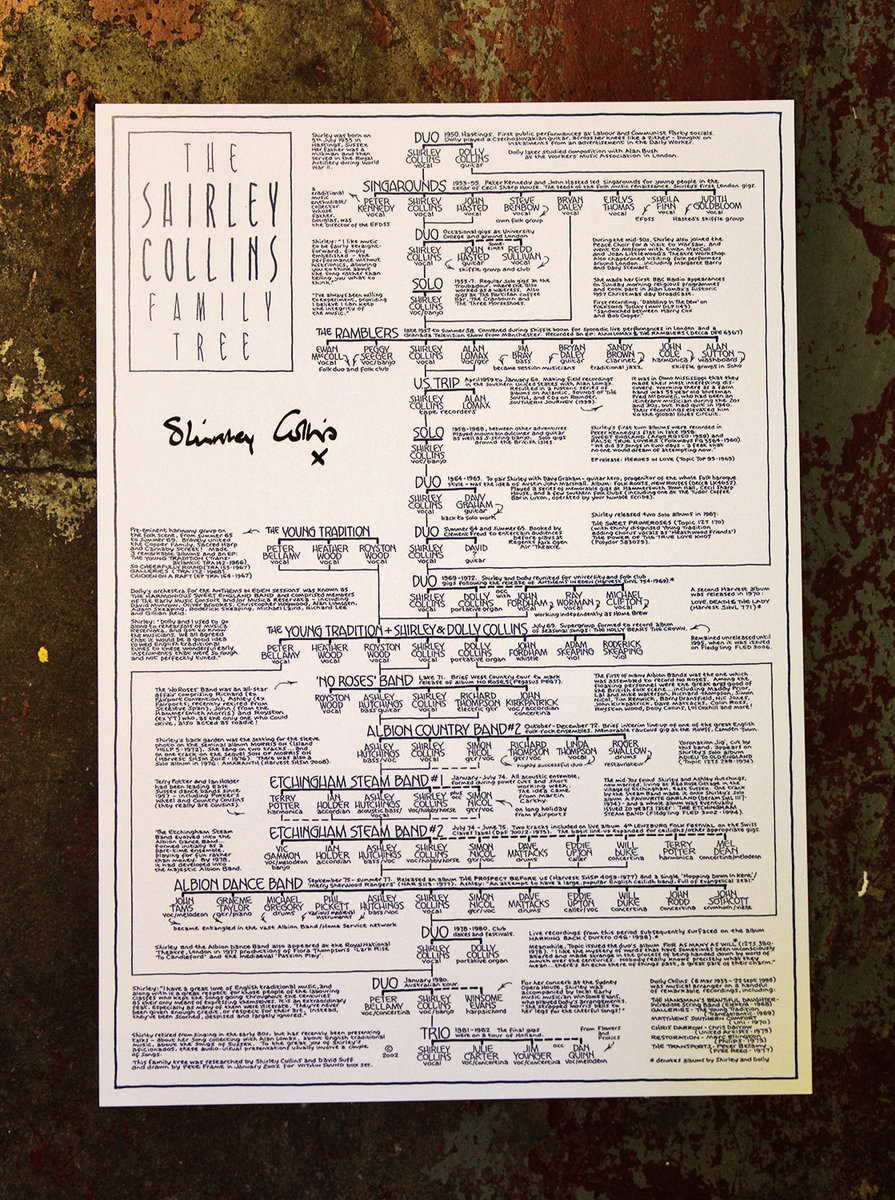
This is one of my favourites, the initial amalgam of Shirley Collins, linnet voiced doyenne of the early 60s folk movement, and Ashley Hutchings, soon to be her husband, and the guv'nor of the whole  english electric folk-rock movement a near decade later, founding, in turn, Fairport Convention, Steeleye Span and the various incarnations of the Albion (Country and/or Dance) Bands.
This first iteration of the Albion b(r)and was a remarkable mix, melding many of his chums from Fairport/Steeleye alongside such mavericks as Lol Coxhill, free jazz sax maven, and some of the champions of the unaccompanied choral song tradition, the Watersons.  (Shirley had earlier included the song on a recording with her sister, Dolly, in which the genesis of the version below is ever more apparent.)


This next version, an unashamed tribute to the first, to the extent of later royalties having to cross hands for the appropriation of the arrangement, was my first exposure to the wonderful and still extant 10,000 Maniacs. Short and simple, carried by the ghostly vocal of Natalie Merchant and the swell of keyboard in the instrumental middle eight, this was enough for me to give up my then immersion in only folk to explore the rest of their catalogue, as it appeared, in turn leading me on to the delights of the then not unassociated act, R.E.M. (Natalie and Michael Stipe were factionalised, or not, by their respective publicity machines into being a couple, 10k M often appearing as support to the more famous group, and Natalie sharing a vocal on 'Photograph', for a charity recording.) Whilst some of the sparkle may have dropped since Natalie left to plough her own furrow, 10k M forge on, with a thoroughly decent 2015 offering, 'Twice Told Tales', containing only songs culled from the trad.arr folk tradition, give or take a lyric by W.B. Yeats.


Sort of full circle, I guess, in the never more incestuous canon of the UK folk scene, Eliza Carthy, daughter of Martin, who appears on 'No Roses', as do her uncle and auntie, Mike and Lal Waterson. (Carthy is married to Norma, the 4th and final member of the celebrated Watersons.) Here she slows the song right down, and imbues it with a drama missing from the two earlier and jauntier versions, her voice retaining, however, the same degree of melancholia. 'Anglicana' was, arguably, her breakthrough solo recording, but she remains a powerful force on the circuit, with her Wayward Band.
As a footnote, the Watersons themselves were no stranger to May songs, with, strangely enough, this also turning up on 'No Roses.'

Keep it simple, get this, this and this. (Yep, all of 'em.)

Wednesday, May 16, 2018

May/Might: Might As Well Be Spring


Purchase "It Might As Well Be Spring"

"It Might as Well Be Spring" is a Rogers and Hammerstein composition from the 1945 film, State Fair.  As part of its designation as an "old standard", the song has been done numerous times, by some notable performers.

Sarah Vaughn did it, with a somewhat obtrusive Miles Davis trumpet line stepping all over her silky vocals.

Nina Simone covered the song for her first album, and it is tinged by the same dark sadness that all of her music simmers and broods with.

Peggy Lee took the mid-tempo ballad and swung it about, making it a snazzy, floor-filling dance tune.

Sinatra had a hit with it in 1961. But, Sinatra made everything a hit, didn't he?

The Bill Evans Trio turned the song into a smoldering yet bright instrumental, that might put you in the mood for a smoke and bourbon on the rocks.

I picked the song for the obvious title match with our chosen theme this month, but also for the light airiness of the tune, and certain happy feeling it brings to hear the timidly melancholy lyrical musing on the change of season as a stand in for silly love, and the metaphorical discovery of being out of season.

Here in the desert, Spring is the end of the season, and rather than a new beginning, there is a sense of sad goodbye that pervades everything. As the days get hotter, the whole place is winding down, the cafes are closing, the outside world we've made is being rolled back, pulled into storage and put undercover until the fall returns, when the sun won't be so relentless and we can all go outside again, blooming back into life. Spring is backwards here, and the desert is hard pressed to give up the only possession it owns. But, even if the time of year is wrong, when it's beautiful again here on the wrong side of the world, it might as well be spring. 

Monday, May 14, 2018

May/Might - Carl Perkins: The Rain Might Wash Your Love Away


purchase [Carl Perkins]

I don't 'specially follow Carl Perkins. It's a name I know, but I couldn't - before today - provide much background.

That's one of the side benefits of writing for SMM - you might learn something new: in this case, how is Carl Perkins associated with May/Might.

May/Might is a theme so open as to include <the month of May>, <any songs including May/Might in the title or lyrics> and most anything in between.
I went for the chance to learn something new by looking for songs with May/Might in the title: and there are many.

Carl Perkins - y'all know the name, but ... can you correctly associate it to:
a) Rockabilliy
b) Blue Suede Shoes
c) The Beatles' <Honey Don't>
d) May/Might
e) All of the above!!!

Correct Answer: e) - Carl Perkins did it all. RIP 1998. Age ~ 62

Perkins should rightly get credit for helping establish/define the rockabilly sound - a melange of hillbilly, boogie, honkey-tonk and the evolving musical styles of the early 1950's.
He wrote Blue Suede Shoes. According to Paul McCartney, he influenced the Beatles. And of course he wrote the May/Might song featured here.

Lots of other names come into play in defining the Rockabilly sound, but Sam Phillips, James Cotton, and a guy named Elvis Presley make the list of those most of us know. Most of them would note the influence that Carl Perkins had on their style and the genre.

Carl Perkins ... Chet Atkins ... anyone who can pick a guitar that way (and that includes Mark Knopfler with Chet Atkins and the Nitty Gritty Dirt Band and so many more of the same ilk) - folks that display a form of country pickin' with a jazz edge, if you please. I'll gladly listen. And wish I could come close.

While I also like the sax style of Spyro Gyra (and for me, the sax just rolls and the guitar picks the way I like to hear it), it's the roots of the style - the essential I-IV-V format with a significant variation that turns me on, and Carl Perkins does the job.


Friday, May 11, 2018

May/Might: You Might As Well Pray


Jules Shear (w/ Amy Rigby): You Might As Well Pray
[purchase]

Jules Shear has had a pretty interesting life, for a musician who has never really become famous. He’s released more than 20 albums since 1976, most recently in 2017, as a solo artist and with others. He’s acknowledged as a top-notch songwriter, and has penned hits for Cyndi Lauper ("All Through the Night"), The Bangles ("If She Knew What She Wants") and has had written or co-written songs recorded by artists as diverse as Olivia Newton John, Iain Matthews, Aimee Mann, Art Garfunkel, Alison Moyet, and Roger McGuinn. He dated Aimee Mann, who wrote a song about their breakup. He’s worked with Todd Rundgren, Tony Levin, Elliot Easton, Rick Danko, Jimmy Vivino, Rod Argent, and Chuck Prophet, among many others. Shear was the inspiration for, and host of the first 13 episodes of MTV’s Unplugged. And yet, he is one of those musicians who have had a long career tarred by the phrase “critically acclaimed, but commercially unsuccessful.” Although I don’t know for sure, I’ll assume that Shear has been able to make financial go of it for all these years, but I bet it wasn’t always easy.

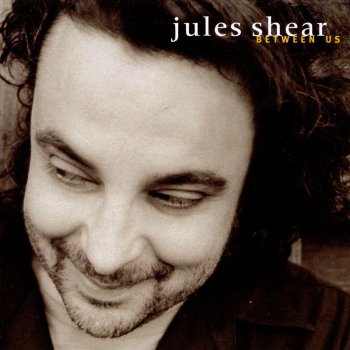
I remember seeing his second and third albums, as a member of Jules and the Polar Bears, released in 1978 and 1979, around the WPRB studios, but they made no musical impression on me. I have no recollection of having played them on the radio, but maybe the name was distinctive enough to stick in my brain. I’m also pretty sure that I don’t remember hearing any of Shear’s music until his 1998 album, Between Us. (I wasn’t watching MTV back when Unplugged was on). And I’m fairly certain that I heard songs from the album on WFUV.

Between Us quickly became a family favorite. It is an album of 15 low-key duets between Shear and (mostly) female singers (and one instrumental duet with bassist Rob Wasserman). The songs are charming, interesting, and I remember listening to them in the car as my family sang along (and I kept my terrible voice quiet). Some of the highlights are his duet with Suzzy Roche (“On These Wheels Again”), complete with barking dog, “Who's Dreaming Who,” with Rosanne Cash, and “Betrayal Takes Two,” featuring Angie Hart (best known, I guess, as a member of Australian band Frente).

But another favorite from the album was his duet with Amy Rigby, the wistful “You Might As Well Pray.” I think that it is about a couple looking at the damage they have caused each other, yet hoping that just maybe, with divine intercession, they can work things out. I could be wrong, of course, because the lyrics are a bit vague, but as is common in a Jules Shear song, they are interesting and well chosen.

I’ve picked up a few of his albums over the years, both recorded before and after Between Us, and while I have enjoyed them, nothing of his has stuck with me as much as that album. It’s an interesting thing about music, isn’t it? As good an album as I think Between Us is, it is far from universally appreciated, even among Shear fans (and it doesn’t even appear to be available in downloadable form anywhere). But it was a combination of the music, and the time in my life when it came out, and the fact that my wife loved it (and still plays it from time to time), that has cemented it in my mind. With music, like comedy, sometimes timing is everything. There are times when I hear a song on the radio, and it does nothing for me, but it reminds me in some respects of stuff that I like, and I wonder if I might have felt different about the song if I had heard it, say, 20 years ago. Or conversely, whether music that I love would leave me cold if I heard if first today.

Friday, May 4, 2018

Punk: Proto-Punk - Velvet Underground


purchase [Velvet Underground ]

The second group of  10 albums I owned included Janis Ian's '68 record, <The Secret Life of J. Eddy Fink> and the Velvet Underground's '69 <The Velvet Underground>.

At that time I had a mentor who directed my music selections and was ahead of his time - he also turned me on to Hendrix at about this time ('69)

I was certainly aware that these musicians were outside the mainstream (that would have been the first 10 albums I bought: Sgt Peppers, Between the Buttons, Smokey Robinson, Simon and Garfunkle..).

To me, the Velvet Underground had something meaningful to say - something beyond "corn flakes floating in a bowl" - lyrics that gave pause, music that made you sit up and listen. Something like what Elvis Costello had to say 20 years later.

It seems like I was listening to "proto-punk" without realizing it. Of course, that nomenclature only came about after the fact. Back then, it was a reaction to main-stream rock.


The general perception of Punk is <hard driving>, but I think that isn't a given: take a listen to this anti-most and see if it fits the "proto-punk" genre.