OK, so I'm going to run with this idea of a named couple a little further, given the groundswell (ha!) of acclaim to my previous post, mainly due to this also being a terrific track, long loved by me.
I am uncertain who the named Johnny and Mary might be, I can find nothing about them, but I'll wager it took a fair bit of relationship counselling, should they have ever stayed together, the lyric outlining classic partner dysfunction. It probably wasn't the John(ny) and Mary in the Dustin Hoffman/Mia Farrow film but the song could be a nice projection of their possible fate. I doubt also it was the inspiration for the 10,000 Maniacs spin-off duo of John and Mary, Lombardo and Ramsey respectively, but that at least allows a link. I always feel the song owes some little debt to the classic standard, 'Frankie and Johnny', tho' it was clearly after the failure of aforesaid counselling for that lyric to play out. I always associate them, anyway, but with upward of 256 versions of that staple, and several films, I won't pursue that one. Or not too hard, anyway.
Robert Palmer always stuck out a little from the company he kept, never quite embracing the tribalisms of any of his bands, or the image of the day. I feel he was always happier in the slick suits of his solo days than the hair and flares of earlier band Vinegar Joe. He seemed always a soul man, whether in a rock band or even in the song featured here, an early example of synth-pop. Even in, arguably, his most famous period, the MTV years of 'Addicted to Love', producing unashamedly rock anthems, as memorable to men of a certain age for the band in the video, he managed to maintain a sharp sense of funky. Indeed, his keenest work was inspired, arranged and backed by Lowell George, from deep south mavericks, Little Feat, fusing soul, jazz and country to a broad based rock and roll shuffle, together with the Meters, metronomes of the New Orleans melting pot of influences. He was also an early adopter of reggae, after moving, mid 70s, to a house nearby the famed Compass Point studios in the Bahamas. Not bad for a boy from Scarborough, on the north Yorkshire coast. It is strange to think he was considered almost an elder statesman when, in 1985, he hooked up with members of Duran Duran and from Chic, to form The Power Station, his vocals bridging the diversity of influences into a malleable fusion. All the more so when you remember he died, tragically young, at only 54, in 2003, some 15 odd years later.
Back to the song, living on after the author's death, passing through quite a few hands from Status Quo to Ellen Foley. But it is this version that lingers longest, sung by another englishman, from even further up in the north of England, another rough hewn lad happier in ties and tux, one Bryan Ferry, here fronting a rearrangement by Todd Terje, a norwegian electronic artist.
Even though I didn't grow up in the US, my American parents had those perforated, punch-out valentines card booklets for us kids. (Are they still being produced?) Send your sweetie a card. A love letter.
This past week I had my students write a "real" letter. You know? Paper and envelope kind of letter. In this day and age.
After the fact, it got me thinking: I wonder if Jeff and Lauren are a happy couple these days. I wonder if they would have been happier if they had been sending old-fashion letters instead of the electronic version. It's a dying art it is, writing snail mail.
<The Letter> seems to include both happy and unhappy in one swell foop: The couple must be happily in love: the love-letter included lots of love in the form of "can't live without you no more..." (happy), but the distance between is painful: "ain't got time to take a fast train ..."(unhappy). The couple is probably going to be happy when the singer gets there, don't you think?
The songfacts website suggests that the studio addition of the jet plane taking off may have contributed to the song's success (take yourself back to 1967: when people wrote letters and we spelled it "aeroplane").
If you watched MTV in its early days, you almost certainly saw the video above, of ‘Til Tuesday’s 1985 song “Voices Carry.” It was one of the most popular videos of that era, winning the MTV Video Music Award for Best New Artist in a Video, and singer Aimee Mann won Best Female Performer at the American Video Awards. It has taken up residency on most lists of all-time great videos, and it likely propelled the song to a No. 8 slot on the Billboard singles chart. Despite positive critical reception, the band never again reached that level of popularity, broke up after its third album, and Mann went on to a successful solo career (managed by ‘Til Tuesday drummer Michael Hausman).
The video, directed by D.J. Webster, was unusual, in that not only was it shot like a movie, it included dialogue over the music. It tells the story of an unhappy couple—a man, played by actor Cully Holland, dressed and acting like a rich, obnoxious Wall Street guy, and a woman, played by Mann, with untamed, platinum blond hair, the bassist in a New Wave band. The man is controlling and dismissive, denigrating her music as a “hobby,” and trying to get her to act and dress like the arm candy that he believes he is entitled to. Meanwhile, we see Mann playing and singing with the band, and when she returns home, her boyfriend yells at her and, to the extent possible in a video shot for MTV in 1985, forces himself on her, while he fantasizes about a romantic lovemaking session with a brunette, neatly coiffed, version of Mann.
The final, iconic, sequence (based on a scene from Hitchcock’s The Man Who Knew Too Much) starts with the couple, dressed to the nines (if anything, the video shows that Aimee Mann can pull off hats), in the audience at Carnegie Hall, surrounded by similarly well-dressed people. The boyfriend’s smug superiority turns to disgust when he notices that Mann has a small rattail braid peeking out from her hat, and as his annoyance increases, Mann begins to sing along with the song, increasingly forcefully, as the audience begins (not at all without cause) to look askance. As the boyfriend becomes more and more agitated, Mann begins singing louder and louder, before finally standing up, elbowing him on the way, ripping off the hat, displaying her wild hair, and belting out, "He said, shut up! He said, shut up! Oh God, can't you keep it down?” And as the audience turns to watch, the boyfriend buries his head in shame. In so many ways, this song, and especially the video, was way ahead of its time. Add your hashtags here.
Interestingly, Mann originally wrote the song, and the band performed it, about a lesbian relationship. But the record company was not that progressive, so they changed it to an abusive heterosexual couple. Cully Holland, the actor playing the toxically masculine boyfriend, died in 1991, with only three other credits on his IMDB page, and a little Internet research turns up that he died either of AIDS or suicide, and that he was likely gay. So, you had a song about lesbians turned into one about heterosexuals, with the aggressive male member of the couple played by a gay man.
The mind reels.
Although many of Mann’s songs deal with difficult and serious topics, she has a great sense of humor. I’ve seen it in her live performances, and it emerges in interviews. Understanding the place of the “Voices Carry” video in music history, she decided to parody it, in a video for her 2012 song, “Labrador.” It begins with a faux “Behind the Scenes” interview with director Tom Scharpling, played by Jon Hamm (who appears to be game for anything), suggesting that they do a shot-by-shot remake of “Voices Carry.” Mann states that she thought it was a stupid idea that she was tricked into doing when Scharpling claimed that the contract was a birthday card for his nephew, which she signed while on the phone, The video is, essentially, the same as the other one, although Mann, more than a quarter century on, and with long, straight hair and dark framed glasses, looks nothing like she did in the original, and the boyfriend is played by drummer Jon Wurster, whose high-pitched voice and little pony-tail mocks the Wall Street bro look of his predecessor. There are other fun bits in the “Labrador” video, which actually looks like it was shot in New York (Boston was the location of the original, except for the façade of Carnegie Hall), but I’ve written too much already, so just watch:
Is there a more archetypal US couple than Jack and Diane? Well, of course, the answer is an unreserved yes, but, ignoring that, this couple have maintained an ongoing virtual life, come what may, in the nearly 37 years since John Mellencamp brought them first to our attention. Hell, he wasn't even John Mellencamp then, being still the John Cougar some manager thought sounded cooler than his given name. But ain't it a great song?
The song very nearly didn't make it, Mellencamp having dumped it, being unable to get his band to give the accompaninent he heard it as needing. It took Mick Ronson, yes that Mick Ronson, to insist he give it another crack, this time with Ronson on additional guitar. The iconic hand claps shouldn't even be there, being initially just part of the click track to facilitate the arrangement. But it just sounded better with than without. And should you still be pondering the Ronno/Mellencamp linkage, most odd in retrospect, the Spider from Mars and the midwest journeyman roots artist, remember then that John, then Johnny, Cougar was being pushed as a slightly Bowie-esque retro-rocker in the mid 70s, and that the aforementioned manager was Tony DeFries, the famous main man of MainMan, who also looked after Bowie. Anyhow, this song was many years after the DeFries management, but I am sure that's where the pair of them first met. Ronson subsequently invented himself as a go-to guitarist for anyone from Bob Dylan to Ian Hunter, ditching the spandex and stack heels along the way, whilst DeFries ditched Cougar to the no lesser delights of Rod Stewart's management team and Billy Gaff.
The song did well. Number 1 in 1982 for 4 weeks, still his biggest hit. It has also given birth to a number of references across music and film, as the names Jack and Diane have almost come to be generic of just about any young couple in their struggle to stay together. It was certainly the first I had heard of the artist, his earlier US hits having failed to translate across this pond. And I heard no more of him for some time, despite ongoing success in the US. I guess my tastes had always been a tad rootsier than the charts, and I was developing a taste for Steve Earle, as he ploughed his country into a rock furrow. What I didn't know was that (by now named) John Cougar Mellencamp was traversing the opposite direction, in 1987 they each perhaps halfway in the transition. Earle produced 'Guitar Town' in 86 and, a year later, Mellencamp produced 'The Lonesome Jubilee', still, for me, his masterpiece.
Of course he has made many a record since then, most of it in a similar vein, much of it to a high standard. A heart attack slowed him a little in the 90s, yet ironically boosted his status. By his return to performance he was being greeted as a similar icon to the working man as Springsteen, and would appear on stage with the Bob Dylans, Willie Nelsons and Neil Youngs of this world. And so he has continued, increasingly a politicised performer, albeit with views fairly constantly to the left of centre, no small critic of the current regime. (Indeed, I hadn't realised until this day that he was, in fact, one of the founding fathers, with Young and Nelson, of Farm Aid.)
So what of Jack and Diane? Well, they made a (brief) reappearance in the 1998 song, 'Eden is Burning', but the song is, presumably, so allegorical as to give no personal update. But I'll bet he worries who they voted for, last time around. But he still plays it.
Valentine’s Day comes during the end of this theme, so it seemed like a good time to look at happy and unhappy couples. I’ve written before about Joe Jackson’s career, so I won’t repeat myself, but one thing is clear about Jackson is that he writes very sharp, often cynical lyrics, but they often demonstrate ambivalence, and his song, “Happy Loving Couples” is a fine example. My parents did pay for an expensive education, so let me bring in Tolstoy for a second—Anna Karenina somewhat famously begins, "All happy families are alike; each unhappy family is unhappy in its own way.” On the surface, that’s sort of what Jackson seems to be saying here--
Happy loving couples make it look so easy Happy loving couples always talk so kind
And the narrator seems pissed at that—
Until the time that I can do my dancing with a partner Those happy couples ain't no friends of mine
And he aspires to that sort of easy couplehood, wearing matching clothing and reading Ideal Homes magazine. But the ambivalence in the lyric is really, I think, that his anger is not simply that he’s uncoupled, but that he realizes that a relationship takes work, and really isn’t all that easy.
The song, like many on Jackson’s debut, is rooted in classic pop/early rock, but sped up and with an edge that put it into the New Wave genre (and to be fair, there’s more than a whiff of Elvis Costello’s Less Than Zero in the chorus), and it would be criminal not to mention Graham Maby’s great bass playing on this song, and most other great Jackson songs.
I didn’t date all that often in my high school and college days (shocking, right?), and sadly more than once found that Valentine’s Day was the end of a relationship, and not the beginning. Or even the middle. But I’ve now been married for more than 30 years to the love of my life, and I know (because people have told me) that they think that our relationship seems easy, and for the most part, it is. But trust me, it isn’t always, and what seems effortless to the outside world does take work, every day. And we don’t wear matching clothes or read home magazines (at least I don’t), but we do occasionally watch Fixer Upper together, because aren’t Chip and Joanna a great, happy (looking, at least) couple?
Kind of in the middle of the James Bond/Man from UNCLE and Danger Man (in the UK) came Johnny Rivers' 1966 hit <Secret Agent Man>.
Written by the duo P.F.Sloan and Steve Barri, it was Rivers who took it to the top of the charts (#3). Rivers, along with Sloan and Barri, was under contract to Lou Adler of Dunhill Records. Curiously, once again, the Ventures again made the most of the times by recording this in addition to their James Bond Theme from back in '62.
If you sense a certain similarity between the two songs (Bond Theme and Secret Agent), that's because ... well ... it's a life of danger. And that guitar is what danger sounds like. And because there is a certain amount of ... plagiarism (No... building on what came before).
That said, seems to me that Johnny Rivers hasn't received the credit he's due. Don't forget: he's also the man who sang the (again #3) hit the following year: <Baby, I Need Your Lovin'>. There's an informative interview/article in Forbes magazine that provides some sense of the man and his life.
Sloan himself tells his version of how things went down here.
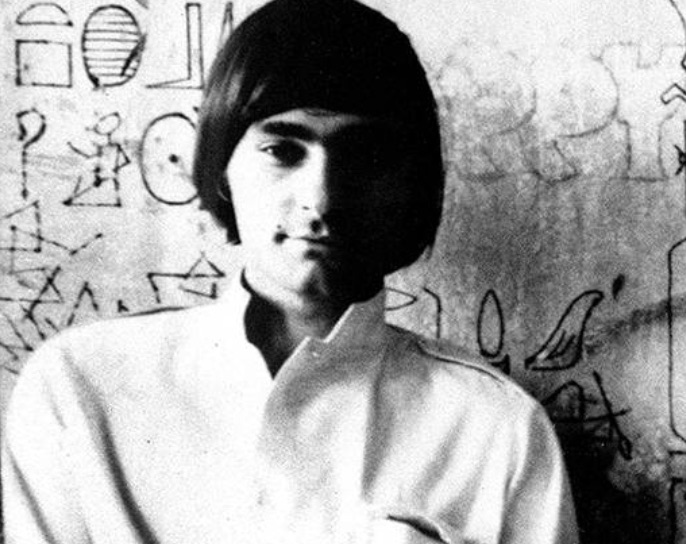
Sloan and Steve Barri, incidentally, went on to found The Grass Roots. (Sloan below)
If, like me, you find a tot of melancholia is the best pick-me-up on a frosty February morning, you could do a whole lot worse than immersing your ears in this fella. You may know him better as the vocalist and front man of Idlewild, that scottish institution of melodic and intelligent rock, but it is in his other guises I find more pleasure.
Broadly this what I call Glaswegiana (or Weegiana, the derivative), that melting pot of indie-rock and traditional folk, with generous side-orders of country, jazz and classical, anything really, dependent upon who's in town. You can find a fiddle as equally as an electric guitar, an accordion as a synthesiser and bagpipes as a saxophone. Drums, real or electronic, optional but often. Why (Glas)We(e)giana? Well, apart from tripping neatly off the tongue, much of it derives in or around Glasgow, Scotlands 2nd city, itself a melting pot, as the industrial revolution brought in waves of highlanders and irish, anyone dispossessed and looking for gainful, often the detritus of lives lost elsewhere. Whilst the music or musicians might not derive from the city, it is where it coalesces, a sort of hibernian delta triangle. Strong drink has never been far away from the heart of this city, and where there is drink, there is song. So there has always been rich and vibrant musical scene, the city being the breeding ground for bands as diverse as The Sensational Alex Harvey Band, Simple Minds and Primal Scream. But it is after hours, after sell-out shows at such iconic venues at Barrowlands and King Tut's Wah-Wah Hut that the seeds of Weegiana tend to be sewn. The yearly Celtic Connections festival, 2 or 3 weeks of gigs and shows across the city, bears ample testament to this. Nominally a "Folk" festival, the list of names appearing shows just how wide a palette this term has become, and there are always specials, one-off commissions and collaborations that typify my thesis. Here's this years programme. And the sessions, come-all-ye's of whoever has been playing each night, The Festival Club, held nightly at the Art School, from the time of curtain down at all those other venues until the wee hours, exemplify this still further.
But Woomble, more about him. From Irvine, an ancient burgh on the Ayrshire coast, south west of Glasgow, and with a somewhat peripatetic childhood, holidays in his parent's camper van and period of relocation to the states, he ended up in Edinburgh, where the nascent Idlewild came to germination. Hooking up with Colin Newton and Rod Jones, drummer and guitarist respectively, in 1995, the band were initially renowned more for enthusiasm than expertise: one famous early quote had them described as the "sound of a flight of stairs falling down a flight of stairs". However, their gamut morphed relatively swiftly, with the endorsement of influential radio DJ, Steve Lamacq, from mere clatter to a clinging wraparound sound, evocative both of grunge and a powerpoppier sound, not dissimilar to early R.E.M. Indeed, such comparisons, as they lurched into the 2000s, became commonplace, with no diminishment by the comparison. I first came across them about this time, actually as support to R.E.M. in the late summer of 2003, playing at Old Trafford, in Manchester, UK, the home of Lancashire cricket club.
American English/Idlewild
I liked them, but I liked a whole lot the more folk tinged direction of his debut solo album, entitled the same as the song here featured, in 2006, songs soaked in the spray across windswept jetties of the scottish island, Mull, he had migrated to. In collaboration with others from both folk and rock backgrounds, this epitomised the scottishness my heart adheres to. Then, linking up with Kris Drever, from Lau, folktronica mavericks, and the mercurial John McCusker, fiddler extraordinaire, currently the delight of both the Transatlantic Sessions, another baby of Celtic Connections, and of Mark Knopfler's current band, they set off as a trio, album to follow. Along the way he joined the sprawling collective, Reindeer Section, the ensemble conglomeration of whomsoever Gary Lightbody, of Snow Patrol, could find in Glasgow during those years at the turn of the century: members of Belle & Sebastian, Mogwai and Arab Strap, amongst others. Marvellous times indeed, encapsulated still further by his curatorship of 'Ballads of the Book', a 2007 album that brings together the cream of then scottish culture, both musically and literary. As well as members of band/individuals as disparate as Teenage Fanclub, King Creosote and the Incredible String Band, premier folkies like Alasdair Roberts and Karine Polwart were present, collaborating with writers such as A.L. Kennedy, Ian Rankin and more. Many names appear time and time again across all of Woomble's involvements, musicians unfettered by their day job, just wanting to play. In 2011, he continued his solo output with 'The Impossible Song and Other Songs', describing the process here.
The Weight of Years/Ballad of the Books
I guess there is less money in such arty fare, and it was to Idlewild Woomble again returned, since which time he has bounced between the two, band and solo, gradually mingling the sources, a fiddle player now part of the live Idlewild experience, and newer Idlewild members appearing simultaneously in his solo band. And the style has narrowed between the two, as more albums appear, band and solo. I saw his solo show perhaps a year or so after "My Secret" , and it was all fiddles and acoustica, a glorious show, yet last year, to commemorate solo album number 4, "The Deluder", it was he and the current Idlewild bassist, Andrew Mitchell/Wasylyk on guitar, playing, largely, a lot of Idlewild songs in an unplugged format. (I picked up the Wasylyk album from the merch desk.....)
Idlewild are on tour this summer. I remain undecided.
Changing the tune a little, in case I find myself accidentally convincing myself I don't like Idlewild, here's Woomble himself, a fine writer, who has penned regular monthly columns for Glasgow's Sunday Herald newspaper, as well as keeping up a blog on his personal website, www.roddywoomble.net. It's about breakfasts.
Growing up, as a good liberal child in the late 1960s and early 1970s, the FBI was the enemy. Under the leadership of director J. Edgar Hoover, and after his death, the FBI was instrumental in trying to suppress the civil rights and anti-war movements, discriminate against gays, and generally act as a tool of the “Establishment.” I personally have no problem with enforcing the law, if done fairly and within the bounds of the law—and so I have no problem with the FBI’s anti organized crime or terrorism work, for example—but with respect to the civil rights and antiwar stuff, they definitely crossed the line. Which may be why, in part, it wasn’t hard to watchThe Americans, and find myself sorta pulling for the Russians, even though watching the show demonstrated that they were also pretty horrible.
It is interesting, though, that now it is the “leader” of the American government himself who is the biggest critic of the FBI, despite the fact that he appointed its director. And let me be clear—former director Comey deserved to be fired by whichever candidate won the 2016 election because of the way he botched the handling of the investigations of both candidates. But to have done so for the explicit reason of impeding the investigation into alleged conspiracy with Russia to influence the election is simply wrong, and probably illegal. So, it is amusing that these days, it seems like it is the liberal Democrats who seem to be bigger fans of the FBI than the Republicans.
I doubt that the FBI is that big a deal in England, much as the band The Shadows was never that big a deal here. (How’s that for a clunky segue?) But in England, they were huge, with multiple hits, and lead guitarist Hank Marvin influenced pretty much every great English/Canadian/Australian guitarist, including RichardThompson, Andy Summers, Brian May, Steve Howe, George Harrison, Neil Young, Tommy Emmanuel, Eric Clapton, Pete Townshend, Mark Knopfler, Peter Frampton, and Jeff Beck. Just to name a few.
Although they started out as the backup band for Cliff Richard, maybe the poster child for “huge in England, mostly unknown in the US,” the Shadows went on to fame in their own right, mostly as an instrumental band. “F.B.I.,” released in 1961, was not their biggest hit, but it did hit #6 on the UK charts (and never charted in the US.)
Ian Hunter opened his 1980 live album, Welcome to the Club, with a cover of the song, featuring his band’s guitarist, Mick Ronson, who has also been quoted as saying that Marvin and The Shadows were influences on him. (Both Ronson and Marvin appeared on Roger Daltrey’s solo album, One of the Boys, for what that’s worth). It is a great way to kick off a great live album that includes a bunch of Hunter’s and Mott the Hoople’s best songs (and some other interesting covers). I remember playing this album more than a few times at WPRB.
The aforementioned Brian May also covered the song on a 1996 tribute album to Marvin and The Shadows, as have others.
James Bond, The Man from UNCLE, Our Man Flint ... the 60s spawned an interest in spies that played out in various TV and movie productions both in the US and in the UK.
Way out in San Fransisco, things were headed in a different direction. The "kids" out there tended to look askance at government antics - establishment lies and secrets. Some thumbed their noses, some were outright in-your-face hostile, in the streets protesting the government, while others chose to share their anti-government message in lyrics and song. Among those choosing music was Jefferson Airplane. Check out the lyrics for We Can Be Together.
Just a few weeks back, J.David noted the passing of Marty Balin, but in doing so, probably didn't anticipate that someone else would bring it back around in the Spies/Secrets theme.
Jefferson Airplane Takes Off. One of the earliest albums I owned. My musical proclivity then, as now, was pretty eclectic. Probably my favorite from this, their first album is <Let's Get Together> - a full on plea for the hippie-dom philosophy of "we are all brothers (and sisters)". After that track? It's a toss-up between <Come Up the Years> and <It's No Secret>.
<It's No Secret> isn't a song about spies. It's a plaintive Marty Balin love song. This, of course, before Grace Slick. And there doesn't appear to be any spying going on here. After all "it's no secret".
But consider the lyrics (credited to Balin):
As I get older the years they get heavy for you
Oh is it any wonder why I feel that my whole life is through
Yeah, when I stop feeling how strong my love is for you
Oh, know I'll be empty wanting your love like I do
This is nothing like the Beatles <Love Me Do>. The chord changes are beyond the Beatles' I-IV-V, and the notion of love that the song expounds is beyond the innocence of the "Love Me Do" type.
Incidentally, there are other <It's No Secret>s out there - because sometimes love IS a personal secret:
Elvis on a totally different track (he sings "... no secret what God can do"):
Daa-daaa-daa-daa-da-da. I began to sing the guitar part that frames this song within a second of seeing the theme and, despite having done the Doors twice before, here and here, I knew, instantly, it was Doors-time again. Mind you, in my house it is always Doors-time, but, on this occasion, rather than again preach how wonderful I was/am to be such a precocious acolyte, even before I began to shave, this is a confession more to deprecate that sense of special we all, if secretly, have about ourselves. Especially when looking back with rose-tinted. So yes, I bought 'L.A. Woman' in the year of release, but, apart from THE single, I hadn't actually picked up or heard much else about the band in the intervening years. OK, maybe THAT single as well, but hardly die-hard fan. I think it was probably half a decade later that I heard the song featured today, and, rather than having spent the intervening years hoovering up all their early product, it was from that staple of a civilian, a greatest hits selection, albeit neither labelled as hits and with a groovy cover and title, Weird Scenes Inside the Goldmine, the title being part of Jim Morrison's rambling discourse, midway during 'The End'.
I have loads of greatest hits selections, from all the obvious and compulsory acts, the Eagles, the Stones, to all those cheapo supermarket selections from groups who were pushing their luck to be ever even described as one-hit-wonders. (I can't resist a bargain.) I may also have proper records by these same bands, occasionally bought before, usually after. In my teens and early twenties, cashflow prevented the acquisition of back catalogues or every release as it dropped, so it made good sense to use them almost as samplers. In truth, collections and compilations weren't then quite so ubiquitous either, as most of the bands I liked hadn't yet had careers long enough to justify the conceit. 'Weird Scenes' was a terrific compilation, 4 sides of vinyl encapsulating the essence of the Doors. It didn't matter I had 4 of the songs already, I adored it. (OK, nearly, being never able to hack 'Runnin' Blue' and did anyone really rate 'Horse Latitudes'? Really?)
This song comes from 'Morrison Hotel', the penultimate album, prior to 'L.A. Woman', and one that I have subsequently invested in. After the more experimental 'Soft Parade', a record I later learnt I didn't much like, it was deemed a return to form. I also discovered it was the groups most successful recording in the U.K. market. A Morrison write, it is supposedly about his troubled relationship with Patricia Courson, lifting it's title from the Anais Nin novel, 'A Spy in the House of Love', perhaps shortened for copyright reasons, even if the first line is just that. A vaguely blues format, framed by Robbier Krieger's exquisite guitar motif, Morrison doing his best croon over the top, whilst Ray Manzarek tinkles just the right side of hotel-lobby. A slow walking bassline is provided by guest bassist, Ray Neapolitan (me, neither), whilst John Densmore just does what he does best. The main hook in the song is in the middle 8, emphasised by the ensemble crashing to earlier momentary silences before Morrison declaims passive-aggressive big time: "I know your deepest secret fear. I know everything".
I have never been much for live recordings, and so it was only during the penning of this piece that I found myself sufficiently roused to look for a live version, especially as it now seems that every Door's concert ever has been made available. It's fair, I suppose.
But, in my searches I came also upon this, an alternative version, presumably ditched in favour of the one used. I think they used the right one.
This theme was inspired by the recent revelations that there is a chance that the President of the United States has been acting as a secret agent of Russia, possibly our country’s biggest enemy. This potential disloyalty is unprecedented, I think (there were some who thought that Jefferson was too pro-French back in the wigs and guillotine days, but there are differences).
On the other hand, Trump is consistent about one thing-- he is fiercely loyal to himself, and if he is working on behalf of Russia, it is because he is trying to protect his money or his reputation. Or both. Or, I guess, it could just be because he lacks any understanding of American foreign or domestic policy. Or all of the above.
Plus, he has lied more than any prior president—making more than 8,000 misleading statements or blatant lies in two years. The whataboutists, of course, point out that President Obama’s claims about his health care legislation were not 100% accurate, so that’s one. 7,999 plus to go.
It seemed to me that Jonatha Brooke’s song, “Secrets and Lies,” from her 1997 album, 10¢ Wings, fit the bill. It should not be confused with the 1996 Mike Leigh film Secrets & Lies, or the ABC show from a couple of years ago, Secrets and Lies, neither of which I have seen.
Brooke and Jennifer Kimball (a childhood friend of my wife’s) began singing together at Amherst College, and recorded a couple of albums together as The Story, before breaking up. 10¢ Wings was her second solo album (although the first was credited to Jonatha Brooke & The Story, but Kimball was not part of it). “Secrets and Lies” is not about politics, or about secret agents, but about the everyday evasions and withholdings that underlie so many of our relationships, and how one perseveres.
It is a symptom of the state of the music business that Brooke, a great songwriter and singer, never had the success that she, and others, expected. In fact, as she told sportswriter Jeff Pearman (writer of a great book about the 1986 Mets, among other things--the description of the plane ride home from the World Series is still one of the funniest and grossest things I've read), in a 2013 interview on his blog:
it totally sucked getting dropped when “Secrets and Lies” was just beginning to chart at Triple A radio … MCA actually called the stations that were playing me and told them to stop.
Read that again—her label dropped her and called radio stations and told them to stop playing the song that they had released. I hope that the program directors either told MCA to fuck off, or said, fine, but we are going to replace it with a song from another label. Any other label.
For what it is worth, MCA Records had been subsumed by Universal (run by music biz legend, and briefly my formerboss, Doug Morris, who hired Jay Boberg, who I’m pretty sure I dealt with when I was at WPRB, to run the label), which itself went through all sorts of management and structural changes, and in 2003, the MCA name was essentially retired.
Brooke had the last laugh, outliving MCA, releasing a bunch of albums on her own Bad Dog Records, including an album of songs with unreleased Woody Guthrie lyrics (in the Mermaid Avenue tradition), and performing a well-received Off-Broadway one-woman show, My Mother Has 4 Noses, about her relationship with her mother, who suffered from dementia.
Whereas spies aim to be as secretive as possible, there's no better song to scream "SECRET AGENT" than the universally recognized James Bond Theme. Heck, the first measure of the song is enough to tip you off.
There's been a fair amount of words spent trying to clarify who should be credited with writing the song: the courts seems to have established that Monty Norman was given the job and John Barry was asked to clean it up. Those distinctive first notes are, however, more or less what you can hear in Monty Norman's "Good Sign, Bad Sign", and that makes a strong case for his authoring claim. But ... John Barry (and his "7") turned it into what we recognize today.
However, it was the Ventures' version that got the recogniton/air-play that propelled the song to the top of the lists back in '62.
That said, the iconic guitar you hear on the film version is from a guitar player named Vic Flick. He was part of John Barry's group (of 7). The distinctive [echo/reverb??] sound of the guitar is partly due to the limitations of recording technology in 1962, and partly the capabilities of relatively new electric guitars.
Flick's credits hardly end with this: he played on recordings for Lulu and the Beatles, among others.
In the late 80s, Flick also got together with Clapton to record another possible song for Bond's <License to Kill> (that was not finally chosen)
There are a bunch of other rejected Bond theme versions, including those by :
Blondie
Alice Cooper
Johnny Cash
Amy Winehouse
Flick passed away back in 2009 - too far back for this year's <In Memoriam> theme ...
It wasn't more than about 1 minute into my decision to post about Avicii that I realized I might be in over my head. Well, at least headed for "another chance to learn more than I knew yesterday".
His news-worthy demise back in April caught international media's attention: our somewhat morbid focus on famous deaths? Rolling Stone mag's obit headlines noted "Tim Bergling shaped EDM ..."
And I went: Oh no, what's EDM? Maybe you know the acronym EDM. I did not. It's Electronic Dance Music. Ummm... a lot is EDM, these days, isn't it? Much of what we listen to is electronically adjusted: electronic adjustments such as Auto Sense.
And way back in my Amiga 500 days, I used a piece of software called ProTracker to paste together bits of electronic music (mod files back then) to create music that included copied clips/extracts of other people's music.
So .. we've got the roots of today's Electronic Music going on back in the 80s. But what's the addition of the D? that makes it so so different? How - in 25 years years, could I fall so far behind trends? And what is it about Avicii that sets him apart?
Well, 25 years in IT/Tech is more than a generation: and, if you grew up like I did with the transition to multi-track recording, the possibilities of digital/computerized/ tech enabled sound mixing are hard to keep up with. I've downloaded and configured and tried to figure out various mixers and sound editors, but I haven't got the time to learn them all. It IS a profession all by itself.
And so, a 20 year old with time/energy and focus to put into learning this on his hands already has me beat (I was 20+ back in my ProTracker days)
A much more influential individual than the blank expression that meets the hearing of his name in most circles, O'Flynn was the first uillean pipe player to gain notice to a rock and roll audience, as a core member of the first Irish traditional act to really break through to the same. No, I don't refer to either the Chieftains or to Sweeney's Men, pacesetters though they were. I refer to the mighty and majestic Planxty. The Chieftains were important, for sure, breaking down barriers and bringing the music into respectability outside of otherwise hooleys and bar sessions, latterly also for their work with major names in the fields of folk, country and rock. And Sweeney's Men, who included O'Flynns's later Planxty bandmate, Andy Irvine, took the mainstream safety of the Clancy Brothers into a wilder and more bohemian sensitivity. Go compare the difference between the Chieftains handling of this tune, 'Give Me Your Hand' ('Tabhair Dom Do Lamh') by the blind 17th century Irish harpist Turlough O'Carolan, with the altogether more exuberant Planxty version below, the tune kicking in at 2.27, following the song ahead of it:
I bloody loved them. They were hitting their prime in the early 70s, just as I was hitting mid-teens and expanding my then musical palette from the pop charts to anything and everything I could get my ears on, usually directed by the inkies, the music influential press that governed all the hip from the non hip. Planxty were seriously hip. With a line-up of O'Flynn, Irvine, Donal Lunny and Christy Moore, they played traditional irish jigs and reels, airs and ballads, seamlessly integrating their own material into the same. With two fine singers and an instrumental prowess encompassing guitar, bouzouki, mandolin, bodhran, hurdy-gurdy, whistles and, most importantly, uillean pipes, that irish bellows driven bagpipe, capable of a plaintive wail, swirling and bending notes, like nothing on earth, one part banshee, one part lullaby. Yes, I had heard a little of this instrument before; the aforementioned Chieftains had introduced me to it, and Horslips, the Dublin folk-rockers had deployed it a little. But nothing like O'Flynn, who could make it sing, scream, howl and lilt, sometimes simultaneously. This is his description of the instrument. And I haven't even mentioned his whistle playing, both normal whistle and low, a few blasts thereof instantly evocative of joy or sorrow, dependent on mood.
It would be no hyperbole to say this band revolutionised how the world had previously seen irish music. From a twiddley diddley dee diversion, this was suddenly to be taken with the utmost seriousness, alongside and in the same breath as the Stones and Bowie. But with more fun. O'Flynn was possibly the quiet man of the group, more soberly attired and less hirsute than his compadres, but it was his solos that had the crowds in awe. A number of incarnations of this band took place over the years and the decades, as individual members peeled off and others joined in, Paul Brady and Matt Malloy to name two, the band formally breaking and re-forming twice, the last such being 20 odd years after their debut, in 2003-5. But whenever it was called Planxty, so always there was O'Flynn.
After the final demise, and in the earlier breaks, O'Flynn was never short of work, with a who's who of session work that ranged from the folk circles he began within to Kate Bush, Mark Knopfler, Emmylou Harris and more. With Planxty no more there was a short period as and in LAPD, he, Irvine, Lunny and Paddy Glackin, the title being to represent Liam, Andy, Paddy and Donal. Hell, on past form they could have called it Planxty and got away with it, but they didn't. However, health was beginning to cause concern, and O'Flynn left in 2013. A private man outside music, he died in March after what was called a long illness. Here's a video of the song featured a little above, 'As I Roved Out', in a live and later setting, Planxty at Vicar Street, Dublin, in 2004, the pipes part transposed to whistle.
His legacy lives on through the wave of younger players who have followed him and been inspired by him, with both pipes and whistle commonplace in the repertoire way beyond any silo of trad. arr.
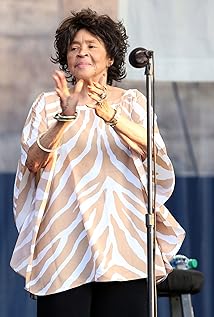
The elephant in the room here is Aretha Franklin, a musical titan who died last year, and who I suspect will not be discussed during this theme on the theory that her passing has gotten its due elsewhere. Franklin, of course, started out in gospel music, before expanding her audience to many styles of secular music. When Franklin, who grew up in Detroit, was a young woman on the gospel circuit, she would often stay in the Chicago home of Pops Staples, where she became friendly with his children, including Mavis and Yvonne who were a few years older. Yvonne Staples passed away in April, at the age of 80.
Like Franklin, the Staple Singers started in gospel before branching out. Yvonne, the third Staples child, was a wonderful singer, but did not seek the limelight, deferring to Mavis’ extraordinary gift. Although Yvonne was always willing to be part of the family act, she often dropped out of performing, focusing on the group’s business matters, or her other interests. However, if Pops called, she returned. As she once said, “When Daddy asked us to do something, we did it. No questions asked.”
Yvonne and younger sister Mavis were very close, and when Pops died in 2000, Mavis became depressed and stopped performing. As Mavis recalled, her big sister let her have it: “Yvonne said, ‘Mavis, your daddy would want you to keep singing. You’ve got to get up. You’re daddy’s legacy.’ … And that’s when she started with the other words: ‘Damn it, Mavis,’ and worse. It woke me up.” Yvonne toured with her sister for years, contributing harmonies and often sitting regally in a chair while Mavis played to the crowd. And apparently, Yvonne was the one who cracked the whip to make sure that the band performed at their best.
According to Mavis, as Franklin’s and the Staples’ careers took off, they grew apart. But when Pops died, Franklin invited Yvonne and Mavis to visit her in the Hamptons, and Yvonne’s death led to Mavis and Aretha reconnecting for some phone calls before Franklin’s death.
In 1987, Franklin released a gospel album, One Lord, One Faith, One Baptism, on which she and Staples performed a version of the hymn “Oh Happy Day,” which became a hit in 1969 in a version by the Edwin Hawkins Singers. Arranged by Hawkins, from an 18th Century hymn originally by Phillip Doddridge, the song was a surprise worldwide hit, and featured the powerhouse vocals of Dorothy Combs Morrison, who also toured with, among others, Van Morrison and Boz Scaggs.
Hawkins, who died just over a year ago at 74, was backing his family’s gospel group on keyboards by the age of 7. He was co-founder of the Northern California State Youth Choir of the Church of God in Christ, which recorded “Oh Happy Day” as a fundraiser, but in early 1969, it came to the attention of Abe “Voco” Keshishian, an influential DJ at underground station KSAN in the Bay Area, who started to play the song. You can see the original album packaging here. Then, Dan Sorkin, a morning DJ at influential AM station, KSFO began pushing the song. It generated enough buzz that a bidding war to release the song broke out, with Buddah Records getting the rights.
Released under the shorter, less gospel sounding name of the Edwin Hawkins Singers, the song became a crossover hit, and won a Grammy for Best Soul Gospel Performance. Apparently, the song's departures from tradition was divisive in the gospel community, but eventually became influential both by opening the door for other gospel musicians to include more pop sounds in their music and by making gospel-based music more palatable to secular music fans. Thus paving the way for both Franklin and the Staples to become successful mainstream artists.
In 1970, the Singers, along with Melanie, had another hit, "Lay Down (Candles in the Rain),” but basically that was in for the pop charts, although Hawkins won a total of four Grammys in gospel categories, the most recent in 1993.
Another "cheat" post for this theme, in honor of the great Marty Balin, one of the founders of Jefferson Airplane, whose blue-eyed soul voice featured in many of the Airplane's greatest songs, as well as probably Jefferson Starship's best. And he got knocked out on stage by Hell's Angels at Altamont. Back in 2016, over at Cover Me, I wrote a long birthday piece about Balin, featuring covers of some of his Airplane, Starship, and solo songs. You can read that here. I was a big Airplane/Starship fan back in high school, as you probably can guess from that Cover Me piece, and thesetwo, not to mention a few things on thissite.
Balin died in September, at the age of 76. Here's his obit from Rolling Stone. Grace Slick, with all of her substance abuse and health issues, lives on--she'll be 80 in October, by the way.
I remember the first time I heard the Cranberries. The musical soundscape was pretty drab and uniform in the early 90s, you could have either grunge or britpop. So this string driven ballad made you falter, first with the sweeping orchestration, secondly with the angular and elfin nature of the vocal, unmistakably of the west of Ireland, like nothing quite else at that moment. Perhaps Sinead O'Connor would be the only, if a lazy, reference, but Dolores was more carefully broken glass than Sinead's crystal. I think I bought the album, 'Everyone Else Is Doing It, So Why Can't We', the same day. I had planned to write how, sadly, the rest of the record carried less punch, but, actually, on listening again this morning, I find I can't. Always a sometimes uncomfortable mix between the Linger-alike ballads and the more jangly group efforts, strangely it is the latter that stand up better. I seem to recall the band were derided as being somewhat pedestrian plodders, stripped of the strings and the never less than remarkable vocal calisthenics. Reflection reveals such opinion to be overly harsh, the backing being actually just right, never flashy, always solid, if a little too enthusiastic on the chorus pedal. (Hell, what do I mean "too enthusiastic"; there's no such thing! I love chorus pedal and, let's face it, it was compulsory in the Irish Republic at the time.) Of course, the public don't listen to the critics, and the band went huge. O'Riordan was 21.
Second album, 'No Need To Argue', was an altogether more muscular effort, again launched by the extraordinariness of the lead single, 'Zombie'. With more than a hint of the prevailing grunginess of the era being absorbed into their singular trademark, I still adore this song. The killjoys who lampoon the lyrics can do so all they like, I happen to think the tanks and the bombs and the bombs and the guns has a naive charm. They're a pop group, she's a pop singer, for chrissakes, anyone one would think she was Bono or something. (Oh.)
I've a confession to make. I have never heard any of the other Cranberries records. And there were five of them. Somehow they fell out of my field of vision. But I was aware of O'Riordan's, um, difficulties, they filtering through into the papers I was reading. Like Sinead, to whom she is so often compared against, she seems to have survived a childhood of abuse, adulthood leavening fame and fortune with an unfair share of post traumatic legacies. This is not the place for this, they are well documented. But I didn't lose all sight of her. Perhaps, as my tastes in music broadened, so the later 90s saw me becoming more immersed in what has become known as World Music, particularly in the hands of and creative mixing pot of artists like Jah Wobble. And, in another nod to Sinead O'Connor, like her so too did Dolores join up with his Invaders of the Heart to add her unmistakable muddy brogue to his rhythmical potpourri.
The tragedy is not only that she died so young, at 46, with 3 youngish children, but that things seemed slowly moving back into her favour. The Cranberries were working again together and laying down new material, after the last of many breaks and hiatuses. The remaining members of the band have said they will complete the album, release it in her memory and break up, for the final time. Here's the story, from Ireland's wonderful 'Hot Press', the 'Rolling Stone' of Dublin.
It seemed to me that there were a lot more choices for the 2017 <In Memoriam> theme than for 2018. The Ranker website seems to prove me wrong: 37 to 35. Wonder why I got that impression.
Looking at the Ranker list, I first thought: Charles Aznavour?
As an expat, I am probably more aware of M. -(that's Monsieur) Aznavour- than your average American, but .. I couldn't claim no affinity, no ties beyond having heard a lot of him as I grew up.
Then, it occurred to me that - considering that I (a) posted once about him [indirectly] this year, and that (b) I performed the same back in November, Ed King might be my best "go to" for this theme.
If you go back a ways in time, you'll find Ed King playing with Strawberry Alarm Clock back in the '60s.
And then he played with Lynyrd until he couldn't hack it no more in the mid '70s [and there is a decent film about the experience called If I Leave Here Tomorrow, preview below], fortuitously leaving before the horrible crash that took the lives of many of the band members.
Howsomever, I confess that I couldn't have named Ed King, or for that matter, any of the Lynyrd Skynyrd band. Knew of them? Sure. Ronnie Van Zant. More than that? Not much. But, once again, for my part ... the value of SMM - another chance to learn a little more than I knew yesterday.
I've a sneaky feeling this possibly unfamiliar name may mean more to the cinephiles out there than to the musos. I'd like to hope I'm wrong, but if you have been to the cinema over the past few years I am sure you will have heard some of his work, probably the most well-known being his soundtracks for sc-fi film 'Arrival' or the Stephen Hawking biopic 'The Theory of Everything'. But he was much more than a composer for films, even if that is where the bigger money lies, as other neo-classical composers like Max Richter and Olafur Arnalds have discovered.
What even is Neo-classical? Or indeed Contemporary Classical? Or even Classictronica as I prefer to call it, the indie mindset progeny of New Age and Ambient, fusing (often) elements of orchestral music with electronica? Here's a good, if a little already outdated article from UK newspaper, the Guardian.
Johannson had a what turns out to be a relatively typical start to his musical career. For Iceland, at least. Iceland, a tiny country of around a third of a million population, has been pushing way above it's weight for the past few decades, in a steady production of premier musicians across a vast gamut of genres. Go look! It seems every other person on the island is in a band. Well, Johannson, like fellow Icelander Arnalds, started off in rock bands, initially the brash postpunk of Daisy Hill Puppy Farm, via proto-(death?)metal with Ham, to the synth pop confectionary of Lhooq. And these are only the better known ones, his finger also in a number of other pies, such as Kitchen Motors, his think tank to bring together collaborations between all schools of musical theory, extending further developments already in his practice. Recognition outside his home was beginning to take place, and in 2001 he was the producer of the Marc Almond (of Soft Cell) album, 'Stranger Things', co-writing much of the material and playing most of the instruments.
Losing Hand/Lhooq
But it is his solo work for which his legacy will be best remembered. Often citing inspiration and building themes based upon arcane and/or doomed enterprises, two of his early works were 'IBM 1401: A Users Manual' (2006), using the actual instruction pamphlet for this early computer system as his source material and the electromagnetic emissions as sound sources, and 'Fordlandia' (2008), a suite developed around Henry Ford and his failed Brazilian rubber manufacturing enterprise. In each of these, and his other work, ambient noise mixes with the orchestral, found sound and spoken word with electronic. Stand alone pieces, unfolding over a perceived sonic narrative, clearly it was only a short step to soundtracking other art forms, stage, television and ultimately film.
Fordlandia: Melodia (Guidelines for a Space Propulsion Device
Working often with film director Denis Villeneuve, he was prolific up until the time of his death, picking up a number of nominations and awards. Runner-up for an Academy Award in 2015 with 'The Theory of Everything', for which he had to make do with a Golden Globe, he was again a runner-up in the following year, with 'Arrival'. Keenly anticipated, certainly by myself, had been his planned score for Bladerunner sequel, 'Bladerunner 2049', but Villeneuve eventually went with the more bombastic gloss of Hans Zimmer.
Sadly, Johannson was found dead, at 48, in a Berlin hotel room, in February of last year, apparently the accidental effect of mixing recreational cocaine with prescribed medication. In death too this emerging talent was seeming to echo his rockstar credential.
Before I send you down the big river, here's a clip from one of my favourites, 'Orphée', an almost orthodox classical composition from 2016. This is the opening sequence. The video apart, there is no film it accompanies. Close your eyes: make the images in your own mind.
My earliest music purchases, I think, were from the Bradlees store in New City, but I soon discovered the record department at Korvette's, with a pretty good selection of new music at reasonable prices, and a big bin of cheap cutout records, which basically satisfied my music buying needs until college. During my time at WPRB, I was often able to get free copies of records that I wanted, or bought things at the embryonic Princeton Record Exchange (or its traveling precursor), and I often frequented used record stores in the Village. And when I wanted new music, I usually went to J&R, down by the courthouses. There was only a brief period in my life that Tower Records, in the Village, near Lincoln Center, and even in Nanuet near where I grew up, was a destination. And by the time that the company closed, in 2006, it was a non-factor in my music buying life.
But you could argue that Tower Records created the music retail industry model that started in the 60s, and continued strongly for a long time, and it was created from the quirky mind of Russ Solomon, who died on March 4, 2018, at the age of 92. Solomon reportedly died from cardiac arrest, while watching the Academy Awards, after insulting someone’s clothing, and asking his wife to refill his whiskey glass. Here's Solomon’s obituary from his hometown Sacramento Bee.
Although Tower’s New York outposts, particularly the Village store, were important in their day, I always thought of the company as more of a West Coast phenomenon. And it was in Sacramento that Solomon started selling used jukebox records in his father’s pharmacy at the age of 16. After service in WWII and an early failure, he opened standalone stores in Sacramento, and then, critically, in San Francisco in 1968, just at the right moment.
Solomon’s genius, for the time, was to hire workers who knew and loved the music, to give them autonomy, and to stock “everything” in huge stores devoted primarily to records. He treated his employees well, provided tons of perks, fostered a party atmosphere, and expanded his concept across the world, while competitors knocked it off to create their own stores and chains.
One famous example of Solomon’s eccentricity was the collection of neckties in the company’s headquarters in Sacramento, confiscated from anyone with the temerity to wear one in his presence, tagged with the (former) owner’s business card.
However, Solomon, and his son Michael, who became CEO in 1998 when his father had open-heart surgery, failed to go public and instead relied on debt to finance expansion, and like so many others, didn’t foresee the effect of music downloading or online retailing, leading to the company’s bankruptcy in 2004, and again in 2006, at which point the company was liquidated.
Six months later, Solomon opened a new record store in Sacramento, but sold it after 3 unsuccessful years.
Much of this, and much, much more, can be seen in the excellent, loving, documentary, All Things Must Pass: The Rise and Fall of Tower Records, directed by the actor Colin Hanks, which was released in 2015.
I needed a song, because this is a music blog and all, so Steve Hackett’s “A Tower Struck Down” seemed appropriate, although that tower is from tarot cards, not music retailing. And I wonder if Russ Solomon would appreciate the irony of discussing Tower Records and offering a free mp3 download, and links to purchase a DVD and music from Amazon.
Star Maker Machine does not accept music submissions from artists or promoters. However, most of the contributors here do accept submissions for our own blogs, listed below. Please visit our blogs, take the time to listen to what we post, and then feel free to contact us if you feel that your music would be a good fit.