Showing posts with label Aerosmith. Show all posts

Thursday, February 28, 2019

Titles and Honorifics: Miss ...As in "Don't Want to Miss..."


purchase [ Aerosmith: Don't Want ....]

I'll go off on a tangent here ... A somewhat-warped tangent, but I think I still play by the rules: Miss ... Mister ... Dr ...

A number of my co-workers include their honorifics as part of their email signatures (PhD ...)

I once considered including mine: BA/English  ... and then it seemed ... I don't know... fake ... un-called for. But then I earned a CNA degree (That's Certified Network Administrator) from Novell [remember them?]  after 2 years of rather grueling courses and tests. Again, I thought to include it in my email signature, but opted against. (TWE) To What End?

In and between all this time, society went from monikers such as "Master so-and-so" - relegated to the dust-pile of history - and then we more or less trashed the use of "Miss so-and-so" in place of Ms...

Honorific titles (and such) appear to be in a state of transition. How about the standard business letter that used to start: "Dear Sir..."? How do you reformat that for this day and age? Is "Sir" an honorific of another past generation?

As I noted in my mail to the blog writers, in Europe, some of the honorifics get compounded/extended, such that we get Prof. Dr. so-and-so.

But I digress. Off on the tangent I mentioned ...
The word "miss" has more than one meaning (as do numerous other words in English). It can be one of the honorifics of the current theme. Or it can mean "to lack".

We'll work with the latter.

Aerosmith's "Don't Want to Miss a Thing" has little to do with honorifics (but it satisfies our theme in that it includes one of the honorifics key-words: miss).  It's about "treasuring every moment with another person" - a nice thought to take into tomorrow and beyond. The lyrics are sprinkled with "baby" throughout, but baby is not an honorific title. Maybe it should be. The word <God> shows up, too, but neither is that considered an honorific title.


Thursday, February 21, 2019

Titles And Honorifics: Two Princes


Spin Doctors: Two Princes
[purchase]

The Spin Doctors’ song “Two Princes” is catchy, fun and was a huge worldwide hit. It got a Grammy nomination, for Best Rock Performance by a Duo or Group (it lost to Aerosmith’s “Livin’ on the Edge,” ugh). It was ranked No. 41 on VH1's "100 Greatest Songs of the '90s. And yet, over time, a visceral hatred of the band, and this song in particular, has festered. Blender ranked it No. 21 on its 2004 list of the 50 worst songs ever. Although it appears that this assessment was based mostly on the fact that the writer didn’t like that the band looked like a bunch of “scrabbly beared [sic], questionably hatted, red-eyed stoners.”

Google “spin doctors hate,” as I did, and you will find many articles like this, or this, or this, describing the writer (or interviewee’s) hatred of the band and the song. But you will also find this article, from Popdose, defending the band, and pointing out that there has been, inevitably, a backlash to the backlash. There's this, by someone who listened to the song 100 times in a row, and loves it.  And although the band finished eighth in a 2013 Rolling Stone reader poll of the 10 worst bands of Nineties, the writer noted:  "Also, they really aren't that bad and don't belong on this list."

Interestingly, most of the complaints about “Two Princes” are based on some combination of “the song was overplayed,” “it is simplistic,” “the singer’s voice sucks,” “the lyrics are repetitive,” and “the singer does some silly scatting.” But couldn’t you say that about many, many songs that are popular, beloved and even respected?

Were Spin Doctors a great band? No, but they were pretty good for a while, and fun to see live (which I did, in 1992, I think—but that’s another story). They put out a couple of good albums and a bunch of good songs (and Pocket Full of Kryptonite, which spawned “Two Princes” was filled with a few other gems, including "Little Miss Can't Be Wrong" which would also fit this theme). Is “Two Princes” a great song? Probably not, but it is certainly a very good song.

I’m going to speculate that the hate started as a reaction from the jam band community, which saw Spin Doctors’ popularity as a sell-out, and unjust, because there were “better” bands who had less success. That was picked up by more mainstream critics, who were also able to mock the band for their latter-day hippie image. And at some point, it became part of the culture, like ragging on Nickelback, or saying that “We Built This City” is the worst song ever. (Both of those, though, have merit).

At the end of the day, I have to agree with this comment from Paste: “The decline of hippie-pop three-hit wonders the Spin Doctors from Top 10 to snorting punchline was swift, brutal and not entirely just.”

Tuesday, July 17, 2018

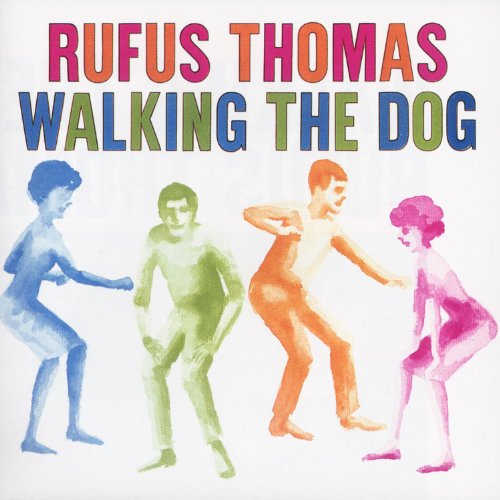
July: Walking The Dog


Rufus Thomas: Walking The Dog
[purchase]

At this point, Rufus Thomas is probably best remembered for this fun, nursery rhyme influenced song, but it was only one of his hits, mostly novelty dance songs, often about dogs or other animals, in a long musical career that started as a child tap dancer on the streets of Memphis in the 1920s, and included stints in minstrel shows in the 1930s, as a vaudeville performer in the 1940s, as a songwriter, performer and DJ in the 1950s, as a popular recording artist in the 1960s, and he continued to perform and record thereafter, often billed as “The World’s Oldest Teenager” and “The Funkiest Man Alive,” until not long before he died in 2001 at the age of 84.

Thomas recorded for Sun and for Stax, the minister at his wedding was Aretha Franklin’s father C.L. Franklin, he worked for 20 years in a textile factory, he acted in Jim Jarmusch and Robert Altman movies, and he performed with Prince, at the 1996 Olympics, and with the Blues Brothers Band. And his daughter Carla Thomas is considered the Queen of Memphis Soul (and who I missed when I wrote this.)

Pretty much everyone has covered “Walking The Dog,” from the Stones, to the Everly Brothers, to the Flamin’ Groovies, as well as Aerosmith, Roger Daltrey, Bruce Springsteen (in an epic 14 minute plus version), Ratt, The Grateful Dead, and John Cale. And many, many more.  Even in Finnish! But Thomas’ version, with its New Orleans influenced style, and the joy that he brings to the silly lyrics, is still remembered because it is just that good.

And yes, it mentions July.

As I was writing this piece, I thought back to walking our family dog, Strummer, who died back in 2014. In July. You can read more about him, and our relationship, here.

Wednesday, May 27, 2015

Water/Wet: Dirty Water


The Inmates: Dirty Water
[purchase]

Over at my other blogging home, we periodically contribute to “Q&As,” where the editor poses a question, and the staff responds. One of the questions was, “What was a song that you didn’t know was a cover?” and I wrote about Johnny Cash’s version of “Ring of Fire.” Back in the pre-Internet days, it was not always easy to learn musical factoids like whether a song was a cover or not, especially if it was a relatively obscure song. Unless you heard the original, or heard a radio DJ mention it, you had to rely on word of mouth, or reading something in a magazine or book. Seems pretty damn quaint, doesn’t it?

As I have mentioned before, starting to work at WPRB in 1979 was not only a huge thing in my musical life, but has influenced my whole life. And having access to the massive, somewhat annotated, record library, and other musical obsessives to talk about music with definitely increased my musical knowledge, but there were, and still are, many gaps.

When I first heard the Inmates’ song, “Dirty Water” when it was released in 1979, I immediately liked its raw energy. It was clearly a retro-garage band sound, with a bit of early Stones, and it was, it seemed, about the dirty water of the Thames and London. I remember playing it pretty often, never once mentioning that it was, in fact, a cover of a song by the Standells, which was about the Charles River and Boston. Because I had no idea that it was a cover. Here’s the original.

Frankly, I have no idea when I learned that, probably when I heard it played on the radio somewhere, and it clicked in. And look, in my defense, it wasn’t like the original was a big hit. It was released in 1965, ran up the charts, peaking at #8 and pretty much faded away, except maybe in Boston, where I am not from, and have never lived, although it later became acknowledged as a seminal rock song.

The Standells were from Los Angeles, and the song is actually not particularly positive toward its subject city. (A few trivia asides—The leader of the Standells was Larry Tamblyn, the younger brother of actor Russ Tamblyn, who was, among other things, Riff in the movie version of West Side Story and Dr. Lawrence Jacoby in Twin Peaks. Lead singer Dick Dodd was a former Mouseketeer who was a dancer in the movie version of Bye Bye Birdie. For brief periods, Dewey Martin, later of Buffalo Springfield, and Lowell George, later of Little Feat, were in the band. And they appeared on The Munsters.)

According to the Internet, despite the negative references in the song about the bad water, frustrated women and crime, including a Strangler, in Boston, the Boston Bruins, a team I don’t root for in a sport that I barely follow, began playing the Standells’ version in 1991, 1997 or 2007, depending on what you read (and there are probably other cites, too, but I got bored looking). The Red Sox, a team that I sort of like, mostly because they are the sworn enemies of the Yankees, also started playing the song, as did the somewhat deflating New England Patriots and the Celtics, who I haven’t liked since the late 1960s.

This has led to a revival of interest in the song, and it has become often covered (and stolen—the Buffalo Sabres play a version substituting the Niagara River). Boston based Celtic punks Dropkick Murphys, big sports fans themselves, cover the song, as has former Red Sox pitcher Bronson Arroyo, a fair rocker in his own right. Other bands often play it it when appearing in the city, including local boys Aerosmith, Bruce Springsteen, who, as you might be aware, is from New Jersey, Dave Matthews Band and Steely Dan.

Although the Inmates had a minor hit with their cover, and have continued to record and tour to this day, I've never heard from them again.

Wednesday, August 14, 2013

Unusual Collaborations: Run-D.M.C. & Aerosmith

[purchase]

Although I like to believe that I have pretty broad musical taste, I just don’t like rap music, with very few exceptions. And I don’t like Aerosmith, again with very few exceptions. And yet this pairing, which at the time was considered to be shocking, just works.

The original version of “Walk this Way,” by Aerosmith, is admittedly one of the few exceptions to my generalized dislike of the band. Not only is the title based on one of my favorite old rimshot jokes (the punchline being, “if I could walk that way, I wouldn’t need the talcum powder,” often referenced on Monty Python), it is a buoyant hard rock song with a great riff and clever, internally rhyming lyrics that made it a natural for a rap version. (And it actually sounded good in context the other night at my 35th high school reunion.)

Really, it is the video that really makes it work. The conceit is that Aerosmith (actually just Steven Tyler and Joe Perry—in a cost saving move, the rest of the band is impersonated by members of the band Smashed Gladys) is playing the song loudly in a room next to where the Run-D.M.C. crew is hanging out. The rappers are annoyed by the song, and yell for the band to turn it down. But when their pleas are ignored, Run-D.M.C. cranks up their turntables and drum machines, and the song begins in earnest.

Initially Aerosmith seems pissed off by the intrusion, and Steven Tyler breaks down the comically thin walls with his mike stand. Ultimately, everyone gets along, the two groups perform together in front of a rapturous (mostly white) audience and all is well with the world.

This version of the song charted higher than the original, and shot Run-D.M.C. to stardom. Not only that, it is credited with the dubious achievements of opening MTV up to playing rap, revitalizing the sinking career of Aerosmith and spawning the genre of rap rock. A great example of the Law of Unintended Consequences.