












Showing posts with label Funkadelic. Show all posts

Tuesday, June 15, 2021

Feet/Feat: Get On The Good Foot


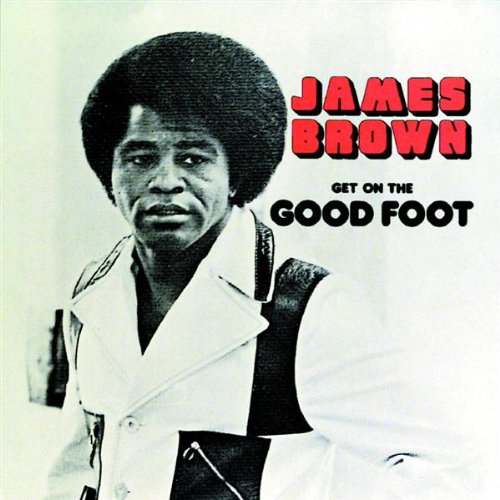
James Brown: Get On The Good Foot
[purchase]

I don’t like to dance, mostly because I look like an uncoordinated tub of Jello, and it has never been one of the things that I go out of my way to do. (Except at Princeton Reunions, at least since 2012) But if James Brown tells you to get up and dance, you get up and dance. I mean, the man is the Godfather of Soul. 

Brown had been performing since the 1950s, but starting in the mid- to late-1960s, he began to pioneer what came to be called “funk” music, featuring danceable grooves, with lots of soul and R&B influences, and performing it with a big band and lots of intense dancing. Often the songs included a social message in between the dance breaks. As I read that, I’m thinking to myself that the words don’t do the music justice. How’s this: It’s the kind of music that you feel in your gut and makes you want to move your butt. To steal a title from another band popular at the time, Funkadelic, “Free Your Mind….and Your Ass Will Follow.” 

A couple of years after that Funkadelic song came out, Charles released “Get On The Good Foot,” a song about dancing and partying to forget the hard parts of life. Originally released as a two sided single, which meant, for you young’uns, that you’d have to flip the 45 (just go with it..) over to play the second side. Apparently Brown, who owned Augusta, GA, radio station WDRW, interrupted the programming to introduce the unreleased “Get On The Good Foot,” because he thought it was going to be a big hit, and he called it—the song topped the R&B chart and reached 18 on the pop chart. Later that year, Brown released an album of the same name, featuring the full track, so that there was no need to turn it over (although being a double album, you’d have to flip it twice to hear the whole thing on your record player). 

And because we at SMM believe in uninterrupted funk, it’s the album version that you can check out, above.

Friday, September 13, 2019

HORSE/S: PONY/S, DONKEY/S, MULE/S & ASS/ES

All the same thing, aren't they? All have hooves and tails, and the why-the-long-faces, so, yes, they must be. OK, I know, they aren't, but can you all recall the differences? I will assume that you know horses, the odd-toed ungulate mammal, whether cart, race or just a plain old Dobbin, so, moving swiftly on......

Jenny's Got a Pony/Los Lobos

I haven't a clue what this song, by the always excellent Los Lobos, could possibly be about. Is there much of a pony population in East L.A.? Anyhow, this riveting ride, SWIDT, comes from their 1990 opus, 'The Neighbourhood', showing off their best, a fusion of latino, tex-mex and plain good old rock'n'roll. Ponies are horses, in fact, the delineation tending to relate to smaller sizes of beast. Whilst clearly there are tiny ones, whether your steed is a horse or a pony is often as much in the eye of the beholder. In slang a pony might be a small amount of liquor. Is that what Jenny got? Alternatively,  in my country a pony is £25, increasingly equal to $25.

Donkey Town/Mark Knopfler & Emmylou Harris

Donkeys are not horses, but are very close. I think they look cuter but traditionally have tended more to be more beasts of burden than for racing. And to be the butt of many an insult, the derogatory opinion being that donkeys are for peasants, horses being only fit for the higher echelons. Hence, I guess, this song, from the, at the time, critically underacclaimed album of duets, Knopfler imagining himself, yeah, right, as a loser in a one horse, sorry, donkey town. If Emmylou were there, chum, I'd stay.

Muleskinner Blues/The Cramps

This is where it all gets a bit surreal, as I explain a muleskinner is ahead of a mule. And, until today, I had the notion that the pelt of a mule might be a useful commodity. Good leather or something like that. Wrongity-wrong, it is the human handler of a mule or a set of mules. So called as you had to be quick witted to outsmart them, or "outskin" them, me, neither, given their stubbornness. No wonder they got the blues, the song originally a hit for Jimmie Rodgers in the 30s, before the Cramps gave it a reverential kick up the, um, ass. We don't feature the late lamented Cramps here enough, I feel. 

A mule is the sterile progeny of when a horse, or pony, mates with a donkey, the genetics close enough to procreate but not close enough to prolong the line further. It seems a bit of a long way to go for a somewhat short end to me. But, mule lovers, worry not, they can now be cloned. Mule is also slang for the middle man in a drugs heist, responsible for transporting the illicit material across county lines and continents, often, literally, in their "middles". Why the name? Presumably as such individuals are seen as slow witted carriers of little importance beyond the carriage of the goods. Confusingly, what they carry may often go by the slang of horse. Or, perhaps in a sly dig at its retrieval, shit.

Jack Ass/Beck

Here's where I could get myself into trouble, as in get my ass kicked, mixing and muddling my homonyms. But, I will resist that temptation and stick to the literal, wherein Beck Hansen compares his situation to that of a Jack, or male, Ass, or donkey, the two terms being near equivalent. (See horse/pony). So it is really back to Mark Knopfler and his donkey town, self-esteem apparently quite a rare premium for worldwide superstars. But, in recompense for reading this far, I can't but leave you without just a little horseplay...... (Spoiler: twerk free; have you ever typed ass into youtube?)

Get Off Your Ass and Jam/Funkadelic

Pony, donkey, mule, ass (or ass.)


Thursday, April 18, 2019

What?!: Be Thankful For What You Got


William DeVaughn: Be Thankful For What You Got
[purchase]

Sometimes, when there’s a theme with almost limitless possibilities, the best course is to jump on the first song that jumps into your head. If that were the case here, I’d be writing about The Buzzcocks’ “I Don’t Know What To Do With My Life.” But I’m not (yet, at least). My second thought was “(What’s So Funny) ‘Bout Peace Love and Understanding,” since I heard Nick Lowe sing that live the other day. But I have already written about that song in detail at Cover Me. (Did you know that Cover Me has a Patreon site? Check it out!)

Scrolling through the official J. David iTunes library (yes, I still have one. And an aol.com email address. Proves I’m an early adopter), I came across a bunch of possibilities, but stopped cold when I came to “Be Thankful For What You Got.” You know, that great, smooth, 1970s soul song, with the memorable line, “Diamond in the back / sunroof top / digging the scene with a gangster lean," sung by….by….Curtis Mayfield? Nope. The singer is William DeVaughn, who wrote the song, originally as “A Cadillac Don’t Come Easy,” while working full-time as a government draftsman.  Luckily, he changed the title, or I couldn’t be writing about it here.

DeVaughn took the song to Omega Sound in Philadelphia, maybe a step above a vanity studio, and paid $900 of his own hard-earned money to record it. Omega Sound, however, had connections with members of the MFSB group of studio musicians, who backed up many great acts, including Harold Melvin & the Blue Notes, the O’Jays, the Stylistics, the Spinners, Wilson Pickett, and Billy Paul, and had hits on their own, notably “TSOP (The Sound of Philadelphia).” MFSB sax player John Davis liked the song, suggested a jazzy, smooth, soulful arrangement, booked Sigma Sound Studios and enlisted some of his fellow MFSB members to play on the track.

What they created was something truly special, a song that became a huge crossover hit, and which has been covered, referenced and sampled by artists as diverse as Parliament-Funkadelic, N.W.A., Rumer, Gabor Szabo, Arthur Lee and Love, Rihanna and Massive Attack.

DeVaughn, a Jehovah’s Witness, had a couple of minor hits after “Be Thankful,” but appears to have not fully committed to a music career. Which is a shame, because he has a great voice, and could really write a song.

Friday, January 6, 2017

In Memoriam: Some Overshadowed 2016 Losses


In a year in which we lost David Bowie, Prince, Merle Haggard, two thirds of ELP, Paul Kantner, George Michael, Leonard Cohen, Maurice White, George Martin, Glenn Frey, Sharon Jones, and Mose Allison, to name just a very few (most of whom are still available as subjects for this theme, hint, hint), it is not surprising that some deaths during 2016 were overshadowed by bigger names. Here are a few that you may have missed:

Fred Tomlinson: Tomlinson wrote much of the music that added to the lunacy of Monty Python’s Flying Circus and other British shows, and as leader of the Fred Tomlinson singers, performed a good deal of it. If he did nothing else but write the music for “The Lumberjack Song” and lead the Vikings in singing “Spam,” he’d deserve lionization, but he did much more.

[purchase the complete Monty Python series]

Dave Swarbrick and Pete Zorn: I was introduced to both of these musicians due to their connection to Richard Thompson. Swarbrick was best known as a fiddler, and was a member of Fairport Convention, remaining as a member after Thompson left, playing numerous instruments, singing and writing songs. He also contributed to many albums by Thompson and other members of the extended Fairport circle and performed as a solo artist and in various combinations. Check out this footage of him wailing on the fiddle, and singing, with Fairport Convention live in 1970.


Pete Zorn was an American multi-instrumentalist who played with Thompson live and on record, as well as other bands, often in the same English folk world as Swarbrick, and it does seem that they crossed paths. Zorn was Gerry Rafferty’s first choice to play the sax solo in “Baker Street,” but was unavailable; instead Raphael Ravenscroft got the gig. I remember seeing Zorn play with Thompson and handling many stringed and woodwind instruments, including the bass flute. Here he is, singing and playing sax on Thompson’s “Tear Stained Letter.”

[purchase Richard Thompson’s Hand of Kindness, featuring Zorn]
[purchase Fairport Convention’s Liege & Lief]

Gilli Smyth: The co-founder of Gong, with her partner and collaborator Daevid Allen (who died last year), Smyth was a musician, poet, writer and activist. Her contributions to Gong (where she was sometimes billed as Shakti Yoni), and the spin off collections that sprung up over the years, were eccentric, provocative and always interesting. You can get a sense of her "space whispering" performing style, and that of Gong, in this performance from 1973 of “Witch's Song, I Am Your Pussy.”

[purchase Gong’s Flying Teapot]

Bernie Worrell: O.K., enough with the Brits. Worrell, a New Jersey native, was a classically trained pianist who gained fame (and entry to the Rock & Roll Hall of Fame) playing funk with Parliament/Funkadelic in the 1970s. I really began to appreciate Worrell when he joined the expanded Talking Heads. After that, he continued to play with a wide variety of musicians, and as a leader of his own group. Here he is, featured in the introduction and throughout the live performance of “Life During Wartime” from Stop Making Sense.

[purchase the DVD of Stop Making Sense]

Saturday, March 5, 2011

Doublespeak: Funkadelic Edition


One of the many things I love about P-Funk mastermind George Clinton is his way with a song title. Though he's no Sufjan Stevens, he can get pretty wordy, which increases the chances of hitting a doublespeak candidate.

Here are three then, one each from the first three Funkadelic albums (my favorite part of the entire P-Funk discography, where the psychedelic/Hendrix influence was still pretty strong):

Funkadelic: I Got a Thing, You Got a Thing, Everybody's Got a Thing

[purchase]

"I Got a Thing" starts us off with a fairly typical hippie sentiment: We're all different, but let's all just get along.

Funkadelic: Free Your Mind and Your Ass Will Follow

[purchase]

"Free Your Mind" seems like it should be a plea to just let loose and have fun, but the music takes on a sinister feel, which makes you think twice about surrendering to the groove.

Funkadelic: You and Your Folks, Me and My Folks

[purchase]

"You and Your Folks" is basically a rewrite of "I Got a Thing", but it's a much better song. It also tempers the idealism with a bit of reality: "The rich got a big piece of this and that/The poor got a big piece of roaches and rats".

Of course, dissecting Funkadelic lyrics misses the point somewhat, so step away from your computer and shake that thang!

Friday, February 6, 2009

One: One Nation Under A Groove


Funkadelic: One Nation Under a Groove

[purchase]

I have a secret. I’ve posted folk and blues ever since I got here. I lapse into occasional bouts of 80s music, including ska. I am the resident world music maven. But, what nobody knew until now is that I harbor a deep love of 70s funk.

There is no better way to make this confession than to introduce you to the strange world of George Clinton. In the 70s, George Clinton wanted as much freedom as a musician could have, and still be under contract. For this reason, he created the groups Funkadelic and Parliament. There were also offshoots: Bootsy’s Rubber Band, Parlet, The Brides of Funkenstein, Fred Wesley and the Horny Horns, to name a few. These were all the same group of core musicians. The offshoots highlighted musicians or sections within the larger whole. The trick was that each incarnation had its own recording contract, allowing Clinton to play the labels off each other, and record for whoever was giving him what he wanted at that moment.

What made it all work though was the quality of the music. George Clinton created funk that kept you moving, while at the same time expanding the language of funk, by incorporating rock guitars, jazz harmonies, and the different musical textures that were possible with the large ensemble of talented musicians Clinton relied upon. Even when it didn’t work, the failures were glorious ones.

Clinton’s bands were never the most popular, even at their peak. But his influence is undeniable. One of Clinton’s most obvious musical descendants is Prince, and Clinton’s tracks were constantly sampled by early hip-hop artists. But it is best to start with the original music. And One Nation Under a Groove is a fine example.