Why does the phrase "Guitar Heroes" always have me thinking the wanton destruction of guitars? I guess it’s my age, as the sure fire way to gain that status in the 60s would be, literally, to fire it up. Or to smash it up. OK, let’s disregard the apocrypha that inform us of the dodgy guitar, just off stage and out of audience view, hurriedly sleighted into use and destroyed, night after night, whilst the more precious gear went back into the mink lined crate. And why always guitars? How come the keyboards or drums never took equivalent bashings? (Alright, well nearlynever….)
John Hiatt has famously had words to say about the practice, rightly decrying it. But he has had oodles of previous posts here, so I have to think harder. The good news is that there are actually a lot of songs about guitars, often by guitarists who are no slouches on the instrument either. There are even a slew of songs about guitarists by guitarists. One I have covered here before, but not this one below.
I am not going to blether ever onward about my love and awe of RT. Partly because I could and partly as I, and others, have already. But the song, not, I agree, his strongest composition, does at least give some faithful insight of who he was trying to emulate,in his bedroom all those years ago. But I notice that one of the fellas included in the song always appears in the lists of the favourites of our favourites, that being Hank Marvin, of the Shadows. Those queueing up to pay homage to this mild mannered anti-axe hero are many and varied, including some surprising names: Tony Iommi, Ritchie Blackmore, Neil Young even. (And you thought From Hank to Hendrix was about Mr Williams?!)
I like the video above, if only presenting Hank and the boys in a slightly cooler setting than the usual suits, grins and little dances. Not that they too, in hindsight, don't have their own certain whiff of something unattainable.
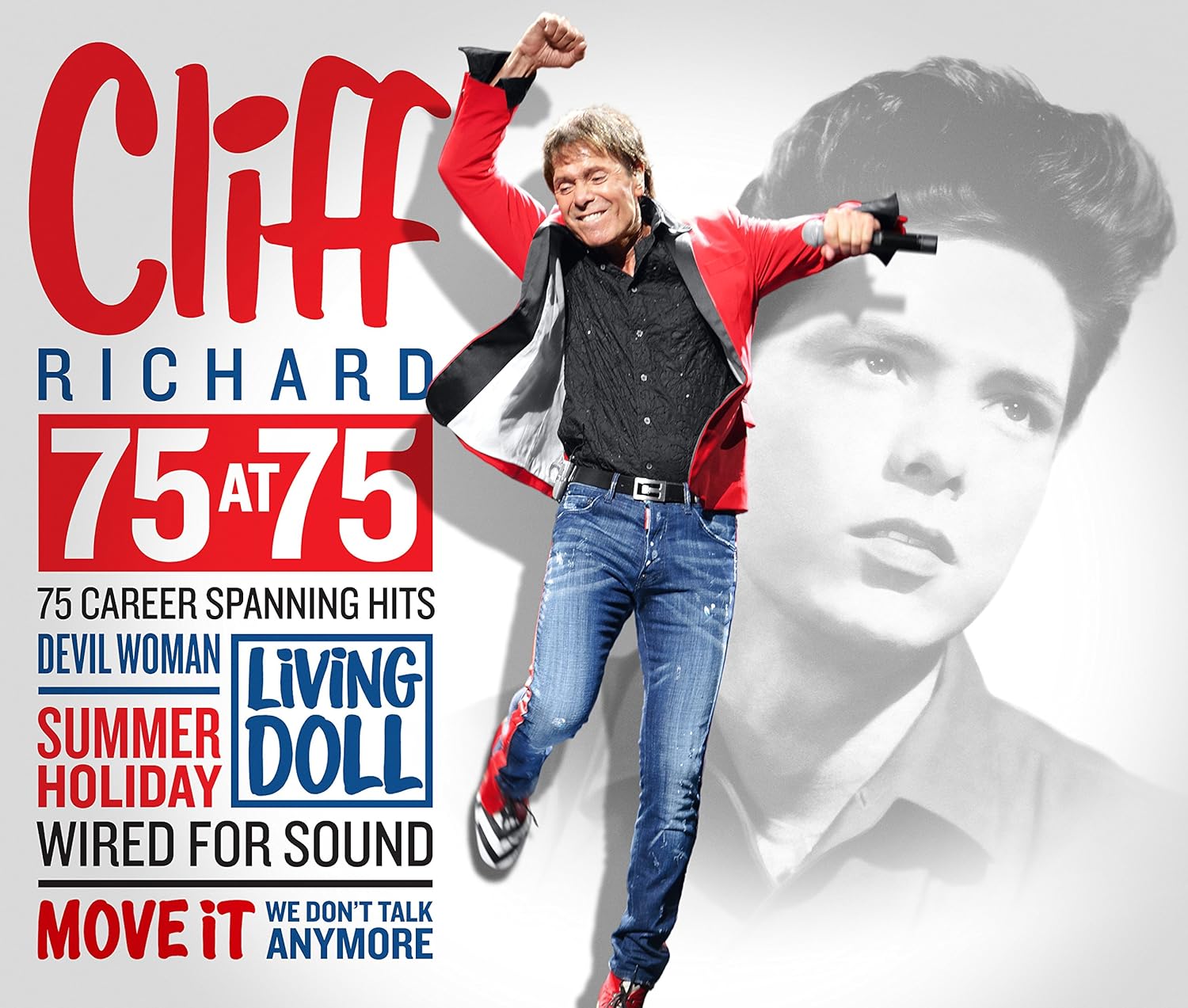
There is something slightly thrilling in revisiting these old tunes and these old clips. Remember this is the cusp of the 60s and England. Sure, we had rock and roll over here, but a largely gentler and milder version, nothing too shocking to shift our upper lips. Cliff was as rowdy as it got, the Shadows getting their break as his backing band. The advent of the Beatles so then tilted the universe that Cliff and the Shads seemed forever displaced to light entertainment and TV variety shows. But, listen again: that tone, that tremolo. Magnificent.
He has even had a tribute album created in his honour, Twang!, with an A list of the gurners and shredders, including those mentioned above, along with Mark Knopfler, Brian May and Peter Green, all lining up to play his praises. It’s a good listen, too, in turns surprising, as you realise quite who is on it, as well as realising and remembering quite how good a body or work he produced all those years ago. But who does he rate and who were his inspirations? Here's a pretty good interview and, unsurprisingly, it lists the icons of the golden age of rock and roll, Scotty Moore and James Burton to name but two. He comes over as a decent fella, too, with feet still firmly on the ground.
So you can keep your long hair, your tapping and your pedals, when I want something simple and sublime, gimme some Hank!
Growing up, as a good liberal child in the late 1960s and early 1970s, the FBI was the enemy. Under the leadership of director J. Edgar Hoover, and after his death, the FBI was instrumental in trying to suppress the civil rights and anti-war movements, discriminate against gays, and generally act as a tool of the “Establishment.” I personally have no problem with enforcing the law, if done fairly and within the bounds of the law—and so I have no problem with the FBI’s anti organized crime or terrorism work, for example—but with respect to the civil rights and antiwar stuff, they definitely crossed the line. Which may be why, in part, it wasn’t hard to watchThe Americans, and find myself sorta pulling for the Russians, even though watching the show demonstrated that they were also pretty horrible.
It is interesting, though, that now it is the “leader” of the American government himself who is the biggest critic of the FBI, despite the fact that he appointed its director. And let me be clear—former director Comey deserved to be fired by whichever candidate won the 2016 election because of the way he botched the handling of the investigations of both candidates. But to have done so for the explicit reason of impeding the investigation into alleged conspiracy with Russia to influence the election is simply wrong, and probably illegal. So, it is amusing that these days, it seems like it is the liberal Democrats who seem to be bigger fans of the FBI than the Republicans.
I doubt that the FBI is that big a deal in England, much as the band The Shadows was never that big a deal here. (How’s that for a clunky segue?) But in England, they were huge, with multiple hits, and lead guitarist Hank Marvin influenced pretty much every great English/Canadian/Australian guitarist, including RichardThompson, Andy Summers, Brian May, Steve Howe, George Harrison, Neil Young, Tommy Emmanuel, Eric Clapton, Pete Townshend, Mark Knopfler, Peter Frampton, and Jeff Beck. Just to name a few.
Although they started out as the backup band for Cliff Richard, maybe the poster child for “huge in England, mostly unknown in the US,” the Shadows went on to fame in their own right, mostly as an instrumental band. “F.B.I.,” released in 1961, was not their biggest hit, but it did hit #6 on the UK charts (and never charted in the US.)
Ian Hunter opened his 1980 live album, Welcome to the Club, with a cover of the song, featuring his band’s guitarist, Mick Ronson, who has also been quoted as saying that Marvin and The Shadows were influences on him. (Both Ronson and Marvin appeared on Roger Daltrey’s solo album, One of the Boys, for what that’s worth). It is a great way to kick off a great live album that includes a bunch of Hunter’s and Mott the Hoople’s best songs (and some other interesting covers). I remember playing this album more than a few times at WPRB.
The aforementioned Brian May also covered the song on a 1996 tribute album to Marvin and The Shadows, as have others.
This I can't resist, a timely tribute to the humming music scene of that there London on the cusp of the 1960s. Actually made first as a play for the West End in 1958, it was the 1959 film that remains the slightly less dusty memory. The plot mirrors any of the many true rags to ritual stories of the day, shady entrepreneur snaps up backstreet working class crooner, 'I'm gonna make you a star', gives the kid a new name and a new suit and the rest is cliche. Here is actually what George S. Davies in ImDB has to say:
"Johnny Jackson, a sleazy talent agent, discovers teenager Bert Rudge singing in a coffee house. Despite Bert's protestation that he really is only interested in playing bongos, Johnny starts him on the road to stardom. The deal they cut, however, is highly exploitative of the young singer, and their relationship soon begins to go bad."
Of course Cliff went on to appear in a myriad of movies, mostly, to be fair, as dire as the similar works of his onetime role model, Elvis Presley. From 'The Young Ones' to 'Summer Holiday' and beyond, ahead of various saturday evening TV variety shows, Cliff Richard seems always to have been in the background of my youth. And, in one instance, actually there. I was perhaps 7 or 8, on the tiny isle of Herm, in the Channel Islands, just off the french coast. For some reason the ferry back to St Peter Port was delayed. Amongst the stranded day-trippers was Cliff, uber-tanned and sporting a splendid pair of budgie-smugglers*. My elder sister was entranced, as everyone tried to get closer to him, without ever formally acknowledging his presence, in a masterclass display of british stiff upper lip. I am uncertain whether he even acknowledged his presence, thankfully sparing us the now ritual response to rain at the Wimbledon tennis tournament.
(As I review this, 'cos yes I do, believe it or not, I feel somehow a little churlish, belittling this pillar, this crown jewel of the establishment, indeed still hugely popular with many a blue-rinsed matron, so as recompense, have a Cliff and a Hank, together in their prime:
Star Maker Machine does not accept music submissions from artists or promoters. However, most of the contributors here do accept submissions for our own blogs, listed below. Please visit our blogs, take the time to listen to what we post, and then feel free to contact us if you feel that your music would be a good fit.