Showing posts with label War/Peace. Show all posts

Sunday, June 7, 2020

War/Peace: Small collection of pensive songs with war in the title


purchase [Little Criminals - R Newman]
purchase [ Hearts and Bones - P Simon]


No, there was not even the slightest premonition that the departing theme was going to get any more real than a nod to Memorial Day (SMM tries to theme to calendar events such as Thanksgiving..) Really. That's not fake news.

The driving force behind the War/Peace theme was recognition of Memorial Day. If you follow SMM, you already know that the site tries to periodically link its theme to the calendar. This, of course, was 10 days ago.
As such, I don't feel a great need to apologize for fueling the current rage (if in fact we did, in our own limited way), but there seems to be a need to bring things around to a more mellow place with another post about War/Peace. I DID say that waging peace is almost equally as fraught with its own issues as waging war (see the furor over Lennon's sleep in for peace). I had no premonitions of the future as I chose to go with a "1968-themed" song about an ongoing war resulting from American political decisions 50 years ago. Yes, I referenced current political issues (bone spurs, senator's sons...), but they were wild shots, certainly not targeting a news item I had not yet heard about.
That said, maybe we can do our civic best to guide the conversation away from civil war (and bands with names like Guns 'n Roses, the Clash)


Wednesday, June 3, 2020

War/Peace: The Warrior’s Code


I suspect that many of you who read this blog also attend live music performances—or at least, you did before that stopped being a thing (temporarily, I hope). Musicians have been trying different ways to get live music out to their fans, some for free, some charging, some seeking “tips,” and others seeking charitable donations, while some are trying to use Patreon or other similar subscription type programs to try to partially replace the revenue lost from cancelled tours. I think that it is pretty well known that these days, most musicians make the bulk of their living from touring and merch, and not so much from streaming and music sales.

Since the pandemic closed most venues, I’ve watched some of my favorite musicians from the comfort of my house—Richard Thompson, Jason Isbell and Amanda Shires, Dan Bern, Rhiannon Giddens and Francesco Turrisi, as well as her fellow Native Daughters, Amythyst Kiah, Allison Russell and Leyla McCalla, Ben Nichols of Lucero, Jeff Tweedy, Raul Malo, Lucy Wainwright Roche, Indigo Girls, and I’m sure I’m leaving some out. Most of these performances have come from the performers’ homes (or, at least where they are sheltering), except for an Isbell/Shires album release show from the stage of an empty Brooklyn Bowl in Nashville. These performances aren’t the same as being at a live show, but on the other hand, they are also more intimate—as one friend mentioned to me after we separately watched Richard Thompson, her husband was excited to be able to see the master’s hands close up while he played the guitar.

Last Friday, I watched most of an unusual performance—Dropkick Murphys, a band that is closely associated with the Boston Red Sox (they even were given World Series rings by the team one year), playing live on the field at an empty Fenway Park, with the band members all more than the now traditional six feet apart. The concert was organized to promote a number of charitable organizations, which is common for the band. For nearly two hours, the band ripped it up with their trademark Celtic flavored punk, and they were amazing. It wasn’t the same as when I saw them live at Warped Tour 15 years ago, but then again, what is? I had to reluctantly step away after two hours for a virtual college reunion Zoom session, but the next day, I found the video, and watched the end, when Bruce Springsteen appeared on the giant video screen in centerfield and performed two songs with DKM—one of theirs (“Rose Tattoo,”) and one of his, “American Land,” an appropriate anthem for our times, with its message of an America made up of immigrants and people of all races. Remarkably, considering the logistics, the entire concert sounded great, and I give much credit to whoever did the sound.

One of the songs that they played that night was “The Warrior’s Code,” which technically isn’t about war, but about a boxer, "Irish" Micky Ward. But since boxing and war often use each other’s metaphors and terminology, I’m OK with this. Also, back in 2016, I wrote about a different DKM song, a cover of “Fields of Athenry,” which is about World War I (and it is far from the only song by the band that references actual war, for example “The Fighting 69th” (Civil War) and “Johnny, I Hardly Knew Ye” (anti-war song written in Ireland in 1867), all of which were played at Fenway, along with a cover of The Standells' “Dirty Water,” which has nothing to do with war, but which I wrote about, here.)

The video of the show is still available here, among other places, so check it out, and send a few bucks to the charities.

Monday, June 1, 2020

WAR/PEACE: THE BATTLE OF EVERMORE

It's funny, I had never really quite appreciated this song to have actually been about a battle or, indeed, warfare at all. It had always just been a joyous cascade of sounds: the tinkling mandolin and the soaring vocal interplay between Plant and Denny, with the lyrics never quite imprinting. Apart, of course, from the repeated refrain, Bring it back, bring it back........

Denny

So what was that all about, then? Examination of the lyric, and, contrary to my initial thought, sure, all the words are there, indelibly printed on my psyche, an automatic tele-prompter lying dormant and awaiting just this moment. Tolkeinesque nonsense about elves and faeries, as the naysayers put it, or, alternatively, a mystical celtic mantra. Strangely, as the sheer ubiquity of the song's parent album and the deconstructions of the might of Zeppelin accrue, this is actually a song, perhaps their only song, that has grown in stature. It seems actually to fit better with the current manifestation of a grizzled Robert Plant, now a sage like figure himself, akin to the wizard on the album cover all those years ago. Add the mythology of the doomed, and thus ageless, Sandy Denny and you have it. Together with the fact that the folkier aspects of the band have tended to last better than the more overtly metallic.


Almost by accident did the song arrive, with Jimmy Page picking up and playing with the mandolin belonging to bassist and keyboards man, John Paul Jones, an instrument he claims never to have earlier tried to play. Robert Plant then instinctively started wordlessly crooning along. With the feel of an old english, or probably welsh, folk song, Plant felt there needed to be a call and response aspect, with who better to fulfil that than Denny, erstwhile singer of Fairport Convention, with whom Zeppelin had shared the bill at Bath's 1970 Festival of Blues and Progressive Music. Plant had long associations with the band and its members, particularly Dave Pegg, both on the 1960s Birmingham pub circuit together. Denny willingly agreed, becoming the only ever featured guest musician on any of their output, gifted also with a (5th) symbol, to complement the four of the band that made up the official "title" of their 4th release.


After the twin behemoths of Black Dog and Rock'n'Roll pour out of the speakers, Evermore then becomes a mercurial palate cleanser, a consummate contrast and perhaps the only song that could then beckon in the majesty of Stairway to Heaven. (Yes, I did say majesty; I know it is de rigeur to sneer at it now, but, hell, c'mon, if you were 14 in 1971!) Call me an old fart, please do, but side 1, Led Zep 4, is about as astonishing a side of vinyl as ever made. Side 2, less so, but nonetheless.

Jones & Bonham

Denny never managed to reprise the studio recordings in a live setting, more is the pity. Zeppelin did play it live, with her parts sung by Jones and drummer, John Bonham. It wasn't as if he had anything (much) else to do in that number. Denny died in 1978 and Zeppelin dissolved, give or take the occasional reunion concert, a couple of years later. But, thankfully, it is the Plant/Fairport relationship that has gifted the song a greater life. He is a regular guest at their annual Cropredy festival, and has reprised this song in that setting, reminding the crowd as much of the Denny legacy as his own. This clip is with Kristina Donohue, daughter of sometime Fairport guitarist, Jerry.

Donohue
To be fair, there was also an earlier and  glorious version on the semi-acoustic and middle east orchestral Page/Plant duet project, No Quarter, featuring the Indian singer, Najma Akhtar, whose stylistic traits give a whole different slant to it.

Akhtar

Finally, with Plant constantly redefining and reinventing himself across a number of styles, his occasional musical partnership with country star Alison Krauss proved another opportunity to revisit the song. (Astonishingly, in the same year as the Fairport version, 2008.) Having seen his latest band, Saving Grace, play live, in Birmingham's Town Hall venue towards the end of last year, I can state that it would fit well within their format. However, give or take a nod to the "original" of In My Time of Dying, there was no room for Zeppelin in this iteration of Plant's ever changing moods. Or not yet......

Krauss
Get it!

Friday, May 29, 2020

War/Peace: Fortunate Son


purchase [ Willy and the Poor Boys ]

War is raw. Peace maybe a little less so - unless maybe you are trying to wage it - [see Kent State]. Perhaps that's why this song reverberates for me. I can't think of a single one of CCR's songs that doesn't come across as raw. Maybe it had to do with the tonal qualities of electric guitars in those days. Maybe it was John Fogerty. Maybe it was the 70s.

Like the majority of musicians in 1970x John Fogerty had little intention of going to Vietnam (he joined the Reserves in order to get around this). Like country Joe Fish, Fogerty made his opinion verbal. Do not equate this with a lack of patriotism - quite the opposite. It is one of your rights to state your opposition (to the extent that it doesnt harm others and doesn't <break the law>). Singing about is is an even better way to be patriotic.

In the clip above, Springsteen attests to the seminal influence of John Fogerty. He's right. So so right, that some other musicians you may have heard about went off and set up a band named Willie and the Poor Boys (a direct take from the album on which this song came out) - the members include Bill Wyman, Charlie Watts, Andy Fairweather-Low and more. Not a bad legacy, like the "Boss" says.

see:


The <Fortunate Son> lyrics say a lot about being a patriot, and there is a consideration of the limits:

I ain't no senator's son ( that is pretty clear  -I think we are talking bone spurs here)
But when the taxman comes to the door
Lord, the house looks like a rummage sale, yes (sounds like someone's secret tax returns)
and, he sings, he's speaking his mind (saying his peace/piece) because
I ain't no millionaire's son, no

here's a little more from <CCR> for old times' sake ...


WAR/PEACE: (I'VE NEVER KNOWN) PEACE ON EARTH/SIR VINCENT LONE

(I've Never Known) Peace on Earth

I'm struggling with this as a theme, not for want of material on the subject, there being as many songs about War and Peace, and everything in between, as there are pages in the book by Tolstoy. No, it is the timing, in this transposition of world order around the C-19. It isn't a war, this isn't a battle, we are not fighting: all the military cliches are boiling out of the thesaurus but it really isn't the right metaphor, even if there is a right metaphor. (If a metaphor is a means of comparison, I don't think we have had yet anything fully comparable within sufficient memory to pass reference: the plague and even spanish flu are too far distant, with SARS and Ebola captured and even HIV contained.) So, with, as ever, a lightness of touch and mood, who better to cheer us than the melancholic magnitude of Jackie Leven.

I have touched on Jackie before, and make no apology for doing so again. His loss remains huge in my musical portfolio, his celtic soul a heartbeat long before the term was invented, his humanity a force of relevance in the automated and automatic inhumanity all around. Nature, often in all her cruelty is a constant in his lyrical themes. Sir Vincent Lone? A pseudonym made necessary by his polfiicism, having already exhausted his allowed contractual offerings under his own name, but unmistakeably he. Indeed, it was never hidden, other than by his sometimes having Sir Vincent as support act before a Leven 2nd set.

As the song above shows, no huge variations in stylistic palette took place, but there were instances and opportunities where he used the disguise to try out some more adventurous directions. Or at least had his ear to the streets and cultures afar from his native land. The song below has been admirably described as a blend of Dick Gaughan and Portishead.

Moscow Train

There were three Lone releases between 2006 and 2008. The two songs above come from the first, Songs For Lonely Americans, with the follow-up, When the Bridegroom Comes (Songs for Women), being perhaps more experimental again. I am torn between liking it either more or less than the first.

Graveyard Marimba

Leven then decided to kill off his alter ego, with a gloriously uneven mix of an album, Troubadour Heart, which scattershots styles and references to all four winds. The claim was that this was released posthumously, and collected songs "Lone" had written as a penniless songwriter on a caffeine fix at the Troubadour coffeee house in London. And maybe he did, but Leven was still very much alive, releasing records for another three years, ahead of his actual death. The song below, the closer, effectively returns to the expected theme for this piece, the title summing up my views around the current ongoing "battle".

Wake Me Up When It's Over

Peace be to you.

Thursday, May 28, 2020

War/Peace: War In Peace


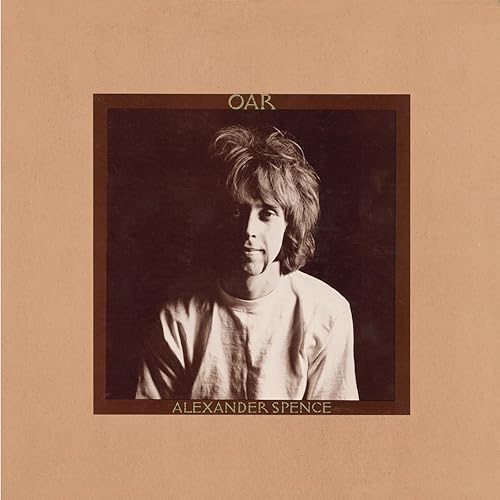
Alexander “Skip” Spence: War In Peace
[purchase]

I know that many people—and not only people in the 50+ demographic—think that the best era for music was the late 1960s-late 1970s. I’m not going to debate that now, but there’s certainly an argument to be made. And I think that there are those who would argue that much of the best music from that era was created because of, or enhanced by, the use of drugs. Yet, we also know that drugs also had negative effects—think of all of the great musicians from that era who died young from overdoses, or in other ways  directly or indirectly related to their addictions.

Then, there’s the group of musicians who stayed alive, but whose careers were cut short, or hampered, by drug related mental illness (although in many cases, the causal link between the drug use and the mental illness isn’t certain).

One such musician, who has been mostly forgotten over the years, is Alexander “Skip” Spence, who was briefly a guitarist in Quicksilver Messenger Service, then became the drummer in Jefferson Airplane, departing after their first album, in part because he wasn’t a drummer, to become a founding member of Moby Grape. But by 1970, his musical career was effectively over.

By most accounts, Spence was an excellent musician (on guitar and other instruments, including the drums that he learned to join the Airplane) and songwriter (writing, among other songs “You’re My Best Friend,” which appeared on Surrealistic Pillow, released after he left the Airplane, and Moby Grape’s “Omaha,” later covered by The Golden Palominos, with Michael Stipe on vocals). If you read about Moby Grape, you’ll find quotes from contemporary critics saying that they were the best band from the San Francisco area during that era—better than the Grateful Dead and Quicksilver and the Airplane. But despite the quality of Moby Grape’s debut album, a bunch of record company missteps and a disappointing second album, among other things, led to the band never breaking through.

Among those other things was Spence’s increasingly erratic behavior. While working on the band’s second album in New York, Spence, under the influence of LSD, and maybe other substances, took a fire axe and attempted to break down the hotel room doors of band mates Don Stevenson and Jerry Miller. He then went to the studio at the CBS building, where he was disarmed and wrestled to the ground. The album’s producer, David Rubinson, pressed charges, and after a brief period in jail, Spence was sent to Bellevue Hospital where he was diagnosed with schizophrenia.

During his six months in Bellevue, and despite not having access to a guitar, Spence had written a number of songs, and on his release, he was met by Rubinson (the same guy who pressed charges). Spence implored Rubinson to get him to a studio so that he could record the songs while they were still fresh in his mind. Showing how different the record business was in those days, Rubinson negotiated an advance from Columbia Records the next day, and Spence went to Nashville, on a motorcycle, to record the songs. Within six days, Spence cut nearly 30 songs, playing all of the instruments, singing all of the vocals and doing the arrangements himself. At this point, he was all of 23 years old.

Whittled down to 12 songs, the album, titled Oar, was released in May, 1969. Utterly unable to figure out what to do with its strange and eclectic music, Columbia simply ignored it, and it sold very few copies—it is often referred to as the worst selling album for the label to that point. (Hey, Richard Thompson’s first solo album, Henry The Human Fly, was considered the worst selling album at Warner Brothers Records, so that doesn’t necessarily mean that it is crap.) “When the people at Columbia heard it, Oar made no sense to them at all,” remembers Rubinson, who had sifted through the reels of tape, mixed the album and sequenced its dozen tracks. “It was so honest and real that the record company couldn’t relate to it. Neither could radio or critics. So they put it out, barely, and it sank without a trace.” To some, the album was the soundtrack to Spence’s mental illness, but to others, it was evidence of his emergence from it.

Over time, Oar gained admirers (and two reissues, with bonus tracks), including Robert Plant, Jeff Tweedy, Beck, Tom Waits, Robyn Hitchcock, Julian Cope, Chrissie Hynde, Mark Lanegan, and Jay Farrar (many of whom appeared on a tribute album, More Oar: A Tribute to the Skip Spence Album) and it appears in a number of “Best Album” lists.

“War in Peace” isn’t the best song on Oar, or the strangest, and it is actually quite listenable, if you aren’t concerned about understanding the lyrics. There’s some good electric guitar, including a bit at the end that is generally acknowledged to be an homage to (ripoff of?) Cream’s “Sunshine of Your Love.”  

Oar was Spence’s last album. He contributed a little to Moby Grape reunion albums and appeared sporadically at live shows both with Moby Grape and other bands, and he recorded a song (which was not used) for the X-Files soundtrack but his mental illness, drug and alcohol addictions and related physical health issues, prevented him from having any sort of a music career. At times, he was committed to mental hospitals, was homeless, and, for a time, was living in a house provided by his former Moby Grape band members, who appear to not to have held a grudge for that whole fire axe incident. Robert Plant helped with medical bills at times.

Spence died in April, 1999, of advanced lung cancer, at the age of 52. The last music he heard was a copy of the More Oar tribute album, which featured a cover of “War in Peace” by Mudhoney.