












Showing posts with label Moby Grape. Show all posts

Tuesday, January 3, 2023

In Memoriam: Drummers Part II


We continue featuring drummers who died in 2022. Part I featured Jet Black (Brian Duffy), Jerry Allison, and Dino Danelli, and you can read that here, if somehow you haven’t read it already. We’re proceeding oldest to youngest, and Part III should be posted soon. 

Alan White—White was best known as the drummer for Yes, although I admit that I always think of him as “the drummer for Yes who replaced Bill Bruford.” Bruford is my favorite rock drummer, so White was never going to measure up, but he was a fine drummer in his own right, and played on many great Yes songs. 

Born in 1949, White joined his first band at 13, turning pro at 17. In 1969, White received a call from someone claiming to be John Lennon, looking for a drummer for the Plastic Ono Band. White thought that someone was yanking his chain, but it turned out to be a genuine offer. White, given three days to prepare, performed with them for a show, and later played on Lennon’s Imagine album, the song “Instant Karma,” and George Harrison’s All Things Must Pass. This led to a brief enlistment in Ginger Baker’s Air Force, and work with Steve Winwood and Terry Reid. 

White shared a London flat with Eddy Offord, who worked as an engineer and producer for Yes, and occasionally hung out at the studio with the band. Once, when Bruford had to leave a rehearsal session early, White sat in. Later, after Bruford left Yes to join King Crimson in 1972, White was asked to join the band, and again was given three days to learn their repertoire before the Close to the Edge tour started. You can see and hear White playing on “Roundabout” from that tour here:


White played drums and percussion on more than 40 studio and live Yes albums, and occasionally added piano parts and collaborated on songwriting. He also released one solo album and had a few side projects. 

White was one of 8 of the myriad members of Yes inducted into the Rock and Roll Hall of Fame in 2017 (as was Bruford, who is not also in as a member of King Crimson, because that band has somehow never been inducted. Don’t get me started.) 

After what was described as a “brief illness,” White died on May 26, 2022 at the age of 72. Sadly, two months before his death a large number of personal items, including musical instruments (the drum set he played with the Plastic Ono Band, for example), and platinum records, were stolen from a storage unit. 

John Hartman-The original drummer for The Doobie Brothers, John Hartman died on September 22, 2022. Hartman originally moved to Northern California at the request of Skip Spence, who wanted him to participate an a revival of Moby Grape. That never happened, but Spence introduced Hartman to Tom Johnston, and eventually they, along with Pat Simmons, formed The Doobie Brothers. Here’s Hartman playing “China Grove” on the BBC in 1974:


Hartman drummed with the band, sometimes with a second drummer, until 1979, straddling their early days as funky, bluesy rockers fronted by Johnston, to the smooth purveyors of “yacht rock,” led by Johnston’s replacement, Michael McDonald. He returned for a benefit tour in 1987, and two more Doobies albums (with Johnston and not McDonald) but retired from the band for good in 1992. 

After that, Hartman attempted to become a police officer, but the drummer, described by the band at his death as a “wild spirit,” found it hard to break into law enforcement due to his previous drug use, despite having graduated from a police academy. Hartman was inducted into the Rock and Roll Hall of Fame as a Doobie Brother, but because of COVID, plans for a performance by the original members were scotched. Interestingly, Hartman was the only living major figure from the Doobies not interviewed for the 2021 biography documentary, Let The Music Play

Ric Parnell-You know how the drummers in This Is Spinal Tap! all died in strange ways? Remember how Mick Shrimpton spontaneously combusted? Real drummer Ric Parnell was Mick Shrimpton. When Spinal Tap recorded its two albums, and did TV performances and live shows through 1992, it was Parnell who handled the drums. But, you ask, how did he do that if Mick Shrimpton was dead? Turns out, Mick had a twin brother, Rick Shrimpton, who was also a drummer! 

Spinal Tap was not Parnell’s only claim to fame. Born in London in 1961, to a drummer father and with two drummer brothers, percussion was basically the family business. In 1968, due to one of his father’s jobs at a TV station, Parnell got to see Jimi Hendrix perform on Dusty Springfield’s TV show. 

Parnell had two stints with Atomic Rooster, initially briefly replacing a pretty fair drummer, Carl Palmer, and then rejoining and playing on their last two albums. You can see Parnell’s Bonham-influenced drumming here, on Atomic Rooster’s “A Spoonful of Bromide Helps the Pulse Rate Go Down” from 1972:


After that, Parnell played in some Italian bands before becoming a sideman for artists including Michael Des Barres and was the drummer on Toni Basil’s hit “Mickey.” He was offered a chance to join Journey, but declined, which probably cost him a ton of money. But if he had joined that band, I would not have written this, because I really do not like Journey. So, he clearly made the right call. 

Parnell settled in Missoula, Montana, where he would gig locally, and for a while Parnell hosted a radio show called, yes, “Spontaneous Combustion,” where he played basically whatever he wanted and told stories. (Boy, I miss doing that on the radio....) 

On May 1, 2022, Parnell died at the age of 70 from a blood clot in his lungs that led to organ failure.
Thursday, May 28, 2020

War/Peace: War In Peace


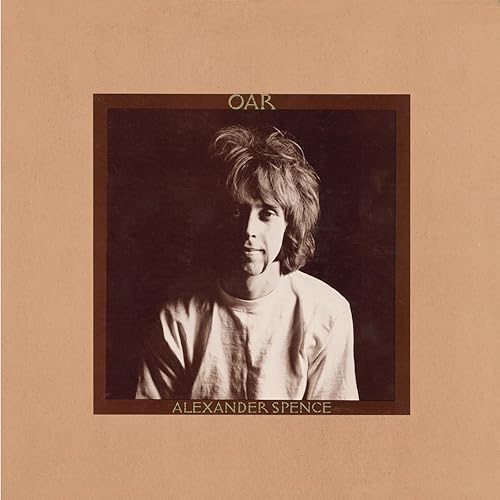
Alexander “Skip” Spence: War In Peace
[purchase]

I know that many people—and not only people in the 50+ demographic—think that the best era for music was the late 1960s-late 1970s. I’m not going to debate that now, but there’s certainly an argument to be made. And I think that there are those who would argue that much of the best music from that era was created because of, or enhanced by, the use of drugs. Yet, we also know that drugs also had negative effects—think of all of the great musicians from that era who died young from overdoses, or in other ways  directly or indirectly related to their addictions.

Then, there’s the group of musicians who stayed alive, but whose careers were cut short, or hampered, by drug related mental illness (although in many cases, the causal link between the drug use and the mental illness isn’t certain).

One such musician, who has been mostly forgotten over the years, is Alexander “Skip” Spence, who was briefly a guitarist in Quicksilver Messenger Service, then became the drummer in Jefferson Airplane, departing after their first album, in part because he wasn’t a drummer, to become a founding member of Moby Grape. But by 1970, his musical career was effectively over.

By most accounts, Spence was an excellent musician (on guitar and other instruments, including the drums that he learned to join the Airplane) and songwriter (writing, among other songs “You’re My Best Friend,” which appeared on Surrealistic Pillow, released after he left the Airplane, and Moby Grape’s “Omaha,” later covered by The Golden Palominos, with Michael Stipe on vocals). If you read about Moby Grape, you’ll find quotes from contemporary critics saying that they were the best band from the San Francisco area during that era—better than the Grateful Dead and Quicksilver and the Airplane. But despite the quality of Moby Grape’s debut album, a bunch of record company missteps and a disappointing second album, among other things, led to the band never breaking through.

Among those other things was Spence’s increasingly erratic behavior. While working on the band’s second album in New York, Spence, under the influence of LSD, and maybe other substances, took a fire axe and attempted to break down the hotel room doors of band mates Don Stevenson and Jerry Miller. He then went to the studio at the CBS building, where he was disarmed and wrestled to the ground. The album’s producer, David Rubinson, pressed charges, and after a brief period in jail, Spence was sent to Bellevue Hospital where he was diagnosed with schizophrenia.

During his six months in Bellevue, and despite not having access to a guitar, Spence had written a number of songs, and on his release, he was met by Rubinson (the same guy who pressed charges). Spence implored Rubinson to get him to a studio so that he could record the songs while they were still fresh in his mind. Showing how different the record business was in those days, Rubinson negotiated an advance from Columbia Records the next day, and Spence went to Nashville, on a motorcycle, to record the songs. Within six days, Spence cut nearly 30 songs, playing all of the instruments, singing all of the vocals and doing the arrangements himself. At this point, he was all of 23 years old.

Whittled down to 12 songs, the album, titled Oar, was released in May, 1969. Utterly unable to figure out what to do with its strange and eclectic music, Columbia simply ignored it, and it sold very few copies—it is often referred to as the worst selling album for the label to that point. (Hey, Richard Thompson’s first solo album, Henry The Human Fly, was considered the worst selling album at Warner Brothers Records, so that doesn’t necessarily mean that it is crap.) “When the people at Columbia heard it, Oar made no sense to them at all,” remembers Rubinson, who had sifted through the reels of tape, mixed the album and sequenced its dozen tracks. “It was so honest and real that the record company couldn’t relate to it. Neither could radio or critics. So they put it out, barely, and it sank without a trace.” To some, the album was the soundtrack to Spence’s mental illness, but to others, it was evidence of his emergence from it.

Over time, Oar gained admirers (and two reissues, with bonus tracks), including Robert Plant, Jeff Tweedy, Beck, Tom Waits, Robyn Hitchcock, Julian Cope, Chrissie Hynde, Mark Lanegan, and Jay Farrar (many of whom appeared on a tribute album, More Oar: A Tribute to the Skip Spence Album) and it appears in a number of “Best Album” lists.

“War in Peace” isn’t the best song on Oar, or the strangest, and it is actually quite listenable, if you aren’t concerned about understanding the lyrics. There’s some good electric guitar, including a bit at the end that is generally acknowledged to be an homage to (ripoff of?) Cream’s “Sunshine of Your Love.”  

Oar was Spence’s last album. He contributed a little to Moby Grape reunion albums and appeared sporadically at live shows both with Moby Grape and other bands, and he recorded a song (which was not used) for the X-Files soundtrack but his mental illness, drug and alcohol addictions and related physical health issues, prevented him from having any sort of a music career. At times, he was committed to mental hospitals, was homeless, and, for a time, was living in a house provided by his former Moby Grape band members, who appear to not to have held a grudge for that whole fire axe incident. Robert Plant helped with medical bills at times.

Spence died in April, 1999, of advanced lung cancer, at the age of 52. The last music he heard was a copy of the More Oar tribute album, which featured a cover of “War in Peace” by Mudhoney.

Friday, July 3, 2015

Fireworks: Naked, If I Want To


Moby Grape: Naked, If I Want To
[purchase]

I was at the gym the other day, trying to distract myself from how much I don’t like being at the gym by thinking about something to write about. And then this song came on my iPod, with its lyrics about “fireworks on the fourth of every single July,” giving me a topic.

Moby Grape. If ever there was a name that immediately brings to mind the psychedelic era, it is Moby Grape. Despite the fact that their self-titled debut album, from which this song comes, is generally considered a masterpiece, and at least one critic has stated that it was better than any album released by their better known temporal and geographic contemporaries the Jefferson Airplane and Grateful Dead, they are all but forgotten today. (But not at Star Maker Machine.)  Unfortunately, if Moby Grape is remembered at all, it is for singer/guitarist Skip Spence’s LSD induced mental illness, or for their failure, for a number of reasons, to ever record a worthy follow up. There’s also an unfortunately all-too-common history of record company bumbling, band strife and litigation, none of which is as interesting as the music.

“Naked, If I Want To” is a short, countryish song, 55 seconds long, written by guitarist/singer Jerry Miller, and it is about the irrationality of certain laws. The band released an electric version of the song on its second album, Wow, but I kind of like the original.

You’d think that such a short song by an overlooked band would be forgotten, and you would be wrong. None other than Robert Plant has covered it:


And Cat Power has done both a slow version:


And a fast version (in which she sounds more than a little like Grace Slick, who joined the Airplane after Spence departed):


In both cases stretching the song out well beyond its original concise confines.

Wednesday, June 8, 2011

1967: Omaha


1967 was indeed one of the better rock years. My esteemed collegue Geoviki already mentioned several groundbreaking albums below, and I could add at least twenty more. But I'll lift out just one that has always been especially dear to me: Moby Grape's eponymous debut. A remarkably consistent psychedelic masterpiece with countryrock and folk influences, it should have been a huge succes. But as their record company overhyped the band, releasing five singles at once, and their manager meant trouble, too, this was sadly not to be. Moby Grape only reached #24 on the Billboard album charts. As a consolation prize, it is now widely regarded as an influential classic. "Listen, my friends..."