Showing posts with label Yes. Show all posts

Tuesday, January 3, 2023

In Memoriam: Drummers Part II


We continue featuring drummers who died in 2022. Part I featured Jet Black (Brian Duffy), Jerry Allison, and Dino Danelli, and you can read that here, if somehow you haven’t read it already. We’re proceeding oldest to youngest, and Part III should be posted soon. 

Alan White—White was best known as the drummer for Yes, although I admit that I always think of him as “the drummer for Yes who replaced Bill Bruford.” Bruford is my favorite rock drummer, so White was never going to measure up, but he was a fine drummer in his own right, and played on many great Yes songs. 

Born in 1949, White joined his first band at 13, turning pro at 17. In 1969, White received a call from someone claiming to be John Lennon, looking for a drummer for the Plastic Ono Band. White thought that someone was yanking his chain, but it turned out to be a genuine offer. White, given three days to prepare, performed with them for a show, and later played on Lennon’s Imagine album, the song “Instant Karma,” and George Harrison’s All Things Must Pass. This led to a brief enlistment in Ginger Baker’s Air Force, and work with Steve Winwood and Terry Reid. 

White shared a London flat with Eddy Offord, who worked as an engineer and producer for Yes, and occasionally hung out at the studio with the band. Once, when Bruford had to leave a rehearsal session early, White sat in. Later, after Bruford left Yes to join King Crimson in 1972, White was asked to join the band, and again was given three days to learn their repertoire before the Close to the Edge tour started. You can see and hear White playing on “Roundabout” from that tour here:


White played drums and percussion on more than 40 studio and live Yes albums, and occasionally added piano parts and collaborated on songwriting. He also released one solo album and had a few side projects. 

White was one of 8 of the myriad members of Yes inducted into the Rock and Roll Hall of Fame in 2017 (as was Bruford, who is not also in as a member of King Crimson, because that band has somehow never been inducted. Don’t get me started.) 

After what was described as a “brief illness,” White died on May 26, 2022 at the age of 72. Sadly, two months before his death a large number of personal items, including musical instruments (the drum set he played with the Plastic Ono Band, for example), and platinum records, were stolen from a storage unit. 

John Hartman-The original drummer for The Doobie Brothers, John Hartman died on September 22, 2022. Hartman originally moved to Northern California at the request of Skip Spence, who wanted him to participate an a revival of Moby Grape. That never happened, but Spence introduced Hartman to Tom Johnston, and eventually they, along with Pat Simmons, formed The Doobie Brothers. Here’s Hartman playing “China Grove” on the BBC in 1974:


Hartman drummed with the band, sometimes with a second drummer, until 1979, straddling their early days as funky, bluesy rockers fronted by Johnston, to the smooth purveyors of “yacht rock,” led by Johnston’s replacement, Michael McDonald. He returned for a benefit tour in 1987, and two more Doobies albums (with Johnston and not McDonald) but retired from the band for good in 1992. 

After that, Hartman attempted to become a police officer, but the drummer, described by the band at his death as a “wild spirit,” found it hard to break into law enforcement due to his previous drug use, despite having graduated from a police academy. Hartman was inducted into the Rock and Roll Hall of Fame as a Doobie Brother, but because of COVID, plans for a performance by the original members were scotched. Interestingly, Hartman was the only living major figure from the Doobies not interviewed for the 2021 biography documentary, Let The Music Play

Ric Parnell-You know how the drummers in This Is Spinal Tap! all died in strange ways? Remember how Mick Shrimpton spontaneously combusted? Real drummer Ric Parnell was Mick Shrimpton. When Spinal Tap recorded its two albums, and did TV performances and live shows through 1992, it was Parnell who handled the drums. But, you ask, how did he do that if Mick Shrimpton was dead? Turns out, Mick had a twin brother, Rick Shrimpton, who was also a drummer! 

Spinal Tap was not Parnell’s only claim to fame. Born in London in 1961, to a drummer father and with two drummer brothers, percussion was basically the family business. In 1968, due to one of his father’s jobs at a TV station, Parnell got to see Jimi Hendrix perform on Dusty Springfield’s TV show. 

Parnell had two stints with Atomic Rooster, initially briefly replacing a pretty fair drummer, Carl Palmer, and then rejoining and playing on their last two albums. You can see Parnell’s Bonham-influenced drumming here, on Atomic Rooster’s “A Spoonful of Bromide Helps the Pulse Rate Go Down” from 1972:


After that, Parnell played in some Italian bands before becoming a sideman for artists including Michael Des Barres and was the drummer on Toni Basil’s hit “Mickey.” He was offered a chance to join Journey, but declined, which probably cost him a ton of money. But if he had joined that band, I would not have written this, because I really do not like Journey. So, he clearly made the right call. 

Parnell settled in Missoula, Montana, where he would gig locally, and for a while Parnell hosted a radio show called, yes, “Spontaneous Combustion,” where he played basically whatever he wanted and told stories. (Boy, I miss doing that on the radio....) 

On May 1, 2022, Parnell died at the age of 70 from a blood clot in his lungs that led to organ failure.
Sunday, May 15, 2022

CHANGE: CHANGES

 Well, there's a thing, there I am, trying to see if I have it in me to squeeze out a second post, appreciating the wire is close. So, as per my usual, in goes CHANGE to my i-tunes search, and, bloomin' heck, there's another one. Another one? Well, my last post was very much affirmative related, never realising for a second that there was also the later song.


And despite my mardy earlier remarks, it's OK. So, it's not great but it bears a listen, and, apropos their post punk M.O', it is quite catchy and could cut some rugs. Changes, it is called, By now the band, for it is 1993, and, thus, recent days, consists of, as you can tell, as he doesn't sing lead, Jon Anderson and Chris Squire. Tony Kaye (yay) is back on keyboards, with Alan White on drums, turning out to be their longest sitter on the drum stool. Trevor Rabin is on guitar, as Steve Howe was probably in a huff. The production, obvious in hindsight, is from Trevor Horn, himself an alumnus of the earlier band. Rabin, previously of South African band Rabitt, had a 13 year membership with Yes, and then, with Howe back in his place, with various counter-Yes spin-offs. (No's?) It is basically his song, with additional credits taken by White and Anderson, for later audio fripperies ahead of the album being made. For what it is worth, Rabin later put out versions that "removed" their additions.


And then again, here's Yes featuring Anderson, Rabin, Wakeman, in 2017. Which was as opposed to Yes, the band, which didn't........


Anyone got any other short changes for Yes?

Thursday, May 5, 2022

(PERPETUAL) CHANGE

In a move that feels akin to eating out of Jordan's lunchbox, I'll be quick before he notices I have encroached upon his sole operator territory of the golden age of prog. But ain't this an absolute banger? You see, I too was there, the SMM home for distressed elderly muses a port of solace for me as well, courtesy my life misspent in record shops.

The Yes album was the pinnacle of this venerable band, one of those uber snobby remarks for which I am famous, especially when you consider it was only number 3 in their 22 and still counting number of studio recordings. (And more so if you consider I have never felt it necessary to listen to either of the two albums that preceded it.) The Yes album came to me fully formed, with neither need to get the back story and, even, not that much to take the story further forward. OK, in true I-am-not-that-much-of-a-fan style, I probably only have a handful of their other records: Fragile, Close to the Edge, Yessongs (live) and the Ultimate Yes, the 35th anniversary compendium, the latter being mainly to ensure CD versions (aka unscratched) of the songs I most enjoy. I think it is the relative simplicity of the album I so love, that word, of course, within the context of Yes, relative. So the guitar is noodling majestically all over, especially when Steve Howe picks up acoustic stylings, the bass in challenging, the drums all of a clatter, but the keyboards, c/o Tony Kaye, are pure meat and potatoes. None of yer synthesisers and mellotrons, or very little, so soon to become the band's stock in trade. Largely organ, and a rhythmic punch rather than the look at me bombast that later players brought to the role. Despite being a fan of the Keith Emerson school of keyboard play, I never took to to Kaye's replacement, Rick Wakeman's octopoid filigrees. 

Live in 2000

Perpetual Change is the song that highlights both this iteration of Yes and, thus, for me, the band as a whole. But it is also a good marker for the apparent MO of the band, given the, at best, impermanence of the ranks. With at least 19 members, with, give or take, an additional 4 for live performance, that isn't bad going for a 5 piece band. OK, the countered excuse is their longevity: 53 years on the road now, together with the unhelpful ravage of the grim reaper, taking founder member and pivot, Chris Squire, in 2015, who would almost otherwise still be in the fold. (Altho', to be fair, he did have 4 years out, when the band had a "hiatus", 2004 - 8). The only other "original", which he wasn't, would be Steve Howe, the guitarist, and he looks to have had some rests in the '80s and '90s. Which means there has been no single presence from start to finish. The fact that the members clearly weren't chums didn't help, not least after decades of touring together, with the presence, often at the same time, of bands that had as much claim to the name as the official version, and certainly played the same songs. So, I give you Anderson Bruford Wakeman Howe, who ploughed a parallel furrow, between 1988 and 1990, and arguably with more of the classic line-up than the baton toting newcomers. Or there was the time when there was not only Yes, but Yes featuring Jon Anderson, Trevor Rabin and Rick Wakeman. Complicated and complicating. Wiki here have a good go at trying to unravel it. It is also worth having a look again at Tony Kaye, ousted, after the Yes album. Would that be the end of his career? Well, far from it, but if he was never quite as successful with his own bands, even if Flash also contained another ex-Yesser, in Pete Banks, who preceded Howe in Yes, on guitar, Yes were still there to welcome him back in the fold, 1982 - 1985, his less cluttered style perhaps ideal for their 2nd chart bothering round of hits, as singles became a surprising late string to their bow. (Even if an earlier recumbent of his seat had the fifth of writing credit he might have had. (That fifth was, for me, the most extraordinary ever Yes man, one Trevor Horn, the erstwhile Buggle and later producer of Fairlight heavy magnum opuses for the likes of Frankie Goes To Hollywood and Seal. True, his associate Buggle, Geoff Downes had also joined up, but has gradually become more subsumed into standard erudite muso mode, by re-joining the band again at  later date, where he currently remains.)

Live 2018 (and not the official Yes, being the "featuring Anderson, Rabin, Wakeman.)

I have to say I would not probably cross the road now to see Yes perform, even if it were in my own local Darwin Park, in Lichfield, which I think might, anyway, be a stretch and unlikely. I can sort of get the fact that bass and drums are dispensable within their sound: all the players have been good, even if some better. Despite my above comments, I would accept other than Tony Kaye, and, indeed, the one time I did see the band live, it was Rick Wakeman, who makes for a good show live, even if his flourishes and fandangoes became essentially annoying. I can't really speak for the other myriad keyboard players, but Patrick Moraz had form, replacing Keith Emerson in the Nice (or sort of), ahead of becoming a Moody Blue. (Which, for me, I am afraid, is a minus point.) Singing? Well, why, I wonder, would you even entertain it not being Jon Anderson. It is true I haven't even bothered to find out if Benoit David or Jon Davison cut the mustard, apart from any clip appearing here. I mean, they found David in a tribute band, smacking of how Judas Priest go about replacing singers....

Also 2018, the "official" Yes. 

Who, like me, thought that last the weakest by a mile? Anyhoo, me? I'm off to play my 1971 original vinyl of the Yes Album......


Thursday, April 21, 2022

Bloom: When The Apple Blossoms Bloom In The Windmills Of Your Mind I’ll Be Your Valentine

ELP: When The Apple Blossoms Bloom In The Windmills Of Your Mind I’ll Be Your Valentine
[purchase

You might have noticed that I’ve long been a fan of prog rock and have often filled this space with discussions of it. You also might have noticed that I’ve never written about one of the most well-known prog bands, Emerson, Lake & Palmer (although, I have mentioned their bassist/vocalist Greg Lake, mostly in the context of his work with King Crimson, which I have written about probably too many times). And that’s because I was never that big a fan of ELP. Although there are a handful or so of their songs that I’ve liked, and I appreciated their musical virtuosity, I don’t think that I have ever bought a full ELP album in any format. There was always something about their music that left me a little cold, while I think that the more emotional music of their contemporaries Genesis and Yes appealed to me more. 

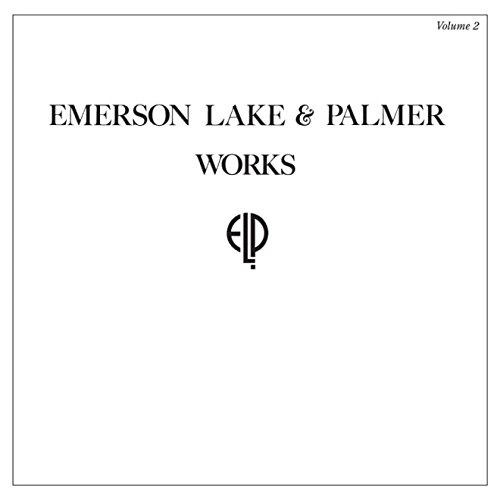
Despite a run of popular and well-received (except by the prog-haters) albums in the early 1970s, it seemed that by the middle of the decade, as the genre began to lose favor, ELP also appeared to lose creativity and cohesiveness. Their 1977 album, Works Vol.1 was a double album, with each member of the band getting one side, and the fourth side was collaborative. Although it sold well, it really wasn’t good, although the band’s version of Aaron Copland’s “Fanfare For The Common Man” was fun (and is on my list of ELP songs that I like). Later that year, they released Works, Vol. 2 which was essentially an odds and ends compilation of B-sides and unreleased tracks. Since most of these came from an earlier period when ELP was firing on all creative cylinders, it has more good stuff on it, including our feature song. 

“When The Apple Blossoms Bloom In The Windmills Of Your Mind I’ll Be Your Valentine” is a relatively short song for ELP, clocking in at just under 4 minutes, with a title that takes almost as long as that to say. (but if you want long titles, check out the Red Sparowes). It’s an upbeat and relatively unpretentious (by ELP standards) instrumental that may well have started as a jam. You can hear the musical talent of the three musicians and enjoy their playing on this track. It was recorded during the Brain Salad Surgery sessions and was released as the B-side to the “Jerusalem” single. 

Works, Vol. 2 was less commercially successful than its predecessor, which is probably what economists call a lagging indicator. But it also pretty much the end for ELP. Their next album, the contractually required Love Beach, which features the band members posing with mostly open shirts near a beach, appeared to be an attempt to pivot toward more pop-oriented music, much as Yes and Genesis were doing in this period, but without any real conviction. Moreover, the band was breaking apart even more, with Lake and Palmer recording their parts and fleeing the studio, leaving Emerson to finalize the album. It sold OK, but was not well received by critics, even those who still liked the genre. 

Other than a few live releases, a few partial reunions that included other musicians replacing absent core members, and a brief full reunion in the 90s, that was pretty much it for ELP. Emerson died in 2016 of a self-inflicted gunshot, and Lake died of cancer the same year.

Friday, October 22, 2021

Rock Hall Snubs: King Crimson


King Crimson
: The Court of the Crimson King
[purchase The Condenced 21st Century Guide to King Crimson 1969-2003

I think that it was in the Bill James Historical Baseball Abstract that I read, years ago, something like the only definition of who belongs in the (baseball) Hall of Fame is who gets elected. In other words, even in a statistically driven sport such as baseball (which has become even more so due to the work of James and fellow sabermetricians), there’s no formula to decide who belongs. James, and others, have created various predictive formulas, but they are not an attempt to determine who deserves to be in the Hall, but rather to predict whether the player’s statistics are the type that would convince the voters to vote them in. 

This type of determination is even harder to do with the Rock Hall, because there are no stats, really, other than maybe sales, or streams, or concert attendance-but I think most people (at least most people who read this type of blog) are unwilling to equate popularity with quality. Although it is nice when it happens. For the Rock Hall, it sort of just comes to down to gut feelings, considering some objective, but mostly subjective factors—plus a fan vote. Of course to be fair, it is hard to take the Rock Hall all that seriously when it inducted Bon Jovi a few years ago. 

My pitch today is for King Crimson, which based on the number of times I’ve written about them, their music or their members (see here, here, here, here, here, here, here, here, here, here, here, here, here, and most recently, here), you might assume are my favorite band. They aren’t (don’t ask me what is, though). But when you look at the quality and variety of their work, the length of their career, even with all of the interruptions, and most notably, the influence of the band on so many genres of music, it is hard to justify their exclusion. There is one full member of King Crimson who is a Rock Hall inductee (and another performer who sang one song for Crimson who is in the Hall……the answer will be at the end of this piece). 

It is hard to argue that King Crimson did not influence, among other genres, progressive rock, hard rock, various forms of metal, jazz/rock fusion, punk, new wave, grunge, math rock, jam bands, noise rock, and even hip-hop. There’s a nice summary of some of this in Wikipedia, or just Google “King Crimson influence” and fall down the rabbit hole. 

Also, arguably, Robert Fripp belongs in the Hall individually for his solo guitar work/"Frippertronics" and collaborations with Brian Eno, David Bowie, Peter Gabriel and others. 

That’s it. Show me a band or artist that is more influential than King Crimson that hasn’t already been inducted. 

The answer to the question is that drummer Bill Bruford was inducted into the Rock Hall as a member of Yes, as was Jon Anderson, who sang “Prince Rupert Awakes” on Crimson’s third album, Lizard.

Sunday, July 11, 2021

2021-50=1971: Yes


purchase [The Yes Album and Fragile ]

I don't recall having ever seen an album production credit for "bank loan arrangement" before. It equally stikes me as strange considering that the album where I saw it was produced immediately on the heels of an apparently successful tour supporting the release of The Yes Album that same year. Woulda thought they had made some money? One explanation is that they needed money to buy equipment for their newly added keyboard player, a man named Rick Wakeman.

So, in February, Yes released The Yes Album, in the summer, keyboardist Tony Kaye is removed from the band, Wakeman joins, and in November, they release >Fragile<.

The addition of Wakeman accomplished the band's intentions to give more prominence to electronic keyboards, and it was Kaye's reluctance to go down that path that led to his departure. 

Of these two 1971 albums, my personal preference is for The Yes Album - Fragile, perhaps because it was a bit rushed into completion, perhaps because Wakeman was still new to the group - doesn't seem to have the cohesion of a "band", but a band that does actually come together on their next album, Close to the Edge. The Yes Album is the product of a group that is working together and on the verge of defining the prog rock genre. The Yes Album is the band's third and the first with guitarist Steve Howe (who appears above at far right in the photo on the album cover of the 2nd album without having actually played on it). 

Shades of Genesis?


Monday, October 21, 2019

Witch: Anne Boleyn 'The Day Thou Gavest Lord Hath Ended'


Rick Wakeman: Anne Boleyn 'The Day Thou Gavest Lord Hath Ended'
[purchase]

Today, we are going to debunk two myths.

First, Anne Boleyn, King Henry VIII’s second wife and Queen of England from 1533 to 1536, was not a witch, although she has been accused of being one in popular culture. In fact, her execution was based on (probably false) claims of adultery, incest, and high treason designed to get her out of the way so that Henry could move on to wife III. But she was an incredibly divisive figure in English life of the day, ascending to the throne after the controversial end of Henry’s marriage to Catherine of Aragon and otherwise contributing to the move of England from Catholicism to Protestantism. The politics of this period is fiendishly complex, with lots of players and shifting alliances, so, I’m not going to even try to explain all of this. I do recommend reading Hilary Mantel’s novels about this period, Wolf Hall, and Bring Up The Bodies, or watching the PBS adaptation of them, Wolf Hall, in which Claire Foy portrays Anne (before being cast in The Crown as the young Queen Elizabeth II, who was a descendant of Anne’s older sister Mary, a mistress of Henry VIII before her sister took her place. Like I said, complex.).

It seems that the witchcraft allegations stemmed from two main sources all derived from basic misogyny—first, if you were a powerful woman, and had enemies (and Anne fit that bill perfectly), it was likely that you would be called a witch. For example, while many contemporary commentators remarked on Anne’s beauty, brilliance and charm, one Catholic writer, long after her death, described Anne as having a “protruding tooth,” a “large wen (growth) on her neck,” and six fingers. You know, sort of like a caricature witch. There is no claim, however, that she wore a pointy hat, rode a broom, or weighed as much as a duck.

The second basis for the claim that Anne Boleyn was a witch is based on a comment reportedly made by Henry VIII, not the most reliable of narrators, to be sure, that he had been “seduced and forced into his second marriage by means of sortileges and charms.” “Sortilege,” however, appears to have been used to mean “bewitched or enchanted” in both the supernatural and non-supernatural sense, and there is significant evidence that Henry was smitten by Anne’s beauty, intelligence, charm, and expertise in flirting, and not so much by witchcraft.

If you are really interested in delving more into this question, check out this page.

Myth 2—Rick Wakeman’s 1973 album, The Six Wives of Henry VIII, is a terrible example of the worst excesses of progressive rock. Yes, it was a concept album about historical figures, and yes, it is mostly Wakeman showing off his talent on various keyboards and synthesizers, and yes, there are moments of pomp and excess (which, to me, can have their place, anyway). But overall, the album contains beautiful music and great musicianship. And there are many, many worse examples of over the top prog pretension, so I think that, in retrospect, at least, the album holds up reasonably well.

The album was inspired by Wakeman’s dissatisfaction with his playing on his first tour with Yes, and his attempt to find a personal style. In an airport in Richmond, Virginia, Wakeman bought a copy of The Private Life of Henry VIII by Scottish writer Nancy Brysson Morrison, and the chapter on Anne Boleyn reminded him of a musical idea he had previously recorded. Wakeman decided to focus on each of the wives, “interpreting the musical characteristics of the wives of Henry VIII. Although the style may not always be in keeping with their individual history, it is my personal conception of their characters in relation to keyboard instruments.”

Listening to his take on Anne Boleyn, can I hear “a tribute to her feisty temper and valiant courage that she maintained while standing up to her husband,” as the Allmusic reviewer heard? Maybe, but overall, it is a nice piece, and not, to my hearing, excessive or bombastic. Plus, it has Bill Bruford on drums, which to me is always a positive.

Monday, July 30, 2018

Remedies: Mental Medication


U.K.: Mental Medication [purchase]

The original lineup of U.K. brought together some of the best at their instruments British prog rockers. The band was formed in the late 1970s by drummer Bill Bruford, who had played in Yes and King Crimson, and singer/bassist John Wetton, who had played with Bruford in King Crimson and had also been part of Roxy Music and Uriah Heep. Bruford and Wetton each recruited another musician, with Bruford bringing Allan Holdsworth, who had been with Soft Machine, Tony Williams’ Lifeline, Gong, and Jean-Luc Ponty, as well having played on Bruford’s debut solo album, and Wetton inviting Eddie Jobson, a keyboard player and violinist who had played with him in Roxy Music, and who was in Frank Zappa’s band.

U.K., the one and only album recorded by this lineup is considered by many to be a prog-rock classic. Excellent playing (of course) on interesting, unusual songs, featuring a true fusion of rock, jazz and classical influences, has made this one of my favorites—which is not surprising, considering that Bruford is probably my favorite drummer, Holdsworth is my favorite guitarist, and I have lots of respect for both Wetton and Jobson.

That being said, I have to admit that “Mental Medication” is not one of my favorite songs from the album. There’s something about Wetton’s vocals, particularly at the beginning, that I don’t love. But there’s a thrilling four minute stretch of instrumental music, including a guitar solo from Holdsworth that is both jaw dropping and subtle at the same time, and a violin solo from Jobson, all over Wetton’s stellar bass playing and Bruford’s signature drumming, that makes it worth a listen.

Sadly, after some extensive touring, tensions in the band led to Wetton and Jobson “firing” Holdsworth, and Bruford also left. Rather than find a new guitarist, the remaining members brought in drummer Terry Bozzio, also from Frank Zappa’s band, and recorded Danger Money as a trio. It isn’t a bad album, and actually spawned a minor hit, “Nothing to Lose.” After a live album, Wetton and Jobson themselves disagreed on the future of the band, and they broke up. A couple of years later Wetton formed Asia, with Steve Howe, Carl Palmer and Geoff Downes, which definitely sounded a lot like what U.K. might have sounded like if it tried for a more commercial sound.

Bruford took some of the songs that he had written for a second U.K. album and used them on his second solo album, the great One of a Kind (which also featured Holdsworth on guitar). There were a few Wetton/Jobson led reunions of U.K. over the years, featuring various drummers and guitarists, but the original lineup never got back together.

Sadly, both Wetton and Holdsworth died in 2017, which I commemorated here.

Monday, February 5, 2018

Aliens: Flight of the Moorglade


Jon Anderson: Flight of the Moorglade
[purchase]

Reading my music writing probably might give you the impression that I listen to prog rock all the time, but I don’t. More than anything, I listen to what would be classified as Americana music, but I am clearly an unrepentant lover of progressive rock. But just because I enjoy the music, that doesn’t mean that I can’t mock some of its excesses. And maybe the easiest things to make fun of about the 70s prog that I enjoy are the concept albums, with their often bizarre narratives. I mean, there are some pretty straightforward ones, like Rick Wakeman’s Journey to the Center of the Earth, essentially a dramatization of the Jules Verne novel, or Gryphon’s Red Queen to Gryphon Three, about chess (a hidden gem, by the way), or even Pink Floyd’s The Wall, basically a story about a person's difficult childhood and life.

But then there are the crazy ones, like Gong’s acid-fueled three album Radio Gnome Trilogy, or pretty much anything by Magma, or Genesis’ The Lamb Lies Down on Broadway, which purports to be about a Puerto Rican youth living in New York City, but turns surreal (and is one of my favorite albums, anyway).

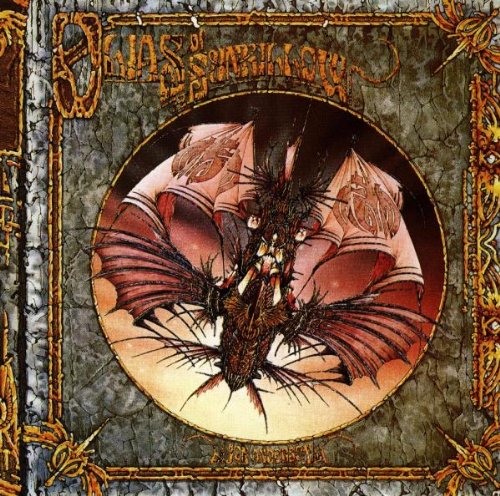
This genre of music, which is often tied up with fantasy and science fiction, is ripe for stories of aliens and interplanetary travel (although as we have seen, other genres go there, too.) And thus, we come to Jon Anderson’s Olias of Sunhillow, the Yes singer’s solo debut, released in 1976, after Yes released Relayer (an album that I have zero memory of) and before Going For The One (which I enjoyed more), during a period when the band’s members were all releasing solo albums. Wikipedia describes the album as telling:

the story of an alien race and their journey to a new world (the story printed in the LP jacket calls it "the earth", lowercase 'e') due to a volcanic catastrophe. Olias, the title character, is the chosen architect of the glider Moorglade Mover, which will be used to fly his people to their new home. Ranyart is the navigator for the glider, and Qoquaq (pronounced 'ko-quake') is the leader who unites the four tribes of Sunhillow to partake in the exodus. 

Now, let me start off by saying that I like this album, and particularly the featured track, very much. Anderson is credited with all of the voices and instruments on the album, which took two years in conception, and 8 months of work, to record. There have long been rumors that Vangelis, who had unsuccessfully auditioned for Yes at that time, and who Anderson collaborated with, played some of the parts, but both men have denied this, and unless Devin Nunes has a memo to the contrary, I see no reason to dispute that (actually, if Nunes had such a memo, it might be more likely that I’d take a contrary position, but I’m going off the rails here).

If you want a chuckle, go ahead and read the whole elaborate story, which was printed on the inner album sleeve. And because most of you won’t buy the album, here’s a link to a website devoted to Olias of Sunhillow which contains the story, and more.

Meanwhile, it appears that Anderson has been working on a sequel to Olias since 2001, to be called The Songs of Zamran: Son of Olias, and as recently as 2014, Anderson confirmed that he is still working on it. Based on his comments over the years, it will be a multi-hour work, and possibly released as an app, including visuals. Here's a preview, from 2013.  And why not, I say?

Tuesday, December 6, 2016

Leftovers: Ste*--Prog Rock Guitarists Steve Howe, Steve Hackett and Steve Hillage


Yes: Mood For A Day  
[purchase Fragile by Yes]

Steve Hackett: Ace Of Wands
[purchase Voyage of the Acolyte by Steve Hackett]

Steve Hillage: Castle In The Clouds/Hurdy Gurdy Man (Live)
[purchase Live Herald by Steve Hillage]

Ste* was one of the odder themes we had in 2016, and in response, I wrote about brilliant guitarist Steve Tibbetts, a relatively obscure musician whose music, as I said, “exists somewhere in the never particularly commercial intersection of jazz fusion, world music and ambient music.” Thinking about our Leftovers theme, I realized that I was aware of three more guitar virtuosi whose first name is Steve. So, I figured, why not write a little about each of them, in reverse order of their fame.

Despite the fact that all three of them are remarkable guitarists, and have continued to make music for years, I pretty much stopped following their careers years ago. Whether it was a change in their music, or changes in my tastes, or, more likely, a combination of both, I’m really not knowledgeable about their work from after the 1980s, which may well be very good. I do still enjoy the music that they made back in the day.

Steve Howe (who was already the subject of a Ste* post), of course, is best known for his work with Yes. Born in 1947 in North London, he made his first recording, a cover of Chuck Berry’s “Maybelline” in 1964 with the Syndicats, and played in a number of other bands, including Tomorrow and Bodast. Check out this Bodast tune, “Nether Street,” part of which was later used in Yes’ “Starship Trooper.” After passing on the chance to join the Nice and Jethro Tull, once it was clear that Bodast was not going to get a deal, he agreed to join Yes, replacing Peter Banks. Howe’s eclectic influences, including classical, jazz, and rock helped to create the distinctive Yes sound during their best and most iconic period.

He left Yes when it broke up in 1981, wasn’t asked back for the reformation of the band (so, he didn’t play on “Owner of a Lonely Heart”), and reunited with most of the “classic” Yes lineup in Anderson Bruford Wakeman and Howe. He has participated in some, but not all, of the various Yes lineups over the years. I really stopped listening to Howe after he left Yes the first time. I never really paid much attention to his solo albums (including the ones he made while still in the band), or any of the later Yes efforts that he appeared on. There were a few good songs on the first Asia album, but I felt that the band was less than the sum of its parts, and his project with Steve Hackett, GTR, also failed to interest me. Howe continues to record with Yes and in a jazz trio featuring his son on drums, and to perform.

Steve Hackett, Howe’s GTR bandmate, is best known for his work with Genesis. Born in 1950 in central London, he was a self-taught guitarist. After gigging with a few bands, in 1970, he joined Quiet World with his brother John, a flutist, and appeared on their only album, before leaving the band. Hackett put an ad in Melody Maker magazine for musicians "determined to strive beyond existing stagnant music forms." Peter Gabriel answered the ad because his band, Genesis, had lost their original guitarist, Anthony Phillips. Like Howe, Hackett wasn’t the first guitarist in the band which made him famous, but was part of the band’s best, and best known, lineup.

Over time, Hackett began to feel marginalized by Genesis which gradually put less of his music on its albums. After the tour supporting the Wind And Wuthering album in 1977, Hackett left the band. I followed Hackett’s solo work for a while. His first solo album, Voyage of the Acolyte, recorded while he was still in Genesis, featured the band's drummer Phil Collins, who also sang on one song (before he was the lead singer of Genesis), and bassist Mike Rutherford, along with John Hackett, and is probably a minor prog rock classic. I was also a big fan of 1979’s Spectral Mornings, and continued to listen to, and enjoy Hackett’s solo work, to a somewhat diminishing degree, through the mid-1980s.

One of Hackett’s big problems is that he is a great guitarist and a bad singer. So, when he writes songs with lyrics, he either has to bring in outside vocalists with varying success, or sings himself, usually with the assistance of significant processing, and mostly unsuccessfully. After that, I again pretty much lost track of Hackett’s career—occasionally listening to some of his studio and live Genesis “revisited” work, but ignoring most of his varied output, which has ranged from classical, to world music, to blues, to prog and rock. Hackett also continues to record, as a solo artist and with others, and to tour as a solo act, and with a mostly Genesis-based show.

Steve Hillage, the youngest and least well-known of the trio of Steves, was born in 1951 in northeast London. Hillage played in a number of bands as a teenager, a couple of which even recorded and released albums. While attending university in the Canterbury area starting in 1969, Hillage began to play with other musicians and bands in the Canterbury scene. In 1971, he formed Khan, which released one album of psychedelic prog, before breaking up. Hillage then joined Kevin Ayers’ band before becoming a member of Gong in 1973, as the band was starting work in its “Radio Gnome” trilogy. But when Gong inevitably disintegrated, Hillage began a solo career.

I was introduced to Hillage while at WPRB, almost certainly from hearing his great live, spacy cover of Donovan’s “Hurdy Gurdy Man,” from the 1979 album Live Herald, which led me to the rest of his solo work. I will admit that my immersion into the Gong world focused mostly on the later, Pierre Moerlen-led albums which were almost entirely Hillage-free, and it was only much later that I spent any time listening to the bizarre Daevid Allen era band’s eclectic psychedelia that featured Hillage.

Just as I was getting into Hillage’s music, he began to move away from the prog rock guitar heroics that I liked, and into ambient dance music, which I didn’t, so I basically stopped paying attention to his career after the late 70’s. Over the years, Hillage produced albums for a variety of acts, including Simple Minds (pre-Breakfast Club fame) and continues to focus on performing and recording dance music under the name System 7 and Mirror System with his long time musical and personal partner, Miquette Giraudy. He also occasionally participates in Gong reunions. And, for some reason, he appeared on this Elton John cover “sung” by William Shatner.

I’d love to be able to tie this up with some clever ending, but like a post-Thanksgiving turkey, cranberry and stuffing sandwich, it is sometimes better just to be happy that things work together, without overthinking why.

Sunday, May 11, 2014

Radio -->Television: Video Killed the Radio Star

[purchase]

On a basic level, “Video Killed the Radio Star” harkens back to a time when the emergence of television supplanted radio as the primary source of information and entertainment. On a general level, it can be interpreted as a reflection on new technology replacing the old. In the cultural history of the 20th Century, because it was the first video ever played on MTV, the song has come to represent the emergence of the music video and the marginalization of radio.

I’d argue, though, that while music videos and MTV probably didn’t help radio, it wasn’t the only thing that caused the decline of the medium. Even MTV stopped playing videos years ago, I think that two different forces more powerful than video combined to render radio less vital. (Note—these opinions are about rock radio—I would not even presume to opine about the state of urban, Latin, country or other genres).

First, as I alluded to in my prior piece, I think that radio’s success commercially resulted in consolidation of ownership and a homogenization of content. Independent owners, willing to take risks and hire edgy DJs and program directors, were replaced by media behemoths that sanded off the rough edges and used market research to cater to the masses. There has always been a balance in radio programming between leading the listeners and following them—in other words, trying to determine the right mix of music that you think the audience will or should like and the music you know they already like. I think that the balance on commercial radio has shifted way toward playing the known, and avoiding risk. The spirit of adventurous radio still lives on in the occasional independent station and on college/noncommercial stations. Unfortunately, these stations tend to have small listenerships, can swing too far toward the strange and unknown, and often have difficult to listen to student DJs (which I can say, having been one).

The second force is, of course, the new technologies, mostly digital music, and the Internet and satellite “radio,” that allow listeners to create their own playlists, stream music from around the world, download music easily and find stations that narrowcast in limited genres. This allows each individual listener to decide, on a moment to moment basis, the balance between the known and unknown, and how much the listener wants to rely on their own taste, and how much to leave to someone else’s decision. And videos have become a way to circumvent the tight playlists of commercial radio and the small listenership of noncommercial/independent radio by getting the product directly to the consumer.  Videos, however, remove some of the mystery, because they create a codified, unitary version of a song's meaning.  The ability of every individual listener to imagine a personal vision is gone.  I have no memory anymore of what I thought the first time I heard Peter Gabriel's "Sledgehammer" on the radio--now, all I can think of is claymation.

There is nothing inherently wrong with this—it is just reality. It isn’t as easy as when I was a kid, when there was a choice of a few radio stations, you pretty much knew that one station played top 40, another played album rock, and another was “free form.” Or you put on a record. And I lived in the media capital of the world, so I can only imagine that radio was even less varied elsewhere. Now, if you like popular hits, you can find a way to listen to them. If you want to only listen to obscure indie rock, you can do that. And if you want to mix things up, you can do that, too. But all of this choice requires more work than I think most people are willing to do, and can simply be overwhelming. Maybe not to most people who read obscure music blogs, but most regular people.  I wrote this earlier this week, and here's an op-ed from today's New York Times that discusses some of the same issues.

Although I would expect that most people reading this were in fact aware that the Buggles’ “Video Killed the Radio Star” was the first video on MTV, I am willing to bet that a significantly smaller percentage of you knew that it was not the first version of the song released. The song was written by Trevor Horn, Geoff Downes and Bruce Woolley, all members of the Buggles, and it was a demo of the song that helped get the band signed. Apparently, it took the trio about an hour to write. While recording the album, Woolley left amicably, formed The Camera Club and released his somewhat less “produced” version of the song on the album English Garden. Here it is:

Shortly thereafter, the remaining Buggles released their version, which became the huge hit and a cultural icon. And to show there were no hard feelings, Woolley appears in the video. Downes and Horn started to work on another album, but instead joined Yes, in what was at the time a true head scratcher. The second Buggles album was later released, to less acclaim, and Downes joined Asia and has been part of other bands. Horn has mostly made his name as a producer. The Camera Club’s second album went unreleased, and Woolley has become better known as a songwriter, often for movies. One of the other members of that band was Thomas Dolby, who must also have recognized the interplay between TV and radio. His debut album was called The Golden Age of Wireless, and the first track was another early MTV staple, “She Blinded Me With Science.” The second track? “Radio Silence.”

Wednesday, March 26, 2014

RUSSIA/UKRAINE: Yes, "Siberian Khatru"


Yes: "Siberian Khatru"
[Purchase]

During my junior high and high school years in the late '70s and early '80s, I became something of a Yes fan, probably primarily because a few of my close friends were into them. I'm pretty sure I liked "Roundabout" prior to that anyway, but this more extended exposure hearing my friends' albums gave me an appreciation of some of their less radio-friendly fare. I grew to know all of their album titles -- I'm pretty sure I could even list them in the correct order -- even if I didn't care for all of them to the same degree as my friends. To this day, hearing such album names as Tales from Topographic Oceans will always evoke an immediate visceral reaction flashing me back to that period of my youth. Not that I progressed much farther into the prog rock scene than Yes, a (very) little Emerson, Lake, and Palmer, and, later, some Rush. Even prior to the punk explosion, I could tell that almost by definition, much of prog rock was pompous and bloated. I only cared about the bands among them who managed to blend something of an appreciation for pop hooks into their pretentiousness. I didn't need to hear bands trying to rewrite classical symphonies for rock instrumentation; if it didn't have some form of hook, I quickly lost interest.

Which is why a handful of Yes's albums appealed to me: The Yes Album, Fragile, and Close to the Edge, the three albums I ended up growing to love, all have their share of great hooks. And my favorite songs were scattered across the albums, so they ended up drawing me into the more long-winded songs that might not have otherwise grabbed my attention. "Siberian Khatru" was most certainly one of those, a sprawling epic of a song, much like its namesake geographical region, dominating a massive portion of Russia. The song, despite its nearly 9-minute length, moves along at a brisk pace and keeps coming back to Steve Howe and Chris Squire's hooky riff and Jon Anderson’s melodious singering. (Just made that term up!) I certainly don’t know how I’d feel about it if I hadn’t had the appreciation for the full Close to the Edge album (from 1972), but for those not familiar with the album, this fact might be of interest: “Siberian Khatru” is the shortest song on the album! Side 1 contains a single, 18-minute track, and Side 2 kicks off with a 10-minute multi-part song, making the third and final album track, “Siberian Khatru,” seem like a radio-ready single by comparison.

Friday, January 10, 2014

In Memoriam: Kevin Ayers and Peter Banks


Soft Machine: We Did it Again [purchase]


Yes: Beyond and Before [purchase]

As we wind down the In Memoriam theme and move on to (I hope) happier discussions, I decided to wedge in another pair of tributes, this time to musicians who played on early albums by prog bands, and then left. In both cases, the bands reached significant popularity after their departure, while the musicians went on to long careers, mostly under the mainstream radar.

Let’s start with Kevin Ayers. Born in England, he was raised in Malaysia, and seemed to have taken a more stereotypical tropical approach to life. An early member of what later became known as the “Canterbury Scene,” he joined the Wilde Flowers, sort of the “mothership” of the scene. The Wilde Flowers split, essentially forming two bands: Caravan and Soft Machine, in which Ayers played bass and guitar, sang and wrote songs. Initially Soft Machine also included Robert Wyatt on drums and vocals, Daevid Allen on guitar and Mike Ratledge on organ. Unfortunately, after some gigs in France, Allen was refused entry back to England, so he stayed in France and formed Gong (which turned out pretty well for him).

As a trio, Soft Machine toured the United States, opening for Jimi Hendrix, a pretty good gig, I’d have to think, and recorded their first album, The Soft Machine in New York. The album, which is as much an odd psychedelic album as it was a proto-prog rock collection, is one of those albums that is considered very influential but is probably rarely played, and that’s too bad. The track featured above, "We Did it Again," was written by Ayers, and he sings lead. You can hear the diverse influences, including blues, psychedelic rock and prog, in the song. Imagine, if you can, hearing it go on for 45 minutes, in 1968, at a concert, especially if you were under the influence. Apparently, it was an almost religious experience.

Later, in 1968, Soft Machine recruited a guitarist named Andy Summers to replace Allen, and he toured with the band on some more American dates, including opening for Hendrix again, before Ayers had Summers fired. Summers, of course, did fine for himself, joining a little trio in 1997 called The Police.  (There must not have been hard feelings between Ayers and Summers, who later played with him).

Ayers, however, decided the touring grind was too much, sold his bass to Noel Redding of Hendrix’s band, and went off to Ibiza to hang out with Daevid Allen. I have to believe that the gentlemen enjoyed themselves pharmacologically, as befit the times, and Ayers wrote a bunch of songs that are featured on his first solo album. Through the next decades, Ayers recorded and toured with a wide variety of musicians, releasing uncategorizable albums that delighted and confounded the music world. Interestingly, one of Ayers longest musical collaborations was with guitarist Ollie Halsall, the mostly uncredited guitarist for the Beatles parody band The Rutles.

Ayers rarely seemed interested in commercial success, and he never had much, due to his musical tastes, laid back personality and, unfortunately, substance abuse issues. In the late 1990s, Ayers reappeared, but it wasn’t until 2007 that he released The Unfairground to critical acclaim and, of course, few sales. He died on February 18, 2013 in France.

Soft Machine, in Ayers’ absence, with a regularly changing cast of members, moved gradually away from psychedelia and prog toward fusion (but generally the interesting kind, especially the fascinating Third album). Allmusic considers them to be one of the more influential bands of their era.

Peter Banks was the first guitarist in Yes, and appeared on their first two albums. Was he a good guitarist? A couple of influential DJs from the BBC refer to him as the “Architect of Progressive Rock.” Gibson Guitar named him as one of the "10 Great Prog Rock Guitarists." So yeah, he was. The song above, "Beyond and Before," is the first song on the first Yes album, and Banks plays the first note, and follows that with some fine playing. So, what happened?

Artistic differences, of course. Yes was formed in mid-1968, and the initial lineup was Banks, Jon Anderson on vocals, Chris Squire on bass, Tony Kaye on keyboards, and my favorite drummer, Bill Bruford. Of course, they needed a name, and after considering Anderson’s suggestion, Life, and Squire’s suggestion, World, they agreed on Yes! (suggested by Banks, and including the exclamation point). They began to perform live, Bruford decided to quit the band and return to university, but luckily was lured back. In 1969, the band recorded and released a self-titled debut album (without the !), consisting of original songs, and two covers. Although the album failed to chart, it received generally positive reviews.

The band began to work on its followup, Time and A Word, but Anderson and Squire wanted to use an orchestra, which was still kind of a radical idea. Banks wasn’t pleased by this in theory, and when he found out that the arrangements were going to pretty much replace him (and Kaye), he became really miffed. The album was released, it did O.K., although there were some negative reviews of the use of the orchestra, the band did a tour, and the disgruntled Banks was given the boot. He was replaced by Steve Howe. (Kaye lasted one more album (The Yes Album, the band’s commercial breakthrough) and tour before being replaced by Rick Wakeman).

After a while supporting others, Banks and Kaye reunited to form Flash, which not surprisingly sounded like Yes and had minimal success in its short life, after which Banks worked as a sideman, appeared on tribute albums and released solo material (check out this one featuring Jan Akkerman of Focus, Phil Collins, John Wetton and Steve Hackett). He wasn’t even part of a Flash reunion in the early 2000s. but toured and released an album in 2006 as part of a band called Harmony in Diversity. He passed away on March 7, 2013.

Of course, Yes went on to enormous fame, with an oft-changing revolving door lineup (that, however, never again included Banks). Their most recent album featured only Squire from the original lineup, and they still tour regularly.

Friday, January 3, 2014

In Memoriam: Storm Thorgerson and Arturo Vega


[purchase The Gathering Storm - The Album Art of Storm Thorgerson]


[purchase the iconic Ramones T-Shirt]

They were both artists, they were both influential in the music world, and they both died in 2013. But Storm Thorgerson and Arturo Vega were also very different, in their lives, in their art and in the music that they were associated with.

Thorgerson was born in England in 1944 and was a friend of Syd Barrett, Roger Waters and David Gilmour. He was a graduate of the University of Leicester and obtained a Master of Arts degree from the Royal College of Art. In 1968, he founded Hipgnosis, a graphic arts company, and Thorgerson and the company designed many of the most iconic album covers of the 1970s and 1980s, regularly for prog rock groups. The cover of Pink Floyd’s Dark Side of the Moon, designed by Thorgerson, is often considered to be the greatest album cover of all time. Thorgerson’s work frequently was surreal, with sharply focused and well lit figures in bizarre or unexpected situations. Back when an album cover was a relatively large surface, Thorgerson’s designs were definitely a lure to record store browsers. And if you were someone who partook of psychedelic substances, they could be looked at for hours in an attempt to unlock their meaning. Or so I have been told.

It would take too long to list all of the incredible covers that Thorgerson had a role in designing and creating, but to list a few (other than most Pink Floyd covers)—Led Zeppelin’s Houses of the Holy and Presence, Genesis’ The Lamb Lies Down on Broadway, Yes’ Tormato and Going for the One, the first three Peter Gabriel albums, and albums by Renaissance, Brand X. 10cc and The Mars Volta. And I am probably leaving out your favorite. It was not, however, all classic rock or prog—his portfolio included covers for Ian Dury and the Blockheads, The Cranberries, The Cult, Megadeth and The Offspring.

In addition to designing album covers, Thorgerson directed music videos for artists such as Yes, Robert Plant, Pink Floyd and Nik Kershaw.

Thorgerson suffered a stroke in 2003 and later battled cancer, which claimed his life in April, 2013.

Arturo Vega’s career may not have had the same broad scope as Torgerson’s, but his work, primarily for The Ramones, who rejected all of the pomp and excess of many of the bands that hired Torgerson, may well be as influential, and probably sold more t-shirts. But art isn’t a competition (unlike, apparently, cupcakes).

Vega was born in 1947 in Chihuahua, Mexico, but moved to New York in his early 20’s to try and become an artist. New York at that time was not the chain store paradise that it is today, and the early-1970’s music scene that grew out of bands like the Velvet Underground were spawned from grungy, dangerous downtown neighborhoods which are probably remembered more fondly now than they were back then.

While living in a loft in the East Village in 1973, Vega met Douglas Colvin, who complemented the music on Vega’s stereo. Colvin later morphed into Dee Dee Ramone, and Vega became known as the “Fifth Ramone.” In addition to often feeding, housing and supporting the band, Vega was what would now be called a branding consultant. He helped to develop their look, their lighting, and, most of all, designed one of the truly great rock band logos ever. The faux presidential seal, featuring an eagle holding an apple branch (to signify that The Ramones were as American as apple pie) and a baseball bat (in honor of Johnny Ramone’s favorite sport), with a “Hey Ho, Let’s Go” banner in its beak, surrounded by the names of the members, is not only instantly recognizable, it represented a subtle, if unmistakable “fuck you” to the establishment.

Vega claims to have seen all but 2 of the bands 2,200 plus live shows and sold t-shirts with that logo, which helped to support the band when they weren’t selling that many albums or tickets. He continued to sell Ramones shirts and memorabilia, and his logo became a badge of coolness, even with people who weren’t even born when The Ramones broke up. Although Vega worked with other musicians, he will always be identified with The Ramones, and without Vega, The Ramones might never have survived to become a force that changed music forever.

He died, of undisclosed causes, in June.

Friday, June 28, 2013

The Other Guy: Jon Anderson

[purchase]

I’m working on a King Crimson related post for another blog, and it reminded me that, in King Crimson terms, Jon Anderson is the other guy. Crimson is a band that, if anything, is consistent in its inconsistency— its history is filled with constant turnover in personnel and styles, with Robert Fripp as the only member who has been in every incarnation of the band. Most histories of King Crimson seem to refer to musicians leaving because they didn’t like or understand the music, which raises the question of why they joined in the first place. Wikipedia reports that there are over fifteen-hundred releases on which members and former members of King Crimson appear.

The band’s third album, Lizard, was a departure from the first two, with greater jazz influences, and Greg Lake’s powerful vocals being replaced by Gordon Haskell’s more ethereal style. But the song “Prince Rupert Awakes,” was too high for Haskell, so Jon Anderson, of Yes, was enlisted to sing, his only contribution to the Crimson oeuvre.

On the other hand, when it comes to Yes, in my mind, Anderson is the guy, despite the fact that Yes has had membership turnover that rivals King Crimson. But despite the fact that Anderson was replaced as lead vocalist by "other guys" Trevor Horn, Benoit David and Jon Davison (the latter two having been vocalists in Yes tribute bands before moving up to the major leagues) who attempt to mimic the original, there can be no question that for that band, Anderson is affirmatively the guy.

Friday, July 1, 2011

Reproductions: Every Little Thing


Yes: Every Little Thing

[purchase]

Some strains of psychedelia where turning into prog rock in 1969, and Yes' self-titled debut shows a band pointing towards prog. Their take on the Beatles' "Every Little Thing" follows the mold of Vanilla Fudge and the early Deep Purple, who both created such elaborate arrangements of other people's songs they were almost new songs. But where both of those bands had a tendency to slow down faster songs, Yes come out firing on all cylinders. It's a tour de force that was probably a calling card for the band in their early days.

Over the top? Yes. But you have to admit, it has an energy that matches the lyrics much better then the comparatively tame original.

Tuesday, October 5, 2010

Discoveries: Starship Trooper


Yes: Starship Trooper

[purchase]

Let me give you an abbreviated history of my teenage musical obsessions:

The Beatles -> Heavy Metal -> Prog Rock -> Everything Else

For this post, I'm going to feature the third element in this flowchart. It was 1986, and I was a freshman at Rutgers. I had been deep into heavy metal for the past two years, but college was already expanding my musical horizons. One of my dorm mates was, like me, not really part of the "in" crowd. And like me, he was very into his music. However, while I was banging away to Judas Priest and Iron Maiden, he was deep into ELP and Yes. We both influenced each other musically, but i definitely got the better part of that deal. For while ELP have not aged particularly well, Yes has become one of those groups I always find myself going back to, like visiting an old friend.

And I remember the exact moment I fell in love with Yes: I was laying on the floor of his dorm room--possibly in a bean bag chair--with headphones on, listening to The Yes Album, bathed in the warm sunlight shining through the dorm room windows. No mood-altering drugs were involved, yet it all seemed so...blissful.

Fragile, Yessongs, and the then-recent 9021Live: The Solos soon followed, and I was hooked. I got my hands on every Yes album I could, then expanded into ELP, Pink Floyd, Jethro Tull, Genesis, and King Crimson. And they led to the whole pantheon of "classic rock" and jazz artists that made up the bulk of my listening time in college. It really wasn't until the end of my college stay that I started getting interested in more contemporary music.

But so much contemporary music is "hear" today, gone tomorrow. A song like "Starship Trooper" I could listen to forever.

The photo accompanying this post is a shot of my dorm room circa '86-67. Hard to believe but at the time, those cassettes you see there were my entire music collection. Oh, how times have changed!