


























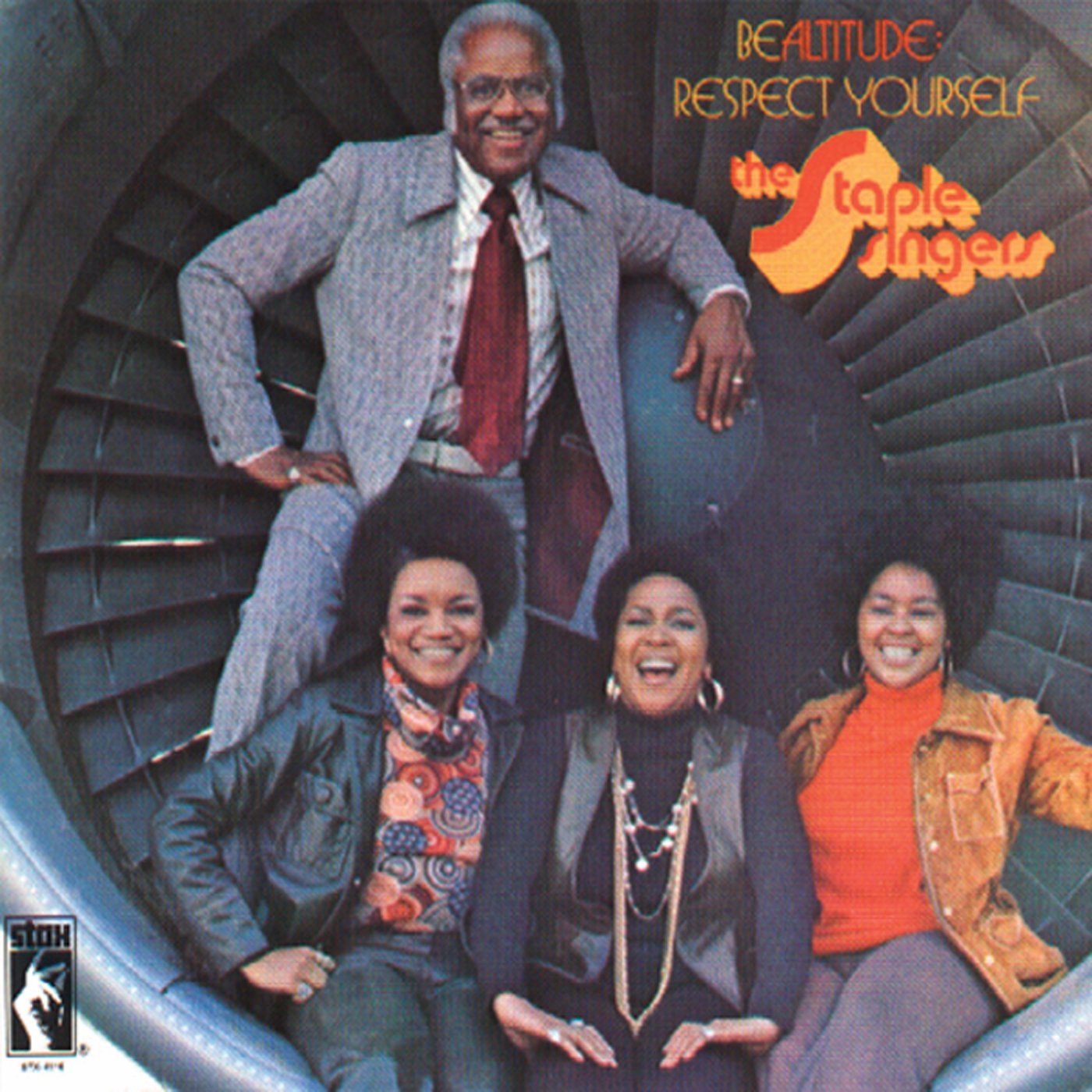
The Staple Singers: I’ll Take You There
[purchase]
I’m a little surprised that I’ve never devoted a post to the great Mavis Staples—although she is mentioned at length in the In Memoriam piece that I wrote in January 2019 honoring her sister Yvonne. I’ve seen Mavis perform a few times, and every time she simply blew me away. She’s in her 80’s, has recorded amazing music her whole life—including a bunch of great albums over the past few years, and as I write this, is on tour, with dates scheduled in North America and Europe through next summer. If you get a chance to see her, do it, because sadly, she isn’t going to be around forever. And go see Mavis!, the movie from 2015 about her life, which is streamable. And while you are at it, make sure you see Summer of Soul, in which the young Mavis duets with her idol Mahalia Jackson, maybe the best performance in a movie filled with incredible performances. It’s on Hulu, but should be seen in a theater, unless you have a huge screen and big speakers.
What makes Mavis Staples so great goes beyond her voice, or even her ability to interpret a song. She somehow is able to mix the gospel music she grew up on, with secular soul music and the protest and message music of the 1960s and beyond, and do it in a way that is both uplifting and surprisingly sexy (without being trashy).
Her first No. 1 pop hit, “I’ll Take You There,” with her family group The Staple Singers, is a great example of this mix—and more. Recorded at the Muscle Shoals Studio and featuring the Muscle Shoals Rhythm Section (Eddie Hinton on lead guitar, David Hood on bass, Barry Beckett on piano, Roger Hawkins on drums, with additional guitar from Jimmy Johnson and Raymond Banks), with the Memphis Horns dubbed in later, its message can be interpreted as laying out the path to heaven, or to a world where the civil rights movement—still active when the song was released in 1972—had succeeded. And there’s something in Mavis’ delivery (much of which was ad libbed), which indicates that maybe she’s offering to lead to somewhere more private.
What I didn’t know is that the introduction to the song and much of the melody and arrangement, are borrowed from/influenced by a reggae song, “The Liquidator,” by the Harry J Allstars. Check it out here. Al Bell, one of the owners of Stax Records, who wrote and produced the song, had brought a copy of “The Liquidator” to the sessions and played it for the musicians, who thought it was a demo, and not an actual released song. David Hood said, "The Liquidator thing, we didn't know what that was. As I recall, [Bell] came in and brought what they call a dub. It was like an acetate or something, a disk that you put on the record player and play. And it had no lyrics on it. We just thought it was an instrumental track that somebody had done for a song. And it was only years later when I found out that that had been a record."
As we know from Seuras’ piece about the Muscle Shoals/Traffic connection, members of the rhythm section, including Hood and Hawkins, toured with Traffic, who regularly listened to Island labelmate Bob Marley and the Wailers’ album Catch A Fire, and as Hood recalled, "We kept hearing that. I thought, 'Wow, this is the greatest, wildest music I've ever heard.’" In fact, reggae influences permeate the entire album that “I’ll Take You There,” was on, Be Altitude: Respect Yourself.
Finally, here’s a nice piece by David Hood’s son Patterson, who you probably know from his regular job with Drive-By Truckers, about growing up in the Muscle Shoals area (including finding out that his father was the bass player on “I’ll Take You There”), and much more. Patterson’s a fine prose writer, as well as a great songwriter (which you probably know, if you’ve read my stuff here and elsewhere).


