Hang on, what the bejasus has this to do with walls, I hear you say, the perfectly decent back to Bakersfield project by Jay Farrar and his revolving door of troubadours? More about building bridges, surely, between the goddam longhair americana hippies and the more trad what Hank did iterations of a redder necked country. Yebbut, but go check out the track listing, with at least three tracks referencing walls and barriers. See? That's good enough for me.
Big fan of Son Volt, as much as for Jay Farrar being there to assist at the birth of No Depression/Alt Country and all the many myriad names to try and disguise the solid bloodline of, or the musical origins and forbears of the style. Country rock was good enough for me in the 70s, but I guess that name suggests the need and presence of a drum kit, so fair play. Farrar and his for-a-while buddy, Jeff Tweedy had been the impetus within the band Uncle Tupelo, a honey of a group that, ahead of clashes of personality, produced some glorious music. Did they do any songs around walls or obstructions? Not as such, but this one acknowledges the truth that most doors have a need for surrounding masonry.....
Screen Door
Anyhow, moving on, and with Farrar moving out of Tweedyshot, and with Uncle Tupelo essentially having become Wilco, Farrar needed gainful. Son Volt began as a band in 1994, Farrar hooking back up again with Tupelo original member and drummer, Mike Heidhorn, himself also having, some time before, fallen out of step with Tweedy, recruiting the Boquist brothers. Hitting the red dirt ground running, their debut, Traces, was well received if not so well bought. That line up, plus additional instrumentation, produced three albums before Farrar called quits; as the principal writer, it was effectively his band. A wall link? Well, I believe that creosote is sometimes applied as weather proofing to wooden walls?
Creosote
Five years later and Farrar seemed ready to pick up the brand again, initially with the same members. However, following a solitary appearance on an Alejandro Escovado benefit/tribute album, this was not to be, and a near totally new set of sidemen were recruited. This version, shedding and adding as required, have since pursued a somewhat erratic course, careering from style to style. You want some Dylanesque ballads? Tick. Barroom brawlers? Likewise. But, for me it was and is Honky Tonk that hits their lodestone. Perhaps this is because that is the style of music I like best within the broad church of country, with, here, the sounds and influences of Merle Haggard and Buck Owens spilling through into this recording with affection and respect. Predominantly acoustic of guitar, bar the essential wail of pedal steel, with twin fiddles and the never more mournful vocal of Farrar, this format ideal for his world weary tones And, add the premium of three songs based around walls, there is nothing to obstruct the right of this album to lead this thread.
Brick Walls
Seawalls
Barricades
Beautiful stuff! OK, the lyrics may be a little hokey, but, hell, that's the M.O., they have to be; an effortless recreation of the fabled Bakersfield sound, that must even had Dwight Yoakam eating out his own heart. The steel, variously by Mark Spencer and Brad Sarno, is just exquisite. Given Farrar has now embarked on a 25 years later revisioning of his Son Volt output, with last years re-released Traces, with additional unreleased material, I can't wait for, gulp, 2038.
This is going to be one of those posts that tries to create a fusion of different things. Let’s see if it works, or if it turns out to be like “cold fusion.”
Remarkably, although I’ve mentioned them in writing about Jeff Tweedy, Jay Farrar, and Wilco, I’ve never written a post on this site about Uncle Tupelo (although I did a long one at Cover Me). I wasn’t aware of the band during their existence, and learned about them after discovering Wilco and Son Volt, the two bands that were formed when childhood friends Tweedy and Farrar could no longer coexist. I wrote in detail about Uncle Tupelo’s history in that Cover Me piece, so, if you are really interested, go check it out, and come back here when you are ready.
R.E.M.’s Peter Buck heard Uncle Tupelo perform a cover of the Louvin Brothers’ song “Great Atomic Power” at a concert, and contacted the band after the show. The three musicians found a great deal of overlap in their musical interests, including bluegrass, and decided to do an acoustic project together. The band’s prior album, Still Feel Gone was, for the most part, a rocker, so it was a bit of a risk to follow it up with an acoustic album, and their record company was pressuring them to move to an even more rock-oriented sound, to compete with the emerging grunge movement. But Farrar and Tweedy were, as always, headstrong, and pissed at their label’s failure to pay them royalties, so they must have figured, “Fuck it,” we’re going to work with Peter Buck, and do an acoustic album.
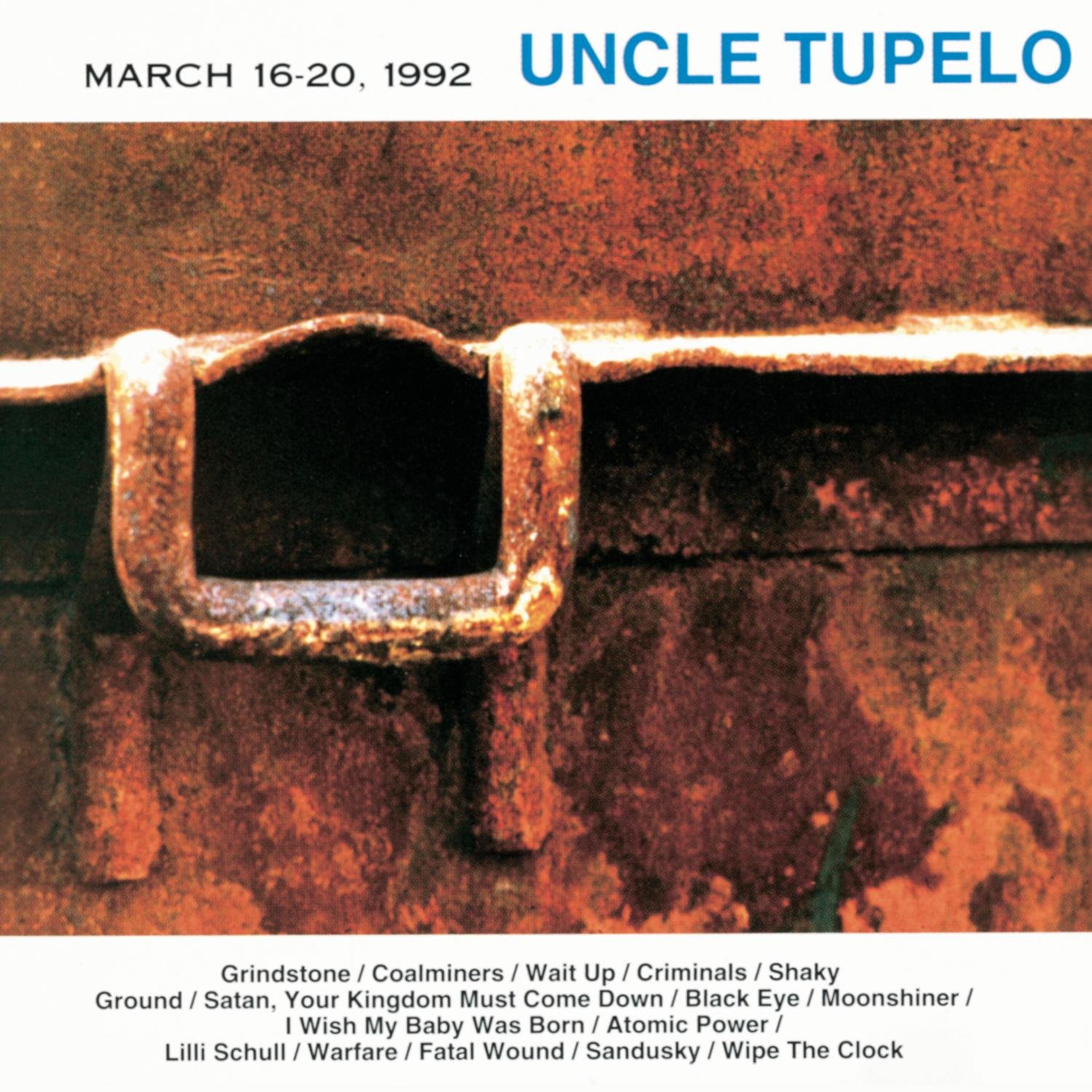
That album, March 16–20, 1992, mixed classic country tunes with originals that fit seamlessly with the older songs. Roadie Brian Henneman, who later founded the Bottle Rockets, even got to play the mandolin that was used in “Losing My Religion.” Uncle Tupelo’s cover of “Great Atomic Power” is very faithful to the Louvin Brothers’ original, and it is a very, very odd song.
It mixes the imagery of a devastating nuclear explosion with Armageddon, and asks the question—when that horrible time comes, will you be ready to meet your savior? As the lyrics inform us:
There is one way to escape and be prepared to meet the Lord Give your heart and soul to Jesus, He will be your shield and sword He will surely stand beside and you'll never taste of death For your soul will fly to safety and eternal peace and rest
The Louvin Brothers, Ira and Charlie, were popular in the 1950s and 1960s, and came from the gospel tradition, as many country singers did, so the fire and brimstone is not all that surprising. Charlie seemed to be the stable brother, while Ira was an alcoholic, who engaged in erratic and often abusive behavior, including toward his brother. Ira was married four times, and wife number three shot him four times in the chest and twice in the hand after he allegedly tried to strangle her with a telephone cord. Ira once made a racist remark that so angered Elvis Presley that Elvis refused to record any Louvin Brothers’ songs, probably costing the duo significant royalties.
Ultimately, Charlie had enough, and the brother act broke up in favor of separate solo careers. Ira and wife number four died in a car accident in 1965, when a drunk driver hit their car; Charlie lived until 2011, and recorded and performed until close to the end.
The Louvin Brothers make a brief appearance in Episode 4 of the Ken Burns documentary, Country Music, before the documentary moves on to a more popular act, The Everly Brothers, which is ironic because a suggestion that the Louvins change their sound to be more like the Everlys reportedly depressed Ira and contributed to his alcoholism.
As I write this, I’ve watched four episodes of Country Music and am enjoying it immensely. I really know little about the history of country music—it was not something that I listened to growing up in the NY suburbs. Like the blues, much of my knowledge of the genre has come from listening to covers, like “Atomic Power,” and going back to listen to the originals. And as I have become increasingly interested in Americana music, I find myself more interested in the music’s roots.
I’m someone who finds how things start to be fascinating, so it has been interesting learning about the long background and history of country music. One of the things that I have found striking is that even in its earliest days—going back to the 19th century—one of the hallmarks of country music has been nostalgia for older, simpler times. And I get that, although it often seems that there’s a real fear of trying anything new and radical. Which is why Elvis Presley, who came from a country and gospel tradition clearly scared the crap out of, and was rejected by, the establishment.
And it is interesting, too, that when the Louvin Brothers, who were traditionalists, chose to write “Great Atomic Power,” about something new and scary, rather than write about the potential of the new technology, they (and co-writer Buddy Bain, a musician and DJ) focused instead on its destructive power, and tied it to traditional religion.
For what it is worth, what made Uncle Tupelo stand out from the crowd was the way that they fused the tradition of old time country music with the new energy of punk, so it is also interesting that March 16–20, 1992 sounds so traditional. It is a bit of an oversimplification, but as time went on, it seems like Farrar (and Son Volt) has more often followed the country tradition of looking backwards, while Tweedy (and Wilco), have tended to look forward, including more rock and experimental influences in their music.
Of course, the potential of atomic power was touted by many, and numerous nuclear plants were built in the US and elsewhere, because of the desire to move away from depleting and polluting fossil fuels, until, at least in this country, the tide turned against them due to the danger of accidents and the difficulty in safely storing the radioactive waste. However, there seems to be some attempt to revive the industry, as it becomes clear that use of carbon based fuel continues to damage the environment, although its serious risks continue to be an obstacle.
The risks, of course, are real, as Chernobyl and Fukushima, among others, remind us. And I recall, that during my sophomore year in college, one of my roommate's friends stayed with us when his college was closed because of the partial nuclear meltdown at Three Mile Island.
A few years later, when I was a very junior associate at a very large Wall Street law firm, I was mostly working on two cases. One was the representation of Drexel Burnham, in the various investigations arising from the Mike Milken/junk bond issues. The other was representing Public Service of New Hampshire in proceedings to determine whether the costs involved in constructing the Seabrook nuclear power plant were reasonable, and could thus be passed along to the ratepayers. For the first one, much of my work revolved around gathering and reviewing Drexel Burnham documents to see whether they were responsive to an ever growing number of government subpoenas. The second one had me and a slightly more senior lawyer traveling regularly to Philadelphia to prepare our clients and monitor extremely dull hearings about arcane engineering issues.
Neither of these were particularly interesting, and I did have some qualms about representing a nuclear plant, but that’s the way it goes as a young lawyer at big firms.
One day, though, the senior partner on the Drexel case offered me the opportunity to spend a week (with other lawyers) at Drexel’s office in Beverly Hills. This was during the winter in New York, so it seemed like it would be fun. And, in those days, we all flew first class and stayed in fancy hotels. I was excited. Shortly after that, the senior partner on the Seabrook case offered me the opportunity to spend the same week in the small town in New Hampshire where the plant was, doing work in a makeshift office on the construction site. I, not at all regretfully, told him that I couldn’t, because I was going to Beverly Hills. A little while later, I got a call informing me that I was going to fly to California, spend half the week there, then take a redeye to Boston and drive to Seabrook. I will never forget that one day, I was staying at the Biltmore Hotel in Beverly Hills and walking around Rodeo Drive in warm weather and the next day I was tramping through the mud in the cold, and staying at the Hampton Falls Inn, a motel near the plant. At that point, I was no fan of atomic power, great or not.
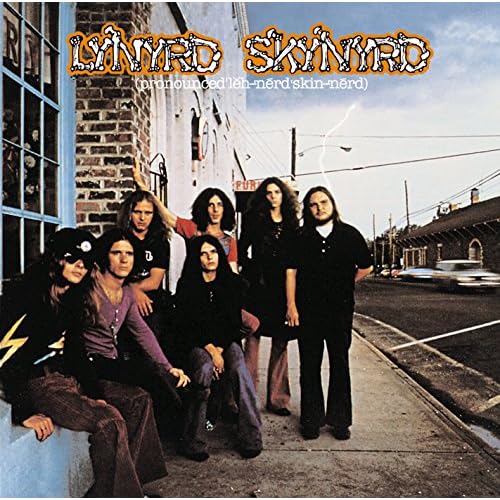
A few years back, I wrote a piece for Cover Me that was timed to run on the anniversary of the plane crash that killed three members of Lynyrd Skynyrd, Ronnie Van Zant, Steve Gaines, and his sister Cassie Gaines, along with the pilot, co-pilot and the band’s assistant road manager. The rest of the band, manager and crew all suffered serious injuries. I melded the blog’s In Memoriam series with a Full Album treatment, focusing on the band’s debut, Pronounced ‘Lĕh-‘nérd ‘Skin-‘nérd. One of the things that struck me as I was writing it was that a number of the songs were drawn from the remarkably colorful life of singer Ronnie Van Zant, including “I Ain’t The One,” meaning “the father,” "Tuesday's Gone," about the change in his life following a major label deal, and, most amusingly, “Gimme Three Steps.”
The song recounts a true incident when Van Zant used a fake ID to enter a bar in Jacksonville, Florida and made the mistake of dancing with another man’s wife or girlfriend. When the aggrieved gentleman appeared to be reaching for a gun, Van Zant told him: "If you're going to shoot me it's going to be in the ass or the elbows... just gimme a few steps and I'll be gone." He ran out of the bar and back to the truck where his bandmates Gary Rossington and Allen Collins were waiting. They reportedly wrote the song that day, possibly in the truck. It is unclear whether that bar was The West Tavern, later known as the Pastime, or another bar called The Little Brown Jug, whose name conveniently allowed them to rhyme it with “cutting the rug,” but it hardly matters. In addition to being a great tune, what makes the song a classic is Van Zant’s presence of mind to ask for a head start, then beating a hasty, panicked retreat when circumstances resulted in his getting that lead preventing him from getting shot. Because, if nothing else, if he had been killed in that bar, not only wouldn’t we have “Gimme Three Steps,” but the last song on Pronounced would never have been recorded, and concertgoers would have nothing stupid to yell out.
If you have read any of my stuff here, there, or there, you know that I’m a huge fan of the Drive-By Truckers, and the album that broke them to a wider audience, Southern Rock Opera, is filled with Skynyrd references and allusions. They’ve even been known to work a little “Gimme” into one of their songs, live. And here’s something I just found, a Village Voice article from 2002 about the Truckers, after the release of Southern Rock Opera, entitled "Gimme Three Stepsisters," which gets into some of the Skynyrd stuff. (Not a bad article, despite getting the drummer’s name wrong).
And, if you read my stuff here, there or there, you also know that I’m a big fan of Uncle Tupelo (and the bands that formed from its demise). Their last gig ever ended with a sloppy cover of “Gimme Three Steps” featuring Bottle Rockets singer (and former Uncle Tupelo roadie), Brian Henneman, on lead vocals.
I lived ‘down
South’ for a number of years, but I hated Southern music, or “Country” as it
should be properly named. Wouldn’t even entertain it. Granted, I was down there
when Grunge was bitch-slapping the popular music scene and Nirvana was sitting
atop a new Olympus.
Country music
was the stuff the sorority girls who wouldn’t give me a second glance were
listening to. My general impression of country music was of those girls heading
to Walnut Creek Amphitheater in straw cowboy hats, mini skirts and boots. Or
rednecks in pickups.
I defined
country music by the those who listened to it, with no understanding or knowledge
of the roots and history, the depth or multitudinous of genres and styles, and
I failed to read its influence on almost everything else I was listening to.
But, to be fair, my strongest impression of ‘country’ music
at that time was Alan Jackson’s “Chattahoochee”, which made brave but strange
reference to ‘hootchie coochie’, among other things my misplaced northern soul
just couldn’t cotton to…
Which is too
bad, as I feel I came to a grand tradition pretty late, and have been trying to
make-up ground for a long time.
Luckily, I found
Hank Williams, listened to more than the radio hits of the Allmans, and Lynyrd Skynyrd;I found Cash—but we all did, at some
point. I found a lot of good stuff, mostly through what I was already listening
to and following the influences of bands in the alt-country scene that I’d
learned to love, like Uncle Tupelo, Wilco, and The Jawhawks. It is strange, in
retrospect, how much I loved those bands yet still took such a circuitous route
to country music.
However crooked,
or slow, I did find my way.
And I can’t
think of a better song to fit this month’s category of “South”, than Hank
Williams’ “Honky Tonk Blues”.
The song is
perfect: a strutting, ramble-rhythm, fiddles in the back pushing the melody,
the purring shimmy of the pedal steel and Williams’ inimitable lamenting
warble—I can’t call it a yodel. That voice was the veritable personification of
pain and misery, light coming though it like a half-empty whiskey bottle on the
windowsill. To say he yodeled would be to diminish the palpable spirit he
brought to song. That voice, a transcendent, plaintive howl, personifies in a
single instance, the searching earnestness of all his pain, misery, mischief,
and occasional happiness. Some might hear Williams pull that ‘country shit’ and
think, no, not for me. But, they are missing out on what amounts to pure
poetry.
“Honky Tonk
Blues” is exactly what it is: a shuffling lament of leaving the country for the
big town, and wanting nothing more than to get back home. It’s ‘country mouse,
city mouse’, a tale told and retold. It’s William’s warning about straying too
far from what you know, but then, when you take Williams’ hard luck myth and
real life blues, all of his songs are some kind of warning. Hank ‘s legend
sometimes outshines the simple, sad elegance of his music. But songs like
“Honky Tonk Blues” are pure magic, and do more than cast a spell. Rather, his
music spells out the blueprint for country music. He reminds me of all the stuff I missed when I
was down South, and make me want to get back as soon as I can. Honky Tonk
blues, indeed.
The theme this week is Stage Banter. I know that when I go to a concert, I like it when the performer talks to the audience—it makes it seem like he or she is having fun, and we often learn something about the artist. Of course, some performers are better at this than others. Some performers readily regale the audience with stories and anecdotes and some drop amusing quips but others simply seem to have trouble even telling you the name of the song or introducing the band.
A few weeks ago, I attended the Clearwater Festival on the Hudson River, and for the most part, the music was memorable. But I also know that my experience was improved by hearing Judy Collins’ tales about the various protest marches she participated in and her arrests, or how her apartment in New York seemed to host a revolving door of fellow folkies. And Mavis Staples’ stories of playing for Martin Luther King, and her statement that even an injured knee wouldn't keep her from performing. And gruff voiced Jason Isbell asking the sign language interpreter to tell the crowd that he sounded like the smooth, soulful Solomon Burke—and his story about how back in his Drive-By Truckers days, another interpreter just stopped signing when faced with a particularly ribald Mike Cooley song.
It has been said that some comedians say funny things, and others say things funny (note the use of the passive voice, so that I don’t have to find an actual quote), and the same is true of stage banter. Jeff Tweedy is one of those guys who says things funny, and it doesn’t seem like he is trying. It is a matter of timing, of inflection, and of course content.
For those who don’t know, Tweedy and Jay Farrar were members of the band Uncle Tupelo, another of those bands that are more influential than they were popular in their day (which is referenced in the clip). Tweedy and Farrar were high school friends who bonded over their shared tastes in music. After Tweedy joined Farrar and Farrar’s older brothers in a band, Jeff and Jay continued to play together in various groups which ultimately became Uncle Tupelo. That band was best known for its blending of punk with more traditional Americana music (although that term wasn’t around yet). Their debut album No Depression gave a name to the emerging sound, sometimes also called “alt-country.”
Initially, Farrar was the dominant personality in the band, doing more of the songwriting, lead singing and guitar. Tweedy played bass and was, if you will pardon the reference, the “Other Guy.” As time went on, however, Tweedy began to take a more assertive role in the band. And like so many friends who have one thing in common, it turned out that Tweedy and Farrar really had very little in common. Much has been written about Uncle Tupelo’s split, but based on what I have read, it seems like both protagonists are difficult personalities who have to share the blame. Farrar claims that Tweedy was resentful of his talent and tried to hit on his girlfriend, while Tweedy has asserted that Farrar was domineering, refused to treat him as an equal and even refused to sing harmony on his songs. Farrar quit the band, passing the word to Tweedy through their manager, and a farewell tour resulted in more fighting and recrimination.
Farrar formed Son Volt and Tweedy formed Wilco. Although most critics seem to agree that Son Volt’s first album was better than Wilco’s, since then Tweedy’s and Wilco’s popularity and critical acclaim have outstripped Farrar’s and Son Volt’s. Personally, I’m a fan of both bands, and I think that they have both put out excellent music. Son Volt was even better than I expected at their Clearwater performance, but Wilco has become, to me, one of the best around. Having seen both bands a few times, I can attest to the fact that Tweedy’s stage banter is usually brilliant, while Farrar seems to avoid talking on stage as much as possible.
The enmity and hostility between Jay and Jeff has continued. The odds on a Uncle Tupelo reunion, or seeing, say, Farrar sit in at a Wilco concert, seem unfortunately pretty slim. I was struck by that at Clearwater, where I saw former band mates Jason Isbell and Patterson Hood play together, and I later saw pictures of them hanging out together watching Son Volt from backstage.
Which is all background to the clip, in which Tweedy tells a story of being on vacation in Mexico, and finding out that Farrar is staying on the same beach. I won’t ruin the clip by describing it—as I said, Tweedy has a gift for saying things funny, and I won’t do it justice—but Jeff’s mumbling recreation of their awkward greeting after 10 years of silence is priceless.
I’m proud to bring you a feature on the newest music blog on the scene – one that conveniently has 13 years of experience. No Depression Magazine ceased publication in April of this year and this week unveiled its re-vamped website – which by many standards can be considered a music blog.
No Depression was the foremost authority on all things alternative country since 1994, bringing you stories on artists from Son Volt to Buddy Miller and everyone in between. Although the magazine’s readership remained strong, the simple answer for their demise was falling revenue. With the growing popularity of music information on the web (with blogs like this one, and sites such as Pitchfork and Stereogum) and the more specialized genre of No Depression – as opposed to mags like Rolling Stone – the demand for printed music commentary just doesn't exist anymore. I only became a subscriber in the last couple years, but I cherish each and every issue I’ve received. And intuitively, I purchased a few bundles of back-issues just months before the news of their calling it quits. I’m sure the going-rate for those issues are much higher these days.
The good news for us alt-country fans is that the magazine’s contributors have decided to continue the legacy in an un-printed form. The new website features news, reviews, and columns, as well as archives from the magazine. I haven’t had the time to explore the site completely, but can’t be more exited that the entity still exists in some form.
No Depression was the title of a Carter Family tune penned some 80 years ago by those most affected in this country’s lowest of lows – so far. The song may see a rise is relevance in the coming months. But the song inspires hope and a spiritual longing for better times in the afterlife. Here’s to the digital afterlife of No Depression.
"Good guys, bad guys Which is which? The white collar worker Or the digger in the ditch? And who's to say who's the better man? Man, I've always done the best I can."
Like their breakthrough hit, "Dirty Water," The Standells' second charting single of 1966 tapped into Rolling Stones-esque angst, laying the groundwork for garage rock and punk rock. While I've linked above to a good Standells two-fer disc, you can also find "Good Guys" on Disc 3 of the beyond essential Nuggets box set. If you have even a shred of rock 'n' roll in your DNA, this 4-disc collection is no-brainer. 118 mostly great, almost uniformly obscure tracks and unbelievably thorough liner notes and photos adds up to Punk Rock 101.
Speaking of which, here's a couple bonus cover versions that further demonstrate the punk lineage:
Minor Threat included "Good Guys" on their swan song Salad Days EP, one of the few MT songs to feature an acoustic guitar. In fact, I'd say it's this close to being a pop song. Out of step, indeed.
This comes from a March 1992 show at Lounge Ax in Chicago, about six weeks before original drummer, Mike Heidorn, quit the band. Capturing UT at the possible height of their powers, this gig also featured covers of "Love's Gonna Live Here Again" (Buck Owens), "Brand New Cadillac" (Clash), "Blue Eyes" (Gram Parsons/ISB), "The Concept" (they'd just finished a tour opening for Teenage Fanclub), and a medley of "Smells Like Teen Spirit" and "Steppin' Stone." OK, so maybe sometimes good guys do wear white.
While researching this post, I realized there are numerous references to hell in the Uncle Tupelo catalog. Off the top of my head you have "Your heaven looks just like my hell" (Cold Shoulder), "It's a long way to heaven, it's a short way to hell" (Sauget Wind), and "Just as well to write this postcard from hell" (Postcard), a line which spawned an internet music group I've been a part of for several years now. However, those tunes weren't really about this week's subject, which is alternatively hell, Satan (in his many guises), and sin. You know ... the good stuff. For that, we turn to a pair of covers.
"Satan, Your Kingdom Must Come Down" was originally recorded in the 1930s and can be found on Tupelo's March 16-20, 1992 album, which at the time was an acoustic country-folk left turn in their post-punk discography. It also got the alt.country mythwagon gassed up for good. Produced by Peter Buck, the album is a true sleeper in the Tweedy/Farrar database, yielding a number of great performances, and a collection of songs (about half covers, half originals) that has almost universally stood the test of time. Listen to March for a solid weekend and you're likely to be hooked for good. For a great write-up on the origin of "Satan" ... as well as the other cover songs officially released by Uncle Tupelo ... please visit The Gumbo Pages, the unofficial Uncle Tupelo archives and essential reading for longtime Tupelo fans and newbies alike.. As a bonus, I've included a live version of the song, which actually comes from their final show, on May 1, 1994, in St. Louis. Where the recorded version is driven by Tweedy's acoustic guitar, the live version is propelled by Max Johnston on fiddle and Ken Coomer on drums.
This old town is filled with sin, It'll swallow you in If you've got some money to burn. So take it home right away, You've got three years to pay But Satan is waiting his turn.
This old earthquake's gonna leave me in the poor house. It seems like this whole town's insane. On the thirty-first floor a gold plated door Won't keep out the Lord's burning rain.
"Sin City" was a Gram Parsons-Chris Hillman co-write that originally appears on the Flying Burrito Brothers' debut LP ... wait for it ... wait for it ... Gilded Palace Of Sin. I fully expect at least one, if not two songs, from Gilded to be posted by week's end, so consider this Farrar/Tweedy version a teaser. This was actually the B-side to Uncle Tupelo's first single, "I Got Drunk" (1990). While they were probably closer in spirit and sound to Husker Du and The Minutemen, this track was a window on what was to come.
Star Maker Machine does not accept music submissions from artists or promoters. However, most of the contributors here do accept submissions for our own blogs, listed below. Please visit our blogs, take the time to listen to what we post, and then feel free to contact us if you feel that your music would be a good fit.