So, looking ahead to next year, how can I and how will I serenade my significant? Of course, I wouldn't dream of singing myself, my Funny Valentine would be decidedly more funny peculiar than ha-ha, but all this kerfuffle has had me thinking time for a mixtape. (Don't panic, not here.) Browsing my cache I can find nine different songs entitled Valentine, in all styles and genres. Expanding that search into wiki and there are hundreds. Too much choice. Way too much choice. But, brainwave, how about bands? Ditching the Valentines, the band, as too obvious (and too kitsch, Bon Scott or not), I suddenly realised what could be more romantic than Kevin Shields and My Bloody Valentine?! But, sez you, MBV never sang a song about Valentines, read the brief. When do I ever, sez I, but, clever dick, what about this? Well, sort of.
Cupid Come (Isn't Everything) 1988
Cupid Come, from their first album, 1988's Isn't Everything, epitomises the paradox of the band, the meld of coruscating guitars, all a sonic maelstrom of dissonance, with angelic vocals and ethereal melody floating over and through the storm. Is that shoegaze, then? I quite never got that term, it seeming always to suggest more a winsome introspection and shyness. Only now, the shame, do I understand it was less the avoidance of audience eye contact it referred to, more the necessary concentration of the array of footpedals, the integral tools of distort. Me, I aways just saw this style as a natural transition from Phil Spector and the Beach Boys, a bit of Byrds even, through to the Ramones and, later, the Jesus & Mary Chain and Teenage Fanclub, the tunes never more pop as the backing goes progressively post nuclear. That works for me.
You Made Me Realise (lead single from Isn't Everything) 1988
It could never be said the band were prolific. With, so far, but three long players to their name, their legacy, influence and allegiances cast a longer shadow. Coming together in Dublin during the early 80s, primarily lumped around Shields and karate buddy Colm O Cíosóig. A fairly fluid line up and a string of releases on minor labels gradually built up their name, ahead of catching the ear of Creation records boss, Alan McGee, he and his label then the pinnacle of the indie scene. A clutch of EPs followed, the sound and the membership still evolving, ahead of that 1988 release. The critical response completely overshot the anticipation: the relatively limited initial pressings soon swamped by demand, cementing their move from obscure favourites to cult treasures. (In truth, overall sales were low, outside the aspirational concept of the indie chart. I don't think many copies made their way across the pond at all.)
The main change was the vocals, now almost exclusively female led, this role provided by Bilinda Butcher, also second guitar, with Deb Googe, another woman on bass, alongside O Cíosóig's drums. Shields, writing a majority of the material was second vocals and lead pyrotechnics, on guitar. The dreamy vocal style was, arguably, a by-product of the recording process, working all hours with little sleep, all thus in a state between tired and comatose.
The band followed this with a repackaged reprise of their earlier fare, with some taster EPs then gradually dropping, to fill the unfeasibly lengthy, and expensive, time being spent in a follow-up. Creation bosses were becoming increasingly concerned, not least by the fact that Shields, increasingly troubled by tinnitus, seemed to be the only one much evident in the process, playing all the guitar and bass parts, with pre-recorded drums acting as the click-track. Butcher still added vocals and the band was still nominally a unit, but this was now increasingly Shield's baby. Fearing a dud, it was with no small relief when it came out in 1991. Loveless was acclaimed with even greater praise than its predecessor, if still only denting the UK and Irish markets. And strangely those of Korea and Japan.
Taken on tour, it was a sign of the acumulated tensions that led to both the band promptly imploding and being dropped by the label. It was all too destructive.
Only Shallow (Loveless) 1991
Shields carried on relentless. Rapidly gaining a reputation as a tortured genius, think Brian Wilson or Syd Barrett, most of this come to nought. Constantly working on and revisioning earlier tapes, adding, subtracting, morphing and melding, it was a full 22 years before it arrived at fruition. Entitled m b v, all four band members are credited, but the participation was often either historical, dating back to the early 90s, or later short term drop-ins to lay down some drum parts or add some vocals. The momentum and demand, the reputation of the band having peaked exponentially during the silence, was sufficient to crash the band website, revived especially for the occasion of downloading the new material. The US press were now on board, avidly avowing, if belatedly, the importance of the band in influencing any number of far more successful and far more famous bands, Smashing Pumpkins and Hole, for two, and made it a feature of many best of lists of 2013. They even toured the States that year, following UK and European dates, if their record-buying heartland of SE Asia had the earliest shows. And, yes, it was the trusty four of Shields, O Cíosóig, Butcher and Googe who regrouped in the live delivery.
In Another Way (m b v) 2013
Since then it has, again, been all promises and hope, several releases projected, including a Shields solo, but never quite making it. But spirits remain undashed, after all, 7 years isn't that long by MBV standards.....
In the meantime, here's an interesting 'explanation' from Shields as to the how and why.
I've been turning this idea over in my head for 10 days: do... don't do .. do. I can't believe that SMM hasn't previously hit this one: it seems so obvious.
30-40 years ago, Waits was a lot rougher (around the edges - edges being the area he staked out with his style - a gravely voice and his choices of themes and lyrics). Where most of us paint our valentines red, he painted his blue. Blue as in blues? Blue as in the pained psychology of his protagonists.
The commercialization of valentines (yes, my family also bought those poke out valentine albums of the 60s, and I still buy my wife Hallmark cards marked <For Her> before February 14th so that I am "armed" for the day) has jaded the meaning of sending a valentine.
Do you remember the Peanuts/Charlie Brown's where he never got a card and/or debated the risk of sending <the read haired girl> a card? The anguish? I remember actually making my own - paper, scissors and colored pens. And searching for the "right" message for each person. Days gone by.
history.com has an interesting (well ... I like history) article about the history of the day, if you want to pick up some trivia facts.
So ...Tom Waits' pointed themes and lyrics tend to cut deep. A valentine meant/not sent... or sent and lost to time or without heartfelt value. A blue valentine. (He's also got a song called "Christmas Card ...", too.)
More poet than "vocalist", he sings:
Baby, it's the thistle in the kiss
It's the burglar that can break a rose's neck
It's the tatooed broken promise
I gotta hide beneath my sleeve
I'm going to see you every time I turn my back
What makes a standard a standard? Clearly, there has to be something timeless about the songwriting, and there probably has to be a performance of the song that captures the imagination of other musicians, and through them the interest of their audiences. Certainly, “My Funny Valentine” qualifies as a standard. According to Wikipedia, the song, written by the great team of Rodgers & Hart for the 1937 musical Babes In Arms, appears on more than 1300 albums performed by over 600 artists, ranging from Chet Baker to Miles Davis, to Frank Sinatra, to Ella Fitzgerald to Chaka Khan, to Linda Ronstadt, to Elvis Costello. Apparently, it has become a song that many jazz musicians are sick of; yet it continues to be performed and recorded (although I read somewhere that in the 50s, one New York club owner banned the song).
I think that what makes the song so compelling is that while it is a love song, it isn’t a song where the singer objectifies his or her love. To the contrary, the song is a catalogue of physical imperfections that nevertheless do not detract from the ardor that the singer professes. And since most of us aren’t perfect and fall in love with imperfect people, there’s a universality in this sentiment.
It appears that it took almost two decades for the song to move from Broadway to the Great American Songbook. In fact, when Babes In Arms was made into a movie in 1939 featuring Judy Garland and Mickey Rooney, the future classic wasn’t even used. But a gentle, quiet version of the song, sung in 1954 by the trumpeter Chet Baker (who had performed on an instrumental version with Gerry Mulligan the prior year that was so good that the Library of Congress added to the National Recording Registry in 2015) made the music world reconsider “My Funny Valentine.” Sinatra recorded it the same year, a couple of years later, Miles Davis recorded it with his quintet, and it was off to the races.
In fact, in 1957, the song appeared in the film Pal Joey, which was loosely adapted from Rodgers and Hart's 1940 musical of the same name, despite the fact that it hadn’t appeared in the musical. Sort of a musical make up call.
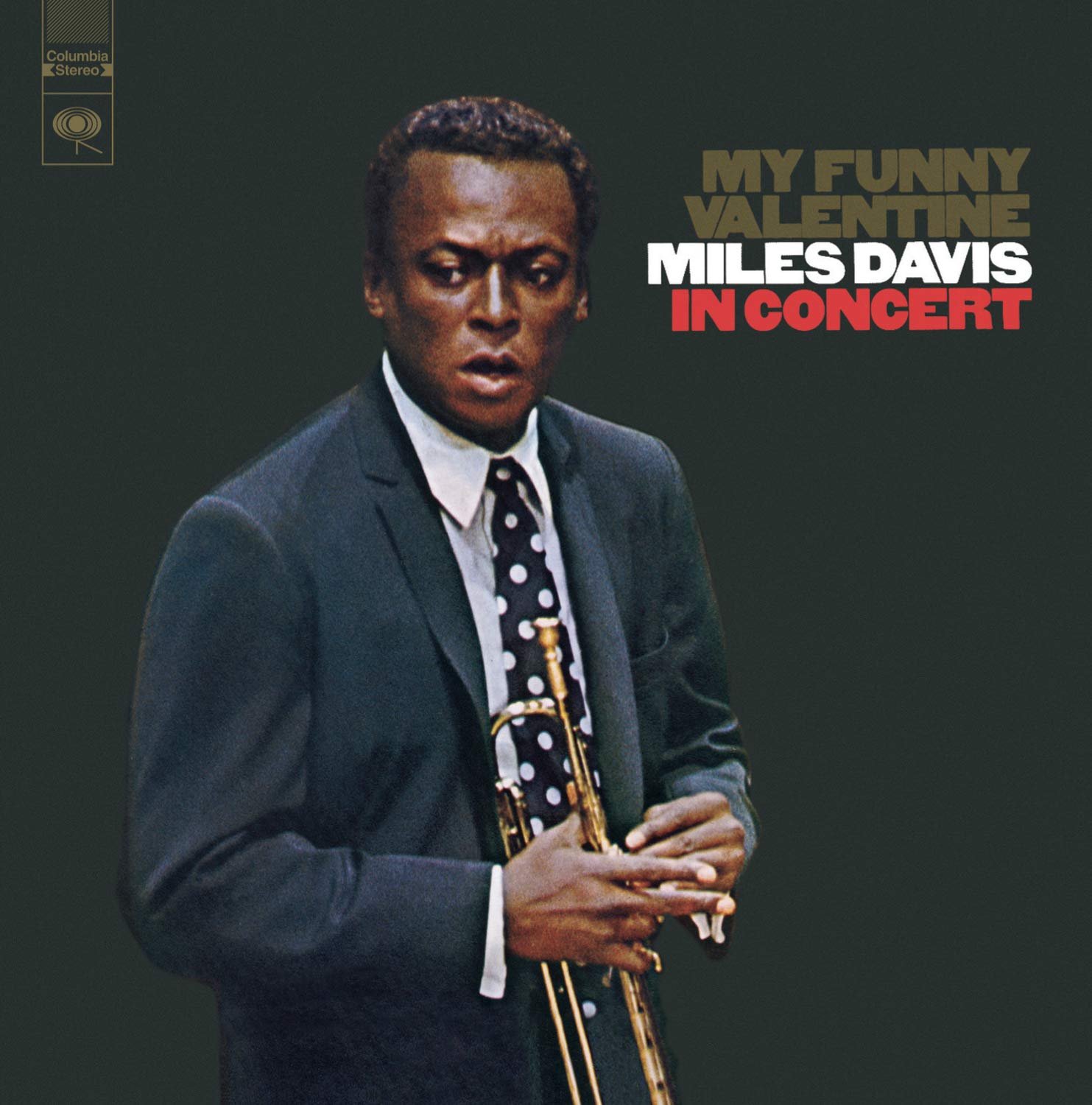
The version featured above, though, is from My Funny Valentine: Miles Davis in Concert, recorded on February 12, 1964, at the Philharmonic Hall of Lincoln Center in New York City, and in addition to Davis, features Herbie Hancock on piano, Ron Carter on bass, Tony Williams on drums and George Coleman, whose sax solo is remarkable.
I don’t think that we post many 15 minute jazz pieces here, so, when we do, it better be good—and this really is.
Answering to the earlier post, oddly I think it apt we cover the event after the event. Valentines Day, or the Feast of St. Valentine, has never quite resonated for me. Yes, I have received cards over the years, nearly as many as I have sent, but it has never been a delivery that would damage the postie's back. And, as my wife pointed out this year, we seem somehow to be missing the point, babysitting the grand-daughter this year, and entertaining my brother last year. Somehow you old romantic not.
My defence is that, in restaurants, Feb 14 is a date to avoid, all pink prosecco, heart shaped salmon pieces and blood on the carpet. (Blood on the carpet? Well, there's always at least one couple whose sense of duty has overshot the tint on their spectacles.) Nope, like New Years Eve, Mothers Day and St Paddy's day, I'm staying in, ta!
The song featured is by an artist I have mentioned before, making no apology there around. Hell, I even used this same song, for which I will have to apologise, but read on, I will explain. From agit-prop spiky solo bard of Barking to the only slightly less spiky older statesman of political song commentary, Billy Bragg has always lightened my heart, both musically and intellectually. Having little time for Twitter myself, his feed is actually a presence worth following, being, variously witty, acerbic or just plain right. (Sure, it helps if you are a goddam lefty pinko as well, to keep the Valentine colour theme alive.) Coming from his 1988 LP, Worker's Playtime, it is a rancorous song of bitterness. Confession time, I always took it be allegorical: the phrase is often used to describe the bursting of any bubble, but it is a much darker piece, as I learnt from this excellent article. Gulp.
Little more to say than that, really. And, should you not have found the above sufficiently chilling, here is a sparser still version, from a John Peel session.
Unable to leave you staring bleakly into your consciences, not all injuries being just physical, here's another favourite, two really, June Tabor and the Oysterband, from the first of their occasional collaborations, an altogether more upbeat version of the same song. But it is the same song, and I really must learn to listen harder to the lyrics.
Um, I hope you all did have a good day, if the opportunity arose. After all, the card industry can't support itself.
(Postscript: I noted the link to the earlier Tabor/Oyster piece commented on the two of my weddings. I have since had a 3rd, so maybe the old romantic after all, yes? Maybe we should go out next year...)
We’ve had a tough time getting this theme started, maybe because it began after Valentine’s Day. So, before we get to a weekend without any new SMM posts, I thought I’d see what I could come up with.
A song called “Valentine,” by Old 97’s, a band that I really like, and which I have written about, at length, a fewothertimes.
But there are a couple of things that set this song apart. First, it is not sung by Rhett Miller, but by Murry Hammond, the band’s bass player, who usually sings a couple of songs on each album. Hammond’s songs often display a sense of humor, although to be fair, lots of Old 97’s songs are funny. He’d have been a good candidate to have been the subject of a post when we did the “Other Guy” theme back in 2013 (one of my faves, by the way).
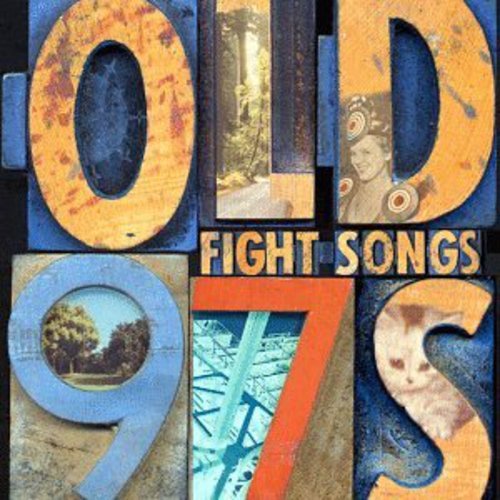
Another thing that distinguishes “Valentine” is that it is not a love song. It is, in fact, a lost love song, written not to a current "valentine,” but to one who turned out to be "wrong," and about the heartbreak and despair that comes from a broken relationship, but also the relief that something that wasn’t working ended. Back in 2015 Paste did a “12 Best Old 97’s Songs” feature, and placed “Valentine” third (a ranking that I’d quibble with—I’m not even sure it’s the third best song on Fight Songs). They quoted Hammond as saying: “It was a toxic relationship and, predictably, not a good breakup. But after all the pain and emotion of tearing it apart, I felt a simple moment of compassion and empathy for both of us. I felt a kindness toward her and tried to put that into words. She was a valuable and great human being, but one I would never know again. The girl who’s moving on."
So, maybe it really is fitting for a Valentines theme that takes place wholly after the holiday.
For the most part, Fight Songs, the album that “Valentine” appears on, is filled with more upbeat, poppy songs, for which it is sometimes criticized, but it was my introduction to the band, and I loved it then and now. But ending such an album with a mellower, more introspective song really works. Of course, that assumes that the listener would actually be listening to the entire CD, in order, an assumption that was more likely to be accurate back in 1999 than today (unless you are my wife).
Star Maker Machine does not accept music submissions from artists or promoters. However, most of the contributors here do accept submissions for our own blogs, listed below. Please visit our blogs, take the time to listen to what we post, and then feel free to contact us if you feel that your music would be a good fit.