












Showing posts with label The Ramones. Show all posts

Wednesday, March 30, 2022

Shelter: Shelter

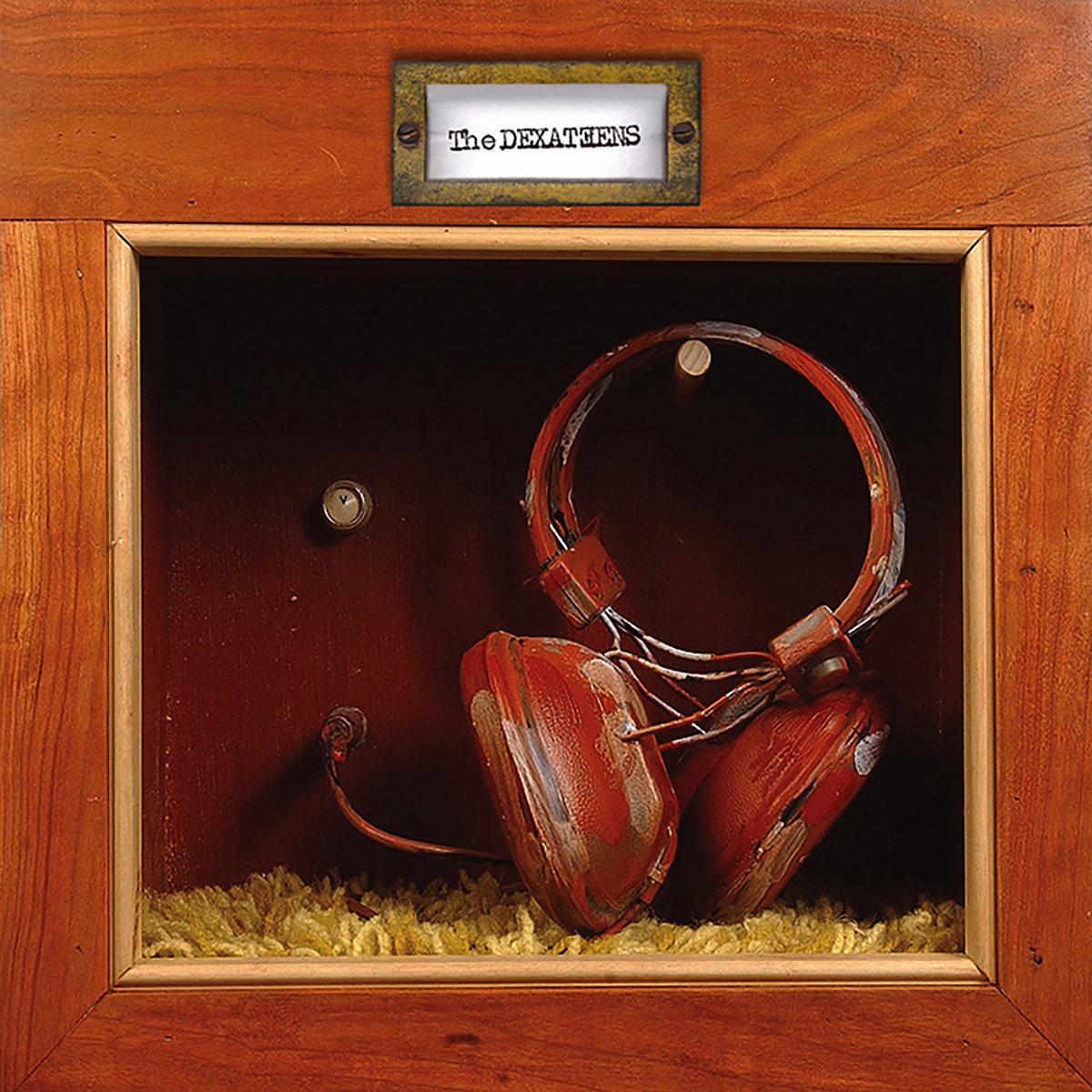
The Dexateens: Shelter
[purchase]

I seem to be writing about my song selection process a lot lately, which may mean that I’m trying to fill space because I’m running out of songs that have particular meaning for me. I hope not, because that would be bad for a blogger who mostly responds to theme prompts, but we’ll see—and maybe I need to take another short sabbatical to recharge. I’m spending a good deal of time these days working on projects directly or indirectly related to my 40th college reunion in May, which I’m sure I’ll figure out a way to write about down the road, and that also explains why I’ve been writing once per theme more often than twice these days. Also, there’s work and family. And good TV. 

So, when I heard the theme, my first thought was a King Crimson song, but seriously, who really wants me to write about another King Crimson song, and an instrumental, at that? (The volume of my Crimson-related posts surprises even me, considering that they are not my favorite band. What is my favorite band? I really don’t know.) My second thought was to pick the obvious Rolling Stones song, but I’ve written about that before. There’s also a Dylan classic, but writing about Dylan can be heavy lifting, and I don’t have the patience for that right now. 

Which inevitably led me to an iTunes library search, where I landed upon today’s feature song, “Shelter,” by The Dexateens. Is it a great song? No. Is it a good song by an underappreciated band in the vaguely Americana genre? Yes. Which means that it’s a good one for me to write about. (Although having finished this post, I realize that I mentioned the band a few years ago).

The Dexateens were formed in the late 1990s in Tuscaloosa, Alabama, featuring singer-songwriters and guitarists Elliott McPherson and John Smith, with drummer Craig "Sweet Dog" Pickering and bassist Matt Patton. If that last name seems familiar, we’ll get there. Their name came not from the same source as Dexys Midnight Runners, but instead from a guitar pick that Smith’s brother had gotten signed by Dex Romweber, a musician that you might have heard of. Or not. Although he’s pretty good and it is a memorable name. Mixing punk with southern rock, The Dexateens’ self-titled debut album from 2004 is excellent—raw and rocking, and “Shelter” is a Stonesy-stomp. 

I’m not sure when I first heard about The Dexateens, but it wouldn’t surprise me if it was in 2007, when their fine album Hardwire Healing was released, and it was co-produced by Patterson Hood of the Drive-By Truckers and David Barbe, who has worked with the Truckers (as well as playing bass in Sugar). I suspect that this was the hook that got me to check out the band, which has de-emphasized punk over the years. After some personnel changes, the band broke up in 2010. Patton joined the Truckers on bass (and as the occasional Ramones cover singer), and also plays with The Dexateens, which re-formed in 2013. And, he co-owns a recording studio in Mississippi (where part of the Ramones cover video in the link was shot). Busy man. 

 So, check out The Dexateens if you aren’t familiar with them.

Saturday, August 29, 2020

COUNT: 1,2,3,4,

There are few more rousing introductions to any piece of rhythmic music than the exhortation to the band of a swift entry count, the musical equivalent of get on your marks, get set, go. And many have made much of this, with particular favourites being the Ramones (on just about everything) and, in the middle eight drop of Born to Run, Bruce Springsteen. (It's at 3.04.) But there is another, a far more languid take on it, the appeal of which lingers for all time, making me smile even now.....


By slowing it down, as well as getting to 6, Richman totally blew my twenty year old mind when I first heard it, 'with my radio on', and it became one of the few singles this album buyer bought. Adding to the joy and the confusion was that it was on both sides; the version above nominally the A side, Roadrunner (twice) being on the flip. Even more confoundingly, 'twice' was the earlier version, '72, I think, against the '74 of 'once'. The charts were clearly not ready for this garage band romp until softened by the early UK stirrings of punk in 1977. A relatively early adopter, I was already in thrall to the Beserkely record label, the self-entitled 'Home of the Hits', populated with such delights as the Rubinoos and Greg Kihn. Trivia moment: although Roadrunner (once) is often attributed to the Modern Lovers, Richman is here actually backed by the Greg Kihn band. I don't know whether it made any impression in the U.S., but it captured a credible 11 in the UK singles chart. Richman later toured, this time with the Modern Lovers, promoting the LP, Rock'n'Roll With the Modern Lovers, getting another hit with the equally quirky (and even stranger) Egyptian Reggae, an instrumental. I didn't catch the tour, deeply of a friend who did, hooking up with the band and accompanying the band for the rest of the tour and to Germany. A very surreal experience, I gather and I am uncertain whether he was ever the same.


This is neither the time nor place to discuss further the charm of Richman, taking his idiot savant persona further and forward in ever more endearing/annoying directions. (I have R&RwtMLs and can still enjoy it, but I would confess to that being entirely as much as I need. There are only so many Ice Cream Men and Rocking Leprechauns I can stomach.)


The earlier Roadrunner (twice) probably deserves a little background, if only to namecheck the produce, welsh Velvet Underground man John Cale, he perhaps appreciating the debt to VU song, Sister Ray, which is hardly dissimilar.


The lyrics of the song are also conveniently very conducive to a counting theme, as Richman returns, time and time again, in the chorus, a repeated and echoed refrain of Roadrunner, then applying the time old contrivance of emphasis: 'I said roadrunner once, I said roadrunner twice', failing to even leave it at that. It's a delight.
You're begging to ask, was there a Roadrunner (thrice)? Of course there was, a live version, a b side of a later single.


Once, twice, thrice.........

Sunday, June 28, 2020

LOOKING FORWARD: YO, FUTURE/APOLLO 440

Be careful what you wish for, isn't it? Looking forward is bedevilled with risk, the future never quite as cut and dried as the runes. If the past is another country, then the future should be another planet. (Why do my fingers always want to add 'or oblivion'?) This time last year I wonder how many of us were looking forward to what's happening now? But, sticking to the future forward interface, it is always to space our imaginations return, the final frontier even a bankrupting NASA can't take from our imaginations. For, if we are indeed living in interesting times, apropos the proverb/curse, surely we want even more interesting to look forward to. Or even, sometimes, less interesting.


Popular music is rammed with references to rocket filled skies, and there is often a coupling between the schlockier the band, the more garage-y the sounds, so higher still is the sky of their aspirations. I love a good old goofball thrash, always have, loving it all the more when spacesuits are donned over ripped jeans and leathers. Yes, I'm sorta thinking Ramones here, their lo-fi scuzz always a tonic. Now it may be that 3rd album, Rocket to Russia, was weapons grade over any galactic conquest, with Johnny no doubt a fan of nuking the commies, but I prefer to imagine the band sitting disconsolately awaiting blast off on a mission to Mars. (I guess Russia was the clue.....) Plus, they only ever did one overtly clairvoyant song, and that only looked forward a paltry four years. If indicative of many of our issues right about now.

Ramones: Planet Earth 1988

Not musically their finest moment, nor quite the mood I was aiming at, but, let's use that as a vantage point to vault over boring old guitars. Electronica, eh, all high-domed boffins with degrees in circuitry? Um, no, praise be, just as many grade school d.i.y. drop outs with drum machines and programmers as anywhere else. (Forgive my clumsy labelling here, no slights intended, of course I really know education and brains are no prerequisite to the making of music, nor even to each other, and brainlessness is no less common in mensa than densa.)

Apollo 440: Yo, Future

Apollo 440, above, provide a glorious old clatter, as punk a sound as anything on the early scene at CBGBs, let alone the UK year zero, the country from which they hail. One of the early adopters of this amalgam of dance music, rap and anything else lying around the streets, they started life a boggling 30 years ago. With some success, their sound was probably a template for the later hugeness of The Prodigy, who had started off as standard anarcho-squat crusty spiral tribers around the same sort of time, ahead of a cartoonish reinvention that tore the UK singles charts about. And a not so dissimilar sound. The song below less so, but showing their need also to boldly go.

Prodigy: Out of Space

But, returning to Apollo 440, whose pony had way more tricks than video-game garishness alone. Or film soundtracks, for that matter. Centred around brothers Howard and Trevor Gray, along with trusty cohort Noko, they have kept up a profile, whether producing their own music, re-mixing the music of others or just maintaining an episodic, if no less potent presence on the live and club circuit. With last studio output in 2012, I am sure I had recently spotted some live dates, since lost to coronavirus, and that I had been pencilling in. Anyhow, parallel to the clattering techno of Yo, Future, they could also produce much sleeker pieces, blending into styles reminiscent, by virtue of hindsight,  of both Air and Alabama 3.

Apollo 440: Electra Glide in Blue

So, looking forward, the future. Where is it and how much, like every show, festival and tour of 2020, is postponed to 2021? God, I'm looking forward to 2021. Or is the future still what it used to be?

Apollo 440: The Future's What It Used To Be

5,4,3,2,1.....

Thursday, February 27, 2020

VALENTINES: CUPID COME/MY BLOODY VALENTINE

So, looking ahead to next year, how can I and how will I serenade my significant? Of course, I wouldn't dream of singing myself, my Funny Valentine would be decidedly more funny peculiar than ha-ha, but all this kerfuffle has had me thinking time for a mixtape. (Don't panic, not here.) Browsing my cache I can find nine different songs entitled Valentine, in all styles and genres. Expanding that search  into wiki and there are hundreds. Too much choice. Way too much choice. But, brainwave, how about bands? Ditching the Valentines, the band, as too obvious (and too kitsch, Bon Scott or not), I suddenly realised what could be more romantic than Kevin Shields and My Bloody Valentine?! But, sez you, MBV never sang a song about Valentines, read the brief. When do I ever, sez I, but, clever dick, what about this? Well, sort of.

Cupid Come (Isn't Everything) 1988

Cupid Come, from their first album, 1988's Isn't Everything, epitomises the paradox of the band, the meld of coruscating guitars, all a sonic maelstrom of dissonance, with angelic vocals and ethereal melody floating over and through the storm. Is that shoegaze, then? I quite never got that term, it seeming always to suggest more a winsome introspection and shyness. Only now, the shame, do I understand it was less the avoidance of audience eye contact it referred to, more the necessary concentration of the array of footpedals, the integral tools of distort. Me, I aways just saw this style as a natural transition from Phil Spector and the Beach Boys, a bit of Byrds even, through to the Ramones and, later, the Jesus & Mary Chain and Teenage Fanclub, the tunes never more pop as the backing goes progressively post nuclear. That works for me.

You Made Me Realise (lead single from Isn't Everything) 1988

It could never be said the band were prolific. With, so far, but three long players to their name, their legacy, influence and allegiances cast a longer shadow. Coming together in Dublin during the early 80s, primarily lumped around Shields and karate buddy Colm O Cíosóig. A fairly fluid line up and a string of releases on minor labels gradually built up their name, ahead of catching the ear of Creation records boss, Alan McGee, he and his label then the pinnacle of the indie scene. A clutch of EPs followed, the sound and the membership still evolving, ahead of that 1988 release. The critical response completely overshot the anticipation: the relatively limited initial pressings soon swamped by demand, cementing their move from obscure favourites to cult treasures. (In truth, overall sales were low, outside the aspirational concept of the indie chart. I don't think many copies made their way across the pond at all.)
The main change was the vocals, now almost exclusively female led, this role provided by Bilinda Butcher, also second guitar, with Deb Googe, another woman on bass, alongside O Cíosóig's drums. Shields, writing a majority of the material was second vocals and lead pyrotechnics, on guitar. The dreamy vocal style was, arguably, a by-product of the recording process, working all hours with little sleep, all thus in a state between tired and comatose.
The band followed this with a repackaged reprise of their earlier fare, with some taster EPs then gradually dropping, to fill the unfeasibly lengthy, and expensive, time being spent in a follow-up. Creation bosses were becoming increasingly concerned, not least by the fact that Shields, increasingly troubled by tinnitus, seemed to be the only one much evident in the process, playing all the guitar and bass parts, with pre-recorded drums acting as the click-track. Butcher still added vocals and the band was still nominally a unit, but this was now increasingly Shield's baby. Fearing a dud, it was with no small relief when it came out in 1991. Loveless was  acclaimed with even greater praise than its predecessor, if still only denting the UK and Irish markets. And strangely those of Korea and Japan.
Taken on tour, it was a sign of the acumulated tensions that led to both the band promptly imploding and being dropped by the label. It was all too destructive.

Only Shallow (Loveless) 1991

Shields carried on relentless. Rapidly gaining a reputation as a tortured genius, think Brian Wilson or Syd Barrett, most of this come to nought. Constantly working on and revisioning earlier tapes, adding, subtracting, morphing and melding, it was a full 22 years before it arrived at fruition. Entitled m b v, all four band members are credited, but the participation was often either historical, dating back to the early 90s, or later short term drop-ins to lay down some drum parts or add some vocals. The momentum and demand, the reputation of the band having peaked exponentially during the silence, was sufficient to crash the band website, revived especially for the occasion of downloading the new material. The US press were now on board, avidly avowing, if belatedly, the importance of the band in influencing any number of far more successful and far more famous bands, Smashing Pumpkins and Hole, for two, and made it a feature of many best of lists of 2013. They even toured the States that year, following UK and European dates, if their record-buying heartland of SE Asia had the earliest shows. And, yes, it was the trusty four of Shields, O Cíosóig, Butcher and Googe who regrouped in the live delivery.

In Another Way (m b v) 2013

Since then it has, again, been all promises and hope, several releases projected, including a Shields solo, but never quite making it. But spirits remain undashed, after all, 7 years isn't that long by MBV standards.....

In the meantime, here's an interesting 'explanation' from Shields as to the how and why.


Thursday, December 5, 2019

Family: We’re A Happy Family


The Ramones: We’re A Happy Family
[purchase]

After a few prog-related posts in a row, we need a little punk palate cleanser, right? Sort of like how during a Thanksgiving dinner filled with heavy foods, you need something tart to shake things up. Which may be the first time anyone compared The Ramones to cranberry sauce.

Although this Family theme was designed to relate to the gathering of relatives during the Thanksgiving season, my two song selections have taken a little different approach. Last week, I wrote about a man contemplating patronizing a prostitute, but who ultimately passes, somewhat reluctantly, because he’s a family man. Today’s song, from possibly The Ramones’ best album, Rocket To Russia, is a satirical look at a dysfunctional family, featuring a closeted drug dealing father, a pill-addict mother, and a neglected, fly-eating sick baby, all of whom eat refried beans. This is nothing at all like my family, although when I was born, my mother and father and I did live in Queens, about 4 or 5 miles away from where The Ramones hailed from.

I’ve now been blogging long enough that I can’t remember if I’ve ever discussed how lucky I feel that my family, for the most part, gets along. This year, we had a relatively small Thanksgiving—my wife and I, our widowed mothers, my sister and her daughter, and my brother. Over the years our family table at various holidays have included my son and daughter-in-law (who were celebrating with her parents), said daughter-in-law’s parents (which gives me a chance to link to this again), my late father and father-in-law, my expat daughter, my siblings’ former spouses (and then their occasional “plus ones”), my sister’s son (off serving in Americorps), my brother’s kids (celebrating this year with their mother’s family), and occasionally some others.

It is always a fun time. There is, of course, laughter, good food, football (including sometimes of the European version) on the TV, a Thanksgiving-themed playlist created by the family music blogger, and, of course discussions, sometimes even of politics.

My college friend David Campt is an expert in fostering dialogues—his company is named “The Dialogue Company,” so it must be true. He travels the country trying to help people with different views engage in constructive discussions, often about race, but not exclusively. I hope that the pre-Thanksgiving interactive piece he co-wrote on The New York Times’ website about how to successfully engage family members with different views prevented bad feelings, broken crockery and spilled gravy at some dinner tables last week. But I count myself lucky that this isn’t an issue with my family—we run the gamut from liberal to very liberal, and there isn’t a MAGA hat in anyone’s closet.

And while that may result in a relatively drama-free Thanksgiving (assuming that I don’t either burn the turkey or start cooking it too slowly), it does ratchet down the stress level a lot. Which is nice, because even though my wife and I have been hosting Thanksgiving for our family for a while now, there are a lot of moving pieces, including a number of dishes that only get cooked once a year (including the all-important bird), so I’m glad that I don’t have to get into a debate with a Trump acolyte, knowing full well that I would eventually forget everything that I learned from David Campt, and revert to my more litigious bent.

So, I’m glad that I really do have a happy family, even without gulping down any Thorazines.

Thursday, March 27, 2014

Russia/Ukraine: Rocket to Russia


The Ramones: Sheena is a Punk Rocker
[purchase]

A bit of a cheat here, because the theme reference is to an album title, not a song, but honestly, when I first heard the theme, this is what came to mind. The third studio album by The Ramones, it was released in 1977, when the Cold War was still in full swing, so the picture on the back cover, of a “pinhead” riding a rocket from the U.S. to Russia, was pretty provocative. And the original artwork is currently in the Rock and Roll Hall of Fame. The album showed a bit of growth for the band, with some slower and poppier songs, and includes a number of classics, including “Sheena is a Punk Rocker,” and a couple of covers.

Actually, this is really an excuse to write about Trenton’s City Gardens, a somewhat legendary (mostly) punk club that closed in 1994, but is currently in the midst of a wave of nostalgic publicity. I’ve written about the club a couple of times, here and here, as has my fellow SMM’er, Central New Jerseyite Darius, here and here. But what is feeding the renewed interest is the recent publication of No Slam Dancing, No Stage Diving, No Spikes, an oral history of City Gardens, which you can buy here, and the soon-to-be released film, Riot on the Dance Floor. You can see a trailer for the movie here. Earlier this week, one of the authors of the book was on The Daily Show, being interviewed by former City Gardens bartender Jon Stewart, along with Gibby Haynes of Butthole Surfers, who appeared at the club, often with disastrous consequences.

No Slam Dancing is a fascinating read about a club that was, for the most part, the lone outpost of punk and new wave music between New York and Philadelphia. The anecdotes from club management, particularly the brains behind the operation, erstwhile mailman and DJ Randy “Now” Ellis, employees, regulars and musicians give an interesting insight into the 1980’s punk scene, in the era before you could hear anything and find out about anything on the Internet.

One of the key points that keeps getting made in the book, and in the interview with Jon Stewart, is that City Gardens, despite the fact that it was a dump, and dangerous, provided a haven for disaffected fans and musicians, a safe place (psychologically, if not always physically) for outcasts. And I’m glad that it served that function. I have to say, though, that my experience was a bit different. First, I was going to shows there in 1981 and 1982, before the more hardcore and skinhead bands began to play, so while I do remember it as being a shit hole, I never felt any danger in the club. Outside, maybe, but not inside. Second, I was a Princeton student and college radio DJ who was coming to hear music that I liked, not to find a tribe of fellow punks. I usually got in for free, sometimes got to interview the bands and even introduce them on stage, so I didn't qualify as a disaffected youth.  As a result, some of the nostalgia for City Gardens as a refuge is beyond me, but I certainly have very warm feelings for the place.

It was fun seeing references in the book to shows that I attended and to WPRB (although not as many as I would have expected). I’m particularly fond of Randy’s discussion of driving members of Romeo Void to do an interview at the station, drinking beer with them in the car before the interview, and having to pull over to allow singer Debra Iyall to “piss behind a tree.” It explains her truly obnoxious behavior during the interview that I tried to conduct, including her blurting out profanities and doodling penises on scrap paper. And makes me wonder why she didn’t just wait until she got to the interview to use the Holder Hall basement toilets, which, while not luxurious, were better than squatting behind a tree. But she was a piece of work.

To bring it back to the Ramones, one of my favorite City Gardens memories was getting the chance to interview Johnny Ramone backstage along with one of my fellow staffers, Chuck Steidel, before getting to introduce the band from the stage. Although not a life event as important as, say, my marriage or the birth of my kids, the chance to stand up in front of an audience and say, “Ladies and Gentlemen, The Ramones,” probably still makes my top ten.

Friday, January 3, 2014

In Memoriam: Storm Thorgerson and Arturo Vega


[purchase The Gathering Storm - The Album Art of Storm Thorgerson]


[purchase the iconic Ramones T-Shirt]

They were both artists, they were both influential in the music world, and they both died in 2013. But Storm Thorgerson and Arturo Vega were also very different, in their lives, in their art and in the music that they were associated with.

Thorgerson was born in England in 1944 and was a friend of Syd Barrett, Roger Waters and David Gilmour. He was a graduate of the University of Leicester and obtained a Master of Arts degree from the Royal College of Art. In 1968, he founded Hipgnosis, a graphic arts company, and Thorgerson and the company designed many of the most iconic album covers of the 1970s and 1980s, regularly for prog rock groups. The cover of Pink Floyd’s Dark Side of the Moon, designed by Thorgerson, is often considered to be the greatest album cover of all time. Thorgerson’s work frequently was surreal, with sharply focused and well lit figures in bizarre or unexpected situations. Back when an album cover was a relatively large surface, Thorgerson’s designs were definitely a lure to record store browsers. And if you were someone who partook of psychedelic substances, they could be looked at for hours in an attempt to unlock their meaning. Or so I have been told.

It would take too long to list all of the incredible covers that Thorgerson had a role in designing and creating, but to list a few (other than most Pink Floyd covers)—Led Zeppelin’s Houses of the Holy and Presence, Genesis’ The Lamb Lies Down on Broadway, Yes’ Tormato and Going for the One, the first three Peter Gabriel albums, and albums by Renaissance, Brand X. 10cc and The Mars Volta. And I am probably leaving out your favorite. It was not, however, all classic rock or prog—his portfolio included covers for Ian Dury and the Blockheads, The Cranberries, The Cult, Megadeth and The Offspring.

In addition to designing album covers, Thorgerson directed music videos for artists such as Yes, Robert Plant, Pink Floyd and Nik Kershaw.

Thorgerson suffered a stroke in 2003 and later battled cancer, which claimed his life in April, 2013.

Arturo Vega’s career may not have had the same broad scope as Torgerson’s, but his work, primarily for The Ramones, who rejected all of the pomp and excess of many of the bands that hired Torgerson, may well be as influential, and probably sold more t-shirts. But art isn’t a competition (unlike, apparently, cupcakes).

Vega was born in 1947 in Chihuahua, Mexico, but moved to New York in his early 20’s to try and become an artist. New York at that time was not the chain store paradise that it is today, and the early-1970’s music scene that grew out of bands like the Velvet Underground were spawned from grungy, dangerous downtown neighborhoods which are probably remembered more fondly now than they were back then.

While living in a loft in the East Village in 1973, Vega met Douglas Colvin, who complemented the music on Vega’s stereo. Colvin later morphed into Dee Dee Ramone, and Vega became known as the “Fifth Ramone.” In addition to often feeding, housing and supporting the band, Vega was what would now be called a branding consultant. He helped to develop their look, their lighting, and, most of all, designed one of the truly great rock band logos ever. The faux presidential seal, featuring an eagle holding an apple branch (to signify that The Ramones were as American as apple pie) and a baseball bat (in honor of Johnny Ramone’s favorite sport), with a “Hey Ho, Let’s Go” banner in its beak, surrounded by the names of the members, is not only instantly recognizable, it represented a subtle, if unmistakable “fuck you” to the establishment.

Vega claims to have seen all but 2 of the bands 2,200 plus live shows and sold t-shirts with that logo, which helped to support the band when they weren’t selling that many albums or tickets. He continued to sell Ramones shirts and memorabilia, and his logo became a badge of coolness, even with people who weren’t even born when The Ramones broke up. Although Vega worked with other musicians, he will always be identified with The Ramones, and without Vega, The Ramones might never have survived to become a force that changed music forever.

He died, of undisclosed causes, in June.

Sunday, August 28, 2011

Weather Report : Have You Ever Seen The Rain

Back in the late 60s / early 70s, it was Joey hearing a question...
There is some cataclysmic nature wending it's way about.

The Ramones - Have you Ever Seen The Rain
[buy it]


I hope everybody gets to be safe.
I hope everybody gets to hear less violent rains again.

Friday, July 2, 2010

New York: Rockaway Beach

Ramones


The Ramones: Rockaway Beach

[purchase]

The first punk rock group. Two minutes. Three chords. Four guys "named" Ramone.

Rockaway Beach (the place), Wikipedia tells us, is the longest urban beach in the United States. It runs along the south shore of Long Island in the borough of Queens and was once known as the Irish Riviera because of the many Irish Americans living nearby.

Rockaway Beach (the song) was penned by Dee Dee Ramone as a surf rock ode to a place he liked to hang out. It became their most successful single in 1977.

1-2-3-4