












Showing posts with label Ella Fitzgerald. Show all posts

Tuesday, December 29, 2020

Pandemic Holiday Songs: Have Yourself A Merry Little Christmas

Judy Garland: Have Yourself A Merry Little Christmas
[purchase

I’ve reached my holiday song limit, having been listening for days to various traditional and nontraditional seasonal music, but this holiday music theme runs for a bit longer, and so here I am. 

There are a bunch of articles that I’ve seen recently arguing that “Have Yourself A Merry Little Christmas” is the perfect song for this year’s less-festive-than-usual holiday season. But that’s really only true if you focus on the original version of the song, originally sung by Judy Garland in the 1944 film, Meet Me in St. Louis, and not what is probably the most famous cover, by Frank Sinatra, who had the lyrics changed in 1957 to make the song more optimistic (although he did sing the original lyrics in a 1948 recording). 

In the movie, Garland’s character sings the song to her younger sister. The clip is above. 

Coming out during World War II, the song’s message hit home with soldiers and those on the home front who were missing soldiers, with lyrics about how everything will be better “next year.” The Sinatra version, following Ol’ Blue Eyes’ directive to “jolly it up,” declares that all the troubles are gone “from now on.” Where the original version pined for the time when “Someday soon we all will be together/If the fates allow,” and acknowledged that “Until then, we’ll have to muddle through somehow,” in Sinatra’s version, we’ve already been together through the years, and rather than muddling through, we are supposed to hang a shining star on the highest bough. 

There are other changes, and you can read more about them here, but the key thing is that Garland’s version recognizes that things are not great, but there’s hope for the future, while Sinatra’s celebrates how good the current situation is. And that’s why the original is a great pandemic song, while the later version might be better for 2021. By the way, the original original lyrics to the song were even bleaker—for example, “Have yourself a merry little Christmas/It may be your last / Next year we may all be living in the past,” which was rejected by Garland and director Vincente Minnelli, and replaced with the less creepy version that appeared in the movie. 

Not surprisingly, the jollied up version has been covered more often than the darker original, although Ella Fitzgerald remained true to the Garland version in her swinging1960 cover, as did Swedish sistes First Aid Kit in their folky recent cover. (I’m sure there are others that hew to the original, but the generally pretty accurate cover website SecondHandSongs lists nearly 1600 versions, and writing for this blog is just a hobby). For what it is worth, Garland sang a hybrid version to her children on a 1963 TV special, so she must not have been too offended by the change.
Tuesday, February 25, 2020

Valentines: My Funny Valentine


Miles Davis: My Funny Valentine
[purchase]

What makes a standard a standard? Clearly, there has to be something timeless about the songwriting, and there probably has to be a performance of the song that captures the imagination of other musicians, and through them the interest of their audiences. Certainly, “My Funny Valentine” qualifies as a standard. According to Wikipedia, the song, written by the great team of Rodgers & Hart for the 1937 musical Babes In Arms, appears on more than 1300 albums performed by over 600 artists, ranging from Chet Baker to Miles Davis, to Frank Sinatra, to Ella Fitzgerald to Chaka Khan, to Linda Ronstadt, to Elvis Costello. Apparently, it has become a song that many jazz musicians are sick of; yet it continues to be performed and recorded (although I read somewhere that in the 50s, one New York club owner banned the song).

I think that what makes the song so compelling is that while it is a love song, it isn’t a song where the singer objectifies his or her love. To the contrary, the song is a catalogue of physical imperfections that nevertheless do not detract from the ardor that the singer professes. And since most of us aren’t perfect and fall in love with imperfect people, there’s a universality in this sentiment.

It appears that it took almost two decades for the song to move from Broadway to the Great American Songbook. In fact, when Babes In Arms was made into a movie in 1939 featuring Judy Garland and Mickey Rooney, the future classic wasn’t even used. But a gentle, quiet version of the song, sung in 1954 by the trumpeter Chet Baker (who had performed on an instrumental version with Gerry Mulligan the prior year that was so good that the Library of Congress added to the National Recording Registry in 2015) made the music world reconsider “My Funny Valentine.” Sinatra recorded it the same year, a couple of years later, Miles Davis recorded it with his quintet, and it was off to the races.

In fact, in 1957, the song appeared in the film Pal Joey, which was loosely adapted from Rodgers and Hart's 1940 musical of the same name, despite the fact that it hadn’t appeared in the musical. Sort of a musical make up call.

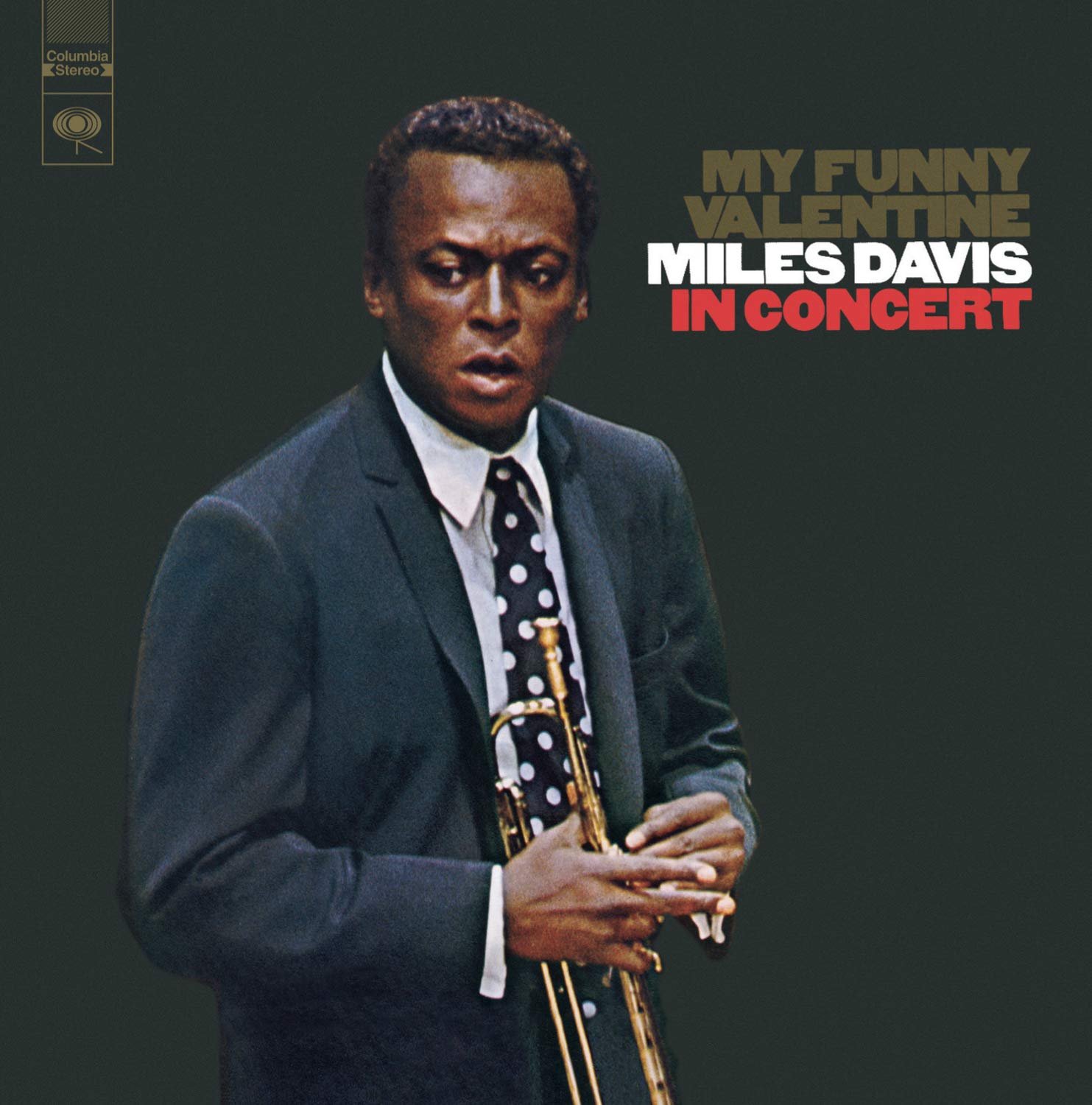
The version featured above, though, is from My Funny Valentine: Miles Davis in Concert, recorded on February 12, 1964, at the Philharmonic Hall of Lincoln Center in New York City, and in addition to Davis, features Herbie Hancock on piano, Ron Carter on bass, Tony Williams on drums and George Coleman, whose sax solo is remarkable.

I don’t think that we post many 15 minute jazz pieces here, so, when we do, it better be good—and this really is.

Tuesday, October 22, 2019

WITCH: BEWITCHED,BOTHERED AND BEWILDERED


The Great American songbook is something that has me normally running for the hills, especially when utilised as a vehicle for ageing rockers who have overdrawn on their inspirations. Most such vanity projects have given such a bad name to the originals that one could be fooled too that the originals are cheesy and cheap.  And sometimes they are, but there are a bevy of writers of such reliability that any such fear is misplaced. These would include Cole Porter, the Gershwins  and Richard Rodgers, cited mainly as three who transcend the celluloid vintage of their origin and can hold their heads up against often the most lumpen of current interpreters. My title song, above, as played out by Ella (do I really have to add) Fitzgerald, was written by Richard Rodgers (music) and Lorenz Hart (lyrics). Although Ella was not the first, and, as someone I totally didn't "get" until maybe a decade ago, arguably she provides the definitive  version. Quite how I couldn't see past the elderly and bespectacled, grandmarmy-like woman she had become, now defies me, it taking my Uncle George, a jazz lover who instilled in me the love of music if not, initially or necessarily, his tastes, to get me to see with my ears open, hear with my eyes open. He played me some Aretha Franklin, shocking me with his eclecticism, seamlessly then comparing and contrasting with Ella, getting me to allow both in my appreciation.

It's a great song, though, isn't it? From a 1940 musical, Pal Joey, it was originally sung by a Vivienne Segal on Broadway, reprised in a revival, 14 years later, with an ongoing life of it's own since then, with perhaps the most bizarre appearance coming in the UK royalty biopic, The Crown, as possibly sung by King George V and his daughter, Princess Margaret.
Here are three of the better contemporary versions. (With apologies to those who would say otherwise, Frank doesn't count as sufficiently contemporary.)


Boz Scaggs has one of those voices that hinges on the cusp of being just, and only just, right, fitting no definition of being good in any accepted classical sense. But, on the right material, perfect. Personally I am no lover of peak Boz, his disco years, Lido Shuffle and all that, much preferring his earlier and later more blues based work. But here, the juxtaposition of his strained holler alongside the consummate lounge jazz setting, is a glorious peanut butter/jelly combination. It comes from a 2003 release, But Beautiful: Standards, Volume 1. Strangely, no second volume has yet appeared.


Rufus Wainwright adores this stuff and it adores him. Many say he sings like a corncrake; I have to say I differ, finding his high camp self-belief so intoxicating as to have me forget the sentimentality of (some of) his material and the archness of his presentation. This version shouldn't really do it, as he milks the saccharine and cloys it to near curdle. But I love it. Just don't tell anyone. This comes from the film of Alan Bennett's The History Boys, my imagination that Bennett himself would be not amiss to crooning along with it.


Yes, that Jeff Lynne, Mr E.L.O. Astonishing, as I really cannot abide most of his output, in particular some of his trademark mannerisms, the echolalia backing vocals, for one, which threaten to appear here, retreating, thankfully,  just as swiftly. This avoids the tweeness he often can bring to material, his voice managing to sound warm and genuine. It doesn't even make me think, that much, of the Beatles. Like the Boz Scaggs above, this comes from an oft overlooked record in his canon, Long Wave, in 2012, a album entirely of covers from the 40s and into the 50s.

Of course, there are some other crackers, Linda Ronstadt and Sinead O'Connor, as two women who have the pipes to nail it, each capable of singing the phone book and still sounding sweet. And clunkers aplenty, mentioning no names.

Bewitched? Boz, Rufus, Jeff. Or just Ella.


Monday, January 29, 2018

Aliens: Two Little Men in a Flying Saucer

Ella Fitzgerald: Two Little Men in a Flying Saucer

[purchase]

Don’t feel bad if you never heard of this one. Two Little Men in a Flying Saucer is one for Ella Fitzgerald completists. It comes from 1951, fairly late in the swing era. The soldiers have been back from World War II for some time now, and rock and roll will be unleashed on an unsuspecting world very soon. The songwriters on this one were Arthur Pitt and Elaine Wise. I could find no other credits for Pitt, and Wise wrote two other songs also recorded in 1951, and then disappeared from pop music history as well.

Having said all that, this is a fun song, and Fitzgerald sings it with the perfect light hearted tone. Before we are done with our Aliens theme, we may well hear a song that takes the concept of humans seen through alien eyes far more seriously. It’s a device for criticizing humanity that can be very powerful. But Two Little Men has fun with the idea. Not knowing the rules of baseball, for example, these planetary visitors simply shake their heads in a non-judgemental way and leave Earth. There is a little gag about politicians here, but it is nopartisan and played for laughs. I am not going to tell you that this is classic Ella Fitzgerald, but it is a fine example of her playful side, and it makes me wonder why there weren’t more songs recorded by Pitt and Wise.

Tuesday, March 10, 2015

Where I Live (Istanbul, Turkey)


purchase Robert Johnson "Istanbul Grey"
purchase Ella Fitzgerald "Istanbul ..." (somewhere in this link)


I can lay claim to having swum from Europe to Asia and vice versa – several times. But that’s only one of the many, many perks of living in Istanbul. Istanbul is a city that straddles two continents, and the swim from one continent to the other is less than a mile in most places. My folks used to tell a story about a dowager who claimed to her Atlantic ocean-going companion (with her nose in the air), “I have crossed the Atlantic 5 times “, to which her deck-mate replied, “and I cross from Asia to Europe every day”. She lived in Istanbul.

I grew up with a fortress built in 1452 literally in my back yard – well …  across the street from our house (that’s the castle in the video that accompanies this earlier SMM post). This disconnect made it kind of hard for me to relate – or maybe for my classmates to relate to me – when I began high school in the US: I wasn’t particularly in tune with popular US culture (TV shows, sports statistics …) partly because TV didn’t come to Turkey until around 1970, by which time I was 15. My historical time frame was millennia, not the decades of US history (think: Neolithic, Helenistic ….)

Until 1973, the only way to get from the European to the Asian half of the city was to swim or to take a boat. Crossing the straits meant waiting in interminable lines for a car ferry.  Today, there are two 6 lane bridges spanning the Bosphorus and another one under construction. Yes, it can still take hours to get across the water, but that’s because Istanbul has just about the worst traffic in the world.   On the other hand, Istanbul has been rated (more than once) as one of the best places for events/action.
Ella and Bing


 A partial list of Istanbul events for March 2015 includes many local talents whose names would mean little to you as well as others you would know: Hugh Jackman, Bobby McFarrin, the London Philharmonic, Julio Iglesias – but this winter-season list doesn’t really predict the general trend. I watched Eric Clapton and Steve Winwood  a few years back (and that’s merely my choice).

As far back as Ella Fitzgerald and Bing Crosby, the city was attracting attention  - granted, not likely the kind of attention today’s local media-rati would prefer, but hey … they say there’s no such thing as bad publicity. (Belly dancers are not Turkish – they are Persian). While, on the one hand, there is a major disconnect between the cultural perceptions of 21st century Turkish youth and those of their fathers/mothers, there is also the realization that local culture is irreplaceable and probably worth preserving – at least in a bell jar. Something to point to, but not necessarily to aspire to. We’d rather wear yoga pants than baggy (shalvar)pants.

Turkish popular music, for the most part (IMHO) is formulaic: pseudo pop tinged with arabesque. That said, there are rare examples of artists working outside the mainstream and creating melanges of East-West synthesis: as on some of Robert Johnsons’s recordings. There is a definite potential for cultural melange where East and West mix, and that is the major part of the attraction of Istanbul.

As we said in "our" attempt to win the 2000 Olympics bid: “Let’s meet where the continents meet.”


Wednesday, September 10, 2014

Royal: Queens


As a native of the New York borough of Queens, I’ve been a bit miffed by the virtual (but not complete) absence of any references to Queens during this theme. I could have written about bands and artists who came from that borough, like the Ramones or Paul Simon, or even Run-DMC, or some of the famous jazz musicians who lived there, like Louis Armstrong. Or, I could have made it easy, and written about Queen, or the Queens of the Stone Age. Or picked a song like “Killer Queen,” “Queen Bee,” or, god forbid, “Dancing Queen.” But, no, I’m going to go in a different direction, and talk a bit about some of the great musicians who have been crowned Queen of some genre or another. Because there isn’t an official organization devoted to the creation of music royalty (as opposed to organizations that collect music royalties), in some cases there may be competing claimants for the crown. For the purposes of this post, I deem myself the final authority, and hope that my decisions don’t lead to, say, a War of the Roses. And, because these titles are not granted by the United States, none of these citizens are in violation of Article I, Section 9, Clause 8 of the United States Constitution, the Title of Nobility Clause (or, for that matter, the Sanity Clause).

Let’s get started with the Queen of Soul, Aretha Franklin:


From the next country over, we have the Queen of R&B, Ruth Brown:


The Queen of Gospel, Mahaila Jackson, occupies an older throne:


Nearby, the Queen of the Blues, Koko Taylor reigns:


Meanwhile, down in Louisiana, the Soul Queen of New Orleans, Irma Thomas, lets the good times roll:


We can't forget the Queen of Jazz, Ella Fitzgerald (who lived for a while in Queens):


Influenced by some of her fellow rulers, the Queen of Rock & Roll (who also held the crown as Queen of Psychedelic Soul, presumably subject to Aretha), Janis Joplin’s reign was too short:


In Opryland, Loretta Lynn, the Queen of Country, holds sway:


Meanwhile, hailing from Staten Island is the Queen of Folk, Joan Baez:


Cuban Celia Cruz’s status as Queen of Salsa was never threatened by the revolution (although she became a citizen of the United States):


And we end this discussion with the Queen of Reinvention, yes, Cher:

Saturday, July 28, 2012

Hot: Too Darn Hot

Ella Fitzgerald: Too Darn Hot

[purchase]

I'm not a Broadway musical enthusiast. But, the vast majority of our daughter's waking hours are spent either in dance class or talking about dance. So, on a recent trip to New York, we met up with some friends, and we all went to see an old-fashioned Broadway musical, Anything Goes. "Too Darn Hot" is not from that musical, but was penned by the same songwriter, Cole Porter.

My daughter was thrilled by the dancing. But, what struck the non-dancers among us was how incredibly well-written the songs were. In particular, we were struck by the memorable music and genuinely witty lyrics that Porter created.

His "Too Darn Hot" is in that same tradition. Almost effortlessly, it shifts from a laundry list of things you can't do when the thermometer soars to analysis of the Kinsey Report. Amazing.

"Too Darn Hot" was featured in the Cole Porter musical, Kiss Me Kate, written in 1948 -- the same year the Kinsey Report was issued. Most of the great vocalists of that era have sung it, but the best-known rendition comes from Ella Fitzgerald, who first recorded "Too Darn Hot" for her 1956 album, Ella Fitzgerald Sings the Cole Porter Songbook. This smoking hot live version is from her 1960 record, Mack the Knife: Ella in Berlin, an outstanding record that was eventually enshrined in the Grammy Hall of Fame.

Wednesday, April 4, 2012

Bible Stories: It Ain't Necessarily So


Ella Fitzgerald & Louis Armstrong: It Ain’t Necessarily So [purchase]

Well, it needed to be said.  Belief and faith are wonderful things, but credulously swallowing fables and cautionary tales as being literally true leads nowhere good in the long run.  Sometimes a story is just a story, entertaining as it may be, and sometimes the real joy is to be found in the telling of it: the delivery, the timing, the relish with which a storyteller delivers his tale.

Which, of course, brings us to Ella and Louis.  Satchmo's cornet is incisive and true, his voice grizzled and wry as he chews upon Ira Gershwin's sly Biblical observations, while Ella is, as ever, clear and sweet, exuding innocence while her words belie that facade.  The joke, though, is on us: the eponymous lyric is sung to a tune based upon the aliyah blessing that calls a congregation to hear a reading from Torah.  Perhaps we aren't to believe everything we read in the Old Testament, but its influence on our society is inherent in everything up to and including the doubt expressed within these verses.  And so, in keeping with the spirit of inevitability, I wish you all a very Happy Easter.  After all, if you can't beat 'em...

Saturday, December 10, 2011

Offbeat Holiday Music: Santa Claus Got Stuck in My Chimney


Ella Fitzgerald: Santa Claus Got Stuck in My Chimney

[purchase]

All week long, the picture above has been sitting on the sidebar, and you probably never suspected that anyone had a song for it. In fact, not just anyone, but the great Ella Fitzgerald herself. The song had acquired legendary status at one time. Fitzgerald sings it with the innocence of a child, but someone in record company land had a filthy mind, and decided the song was too risqué to release. In fact, it only came out after Fitzgerald’s death in 1966. Personally, I think you have to work pretty hard to get something naughty out of this, but you be the judge.

Sunday, June 20, 2010

Summertime: Summertime


Ella Fitzgerald: Summertime

[purchase]

Let’s begin with this week’s theme song. Summertime, of course comes from George Gershwin’s classic, Porgy and Bess. The song is a lullaby, reassuring a child that all is well. Why has the song become a standard? There is no need for me to reply. Ella Fitzgerald has done so beautifully.

Bonus:

There are many wonderful versions of Summertime out there. If you would like to hear another one, I included a version by Herbie Hancock with Joni Mitchell when I welcomed summer on my own blog, Oliver di Place. You can still here that one here.