Showing posts with label Herbie Hancock. Show all posts

Tuesday, February 25, 2020

Valentines: My Funny Valentine


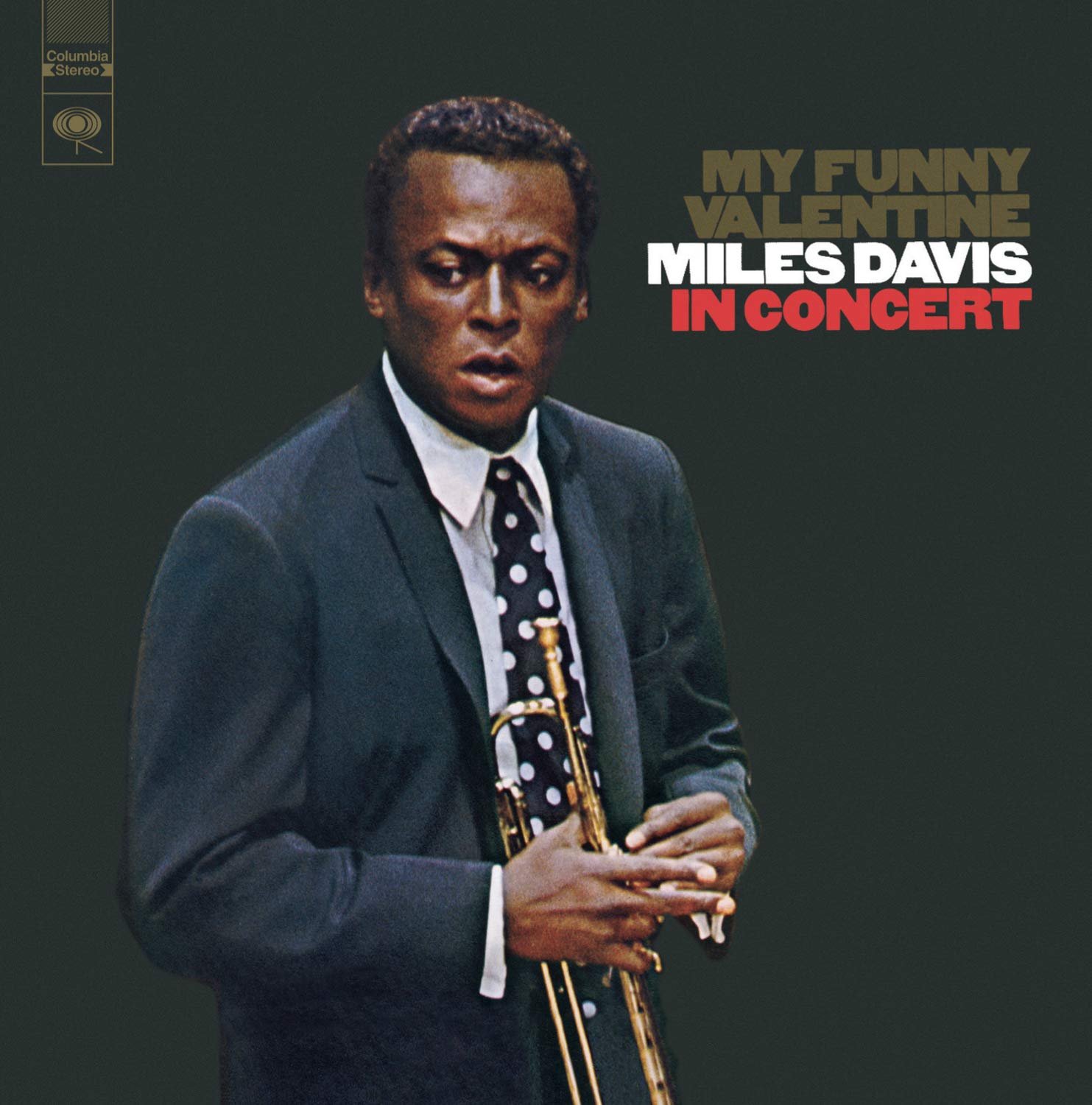
Miles Davis: My Funny Valentine
[purchase]

What makes a standard a standard? Clearly, there has to be something timeless about the songwriting, and there probably has to be a performance of the song that captures the imagination of other musicians, and through them the interest of their audiences. Certainly, “My Funny Valentine” qualifies as a standard. According to Wikipedia, the song, written by the great team of Rodgers & Hart for the 1937 musical Babes In Arms, appears on more than 1300 albums performed by over 600 artists, ranging from Chet Baker to Miles Davis, to Frank Sinatra, to Ella Fitzgerald to Chaka Khan, to Linda Ronstadt, to Elvis Costello. Apparently, it has become a song that many jazz musicians are sick of; yet it continues to be performed and recorded (although I read somewhere that in the 50s, one New York club owner banned the song).

I think that what makes the song so compelling is that while it is a love song, it isn’t a song where the singer objectifies his or her love. To the contrary, the song is a catalogue of physical imperfections that nevertheless do not detract from the ardor that the singer professes. And since most of us aren’t perfect and fall in love with imperfect people, there’s a universality in this sentiment.

It appears that it took almost two decades for the song to move from Broadway to the Great American Songbook. In fact, when Babes In Arms was made into a movie in 1939 featuring Judy Garland and Mickey Rooney, the future classic wasn’t even used. But a gentle, quiet version of the song, sung in 1954 by the trumpeter Chet Baker (who had performed on an instrumental version with Gerry Mulligan the prior year that was so good that the Library of Congress added to the National Recording Registry in 2015) made the music world reconsider “My Funny Valentine.” Sinatra recorded it the same year, a couple of years later, Miles Davis recorded it with his quintet, and it was off to the races.

In fact, in 1957, the song appeared in the film Pal Joey, which was loosely adapted from Rodgers and Hart's 1940 musical of the same name, despite the fact that it hadn’t appeared in the musical. Sort of a musical make up call.

The version featured above, though, is from My Funny Valentine: Miles Davis in Concert, recorded on February 12, 1964, at the Philharmonic Hall of Lincoln Center in New York City, and in addition to Davis, features Herbie Hancock on piano, Ron Carter on bass, Tony Williams on drums and George Coleman, whose sax solo is remarkable.

I don’t think that we post many 15 minute jazz pieces here, so, when we do, it better be good—and this really is.

Monday, October 21, 2019

Witch: Herbie Hancock/Witch Fire


purchase [Witch Fire ]


Herbie Hancock? ... I had a vinyl copy of one of his albums way back at the end of 60's. It was so long ago that I have a hard time remembering which one it was (I certainly no longer have a copy)
Wait ... does anyone even know his name today, let alone still have vinyl copies of this stuff?

The man has come up with 41 live albums, 12 studio, sixty-two compilations, five sound-tracks, thirty-eight singles ....I can hardly continue. Oh yeah ... he's also got a song that fits our current theme. Well, .. actually more than one (considering the above lengthy repertoire): the man has credits on <Witch Fire> as well on <Witch Hunt>. The titles sound awfully similar, no?

Witch Fire, from the Smoking Keys album, is credited to - can't find anything. There's relatively little online about this album. The first Google link takes you to a site in Asian/Chinese characters and not much else. The Google images link includes a screen shot of an album of the same name, but the trail seems to peter out about there. Except that that link resolves to give you a list of songs on said album. And another link (if you enclose the album title in quotes, leads you to (WTF): a link about Blue Cheer (now that's history for you) - "Peterson is at the wheel *smoking, keys* in the ignition but the motor is silent"

There's more online info about Witch Hunt, credited to Wayne Shorter from his '66 album <Speak No Evil>, which includes a number of ECM studio alumni: Shorter, Freddie Hubbard, Ron Carter, and Herbie Hancock. (ECM going back to the end of the '60s and a major jazz publishing influence throughout the 70s and still thankfully going today)

But .. back to the story line (witches, Herbie Hancock)...
Herbie Hancock makes Rolling Stone's list of top "Stoner" albums, but not for this one (although that should come across as slightly auspicious - Halloween, anyone?)

Witch Hunt/James Easter:

Sunday, December 2, 2018

LEFTOVERS: LEAVES: TEA


Let's get this straight, tea is so not my cup of tea. I can't stand the stuff, being an avowedly (instant) coffee man. Yet it is an enduring image in the world of popular song, often used to evoke a peculiar englishness that has, bar the drinking of it, gone. But it gives me the opportunity for a list post, which, in the leftovers pile, will at least avoid any flak for using up "all the ideas" Thus, in time honoured, please warm your pots.......


Cup of Tea/Shack. Lovely peaceful vibes, with a hint of ye olde psychedelia which belies its youth, the song being barely a decade old. Given that it stems from the never more aptly named Head brothers, arguments might exist as to whether this song is about assam or darjeeling. Or indeed anything more exotic, but it has a timeless, restful quality I can drown in.


Penny Royal Tea/Kristin Hersh. I know, I know, it's a Kurt song, but I prefer this version to the original, excepting the Unplugged performance. I wondered quite what Penny Royal tea was, thinking it may even be a brand of teabags available in Walmart or some such, then that the song may have been a play of words, bemoaning the pitiful returns on his song publication rights: royal tea/royalty, right? As ever, wiki is my friend, and it is apparently an often unsuccessful chinese abortifacient...


Tea and Sympathy/Janis Ian. Beautiful string arrangement with typically understated Ian vocals, a wry reflection on loss. And at last a song about tea tea. I would politely endure a cup of tea under the circumstances described, and traditionally have about one cup a year, usually with aged relatives. And similar references, no doubt.


Tea For One/Led Zeppelin. Not an entirely dissimilar concept as above, portrayed and presented a little differently, it's true. Percy missing his missus, tea for one being the metaphor for alone. Whilst I can't imagine vintage Zeppelin drinking anything but (vintage) champagne, OK, maybe brown ale for Bonzo, strangely the idea of the current Plant drinking a mug of tea, probably in a Wolverhampton Wanderers mug, seems entirely apposite.


Tea Leaf Prophecy/Herbie Hancock featuring Joni Mitchell. Her song, mind, but this version has always appealed more, the original still displaying residual vestiges of a folk tendency within this, as we later learnt, decidedly jazz singer. It is also good to have a salient reminder of the erstwhile bonus in every olden days cuppa, that of having your fortune made available courtesy the leaves left in the base of the cup. Try doing that with a teabag, Mr Lipton!


Tea Stain/Tindersticks. Cripes, I love(d) this band. As an instrumental this isn't perhaps the most representative of their output, but does give the european arthouse soundtrack quality they inhabit so well. It's a pity as I can picture their lugubrious singer, Stuart Staples, finding it only too easy to imagine him with old tea stains down the front of a crumpled white shirt. (You wanna hear him sing? Sadly I can find no further tea references, Will coffee do?)


Tea For The Tillerman/Cat Stevens. Bit of vintage Cat when he was still Cat, rather than Yusuf realising he didn't sell so well without a bracketed reminder. This album and the follow up, Teaser and the Firecat, soundtracked my miserable teens, the angst and ennui of his vocals hitting a chord with lonely adolescents everywhere. There seem to be a lot of websites arguing the meaning of the phrase, but I think the picture says it well enough, whether the jovial beardy is the man who tills the soil or pulls the tiller. Personally I think the 1 minute version on the album is probably better.


Tea Leaves/The Snails. I'll be honest. This isn't the song I wanted to include, hoping that a song of equally little-known band UK The Scaremongers might be available on YouTube. It wasn't, but I encourage you look for the song, part of the Sound of Mature Huddersfield as they style themselves.
This song? It OK.

So, that's yer lot. Eight, as anything more might be seen as hogging it, seeking vaingloriously too wide a demographic where at least one song might appeal. (Memo to self, what do they drink in Tarrytown?) No room even for this......

Explore!


Friday, September 1, 2017

Shadows: Shadows In The Rain

 
Sting: Shadows In The Rain (studio version)
[purchase]

For those who remember 2012, I mentioned in a post that one of the first dates I went on with my now wife was to see the movie Bring On The Night, which was the Michael Apted-directed documentary about the creation of Sting’s first solo album The Dream of the Blue Turtles and the subsequent tour. We loved the movie, and I still have fond memories of seeing it, both because of the film and my date.

I enjoy learning about how music is created, probably because my love of music is not coupled with any real ability to make it. I’m jealous of those who can, so this movie was right up my alley. I was also a big Police fan and had heard, and liked, The Dream of the Blue Turtles. I know that Sting has gotten a reputation for arrogance and pretension over the years, but as someone who likes the often pretentious prog rock, it didn’t bother me that for his first solo album, Sting tried to move beyond the reggae flavors of the Police and try to push the boundaries a bit. As a brief aside, I had the chance to briefly interview Sting the summer before my senior year in college, backstage at an outdoor concert at Liberty Bell Race Track in Philadelphia. He was extremely genial and answered all my probably dumb questions, and readily recorded a station ID that we ran regularly — Stewart Copeland, on the other hand, had to be shamed into even doing a station ID for us. But he did two. You can hear them here.

In addition to wanting to expand his musical palette (which the Police had begun to do as time went on), Sting decided that his band wouldn’t be The Police Mark II (or III, for those few Henry Padovani fans out there), and instead chose young, hotshot jazz musicians. This isn’t as strange as it sounds — Sting’s earliest gigs were playing jazz and fusion music in Newcastle during his free time during college and while working as a teacher. Here's a jazzy tune from Sting's last pre-Police band, Last Exit—the melody of which was used in Blue Turtles' "We Work the Black Seam."

The people that he chose were all extraordinary musicians. Keyboard master Kenny Kirkland had played with Wynton Marsalis, bass player Daryl Jones had been in Miles Davis’ band, and Branford Marsalis, on sax, had been in Art Blakey’s Jazz Messengers, and played with his brother Wynton, Herbie Hancock and Dizzy Gillespie. Drummer Omar Hakim, who was in Weather Report (with Mino Cinélu), was the only member with significant rock credits, having backed Carly Simon, David Bowie and Dire Straits. In addition, Sting brought on veteran backup singers Janice Pendarvis (who was in another of my favorite documentaries, 20 Feet From Stardom) and Dolette McDonald (who worked with the Talking Heads, but was not in another of my favorite music films, Stop Making Sense, or on my favorite Talking Heads album).

The film shows how this mostly non-rock band fused with Sting to create a sound that was still identifiably rock, but had some elements of jazz. Maybe the easiest way to see what Sting was after is to compare the original Police version of “Shadows In The Rain,” a somewhat meandering, spooky dub track, with the studio version from Blue Turtles, which was reportedly based on the original demo that Sting wrote. Amusingly beginning with Marsalis asking frantically what key the song is in over a funky Hakim groove, a harsh voiced Sting enters, and the song turns into an exuberant, upbeat soulful and jazzy tune with solos from Kirkland and Marsalis.

Part of the tension in Bring On The Night, beyond the question of whether the whole concept would work, is that the band was scheduled to play some live shows on little rehearsal. As you can see from the video above, they had no problem with the performance, and the exuberance of the album track is even more apparent.

Another part of the tension in the movie is that it shows, in pretty graphic detail, the birth of Sting and wife Trudy Styler’s son Jake, who is now this guy.

Saturday, January 14, 2017

CHANGE: A CHANGE IS GONNA COME

Well it is, isn't it? And it would have, anyway, because everything changes, that's a fact, to paraphrase Bruce Springsteen. Which is about as philosophical as I am going to get. So I am not going to trump on about politics, probably a relief, because everyone everywhere else will be. But I am going to celebrate this wondrous song, particularly as it later became quite an anthem for civil rights, something we could maybe start storing up in reserve. (Sorry, I said I wouldn't.....)


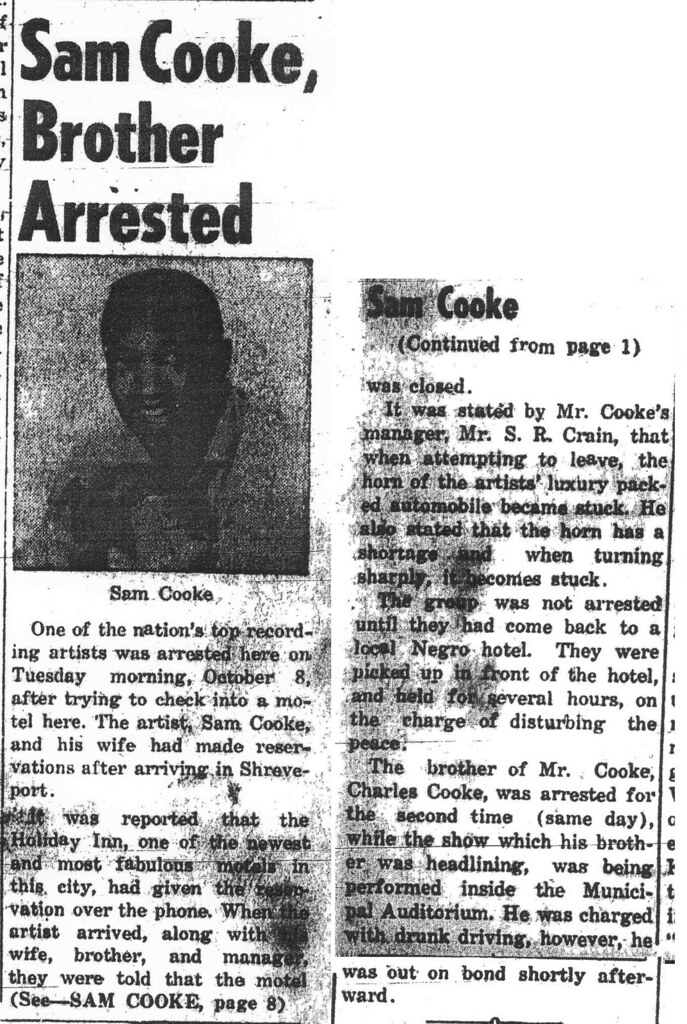
The b-side to a latter-day single in his career, Cooke was moved to write and record it, late 1963 into 1964, after an incident where he had been turned away from a whites only motel in Shreveport, Louisiana. A Holiday Inn. Despite being, arguably, a previously light-weight lyricist, perfect for the pop-soul that endeared him to a largely white audience, he had also been stung by Bob Dylan's emergence, social conscience a'blazing, so he seized the moment. ("Blowin' in the Wind" was a staple in Cooke's live set.) His producers, inevitably warned against the risks of alienating his fans, hence it's appearance on the flip of "Shake." No, me neither. Both "Shake" and the album both the songs appeared on, "Ain't That Good News", actually his last, sold modestly by Cooke's standards. But that has been dwarfed by the legacy and life of the song, voted number 12 in Rolling Stone's 500 Greatest Songs of All Time, as well as being selected for posterity within the Library of Congress, as being "culturally, historically or aesthetically important." All three, say I. But I am ahead of myself. Cooke actually only once played the song live, on TV, the Johnny Carson Tonight show. (I couldn't find any recording thereof to link, sadly.) It was then a full 10 months before the single was ready for release, which eventually took place, over a year after recording, in late December 1964. That release date was already planned, when Cooke was shot dead at another motel, this time in Los Angeles. Colour code uncertain.

There are myriad covers. Although maybe more the metier of the estimable Cover Me Songs, here are my favourite five.


For me, the song that makes The Band's 1973 album, "Moondog Matinee," an essential, the combination of Richard Manuel's keening vocal and the arrangement transformed from the orchestral splendour of the original to simple affecting sublimity.


Another radical revision of the arrangement, Herbie Hancock playing his jazz piano around, behind, on top of a conventional soul vocal version, englishman, James Morrison, the two morphing together just right. But only just.


An astonishing and the possibly OTT extravaganza that was Baby Huey. Just euphoric. Makes me, a middle aged white man, channel James Brown. Convincingly. (Maybe.)


Uncertain still whether this works, cello and the never-less-soul man Ben Sollee. On balance, it does.


Finally, an instrumental mix of all the styles shown above. And more. Bill Frisell, an alchemist of electric guitar, able to run with any genre and leave it resolutely unclassifiable beyond exquisite.

What a song, what a tune. Let it give confidence for the changes that will come. After all, it is all in the ear of the beholder.

Anyhow, don't get upset about the what if of politics, go here, cheer yourself up with some Sam.

Sunday, August 11, 2013

Unusual Collaborations: Herbie Hancock and Tina Turner and then some


Herbie Hancock and Tina Turner: Edith and the Kingpin

Herbie Hancock and Melody Gardot: Edith and the Kingpin

Herbie Hancock and Elvis Costello: Edith and the Kingpin
[purchase]
I don‘t know why it took me so long to settle on something to post for this theme. I landed on one of my favorite songs in the world, so it shouldn‘t have been so hard. Long time readers of Star Maker Machine are aware of my love of the music of Joni Mitchell. It‘s hard to consider anything on her own albums an unusual collaboration, because Mitchell was always a restless artist, always changing her sound, always searching, and that meant that the make-ups of her bands were always changing as well. But tributes to her have certainly resulted in some odd pairings. In 2007, Herbie Hancock released his tribute, River: The Joni Letters. This one surely had Mitchell‘s blessing, considering that she sings The Tea Leaf Prophecy on it. But elsewhere, Hancock worked with some surprising partners indeed. Tina Turner strikes me as one of the most unusual, but the result sounds like they have worked together for years.
To back up for just a moment, Herbie Hancock is one of the biggest names in jazz today. His career began in the 1960s, with fairly straight ahead accoustic jazz albums, although very fine ones. He soon caught the attention of Miles Davis, and was with Davis for the birth of fusion jazz on the Bitches Brew album. Hancock then went on to make some of the best music fusion jazz had to offer with his Headhunters band. Later, Hancock collaborated with Bill Laswell on the hit Rockit. So it’s safe to say that Hancock is also a musical explorer, which may be what drew him to Joni Mitchell’s music in the first place.
Meanwhile, I can’t say that I ever followed Tina Turner’s career at all closely, but this is the woman who went from the R&B powerhouse performance of Proud Mary to the much mellower Private Dancer, (the result, by the way, of another interesting collaboration, with producer Mark Knopfler). Nothing there suggests that Turner would be a good jazz singer, but she nails Edith and the Kingpin.
I needed a video for this post, and unfortunately, that meant using the one above, where you stare at the album cover while the song plays. I did find a fan-made slide show, but I thought the choice of images showed a complete cluelessness about the meaning of the song. But looking for the video led me to the two live versions I have also included. Hancock was able to get the singers he wanted for the River album, but they were not necessarily available when he went out on tour in support of the album. That is what must have led to the version with Melody Gardot. Gardot is a young jazz singer who has already made quite a splash, three albums into her career. She is influenced to some extent by country, folk, and blues. Her performance with Hancock here uses the same arrangement as the album version, but the results are quite different. Where Turner is rueful and knowing in her performance, the younger Gardot is sassy and maybe a bit defiant. Gardot also is a bit freer with her timing, and that loosens up the band somewhat as well. The version with Elvis Costello (!), comes from a show called Spectacle that Costello hosted on the Sundance Channel. Costello had recorded his own version of Edith and the Kingpin for a multi-artist compilation called A Tribute to Joni Mitchell earlier in 2007. This version slowed the song down, and featured a lush arrangement that featured Costello in his crooner mode. But the version here is a stripped down arrangement that restores the songs original tempo, and leaves Costello less room to hide as a singer. I am afraid that Costello shows here why he is not a jazz singer. His performance is somewhat stiff, and he has trouble when he tries to bend some of the notes. But this version does have heart, and it shows that Costello gets the song.

Friday, February 8, 2013

Winter: River

[purchase]

This week’s theme gives me the chance to deal with a pet peeve. River is not a Christmas song. It is a winter song. Specifically, it is a transplanted Canadian, living in southern California where winter is unknown, explaining what winter means to her. Christmas, in the song, belongs to this place where “it stays petty green”. It is a place where a romance has gone horribly wrong. Winter, on the other hand, equals childhood, a time in her life before she even thought of romance. That frozen river is a place of innocence for Joni Mitchell. She wants to skate away from that hurting adult she has become.

I live in New Jersey, where winter exists, but our rivers do not freeze over. We think of winter as a harsh season, and it is all to easy to misunderstand the emotions of this classic song. But Canadians are different. Their feelings about winter are perhaps best explained by noting that ice hockey is far more popular there than baseball or basketball. I would argue that River is one of Joni Mitchell’s most Canadian songs for this reason.

In searching for a video for this song, I had thought to find Joni performing it, and I might have found that if I had looked longer. But this fan-made slide show by sherrylynn70 perfectly embodies the combination of the emotions of the song and Americans‘ misunderstanding of them. Some of the Christmas scenes here are too bright, and the winter scenes sometimes have too many people in them. But there are also some starkly beautiful winter images here that fit perfectly.

[purchase]

And while I was at it, I couldn’t resist including this cover, by Herbie Hancock with Corinne Bailey Rae. Of course, this comes from Hancock’s album of Mitchell covers, called River. The album was made with Mitchell’s blessing; she even sings on one track, The Tea Leaf Prophecy. Rae’s performance of River is quite different from Joni’s. Mitchell makes the song a raw wound, while Rae places the turbulent emotions of the text under a sheet of ice. It would be easy to hear the sweetness in Rae’s voice, and say that she misses the emotion of the song altogether, and I believe some critics did say this. But listen to the way Rae turns the opening phrase. All the hurt of text is there, but she is trying to swallow it whole. It almost, but not quite, works, and the result has all of the emotional power the song deserves. This is clearly what Herbie Hancock was after, judging by the musical setting he and his band have created for the song.

I hope you will forgive me for not sharing a third video here. There is a performance of River on YouTube by Herbie Hancock with Joni Mitchell doing the vocals. It has its own beauty. The performance is from 2008, and Mitchell’s voice no longer does what it did when she was younger. The events in the song are now a hurtful memory instead of a fresh wound. The video is worth seeking out for completists, but I think the two versions I have presented here say what I wanted to say.

Sunday, September 23, 2012

Mixed Formats: Rockit

[purchase]

This week’s theme is an experiment. We will be presenting songs in a variety of formats, and I mean that both in terms of the music itself and the way we present it. Some of us still have file hosting and will be sharing mp3s. But others, myself obviously included, will share videos. There may also be some streaming audio. The goal is to present as much music as possible for you, our readers. This mix of audio and visual formats may be how we proceed for a while at least, so I hope you will take the time and use the comments to let us know what you think. Incidentally, the picture on the sidebar this week is by artist Miriam Pinkerton. You can get a better look at it, as well as seeing more a possibly purchasing some of her work here.

Rockit was an MTV sensation in 1983. Probably very few viewers, however, had heard of Herbie Hancock before. Hancock had long before established himself as a jazz master. He was with Miles Davis when Davis invented jazz fusion, and Hancock greatly advanced fusion with his Headhunters band. But Rockit is not jazz, is it? The song combines a funky groove with a lead line on synthesizer with the turntablism of Grandmaster DST. Hancock was finding in the music that would later be called hip-hop the same improvisational spirit he knew so well in jazz, but the song is surely not jazz itself.

Or is it? Here’s Hancock and his band performing the song again, this time live in Los Angeles in 2008:

Now, some connections snap into place. Now, on finding this video, I understand at last how Herbie Hancock could have been responsible for Rockit in the first place. This version of the song makes clear how it relates to Hancock‘s jazz fusion work. It is unquestionably the same song, but this treatment brings it home for me. The band stretches out, and this version is clearly jazz.

Saturday, May 5, 2012

Unusual Instruments: Found Objects Edition

Herbie Hancock: Watermelon Man

[purchase]

Billy Jonas: Old St Helen

[purchase]

As we have seen all week, human beings have built an amazing variety of musical instruments, and made an amazing variety of music with them. But I wanted to close with two songs that feature objects that were never intended to be musical instruments at all.

The first is one you may remember as a science experiment from back in your school days. If you take a bottle and fill it part way with water, you can blow over the top of it and it will make a musical sound. Fill several bottles with different amounts of water, and you can get different notes this way. For his 1973 album Head Hunters, Herbie Hancock had his (usually) percussionist Bill Summers do this, and the result was the unusual sounds that open and close the song Watermelon Man. I know of no other case of anyone recording this “instrument”, and I can’t imagine how it was done live, but it still sounds amazing after all these years.

On the other hand, I know of plenty of cases of Billy Jonas‘ unique “drum kit“ being recorded, and I have had the great pleasure of seeing him play it live. This “kit“ consists of a seemingly random collection of plastic objects played with wooden spoons and other household objects. This is the only percussion Jonas plays, and, in concert he invites his audience to join in on shaken car keys, claps and finger snaps, or any other method of percussing you can find. I like to slap the knees of my jeans myself. A great time is had by all.

Sunday, May 22, 2011

Show Tunes => Song Chain: Pretty Women


Peabo Bryson: Pretty Women

[purchase]

Welcome to our Song Chain theme. This is a musical version of the old word association game, where one person thinks of a word, and the next person says the first word that comes into their head. So I hope this week is as much fun for our readers as I believe it will be for my fellow Star Makers and me.

Geovicki completely surprised me with her post of songs from Hedwig and the Angry Inch. First of all, I knew Hedwig had been a movie, but I didn’t know that it was a stage show first. And then, she took a Show Tunes theme, and found a way to include a J-pop artist. So the connections to this post are that I am concluding our Show Tunes theme, and I am offering a surprise.

Pretty Women comes from Sweeney Todd, and it’s no surprise that someone covered Sondheim, or that it was done as jazz. But I have never heard Peabo Bryson singing jazz before, and he does it very well. And he is working with Herbie Hancock, of all people. The combination works beautifully.

Friday, July 9, 2010

Joni Covers: Jazz vocalists

jazz-singer
Image from Inga Scholes


Herbie Hancock, ft. Luciana Souza: Amelia
[purchase]

Dianne Reeves: River
[purchase]

Cassandra Wilson: For The Roses
[purchase]

Call this entry Jazz Does Joni, Part Two; The Vocalists.

On my last post I focused on tunes that ripped away the awesome lyrics of Joni's songs. For this go-round, I'm re-introducing them as interpreted by three terrific female jazz vocalists. Can I just say it was hard to pick only three? With Joni, we're spoiled for choice.

I waxed poetic about Herbie Hancock's "River" in my last post, and you lot all went out and bought it, didn't you? Well, you should have, IMHO. Because it was really hard to pick just one of the many tunes on that CD to feature today: do I go with Tina Turner or Norah Jones or Corinne Bailey Rae? Or even Joni herself? In the end, I went with my personal favorite: the Brazilian jazz artist Luciana Souza. There just isn't a better fit than this song and her slow, sultry alto. And listen up, there's Wayne Shorter's soprano sax again. Like Icarus ascending on beautiful foolish arms…

The next one's by a local gal (well, to me), Dianne Reeves, who hails from Boulder, Colorado. This song pops up on people's Christmas playlists, but to me it never seemed all that…restrictive, I guess. Meaning, it's not at all weird that I'm posting it on what for most of us is the hottest day so far all summer. So instead of noticing how it's so hot that your underwear is clinging to you like lichen, think of this frozen river, and ice skating, and how much we're all gonna be whining about how cold it is in a short 6 months.

Just now I noticed that all three of my choices are women who sing in the lower ranges of the female voice. Maybe that's because I myself sing in that range, so I can wail away to these songs in the privacy of my SUV, like you do. I mean, you all do that too, right? You're the people I see in my rear view mirror, mouthing words you alone can hear? Thought so. Wave at me next time, 'k? It'll be our secret. Me, I'll be singing to this one, by the supremely talented Cassandra Wilson. I've had this line running through my head all week: It was just the arbutus rusting, and the bumping of the logs, and the moon swept down black water like an empty spotlight… This is from a wonderful 2007 CD, "Tribute to Joni Mitchell", that also features other great artists like Prince, Sufjan Stevens, k.d. lang, Sarah McLachlan, and Emmylou Harris.

Monday, July 5, 2010

Joni Covers: Jazz Saxophone Tributes

saxophone


Herbie Hancock, ft. Wayne Shorter: Both Sides Now

[purchase]

Paul Desmond: Song to a Seagull

[purchase]

Joshua Redman: I Had a King

[purchase]

Let's check out some jazzy Joni covers, yeah? Here are three that focus on the saxophone. I used to play this amazing instrument, but sadly, none of the songs I ever learned were nearly as cool as these. It may seem counterintuitive to feature songs of a remarkable lyricist that have been stripped of the lyrics, but this allows us to focus on the melodies. Which are also remarkable, as we'll see.

I'll start with the low-hanging fruit. Herbie Hancock, the genius jazz keyboardist who's played with everyone who's anyone in the jazz world, released an entire tribute album to Joni in 2007, called "River: The Joni Letters." To everyone's surprise (except those of us who, you know, actually listened to it), Herbie's tribute ended up as the Grammy Album of the Year. How could it not? I'm going with one of the few instrumentals on the CD, but even then, it features Wayne Shorter, who is every bit as awesomesauce as Herbie. If you're a Steely Dan fan, you've heard him on "Aja". If you're a jazz fan, you know him from later Miles Davis, Weather Report, and, um, other Herbie Hancock recordings.

If you've ever listened to "Take Five," that idiosyncratic, arrhythmic, and classic ode to the 5/4 time signature, then you've heard Paul Desmond's alto saxophone. His was a defining musical voice of West Coast (aka Cool) Jazz. Here's his 1973 take on one of Joni's earliest songs, recorded before even Joni herself began to follow the jazz muse of her later work. And if you pay attention to these sorts of things, Grammy winner Don Sebesky is the arranger.

Another west-coast jazz musician, this one a son of saxman Dewey Redman, gives us our last saxophone tribute to Joni. Joshua Redman has other credits to his name, including the PBS TV shows Arthur and Reading Rainbow, and, and, and OMG he's the saxophonist on the anime series Cowboy Bebop, an oeuvre from which I'll try to work in songs in future posts….oh, where was I? Oh, right. Here's a 1998 Joni cover.

Friday, March 6, 2009

Bodies of Water: River


Joni Mitchell: River

[purchase]

Herbie Hancock with Corinne Bailey Rae: River

[purchase]

"Society is like a large piece of frozen water; and skating well is the great art of social life." ~ Letitia Landon

Then there's the peculiar case of Joni Mitchell's "River." The song first appeared on her album Blue some 36 Christmases ago. It starts with Mitchell's piano playing "Jingle Bells" in doleful minor chords, which leads to a delicate and exquisitely disconsolate melody, and even more forlorn lyrics. References to Christmas, reindeer, and "songs of joy and peace" crop up in the first verse, then disappear. Damning herself as "selfish and ... sad," Mitchell confesses to disillusionment with "this crazy scene" (probably the drug-fueled Cali-rock crowd at the time) and driving away the guy who not only loved her but gave crazy-good sex (rumored to be James Taylor or Graham Nash, her boyfriends during this period). The refrain has her craving a river "I could skate away on"; she just wants to leave all of it, even the seasonal festivities, behind. The song returns to its initial chorus, but by then, it's too late for tidings of comfort or joy. Even the Christmas references--images of trees being cut down, fake reindeer being hauled out one more time--are more cynical than buoyant.

"River" is only peripherally about Christmas, and in lyrics and tone it's hardly the type of song one warbles around the piano with the family (assuming people still do such things). Yet over the last few years, it's become ubiquitous, included on a large number of yuletide albums in various genres. One can now hear "River" done up not only as adult contemporary (separate versions by Sarah McLachlan and James Taylor on their seasonal-themed albums) but as holiday adult lounge jazz (Dianne Reeves), new age guitar (Peter Mulvey), Celtic ballad (the Albion Christmas Band), alt rock (Sister Hazel), Brit pop (Travis), and jazz elevator music (Fourplay, Boney James). That's not to count non-holiday-record covers by everyone from Heart to the Indigo Girls to Herbie Hancock (the latter, sung by Corinne Bailey Rae, is the title track of Hancock's album of Mitchell covers, just nominated for an Album of the Year Grammy).


The rest of the article can be found here...

Monday, October 20, 2008

Adjective Noun: Fat Mama


Johnny Zamot: Fat Mama

[out of print]

Herbie Hancock: Fat Mama

[purchase]

Two trips to the titular totem, a perfect pair of paeans matched in name and more: a mystical voodoochant boogaloo and a lighthearted beat poetry jazzjam that proves the power of restraint. Jazz and latin soul, both released in 1969, further united by funky fat sax bleats that sneak up on you in your daze. Oh, Mama.

Monday, August 11, 2008

1973: Watermelon Man


Herbie Hancock: Watermelon Man

[purchase]

It's interesting that the first year prompt that I've been here for is 1973. 1973 marked the end of my musical childhood. In 1974, I entered high school, and began to buy my own music. But in 1973, my musical taste was almost entirely a product of what I was exposed to by my two older brothers.

Nowadays, if you say fusion jazz to me, I'm likely to fake snoring. Somehow, the idea of combining rock instrumentation with jazz sensibilities has become a recipe for the musical wallpaper which has replaced Muzac. But in 1973, the idea was still radical and new, and the resulting music was still exciting.

So when one of my brothers brought home Herbie Hancock's album Head Hunters, the effect on me was like a bolt of lightning. I believe the event began with a warning about the music not having words. I became somewhat anxious. The album started with the opening bass figure of "Chameleon". Ok, I guess. The album continued with several repetitions of the bass figure. Is this going somewhere? But the song very gradually began to change, and I grew fascinated. Sixteen minutes later, at the end of "Chameleon", I was sold. And then something astonishing happened. This weird, if undeniably musical sound came out of the speakers. "Do you know what that is?" my brother asked, "it's somebody blowing on bottles". It sounds every bit as amazing to me now as it did then.

And that was my introduction to jazz.

Submitted by Darius