Actually, as the avid trainspotters will already have conjectured, and loudly, it is the other way around, it is Chant No.1 (We Don't Need This Pressure On), but how other the heck do I squeeze this stonking tune into the category? How can it be that this energetically funky slice of dance hall joy could come from the soon to be so very anodyne Spandau Ballet? And as for New Romanticism, whatever that was or might be, this owes more, musically, to the early posturing of Wham, themselves later capable also of saccharine drenched dreck.
I remember that time period well, as both myself and the media were scrabbling around to find the next big thing, although I dare say our parameters were somewhat different. I just needed something with a bit more wallop than the increasingly post punk power pop and new wave, each becoming overly formulaic and meh. I was still reading the inkies, Melody Maker and New Musical Express, so was open to all the hype available. I was watching the somewhat ludicrous appearance of the bright young things, hogging the limelight in and around that London town, a million miles away from the always less demonstrative Birmingham. (Altho' there were stirrings.....) The fashion didn't grab me, but, and they seemed the market leaders, that Spandau Ballet seemed to have an interesting take on combining styles and genres into an appealing musical mix.
The above, their first single, came out on Halloween's day, 1980. I liked. I can't remember whether I admitted that, but it didn't seem long before Chant came along, and it became OK to like the band. Heck, a lot of people were making that choice. I bought the debut album, not realising Chant wasn't on it. And, the singles apart, it was a tad underwhelming. Wiki now tells me that was on the second album, but that passed me by. I guess, as a newly married junior Dr, my earlier vice-like grip on the charts was losing some. So it was Gold and True that next alerted me to this band. Where had it all gone so wrong? Vapid, ainsipid ballads of the lowest common denominator, I couldn't distance myself quick enough. Of course, they sold zillions and they were everywhere. Snippets of later material came to my ears, but, the spell broken, they meant nothing to me.
Apart from being always in the playlist of any and every Gold, Platinum and whatever FM, easy listening halls of drain for children of the 70s and 80s, forever broadcasting in malls and waiting rooms, Spandau Ballet ceased to hold any consequence for me. I knew they had all sued each other, but more fool they. Until something strange occurred. In 2018, Pink Floyd drummer Nick Mason decided to get his hand back in, his day job seeming unlikely to be a thing again. He was eager to revive and revitalise the earlier late 60s and cusp of the 70s catalogue of his old band, and looked for an appropriate organ. His band, Saucerful of Secrets, named after the album, was that organ, but it was the line-up that surprised, featuring, as it did, in pole position, that of Gary Kemp. That Gary Kemp, the Spandau keyboards guy, and the writer of most their songs, the good, the bad and the indifferent. Here he would be employed on guitar and vocals. Interviews revealed him to be a true fan and, similarly, to be quite the scholar around that period of English music history. I went to see the band. They were great. HE was great, and my opinion jumped small buildings, further cemented by hearing his good natured podcasts, alongside Guy Pratt, another Secret Saucerman. Hell, his favourite record was/is Liege and Lief, the Fairport Convention record that effectively invented folk-rock. Suddenly he was again a good guy!
I still can't listen to much Spandau. But the early stuff, following my years of after the event prejudice, suddenly I can face their music and dance. That must be good, mustn't it?
There was an article in The Guardian the other day about the influence of the C64 (that would be the mid 1980s Commodore 64 computer). The author was primarily focused on the (relative, for the times) quality of the games, but also mentioned the computer’s sound features. It is probably worth mentioning that we are talking 8-bit computing, but the C64 (and my choice back then - the ZX Spectrum) were tools that allowed some of us to compose/synthesize music on the cheap (and it sounded pretty cheap until I got my Amiga 500 with a copy of Deluxe Music.)
For those of us of that age, the Moog synthesizer was probably the best known by the public since it was more or less the first and had been around and established a name/market for “electronic music” since the 1960s. By the 1980s (when people like myself were toying around with their home computers), professional musicians had some pretty cool electronic noise makers in their hands.
Although my 1960s childhood included listening to my parents’ Switched on Bach and an awareness of Turkish electronic composer Mimaroglu, I’m going to guess that it was the keyboards on Who’s Next that “enlightened” me. Sources suggest that this was one of the first uses of a synthesizer for more than backing sounds (says Wikipedia: “integral” as opposed to “gloss”). The year is 1971. Sure, Ray Manzarak was clearly using a synthesizer, as were the Stones and the Beatles, but the Who’s use was seminal for me.
By the time Human League was voted Best British Breakthrough in 1982, most rock/jazz keyboards were outputting synthesized sound anyway. (it appears that there is a line dividing synthesizer from “synthesized keyboard” in that the former allows you to create your own sounds; yet, my limited research convinces me that a decent modern “stage piano” is a “performance synthesizer”.
All this to provide background for the sound behind The Human League’s singular most famous song <Don’t You Want Me>. The group is categorized as a synthpop band - a musical form where the synthesizer is the main instrument. And while I am pretty sure that my mid-1970s self would have grossly panned the song (my go-to sound back then was Keith Jarrett style), I will admit getting a certain aural pleasure from hearing the song again and comfort from knowing I am not alone (Graham Parker and Rolling Stone magazines’ praises)
Don’t you agree that it is catchy? (160 million viewers of this clip would probably agree.)
When it appears at the start of a sentence, don’t is a command - as opposed to its use mid-sentence, where it is more of a negation of a condition. Compare: <Don't love me> as opposed to <You don't love me> or <Don't do that> vs. <You don't do that>.
Of the <don't> songs in the Beatles' repertoire, it was "Why Don't We Do It in the Road" that got me started.
The “White Album” is quirky in a number of ways. Loudersound.com actually lists 50 things you need to know about it. Let me count a few. The minimalist cover was in itself a statement, particularly since it came on the heels of the rather gaudy cover to the Sgt Peppers album. Many of the songs were not recorded with all members of the band playing. Check out the link to loudersound for 48 more trivia about the album (I don’t want to appropriate their work, so click here)
Why Don’t We Do It in the Road (now there’s a title to test your knowledge of the rules of English capitalization!) seems to me to be quite representative of their mindset, again, in a number of ways. It is basically Paul and Ringo. The idea came to Paul in India, as did a number of the inspirations for the album. The “theme” (if said term is appropriate to a single line of lyrics) is as flippant as anything else on the album: Bungalow Bill, Rocky Raccoon, Warm Gun … It is also one of 2 songs on the album that have Don’t in the title. The song is an impressive example of how to expand something simple into something more: there is an argument to make about whether “it” could be more than what Paul saw that gave him the idea; there is the amusement that someone can “get away with” singing about “it”; there is the vocal expression that kinda culminates in the “from-the-soul” screaming line; there is the creative, abrupt ending
Don’t Pass Me By, the other <don’t> song from the White Album is another McCartney/Starr recording without the other two, but with “crazy” violin from Jack Fallon (a one-off?) is apparently a song Ringo wrote back in the early 60s.
Other Beatles’ don’ts include
Don't let me down
Honey Don’t (Carl Perkins)
Don’t Bother Me (Them Beatles)
I Don’t Want to Spoil the Party (Acoustic Beatles Band)
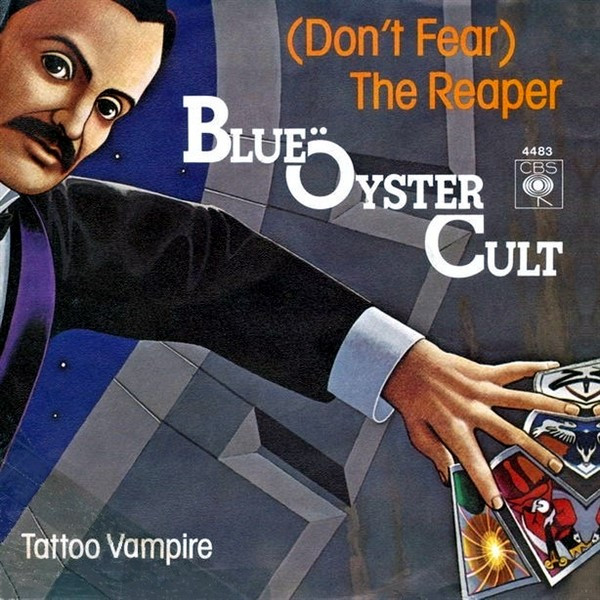
For the second post in a row, I’m writing about a band that I know pretty much nothing about, although unlike Thunderclap Newman, Blue Öyster Cult had a career that spanned decades. Before I started to write this piece, literally the only song of theirs that I could name was our featured song, “(Don’t Fear) The Reaper,” but after reading a little about the band, I realized that I also knew the song “Burning For You,” although I didn’t know that it was by BOC.
If you are still reading this, despite the fact that I’ve basically told you that I’m ignorant about the subject, I appreciate your sticking with me. I’ll try to make it interesting and fun.
Blue Öyster Cult was formed in 1967(!) at Stony Brook University, when critic, producer, music business executive, poet, college professor, and manager Sandy Pearlman heard a jam session and offered to manage the band. For what it is worth, Pearlman seems like a fascinating figure in music, and probably deserves his own post. Originally named Soft White Underbelly, the band’s sound started off psychedelic, but gradually moved toward hard rock. After cycling through a number of pretty bad names, they ended up as Blue Öyster Cult in 1971, derived from one of Pearlman’s poems. The umlaut was added later, but who came up with using the much-imitated diacritic is a matter of dispute.
After recording two albums of material that was not released at the time, except for a small promo release of a single, the band’s self-titled debut album was released in 1972. They released an album a year, with increasing success, until 1976’s Agents of Fortune spawned “Reaper,” the single version of which reached 12 on the Billboard chart and was a fixture on the radio when I was in high school. The song was written and sung by lead guitarist Donald “Buck Dharma” Roeser, and not the band’s main singer, Eric Bloom.
If you’ve made it this far, I’m pretty sure that you know what the song sounds like—you’ve probably heard it a million times. Because it is a great song. I remember someone at WPRB trying to convince me to listen to and play other Blue Öyster Cult songs on the radio, but I never really tried hard to listen to them (honestly, there were so many other artists, old and new, that grabbed my attention in those days).
As Dharma explained,
I felt that I had just achieved some kind of resonance with the psychology of people when I came up with that, I was actually kind of appalled when I first realized that some people were seeing it as an advertisement for suicide or something that was not my intention at all. It is, like, not to be afraid of [death] (as opposed to actively bring it about). It's basically a love song where the love transcends the actual physical existence of the partners.
So, let’s talk about the cowbell.
It was overdubbed on the original recording, and it is credited to drummer Albert Bouchard, although at least two other people have claimed to have played it. Whoever actually did, there’s no question that, as bassist Joe Bouchard (Albert’s brother) recalled, “It really pulled the track together.” And, of course, it became more famous in a 2000 Saturday Night Livesketch, in which Christopher Walken, portraying producer Bruce Dickenson (an actual record producer, but who had nothing to do with the song) demanded “more cowbell.” Apparently, the band loved the sketch. (As do my friends in the Princeton Class of 1983, who have adopted “More Cowbell” as an unofficial motto).
Blue Öyster Cult has continued to tour and release music, with some personnel changes, to the present day, and currently includes both Dharma and Bloom in its lineup.
Me, I bloody loathe Eurovision. Eh, say a whole continent across the pond, Eurovision? OK, the Eurovision Song Contest, to give it the full title, that yearly schmooze through all that's camp and kitsch, all the pop you can possibly bear, the pop that puts the pap in europop. It, like Strictly Come Dancing, a TV show about celebrities learning to dance, is now a very big thing in the UK, as we devolve further and further away from the continent. It hasn't always ben this way: a respectable and somewhat middle of the road song competition, wherein the countries of Europe compete for the honour of the best popular song their best writers can come up with, ballgowns and tuxedos required, an orchestra de rigeur. Pop music, 1950's style, that is. (Mind you, in those days Britain was far less the scourge it is seen by the rest of the continent, even winning from time to time.)
We used to watch it home, en famille, as a child, it's true, so I know all the smash hits from Cliff, Lulu and that ilk. Even good old Clodagh. It went on for hours, as the individual nations, "Good Evening from Helsinki", took ages to deliberate over the selection of tawdry songs. But one year I remember well. 1998. Hosted by the Irish in Dublin, as Johnny Logan had won the previous year, and they put on some craic for the viewers waiting for the scores. A raggle taggle of ne'er-do-wells lurched onstage and played the best song of the night, a prime example of Celtic soul, with a pounding piano, some raw sawbones sax and a rousing chorus. "Don't Go", the singer pleaded and I didn't. I was glued.
Hothouse Flowers were already a thing in their homeland by that time, their debut release having been the then swiftest selling album in Irish chart history. I confess that, back then, I was too busy with Cowboy Junkies and The Men They Couldn't Hang to notice them at first. (Although, with it being also the year of Van working with the Chieftains and Mike Scott relocating to Spiddal for Fisherman's Blues, I should have had my ear closer to Irish turf.) But, once I heard them play that song at Eurovision, the second single from that first album, I was in. The band, based around singer and pianist, Liam Ò'Maonlai and guitarist, Fiachna Ò'Braonàin, two schoolfriends from an Irish speaking school in Dublin, and Peter O'Toole, not that one, a busker they met in the city and busking is how the band started their career.
For the next year or so they were everywhere, no summer music festival complete without their presence. A second album, not as successful but still worthwhile. Despite no shortage of original material, the best known song from it was a cover, a well received version of the Johnny Nash song, I Can See Clearly Now. They also, unbeknownst to many, contributed to and featured on the Indigo Girls' Closer To Fine. (Unbeknownst? Read uncredited!)
A third record and a bruising touring schedule had them pause for breath, in 1994, taking a collective year out. Or that was the plan, that year extending into four, the band shedding manager and additional members, the core three regrouping in 1998 for a different style, incorporating elements both of electronica and effects to an overall more organic and folkie based feel.
Since then, and like many bands, they have never formally dissolved, reconvening sporadically, whilst undertaking separate projects apart, Ò'Maonlai having some solo success, particularly with more traditional fare. O'Toole officially left and later rejoined the band, and all three were present, in 2015, when I caught the band at Birmingham's Symphony Hall, on a tour that took in the UK. Their distinctive tone was all the more characteristic as O'Toole, now playing as much guitar and bouzouki as bass, necessitated the addition of a second bassist, this time on stand up double bass. When both bassists play alongside, the assault is wonderful, as audiences at various festivals this summer, Glastonbury included, were able to affirm. Below is an interesting interview that gives an idea of their modus operandi.
Due to the fact that - on the road - I have no access to my email sent folder, there's still time to put up one more donner und blitzen post. (We'll have the new theme up as soon as we get imminent support from Mr Becker.)
When I first heard "In This Home on Ice" from their first album, I was struck by the relentless drive/energy the band projected. I thought it was on The Late Show that I first saw Clap Your Hands Say Yeah, but YouTube clips of what I think was that Jay Leno show have them playing a different song that night. And I cannot be sure that the year was as far back as 2005/6, when the song first came out.
I also cannot claim rabid following of the band's output since then (despite thoroughly appreciating the driving style I note), so it wasn't until today that I discovered that their 2nd album (of apparently 6) is titled specifically for our theme: Some Loud Thunder.
The Internet tells us that the title song from the album was inspired by front man Alec Ounsworth's wife. All songs from the album were penned by Ounsworth. A look at (a section of) the lyrics is informative and worth your time:
At the end of the quarry
I have dug a hole for all the world to see
A cannonball as big as the ocean could come from the sky and slap us all on the feet
Faced with yet another theme where I have run the clock down to the buzzer, I am going to re-mention a song that I posted about in 2016. That *is* 6 years ago (what?), but - in addition to the time constraints, there are also just too many confluences to let this go.
-#1: an article I came across in the Washington Post last week about how TicketMaster's dynamic pricing algorithms have set some tickets for "man of the people" Bruce Sprinsteen's 2023 tour in the thousands of dollars - the question being "Does the boss know and/or care?
-#2: I am on the road yet again and continuing my somewhat disjointed first summer of retirement
-#3: I'm in New Jersey
-and #4: there have been thunderstorms almost every late afternoon here for the past week (par for the course along the East Coast if memory serves me right)
So, while, back in 2016 the clip I chose was the incredible version with Springsteen joining Melissa Etheridge on stage, here are some other performances of this wonderful musical story
I have always found the idea of the Flaming' Groovies decidedly enticing and enthralling. Even before they ever came into my personal earshot. Long before, in truth. For a while, in the early thru' mid '70s they seemed to have a permanent feature in the inky pages of the hipper than thou UK music press, peddling a mythology that so appealed to my teenage fantasies. My understanding was that they had hopped over the ocean for some such tour or other, thereafter becoming stranded, destined to eke a basic existence in the bars and clubs of London. The truth? A little more prosaic.
Let's start now, as the band have still a footprint, although that may have faded with the death, in 2019, of original member, Ray Loney. Although he had left the band in 1972, he was deemed integral enough to be granted special guest status on the 2019 tour, during which he sustained the fall that precipitated his demise and possibly that of the band. He had kickstarted the band, a gaggle of snotty nosed brats in 1965 San Francisco. With an initial foray into the A Mighty Wind type folk music of that day, the Rolling Stones seemed a far more potent influence, and he linked up with teenaged guitar poser, Cyril Jordan and George Alexander, a school friend told to learn how to play the bass guitar. With Tim Lynch on 3rd guitar, alongside Loney and Jordan, and, eventually, drummer Danny Mihm, image was as much their calling card as their scuzzy and scuffed r'n'b, all chelsea boots, shades and attitude, snarled vocals, spiky guitars and harmonica, propelling an ugly, organic rhythm. Their debut, a home-recorded and released EP, Sneakers, came out in 1968. That got them a deal with Epic records and a somewhat chaotic first long player dropped the following year. The label dropped them and they spent the next year or so on the road, honing their craft and toughing up. Kama Sutra then picked them up, with their second release for that label, Teenage Head, hitting the zeitgeist, if not the charts. No less than Mick Jagger rated it highly, comparisons being made to the Stones own Sticky Fingers. Loney, with his heart more in the rockabilly roots he had always been in thrall to, here jumped ship. Which is roughly where we came in.
I'm Drowning (1968)
Dropped again by their label, and struggling to find another, it was the unlikely haven of the UK that threw them a lifeline, via the British division of United Artists. (The US end of the organisation had not been so enamoured.) With Chris Wilson, another youthful wannabe guitarslinger, drafted in to replace Loney, and whose musical preferences aligned more with Jordan, and a new drummer, it was off to Rockfield studios in Wales they headed. This was 1972. Dave Edmunds, himself having made no small waves in an energetic amalgam of 50s style and 60s melodicism, each with a keen rock rhythmic core, was hired to produce. With hindsight, the product they there produced was probably their finest hour, including, as it did, their perhaps best known song, Shake Some Action, not then able to see the light of day.
Shake Some Action (Remastered 1976 version of 1972 original at Rockfield)
But that promise came to nought, UA not liking so much their direction as they had thought, the deal dissipating into a pair of singles. Flailing around somewhat, the band oscillated, seeking further deals and shedding drummers at a pace. Action was ultimately released, albeit in re-recorded form, on Capitol, itself not without delay, down to internal brouhahas within that company. Meanwhile, record executive Seymour Stein was setting up his new label, Sire. Without it being a major, he had the knack of hitting on zesty acts with counter-cultural and counter-intuitive appeal, garnering a roster of hip acts. Ideal for the Groovies, who found themselves back in Wales and back with Edmunds. No wonder I thought they had never been away, and their 1976 album, of the same name, finally allowed the original 1972 versions of it and a couple of other songs from those sessions, along with some new stuff, to reach the record racks. With Sire then taken over by Warner Brothers, they now had some muscle behind them.
Shake Some Action (later version)
Plain sailing ahead? Well, no, this is the Groovies, remember, never much in favour with Lady Luck.Memebers started coming and going, although the Jordan, Wilson, Alexander trio kept a grip on the baton. Sire too bounced them in 1990, and even the aggressive management style of Elvis Costello manager Jake Riviera couldn't stop them flailing between labels, their image never quite that of the team in charge of their promotion. History tells us their style was power pop, just that nobody quite ever twigged that point at the time. Eventually, in disarray in 1991, with their catalogue scattered across multiple rights holders, they split. Perhaps just as their songs, courtesy appearances on any number of samplers and collections, were becoming better known.
Teenage Head (1971)
Fast forward a further few years. Since 72, Loney had remained in the music business, on occasion with other erstwhile members of the band. When the film, Clueless (1995) included Shake Some Action on the soundtrack, that was impetus enough for him to put the band name back into use, despite having had nothing to do with that particular song or that version of the b(r)and. Coaxing Jordan back into the fold and they were off. Over the next decade there would be sporadic appearances, usually just Loney and whoever he could find, sometimes with Jordan too. With that duo, a UK tour, in 2009, led to a serendipitous hook up with Wilson, himself now a UK resident, and the founder of the not un-Grooviesesque Barracudas, self styled surf-punks. Wilson, relishing in the reconnect, put out a run of solo albums, each recouping as many of the old gang as he could, with core member Alexander and various other ex-Groovies also present, alongside he, Loney and Jordan. One of these was even entitled It's Flamin' Groovy.
Gamblin' Man (2013) - Chris Wilson feat. Ray Loney
By 2012 it seemed logical to go the whole hog, and the band were once again an item, with Jordan, Wilson and Alexander, but Loney again on the bench. 2017 even saw a new album, Fantastic Plastic. To be fair, consistency of both material and line-up was hard to maintain, and it was often a case of whomsoever was available, willing or present, as first Alexander again dropped out and, then, Wilson took a break. This was where Loney again popped up and in, if in a nominal guest role.
End of the World (2017)
Is that it? Uncertain has to be the answer, at leat while Jordan and Wilson survive, arguably equally so Alexander. Wilson is now back home in the States, and has supposedly semi-retired. Jordan? Who knows, but, as the co-writers of their most famous song, never say never.
Here's a live version featuring both of them, from 2013:
(What about the song in the subject, I hear you say? And yes, you are entirely right, it is more a shoehorn to get the Groovies into a post. And, yes, you probably have heard it before, it being a cover of the Who's first 1968 US single release. I found this version on one of the legion of dodgy compilations out there, cobbled together by various offshoots of various record companies, all trying to make a belated buck on the back of the Groovies. It appears on Replays: Groovies Greatest, a double CD I picked up for a couple of quid in a supermarket, and that reawoke my dormant interest in this unluckiest of bands. Here's the original version.)
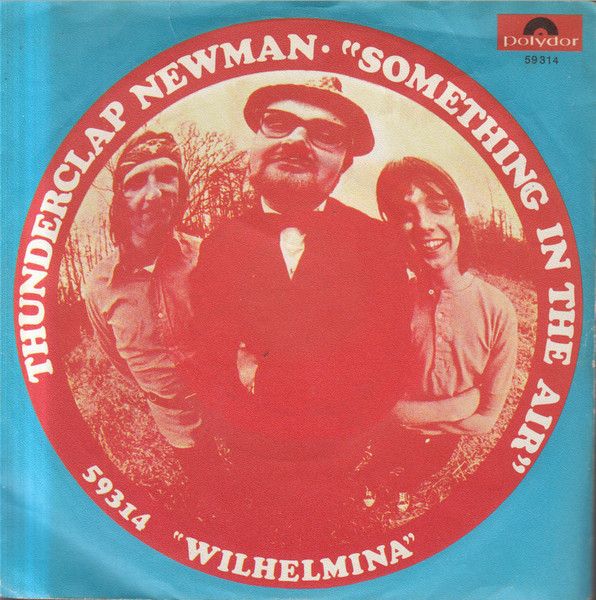
I suggested this theme during a summer thunderstorm, but when I started brainstorming ideas for a post, the band Thunderclap Newman jumped into my brain and wouldn’t leave, so there are no (other) storm references here.
Like most people, I bet, I could name exactly one song by Thunderclap Newman, the wonderful “Something In The Air,” but no others. I’ve mentioned before the “classic rock radio” syndrome (although I’ve never called it that), where bands are remembered only for a handful of songs—or even in this case, for one song—and the rest of their discography gets forgotten. I’m sure you have your favorites, and I’ve even used “Something In The Air” as an example in an earlier post. I also knew that Pete Townshend produced their album, and that he played on it, under a pseudonym, although I didn’t know what that was (Bijou Drains). But that’s pretty much it.
The band was assembled by Townshend in 1969 as a vehicle to support the songwriting and other talents of John “Speedy” Keen, who wrote “Something In The Air.” It was an unlikely crew: Keen, who had been a friend of Townshend's and a driver for the Who, had written “Armenia City in the Sky,” the opening track on The Who Sell Out. Townsend enlisted Andrew “Thunderclap” Newman, a postal worker and piano player, and 15-year-old guitarist Jimmy “No Nickname” McCulloch. They met at Townshend’s home studio, and the four recorded a single, with Townshend producing.
It was a big hit in England, was in a couple of movie soundtracks, and was a minor success in the US, initially. Followup singles were less popular, but the success of “Something” led to the band having to do live performances, augmented by a drummer and bass player who was not Pete Townshend. The band’s album, Hollywood Dream, was released in 1970, to excellent reviews, but only modest sales. After some more touring, the band broke up in the spring of 1971. As Wikipedia noted, “The members of the band had little in common. In a 1972 NME interview, Newman said that he got on with Keen's music but not with Keen personally, while the exact opposite was true with regard to McCulloch.”
Apparently, Hollywood Dreams is now considered a forgotten classic, with Allmusic stating, “So many bands have been hauled out of obscurity to be tagged the greatest secret you've never been told. Thunderclap Newman are one of the few who actually deserve that epithet.” I admit to only sampling a few tracks, and I have trouble getting past Keen’s reedy voice and the excessive music hall influences, but maybe it takes a few solid listens before the genius is revealed. And that’s why I’ve perpetuated the “classic rock radio syndrome” here, focusing on the one song we all know.
McCullough went on to play with John Mayall, Stone the Crows, and, most famously, Wings, but died from heroin-induced cardiac arrest in 1979 at the age of 26. Keen’s solo career went nowhere, and became a producer, helming Johnny Thunders and the Heartbreakers’ debut, L.A.M.F. and Motõrhead’s first album (and appears on one of that band’s live albums) and was a session musician before leaving the music industry. Keen died of a heart attack in 2002 at the age of 56.
Newman recorded an unsuccessful solo album and was a studio musician before retiring until 2002, when he formed the Thunderclap Newman Band, which toured until it disbanded in 2010. Newman formed a new band (which included Pete Townshend’s nephew Josh and the former drummer of Big Country), billed simply as Thunderclap Newman. In 2010 this group released an album, Beyond Hollywood, and toured from 2010-2012, with their last gig at the Isle of Wight Festival.
Newman died in 2016 at the age of 73.
And I’ve made you wait to the end to know why Andy Newman was known as “Thunderclap”—it was a nickname he received in school because of his playing technique.
I've got Spotify, but not seriously. My only "playlist" is the plug-in USB for the car. That said, I would not likely (and haven't) added either of these to that device.
But they are a part of my musical background - and I appreciate them for the foundation they bring (brought, as I grew up). Simon and Garfunkel were how I moved from "folk" to "rock". CSNY solidified that transition.
If I remember correctly, Homeward Bound was a hit in 65-66 when I was in the US during my parents' home leave rotation. I was more or less just starting to 'tune in"/appreciate 'hit" music on AM radio and maybe some TV (Ed Sullivan?) I remember I already had a copy of Parsely,Sage ... and some Kingston Trio- my early forays into "pop" music.
That year - in the US - I began a collection of 45s. Red Rubber Ball... I Fought the Law....
As the 70s rolled ın, my musical awakening/tastes had changed. Among other life-changing events, I had heard <Are You Experienced> and <Electric LadyLand>. Plus Janis Ian. But my LP collection at that tıme also included Smokey Robinson and Aretha. I had also actually seen Blind Faith , Little Stevie Wonder and the Supremes live in Seattle.
At the start of the 70s, I moved out of my parents' house at the age of 15 - to attend boarding school in a foreign land (the US). The Quaker boading school I had chosen was full-on anti-war, and so CSNY fit right in with "our" mindset. The school admin actually pro-actively arranged busses for students to travel to DC to join the protests.
Both <Our House> and <Homeward Bound> are too laid-back to qualify as 70s protest music, but they are emblematic of the times - in my mind. Not least of their qualities that I consider in that aspect are the vocal harmonies.
Again, for me a no-brainer, if again bringing back to these pages a fella I have championed before. But with good reason, like Difford and Tillbrook last week, he has a canon of as quintessentially English songs as has anyone. Which, considering his home has been in the U.S. for most of the last 30 years is quite something. A touch of the "Home thoughts from abroad" tucked away in there, methinks, to which end he resembles that another quintessentially English songwriter, a certain Richard Thompson. (Again, sorry Jordan.....) Whose name will pop up again, here, as you will read, having, at one time, offered gainful employ to Gregson. But first, the song, a glorious song that defines that cliche of home being where you want it to be. It isn't stated whether the protagonist is leaving England or returning there from afar and, indeed, it doesn't matter. The feel of what that home might mean is underlaid by the wonderful brass arrangement, french horn (awkwardly), that mainstay and staple of the brass and silver bands of the north of England, with their rich and evocative tones. Shorthand for old England, the last century, and particularly, the 1950s, as the makers of Hovis bread knew so well.
Gregson has had an interesting time of it, somehow retaining the same slightly bemused air of how did I get here, whether playing to a packed hall with his briefly one to watch band, Any Trouble, to huge acclaim on the folk(ier) circuit in his much loved duo with Christine Collister, or to a handful of punters in his latter-day solo iteration, playing small venues, arts centres and coffee houses. Oddly, it seems in the last he seems most at ease, guaranteed an intent and enthusiastic audience for his vast compendium of songs and self-deprecating patter. But he has seemingly hung up his capos and retired. No huge song and dance about it, a solo farewell tour sufficing. OK, and the special release of no less than 8 albums, month by month, during 2020. Covering the many and varied bases of his output, each of the 8 is themed in way way or another, allowing you to pick and choose the Gregson you prefer. His website explains it better.
RT I mentioned above, this being one of the more inspired moments of the long and illustrious career of the ex-Fairporter. I may even have told this tale before, but, as an early adopter of Clive Gregson and Christine Collister, buying their initial release, a cassette, only available from the pair directly, I had been delighted to learn they would be playing support to Mr Thompson and his band, at a much anticipated pre-Christmas concert at the Birmingham (UK) Odeon, a cinema that doubled as a music venue, and then the best night out in the city. My first capture of Gregson since the demise of Any Trouble, the two put on a great show, captivating the audience with their acoustic charm, however much prompted they were for the more electric oeuvre of the main event. So, imagine my surprise when, after the interval, on trooped the RT band, resplendent with both Gregson and Collister, she on backing vocals and he on second guitar and occasional keyboards. Wow and indeed wow! (No less than Steve Gibbons, also in attendance, was overheard to comment how this wasn't his usual bag, but how astonishing he found it.) I have probably seen Richard Thompson more than about any other performer over my years, as an electric band and also solo, but that band was possibly his strongest, yes, even more so than the arc grade wallop of his current trio. But something happened, at some stage, between Gregson and his employer. After a few years of playing live and appearing on a run of records, their ways seemed to abruptly part. The first I knew of it was a somewhat coruscating review, I think in Q magazine, by Gregson of Thompson's Mirror Blue. Which did not feature him. But the song, 'Put It There, Pal', which was a scathing demolition of an erstwhile friend, on the later You Me Us, may have. In the lyrics. I have always wondered. Collister, by the way, stayed with Richard Thompson, and will often crop up, even now, as a special guest at his shows, perhaps less so now he has married again, and has a wife who can be his vocal foil.)
Rather than linger on this episode, let me concentrate again on the subsequent years, which take in this century. This has seen the rebirth of Any Trouble, on a couple of occasions and a pair of albums, it looking for a time that an annual re-union show might be on the cards. He has toured alone, almost incessantly, or so it seemed, with also a pleasing return to a male/female duo, teaming up for a tour and an album with Liz Simcock. I always hoped it was desire rather than financial necessity that kept him on the road. In truth, probably a bit of both, but, as a Nashville domiciled songwriter for hire, I hope his royalties are, at the least, worthy of his talent.
As I researched this piece I remembered he had also, for a time, been a member of Nanci Griffith's band, as well as, later, a member of Plainsong. Later still he was the musical director for Dennis LaCorriere, the voice of Dr Hook, which makes for a varied set of skills. I haven't mentioned, either, his phenomenal technique on guitar, acoustic and electric, his competitive soloing perhaps another factor in his ejection from Thompson's band. Their extended duelling on Tear Stained Letter was always nothing short of incandescent.
I don't know quite where Gregson's current home is. Or heart for that matter, but hope they are in the same place and that retirement is kind to him. So, thanks, Clive, for all you have given to my pleasure.
Below is the other version of Home, by the CG/CC duo.
This song has nothing to do with baseball, but regular readers of my writing know that I’m a hugeMetsfan. Seriously, though. And like most Mets fans, I hate the Yankees. Not just because of their long history of winning (as compared to the Mets’ shorter, but still long, history of mostly not winning), but because they, and many of their fans, are annoyingly arrogant about it. This season, the Mets appeared to have their strongest team in years, and despite some critical injuries, still are having one of their best seasons.
And the Yankees are having a better season.
So, when the two teams met earlier this week for a brief two game “Subway Series,” the psychological stakes were pretty high (and the competitive stakes for the Mets, who are not running away with their division like the Yankees are, were very high because they need to keep winning to hold off the Braves). The stands were packed with fans of both teams, and you could tell from the TV that CitiField was rocking. Both games were exciting, and while not perfectly played, there were big hits, great fielding, and clutch pitching. And lots of drama.
And the Mets won both games.
So, Yankee(s), Go Home.
The teams will meet again in August for two games in the Bronx, and maybe my excitement will be tempered (although the worst case scenario now is a split of the season series), but when both New York teams are playing well, these games can be fun.
The song, by Richard Thompson, of course has nothing to do with baseball at all. I believe that RT lives in New Jersey these days, so, if he follows local baseball, he could be a Mets or Yankees fan (or possibly even a Phillies fan, depending on where in Jersey he is), but I suspect that he’s more of a football fan (in the British sense of the word). Here’s an article from 2014 in which he claims to have become a Chelsea supporter (boooo!). He also mentions coaching his son, and I actually remember seeing his name in the AYSO coaching database back in my volunteering days.
Instead, the song is an angry attack on American imperialism. Although it was released in 1988 on his excellent album Amnesia, the song is filled with dated references about American soldiers giving out silk stockings and chewing gum, and meeting girls in dance halls, but I don’t think that it is only about World War II, considering its references to burning effigies and gringos. Instead, it’s just a call for Americans to leave other countries alone. For the Yankees to go home.
Neither the first nor, I suspect, the last time for me to feature Squeeze, a band who have given me as much pleasure as many, and continue so to do, over, gulp, their, so far, 48 year, and counting, career. Possibly now more of a heritage act, featuring Glenn Tillbrook and Chris Difford, plus whomsoever available from the rotating door of other members and additional hired hands, they still put on a stocking show, capable of pulling surprises out the hat and even, if not that much in the way of new material, the odd, unexpected and inspired cover version. To be fair, Difford, the deeper voice to Tillbrook's higher and clearer register, often just strumming his rhythm guitar quietly side stage, with a bemused expression on his face, doesn't always bother. No lover of transatlantic plane travel, he has been known to sit out the max of world tours, even to the home of their reliable US fanbase, staying back at home in England. But Tillbrook has always done most the heavy lifting, as the main and lead voice, give or take Cool For Cats and the other episodic showpieces taken by Difford, as well as being a finely inventive lead guitarist. ( I often wonder whether the Difford free band attempt Cool For Cats, with it being one of their more popular songs? I guess I will find out one day.)
No Place like Home (1985): PLAY SECOND
Home was the obvious theme to parade this song, as it is and always has been one of my favourites. Home, and the awkwardnesses often thereof, has been a recurring feature in Difford's lyrics, his writing the epitome of kitchen sink drama, his songs often little soap operas. Cosi Fan Tutti Frutti, the album for which is is drawn, came at a difficult junction for the band. Arguably at the peak of earlier success, maybe just past, the band had broken up following 1982's Sweets From a Stranger, the lure of bangles duo success having proven too strong. And why not? Being the authors of all the songs, why tag along a band to dilute the earning potential, even if the reality was more of internal friction and the "musical differences" that had already seen Jools Holland, very much a live focus of the band, jump ship an album or so before. But Difford/Tillbrook, the duo and the eponymous album, was not the golden egg hoped for, necessitating a return to the golden goose. Squeeze were reborn, and even Jools was back to help celebrate, if but for a while. (It wouldn't be long, sadly, before he again jumped ship, taking avuncular sticksman, Gilson Lavis, off with him to his R&B Orchestra.) In fact, bar the absence of erstwhile bassist, John Bentley, this was nearly the same line up as for Argy Bargy and East Side Story, the twin lodestones of the Squeeze magic, with Keith Wilkinson coming in to replace him, fresh from the Difford-Tillbrook enterprise.
Cosi Fan Tutti Frutti was a muted success as a reincarnation, 32 in the UK album charts. I don't think the US even noticed. The songs were largely a good deal more complicated than previously and struggled with a slightly clunky production, an if in doubt add more textures school of thought. So a lot of kitchen sink. This was very much the house style of producer, Laurie Latham, who also worked for Paul Young, the Stranglers and, notably, Ian Dury: Hit Me With Your Rhythm Stick was one of his. I remember frowning a little at the time I first heard Cosi Fan Tutti Frutti, but the style grew on me. I guess, as someone with always an ear out for the bass guitar, which Latham clearly was too, given the prominence he gave Pino Palladino, JJ Burnel and Norman Watt-Roy elsewhere, I took pleasure in how high in the mix he placed Keith Wilkinson. This was the catnip that made me wonder, with time, whether this is their best album. Or favourite, as we writers mean when we say best. Tillbrook's voice is all over the place in the chorus, as the arrangement lurches about, barely holding together, an orchestra seeming to saw away in a different room and to a different backing track. I love it, and the marriage between it and the preceding track, Last Time Forever, is little short of perfect, the one seeming to lead into the other. (So, a word, play the clip below first, and then the one higher up the page, for full effect.) In fact, it was as these two tracks burst into my ears, more than likely in the car, driving, the result was an epiphany: Squeeze were back, back, back. The fact that the songs that then complete the disc were a little meh mattered not a jot, that was often the Squeeze way, where they tucked the filler and the songs by other than the two front men.
Last Time Forever (1985): PLAY FIRST
I actually got to see this line-up live, at around this time. I think it was at Birmingham's Powerhouse, a venue long gone. Previously the Locarno, it was a tacky dance hall in a the concrete monstrosity that built up around the top of Hurst Street. (Opposite Mr Egg, should anyone familiar be reading or remember, a fabled restaurant, open until the wee hours, and from the wee hours, selling all things egg, usually fried.) It was a terrific show and certainly blew the socks off the show I caught at Birmingham Odeon, a good few years before, between the debut and Cool For Cats, when they were still struggling a bit with image, uncertain if they were punks or new wave, going down the calibre tunesmithery as a result. And, in the times since, whilst good, they have never quite been that good. For good measure, here's how I found them about 6 years ago, within the content of Day 3.
Squeeze have a number of other songs about home in their canon. Indeed, home life, and all the twists and turns associated, form their most prominent feature, Difford possessing almost documentarian skills in evoking the joy and grief of the real grubbiness and shabbiness of suburban family life, of folk making the best of whatever life's allotted. Here's two more from lesser known and latter day releases. They could almost be about the same fella, objective witness and his own subjective interpretation.
The Day I Get Home (1991)
Jolly Comes Home (1993)
Well, I don't know about you, but revising these songs has put me in a truly nostalgic bent. and, like so many other bands I have decided I have seen enough of, I want to see them again. Well, next month I get part of that delivered, with Chris Difford playing a solo show at Wickham Festival, in Hampshire, UK.
I mentioned a few weeks ago that I’d been spending a lot of time preparing for my 40th college reunion, which was a lot of fun. But I want to talk today, a little, about our 25th reunion. At that time, although I was an active alumnus, in the sense that I went to reunions and sporting events and was proud of my college, I did little or no volunteer work for my class or school. In my mind, the reunion just sort of happened, and although I knew that classmates were involved in organizing it, I had no clue as to how much work it takes, and how hard it is to do it. I know now. Trust me, I know now.
When I showed up at our 25th, in addition to receiving a uniquely beautiful garish jacket, I found out that our entertainment for one of the evenings was going to be Southside Johnny and the Asbury Jukes. I had always enjoyed their music, had played them occasionally on the radio during college, and was surprised that they would be appearing at our reunion. Typically, classes hire cover bands of various styles, and to my knowledge it was unusual to have a “name” band, even one whose best years seemed to be behind them, as entertainment. I later discovered that the band was paid for by a wealthy classmate, so that the cost was not passed along to the rest of us, which was nice of him. (This appearance appeared to set off a bit of an arms race among reunions classes, with appearances by acts such as Joan Jett, Duran Duran, Naughty By Nature, some version of the Beach Boys, and others until it seems that the University has discouraged this practice. Also, Phil Lesh played with his son, who was graduating, one year at an off-campus eating club, and Stanley Jordan joined in.)
They were great, if a little loud under our tent, and the picture above is from his performance (and thanks to the classmate who provided me with this and other pictures from that night for our slideshow, because that was 2007, before everyone carried a digital camera in their pocket).
Southside Johnny (John Lyon) and Bruce Springsteen met as young, aspiring musicians in the late 1960s, became close friends, and were both involved in creating the New Jersey/Asbury Park sound. A number of musicians played with both men, including Gary Tallent and Vini Lopez, who went to high school with Lyon, and Steve Van Zandt. But where Springsteen went on to become The Boss, Southside’s success was more limited. There are tons of articles on the Internet discussing their friendship, which continues, but I found one from 2012, an interview with Lyon, that seems to lay it out pretty clearly. According to that article, even in the early days, Lyon knew that among all of the musicians in their group, Springsteen stood out. As Lyon remembered, “He just had that presence where you couldn’t take your eyes off him.” Lyon described the difference between the bands:
“He's got more straight ahead rock 'n' roll roots and I have more rhythm and blues roots. And I have a horn section and he doesn't."
Southside Johnny and the Asbury Jukes’ first album, I Don’t Want to Go Home, is excellent, and the title track, written by Van Zandt (who also produced the record), is maybe the band’s signature track. It’s a blusey, horn-drenched rocker, telling the story of someone who, well, doesn’t want to go home and face the fact that his love has left him. For what it is worth, I’m using a live version of the song, from the 1980 album Reach Up and Touch the Sky, because I like it a little better.
Lyon has continued to perform and record pretty much non-stop with various lineups of the Jukes, solo, and with other side projects, but has generally flown under the radar. But, at least back in 2012, Lyons seemed comfortable with his career. As he said in that interview:
I like where I am. I'm friends with a lot of these guys who have become big rock stars and it's not for me. I treasure my privacy and l like being left alone on the street.
Garry Tallent and I were talking a couple of years ago and realized everybody pretty much got what they wanted. Steven always wanted to be active politically and to play music and now he's an actor as well.
Bruce always wanted to make his music count for people. He carried himself as a person who has something to say, and still does.
And I've always wanted to be as free and odd and eccentric as I wanted, because I'm just naturally that way - and I can. I haven't put on a suit for 40 years.
Back when I was in colllege I had a guitar-playing friend named Dickster whose band focused on Grateful Dead covers. Well before that time, I had already zeroed in on The Dead myself as a band very much worth listening to.
Many years later, as I perused the archive.org repository of live music and noticed that the Grateful Dead were very amenible to free dissemination of their concert recordings (somewhat less so now), my respect for them increased. (16,000 + media here)
There's a lot written about the Dead's <Jack Straw> that I would be theiving to post as original here, but I'll summarize the story:
Apparently Grateful Dead guitarist Bob Weir and lyricist Robert Hunter took the basic story line of Steinbeck's <Of Mice and Men> and worked it over several permutations into a final version that told the story of two outlaws::Shannon and Jack Straw.
The [final] version has Jerry Garcia singing/narrating the role of the outlaw Shannon while Weir relates Jack's version.
David Dodd takes the story on in minute detail with alternative interpretations of who does what to whom (murder, rob, bury...) but what comes across is one of the finest musical stories of both the Grateful Dead's extensive repertoire as well as a song that vies for all-time classic.
Before I read Dodd's in-depth essay, I had simply enjoyed the song on its surface value: somewhat typical Dead: laidback tempo, great collaboration of the band all around. The Dodd article adds so much more depth.
Although my name Begins With A J, I decided not to write (more) about myself, because I do tend to go there on a regular basis. Instead, I hit upon a song that nails the theme at least four times—the title, of course, has two words that start with a J, and it was written by Joe Strummer and Mick Jones, each of whom have a name that begins with the letter. (And Strummer’s real first name is John....) It is a complete coincidence (really) that I’m also writing about a Clash song for a submission for Cover Me that won’t be running for a while, but maybe The Clash are living in my head a little (he said, after promising not to write about himself.)
Being an American, and not being up on all of the British scandals, (although it has been interesting following Boris Johnson’s fall, after many scandals), I had no idea that “Janie Jones” was a real person. Jones (whose real name was a very theme-inappropriate Marion Mitchell) started a career in show business in the late 1950s performing in clubs in London. It was a scene that attracted artists, musicians, performers and members of the aristocracy, and Jones was supported by a sugar daddy known as “The Colonel.”
In 1965, Jones released a song, “Witches Brew,” which hit the British charts (despite being pretty bad), and her house became a center for parties at which, it appears, people actually engaged in sexual acts with people that they were not married to. As Jones said, "It was a kind of private club where they wouldn't be disturbed," explains Janie. "I held parties every two weeks and everybody who was anybody and their friends came. They had a fantastic time. People said they were the greatest parties in London." (This, and other quotes from Jones come from an article written in 1977 by artist/journalist/muse Caroline Coon, who was also briefly The Clash’s manager. The article is behind a paywall, but you might be clever enough to figure out how to read it.)
Future musical releases were unsuccessful, and Jones appeared on TV shows and continued her social life. She moved/fled to Hollywood in the early 1970s, but then became embroiled in a series of scandals, being accused of getting DJs to play songs in exchange for sexual favors, and for running prostitutes. A number of the women testified against Jones, and the wealthy and titled men who attended her parties were allowed anonymity. (There’s a lot more background to these scandals, which you can read about here, here, and here.)
She was convicted and sentenced to seven years in prison and served 4. Jones explained: "I knew too much about too many people and of course, I took the piss out of the Judge in court all the time..." In May, 1977, Jones was released from prison, and turned on the radio, only to hear a song with her name as the title playing.
“Janie Jones,” is one of The Clash’s earliest songs, written not long after Strummer joined the band. Much of it reportedly came to Mick Jones riding on the 31 bus from Harrow Road to Chalk Farm in London (making me wonder how much music would not have been written if people had cell phones to distract them throughout history). It was initially just to be about the boredom of an ordinary working life, but again, reportedly, Jones saw his namesake Janie’s name on a fellow passenger’s newspaper, and her name was added to the song, because it worked, both rhythmically and thematically. Strummer, a fan of Jones, helped to fine tune the lyrics.
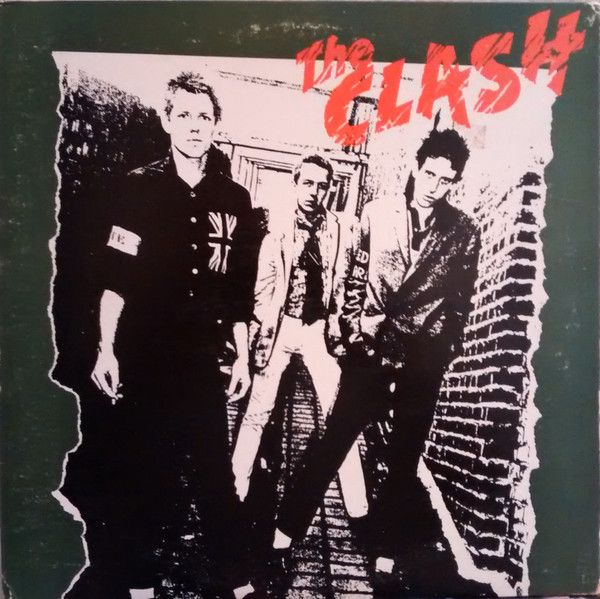
The song was the first track on The Clash’s eponymous debut album (the UK, not the US version), and may well have been played at every single Clash show.
Caroline Coon set up a meeting between Jones and the band, and in 1982, Strummer wrote a song for Jones, “House of the Ju Ju Queen,” which was recorded with The Clash, two members of the Blockheads, and Mel Collins as the backup band. The band was billed as the “Lash,” because for contractual reasons, it couldn’t begin with a C.
I started thinking this post, moving on through the pantheon of female names, and it should be Jezebel, and I might yet get round to that. But, as she would, Jezebel put me in mind of Jesus. And, as a perfectly decent and common Latino name, why not? Except, they all to be about the same guy. I jest; of course they are, that being the challenge, how to pick, say, a couple of handfuls of songs about Jesus that aren't, overtly at least, about, you know, God. It isn't that I'm against a touch of religion, except, yes, actually I am, largely by virtue of the dreadful things folk do in the name of their own personal totem. Like churches and mosques, temples and synagogues, often fantastic buildings that can inspire awe in all but what people do and say inside them. But, heck, they sure done wrote a lot of good songs about the guy.
Jesus In Vegas/Chumbawamba
I like this song, as it is, in turns and at the same time, thoroughly disreputable, arguably sacrilegious and also so fully on message, pertaining most the received wisdoms about the boy from Galilee. If there were a modern day equivalent of the money lenders in the temple, Las Vegas is surely that shrine, and, as the song suggests, what would Jesus do? OK, the song doesn't say, but one feels the business taken care of would not include a ten hour sesh on a one-armed bandit. The middle section then goes off on one, about picket lines, possibly, just possibly, comparing Ricky Tomlinson to the middle member of the holy triad. (Ricky Tomlinson? If you don't know Brookside or The Royle Family, it's complicated, but a good example of this no longer extant band in their prime. Find the studio version on WYSIWYG.
The Sexual Loneliness of Jesus Christ/Jackie Leven Quite a title that one. And quite a statement, implying a fair amount of thought going into the lyric. Leven was just the sort of man to trouble his mind with thinking about how Jesus may have had just the same curses and burdens of any other man, struggling, perhaps, therewith, just as do so many who dedicate their lives to him. Of course, also put together consummately, the mix of his organic and pained vocal, alongside the unstoppable drum machine track that permeate so many of his songs. To be fair, as we lambast the church for the failings of its pastors, tempted and all that, what price the decisions made to base anything on celibacy in the first place? If unfamiliar with the works of Leven, which you shouldn't be, should you come here often, go seek out his work. As the anniversaries of his death come and go, slowly, slowly have tributes and retrospectives come forth.
Tulsa Jesus Freak/Lana del Rey
Well, if you can quite work out what Ms. Del Rey is on about here, you are one up on me, but she doesn't make it easy, anyway, beyond the schtick of tortured humanity, wrestling with demons and, often as not, drowning. If her songs ate to be taken autobiographically, my feeling that they shouldn't, she has encountered every bad choice offered, this song seeming to stack the story of a booze addicted preacher present in her bed/life. To be fair, so good a song and on such a good album, who cares if she dives low to raise us up? OK, I do, I wish her well, but a song of her happier encounters might linger less long in the listener's ear. Or the charts. Get it today and you could be only 24 hours from this track.
They Ain't Makin' Jews Like Jesus/Kinky Friedman
You are never far from a Kinky Friedman song in a Jesus thread, or should never be. Offence is oft caused by the Texas politician, author and singer-songwriter, and this is the song that causes the most. Me, I don't hear anything much more than a fairly reasonable exposé of the rampant hypocrisyy that permeates a good deal of religious bigotry, tempered with a slab of good ol' ignorance in the ear of the beholder. I am not sure I could stomach any full performance, but various snippets and songs hit a soundbite to which I fully subscribe. As neither a Jew nor a practicing Christian, a few more balls wouldn't go amiss in many the turn the other cheek expectations out there. This is a live version. All the ones on youtube are, for some reason. The studio one is better.
Jesus Was a Social Drinker/Chuck Prophet
Let's all wish Chuck, the erstwhile Green On Red man, turned profligate commentator of rootsy music, with a hefty roster of 16 solo albums since the demise of that seminal group, all our best. Earlier this year he discovered he had lymphoma, needing thus to suspend his perma-touring and recording schedule. As of recently he has been given permission to return to the road, pending further and ongoing treatment, but that smacks of cautious good news. A favourite from afar, despite regular visits to Blighty, I had always been planning to see him, if never quite managing it. Let's hope he is back on these shores soon. The song here? Well, I think it is sort of a reminder he may have been a normal guy rather than a paragon, if still a bit less than wild and wooly. I think. Good song, mind. From 2017's Bobby Fuller Died For Your Sins. I am not sure if Bobby Fuller was a social drinker, but his death was mighty weird.
Jesus Christ/Brand New
Quite a challenging song, a dialogue between the "singer" and Jesus, asking somewhat leading questions, possibly/seemingly arising from a guilty conscience. The writer, Jesse Lacey, widely known to have had an orthodox Christian upbringing, has/had always used allegory in his songs, this being one of the more overt. The parent album, The Devil and God Are Raging Inside Me smacks of a troubled soul, struggling with faith. An album especially liked by my wife and step-daughter, not least the existential content, each went abruptly off him and the band, as it became aware he may well have taken advantage of younger female fans, such allegations having become apparent in 2017. Never proven as such, Lacey publicly apologised and admitted to an earlier sex addiction. Which sort of makes latter-day sense of the lyrics. Always tricky to remove the man from his alleged actions, his music from his character, I file under unproven and remorseful. Maybe.
Jesus Hates Faggots/John Grant
In a run of fairly deep and dense lyrics during this piece, this perhaps is the most striking. And the most damning. And, last there be doubt, Grant isn't really saying what the title suggests, merely using the phrase to relay the damning comment made to him by, presumably, his parent/s, in association with his gender preference, sexually speaking. A galling song, my own belief mechanism would suggest such a statement to be as anti-Christian in sentiment as can be, and I really feel for Grant, were that what he were brought up with. His sonorous voce and the chamber synth backing gives a gravitas that magnifies the horror. An artist I have always admired, from his days with the Czars, one can understand why he prefers to remain well away from his homeland. It comes from this album.
I Have Forgiven Jesus/Morrissey
Sort of following on from the last song, Morrissey takes it that much further, forgiving Jesus for the, no doubt, similar words put into his teachings, by those around him in his own childhood. It's good, better than the lumpen and heavy handed epithet the singer is increasingly given by his critics. I was a late adopter of the Smiths, never quite getting them until near the end, similarly put off Morrissey's solo work until recently. With the Smiths I just couldn't see the beauty in the songs, probably until others started covering them. With Morrissey I believed the hounding propaganda of the press, more interested in his difficult behaviour, cancelling shows and tours willy nilly. (Yes, I do still baulk at his possible racist tendencies, let me say.) I find these lyrics entirely believable and they endear the author all the more to me, bloody mindedness and all. It comes from You Are the Quarry, in 2004.
He Ain't Jesus/Carrie Rodriguez
Lightening the mood a little, it will prove helpful to know the next line is "I'm not Mary". Coming from the pen of Chip Taylor, erstwhile part of a performing partnership with Ms Rodriguez, and the writer of many a memorable song, from Wild Thing to Angel of the Morning. A song from her first solo release, it uses Jesus, and, later in the song, Buddha, as marks of the prejudices embraced to maintain the inequality of the sexes. I think her a terrific singer and am delighted she has made a career away from being the second string protegé to Taylor, however mutually advantageous the pairing had been and continues to be. Worry not, I am exhausting of all these Jesus songs, wherein the name is invoked merely as a reason or excuse for bad behaviour. As the next song says better.
Jesus Is Just Alright With Me/Shelagh McDonald
Spoilt, just a little, for choice, for this last selection, I decided against the Byrds and the Doobies, going instead for this oft forgotten footnote in UK folk-rock history. So, who Shelagh McDonald? This article, by Ian A. Anderson sets the scene very well, the A separating him from the other one, stating on a single leg, tootling a flute. I came across her about twenty years ago, enchanted. I recommend her work, however much I admire the other aforementioned heavyweight purveyors of the same song. If you want more, here's the link; it ain't an otherwise easy find. I'll bet, however, nobody is familiar with the original, by Art Reynolds, in 1966, as performed by his singers, which is a glorious piece of soul/gospel. And I can live with the idea. Jesus seems to have been a well meaning fella, and certainly braver than most. Son of God, though? Aren't we all?
Star Maker Machine does not accept music submissions from artists or promoters. However, most of the contributors here do accept submissions for our own blogs, listed below. Please visit our blogs, take the time to listen to what we post, and then feel free to contact us if you feel that your music would be a good fit.