Showing posts with label Bono. Show all posts

Monday, February 8, 2021

Walls/Obstructions: The Walls Came Down


The Call: The Walls Came Down
[purchase

If we were playing a game where I asked you to guess what band I was talking about, and the clues were: This band released their first album in the early 1980s. They wrote powerful rock anthems, with meaningful lyrics, sometimes with Christian themes, and performed them passionately and well, you very well might think I was talking about U2, which went on to become one of the biggest, most successful bands of all time. But of course, you saw the picture and read the title, so you know that I am talking about The Call, which, despite some success, did not go on to become one of the biggest, most successful bands of all time. 

OK, were they as good as U2? Not in my mind. But were they better than a lot of their contemporaries who went on to more fame and fortune? Definitely. 

The Call was formed in 1980 in Santa Cruz, and the leader and lead singer was Michael Been, who was born in Oklahoma, but moved to Chicago after high school. A performer from an early age, Been entered the Illinois state comedy competition (who knew that was a thing), coming in second, ahead of his friend John Belushi. 

After attending the University of Illinois in Chicago and playing in local bands, Been moved to the Los Angeles area in 1972, played in some bands, was a session musician, including on some Christian music albums, before relocating to Santa Cruz and, eventually forming The Call. Their first, self-titled, album was on a major label, was produced by Hugh Padgham, and had the Band’s Garth Hudson on a few tracks. I remember liking it a lot, and playing some tracks from it on WPRB. I wasn’t the only one. Peter Gabriel referred to the band as “the future of American music,” and recruited them to open for him. Gabriel later played on The Call’s third album, as did Simple Minds’ Jim Kerr and Robbie Robertson, and Bono appeared on their 1990 album Red Moon, as did T-Bone Burnett. Martin Scorsese cast Been in The Last Temptation of Christ, as the apostle John. Despite this appreciation, their success was limited and fleeting. 

The second album, Modern Romans, was released after I graduated from college, but I listened to it often, and loved our featured song, “The Walls Came Down.” A stridently anti-war song, it was inspired when Been saw the idealism of the '60s give way to more materialistic and militaristic mindsets of the Reagan years, including the Grenada and Lebanon conflicts. It uses the biblical imagery of Jericho’s walls coming down (without ever mentioning Jericho), and ends, though with the modern sentiment: 

I don't think there are any Russians
And there ain't no Yanks
Just corporate criminals
Playin' with tanks 

The band broke up after releasing Red Moon in 1990, and put out a reunion album in 1997, but that was it. Been played as a sideman for others, including Harry Dean Stanton, but for years acted as a sound engineer for Black Rebel Motorcycle Club, which featured his son, singer and bassist Robert Levon Been. (I haven’t been able to determine whether he was named in honor of two members of The Band, but it certainly makes sense). Been died of a heart attack in 2010, backstage at a music festival in Belgium, where BRMC was appearing. 

So, why did The Call not reach even half of U2’s fame? Were they too strident and angry? Was front man Been’s lack of classical good looks part of the issue? Read some of the tributes to Been and The Call here, and you get a sense that they were one of those bands that should have been bigger, but just never got there, and no one can really explain why.

Wednesday, March 4, 2020

Superstitions: An Cat Dubh/Into The Heart


U2: An Cat Dubh/Into The Heart
[purchase]

When you think about U2’s great debut album, Boy, “An Cat Dubh/Into The Heart” is probably not the first thing that you think of. Maybe, like me, you think about how the album’s unique sound, earnestness and confidence, despite the young age of the band members, was impressive. Or about how “I Will Follow” blew you away. Or maybe you think about how this album launched U2 to the heights of the music business. Is it the best U2 album? No. Is it my favorite U2 album? No. Was it a groundbreaking, remarkable debut? Yes.

Nevertheless, these two joined songs are strong, even if they weren’t my go-to tracks when I played this album on WPRB, which I did many, many times. (The second half, “Into The Heart,” is about childhood, maturity and the loss of innocence.)

“An Cat Dubh” means “The Black Cat” in Irish, and so we have officially satisfied the theme. Now, when I think about the black cat superstition, I think about bad luck. But because I care about you, the Star Maker Machine reader, I do research. Not exhaustive research, but at least a look at Wikipedia (I know…) And it appears that in Celtic lore, black cats can be lucky! Also, according to that article, pirates believed that if a black cat walks towards someone, that person will have bad luck, but if a black cat walks away from someone, then that person will have good luck—although in the UK, the belief is the opposite. So, if you see a black cat, it could be good luck or bad luck, and depending on the way that it walks, it could be good luck or bad luck. Or the opposite. Here’s another article. Look—superstitions aren’t real, so it doesn’t matter, knock on wood.

Meanwhile, the song “An Cat Dubh” is really about sex. It was written about a short relationship that Bono had while separated from his then-girlfriend, now wife Ali. The lyrics of the song, though, are a little more obscure—they are about a cat that kills a blackbird and then sleeps beside it. I guess that’s what we call a metaphor. And you can decide whether the black cat is lucky or not—I’m pretty sure I know how the bird thinks, though.

Saturday, August 31, 2019

Slide: Slide Away


purchase [ other stuff from Muzai Records ] (The label for Sunken Seas)

The <slide> theme was deliberately left nebulous enough to allow for slide guitar entries or some pedal steel, and if you happen to follow my personal tastes, you'll know that my favorite musicians include masters of that style: Ry Cooder, David Lindley, Bonnie Raitt, Lowell George.

As I often do, I scratched out a couple of starting lines heading down that path with the intention of letting the idea stew for a couple of days before settling on one of the slide masters. As we are now at the end of the <Slide> theme calendar, it looks like that one will have to wait for our traditional November <Leftovers> theme because (Baby, Baby, Baby ....) I'm out of time.

Yet, as that idea sat on the desktop, I also began work on a song or two with <Slide> in the title. This would have been last week, some time before the Video Music Awards earlier this week. Pure coincidence, since I had no way of knowing the song list for this week's Video Music Awards.


Bono, Oasis, The Verve, Noel Gallagher ... they've all got songs named <Slide Away>. Bono doing the vocals on a Michael Hutchence composition. And Oasis doing the Noel Gallagher song of the same name. And then Miley Cyrus this past week. And then, as a last minute bonus, yet another Slide Away from a group on Muzai Records called Sunken Seas. There's probably more out there.
Not knowing much of anything about any of these, I guessed that they were likely variations/covers of someone's original.

I can't think of too many other song titles of exactly the same name that are distinctly different songs. At the same time, you could surmise that the conceit behind the song name is obvious enough that any could hit on the title for an original: I guess it shouldn't come as too much of a surprise ... how often does love end in one party slip/sliding off down a different path? Slide Away is a quite natural occurrence - whether as an act IRL or as a title for a creative work. The song stories are all "love songs" in one form or another. The Gallagher/Oasis and the Verve's are more centered on sliding away together; Cyrus' and Hutchence's are more about being away.

The Verve:
 

Oasis:


Hutchence/Bono:


Cyrus:


Sunken Seas:

Tuesday, October 16, 2018

Homecoming: A Sort of Homecoming


U2: A Sort of Homecoming
[purchase]

“A Sort of Homecoming” is a strange song in the U2 canon. It was not a hit, it is rarely played live (more on that, later), but it has long been one of my favorites—and in researching this piece, I found that there are many U2 fans who really love the song. As most of us know, U2 burst upon the scene with their remarkable debut, Boy, in 1980. I remember hearing it and playing it on WPRB, and being struck by the uniqueness of their sound, their earnestness, and their confidence, despite the fact that they were so young. The next album, October, was a minor stumble—not terrible, but somehow not fully realized. Their third album, War, was, start to finish, a great album, filled with anthems and love songs, delivered with passion, bravado, and musical talent. I saw them on that tour, at the Pier in New York, and was blown away. The album was a huge hit, and the album spawned hit singles—it was U2’s breakthrough into mass popularity.

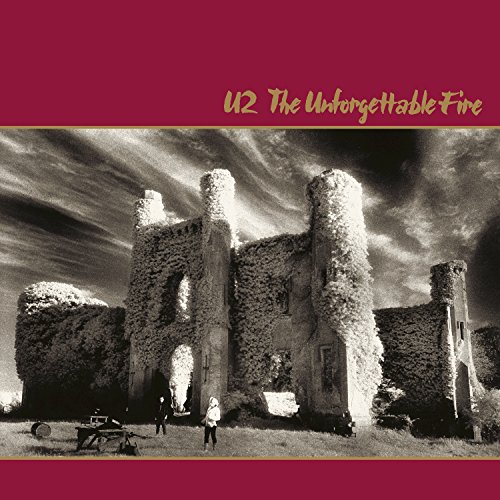
When the band prepared to record its follow up, though, they wanted to move in a different direction, with less bombast and sloganeering. They wanted to work with Brian Eno, who initially was unimpressed by the band, and was planning to fob them off on his engineer, Daniel Lanois. Ultimately, though, Eno was convinced, and he agreed to work with U2 (along with Lanois), and try to create a more mature sound for the band. Not surprisingly, considering the production team, the collaboration resulted in The Unforgettable Fire, which was a more atmospheric and subtle album, but without losing the power of War. The two records are probably my favorite U2 albums (most critics probably go with The Joshua Tree or Achtung, Baby!, and I like them, too, but not as much).

“A Sort of Homecoming” is named after a line by poet Paul Celan, who Bono had been reading, in a speech he delivered on October 20, 1960, about five months after Bono was born, when Celan was awarded the Georg Büchner Prize. In that speech, Ceran discussed Büchner’s work, art, and poetry, and in his view, the circularity of poetry. He went on to say (in German, but I found a translation):

Is it on such paths that poems take us when we think of them? And are these paths only detours, detours from you to you? But they are, among how many others, the paths on which language becomes voice. They are encounters, paths from a voice to a listening You, natural paths, outlines for existence, perhaps, for projecting ourselves into the search for ourselves. . . . A kind of homecoming. 

I’ll bet you never thought that we’d be discussing German literature when you started reading this music blog post, did you? But critics note that this song, and the whole Unforgettable Fire album, show a more Celan-like spiritual doubt as compared to the more certain religious themes of their prior work.

Although I've never read Celan (but have read a little Büchner), what grabbed me about the song was the sense of yearning, both lyrically and musically, that is palpable from its quiet, polyrhythmic opening, to its more intense end. Note that the song is not called just “Homecoming,” it is “A Sort of Homecoming,” so it is fitting that lyrically it works on so many levels—as a personal homecoming to Bono’s native Ireland, as the “homecoming” of his late mother, as a return from war (possibly the violence that was engulfing Ireland at the time), and as a spiritual renewal. And maybe more. Ultimately, though, the song ends with the comforting thought:

Oh don't sorrow, no don't weep 
For tonight, at last 
I am coming home 
I am coming home 

U2 played the song pretty regularly from 1984-1987, as they toured in support of The Unforgettable Fire and its follow-up, The Joshua Tree. There’s an excellent, if more triumphant and less atmospheric, live version from 1984, released on 1985’s EP Wide Awake In America (which is an odd title, because the song was actually recorded at a soundcheck before a show in London, with the crowd noises dubbed in later). But they basically ditched it from their setlist until a performance in 2001 at Slane Castle, in Ireland, which was described on one site as “somewhat shambolic, with Bono struggling to remember the lyrics.”

It made another appearance that year under very unusual circumstances, in Oakland on November 16, 2001. A devoted U2 fan and guitarist, Scott Perretta, had seen U2 pull people out of the audience on occasion to play guitar, and decided to see if he could make that happen for him. He went to the show on November 15 with a sign that said Me + Guitar = People? Knockin? Watchtower? Anything! and planted himself by the stage. U2 security asked if could actually play, because the band got pissed off when poseurs were selected and couldn’t. Assured by Peretta’s friends that he was legit, the security director said that if Bono was interested, he’d give Peretta a signal. But it didn’t happen.

Until the next night, when Peretta could see Bono and the Edge checking out his sign, and they invited him onstage. Peretta started playing the opening to “Homecoming,” which surprised them (since it wasn't on the sign, and wasn't as noted above, a regular part of their set), but they went with it, despite the fact that Bono couldn’t remember the lyrics.  He started ad-libbing about the song, crediting Van Morrison for its inspiration, before turning it into a prayer for the United States, which only two months before had suffered the 9/11 attacks. The crowd went wild. Here’s the audio of the performance. Here’s Peretta’s detailed recollection of the night, and here and here are short audience videos showing him onstage.

As Peretta wrote about that night: “I can die happy now.”

Wednesday, July 25, 2018

Remedies: Cure For AIDS


Dan Bern: Cure For AIDS [purchase]

A couple of weeks ago, my wife and I went to see Karen Finley’s show, Grabbing Pussy (based on her new book, coincidentally published by a company partially owned by a friend). If you have never seen Karen, one of the most famous performance artists ever, you really should. Her shows, which focus on political and social issues, are always thought provoking. She makes connections and observations that are truly astounding. Watching her shows is like trying to drink from a fire hose--her words and ideas come at you in torrents, you can't take it all in, but what you are able to digest is pretty incredible.

We first met Karen years ago when I coached her daughter Violet, a friend of my daughter’s, in soccer, and became friendly with her and her ex-husband Michael. We’ve seen Karen’s shows where she channeled Liza Minnelli, Jackie O and others, but she is always her provocative self. This show, though, as you can tell from its title, was focused on the current groper-in-chief, and others, such as Harvey Weinstein, who used their power to exploit women. Karen also touched on many other things, including something that has profoundly affected her (as we have seen from her other shows and writings), the many friends that she lost over the years to AIDS.

When my wife and I arrived at the theater (early, of course), we were happy to see that Michael was there, and that Violet (who was a pretty good soccer player, and has created her own controversial art) had flown in from LA). Not surprisingly, many people in the crowd knew Karen, Michael, and Violet, and we were introduced to some of them. Joining us at the table was a gentleman who was introduced to us as Michael, another old friend, and it quickly became clear that he had an electric personality. At one point, Karen came out of the dressing room to say hi, and new Michael mentioned that he had seen an exhibition of works by David Wojnarowicz, an artist and AIDS activist who died of the disease in 1992, who had been a friend of theirs.

Our new friend, it turned out, is named Michael Alago, and he has had a fascinating life, some of which we learned chatting with him before the show, and more of it we learned from watching a documentary about him on Netfilx, with the great title, Who The Fuck Is That Guy? Alago, a gay Puerto Rican from Brooklyn was, and is, a music obsessive, whose vast knowledge of, and boundless enthusiasm for, music got him jobs at The Ritz, eventually booking the shows at that legendary venue, and as an A&R representative for Elektra Records, where he signed Metallica and executive produced Nina Simone's last album, and later at Geffen Records.

Michael (and Karen and Michael) and I are roughly the same age, and yet we lived very different lives. While I was obsessing over music in my suburban bedroom, and at WPRB, Alago was going to Max’s Kansas City, CBGB and other clubs, staying out all night, and hanging out with Bono, Johnny Lydon, Springsteen, the Dead Boys, Metallica, and many, many, many others (which you can see in the film). The three of them were part of a world of music, art, photography, and writing that was sadly filled with many people lost to AIDS, addiction, or both. And it struck me that while these losses devastated people like them, to me it was really more of an abstract concept because none of my friends died from these scourges. So, while I can certainly understand it when Karen discusses the effect of this lost generation of her friends, it can't really affect me the same way. But one of the things that great art can do is to allow you to experience feelings outside your personal existence.

Towards the end of Who The Fuck Is That Guy?, the discussion turns to the fact that Alago was HIV positive, and appeared, a number of times, to be on the edge of death, something that he was open about during our discussions at the theater. Now, because current-day Michael is all over the film, we know that he didn’t die then, and the film doesn’t really explain what happened, except to refer to new drug cocktails and regimens, so it is fair to assume that this is what “cured” him. And today, he appears to be in excellent health, he is clean and sober (although he did eat a bunch of french fries during Karen’s show), and he has left the music business to become a photographer.

Another thing that we all discussed before the show (I did mention that we got there early, right?) was the fact that there doesn’t seem to be the same kind of protest music against the president and his awful policies as there had been against the Vietnam War when we were kids. We had heard the CSN&Y song “Ohio” in the car coming into the city, and that song, about the killing of students at Kent State during an antiwar protest, was all over the radio then, and continues to be part of the classic rock canon. And it isn’t the only song like that. While there are anti-Trump songs, they don’t get played as broadly, which in part is a result of the way that the radio and music business has changed, but it also does seem that there just isn’t as much political music being made these days. Alago mentioned that Ministry recently released AmeriKKKant, which is overtly political, but it is unlikely to break into the mainstream. I brought up Dan Bern, about whom I have often written, who writes political songs (and poetry, and paints political pictures), but again, he doesn’t get all that much airplay. The Drive-By Truckers released a pointedly political album at the end of 2016, which got a reasonable amount of positive press, but was not heard much on mainstream media.

Back in 1998, Bern released an album, Fifty Eggs, produced by Ani DiFranco, which had, as one would expect from Bern, a bunch of topical songs (and one beautiful tribute to his sister). One of them was “Cure For AIDS.” At the time, the AIDS epidemic was still rampant—the number of HIV infections, globally, peaked in about 1997, the number of AIDS deaths globally was still rising, as were the number of people living with HIV. But in the US, AIDS deaths, as a result of new drug regimens, had recently begun to plummet. Bern’s song, though, posits a magic bullet-type cure for the disease, which resulted in a six-month long period of sexual excess, ready access to morning after pills, and the end of homophobia. And, most importantly, “Nobody was afraid.” Of course, none of that has happened, but it is certainly better now, when an HIV diagnosis is no longer a sure death sentence, and AIDS is no longer an easy excuse for hatred.

In March, Bern mangled some of the fingers on his left hand, and had surgery, which led to the removal of part of his middle finger, a partial remedy at best. He is out on tour—I know that at one point he had friends play guitar for him, but I’m not sure if he is able to play guitar now (there is at least one pretty famous guitarist who did pretty well without a middle finger on his right hand, though).

Thursday, November 2, 2017

Train: Somewhere Down The Crazy River

 
Robbie Robertson: Somewhere Down The Crazy River
[purchase]

Writing for three different music blogs often results in crossover posts. I wrote about The Jam here recently, and have just submitted a piece about another Jam song to Cover Me. And I recently wrote about The Last Waltz at Another Old Guy, so I guess that I have Robbie Robertson on my mind.

Strangely, though, this song popped into my head, despite the fact that its title doesn’t have the key word in it, and would seem more appropriate for a Boat theme. And yet, it works.  It took Robertson 11 years before he released his first, self-titled, solo album in 1987, and tried to stretch beyond the Americana sounds that he played for so many years with The Band. The album was produced by Daniel Lanois, who was also working with U2 and Peter Gabriel at the same time, and all of the members of U2, as well as Gabriel and members of his band all appear on the album. Lanois’ typically dreamy, atmospheric sound pervades the album.

“Somewhere Down the Crazy River” is an odd song. Robertson only sang lead on two Band songs, and Levon Helm has claimed that Robertson’s mic was off during the Last Waltz concert (and the Internet rumor mill has his mic off during most Band shows), so it is not Robertson’s singing that he will be remembered for. According to Lanois, he secretly recorded Robertson telling a story about hanging out with Levon Helm in Arkansas, fishing with dynamite on hot nights. Because that’s apparently what one does. Meanwhile, Robertson was fiddling with a Suzuki Omnichord, which Lanois also recorded, and he superimposed the storytelling over that, creating the basic tracks for the song. In between the spoken word parts, which have a sort of Tom Waits feel, Robertson sings, perfectly well, I might add:

Catch the blue train
To places never been before
Look for me
Somewhere down the crazy river
Catch the blue train
All the way to Kokomo
You can find me
Somewhere down the crazy river

In each case, the second “Somewhere Down the Crazy River,” is sung, somewhat distorted, by Sam Llanas of The BoDeans. Also featured on the track are fine bass playing and drumming by Tony Levin and Manu Katché, both of  Gabriel’s band (among other things). And Bono is somewhere in the mix, too. It is curiously compelling, which is a tribute to the combination of Robertson’s charismatic, deep voice, his storytelling ability, Lanois’ production and the talent of the musicians. And despite its unconventional sound, it was released as the album’s first single, and was successful.

The video for the song (above), was directed, like The Last Waltz, by Martin Scorsese, whose infatuation with Robertson’s face was still in force. Robertson’s lust interest is played by Maria McKee, at the time the lead singer of the pioneering “cow-punk” band Lone Justice, who were a mid-80s “next big thing” that never happened. Which in itself was sad, since McKee’s voice is incredible (and her solo career never went anywhere, either). She sings on a different song on the album, and one can only assume that she was chosen to be in the video for her looks. When asked about her “acting skills,” McKee was quoted as saying: "... what did I do, I was just being licked by Robbie..."

Saturday, May 30, 2009

Metals: Silver and Gold


Bono & Keith Richards: Silver & Gold

[purchase]

Can I get one more under the wire?

This song originally appeared on the Artists United Against Apartheid album in 1985. It came out the year before I moved to South Africa, and my understanding of apartheid at the time that I heard this record was very limited. I understood it more as a fashionable cause than as a reality.

After arriving in the country, it didn't take long to recognize that apartheid was worthy of worldwide condemnation and protest. Seeing an entire race of people legally and consistently relegated to second class status, and worse, was horrifying to an American kid. Bravo to Little Steven, Bono, The Specials, Keith Richards, and everyone else in the international artistic and political communities who took a stand. Even more props to the people of South Africa, who I've always loved, for making an incredibly difficult change - not without its bumps, bruises, and fractures.

This is not Bono at his best - he's a little too breathy and affected for my taste, but the song is pretty strong, and Richards's guitar is excellent.