












Monday, May 6, 2019
Stones That Roll: Rocks Off
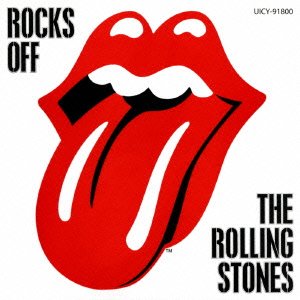
Rolling Stones: Rocks Off
[purchase]
Of all of the Rolling Stones songs out there (and eventually, we had to get to them on this theme, amirite?), I chose this one for a few reasons. First, because of the title, which gives me a double dip at the theme, second, because I happened to hear it on the radio the other day, third, because it is a kick ass song, fourth, because my favorite Rolling Stones lineup included Mick Taylor, and finally, because a horn section makes any song better.
“Rocks Off” is the opening track from Exile on Main Street, an album many consider the Stones’ best work, although apparently Mick Jagger doesn’t agree. The album was recorded mostly in a villa in the south of France in 1971 (with some songs and overdubs recorded later in Los Angeles), and the recording process was notoriously chaotic, as a result of significant indulgences in bad habits and a corresponding lack of diligence on the part of all involved. Thousands of pounds of heroin reportedly made their way to the villa each week, and because of rampant absenteeism, many songs were recorded with session musicians or people playing different instruments than usual.
Whether by intention or not, “Rocks Off” is the perfect opening track for an album that was born from the Stones’ darkest behavior. It rocks like crazy, is terribly recorded, sounds murky, has vocal and instrumental parts that sort of meander in and out of the mix, is sexually suggestive, but also filled with dread and ennui, and it includes one of the great lyrics of all time—and one that seemed to exactly typify the state of mind of the band at the time: “the sunshine bores the daylights out of me.”
Most people don’t live the “rock and roll lifestyle,” and that is probably a good thing. Most of us live pretty conventional lives—we go to school, go to work, raise a family, whatever. Obviously, that’s not true about everyone, and most of us have had our periods of less than stellar behavior, but I think it is fair to say that the levels of debauchery that the Rolling Stones engaged in during the late 60s into the 70s is well beyond the levels that most people experience (or survive). And that is, probably, the reason why we mythologize the substance abusers, the hotel destroyers, the sexual experimenters, and the other outlaws of rock and roll, despite the fact that much of their behavior is, on its face, unworthy of such treatment. I find it hard to imagine, for example, any parent saying to a child, “here’s a guitar and some heroin, and if you work hard at both, someday, you might be as great as Keith Richards.” But we do lionize these performers not only because many of them create the music that we love (although some are just horrible), but also because of the vicarious thrills we get from them. Like why riding a roller coaster is so much fun—you get the excitement of danger, without the actual danger (for the most part).
Would I like to have spent months in a villa in the south of France recording an album with the Rolling Stones? Sure, although lacking any actual musical talent, I’m not sure why I’d be there. But would I have liked to spend the time drugged, debauched, frustrated and exhausted? Definitely not. But am I glad that the Stones, their sidemen, and crew did, so that I could listen to Exile on Main Street? You’re damn right I am.
Posted by Jordan Becker at 8:00 AM View Comments
Labels: Keith Richards, Mick Jagger, Mick Taylor, rolling stones, Stones that Roll, The Rolling Stones
Friday, May 12, 2017
Songs From Movies About Musicians: Gimme Shelter
[purchase 20 Feet From Stardom]
One of the best documentaries about musicians was 2013’s 20 Feet From Stardom, which focused on the background singers that we all have heard, but often don’t recognize by name. Not only was it interesting and filled with great music, the film addresses one of my regular writing subjects—why are some incredibly talented musicians not as famous as they probably should be. 20 Feet discusses many of the reasons—bad advice, bad luck, bad decisions, and even a lack of that certain something that allows you to traverse that 20 feet. I’ve mentioned the film before, in my piece about Darlene Love, who is probably the most famous of the singers featured in the film.
But maybe the most famous vocal discussed in 20 Feet, and for me the most memorable segment, was about Merry Clayton’s searing “rape, murder” vocal part in the Rolling Stones’ “Gimme Shelter.” Luckily, I don’t have to describe the scene in detail, because the video above is a clip from the movie, in which Clayton and Mick Jagger discuss the circumstances. But if you can’t watch the video, in short strokes, Clayton was called out of bed to sing for a band that she hadn’t heard of, was whisked to the studio, pregnant and in her pajamas, to add a searing and unforgettable part to what would become a classic song. Not only are the vocals powerful, the way her voice cracks only adds to the emotional impact of the part. In the video above, you can hear the isolated vocal tracks, which is cool.
Here’s Clayton’s cover of “Gimme Shelter,” featuring occasional Stones sideman Billy Preston:
Clayton, born on Christmas Day (which led to her name) in New Orleans, was a veteran singer by the time the Stones roused her from bed. Her powerful vocals were also featured on, among other songs, Neil Young’s “The Old Laughing Lady,” and Lynyrd Skynrd’s “Sweet Home Alabama” (reluctantly). While Clayton never covered “Sweet Home,” she did do a great, soulful version of the song that it responded to:
In addition, she has had an acting career, both musically—Clayton was the Acid Queen in the first London stage production of The Who’s Tommy—and in movies and TV. More recently, she contributed vocals to albums by G. Love & Special Sauce and one of my least favorite bands, Coldplay.
Unfortunately, in 2014, Clayton was in a serious car accident that led to her having both legs amputated at the knees. She returned to the public eye in 2015, receiving an award from the Jazz Foundation of America (where Keith Richards performed "Gimme Shelter" in her honor with, among others, fellow 20 Feet star Lisa Fischer, who sang the song for years on tour with the Stones) and supporting Obamacare and the MusicCares charity that installed a chairlift in her home, and reportedly is working on a new album.
Posted by Jordan Becker at 10:20 AM View Comments
Labels: Billy Preston, Darlene Love, G. Love and Special Sauce, Keith Richards, Lisa Fischer, lynyrd skynyrd, Merry Clayton, Mick Jagger, Neil Young, songs from movies about musicians, The Rolling Stones, The Who
Tuesday, January 6, 2015
In Memoriam: Bobby Keys and Ian McLagan
[purchase New Barbarians-Buried Alive: Live in Maryland]
Unfortunately, every year, we lose legendary musicians, people whose names are instantly recognizable, and we also lose a larger number of unheralded performers. And then there are guys like the two I’m writing about—Bobby Keys and Ian McLagan—who were sort of famous. If you are reading a music blog, you’ve probably heard of them, but stop someone (of a certain age) on the street, they would be more likely to have heard of, say, Joe Cocker (who died a couple of weeks later and employed both men) than either one of today’s subjects.
It is one of those strange coincidences that these two men, both of whom were associated with the Rolling Stones, died on consecutive days. Keys died on December 2, 2014 of cirrhosis and McLagan died from a stroke on December 3, 2014. And while they were both known as Stones sidemen, and performed together, their lives and careers were quite different.
Bobby Keys was the classic sideman. Born on December 18, 1943 near Slaton, Texas, Keys (which is his real last name) began touring as a sax player when he was 15, playing with, among others, another Texas boy, Buddy Holly. Keys met the Rolling Stones in 1964 and became friendly with Keith Richards, who was born on the very same day. Keys and Richards shared a love of music, mind altering substances and mischief. It was Keys and Richards who notoriously threw a television from a hotel window, and he toured with the band for years. Keys was also the best man at Mick Jagger’s wedding to Bianca. However, he was booted from the band for a while when he, supposedly, filled a bathtub with Dom Perignon, and then drained it. This was a stunt that reportedly annoyed Jagger. However, Keys was back on the team in the late 1980s, and toured with the Stones until recently.
But it was not only his partying personality that made Keys a popular sideman—he could play, adding the iconic sax solos to many tunes, notably “Brown Sugar” and “Can’t You Hear Me Knocking.” He played with innumerable other acts, including Lynyrd Skynyrd, Eric Clapton, Delaney & Bonnie, all of the Beatles and Yoko, Joe Cocker, Warren Zevon, Sheryl Crow, Jim Carroll, Barbra Streisand, Carly Simon, John Hiatt, Graham Nash, and on and on. He was part of Lennon’s “Lost Weekend,” appeared in the film Mad Dogs and Englishmen, and while he released two solo albums, he will always be best remembered as a hired gun—if one of the top guns. Unfortunately, it appears that his hard living finally did him in, and he passed away on December 2 in Franklin, Tennessee.
Ian McLagan was born on May 12, 1945, 16 years to the day before me, in Hounslow, England. A gifted keyboard player, McLagan bounced through a few bands, including one fronted by future King Crimson/Bad Company member Boz Burrell, until he was hired in 1965 for a pittance to replace the keyboard player in a band called the Small Faces. After finishing his probationary period, he joined the band, and took a pay cut. Along with Steve Marriott, Ronnie Lane, and Kenney Jones, McLagan created a body of music that still stands up today. And after Marriott left the band, and Rod Stewart and Ron Wood joined the reconstituted Faces, who reached further heights of popularity before breaking up. McLagan participated in various full and partial Small Faces and Faces reunions over the years. Although initially he left the songwriting chores to others, ultimately, McLagan wrote a number of classics, including “Stay With Me.”
In the mid-1970s, McLagan agreed to join Wood and record and tour with the Stones, apparently turning down the chance to join Kenney Jones in the Who. Tough choice. With the Stones, he contributed, among other things, the piano part to “Miss You.” He also appeared with or recorded with Chuck Berry, Rod Stewart, Bob Dylan, Jackson Browne, Bonnie Raitt, Paul Westerberg, Bruce Springsteen, Billy Bragg, Frank Black, John Hiatt, and many others, and recently had significant involvement in Lucinda Williams’ latest album, Down Where the Spirit Meets the Bone.
Unlike Keys, though, McLagan enjoyed being in or leading a band, rather than being a session musician. He formed the Bump Band, starting in the late 1970s, and he released a number of solo albums as well as recording with the Empty Hearts featuring Eliot Easton of the Cars and Clem Burke of Blondie. He was scheduled to be a part of Nick Lowe’s Quality Holiday Revue along with Los Straitjackets when he was felled by a stroke, in Austin, where he had lived for two decades, and had become an integral part of the local music scene.
The video above is one of a number of crappy videos that are available on YouTube of performances from a 1979 tour by The New Barbarians, a band featuring Keith Richards, Ron Wood, Stanley Clarke on bass, drummer Joseph “Zigaboo” Modeliste of The Meters, Keys and McLagan. Through the fuzz, you can see both of our subjects playing their hearts out and getting a bit of the glory (while the spotlight remains mostly on Richards and Wood).
The passing of Keys and McLagan, though, raises one significant question—how the hell is Keith Richards still alive?
Posted by Jordan Becker at 8:00 AM View Comments
Labels: Bobby Keys, Ian McLagan, In Memoriam, Keith Richards, Mick Jagger, New Barbarians, rolling stones, Ron Wood, The Faces, The Small Faces
Sunday, June 23, 2013
The Other Guy: Keith Richards
[purchase]
As an additional thought, if you consider the relationship between gold and silver/Jagger and Richards, I wonder if there is more to the choice of lead vocalist for this song than meets the eye.
Posted by KKafa at 12:30 AM View Comments
Labels: Keith Richards, The Other Guy, You Got the Silver
Saturday, May 30, 2009
Metals: Silver and Gold
Bono & Keith Richards: Silver & Gold
[purchase]
Can I get one more under the wire?
This song originally appeared on the Artists United Against Apartheid album in 1985. It came out the year before I moved to South Africa, and my understanding of apartheid at the time that I heard this record was very limited. I understood it more as a fashionable cause than as a reality.
After arriving in the country, it didn't take long to recognize that apartheid was worthy of worldwide condemnation and protest. Seeing an entire race of people legally and consistently relegated to second class status, and worse, was horrifying to an American kid. Bravo to Little Steven, Bono, The Specials, Keith Richards, and everyone else in the international artistic and political communities who took a stand. Even more props to the people of South Africa, who I've always loved, for making an incredibly difficult change - not without its bumps, bruises, and fractures.
This is not Bono at his best - he's a little too breathy and affected for my taste, but the song is pretty strong, and Richards's guitar is excellent.
Posted by bwrice at 10:51 PM View Comments
Labels: Bono, Keith Richards, Metals

