Showing posts with label Canned Heat. Show all posts

Thursday, October 28, 2021

ROCK HALL SNUBS: JETHRO TULL

Still puzzling over the R&RHoF shindig and the hotness under the collar as to who and who hasn't been elected. I even read a little about the electoral college that issues the shortlist for the great and good to then dissect. And, yeah, disquiet and discomfort as to how and why the great and good are deemed so, and how much they have, or not, a clue. It sort of wants me wishing I had paid attention during the brief life of the UK equivalent, that you missed reading about here. I would love to be railing and rallying at those nameless visigoths, as they revive the career of some long forgotten bar band from Birmingham with one sweep of their Sharpies, simultaneously forgetting the contribution of some once mighty dinosaur, now deemed uncool and forgettable. There is a terrific site I found, dedicated to this very state of affairs in the US hall: www.notinhalloffame.com/rock-and-roll . The name sort of gives it away, but it gives an exhaustive list, with commentary, of those forsaken and left to moulder in the roadway. I shall ignore how many in the first few pages of the list seem to come from as far away from rock as I can see; Eminem, Willie Nelson and John Coltrane, FFS, irrespective of their undoubted capabilities elsewhere, commending them otherwise on the thoroughness of their exhortations. (Plus, for those inclined, they do the same for other halls of fame, such as Country, where Willie surely must be and belongs, Hockey, Baseball and Bubble Gum. (OK, not bubble gum.) And where I learnt what a chum of mine calls The Mighty Tull have many times been proposed and never yet inducted. Which seems, um, odd.

The "real" Jethro Tull, agriculturist and doyen of crop rotation, 1664 - 1741

Let's get this straight, I am not the greatest fan of this band, I only have a few of their albums, a phrase that must instantly mark me down as a music nerd. But, for any lack of overt love, I have a ton of admiration: you don't get to be one of the biggest draws, both sides of the atlantic, have 11 discs go at least gold, 13 if you include live outings, based on luck and timing alone. Especially when that timing covers from 1968 to today. (Yup, you may have thought the band dead, but a bun is in the oven for next year, so hold your (heavy) horses, I'll get to that.)

Starting off as just another blues rock band at the tail end of the 60s, the UK being an incredible fertile breeding ground for that style at that time, exporting container loads of coal from their british roots to Chicago, Memphis and all the other homes of the blues. But they had a secret weapon, in the maverick flute wielding frontman, Ian Anderson, a manic scarecrow, wobbling on one leg in the spotlight, all billowing hair and beard, gurning, grimacing and gesticulating like the man possessed he seemed to be. Plus he could play, tootling barrages of notes out his instrument, hardly, Canned Heat notwithstanding, a usual instrument for the genre. Or, indeed, in rock music then much at all. Which isn't then to say he didn't have a crack band behind him, with Mick Abrahams amongst the more accomplished guitar wranglers of the day. But that first iteration didn't break much beyond the clubs and halls of London, Abrahams seeking a more authentic delta plough to furrow, whilst the wildly ambitious Anderson had folk, classical and prog-rock ideas aplenty in his head. Abrahams went his separate way, only ever achieving moderate acclaim with Blodwyn Pig and his eponymously named band, defiantly and definitively blues, blues, blues. And not half bad. The Tull, meanwhile, regrouped, coming to the attention of a 12 year old boy on the south coast of England, who found the single below right up his street, the first he ever bought with his own money. Martin Barre was now on guitar and would remain as Anderson's right hand man for many a long year.

Living in the Past 1969

Over the next few years they remained, for me, a singles band, with an unblemished run over the next decade. The albums, sort of, passed me by, but I couldn't help but hold a soft spot for 1971's 'Aqualung', a favourite amongst my school chums, not least for the dirty old man persona of the title track, the image of which seemed to fit so well the streetsleeping appearance of Anderson at the time. To be fair, it is only that and 'Locomotive Breath' I can readily bring to mind from then, but I will defend the right to call it a classic. I sort of lost interest in the albums thereafter, having other infatuations to delve into, but they remained good guys. Later still, as Dave Pegg, from and contemporaneously in Fairport Convention, a band I really did adore, joined, my appreciation from afar went up a further notch, even if I couldn't hum you a single tune.

Aqualung 1971

Throughout the last century they were just always there, one of THE bands, guaranteed to sell out a tour and to be making waves both sides of the ocean. Members came and went, dozens of members, actually, came and went. Strangely, I don't think I ever caught them live, bar Anderson, Barre and sometime drummer Doane Perry appearing at a Cropredy Festival. This yearly shindig, hosted and curated by Fairport, always ends in a Saturday night finale, where the band and members past and present parade for up to four hours, guest called in to add to the glamour. Robert Plant is one such regular guest, Ian Anderson another, and, that year, the augmented Fairport nailed a triumphant 'Locomotive Breath'. (Sadly I can't find a clip....)

A bizarre star of affairs arose in 1989, with the Grammys inaugurating a recognition of hard rock and/or metal, with Metallica pump primed for the award. Some consternation, thus, when Tull won this, their most recent material neither heavy nor metal, if anything, having a tang more of Dire Straits. But it kept them in the spotlight.

Crest of a Knave 1987

Into this century and new material has slowed right down. Indeed, in 2011/2, the b(r)and was officially put to bed and the band broke up. The b(r)and has been kept alive by each of the original discs of their heyday being released, in glorious and garish boxsets, remixed, with added oceans of offcuts and demos. Ian Anderson has toured and made records, in his own name, but tell that to the promoters, as the words Jethro Tull invariably appear, in as big or bigger fonts than does his own name, in th publicity. Next years 'The Zealot Gene' bows to the inevitable and revives the Jethro Tull name. Meanwhile, in a parallel universe, Martin Barre, after his decades of service, has found himself a useful career, where he too can tour, if again finding the JT words always getting equal billing.

Spiral 1999

The above is the opening track from their last full album of new material, 'J-Tull Dot Com', in 1999, but a Christmas selection of traditional and rejigged old material did appear later. Anderson has said he has no interest in the artifice of the Hall of Fame. I say give Jethro Tull a place and see if he changes his tune.

Discography.

Sunday, September 12, 2021

WOODWINDS: FLUTE LOOPS

 Flutes tend to get a lot of stick these days, whether hewn from a stick or crafted in the finest bamboo, brass or even bone. They just aren't seen as cool anymore. Even in folk music, for long the mainstay of this edge blown aerophone(!), there is a danger it is being surreptitiously supplanted by the low whistle, that new usurper on the scene. (The low whistle, whilst based on the simple "penny" instrument, probably only became an entity when Finbar Furey, the Irish Uillean piper asked Brian Overton to fashion a "big" whistle from, legend has it, a piece of surplus plumbing. However, culture vultures, it likely existed before in the format of a fipple flute, an instrument that then later lost favour.)

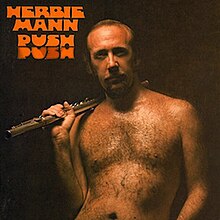
But the flute isn't yet history and has life beyond ridicule, however hard Ron Burgundy has tried. Jazz flautists have a small yet important page in the history of that music, if often more an extra trick up the sleeve of saxophonists, than necessarily the main deal. Herbie Mann came closest to making the jazz flute cool, if also, by that dreadful album cover, near inventing the parody above. In the 1970s he had even enough crossover appeal to be seen as cool to have a copy of any other of his works under your arm. I especially liked Memphis Underground, from 1969. Other notable jazzers with a taste for tooting, sorry, fluting, as many many jazz musicians allegedly had a penchant for tooting, would include Eric Dolphy and Rahsaan Roland Kirk, who could switch effortlessly between any number of saxes and flute. He could play more than one at a time, but am uncertain if that were ever possible between saxophone and flute. And, yes, that was nose flute at one stage in that clip, sparing having to mention it later.....

Rock flute had a very narrow window, beginning and near ending with Ian Anderson's manic persona in Jethro Tull. But, ahead of their folk-prog prime, they were a more straight ahead blues band, and the blues-rock scene was littered with flute solos. If were a band I was particularly fond of, with their vibe a mix and match of jazz, blues, rock and r'n'b. Both their reedmen, Dick Morrissey and Dave Quincy, were adept on the instrument. Of course, prog rock was awash with flute, much appreciated in whimsical and pastoral interludes in sidelong epics about dragons and princesses. Early Genesis were enthusiasts, as Peter Gabriel could play a bit, something he has kept distinctly quite about since going solo.


Folk flute has had two distinct rotes, in trad. inspired music and in fey singer-songwriter, of which the former has tended to date better. The list of Irish and Scottish bands able to whip out a flute, amongst all the all other panoply of pipes and fiddles are legion, with the name Michael McGoldrick perhaps standing out. Initially with Capercaillie, he has a successful solo career alongside working with and in Mark Knopfler's band, as well as in the house band for Transatlantic Sessions. His name, and that of Brian Finnegan, are two names that can act as a guarantee of classy playing, should you ever spot either on a CD  cover. Before Capercaillie, they actually played together, in the same band, Flook, along with a third flautist, Sarah Allen. Here's an old clip, followed by some early John Martyn, who was certainly anything other than fey, even if this example may be. The flute is by estimable jazz parper Harold McNair, often alongside Donovan in his early recordings also.


Country flute? Blues flute? Well, not a lot. I suppose Marshall Tucker Band might (just) about fulfil the first and Canned Heat, arguably, the latter, but that isn't all there is to this to this piece as I have to include a nod to more modern forms of music. A clip or two, even, from this century might help give some semblance of my not being some ancient dinosaur, even if I am. So, with a leap and a bound it is, oh, still only 1994, but the Prodigy, hey, kids, Granpa's gone all hepcat, daddio. Actually before they hit their chart topping prime, I remember hearing this and being absolutely astonished, and unable to get the ear worm flute melody out my head. I still can't.

Is 2010 near enough for you? Ever heard of Shpongle? I love 'em, that weird hinterland of dance and world musics, bundleed up into a somewhat lysergic trance like state, not that I have any experience of that particular trip, and placed into the somewhat niche genre of psybient: psychedelic ambient. Whilst it is true that one of the duo, flautist Raja Ram, actually kickstarted his career as far back as the late 60s, as a member of Ladbroke Grove raga-rock stoners, Quintessence, his, um, diet, has clearly done little harm, and he continues to ply his chosen path with no little wizardry. Whilst Ram is still upright, flute still has a place.

Too much here to pint you to all their product, so let's just go here, for something completely different. Keep them flutes a tooting!!