









Showing posts with label Robert Plant. Show all posts

Friday, December 16, 2022

Celebrate: Celebration Day

Led Zeppelin: Celebration Day
[purchase

One of the joys of having written for Star Maker Machine since 2011 is that one week I can write about Lene Lovich, a quirky singer with niche recognition, and the next week I can discuss Led Zeppelin, one of the most successful, well-known and mighty rock bands of all time. (In fact, my first ever piece, a holiday post about The Roches’ version of “Deck The Halls,” was published as a guest post by former moderator Darius almost exactly 11 years ago, using my former pseudonym). 

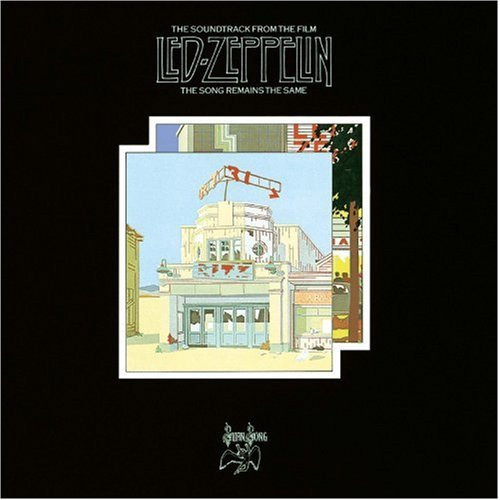
In 2014, I wrote a piece for a Thanksgiving-related “Pilgrims and Immigrants” theme about Led Zep’s “Immigrant Song,” and mentioned how seeing the oft-maligned (including by members of the band) movie, The Song Remains The Same, turned me from a Zeppelin skeptic to a fan, based mostly on the power of the live performances in the movie (which, I know, weren’t their best work. Still.....) And one of the songs that caused this change was the live version of “Celebration Day,” which was from the band’s 1973 shows at Madison Square Garden. It was on the soundtrack album, but not in the movie, but I saw the movie once and played the soundtrack many, many times. Certainly now, it’s all kind of mushed together in my mind. That’s why I’ve linked to the soundtrack album, and not Led Zeppelin III, where the song originally appeared. 

Another thing to celebrate about writing for SMM is how much I’ve learned about music because I (usually) do research on the music and bands that I write about. Not research like I did for my college thesis or for a legal brief, but I do read stuff. And one of the things that I learned about “Celebration Day,” is that Robert Plant’s lyrics were inspired by his first impressions of New York City. Which immediately makes the song better, in my mind. Just a brief aside—I worked in New York City for most of my career, and my last office was near Rockefeller Center, so that at this time of year, I usually walked by the big tree, dodging annoying tourists. And after doing that for years, you can get jaded. But for the last almost 10 years, I’ve been working in Westchester County, only occasionally going into the city for work, and I kind of miss it. The other night, I went to a holiday party for my old firm, in Rockefeller Center, and walked by the big tree again, dodging happy tourists, and it was fun. It is a beautiful tree, and everyone seemed so excited to see it and be near it and take pictures of it. And I did, too. 


OK, back to “Celebration Day.” Not knowing that the song was about New York, the part that jumped out at me is when Plant sings, 

My, my, my, I'm so happy 
I'm gonna join the band 
We gonna dance and sing in celebration 
We are in the promised land 

I took that to mean that the song was about Plant’s joy in being in the band (but not the Band of Joy), and maybe that’s part of it. 

Then there’s the music. The great producer Rick Rubin said that the song “feels like a freight train, even though it’s not one of their heavier songs.” Not surprisingly, Rubin is right. Jimmy Page’s guitar is incredible, John Paul Jones’ bass is amazing, and John Bonham was his usual brilliant on the drums. 

So, most rock lovers know that Led Zeppelin basically disbanded after the Bonham’s death in 1980. Although there were occasional reunions of the survivors after that, the last one was in 2007, at a concert celebrating the late Ahmet Ertegun, who was the head of Atlantic Records, Led Zep’s label (and my ultimate boss for the summer that I worked at Atlantic). That performance, which featured Jason Bonham on drums, was filmed and recorded, and both the movie and soundtrack album were released (but not until 2012) with the title Celebration Day, although our featured song doesn’t actually appear.

Thursday, October 28, 2021

ROCK HALL SNUBS: JETHRO TULL

Still puzzling over the R&RHoF shindig and the hotness under the collar as to who and who hasn't been elected. I even read a little about the electoral college that issues the shortlist for the great and good to then dissect. And, yeah, disquiet and discomfort as to how and why the great and good are deemed so, and how much they have, or not, a clue. It sort of wants me wishing I had paid attention during the brief life of the UK equivalent, that you missed reading about here. I would love to be railing and rallying at those nameless visigoths, as they revive the career of some long forgotten bar band from Birmingham with one sweep of their Sharpies, simultaneously forgetting the contribution of some once mighty dinosaur, now deemed uncool and forgettable. There is a terrific site I found, dedicated to this very state of affairs in the US hall: www.notinhalloffame.com/rock-and-roll . The name sort of gives it away, but it gives an exhaustive list, with commentary, of those forsaken and left to moulder in the roadway. I shall ignore how many in the first few pages of the list seem to come from as far away from rock as I can see; Eminem, Willie Nelson and John Coltrane, FFS, irrespective of their undoubted capabilities elsewhere, commending them otherwise on the thoroughness of their exhortations. (Plus, for those inclined, they do the same for other halls of fame, such as Country, where Willie surely must be and belongs, Hockey, Baseball and Bubble Gum. (OK, not bubble gum.) And where I learnt what a chum of mine calls The Mighty Tull have many times been proposed and never yet inducted. Which seems, um, odd.

The "real" Jethro Tull, agriculturist and doyen of crop rotation, 1664 - 1741

Let's get this straight, I am not the greatest fan of this band, I only have a few of their albums, a phrase that must instantly mark me down as a music nerd. But, for any lack of overt love, I have a ton of admiration: you don't get to be one of the biggest draws, both sides of the atlantic, have 11 discs go at least gold, 13 if you include live outings, based on luck and timing alone. Especially when that timing covers from 1968 to today. (Yup, you may have thought the band dead, but a bun is in the oven for next year, so hold your (heavy) horses, I'll get to that.)

Starting off as just another blues rock band at the tail end of the 60s, the UK being an incredible fertile breeding ground for that style at that time, exporting container loads of coal from their british roots to Chicago, Memphis and all the other homes of the blues. But they had a secret weapon, in the maverick flute wielding frontman, Ian Anderson, a manic scarecrow, wobbling on one leg in the spotlight, all billowing hair and beard, gurning, grimacing and gesticulating like the man possessed he seemed to be. Plus he could play, tootling barrages of notes out his instrument, hardly, Canned Heat notwithstanding, a usual instrument for the genre. Or, indeed, in rock music then much at all. Which isn't then to say he didn't have a crack band behind him, with Mick Abrahams amongst the more accomplished guitar wranglers of the day. But that first iteration didn't break much beyond the clubs and halls of London, Abrahams seeking a more authentic delta plough to furrow, whilst the wildly ambitious Anderson had folk, classical and prog-rock ideas aplenty in his head. Abrahams went his separate way, only ever achieving moderate acclaim with Blodwyn Pig and his eponymously named band, defiantly and definitively blues, blues, blues. And not half bad. The Tull, meanwhile, regrouped, coming to the attention of a 12 year old boy on the south coast of England, who found the single below right up his street, the first he ever bought with his own money. Martin Barre was now on guitar and would remain as Anderson's right hand man for many a long year.

Living in the Past 1969

Over the next few years they remained, for me, a singles band, with an unblemished run over the next decade. The albums, sort of, passed me by, but I couldn't help but hold a soft spot for 1971's 'Aqualung', a favourite amongst my school chums, not least for the dirty old man persona of the title track, the image of which seemed to fit so well the streetsleeping appearance of Anderson at the time. To be fair, it is only that and 'Locomotive Breath' I can readily bring to mind from then, but I will defend the right to call it a classic. I sort of lost interest in the albums thereafter, having other infatuations to delve into, but they remained good guys. Later still, as Dave Pegg, from and contemporaneously in Fairport Convention, a band I really did adore, joined, my appreciation from afar went up a further notch, even if I couldn't hum you a single tune.

Aqualung 1971

Throughout the last century they were just always there, one of THE bands, guaranteed to sell out a tour and to be making waves both sides of the ocean. Members came and went, dozens of members, actually, came and went. Strangely, I don't think I ever caught them live, bar Anderson, Barre and sometime drummer Doane Perry appearing at a Cropredy Festival. This yearly shindig, hosted and curated by Fairport, always ends in a Saturday night finale, where the band and members past and present parade for up to four hours, guest called in to add to the glamour. Robert Plant is one such regular guest, Ian Anderson another, and, that year, the augmented Fairport nailed a triumphant 'Locomotive Breath'. (Sadly I can't find a clip....)

A bizarre star of affairs arose in 1989, with the Grammys inaugurating a recognition of hard rock and/or metal, with Metallica pump primed for the award. Some consternation, thus, when Tull won this, their most recent material neither heavy nor metal, if anything, having a tang more of Dire Straits. But it kept them in the spotlight.

Crest of a Knave 1987

Into this century and new material has slowed right down. Indeed, in 2011/2, the b(r)and was officially put to bed and the band broke up. The b(r)and has been kept alive by each of the original discs of their heyday being released, in glorious and garish boxsets, remixed, with added oceans of offcuts and demos. Ian Anderson has toured and made records, in his own name, but tell that to the promoters, as the words Jethro Tull invariably appear, in as big or bigger fonts than does his own name, in th publicity. Next years 'The Zealot Gene' bows to the inevitable and revives the Jethro Tull name. Meanwhile, in a parallel universe, Martin Barre, after his decades of service, has found himself a useful career, where he too can tour, if again finding the JT words always getting equal billing.

Spiral 1999

The above is the opening track from their last full album of new material, 'J-Tull Dot Com', in 1999, but a Christmas selection of traditional and rejigged old material did appear later. Anderson has said he has no interest in the artifice of the Hall of Fame. I say give Jethro Tull a place and see if he changes his tune.

Discography.

Thursday, July 22, 2021

1971: ALISON KRAUSS

Right, Seuras, some positive stuff today, if you will, put a spin into a 1971 we can celebrate rather than bemoan. And, you know, that much I think I can do, having the very idea for a cracker! Less who died in '71, more who was born! Good, eh? So then, musicians born 1971, Siri, what you got for me? Oh, dear. Oh, very dear, with apologies to those who appreciate the sounds of rap, it seeming a very good year for those wrapped in that flavour, with legions of artists emerging from the wombs of their mothers that year, if seldom of the same name. Mrs Dogg? As well as, dauntingly, a fair few who haven't made it this far. Here's one I covered previously. But, there is one artist I am only too keen to showcase, 49 until today. So, happy birthday, Alison Krauss!!

The above song was the first I ever heard by this superlative performer, remembering both the Foundations original and the one by Clive Gregson's Any Trouble, that being sufficient to have me order the excellent early retrospective collection of Ms. Krauss, 'Now That I've Found You; a Collection'. From then I was well near hooked, as she pumped out solo albums and Union Station albums, the alternation being written into her contract, as well as popping up on any number of side projects and guest appearances. 'O, Brother Can You Spare a Dime'? Of course. Tributes to the Louvin Brothers, the Everly Brothers and, FFS, the Moody Blues? Check. Soundtracks? Come on down, 'Bambi II' and, perhaps a tad more memorably, 'Cold Mountain'. Couping, along the way 17 Grammy awards, the highest of any female performer, the 4th highest of any sex. All this despite a bout with dysphonia, that pervasive condition usually only affecting the partners of Fairport Convention players, perhaps brought on by her most widely known work, 2007's 'Raising Sand', that being alongside Robert Plant, known to like a bit of Richard Thompson.

OK, that was a pretty contrived way to draw the smoke toward 'Raising Sand', especially as it was the Krauss free "follow-up", with Patti Griffin,  that included a RT song, but, any which way. this was an astonishing record, bringing her to the attention of an audience unfamiliar with her voice, her name or her preferred genre. Their voices meshed in together with wonder, and the follow up remains on the cards, when the busy pair can find the time.

In this paean of praise, I think it important also to raise the flag for the rest of the band, in those band projects, as Union Station, the band,  are no shrinking violets, with premier league members, notably Dan Tyminski and dobro giant Jerry Douglas, the head honcho, along with Shetland fiddler, Aly Bain, of the yearly celebration of the Transatlantic Sessions. Indeed, given Krauss has little to no songwriting presence, it is often to members of the band, present and erstwhile, she has turned to for material, past and present members coming up trumps.


HB2U, Ms. Krauss.
Treat yourself.


Saturday, October 10, 2020

Empty: Darkness, Darkness


purchase [Elephant Mountain

 Emptiness can be cathartic. It can be debilitating. Kind of like the glass half full or half empty issue. Me? I am by nature a loner. I recall a semester break in my Junior year of college when I headed off into NC's Smokey Mountains for a week of "camping" all by myself - just because. (didn't even take a tent/slept under an overhanging rock) 

 This time around, I searched and dug for a song that might fit. But I kept coming up empty-handed: "songs with emptiness in the title", "songs about emptiness" ... nothing inspiring. About to give up and wait for the next theme, I finally happened on one that meant enough to me that I was willing to write a few lines. 

 Wikipedia says the Youngbloods never reached critical aclaim. A search of our own archives produces 3 posts of relevance, including -surprisingly- one from Seuras Og just two weeks ago with a mention of the Youngbloods' founder Jesse Colin Young. 

 The song, Darkness, Darkness dates from their third album (1969). The list of contributing musicians aside from the band members (Jesse Colin Young, Lowell "Banana" Levinger, Joe Bauer) includes one of my "heroes", David Lindley as well as Charlie Daniels. 

Wikipedia, again, has a list of notable covers such as Mott the Hoople, Eric Burdon, Richie Havens and Robert Plant. There's a short but informative review at AllMusic that I'll leave for you to check out on your own if you wish. 


Monday, June 1, 2020

WAR/PEACE: THE BATTLE OF EVERMORE

It's funny, I had never really quite appreciated this song to have actually been about a battle or, indeed, warfare at all. It had always just been a joyous cascade of sounds: the tinkling mandolin and the soaring vocal interplay between Plant and Denny, with the lyrics never quite imprinting. Apart, of course, from the repeated refrain, Bring it back, bring it back........

Denny

So what was that all about, then? Examination of the lyric, and, contrary to my initial thought, sure, all the words are there, indelibly printed on my psyche, an automatic tele-prompter lying dormant and awaiting just this moment. Tolkeinesque nonsense about elves and faeries, as the naysayers put it, or, alternatively, a mystical celtic mantra. Strangely, as the sheer ubiquity of the song's parent album and the deconstructions of the might of Zeppelin accrue, this is actually a song, perhaps their only song, that has grown in stature. It seems actually to fit better with the current manifestation of a grizzled Robert Plant, now a sage like figure himself, akin to the wizard on the album cover all those years ago. Add the mythology of the doomed, and thus ageless, Sandy Denny and you have it. Together with the fact that the folkier aspects of the band have tended to last better than the more overtly metallic.


Almost by accident did the song arrive, with Jimmy Page picking up and playing with the mandolin belonging to bassist and keyboards man, John Paul Jones, an instrument he claims never to have earlier tried to play. Robert Plant then instinctively started wordlessly crooning along. With the feel of an old english, or probably welsh, folk song, Plant felt there needed to be a call and response aspect, with who better to fulfil that than Denny, erstwhile singer of Fairport Convention, with whom Zeppelin had shared the bill at Bath's 1970 Festival of Blues and Progressive Music. Plant had long associations with the band and its members, particularly Dave Pegg, both on the 1960s Birmingham pub circuit together. Denny willingly agreed, becoming the only ever featured guest musician on any of their output, gifted also with a (5th) symbol, to complement the four of the band that made up the official "title" of their 4th release.


After the twin behemoths of Black Dog and Rock'n'Roll pour out of the speakers, Evermore then becomes a mercurial palate cleanser, a consummate contrast and perhaps the only song that could then beckon in the majesty of Stairway to Heaven. (Yes, I did say majesty; I know it is de rigeur to sneer at it now, but, hell, c'mon, if you were 14 in 1971!) Call me an old fart, please do, but side 1, Led Zep 4, is about as astonishing a side of vinyl as ever made. Side 2, less so, but nonetheless.

Jones & Bonham

Denny never managed to reprise the studio recordings in a live setting, more is the pity. Zeppelin did play it live, with her parts sung by Jones and drummer, John Bonham. It wasn't as if he had anything (much) else to do in that number. Denny died in 1978 and Zeppelin dissolved, give or take the occasional reunion concert, a couple of years later. But, thankfully, it is the Plant/Fairport relationship that has gifted the song a greater life. He is a regular guest at their annual Cropredy festival, and has reprised this song in that setting, reminding the crowd as much of the Denny legacy as his own. This clip is with Kristina Donohue, daughter of sometime Fairport guitarist, Jerry.

Donohue
To be fair, there was also an earlier and  glorious version on the semi-acoustic and middle east orchestral Page/Plant duet project, No Quarter, featuring the Indian singer, Najma Akhtar, whose stylistic traits give a whole different slant to it.

Akhtar

Finally, with Plant constantly redefining and reinventing himself across a number of styles, his occasional musical partnership with country star Alison Krauss proved another opportunity to revisit the song. (Astonishingly, in the same year as the Fairport version, 2008.) Having seen his latest band, Saving Grace, play live, in Birmingham's Town Hall venue towards the end of last year, I can state that it would fit well within their format. However, give or take a nod to the "original" of In My Time of Dying, there was no room for Zeppelin in this iteration of Plant's ever changing moods. Or not yet......

Krauss
Get it!

Thursday, May 28, 2020

War/Peace: War In Peace


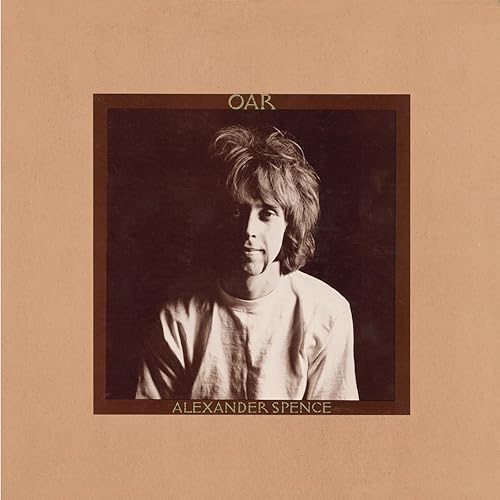
Alexander “Skip” Spence: War In Peace
[purchase]

I know that many people—and not only people in the 50+ demographic—think that the best era for music was the late 1960s-late 1970s. I’m not going to debate that now, but there’s certainly an argument to be made. And I think that there are those who would argue that much of the best music from that era was created because of, or enhanced by, the use of drugs. Yet, we also know that drugs also had negative effects—think of all of the great musicians from that era who died young from overdoses, or in other ways  directly or indirectly related to their addictions.

Then, there’s the group of musicians who stayed alive, but whose careers were cut short, or hampered, by drug related mental illness (although in many cases, the causal link between the drug use and the mental illness isn’t certain).

One such musician, who has been mostly forgotten over the years, is Alexander “Skip” Spence, who was briefly a guitarist in Quicksilver Messenger Service, then became the drummer in Jefferson Airplane, departing after their first album, in part because he wasn’t a drummer, to become a founding member of Moby Grape. But by 1970, his musical career was effectively over.

By most accounts, Spence was an excellent musician (on guitar and other instruments, including the drums that he learned to join the Airplane) and songwriter (writing, among other songs “You’re My Best Friend,” which appeared on Surrealistic Pillow, released after he left the Airplane, and Moby Grape’s “Omaha,” later covered by The Golden Palominos, with Michael Stipe on vocals). If you read about Moby Grape, you’ll find quotes from contemporary critics saying that they were the best band from the San Francisco area during that era—better than the Grateful Dead and Quicksilver and the Airplane. But despite the quality of Moby Grape’s debut album, a bunch of record company missteps and a disappointing second album, among other things, led to the band never breaking through.

Among those other things was Spence’s increasingly erratic behavior. While working on the band’s second album in New York, Spence, under the influence of LSD, and maybe other substances, took a fire axe and attempted to break down the hotel room doors of band mates Don Stevenson and Jerry Miller. He then went to the studio at the CBS building, where he was disarmed and wrestled to the ground. The album’s producer, David Rubinson, pressed charges, and after a brief period in jail, Spence was sent to Bellevue Hospital where he was diagnosed with schizophrenia.

During his six months in Bellevue, and despite not having access to a guitar, Spence had written a number of songs, and on his release, he was met by Rubinson (the same guy who pressed charges). Spence implored Rubinson to get him to a studio so that he could record the songs while they were still fresh in his mind. Showing how different the record business was in those days, Rubinson negotiated an advance from Columbia Records the next day, and Spence went to Nashville, on a motorcycle, to record the songs. Within six days, Spence cut nearly 30 songs, playing all of the instruments, singing all of the vocals and doing the arrangements himself. At this point, he was all of 23 years old.

Whittled down to 12 songs, the album, titled Oar, was released in May, 1969. Utterly unable to figure out what to do with its strange and eclectic music, Columbia simply ignored it, and it sold very few copies—it is often referred to as the worst selling album for the label to that point. (Hey, Richard Thompson’s first solo album, Henry The Human Fly, was considered the worst selling album at Warner Brothers Records, so that doesn’t necessarily mean that it is crap.) “When the people at Columbia heard it, Oar made no sense to them at all,” remembers Rubinson, who had sifted through the reels of tape, mixed the album and sequenced its dozen tracks. “It was so honest and real that the record company couldn’t relate to it. Neither could radio or critics. So they put it out, barely, and it sank without a trace.” To some, the album was the soundtrack to Spence’s mental illness, but to others, it was evidence of his emergence from it.

Over time, Oar gained admirers (and two reissues, with bonus tracks), including Robert Plant, Jeff Tweedy, Beck, Tom Waits, Robyn Hitchcock, Julian Cope, Chrissie Hynde, Mark Lanegan, and Jay Farrar (many of whom appeared on a tribute album, More Oar: A Tribute to the Skip Spence Album) and it appears in a number of “Best Album” lists.

“War in Peace” isn’t the best song on Oar, or the strangest, and it is actually quite listenable, if you aren’t concerned about understanding the lyrics. There’s some good electric guitar, including a bit at the end that is generally acknowledged to be an homage to (ripoff of?) Cream’s “Sunshine of Your Love.”  

Oar was Spence’s last album. He contributed a little to Moby Grape reunion albums and appeared sporadically at live shows both with Moby Grape and other bands, and he recorded a song (which was not used) for the X-Files soundtrack but his mental illness, drug and alcohol addictions and related physical health issues, prevented him from having any sort of a music career. At times, he was committed to mental hospitals, was homeless, and, for a time, was living in a house provided by his former Moby Grape band members, who appear to not to have held a grudge for that whole fire axe incident. Robert Plant helped with medical bills at times.

Spence died in April, 1999, of advanced lung cancer, at the age of 52. The last music he heard was a copy of the More Oar tribute album, which featured a cover of “War in Peace” by Mudhoney.

Wednesday, July 6, 2016

The Number 4: Four Sticks


Led Zeppelin: Four Sticks
[purchase]

I never knew why “Four Sticks” had that title, and until I decided to write this, I never cared enough to try to find out. I’ve mentioned in the past that I’m not a stickler for good lyrics, which is not to say that I don’t appreciate them, but that I’m generally more concerned with the feel of a whole song. So what “Four Sticks” meant, or what the lyrics to the song are (which don’t mention any number of sticks at all) wasn’t all that important. But when I decided to write about this song, it seemed like a good idea to find out, if possible, why the title was chosen.

And it turns out to be pretty simple—drummer John Bohnam used four sticks when he played the song, believing that he needed the extra wood to get the volume he wanted. No mystical or mythical back story, just the pure need for power.

“Four Sticks” appears on one of the legendary rock albums of all time, the theme-appropriate fourth Led Zeppelin album, which is technically untitled, but usually referred to as Led Zeppelin IV (or the fourth album, or Runes, or Four Symbols). Each member of the band adopted a symbol (Sandy Denny, who sang on one song, got her own symbol), in an attempt to deflect attention from the band and the members personally and put the focus on the music, as a reaction to criticism that their popularity was all based on hype. As it turned out, pretty much every song on the album entered and has remained part of the classic-rock canon, most notably “Stairway to Heaven,” in my teenage years considered to be the greatest rock song of all time (before the predictable backlash, including from Robert Plant). The album sold many millions of copies, and is regularly cited as one of the best rock albums ever.

“Four Sticks,” though, is generally considered to be the worst song on the album. The band seemed to agree with this assessment—they apparently played it only once live, although it has been occasionally trotted out by Page and Plant, and re-recorded with Indian and Middle Eastern arrangements. It is also the only song from IV not on the band’s 1990 box set. It is a complicated song, in odd time signatures, with uninteresting lyrics. The original’s power, though, is undeniable, thanks in no small part to the four sticks used by Bonham.

Remarkably, more than a quarter century after their official breakup following Bonham’s death, Led Zeppelin has been in the news, with the jury verdict absolving them of plagiarizing from the song “Taurus,” by Spirit in creating “Stairway to Heaven.” That Led Zep was accused of plagiarism is not surprising—they have been accused of it numerous times, and have altered songwriting credits to reflect this. But this time, I just don’t hear it.

Friday, July 3, 2015

Fireworks: Naked, If I Want To


Moby Grape: Naked, If I Want To
[purchase]

I was at the gym the other day, trying to distract myself from how much I don’t like being at the gym by thinking about something to write about. And then this song came on my iPod, with its lyrics about “fireworks on the fourth of every single July,” giving me a topic.

Moby Grape. If ever there was a name that immediately brings to mind the psychedelic era, it is Moby Grape. Despite the fact that their self-titled debut album, from which this song comes, is generally considered a masterpiece, and at least one critic has stated that it was better than any album released by their better known temporal and geographic contemporaries the Jefferson Airplane and Grateful Dead, they are all but forgotten today. (But not at Star Maker Machine.)  Unfortunately, if Moby Grape is remembered at all, it is for singer/guitarist Skip Spence’s LSD induced mental illness, or for their failure, for a number of reasons, to ever record a worthy follow up. There’s also an unfortunately all-too-common history of record company bumbling, band strife and litigation, none of which is as interesting as the music.

“Naked, If I Want To” is a short, countryish song, 55 seconds long, written by guitarist/singer Jerry Miller, and it is about the irrationality of certain laws. The band released an electric version of the song on its second album, Wow, but I kind of like the original.

You’d think that such a short song by an overlooked band would be forgotten, and you would be wrong. None other than Robert Plant has covered it:


And Cat Power has done both a slow version:


And a fast version (in which she sounds more than a little like Grace Slick, who joined the Airplane after Spence departed):


In both cases stretching the song out well beyond its original concise confines.

Monday, August 12, 2013

UNUSUAL COLLABORATIONS: ROBERT PLANT AND ALISON KRAUSS


Robert Plant and Alison Krauss: "Please Read the Letter"
[Purchase]

For my money, when it comes to unusual collaborations, it doesn't get a whole lot more unusual -- or, at the very least, "unexpected" -- than Robert Plant and Alison Krauss. Yes, true enough that Plant has done some fairly eclectic stuff throughout the course of his post-Zeppelin career, but few could have foreseen his joining forces with the queen of modern bluegrass, Alison Krauss.

Ultimately, it's T-Bone Burnett who oversaw the making of their 2007 album, Raising Sand, but Plant and Krauss first joined up for a duet on a Leadbelly song in 2004 when Leadbelly was inducted into the Rock and Roll Hall of Fame. When that went well, the two of them began discussing an album, and it was Krauss who brought in Burnett, having worked with him on his soundtrack for O Brother, Where Art Thou?

With the help of Burnett's expert production, Raising Sand works beautifully. Plant and Krauss come from different worlds, but clearly have much in common when it comes to music sensibilities. Their voices, Plant's now mellowed with age and Krauss's already angelic voice now truly a thing of wonder, complement each other perfectly throughout the album. And among all the excellent songs on the album, "Please Read the Letter" is the one on which they (arguably) work together best of all. Interestingly, as the album is full of covers, it's also the only song that either of them had a hand in writing -- composed by Plant and Jimmy Page, it originally appeared on that duo's 1998 album, Walking into Clarksdale. But it might as well have been written with Krauss in mind, as this version easily surpasses the original.

There was talk of a second album from these two, but apparently that is on hold after a false start in the studio a couple of years back. Whether that ever sees its way through to completion is an unknown, but until then there is always Raising Sand.

Wednesday, May 2, 2012

Unusual Instruments: Nobody’s Fault But Mine

Jimmy Page and Robert Plant with Hossam Ramzy‘s Egyptian Ensemble: Nobody’s Fault But Mine

[purchase]

Abigail Washburn: Nobody’s Fault But Mine

[purchase]

Here are two very different versions of the same song, each of which qualifies in a different way for our Unusual Instruments theme. Nobody’s Fault But Mine is a gospel blues song that can be traced back to at least 1924, when Blind Willie Johnson recorded it. The song has been done in may ways by many artists over the years. Johnson recorded it with acoustic guitar and growly blues vocals, the Staple Singers did a pop-gospel version, and there have R&B and folk versions as well, just to name a few.

One of the best known versions of Nobody’s Fault But Mine was done by Led Zeppelin in 1976. Robert Plant removed some of the more overtly religious lyrics, and replaced them with verses based on blues lyrical motifs. The whole thing was given one of Led Zeppelin’s trademark thunderous rock treatments. Personally, I never liked Plant’s screaming vocals with the group, or Jimmy Page’s screaming guitar either. But I have come to admire the artistry of how Led Zeppelin put their songs together, while still not caring for the results. Zep always had one secret weapon in their music, that helped make them sound like no one else. Early in their existence, they found a link between the modality of the blues and the music of the Arab World, and many of their songs were built on that link. So it was that, years after the dissolution of Led Zeppelin, Robert Plant and Jimmy Page got back together to record the album No Quarter. Here, Plant and Page made explicit the connection that had been such an important influence. No Quarter was recorded with a group of Egyptian musicians led by Hossam Ramzy. Some of the instruments they play on the album include doholla, duf, bendir, and reque. The picture above is a doholla. Hossam Ramzy is well versed in the Bedouin music of Egypt, and he is known for collaborations with Egyptian artists like Rachid Taha, but also with Western artists, including not only Plant and Page but also Peter Gabriel.

The banjo is the unusual instrument in my second version of Nobody’s Fault. Of course, a banjo is not that unusual, but it is in this context. Going back to the earliest music that might be considered blues, you find that the old-time black string bands often included a banjo. So there may well have been a version of Nobody’s Fault But Mine that included one, but I guarantee that it didn’t sound like Abigail Washburn’s version. Washburn began her musical career while she was living in China, and she even wrote bluegrass songs with words in Chinese, some of which she has recorded. So it makes sense that Washburn would cross musical as well as political boundaries. Her singing of Nobody’s Fault is somewhere between the song’s origins in blues and as a spiritual, but the banjo is not a guitar. So Washburn creates a percussive backdrop that works as a heartbeat, while also providing harmony for her vocal. The result is not exactly blues or gospel or bluegrass, but something entirely new.

Monday, March 26, 2012

Richard Thompson Covers: House of Cards


Robert Plant: House of Cards

[purchase]

Richard Thompson and Robert Plant were born about a year apart (Plant being slightly the older – ’48 & ‘49). At first blush, one wouldn't likely group them together. In popular memory, Robert Plant, through his association with Led Zeppelin, calls up images of the rough and tumble rock scene. Thompson may date to the same era, but the popular image of Thompson/Fairport Convention is of a softer aspect of the rock scene of the late 60s/early 70s.

Granted, Richard Thompson certainly earned acclaim for his electric guitar work early on, but – as boyhowdy has noted – his religious conversion and his “sheik’s” influence did tone down his proclivity toward heavier rock. All the same, both are products of the same British rock scene.

For my part, I see trends in Plant’s authoring of Stairway to Heaven that pre-sage an affinity to the softer music of Thompson’s House of Cards. Band of Joy, Plant’s off and on ensemble, provides a great hard-hitting balance to this song –it causes one to think about the lyrics, yet cuts through the folk to the rock. The song has been interpreted in folk style by many, but the lyrics deserve the roughness of Plant’s (and Band of Joy’s) interpretation.

Shake your windows/ rattle your doors . . .
Cracked and shaking/ days are numbered . . .

Curiously, there are numerous others who have penned songs of the same name, generally with the same conceit – after all, what is a house of cards made of?

Friday, December 2, 2011

Leftovers (Reproductions): Kashmir


Jimmy Page and Robert Plant: Kashmir

[purchase]

For our Reproductions theme, the idea was to post remakes of songs that rendered the original in a bigger arrangement. How can you do that with Kashmir? It’s a fair question, because the Led Zeppelin original already has a huge sound. Not only that, but the original Kashmir was an epic, clocking at 8:28, and going through some remarkable changes.

Led Zeppelin used to talk about how their sound was influenced by the music of the Arab world, and that was never clearer than in Kashmir. Still, 20 years later, Robert Plant and Jimmy Page reunited to create an album that revisited 13 of their songs from Led Zeppelin days, and made the Arab musical connection explicit. Here, Plant and Page are fronting a nine piece rock band, with instruments including mandolin and hurdy-gurdy. Add to that the string section from the London Metropolitan Orchestra. But the kicker is an ensemble of Egyptian musicians led by the great Hossam Ramzy. The album, No Quarter, is a record of a concert, and Kashmir was the grand finale. Now the song clocks at 12:23, and the extra time includes Egyptian percussion breaks. Amazingly, the sound is even bigger than the original version, and the song is even more of an epic than before. And yet, it doesn’t feel overdone at all. By this time, Robert Plant could no longer hit the highest notes that he was once famous for, but his voice still had all of the power he needed to pull this off.

Saturday, November 19, 2011

Homonyms: Operator


Grateful Dead: Operator

[purchase]

Manhattan Transfer: Operator

[purchase]

Alexis Korner with Robert Plant: Operator

[purchase]

Jim Croce: Operator (That‘s Not the Way It Feels)

[purchase]

When I was a child, there was only one telephone company. If you needed any help making a call, you were completely at their mercy. What we call by the more clunky name of directory assistance was simply known as “information” in those days, and you spoke to a human being, usually female. Lily Tomlin, shown above, brilliantly spoofed the information operator and the power of the phone company. But their job was twofold: to help the customer reach their party, but also to protect the privacy of that party. So, if you didn’t have enough information to help the operator find the number and connect you, you might be treated with suspicion. That created the perfect metaphor for songwriters.

Ron McKernan, better known as Pigpen, was the original keyboard player for the Grateful Dead. His song Operator has the narrator trying to find a girl for whom he has incomplete information, maybe just her name. He has a vague idea where she might be, but nothing definite. The girl could easily be a groupie with whom the narrator had a one night stand that made a strong impression on the narrator. But, in listening to the song while preparing for this post, I was struck with another possibility, one I feel sure Pigpen never intended. What if the narrator is a father searching for his teen runaway daughter? As I said, I don’t think Pigpen had that in mind, but it works.

If you have heard of Manhattan Transfer, you may know them for their doo-wop flavored hit The Boy From New York City. Maybe you also know that they went in a jazz direction in their later career. But Operator was their breakthrough song in 1975, and it is pure gospel. The song was originally written and performed about 20 years earlier by William Spivery. Aside from Operator, Spivery is really only known for two other songs, musical tributes to John F Kennedy and Martin Luther King. The song is a prayer, with the singer asking the operator for a connection to heaven.

Special thanks go out to fellow Star Maker Bert for making this post possible. I asked him for the two songs above, and he went beyond the call of duty and sent me a third Operator by Alexis Korner. I had never even heard it before, but it’s a keeper that is also of historical interest. Alexis Korner was one of many British rock artists in the 1960s who embraced the blues. His playing, based on this example, was fine, but Korner wasn’t much of a blues singer, and that is probably why he isn’t better known. John Mayall was probably an even worse singer, but his reputation rests on his uncanny ability to find sidemen who would go on to fame and fortune. On Operator, Korner got that kind of help too, from Robert Plant. Plant would be in Led Zeppelin a year after this recording, developing his trademark rock howl. But here is the beginning of that voice, in a blues context. Personally. I would much rather hear Robert Plant sing the blues. This Operator is a breakup blues, with nothing special about the lyrics. But the performance is great. It’s just piano, acoustic guitar, harmonica, and that great blues howl by Plant that makes this one utterly convincing. Incidentally, nothing in the lyrics explains why this song is called Operator, but Korner had to call it something.

Finally, I’m cheating a bit with my last selection. But how can you post a set of songs called Operator, and not include Jim Croce? The parenthetical That’s Not the Way It Feels in the title means the song is not a true homonym, but it fits the theme better than the Alexis Korner song in terms of lyrics. Like Pigpen, Croce’s narrator is seeking a girl he knew back when. But he knows where she is. What Croce’s narrator really wants is the ability to forgive an old hurt that won’t go away. And that is what he is asking for help with.

Wednesday, October 14, 2009

Postage Paid: Please Read The Letter


Robert Plant and Allison Krauss: Please Read The Letter

[purchase]

We have a mail chute of sorts. It's a slot in the outside wall of the house that feeds the box which is inside the wall, that is accessed from a flip door that's inside a closet. The box is narrow and not very accommodating for anything larger than a standard business envelope, and as a result, sometimes our mail gets chewed up in removing it from the box (to say nothing about removing our-self from the closet). That said, it's sometimes better for us to have an empty box than a full one.

Actually posted by Bert, with technical assistance from Darius