Showing posts with label Roseanne Cash. Show all posts

Saturday, October 8, 2022

MUSICIAN AUTHORS: STEPHEN KING

Musician? Yeah, I know, but the problem with this theme is a need to have read the books in question, and the reading of a book requires a hell more of an investment than does engaging with the, give or take, 40 minutes of an album. Which sounds as if I don’t (can’t?!) read, which isn’t true, but the books by rockstars I have read are either autobiographical or ghost written, often both, neither of which I necessarily equate with the spirit of this assignment. (For the record, there are two I rate, each written by the writer, these being Footnote, by Chumbawamba’s Boff Whalley and Things the Grandchildren Should Know, by Mark Oliver Everett, but they are not fictional, or shouldn’t be. An honourable mention also for Mark Lanegan’s Sing Backwards and Weep.)

So, Stephen King, then, the uber prolific writer of lengthy horror yarns, usually set in New England and perennials for holiday reading. In the 1980’s I could rely on his putting out a fat doorstep that would see me through each fortnight in the sun, as the family set off to warmer continental climes for r&r. I confess it all slightly fizzled out as I became a little weary of his run on writers with mental block, and the ill begat upon them, preferring the bigger and fatter phantastic tales, each clearly written as he was going along, where, frankly, the somewhat rushed and weak endings were immaterial to the enjoyment of the jaunt along the way. The Stand was probably my favourite, with If a close second. Of course, the other constant with King was the rule that the films, Carrie the honourable exception, were invariably shoddy and shite.

But, hey, I sort of like the guy, and respect his right to have carried on pumping out his pulp fiction long after I deemed necessary. His massive worldwide market and sales certainly, as does his accountant, beg to differ. 

I guess I was aware he was a music fan fairly early on, and so, as I strayed across Ghost Brothers of Darkland County. On a big John Mellencamp bender of completism at the time, it looked interesting. A play, written by Mellencamp and King, together wirth the usually reliable T Bone Burnett, it seemingly premiered in 2012, with a subsequent short run in the Deep South. Southern gothic, they called it and, ever the sucker, I fell for the lavishly made soundtrack, featuring, alongside the three writers, Neko Case, Roseanne Cash and Elvis Costello, together with other then big name draws. Any good? Um, not really. Maybe I need to give it another go, to see if the intervening decade has gifted it any gravitas.

He didn’t play on Darkland County, with all the songs, nominally, Mellencamp originals. But he did play guitar with the fabled collective band, Rock Bottom Remainders, each member a published author and not otherwise known for any musical chops. Live was more their thing, but there is one album, a somewhat extraordinarily hotch  potch  of styles and  influences. King spears on several of the tracks, confirming the old adage about not giving up the day job.

He has also dabbled with a number of artists and the making of videos. Michael Jackson’s Ghosts, a 40 minute collaborative video made with King, came out in 1996. Thriller it wasn’t. 

Over the years he has often professed his love of guitar rock, but, when he appeared on BBC Radio 4’s Desert Island Discs, he was able to display a (slightly) broader range of taste. Here is quite a decent article that bring both that, and other favoured choices to bear.

I am uncertain whether I have given him sufficient space to allow credibility as a true renaissance author and musician. I suspect I haven’t, but, hey, I can’t write book or play guitar, so he is at least one up on me!

Happy reading!!!


Tuesday, June 23, 2020

LOOKING FORWARD: BETTER DAYS

That's the point of it, of life, wherever you are, the excitement and anticipation of a day yet to unfold, whether a definite day pinned on the calendar, or an arbitrary aspiration of a future different from the now. We call such days Lollo Rosso in my house, when we have had one and while we await one. Why? Italian lettuce, doncha know. Italian red lettuce.  Red lettuce/red letters? (I know, I'll give you a moment to repair your sides.)


My i-pod is crammed with songs about shit days; it is the basis, arguably, for the entire genre of music, the blues. So where's the hope, the optimism? If we disregard that happy-go-lucky music is so often a happy clappy pap of little merit, let's, instead, celebrate when it isn't.

Better Days/Bobby Charles

Where better to start than the down-home charm of Bobby Charles? A southern swampy country soul man in the style of Dan Penn, he moved in all the right circles, if never quite making it in his own right. I was alerted to him a couple of decades ago, via a friend pointing me in the direction of his first and eponymous album, a slow burner that first dropped in 1972. An acolyte of the Band, he actually appears in their Scorsese-helmed "farewell" performance, The Last Waltz, if edited out for the cinema cut. Rick Danko, of said band, produced his debut, the rest of the group offering cameos, as did Dr John, whose then band later backed him in the Last Waltz. Here's quite a nice bio. Cut short, the album didn't sell and, though later a cult record to many a current mover and shaker, he quietly ploughed his furrow, with several more popping out of his home studio until his 2010 death. This song, the title song from his chronologically second, and best, album, Better Days, which actually took his death, 36 years later, to give it a formal release.  What I hadn't, however, realised is that he was the author, as a much younger man, of both Bill Haley's See You Later, Alligator and almost the signature tune of Fats Domino, Walkin' to New Orleans. So maybe most of his better days were behind him, but the laidback drawl suggests he was never discounting the dream. The royalty checks possibly helped too.

(This is for the)Better Days/Band of Bees

Sticking with funky sounds, you could be mistaken for thinking this, vocal timbres apart, comes also from the Louisiana delta country, such are the distinctive keyboard burbles and understated guitar witterings. But you couldn't be much further wrong, with Band of Bees (or the Bees) coming from the UK's Isle of Wight, yes the festival one, and the record released in 2007. Like the rest of their work, a delightful summery breeze of slightly retro themes, allied with the trippier vocals of a "Madchester" influence, if you will, with more musical chops. Lovely, if with any new songs long overdue.

Better Days/Roseanne Cash (via Guy Clark)

Guy Clark is another wistful reference, maybe his name better known than his music. Certainly any fan of Steve Earle will be familiar with the name, given his recent tribute album thereto. Along with Townes Van Zandt, to whom Earle has also paid reverence, he was part of the nascent Texas scene of dusty troubadours that Earle always aspired to. Indeed, back in 1995, his career on the rise, Van Zandt's on the wane and Clark, well, pretty much where it always was, the three of them played a benefit together, recorded as Together at the Bluebird Cafe. The cause, of all things, was for the dental health of the dustbowl disenfranchised. Clark has always seemed a quiet and unassuming guy, who latterly kept an eye on the increasingly fragile Van Zandt, happier at home with his wife than endlessly promoting his hefty and respected repertoire. In 2011 a host of his friends and admirers put out a terrific two disc tribute, This Songs For Him; A Tribute to Guy Clark, The song above, as performed by Roseanne Cash, comes from that. Here's his own version. He died in 2016.

Better Days/Elliott Murphy

Another? Well, eschewing the Bruce song that this piece invites, have instead something occupying a similar territory. OK, you got me, I'm joshing with you, it IS the Bruce Springsteen song, if in a rootsier and acoustic format that bounces along with some considerable vim. And, rather than expectant of any better future, this celebrates that these are indeed now, already, better days. (Better than glory days? Hmmm..., I wonder.A: yes.) Murphy is another spectre on the sidelines, better name dropped than numbered amongst purchases. But he's well worth a punt, his easy going Long Island lope not a million miles removed from his more famous New Jersey neighbour, with whom he has often appeared and collaborated. Now a dedicated europhile, based in Paris, he has over 35 records to his name. Where to start? You could do a lot worse than his debut, 1973's Aquashow, released in the same week as Springsteen's debut, they both immediately grabbing the new Dylan tag so beloved of rock journalists. Last of the Rockstars gives a taste.

So let's agree, raise a glass, slainte mhor, to Bobby, Elliott, Guy and the Bees! Better days, bring 'em on!!

Friday, April 3, 2020

ALONE: ALONE IN THE DARK/JOHN HIATT

John Hiatt is just terrific, one of the best, if not in sales, certainly in terms of influence and output, up there, in my book, with Neil Young and Bruce Springsteen. When he's good, he's very, very good and when he's bad, well, I haven't encountered that yet. And Bring the Family, the album from which this song comes, is possibly one of his best, positively enhanced by the backing band on hand. Backing band? O, just Ry Cooder, Nick Lowe and Jim Keltner. And yet it was born out of near desperation, a banknote or so away from ruin. Alone in the Dark, the feature song of this piece, epitomises the tight but loose feel of the disc, and is often overlooked amongst some of the other goodies on board. The lyrics may reflect a differing loneliness and a differing dark from these dangerous days, but the mood sure fits.


Ahead of this time, Hiatt had been a slogging workaday singer-songwriter, starting his career as a pen for hire. When Three Dog Night hit the top 40 with one of his, a recording contract beckoned, although, over the ensuing seven discs, scattered across various labels, more money came from royalties recouped, as the likes of Roseanne Cash and Willie Nelson recorded his songs, than he made from his own originals. Even the mighty Geffen label tried and failed to break him. This was arguably not helped by Hiatt being a drunken cuss who hadn't endeared himself to label bosses. So, newly sober, with a bunch of songs he had lost faith in, straits were indeed dire. Luckily the maverick UK label Demon still believed in him, and could offer a threadbare budget to record them. (The story of Demon makes for interesting reading, established by the earlier team behind Stiff records, Radar and F-Beat.)


Bring the Family, released in 1987, is a joy, from start to finish, the four musicians laying down a lean muscle honed from their collective road and studio experiences, Hiatt's holler a celebrant to his limited range: who needs more notes when you can do this much with these? Plus the songs, ten gems that can crack open a smile just from memory. Even if you don't know them, you know them, and even if you do, even over know them from the myriad cover versions of many, the freshness and vitality of the originals stand head and shoulder over most of those. It is hard to believe the whole project took only four days, Lowe sharing a motel room with Hiatt to keep costs down, Cooder delaying his departure a few hours as the final song was hastily written.


Neither the schedules of the four musicians, nor, then, the budget could allow this line-up any time on  the road. True, Hiatt rounded up some likely culprits, including perhaps the only man who could reasonably ever deputise for Cooder, bayou slide master, Sonny Landreth, and they hit the trail.  Following in the slipstream of Bring the Family, this crew, the Goners, produced a second deal breaking LP for Hiatt, Slow Turning, only a whisker away from being as good as its predecessor, being merely excellent. Hiatt was on a roll, with these and his next seven records all making substantive waves in the Billboard chart.


But the dream team were not done. In 1992 the diaries of Hiatt, Lowe, Cooder and Keltner finally realigned, and they went back into the studio. This time a band, Little Village, also the name of the sole studio offering, having ditched the earlier, and better, working title of Hiatus, and this time a pooling of resources, rather than just a backing band for Hiatt. The songs were all co-writes between the four, and whilst Hiatt sings the majority, Lowe took lead on two, Cooder on one. Perhaps there was too much hope, but the lightning failed to strike twice, and it was a deeply disappointing set. Nick Lowe later said they were given too much time. The subsequent tour was a little better, live sets testifying to that, allowing a presentation of some Bring the Family favourites, as well as scattering of Cooder's solo repertoire. One could sense a simmer of "sibling" rivalry, maybe some resentment that Hiatt was drawing more focus over Cooder's own sense of entitlement. It all ended, apparently, in tears.


Hiatt remains on the road, as do his former compadres, occasionally sharing a bill with one or another, all now senior statesmen and rightly so. Hiatt's recent work is, in my opinion, still of top quality and can stand close to the height of this period. Give him a go.

Friday, May 11, 2018

May/Might: You Might As Well Pray


Jules Shear (w/ Amy Rigby): You Might As Well Pray
[purchase]

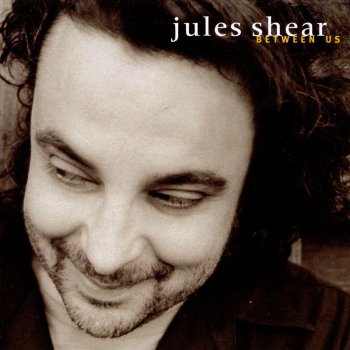
Jules Shear has had a pretty interesting life, for a musician who has never really become famous. He’s released more than 20 albums since 1976, most recently in 2017, as a solo artist and with others. He’s acknowledged as a top-notch songwriter, and has penned hits for Cyndi Lauper ("All Through the Night"), The Bangles ("If She Knew What She Wants") and has had written or co-written songs recorded by artists as diverse as Olivia Newton John, Iain Matthews, Aimee Mann, Art Garfunkel, Alison Moyet, and Roger McGuinn. He dated Aimee Mann, who wrote a song about their breakup. He’s worked with Todd Rundgren, Tony Levin, Elliot Easton, Rick Danko, Jimmy Vivino, Rod Argent, and Chuck Prophet, among many others. Shear was the inspiration for, and host of the first 13 episodes of MTV’s Unplugged. And yet, he is one of those musicians who have had a long career tarred by the phrase “critically acclaimed, but commercially unsuccessful.” Although I don’t know for sure, I’ll assume that Shear has been able to make financial go of it for all these years, but I bet it wasn’t always easy.

I remember seeing his second and third albums, as a member of Jules and the Polar Bears, released in 1978 and 1979, around the WPRB studios, but they made no musical impression on me. I have no recollection of having played them on the radio, but maybe the name was distinctive enough to stick in my brain. I’m also pretty sure that I don’t remember hearing any of Shear’s music until his 1998 album, Between Us. (I wasn’t watching MTV back when Unplugged was on). And I’m fairly certain that I heard songs from the album on WFUV.

Between Us quickly became a family favorite. It is an album of 15 low-key duets between Shear and (mostly) female singers (and one instrumental duet with bassist Rob Wasserman). The songs are charming, interesting, and I remember listening to them in the car as my family sang along (and I kept my terrible voice quiet). Some of the highlights are his duet with Suzzy Roche (“On These Wheels Again”), complete with barking dog, “Who's Dreaming Who,” with Rosanne Cash, and “Betrayal Takes Two,” featuring Angie Hart (best known, I guess, as a member of Australian band Frente).

But another favorite from the album was his duet with Amy Rigby, the wistful “You Might As Well Pray.” I think that it is about a couple looking at the damage they have caused each other, yet hoping that just maybe, with divine intercession, they can work things out. I could be wrong, of course, because the lyrics are a bit vague, but as is common in a Jules Shear song, they are interesting and well chosen.

I’ve picked up a few of his albums over the years, both recorded before and after Between Us, and while I have enjoyed them, nothing of his has stuck with me as much as that album. It’s an interesting thing about music, isn’t it? As good an album as I think Between Us is, it is far from universally appreciated, even among Shear fans (and it doesn’t even appear to be available in downloadable form anywhere). But it was a combination of the music, and the time in my life when it came out, and the fact that my wife loved it (and still plays it from time to time), that has cemented it in my mind. With music, like comedy, sometimes timing is everything. There are times when I hear a song on the radio, and it does nothing for me, but it reminds me in some respects of stuff that I like, and I wonder if I might have felt different about the song if I had heard it, say, 20 years ago. Or conversely, whether music that I love would leave me cold if I heard if first today.

Tuesday, July 4, 2017

RIGHT: FATE'S RIGHT HAND/Rodney Crowell

Couldn't resist. Or at least I think I couldn't, but maybe not. Fate. Kismet. Call it what you will, it's all pre-destined, yeah? Maybe.


In keeping with my last posting, I thought I would again follow on the dextrous direction that began with red and was followed by the devil. In truth, I am not sure of what fate's right hand, or indeed left, might mean, or how they may differ, unless the former is the butter side up, the latter, butter side down. Indeed, is luck the same as fate? Is fate the same as luck? I am uncertain whether this metaphysical troubled Rodney Crowell much when writing the song. It just sorta sounds good, the lyric then being one of those stream of consciousness lists like Reasons to be Cheerful (right hand) or We Didn't Start the Fire (left hand), the words as important for their order and sound as their meaning, yet entirely also dependent thereupon. Clever, if confusing.

Rodney Crowell feels to have been around forever in my musical lifetime, first as the callow youth alongside Emmylou Harris in her Hot Band, writing the knock-out (and album stand-out) side one closer, Till' I Gain Control Again, on Elite Hotel. That was back in 1975, and he has kept on keeping on. Marrying into country royalty, becoming husband to Roseanne, daughter of Johnny, Cash in 1979, until 1992, will have done no harm either, but he was already successfully penning material for a range of significant other artists, including Bob Seger, as well as a roster of more typical country performers. Having had limited success with his solo records, he effectively put his career on hold to helm her own, writing much of the material and producing. In the 80's he hit his own paydirt, with a run of records that cemented his reputation. 1988's Diamonds and Dirt managed 5 (country) number ones alone. Here's one of 'em.

However, for me it is his later trio of recordings, starting with The Houston Kid, in 2001, that hold the strongest appeal. Biographical in style, I strongly commend these three, with Fate's Right Hand, containing the eponymous song of this piece, and The Outsider making up the triad, now commonly referred to as the Houston trilogy. This period of his life also produced his book, the commendable and likewise autobiographical Chinaberry Sidewalks: a Memoir, covering the same somewhat tumultuous childhood as do the songs. Wonderful stuff. Here's a song:


Into the last decade he has again teamed up with Emmylou Harris, producing a brace of duet albums and going on tour with her, still managing other output as well. This years Close Ties reveals him now to be an elder statesman, performing alongside ex-wife Cash and Sheryl Crow, amongst others. I have seen him twice within the last five years, once with Emmylou, and once as a featured singer with the celebrated Transatlantic Sessions, the show that brings together the best of scots/irish with american musicians, held every year over here in the UK. On both occasions he shone, the grittier counterpoint to Emmylou at the one, and an altogether americana tour de force at the other.

A final word, lest all this talk of country be off-putting. This isn't and never has been any saccharine "& western": his genre has always been in those slightly rougher roadhouses, where rockabilly meets western swing, leaving always room for a weeping steel barroom ballad, ahead of another rousing rocker. I'd like to shake his hand. Right hand.

Choose Rodney!

Thursday, July 29, 2010

You First: You Ain't Goin' Nowhere


Bob Dylan & The Band: You Ain't Goin' Nowhere

[purchase]

Bob Dylan (with Happy Traum): You Ain't Goin' Nowhere

[purchase]

Nitty Gritty Dirt Band (with Roger McGuinn and Chris Hillman): You Ain't Going Nowhere

[purchase]

Shawn Colvin, Mary Chapin Carpenter, and Roseanne Cash: You Ain't Goin' Nowhere

[purchase]

Cracker (with Adam Duritz and Joan Osborne): You Ain't Going Nowhere

[purchase]

Folks who know me well know that my current favorite pastime is sitting around with other musicians playing and singing songs. In the past few years, I've found several groups of people to play with on a regular or semi-regular basis. With every group, I've brought this old Dylan song. Some people know it, some don't, but it always goes over well. It's easy to play (just three chords), fun to sing, and offers plenty of room for solos.

Dylan first recorded it with what became the Band during his 1967 Woodstock time-out, but the first released version was by the Byrds, who countrified it for their groundbreaking Sweetheart of the Rodeo the following year. Bob's version was eventually released on The Basement Tapes in 1975, but before that, he recorded a radically different version with Happy Traum on banjo for his Greatest Hits, Vol. 2 album (complete with a dig at Roger McGuinn for messing up the lyrics on the Byrds' version).

Since then, the song has been covered by many, and it's usually the Byrds' version that's followed, and that's the template used by The Nitty Gritty Dirt Band (with Byrds Roger McGuinn and Chris Hillman), Cracker (with Adam Duritz and Joan Osborne) and the trio of Shawn Colvin, Mary Chapin Carpenter, and Roseanne Cash.