I’m not exactly sure why KKafa took offense at my characterization that The Monkees were a fake band—in fact, as I wrote, some would argue that they turned into a real band. And argue he did. It isn’t a bad argument—although initially The Monkees didn’t, for the most part, write their own music or play their own instruments, as time went on, they did do more of both.
But I’m writing about a band that sort of evolved in the opposite way—starting out as sort of a real band, then gaining fame because they were in a movie.
When Mike Myers left Saturday Night Live he formed a band with Matthew Sweet and ex-Bangle Susanna Hoffs to play 60s style music, which they called Ming Tea, after a fake company from the 1965 Ursula Andress movie, The 10th Victim. They decided to perform under pseudonyms: Sweet as Sid Belvedere, Hoffs as Jillian Shagwell and Myers as Austin Powers. I think you can see where this is going.
Myers’ wife at that time was Robin Ruzan (whose mother, Linda Richman, was the inspiration for Myers’ “Coffee Talk” SNL sketches, suggested that Myers write a film based on this new “Austin Powers” character. And thus was born Austin Powers: International Man of Mystery. Keeping things in the family, Myers asked Hoffs’ husband, Jay Roach (who had directed one movie at that point) to direct the film. This launched Roach’s career, as well as vaulting Myers’ into movie stardom.
Ming Tea appeared throughout the film, augmented by actor Stuart Johnson as Manny Stixman (on drums, of course) and songwriter Christopher Ward as Trevor Aigburth, the lead guitarist. And they played “BBC” over the closing credits. The band performed on some talk shows to promote the film, and in the second sequel, Austin Powers in Goldmember, they performed “Daddy Wasn’t There.”
There appears to be some evidence on the interwebs of some later gigs, but no video.
Sweet and Hoffs went on to do a series of cover albums together, among other things, and there are rumors of another Austin Powers sequel, so we may get another serving of Ming Tea. And that would certainly be groovy.
Jules Shear has had a pretty interesting life, for a musician who has never really become famous. He’s released more than 20 albums since 1976, most recently in 2017, as a solo artist and with others. He’s acknowledged as a top-notch songwriter, and has penned hits for Cyndi Lauper ("All Through the Night"), The Bangles ("If She Knew What She Wants") and has had written or co-written songs recorded by artists as diverse as Olivia Newton John, Iain Matthews, Aimee Mann, Art Garfunkel, Alison Moyet, and Roger McGuinn. He dated Aimee Mann, who wrote a song about their breakup. He’s worked with Todd Rundgren, Tony Levin, Elliot Easton, Rick Danko, Jimmy Vivino, Rod Argent, and Chuck Prophet, among many others. Shear was the inspiration for, and host of the first 13 episodes of MTV’s Unplugged.
And yet, he is one of those musicians who have had a long career tarred by the phrase “critically acclaimed, but commercially unsuccessful.” Although I don’t know for sure, I’ll assume that Shear has been able to make financial go of it for all these years, but I bet it wasn’t always easy.
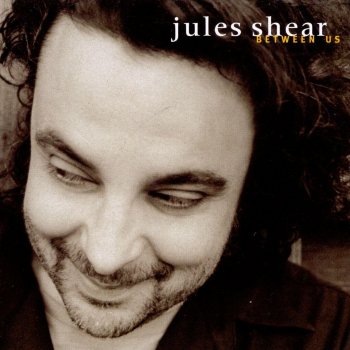
I remember seeing his second and third albums, as a member of Jules and the Polar Bears, released in 1978 and 1979, around the WPRB studios, but they made no musical impression on me. I have no recollection of having played them on the radio, but maybe the name was distinctive enough to stick in my brain. I’m also pretty sure that I don’t remember hearing any of Shear’s music until his 1998 album, Between Us. (I wasn’t watching MTV back when Unplugged was on). And I’m fairly certain that I heard songs from the album on WFUV.
Between Us quickly became a family favorite. It is an album of 15 low-key duets between Shear and (mostly) female singers (and one instrumental duet with bassist Rob Wasserman). The songs are charming, interesting, and I remember listening to them in the car as my family sang along (and I kept my terrible voice quiet). Some of the highlights are his duet with Suzzy Roche (“On These Wheels Again”), complete with barking dog, “Who's Dreaming Who,” with Rosanne Cash, and “Betrayal Takes Two,” featuring Angie Hart (best known, I guess, as a member of Australian band Frente).
But another favorite from the album was his duet with Amy Rigby, the wistful “You Might As Well Pray.” I think that it is about a couple looking at the damage they have caused each other, yet hoping that just maybe, with divine intercession, they can work things out. I could be wrong, of course, because the lyrics are a bit vague, but as is common in a Jules Shear song, they are interesting and well chosen.
I’ve picked up a few of his albums over the years, both recorded before and after Between Us, and while I have enjoyed them, nothing of his has stuck with me as much as that album. It’s an interesting thing about music, isn’t it? As good an album as I think Between Us is, it is far from universally appreciated, even among Shear fans (and it doesn’t even appear to be available in downloadable form anywhere). But it was a combination of the music, and the time in my life when it came out, and the fact that my wife loved it (and still plays it from time to time), that has cemented it in my mind. With music, like comedy, sometimes timing is everything. There are times when I hear a song on the radio, and it does nothing for me, but it reminds me in some respects of stuff that I like, and I wonder if I might have felt different about the song if I had heard it, say, 20 years ago. Or conversely, whether music that I love would leave me cold if I heard if first today.
I know we can write about any season, but it would seem strange to be writing about summer now, since it is cold, and we are in the middle of the winter holidays. Of course, south of the Equator, it is summer, but I don’t think we have any writers from that part of the world. Parenthetically, it is a little strange—and maybe one of the most obvious examples of how world culture is so dominated by the American/Northern European tradition—that even in those places where Christmas is celebrated in the warm weather, there seems to be no lack of pine trees (usually fake), snow (fake), stocking caps (unnecessary) and other wintery symbols in the iconography of the holiday.
So, winter it is, but not a holiday related song. Instead, we will discuss “A Hazy Shade of Winter,” a relatively early masterpiece written by Paul Simon, and performed by him with his erstwhile partner, Art Garfunkel, two nice Jewish boys from Queens. It is hard to read Paul Simon lyrics without realizing how great they are. And he has been able to write music in so many styles, that it is sort of mind-boggling. Unlike many of his peers (and even those younger), he never rested on his laurels—famously experimenting with world music, before going all in on Graceland, and even collaborating with Brian Eno in his mid-60s (Eno is only a few years younger than Simon, but you have to admit that the pairing seemed a bit surprising—likely part of the reason that their album together is called Surprise).
“A Hazy Shade of Winter,” though, goes back to Simon’s days in England, in 1965, where he had gone to perform as a solo act when the first Simon & Garfunkel album flopped. But a remix of “Sounds of Silence” from that album, became a hit, and Simon returned to New York and Garfunkel, for their amazing run. “Hazy” was recorded for the Parsley, Sage, Rosemary and Thyme album in 1966, but failed to make the final cut. It was released later that year as a successful single, and was included on 1968’s Bookends album.
By the standards of that period’s Simon & Garfunkel songs, it is almost Ramones-esque in its tempo and how it rocks, but the song's lyrics are really what stand out. You can almost see the young Paul Simon, who as a teenager had written and recorded hit songs, feeling exiled and failing in chilly mid-1960s London, writing a song about an unfulfilled artist—still in the “springtime of my life,” but drinking while thinking of his “manuscripts of unpublished rhyme.” Meanwhile, it is metaphorically, and maybe even actually, the time when autumn is turning to an uncertain winter:
Leaves are brown, now And the sky is a hazy shade of winter
The narrator continues:
Hang on to your hopes, my friend That's an easy thing to say But if your hopes should pass away Simply pretend that you can build them again
Oh, that is bleak, isn’t it? (Which makes me think of one of my favorite actual Christmas songs that would fit this theme, “In the Bleak Midwinter,” also mournful, but religiously so.)
Some of you slightly younger folks might know the song better from the excellent cover by The Bangles, which they had long performed live before recording it for the soundtrack to the pretty bleak 1987 movie Less Than Zero, scenes from which can be seen in this video:
In terms of musical discovery, I find myself often turning
to the influences of those who influence me. Reading about an artist’s musical
education often effects my own explorations into past genres and movements. In
a beautiful, somewhat karmic turn, the influences of my influences become my
own influences.
I find musical biographies the most interesting way to
discover new, or otherwise unheard, music.Digging deep into the history of music is as interesting and digging
into actual, archeological history: what you find from the past informs the
future. That’s why Magic Sam is almost daily listening for me. That’s how I
discovered the Red Dirt Music movement, Jimmy LaFave, Stoney LaRue, and Jason
Boland.
In the same vein, I love a good name drop in songs. A few songs come to mind: Adam Duritz
lamented Richard Manuel’s(The Band) suicide
along side the metaphorical impermanence of his own life in If I Could Give All My Love. John
Mellancamp is pretty big name dropper (R.O.C.K
in the U.S.A). The Gaslight Anthem’s Brian Fallon has made a brilliant
career out of not only name-dropping, but wholesale lyrical montage, or is it
collage, by taking lines from famous rock songs and seamlessly weaving the
lyrics into his own. And, as we shall explore further later on, Paul Westerberg famously paid reverential homage to Alex Chilton and declared we could all use a ‘little Big Star” in the class ‘Mats track, Alex Chilton.
I’m spanning across some divergent ideas here, but the point is:
I feel listening to an artist who really moved you necessitates digging into
their musical heritage. The same holds true for contemporary artists who run in the
same packs. But, this is September, and history class is in session, so let’s
dwell there, back there, not in the back of the classroom, but in the stacks.
Dust off your vinyl, pull out your vintage t-shirts that you bought when brand
new and let’s talk about a band I have always loved, to a degree, but have a complicated relationship with: I'm talking about the aforementioned Alex Chilton's Big Star.
I came to Big Star, and Alex Chilton, because of Paul Westerberg and The
Replacements. Big Star, I know a little about; The 'Mats? I worship at their altar, so it was almost a necessity that I dig into someone they wrote a song about.
But, as often happens, one man's treasure doesn't always turn out to be the same or the next. The reason I say my affinity for Big Star is complicated is
simple: like a lot of short lived bands, their catalog runs the entire spectrum
of absolute greatness to songs that, while I might not call them bad, do probably speak
to why they never hit it bigger than they did. They wrote great songs, and they put of some junkers. I feel a band like The Who
exists on the same level: some of the greatest rock songs ever written and
some of the worst. Literary minded folks could say the same for say, Charles
Dickens. Big Star has that appeal and occupies that strange place between
greatness and…mehhhh. The great stuff
is just that; a lot of the rest of it is filler, at best.
I think that inconsistency has kept me from making a total embrace. But this is also me being utterly, assholishly subjective...I've had this discussion about the Grievous Angel, Gram Parsons. I think his short lived career was marked with nothing but brilliant, but I know a lot of folks thinks Return of the Grievous Angle is the starting and stopping point when it comes to evaluating his output.
Add to the fact that the hipsters have gotten ahold of Big Star (at least their t-shirt) which
makes any relationship to a band, movie, book or whatever a heck of lot more complicated.
Big Star's Alex Chilton is an
eponymously blistering tribute to one of Westerberg’s heroes. The lead singer
of Big Star, Chilton never hit it huge, or as huge as he probably should have,
but he was a critics darling, and many a rocker’s legendary founding father of
power pop. You’ve heard Big Star, for sure, but a lot of you (not you, SMM
readers), might not know it. Their most well known track owes its celebrity to
serving as the theme song to That 70’s Show. In the Street. Google “Big Star Hanging Out”—you’ll know exactly
what I’m talking out.
While Big Star had many great songs, my favorite remains,
and believe me, this doesn’t put me in unique company—a lot of people love this
song—September Gurls. It’s a
brilliant, chiming, churning pop gem, as great a radio song as I’ve ever heard.
It makes its way onto almost all of the mixes I make, and I can't think of a song I
more want to hear when I’m sipping drinks on a summer day.Or that goes better with any beautiful girl you fall in love with, even if it's from across the room or jsut walking down the street. September Gurls is two minutes and 56
seconds of a pop jewel in the crown of love songs. And will always be the soundtrack for a heart that breaks way too often at meeting, and losing, one of many girls from one of many dreams.
It was never a big hit, but September Gurls makes multiple lists of greatest pop songs ever.
The Bangles covered it on their 1986 LP Different
Light, and much in keeping with the theme of this post, it was their version that led
me down a long path to Big Star (influences of influences, remember?). Though I
should state that since I was listening to The Bangles, in 6th grade,my musical tastes hadn’t
quite refined yet to the point where I would not listen to The Bangles. The Replacements followed within a few
years, after I’d grown a little more discerning. Yet, now that I’m even older,
I can kind of get down with The Bangles, and see they had some great
songs—their cover of Simon and Garfunkel’s Hazy
Shade of Winter has a fiery snarl that the original folk duo could never
have achieved…not that they needed to, but again, I love seeing how the
influence of a precedent setting artist informs the later one, and how
different the sound becomes.
Star Maker Machine does not accept music submissions from artists or promoters. However, most of the contributors here do accept submissions for our own blogs, listed below. Please visit our blogs, take the time to listen to what we post, and then feel free to contact us if you feel that your music would be a good fit.