Showing posts with label The Beatles. Show all posts

Sunday, December 31, 2023

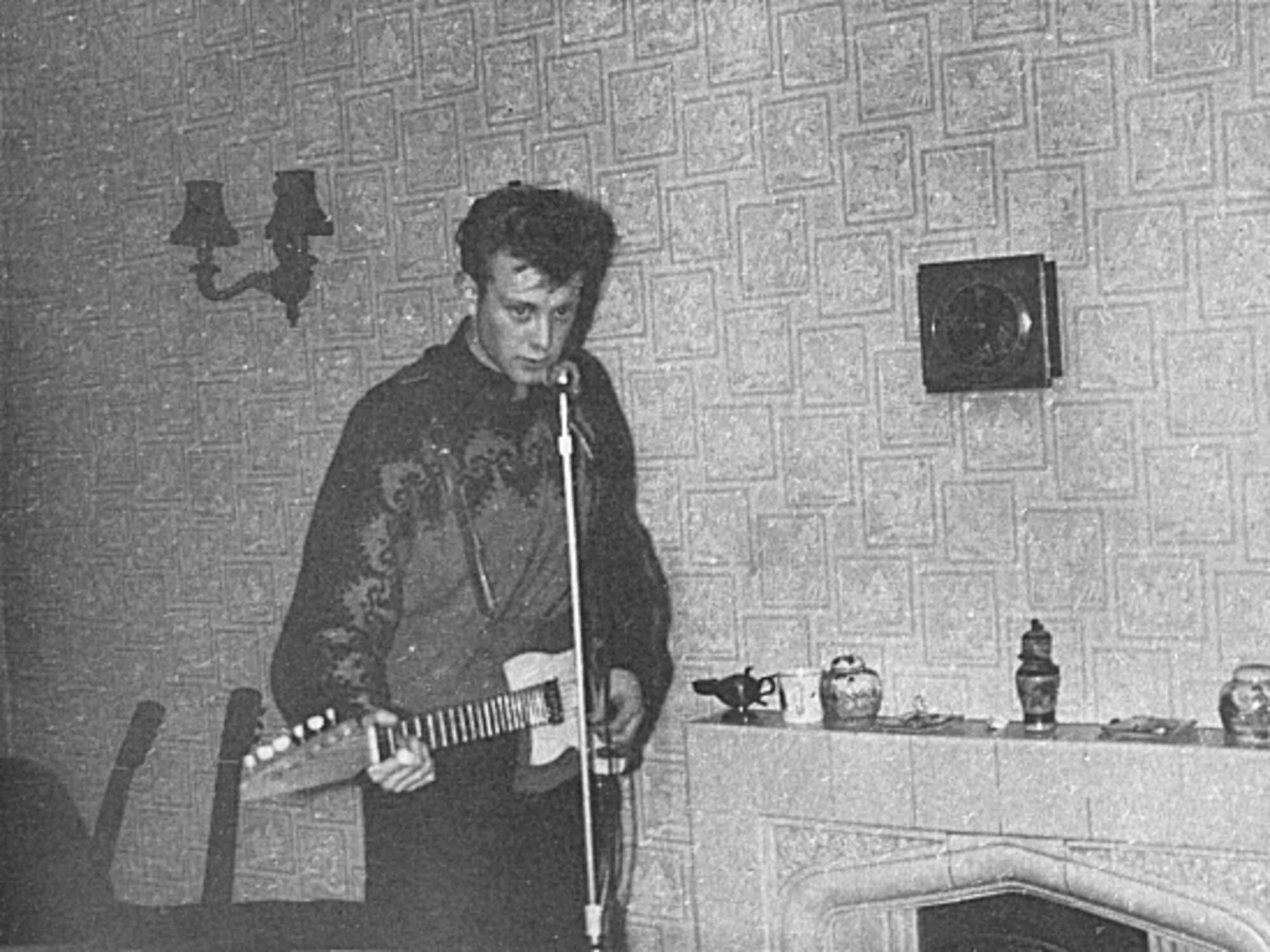
In Memoriam-Chas Newby, A Beatle for Four Gigs


[purchase The Quarrymen Live in Penny Lane, featuring Chas Newby on bass and vocal]

You’re a teenage (left-handed) bass player, and a former band mate asks you to fill in on a few gigs with a cover band that had recently been on tour, because their bass player is unavailable.  Needing a bit of extra Christmas cash, Chas Newby agreed, and played four shows in England with his old friend Pete, and his fellow band members, John, Paul and George.  Chas had fun and pocketed all of £4.  But when John suggested he stay with the band for a tour in West Germany, Newby declined, figuring that he had a better chance of success in his preferred field of chemistry.

Of course, the rest is history.  Nearly two years after Newby declined Lennon’s offer, the Beatles hit it big with “Love Me Do,” featuring Paul McCartney on (left-handed) bass.

As Newby said:

To me then it was just four gigs with a different band. Music was never going to be a living for me. All of us at that time were thinking what we were going to do with our lives, some doing teaching, or science, or whatever.

I wanted to do chemistry. John, Paul and George, they just wanted to be musicians.

They had been away in Hamburg. They’d played a hell of a lot over there so they were very tight, very proficient, and they gave it some stick. But I did the four gigs and went back to my college course the week afterwards.

In fact, Newby went back to St. Helens College and continued his studies in chemistry, eventually getting his Master’s from Manchester University.  In 1971, a decade after his brief encounter with possible superstardom, he joined Triplex Safety Glass, which manufactured windscreens for trains and aircraft.  He retired in 1990 and became a math teacher. 

Further proof of his being merely a blip in Beatles’ history, Chas only had one encounter with any of the band after his four gigs (the last of which was 63 years ago today--New Year's Eve 1960--at the Casbah).  In 1962, he recounted:

I was on my way home and I pulled up at some traffic lights. There, waiting at the crossing, was George. I said hello and asked if he needed a lift. He said he was waiting for someone and that was that. Off I went.

Before his death on May 22, 2023, Newby played in a charity band, The Racketts, and in the reformed Quarrymen, which once counted John, Paul, George, and Newby’s predecessor in the Beatles, Stu, as members.

Wednesday, August 24, 2022

Don't: Beatles songs with Don't


purchase [ White Album ]

When it appears at the start of a sentence, don’t is a command - as opposed to its use mid-sentence, where it is more of a negation of a condition. Compare: <Don't love me> as opposed to <You don't love me> or <Don't do that> vs. <You don't do that>.


Of the <don't> songs in the Beatles' repertoire, it was "Why Don't We Do It in the Road" that got me started.


The “White Album” is quirky in a number of ways. Loudersound.com actually lists 50 things you need to know about it. Let me count a few. The minimalist cover was in itself a statement, particularly since it came on the heels of the rather gaudy cover to the Sgt Peppers album. Many of the songs were not recorded with all members of the band playing. Check out the link to loudersound for 48 more trivia about the album (I don’t want to appropriate their work, so click here)

Why Don’t We Do It in the Road (now there’s a title to test your knowledge of the rules of English capitalization!) seems to me to be quite representative of their mindset, again, in a number of ways. It is basically Paul and Ringo. The idea came to Paul in India, as did a number of the inspirations for the album. The “theme” (if said term is appropriate to a single line of lyrics) is as flippant as anything else on the album: Bungalow Bill, Rocky Raccoon, Warm Gun … It is also one of 2 songs on the album that have Don’t in the title. The song is an impressive example of how to expand something simple into something more: there is an argument to make about whether “it” could be more than what Paul saw that gave him the idea; there is the amusement that someone can “get away with” singing about “it”; there is the vocal expression that kinda culminates in the “from-the-soul” screaming line; there is the creative, abrupt ending 


Don’t Pass Me By, the other <don’t> song from the White Album is another McCartney/Starr recording without the other two, but with “crazy” violin from Jack Fallon (a one-off? is apparently a song Ringo wrote back in the early 60s.


Other Beatles’ don’ts include 


Don't let me down


Honey Don’t (Carl Perkins)


Don’t Bother Me (Them Beatles)


I Don’t Want to Spoil the Party (Acoustic Beatles Band)


Wednesday, December 22, 2021

Mary and Joseph: Let It Be

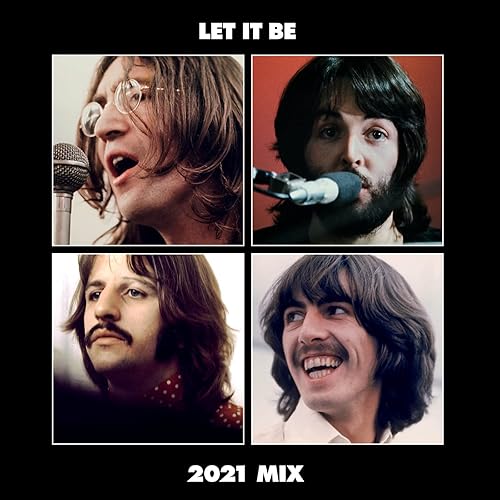
The Beatles: Let It Be
[purchase the basic version]
[purchase the Super Deluxe version

It’s been a crazy couple of weeks, as we move toward year-end. I’ve had a bunch of work (yay!), there’s been tons of holiday prepping and gatherings, and my daughter and her boyfriend are visiting from Barcelona for a couple of weeks. And if that’s not enough, my 94 year-old uncle passed away, after a long, and mostly happy and healthy life, which required my wife and me to jump on a plane on Sunday night to get to Florida for the funeral, returning early Tuesday because, we thought, we had Broadway tickets for my family for that night. Unfortunately, the show got cancelled, because of COVID, which was disappointing.

All of this is in partial explanation of why I didn’t write last week, and why this piece is going to be a little shorter than my average Iliad-length posts. But I hate missing a theme, so I wanted to make sure that I put something up on the site before trying to figure out my [spoiler alert] In Memoriam post subject(s). 

Here’s the gist of what I want to say—if you like rock music, which you probably do because you are reading this, make sure you watch the Beatles documentary, Get Back. It’s worth the 8 hours of time, and you can usually get a free week of Disney+ if you don’t already have a subscription. It’s an incredible document of the four brilliant Beatles, and their world, in 1969. You can see their friendship, strained by their growing creative and other differences, their creativity and talent, their humor, and both their sophistication and naivete. And how much they smoked. Here they are, at the peak of their popularity and power, but clearly contemplating the end of their partnership. And none of them had celebrated their 30th birthday yet. 

I’m far from the biggest Beatles fan, but I was fascinated by the thing—not only the film itself, but thinking about how the director, Peter Jackson, chose what excerpts from the hundreds of hours of film he had available. Most critics have pointed out that the version that Jackson presented was more positive than the general received narrative—that the sessions were filled with bickering, and that Yoko Ono was disruptive. Instead, we see lots of camaraderie and collaboration interspersed with the bickering and nastiness, and mostly Yoko kept to herself and looked bored. What really happened? I don’t know, and unless you watch all of the raw film, there are really very few living people who actually do know. 

So, there’s a moment in the film where Paul McCartney sits down at the piano and starts playing what would become “Let It Be.” When I was watching, it seemed like he was creating it on the spot, but a little research turned up the fact that it was something he had been playing around with for a little while. Still, it was pretty cool to hear the song, which references McCartney’s mother Mary, in its embryonic stages. 

In addition to suggesting that you watch the whole documentary, I recommend that you read some of the many articles about the film and our feature song written by people who know much more about the Beatles than I do, and who are better writers. Use that Google thing—there are lots out there, discussing the film from many angles and points of view. Although I particularly liked this one, featuring a number of well-known songwriters discussing how they felt watching it. I mean, Jeff Tweedy said that he burst into tears a few times while watching it. And if that’s not an incentive to watch, what is?

Thursday, October 7, 2021

What If: Buddy Holly Lived?

Buddy Holly: Crying, Waiting, Hoping (Apartment Tapes version)
[purchase]

This may be the hardest theme we’ve tackled here, and I’ll take responsibility for it, for better or worse. As a history major in college, and general history buff, I’ve also been a fan of “alternative history,” where one historical fact changes, and you speculate on how things might have been different. One good recent example of this was the HBO series, The Plot Against America (and the 2004 Philip Roth novel that it was based on), which launches from the premise that Charles Lindbergh defeats Franklin Roosevelt in the 1940 election. I’ve also read a ton of “what if the South won the Civil War” fiction, which shouldn’t surprise anyone who knows me or has read my writing

But, as I often have to remind myself, this is a music blog, so we are going think about what would have happened if Buddy Holly’s plane hadn’t crashed on that cold February morning in 1959 in Iowa. I’m no Holly expert (although I’ve done some reading about his career), so I’m under no impression that this might be a “definitive” discussion. And because I’m not writing a piece of speculative fiction, and have to therefore pick one path and follow it, we’ll look at a few possibilities, focused more on Holly’s potential career than his potential effect on music as a whole (or the effect of the deaths of the others who were on the plane that day). 

In "American Pie," Don McLean famously referred to the crash that killed Holly, Ritchie Valens, the Big Bopper (J.P. Richardson, Jr.), and pilot Roger Peterson, as the “day the music died,” but while that’s a great and memorable lyric, of course, it wasn’t. Most notably, two big Holly fans in Liverpool had recently formed a band named after an insect, in tribute to Holly’s band, the Crickets, and had Holly not died that day, I’m pretty confident that Beatlemania still would have swept through the world a few years later, changing the musical landscape forever, and pushing aside the type of “rock ‘n’ roll” music that Holly and his ilk had made popular (even as the Beatles covered Holly’s songs live and on record). In fact, I’d wager that had Holly lived, he would have been a fan of the Beatles, and even worked with them in some form—maybe writing songs with or for them or performing with them, or releasing his own Beatles covers (everyone else did). But probably not producing the Beatles, since they already had a pretty fair producer. (And don’t forget that the Rolling Stones covered “Not Fade Away” on their first album.) 

Another huge Holly fan was Bob Dylan, who actually saw Holly on the ill-fated Winter Dance Party tour in Duluth, MN, about 3 days before the crash, and referenced Holly as his first musical influence in his Nobel Prize lecture. So, again, Holly’s death wouldn’t have prevented Dylan’s rise and influence on music, and again, I’d bet that they might have collaborated—or at least, become acquainted—particularly after Dylan began to perform regularly in New York. You can easily imagine Holly, with Maria Elena, and maybe a friend like Phil Everly or Waylon Jennings, trying to watch the young Dylan incognito from the back of the club, and being impressed by his talents. 

But I’m getting a little ahead of myself. 

One way of looking at this question is by starting by analyzing Holly’s life and music before he died. In late 1958, Holly and wife Maria Elena, moved to Greenwich Village, in part to get a new start, but also to get involved in the New York music scene of the time. Holly, who was not only a musical genius, but appeared to have a more sophisticated business sense than many of his contemporaries, wanted to start his own label and open his own studio. So, maybe, part of Holly’s future would have been as a music executive and producer of other acts. 

During this period, Holly explored his love for jazz, regularly frequenting jazz clubs in the Village and elsewhere in the city. And he would go down to Washington Square Park and play with the other musicians hanging out there. The last formal recording session that Holly participated in was in New York, in collaboration with the Dick Jacobs Orchestra, recording four songs with heavy string orchestration. So, by some analyses, at this point, Holly was moving away from the stripped down rock ‘n’ roll that made him famous to a more sophisticated, smooth pop sound. For example, one of these songs, Paul Anka’s “It Doesn’t Matter Anymore,” might have presaged a future career for Holly as another Anka-style pop singer. 

At the same time, though, Holly was recording himself in his living room—what have later become known as the “Apartment Tapes,” and from these, you can hear Holly working both on his songwriting and lyrical craft, but also experimenting with tempo and styles. (Many of these demos were later overdubbed and released posthumously.) Add to this the reports that Holly planned to record with black artists such as Ray Charles, Mahalia Jackson and other soul singers (he was, memorably, the first white act to play Harlem’s Apollo Theater), and the prospect of Holly as a pop crooner becomes less likely. Nor do I see him turning to Vegas, like his friend Elvis Presley.

Another way to look at it is to consider the careers of two other musicians who were on the Winter Dance Party tour, but declined to get on the plane—Waylon Jennings, who was Holly’s bass player on the tour and gave up his seat to the Big Bopper, who was sick, and Dion DiMucci, who didn’t want to spend the extra money. There are some who think that Holly’s future, had he survived, would have been to move more toward country music, like Jennings, considering his Texas roots and twang. But I don’t think that Holly would have wanted to be so limited, because his musical tastes were so broad. Dion, of course, had early success, but when that faded, changed his sound to a more mature folk/pop approach, before moving through a Christian music phase, and more recently, focusing on blues, and I suspect that Holly, too, would have kept trying different things. 

Ultimately, I don't think that Holly would have become an “oldies” act, performing versions of his hits to aging fans. Instead, I think that Holly would have gone on to a varied career—writing songs for himself and others, in various styles that would have reflected his curiosity, interests and the new sounds that were developing in the 1960s and 70s, producing and nurturing artists, and continuing to perform new music for years.

Sunday, August 1, 2021

POSTHUMOUS: DUETS WITH THE DEAD

Ain't technology wonderful? Want to do a duet with the deceased? No problem, and there is a rich seam of grave-robbing for profit, the still living plundering the coffins of, often, better performers, craving some kudos by association. And a hit. To be fair, the majority of these are terrible, the ghoulishness of the exercise all too apparent, but sometimes, just sometimes, there is at the seed of a good intent, of mining a mawkish opportunity to do what had never been possible in life. These are often by relatives, who may, maybe, have more leeway to have this considered potentially OK. Or not. Hell, some are called into service and put back on tour, long after the ashes are cold, something, I confess, I am in no hurry to witness. (Yes, I do know it isn't actually the corpse that struts the stage, it being all the 3D trickery of holograms, but would even Colonel Tom Parker be up for this degree of exploitation?)


My idea for this piece was to find some good ones, something I swiftly found might be too hard an ask. So let's settle for the least worst, with the odd stinker thrown in for good measure. Let's start with one of the latter.

I'll be honest, as I started typing, I couldn't remember whether Barry Manilow was still with us, needing a quick google, just in case. But he is, and it is his 2014 album, 'My Dream Duets' that is the lodestone of this genre, being a whole album of songs, 11 in all, pairing Manilow with the likes of Louis Armstrong, Andy Williams, Judy Garland and G.G. Allin. (No, that was a joke, not G.G. Allin, but that could have been different, doncha think?) All the songs chosen weren't even supposed to be duets, so it seems a little hard that some of these performers may not, in their lifetime, have necessarily have been Fanilows. But, then again, looking down the list, most were such media tarts and divas as to have bitten his arm off to appear alongside. I wonder then, what drew Barry toward this particular list? Intriguingly, of all the people to offer an opinion on the record, David Byrne, the onetime Talking Head, who sums up the dynamic best, here

I think I am slightly happier with the concept behind one of the late Patsy Cline's later albums, Duets, in 1999, 39 years after her death, in a plane crash, aged only 30. In fact, the records full name is Duets Volume 1, but, thus far, the 2nd volume has yet to appear. Rather than being pillaged by, say, Garth Brooks, the idea was that a whole host of singers, would sidle in on existing duets, replacing the original partner. (I wonder how that affected the royalties?) Willie Nelson was one of those inveigled, as well as being also a contemporary of Cline, writing perhaps her most famous song, Crazy. But what she would make of him now would be anyones guess. As in, whatever happened to that fresh faced kid, with his flat top redhead and beaming smile? What's that, you want his version too?

Let's stick with country music, the most celebrated name therein being that of Hank Williams. Tough shoes to fill mind, as both Hank Williams Jr. and III have found, if not without some appeal of their own. I actually rather enjoy this Senior/Junior "collaboration", the video being a sly mix of tongue in cheek and paterfamilial reverential. Will Hank III splice himself in when his own Daddy too departs the building?

Sometimes it is the demand for lost material that drives the projects, however much of a beady eye remains on the cash-register. There cannot be an act more covetable than the Beatles, with any and every studio scrap hoovered up for posterity and profit. So, when some tapes of part finished demos emerged, the deaths of John and George were considered mere supportive detail to the rest of the band polishing them up and giving a sheen of respectability to the songs. That is, until it became apparent the reason John had failed, at the time, to get them added to the repertoire in his lifetime and that of the band, that being they being pretty thin fare. Rumours remain as to a number of other lost songs in a similar vein, ready for future box sets. Remember, you need but one "new" song to make the die-hards shell out, all over, for all the others they have before, so as to fulfilling completist mode. The song above is drivel, to my ears, sounding like a song that even the rest of E.L.O. would refuse to play.

I'd like to find something good to end with. I'd like to, but I can't. But, I can end with a slightly different trick, the old band in heaven idea. This was taken to sterling effect by a singing postman from Belfast, who sidelined as an Elvis impersonator. Not duets. Rather, he came up with the idea that Elvis Presley, on leaving this side of the curtain, might continue his career on the other side, perhaps performing the hits of those similarly lost from active service. A brilliant deceit, and there have been two iterations of this, 'Gravelands' and 'Retun to Splendor', with Elvis, through the medium of Jim Brown, as 'The King', sings the songs of the dead. I love them, and this is the highlight. Or lowliest, as you may see it. And, like the clip from Bladerunner 2049 at the start, ends where we began. With Elvis.

RIP to all of the mentioned and featured, living and dead.


Saturday, April 24, 2021

DOUBLE ENTENDRES: ICE CREAM MAN/MARY COUGHLAN

As I read Jordan's last piece, erudite and informative, it got me a'thinking around the other taboo subject in popular song, seemingly equally common a subject matter as rumpy pumpy, namely drugs, the paths of blues and jazz as awash with as much reliance, if not more, upon uppers, downers and in-betweeners as more recent times. The censor was seldom enthusiastic about such, and remains still a little averse today, worried about the corruption of young and fertile minds. Thus the need to disguise in simile and metaphor. (Here I feel I should add, having delved deep into the subcultural yearnings put my way over 50 plus years of enjoying the devil's music, never have I felt it necessary to partake, give or take the odd jazz cigarette as a teen and young adult. Never did anything beyond make me cough, together with a need to poo (TMI), however many times I listened to Paul McCartney.)

The BBC were notoriously eagle-eared for references, frequently banning anything that could be possibly construed as smacking of, well, smack or, indeed, anything else. So as well as the ex-Beatle's paean to hot air ballooning, so too were songs by myriad other acts struck from air-play. So alongside anything overtly sexual, anything that contained the name of a commercial product, the list of presumed drug songs deemed unsuitable included other, earlier songs involving the very same perverter of the young, Paul McCartney*. None of these could really be classed double entendres, as, bizarrely, colour your reference in the imagery of food or, more commonly, candy, much as with sex, and you could take the arbiters of taste on quite a trip. Or references to literature, the classics being drug free zones, right?

Ice cream is frequently invoked as a euphemism for narcotics, and has been since forever. In part the idea of a special treat and part the network of delivery outlets. For, as well as being for sale in shops and restaurants, there is the time hallowed ice-cream man in his, or her, ice-cream van, bring his product to a curb side near you. I used to think this purely a British phenomenon, but John Carpenter and Jonathan Richman have taught me different. (Richman's Ice Cream Man, despite the lyrics, a give away in any other hands, is arguably one of the few where you can feel some confidence that it really is a Mr Whippy he sings about.) 

Heroin has been a scourge of the central belt of Scotland for decades, the combination of grim concrete estates, with populations transplanted from slum squalor to out of town desolation, built with little thought of leisure and recreation factored in by town planners. Add the Scottish love of sweet things and, particularly of ice cream, no Scottish town without a family of Italian emigres, with cafes and ice-cream emporia, resident since the early part of the twentieth century, and any business brain can begin to see a hole in the market. For the hole in Daddy's arm every bit as much as the hole in his kids tummy. Even genuine ice-cream vans initially became subject to vicious turf wars, but it wasn't too long before the rinky dink tone of Greensleeves  denoted that something else was there for the buying.

Mary Coughlan is a terrific singer, with a smoky voice at as much ease in folk and blues as she is in rock and jazz, ploughing her idiosyncratic fare for 35 years. I see I wrote about her in 2013. The featured song for this piece comes from her second album, Under the Influence, in 1987. That title too might be a broad hint, but my suspicions and her admissions point to towards her own poisons being largely booze. But there are two songs about ice-cream, two in a row, tracks two and three on side one. OK, the second is a brief instrumental, but the first, by Johnny Mulhearn, is sung through the eyes of a housewife, hooked on the scag brought to her and the other women on the street by the same van selling cones and wafers to her children. Based on a both a true story, one with a happy ending, in that the dealer was arrested and imprisoned, with a good deal of anecdata from The Glasgow ice-cream wars, as mentioned above. She mentions the song in this interview.

Still so keen on that 99?

*I know, literary extension...

Tuesday, February 4, 2020

Rockets/Space: Outa-Space


Billy Preston: Outa-Space
[purchase]

When I was 10, in the summer of 1971, my parents sent me to sleep away camp for the first time, and it was not a good experience. It was not a good camp (although based on some stuff I saw on Facebook, it might have been at one time), and I was homesick. But it wasn’t only me—it was common for campers to try to sneak out of camp, despite the fact that there was really nothing within walking distance (and I know, because we tried…but that’s another story that includes being locked in a hot van with nothing but Rice Krispies….). Also, the water tasted of sulfur. Other than that, it wasn’t too bad.

My complaints about that summer resonated with my parents, who then spent more time researching summer camps, before choosing to send me and my sister to Timber Lake Camp, which was an excellent camp that no one tried to escape, and had delicious drinking water. I absolutely loved my two summers there (and my couple of weeks as a counselor, years later, right before I went to college). Our experience at TLC led to a big influx of campers from my extended family and hometown over the years, and my sister and brother are still in touch with friends that they made there. (A few years after I stopped going, the camp was purchased by Jay Jacobs, now the NY State Democratic Chairman, and made even fancier and better than when I was there, and it was pretty good back then).

As I have previously mentioned, my first experience with radio, which in many ways was an onramp to my love of radio and music and without which I probably would not be a music blogger, was at WTLC, the camp radio station. But this isn’t about that. I think that most camps wake up their campers with some sort of “Reveille,” because there is something vaguely military about people sleeping in bunks. But at Timber Lake, in the summer of 1972, the counselors were, for the most part, young men and women in their late teens and early twenties, and during that era, in that place, I have to assume that the military wasn’t particularly popular. Instead, we were usually awakened by some loud rock music playing on the loudspeaker.

And if you asked me what songs they played, the only one that I remember was Billy Preston’s “Outa-Space,” a funky, spacy instrumental. It made waking up relatively fun, and I’m pretty sure that I played the song on the radio, learning that it was by Billy Preston, about whom I basically knew nothing.

What I know now, is that “Outa-Space” was a big success for Preston, despite the fact that his record company refused his request to release it as a single—instead, it was a b-side that DJ’s flipped. It sold more than a million copies and hit number one on the Billboard R&B chart and number two on the Billboard Hot 100 during that summer, and won a Grammy. And I also learned that its distinctive sound came from Preston experimenting with a clavinet run through a wah wah pedal.

Preston, a self-taught child prodigy, backed Mahalia Jackson when he was 10, joined Little Richard’s band in his teens, and while with Richard in Hamburg, met The Beatles, with whom he played a few years later, and who signed him to their Apple label. He is one of the candidates for the mythical “Fifth Beatle” title, but it wasn’t until he left Apple, and joined A&M Records, that he had solo success. His first release for that label, I Wrote A Simple Song, included “Outa-Space.” Over the next two years, Preston followed up a bunch of hit singles, "Will It Go Round in Circles,” "Nothing from Nothing", and the also theme appropriate "Space Race."

In addition to playing with The Beatles, Preston opened for and played with The Rolling Stones, wrote “You Are So Beautiful” for Joe Cocker, was the first musical guest on what was then called NBC's Saturday Night, did session work with Luther Vandross, Whitney Houston, and Patti Labelle, and toured with Eric Clapton and The Band. However, cocaine addiction and a sexual assault charge derailed his career in the early ‘90s, before he made a handful of live and recorded guest appearances in the 2000s. Preston died in 2006.

One of the great things about writing for this blog is that it often forces you to revisit music that you haven’t really paid attention to for years, and I have to say that “Outa-Space” sounds just as good today as it did to my 11 year old self back in 1972.

Thursday, December 20, 2018

Extras: Albums that came with extras


I veer from the standard "post a song with extra" because I just couldn't get into my original idea. It's not that Lou Reed's Claim to Fame has no claim to fame, but ... it *is* just one more of a few hundred songs that happen to have the word "extra" in the lyrics. I wanted something a little more entertaining at this time of year.

There must have been like a million albums produced since the invention of the phonograph, and it must be a perennial quandary for the artist and the producer to come up with something that makes yours stand out. Sometimes good music in and of itself isn't enough. I think of my copy of Dave Mason's Alone Together, which was pressed onto somewhat psychedelic multi colored swirling vinyl - kind of unique. I've seen albums with funky shapes.

One album with something "extra" that sticks in my mind is Sticky Fingers, with its actual zipper "sewn" into the album cover. You can't help but pull it down to see what's ...
And aside from this kind of attraction, lots of albums have included band-related posters.

But going to a more extreme additional form of entertainment for the fans ... (and these - for the most part - are generally verified hearsay. Sue me if I'm wrong)

Cheech and Chong's Big Bambu included a huge rolling paper. No surprise there.


Sgt. Pepper's included a a cardboard page of cutouts - epaulettes, moustache, badges ....


ELO's Out of the Blue included a cardboard cutout of their iconic spaceship.


Three Dog Nights' Seven Separate Fools album came with seven oversize playing cards.


Alice Cooper's Schools Out came with paper panties as a wrapper.
Any you care to add?

Thursday, July 12, 2018

July: Armstrong


Nanci Griffith: Armstrong
[purchase]

It isn’t a particularly profound or original observation to point out that 1969 was a pivotal year. There were Woodstock and Altamont and tons of amazing albums, Nixon’s inauguration, the Stonewall Riots, the Mets won the World Series, the U.S. secretly bombed Cambodia while the antiwar movement gained strength, the Beatles had their picture taken on Abbey Road and performed for the last time, the Manson family went on a murder spree, Sesame Street debuted, and Ted Kennedy pleaded guilty to leaving the scene of an accident. Just for starters.

But if you had to pick the number one event of 1969, you’d probably pick the small step for man, and giant leap for mankind—Neil Armstrong’s first step on the moon, which took place in July, 1969. I was 8 when it happened, and I remember being allowed to stay up late to watch history being made. (Most of the other times I was allowed a late bedtime that year related to the Mets). As a kid in those days, there was little more exciting than watching rockets launch—we’d stare at the TV, waiting for the countdown, and what seemed like the slow climb of the rocket into space.  Which may be why MTV's early branding included videos of rockets and moonwalks. The moon landing was something truly amazing, especially when you consider that the watch I’m wearing now probably has more computing power in it than the entire Apollo 11 mission used.

While watching the landing, John Stewart, formerly of the Kingston Trio, wrote a song, “Armstrong,” which is about how despite all of the problems in the world, and our differences, everyone watched, or heard, about Armstrong’s amazing feat. I can honestly say that I never heard the song, but here it is:


(That’s the single version, which is different from the version released a few years later on Stewart’s album, Cannons In The Rain. I never heard that version either.)

The song has been covered a few times over the years, but the one I did hear was by Nanci Griffith, on her album Clock Without Hands. In fact, the album features three Stewart covers, including “Armstrong,” and Stewart plays acoustic guitar on the track. (Pete and Maura Kennedy, who I saw at Clearwater, contribute mandoguitar and vocals). It is a pleasant folk song, and Nancy Griffith’s distinctive vocal style works well. And the lyrics mention July.

The Dexateens, an underappreciated band from Alabama, released a song called “Neil Armstrong” a few years ago on their excellent album Hardwire Healing, which was produced by the Drive-By Truckers’ Patterson Hood and David Barbe, who was in Sugar and has produced Truckers albums. Matt Patton, the Dexateens' bass player now fills that slot in the Truckers. Unlike the Stewart song, though, the Dexateens seem to be focusing more on how the moon shot, and his celebrity, affected Armstrong. And the lyrics also mention July.

Apparently, there are some people who believe that it was actually Louis Armstrong who was the first man to walk on the moon. He wasn’t, of course (although he sang “Moon River”), but he died in July—on the 6th, in 1971, at his home in Corona, Queens, about a mile from Shea Stadium, where the Mets lost 5-1 to the Expos.

Thursday, July 5, 2018

Burn/Fire: Fire On High


Electric Light Orchestra: Fire On High
[purchase]

Regular readers of my work here and elsewhere know that I’m a fan of prog rock, and I think that it is pretty clear that the Beatles were a profound influence on prog bands, many of whom have acknowledged this directly, or have covered Beatles songs. Electric Light Orchestra,which was founded when Roy Wood, of The Move, wanted to explicitly pick up where the Beatles left off, and use orchestral arrangements and instruments to fuse classical music with pop shows how it is possible to mix the two.

Initially, Wood recruited Jeff Lynne to join The Move, which also included drummer Bev Bevan, and they gradually morphed the older band into a new unit, Electric Light Orchestra. Wood left the band during the recording of their second album, leaving Lynne as the leader. And, there is no question that Lynne loved the Beatles (and the Beatles loved him—as you can see in the article that I linked to above, not only did they like his songs, Ringo and George guested on their albums, Lynne produced solo albums for Ringo, Paul, and George, replaced George Martin as producer for the Beatles’ last singles, and, of course Lynne was a Traveling’ Wilbury).

I was a fan of ELO during their mid-late 1970s heyday. I enjoyed the mix of pomp and pop. “Fire on High” is one of their stranger songs, suitable only as a B-side—an instrumental (mostly), with backwards vocals ("The music is reversible, but time... is not. Turn back! Turn back! Turn back! Turn back!"), choral segments and all sorts of odd stuff going on, making it still a fascinating listen.

Interestingly, despite its weirdness, a portion of the song was used by CBS for its sports coverage in the 70s. I have a strong memory that it was used for the network’s NBA coverage, but the Internet disagrees, telling me that it was actually, used for a sports anthology show, sort of like the better-known Wide World of Sports called the CBS Sports Spectacular. As we know, memory is a strange thing.

Back in the late 1980s, my friend Bill and I shared an apartment in New York, in the days when having an answering machine was still something that everyone had, and creating a theoretically clever outgoing message was popular. I remember that we used a few seconds of “Fire on High” and pretended that we were announcing a game while imparting the standard “we aren’t home, leave a message at the beep” message.

As I am writing this, I’m having second thoughts about whether it is a good idea to share this story or not. But we're all friends, here, right, and you won't think less of me. Right?

Sunday, January 28, 2018

Aliens: Calling Occupants of Interplanetary Craft


Klaatu: Calling Occupants of Interplanetary Craft
[purchase]

In 1976, it seemed that Beatlereunionmania was rampant. Lorne Michaels famously had offered The Beatles $3,000 to reunite on Saturday Night. Later that year, Capitol Records, The Beatles’ label, released an album of Beatle-ish pop, 3:47 EST (called Klaatu in the US), from a band called Klaatu, with no identifying credits, and rumors began to spread that Klaatu was, in fact, The Beatles. If anything, Capitol did nothing to squelch the rumors, because they led to increased sales of albums from an unknown band. Of course, Klaatu wasn’t The Beatles; they were a Canadian band, heavily influenced by The Beatles, and named after the extraterrestrial character in the film The Day the Earth Stood Still, consisting of John Woloschuk, Dee Long, and Terry Draper. None of whom were ever in The Beatles.

If you are interested in reading more about the whole rumor thing, which is amusing mostly due to the level of analysis that people went through to try to convince themselves that there was actually a secret reunion (including, for example: “While there are 8 trees pictured right at the very bottom of the front cover of the band's first album, only 7 have their roots showing. There are 7 letters in the name Beatles”) click here or here.

Klaatu's debut album led off with a 7:22 long slice of psychedelic pop entitled “Calling Occupants of Interplanetary Craft.” According to Woloschuk:

The idea for this track was suggested by an actual event that is described in "The Flying Saucer Reader", a book by Jay David published in 1967. In March 1953 an organization known as the "International Flying Saucer Bureau" sent a bulletin to all its members urging them to participate in an experiment termed "World Contact Day" whereby, at a predetermined date and time, they would attempt to collectively send out a telepathic message to visitors from outer space. The message began with the words..."Calling occupants of interplanetary craft!" 

As far as we know, the message didn’t result in any alien contact. Or at least, that’s what they tell us.

“Calling Occupants” definitely has a Sergeant Pepper’s feel, but also some more prog influence, with heavy use of Mellotron and synthesizer. Also, drummer Draper was reportedly a fan of the first King Crimson drummer Michael Giles (as well as Ringo), and some of the drumming sounds a bit like “In The Court of The Crimson King.” A single version, edited to 3:23, nosed around the bottom of the charts. Klaatu’s next album, Hope, was a concept album about aliens, and their next three albums moved more toward pop and away from psychedelic experiments. By 1982, Klaatu was essentially defunct, except for a few small reunions and the creation of a record label to re-release their material.

Now, if you were alive in 1976, and were asked to name a musical act that was the opposite of adventurous psychedelia and prog, you might have suggested The Carpenters, the sibling duo with the squeaky clean reputation, and an output of mostly sugary ballads and bland pop, enhanced, though, by Karen Carpenter’s voice, and her brother Richard’s arranging skills. So, it was a bit surprising when they decided to cover “Calling Occupants.” Their version, released in 1977, a lush, orchestral pop song, featuring over 150 musicians including the Los Angeles Philharmonic Orchestra and a choir, was originally over 7 minutes long.  As a result of their popularity, and the coincidentally recent release of Close Encounters of the Third Kind, a film about space travel, The Carpenters’ cover, edited down for single release, was more successful than the original.


Draper, Klaatu’s drummer and co-writer of the song, said this about The Carpenters’ version:

Not only did they do a great job, it was such a stretch for them, they were really stepping out of their comfort zone and doing what could possibly be described as prog rock although I like to call it progressive pop.

Also, it probably made him a few bucks, which couldn't have hurt, particularly since he wasn’t a Beatle.

Sunday, October 15, 2017

Listen: Do You Want to Know a Secret?

Sharon Clark: Do You Want to Know a Secret

[purchase]

The first word of this song is also our new theme: Listen. I can think of a number of great songs for this theme. Perhaps that is because songwriters feel a certain degree of insecurity. They come to a point where they feel they must ask us to listen to their work, regardless of how popular they may be at the time.

Certainly, The Beatles should not have had that problem. The whole world was listening, even in the early part of their career that this song comes from. On the other hand, ask any random group of people to make a list of Beatles songs, and Do You Want to Know a Secret will come pretty far down the list. The song is a fairly simple pop love song of the sort The Beatles once excelled at. Heard today, those “doo da doo” backing vocals sound pretty hokey. In part, however, that is because the later musical innovations of The Beatles made such devices all but obsolete. Indeed, I listened to many versions of this song to prepare for this post, and no one keeps the doo da doo’s.

Do You Know a Secret is not covered that often, and it seems to present a challenge to many who have tried. True, Billy J Kramer and the Dakotas had a hit with it the same year the Beatles version debuted, but that early cover does not add much to the musical conversation. I listened to very unfortunate club, pop, jazz, and new wave versions that just completely lose track of the song. When I did find hints of where to take the song, it was in the world of jazz. Still, Sharon Clark, who is far more of a secret than she should be, is the only one who I heard who finds the way to make the song her own. Her small band Brazilian tinged version gives the song a sensual intimacy that is suggested by the lyrics. The doo da doo’s become a piano line that works perfectly with the song’s tropical groove. The vocal, if you are going to do the song this way, needs to be quiet but passionate, and Clark delivers beautifully.