I like Mark Knopfler. I mean .. I don't know him to like him in that sense, but from back in the
days of <Sultans of Swing> and <Money For Nothing/I Want My MTV>, and through his collaboration with Chet Atkins (one of my favorites), film sound-track work, various session work and further projects with Clapton, the man has retained my respect. Respect for his musicianship,
respect for what I can sense of his personality. Respect for cutting out when he deemed he'd had enough of the kind of lime-light that Dire Straits must have brought upon his head.
It appears that he commands a similar like-ability/respect from fellow musicians: the list of people
his has collaborated with is best seen at Wikipedia:
Even with the relative <drive/rock fury> of Dire Straits, I think you can sense a certain laid-backness to the man/his style. Maybe that is why he seems to fit in so well with other musicians (with a like mind?)
As in they coulda/woulda/shoulda, Trees were the band Fairport Convention could have been if Dave Swarbrick hadn't been knocking about, a heady infusion of psychedelia and trad.arr. Contrary to current accepted dogma, Fairport weren't the sole progenitors of ye olde folke-rocke, merely the ones who took it first and foremost into their entire modus operandi, for 'Liege and Lief', having really only dipped their toes in and out before, gradually mingling elements of a folk tradition into their initially more american singer-songwriter palette. Trees were arguably ahead of them at that moment, with a potent stew of their own songs, a mix of meandering guitar based whimsies and folk club standards, applied with the same patchouli scented rhythmic brush. Plus, without a fiddle, they could resist the temptation of a jig and reel based sensibility, which would later give the genre a bad name. There was a slew of similar bands, vying for attention alongside, most, too, cast to the ranks of also-rans. I'm thinking Comus, Dando Shaft, Mellow Candle and Tea and Symphony. (Deliberate non-mention of Dr Strangely Strange and the Incredible String Band, each worthy of pieces of their own.)
The Garden of Jane Delawney
She Moves Through the Fair Both from 'The Garden of Jane Delawney', 1970
Coming together in 1969, a collection of friends and acquaintances, loosely related to the UK University of East Anglia. A 5 piece of 2 guitars, one each of acoustic and searing electric, bass and drums, vocals were provided by Celia Humphris, the friend of a friend, who was auditioned predominantly as none were otherwise strong enough in that department. Here's a pretty good interview with Humphris. (Don't panic, the translated article follows directly the italian!). Record companies were eagerly recruiting in these days, and multi-record deals were plentiful to any possible contenders, so, within months, the relatively inexperienced ensemble were signed to CBS. Whilst they perhaps failed to deliver the promise on the front of success, the critics loved 'em and the plaudits were plentiful. As so often the way, radio DJ John Peel played no small part in bringing their name into the open, citing that he wished he could devote a whole show to their music. But fame wasn't beckoning, good reviews failing to translate into sales, and so, after two records, they folded, a lifespan of barely 3 years. A 2nd version launched briefly, this time adding the by now de rigeur fiddle, although Humphris was the sole remaining original member.
Fool
Polly on the Shore
Both from 'On the Shore', 1971
Remarkably for a band of it's time, there have been, as yet, no re-unions, no reformations, possibly adding to the mystique. Performances have occasionally been mooted, without ever quite taking off. But the recordings have remained in print, slowly and steadily selling, buoyed by re-issues and helped by the odd stroke of luck: of all bands, Gnarls Barkley, maverick soul/electronica duo, sampled their song, 'Geordie', on the song 'St Elsewhere', the opening and title track of their 2006 debut.
Tom of Bedlam: 'Trees Live', 1973 (later line-up)
I would say the time period 1968 - 1972 was as fertile a period in music as any before or since. The fact that it coincided with my formative years was a wonderful stroke of luck, if perhaps explaining my opinion. And whilst I have loved music since that time and discovered music from before, if not necessarily to the actual recordings, it is often to the musicians who then first paid their dues that I most frequently return.
It has been a while since I’ve written about prog rock, and I initially considered writing about two songs from one of my favorite Genesis albums, Selling England By The Pound, “The Battle of Epping Forest,” based on a real gang war, because “forest,” and/or “I Know What I Like (In Your Wardrobe),” about a groundskeeper who says, “Me, I'm just a lawnmower/You can tell me by the way I walk.”
But no, let’s go deeper into the prog rock weeds.
Prog, at least back in its heyday of the early/mid 70s was really a European thing. Most of the famous bands associated with the genre are English, German, French, Italian, etc. But there were American prog bands. Back in 2015, Rolling Stone published a list of the 50 Greatest Prog Rock Albums of All Time, and fittingly, most were from European bands, most of which you have probably heard of (including the aforementioned Selling England By The Pound, at No. 6. The highest ranked U.S. album was from Frank Zappa and the Mothers of Invention, One Size Fits All (Canadians Rush, though had albums ranked 3 and 11.)
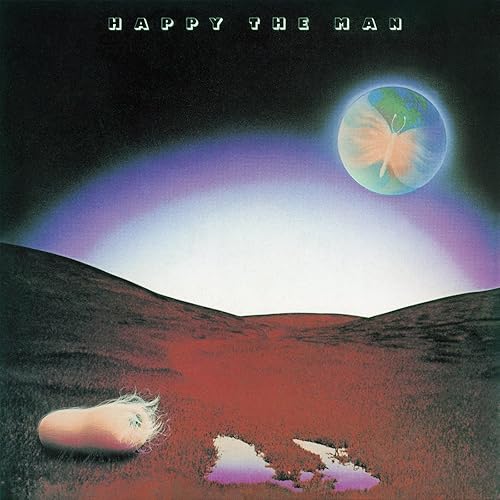
Bringing up the rear, at 50, was the self-titled debut album from a band that many consider the greatest American prog band of them all, Happy The Man, maybe, the greatest band that you’ve never heard of.
Formed in and around James Madison University in Virginia in 1973, the band predictably went through lineup changes before settling down, moving to Washington, D.C., and becoming well-known enough that Arista Records signed them. And at about the same time, the newly solo Peter Gabriel met with the band and demoed a couple of songs, before Gabriel decided to go in a different direction for his first album. I kind of wish he had stuck with HTM, though, because it probably would have been great.
These guys could play, with complex songs mixing Zappa, Gentle Giant and Canterbury Scene type songs with more Genesis like ballads. What they really couldn’t do was sing, or write lyrics (often an issue with bands of this type). But if you stick to the instrumentals, you will be blown away.
“Stumpy Meets The Firecracker In Stencil Forest” is a great, knotty instrumental, featuring great guitar, sax and synth playing, and if the often excessive length of prog songs turns you off, it is a compact 4:16. (And look, just because the title references a “stencil forest,” that doesn’t mean that it doesn’t have trees. The Black Forest isn’t black, and is filled with trees. Rain forests aren’t made of rain. Bighorn National Forest isn’t filled with sheep. Just saying.)
After releasing their debut, Happy The Man toured around the country, opening for bands as diverse as Renaissance and Hot Tuna, and recorded and released a second just slightly less amazing album, Crafty Hands. Neither album sold at all, and Arista dropped them. A third album was recorded in 1979, but not released until 1983 (I’ve never heard it), and keyboard player Kit Watkins left to join the somewhat more famous British band Camel. Other members of HTM formed and played in obscure bands or as solo acts over the years, and there was a brief reunion in the early 2000s.
If you like this genre of music and haven’t heard of Happy The Man, check out this song, and their first two albums (feel free to skip the three songs with vocals, but they do have some merit).
(It's extraordinary the things you discover in this job, one being the difference a space between 2 words can make. And the similarity. 'Dead Grass' is the name of an album by the late great fidler extraordinaire Vassar Clements, of whose music I have been a fan since I was 15. 'Deadgrass' is the name of a band who peddle the self same concept as did that album, albeit as a current working live band. And whose bio seems resolutely to avoid any reference to the earlier. Funny that.)
So, 'Dead Grass', then? More or less as it says on the tin, the music of the Grateful Dead through a bluegrass filter. Arguably not as great a leap as it sounds, Garcia's pre-Dead background in jugbands and his lifelong love of and sidetracking into banjo based acoustic hillbilly music being well known. I have racks of this stuff from Old and in the Way, through myriad duet sets with David Grisman, a celebrated mandolin player, also a member of OaitW. Vassar Clements, himself no stranger to Garcia and the band, having played on 'In the Wake of the Flood' and been also a 3rd member of OaitW, was, or certainly looked, much older school than his cohorts, and had an interesting life.
Born in 1928 and self-taught on the fiddle, he soon came to the attention of Bill Monroe, joining his Bluegrass Boys, barely as he turned 20. After a few years live experience he was ready for greater recognition, spending time with many of the bluegrass giants, including playing, alongside Lester Flatt and Earl Scruggs on this masterpiece. However, the middle of the 60s saw him fall prey to the bottle, and it seemed it had fully let him down, he scraping by in dead-end jobs.
Newly sober and developing a new name for himself, in sessions, he was fortunate enough to find himself swept up into the commotion of a groundbreaking moment in american music, The Nitty Gritty Dirt Band's 'Will the Circle Be Unbroken', in 1972.
This fabulous collaborative piece of work was the idea of the Dirt Band and their then manager, to team up their no mean talents with those of the generation behind them, putting a bunch of longhaired hippies into the room with a bunch of distrustful short-back-and-sides elder statesmen, like Roy Acuff, Jimmie Martin and the aforementioned Scruggs. Astonishingly it gelled, the recorded between song dialogue reflecting the initial suspicions. Clements featured heavily, arguably, alongside Doc Watson, the blind guitar-picking maestro, coming off the best of an impressive roster. From there, his second wind was off, Grateful Dead sessions, work with an immediately post Allman's Dickey Betts and a solo career. As mentioned earlier, he joined up with Jerry Garcia, Dave Grisman, bass player John Kahn and another ex-Bluegrass Boy, Peter Rowan, on guitar, to form Old and in the Way. With Garcia on banjo, they had a modus operandi of playing both traditional songs and grassed up covers of contemporary songs. Whilst no Dead songs made it on to any of their records, I would think it strange if they didn't sneak the odd one into their live sets, no doubt fuelling the idea for 'Dead Grass', which appeared in 2000, arguably helped along by the 'Pickin' On' series. For me, 'Dead Grass' has the greater whiff of authenticity, Clements being a tangible link to the band, the songs remaining songs, proper songs with vocals, rather than the slight sterility of meticulously rehearsed instrumentals.
In the intervening years Clements had remained busy, taking forward his concept of Hillbilly Jazz, a freewheeling amalgam of blue grass, western swing, jazz and old-times standards. The similarly entitled 1975 album is a thing of some wonder. Seldom ever can Bob Wills and Benny Goodman have sat alongside each other in the song credits. Very much Clement's project, backing musicians included David Bromberg and longtime Elvis drummer, D.J. Fontana. I remember reading about this record a year or two after 'Will The Circle', never ever seeming to be able to find a copy. I finally remedied that about 15 years ago, about the time Amazon were becoming a player, and from whom you could get anything. A joy better late than never.
There were a few more similar recordings, but the ever itchy fingered Clements kept stretching his boundaries, including a fascinating duet live recording with Stephane Grappelli, their styles seemingly poles apart, the Hot Club de Paris translated to a log cabin in the Appalachians. It shouldn't, but it works, believe me. Towards the end of his life; he died in 2005, he was exploring the blues, his final recording being 'Livin' With the Blues', another belter, alongside the likes of Elvin Bishop, Maria Muldaur and likeminded genre-defining harmonica man, Norton Buffalo.
I love fiddle music and how it can touch any style. If my top three exponents include Sugar Cane Harris and Dave Swarbrick, Clements is surely the king.
<Green, Green Grass of Home> may well be the first Trees/Grass song that comes to mind for people my age. Possibly followed by <Tie a Yellow Ribbon>. I cannot say that either of them does much for me besides bring back memories - we were severely exposed to both as they sat atop the charts for longer than I would have placed them there.
For me, Green, Green Grass was a Tom Jones hit. I've brought this next point up before, but since we are talking memories... My pop music exposure during Tom Jones' Green Green Grass period was via a short-wave transistor radio connection to pirate radio Radio Luxembourg, more than 1,500 miles away. This meant that the signal came and went such that you mostly caught snippets of the song.
In perusing the Wikipedia article for the song, I was struck by the number of known covers of the song beyond Tom Jones: Johnny Darrell and Porter Wagoner, credited with the first public exposures, and then Jerry Lee Lewis, Joan Baez, Elvis, Nick Cave, Kenny Rogers - and believe it or not, the Grateful Dead.
I also had not fully focused on the lyrics - certainly registering the general melancholy, but ascribing that to an aspect of what I assumed Country music was like. And perhaps not totally wrongly - there are no few songs that lament the state of some po' boy on Death Row, for that's the story the song tells. If you hadn't noticed:
There's a guard, and there's a sad old padre, Arm in arm, we'll walk at daybreak Yes, they'll all come to see me in the shade of that old oak tree, So they lay me 'neath the green, green grass of home
This one appears to be a classic in its own realm, but - judging from the fact that several others have covered it - not so far out of the mainstream.
Back when I was an undergraduate student at "Camp Gitchie Goomie" (bonus points if you can provide its real name), the school hosted a group known as Martin, Bogan & Armstrong. From their album Martin, Bogan & Armstrong (maybe their only album?), here's a song that kinda pushes the limits of our current theme.
I mean, grass ... as in "weed"- of the once/still(?) semi-legal variety.
<If You'se a Viper> was written back in the '30s (soon we'll need to clarify that as the <19>30s!), and there are various interpretations of the song.
The title possibly refers (not reefers) to the sound that emanates from "toking" on a doobie: a hiss, not unlike one that a snake might make?
The song is credited to Snuff Smith (and that's another path worthy of following...).
In the 1920s/30s, a lot of jazz musicians smoked grass. There's a fair amount about the inter-twining of the song itself and the US/WWII era in the Wikipedia article that is fairly entertaining and informative. If the subject interests you, it is worth a read.
There are takes from Fats Waller, The Manhattan Transfer and Jim Kweskin.
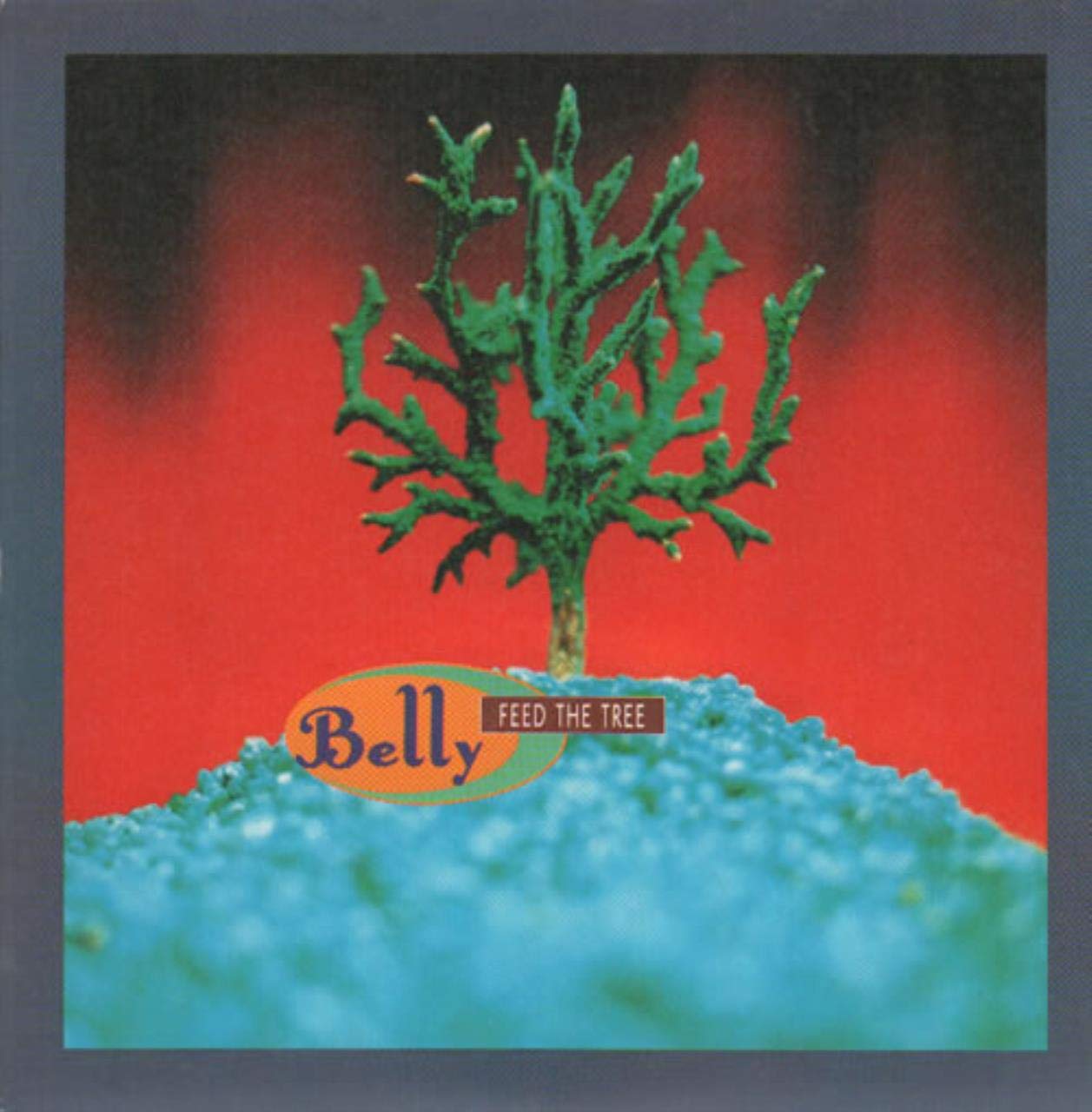
Belly was a band formed by Tanya Donnelly, who had been in Throwing Muses and The Breeders. They put out a great album in 1993, a less great album in 1995, broke up in 1996 and have recently reformed.
The big song off the great album (Star), “Feed The Tree,” was both dreamy and propulsive, with a great hook. It became a big hit on MTV when that was a thing, topped the Billboard Modern Rock chart, and broke into the Hot 100. I didn’t quite know what the song meant when I was blasting it back in the 90s, but later understood it to from the perspective of a dead person, buried under a tree, talking to a visiting mourner.
Googling the song before writing, I found a much repeated quote from Donnelly (although I haven’t been able to find the primary source, which probably would have annoyed my senior thesis advisor) in the Illinois Entertainer, in which she said that the song is about commitment and respect. The metaphor is the tree that would be planted on large farms as a point of reference to getting around (the only tree sometimes). Because nothing would grow under the large tree, the family would be buried under it.
My father-in-law died last week. He loved classical music and jazz, and some folk, but I suspect that he would not have been particularly fond of Belly, or the song. But he did love trees. In fact, he loved all beautiful things—he was an architect with an incredible eye, a remarkable photographer, a devoted college professor, and an artist and a lover of art, who, with my mother-in-law, turned an ordinary house into a sanctuary filled with art—including his photographs (and my wife’s), his drawings and other projects, works purchased from artist friends and acquaintances, and items picked up on their travels around the world—most notably museum-quality African sculpture.
The house is surrounded by acres of woods, in which they (until he was unable to walk easily) spent many hours walking, admiring the forest, and cleaning up the inevitable debris in an attempt to improve on nature. Back when my kids were little, we would go into the woods and choose one of the small pine trees that he had identified and nurtured during the year to use as a Christmas tree. As someone who grew up without a tree during the holidays, I enjoyed the tradition, too.
My mother-in-law, in her late eighties, still scampers through the woods more nimbly than people decades younger (like me, who has referred to these nature walks as “forced marches”). And just recently, they acted on a long-discussed plan, donating the bulk of the property to the local land conservation trust, so that others can enjoy the trees (and the two brooks), freely, and without fear of development.
There is also a beautiful katsura tree on their property (on the part they didn’t give away) that always seemed to bring him enormous joy. It is a beautiful tree, which has leaves that change color from reddish-purple, to blue-green as they mature, and then yellow in autumn. He loved that tree.
My in-laws have donated their bodies to the University of Connecticut Medical School, so for the short term, his body will be used to train doctors, and then cremated, so he won’t be feeding any trees after death. But during his life, he fed many trees. And minds, and hearts, and eyes, and brains.
Star Maker Machine does not accept music submissions from artists or promoters. However, most of the contributors here do accept submissions for our own blogs, listed below. Please visit our blogs, take the time to listen to what we post, and then feel free to contact us if you feel that your music would be a good fit.