











Showing posts with label Hot Tuna. Show all posts

Sunday, November 6, 2022

PIRATES: LONG JOHN SILVER

 Captain Hook aside, is there a greater pirate than Long John? I think not and am not even going to bothered if any dullard mentions Depp and company in those awful films. Jack Sparrow? Jack Shit, say I, even if Keef turned up for one of them. Any kudos he may have brought to the franchise was instantly lost by his stupid moustache.

But what does he have to do with anything musical? Long John, clearly, not Depp, who, as any fule knos, has none whatsoever. (Hollywood Vampires, my arse….) Well, given the, um, maturity of our readership, I am going out on one to suggest you are aware of an Airplane named Jefferson. Yay! Team!!! (No, not Starship; go to the foot of the class.)

I loved J.A. OK, I was a little young and the wrong side the world. So maybe I liked more the idea of the band, as reported, week by week, in the inky UK rock press. San Fran, hippies, anti-war, summer of love, all of that, and it all seemed so cool. I loved them before I ever heard them. I think Volunteers got brought into school, actually by one of the teachers. (With longish hair and a ‘tache, we imaginatively nicknamed him Zappa.) I liked, but, in truth, preferred the album Burgers, by the offshoot band Hot Tuna. Jack’n’Jorma became my heroes, as did the magisterial talent of Papa John Creach, who was just so damned cool. Impossibly old, if probably in his 40s, bald, black and stick-thin, with a fiddle sound to die for.

A later purchase of the double vinyl best of, Flight Log, or double album as we called LPs made of plastic back then, turned out to be all the Airplane I ever bought, even though I have a stash of Tuna’s output, plus Kaukonen solos and, even one of the good Mr Creach. So this theme was too good to waste on anything else, this near to crash landing of the band, and seemingly not with much love gifted its way. I have never heard it. Well, until typing this sentence.

The band were in a bit of a pickle in 1972, with solo and side projects having more allure for the bickering band members. Marty Balin had jumped ship and new drummer, Joey Covington appears  only for some of it, uncertain if he fell off board or was pushed. Which, as the astute will observe, adds extra allegiance to this weeks theme. (Gangplanks, boom tish!) Lester Bangs, the idiosyncratically acerbic no holds barred critic didn’t like it, in a review of such faint praise as to damn it to hell. 

Long John Silver

It opens with the rattle and rumble of the title track, a somewhat generic roustabout biggie, held primarily by the engine room, where Jack Casady’s bass is stoked to the fore. Grace Slick sounds, frankly, the “drunk as a fart” she later claimed to be, during the making of the album. It’s OK, needing Aerie (Gang of Eagles), a moody Slick piano ballad, to lift things. Maybe that should be slick and moody, but either way it works, and the feel is almost Sandy Denny-esque in construction, the minor key elevations reminiscent of that singer’s songs. Which is ironic, when you consider her band, Fairport Convention, cited Jefferson Airplane as such an inspirational influence. Twilight Double Leader is another shrill and somewhat derivative rocker, enlivened only by Creach's fiddle, which swoops and sires appealingly. 

Aerie

Milk Train splutters and spurts, again made better by fiddle, but really has me wondering what I saw in Slick, her voice a raggedy hoot of shrillness so far, apart from Aerie. Kaukonen slots in some half way decent guitar as it meanders to a close. Most don't, but I quite liked Son of Jesus, but I don't pay as much attention to the supposedly risible lyrics as I ought. But, you know, even when I do, it neither offends nor makes me laugh. Typical J.A. fare, really. Good song. and Easter? is great, a steamy slow burner, impassioned vocals over a piano led progression. OK, it gets a bit bonkers, as Slick gets overheated, needing Kaukonen to sneak in with some guitar. (What's with all these religious allusions, though?)

Trial By Fire

Trial By Fire has the unmistakeable feel of a song that might have otherwise been on the next Tuna album, the bass and guitars all a'weave, the electric and acoustic jousting with each other. Alexander the Medium, great title, by the way, is a change in direction from anything else much here. I love it, the tune evocative in style of a Sally Army band. Creach has his fiddle on a slightly sharper setting and it works, and the instrumental breakdown at the end is the most successful on the album yet, which, as the longest track, was something maybe they knew. The final track is also a belter, Eat Starch Mum, if with nonsense lyrics, with a thrust not a million miles from Volunteers, the track.

Alexander the Medium

So there you get it. I done a review, albeit of an album that came out 50 years ago this year. It probably hasn't aged that well, particularly the vocal characteristics of their lead singer, or the then best appreciated and remembered of them. But it has a few moments. So, in the parlance of the character who inspired it, no black spot.

Buy it if you still want to.


Friday, March 4, 2022

weather: MIXED WEATHER


There is a Turkish saying about the month of March that goes like this: it'll make you look (longingly) out the door and cause you to burn your (wooden) shovel and pick handles.

March 1st here was a balmy 50 degrees F; March 3rd it snowed. 

Myself, I feel the weather all day long since my workplace is required to leave all the doors and windows open to mitigate the virus. But it will soon pass. The cold weather, that is.

The weather? ... we have no control over it. Or do we? You want to get into climate change, do you? After COVID mitigation, you say you want to take on weather patterns? Well,  OK ...

I'm not a climate data scientist but I do believe that we don't have (and likely never will have) the long-term data to prove human-caused climate change - there are just too many factors). But I still believe I carry some responsibility for my use of the resources I consume. Guilty until proven innocent.

But without fruitless worrying, we *can* start by making a (limited) list of weather issues:


too much rain


too cold


too hot (kind of off the mark - except that it is Hot Tuna and Jorma is hot)


 Do note that the Weather report intro solo at the top is played on a bass guitar


Friday, June 7, 2019

Trees/Grass: Stumpy Meets The Firecracker In Stencil Forest


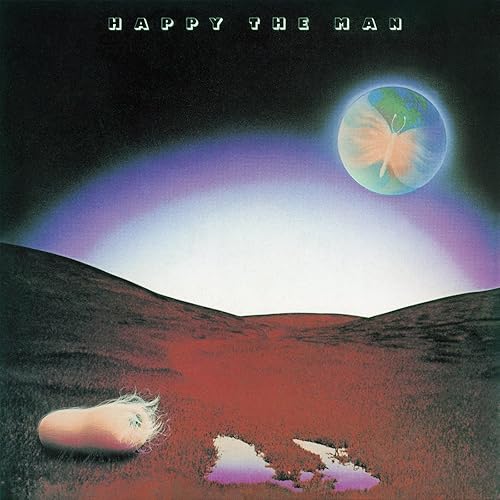
Happy The Man: Stumpy Meets The Firecracker In Stencil Forest
[purchase]

It has been a while since I’ve written about prog rock, and I initially considered writing about two songs from one of my favorite Genesis albums, Selling England By The Pound, “The Battle of Epping Forest,” based on a real gang war, because “forest,” and/or “I Know What I Like (In Your Wardrobe),” about a groundskeeper who says, “Me, I'm just a lawnmower/You can tell me by the way I walk.”

But no, let’s go deeper into the prog rock weeds.

Prog, at least back in its heyday of the early/mid 70s was really a European thing. Most of the famous bands associated with the genre are English, German, French, Italian, etc. But there were American prog bands. Back in 2015, Rolling Stone published a list of the 50 Greatest Prog Rock Albums of All Time, and fittingly, most were from European bands, most of which you have probably heard of (including the aforementioned Selling England By The Pound, at No. 6. The highest ranked U.S. album was from Frank Zappa and the Mothers of Invention, One Size Fits All (Canadians Rush, though had albums ranked 3 and 11.)

Bringing up the rear, at 50, was the self-titled debut album from a band that many consider the greatest American prog band of them all, Happy The Man, maybe, the greatest band that you’ve never heard of.

Formed in and around James Madison University in Virginia in 1973, the band predictably went through lineup changes before settling down, moving to Washington, D.C., and becoming well-known enough that Arista Records signed them. And at about the same time, the newly solo Peter Gabriel met with the band and demoed a couple of songs, before Gabriel decided to go in a different direction for his first album. I kind of wish he had stuck with HTM, though, because it probably would have been great.

These guys could play, with complex songs mixing Zappa, Gentle Giant and Canterbury Scene type songs with more Genesis like ballads. What they really couldn’t do was sing, or write lyrics (often an issue with bands of this type). But if you stick to the instrumentals, you will be blown away.

“Stumpy Meets The Firecracker In Stencil Forest” is a great, knotty instrumental, featuring great guitar, sax and synth playing, and if the often excessive length of prog songs turns you off, it is a compact 4:16. (And look, just because the title references a “stencil forest,” that doesn’t mean that it doesn’t have trees. The Black Forest isn’t black, and is filled with trees. Rain forests aren’t made of rain. Bighorn National Forest isn’t filled with sheep. Just saying.)

After releasing their debut, Happy The Man toured around the country, opening for bands as diverse as Renaissance and Hot Tuna, and recorded and released a second just slightly less amazing album, Crafty Hands. Neither album sold at all, and Arista dropped them. A third album was recorded in 1979, but not released until 1983 (I’ve never heard it), and keyboard player Kit Watkins left to join the somewhat more famous British band Camel. Other members of HTM formed and played in obscure bands or as solo acts over the years, and there was a brief reunion in the early 2000s.

If you like this genre of music and haven’t heard of Happy The Man, check out this song, and their first two albums (feel free to skip the three songs with vocals, but they do have some merit).

Friday, May 29, 2015

Water: Water Song/Hot Tuna


Hot Tuna: Water Song
[purchase Water Song from Burgers]

Water: at the same time powerful and soft. It flows gently around your toes and ankles at the beach. It roars, surges and tears apart the largest, strongest edifice that man can build.

The therapeutic value of music is more or less established: you know, "music soothes the savage beast".

In fact, early practitioners of the art of medicine made use of the sound of water to heal the ill: there is plentiful archaelogical evidence that doctors at the ancient Greek city of Pergamon (Bergama) made use of the sound of running water to heal their patients. The Pergamon ascelepium (various spellings) was a medical center designed so that ran water past the hospital rooms.

G.F. Handel gave it a try back in 1717. Handel's <Wassermusik> flows almost like water - but that is easier accomplished with classical music and acoustic instruments than with electro-rock (not to detract from Handel's composition skills: and it's not just Wassermusic that flows like water - listen to the Messiah, and it's like listening to water therapy.)

Incorporating the sound of water in rock music is no mean feat. Yes, rock/music can soothe the soul, but the pump and beat of rock almost defies the relaxation that the sound of water signifies: imagine waves quietly lapping the shore of your summer retreat. Now imagine the sound of the Jefferson Airplane. Doesn't quite match up.

However, Jorma Kaukonen and Jack Cassady of the Jefferson Airplane came pretty close to conveying the sound and emotion on Water Song from their 3rd Hot Tuna album, 1972's Burgers.

There's a ripple to the notes. There's the rolling repetition of Kaukonen's finger picking style that makes the music come close to the sound of water. I loved it back then and am even more impressed to see this version, when the gentlemen are in their 70s and still going strong.

Let it flow.

Wednesday, April 15, 2015

Light: I Am The Light of The World


Rev. Gary Davis: I Am The Light of the World
[purchase]

Many people just listen to music as background noise, or something to sing or dance to, and there’s nothing wrong with that. But those of us who consider music a hobby, or an obsession, aren’t satisfied with that. We investigate. We try to learn more about the songs and the artists we love, and in that effort are often rewarded with deeper knowledge. Or, at least, more knowledge. Much of what I know about the blues comes from investigating covers by musicians that I already knew, and that is consistent with the blues tradition of artists learning traditional songs, or original songs (or original songs thought to be traditional) from recordings or performances by others.

I first became aware of Rev. Gary Davis through listening to Jorma Kaukonen’s performances of his music, solo and with Hot Tuna. And I learned about Davis’ influential finger-picking style that had an impact on Jorma, and others, including Jerry Garcia, Bob Dylan, Ry Cooder, David Bromberg, and many, many more. I learned that he was born in South Carolina in 1896, was blind since infancy, and was an actual Baptist minister. That he played and recorded music into the 1940s to niche success. But that the folk and blues revival of the 1950s and 1960s catapulted him to greater fame, performances at the Newport and other folk festivals, and led to covers of the songs he wrote or popularized by popular artists. I learned that Davis generously taught many of these younger musicians how to play in his style, and his songs, and that he died on the way to a gig in New Jersey in 1972. And I discovered that while many of Davis’ songs were religious, he also wrote secular songs.

“I Am The Light of The World” is a religious song, based on the Gospels, and steeped in his faith. I’m not a religious person, in the sense of believing in a god or anything like that, but I do believe that humans have an obligation to try to do right by each other and, in the best of situations, help each other to do right. And while I suspect that Reverend Davis would disagree with me in the particulars, I think that he would, ultimately, focus more on the deeds than the beliefs.

Now, I am far from perfect. I’ve committed all seven of the deadly sins, and more of the less lethal ones, over my lifetime. Not to mention, I’m a lawyer. But one thing that I am comfortable in putting on the good side of my personal ledger is my 20 years as a volunteer with AYSO, the American Youth Soccer Organization, which I have written about before. We are a soccer organization, but one that tries to focus more on enriching children’s lives than a team’s won-loss record. For a number of years, I have been involved in training volunteers in management—not only the nuts and bolts of running a program, but in the AYSO way of doing things.

Last weekend, I had the opportunity to help instruct at Regional Commissioner training. RCs, as we call them, are the leaders of local programs. I was one back at the turn of the century, and it was one of the most important things that I have ever done. RCs work incredibly hard, spend countless hours making sure everything is done right, and are all volunteers, as are all of the board members who help the RC, and all of the coaches and most of the referees. People say that it is a “thankless task,” but I found that many people thanked me, and in turn I tried to thank all of the RCs who followed me, and all of the other volunteers, not only explicitly, but by continuing to assist the organization locally and nationally.

A few years ago, pressed by some very smart and committed staff and volunteers, AYSO decided to put together a weekend of training for RCs from around the country, usually at its office in California. The weekends are instructional, but they are more. They create relationships, act as therapy sessions (there are tears!), and help the RCs, some who are brand new, and even others with experience, recognize the support that they have both from the staff and the volunteers around the country. And the constant message is that it is the RCs’ mission to provide a good environment for the kids, and a positive experience for the volunteers. It is an inspirational weekend, not only for the students, but for the instructors as well. I got to see a group of nearly 40 strangers, from all over the country, with different racial, educational and financial backgrounds, varying political beliefs and very diverse lives, bond, learn, interact, socialize, act crazy, marvel at magic tricks, and, at the end, have an enormous group hug as a new AYSO family.

What does this have to do with our theme, and this song? Each of the RCs who were trained at this session will go back home, to Alabama, Idaho, Illinois, all over the hand that is Michigan, Nevada, California, Tennessee and Hawaii, and be the light of their soccer worlds, and bring the light into the lives of thousands of children. And when those kids’ smiles light up their faces, into the lives of their parents.

Friday, June 13, 2014

Hotels and Motels:Songs About the Chelsea Hotel


Jefferson Airplane: Third Week in the Chelsea
[purchase]

I am willing to bet that there is no other hotel or motel in the world that has inspired more songs than the Chelsea, located in the lower Manhattan neighborhood of the same name. Recently purchased and closed for renovations, the hotel has long been identified as a place for artists, performers, writers and musicians to live and work, which probably explains its popularity in song.

Wikipedia lists 22 different songs referencing the hotel, and one of them, Leonard Cohen’s “Chelsea Hotel #2” has been often covered. You could create a pretty credible cultural Hall of Fame consisting just of residents of the Chelsea, which for years was a residential hotel, including Bob Dylan, Charles Bukowski, Janis Joplin, William S. Burroughs, Tom Waits, Leonard Cohen, Patti Smith, Jasper Johns, Claes Oldenberg, Iggy Pop, Arthur C. Clarke, Allen Ginsburg, Diego Rivera, Mark Twain, Arthur Miller, Tennessee Williams, Stanley Kubrick, Uma Thurman, Jane Fonda, Alice Cooper, Larry Rivers, Christo, Julian Schnabel, Alejandro Escovedo, Jimi Hendrix, Willem de Kooning, Robert Mapplethorpe, Gore Vidal, Jean-Paul Sartre, Simone de Beauvoir, Dennis Hopper, Thomas Wolfe, Elliot Gould, Elaine Stritch, Edie Sedgwick, and many, many more. And, of course, Sid Vicious’ girlfriend, Nancy Spungen, was found dead at the hotel, as were Dylan Thomas and Charles R. Jackson, the author of The Lost Weekend.

Cohen’s song has been discussed previously on this blog, here, and a cover by Lloyd Cole is discussed here, Dylan’s “Sara” was mentioned, if briefly, here, and a post about Joni Mitchell's "Chelsea Morning" is here. But there are many, many others to talk about.

My favorite is “Third Week in the Chelsea,” the second song from Jefferson Airplane’s Bark album that I have written about (which is pretty interesting, considering that it is generally considered a pretty mediocre album). It was written by guitarist Jorma Kaukonen, and it is a beautiful song, filled with sadness and resignation about the impending demise of one of the great bands of its era. It is a classic of the “leaving the band” genre, right up there with Peter Gabriel’s “Solsbury Hill.” Although the whole thing is great, this stanza always kills me:

All my friends keep telling me that it would be a shame 
To break up such a grand success and tear apart a name 
But all I know is what I feel whenever I'm not playin' 
Emptiness ain't where it's at and neither's feeling pain 

Because, when it is time to go, it is time to go. Luckily, he had Hot Tuna to fall back on.

Leonard Cohen’s song, which we really aren’t going to discuss, was about an (oral) sexual encounter at the hotel with a woman he later acknowledged was Janis Joplin. Jeffrey Lewis, a New York singer/songwriter, wrote “The Chelsea Hotel Oral Sex Song” which is both about and not about Leonard Cohen’s song, and has a certain shaggy dog charm of its own (and no actual oral sex):


Dan Bern, who is often compared to one time resident Bob Dylan, because they are both Jews from the Midwest who have raspy voices, play guitar and write interesting songs (making the comparison somewhat plausible), also wrote a song about having sex at the Chelsea. This version was recorded at the Turning Point in Piermont, New York, just across the Tappan Zee Bridge from my house, which gets surprisingly good acts, considering that it is about the size of a small living room. And it has a trumpet solo.


And, finally, here’s Okkervil River’s “Bruce Wayne Campbell Interviewed On The Roof Of The Chelsea Hotel, 1979.”


Campbell was the real name of the former Chelsea Hotel resident, singer Jobriath, who is considered to be the first openly gay rock musician signed to a major label, as well as one of the first well known musicians to die of AIDS.

The song appeared on Okkervil River’s The Stand Ins album, which is filled with songs musing about celebrity and pop culture. Jobriath, whose albums received generally good reviews (and had both Peter Frampton and John Paul Jones contribute to his glam-rock, very David Bowie-esque music), found his career derailed first by excessive hype by his management, then his disillusionment with the industry, and finally by his illness. He apparently did an interview from the roof of the Chelsea in 1979, but it was different from what Okkervil River sang about. Although not directly related to the hotel, here’s one of his songs, “Take Me I’m Yours,” about S&M, which certainly could have happened at the Chelsea Hotel.