Saturday, December 10, 2022

Leftovers: Luck: Lucky Number


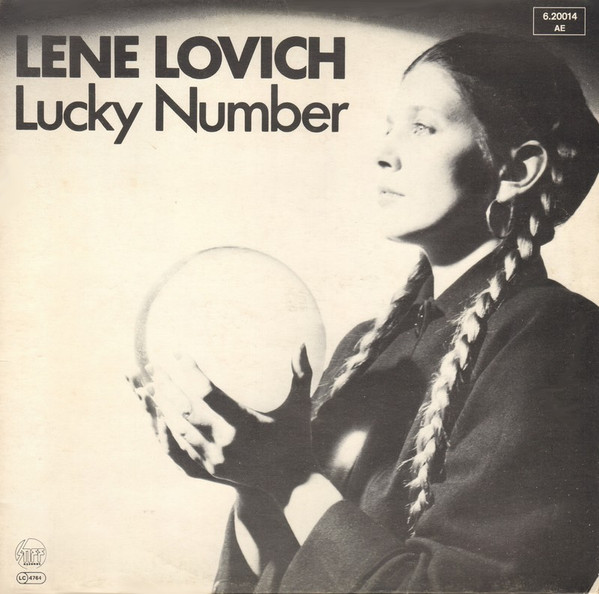
Lene Lovich: Lucky Number
[purchase

When I started thinking about the Leftovers theme, I was reminded of something I heard a few days after Thanksgiving, about throwing away leftovers when they were no longer fresh. So, in that spirit, I decided to write a piece that I had planned for our most recent theme, “Luck,” about Lene Lovich’s quirky new wave hit, “Lucky Number.” But I never got around to writing it. 

Lately, I haven’t really been feeling like writing here. I’m not sure why, but I’ve missed themes, or just written once rather than twice. It might be the fact that for the last month or so, the World Cup has been on, so my TV has been tuned to soccer, distracting me from music blogging. Or maybe it’s been work, which has been intermittently busy. Or maybe it’s just a periodic malaise that sets in when you’ve committed to try to write once a week (as a hobby). That’s why I’ve started taking summers off (sort of), to allow me to recharge my writing batteries. 

I still haven’t broken free of my lack of motivation. So, I thought I’d try a trick. A bunch of my friends have been playing with ChatGPT, an AI tool that responds to prompts, and posting the results on Facebook, Because I still didn’t want to write this myself, I instructed ChatGPT to “Write a blog post about Lene Lovich's song "Lucky Number" Here’s what came out; 

Lene Lovich's 1979 hit song "Lucky Number" is a classic example of the singer's unique blend of punk and new wave influences. The track, which was released as the lead single from Lovich's debut album Stateless, quickly became a fan favorite and remains a popular choice among fans of the genre. The song begins with a catchy guitar riff and Lovich's distinctive vocals, which are full of energy and attitude. The lyrics tell the story of a woman who is looking for love in all the wrong places, trying to find her "lucky number" in the hopes of finding happiness. The chorus is infectious, with Lovich singing "Lucky number, lucky number, where can you be found? / Lucky number, lucky number, where can you be found?" 

One of the standout features of "Lucky Number" is Lovich's use of yodeling, which adds a unique and unexpected element to the song. This unusual vocal technique is used throughout the track, and it helps to create a sense of playfulness and fun. 

In addition to Lovich's vocals, the song also features some impressive instrumentation. The guitar riff is catchy and energetic, and the rest of the band provides a solid foundation for Lovich to build upon. The overall effect is a high-energy track that is both fun and infectious. 

Despite its popularity, "Lucky Number" has not always received the recognition it deserves. It was not a chart-topping hit, and it did not receive much radio play at the time of its release. However, the song has remained a favorite among fans of Lovich and new wave music, and it continues to be played at concerts and events. 

Overall, "Lucky Number" is a classic example of Lene Lovich's unique blend of punk and new wave influences, and it remains a fan favorite to this day. The song's catchy guitar riff, energetic vocals, and playful use of yodeling make it a must-listen for fans of the genre. 

That’s actually pretty good, if not perfect. Stylistically, it’s a bit repetitive, and the writing is flat, but it has the basic facts about the song, and Lovich (born Lili-Marlene Premilovich, in Detroit), right. Most egregiously, the quoted lyrics are not actually in the song (and don’t appear to be in any song). I’d argue that this error means that the bot gets the song’s message wrong—I don’t think it is about someone looking for a lucky number, but rather that the singer was once happy alone, but now prefers being part of a couple. 

But not bad for a robot.

Sunday, November 27, 2022

Luck: Taylor Swift


purchase [ get some Taylor Swift ]

 It seemed like  an appropriate time to take a look at a musician I confess I know virtually nothing about. Shame on me for not knowing more, considering the recent awards and media coverage she has earned.

Further shame on me because I have a couple of Taylor Swift songs lurking in my [pirate] music collection that I never listened to. That small collection courtesy of YouTube actually includes Lucky One. However, like our own Seuras, I have always held a sweet spot for Bonnie Raitt (and of course, Luck of the Draw)

The live version of Taylor Swift's  Lucky One that I came across above further solidifies my appreciation of what it means to be a "star". Dire Straits' Money for Nothing once had me thinking that what many people envision as a life of excess/luxury wasn't all that desirable. The lyrics of this song help cement that understanding. Rampant fame is probably not the kind of luck you want to achieve. I mention the live version because - in comparison - I feel that I can really see the effort that Taylor Swift must put in in order to appease an enormous stadium of "fans". She does a good job, but it comes across to me as a job/a struggle.

Thursday, November 24, 2022

LUCK: OF THE DRAW


I’m a big fan of Bonnie Raitt. Always have been, from long before her eventual break through, the one heralded, I guess by the song that entitles this piece. Before then she was a doe-eyed vixen who confused the biz as where best to place. Sure, the blues was her bag, but, in the 1970s blues was not deemed the domain for wee slip of a girls from Burbank, California. Yes, she was admired for her bluesy based formula, drawing in roots from folk, country and rock music, but nobody much bought her records. Being also, in her earlier years, a bit of a booze hound led, sometimes, to an inconstancy of performance that perhaps baffled and beguiled those responsible for her career, with any number of producers throwing different prisms her way, through which her light might get seen to shine.

Making her live debut on stage at the 1970 Philly Folk Festival with Mississippi Fred McDowell perhaps 

accentuated the quandary, the contrast between the grizzled old bluesman and the fresh faced girl somewhat remarkable. Her first solo release followed a year later, critics recognising her star, her bottleneck guitar play already to the fore, together with her distinctly yearning vocal timbre. Success, however took a while, it taking seven years, six albums and five producers before anything like a hit. And, when it came, a cover of Del Shannon's 'Runaway', it wasn't even all that typical, a, frankly, boogie by numbers chug, a very good boogie by numbers chug, mind, but it got her her hit single 


Now signed to a major deal, this should have been plain sailing, but their expectations were higher than her sales, resulting in a brutal dump, shortly after the completion of what would have been her 9th album, were it not shelved. Without a label, and despite her affinity for substance abuse getting increasingly in on the act, her profile was kept high by touring and activism: if there was an 'Aid' between 85 and 88, the chances are she was involved, so Sun City, Amnesty International, Farm Aid. But her luck outed, or maybe her determination, as, by 1987, she was clean and open again for record deals. Capitol signed her and 1989 saw 'Nick of Time', a presciently entitled LP if ever was, sweep her to overnight superstar. I guess the time was right for efficiently smooth grown up music, with enough experiential heft to be valid to a market then beginning to open the boundaries of what might be considered marketable. Her 10th record, not only did it dent the charts, it hit the top, becoming, in time, 230/500 in the Rolling Stone list of all time. With the title track her own, along with two others, the rest was a shrewd mix of songs by other artists of more pedigree than presence; John Hiatt and Jerry Lynn Williams for two. And what a stellar cast of musicians: Crosby and Nash, Don Was and the Was Not Was singers, Herbie Hancock. And the first appearance of her later near constant rhythm section, Hutch Hutcherson on bass and the ex-Beach Boy, Ricky Fataar, on drums. A great album. And let's not forget her duet, 'I'm in the Mood', with John Lee Hooker, for which they gained a Grammy, for his late life smash, 'The Healer'.

But, astonishingly, not as great as the next, the one that inspired this piece. I'm biassed, of course, but not alone, as it did even better, sales wise, than its predecessor. Why my greater love? Down, actually to the choice of songs. Again, a mix of hers and those by celebrated writers in their own right. So, with four of hers, there are another John Hiatt, a Womack and Womack, a Chip Taylor and two by fricking Paul Brady, including the title track. I should add I was on a big Brady binge at this sort of time, so for her to be playing his songs was enough to guarantee my attention. It also included the song, which has become most associated with her, much re-covered subsequently, if never quite so well, the sublime 'I Can't Make You Love Me'. She also provided a cover of Richard Thompson's 'Dimming of the Day' round about this time, for the tribute album, 'Beat the Retreat', which I habitually include as part of LotD, when I play it on my laptop. Paul Brady and John Hiatt were among guest musicians this time, as was Thompson, so getting on for being a dream team. I remember buying this disc in 1991, and it still holds up a a personal favourite. I'll bet it also Brady's, he continuing as a presence throughout the rest of his career, adding songs, having his own profile (and income) boosted as a result.

Seven albums have followed, allowing her to crest the wave of acclaim she had found. If never quite as successful as the double whammy of 'Nick' and 'Luck', she has maintained an elegant presence, a stateswoman for the blues and the older woman in rock music. I saw her live, for the first time, some time before the pandemic, 2016, actually, I discover with a shudder, and she was terrific. As was her Fataar and Hutchinson inclusive band, with the great George Marinelli her now regular guitar sidekick. Realising it was so long ago alerts me to the fact she tours the UK again next year. I should go. Before she does, to capture that skill, her effortless guitar, a slide to die for, and that voice, the elixir of smoke and honey.

Let's finish with Bonnie and Richard, hoping their day never dims.....


I can't make you love her, but....


Bonnie.


Saturday, November 12, 2022

Pirate: Emerson, Lake & Palmer


purchase [ get it ]

At the time (early 70s), ELP was big. Their 1977 US tour was notable for its size as they went on the road with an orchestra. Said Emerson, "what you hear on the record is what you expect to hear when you buy the ticket to the show." The size of Emerson's bank of keyboards was noted to "resemble a fortress".

I honestly do not recall the last time I listened to Emerson., Lake & Palmer - or even thought of them. But there was a time (way back when) that they were on my "play-list". That would have been mid 70s - their "heyday". with songs like Lucky Man. Since they tended (like Pirates) to lengthy songs not suitable to pop radio, their charting would have been limited. This one times in at around 12 minutes.


The song lyrics are a story in themselves. not short story or novella, but considerably longer than "normal" radio play accommodates.

How fortuitous in some way, that Seuras Ogg beat me to the modern day pirating issue. Back in the late 60s early 70s,  I, too, as an American living outside America looking to listen to the latest US songs, tuned in to Radio Caroline on short-wave frequencies .Not FM or AM. Short-wave, where the sound goes and comes, but the airwave connection did allow you get the gist of things. Equally fortuitous that Seuras also previously mentioned Papa John, who for some reason also conjured up images of pirates in my mind.

For anyone who has been online as long as I have (mid '90s) the concept of pirating music has greatly evolved. I am of the generation where we read horrifying stories about grandmothers who were subjected to court cases for "inadvertently sharing" music files: taken to court for violating "laws" and subjected to fines amounting to thousands of dollars. Grandma music pirates.

Navigating and explaining the changing legal positions as a teacher of Digital Citizenship during those years was a difficult ."What's legal and what isn't?". Students wanted to know if sharing a YouTube video was legal. If posting a cover of a song was legal. More often than not, the legalities of sharing were a bit hazy, and it changed over time as record companies figured out the market. Today, I can 'pirate' most any song I want via YouTube.

20 years ago, there was also the Pirate Bay file sharing site out of Sweden, which the web tells us "... still works in 2022.." I confess I made not infrequent piratical use of the rather complex, devious method to get access to music that is now "free" via Spotify, YouTube... Wasn't it Stevie Wonder who sang about the  power of music to find a way to get its message across?


PIRATE: RADIO

 Is this purely a UK thing, I wonder, with pirate radio a real nostalgia trip for anyone of a specific vintage? (Yup, I do mean old. Boomer.) I remember pirate radio, even if I don’t clearly recall the stagnant status quo that begat it into being and necessity. As a child of the late 50’s, I had a elder sister, a deeply entrenched denizen of the swinging 60’s, a dolly bird with ironed hair, Mary Quant panda eyes and micro skirts. She made damn sure I was up to speed with the hit parade of the day, and it wasn’t courtesy Auntie Beeb. (In truth, looking back, I wonder just quite how much she was responsible for my enduring obsession with music, a blessing I have been cursed with as long as I recall.)

The British Broadcasting Corporation was a bit blindsided by pop music. With, in the 1960’s, two radio stations available, the Home Service and the Light Programme. The Home Service was all the serious stuff: news and current affairs, whereas the Light Programme catered for everything else, thus encompassing comedy, soaps, quiz shows and music, of any and every genre. Which, reluctantly and, whenever the schedule would allow it, pop music, surely a passing fad and one, if studiously ignored, might go away. It was to the huge swell of young people, a relatively new invention, that the pirate’s addressed themselves, as the mainstream certainly was in no hurry.

Radio Luxembourg was the one I was first most familiar with, which, in Luxembourg, was an entirely legit organisation. So what was it doing broadcasting English language programming, not an official language in the state? Answer: trying to get around the loopholes the UK put in place around broadcasting. And, whilst legal and with an official licence, their practice was deemed infra dig by the stiff upper lips of the establishment. We used to listen to Lux under the bedsheets at school, after “lights out”, but it was always a tad soul destroying, courtesy the dreadful signal and the (deliberate?) interference.

Far better was Radio Caroline, a fully illicit operation, broadcasting into the UK from outside maritime borders. From boats. OK, big boats, if not necessarily all that sea-worthy.This was wall to wall pop music, with trendy, hip DJs, who would eventually take on board the widening references of the then nascent music scene, embracing non chart music and the “album” market: underground music, it was called, perhaps equating to, or heralding, FM radio, and the birth of AOR- adult oriented rock, in the US. Caroline were huge and presented a huge threat to the constitution. In 1967 came an Act of Parliament  to constrain their activities. At much the same time, arguably not unrelatedly, the BBC rejigged their formula, with the initiation of Radio 1, 2, 3 and 4. The Home Service, broadly, became R4, although a lot of light entertainment  went there too, comedy, drama and the like. R3 became the domain of “proper” music, the classics, and R2 of inoffensive bland fare for the intellectually ininquisitive. R1 was the new station for young people, and quickly signed up the seasick jocks from Caroline and the other pirates.

As the years have passed the boundaries and channels have blurred and expanded. I am now core R2 demographic, maybe not daytime, but enjoying their evening shows for lovers of specific sub- genres: blues, folk, all of that. Indeed, as clearly no longer a young person, R1 is far too strident and brash for my refined ears, however much I might baulk about being subsumed into the cloth eared original prime audience.

The pirates are still there, largely niche now, but there are the new opportunities opened by web radio, and there are many a tiny operation, blasting ultra specialist grooves out of tower blocks, UK wide. Occupying, perhaps, the role Radio Caroline had in the 60’s, for those with a yearning for the myriad emerging genres that have yet to become mainstream. Taking advantage of that, so too have many an opinionated mouthpiece taken it upon themselves to broadcast to audiences numbered in dozens. Given half the chance, know what I’m saying?

Final point might be to catch the Richard Curtis film, The Boat That Rocked, set on one such floating pirate radio station. Critics didn't think it his best. I loved it, especially the late night jock, with whom I could strongly identify. (And I am still open to offers!!)

Boat That Rocked, here.


Tuesday, November 8, 2022

Pirate: National Talk Like A Pirate Day


Lambchop: National Talk Like A Pirate Day
[purchase

I’ve probably mentioned here that since 2017, I’ve been the secretary for my college class. Typically, that job consisted of writing the Class Notes column in the alumni magazine, and communicating occasionally with classmates, as well as keeping minutes of class officers’ meetings. In this era of social media, however, the job—or at least my take on the job—expanded to include taking a lead role on our class social media, starting a monthly class bulletin, and coordinating a vibrant series of Zoom sessions for classmates (and others), that have continued even after the COVID lockdown that spawned the idea.

At some point, I started putting up holiday posts on the class Facebook page—mostly trying to find pictures featuring tigers or an orange/black color scheme that relate to the holiday. And over the years, I’ve expanded the list of holidays to include celebrations that aren’t Christian or Jewish holidays or obvious national observances. There are no rules about what I can or can’t post about, so I’ve occasionally included things like Holocaust Remembrance Day, or International Day of the Tiger, or Darwin Day. No one has ever complained either about the inclusion or exclusion of a day, and I’d have no problem if anyone else wanted to celebrate something on the page. OK, maybe not Confederate Memorial Day (celebrated on different dates in different racist states). But no one else has done so. 

So, at the end of each month, I schedule the holiday posts for the next month, and to do so, I usually go online and find a calendar of holidays and observations. And I’m always annoyed to have to wade through all of the ridiculous “Days” listed on them to get to the good stuff. Like Belly Laugh Day (January 24), National Tartan Day (April 6), or Rural Transit Day (July 16). 

And then, there’s International Talk Like a Pirate Day, celebrated on September 19. It was not commemorated on the class Facebook page, but it has at times gotten traction elsewhere. “Founded” in 1995 by two friends in Oregon, one of whom said “Aarr” when he got hurt playing racquetball, their inside joke went viral when they wrote humor columnist Dave Barry, who promoted the idea. A video and a song followed, and in 2008, Facebook, which at that point was still mostly kids, and not mostly cranky adults and Russian bots like now, had a pirate translated version of the website on the day. And of course, there’s an official website

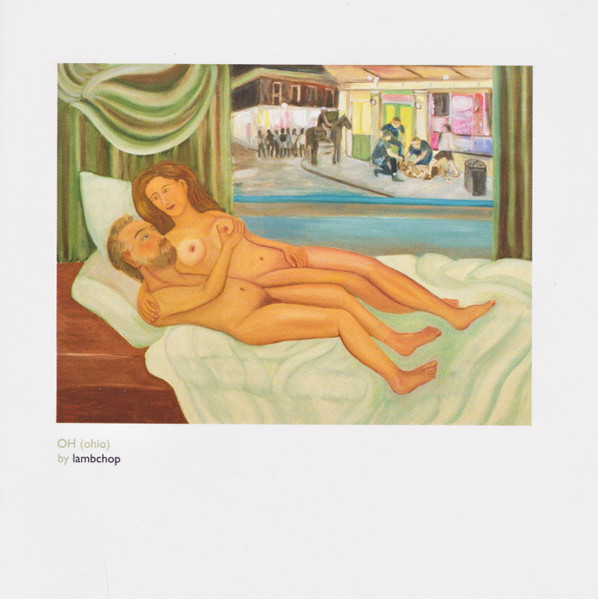
Lambchop is one of the many bands who I have heard a little bit of over the years, and have liked most of what I’ve heard, but never spent the time to really dig into their substantial body of work. An often shifting lineup of musicians based in Nashville led by Kurt Wagner, they’ve moved from a country-based sound in their early days in the mid-1980s through a number of genres. The stuff I like is probably best described as Americana. One of these songs is their “National Talk Like a Pirate Day,” presumably from before the celebration spread beyond our borders, like, you know, a pirate. From the band’s 2008 album OH(Ohio), it’s a rambling song that actually mentions the “Day,” although it isn’t about it. (By the way, it’s not even the best title on the album—that distinction goes to “Sharing a Gibson With Martin Luther King, Jr.”) 

The song’s genesis was described by Wagner in Rolling Stone

I'm writing a line about something else and my wife calls on the phone telling me it's National Talk Like A Pirate Day, I go, 'Oh, okay.' And suddenly that leads to me thinking about my wife. Then next thing I know I'm looking at a picture of her, and she's in her pajamas, she's got a record player. You know, there's a hockey game in the little picture and I start describing the picture. So the song started out as some sort of folk song, you know, and then next thing you know it becomes something else, but it was all because of what happened in the process of writing it: the phone rang. 

So, I guess the lesson is that inspiration can come from anywhere. Sadly, although I wanted to try to work a “buried treasure” reference into this post, but my inspiration never came.

Sunday, November 6, 2022

PIRATES: LONG JOHN SILVER

 Captain Hook aside, is there a greater pirate than Long John? I think not and am not even going to bothered if any dullard mentions Depp and company in those awful films. Jack Sparrow? Jack Shit, say I, even if Keef turned up for one of them. Any kudos he may have brought to the franchise was instantly lost by his stupid moustache.

But what does he have to do with anything musical? Long John, clearly, not Depp, who, as any fule knos, has none whatsoever. (Hollywood Vampires, my arse….) Well, given the, um, maturity of our readership, I am going out on one to suggest you are aware of an Airplane named Jefferson. Yay! Team!!! (No, not Starship; go to the foot of the class.)

I loved J.A. OK, I was a little young and the wrong side the world. So maybe I liked more the idea of the band, as reported, week by week, in the inky UK rock press. San Fran, hippies, anti-war, summer of love, all of that, and it all seemed so cool. I loved them before I ever heard them. I think Volunteers got brought into school, actually by one of the teachers. (With longish hair and a ‘tache, we imaginatively nicknamed him Zappa.) I liked, but, in truth, preferred the album Burgers, by the offshoot band Hot Tuna. Jack’n’Jorma became my heroes, as did the magisterial talent of Papa John Creach, who was just so damned cool. Impossibly old, if probably in his 40s, bald, black and stick-thin, with a fiddle sound to die for.

A later purchase of the double vinyl best of, Flight Log, or double album as we called LPs made of plastic back then, turned out to be all the Airplane I ever bought, even though I have a stash of Tuna’s output, plus Kaukonen solos and, even one of the good Mr Creach. So this theme was too good to waste on anything else, this near to crash landing of the band, and seemingly not with much love gifted its way. I have never heard it. Well, until typing this sentence.

The band were in a bit of a pickle in 1972, with solo and side projects having more allure for the bickering band members. Marty Balin had jumped ship and new drummer, Joey Covington appears  only for some of it, uncertain if he fell off board or was pushed. Which, as the astute will observe, adds extra allegiance to this weeks theme. (Gangplanks, boom tish!) Lester Bangs, the idiosyncratically acerbic no holds barred critic didn’t like it, in a review of such faint praise as to damn it to hell. 

Long John Silver

It opens with the rattle and rumble of the title track, a somewhat generic roustabout biggie, held primarily by the engine room, where Jack Casady’s bass is stoked to the fore. Grace Slick sounds, frankly, the “drunk as a fart” she later claimed to be, during the making of the album. It’s OK, needing Aerie (Gang of Eagles), a moody Slick piano ballad, to lift things. Maybe that should be slick and moody, but either way it works, and the feel is almost Sandy Denny-esque in construction, the minor key elevations reminiscent of that singer’s songs. Which is ironic, when you consider her band, Fairport Convention, cited Jefferson Airplane as such an inspirational influence. Twilight Double Leader is another shrill and somewhat derivative rocker, enlivened only by Creach's fiddle, which swoops and sires appealingly. 

Aerie

Milk Train splutters and spurts, again made better by fiddle, but really has me wondering what I saw in Slick, her voice a raggedy hoot of shrillness so far, apart from Aerie. Kaukonen slots in some half way decent guitar as it meanders to a close. Most don't, but I quite liked Son of Jesus, but I don't pay as much attention to the supposedly risible lyrics as I ought. But, you know, even when I do, it neither offends nor makes me laugh. Typical J.A. fare, really. Good song. and Easter? is great, a steamy slow burner, impassioned vocals over a piano led progression. OK, it gets a bit bonkers, as Slick gets overheated, needing Kaukonen to sneak in with some guitar. (What's with all these religious allusions, though?)

Trial By Fire

Trial By Fire has the unmistakeable feel of a song that might have otherwise been on the next Tuna album, the bass and guitars all a'weave, the electric and acoustic jousting with each other. Alexander the Medium, great title, by the way, is a change in direction from anything else much here. I love it, the tune evocative in style of a Sally Army band. Creach has his fiddle on a slightly sharper setting and it works, and the instrumental breakdown at the end is the most successful on the album yet, which, as the longest track, was something maybe they knew. The final track is also a belter, Eat Starch Mum, if with nonsense lyrics, with a thrust not a million miles from Volunteers, the track.

Alexander the Medium

So there you get it. I done a review, albeit of an album that came out 50 years ago this year. It probably hasn't aged that well, particularly the vocal characteristics of their lead singer, or the then best appreciated and remembered of them. But it has a few moments. So, in the parlance of the character who inspired it, no black spot.

Buy it if you still want to.


Monday, October 31, 2022

Little/Few: A Little Less Conversation


purchase [ A Little Less Conversation  ]


I particularly like a good cover. To the extent that more than once, I have shone a light on musicians most of us have never heard of, but whose music has shown up in a YouTube search.

I've never given Elvis Presley much love or credit but do realize that he was incredibly influential. One of my posts here includes a clip of him doing Little Sister (but it would have been the Ry Cooder version that sparked that post (and of course means that that "little" is off limits.) 

Belatedly, it seems to me that if you don't give Elvis P. credit, you are denying an awful lot of history. The number of people who end up being internationally known by a single name are few. Ghandi, Stalin..need I go on? Equally curious is that our Seuras chose this time around to focus on "the other Elvis" who, although not commonly known by one name, comes a close second when this name is mentioned.

As I read read the somewhat improbable history, I am a little amazed at the progression Elvis followed: numerous setbacks, unlikely advances, timely appearances on TV shows like Ed Sullivan that propelled his rise and then spiraling disintegration ending in his early death.

A Little Less Conversation came out of a 1968 movie and didn't reach terribly high on any music charts. The 2001 remix by Tom Holkenborg (aka Junkie XL) did considerably better, reaching the number one position in several countries.


Thursday, October 20, 2022

Little/Few: Little Eva

 [purchase]

When she was fifteen years old, Eva Boyd moved from North Carolina to Brighton Beach, Brooklyn, and worked as a maid and occasional babysitter. We’d probably never have heard of Boyd if it weren’t for two important facts. First, she had a great voice, and second, the couple she babysat for was Carole King and Gerry Goffin. 

There’s a story that King and Goffin wrote “The Loco-Motion” for Boyd because they liked her dancing style, but that’s supposedly apocryphal. In fact, they originally wrote the song to capitalize on the craze for “dance songs” for Dee Dee Sharp, who’d had a dance song hit with “Mashed Potato Time,” but she declined. Boyd had sung the demo version, and when Sharp passed, they returned to Boyd, and the record was released in 1962 under Boyd’s nickname, “Little Eva,” on Don Kirshner’s Dimension Records. Because there was no existing “Loco-Motion” dance, Little Eva had to create one. You can see her, to some degree, and the background dancers, to a greater degree, doing the dance in the video, which was recorded in 1965 on the TV show Shindig!, and is the only video of her singing the song (although I’m pretty sure she’s lip synching). 

“The Loco-Motion” became a big hit—hitting No. 1 on the Billboard Hot 100 and ending the year as the No. 7 biggest song of 1962. It later charted in other countries again in the 70’s and 80’s. There’s another story that Eva was only paid $50 for the song, but since she didn’t own it, it is likely that $50 was her weekly salary, which was at least 3 times what she was making from babysitting. Goffin and King mined Boyd’s troubled personal life for the song, "He Hit Me (And It Felt Like a Kiss),” a creepy song about abuse recorded by The Crystals, which I wrote a little about here (scroll down...), but is best mostly forgotten. 

After her success with “The Loco-Motion,” Boyd was stereotyped as a “dance song” artist, and had trouble getting good material, despite her talent and close ties to the Goffin/King family, although another of her dance song, “Let’s Turkey Trot,” gets dusted off every year for Thanksgiving (as does “Mashed Potato Time,” for that matter) and she was able to tour during the 1960s. She retired from music in 1971, basically penniless. Until a hit cover of the song by Kylie Minogue in 1988 (which Boyd said she didn’t like) raised her profile enough to hit the oldies circuit. Boyd was diagnosed with cervical cancer in 2001 and she died in 2003.

Wednesday, October 19, 2022

LITTLE/FEW: LESS THAN ZERO


Who can forget it, the snarl and the spat out words, as the youthful Elvis Costello gave his commentary on right wing political ideology. Or sort of, in an idiosyncratically dense flurry of words, encompassing swastikas, violence and dodgy home videos, held together by references to a Mr Oswald. Who I always felt was a reference to one Oswald Mosley, the pre WW2 leader of the British Fascists, admirer and apologist for Hitler, with aims of occupying a similar place in the worldwide pantheon of bad dictators. Remember him? From Peaky Blinders?


But, but, but, across the pond, Mosley and his band of brothers, the brownshirts, cut very little memory mustard, with the only Oswald coming to anyone’s mind being the Lee Harvey one. And therein lies a tale I didn’t know.


Elvis Costello, ever the contrarian, having written his song, didn’t seem to like the discovery that none of his American fans knew not what he was on about. Or the assumption it was about someone else. So he rewrote it; the so-called ‘Dallas version’, with lyrics that might just have more to do with the US events, drawing archly oblique reference to presidents and a smoking gun. (Being the lover of wordplay he is, is that also there a veiled reference to Jack Ruby?)
In my research I found this rather more detailed discussion, well worth a link.


Bret Easton Ellis so liked the song, although which version is not alluded to, that he named his debut novel thereafter. I haven’t read it, or indeed seen the subsequent film. I think American Psycho is probably as much Ellis as I want or need, but I thought the soundtrack worth a look. And whilst it doesn’t include the song, it does include a motley variety of artists covering other artists songs, in the way soundtracks often do. Maybe cheaper than licensing the original, I wonder, but often unearthing covers of the utmost oddness and charm, and so of interest to me. Like metal band Slayer covering In-A-Gadda-Da-Vida. (It also, by the way, debuted the Bangles’ version of Hazy Shade of Winter, a song that had life outside the film, and thus became a hit.


Live (London) or live (Dallas)?

Saturday, October 15, 2022

Musician Authors: Bob Dylan


purchase [ The Philosophy of Modern Song ]


If you use Amazon as your guide to the number of books Bob Dylan has written, you'll end up with a number a little north of 50. If you rely on Quora for your research, the answer is two. Two that he has actually penned himself. However, that Quora entry/tally - apparently a little out of date - doesn't include <The Philosophy of Modern Song>, so make that three (3). Those three being Tarantula, Chronicles Volume One and The Philosophy of Modern Song.

That said, there is no dispute that he received the Nobel prize for literature. There was, however, a bit of a kerfuffle associated with his acceptance, both because he initially balked and equally because there was debate about whether his product was worthy of a "literature" award (incidentally, also bestowed previously for poetic output).

There aren't many who belittle Dylan's thought-provoking lyrics, so ... let's let that argument pass: he *is* an author (and as I noted a week ago, that in and of itself, should count for this theme.)

The Philosophy of Modern Song, Bob Dylan's most recent written work after his Nobel Prize for Literature in 2016, looks interesting. I confess that all I have so far been able to read are the snippets that NYT published the other day. That said, the few pages the NYT shared make me want to read more. More, because I have been feeling that a lot of my coverage of topics for SMM could really do with more background research. More, because it reads well. More because it is relevant to someone  invested in music.

NYT tells us the book is 65 essays about songs, and the article offers up 2 excerpts: the text for Sinatra's Strangers in the Night and Townshend's My Generation. They're both short - about 2 pages each. But they are piercing in their own way. Kind of like you'd expect from a Dylan lyric -  except more conversational and less cryptic/poetic.

and, from ig.ft.com: 

"Ballad in Plain D", from Bob Dylan's fourth album, Another Side of Bob Dylan (1964) is the only song he ever publicly admitted he wished he hadn't written. "Oh yeah, that one! I look back and say, "I must have been a real schmuck to write that," he said in 1985.


Saturday, October 8, 2022

MUSICIAN AUTHORS: STEPHEN KING

Musician? Yeah, I know, but the problem with this theme is a need to have read the books in question, and the reading of a book requires a hell more of an investment than does engaging with the, give or take, 40 minutes of an album. Which sounds as if I don’t (can’t?!) read, which isn’t true, but the books by rockstars I have read are either autobiographical or ghost written, often both, neither of which I necessarily equate with the spirit of this assignment. (For the record, there are two I rate, each written by the writer, these being Footnote, by Chumbawamba’s Boff Whalley and Things the Grandchildren Should Know, by Mark Oliver Everett, but they are not fictional, or shouldn’t be. An honourable mention also for Mark Lanegan’s Sing Backwards and Weep.)

So, Stephen King, then, the uber prolific writer of lengthy horror yarns, usually set in New England and perennials for holiday reading. In the 1980’s I could rely on his putting out a fat doorstep that would see me through each fortnight in the sun, as the family set off to warmer continental climes for r&r. I confess it all slightly fizzled out as I became a little weary of his run on writers with mental block, and the ill begat upon them, preferring the bigger and fatter phantastic tales, each clearly written as he was going along, where, frankly, the somewhat rushed and weak endings were immaterial to the enjoyment of the jaunt along the way. The Stand was probably my favourite, with If a close second. Of course, the other constant with King was the rule that the films, Carrie the honourable exception, were invariably shoddy and shite.

But, hey, I sort of like the guy, and respect his right to have carried on pumping out his pulp fiction long after I deemed necessary. His massive worldwide market and sales certainly, as does his accountant, beg to differ. 

I guess I was aware he was a music fan fairly early on, and so, as I strayed across Ghost Brothers of Darkland County. On a big John Mellencamp bender of completism at the time, it looked interesting. A play, written by Mellencamp and King, together wirth the usually reliable T Bone Burnett, it seemingly premiered in 2012, with a subsequent short run in the Deep South. Southern gothic, they called it and, ever the sucker, I fell for the lavishly made soundtrack, featuring, alongside the three writers, Neko Case, Roseanne Cash and Elvis Costello, together with other then big name draws. Any good? Um, not really. Maybe I need to give it another go, to see if the intervening decade has gifted it any gravitas.

He didn’t play on Darkland County, with all the songs, nominally, Mellencamp originals. But he did play guitar with the fabled collective band, Rock Bottom Remainders, each member a published author and not otherwise known for any musical chops. Live was more their thing, but there is one album, a somewhat extraordinarily hotch  potch  of styles and  influences. King spears on several of the tracks, confirming the old adage about not giving up the day job.

He has also dabbled with a number of artists and the making of videos. Michael Jackson’s Ghosts, a 40 minute collaborative video made with King, came out in 1996. Thriller it wasn’t. 

Over the years he has often professed his love of guitar rock, but, when he appeared on BBC Radio 4’s Desert Island Discs, he was able to display a (slightly) broader range of taste. Here is quite a decent article that bring both that, and other favoured choices to bear.

I am uncertain whether I have given him sufficient space to allow credibility as a true renaissance author and musician. I suspect I haven’t, but, hey, I can’t write book or play guitar, so he is at least one up on me!

Happy reading!!!


Thursday, October 6, 2022

Musician Authors: Dead Authors (Grateful, that is)

Robert Hunter


Stories about the Grateful Dead, as with any number of other bands, often relate events that are wild, outrageous and salacious - of the "cannot believe they did this" variety.


 And while some of that is certainly true of the actual history of the Grateful Dead, my research indicates that the various members of the band were particularly prolific as authors themselves.

None of this to be confused with a book entitled The Grateful Dead: The History of a Folk Tale, available for free legal download from the gutenberg project.

On one hand, we can claim that any songwriter is, by definition, an author. However, the blog-task as I interpret it, would have us looking for musicians who have gone outside their lyric-writing realm to put pen to paper in an endeavor separate from their musical one.

Among the 157 books listed in a Google search for Grateful Dead books, we have Bill Kreutzman's Deal, Phil Lesh's Searching for the Sound, Garcia's Harrington Street, Garcia's A Signpost To New Space; Mickey Hart's Songcatchers and his Planet Drum, Drumming at the Edge of Magic, Spirit Into Sound.

A Box of Rain, credited to lyricist Robert Hunter may not count (it appears to be the published collection of his lyrics), but his novel Dog Moon does. Bob Weir's extracurricular authorship - as best I can discern-  seems to be limited to writing forwards for the books of various other authors.

Left over from my aborted attempt to post about The Road, we have A Long Strange Trip: The Inside History of the Grateful Dead; Living with the Dead: Twenty Years on the Bus with Garcia and the Grateful Dead; Home Before Daylight: My Life on the Road with the Grateful Dead; So Many Roads: The Life and Times of the Grateful Dead; Grateful Dead: the Illustrated Trip; No Simple Highway: A Cultural History of the Grateful Dead; Goin' Down the Road: A Grateful Dead Travelling Companion and more. These book titles in addition to no small number of Grateful Dead song titles are clear evidence of the importance of the road for the Dead. For any search for meaning in the trip through life, for that matter.

Because it is a song about writing a song, we'll go with Ripple.

If my words did glow with the gold of sunshine

And my tunes were played on the harp unstrung

Would you hear my voice come through the music?

Would you hold it near as it were your own?

It's a hand-me-down, the thoughts are broken

Perhaps they're better left unsung

I don't know, don't really care

Let there be songs to fill the air


Tuesday, October 4, 2022

Musician Authors: Josh Ritter


Josh Ritter: Southern Pacifica
[purchase

Not every great songwriter is a great writer, and not every great writer is a great songwriter. But some folks can pull off both, and those are the people that we are going to focus on for the next couple of weeks. 

Josh Ritter is, in my opinion, a great songwriter. He’s a gifted storyteller, writes interesting lyrics and wonderful music. I’ve seen him a few times—as a solo act at the Clearwater Festival (boy, do I miss that event), with his band a few years ago at the Beacon, touring on the album he worked on with Jason Isbell (and with Amanda Shires as the opener), and most recently, in May, again as a solo act, at the Tarrytown Music Hall. I described that show on Facebook as a “Fun, dark, surprisingly intimate solo acoustic show.” If I recall, Ritter was, like so many artists these days, just getting back to serious touring, and was a bit contemplative. 

Ritter has written two novels, the first of which, Bright’s Passage, I read when it came out in 2011. Which is a long time ago, so I really don’t remember all the details of the plot. So here’s the synopsis from Wikipedia

The novel follows a young, widowed veteran of the First World War, Henry Bright, as he and his infant son, along with an unlikely guardian angel flee from a forest fire and Bright's cruel in-laws. Shifting between their strange journey through West Virginia's hickory-canopied foothills, Bright's plausible memories of the trenches of France, and recollections from his childhood, the novel is at times suspenseful and kinetic, quiet and eerie, and at times humorous. 

I do remember it being both suspenseful and odd, and at times humorous, but also mystical and spiritual. I also remember thinking that it was an excellent first novel, but not necessarily a great novel. In researching this, I read the review in The New York Times (by Stephen King, no less), which agreed: 

This is the work of a gifted novelist, but the size of that gift has yet to be determined. One thing that is sure: Ritter has not, as yet, fully unwrapped it.

Ritter’s second novel, The Great Glorious Goddamn of It All, was published in September, 2021, and I have not read it. It seems to have gotten good reviews, although the Times doesn’t appear to have reviewed it (although they did publish an interview with Ritter about the book). 

As you can guess, a lot of Ritter’s songs tell stories, and rather than overthink this by trying to pick the perfect song to match the theme, I’m going to go with one that works as a story, if not spelled out in as much detail as in a novel, and happens to be one of my favorites, “Southern Pacifica,” from his 2010 album, So Runs The World Away (which is a quote from a pretty fair writer, Shakespeare).  Ritter described the song in an interview as: 

It's a song about being on a train and not knowing where you're gonna go, but knowing you're gonna meet your destiny out there. It's an intense song - it's about rolling past the predators in the night. Where I grew up, trains would go through towns at all hours. I'd get to see them roll right by the grade school where I went to school. The (school) field ended at the train tracks and the trains would go all over the place - New Orleans, Albuquerque, all these incredible places I wanted to see.

Tuesday, September 27, 2022

THE ROAD: GOES ON FOREVER AND THE PARTY NEVER ENDS.

The mythological lure of the road has long attracted attention in way more than just musical memes. We’ll get to that in due course, but it got me thinking around the whole idea of a road trip. Like, what was the first? Jack Kerouac’s On The Road, came initially to mind, until I realised how shortsighted and narrow was my entry angle, remembering the Richard Thompson response: best songs of the millennia, or of all time, did not start with Sinatra. So that in mind, throwing out my net a bit wider, are we talking the Crusades; that was a sort of tour? Or Christ’s 40 day desert gig, did that count? I think a prime contender would have to be Ulysses, his 12 tasks and all that. Tack on the Trojan War and the tour is encroaching Dylanesque Never Ending logistics.

I could be getting carried away here, but it has an appeal. I wonder what was on his rider? And who ran the merch stall? And for all the buzz around Homer, the “official releases”, I’ll bet there were live sets and bootlegs, swapped in chariot parks, before the show. It wouldn’t surprise me if someone somewhere is still putting together a box set, the Ithaca tapes, perhaps. I’m sure I read about it on the Steve Hoffman forum.

So, as they, say. Robert Earl Keen. Whatever happened to him? Nothing bad, to be fair, as he still tours and plays, but, as with, say, Steve Forbert, so much early promise seeming never quite to be capitalised upon. From Houston, Texas, he hit the ground running in the mid 80s, with a signature stripped back sound, bluegrass style instrumentation, allied to rootsy modern folk songs, all sung in his gritty mournful moan. I loved it, and West Textures, his 2nd album was a bona fide delight. Still is, the songs rendered timeless by that old timey anchor. The song that entitles this piece is his best known song, but they all have legs. Heck, at that time, he, Lyle Lovett and Nanci Griffith seemed an insurmountable triad of potential, at whose altars I knelt, in awe. So young and so much talent.

Keen  had a particular knack for a story song, with TRGOFATPNE being the prime evidence. I alway feel the idea for such long haul yarn spinning came from Bob Dylan, Lily, Rosemary and the Jack of Hearts always coming to mind as the trigger to Keen’s muse.(I suppose, given the earlier paras written, due credit for all epics should maybe go to forbears from times long past, Alfred, Lord Tennyson, for his Charge of the Light Brigade, Longfellow  for Hiawatha, or, logically, good ol’ boy Homer himself, but the tunes have been largely lost.) The relatively simple construct, the repetition and the loping propulsive rhythm together produce a suspension of time, the story taking the fill of concentration. Keen was able to show he was no one trick pony, mind, as his next album, A Bigger Piece of Sky, four years later, in 1993, had another cracker, Jesse With the Long Hair Hanging Down. With shock, I note this barely hits 3 and 3/4 minutes, it casting a way longer shadow in my memory, but, details, schmetails, this is still a saga song, just a wee bit shorter. 

Oft seen as his high water mark, A Bigger Piece of Sky, whilst it had its moments, never quite hit my spot as had West Textures. In truth, I sort of went off him a bit after that, as somebody told him his forte might be in humorous songs, an oxymoron by any definition, at least in my book. But he has plugged away, with 20 studio recordings to his name. I gather he is about to hang up his cowboy boots, making me sad I never caught him live. Indeed, of that 80’s trio of performers, Nanci was the only one who ever seemed much to visit the UK, seeing her a host of times between then and the mid 90’s. But I did get to hear one near swansong, as Keen covered a host of his traditional influences: here is what I thought about that album.

A final thought about Keen might be to thank him not only for my beloved West Textures, but also to his enlightening me to the presence and worth of anothe songwriter, one Kevin ‘Blackie’ Farrell, himself no stranger get to the long form song. The exquisite Sonora’s Death Row, covered by Keen on West Textures, is one of his, as is another of my favourites, Mama Hated Diesels, as performed by Commander Cody’s Lost Planet Airmen. Farrell probably deserves a pice in his own right, memo to self, but it’s good to at least have the opportunity to namecheck him, until then.

May the road rise to meet you…….

Friday, September 23, 2022

The Road: What’s Your Name?

Lynyrd Skynyrd: What’s Your Name?
[purchase

Growing up in the 1970s, as I did, the life of a rock musician seemed pretty fucking cool. Especially the famous ones, who got to jet around the world, perform in arenas and stadiums, have all sorts of fun contract riders to attend to their every anticipated needs, and apparently make tons of money. (Although in reality, for most touring musicians, it wasn’t this great) It seemed like the essence of freedom (although it probably became a bit of a regimented slog at some point, or there wouldn’t be so many life on the road is a bummer songs.) Plus there were the drugs, which I knew could be deadly or at least damaging, but seemed like they could be fun in moderation. And the groupies. I’m betting that a large number of people who became rock musicians did so in some large part for the promise of sex, with a different conquest in every town. A concept which was different in the pre-AIDS era.

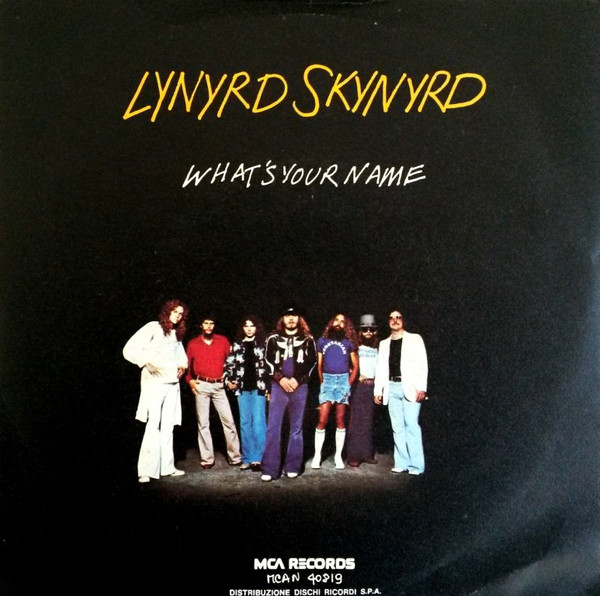
Which brings us to our featured song, 1977’s “What’s Your Name?” by Southern rock masters Lynyrd Skynyrd. I wrote a long piece about the band HERE, so if you want some background on them, including the whole Neil Young “controversy,” check it out, and we’ll still be here when you are done. 

The song, from the band’s final album recorded before the plane crash album (but released just after), Street Survivors, is based on a true incident (which did not actually take place in Boise, Idaho, however), when the band was thrown out of a hotel bar while on tour because, as the song says, “one of the crew had a go with one of the guests.” Repairing to their rooms, the narrator asks a woman (ok, a “little girl”) to join him upstairs for a “drink of champagne.” He’s not looking for a deep, meaningful relationship, but rather, as stated in the opening, he’s looking for “a little queen,” and he intends to “treat her right.” Which I think we can all agree, means sex. And, he’s not bullshitting her, either—he’s “shooting you straight,” about his intention. 

Fast forward to nine a.m the next morning, and our champagne quaffing musician is up suitably early to prepare for a 600 mile ride to the next show. Apparently, the night went well-as he says, “it sure was grand,” and offers to get his bedmate a taxi home. And he suggests that they get together when the band swings through town the next year. There’s only one real problem—he doesn’t remember (or never knew) her name, so he asks for this critical piece of information.

“What’s Your Name?” is a fun rocker, and reached No. 13 on the Billboard Hot 100, posthumously. 

Now, bear with me for a second. At the risk of blowing any feminist cred that I’ve achieved, I’d argue that by 1977’s standards, “What’s Your Name?” is fairly progressive, despite its hint of underage sex and anonymous coupling. As far as the underage part goes, I’m willing to consider that “little girl” is a term of endearment, not a literal description. And yes, it’s a bit sexist, but again—1977, and rock musicians. Secondly, I’d argue that the song depicts a fully consensual relationship—there’s no evidence that the woman was already incapacitated when the singer offers her champagne in his room, and he’s clearly “shooting her straight.” Third, the next morning, he’s complimentary and polite, offers to call a cab, and seems to sincerely want to see her again the next year. 

Look, I can also see how this could be interpreted differently (I found one source referring to the song as “perpetuating misogynistic fantasies”)—I’m not an idiot, and I have a wife and daughter (and mother-in-law) who graduated from women’s’ colleges —and by 2022 standards, there are certainly some issues here. But if you actually read some of the stuff linked to in the Cover Me piece about how (at least the pre-crash version of) Lynyrd Skynrd’s politics have been misinterpreted, again through the lens of the 1970s, I’d argue that simply tarring them as a bunch of sexists as a result of “What’s Your Name?” is at least a little bit unfair. I mean, they very well might have been a bunch of sexists, but not just because of the song.

Wednesday, September 21, 2022

THE ROAD: TO NOWHERE

Less on, more been, my excuse is down to the scourge of IT. (Others may vary.) As far as I’m concerned, the IT superhighway can go take one. Sure, sure, without the gift of information technology, I could not be able to waste time you could be better spending elsewhere, let alone my own. But, jeez, don’t you just take the bastard for granted. My laptop recently caught a cold, and has been in the computer fever hospital, getting the best of not inexpensive attention. Meanwhile I am wrestling with my phone to pick up the slack. Which, are you with me, leads inevitably to this post. Ever done Blogger or Wordpress on your phone? The dogs within this lesser tool seem far better able to eat your homework than my usual medium. And much more willing, eager, even, to throw the lovingly chosen words into the ether. So, a lot of roads to nowhere between Run and Road. Or that there were a song to hang on that peg……

Oh, there is, it being a latter day jewel in the crowned (Talking) Heads of popular music. But you knew that. Talking Heads were always either better than their hype or never quite matching it, making for quite the paradox.


In the beginning came Psycho Killer, I still in awe and of a tremble to the above clip. I remember it well, on the UK televisual “inkie”, the Old Grey Whistle Test, or Whistle Test as us teenage bedroom groovers called it. David Byrne looked such a dork, in his slacks and preppy polo shirt, yet the menace he imbued into this hypnotic throb of a song was intense. With Tina Weymouth plugging away on bass, and the other two being, well, the other two, it was nothing short of apocryphal. At home the punks had to look scary, ‘this guy was the real deal.


The album, 77, was good, but not so good as to disappoint around how much better than the other tracks was Killer. Which sort of summed up the band, their albums tending towards one standout track, and then the rest. Their version of Al Green’s Take Me To The River did that for the next, Songs About Buildings And Food, great title, by the way, but I lost interest.

I missed out on several intervening years, or maybe switched off. Meanwhile folk were raving about that film and that video, but not me, my eyes were averted. In fact, it wasn’t until the featured song came out, that I came off my Talking Head road to nowhere. In truth, I suspect it was Tom Tom Club that re-engaged interest; I loved Wordy Rappinghood. 


Little Creatures came out four years after the Tom Tom Club had their brief turn in the sun. Uncertain why, but I really took to And She Was, the first single, swiftly followed, as it was, by Road To Nowhere. I was back on the bus, big time  so much so I duly bought also the next album, Naked. From which I fell right off, in dismay. Even ahead the unavoidable implosion of the band.

David Byrne has, of course, gone on and on, regrouping, regaining and retaining acclaim. The rest of the band less so. The Heads album was a huge letdown, despite the guest singers, and, despite the critical plaudits, I always struggle to see beyond the artifice in Byrne’s solo art. Not for me. I still seem always to see through the facade of world music inspiration and icon, only seeing the jerky nerves of the psycho killer. Which is as good as any a place to leave.

Perhaps my laptop will be repaired soon. Until then, follow me


Sunday, September 4, 2022

RUN: FOR HOME


Funny how it all comes round. I used to rant against this song back in the day. As a dyed in the wool afficianado of the original Lindisfarne line up, as eulogised here, I baulked as they went their separate ways, into Jack The Lad and the Lindisfarne Mk II. Erring always on the side of folkie, I was always going to find greater attraction with the former and shaggier offshoot. Even, if truth be told, the material was a bit meh.Whilst Lindisfarne retained the two main singers and the most prolific of the songwriters, I missed the other guys, and took offence. Alan Hull, that prolific writer, with his eye more on his burgeoning solo career, meant that Mk II were a pretty lacklustre ensemble, quietly breaking up after a couple of ill received albums. Jack The Lad  had fared little better, so, when the opportunity came to regroup for a one-off gig at Newcastle City Hall, the original five piece all leapt at it. That led to a reprise a year later and they decided to make it a going concern again in 1978.

But I hadn't kept up, had I? I thought the Lindisfarne that brought out this featured song, later that same year, from the presciently titled Back and Fourth album, was still the Mk II line up. Plus it was drenched in strings, making for far too much saccharine for me to imbibe. As the new engagement with success and the charts failed and faded, so the band again drifted out of my awareness. Sure, I knew they continued to play Newcastle City Hall on a regular annual basis, but, adding insult to injury, a version of Fog On The Tyne, the song, in cahoots with fellow Geordie, the footballer, Paul "Gazza" Gascoigne, was such anathema to my ears as to make their name mean nothing to me. (And, by golly, bad it truly was.)


As the years unfolded, the band began slowly to splinter once more. First Ray Jackson, the other vocalist and the harmonica and mandolinist left, then Simon Cowe, the wild haired guitarist. Yes, they were replaced, with, Hull even bringing in his son-in-law to help bolster the band. Little did he know how shrewd a move that might later become. Hull then died; a heart attack taking him far too young, but the band still played on, drafting in yet more new members. They then broke up in 2004, this time, one might imagine for good. However, remnants of the band, with even the odd original, still managed to tour under various guises: The Lindisfarne Story and Lindisfarne Acoustic being two of such, and the former resurrected the Newcastle City Hall shows. Ray Jackson, meanwhile, mindful of the legacy beginning to unravel, took the bones of those left and revived the band, proper. OK, he was the only original, but Dave Hull-Denholm, Hull's son in law, as mentioned, was considered continuity by proxy. On drums, in an unusual change of style, for him, was ex-Roxy Music thumper, Paul Thompson. Odd, unless you recall Roxy themselves hailed also from the North East of England too.

Give or take couple of years and Jackson, wearying a life on the road, sought an exit. Luckily, old mucker, Rod Clements, was waiting in the wings, taking control of the franchise. As the author of Meet Me On the Corner, their biggest hit, he had more right than many, Simon Cowe, the never more hirsute guitarist having now also died and Ray Laidlaw, the drummer, continuing to fly a flag for the Lindisfarne Story offshoot. Anyhow, cut to the chase, any good? I caught ‘em at  Wickham last year, the answer a resounding yes. Especially as they encored with the featured song!

Run!!

Friday, August 26, 2022

DON"T : NEED THIS PRESSURE ON (CHANT No. 1)

Actually, as the avid trainspotters will already have conjectured, and loudly, it is the other way around, it is Chant No.1 (We Don't Need This Pressure On), but how other the heck do I squeeze this stonking tune into the category? How can it be that this energetically funky slice of dance hall joy could come from the soon to be so very anodyne Spandau Ballet? And as for New Romanticism, whatever that was or might be, this owes more, musically, to the early posturing of Wham, themselves later capable also of saccharine drenched dreck.

I remember that time period well, as both myself and the media were scrabbling around to find the next big thing, although I dare say our parameters were somewhat different. I just needed something with a bit more wallop than the increasingly post punk power pop and new wave, each becoming overly formulaic and meh. I was still reading the inkies, Melody Maker and New Musical Express, so was open to all the hype available. I was watching the somewhat ludicrous appearance of the bright young things, hogging the limelight in and around that London town, a million miles away from the always less demonstrative Birmingham. (Altho' there were stirrings.....) The fashion didn't grab me, but, and they seemed the market leaders, that Spandau Ballet seemed to have an interesting take on combining styles and genres into an appealing musical mix.

The above, their first single, came out on Halloween's day, 1980. I liked. I can't remember whether I admitted that, but it didn't seem long before Chant came along, and it became OK to like the band. Heck, a lot of people were making that choice. I bought the debut album, not realising Chant wasn't on it. And, the singles apart, it was a tad underwhelming. Wiki now tells me that was on the second album, but that passed me by. I guess, as a newly married junior Dr, my earlier vice-like grip on the charts was losing some. So it was Gold and True that next alerted me to this band. Where had it all gone so wrong? Vapid, ainsipid ballads of the lowest common denominator, I couldn't distance myself quick enough. Of course, they sold zillions and they were everywhere. Snippets of later material came to my ears, but, the spell broken, they meant nothing to me.

Apart from being always in the playlist of any and every Gold, Platinum and whatever FM, easy listening halls of drain for children of the 70s and 80s, forever broadcasting in malls and waiting rooms, Spandau Ballet ceased to hold any consequence for me. I knew they had all sued each other, but more fool they. Until something strange occurred. In 2018, Pink Floyd drummer Nick Mason decided to get his hand back in, his day job seeming unlikely to be a thing again. He was eager to revive and revitalise the earlier late 60s and cusp of the 70s catalogue of his old band, and looked for an appropriate organ. His band, Saucerful of Secrets, named after the album, was that organ, but it was the line-up that surprised, featuring, as it did, in pole position, that of Gary Kemp. That Gary Kemp, the Spandau keyboards guy, and the writer of most their songs, the good, the bad and the indifferent. Here he would be employed on guitar and vocals. Interviews revealed him to be a true fan and, similarly, to be quite the scholar around that period of English music history. I went to see the band. They were great. HE was great, and my opinion jumped small buildings, further cemented by hearing his good natured podcasts, alongside Guy Pratt, another Secret Saucerman. Hell, his favourite record was/is Liege and Lief, the Fairport Convention record that effectively invented folk-rock. Suddenly he was again a good guy!

I still can't listen to much Spandau. But the early stuff, following my years of after the event prejudice, suddenly I can face their music and dance. That must be good, mustn't it?

Chant!

Thursday, August 25, 2022

Don't: Don't You Want Me


purchase [ Dare ]

There was an article in The Guardian the other day about the influence of the C64 (that would be the mid 1980s Commodore 64 computer). The author was primarily focused on the (relative, for the times) quality of the games, but also mentioned the computer’s sound features. It is probably worth mentioning that we are talking 8-bit computing, but the C64 (and my choice back then - the ZX Spectrum) were tools that allowed some of us to compose/synthesize music on the cheap (and it sounded pretty cheap until I got my Amiga 500 with a copy of Deluxe Music.)


For those of us of that age, the Moog synthesizer was probably the best known by the public since it was more or less the first and had been around and established a name/market for “electronic music” since the 1960s.  By the 1980s (when people like myself were toying around with their home computers), professional musicians had some pretty cool electronic noise makers in their hands.

Although my 1960s childhood included listening to my parents’ Switched on Bach and an awareness of Turkish electronic composer Mimaroglu, I’m going to guess that it was the keyboards on Who’s Next that “enlightened” me. Sources suggest that this was one of the first uses of a synthesizer for more than backing sounds (says Wikipedia: “integral” as opposed to “gloss”). The year is 1971. Sure, Ray Manzarak was clearly using a synthesizer, as were the Stones and the Beatles, but the Who’s use was seminal for me.

By the time Human League was voted Best British Breakthrough in 1982, most rock/jazz  keyboards were outputting synthesized sound anyway. (it appears that there is a line dividing synthesizer from “synthesized keyboard” in that the former allows you to create your own sounds; yet, my limited research convinces me that a decent modern  “stage piano” is a “performance synthesizer”.


All this to provide background for the sound behind The Human League’s singular most famous song <Don’t You Want Me>. The group is categorized as a synthpop band - a musical form where the synthesizer is the main instrument. And while I am pretty sure that my mid-1970s self would have grossly panned the song (my go-to sound back then was Keith Jarrett style), I will admit getting a certain aural pleasure from hearing the song again and comfort from knowing I am not alone (Graham Parker and Rolling Stone magazines’ praises)

Don’t you agree that it is catchy? (160 million viewers of this clip would probably agree.)