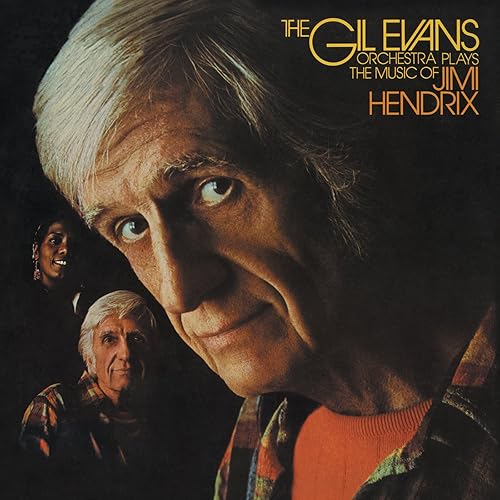
I’ve written about the cover of “Little Wing” that is on this album (or, at least some versions of it) a couple of times, as well as mentioning seeing the Gil Evans Orchestra at a free outdoor concert in Florence in 1981, which was great, but I really don’t remember whether they played any Hendrix that night. I knew enough about Evans in 1981 to know that he was worth seeing, especially at that price, but not enough to really know about the music. Except to remember that I really enjoyed it.
Gil Evans, a pianist and composer, is probably best known as an arranger, particularly for Miles Davis, after whom Evans named a son. Although his career was mostly in the jazz world, Evans’ musical tastes were broad, and he was a particularly big fan of Hendrix. In fact, Hendrix was scheduled to record and perform with a big band led by Evans, but Hendrix’s death prevented this intriguing combination from coming together. Instead, in 1975, Evans released an album of Hendrix covers, all done with an unusual 19-piece big band, including, among others, Hannibal Marvin Peterson, Lew Soloff, Pete Levin (brother of Tony), David Sanborn, John Abercrombie, Ryo Kawasaki, Tom “Bones” Malone, and Howard Johnson.
The songs are, of course, great, and the arrangements, by Evans and other members of the group, are inventive, interesting and sometimes unexpected. For example, the version of “Voodoo Chile” controversially begins with tuba master Johnson sounding like he’s playing the kazoo, before the orchestra weighs in. And while Johnson takes a tuba solo, there’s no lack of guitar wailing, It’s a polarizing take, but certainly one that makes you think.
The Gil Evans Orchestra also backed Sting (who started his musical career as a jazz bass player) on his excellent, more rock-oriented cover of “Little Wing,” featuring a great guitar solo by Hiram Bullock, a regular Evans collaborator and former member of David Letterman’s band. Sting and Evans performed together in Italy, in a performance that was released as a live album.
My previous post, I interpreted the current theme as covers of a jazz classic. Here, a jazz band (well ... jazz-fusion) doing covers of music from the 70s.
One of my favorite jazz-fusion groups is Spyro Gyra. Their music is kind of easy to listen to - not the kind of jazz that requires you to work hard. And while I recognize that there is a place for that kind of musical experience, it's generally not my favorite experience: I prefer accessible melody.
I don't keep track of what most bands are doing on an ongoing basis and I had my doubts that they had ever done any covers - mostly not their "thing". But wait ... no ... There's their <Vinyl Tap> album: all covers in their jazz/fusion style. The band has been around in various configurations since 1974, and this collection from 2019 was their 31st.
A number of prominent reviewers express scepticism that the band could pull off an album of covers - but they do. Remarkably well. All of them filled with unexpected notes- the essence of jazz.
And, while you really should go out and get yourself a copy of the whole album, we can give you a handful right here. And then maybe you'll head out a buy it for the rest.
After the last post there was only one possible follow on piece, to look at a brilliant and mesmerisingly accurate spoof on/homage to Brubeck, and, of course, the Stranglers. One that had a fair few fooled.
Was Dave Greenfield, the late keyboard player for the Stranglers, and the writer of the repeating harpsichord riff in the song, influenced by Brubeck? He would say not, but it does not seem unreasonable to think each were influenced by the composers of the baroque period, as, for that matter, will have been Ray Manzarek, often and lazily touted as Greenfield's main contemporary influence. Who cares, frankly, I love 'em all, and could listen all day to any of these three.
Laurence Mason is a music graduate of Leeds Conservatoire who likes messing around with the available technology, as well as being an adept player of many instruments. When Greenfield died, he wanted to pay tribute and, already aware of the acknowledged similar ambience of both Golden Brown and Take Five, apropos existing mash-ups like this, decided to go a step further:
“A little tribute to Dave Greenfield (keyboardist with The Stranglers who died with Covid-19 last week) and Paul Desmond (saxophonist with the Dave Brubeck quartet – the anniversary of his death is at the end of this month).
Also because I’ve been enjoying editing videos and recording stuff over the last couple of months. A couple of people have asked how I made this video so here we go – I took a clip from a 1964 live version of Take Five (https://www.youtube.com/watch?v=tT9Eh…) and made the drum loop by chopping up the intro and turning it from 5/4 into the 3/4 – 4/4 groove that Golden Brown has. The upright bass sound is sequenced from Logic, and the piano part was played in using one of the piano sounds from a Nord Electro 5D. Then I played the sax part over the top (I play a King Zephyr alto and for this I used a hard rubber Yanigasawa mouthpiece rather than my usual bright Guardala).
The video was then edited using the clip I’d taken the drum loop from.” — Laurence Mason
This interview delves deeper. First imagined as a bit of fun, once embedded in Youtube, sufficient hits drew it to the attention of Paul Murphy, influential on the UK jazz scene, and it swiftly became available as a record to download or buy. Under the name, groan, of 'Take Vibe'. (With, on the flip, an equally iconic take on the Police's 'Walking on the Moon'.)
So, what else has Mason been up to? Initially a whole album was projected and, who knows, maybe it still is, lockdown possibly casting a cloud of best laid plans etc. I would certainly be interested.
In 1958, the Dave Brubeck Quartet did a tour of EurAsia that was sponsored by the State Department. Their trip included a stop in Istanbul, from where I write my posts to SMM. I was only 3 back then, but some time in the mid 1960s, my parents added <Time Out> to their record collection, so I would have been listening to it at around age 10 (in Istanbul even back then).
Brubeck was affected by the music he heard in Istanbul such that their 1959 <Time Out> album makes much use of time signatures that could be Turkish. Not only does music from Turkey (and points east) use "non-standard", tricky time signatures, but also a musical scale that is based on Arabic music, where - instead of the 12 notes of a Western octave- there are 53 "koma". For most of us, music in school taught us about standard Western time signatures like 6/8 or 3/4 or 4/4 - what dominate rock and pop and even much jazz in addition to classical music. Turkish music makes use of these, but also more complex rhythms like 5/4 or 7/4 and 9/8 and more.
It was this influence that powered Brubeck and Paul Desmond when they wrote Blue Rondo a la Turk and Take 5. The 5 in the name is the 5 from the 5/4 rhythm.
Wikipedia informs me that Take 5 is "the biggest-selling jazz single ever", so it's no surprise that there are more covers than you can shake a stick at. The article also notes that the song brings in royalties of over $100,000 a year.
The suggestion offered from above was to look at covers of jazz standards, you know the sort of thing, bluegrass Brubeck, country Coltrane and math-rock Miles. (OK, I may have struggled with the last, but you catch my drift.) Me, I immediately thought of the current glut of polyglot artists, nominally 'file under jazz', but equally at home cross piste. I'm thinking the likes of Brad Mehldau, Herbie Hancock and, most of all, the extraordinary guitar of Bill Frisell.
Tired of Waiting For You/Guitar in the Space Age: Bill Frisell (2014)
Frisell is an unlikely looking axe-hero, but axe-hero he is, and, whilst always thought primarily a jazzman, you may be surprised how far he crosses over and how many records by artists in the fields he has appeared on. Far more, say, than Pat Metheny, who is a name often dropped into great guitarist lists, yet seldom strays from his niche, give or take a sole dalliance with Queen and being the subject, loosely, of a Richard Thompson song. Yet, ironically, it is to Metheny he owes his place, depping for Metheny when Metheny unavailable for a session, he suggesting the bright eyed novice with tousled hair to take his place. This was for the icy wastes of ECM, the sometimes seemingly dour Nordic label that is the go-to for glacial instrumental jazz, instantly identifiable by their 'postcards of the tundra' album covers. A number of albums with them, ahead of hooking up with John Zorn on the New York scene, all avant garde and spiky composition. But being an in-demand musician for other muses and producing like-minded material wasn't enough. So, on a move to Seattle, Frisell started cooking up something new, investigating, variously, other native musical forms: americana, rock, pop even.
This century he has spent flitting relentlessly between projects: a torrent of his own composition, further expeditions into idiosyncratically exploring and totally revising the music of others and, most delightfully, beginning to pop up in the mainstream, alongside artists such as Elvis Costello and Norah Jones. At the time of writing he has 39 recordings in his own name or as an integral part of the billing, 22 since the year 2000. Add in a series of live recordings and it another 22, plus a truly ridiculous number of collaborations, guest appearances and cameos. Check out his web page. (Bet you wouldn't expect him to have ever worked with Richard Hell and the Voidoids!)
For want of any other methodology, here are a few of his covers, whether coming from his own records, from collaborations or any other source, all displaying his maverick control of the fretboard, approaching melody always from its polar opposite, yet always finding it, often unexpectedly. A beautiful tone, this is sweet music: no atonal skronking here to frighten those with terror of the J word.
You Only Live Twice/When You Wish Upon a Star: Bill Frisell (2016)
Across the Universe/All We Are Saying: Bill Frisell (2011)
Cold Cold Heart/The Willies: Bill Frisell (2002)
I Heard It Through the Grapevine/East,West: Bill Frisell (2005)
Magnolia/Down Where the Spirit Meets the Bone: w. Lucinda Williams (2014)
Standing in the Doorway/Slipstream: w. Bonnie Raitt (2012)
As Tears Go By/Slipstream: w. Marianne Faithfull (1987)
And spot the great man, playing, in the video above.
Over at Cover Me, in honor of Bob Dylan’s 80th birthday earlier this week, the staff, including yours truly, contributed to a long feature ranking the 100 “best” Dylan covers (although we actually wrote about 124, because while many people see a relationship between music and math, bloggers get to do pretty much whatever we want).
The way that Cover Me “Best Covers” pieces work is that the editors put out a call to the staff for suggestions, and they gather them, add ones they like, and then choose how many to feature. For the Dylan piece, we submitted well over 200 suggestions, which only scratches the surface of the covers out there. Then, once the poobahs come up with the final list, staffers write up the blurbs for each song, the editors rank the covers and the piece gets posted.
Like many of my fellow writers, I suggested a whole bunch of really excellent covers, but not all of them made the final cut.
One of those that didn’t make it was today’s featured song, a cover of “My Back Pages” by Keith Jarrett. I was kind of disappointed, because I hate rejection and because I think that it’s a great cover, but I used my considerable influence here at Star Maker Machine to suggest a “Jazz Covers” theme that would let me highlight the song. (Although it seems that the description posted of the theme calls for covers of jazz songs, which considering how jazz seems to consist, in large part, on interpretations of “standards,” doesn’t make all that much sense to me. But I suggested the theme, and this is what I meant…)
I have to admit that when I first heard this song, I believe from a cassette (!) that I nabbed from a discard pile the summer that I worked at Atlantic Records, I thought it was great, and had no clue that it was a Dylan song. First off, as I mention somewhere in the Cover Me piece, my knowledge of Dylan songs was, for a long time, really limited to his most famous songs, and it was only years later that my appreciation of his work increased and broadened. So, at the time I heard this cover, I didn’t recognize the title. If you had said, who wrote the song with the lyric “but I was so much older then/I'm younger than that now.” I might have been able to name the writer. Although I also might have thought that it was The Byrds. But Jarrett’s cover is an instrumental.
Second, honestly, the music sounds very, very different from Dylan’s (or The Byrds’ for that matter), and you kind of have to know what you are listening for. So, now that I know that it’s a cover, I can (sort of) hear it.
That all being said, it is really a beautiful song in its own right. It features a 23 year-old Jarrett on piano, still relatively early in his career, accompanied by the brilliant Charlie Haden on bass and Paul Motian on drums, and was recorded live at Shelly’s Manne-Hole in Hollywood, California in August, 1968, only four years after the original was released on Another Side of Bob Dylan.
In those days I think I owned about ten albums by Bob Dylan, and the Beatles and all that. I listened to all that shit, man, that shit was strong. That influenced Keith, it influenced all of us, especially Keith, and the music he was writing too. So we were getting into other areas. We’d never play semi-rock and roll kinds of things with Bill Evans, never. But with Keith that was the times, you know? We’re talking about the very late sixties and the early seventies.
Jarrett went on to join Miles Davis’ band, and then became one of the most heralded pianists in jazz, as a solo artist, a leader, and as a part of small groups. With Haden and Motian as well as saxophonist Dewey Redman, he formed what was called the “American quartet” while simultaneously playing with Jan Garbarek, Palle Danielsson, and Jon Christensen (the “European quartet”). His collaborations with Gary Peacock and Jack DeJohnette (one of my favorite drummers), for albums of standards and originals, are also incredible. Jarrett also wrote and performed classical music, plays a bunch of other instruments, and even was a musical guest on Saturday Night Live, back when it was more common for the bookers to look beyond the pop charts for guests.
Unfortunately, Jarrett had a series of strokes in 2018, and can no longer perform.
It hasn't been easy finding a Talking Heads song that has not appeared on SMM before. A veritable Who's Who of SMM contributors over the years have brought them into play for topics from "Shadows", "Government", "Nonsense", "Tricky Beats", "Civics Lessons" and "Speak/Talk". There's more, but this kind of encapsulates a lot of what Talking Heads embodies: songs about tricky, shadowy government nonsense.
Figuring it's been too long since we visited them here, I took off from a comment that Jordan Becker raised not too long ago about one of his greatest musicial regrets: opting for a campus Springsteen concert in place of the Talking Heads back in '78. I might have done the same.
Jordan and I were both campus radio DJs (myself a few years earlier/older, at a time when the Talking Heads were not well-known but might have been found on campus radios across the US)
Drummer Chris Frantz (husband of bassist Tina Weymouth) notes in a bio that David Bryne was not easy to work with in a number of ways- often taking credit for work that wasn't exactly his to claim. I think you would have to agree that to many people he comes across as ...quirky. But that is part of the enduring value. Among Byrne's criticisms (of bandmates, the world, the way things are ...) was the fact that Weymouth, who had taken up the bass only a year before their first album was developing too slowly/holding them back. Several critics note that it is her experimenting as she develops a personal style that adds to the quirkiness of their songs.
I recently brought up the importance of lyrics (yes: Townshend; no: Fleetwood Mac), an area where Talking Heads shines. Check 'em out again for this one. Come to your own conclusions about the true meaning:
Incidentally, I mentioned this not too long back, but repeat: Byrne produces a provocative monthly music file that you can subscribe to:
Simpler days, simpler days; back in the 1970s chart music was still largely the domain of youngsters, largely, give or take the odd svengali, music by and for youngsters. Had anyone told either the public or the performers that those self same performers would still, forty years later, be at it and flogging their wares at a stage near you, ridicule would be the result. No way, those in then know knew perfectly well that the the Rolling Stones, old men by then, in their 30s, were past it and ready to be put out to grass. And I dare say the Stones may even have thought that themselves, when Jagger said, of this 1971 album, by San Fran pre-punk post garage band hoodlums, the Flamin' Groovies, that they had done a better job (with it) than Sticky Fingers.
High Flyin' Baby (1971)
Back in 1971 there was still something desirable about teenagers. Ever since this transitional phase between being a kid and being a parent had been invented, roughly around 1956, the importance of snot-nosed braggarts and bum-fluff revolutionaries had become ever more elevated. Teenagers were for far more than just falling in love, they held the keys to the future, and many an anthem of the day recognised that, as band after band rallied their troops, a blind eye on their own disappearing youth. At least the Groovies, back then, were still in sight of their teens, the lynchpins, Cyril Jordan and Ray Loney being only part way and halfway into their 20s. The lyrics are a bizarre mix of bratty braggadoccio and pawnshop philosophy, all jammed into three short verses. I love it, even if it took me until now to actually decipher the words. Even if you take the Jagger comments as hype, by Teenage Head, their third release, they were certainly brewing up a potent mix, and it well deserves a listen for when cobwebs need blowing away. I hear more of the Pretty Things, mind, than the Stones.
Yesterdays Numbers (1971)
The Groovies were all over the UK rock press of the day, especially that most counter culture of the inkies, the NME, who embraced the fact that the band seemed stranded in the UK for reasons never quite revealed, the suggestion clear that they were just to bad to be allowed home. Bad as in bad, maan, and therefore to be revered. Their thrashy trashy three minute songs were the antithesis of the fading meritocracy of prog, whose concept album crowns were beginning to tarnish. Much of that was mythology, of course, the rather more prosaic truth being that they didn't have a deal in the US, and that the UK arm of United Artists had brought them over to make a record under the helm of Dave Edmunds, himself no stranger to retro stylings. But Ray Loney had already jumped ship, and the band were moving more into a power pop direction. If Loney was the Stones, Jordan was more the Beatles.
Shake Some Action (1976)
The band hung together, sometimes barely, over the passing years, their flame never quite extinguishing, always available to become god-fathers of whatsoever movement was currently in vogue. If punks they weren't, certainly punky they were, and it is to that movement they became most closely aligned, if to the ever so slightly more cerebral US wing thereof. It should be no surprise that it was to the Groovies that the Ramones acted as support, on their maiden trip to the UK. Edmunds was still producing the band when their high water mark was reached, with the still vibrant Shake Some Action, the song the band are mainly known for. Not a hit at the time, regular later outings on film soundtracks, notably 1995's Clueless, have ensured its place in the pantheon, a go to song for evoking high energy good rockin' tonite. Various short-lived reunions of various band members ensued in that wake, it taking until 2009 before Loney and Jordan took to the stage together, if airbrushing out post 1972 content. Time repeated itself and he again left to be replaced, again, by Chris Wilson, who had taken his place first time around. Musical chairs continued to be the order of the day, 2017 seeing a new album and another new launch. 2019 had Chris Wilson being depped by Loney, now acting as special guest in the band. Entitled the Teenage Head tour, the now septuagenarian Loney was hospitalised after a fall and missed the European dates, dying a few months later. (Below has them shaking some action, sans Loney, on the Paris leg, Jordan still the dapper frontman.)
That's right, but not that one, not even a cover of that version, but as good a taster as any to the remarkable and largely unsung talent of Asaf Avidan, huge in Israel, less well known elsewhere. Diminutive in stature, odd of voice, he, for it is a he, has put out a steady stream of recordings these past fifteen years. Perhaps, in this week of reawakening mayhem in the Gaza, let's turn to something that feels more a source for unity than division.
Over My Head/Gold Shadow
Still barely into his forties, he could loosely, very loosely, be described as a combination of Prince and Sinead O'Connor, both in chameleonic voice and appearance, but with more than a hint of Leonard Cohen in his searching and erudite lyricism. With his first band, the Mojos, he set Tel Aviv alive in the early noughties, the band's debut going gold, one of the highest selling independent releases in the history of the Israeli record industry. This was 2008's The Reckoning, the band having formed following the earlier good reception of a debut solo EP, a couple of years earlier, Now That You're Leaving. A further couple of releases attempted to build on that success, but Avidan felt constrained by the limitations of the standard guitars/bass/drums format and put the band on the bumpers in 2011. Then fortune came smiling, as one of the singles from The Reckoning became picked up by German DJ and producer, Wankelmut, he remixing Reckoning Song, now entitled One Day/Reckoning Song into a veritable dance floor smash. (I feel here I should mention the role of my wife in all and any of my knowledge of this artist, she drawing this song to my attention, when we were courting, her riposte to my mixtapes of Jackie Leven and Fairport. Thank You for that!) Having earlier dented the mainland Europe market place with the Mojos, this broke him to much wider audiences, gouging platinum sales across that territory, a number on in Germany, Italy and the Netherlands. The UK, traditionally resistant and sceptical to "European" pop cultures, even caught on, the remix attaining a creditable 30 on the singles chart. The Reckoning LP also bounced back into circulation on the back of it.
One Day (Reckoning Song): Wankelmut remix
This timing was ideal, coinciding with the release of his first full length solo project, Different Pulses, an astonishing and powerful collection of songs, with a range of subjects and a volley of influences, all dressed within his extraordinary vocal timbre. Even if acclimatised via the Wankelmut, it is still quite a shock to hear his voice, the resonance unlike any other, dripping with emotion. Off putting, even, at first hearing, I can only exhort you to work with it, as the songs seep into your consciousness, the realisation coming that they could be tackled in no other way, so perfectly aligned they are to the forceful drive of delivery. A few listens and you will find yourself singing along. Or trying to.
Different Pulse/Different Pulses
Again, Europe continued to be his main playground, selling the strongest in France, an identifiable link with the french tradition of chanson sometimes apparent in his style of writing, the subject matter and dense verbiage of the lyrics. A second album, Gold Shadow, 2015, seemed a slight step back, a little more orthodox in the rock instrumentation, perhaps understandably, he having spent the interim three years on the road, playing and promoting. The featured track headlining this piece comes from it, hinting at a morph of both Phil and Ronnie Spector. Followed by 2017's The Study on Falling, this has him restoring some of the melancholic angst of Different Pulses, the rawness of the songs reproducible in concert, even when just himself, a guitar, a harmonica and some effects pedals. His most recent release Anagnorisis, emerged in lockdown, last autumn. An interview in American Songwriter gives some clue as to what the listener should expect. Possibly his most diverse set of songs yet.
My Old Pain/Study in Falling
Lost Horse/Anagnorisis
Should you read the above interview, it will become apparent what a thoughtful, and possibly tormented, soul he possesses. This aspect has certainly courted controversy in his homeland. As the son of a diplomat, with an upbringing in Jamaica and in New York, he has observed the Israeli ethos from both sides. When, in a French newspaper, in 2015, he stated he felt himself not to be an Israeli, but rather to be from Israel, this did not endear him to all his compatriots: "In every interview I gave from the first second I always said I am not an Israeli artist, but an artist from Israel. I am not coming to represent Israel. I am not a politician. I am not a diplomat. And as a son to diplomats I never wanted to be one". Within the hotbed of Israeli politics, this was understandably ill-received by other than his fanbase, possibly expanding it, whilst alienating further his elders.
Her Lies/In a Box II
He remains broadly little known in the UK, and probably a good deal less even in the States. I think this a shame, he deserving of a wider audience. This is probably not helped by the difficulty in getting hold of tangible product, his latest record as yet only available via mail order from Israel, with p&p somewhat off-putting. This, together with a fading commercial mass market appeal means that until any major is prepared to pick him back up, he may have to remain niche.
In the meantime, try this, In a Box, available via Bandcamp, a memento of his live repertoire. Recorded in 2012, after he had put the Mojos to bed and before his emphatic solo launch. In a Box II, further material, alone and in a studio, in real time, this time from 2018, is also available for download, and is where the final clip, above, comes from.
In the mid-late 1970s, I was in high school (hey—I’m old! I turn 60 today!), became a music obsessive and knew, like, everything about the music that I loved (to the extent possible in the pre-Internet era). From 1979-1982, I was a college DJ and program director, and really dug deeply into the music. Even after college, when I was in law school, I was still a student, and was able to listen to my favorite albums and the radio pretty regularly.
Then came the late 1980s and 1990s.
Between working at a big Wall Street law firm and then smaller, high pressure firms, meeting the woman who would become my wife, having two children, buying and selling a New York apartment, moving to the suburbs and then buying a house, for some reason, I didn’t seem to be able to be quite as focused on new music. That’s not to say that music was not important to my life—it was, and the rack of cassette mixtapes that I painstakingly recorded during this period is proof—but during this period there was a ton of music that I heard on the radio, liked, maybe even owned, but never paid attention to in the way that I was able to do when I was younger. And that’s OK, because I wouldn’t have traded any of the things that happened during that period (except for some of my time at some of the law firms. Ugh.)
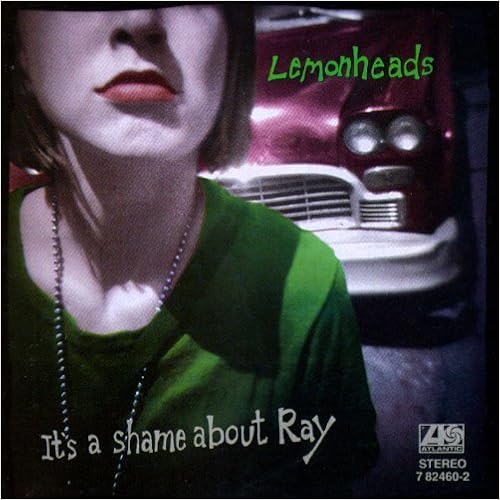
The Lemonheads, and their song, “It’s A Shame About Ray,” falls into that category. I seriously doubt that I ever heard any of their music before the album of the same title, and while I’ve bought a bunch of their music since, it sits in my iTunes library and occasionally plays when I’ve set my music to play on random. By the way, have I mentioned that I turn 60 today, and so it shouldn’t be a surprise that I still buy music and use iTunes (and an iPod, although it is the biggest-ass iPod they make)? So I don’t know about their early, indie work, and can’t wax poetic about their deep tracks or opine about the quality of the band’s various lineups.
Which is why I’ve chosen to write about “It’s A Shame About Ray,” probably one of their most popular songs, if not the most popular. (Their cover of “Mrs. Robinson" was a hit, too.) It’s a great song, jangly and catchy and poppy and vaguely mysterious. What’s it about? I’ve seen two different explanations, both from singer and writer Evan Dando, who, I understand, liked to mess with the press. Also, he used lots of drugs.
One thing that is pretty clear, though, is that it was written in Australia, in collaboration with Tom Morgan, who was the lead singer for the Australian band Smudge. One explanation was that they met a guy in Melbourne who called everyone “Ray,” which gave them the idea to write a song by (or for) every man. Another explanation was that they saw a headline about TV talk show host named Ray Martin who had lost his job in the newspaper with that phrase and wrote a song around it. Which sounds more likely to me. (I still read a paper newspaper every day. Have I mentioned…..)
The video for the song was directed by Jesse Peretz, the original bass player for the band, who had moved on to directing, and has had a pretty successful career in that line of work, and featured Dando’s then-friend Johnny Depp (Dando dated Kate Moss after she and Depp split, leading Dando to remark, “We were really good buds until I slept with his girl.”) Here’s the video:
More than once here I have professed fealty to Fleetwood Mac.
In the early '70s, Fleetwood was on my playlist: Future Games and Bare Trees, But the musical style of Peter Green was not the same as what the band was producing after he left. <Mystery To Me> followed by <Heroes Are Hard to Find> filled my mid-'70s heavy play list. Bob Welch and Bob Weston had replaced Green on guitar: songs like Hypnotized & Bermuda Triangle. It was after this, in the later part of the mid-'70s with the addition of Lindsey Buckingham and Stevie Nicks that the band hit big time commercial success.
The song above comes from the first album with Nicks and Buckingham, sometimes called the White Album, and it charted at the top of the US Billboard list including a handful of top twenties. It took 10 years to produce their next, Rumours, aptly named amidst a period of difficult relationship issues.
In this version, Lindsey Buckingham's minimalistic guitar playing comes across well: a case of less is more. Buckingham's solos are as sparse as they are effective: harmonics ... repeated notes with effect...
It is not just Buckinghim who is effective in his use of sound: the whole band is tight to the point that this live performance rivals the studio version, where they would have had more control of the final result. As ever, there's the two stalwart members who've been there throughout the years: John McVie and Mick Fleetwood laying down the essential backbone of the music: the drums and the bass.
Welp ... it looks like SMM posts for this theme never got in to the alternate meaning of <fast> timed to fit the Islamic month of Ramadan, where believers fast from sunrise to sunset. Our theme looks set to end here; Ramadan in a few days. Here is a food-related post to compensate or celebrate.
Pete Townshend/The Who has something for musicals: Tommy ... Quadrophenia ... The Iron Man ... more? The rock musical is not exactly a grossly popular format but there are several more than I was aware of sprinkled among the 75+ listings at the Wiki - some Lloyd Webber, Pink Floyd's The Wall - but also Paul Simon, Green Day, Bono ... have a look.
Townshend's Iron Man eats heavy metal as well as fast food. Fast? you say. In the Ted Hughes book from which the musical is adapted, the iron man wreaks havoc by eating industrial farm machinery- until he changes his mind and saves the world from a space alien. ... sci-fi from '68 adapted with Hughes' support and turned into a musical after several re-writes by Townshend and David Thacker, Director of the Young Vic theater at the time.
The lyrics are extensive - lines and lines of somewhat rique material: rich in connotation and, as ever for Townshend, critical. In this case about, of course, fast food. The album where it appears is kind of a off-spring of the full musical, which was still being cobbled together in 1989 when the album was released. According to at least one critic, the song following Fast Food (I Eat Heavy Metal) had the potential for a more raucus rendition, but both- to my ears - sound like The Who. Nina Simone is credited with the vocals but it sounds to me like mostly Townshend (but then again, I don't really knoiw much about Simone). Daltry and Entwhistle also perform on the album, which is not a Who album since the band had since disbanded. Kind of: Superbowl XLIV anyone?
You can read a lot lot more yourself here in an extensive, entertaining and informative read at petetownshend.net
And a snippet of the lyrics, for your eyes (for your ears is at the top of the page):
I don't even want it killed
If it's dead I heave, it makes me sick
So check that it can breathe and bring it to me quick
I'm of the age where Steppenwolf's <Born To Be Wild> was a head-banging hit (before "head-banging" was a thing) This would have been '68 or '69. <Born to Be Wild> came out on their 2nd album in late '68, so it would have been '69 for me, considering the inter-continental delay in the pre-Internet world (we did have radio wave technology, so ... maybe '68)
Original band members brothers Dennis and Jerry were members of a Canadian band called The Sparrows (along with Bruce Palmer - later of Buffalo Springfield) who, along with John Cay, Goldy McJohn also of the Sparrows, then formed Steppenwolf. The brothers changed their surname to Edmonton, and it is Jerry - the drummer- who is credited with writing <Born To Be Wild> as well as the song behind this post: <Faster Than The Speed of Life>. Speed of light?
As for the band name: Steppenwolf ... there's an air of roughness embedded in the name itself (that would be the wolf part) ... and Steppen is ...? Fast? As in stepping? (probably not) , but the word is related to the English word step/walk.
Then, there's the whole Hermann Hesse "craze" of the late '60s, where every school in the US was requiring its student to read Hesse's Siddhartha and Steppenwolf. I have to believe that the band could not not (=must) have been influenced to some degree by this '60s Hesse meme (and ... meme was not a word then? yes/no ...it was not: introduced to English in 1976)
Steppenwolf mostly utilized the simplistic 3-chord musical progression and made the most of it: I-IV-V, in musical literature - actually the basics of much of rock, but essential to their formula for the short time they were at the top of the charts. But top they were: Born To Be WIld was .... Faster Than the Speed Of Life was not... and while both are fairly fast, tempo-wise, only the latter qualifies for our post this time.
But you should still listen to Born to Be Wild once again.
Last week, “Fast Car,” this week, “Fast Cars.” Despite the similarity in the titles, the songs could not be more different—Tracy Chapman’s is a soulful folk song, while Buzzcocks’ is a hard chunk of punk. But both are great in their own ways.
My introduction to Buzzcocks came, as so many of my musical discoveries did, in the basement studios of WPRB. I’m pretty sure that it was the singles compilation, Singles Going Steady, filled with perfect morsels of melodic punk and heartfelt lyrics about love and sex and heartbreak, that was my gateway. It came out in 1979, and I played it regularly. Their next album, A Different Kind of Tension, came out around the same time, and was also great, although it was a little more experimental.
I don’t think that I spent a lot of time investigating the band’s two earlier albums, both released in 1978, Another Music In A Different Kitchen, and Love Bites, probably because there were so many great songs on the two albums that I already knew better. I’ve subsequently learned about the earlier music from some compilation albums I picked up over the years.
Buzzcocks never got the same respect as their contemporaries The Sex Pistols or The Clash, and I’d argue that they were way, way better than the Pistols, and that their limited output approaches The Clash’s in quality during the same period. However, Buzzcocks' relatively short life as a band (pre-reunions) prevented them from showing the same growth as The Clash did in their masterpieces London Calling and Sandinista! (a flawed masterpiece, I’d say). And, remarkably, although they’ve been mentioned on this blog in passing (and in a cover), there has never been a post that featured this amazing, influential band.
Founded in 1976 by Pete Shelley and Howard Devoto, they eventually added bassist Steve Diggle and drummer John Maher and self-released an EP, Spiral Scratch. Devoto left the band (and soon formed Magazine), Shelley became the singer, Diggle moved to guitar and Garth Davies, who had been in an early version of the band, rejoined on bass, rejoined, only to be again replaced by Steve Garvey (not the baseball player).
Signed by United Artists, their great first single, “Orgasm Addict,” was banned by the BBC, because, you know, sex, and they commenced to release the series of excellent singles that were later compiled on Singles Going Steady.
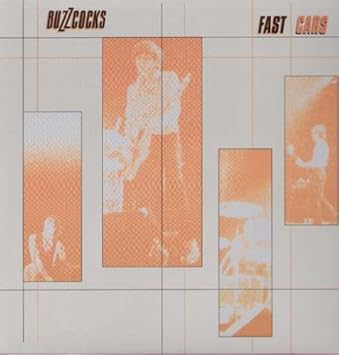
Their first studio album, Another Music In A Different Kitchen, included the single, “I Don’t Mind,” which charted at number 55 in the UK Singles Chart, as well as “Fast Cars,” a song that was mostly written by Diggle in response to a car crash that he had endured. It is a typically fast and catchy song that criticizes the titular vehicles, and namechecks Ralph Nader. It seems that Mr. Diggle hates fast cars.
The band broke up in 1981, after a dispute with their record company, reuniting in 1988, with varying lineups over the years. Shelley died of a suspected heart attack in 2018, but Buzzcocks have soldiered on with Diggle taking over vocals.
Our head honcho here at SMM sends out our homework on just about every second Saturday, with a handy explanation of how it may be tackled: what the words mean, how it may be interpreted and, often, links and examples to songs, bands and whatnot, that could bear association, however arbitrary. Anything, really, to stoke the fires of inspiration. My brief is to steer as far astray.....
So "Fast", as well as vroom vroom, is a verb to abstain from food, whether for health or for religious goal. The latter is a common concept, the Bible honing in on forty days (and nights) as the ideal length to achieve peak asceticism. Bonus points if spent in the wilderness. Plus, of course, in Islam there is the yearly rite of Ramadan, conveniently ongoing now, whereby followers forgo food during daylight hours. An old workplace had an extensive moslem workforce, Monday night monthly meetings torture for them, as the rest of us tucked in to the bribery of sandwiches. Then, at a decreed moment, suddenly, the day ended, and they dived in to whatever was left, breaking their fast. Hence also breakfast, the end of the fast we all undertake overnight, give or take midnight munchies. And the catalogue of songs about breakfast is as enriching as a full english of sausage, bacon, eggs, mushrooms, beans and black pudding. Oh, and tomatoes, lest anyone think it unhealthy.
Given the Yusuf/Cat Stevens song linked above, it is quite by chance that this song carries a distinct middle eastern flavour to its opening. The impeccably no notes knowingly underused vocal of the brilliant late Billy McKenzie are plastered all over the melody, and it is one of the highlights of the Associates 1995 third album, Perhaps. So ahead of the time was McKenzie, ahead of any time, arguably, it was widely slated at the time, with the passage of time being far kinder than the critics of the day. I love it and his bonkers vocal cascades. The lyrics, as was entirely normal for the band, seem to bear little application to the meal in question, other than a passing mention. But I'm not going to let that deny me featuring th song.
No such frippery with good old Bill Callahan, breakfast: its preparation and its delivery is all the song is about. OK, so a subtext about anorexia might also be in there, but Bill has such a deep inviting bathtub of a voice, it's more about the sound. I would have liked to know what the menu featured. I'm guessing eggs are featured, no doubt 'over easy' or some such americanism. A newer song than often featured here, from his 2020 recording, Gold Record, but I just so love this guy's voice as to feel it churlish not to include it. Funnily enough, although I never bother with it, when I do indulge, it could also be my favourite meal of the day.
Is bed and breakfast a thing outside the British Isles? The idea of a room for hire, with purpose self-explanatory. Not a hotel, a private house, often with a formidable harridan at the helm, letting out her rooms, providing a cooked meal in the morning, ahead of booting you out on your arse until the evening, whereupon you could return, alone, no guests, to your room. Seaside towns have street after street of them. OK, the picture I paint is as dated as the world within all the songs by Madness, the endearingly chirpy ska band with a way both for the gaucheness of English life and the rose tint they apply to it. Hugely successful over four decades, they translate especially badly to countries where the language is supposedly the same. The bed and breakfast man of the song is, I suspect, rather than a frequenter of such establishments, more the sort of chap capable of treating the bed of his paramour as if it were such.
An instrumental interlude courtesy the genius of Norman Blake, a consummate artist on any stringed instrument you might ever mention, guitar through mandolin, banjo and dobro. Here, effortless finger picking evokes the joys of an eye-opener, that pre-solids shot of the hard stuff that rightly gives drunks such a bad name, the first tune displaying that he'd had the (absent) fiddlers ration too. A US national treasure, he is not to be mistaken with the same named weegie guitarist with Teenage Fanclub, himself not averse to a song about the demon drink. Time of drink taken not alluded to.
One of the disappointments that comes with continental travel is the continental breakfast, paltry fare where the only hot thing provided is, if you are lucky, a hardboiled egg, plonked alongside a cold croissant and the end of last nights baguette. Sue Foley, a Canadian blues singer and guitarist, perpetually number three in the rankings, behind Bonnie Raitt and Susan Tedeschi, has clearly toured Europe and tries to excite the table with some local colour. I think I'd sooner have breakfast in Texas.....
Way the world's going, what we need and what we need now is some head's down, no nonsense, mindless boogie. (No, not that one.) After a disastrous start, UK has begun to vaccinate itself to a state of current easing, but large parts of the rest of the world are daily scuttling ever more perilously to the edge of wipe-out. How to, what to, why to? None of this I know any more, but, in the avoidance of the harsh and bleak, new variants willing, grant me a couple of minutes of escapism.
Brinsley Schwarz were and are a staple of my listening pleasure. Actually the name of one of the guitarists, the name became that of the band, bastions of the burgeoning UK pub-rock scene, that pre-punk escape from the scourge of prog pomp posturing, embracing flavours of country, blues and soul into short punchy songs. Nick Lowe was the most lauded member, going on, via Rockpile, to build himself a healthy solo career that runs to this day. (Not all healthy: down on his luck in the early 90's, the chance pick up of one of his songs for Hollywood blockbuster, The Bodyguard, was said to have led a cheque, for a seven figure sum, dropping into his postbox. Which must have been nice.) Other members later found their way into Graham Parker's Rumour. BS, the band, were as famous, at the time, for a disastrous promo exercise, going disastrously wrong, whereby they were flown to the Fillmore East, NYC, for a showcase gig in front of a throng of top music biz journos. Late on arrival, unpractised and under-rehearsed, with pick-up kit, it was a fiasco, with them laughed out of town and pocket. Astonishingly, rather than throwing in the towel, they picked themselves up and built themselves a strong grassroots following, back from the bottom, producing a run of well received records. This is typical of their style, a bucolic mix of keyboards and choogling rhythm. But, never enough a concern to make their fortunes, and they folded their four year career in 1974. The song comes from their 1973 album, 'Please Don't Ever Change', and was written by Lowe.
Ironically, shortly before they split, one of their final gainfully was to back Welsh retro-rocker Dave Edmunds on tour. Edmunds and Lowe hit it off and the next step was the formation of Rockpile. Initially, again, Edmunds' group but they gradually became co-pilots, the band then backing each other on each of their then solo output recordings, and then a specific Rockpile as a band album release, 'Seconds of Pleasure'. The band, a four piece, with later 2nd generation Pretender Billy Bremner on additional guitar and vocals, and later Dire Straiter Terry Williams on drums. I really expected huge things for them, but the honeymoon bubble burst, and they split, their legacy hidden as much in those solo albums, and that of Lowe's then wife, Carlene Carter. (Yup, that one, Johnny Cash's step-daughter!) Their version of the featured song eschews some of the melodic swagger for an altogether more muscular take, guitars to the fore and no piano. But no less pleasurable. (And, special credit clearly must here go to the video, one of several made by Garren Lazar, all featuring the Peanuts Gang giving their best to a whole host of songs, culled from all genres and all decades.
But the song was not dead, and it took Nashville country-rockers BR549 to kick some yee-haw sawdust in the face of the song, adding some fiddle and altogether western swing flavours that give yet more zest than the versions before. From their 3rd 2001 album, 'This is BR549', this has them perched between a traditional country take and some of the more populist hat act territory of the time. This song bestrides that fence perfectly.
That's it, no message, no preaching. That is beyond, if and when in doubt, Play That Fast Thing One More Time!!
This is my third piece in a row focusing on a Black woman. I’m not sure why, but I realized the other day that my wife and I have, over the past few months, watched five movies/TV shows (it is hard to tell the difference these days) about legendary Black women singers—Ma Rainey’s Black Bottom, Aretha, The United States Against Billie Holliday, Tina, and Mahalia. (Plus One Night in Miami, in which one of the main characters is a Black male singer). How much of the fact that so many fine films featuring mostly Black casts is a result of the agitation about the whiteness of the Oscars? And how much did the fallout from the George Floyd killing, and the other killings of Black Americans over the past year, convince studios to release, and people like me to watch, films like this?
So, once again, I’ve forced potential readers to wade through a paragraph that is, basically, unrelated to the song I’ve chosen to discuss. Maybe that’s why I write these things for fun and not money (not that anyone’s offering), because it allows me to go off on tangents. Like I just did there, again.
But let’s get to the meat of the topic.
Tracy Chapman’s 1988 song “Fast Car,” from her self-titled debut album is an amazing song on so many levels. It is so good, in fact, that one writer declared that it “essentially revived the singer-songwriter movement.” I’m not sure I’d go that far, but it didn’t hurt—and the fact that Chapman was Black, which was unusual in a genre that had become pretty white by that point, was another reason that the song was noticed.
The song also has a great “discovery” story. Shortly after her debut album was released, Chapman was part of a megastar-studded bill for the Nelson Mandela Birthday Concert in 1988 at Wembley Stadium. She had completed a three-song set and cleverly stuck around. When Stevie Wonder went to perform, he discovered that the hard disk for his Synclavier was missing, and he walked off the stage in tears (he did, eventually, return using borrowed equipment). Chapman was asked to go again, and she agreed, doing two songs, including “Fast Car.” It went over big.
But the real reason that the song became a hit (No. 6 on the Billboard Hot 100), and got a Grammy for Best Female Pop Vocal Performance (and another for Chapman as Best New Artist and the album for Best Contemporary Folk Album) and MTV Video Music Award nominations, is that it is an incredible piece of songwriting, delivered brilliantly by Chapman in her rich contralto voice.
“Fast Car” is, however, a pretty depressing song. The first stanza describes the singer’s desperation:
You got a fast car
I want a ticket to anywhere
Maybe we make a deal
Maybe together we can get somewhere
Any place is better
Starting from zero, got nothing to lose
Maybe we'll make something
Me, myself, I got nothing to prove
We learn why she wants out in the next few stanzas—she’s working at a convenience store, had to drop out of school to care for her alcoholic father after her mother left him. But it’s not only the car—it’s the owner, who when they drove, made her feel like she belonged and could be someone. It’s a dream that dies all too quickly—she works, he stays out late, drinks and ignores their kids—and she sees no future.
And in the last stanza, she lays it out:
You got a fast car
Is it fast enough so you can fly away?
You gotta make a decision
Leave tonight or live and die this way
Anybody want to wager on whether or not they left?
As I read Jordan's last piece, erudite and informative, it got me a'thinking around the other taboo subject in popular song, seemingly equally common a subject matter as rumpy pumpy, namely drugs, the paths of blues and jazz as awash with as much reliance, if not more, upon uppers, downers and in-betweeners as more recent times. The censor was seldom enthusiastic about such, and remains still a little averse today, worried about the corruption of young and fertile minds. Thus the need to disguise in simile and metaphor. (Here I feel I should add, having delved deep into the subcultural yearnings put my way over 50 plus years of enjoying the devil's music, never have I felt it necessary to partake, give or take the odd jazz cigarette as a teen and young adult. Never did anything beyond make me cough, together with a need to poo (TMI), however many times I listened to Paul McCartney.)
The BBC were notoriously eagle-eared for references, frequently banning anything that could be possibly construed as smacking of, well, smack or, indeed, anything else. So as well as the ex-Beatle's paean to hot air ballooning, so too were songs by myriad other acts struck from air-play. So alongside anything overtly sexual, anything that contained the name of a commercial product, the list of presumed drug songs deemed unsuitable included other, earlier songs involving the very same perverter of the young, Paul McCartney*. None of these could really be classed double entendres, as, bizarrely, colour your reference in the imagery of food or, more commonly, candy, much as with sex, and you could take the arbiters of taste on quite a trip. Or references to literature, the classics being drug free zones, right?
Ice cream is frequently invoked as a euphemism for narcotics, and has been since forever. In part the idea of a special treat and part the network of delivery outlets. For, as well as being for sale in shops and restaurants, there is the time hallowed ice-cream man in his, or her, ice-cream van, bring his product to a curb side near you. I used to think this purely a British phenomenon, but John Carpenter and Jonathan Richman have taught me different. (Richman's Ice Cream Man, despite the lyrics, a give away in any other hands, is arguably one of the few where you can feel some confidence that it really is a Mr Whippy he sings about.)
Heroin has been a scourge of the central belt of Scotland for decades, the combination of grim concrete estates, with populations transplanted from slum squalor to out of town desolation, built with little thought of leisure and recreation factored in by town planners. Add the Scottish love of sweet things and, particularly of ice cream, no Scottish town without a family of Italian emigres, with cafes and ice-cream emporia, resident since the early part of the twentieth century, and any business brain can begin to see a hole in the market. For the hole in Daddy's arm every bit as much as the hole in his kids tummy. Even genuine ice-cream vans initially became subject to vicious turf wars, but it wasn't too long before the rinky dink tone of Greensleeves denoted that something else was there for the buying.
Mary Coughlan is a terrific singer, with a smoky voice at as much ease in folk and blues as she is in rock and jazz, ploughing her idiosyncratic fare for 35 years. I see I wrote about her in 2013. The featured song for this piece comes from her second album, Under the Influence, in 1987. That title too might be a broad hint, but my suspicions and her admissions point to towards her own poisons being largely booze. But there are two songs about ice-cream, two in a row, tracks two and three on side one. OK, the second is a brief instrumental, but the first, by Johnny Mulhearn, is sung through the eyes of a housewife, hooked on the scag brought to her and the other women on the street by the same van selling cones and wafers to her children. Based on a both a true story, one with a happy ending, in that the dealer was arrested and imprisoned, with a good deal of anecdata from The Glasgow ice-cream wars, as mentioned above. She mentions the song in this interview.
When I purchased my own first "stereo" back in '71, the merchant included a copy of "Who's Next" in the deal. I have mentioned this before here. Andy La RayGun has also brought it to our attention
Always a fan of the Who/Pete Townsend, I have tried to keep up as he has done side gigs, the NFL Superbowl (however difficult with the group at that age) and more.
The album <The Who By Numbers> includes this piece that might fit the current theme: Squeeze Box.
Ostensibly, a squeeze box is an accordion: you know, the player pulls and pushes/squeezes the box to produce the musical sounds. That doesn't appears to be the actual subject of the song:
Mama's got a squeeze box she wears on her chest
.. [daddy] never gets no rest
Yes, the accordion usually rests on the players chest. But more:
She goes in and out and in and out ... [Hmm...meaning what?]
... Come on and squeeze me ...come on and tease me ... [Hmm.. tease the accordion?]
There’s a long history in music of songs with double entendre lyrics. Now, Cardi B. and Megan Thee Stallion can go on network TV and sing about their WAP (although it appears that they bleeped out the word “pussy” at the Grammys), and that song, and other sexually explicit ones, are played on the radio, streaming, and wherever popular music is found. But there was a time when sexually explicit songs had to be couched in innuendo and double entendres.
The benefit of this approach is that the song could get wider distribution, those who got the references, felt that they were in the know, and the artist could feel like he or she got over on authority. I understood this well back when I contributed to halftime shows for the Princeton Band, which were censored by the University, and we used to joke that if we ever wanted to play a particular famous folk song, we’d have to call it, “She’ll Be Arriving Around The Mountain When She Arrives.” So we slipped a lot of references past the censors—the first joke I wrote as a freshman was about freshman male social life, and had the band form a shower with water shooting from the spout, as we played "He’s Got The Whole World By The Hand." It was fun, we had lots of laughs, and eventually got in trouble with both Princeton and the United States Army…
This theme, like many I’ve suggested here, was inspired by a song I heard in the car. This time, I had on the B.B. King’s Bluesville station and I heard “My Butcher Man,” by Memphis Minnie, with her then-husband, Kansas Joe McCoy. It became pretty clear that Minnie was not really singing about the man’s butchering skill. The song includes lines such as:
I’m going to tell everybody I've got the best butcher man in town
He can slice your ham, he can cut it from the fat on down
He slice my pork chops and he grinds my sausage, too
Ain't nothing in the line of butcherin' that my butcher man can't do
Butcher man, in the morning, won't you please stop by my house
I've got enough butcherin' for you to do if you promise me you just only hush your mouth?
And finally, if the references weren’t clear enough:
If anybody asks you, "Butcher man, where have you been?"
Show 'em that long-bladed knife, tell 'em you been butchering out in the slaughter pens
Let's go, butcher man, for me
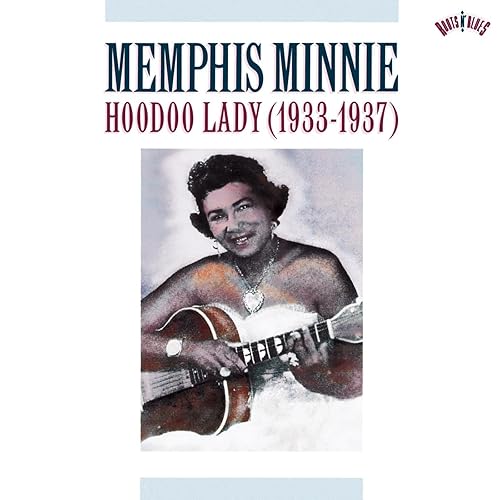
Memphis Minnie was born Lizzie Douglas in 1897 in New Orleans, She ran away from home at the age of 13, and started playing on street corners, eventually moving up touring with the Ringling Bros. Circus and then as a singer and guitarist in the Beale Street blues scene. She was, by all accounts, a tough, street smart woman. One observer remembered: ”Any men fool with her she’d go right after them right away. She didn’t take no foolishness off them. Guitar, pocket-knife, pistol, anything she get her hand on she’d use it.” Apparently, the blues business wasn’t sufficiently lucrative, so Minnie’ reportedly subsidized her income with prostitution, charging the relatively large sum of $12 for her services. Minnie also gained a reputation for partying and gambling. She was an early adopter of the electric guitar, and didn’t shy away from guitar contests against the likes of Big Bill Broonzy, Tampa Red and Muddy Waters, sometimes winning.
Minnie recorded over 200 songs, and wrote many of them, including “My Butcher Man,” “Me and My Chauffeur Blues,” (another song filled with double entendres, originally credited to someone else, and was later recorded by the Jefferson Airplane, who credited yet another different person), and “When The Levee Breaks,” (with Kansas Joe, later re-worked by Led Zeppelin, who actually gave Minnie a writing credit without litigation).
This genre of music was sometimes called “Dirty Blues,” and often featured double entendres. In researching this piece, I found a fascinating article written in 1927, a few years before “My Butcher Man” was written, by Guy B. Johnson, a white “scholar of black culture and longtime advocate of improved race relations,” as his obituary in The New York Times stated when he died at 90, in 1991 (and whose last name, itself, is a double entendre….). One of Johnson’s observations was
that
the majority of the expressions in the blues relating to the sex act are sung from the point of view of woman and are mostly concerned with the quality of the movements made by the mail during coitus.
He then goes on to describe many examples, proving clearly that academic writing, even about sex, can be bone-dry.
Johnson concludes,
Double meaning in secular song is after all nothing new. Folk song students know that many standard folk songs have come up out of the slime. But it is doubtful if any group ever has carried its ordinary vulgarities over into respectable song life so completely and successfully as the American Negro. And the ease with which the Negro has put this thing over leads one to suspect that the white man, too, enjoys seeing “the other meaning.”
....you'd probably barf, that certainly being also my reflex response to this nadir of kitsch, a song so ghastly I cannot bring myself to say the whole title out loud. So, then, the Bellamy Brothers, what can you possibly say, how can you possibly defend this massively selling worldwide hit, a Billboard country chart topper in 1979, and 39 in the entire reckoning? Hell, it hit a national number 2 in the UK, seemingly on the back of it's initial success amongst the record buying public of Northern Ireland. Apart from offering your gratitude, that is, to all of those with such execrable taste.
Harsh? Well, maybe, but please understand where I was at the cusp of the 1970s into 80s. I was possibly alone amongst my chums in having a penchant for country music. By which I mean country-rock, I should explain, never "& western", not that dreck, no sir. So the Burritos, Pure Prairie League, New Riders, Poco and all their kindred steel-tinged spirits. And my friends and family would know that, themselves suspicious and wary even of whenever Bernie Leadon took centre stage in the Eagles, who were as country as their mainstream ears could ever stray. A little beyond, in truth. But, bless them, they would look out for me and point me in the direction of where they construed my taste to lie. Which meant the fecking Bellamy Brothers. The chances were that they would themselves like it, the o so witty play on words, the clever chat up line to trot out at the disco's close. They would make an exception to the genre on that occasion, maybe thinking I wasn't so strange after all. No, no, no.
It was only as I recalled my full unadulterated hatred of this song that I remembered there had been a time when their name had not led me to rage, with their earlier and other hit single, 1976's 'Let Your Love Flow', a pleasant enough ditty, if a little anodyne. So they weren't necessarily all bad, although I discover today that song was written not by them, but by one of Neil Diamond's roadies, something that would have, had I known then, immediately flagged up another of my instant red flag prejudices. You can stuff Diamond's reappraisal and Rick Rubin helmed rehabilitation. Still irredeemable nonsense. But, it set me to thinking, given the theme of this piece, and the brothers appropriation of the, in his hands, mildly amusing Groucho Marx line, who knows how they could have taken the title themselves? Eeeow, Richard Hell, eat your heart out.....
Of course, I know nothing much about the Bellamys, and am sure they are decent enough coves. Indeed I suspect they are still going, with a no doubt popular move into Christian music along the way, possibly necessitating a humble apology as they drag out the old warhorse, with sly and knowing glances being exchanged across the probably line dancing audience. I hope they promise, beyond that ill-considered lapse in taste, part of their hot-headed youth, and to stick to more wholesome fare, and to single entendres. Like this:
So, fast forward forty years, and I find myself quite liking the "& western", classic Grand Ol' Opry being now something I can derive pleasure from, especially mawkish country weepie duets. Of course, I still love all the old stuff I did back then too, and also keep my ear to the ground for newer flavours of country, from banjo jam band fusioneers like Leftover Salmon to sassy songstresses like Margo Price. I guess you are expecting me now to now offer my respect, grudging or otherwise, to the Bellamy Brothers and similar "Hat" acts?
Not.
A.
Bloody.
Chance.
If I said your song was a crock'o'shite, would you hold it against me?
Star Maker Machine does not accept music submissions from artists or promoters. However, most of the contributors here do accept submissions for our own blogs, listed below. Please visit our blogs, take the time to listen to what we post, and then feel free to contact us if you feel that your music would be a good fit.






























:format(jpeg):mode_rgb():quality(90)/discogs-images/R-5947127-1435056219-4942.jpeg.jpg)