








Tuesday, July 13, 2021

1971: Fillmores

Allman Brothers: Whipping Post
[purchase Don't Fight the Feeling - the Complete Aretha Franklin & King Curtis Live at Fillmore West ]
[purchase Allman Brothers Live at Fillmore East Deluxe Edition]
[purchase Mothers Fillmore East-June 1971]
[purchase Humble Pike Performance Rockin’ The Fillmore

1971 saw the closing of both the Fillmore West and the Fillmore East, the legendary venues operated by the equally legendary rock impresario Bill Graham. The original Fillmore Auditorium was located in a San Francisco building originally built in 1912, and Graham began booking shows there in 1965. It eventually became the center of the San Francisco music scene, with incredible musical performances and famous light shows. But in 1968, because of the increasing deterioration of the neighborhood and the insufficient size of the space, Graham moved his focus to the newly christened “Fillmore West.” That venue, formerly the Carousel Ballroom, was briefly run in 1968 as a cooperative venture by the Grateful Dead, Jefferson Airplane, Quicksilver Messenger Service and Big Brother and the Holding Company, before Graham took ownership and began booking shows there. (The original Fillmore was, for a while, operated by a different company as the “New Old Fillmore.”) 

The name “Fillmore West” was chosen because earlier in 1968, Graham had taken over a derelict space in New York City originally built for the Yiddish theater in the mid-1920s, and opened it as the Fillmore East. That venue, like its West Coast sibling(s) became hugely popular and influential, with shows on multiple nights a week, typically triple bills at 8 and 11 pm. The Fillmore East also featured elaborate light shows. 

However, by1971, the economics of the music business was changing in favor of stadium and arena shows (boo!), and Graham decided to shutter both venues. The last concert at the Fillmore East was an invitation-only affair on June 27, 1971, featuring The Allman Brothers Band, The J. Geils Band, Albert King and special surprise guests (Edgar Winter's White Trash, Mountain, The Beach Boys, Country Joe McDonald). The Fillmore West closed on July 4, 1971, after five nights of concerts by 14 bands, mostly from the San Francisco area, including Santana, the Grateful Dead, Hot Tuna, Quicksilver Messenger Service, and the New Riders of the Purple Sage. 

The Fillmore West eventually became a Honda dealership, before becoming a music and event venue called SVN West. The Fillmore East went through a few other iterations as a music venue before becoming The Saint, a gay nightclub in the 1980s. The former lobby of the venue is now a bank, and the auditorium was demolished to build an apartment building. 

The original Fillmore became a punk venue, The Elite Club, before reopening under Graham’s management. It was damaged in an earthquake, and after Graham died in 1991, it was repaired and reopened as The Fillmore. Live Nation operates the venue and has rebranded a number of theaters around the country with the Fillmore name, although in some cases, most notably at New York’s Irving Plaza, it didn’t take. 

Although 1971 was a bad year for the Fillmores West and East, it was a good year for albums recorded at the venues. On May19, 1971, Aretha Live at Fillmore West was released. It had been recorded there in March, and included a number of covers of current popular music. It’s pretty great, featuring, in addition to the amazing Franklin, King Curtis on sax, leading a band that included, among others, Billy Preston, Cornell Dupree, Bernard Purdie, and the Memphis Horns. And there’s a duet with Ray Charles. During the same shows, King Curtis’s band, which was also the opening act, recorded its performances (mostly covers), and they were released as Live at Fillmore West in August. Tragically, a week after its release, Curtis was stabbed to death in New York. 

If there’s one album that rock fans associate with the Fillmore East, it is the Allman Brothers’ At Fillmore East, recorded there in March, 1971 and released on July 6, 1971. I’m not really sure what else to say about this album that hasn’t been said better by others. Suffice to say that it is one of the greatest live rock albums of all time, and probably just one of the best rock albums of all time (which is why when I picked one song to feature above, it was from that album). In 2004, the album was selected for preservation in the Library of Congress, deemed to be "culturally, historically, or aesthetically important" by the National Recording Registry. 

In June, 1971, The Mothers (formerly known as The Mothers of Invention, led by Frank Zappa) recorded performances at the Fillmore East (and some additional performances in May in Michigan), for Fillmore East-June 1971, released in August. It is raunchy and juvenile, and while it has some good music, really hasn’t aged well. 

Humble Pie, which featured Steve Marriott and Peter Frampton, recorded performances at the Fillmore East in May, 1971, and released Performance Rockin’ The Fillmore in November, 1971. I can’t say that I’m at all familiar with it, although I have a vague sense that I’ve heard the single from it, “I Don’t Need No Doctor.” Before the album was released, Frampton left the band for a few years of minimal success before he came alive, briefly.

Sunday, July 11, 2021

2021-50=1971: Yes


purchase [The Yes Album and Fragile ]

I don't recall having ever seen an album production credit for "bank loan arrangement" before. It equally stikes me as strange considering that the album where I saw it was produced immediately on the heels of an apparently successful tour supporting the release of The Yes Album that same year. Woulda thought they had made some money? One explanation is that they needed money to buy equipment for their newly added keyboard player, a man named Rick Wakeman.

So, in February, Yes released The Yes Album, in the summer, keyboardist Tony Kaye is removed from the band, Wakeman joins, and in November, they release >Fragile<.

The addition of Wakeman accomplished the band's intentions to give more prominence to electronic keyboards, and it was Kaye's reluctance to go down that path that led to his departure. 

Of these two 1971 albums, my personal preference is for The Yes Album - Fragile, perhaps because it was a bit rushed into completion, perhaps because Wakeman was still new to the group - doesn't seem to have the cohesion of a "band", but a band that does actually come together on their next album, Close to the Edge. The Yes Album is the product of a group that is working together and on the verge of defining the prog rock genre. The Yes Album is the band's third and the first with guitarist Steve Howe (who appears above at far right in the photo on the album cover of the 2nd album without having actually played on it). 

Shades of Genesis?


Thursday, July 8, 2021

Opposites: Awake/Asleep

purchase [the band]

"A tad obvious" says our own Seuras, speaking of feathers and lead in his heavy/light post a few days back. The same holds true for any of the opposites we have poked at in this theme - "a tad obvious". My choice of awake/asleep is no less obvious, once we say it outloud, it is: "but, of course."

That said, I think I can say I now have a favorite song from The Band's oevre. I mean, there are several fine tunes over the 10 years from '68 to '78 that included Robertson in the band. But I particularly like the  - I'm going to call it a jangle - of the song. Maybe it's the semi-ragtime keyboards in the original recording? I like the sound almost as much as I like the lyrics. Just a few of them that are stuck bouncing around my head:

you will be hangin' on a string from your when you believe

you will relieve the only soul that you were born with to grow old and never know

I could wake up in the morning dead

And if I thought it would do any good I'd stand on the rock where Moses stood 

But then I came across a version that Rick Danko (the vocals on the original) shared, and -for me - the song gained further respect.


Another awake. I confess I have never really felt a reason to follow Katy Perry's music. I can see why some folks do and did, however. But when I see that she, too, has an awake song, I guess it's time for me to dig a little deeper than knowing that she's done some American Idol stuff. Her <Wide Awake> from 2012 sounds to me like most of what I have heard of her music/style ("...anthemic and often sexually suggestive...electro-pop...", per britannica)


As for the other side of the coin ("ah", he says a little belatedly, "another pair of opposites we have here"), let's go back to Abbey Road, 1969, pretty much the end of the Beatles as a band.

Golden Slumbers is one of eight short songs that make up the 16 minute track titled <Medley>. You know the song. It's the one that begins "Once there was a way ... to get back home ... sleep pretty darling do not cry ..."


Let's continue sleeping with a listen to the better known version of Mbube, the song originally from Solomon Linda back in 1939 - the one that you've probably heard the version of from The Lion King as well as this one from The Tokens. It's not particularly going to put you to sleep, but maybe you don't want to spend the night near a sleeping lion, whether you "hush my darling" or not.


And we'll wrap it up, although there's plenty more to cover, with an appropriately named band (that I again really don't know much about except their name, which fits the subject): Asleep At The Wheel. They've got a coupla songs that - besides their name - touch on sleep: Midnight in Memphis, and an album titled <Keep Me Up Nights> plus more, for sure (In My Dreams ...)


Sunday, July 4, 2021

OPPOSITES: LIGHT/HEAVY

Hmm, a third week, a third challenge. Silly? Serious? Low-brow? High-brow? Light-weight? That’s it! Avoirdupois! Weight. Of course, as a nominally music appreciation site, it can also be your difference twixt Sabbath and Sweet Thursday, so, well, just so. 

Traces (Light and Weight)/Enigma

Me, I am going for weight, going for the compare and contrast between a ton of feathers and a ton of lead. (And, believe me, I toyed with what you’re thinking, feeling it a tad obvious…..) So, for the sake of the songs, light and heavy. And if you fancy a drink with that, be my guest, whether it be a light and bitter or a pint of heavy. More anon.

Lighter Than Air/Christine Collister

It is the glorious voice of Christine Collister that kicks us off, she possibly better known as half of Clive Gregson and...., it being in that duo she made her name.I recall I had heard about the cassette only debut by Clive and Christine, persuading my wife to get me a copy for Christmas. Clive Gregson I already knew of, from his band, Any Trouble, featured here. Anyhow, shortly before that Christmas, we toddled off to see the Richard Thompson Band, playing at Birmingham Odeon. Imagine my glee as, not only were Gregson and Collister the opening act, they were also in Thompson's line-up as well, a state of affairs that lasted a few years. As a duo they were also regulars at the Red Lion Folk Club, also in Birmingham, and we caught them a number of times. A couple in life as well as art, differences arose and they split, with there also developing some sort of rift between Gregson and Richard Thompson, with a snarky RT review, penned by the former, appearing in Mojo, after he was no longer in the band. Legend suggests the Thompson song, 'Put It There, Pal', was the riposte. 

Both Collister and Gregson went onto solo careers, each continuing to this day, if never quite attaining the accolades of their joint work. This song, a rare co-write by Collister, appears on her 2005 outing, 'Love', which actually had origins in showing off the capabilities of the then wilting format of vinyl, and is designed as a showpiece for her vocals, actually better in her earlier solo output, or, at least, with more sympathetic arrangements. But it is still a powerful instrument, irrespective.

Light and bitter, the drink, is, or was, the popular combination of a half of bitter, draft english ale, the kind best served at room temperature, for any philistine readers from afar, and a small bottle of light ale, which was, I guess, slightly lighter, both in colour and volume, bottled variant of the same. (Here's the science.)

He Ain't Heavy (He's My Brother)/Rufus Wainwright

Apologies for posting the Rufus rather than the better known 'original', which of course it wasn't. It was a cover version. Ahead of the Hollies having their 1969 smash with it, something they were in sore need of, Graham Nash having jumped ship a year or so before, it had earlier failed to set the charts alive in versions by Kelly Gordon (no, me, neither), or, Lord help us, Neil Diamond. Written by a pair of jobbing songwriters Bobby Scott and Bob Russell, I bet you want to hear the Diamond version, don't you? My sole reason for posting this version is that I have always liked the timbre of Rufus's voice, something I gather many don't, and he has a quite a decent way with covers. This strays little from the original, and I have half an idea that the producers of 'Zoolander', the film in which it features, did not have the rights for the Hollies version. 

Two interesting things I learnt about the song for this piece. Firstly referring to the lyric, I had previously assumed heavy was as in heavy, man, thus a description of seriousness, or sternness, and that brother was meant as in a friend or colleague in dudedom. The original phrase comes from a sermon delivered by the Moderator of the Church of Scotland, in the 1890s, wherein a young peasant girl was being asked how she could be possibly be managing to carry a young man on her back. Her response, maybe minus the ain't, was the basis of his Sabbath message and, latterly, of the song. And secondly, the session pianist on the Hollies' version was one Elton John!

Returning to this version, surely nobody can be unaware of the fact that Rufus is the son of acerbic singer -songwriter, Loudon Wainwright and of the late Kate McGarrigle, but here's the back story if you are not. Somewhat of a theatrical talent, shall we say, drawn a little to musicals and the like, it is his simpler and less exotic fare I enjoy the better.

Heavy is what the Scots drink, or order, in preference to bitter, and, by and large, it is a slightly heavier and darker brew than the English style, although the two terms mean more or less the same. It can get confusing. Mind you, ordering a beer in Glasgow has always been confusing and not for the timid. Lagers are as popular, strangely, here as much as south of the border, and if you were to hear someone asking for a pint of Mick, it would be that they were after, an example of best Weegie* rhyming slang, where lager rhymes with the be-lipped Stones frontman.

*Weegie = Glaswegian.


Saturday, July 3, 2021

Opposites: Summer/Winter

It's on my bucket list to someday get to Australia and/or South Africa, where winter is in the summer and vice-versa. A kind of proof that everything is relative.

Last week, I started with the idea of picking two separate musicians - one for each of my opposites, and then veered off when I realized that I had my terms covered in one man: Jesse Colin Young. So, I began this Summer/Winter pair with the assumption that I would focus on a musician who again had them both covered. There are a number of options,  but for this week, we go back to the 60's: The Doors.

Jim Morrison and The Doors may not be on heavy rotation in 2021, but they won't need much introduction, so a simple shout out and a reminder that they were responsible for ...

Wintertime Love. Jim Miller's review of the album laments (back in 1967) how the Doors had become a Morrison show, when band members such as Manzarek could "do some nice things". If you see a video not available, watch on YouTube, take the jump.


and Summer's Almost Gone


Not only do the two songs appear on the same album (Waiting For the Sun), but the tracks are back-to-back.

But this, too:

Donna Summer (who doesn't appear to have ever appeared here at SMM):


Johnny Winter (who has popped  up a few times and I think that's Doug Brockie also on guitar):


purchase Waiting for the Sun

Sunday, June 27, 2021

Opposites: Southern Man/Girl From The North Country

Neil Young: Southern Man
[
purchase]

Bob Dylan: Girl From The North Country
[
purchase]

Bob Dylan w/Johnny Cash: Girl From The North Country
[purchase

Watching the Trump Party and its propaganda outlets whip themselves into a frenzy over what they are mischaracterizing as  “Critical Race Theory,” either due to political calculation or ignorance (or both), when what they are really afraid of is not the actual theory, but the “Truth,” could easily send me spinning off into a discussion, centered around Neil Young’s 1970 song, “Southern Man,” about institutional racism, the Civil War, and the Lost Cause myth, but I’ve written about that before. 

Instead, let’s (mostly) talk about the two songs I’ve chosen for the Opposites theme which are basically double opposites—one about a southern man, the other about a northern woman (although, if gender is really a spectrum, are they really opposites?) But there are even more things about the songs that are opposites. 

Young’s “Southern Man,” as most readers of this blog probably know, was released in 1970, at the height of the anti-war and civil rights unrest in the country. It is an angry song, about racism and slavery, and features harsh, searing electric guitars. (It also famously inspired, at least in part, Lynyrd Skynyrd’s “Sweet Home Alabama,” but there really wasn’t any sort of rivalry between Young and Skynyrd, who were mutual fans of each other. Really.) 

Bob Dylan’s “Girl From The North Country,” on the other hand, released in 1963, is a wistful, acoustic love song, maybe about one of Dylan’s actual former girlfriends, or some of them, or all of them, or none of them. While it didn’t inspire a response song, it did inspire Dylan to record a duet version of the song with Johnny Cash, which was released in 1969, about a year before “Southern Man.” 

Despite the Opposite features of the songs, there was great mutual respect among Young, Dylan and Cash. They’ve performed together and covered each other’s songs, and Dylan and Young were both on Cash’s TV show (where Cash and Dylan sang “Girl From The North Country” together—you can read more about it, and watch the video here.). The Young performance was part of a a special episode of Cash’s show, shot at Vanderbilt University. It focused on students’ issues, including drugs, and Cash openly discussed his own problems, before introducing Young at the Ryman Auditorium, where he performed “The Needle And The Damage Done” and another song. 

I’m guessing that was pretty much the opposite of what many of Cash’s country music fans would have expected. 

A small footnote—after the Ryman performance, Young and his guests, Linda Ronstadt and James Taylor, hit the studio and worked on songs for the forthcoming Harvest album.

Saturday, June 26, 2021

OPPOSITES: APPLES/BANANAS

Apples are the opposite of bananas, right? Certainly little in common, what with colour, shape, taste, let alone the skin or the peeling. Yes, I know some folk peel an apple, but with their fingers? I think not, and they are as weird as those that eat a banana, skin on. (Smoking a banana skin I have heard of, it being a sure fire 4th form guarantee of a hit, something only being at a boarding school can have you believe.....) But there are loads of songs about these staples of a fruitarian diet. here's two of the best.

"I like to eat bananas

'Cos they got no bones
I like marijuana
'Cos it gets me stoned"

I bloody love this song. I may have mentioned this before, but I don't care, this being the finest and truest statement about bananas laid down in rock and roll. The sheer truth of it is an epiphany, even something may have never appreciated. The reason bananas are so darn accessible and appreciable is because they have no bones. Who knew? OK, we all knew, but, and here's the rub, who realised? Exactly. Who here can honestly say they had ever considered a banana might have a bone in it? I guess, yes, to be fair, most of their audience were less interested in bananas, keen to move on to the next couplet. Me? I was at said boarding school and that was stuff of fantasy, to be dreamt of and imagined. 

How many songs explore the world of banana? Not so many. Most famous, and ubiquitous, is the Banana Boat Song, aka Day-O, as beloved of Beetlejuice, the signature tune of Harry Belafonte, and enough to give every banana a bad name. A song meeting derision in this woke age, to be parodied in adverts and similar, it has some merit, with it needing sage and seer George Clinton to give the mislaid credibility.


So how come apples get all the good cred, all the good press? Let's not forget what got ate in the Garden of Eden, at a stroke denoting the base nature of man and casting us, conceptually, into the abyss of the everyday. So, let's ask what Damien Dempsey, erstwhile boxer and bruiser, now singer and songwriter of evocatively bruising lyrics has to say:

He's good, innee? Big fan am I, since he first found his voice, a decade or so, probably further, back. And I think the Irish, with their catholic guilt, are entirely within their right to diss the apple more than do us lily-livered protestants. Hell, with extreme free church presbyterianism, the Free Church of Scotland, you probably aren't allowed to eat an apple, or a banana, of a Sabbath day. (Disclaimer: these are the guys that ran, and maybe still do, the Outer Hebrides where my Mother grew up, not that even apples grow in the harsh treeless climes. Or bananas.)

Here the Wainwright (half) sisters get the gist, apples and sex, well, love, paired irrevocably in fruity union. Both daughters of Loudon of that surname, the third, Martha and Lucy sing as delectably as they should, as scions of the McGarrigles and Roches respectively. An album of, largely, lullabies, the underbelly of the subject matter lies just beneath the surface.

Finally, in an effort to link all this disparate nonsense together, who finer than the Cocteau Twins to muddy the water indelibly, throwing yet more fruit into the bowl, as Elizabeth Fraser sings about oranging the apple. Or the other way round. As you do.

Pip pip!

Bananas........

Apples..........


Thursday, June 24, 2021

Opposites: Light & Dark #2


purchase [ choose one (or two) ]

Like Seuras, my thoughts gravitated to the quintessential, original pair of opposites. Unlike him, no car travel this year, so the music has been in home and headphones in the dark closet that has become my office, my classroom and most of my life for the past 17 months.

I had started off with the idea that I would find a "light" from one musician and a "dark" from someone else. Until I took the first step with a visit to jessecolinyoung.com - because I had already decided that I would include the Youngblood's <Darkness Darkness>. It seemed like it had been quite some time since I listened to the song. The songfacts web site notes that part of the inspiration for the song stemmed from Young's terror related to a friend dying in the Vietnam war (the year was 1969). That's just one of the revelations I gleaned. Another is that my man David Lindley plays the opening fiddle. Yet another is that Charlie Daniels produced much of the Elephant Mountain album that the song first appeared on. And then I recall that way back in the dark days of November, we visited Darkness in our <Empty> theme, so up top here we get a different recording of the song:

And yet another crossing of the paths - that I had forgotten in all the passing years - is that Young also wrote <Sunlight>. Doh! Hmm ... I guess we can drop the search for that "someone else" who wrote a song about our opposite of <dark>.


Our own Seuras could have told me, if I had asked, that Young also recorded <Light Shine>. 

And with a little stretch, there seems to be room in all this search for opposites for a way to bring the opposites together, another Jesse Colin Young classic: Get Together. Now, while the Youngbloods appear to have made the song famous, it was written by a Chet Powers (a.k.a. Dino Valenti and as songwriter Jesse Oris Farrow), who was a lead singer for Quicksilver Messenger Service. What a lot of coincidental revelations in one swell foop.


And away back in 2012 our Mt Vernon Mike posted about Get Together, so we need a different recording of that one too


Monday, June 21, 2021

OPPOSITES: LIGHT & DARK

 Too obvious? Maybe, but surely they are the original pair of opposites, as in in the beginning was and all that. And you can play around a little with either of the polarities and steer a path down the middle, embracing dusk and/or twilight, trying to work out if they are the same or come from the opposite starting points. Light is a bit of a tinker, though, as it can also have an opposite with heavy, which I personally try to avoid, in any musical sense, if less successfully in my own life. Dark doesn't have any such, unless we talk chocolate, as milk chocolate is hardly the opposite of dark, or plain, as some will have it. Where would that leave the vile heresy of white chocolate? These, however, must be concerns for another day.

I thought this the opportunity to indulge my occasional pecadilloe into non guitar based music, into electronica, in fact. Or techno, as the music today featured probably was thought of. At least when both bands featured were just starting. I loved John Peel's putdown of Emerson, Lake and Palmer, arguably whose travails with synthesisers set the scene for the wider genre, road testing the prototype models. "A waste of electricity", the venerable DJ called them. Strangely, as synthesisers begat drum machines and sequencers, and computers became more prominent than keyboards, he became quite keen. Funny that. Anyhoo, be that as it may, I too was quite keen on techno. Reading the definition of the genre makes for daunting reading, so I guess I was no early adopter. Indeed, if Kraftwerk were trailblazers, with the Detroit and Chicago scenes picking up the influences and running, or dancing, with it, I was decidedly sceptic. I thought it was all a bit disco, especially the rooms and fields chokka with e-infused teenagers, blissfully off their heads, that I found distinctly off-putting. But then I caught Orbital at the Glastonbury Festival in the early 90's. Literally caught: we were making an early Sunday evening getaway, for work in the morning, getting caught up in the similar traffic jam of weekend only revellers. And, in the stationary car, heard the set and could see the lightship in the sky. Quite a formative moment. I suddenly saw the light. (See what I did there!)

Funnily enough, the car has remained my place of preference for listening to this genre, lapping up the associated, in my mind, and similar bands and musicians: the Prodigy, Chemical Brothers, Moby and, of course, given this piece, Leftfield and Underworld. Sometimes to the extent of attracting alarmed glances cast my way, as I drive along, rhythmically thumping the driver side window in time. I recommend it.

So then, Light is here brought to you by the splendour of Leftfield, the track entitled 'Alternative Light Source', the title also of their 2015 long player. I think they were/are probably my darlings of the scene, with, especially, the remixes version of 'Rhythm and Stealth' being my all time leader of this pack, not unentirely associated that my wife being a huge fan. We met relatively later in life, with music our main comparator on the dating site(!) we both frequented, and she, a massive Faithless aficionado, liked a good bit of my tastes in this direction. (The rest, the folk, the country, the blues, the jazz, less so.)  Leftfield were also the first live band of this ilk I dared go see, in 2015, for the tour that promoted this album. I didn't know quite what to expect, somehow assuming an army of flare carrying floppy fringed fops, finding, instead, an audience not so different from me. And plenty my age or older, too. It was terrific, even if the "show" was just the three, I think, of them, tucked near invisibly behind abstract geometric sheets, through which coloured lights were shone, concentratedly beavering away on their hardware. The bass was extreme, subterranean rumbles that had me fearing that fabled note, over which no bowel has control. Thankfully it didn't come, and I forgave them the missed last train and taxi-ride home. So Light for the Light (as we call our good ladies round here.)

Dark comes, appropriately, from Underworld, the underworld supposedly lightless. 'Dark and Long' the track, from their inventively entitled 1994 debut, 'dubnobasswithmyheadman'. I came to them via the joyous lager lager lager of 'Born Slippy' on the 'Trainspotting' soundtrack. I confess I sort of went off them a bit after watching them on a BBC at Glastonbury filmed performance. And for silly reasons like the 'singer' dancing and having dyed hair, while the anonymous fella with him had to do all the IT heavy lifting. (Thank goodness I never saw the Prodigy, eh....) But I grew out of such daft prejudice, or, rather, my wife told me to, and they too continue to produce work of no small value, keeping the flame alive.

Opposites? Hmm, actually, if nothing else, I seem to have proven Dark and Light can be broadly much of a muchness. Am I bothered? Well, given dark light seems actually to be a thing.....

Light.

Dark.


Saturday, June 19, 2021

Feet/Feat: Fats Waller


purchase [ Centennial Collection ]


I've spent a good part of the past week putting together a one-off special lesson about The Western, so maybe there is an historical commonality in this choice.

Fats Waller (1904-1943) apppears to have been amazingly talented and incredibly productive (something like 400 songs, compsed the score for the first Broadway musical written by an African American and more). Apparently, many of the 400 or so songs he sold to others and so ended up without being credited.

He was already playing the piano at age 6 and added the organ to his toolkit at 10, playing in his father's church. His success and fame was such that he toured Europe in the '30s.

There are several accounts of the night in 1926 when Fats was kidnapped at gunpoint and taken to a birthday party, where he was forced to play. The birthday boy was Al Capone. Waller's son said that the party went on for several days with Waller sleeping at his piano, and earning $100 for each song he played. Other accounts relate that he could sit down at his piano and easily finish off a gallon of bootleg whiskey and still keep playing. One account I read notes that he and Al probably got along just fine at that party.

I think you'll agree when you listen to the songs I have chosen that you can't keep your feet from tapping in time.


Tuesday, June 15, 2021

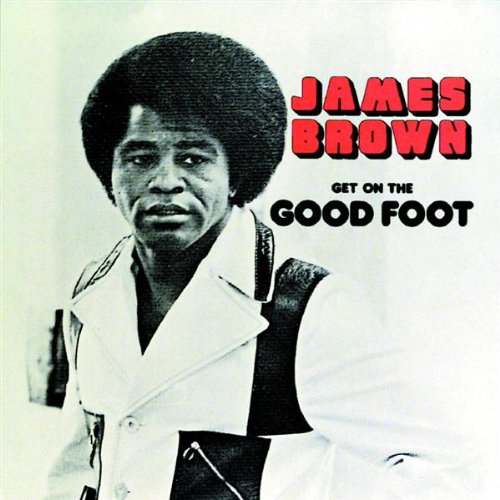
Feet/Feat: Get On The Good Foot


James Brown: Get On The Good Foot
[purchase]

I don’t like to dance, mostly because I look like an uncoordinated tub of Jello, and it has never been one of the things that I go out of my way to do. (Except at Princeton Reunions, at least since 2012) But if James Brown tells you to get up and dance, you get up and dance. I mean, the man is the Godfather of Soul. 

Brown had been performing since the 1950s, but starting in the mid- to late-1960s, he began to pioneer what came to be called “funk” music, featuring danceable grooves, with lots of soul and R&B influences, and performing it with a big band and lots of intense dancing. Often the songs included a social message in between the dance breaks. As I read that, I’m thinking to myself that the words don’t do the music justice. How’s this: It’s the kind of music that you feel in your gut and makes you want to move your butt. To steal a title from another band popular at the time, Funkadelic, “Free Your Mind….and Your Ass Will Follow.” 

A couple of years after that Funkadelic song came out, Charles released “Get On The Good Foot,” a song about dancing and partying to forget the hard parts of life. Originally released as a two sided single, which meant, for you young’uns, that you’d have to flip the 45 (just go with it..) over to play the second side. Apparently Brown, who owned Augusta, GA, radio station WDRW, interrupted the programming to introduce the unreleased “Get On The Good Foot,” because he thought it was going to be a big hit, and he called it—the song topped the R&B chart and reached 18 on the pop chart. Later that year, Brown released an album of the same name, featuring the full track, so that there was no need to turn it over (although being a double album, you’d have to flip it twice to hear the whole thing on your record player). 

And because we at SMM believe in uninterrupted funk, it’s the album version that you can check out, above.

Wednesday, June 9, 2021

FEET/FEAT: FOOTWEAR

Unless you are super hard or super poor, all of us need some shoes on our feet, so as to protect our tootsies from the assaults of hot tarmac, wet mud, ground glass or dog poop. You name it, any of those can make a make a walk in the park anything but a walk in the park, as well as giving ample opportunity to strut your stuff or stamp your style. So, tonight I am going to be looking at the popular topic of shoes through the medium of popular song. (Well, I like 'em.)

Barefoot/Ray Collins Hot Club

Barefoot isn't shoes, but I can't resist this instance of unshoddery, so delightfully kitsch it is. Apparently the title track of a German film, thus Barfüss, it is by the Ray Collins Hot Club about whom I know nothing. So imagine my surprise as I discover they still exist and are still playing, having only come into being this century.

Men in Sandals/Wreckless Eric & Amy Rigby

Ooof! Has there ever been a better exposition of the horror of men in sandals? DOI, here, I am actually quite partial to a sandal in the summer, although only ever paired with shorts or flappy linen trousers, as they don't go with else. And never, absolutely with socks, that peculiarly English affectation that curdles my blood. Wreckless Eric is a chap unlikely to take kindly to the sort of men who rock that particular folly, with his wife, Amy Rigby singing and explaining exactly why.

Bad Sneakers/Steely Dan

I never got the fancy trainers argument, all these megabuck sports shoes worn as a badge of one-upmanship. Wrong generation, I guess, my son still near needing a separate room to house his collection, at 13 his defined go-to essential in a family trip to NY in the 90s being the Nike Store. To me they are just plimsolls or gym shoes, not my bag at all. I don't see Becker and Fagen ever having been that keen either.

New Shoes/Paolo Nutini

Back at the beginning of his career, Scots-Italian singer Paolo Nutini was a simpler soul, the pleasure of some new leather sufficient to give him joy. And inspiration. With his heritage, I can see him in a pair of snakeskin winkle pickers, so his expectation to be walking to the break of dawn, blister free, may be optimistic.
 
Blue Shoes Stepping/The Bible

I have a pair of blue shoes. Not suede, I am afraid, but still quite natty. I like a fancy shoe, having also examples in green and red, but the blue ones were a mistake, pinching my toes and hobbling my gait. The blue shoes quoted here sound a bit more promising. The Bible never got quite as much acclaim as they deserved, despite boasting Kirsty MacColl's brother, Neil, and ace songwriter, Boo Hewerdine in the frontline. 

In These Shoes/Kirsty MacColl

Talking of Kirsty MacColl, perhaps this is the time to veer off into the world of women's shoes, a strange and mysterious money pit where any link between the number of feet and the number of shoes needed is of no connection or relationship. A single pair is never enough and Imelda Marcos the only upper limit. (And, funnily enough, there is a song about Imelda.)

Soul Shoes/Graham Parker & the Rumour

Finally, a song that really makes me smile, especially in this version, filmed decades after Graham Parker and the Rumour originally recorded it, showing exactly my style, a built for comfort ambience embracing the band from head to their soul shoes. Of course, the video never gets around to showing their feet, but I will bet the shoes on show would be well worn and battered, much like the band themselves appear. Marvellous.

It's all cobblers, innit?! My favourite.


Saturday, June 5, 2021

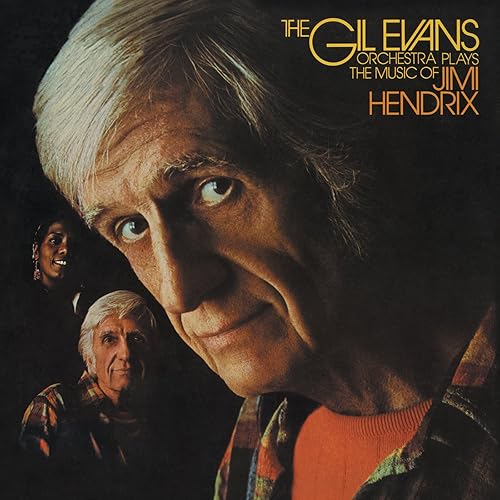
Jazz Covers: Gil Evans and Jimi Hendrix


The Gil Evans Orchestra: Voodoo Chile
[purchase

I’ve written about the cover of “Little Wing” that is on this album (or, at least some versions of it) a couple of times, as well as mentioning seeing the Gil Evans Orchestra at a free outdoor concert in Florence in 1981, which was great, but I really don’t remember whether they played any Hendrix that night. I knew enough about Evans in 1981 to know that he was worth seeing, especially at that price, but not enough to really know about the music. Except to remember that I really enjoyed it. 

Gil Evans, a pianist and composer, is probably best known as an arranger, particularly for Miles Davis, after whom Evans named a son. Although his career was mostly in the jazz world, Evans’ musical tastes were broad, and he was a particularly big fan of Hendrix. In fact, Hendrix was scheduled to record and perform with a big band led by Evans, but Hendrix’s death prevented this intriguing combination from coming together. Instead, in 1975, Evans released an album of Hendrix covers, all done with an unusual 19-piece big band, including, among others, Hannibal Marvin Peterson, Lew Soloff, Pete Levin (brother of Tony), David Sanborn, John Abercrombie, Ryo Kawasaki, Tom “Bones” Malone, and Howard Johnson. 

The songs are, of course, great, and the arrangements, by Evans and other members of the group, are inventive, interesting and sometimes unexpected. For example, the version of “Voodoo Chile” controversially begins with tuba master Johnson sounding like he’s playing the kazoo, before the orchestra weighs in. And while Johnson takes a tuba solo, there’s no lack of guitar wailing, It’s a polarizing take, but certainly one that makes you think. 

The Gil Evans Orchestra also backed Sting (who started his musical career as a jazz bass player) on his excellent, more rock-oriented cover of “Little Wing,” featuring a great guitar solo by Hiram Bullock, a regular Evans collaborator and former member of David Letterman’s band. Sting and Evans performed together in Italy, in a performance that was released as a live album.

Friday, June 4, 2021

Jazz Covers: Spyro Gyra


purchase [ Vinyl Tap ]


My previous post, I interpreted the current theme as covers of a jazz classic. Here, a jazz band (well ... jazz-fusion) doing covers of music from the 70s.

One of my favorite jazz-fusion groups is Spyro Gyra. Their music is kind of easy to listen to - not the kind of jazz that requires you to work hard. And while I recognize that there is a place for that kind of musical experience, it's generally not my favorite experience: I prefer accessible melody.

I don't keep track of what most bands are doing on an ongoing basis and I had my doubts that they had ever done any covers - mostly not their "thing". But wait ... no ... There's their <Vinyl Tap> album: all covers in their jazz/fusion style. The band has been around in various configurations since 1974, and this collection from 2019 was their 31st.

A number of prominent reviewers express scepticism that the band could pull off an album of covers - but they do. Remarkably well. All of them filled with unexpected notes- the essence of jazz.

And, while you really should go out and get yourself a copy of the whole album, we can give you a handful right here. And then maybe you'll head out a buy it for the rest.


Thursday, June 3, 2021

JAZZ COVERS: GOLDEN BROWN

After the last post there was only one possible follow on piece, to look at a brilliant and mesmerisingly accurate spoof on/homage to Brubeck, and, of course, the Stranglers. One that had a fair few fooled. 


Was Dave Greenfield, the late keyboard player for the Stranglers, and the writer of the repeating harpsichord riff in the song, influenced by Brubeck? He would say not, but it does not seem unreasonable to think each were influenced by the composers of the baroque period, as, for that matter, will have been Ray Manzarek, often and lazily touted as Greenfield's main contemporary influence. Who cares, frankly, I love 'em all, and could listen all day to any of these three.


Laurence Mason is a music graduate of Leeds Conservatoire who likes messing around with the available technology, as well as being an adept player of many instruments. When Greenfield died, he wanted to pay tribute and, already aware of the acknowledged similar ambience of both Golden Brown and Take Five, apropos existing mash-ups like this, decided to go a step further: 

A little tribute to Dave Greenfield (keyboardist with The Stranglers who died with Covid-19 last week) and Paul Desmond (saxophonist with the Dave Brubeck quartet – the anniversary of his death is at the end of this month).

Also because I’ve been enjoying editing videos and recording stuff over the last couple of months. A couple of people have asked how I made this video so here we go – I took a clip from a 1964 live version of Take Five (https://www.youtube.com/watch?v=tT9Eh…) and made the drum loop by chopping up the intro and turning it from 5/4 into the 3/4 – 4/4 groove that Golden Brown has. The upright bass sound is sequenced from Logic, and the piano part was played in using one of the piano sounds from a Nord Electro 5D. Then I played the sax part over the top (I play a King Zephyr alto and for this I used a hard rubber Yanigasawa mouthpiece rather than my usual bright Guardala).

The video was then edited using the clip I’d taken the drum loop from.” — Laurence Mason


This interview delves deeper. First imagined as a bit of fun, once embedded in Youtube, sufficient hits drew it to the attention of Paul Murphy, influential on the UK jazz scene, and it swiftly became available as a record to download or buy. Under the name, groan, of 'Take Vibe'. (With, on the flip, an equally iconic take on the Police's 'Walking on the Moon'.)


So, what else has Mason been up to? Initially a whole album was projected and, who knows, maybe it still is, lockdown possibly casting a cloud of best laid plans etc. I would certainly be interested.

Get Vibe


Saturday, May 29, 2021

Jazz Covers: Take 5


purchase [Time Out]


In 1958, the Dave Brubeck Quartet did a tour of EurAsia that was sponsored by the State Department. Their trip included a stop in Istanbul, from where I write my posts to SMM. I was only 3 back then, but some time in the mid 1960s, my parents added <Time Out> to their record collection, so I would have been listening to it at around age 10 (in Istanbul even back then).

Brubeck was affected by the music he heard in Istanbul such that their 1959 <Time Out> album makes much use of time signatures that could be Turkish. Not only does music from Turkey (and points east) use "non-standard", tricky time signatures, but also a musical scale that is based on Arabic music, where - instead of the 12 notes of a Western octave- there are 53 "koma". For most of us, music in school taught us about standard Western time signatures like 6/8 or 3/4 or 4/4 - what dominate rock and pop and even much jazz in addition to classical music. Turkish music makes use of these, but also more complex rhythms like 5/4 or 7/4 and 9/8 and more.

It was this influence that powered Brubeck and Paul Desmond when they wrote Blue Rondo a la Turk and Take 5. The 5 in the name is the 5 from the 5/4 rhythm.

Wikipedia informs me that Take 5 is "the biggest-selling jazz single ever", so it's no surprise that there are more covers than you can shake a stick at. The article also notes that the song brings in royalties of over $100,000 a year.


Friday, May 28, 2021

JAZZ COVER: BILL FRISELL

The suggestion offered from above was to look at covers of jazz standards, you know the sort of thing, bluegrass Brubeck, country Coltrane and math-rock Miles. (OK, I may have struggled with the last, but you catch my drift.) Me, I immediately thought of the current glut of polyglot artists, nominally 'file under jazz', but equally at home cross piste. I'm thinking the likes of Brad Mehldau, Herbie Hancock and, most of all, the extraordinary guitar of Bill Frisell.

Tired of Waiting For You/Guitar in the Space Age: Bill Frisell (2014)

Frisell is an unlikely looking axe-hero, but axe-hero he is, and, whilst always thought primarily a jazzman, you may be surprised how far he crosses over and how many records by artists in the fields he has appeared on. Far more, say, than Pat Metheny, who is a name often dropped into great guitarist lists, yet seldom strays from his niche, give or take a sole dalliance with Queen and being the subject, loosely, of a Richard Thompson song. Yet, ironically, it is to Metheny he owes his place, depping for Metheny when Metheny unavailable for a session, he suggesting the bright eyed novice with tousled hair to take his place.  This was for the icy wastes of ECM, the sometimes seemingly dour Nordic label that is the go-to for glacial instrumental jazz, instantly identifiable by their 'postcards of the tundra' album covers. A number of albums with them, ahead of hooking up with John Zorn on the New York scene, all avant garde and spiky composition. But being an in-demand musician for other muses and producing like-minded material wasn't enough. So, on a move to Seattle, Frisell started cooking up something new, investigating, variously, other native musical forms: americana, rock, pop even.

This century he has spent flitting relentlessly between projects: a torrent of his own composition, further expeditions into idiosyncratically exploring and totally revising the music of others and, most delightfully, beginning to pop up in the mainstream, alongside artists such as Elvis Costello and Norah Jones. At the time of writing he has 39 recordings in his own name or as an integral part of the billing, 22 since the year 2000. Add in a series of live recordings and it another 22, plus a truly ridiculous number of collaborations, guest appearances and cameos. Check out his web page. (Bet you wouldn't expect him to have ever worked with Richard Hell and the Voidoids!)

For want of any other methodology, here are a few of his covers, whether coming from his own records, from collaborations or any other source, all displaying his maverick control of the fretboard, approaching melody always from its polar opposite, yet always finding it, often unexpectedly. A beautiful tone, this is sweet music: no atonal skronking here to frighten those with terror of the J word.

You Only Live Twice/When You Wish Upon a Star: Bill Frisell (2016)

Across the Universe/All We Are Saying: Bill Frisell (2011)

Cold Cold Heart/The Willies: Bill Frisell (2002)

I Heard It Through the Grapevine/East,West: Bill Frisell (2005)

Magnolia/Down Where the Spirit Meets the Bone: w. Lucinda Williams (2014)

Standing in the Doorway/Slipstream: w. Bonnie Raitt (2012)

As Tears Go By/Slipstream: w. Marianne Faithfull (1987)

And spot the great man, playing, in the video above.

More, here....


Tuesday, May 25, 2021

Jazz Covers: Keith Jarrett-My Back Pages


Keith Jarrett: My Back Pages
[purchase

Over at Cover Me, in honor of Bob Dylan’s 80th birthday earlier this week, the staff, including yours truly, contributed to a long feature ranking the 100 “best” Dylan covers (although we actually wrote about 124, because while many people see a relationship between music and math, bloggers get to do pretty much whatever we want). 

The way that Cover Me “Best Covers” pieces work is that the editors put out a call to the staff for suggestions, and they gather them, add ones they like, and then choose how many to feature. For the Dylan piece, we submitted well over 200 suggestions, which only scratches the surface of the covers out there. Then, once the poobahs come up with the final list, staffers write up the blurbs for each song, the editors rank the covers and the piece gets posted. Like many of my fellow writers, I suggested a whole bunch of really excellent covers, but not all of them made the final cut. 

One of those that didn’t make it was today’s featured song, a cover of “My Back Pages” by Keith Jarrett. I was kind of disappointed, because I hate rejection and because I think that it’s a great cover, but I used my considerable influence here at Star Maker Machine to suggest a “Jazz Covers” theme that would let me highlight the song. (Although it seems that the description posted of the theme calls for covers of jazz songs, which considering how jazz seems to consist, in large part, on interpretations of “standards,” doesn’t make all that much sense to me. But I suggested the theme, and this is what I meant…) 

I have to admit that when I first heard this song, I believe from a cassette (!) that I nabbed from a discard pile the summer that I worked at Atlantic Records, I thought it was great, and had no clue that it was a Dylan song. First off, as I mention somewhere in the Cover Me piece, my knowledge of Dylan songs was, for a long time, really limited to his most famous songs, and it was only years later that my appreciation of his work increased and broadened. So, at the time I heard this cover, I didn’t recognize the title. If you had said, who wrote the song with the lyric “but I was so much older then/I'm younger than that now.” I might have been able to name the writer. Although I also might have thought that it was The Byrds. But Jarrett’s cover is an instrumental. 

Second, honestly, the music sounds very, very different from Dylan’s (or The Byrds’ for that matter), and you kind of have to know what you are listening for. So, now that I know that it’s a cover, I can (sort of) hear it. That all being said, it is really a beautiful song in its own right. It features a 23 year-old Jarrett on piano, still relatively early in his career, accompanied by the brilliant Charlie Haden on bass and Paul Motian on drums, and was recorded live at Shelly’s Manne-Hole in Hollywood, California in August, 1968, only four years after the original was released on Another Side of Bob Dylan

As Motian recalled

In those days I think I owned about ten albums by Bob Dylan, and the Beatles and all that. I listened to all that shit, man, that shit was strong. That influenced Keith, it influenced all of us, especially Keith, and the music he was writing too. So we were getting into other areas. We’d never play semi-rock and roll kinds of things with Bill Evans, never. But with Keith that was the times, you know? We’re talking about the very late sixties and the early seventies. 

Jarrett went on to join Miles Davis’ band, and then became one of the most heralded pianists in jazz, as a solo artist, a leader, and as a part of small groups. With Haden and Motian as well as saxophonist Dewey Redman, he formed what was called the “American quartet” while simultaneously playing with Jan Garbarek, Palle Danielsson, and Jon Christensen (the “European quartet”). His collaborations with Gary Peacock and Jack DeJohnette (one of my favorite drummers), for albums of standards and originals, are also incredible. Jarrett also wrote and performed classical music, plays a bunch of other instruments, and even was a musical guest on Saturday Night Live, back when it was more common for the bookers to look beyond the pop charts for guests. 

Unfortunately, Jarrett had a series of strokes in 2018, and can no longer perform.

Friday, May 21, 2021

Head: Talking Heads


purchase [ Talking Heads:77 ]


It hasn't been easy finding a Talking Heads song that has not appeared on SMM before. A veritable Who's Who of SMM contributors over the years have brought them into play for topics from "Shadows", "Government", "Nonsense", "Tricky Beats", "Civics Lessons" and "Speak/Talk". There's more, but this kind of encapsulates a lot of what Talking Heads embodies: songs about tricky, shadowy government nonsense.

Figuring it's been too long since we visited them here, I took off from a comment that Jordan Becker raised not too long ago about one of his greatest musicial regrets: opting for a campus Springsteen concert in place of the Talking Heads back in '78. I might have done the same.

Jordan and I were both campus radio DJs (myself a few years earlier/older, at a time when the Talking Heads were not well-known but might have been found on campus radios across the US)

Drummer Chris Frantz (husband of bassist Tina Weymouth) notes in a bio that David Bryne was not easy to work with in a number of ways- often taking credit for work that wasn't exactly his to claim. I think you would have to agree that to many people he comes across as ...quirky. But that is part of the enduring value. Among Byrne's criticisms (of bandmates, the world, the way things are ...) was the fact that Weymouth, who had taken up the bass only a year before their first album  was developing too slowly/holding them back. Several critics note that it is her experimenting as she develops a personal style that adds to the quirkiness of their songs. 

I recently brought up the importance of lyrics (yes: Townshend; no: Fleetwood Mac), an area where Talking Heads shines. Check 'em out again for this one. Come to your own conclusions about the true meaning:


Incidentally, I mentioned this not too long back, but repeat: Byrne produces a provocative monthly music file that you can subscribe to:

David Byrne Radio  informative and eclectic every month


Oh! And of course:


Sunday, May 16, 2021

(TEENAGE) HEAD

Teenage Head (1971)

Simpler days, simpler days; back in the 1970s chart music was still largely the domain of youngsters, largely, give or take the odd svengali, music by and for youngsters. Had anyone told either the public or the performers that those self same performers would still, forty years later, be at it and flogging their wares at a stage near you, ridicule would be the result. No way, those in then know knew perfectly well that the the Rolling Stones, old men by then, in their 30s, were past it and ready to be put out to grass. And I dare say the Stones may even have thought that themselves, when Jagger said, of this 1971 album, by San Fran pre-punk post garage band hoodlums, the Flamin' Groovies, that they had done a better job (with it) than Sticky Fingers.


High Flyin' Baby (1971)

Back in 1971 there was still something desirable about teenagers. Ever since this transitional phase between being a kid and being a parent had been invented, roughly around 1956, the importance of snot-nosed braggarts and bum-fluff revolutionaries had become ever more elevated. Teenagers were for far more than just falling in love, they held the keys to the future, and many an anthem of the day recognised that, as band after band rallied their troops, a blind eye on their own disappearing youth. At least the Groovies, back then, were still in sight of their teens, the lynchpins, Cyril Jordan and Ray Loney being only part way and halfway into their 20s. The lyrics are a bizarre mix of bratty braggadoccio and pawnshop philosophy, all jammed into three short verses. I love it, even if it took me until now to actually decipher the words. Even if you take the Jagger comments as hype, by Teenage Head, their third release, they were certainly brewing up a potent mix, and it well deserves a listen for when cobwebs need blowing away. I hear more of the Pretty Things, mind, than the Stones.


Yesterdays Numbers (1971)

The Groovies were all over the UK rock press of the day, especially that most counter culture of the inkies, the NME, who embraced the fact that the band seemed stranded in the UK for reasons never quite revealed, the suggestion clear that they were just to bad to be allowed home. Bad as in bad, maan, and therefore to be revered. Their thrashy trashy three minute songs were the antithesis of the fading meritocracy of prog, whose concept album crowns were beginning to tarnish. Much of that was mythology, of course, the rather more prosaic truth being that they didn't have a deal in the US, and that the UK arm of United Artists had brought them over to make a record under the helm of Dave Edmunds, himself no stranger to retro stylings. But Ray Loney had already jumped ship, and the band were moving more into a power pop direction. If Loney was the Stones, Jordan was more the Beatles. 

Shake Some Action (1976)

The band hung together, sometimes barely, over the passing years, their flame never quite extinguishing, always available to become god-fathers of whatsoever movement was currently in vogue. If punks they weren't, certainly punky they were, and it is to that movement they became most closely aligned, if to the ever so slightly more cerebral US wing thereof. It should be no surprise that it was to the Groovies that the Ramones acted as support, on their maiden trip to the UK. Edmunds was still producing the band when their high water mark was reached, with the still vibrant Shake Some Action, the song the band are mainly known for. Not a hit at the time, regular later outings on film soundtracks, notably 1995's Clueless, have ensured its place in the pantheon, a go to song for evoking high energy good rockin' tonite. Various short-lived reunions of various band members ensued in that wake, it taking until 2009 before Loney and Jordan took to the stage together, if airbrushing out post 1972 content. Time repeated itself and he again left to be replaced, again, by Chris Wilson, who had taken his place first time around. Musical chairs continued to be the order of the day, 2017 seeing a new album and another new launch. 2019 had Chris Wilson being depped by Loney, now acting as special guest in the band. Entitled the Teenage Head tour, the now septuagenarian Loney was hospitalised after a fall and missed the European dates, dying a few months later. (Below has them shaking some action, sans Loney, on the Paris leg, Jordan still the dapper frontman.)


Head for it!