












Showing posts with label Judy Garland. Show all posts

Thursday, March 10, 2022

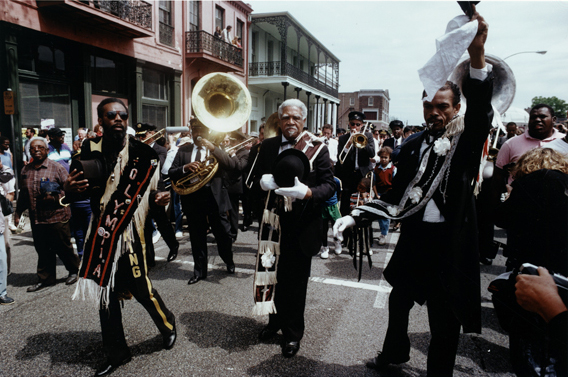
Marching: When The Saints Go Marching In

Although the month of March is named after the Roman god of war, Mars, while the English verb “to march” is derived a different source, the Old French “marcher,” meaning "to stride, march, walk," we here at SMM seem to insist on tying the two together, which is why most of the songs that would have marched into my consciousness for this theme already did so in prior years, leaving me not without options, but without options that I cared to write about. 

But one of the things about being among the last remaining regular writers on this site, which has gone through dozens since it started back in 2008, is that it is important to try to write at least once, if not more, for each theme, so I realized that Mardi Gras was just over a week ago, and therefore a discussion of “When The Saints Go Marching In” would work. And, in a tip of the hat to another of the other remaining regular SMM contributors (and recent birthday boy), Seuras Og, I’m going to model my post on one of his regular formats. 

Like many standards, the origins of the song are unclear. It seems that there were a number of gospel/spiritual songs with similar titles, but in 1923, the Paramount Jubilee Singers recorded a song similar to the one we all know and love, titled, “When All The Saints Go Marching In:”


Other recorded versions of the song, with varying lyrics, were recorded throughout the the 1920s and 30s, often becoming less hymn-like and more uptempo, but the song’s popularity really started when Louis Armstrong recorded a version in 1938, which also cemented the song’s identification with New Orleans:


There are probably thousands of covers of this standard, especially if you include every Dixieland or brass band that does it live (and on video....), but we will look at a few notable ones, in roughly chronological order: Here’s a peppy, folk approach from The Weavers in 1951:


Not surprisingly, Mahalia Jackson returned the song to its gospel roots in 1955:


Elvis Presley, and the rest of the “Million Dollar Quartet (Jerry Lee Lewis, Carl Perkins and Johnny Cash), did a loose rockabilly version that wasn’t released to the public until 1990:


In 1956, Sister Rosetta Tharp started turning “The Saints” into a rock ‘n’ roll song:


And Fats Domino finished the transformation in 1958:


Judy Garland and Liza Minnelli took a more pop approach when they performed the song in 1964:


The following year, Lester Flatt & Earl Scruggs, not surprisingly, took “The Saints” in a bluegrass direction:


Jumping forward a few decades, here’s a traditional take by New Orleans’ Preservation Hall Jazz Band from 1983:


In the mid-2000s, Bruce Springsteen regularly performed the song, in a pretty subdued arrangement, on his Seeger Sessions tour, with this version from 2006 being released on the Live in Dublin album:


Look, I could go on forever, and some of you may think I already have, so I’ll close this out with a version from New Orleans’ great Dirty Dozen Brass Band from 2012 that is pretty traditional (and a bit funky) and loads of fun:

Tuesday, December 29, 2020

Pandemic Holiday Songs: Have Yourself A Merry Little Christmas

Judy Garland: Have Yourself A Merry Little Christmas
[purchase

I’ve reached my holiday song limit, having been listening for days to various traditional and nontraditional seasonal music, but this holiday music theme runs for a bit longer, and so here I am. 

There are a bunch of articles that I’ve seen recently arguing that “Have Yourself A Merry Little Christmas” is the perfect song for this year’s less-festive-than-usual holiday season. But that’s really only true if you focus on the original version of the song, originally sung by Judy Garland in the 1944 film, Meet Me in St. Louis, and not what is probably the most famous cover, by Frank Sinatra, who had the lyrics changed in 1957 to make the song more optimistic (although he did sing the original lyrics in a 1948 recording). 

In the movie, Garland’s character sings the song to her younger sister. The clip is above. 

Coming out during World War II, the song’s message hit home with soldiers and those on the home front who were missing soldiers, with lyrics about how everything will be better “next year.” The Sinatra version, following Ol’ Blue Eyes’ directive to “jolly it up,” declares that all the troubles are gone “from now on.” Where the original version pined for the time when “Someday soon we all will be together/If the fates allow,” and acknowledged that “Until then, we’ll have to muddle through somehow,” in Sinatra’s version, we’ve already been together through the years, and rather than muddling through, we are supposed to hang a shining star on the highest bough. 

There are other changes, and you can read more about them here, but the key thing is that Garland’s version recognizes that things are not great, but there’s hope for the future, while Sinatra’s celebrates how good the current situation is. And that’s why the original is a great pandemic song, while the later version might be better for 2021. By the way, the original original lyrics to the song were even bleaker—for example, “Have yourself a merry little Christmas/It may be your last / Next year we may all be living in the past,” which was rejected by Garland and director Vincente Minnelli, and replaced with the less creepy version that appeared in the movie. 

Not surprisingly, the jollied up version has been covered more often than the darker original, although Ella Fitzgerald remained true to the Garland version in her swinging1960 cover, as did Swedish sistes First Aid Kit in their folky recent cover. (I’m sure there are others that hew to the original, but the generally pretty accurate cover website SecondHandSongs lists nearly 1600 versions, and writing for this blog is just a hobby). For what it is worth, Garland sang a hybrid version to her children on a 1963 TV special, so she must not have been too offended by the change.

Friday, January 16, 2015

In Memoriam: Mickey Rooney & Robin Williams

[purchase the first Night at the Museum movie]

After two quick posts on this theme, we have gone silent here, and that’s a shame, because there are many people in the music world who deserve commemoration. Just a few of the famous and less famous who passed in 2014, and who might make a good subject include, in chronological order of death: Phil Everly, Amiri Baraka, Ronny Jordan, Pete Seeger, Shirley Temple, Sid Caesar, Bob Casale, Paco de Lucia, Scott Asheton, Joe Lala, Nash the Slash, Jerry Vale, Casey Kasem, Horace Silver, Gerry Goffin, Bobby Womack, Tommy Ramone, Charlie Haden, Johnny Winter, Dick Wagner, Joe Sample, Kenny Wheeler, Paul Revere, Raphael Ravenscroft, Jack Bruce, Marcia Strassman, Rick Rosas, Jimmy Ruffin, and Buddy DeFranco. If you don’t know who these people are, you should check them out, what with the Internet having all of the information and all.

But I like to see connections, as can be seen by my last piece on Bobby Keys and Ian McLagan, and last year saw the release of Night at the Museum: Secret of the Tomb, which turned out the be the first posthumously released film for both Mickey Rooney, who died on April 6, 2014 at the age of 93, and Robin Williams, who died on August 11, 2014, at the age of 63. Although neither of these show business masters are remembered best as musicians, they both dabbled in the field. And, anyway, I can write about whoever I want.

I’m not going to try to really discuss the careers of these two men—that has been done better and in more detail elsewhere. But their lives and careers, which intersected in these silly movies, have a number of parallels, and a few key differences.

Rooney, who was born in 1920 as Joseph Yule, Jr. to parents who were in vaudeville, made his stage debut as an infant and his film debut at age 6. His career spanned the age of silent films to Netflix, he was a decorated soldier in World War II, and he rebounded from a period where he was nearly forgotten to become a respected character actor on TV, in movies and on Broadway. Also, he was married eight times.

Williams was born in 1951 and was trained in the acting program at Julliard, although he left before graduation, actually encouraged by John Houseman to leave because there was nothing more for him to learn. He worked his way from brilliant, improvisational standup comedy, to Mork and Mindy, to roles in both comedies and serious films and on the stage.

Both men were known for their abundance of energy, their immense talent, their remarkable versatility and their general likeability. Unfortunately, both men also suffered from substance abuse issues—Rooney with alcohol and pills, and Williams with cocaine and alcohol. In Rooney’s case, though, he lived until a ripe old age, and, despite some health issues, was able to contribute a cameo to the Night at the Museum sequel in his nineties. Williams, on the other hand, committed suicide at only 63, with four movies, including Night at the Museum (for which he received much better reviews than the film), already in the can.

But, let’s talk about music, because this is, at its heart, a music blog. To be fair, Rooney’s musical career is a bit more substantial—he could play a number of musical instruments and sang in many films, often with Judy Garland, as in the clip above. He won a Tony Award in 1980 for Best Performance by a Leading Actor in a Musical for Sugar Babies. Williams’ musical career was much more limited, and was more of a novelty. He did sing as the Genie in Aladdin, and contributed some vocals to charity projects, but the video above is his cover of the Beatles’ "Come Together," with Bobby McFerrin, on an album of Beatles covers by various artists produced by George Martin as, essentially a tribute to himself.

Monday, December 20, 2010

Soundtrack Songs (Holiday Edition): Have Yourself A Merry Little Christmas

meet_me_in_st_louis


Judy Garland: Have Yourself A Merry Little Christmas

[purchase]

Liz Story: Have Yourself A Merry Little Christmas

[purchase]

Tom Scott: Have Yourself A Merry Little Christmas

[purchase]

This Christmas standard was first introduced to the world by Judy Garland in Meet Me In St. Louis. The original lyrics, which reflected the film's plotline of the family facing an unwanted move to New York, had fairly depressing lyrics to begin with: Have yourself a merry little Christmas, it may be your last, Next year we may all be living in the past. Garland and the director (her future husband, Vincent Minnelli) persuaded the songwriter to make it a little cheerier, and the rest, as they say, is history.

It's been covered approximately a bajillion times since the 1944 film. Here are two: one's a smooth jazz sax version by Tom Scott, for GRP's first Christmas album. The second is new age piano by Liz Story, recorded at Windham Hill Records in 1994.

Wednesday, May 26, 2010

Public Domain: Rock-a-Bye Your Baby with a Dixie Melody

rckabye


Al Jolson: Rock-a-Bye Your Baby with a Dixie Melody

[purchase]

Judy Garland: Rock-a-Bye Your Baby with a Dixie Melody

[purchase]

Rufus Wainwright: Rock-a-Bye Your Baby with a Dixie Melody

[purchase]

This song is from a 1918 Broadway musical, Sinbad, which showcased music's biggest star at the time, Al Jolson. For a show ostensibly set in Bagdad, it featured more than a few songs extolling the Old South: "Swanee", "My Mammy", "Darktown Dancin’ School ", and this one. By US law, any song copyrighted or recorded before 1923 is now in the public domain and so it nicely fits our weekly theme.

Travel six blocks north to Carnegie Hall and skip forward 43 years to the night of April 23, 1961, where we find the same song being performed by another of American music's biggest stars: Judy Garland. The concert was a huge milestone for the sometimes erratic performer and won her four Grammys, including Best Album and Best Female Vocalist.

Forty-five years later, same venue, same tune – in fact, all of the same tunes that were sung during Judy's original Carnegie Hall concert were recreated by Canadian-American singer Rufus Wainwright in one man's tribute to a quintessential gay icon. About his homage, he said, "I don't think it would have been possible for anyone other than a gay male to do this concert. In a weird way, a gay man has some sort of perspective on it, I believe."

Quite a legacy for a simple Tin Pan Alley tune written by a Hungarian immigrant.