









Showing posts with label Drive-By Truckers. Show all posts

Wednesday, October 13, 2021

What If: Jason Isbell Never Left Drive-By Truckers

[purchase Live at the Shoals Theare

If you know me, or have read my blog posts (and frankly, there are too many to link to), you probably know that I’m a huge fan of both Jason Isbell and Drive-By Truckers. I first became aware of both of them when I received a copy of the Truckers’ album Decoration Day as a bonus from a record club. That serendipitous freebie helped to change my musical tastes, and led me to a number of bands and musicians that are now amongst my favorites. It’s a great album, and it was hard not to be impressed by the two songs written and sung by Jason Isbell, “Outfit” and “Decoration Day.” I later discovered that Isbell was new to the band, and was only in his mid-20s, younger than the other songwriters in the group, Patterson Hood and Mike Cooley. Although Isbell was only in the band for three albums, I think that many fans consider this to be one of their best periods, and possibly their best. 

It has been reported that Isbell had been asked to take a break from the band because his alcoholism and drug use had made him unreliable; when he refused, he was forced out of the band. Isbell began a solo career, sobered up, and eventually released Southeastern, a masterpiece, which, along with his subsequent albums, has solidified him as one of the best, if not the best, singer-songwriter in the Americana field, and he has the awards to justify that. 

After the departure of Isbell, the Truckers went through a period of lineup changes, and the release of a number of albums whose quality varied, but all of which were good, until the release of a run of fine, politically charged albums, the best of which, in my opinion, was 2016’s American Band. The Truckers, particularly Hood, were at the vanguard of a reassessment of southern identity, what Hood had called “the duality of the Southern thing,” in interviews and in articles in the press and online.

Isbell, too, hasn’t shied away from political statements on his albums, and on analyzing what being from the South means, and he recently became the poster child for artists insisting that venues require COVID testing for admission. 

So, what would have happened if Isbell had stayed a member of the Truckers? I’ll try to keep it simple, and when I post this in some fan groups on Facebook, I’m sure that people more knowledgeable about the people and situations involved will have their own ideas, but that’s sort of the point of alternative history, right? 

The darkest, saddest, timeline would have had Isbell clean up just enough to stay in the band, but never truly get clean and sober. While he continues to write great songs, and play great guitar, at some point, he gets in too deep with his addictions, never marries Amanda Shires, and like his close friend Justin Townes Earle, overdoses. 

I’d hope, though, for a better outcome—pressured by the members of the Truckers and other friends, Isbell cleans up and becomes an equal songwriting partner in the band, which goes on to greater success, as the 3-4 Isbell songs per album replace some of the weaker cuts, and albums such as American Band, which have little or no filler, become epic double CDs that receive both commercial and critical acclaim. Maybe, at some point, while the band is on a hiatus, Isbell releases a solo album or two, which highlight his individual talent. Maybe he eventually decides to leave the band to go solo, or maybe he’s happy in the band setting, with the occasional solo release or collaboration. 

Luckily, in the real world, Isbell and the Truckers reconciled. Back in 2013, right around the time that Southeastern came out, I went to the Clearwater Festival where both Isbell and Hood were scheduled for solo sets, and they sat in with each other for a song. In 2014, Hood, Cooley and Isbell performed at a benefit at the Shoals Theatre in Florence, Alabama, and there have been a few other instances of Hood and Isbell popping on stage during gigs. 

A couple of weeks ago, Isbell curated a two day festival, ShoalsFest, where both his band, the 400 Unit, and the Truckers, were scheduled to perform. So, if you want a sense of what it might have been like had Isbell had never left the Truckers, the video above is a performance of (most of) the song “Outfit,” featuring Hood and Cooley joining Isbell and the 400 Unit {the original video, of "Decoration Day," was taken down). But maybe an even better example is the video below, from the night after ShoalsFest, where Isbell joined the Truckers for a couple of songs. The sound isn’t great, but, damn. Just damn.

Tuesday, September 8, 2020

Mail: Take A Letter Maria


R.B. Greaves: Take A Letter Maria 

[purchase

I’ve written in the past about how I started paying attention to music in 1969. as a result of hearing WABC, the classic New York Top 40 station, in the station wagon that took me to my summer day camp. And that fall, I have a vague recognition of being in the car with my mother, and hearing “Take A Letter Maria” on our car radio, and proclaiming it a hit. I was 8 years old, and already thought that I was a music critic. And here I am, more than 50 years later, still pretending to be a music critic of sorts. 

The funny thing is that my 8 year old self was right. “Take A Letter Maria” became a No. 2 hit on Billboard’s Hot 100 chart, blocked from the top spot by The 5th Dimension’s “Wedding Bell Blues,” also a great song. 

I’d be shocked if anyone reading this doesn’t know the song—it is sung from the perspective of a man who had just learned of his wife’s infidelity, and dictates a letter to his secretary, the titular Maria, informing his wife of their separation. At the end, he asks Maria to dinner. It’s a surprisingly peppy song, considering the subject matter, with Latin influences and mariachi horns. I think that the narrator is supposed to come off as a sympathetic character, trying to recover from the discovery that his marriage is over, and he’s been cuckolded. And overall, I think that holds up today, despite the fact that he breaks up with his wife by letter (the functional equivalent of the uncool breakup by text), and the fact that in today’s environment, asking out Maria would raise questions of power differentials and sexual harassment. To be fair, we don’t know whether Maria accepted the invitation. Also, I have to admit that the fact that he instructs Maria to “send a copy to my lawyer” makes me happy. 

“Take A Letter Maria” was written and recorded by R.B. Greaves, and I’d be shocked if most of the people reading this knew that, and if they did, if they knew anything else about Greaves. 

Greaves, who was the nephew of the great Sam Cooke, was raised on a Seminole reservation, but moved to England in 1963. A few years later, performing as Sonny Childe, and fronting a band called The TNT, Greaves became a popular live soul/R&B act in England and recorded a few singles, before leaving The TNT during the summer of 1967. (Without Childe/Greaves, The TNT became the backing band for P.P. Arnold, probably best known for her versions of “The First Cut is the Deepest” and “Angel of the Morning.”) 

Greaves’ big hit was recorded at the legendary Muscle Shoals Sound Studio, and featured the house musicians, including Donna Jean Thatcher (probably better known from her days with the Grateful Dead as Donna Jean Godchaux), Eddie Hinton, Jimmy Johnson and David Hood. And it was produced by Atlantic Records head Ahmet Ertegun (not even close to being best known as my ultimate boss during the summer of 1982). 

Greaves’ followup, a cover of the Bacharach/David song, “Always Something There to Remind Me,” stalled at No. 27 on the Billboard chart, and that, pretty much, was that for Greaves, although he continued recording into the 1970s. He died of prostate cancer in September 2012 at the age of 68.

Patterson Hood, of the Drive-By Truckers, who is the son of David Hood, the bass player on “Maria,” has covered the song during solo shows, sometimes with his father on bass. Here’s one such performance, in which Patterson talks about how the Rolling Stones wanted to record in Muscle Shoals in 1969, before leaving to perform at Altamont, and that on that day, Greaves recorded “Maria” during the day, and the Stones appeared at night to record “Brown Sugar.”

Tuesday, June 30, 2020

Looking Forward: Live Music


The Band: The W.S. Walcott Medicine Show
[purchase]

The one thing that I’m most looking forward to when it becomes possible again, not surprisingly, is going to see live music. At the end of the year, when I do my family holiday letter, I’m always struck by the number of live shows that I’ve been too, but this year will be different. My last live show was Richard Thompson at Symphony Space in NY in early February, and since then I’ve seen a bunch of live streams, which have their benefits, but there’s nothing like live music.

When I thought about this theme, my first thought was “Let There Be Rock,” by the Drive-By Truckers. But I’ve written about them so much, I thought, enough already. (Although “What It Means,” from American Band really hits home right now, I’m just sayin’). So, I turned to the blogger’s best friend, Google, to find songs about live music, and one that popped up was The Band’s “The W.S. Walcott Medicine Show,” from their Stage Fright album.

Now, to be clear, that song is about a minstrel or medicine show, and although these shows often included live music, I am emphatically not interested in seeing a minstrel show, but stay with me—it will make sense eventually. Minstrelsy was, remarkably, the most popular form of entertainment in the United States during the 1800s and early 1900s, until they were supplanted by vaudeville. Minstrel shows were, initially, white performers, in black face, portraying an exaggerated negative stereotype of blacks, and were undoubtedly racist. Later, black performers themselves pretended to be whites in blackface, but still pandered to the same racist stereotypes. To quote Rhiannon Giddens, “minstrelsy was terrible.” That quote is from one of the live streams I watched recently, sponsored by Carnegie Hall, featuring Giddens and her partner Francesco Turrisi, discussing minstrelsy, its roots, and more, including way too much information about the tambourine, and they performed a few great songs. Watch it here, for the historical background.

“The W.S. Walcott Medicine Show” is based on Levon Helm’s memories of attending minstrel and medicine shows in his youth in Arkansas, and the name is derived from one of the shows, F. S. Wolcott's Original Rabbit's Foot Minstrels. As Giddens mentions in the video, the awful, racist minstrel shows co-opted black string band music (which is what Giddens’ band Carolina Chocolate Drops championed). In fact, the Wolcott troupe was originally Pat Chappelle's Rabbit's Foot Company, formed around the turn of the century. It was owned by a black man, and featured black performers. Chappelle’s Rabbit Foot Company was remarkably successful, played all over the country, and even had its own baseball team. The show included, among others, Ma Rainey, often known as the Mother of the Blues. But, although I’m not 100% certain, I’m pretty sure that this black owned and operated show used blackface—because that was how to make money in those days. And when Chappelle died in 1911 (and I don’t see any connection between him and Dave Chappelle), he was considered one of the wealthiest black residents of Jacksonville, Florida.

Chappelle’s wife remarried and sold the business to a white man, F.S. Wolcott, who eventually renamed the troupe. It appears that the performers remained black, and included Bessie Smith, Louis Jordan and a young Rufus Thomas. Based on this “window card,” it seems pretty clear that the Wolcott show also performed in blackface:

 
The show was sold again in 1950 and continued to perform until 1959 when changing times and tastes led to the show’s equipment being seized for nonpayment of taxes.

So, why would The Band write a song about a minstrel show that advanced negative stereotypes of blacks? And which refers to a musical ensemble named the “Klondike Klu Klux Steamboat Band?” My guess is simply that they (and the song, as usual, is credited to Robbie Robertson, but who knows who really should have gotten credit?) wanted to write a slice of life story about a particular place and time without making a value judgment—much like “The Night They Drove Old Dixie Down” is a sympathetic song written from the traitor side. You can read some analysis of both songs, and others by The Band, here.

We’re in a time where people are (again) focusing on symbols of racism in the United States, and I admit that I’m delving deeper into issue of race and racism. People are marching. Statues are coming down, and there's actual bipartisan discussion about taking traitors' names off of military bases. White voice actors are stepping away from portraying characters of color. Amusement park rides are being re-themed.  People are realizing that the confederate (no capital letter used on purpose) battle flag is a symbol of racism and treason, and even NASCAR and Mississippi have had to banish it. Numerous TV shows have removed episodes containing blackface, and allegations of wearing blackface have caused politicians and others to lose their jobs.

In times like this, mistakes are bound to be made (passive voice use intended), and unfortunately the opponents of change are seizing on the apparent mistakes (toppling a statue of Lincoln, for example) to discredit the movement. But the fact is that we are more openly debating these issues—and things are happening—which is a good thing. I’m sure that there are people who would argue that Pat Chappelle’s Rabbit Foot Company was a positive—a black owned, black run business that made its owner rich and exposed many people of all races to black music and culture. But despite the fact that some of the music was groundbreaking, and ultimately led to the type of music that I want to see live, that version of black culture was a distorted, negative one that helped to oppress black Americans.  It was a shame that someone like Chappelle needed to reinforce those stereotypes to succeed. Let’s hope that this moment of reconsideration has a lasting positive effect, and doesn’t fade away, like the last wave of statue toppling and flag lowering in 2015. Or like Reconstruction.

And you thought this would be about me wanting to go to a concert.

Monday, May 6, 2019

STONES THAT ROLL: ROLLING STONES

It seems apt that in the week the new Richard Curtis/Danny Boyle film arrived, to continue this thread in the same vein. So, just as 'Yesterday' imagines a world bereft of the Beatles, Curtis himself imagining a world denied 'Goodnight Sweetheart', this post studiously attempts to ignore any band with a name referenced in the title. (It fails.) Instead I offer a toothsome foursome of songs you may not have heard, although I suspect the writer of at least one of them may be passing a sly nod toward the band of that name. (Indeed, I understand the full title of the last track, added in parentheses, was Try a Family Man Instead. Or maybe it didn't.)


Yep, a bit of scottish folk music, 'Like Another Rolling Stone', albeit by one of the finest exponents thereof, the mighty Ceolbeg, most active in the final two decades of the last century. Roughly translated from the gaelic, Ceolbeg means small music, something they never knowingly produced, the name being more to emphasise the more gentle aspects of the scottish musical lineage, with fewer full on reels and jigs, and more songs, using bagpipes for texture rather than naked assault. In this song, it is the scots lowland pipes that provide the main counterpoint to the gorgeous vocal of the late Davy Steele. (For whom, on his death, this glorious tribute was written, by Kate Rusby.) Whether the stone in the lyric was Mick seems unlikely, it seeming more in line with the Dylan song, but it is still a doozy. In Scotland a pint of Mick is what you might ask for in a pub, rhyming slang for lager, Jagger rhyming with lager if you have a glaswegian accent.


Y'know, shut your eyes and try and imagine this sung by a group of Sarf Lahndon white boys, holed up in a chateau somewhere in France and, yes? It works, doesn't it. The Pointer Sisters really had a way with rock songs, somehow making them still sound intrinsically motown, if with more attitude. This song, 'Love is Like a Rolling Stone', comes from the 2009 re-release of their breakthrough album, 1978's 'Energy', the song originally penned/played by Brian Cadd's Bootleg Band. (No, me, neither.) I am not sure I would want love to be like Charlie, would you, but, wait a minute, take stock: solid, steady, reliable. Not so shabby, actually.


'The Lord Loves a Rolling Stone' sings Spooner Oldham on this glorious Muscle Shoals production, a track from his only solo record, from 1972. And you would think he would know, even if I can't find any evidence of his having ever played with, you know, the band I can't mention, but he does play on this, on their guitarists last solo record. Present on as many classics as you could or can ever imagine, his  talents continue to grace many a more modern band seeking gravitas and credibility, like the Drive-By Truckers, who also, incidentally, play that song. Here's a great synopsis of his worth, played out in an interview I dug up.


By contrast, the wild-tonsilled erstwhile singer for Family, Roger Chapman, gives some probably sound advice, 'Never Love a Rolling Stone', advice many a mother may have given her daughters in the 60's. And 70's. And 80s etc. The lyric here, ostensibly about a carney on the fairs, suggests that advice was not neglected here, except perhaps in a purely physical way. Which, perhaps, is how he earlier came to be singing this song, after Family but before his solo years, in the Chapman-Whitney Streetwalkers. Having so far contrived references above to Mick, Keef and Charlie, all I can muster is that both Chappo and Ronnie Wood have names beginning with R.

Another.
Love.
Lord.
Never. (OK, it isn't, but the link is sort of linked.....)

Wednesday, October 10, 2018

Leaves: Headstones and Dead Leaves


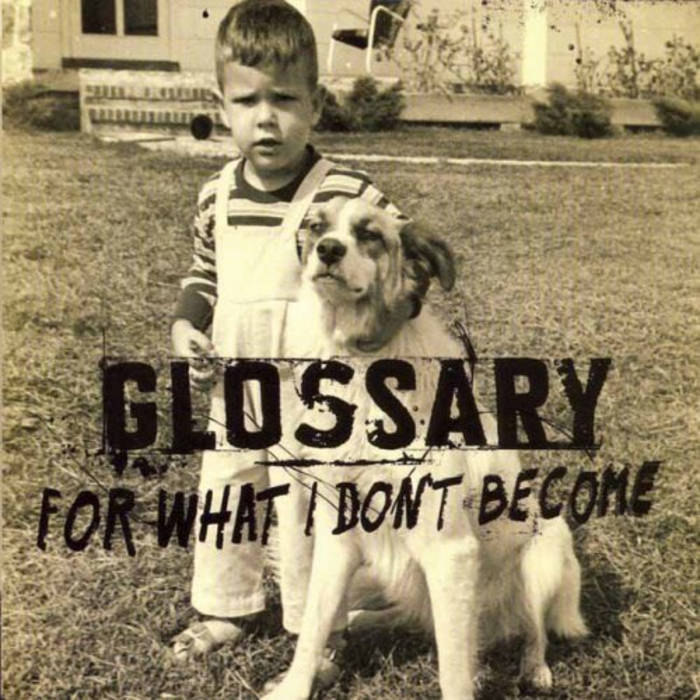
Glossary: Headstones and Dead Leaves
[purchase]

I’m trying hard to write about bands that I haven’t written about before, and this is a bonus, because it seems that Glossary has never been written about on this site. I can’t be sure, but there’s a good chance that I heard about the band from a now defunct blog called Nine Bullets, which was founded back in 2006 by a gentleman who went by the name Autopsy IV, who championed the kind of Americana roots rock that Glossary played so well. (Longtime readers of this site may remember that Autopsy IV was a contributor here back in 2008-2009).

Often compared to Lucero (with whom they have toured, and shared members and a record label) or Drive-By Truckers, because they actually do sound like those bands, Glossary, from Murfreesboro, Tennessee, had their own style, and released a handful of albums from the late 1990s through the 2010s, all of which are worth checking out. Led by legally blind singer/songwriter/guitarist Joey Kneiser, Glossary focuses on character-driven and personal songs that are well-written and well-played, often featuring harmony vocals from Kneiser’s now ex-wife Kelly (with whom he continues to perform).

“Headstones and Dead Leaves,” from 2006’s For What I Don’t Become, is a perfect song for the theme, and for this time of year, as we head into the Halloween season, although despite its title, it is a hopeful song. The singer tells his partner that he doesn’t want her to die for him, or give up anything for him, because the world is cruel enough. He continues:

And headstones and dead leaves 
Are just reminders of 
What happens to living things like us 

In the end, though, he says that together, they can bury their regrets and “walk away alive.”

It appears that Glossary went on hiatus in 2013, when its drummer hurt his shoulder, but reformed in 2017 for some anniversary shows. Kneiser has released some fine solo albums, some more music with Kelly (now) Smith, and tours as a solo and duo act.

Bottom line—if you like this sort of music, Glossary is one of those bands that you might have missed, but it is never too late to catch up.

Wednesday, July 25, 2018

Remedies: Cure For AIDS


Dan Bern: Cure For AIDS [purchase]

A couple of weeks ago, my wife and I went to see Karen Finley’s show, Grabbing Pussy (based on her new book, coincidentally published by a company partially owned by a friend). If you have never seen Karen, one of the most famous performance artists ever, you really should. Her shows, which focus on political and social issues, are always thought provoking. She makes connections and observations that are truly astounding. Watching her shows is like trying to drink from a fire hose--her words and ideas come at you in torrents, you can't take it all in, but what you are able to digest is pretty incredible.

We first met Karen years ago when I coached her daughter Violet, a friend of my daughter’s, in soccer, and became friendly with her and her ex-husband Michael. We’ve seen Karen’s shows where she channeled Liza Minnelli, Jackie O and others, but she is always her provocative self. This show, though, as you can tell from its title, was focused on the current groper-in-chief, and others, such as Harvey Weinstein, who used their power to exploit women. Karen also touched on many other things, including something that has profoundly affected her (as we have seen from her other shows and writings), the many friends that she lost over the years to AIDS.

When my wife and I arrived at the theater (early, of course), we were happy to see that Michael was there, and that Violet (who was a pretty good soccer player, and has created her own controversial art) had flown in from LA). Not surprisingly, many people in the crowd knew Karen, Michael, and Violet, and we were introduced to some of them. Joining us at the table was a gentleman who was introduced to us as Michael, another old friend, and it quickly became clear that he had an electric personality. At one point, Karen came out of the dressing room to say hi, and new Michael mentioned that he had seen an exhibition of works by David Wojnarowicz, an artist and AIDS activist who died of the disease in 1992, who had been a friend of theirs.

Our new friend, it turned out, is named Michael Alago, and he has had a fascinating life, some of which we learned chatting with him before the show, and more of it we learned from watching a documentary about him on Netfilx, with the great title, Who The Fuck Is That Guy? Alago, a gay Puerto Rican from Brooklyn was, and is, a music obsessive, whose vast knowledge of, and boundless enthusiasm for, music got him jobs at The Ritz, eventually booking the shows at that legendary venue, and as an A&R representative for Elektra Records, where he signed Metallica and executive produced Nina Simone's last album, and later at Geffen Records.

Michael (and Karen and Michael) and I are roughly the same age, and yet we lived very different lives. While I was obsessing over music in my suburban bedroom, and at WPRB, Alago was going to Max’s Kansas City, CBGB and other clubs, staying out all night, and hanging out with Bono, Johnny Lydon, Springsteen, the Dead Boys, Metallica, and many, many, many others (which you can see in the film). The three of them were part of a world of music, art, photography, and writing that was sadly filled with many people lost to AIDS, addiction, or both. And it struck me that while these losses devastated people like them, to me it was really more of an abstract concept because none of my friends died from these scourges. So, while I can certainly understand it when Karen discusses the effect of this lost generation of her friends, it can't really affect me the same way. But one of the things that great art can do is to allow you to experience feelings outside your personal existence.

Towards the end of Who The Fuck Is That Guy?, the discussion turns to the fact that Alago was HIV positive, and appeared, a number of times, to be on the edge of death, something that he was open about during our discussions at the theater. Now, because current-day Michael is all over the film, we know that he didn’t die then, and the film doesn’t really explain what happened, except to refer to new drug cocktails and regimens, so it is fair to assume that this is what “cured” him. And today, he appears to be in excellent health, he is clean and sober (although he did eat a bunch of french fries during Karen’s show), and he has left the music business to become a photographer.

Another thing that we all discussed before the show (I did mention that we got there early, right?) was the fact that there doesn’t seem to be the same kind of protest music against the president and his awful policies as there had been against the Vietnam War when we were kids. We had heard the CSN&Y song “Ohio” in the car coming into the city, and that song, about the killing of students at Kent State during an antiwar protest, was all over the radio then, and continues to be part of the classic rock canon. And it isn’t the only song like that. While there are anti-Trump songs, they don’t get played as broadly, which in part is a result of the way that the radio and music business has changed, but it also does seem that there just isn’t as much political music being made these days. Alago mentioned that Ministry recently released AmeriKKKant, which is overtly political, but it is unlikely to break into the mainstream. I brought up Dan Bern, about whom I have often written, who writes political songs (and poetry, and paints political pictures), but again, he doesn’t get all that much airplay. The Drive-By Truckers released a pointedly political album at the end of 2016, which got a reasonable amount of positive press, but was not heard much on mainstream media.

Back in 1998, Bern released an album, Fifty Eggs, produced by Ani DiFranco, which had, as one would expect from Bern, a bunch of topical songs (and one beautiful tribute to his sister). One of them was “Cure For AIDS.” At the time, the AIDS epidemic was still rampant—the number of HIV infections, globally, peaked in about 1997, the number of AIDS deaths globally was still rising, as were the number of people living with HIV. But in the US, AIDS deaths, as a result of new drug regimens, had recently begun to plummet. Bern’s song, though, posits a magic bullet-type cure for the disease, which resulted in a six-month long period of sexual excess, ready access to morning after pills, and the end of homophobia. And, most importantly, “Nobody was afraid.” Of course, none of that has happened, but it is certainly better now, when an HIV diagnosis is no longer a sure death sentence, and AIDS is no longer an easy excuse for hatred.

In March, Bern mangled some of the fingers on his left hand, and had surgery, which led to the removal of part of his middle finger, a partial remedy at best. He is out on tour—I know that at one point he had friends play guitar for him, but I’m not sure if he is able to play guitar now (there is at least one pretty famous guitarist who did pretty well without a middle finger on his right hand, though).

Friday, July 20, 2018

July: Mama Bake a Pie (Daddy Kill a Chicken)

[purchase]


Tom T. Hall has been called the Nashville Storyteller.  To me, he’s the last great storyteller Nashville will probably ever see.  There is a significant difference between a songwriter and a storyteller.  A storyteller, in three to five minutes usually, can make you care deeply about the characters in the song; whereas a songwriter can bring the world in different ways, with the art of wordsmithing.  Tom T. Hall has many song hits to his name, whether recorded by him others, and an each single one, I have cared deeply about those characters.

The first time I heard "Mama Bake a Pie (Daddy Kill a Chicken)" was on an album of oddities and b-sides by The Drive-by Truckers. I even assumed they wrote it. That’s the problem with digital music, there is no glorious artwork to pull out, with wonderful liner notes for one to peruse at their pleasure.  When I first heard it, I knew Patterson Hood was busily beating his anti-war drum because Iraq was going hot and heavy.  Honestly, I didn’t think much of it then, but it steadily grew on me.  When I discovered Hall wrote it, I was instantly over the moon, especially as I listened to the words more and more.

Tom T. Hall wrote it in protest of the Vietnam War. That was his intent and it is clear, as plain as day.  Vietnam has always loomed large in my life.  I don’t know why.  The war ended the year I entered it and none of my immediate family ever served in Vietnam. I think there might be a connection there.  My father served in the Guard and stayed in college, hence he had a deferment.  Maybe there is some lingering residual guilt there, to be honest, however, in that place in time, I might have done the same. Vietnam was weird for our country. First modern loss.  First time seeing body bags on the runway from a war. First time seeing the glaring duplicity of the draft.  First time seeing young men and women being spit on, all for serving their country, so the very people protesting them had the right to protest.  First time a sitting president made sure his family made millions upon millions, by supplying weapons to the very soldiers who were dying by the scores, just to keep that war humming.  The first time an incoming president sabotaged a peace treaty, just so he could get elected.  Out of all this madness and chaos, however, came some the best music this country has ever produced.

I would place the song in either the early days or about halfway through the Vietnam War.  The reason why I’ve assumed the time, is because there is no all out bitterness at those who have served, like in the latter years.  It’s about a good old boy who lost his legs in the war and is traveling home on a plane.  A man asks him if it was worth it and stewardess inquires if he was scared. The soldier responds in the manner that is expected of all who serve, whether if they believe it or not.  The story continues about all his fears and worries awaiting him ahead.  The parents, the former girl, the family and a July fourth parade.  

Tom T. Hall may have been going strictly for antiwar, but I took other things away from the song.  The shock of returning someplace without mortars, automatic fire, mines and grenades.  In WWII they called it shell shock.  In Vietnam it was the thousand yard stare.  Now we simply call it PTSD.  Adjusting to that must be horrendous and have it fall on anybody, especially young, healthy Americans, well that is the biggest heartbreak of all.  Another thing was the young soldier anticipating all the problems at home.  Parents heartbroken, girl no longer his, and just what was he going to do with the rest of his life.  Countless young soldiers deal with this upon coming home.  You would think the land of milk and honey would have a program/programs to help these men and women adjust, instead spending money to send more off to war, wouldn’t you?  I keep returning to that bottle in his lap.  It haunts because I have struggled with my own demons.  Whether it be drink, drugs, or anything else, nothing will stop those demons and nightmares from coming out to play, except maybe love.  

Thursday, July 12, 2018

July: Armstrong


Nanci Griffith: Armstrong
[purchase]

It isn’t a particularly profound or original observation to point out that 1969 was a pivotal year. There were Woodstock and Altamont and tons of amazing albums, Nixon’s inauguration, the Stonewall Riots, the Mets won the World Series, the U.S. secretly bombed Cambodia while the antiwar movement gained strength, the Beatles had their picture taken on Abbey Road and performed for the last time, the Manson family went on a murder spree, Sesame Street debuted, and Ted Kennedy pleaded guilty to leaving the scene of an accident. Just for starters.

But if you had to pick the number one event of 1969, you’d probably pick the small step for man, and giant leap for mankind—Neil Armstrong’s first step on the moon, which took place in July, 1969. I was 8 when it happened, and I remember being allowed to stay up late to watch history being made. (Most of the other times I was allowed a late bedtime that year related to the Mets). As a kid in those days, there was little more exciting than watching rockets launch—we’d stare at the TV, waiting for the countdown, and what seemed like the slow climb of the rocket into space.  Which may be why MTV's early branding included videos of rockets and moonwalks. The moon landing was something truly amazing, especially when you consider that the watch I’m wearing now probably has more computing power in it than the entire Apollo 11 mission used.

While watching the landing, John Stewart, formerly of the Kingston Trio, wrote a song, “Armstrong,” which is about how despite all of the problems in the world, and our differences, everyone watched, or heard, about Armstrong’s amazing feat. I can honestly say that I never heard the song, but here it is:


(That’s the single version, which is different from the version released a few years later on Stewart’s album, Cannons In The Rain. I never heard that version either.)

The song has been covered a few times over the years, but the one I did hear was by Nanci Griffith, on her album Clock Without Hands. In fact, the album features three Stewart covers, including “Armstrong,” and Stewart plays acoustic guitar on the track. (Pete and Maura Kennedy, who I saw at Clearwater, contribute mandoguitar and vocals). It is a pleasant folk song, and Nancy Griffith’s distinctive vocal style works well. And the lyrics mention July.

The Dexateens, an underappreciated band from Alabama, released a song called “Neil Armstrong” a few years ago on their excellent album Hardwire Healing, which was produced by the Drive-By Truckers’ Patterson Hood and David Barbe, who was in Sugar and has produced Truckers albums. Matt Patton, the Dexateens' bass player now fills that slot in the Truckers. Unlike the Stewart song, though, the Dexateens seem to be focusing more on how the moon shot, and his celebrity, affected Armstrong. And the lyrics also mention July.

Apparently, there are some people who believe that it was actually Louis Armstrong who was the first man to walk on the moon. He wasn’t, of course (although he sang “Moon River”), but he died in July—on the 6th, in 1971, at his home in Corona, Queens, about a mile from Shea Stadium, where the Mets lost 5-1 to the Expos.

Wednesday, March 28, 2018

Steps & Stairs: Gimme Three Steps


Lynyrd Skynyrd: Gimme Three Steps
[purchase]

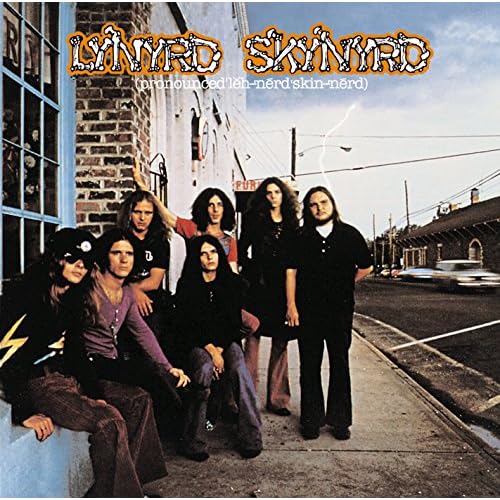
A few years back, I wrote a piece for Cover Me that was timed to run on the anniversary of the plane crash that killed three members of Lynyrd Skynyrd, Ronnie Van Zant, Steve Gaines, and his sister Cassie Gaines, along with the pilot, co-pilot and the band’s assistant road manager. The rest of the band, manager and crew all suffered serious injuries. I melded the blog’s In Memoriam series with a Full Album treatment, focusing on the band’s debut, Pronounced ‘Lĕh-‘nérd ‘Skin-‘nérd. One of the things that struck me as I was writing it was that a number of the songs were drawn from the remarkably colorful life of singer Ronnie Van Zant, including “I Ain’t The One,” meaning “the father,” "Tuesday's Gone," about the change in his life following a major label deal, and, most amusingly, “Gimme Three Steps.”

The song recounts a true incident when Van Zant used a fake ID to enter a bar in Jacksonville, Florida and made the mistake of dancing with another man’s wife or girlfriend. When the aggrieved gentleman appeared to be reaching for a gun, Van Zant told him: "If you're going to shoot me it's going to be in the ass or the elbows... just gimme a few steps and I'll be gone." He ran out of the bar and back to the truck where his bandmates Gary Rossington and Allen Collins were waiting. They reportedly wrote the song that day, possibly in the truck. It is unclear whether that bar was The West Tavern, later known as the Pastime, or another bar called The Little Brown Jug, whose name conveniently allowed them to rhyme it with “cutting the rug,” but it hardly matters. In addition to being a great tune, what makes the song a classic is Van Zant’s presence of mind to ask for a head start, then beating a hasty, panicked retreat when circumstances resulted in his getting that lead preventing him from getting shot. Because, if nothing else, if he had been killed in that bar, not only wouldn’t we have “Gimme Three Steps,” but the last song on Pronounced would never have been recorded, and concertgoers would have nothing stupid to yell out.

If you have read any of my stuff here, there, or there, you know that I’m a huge fan of the Drive-By Truckers, and the album that broke them to a wider audience, Southern Rock Opera, is filled with Skynyrd references and allusions. They’ve even been known to work a little “Gimme” into one of their songs, live. And here’s something I just found, a Village Voice article from 2002 about the Truckers, after the release of Southern Rock Opera, entitled "Gimme Three Stepsisters," which gets into some of the Skynyrd stuff. (Not a bad article, despite getting the drummer’s name wrong).

And, if you read my stuff here, there or there, you also know that I’m a big fan of Uncle Tupelo (and the bands that formed from its demise). Their last gig ever ended with a sloppy cover of “Gimme Three Steps” featuring Bottle Rockets singer (and former Uncle Tupelo roadie), Brian Henneman, on lead vocals.

Thursday, May 18, 2017

Gold: The Golden Palominos


Golden Palominos: Boy(Go)
[purchase]

The legendary supergroups like Cream or Blind Faith or CSN&Y were attempts to join musicians famous from other projects into a, well, super group, but they often foundered due to the conflicting egos of the members. The Golden Palominos, often referred to as an “indie-rock supergroup,” was different, gathering changing groups of generally less famous artists for each album.

Originally founded in the early 1980s by Anton Fier, a drummer who had been an early member of, among other bands, The Feelies, the first incarnation of the Golden Palominos was filled with avant-garde musicians like Fred Frith, Arto Lindsay and Bill Laswell, many of whom were influenced by the “No Wave” movement and often had as much jazz influence as indie-rock. Their self-titled debut was experimental, noisy and even featured turntable scratching, a rarity outside of hip-hop in that era.

My introduction to the band was from their very different second album, 1985’s Visions of Excess, which was significantly more accessible. The original attraction was “Boy (Go),” featuring lead vocals from R.E.M.’s Michael Stipe, and guitar from Richard Thompson. The album also featured vocals from John Lydon (a/k/a Johnny Rotten) and supergroup veteran Jack Bruce, as well as the debut appearance of singer Syd Straw, who is on the list of people who should be way more famous. Despite the unusual roster of musicians, the album hangs together pretty well, and is never dull. Also, there’s a great cover of Moby Grape’s “Omaha,” also sung by Stipe.

The Golden Palominos put out albums every few years throughout the 1980s and 1990s, a few of which I own, with a constantly changing group of performers, including Matthew Sweet, T-Bone Burnett, Bernie Worrell, Bob Mould and Bootsy Collins, with Stipe, Thompson and Straw dropping by occasionally, joining core members Fier, bassist Laswell and guitarist Nicky Skopelitis for, not surprisingly, varied sounds and results. In 2012 Fier, and a different group of musicians joined Kevn Kinney of Drivin’ & Cryin’ for a new album, A Good Country Mile. That album includes a cover of a Jason Isbell written Drive-By Truckers song, “Never Gonna Change.” (Self-promoting side note—Drivin’ & Cryin’ was the band that Trucker Patterson Hood was opening for when he saw the incident that inspired the song “Opening Act,” which you can read more about here.)

Give Fier and his Golden Palominos sidekicks credit for pushing the envelope, trying new things and always making interesting music. They cannot be pigeonholed, and if that hindered them from gaining an identity and becoming a true “supergroup,” it never prevented them from following their muse wherever it took them. In a world filled with artists mining the same groove until it turns into a rut (thanks, Nick Lowe), it is refreshing, if not always easy, to listen to a project like the Golden Palominos that constantly challenges.

Thursday, June 9, 2016

Father: Outfit


Outfit, by The Drive-By Truckers

The Drive-By Truckers are a group of novelists parading as a country rock band: amazingly well versed in telling stories in their songs, often done in the most literary ways. Adopting the voice of a character, using metaphor and image in ways seen traditionally in literature, sometimes even forgoing singing and just delivering lyrics as spoken monologues.  Not that this is unique in music, by the Truckers take on everything, from lyrical content to song structure, is 
rare and unmatched as far as anything else going on in the rock world. Their catalog is full of characters and settings that would be lucidly at home in any Flannery O’Connor story. My favorite member of this outfit is the now solo Jason Isbell. He’s delivered a library’s worth of southern gothic, tall tales and legends, outrageous characters and backwoods, down-home spirit in his music. My words pale in comparison and in accurately praising or describing the true-to-life and tangible literary landscape that Isbell is responsible for bringing to vivid life though song.

One of my favorite songs is the ballad Outfit, from Decoration Day. It’s a monologue, delivered to an unseen child by a distinctly opinionated, and somewhat weary father. The speaker’s voice is soaked in wisdom, perhaps whiskey, too, and the advice he offers covers some distinctly strange notions and concepts of how to live a good life. But in the end, it’s a story of a man’s love for his family delivered to a possibly wayward child who he fears losing, or perhaps sees slipping into the kid of life he himself could have had and because of his proximity and understanding of that particular danger, wants nothing more than for his child to do right. And in that worry about his child going wayward, we also read the father’s lamenting the life he’s lived. Good or bad, you can tell dad wants better for his own son, and though the advice is delivered out of love, there is a bit of envy, too: the speaker has lived a life, that while live primarily out of love, hasn’t been quite the one he wanted. His son, meanwhile, is a singer, as opposed to a house painter and refrigerator repairman.  When the father tells the son “Don't sing with a fake British accent”, there’s a bit of envy there. As if he should harbor such opinions.

But more, so, there’s the admonishment to not repeat the same mistakes and above all, to never act like “act like your family's a joke.” In the end, I suppose it’s a song about what every good father wants for his children: for their lives to be better than his own.  

Here's Isbell, post Truckers, doing Outfit on KEXP...

Wednesday, May 20, 2015

Wedding: Drive-By Truckers’ Decoration Day Album


[purchase]

I’ve written about the Drive-By Truckers many times, maybe more than any other band, in part because they are one of my favorites, and, I think, in part because their songs tend to be about unusual topics, lending themselves to discussion on a theme-based blog such as this.

That the Decoration Day album was my gateway drug to the Truckers was discussed in a prior post, but in thinking about the Wedding theme, it struck me that many of the songs on the album, in some way, related to weddings, or at least, to marriage or getting married, which is close enough. And I’m not even going to get into the fact that at least three of the songs on the album were written by Patterson Hood in reaction to the breakdown of his marriage.

Decoration Day starts off with “The Deeper In,” which is about Patty and Allen Muth, who were, at the time, the only couple in the United States who were imprisoned for consensual sibling incest. Which sounds pretty bad, but there are many extenuating circumstances, not the least of which was that because their own parents were pretty awful people who lost their own parental rights, the couple at issue never met until Patty was 18 years old. They held themselves out as married, although they weren’t, and had four children, who were taken from them. You can read an article about them that was in Esquire magazine here (Hood changed the location from Wisconsin to Michigan in the song to make the last line rhyme better). Following the United States Supreme Court decision in Lawrence v. Texas striking down homosexual sodomy laws, Allen Muth appealed his conviction, but the Seventh Circuit Court of Appeals dismissed his suit based on a narrow, and criticized, interpretation of Lawrence as being limited only to homosexual sodomy cases. Coincidentally, Allen Muth was, for most of his working life, a long haul trucker. Here’s a live version of the song recorded in Louisville: in 2010.


The fourth song on Decoration Day is “Marry Me,” one of the band’s best rockers. Written by Mike Cooley, it is filled with the clever wordplay that makes his songs so much fun. It’s hard to pick a favorite. There are the opening lines:

Well, my daddy didn’t pull out, but he never apologized
Rock and Roll means well, but it can’t help tellin’ young boys lies. 

Or the end of the second verse:

There’s a fool on every corner, on every street, in every one
and I’d rather be your fool nowhere than go somewhere and be no one's 

 Or the last line before the final chorus:

Just cause I don’t run my mouth don’t mean I got nothing to say.

According to Cooley, the song was inspired by a friend who, during sex, yelled out the name of a former girlfriend, Mary, and, thinking quickly, changed it to “Marry me.”

Here’s a version of the song recorded in the band’s hometown, Athens, Georgia in 2013, at the actual wedding of Jenn Bryant, long-time member of the extended DBT family.


Finally, “My Sweet Annette,” tells the tale of Hood’s great uncle (not the same one he wrote about in “The Sands of Iwo Jima”) who ditched his betrothed, Annette, at a pre-wedding party and eloped with the maid of honor, Marilee. In the song, Hood provides some moral ambiguity—his uncle and Marilee never intended to hurt Annette, but, as the song notes, Lord have mercy when two people get alone, and you can sense the guilt he had in leaving Sweet Annette . . . standing at the altar.

This version of the song, recorded in 2012 in Gainesville, includes fiddle from Scott Danborn, of Centro-Matic, who played on the album track.


O.K. One more—Jason Isbell, who joined the Truckers in time to contribute two possibly perfect songs to Decoration Day, released his first solo album in 2007, after leaving the band. That album, Sirens of the Ditch included a song, “Shotgun Wedding,” that begs to be included here. It is, reportedly, about a creepy acquaintance of Isbell’s who liked pregnant women.

Wednesday, February 18, 2015

Songs South: The Southern Thing/The Three Great Alabama Icons


The Drive-By Truckers: The Southern Thing  
The Drive-By Truckers: The Three Great Alabama Icons
[purchase]

For our last theme, Jukebox, I somehow figured out a way to write about the Gettysburg Battlefield. However, the connection between this theme, Songs South, and the Civil War, not to mention the war’s continuing influence on American culture as we approach the 150th anniversary of Lee’s surrender at Appomattox, is certainly more obvious. Being born in, and having lived my whole life in the North, though, I have to admit that I don’t have personal knowledge of what Southerners think, and to be fair, not all Southerners, or Northerners, for that matter, think the same thing.

But what I want to start off by discussing, and I’ll get to the music eventually, is the fact that throughout the South, Confederate politicians, generals and other “heroes” are honored with monuments, school names, and maybe most egregiously, by the Federal Government with at least 10 Army bases named for generals who took up arms against the very forces that now honor them (and in other inexplicable ways). President Obama, the country’s first African-American president (whose wife’s maternal great-great-great-grandmother, Melvinia Shields, was a slave) has even sent a wreath to be laid at the Confederate Memorial in the Arlington National Cemetery (on land that was formerly Robert E. Lee’s home, and which is bordered by the Jefferson Davis Memorial Highway), despite a petition signed by many prominent historians urging him not to do so. To again reference petition signer Professor McPherson, “I don’t think it appropriate for a president to send a wreath honoring a group that tried to break up the United States.”

I also don’t get it. Benedict Arnold was one of the most effective American generals in the Revolutionary War until he switched sides, and did some damage for the Brits (including, interestingly, capturing Richmond, the future Confederate capital). But there isn’t a Fort Benedict Arnold anywhere, or a Benedict Arnold High School. (Yes, there are a few historical markers commemorating his pre-traitorous accomplishments, and a few that generally commemorate his achievements, but simply omit his name, but had he never turned traitor, things would have been very different.) We don’t honor Aldrich Ames or Tokyo Rose, or John Walker, Jr. or any of the Americans who have assisted Al Qaeda or ISIS. And I suspect that many of the supporters of honoring Confederate “heroes” who took up arms against Americans are the same people who still call Jane Fonda a traitor for having expressed support for the North Vietnamese government (but not actually, you know, shooting any Americans).

It’s actually pretty clear to me: Article III, Section 3 of the U.S. Constitution states:

Treason against the United States, shall consist only in levying war against them, or in adhering to their enemies, giving them aid and comfort. 

And while I wasn’t there, I’m pretty confident that people like Jefferson Davis, Robert E. Lee, Stonewall Jackson and Nathan Bedford Forrest (who likely led a massacre of black troops at Fort Pillow and was an early leader of the Klan), and the officers and men that they commanded were “levying war” against the United States. I don’t buy the arguments made by Southern apologists that secession wasn’t illegal—it was—or that no Confederate was convicted of treason—that was an embarrassing matter of political expediency, not to mention that the 14th Amendment made it clear that anyone engaged in acts of “rebellion” had certain rights taken away.

Much has been written about the Southern “Lost Cause” nostalgia, and all of that is too much to tackle in what is, really, a music blog, so let's talk about music. There are few bands that are as committed to analyzing their Southern identity as the Drive-By Truckers (who I have written about many, many times). In fact, there may not be any other bands that do so to the degree that the Truckers do. They come by it naturally—the founding members, Patterson Hood and Mike Cooley, are from Alabama, and the band is essentially centered in Athens, Georgia. But Hood has been especially vocal about the fact that his upbringing was not traditional—his father, David Hood, is a legendary Muscle Shoals sideman and producer, who appeared on countless great records with black musicians—and his family was anti-segregation when that was not the popular thing. And Athens, where he ultimately settled as an adult and where he lives, is a liberal bastion in a conservative state.

Southern Rock Opera is considered to be the Truckers’ defining album, and while it may not be my favorite (I like a couple of the later ones with Jason Isbell a little better), it clearly is the one that not only moved the band into the public eye, it crystalized their viewpoint and, for better or worse, set them up as analysts of what Hood, in “The Three Great Alabama Icons,” called “the duality of the Southern Thing.” In an excellent essay for The Bitter Southerner website in 2013, Hood discussed the legacy (and burden) of Southern Rock Opera, and defined the “duality of the Southern thing” as

being from a region that is known for great music and literature and art and something called “Southern hospitality,” but is also known for Jim Crow laws, slavery, racism and the Ku Klux Klan. I talked about being fiercely proud of the good parts of my heritage and mortified and ashamed of the bad parts, the ones that too often define how other people perceive us. 

And that’s what both of these songs are about.

“The Southern Thing,” is a song which Hood wrote to tie the whole project together. It is, stylistically, probably the most “Southern Rock” song on the album, and it describes, with some examples, the duality that he feels as a Southerner who is proud of his identity, even if he doesn’t agree with every—even most—of the stereotypes of that identity. Better you should read the lyrics, than for me to try to summarize them.

The next song on Southern Rock Opera is “Icons," a spoken word essay about Ronnie Van Zant, Bear Bryant and George Wallace, as paradigms of the duality, and points out that there were Southerners who were against segregation and racism, just as there were Northerners who supported it. But the song is mostly about Wallace, who as the song notes was an avid segregationist and racist, yet, at the end of his career, “opened up Alabama politics to minorities at a rate faster than most Northern states or the Federal Government. And Wallace spent the rest of his life trying to explain away his racist past, and in 1982 won his last term in office with over 90% of the black vote.” Despite that, Hood consigns Wallace to hell,

not because he's a racist… His track record as a judge and his late-life quest for redemption make a good argument for his being, at worst, no worse than most white men of his generation, North or South… But because of his blind ambition and his hunger for votes, he turned a blind eye to the suffering of Black America. And he became a pawn in the fight against the Civil Rights cause.

Hood notes in the Bitter Southerner piece that this song is, for the most part, written from the viewpoint of his father. He also mentions that Wallace’s grandson is a big fan of the Truckers.

Interestingly, when they perform the songs live, they switch the order, which makes sense from a performance standpoint—in essence “Icons” acts as an introduction to the more rocking “Southern Thing.” Here’s a video from a 2012 show (recorded and edited by DBT fan extraordinaire “Jonicont”) that shows this—and that Hood goes way off script, to make some topical political points, without losing the underlying message.

Tuesday, December 9, 2014

Leftovers (Gravity): Gravity’s Gone


Drive-By Truckers: Gravity’s Gone
[purchase]

After Thanksgiving, we at Star Maker Machine have typically run a “Leftovers” theme, letting the writers go back and revisit the themes we wrote about in the past year, and either posting something that wasn’t finished in time, or an idea that never even got started.

When I looked at the 42 different posts I wrote in 2014, I realized that I had essentially written twice for each of the year’s themes, except for one—Gravity. I actually suggested this theme, and thought that it would be pretty popular, but it only prompted five posts. We’ve had problems for the past few years getting people to post. I don’t know if it is just the inevitable burnout effect, or that mp3 based blogs are fading out, or we haven’t recruited enough (or the right) writers, recently, the number of posts, and regular writers, has been dropping.

It’s a bit disheartening, because the decrease in new posts has translated into a decrease in the number of page views. Not only that, but I’ve personally written almost a third of all of the posts this year, so far. Four writers have accounted for nearly 85% of the posts on the site. I think that the writing remains strong, and we have at least one new writer who seems to be interested. However, there have been times, many times, in fact, that I’ve thought about quitting entirely, or starting my own blog to write about whatever I want. But I haven’t, and I think that as long as there are other people who want to keep the SMM flame alive, I’ll keep writing. Not just for the tradition, or out of laziness or out of some sort of duty, because SMM was the first place that I broke through my fears and put my writing out to the public.

No—I’m going to keep writing here because I like doing it. I enjoy the idea of having a prompt force me to make a musical connection. Now, when I first started writing here way back in December of 2011, the themes were surprises, and I would wake up on Sunday morning, eager to see what Darius had come up with. Now that I’m a co-moderator, though, I am involved, along with Kkafa, in picking the theme, which has changed the way I react to them, but even when I suggest one, I don’t always know what I’m going to write about. I enjoy contributing to this blog. I enjoy the creative outlet, I enjoy sharing my opinions and telling my stories, and I enjoy the feedback that I sometimes get (mostly on Facebook—and if you aren’t a member of our page, you should be).

The Gravity theme was, as I wrote at the time, inspired by seeing the band Barnaby Bright at a small concert at a local church. I was impressed by them, and their song “Gravity,” and realized that this force of nature was a common subject for songwriters. There is no question in my mind that I considered trying to get a second post in, about the Drive-By Truckers’ song “Gravity’s Gone,” but it never happened.

“Gravity’s Gone” is a Mike Cooley song. Until this year’s English Oceans, Cooley usually only had a few songs on each album, and most of them are gems. This one is no different. Written during a long, exhausting tour, Cooley felt that things were getting a little out of control, and although he has been quoted as saying that the song, “doesn’t really make a lot of sense, and it wasn’t supposed to,” you can hear his contempt for what was going on in the clever wordplay:

Between the champagne hand jobs and the kissing ass by everyone involved
Cocaine rich comes quick and that's why the small dicks have it all.

But, ultimately, the heart of the song, where you can hear Cooley’s frustration, is in the chorus—

So I'll meet you at the bottom if there really is one
They always told me when you hit it you'll know it
But I've been falling so long it's like gravity's gone and I'm just floating

And that’s sort of how I’m feeling about our little blog here. Are we heading down to the bottom? I guess if we get there, I’ll know it. As long as we are still alive, though, I’m going to keep floating along, putting my thoughts out into the interwebs.

Here’s a bonus video of the band, still including Jason Isbell (who left the Truckers after this album), playing a mostly acoustic version of the song at a record store in Nashville (I am compelled to note that my son met Mr. Isbell, his fellow Nashville resident, last week).

Friday, August 29, 2014

Offensive: GG Allin

[purchase a documentary]

Time to really go for it here.

I first heard about GG Allin from the early Drive-By Truckers song “The Night GG Allin Came to Town.” As Patterson Hood tells the story, he and Mike Cooley were living in Memphis in 1991 as their first band, Adam’s House Cat, was disintegrating. They were poor, miserable and hated Memphis. GG Allin played the Antenna Club on November 16, and Hood and Cooley didn’t go—they were broke and weren’t fans. But the next morning, they were at a local restaurant, filled with an older crowd, just after church, and they overheard a couple, described in one version of the story as Thurston Howell III and Lovey, reading an article about the show in the local free paper, and being generally horrified. The lyrics to the song are pretty graphic, but here’s a transcription of the actual article at issue, and it is even better. For example:

To put it bluntly, Allen [sic] grossed out the audience at The Antenna Club. He defecated on the stage, then appeared to eat it and spit at the patrons. Allen, who is the lead singer, also beat his forehead bloody with a beer bottle and put a microphone up his rectum. The drummer performed naked.

My favorite line from the article is, though:

G.G. Allen will not be invited back to the Antenna Club, [club owner] McGehee said, although "people would pay for them to come back. He's got everyone talking.”

An excerpt from this very performance is the video above—it is offensive, but doesn’t include any of the feces-related material. (It also cuts off part way through—but if you aren’t satisfied, just Google him, and you will find many more videos not suitable for, well, pretty much anything.)

Allin was a pretty disgusting character. Literally born Jesus Christ Allin, to a spectacularly delusional and dysfunctional set of parents, Allin probably could have used someone to set a few boundaries. Instead, Allin described his childhood as “very chaotic. Full of chances and dangers. We sold drugs, stole, broke into houses, cars. Did whatever we wanted to for the most part – including all the bands we played in. People even hated us back then."

A drug addict and violent criminal, Allin served time for "assault with intent to do great bodily harm less than murder" on a female companion, and his psychological evaluation diagnosed him as having a “mixed personality disorder with narcissistic, borderline and masochistic features.” Before accepting a plea bargain, Allin claimed that the conduct at issue was consensual, and admitted to cutting the woman, burning her, and drinking her blood, but argued, in mitigation, that she did the same thing to him. So, that made it O.K.

After getting released from prison in March, 1991, Allin went on tour, which was documented in a film directed by Todd Phillips, who later directed the slightly less offensive, but substantially more successful Hangover movies.

In June, 1993, Allin was playing The Gas Station on the Lower East Side of New York, and something happened during the second song that angered Allin (accounts vary as to what that was, but it probably didn’t take much). Of, course, he trashed the club, then walked out, naked and covered in blood and feces, followed by his fans. He ended up at a friend’s apartment, continued to use drugs and overdosed. Allin died wearing a silver Nazi helmet. Here’s a first hand account of Allin’s last night, written by the legendary Legs McNeil, which differs in many details from the Wikipedia account. McNeil’s version is more fun to read, though, and better written.

Allmusic calls Allin “arguably the most degenerate and outrageous figure in rock history.” And based on my research, it seems like a pretty good argument.

Thursday, June 19, 2014

Hotels and Motels: Super 8

[purchase Southeastern]

If you have spoken to me about music over the past year or so, you probably know that my favorite album of 2013 was Jason Isbell’s Southeastern. In fact, it is probably the best album that I have heard in years. And I’m not alone in singing (actually just talking) its praises. It made a ton of year-end best lists, topping some, and has been nominated for all sorts of awards. Although for some reason, WFUV, which you would expect would be all over this disc, never really committed to it. Southeastern’s incredible songwriting, singing and playing, when coupled with Isbell’s story of talent, addiction, leaving a band, marriage and redemption scored Isbell about as much publicity as you can get playing the type of confessional Americana music that he plays. He has been on Letterman (who loves him) and Conan and has been featured on NPR and on the CBS News. But with the music business being what it is, the album has probably sold less in total than some no-talent pre-fab tween pop tart sells in a day.

For the most part, Southeastern is a pretty mellow affair, but its songs’ messages are anything but laid back. There are lots of songs that can be directly or indirectly tied to his life story, and one, “Elephant,” about a woman dying of cancer, that is literally brilliant. Almost every song has imbedded itself into my head, so that I couldn’t tell you what song is my favorite.

The album had just come out last summer, right before my family and I were going to see him perform at the Clearwater festival. I’ve mentioned that performance before, mostly in the context of how great it was that his former colleague in the Drive-By Truckers, Patterson Hood, sat in on one song, and Isbell returned the favor during Hood’s set. Especially since Hood was one of the people who was instrumental in essentially kicking Isbell out of the band when his drinking became too much of a problem. (Clearly, they have buried the hatchet—just the other day, Isbell, Hood and Trucker Mike Cooley performed an entire show together for a benefit.)

Although I had heard the album, it was still new, and hearing Isbell perform the songs, basically solo, was thrilling. Even my wife, who was never the big DBT fan that my son and I are, was blown away. Then, we found out that Isbell, with the full band, was going to be playing at Lincoln Fucking Center, as part of a series of pretty well-respected artists from across the musical spectrum—including jazz, opera and musical theater. I went with my son, his girlfriend and a musician friend of mine who was unfamiliar with Isbell (my wife had a prior commitment). It was an incredible show, in an incredible venue. The entire broadcast from PBS is here, and it is primarily songs from Southeastern, with some older songs and some Truckers classics.

The set ends with “Super 8,” the one real rocker on the album, a Stones-influenced rave about the craziness and danger of life on the road, particularly in cheap motels. In a recent piece in, yes, The Wall Street Journal, debuting the official video for the song, which is above, Isbell was quoted as saying: “This song is one story built out of moments from many different actual nights. Things that are funny now, but weren’t funny at all when they were happening. The song took a couple hours to write, but years to live through.”

 By the way, after “Super 8,” the band encored with an actual Stones song, “Can’t You Hear Me Knocking,” a part of which you can hear at the end of the video.

And have I mentioned how much I liked Southeastern?

Tuesday, March 4, 2014

Scrabble Value Letters (Z): Zip City


Drive-By Truckers: Zip City
[purchase Southern Rock Opera]

There is one member of my family who would be disappointed if I had the chance to write about songs that begin with the letter Z and didn’t write about “Zip City,” maybe my son's and my favorite Drive-By Truckers song not written by Jason Isbell.

In the early days of the Truckers, Patterson Hood dominated the songwriting, but Mike Cooley’s smaller output was often more memorable. I once saw a quote from Hood somewhere in which he essentially said that he wrote tons of songs, not all of which were great, and that Cooley wrote fewer songs, and they were all great. I can’t find the damn quote, but I know I saw it. And if you look at the commentary that Hood writes about all of the band’s albums, he invariably refers to a Cooley song as his favorite on the album. Sure, there is a bit of modesty there, but I honestly believe that Hood is sincere.

The new English Oceans, released today, has 13 songs, 7 by Hood and 6 by Cooley—but for the first time, Cooley sings a song written by Hood. Stuff like this is just manna for fans. I could have streamed the new album, but I’m waiting for my CD to arrive (hopefully in today's mail) before listening to it. I’ve liked what I have heard, so far.

But back to “Zip City,” from the Truckers’ breakthrough album, Southern Rock Opera. This was the album where a band that wrote songs like “The President’s Penis is Missing,” matured into one of the great American rock bands. Using a slightly fictionalized version of the Lynyrd Skynyrd story as a jumping off point to discuss perceived misconceptions of the South, modern southern mythology and the power of rock ‘n’ roll, it is an album that grows on me every time I listen to it.

“Zip City” is probably the Cooley song that fans most want to hear, and I think the band plays it at most every show (the version I posted is from a 2010 show at Webster Hall in New York that I was lucky enough to attend). And it is great live. Despite that, being somewhat of a contrarian (polite for “smartass”), the song is omitted from Cooley’s live solo album, The Fool on Every Corner,” which was released in late 2012. And it wasn’t like he didn’t play “Zip City” during the live performances that were used to create the album. Here’s proof. He just chose to leave it off.

What makes “Zip City” such a great song? Start with the story—although at the base, it is a classic tale of teenage lust, there is a twist. The seventeen year old narrator displays incredible maturity—he knows that he is never going to marry the girl, and he resignedly tells her to keep her drawers on, because it just isn’t worth the fight. And add to that the overlay of the narrator’s recognition of the hypocrisy of his girlfriend’s father, a church deacon, and the subtle references to the aimlessness and boredom of the narrator’s life. But then there are the lyrics, which are typically brilliant. For example, after telling his girlfriend that she should keep her drawers on, the singer predicts the dead end life his girlfriend faces:

By the time you drop them I'll be gone 
And you'll be right where they fall the rest of your life. 

The bleakness doesn’t stop there—Cooley describes her family like this:

Your Daddy is a deacon down at the Salem Church of Christ 
And he makes good money as long as Reynolds Wrap keeps everything wrapped up tight 
Your Mama's as good a wife and Mama as she can be 
And your sister's puttin' that sweet stuff on everybody in town but me 
Your brother was the first-born, got ten fingers and ten toes 
And it's a damn good thing cause he needs all twenty to keep the closet door closed 

I particularly like his description of the closeted brother.

There’s more, but better you should listen to the song, which, according to Hood is “90% true and is my personal favorite song on the album.”

And, if you want to learn more about the actual locations in the song, and see pictures, check out this blog.