Answering to the earlier post, oddly I think it apt we cover the event after the event. Valentines Day, or the Feast of St. Valentine, has never quite resonated for me. Yes, I have received cards over the years, nearly as many as I have sent, but it has never been a delivery that would damage the postie's back. And, as my wife pointed out this year, we seem somehow to be missing the point, babysitting the grand-daughter this year, and entertaining my brother last year. Somehow you old romantic not.
My defence is that, in restaurants, Feb 14 is a date to avoid, all pink prosecco, heart shaped salmon pieces and blood on the carpet. (Blood on the carpet? Well, there's always at least one couple whose sense of duty has overshot the tint on their spectacles.) Nope, like New Years Eve, Mothers Day and St Paddy's day, I'm staying in, ta!
The song featured is by an artist I have mentioned before, making no apology there around. Hell, I even used this same song, for which I will have to apologise, but read on, I will explain. From agit-prop spiky solo bard of Barking to the only slightly less spiky older statesman of political song commentary, Billy Bragg has always lightened my heart, both musically and intellectually. Having little time for Twitter myself, his feed is actually a presence worth following, being, variously witty, acerbic or just plain right. (Sure, it helps if you are a goddam lefty pinko as well, to keep the Valentine colour theme alive.) Coming from his 1988 LP, Worker's Playtime, it is a rancorous song of bitterness. Confession time, I always took it be allegorical: the phrase is often used to describe the bursting of any bubble, but it is a much darker piece, as I learnt from this excellent article. Gulp.
Little more to say than that, really. And, should you not have found the above sufficiently chilling, here is a sparser still version, from a John Peel session.
Unable to leave you staring bleakly into your consciences, not all injuries being just physical, here's another favourite, two really, June Tabor and the Oysterband, from the first of their occasional collaborations, an altogether more upbeat version of the same song. But it is the same song, and I really must learn to listen harder to the lyrics.
Um, I hope you all did have a good day, if the opportunity arose. After all, the card industry can't support itself.
(Postscript: I noted the link to the earlier Tabor/Oyster piece commented on the two of my weddings. I have since had a 3rd, so maybe the old romantic after all, yes? Maybe we should go out next year...)
We’ve had a tough time getting this theme started, maybe because it began after Valentine’s Day. So, before we get to a weekend without any new SMM posts, I thought I’d see what I could come up with.
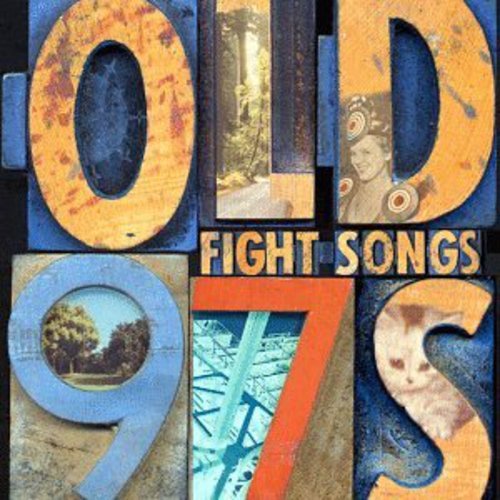
A song called “Valentine,” by Old 97’s, a band that I really like, and which I have written about, at length, a fewothertimes.
But there are a couple of things that set this song apart. First, it is not sung by Rhett Miller, but by Murry Hammond, the band’s bass player, who usually sings a couple of songs on each album. Hammond’s songs often display a sense of humor, although to be fair, lots of Old 97’s songs are funny. He’d have been a good candidate to have been the subject of a post when we did the “Other Guy” theme back in 2013 (one of my faves, by the way).
Another thing that distinguishes “Valentine” is that it is not a love song. It is, in fact, a lost love song, written not to a current "valentine,” but to one who turned out to be "wrong," and about the heartbreak and despair that comes from a broken relationship, but also the relief that something that wasn’t working ended. Back in 2015 Paste did a “12 Best Old 97’s Songs” feature, and placed “Valentine” third (a ranking that I’d quibble with—I’m not even sure it’s the third best song on Fight Songs). They quoted Hammond as saying: “It was a toxic relationship and, predictably, not a good breakup. But after all the pain and emotion of tearing it apart, I felt a simple moment of compassion and empathy for both of us. I felt a kindness toward her and tried to put that into words. She was a valuable and great human being, but one I would never know again. The girl who’s moving on."
So, maybe it really is fitting for a Valentines theme that takes place wholly after the holiday.
For the most part, Fight Songs, the album that “Valentine” appears on, is filled with more upbeat, poppy songs, for which it is sometimes criticized, but it was my introduction to the band, and I loved it then and now. But ending such an album with a mellower, more introspective song really works. Of course, that assumes that the listener would actually be listening to the entire CD, in order, an assumption that was more likely to be accurate back in 1999 than today (unless you are my wife).
The phrase <rocket in my pocket> is pretty suggestive. The lyrics themselves ... not so much.
He takes her out, she seems not to be too interested but he's got some interest (the rocket in his pocket?) phish.net gets a little more explicit: if you're not hot, you better have something in your pocket that is: [finger in the socket.]
The phish.net article, commenting on the slide guitar from one of their performances of the song notes " no matter how skilled you are with a reasonable electrified facsimile, it just isn’t as arousing as the real thing". Hmmm. Is that the rocket or the slide guitar being referenced here?
Little Feat were unparalleled in their mix of innovation to the standard I-IV-V format of AM radio music. Lowell George's slide guitar was a major part of their success.He just wasn't as keen on how Feat were beginning to get into extended jazz fusion around the time this one came out. He was into other things, wasn't he?
The song was included on Little Feat's 1977 <Time Loves a Hero> album, which also included the song of the same name. Lowell George is on his way out by this time (d. 1979) and his presence in the output is somewhat lacking. <Rocket> is the only song he wrote for this album although he sings and plays on several others.
Too tenuous? Well, how else can you fly to the sun other than by rocket? Plus, I've been dying to post this song for aeons.
I first came across the Silicon Teens back in the very early 80s. Working in the outskirts of London, well, into Kent, actually, Sidcup, that there London was a brief train journey up the tracks. Given the future first Mrs Og was still working in London, I spent a fair length of time on that journey. A favourite meander was around Soho, on the cusp of the clean-up between seedy and boho. (Now, inevitably, it is all smart and squeaky clean, smartened up beyond belief.) A common feature of the street markets, omnipresent then on most streets, or so my rose-tinted suggest, would always be the record stall, usually selling promo only discs surplus to the requirements of the music biz centred thereabouts. A good stash of singles could could be bought for next to nothing, and one such was the 3rd single by the Silicon Teens, Just Like Eddie. This was a fabulously bonkers synth led version of the old r'n'r staple, as originally by ex-Tornado, Heinz. With a ludicrous middle eight of random noises, reprised at the end, I so loved the version, and still do.
However, the b-side contained the song I feature, and it swiftly took pride of place as the go-to side. A swirling concoction of early Pink Floyd, a dab of Hawkwind, and the same flat adenoidal vocal that so beguiles the flip. Wonderful stuff. But who were they? I soon discovered they were really he, he, the voice and the instrumentation, the arrangements, the production, all being Daniel Miller. Miller was the main man and founder of Mute records. He still is. I guess their best known signing would be Depeche Mode, spotty oiks from Basildon, in Essex, a tad round the ring road from Sidcup, a quasi boy band with rudimentary synthesiser backing, who extraordinarily morphed into US stadium fillers, as they matured into songs about doom, death, drugs and, obliquely, religion. Although Miller no longer produces their records, they remain on, in the UK, his label. Other notable signings would include Nick Cave and Goldfrapp.
Anyway, Miller decided to invent a band to allow him the vanity of interpreting some old standards from his youth; he was born in 1951. Sole album, Music For Parties, was exactly as it said on the label, catchy and disposable covers of, amongst others, Memphis, Tennessee and Sweet Little Sixteen. Infectiously raw, they maintain a naive charm that never fails to make me smile. I didn't care that Darryl, Jacki, Paul and Diane didn't really exist, actors portraying them for any interview or video, for me they were real, and I was disappointed no new material was ever forthcoming, beyond the sole appearance of a re-recorded Red River Rock in the soundtrack of Planes, Trains and Automobiles.
Brief though their tenure on the charts prove to be, and that was scant, they only bothering the UK indie equivalent, relatively sparse ground at the time, and in no little part because they mainly recreate oldies, Silicon Teens are amongst the cream of my 80s synth bands. Or 80s bands altogether.
Little known fact, but the Silicon Teens actually had a song named after them, and about them. It's by the Pulsars.
Hang on, I hear you mutter, that's a song by Bruce Cockburn, pride of Canada, and it's already had a shout here, why, a mere 12 years ago. Indeed it has, saving me the time to mention that original version, good that it is, but I'm here talking about a whole different barrel of monkeys. OK, same song, different band, different time, well, six years, and a whole different ethos and vibe.
Let me take you back to the mid 80s. Contrary to cliche, it was not all poodle hair and shiny suit jackets, sleeves pulled up, at least not for me. Indeed, I had espoused rock music as being for losers, and embraced folk as my field and furrow. None of your finger in the ear and fluffy jumpers, mind, I was in much deeper than that. I had ditched my inky music press for Folk Roots, a glossy monthly devoted to all things folk and what would become world music, gathering up aspects of blues, country and bluegrass along the way. (Sadly, recently defunct.)I had taken up morris dancing, as mentioned here before, and started going to folk clubs, folk concerts and folk festivals. I guess I still do. One of my favourite haunts was the Red Lion Folk Club, still going, in King's Heath, Birmingham. (U.K.) They seemed to have a visionary approach and interpretation to folk, booking all, it seemed, the acts I was so avidly reading up about. If Dylan plugging in had led to the cry of traitor, this club was populated by all the people who had said goodo, as, for every staid stalwart of the trad. arr. brigade, and they booked the best of them too, they also had all the young turks, blazing away full pelt, plugged in and drums pounding. For a while it seemed a rotating feast, week on week, of Edward II, then with the Red Hot Polkas, Gregson & Collister and Alias Ron Kavana. EII, as they came to be abbreviated, were melodeon led reggae-morris fusion, a version running to this day. Clive Gregson and Christine Collister may have been just two voices and one guitar, but had more vim in their acousticity than the national grid, both then also members of the Richard Thompson band. And Alias Ron Kavana were just something else.
A night out with Alias Ron Kavana was one where you knew you would get good 'n' sweaty, requiring copious fluid intake and a firm floor below. The folk club was held in the upstairs room of a large roadhouse styled pub, so the fluids were guaranteed. How the floor held the bounce of the ferociously jigging audience from careering down through into the bar below, lord only knows, but it did, as the four piece band thrashed through a heady mix of rockabilly, irish folk and celtic soul, all fronted by the glorious paradox of, no alias, his real name, Ron Kavana, a balding and bellied pocket behemoth, with a light and adept touch on his guitar and a foot to the floor full throttle vocal roar. Channeling all his heroes, Elvis, Van the Man, Johnny Cash, he could effortlessly hold the room, with no small nod to more modern players, Joe Strummer and Costello, say, with a hefty side order appreciative of the genius unfolding, unravelling even, of Shane McGowan. Backing was provided by second guitar, Mick Molloy, bass, Richie Robertson and drummer, Les Robertson, the whole a collective banshee of jubilant noise. Yet, at the same time they were winning the Best Live Act, year in and year out, at Folk Roots, they were essentially off radar to all else, initially having no record label to sign them. Eventually the band signed to Chiswick records, a small London based independent with a tiny roster of likeminded scallywags and reprobates. Of course I bought the record, Think Like a Hero, appalling cover picture and all. It seemed an age, five years, before the follow-up, Coming Days, dropped. Rocket Launcher was on this second album, a very much angrier version than the original. If Cockburn was despairing, musing on how far he could be pushed, Kavana and crew were ready, willing and able to press the button. By now I had left the Red Lion behind, catching the Alias band at a festival in Portsmouth, second on the big to Fairport Convention. I seem to recall the Alias band won.
And then it all seemed to stop. The Alias band fell apart. I vaguely recall some form of RK big band, now with his wife on fiddle, it all seeming too messy and muddled. To be fair, it may have been me that was messy and muddled that night, it being a troubled time in my life, as well, it seemed, as I later read, in his. Trying to keep up, I learnt of links with ex-Pogue Terry Woods, as the Bucks, that never seemed to last, and of other dalliances, as he gradually fell off the map. My last sighting was an erudite collection, Irish Songs of Resistance, Rebellion and Reconciliation, gathering he had largely packed in the music biz for a life in academia. It all seemed a bit dry and dull after the ceilidh of his earlier stuff, sad even, as it seemed to be then recycled into a 40 Favourite Irish Songs for misty eyed irish ex-pats, of whom there is a wealth in Birmingham, and who would probably faint if the Alias Band were to crank up in their earshot. (As balance, I also sought out, for this piece, other explanations for this sudden apparent change of direction and fortune, discovering a somewhat different slant. I may have been chasing the craic, he was altogether on a more serious journey. His most recent release was supposed to be a collection of songs from the Irish Travelling diaspora, due in 2017, but I cannot determine whether that ever materialised. A facebook presence seems also to denote some, um, issues, changing from 'Ron Kavana-musician', and hosted by his seemingly long-suffering agent, if his comments belie anything worthwhile, to 'Ron Kavanagh', a whole more closed book, attributing only his university linkage.)
By way of conclusion, here he is a decade ago. I hope all is well with you, Ron, and may the road rise with you.
When I was 10, in the summer of 1971, my parents sent me to sleep away camp for the first time, and it was not a good experience. It was not a good camp (although based on some stuff I saw on Facebook, it might have been at one time), and I was homesick. But it wasn’t only me—it was common for campers to try to sneak out of camp, despite the fact that there was really nothing within walking distance (and I know, because we tried…but that’s another story that includes being locked in a hot van with nothing but Rice Krispies….). Also, the water tasted of sulfur. Other than that, it wasn’t too bad.
My complaints about that summer resonated with my parents, who then spent more time researching summer camps, before choosing to send me and my sister to Timber Lake Camp, which was an excellent camp that no one tried to escape, and had delicious drinking water. I absolutely loved my two summers there (and my couple of weeks as a counselor, years later, right before I went to college). Our experience at TLC led to a big influx of campers from my extended family and hometown over the years, and my sister and brother are still in touch with friends that they made there. (A few years after I stopped going, the camp was purchased by Jay Jacobs, now the NY State Democratic Chairman, and made even fancier and better than when I was there, and it was pretty good back then).
As I have previously mentioned, my first experience with radio, which in many ways was an onramp to my love of radio and music and without which I probably would not be a music blogger, was at WTLC, the camp radio station. But this isn’t about that.
I think that most camps wake up their campers with some sort of “Reveille,” because there is something vaguely military about people sleeping in bunks. But at Timber Lake, in the summer of 1972, the counselors were, for the most part, young men and women in their late teens and early twenties, and during that era, in that place, I have to assume that the military wasn’t particularly popular. Instead, we were usually awakened by some loud rock music playing on the loudspeaker.
And if you asked me what songs they played, the only one that I remember was Billy Preston’s “Outa-Space,” a funky, spacy instrumental. It made waking up relatively fun, and I’m pretty sure that I played the song on the radio, learning that it was by Billy Preston, about whom I basically knew nothing.
What I know now, is that “Outa-Space” was a big success for Preston, despite the fact that his record company refused his request to release it as a single—instead, it was a b-side that DJ’s flipped. It sold more than a million copies and hit number one on the Billboard R&B chart and number two on the Billboard Hot 100 during that summer, and won a Grammy. And I also learned that its distinctive sound came from Preston experimenting with a clavinet run through a wah wah pedal.
Preston, a self-taught child prodigy, backed Mahalia Jackson when he was 10, joined Little Richard’s band in his teens, and while with Richard in Hamburg, met The Beatles, with whom he played a few years later, and who signed him to their Apple label. He is one of the candidates for the mythical “Fifth Beatle” title, but it wasn’t until he left Apple, and joined A&M Records, that he had solo success. His first release for that label, I Wrote A Simple Song, included “Outa-Space.” Over the next two years, Preston followed up a bunch of hit singles, "Will It Go Round in Circles,” "Nothing from Nothing", and the also theme appropriate "Space Race."
In addition to playing with The Beatles, Preston opened for and played with The Rolling Stones, wrote “You Are So Beautiful” for Joe Cocker, was the first musical guest on what was then called NBC's Saturday Night, did session work with Luther Vandross, Whitney Houston, and Patti Labelle, and toured with Eric Clapton and The Band. However, cocaine addiction and a sexual assault charge derailed his career in the early ‘90s, before he made a handful of live and recorded guest appearances in the 2000s. Preston died in 2006.
One of the great things about writing for this blog is that it often forces you to revisit music that you haven’t really paid attention to for years, and I have to say that “Outa-Space” sounds just as good today as it did to my 11 year old self back in 1972.
Well, this is a first, as I have never knowingly sat and listened to anything by this venerable institution of a band, finding the pictures alarming enough. True, I know a little of them, and their behemoth beating heart, Eraserhead outtake, David Thomas. And whilst he being an alumnus of Jackie Leven ought to give me some hope, I also have it on authority that, at their peak, they were well nigh unlistenable. Except to the droogs and dweebs with a penchant for bad haircuts, junk food and buttoned up to the top raincoats, avidly reading Pitchfork and Quietus. But needs must. Maybe I can find some love.
First off and I discover there are twelve tracks, the whole clocking in at barely half an hour. Is this good? Does this mean business: bish, bash, bosh, in, out with an efficiency of attack and melody, mood mooted and met in an instant? We'll see. Looking swiftly back through the back catalogue, of the fifteen earlier, and one later made records, song length seems about average for them, album length a little shorter. Which blows my theories about, I don't know, post-rock and/or post-punk being prone to longer excursions, prolonged proto-prog efforts, if scratchier and with more treble. What I also actually discover is that, Thomas apart, I have heard of some previous members of the band: Anton Fier, Eric Drew Feldman, Wayne Kramer, for chrissakes. Let alone exemplary jazz(ish) crooner and ex-Communard alumnus, Sarah Jane Morris, and british trumpeter Andy Diagram. And, get this, they have had a pedal steel player. Could this be I will like this stuff? And in the current band, although not on this record, is no less than Chris Cutler, arthouse drummer to the, in my prejudice, lauded and leg-endary, if, in my prejudice, equally unlistenable Henry Cow. (But see end of piece.....)
Funk 49
I sense you feel I'm delaying my listening, so I'll hurry along. Track one, Monkey Business, sets up a standard guitar thrash, with Beefhearty yowling and growling. Fab if you like the Captain. Sadly I can't stand the fella. The backing is OK, and I quite like the skronky sax. And I quite like Funk 49, at least as it starts, a pleasant enough Talking Heads vibe, with more skronky sax. I'll bet Mark E. Smith, erstwhile frontman/dictator of the Fall, liked this band, like his own, a tight rhythm section perpetually marred by shocking vocals. Prison of the Senses is better again, a semblance of singing creeping in, but not enough not to annoy me. More of the same with Toe to Toe before, at last, something to get my teeth into. In fact, I really like track five, The Healer, Thomas coming on like a very ill Michael Stipe, a minor chord lament that gradually builds into and bleeds into Swampland, uplifted by the segue, give or take a nanosecond. Goes in a bit, mind, always a flaw in a sub two minute song. Got bored with next two, Plan From Frag 9 and Howl, but Red Eye Blues, very reminiscent of PiL, canters along more agreeably. (As I type, I am realising my issue must be all about vocals.) Walking Again sounds as if it was deliberately sabotaged, the singing once again redolent of illness, psychosis, this time, rather than any physical decay. But, in the same song and following a plea to 'come to Papa' comes some effective if anaemic lycanthropic howling that lifts things. And I Can Still See is nothing short of terrific, a klezmer clarinet and synth tones weaving around Thomas, here sounding almost like Nick Cave, over a military and metronomic beat. In fact this would not be out of place on last years Ghosteen, which is high praise indeed. I'd love to say final track, Cold Sweat, keeps up that momentum, and, had the vocals remained in the same key, perhaps it would. But the higher register had me, instead, laughing, being now reminded of no less than David Essex.
The Healer
I Can Still See
So there you have it. I made it through and out alive. Two tracks I loved, two more, I'll confess, than I expected. The rest veered from OK, to bearable, just about, to just unbearable, the overall tally much as for Unconditionally Guaranteed, the only Beefheart record with anything at all by him I like. (Inevitably the one his fans deride as his nadir....) That is the clearest reference for me, along with, as mentioned, the Fall and PiL. Clearly I am too shallow and mainstream, with insufficient intellect to get this style of music, despite trying. I have stood through performances by each of those two latter. Or for most or some of said performances, if truth be told. If that is the case, I will have to take that on the chin. I'll hope the loyal readership, hi, Mom, of this site won't take too much offence. I guess this music has a right to exist and I am glad it does, just count me out. But, you know, I quite like that Henry Cow clip linked above......
The first records for Star Maker Machine in the Wayback Machine date back to 2008. That's less than the 20 years I had been hoping to see (seems like I've been here at least that long!). That said, SMM has racked up close to 2.5 million visits since it began. Further, it is close on to 20 years since Blogger first came on line - even if SMM didn't incorporate at that time.
In some time frames, 20 years is a drop in the bucket. For the Internet, that's half a life-time. The 11 years of SMM's existence is not bad for an Internet life. Many online lives don't last that long. So ... here's wishing that SMM eventually celebrates its 20th in one form or another. 20 years in terms of rock/pop is nothing to snear at either. Or the 20 x 2 years behind this song! Again, many come, many go, but that's a theme for another post (Gone Before 20?).
I'm not sure it is "the most important and influential rock-and-roll album ever recorded" as per Kevin Dettmar. But it may be. It certainly took us from AM radio style to ... something different. It's a "concept" album - the band had an idea that encompassed a series of songs about a single theme: an "alter-ego" fictional pseudo-Edwardian experiment.
Maybe you had to have been around at that time to latch on to its importance. The overall/lasting effect has been lost to time with (shortly) later output from the likes of Hendrix and pyschedelia that this album introduces to the main stream , but the Sgt Peppers album should be reconsidered in light of its ground-forging effects on popular music: the Beatles commanded the top lists and so anything they did affected the trajectory of the market.
I’m pretty sure that I first started paying attention to the band Magazine in 1981, when their live album Play was released in the US (It was released in the UK in 1980, which would make it 2x twenty years ago....). I have to assume that we had their earlier albums in the WPRB library, and for all I know, I played them, but Play is the first album of theirs that I remember.
What made me take notice of them was the keyboard part in the recording of the song “Definitive Gaze,” because it sounded like it could have come from any number of prog rock albums, although the band’s vocal, and general sound, were more punk than prog. Understand, that in 1981, we were still in the relatively early days of punk, or maybe more accurately at that point, new wave, and the whole basis of that movement seemed designed to sweep away the excesses of the prog and classic rock world. Nowadays, that seems kind of quaint, in an era of genre mixing, where Elvis Costello could win a Grammy for Best Traditional Pop Vocal, of all things, but back then it seemed revolutionary.
It took me a little while to figure out that Howard Devoto, the leader and singer of Magazine had been in The Buzzcocks, a band that I discovered after he had left, and which was at that point still pretty punk, and I think that part of the reason that Devoto left was to explore a broader musical palette. Magazine was one of those bands whose popularity and influence in England was much greater than in the U.S., and they broke up in 1981, so I have to admit to losing track of them after I graduated from college, missing their reunion(s) entirely.
Another song on Play, which was originally the b-side of a single (“A Song From Under the Floorboards,” a great song, was the a-side), was “Twenty Years Ago,” which is how we, ultimately, get to our theme. It’s a good song, if not my favorite from the band, but we write to the theme here.
But it did give me the excuse to think about where I was in my life twenty years ago, in 2000, which turned out to be a pretty momentous year for me. I started the year being miserable working at a law firm, and ended it much happier working in-house at a large financial services company. My supervisor was, without a doubt, the best boss that I ever worked for, my work was interesting, and I had colleagues who were, for the most part, smart and pleasant, and I remain in contact with many of them to this day. In fact, my four years there were, overall, the best time that I ever had as a lawyer—I got some great experience, was treated as a professional, was paid reasonably well, and did enough travel to make it interesting but not burdensome.
Sadly, the company sold the business that I worked for to a competitor, and eventually, my job was going to disappear. Which led to a return to a law firm where I was less happy, and ultimately to my life as a solo practitioner.
Lots more happened during the last 20 years, some of it good—like my kids graduating from high school and college and moving on with their lives, my son getting married, and beginning my blogging hobby---and some bad—like the death of my father and father-in-law, 9/11, and Trump.
Looking back makes you realize that it is really impossible to predict the course of one’s life. I’m sure that if you asked me back in 2000 what my life, or the life of my family, would be like—or what the country or world would be like, my guesses would have been terribly wrong, except in the broadest strokes (I’m pretty sure that I would have predicted that I would still be a lawyer and still married to the love of my life, for example). And it makes me wonder where I’ll be in 2040—if I’m still kicking in my late 70’s.
OK, OK, a bit obvious, but I can think of a dozen and two thirds reasons why it has legs aplenty, perhaps even enough for two crabs. Plus, and here is the bonus, it gives the opportunity to celebrate one Connie 'Guybo' Smith. Who he? What, aw, c'mon (everybody), SWIDT.
No, of course I didn't know either, a gap in my and, possibly, your encyclopaedic I am now happy to fill.
Twenty Flight Rock, or 20 Flight Rock as it looks better, was a rock'n'roll/rockabilly banger that first made its appearance in 1956 film, The Girl Can't Help It, a film to celebrate the emergence of teenagers as a viable sub-group of society and a market for the cinema to exploit. Naturally, music and sex were the selling points, the latter in the form of twin peaks, not the film, actress Jayne Mansfield. As in most such films, the plot is the usual mess of wannabe stars, svengalis and shattered dreams. Or thereabouts. The plot doesn't really matter, it is really all about the music, the OST littered with soon to be idols like Little Richard, Gene Vincent, Fats Domino and, of course, Eddie Cochran.
Following the success of the film, Cochran put out the song again, re-recorded, to be a bit more polished than the raw barnyard trio version in the film, where the instrumental might had been voice, guitar, bull fiddle and a cardboard box. A 2nd guitar and backing vocals were added for the newer version, which is, inevitably, not a patch on its predecessor. Apart from Cochran, the other one constant was Guybo. A boyhood chum of Cochran, he played various stringed bass instruments alongside him for most of the early classic years, and was on the farewell tour of the UK, that ironically became just that, as Cochran was killed in a road traffic accident. Guybo lost his place in the sun, but continued to be a reliable source of detail around these formative days, popping up in documentaries. Hell, he even has a facebook page, if somewhat quiet of late.
Arguably the Cochran legacy gained no small boost from his death: nothing like the early burn of a free spirit to grant status as an icon. This happened perhaps more in the UK than at home, as, unlike many of his compatriots yet or ever to grace these shores, the british Teddy Boys took especially to Cochran, likewise to, injured in the same crash but surviving, Gene Vincent. (But let's face it, these cool dudes looked one whole lot more street than much of their R'n'R compadres.)
The song has lived on in many versions. True, most do nothing fancy with it, regurgitating the basics and, give or take an occasional sax, leaving at that. Indeed, think of any revivalist band treading the boards between now and then, yup, they'll do it, whether anodyne chart teds, Showaddywaddy, or genuine believers like the Stray Cats. But a few bear mention. Legend has it that it was the song used by Paul McCartney to serenade John Lennon, as the latter recruited the former to what, in time, became the Beatles. No recordings of that remain, bar this near decade later studio eavesdrop, but McCartney has oft included it in live performances. I prefer this version, however, from the Beatles in Hamburg biopic, Backbeat, where the story and the song see to come together.
Rivals the Stones, always IMHO a sturdier torch holder of the R'n'R essence, had to show that anything they did was better, an easier task given the Beatles being long gone by this 1981 performance.
But all this rock and roll credibility forgets this is essentially a rockabilly song, the country hick version, no les potent for its lesser sophistication. So who better than Commander Cody to give a (slight, very slight) country twist.
Perhaps the closest in spirit to 1956 and The Girl Can't Help It is this final clip, the effervescent energy of Leith identical twins, Craig and Charlie Reid, aka the Proclaimers, bursting through the grooves.
Tony Glover is one of those who influence behind the scenes- not a name that most people have heard. However, people in the music business have. And they rate him high.
Glover passed away in May 2019, age 79.
One obit article notes: he was the harmonica player Mick Jagger called for lessons... to the Doors, the Allman Brothers and to Bob Dylan ... he was the master of his art. That's saying quite a lot.
Back as early as the 60s, known as "Little Sun", he played for Elektra records in the "Koerner, Ray & Glover" band. He called his style "Ragged but right", The clip above shows that50 years on down the road, he was still getting up on stage - with Spider John Koerner.
Well beyond the 1960s-70s, his main era, he continued to play the Mid-west/Minneapolis scene.
In addition to his on-stage shows, Glover did radio programs, including at KDWB, where he hosted Hendrix, Clapton and more on his show.
It is the early to mid '70s, an awkward time for the awkward young men with a penchant for the music of the day and earlier. Probably a bit young for prog and still at school when the full hippie vibe was the freak flag of the day, earnest young men with spotty faces and serious record collections already under their belt. With developed tastes already embracing country, folk and other roots genres, they were a large and restless tribe, seeking a brand, seeking a label. No, I am not talking about the assault of punk rock; they were already just a tad too old and learned for that. And, anyway, we are ahead of ourselves, it being yet to ignite. I was there. I was (am) one of those boys wanting to be men. And pub rock was our saviour, whether we were old enough to go into pubs or not.
This is not the place for a discourse in this overlooked yet influential musical movement, beyond an understanding that it provided the loosening of the established masonry that punk would later pull down, if for however briefly. But, via Brinsley Schwarz, Chilli Willi & the Red Hot Peppers, Dr. Feelgood and many others, a melting pot of styles and influences were put into the mix, thrown up in the air and allowed to land, with a ramshackle 4/4 beat and a cheeky smile, short and tuneful songs to put you on your feet. Out of the movement came many of the now established names of current music, Nick Lowe and Elvis Costello being probably the best known, as well as the germination of what then did beget punk, Joe Strummer being a member of the 101ers ahead of forming the Clash. Resolutely tending to be avoidant and ambivalent of style or uniform, pub rockers were of all shapes and sizes, fashion often thrift shop, hair allowed to be long or short, styled or merely as nature intended, facial hair optional rather than a then spurned accessory. Proudly uncool, even. Eddie and the Hotrods fitted well that template. But, in front of the motley bunch of urchins on instrumental duties, they had a cataclysmic and archetypal angry young man in singer, Barrie Masters. They had been around for a while by the time of their break through, chugging out covers of 60's garage rock.
Do Anything You Wanna Do
I was too young to go into pubs, and whilst, yes, occasionally I did, these were not the London pubs that celebrated and created the movement. That came later. I had to rely on the inkies, the musical press, NME and Melody Maker, and the TV, Top of the Pops and Old Grey Whistle Test. And they provided me plenty. TOTP was the weekly chart show, Whistle Test more for the serious (and insomniac) polymath. I devoured both. I remember my first sight of the Hotrods, probably at home, half past seven on a thursday night. Crammed between dross like David Soul, I recall being so bloody excited. They were fast, they were passionate, they were exciting, making my head whirl. Instantly my favourite band, I bought not only the single, 'Do What You Wanna Do', but the album, 'Life on the Line', too. It being 1977, punk had begun, and whilst they certainly sounded punky, there was a touch more melodicism in the undercurrent of bass and the choppy rhythms. But they didn't look it, flared trousers may even have been involved, plus they had a singer called Barrie. Apart from Clive, there can be fewer less rock'n'roll names. And that, I guess, became the problem. A flourish of singles and they were gone, overtaken and subsumed by altogether rougher looking lads. Like the Damned and the Clash. The Sex Pistols, to all intents and purposes, had, by then, been and gone. (Although, for their infamous near debut, in February 1976 at the Marquee Club, guess who the Pistols were supporting? Yup, the Hotrods.) Because of all this and despite all this, for those brief moments and for that summer they were my favourite band.
Ignore Them
Of course, the band never went away. Sure, they broke up, reformed, broke up, reformed, Masters the only constant, and looked to be going on forever, the oldest teenager in town, and still looking good. (Well, quite good.) So it was a shock when, suddenly and perhaps unexpectedly, he died, probably a heart attack, aged 63. 2019 had been an eventful year, with a successful tour in support to similar 70s refugees, Belfast's Stiff Little Fingers, followed by a celebratory gig, drawing back a legion of ex-members to play a "Done Everything We Wanna Do" concert in April. Was this a warning that the show couldn't go on forever? I don't know, but should anyone even be surprised that it probably will, the residual members of the last band, continuing into this year, first performance tonight? Somehow the Hotrods, as they will be, won't be quite the same without Eddie. And completely different without Barrie.
Despite Nashville’s self-proclaimed title as Music City, I think that New Orleans might have a stronger claim to the title (although Nashville certainly has a fair argument, and New Orleans already has some pretty good nicknames). I’ve writtenbefore about my interest and limited expertise in the area of New Orleans music, but it is fair to say that there are few places where so many types of music have developed and cross-pollinated over the years, and where music is so interwoven into the fabric of the city.
One of the reasons for this was Dave Bartholomew, who died on June 23, 2019 at the age of 100. Bartholomew rarely recorded under his own name, but instead was a trumpeter, composer, bandleader, arranger, and producer who, it could be argued, helped create both rhythm and blues and rock music. After an early career as a trumpeter and bandleader, Bartholomew connected with Fats Domino, and their co-written song, “The Fat Man,” kickstarted Domino’s career. Together, they had 65 singles on the Billboard pop chart from 1955 to 1964, including “Ain’t That A Shame,” “I’m Walkin’” and “Walkin’ to New Orleans.” Bartholomew also wrote or co-wrote "My Ding-a-Ling,” which was a hit for Chuck Berry, “I Hear You Knocking,” for Smiley Lewis, and produced Lloyd Price's recording of “Lawdy Miss Clawdy.” Among many, many others. And many of his songs were covered by artists including Elton John, Paul McCartney, the Rolling Stones, Hank Williams Jr., Elvis Presley, Dave Edmunds, and Cheap Trick. He was also name-checked by Elvis Costello in his song “Monkey to Man.”
Bartholomew remained active into his 80s, and in 2011, appeared in his first rap video –“Born in the Country,” a collaboration with his son, New Orleans hip-hop producer Don B, and grandson, rapper Supa Dezzy.
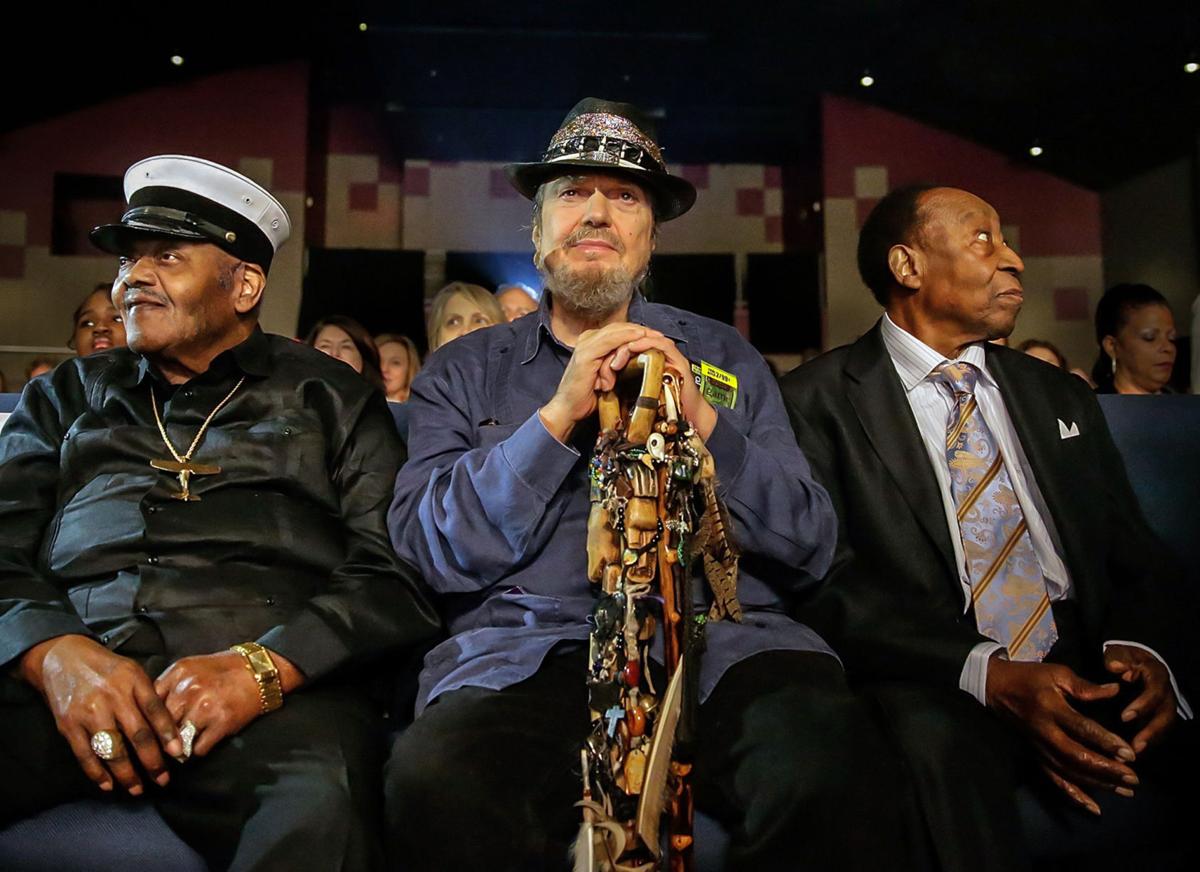
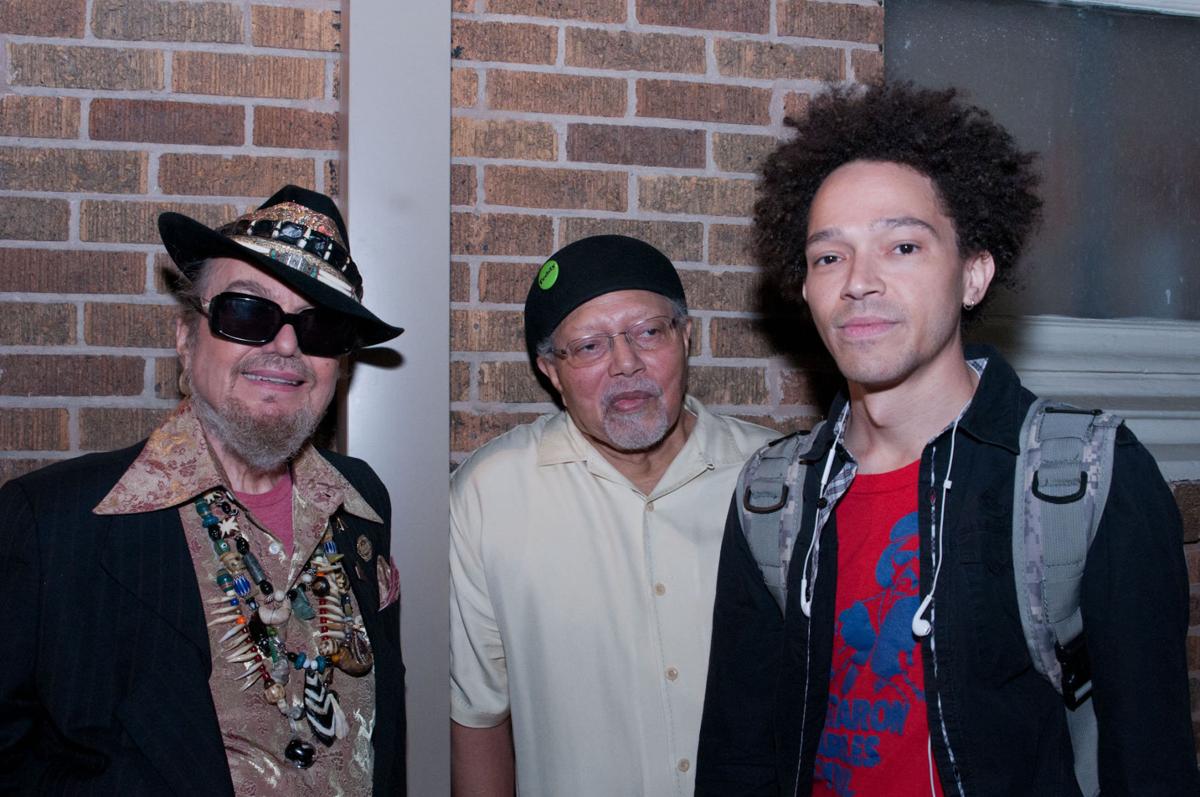
The young Mac Rebennack’s first studio session was supervised by Bartholomew, before he was Dr. John, and when he was still a guitar player. Rebennack started playing with Professor Longhair at the age of 13, and continued his career as a sideman and leader based in New Orleans, until 1960, when the ring finger on his left hand was injured by a gunshot at a gig in Jacksonville. This led him to switch to piano. At about this time, Mac also got involved with drugs and other illegal activities, and after a stint in jail, he ended up in Los Angeles as a studio musician, including being part of the fabled Wrecking Crew, and backing artists as diverse as Sonny & Cher and Frank Zappa (who fired him due to drug use).
In 1968, he adopted the persona of Dr. John, the Night Tripper, and released his first album, Gris-Gris, containing his particular brew of music, psychedelia, and voodoo. For the next few decades, he had a mostly successful career, with hit songs, exciting live performances, awards, guest appearances and star-studded collaborations, all focused on the varied music of his home city.
One highlight was his 1973 album, In The Right Place, a collection of funky songs, including both “Right Place, Wrong Time,” and “Such A Night.” The album was produced by another New Orleans legend, Allen Toussaint, and featured the quintessentially New Orleans band, The Meters.
In later years, Dr. John explored many musical styles, including standards and classic jazz, but also collaborated on one of his last albums with Dan Auerbach. And, he played himself in the great TV show, Treme. Although a long-time heroin abuser, Dr. John had been clean since 1989 and died of a heart attack on June 6, 2019 at age 77.
One of The Meters, who appeared on In The Right Place, was Art “Poppa Funk” Neville, who contributed keyboards. He was the oldest of four brothers, and began his musical career in his teens. By 1965, he had formed The Meters, which was later joined by brother Cyril. The Meters’ 1975 album, Fire In The Bayou, was a critical and popular success, and after all four brothers appeared on 1976’s The Wild Tchoupitoulas, an album of "call-and-response" style chants typical of Mardi Gras Indians, led by George “Big Chief Jolly” Landry, the Nevilles’ uncle, they formed The Neville Brothers. The group became a New Orleans institution, and for years, the New Orleans Jazz & Heritage Festival closed out with a Neville Brothers set.
In 1991, Art and Charles Neville inducted Dave Bartholomew into the Rock & Roll Hall of Fame. Neville later reunited with his Meters collaborators, and performed with both acts over the ensuing years. Neville retired from music in 2018, and died at the age of 81 on July 22, 2019, after years of declining health.
A deceptively simple song, with a picked acoustic guitar and a rudimentary organ, a repetitive whisper, barely crooning over the top, yet just enough going on to nail a mood, an almost intrusive melancholy. No middle eight, no instrumental flourish to embroider the two notes in the key. Of course the words are busy, not that it is that easy to make them out. One senses the writer maybe not in such a good place. (A blink at the lyrics supports that suspicion, albeit without that much clarity.)
Perhaps then, a couple of decades after I first heard that song above, Basement Dream, from parent album, Basement Dreams, the news that the performer had taken his own life came less of a shock. Well, still a shock, less of a surprise.
Not that this was necessarily his usual style or format, his name being more of a worthy gun for hire, a name to add kudos to the work of another. I certainly took a second look and a greater interest if I saw his name on a record sleeve, playing, usually, guitar, often piano and, surprisingly, quite often the photo on the front.
These Days with You, 'Fade Away, Diamond Time', solo, 1995)
Neal Casal first hit my attention when UK rock mag Mojo awarded him the Americana Album of the year, 1998, for Basement Dreams. Americana is a big deal in the UK and there are many US musicians who seem much bigger names in that field over here than in their homeland. I'm thinking Willy Vlautin, both with Richmond Fontaine and, now, the Delines, I'm thinking ex-Green on Redder, Chuck Prophet, people like that. The UK also had, at least then, a strong library sector, where, as well as books, so too could you borrow vinyl records and, later still, CDs. Many a fledgling collector of music would expand their shelves handsomely, home-taping the crop of their local library, most hi-fis easily able to record straight from vinyl onto cassette. Sure, home taping was as illegal as it ever is, but, somehow, the libraries were in on the act, extracting a small fee for the lend. An urban myth suggested this went toward the royalties of the artist, easing any pang of conscience. (The urban truth gets, um, murky, but isn't too complicated, but, worry not, RIAA, I binned all my cassettes years ago, when I ceased having a player or the space to play or keep 'em.) Anyhoo, my first copy of Basement Dreams was exactly that, a copy, enlivening many a car journey, that being where the cassette ruled in those days.
Debris (Ronnie Lane/Faces cover), 'Return in Kind', solo, 2005
Liking the cut of his jib, I dug around his name and sought new works. A covers selection, Return in Kind, was especially good, my obsession with cover versions already beginning to hit a stride. Another artist heralded by Mojo, was Ryan Adams, and I snapped up his breakthrough albums, his apparent erraticism then putting me off later product. But when I read that Casal had become his right hand man in backing band, the Cardinals, I was back in like Flynn. His instrumental prowess lifted the sometimes leaden tendencies of Adams into loftier territory. Furthermore, when the Adams' helmed Cardinals became the chosen backing band for Willie Nelson's 2007 recording, Songbird, this should have been perfection. (Actually it wasn't, disappointing me with a somewhat hamstrung over-production, but where it was good, it was very, very good, and usually when Casal was to the fore.)
Everybody Knows, 'Easy Tiger', Ryan Adams & the Cardinals, 2007
Songbird, 'Songbird', Willie Nelson & the Cardinals, 2007
Another initially well regarded musician was Chris Robinson, especially with Black Crowes, until he fell out with his brother. Resultant band, the Chris Robinson Brotherhood, could have been just another stoner jam band, but, again, Casal was at hand to give some stabilising muscle.
If You Had a Heart to Break, 'Barefoot in the Head', Chris Robinson Brotherhood, 2017
Alongside this he also formed an integral part of Hard Working Americans, a so-called supergroup of players filling their downtime productively by making yet more music. Co-fronted by Casal and Todd Snider, the band also included members of Widespread Panic.
Opening Statement, 'Rest in Chaos', Hard Working Americans, 2016
The last I heard of him he was in the line-up of yet another band of loose affiliates from elsewhere, the Skiffle Players, this time with Cass McCombs and members of Beachwood Sparks.
Always, 'Skifflin'', The Skiffle Players, 2016
As if this weren't enough, he managed twelve solo offerings, and performed on innumerable sessions, for Lucinda Williams and Tift Merritt amongst others. And I haven't even mentioned Circles Around the Sun, the band he formed when commissioned to write the between sets music for the residual Grateful Dead 2015 Fare Thee Well tour and 50 year celebrations, that request arising from his participation in, yes, as well, a Phil Lesh & Friends touring project.
He seems to have been a well loved individual, given the eulogies made by friends and bandmates. Capable of extended and joyous electric solos, as well as reflexly capable rhythm control, and a deft hand on an acoustic to boot, familiar in most of the modern american genres that bridge the gap between the Stones and the Dead. Which, as the youngster he was, obsessed with the music of both, leaves no small legacy and big gap. He also had the voice of a tarnished choirboy, capable both of soaring beauty and understated lyrical dialogue, a gifted craftsman of songs.
So what makes someone take their own life, as he did, on August 26 last year? I cannot imagine and wouldn't want to, but I would guess, if labelled 'gentle' and 'introspective', as he usually was, depression will have been the diagnosis, suicide sadly no stranger to musical circles these past few years.
I know I have overloaded the clips, but here is a a full stream of his memorial concert. However, I should warn it is very long indeed, five hours....
My memory told me that <Goats Head Soup> followed <Exile on Main Street>. Must have been one of the toughest Stones' outputs. (I mean .. pretty hard to improve on that one)
That said, Goats Head Soup (who named it??!?!?) actually includes a few of my favorite Stones pieces - ones I could listen to back to back/over and over again. [Maybe I did once upon a time]. The AllMusic review says as much: difficult placement after Exile ... lots of good overlooked songs. But, it's <Winter> we need to zoom in on.
Something about the melodic structure - the sound of the instruments ... something else I'm missing that manages to convey a real sense of winter/cold.. Is it the reverb? Or just Jagger's uncanny ability to fit the voice to the theme?
Granted, the lyrics slightly miss the theme of ice and snow, but ...hey ... Winter: the season of ice and snow.
And here I thought this song was all about winter conditions.
It
was my son who introduced me to the Red Hot Chilli Peppers - me being
from a Who and Stones generation, I find/found it harder and harder to
keep up with groups that appeared after about the arrival of Prince.
Around about Nirvana's arrival, I just tuned out.
Granted, it
would have been hard to miss the arrival of some of the post 90s music,
and the Chilli Peppers fall into the pretty hard to miss category.
But
my ignorance - no naivete goes deeper: I took the lyrics of
<Snow> on their surface meaning. I mean "tracks in the snow" - you
know how you leave footprints in drifts. As Anthony Kiedis said: a
fresh canvas of snow. In between the perfect cover of another wonder - I
mean, a covering of snow is a true wonder. Master of lyrics he is, I
now read that Kiedis is couching his addiction to snow of a different
kind in a metaphor about the weather. Look a bit deeper, and the lyrics
speak about "get high on" and "killing me". Oh! Snow. Now I get it. Ah
well, chalk it up to experience.
Doesn't detract from my love of the song. It's great music that sits up there with classics like the Stones and the Who.
We interrupt the Ice & Snow theme for our fifth annual listing of the most viewed posts of the prior year.
Through our (usually) two-week long themes, our international
roster of writers address many different kinds of music, and bring
different perspectives to their pieces. In our top 10, we have
discussions about spy themes, sidemen, musicians who died, doctors, unhappy couples and David Crosby. Our
posts throughout the year included rock, folk music of various countries, prog, power pop, country, punk, blues, standards, comedy and other genres.
So, in
case you missed them, here are the most viewed posts from the last
calendar year. But they are only a small sampling of what you will find
in our archives, which we invite you to explore. Also, we invite you to like us on Facebook, so that you won't miss anything.
Surprisingly, our top post of the year was about a classic movie theme:
Because so many of the most viewed posts are from early in the year,
which makes sense, since they were available to view on the site for
the longest, below are the top posts for each of our themes not
represented in the total top 10:
Thanks so much for reading our work this year. If you are interested in
joining our staff, contact information can be found at the top right of
the blog.
And we promise more great music and writing in 2020, including our annual In Memoriam theme, coming soon!!
Quite a metaphor, that, uncertain which is the dominant force, whether it is sugar sweetening the destructive power of an iceberg, or a the gulp of realisation following a swallow of something not quite so sweet after all. I am sure the lyric explains but I prefer the uncertainty, tending more towards the tune and the presentation. Both of which this band had, here and in general, in spades. And I notice they have some gigs lined up for next year, this late return surely worth a shout, pinned as it is on the back of the 25th anniversary of their third album, 'Jollification'. (Which was last month, with a trio of initial shows then taking place.)
I was on the bus a bit before Jollification, they, or he, Ian Broudie, having hatched the band alone in his studio, playing all the instruments and singing all the vocals on the first album, 1989's 'Cloudcuckooland'. Perhaps not quite as big an ask as you might imagine, he being already an accomplished producer of other folks records in his home town of Liverpool. But I am still ahead of myself, my introduction to Ian Broudie being through his membership of Liverpudlian semi-supergroup Big in Japan. Where, let alone anywhere else, they weren't, their fame being mainly down to where the many and various members went next, it being the launchpad for, amongst others, Frankie Goes to Hollywood and the KLF, one drummer later joining Siouxsie and the Banshees, the keyboardsman joining The Teardrop Explodes. And Ian Broudie becoming producer for Echo and the Bunnymen and The Icicle Works. Not bad for a band so reviled in their lifetime as to have a petition taken out to promote their dissolution, albeit signed also by the band themselves.
Above is 'Pure', the debut single from the above mentioned 'Cloudcuckooland', I remembering well the first time I heard it. I was in full Morris Dancing costume, dancing with local side, Silhill Morris, at fabled warwickshire country pub, the Black Boy, the pub as mentioned, momentarily, in the finale of Peaky Blinders, series 5. Whilst I dare say I may not have fully dredged up this skeleton from my past, something for another day, that day some bemusement was to be had by the already punished locals by the sight of yours truly putting the song on the jukebox, repeatedly and repeatedly, whilst my colleagues danced outside to the song of an altogether older Albion. I love the music of the morris, but, that day, I was transfixed.
Next album, 'Sense', followed a couple or so years later. It was good, if not quite so, the video for lead single, 'Life of Riley', perhaps revealing why, at least for the espousedly non-football loving me, it had Broudie delineating his love for all things soccer writ large. Prejudice is a strong word, but it was enough to put me off the band. So, when Broudie then teamed up with comedians David Baddiel and Frank Skinner, all three utter football nuts, to write and perform the (admittedly very catchy) England European Nations Championship song of 1996, I was mortified. Getting it to number one in the UK singles charts twice, it being reprised in 1998, made it worse still, the horror of when one of your favourite bands not only become well known and celebrated to all, it also being with also something you cannot admit to any love for. (Admit is the operative word, I fear, as see also Chumbawamba.)
So I missed out, at the time, on 'Jollification'. And, until this piece, had no idea the b(r)and put out a further three albums, the knowledge giving me no small amount of homework. The featured song even comes from one of them, 'Dizzy Heights'. Are they any good? Unsurprisingly, yes, they are, even if the bubble of britpop had burst somewhat, along with the laddism of football hurly-burly becoming, now to others as well, a less well received intrusion, propelled no doubt with the ongoing dismal performances of the national side. In particular, I like the more dance oriented sound on 5th album, 'Tilt'.
A ten year gap, to 2009, and their final, at least so far, committal to disc, 'Four Winds'. Resorting now more to co-writes, you might be mistaken, from the opening of 'Ghosts', below, that this represents a further change in direction. That is, until the familiar angelic vocal chimes in, a familiar clang-clang backbeat, even if surrounded by sweeps of synth. So, all is well.
I await my show, in March, an early and late birthday present to myself. I look forward. Just don't play bloody 'Three Lions'......
(If this actually is up your street, between 'Tilt' and 'Four Winds', perhaps tilting at the four winds, came 'Tales Told', altogether simpler fare, the studio tricks reined in, may be even more so, it being a solo Ian Broudie release.)
There are many truisms in the world of music fandom, and one of them is that when a “punk” band starts releasing well-produced albums, particularly on a major label, and particularly when the songs and playing show craftsmanship, the band’s early fans scream “sellout.” For example, The Clash were accused of “selling out” at least as early as London Calling, and certainly by the time of Combat Rock. Of course, other critics at the time, and more recently, have pointed out that another word for that is “evolving,” or that it was possible for ambitious, talented bands to want to transcend the purity of punk for a broader artistic vision and, possibly, a larger audience (and yeah, probably more money.)
Hüsker Dü emerged from Minneapolis in the late 1970s-early 1980s, and their initial approach of playing music loud, fast and hard was made clear from the name of their first album, Land Speed Record. But relatively quickly, you could hear through the aural assault (and poor production values) that songwriters Bob Mould and Grant Hart were able to write melodic pop songs. Even if those songs were played at punk rock speeds and volumes, and often dealt with difficult themes.
As their music evolved, their influence increased, and in the mid-80s, Hüsker Dü became the first band of their “scene” to sign with a major label (during a period when major labels were taking risks, looking to find the next big thing(s). Of course, the complaints of "sellout" rang out (as they did years later when Green Day transcended their punk roots and became more mainstream and popular.) I saw Hüsker Dü tour in support of their first major label album, and it was a great, if incredibly loud show. Their second album for Warner Bros., 1987’s Warehouse:Songs and Stories, was a double album filled with well-produced, well-written songs that still had the energy of punk. It wouldn’t be a stretch at all to say that this album was one of the precursors of the “alternative rock” movement that became popular in the ensuing years.
However, despite the quality and influence of Warehouse, it was also the end of Hüsker Dü. Over the years, Mould and Hart had developed a rivalry that was both artistic and personal, fueled first by their substance abuse, and later by Mould’s cleaning up and Hart going in the opposite direction.
One of the highlights of Warehouse is Mould’s “Ice Cold Ice,” a typically bleak and depressing but incredibly powerful song that uses cold and ice both metaphorically and literally.
In 2011, Mould was honored with a tribute concert at Los Angeles’ Walt Disney Concert Hall, mostly featuring Mould and his band playing with a series of guest stars, and it included this great version of “Ice Cold Ice,” featuring Dave Grohl:
The concert was, through a Kickstarter campaign, turned into a movie, but it doesn’t appear to be streamable at this time.
When I think of snow and ice, I think of Scotland. And when I think of Scotland, I think of Jackie Leven. Yes, I have mentioned him before in these pages, that being no good reason not to bring him back again. His legacy of recorded material is immense, having been so prolific for his record label that he had to seek different contracts under different names to get it all out. Sadly missed, his brand of celtic soul impacts on and draws inspiration from his home and the characteristics that reminded him of it. Kate Bush may have offered 50 Words for Snow, I swear Big Jackie had 50 songs. Here are a few.
Snow in Central Park
From his full length solo debut in 1994, Snow in Central Park is arguably one of his better known songs, if any had a claim to that right, his appeal the epitome of cult, a world famous superstar only to those in the know. Of course, it wasn't even his solo debut, he having had (at least) two careers ahead of this, firstly as late 60s singer-songwriter John St. Field, and in scary punk/new-wave band Doll by Doll. And then there were the two alongside, Fife balladeer, Sir Vincent Lone and the Kirkcaldy David Sedaris, Jackie Balfour.
None of the below are in chronological order, but all display lyrical nods to the snowier, icier aspects of his oeuvre. Don't get me wrong, he could do songs about rain and wind as well, being no one winter pony. (Actually I jest, for although he could and did, he could also sing uplifting and cheerful songs too. Just less often. And not for today.)
Stopped by Woods on a Snowy Evening (A Robert Frost poem set to music by Leven.)
Your Winter Days
The Wanderer
Lammermuir Hills
Kirkconnell Flow
Washing by Hand
Finally, with all the above coming from his 20 odd studio albums, it is worth a mention is how he took his muse out on the on the road, leaving behind the often lush arrangements and instrumentation. Live it was usually just himself, a burly bear of a man, year round shorts, ripped denim shirt and battered guitar. A masterfully inventive player on that instrument, bringing all sorts of percussive textures to bear, tapping the wood and caressing the strings, the high point always his voice, a majestic croon, beauty from the beast. At one foot a pint glass with the vodka and lemonade he would occasionally seek topping up, at the other a microphone, to catch the constant rhythm of his foot. You can't catch him now, dead these 8 years, but there are a celebration of live albums also out there. The song below is typical Leven, describing the fear men hold inside. The fear men have without love, without a mother, a wife, a partner, and the dark places that such solitude leads, and the tragedy of it all. He knows these men and, if we are honest, so do we, all within us, but for better grace and luck.
Star Maker Machine does not accept music submissions from artists or promoters. However, most of the contributors here do accept submissions for our own blogs, listed below. Please visit our blogs, take the time to listen to what we post, and then feel free to contact us if you feel that your music would be a good fit.