









Tuesday, June 16, 2020

Open/Close: A selection of great albums that start as well as they finish


It's been a while since I've posted on SMM. No excuses--just the unpredictable rhythms of life that sometimes stir a current that takes you in strange directions. Riding the waves hasn't gotten me too far, a few thousand words deep into other projects, but not closer to anyplace special. Missing having a place to talk music with like minded obsessives, and with the permission of the venerable KKafa, who answered the door when I knocked, I'm back. 

SMM is a place I always find the kind of unique connection that good writing and great music can make in a life. And I really missed that.

So, hello. Again.

Our theme is “Open/Close.” I looked through my library for songs about openings and closings, and when I came across the 1998 hit, "Closing Time", by Seminsonic, and felt the familiar, shuddery revulsion that ubiquitous, somehow pseudo-anthem always brings up, and used that as impetus to get a little creative on the theme.

I decided to look at great opening and closing tracks from albums. How important is the first introductory burst of sound from the opening of an album, the signal of what is to come? If it's weak, a song you really don't like, the album as a whole might be doomed. It's a great song, an epic introduction, you'll never forget that perfect sensation of hearing it for the first time. Example: REM's "Radio Song", from 1991's Out of Time, was such a grave sonic let down for me that it kind of ruined the band, once my near beatific favorite, for me permanently. Whereas, "Up The Beach", from Jane's Addiction's explosive Nothing's Shocking, was akin to perhaps seeing the Red Sea part under the hand of Moses. Or something similarly miraculous. Oddly, both albums, while wildly different in so many ways it seems silly to compare them, could have been vastly different, even better, had they been tracked differently. Out of Time really should have opened with "Losing My Religion", that strident, minor key pop mediation on anger, played on a very non-top 40 mandolin; Nothing's Shocking would have been even more epic had it opened with "Coming Down the Mountain", an pure avalanche of a song.

The opening, then, is of the utmost importance. As is the ending. And how many albums end as memorably as they started? It's surprisingly few. But, then, that is my opinion and comes from my lament at the seemingly lost art of the full length album, and the collection of songs as a celebration, not just the single. Growing up, the 45, then the cassingle, was always secondary to the whole LP. The best bands put out the single, and the B-side was the 'unreleased' material. Kind of essential to the rest of the album, a completion of the experience as a whole.  But, B sides that are better than the A is another topic entirely. 

I scrolled through my Spotify feed (Sadly, I don't have a single CD, LP, or cassette in my possession right now), and found what I thought might be a good start to, and by no means exhaustive or exclusive, list of a handful of the greatest pairings of opening and closing tracks to feature on an album.

In no specific order, I posit the following opening and closing tracks to be the GOAT

The Rolling Stones, Goat's Head Soup: Side A, track 1: "Dancing With Mr. D"; Side B, Track 5: "Star, Star".  Wicked, naughty, steeped in dark arts,  these two songs provide the caps to my favorite Stone’s album ever. 1973's Goat's Head Soup, is a druggy, boogie down trip. There’s a strangely sinister vibe to the whole collection. "Mr. D" concerns death, and possibly meeting the devil  to discuss matters related to how the narrator might exit this world for another. "Star, Star" is...well, if you haven't heard it, you've heard about it.  It's classic Jagger bravado, and might be the response to Carly Simon's mysterious "You're So Vain."  It doesn't really ever make itself clear on that, but it is a celebration of the activity that culminates in the ‘little death’...to draw a connection. If there's a reason people thought rock n roll might be the devil's music, Goat's Head Soup makes for pretty compelling evidence.

AC/DC, Highway to Hell: Side A, track 1: "Highway to Hell:; Side B, Track 5: "Night Prowler" This classic opens with one of rock’s greatest travelogues, an invitation to travel straight to rock n roll hell, set to an instantly iconic guitar riff. The whole album is amazing, but starting with such a striding opening salvo, you are along for the ride, no matter where it takes you--I said it was hell, right? AC/DC proceeds to walk you along the same dark, dirty path as the Stones did, and they distinguish themselves as the only band that makes the Devil seem like a cool guy you want to hang out...The album closes out with the dark, blues dirge  "Night Prowler", a sinister soliloquy of a serial killer, delivered by Bon Scott in his signature howl. The song generated a lot of controversy, so it's best just to dig it as AC/DC's unique take on the blues.  On a strange note, the last words ever recorded by Bon Scott, as the song and the album fade out are "Shazbot nanu nanu", the famous catchphrase of one Mork, from a place called Ork...it was meant to be funny, but it is perfectly sinister here.

Prince and the Revolution, Purple Rain: Side A, Track 1: "Let's Go Crazy" is about as close to church as one can get. The man in the pulpit is calling the faithful to the ceremony, and it's impossible not to heed the call. Side B, track 4, "Purple Rain" is epically beautiful, achingly sad, and elegiac.  And it was somehow transcendent when it was new, a gospel tune over a rock orchestra, and a searing guitar solo to end. The song has never lost that sense of mournful beauty. It's poignant now, more than ever, as Prince's going home hymn. When I get to heaven, I too, hope to hear "Purple Rain" playing me in.  


The Who, Who's Next--not a question so much as dare to step up to a fight. Side A, track 1: "Baba O'Riley" is arguably the greatest, most imitated, most triumphant rock anthem. Ever. If you like rock n roll, have ever been moved by the power of simple chords, pumped at high volumes, chances are, "Baba O'Riley" set you down the road to glorious ruin and riot. The name is still a misnomer, even to people who love the song. The lyrics are strange and a bit more like a medieval pastoral than a stadium sing along. But, when Townshend sets the windmill going, and you're invited to scream the words that so aptly sum up so much of our collective youthful glory ("Teenage wasteland!"), you have to believe in the power of three chords and the truth. Side B, Track 4 is "Won't Get Fooled Again", which contains so much legendary greatness it is hard to call it just a song. It's a call to arms and poetic in its anger. The song gives eloquence voice to rail against  your frustrations and limits, and is a license to break the rules that keep you tied down. It crescendos with the greatest scream ever recorded in modern music. It's the song Whitman might have recorded, had he been born 100 years later. And, in the end it's the greatest 'eff you' ever recorded.

Who's Next, one of rock's great albums, starting and ending with two of the most powerful songs ever recorded , is one the greatest rides you can ever take in the grooves of a vinyl record, and the greatest fulfillment of rock music's transformative promise. And, my obvious vote for greatest opening/closing set in rock history.


Open/Close: Beatles songs with lyrics Open or Close


purchase [ Anthology I,  Anthology II  ]

I have done a post or two about the Beatles here, here and here before: one of my most felicitous Internet discoveries was the <Beatles Complete on Ukelele> back when their entire archive was free, with new songs appearing more or less weekly over a period of 2 years. And then we lost free download access. The website is still there, but it's not set up for downloading the files for free any longer.

In digging around for this post/searching to see which - if any- Beatles songs had Open/Close in their titles, I ran across another cool Beatles resource that allows you to search their lyrics - in this case necessary if I wanted to continue to persue the Beatles idea, because from among the (officially) 213 songs they recorded, surprisingly not one has either Open or Close in the title.

I was thinking: surely... open heart ... open mind and if not closed heart/mind how about something along the lines of "close to me".

That said, the two words of our current theme show up multiple times in their lyrics. Enough of them that I'll have to pick and choose from among them.

beatlesagain.com lists 4 for "open" and 10 for "close". Across the Universe has open ears. Dear Prudence and Tell Me What You See also include open eyes and Help has open doors.

Looks like the eyes have it. All My  Loving has "close your eyes"; Good Night has "I'll close [my eyes]"; Think For Yourself has "if we close our eyes"; Strawberry Fields of course has "living is easy with eyes closed". Five are about close as in near: Do You Want To Know a Secret has "Closer"; Besame Mucho has "Close to me"; Glass Onion has "close as can be"; Twist and Shout has "twist a little closer" and Words of Love has "hold me close".
Good Morning, Good Morning is an outlier with "everything is closed".

Nothin' about hearts open or closed nor about opening your mind. Nothing particularly romantic/mushy here either.

Pat Lewis & Joe Coghlan/Tell Me What You See:


Beatles out-take: Across the Universe

Alanis Morissette: Dear Prudence (and a story about its inception)


Sunday, June 14, 2020

OPEN/CLOSE: OPEN AIR - IAN MCNABB

Tautology, surely? Isn't air always open? Or, put another way, what is closed air? Apart from this being little more than contrived opener to my post, it conjures up a number of possibilities. I think I can accept that the atmosphere is a continuum, at least as far as the capabilities of my limited imagination. Is there air in space, even if there is no atmosphere? And what is the space in atmosphere composed of? And what of air waves? I suppose closed air waves equate to censorship, this blog an example, thus, of open airwaves. But enough metaphysical paradiddling, I seek merely an absolution to introduce the song as being at least in some way connected to the theme. (So, don't, please, get me started on open fire.......)

Open Air (Ian McNabb) 2001

Ian McNabb has had a long career. Starting as a 20 year old with The Icicle Works, this band hit no small amount of acclaim and some success with the blend of polished melodic rock and his soaring vocals, somewhat out of step with the his dourer new-wave and post-punk peers. Hitting the charts running, on both sides of the atlantic, arguably their greatest success was their earliest. In the UK, Love is a Wonderful Colour made it to the top five of the singles chart, with, a year or so later, Whisper to a Scream (Birds Fly) entering the US charts, and the canadian top twenty. As it became apparent McNabb needed to be in control, the band shed original members, picking up others along the way, largely to augment his vision, projected and played out over five long-players between 1984 and 1990. In expanded versions, spread out, often, over several discs, McNabb was also able to identify his influences, notably Neil Young, of whose songs the band played a slew of covers. Someone unkind (and probably not a fan of Shakey) might say if Young could sing better and had steadier fingers on the guitar, well, he might come out sounding a bit like McNabb. To enable continuity of the theme of this piece, here's an open/close reference. (Ish.)

Blind (Blind) 1988

I first came across McNabb and his band around the time, strapped for disposable cash, I was hoovering up all the content of the local library: you could borrow records, and later CDs, for a fortnight at a time, for a nominal fee. Armed with a pack of C-90s I filled my boots, amongst which was an Icicle Works retrospective. And then I noticed a familiar name on the sleeve of another disc, this being Truth and Beauty, McNabb's first solo album, which places the time about early mid 90s. I loved that record and still do. I was convinced he would become massive. I remember telling everyone so, and he was definitely a huge draw to my first trip to the Glastonbury Festival, in time for his second solo album, Head Like a Rock. And, as I commented upon here, this record was made with the assistance of Crazy Horse. The Crazy Horse, Neil Young's Crazy Horse. Who accompanied him for that live set in the summer of '94, some of the tour tracks emerging as a second disc on the following year's Merseybeast. I can happily say that, at that time of my life, McNabb was my pinnacle, someone who could set no step wrong.

Presence of the One (Truth and Beauty) 1993

Fire Inside My Soul (Head Like a Rock) 1994

Heyday (Merseybeast) 1996

(OK, so it seems I can't keep up any Open/Close dynamic in my song choices. So sue me.)

Sadly, the big break never quite broke. Sure, he went on producing good music, albeit as a self-contained cottage industry. I stopped keeping up quite so assiduously, beyond, it's true, the eponymous album that begat the main track featured for this piece. He cropped up on other folk's radars from time to time: I recall a Mike Scott solo tour towards the end of the century, with McNabb on bass. Music trickled out but often only available at gigs or via his website. The days of recorded music making anyone a living were dying, requiring road play to break even. I am pleased to say it is the road where he retains a strong presence. Still able to sell out a show at the sort of venues that populate, or used to, most towns and cities, 500 bodies or so crammed into lofts and or basements with a music licence and flowing booze. One such is the Hare and Hounds, in Birmingham, in England's Midlands, he appearing there regularly, sometimes with a band, sometimes solo, sometimes half way between, always to a partisan audience, geared up to all the words of all his songs. I have certainly spent a couple of evenings singing myself hoarse. Whether billed as himself or, increasingly frequently, again as the Icicle Works, it's a good night out.

Evangeline at the Hare and Hounds 2019

To bring full circle, he is also the sort of act, hovering on the edge of heritage, who crops up at the sort of music festivals I frequent and hope so, in time, to do again. Open Air in the open air would indeed be wonderful.

Open your ears.

Friday, June 12, 2020

Open/Close: Opening Out


Renaissance: Opening Out
[purchase]

It’s been a while since I’ve reached into my prog-rock bag, so let’s talk about Renaissance. I’m guessing that most of you, when and if you think of Renaissance, you think of the classically-influenced band fronted by singer Annie Haslam, the incredible singer with the amazing five-octave range. And if you are a slightly bigger fan, you might recognize some of the other members of the band’s “classic” lineup, bassist Jon Camp, guitarist Michael Dunford, keyboard player Jon Tout, and drummer Terry Sullivan. That’s the band that I was aware of and saw live in the late 1970s. But not a single one of those musicians were part of the band when it started.  And after this “classic” period, the band again went through a revolving door of musicians--for a while there were even competing bands touring as Renaissance. A full discussion of that gets tedious (and for some, it might have already), but I will hit a few high points before getting to the song at issue.

Renaissance was formed in 1969 when the Yardbirds were in the process of morphing into Led Zeppelin. Two of the departing Yardbirds, Keith Relf and Jim McCarty, eventually formed a band that included, among others, Keith’s sister Jane Relf, a singer, but after an album and a tour, this band exploded while working on their second album (Illusion, initially released only in Germany), leaving only pianist John Hawken and Jane Relf. One of the additional musicians that joined at this point was Dunford. After a few more spins of the revolving door, Haslam and Tout joined, and Dunford moved to a behind the scenes role.

The band’s manager, Miles Copeland, III (yeah, the same one who later managed The Police and started famed new wave label I.R.S. Records), refocused the band on Haslam’s soaring voice and Tout’s keyboards, and after cycling through bass players (including John Wetton), they brought in Camp. It took a while to land on drummer Sullivan, and various guitarists came and went before Dunford returned to play guitar. This lineup, essentially, recorded the band’s most famous albums which included some brilliant music, but also some that suffered from the excesses of the genre, from 1972’s Prologue through 1979’s Azure d’Or. But 1979 was a bad time for classically influenced, complex rock, and the band hemorrhaged members before trying to pivot towards more new-wave/pop sounds, releasing two mostly forgotten albums on Copeland’s I.R.S. Records before disbanding.

In the mid-90s, both Dunford and Haslam toured with separate “Renaissance” bands, subsequent reformations with various core members and new additions went nowhere, and the deaths of lyricist Betty Thatcher, Dunford, and Tout in the late 2000s prevented any further reunions. A version of Renaissance, fronted by Haslam, but with none of the members of the classic lineup, toured recently (until you couldn’t anymore), and has released some albums, but again, not to much notice.

Oh-and just to confuse things further, back in the 70s, after the death of Keith Relf, Jim McCarty reformed his version of the band, naming it Illusion, and released two albums, the second of which was called Illusion, so that both that band and the original Renaissance have second albums with the same name. And the McCarty led-group released an album in 2001 as “Renaissance-Illusion.”

Our featured song is “Opening Out,” from 1978’s A Song For All Seasons, which was produced by David Hentschel, who had come off a run of producing a series of Genesis albums that gradually transitioned towards more straightforward pop and better commercial success. A Song For All Seasons, too, had generally shorter songs than before, but still mostly contained the sort of prog rock that Renaissance was known for, although it did spawn a hit single in the UK, “Northern Lights.” “Opening Out,” which was the b-side to that single, features Haslam’s voice, The Royal Philharmonic Orchestra, and some nice, yearning lyrics, but seems to fade out a little too soon.

Thursday, June 11, 2020

OPEN/CLOSE: CLOSE UP THE HONKY TONKS

Late to the game as ever, here I am banging on about closing the honky-tonks, just as some sectors are begging for them to be opened up again, whether for the sake of the depleted hospitality industry or just from sheer thirst. But, wherever you are, OK, except Sweden, the bars and restaurants have been or were closed for a fair old while. Mainland Europe is now beginning to open 'em up again, but the merest hope we have here, in the U.K., is possibly of beer gardens by the end of the month, and with waitress service at that, something us bar standing brits abhor.

Red 

This song, an acknowledged classic of a country weepie, the alliance of tears to a jaunty beat, never fails to lift my heart. First penned back in the early 60s, by a Red Simpson, me neither, it became a 1964 country smash for Buck Owens and his Buckaroos. On researching, it seems ol' Red was a bit of name in the 50s, chiefly for songs about truck driving, a niche and specialist sub-genre that lives on to this day. (Well, sorta...) Based in Bakersfield, he seems interminably linked with the more famous Owens, originally taking Owen's place in a weekly session in Bakersfield, California. When he proved adept about writing songs about semi-trucks, he hooked up with Owens as his main co-writer, largely then neglecting his own performing career. The playing of Owens was integral to the Bakersfield scene and it's eponymous Bakersfield Sound, an altogether twangier version of Nashville's then somewhat syrupy drench of orchestral strings, with a greater reliance on electric guitar and pedal steel interplay, the bass and drums also writ large. And so with a far greater cross-over potential with the emerging rock music diaspora, resultant in the country-rock vibe that later begat americana.

Buck

Hardly surprising, then, that I first came across the song as I started to investigate the twangier side of the Byrds. Early 70s and entranced by that band, reading about their revolving door of players, I caught wind of of the Flying Burrito Brothers and of Gram Parsons. Thus, a month or so after buying 2-disc compendium History of the Byrds, I chanced upon Close-Up the Honky Tonks, another 2-disc compendium, this time of the Burritos. On getting it home, it was a whole more stark and severe an affair, with few of the radio friendly Byrdsian harmonies, and altogether more "and western" for my untutored ears. Side 3 contained the titular song, and was part of the body of songs that engaged me and some, sufficiently to then work harder on the first couple of sides. (Side 4 was just terrific, but that's another tale.)

Gram

The Byrds themselves, having anyway a somewhat incestuous relationship with the Burritos, later took it back into their own repertoire as well.

McGuinn

Fast forward a few years. Now a full card carrying country aficionado, a young buck named Dwight Yoakam was making a name for himself, and, finding his cut to my jib, I learnt that he was a huge fan of Buck Owens, to the extent that he made a full album's worth of songs either written, co-written or made famous by him, Dwight Sings Buck, in 2007. Of course the song was on it, the album itself significant enough the entice Owens back onto the stage and performing, just shy of his 60th birthday. Whist he died in 2006, Yoakam maintains a living epitome of his style and sound.

Dwight

Listening to these, as well as to the myriad other you-tubed versions out there, I have to say it is the version by Gram's Flying Burrito Brothers that still lingers longest, with the perfect balance between delight and despair in his wracked vocals.

A truck load of Red in the link.

Sunday, June 7, 2020

War/Peace: Small collection of pensive songs with war in the title


purchase [Little Criminals - R Newman]
purchase [ Hearts and Bones - P Simon]


No, there was not even the slightest premonition that the departing theme was going to get any more real than a nod to Memorial Day (SMM tries to theme to calendar events such as Thanksgiving..) Really. That's not fake news.

The driving force behind the War/Peace theme was recognition of Memorial Day. If you follow SMM, you already know that the site tries to periodically link its theme to the calendar. This, of course, was 10 days ago.
As such, I don't feel a great need to apologize for fueling the current rage (if in fact we did, in our own limited way), but there seems to be a need to bring things around to a more mellow place with another post about War/Peace. I DID say that waging peace is almost equally as fraught with its own issues as waging war (see the furor over Lennon's sleep in for peace). I had no premonitions of the future as I chose to go with a "1968-themed" song about an ongoing war resulting from American political decisions 50 years ago. Yes, I referenced current political issues (bone spurs, senator's sons...), but they were wild shots, certainly not targeting a news item I had not yet heard about.
That said, maybe we can do our civic best to guide the conversation away from civil war (and bands with names like Guns 'n Roses, the Clash)


Wednesday, June 3, 2020

War/Peace: The Warrior’s Code


I suspect that many of you who read this blog also attend live music performances—or at least, you did before that stopped being a thing (temporarily, I hope). Musicians have been trying different ways to get live music out to their fans, some for free, some charging, some seeking “tips,” and others seeking charitable donations, while some are trying to use Patreon or other similar subscription type programs to try to partially replace the revenue lost from cancelled tours. I think that it is pretty well known that these days, most musicians make the bulk of their living from touring and merch, and not so much from streaming and music sales.

Since the pandemic closed most venues, I’ve watched some of my favorite musicians from the comfort of my house—Richard Thompson, Jason Isbell and Amanda Shires, Dan Bern, Rhiannon Giddens and Francesco Turrisi, as well as her fellow Native Daughters, Amythyst Kiah, Allison Russell and Leyla McCalla, Ben Nichols of Lucero, Jeff Tweedy, Raul Malo, Lucy Wainwright Roche, Indigo Girls, and I’m sure I’m leaving some out. Most of these performances have come from the performers’ homes (or, at least where they are sheltering), except for an Isbell/Shires album release show from the stage of an empty Brooklyn Bowl in Nashville. These performances aren’t the same as being at a live show, but on the other hand, they are also more intimate—as one friend mentioned to me after we separately watched Richard Thompson, her husband was excited to be able to see the master’s hands close up while he played the guitar.

Last Friday, I watched most of an unusual performance—Dropkick Murphys, a band that is closely associated with the Boston Red Sox (they even were given World Series rings by the team one year), playing live on the field at an empty Fenway Park, with the band members all more than the now traditional six feet apart. The concert was organized to promote a number of charitable organizations, which is common for the band. For nearly two hours, the band ripped it up with their trademark Celtic flavored punk, and they were amazing. It wasn’t the same as when I saw them live at Warped Tour 15 years ago, but then again, what is? I had to reluctantly step away after two hours for a virtual college reunion Zoom session, but the next day, I found the video, and watched the end, when Bruce Springsteen appeared on the giant video screen in centerfield and performed two songs with DKM—one of theirs (“Rose Tattoo,”) and one of his, “American Land,” an appropriate anthem for our times, with its message of an America made up of immigrants and people of all races. Remarkably, considering the logistics, the entire concert sounded great, and I give much credit to whoever did the sound.

One of the songs that they played that night was “The Warrior’s Code,” which technically isn’t about war, but about a boxer, "Irish" Micky Ward. But since boxing and war often use each other’s metaphors and terminology, I’m OK with this. Also, back in 2016, I wrote about a different DKM song, a cover of “Fields of Athenry,” which is about World War I (and it is far from the only song by the band that references actual war, for example “The Fighting 69th” (Civil War) and “Johnny, I Hardly Knew Ye” (anti-war song written in Ireland in 1867), all of which were played at Fenway, along with a cover of The Standells' “Dirty Water,” which has nothing to do with war, but which I wrote about, here.)

The video of the show is still available here, among other places, so check it out, and send a few bucks to the charities.

Monday, June 1, 2020

WAR/PEACE: THE BATTLE OF EVERMORE

It's funny, I had never really quite appreciated this song to have actually been about a battle or, indeed, warfare at all. It had always just been a joyous cascade of sounds: the tinkling mandolin and the soaring vocal interplay between Plant and Denny, with the lyrics never quite imprinting. Apart, of course, from the repeated refrain, Bring it back, bring it back........

Denny

So what was that all about, then? Examination of the lyric, and, contrary to my initial thought, sure, all the words are there, indelibly printed on my psyche, an automatic tele-prompter lying dormant and awaiting just this moment. Tolkeinesque nonsense about elves and faeries, as the naysayers put it, or, alternatively, a mystical celtic mantra. Strangely, as the sheer ubiquity of the song's parent album and the deconstructions of the might of Zeppelin accrue, this is actually a song, perhaps their only song, that has grown in stature. It seems actually to fit better with the current manifestation of a grizzled Robert Plant, now a sage like figure himself, akin to the wizard on the album cover all those years ago. Add the mythology of the doomed, and thus ageless, Sandy Denny and you have it. Together with the fact that the folkier aspects of the band have tended to last better than the more overtly metallic.


Almost by accident did the song arrive, with Jimmy Page picking up and playing with the mandolin belonging to bassist and keyboards man, John Paul Jones, an instrument he claims never to have earlier tried to play. Robert Plant then instinctively started wordlessly crooning along. With the feel of an old english, or probably welsh, folk song, Plant felt there needed to be a call and response aspect, with who better to fulfil that than Denny, erstwhile singer of Fairport Convention, with whom Zeppelin had shared the bill at Bath's 1970 Festival of Blues and Progressive Music. Plant had long associations with the band and its members, particularly Dave Pegg, both on the 1960s Birmingham pub circuit together. Denny willingly agreed, becoming the only ever featured guest musician on any of their output, gifted also with a (5th) symbol, to complement the four of the band that made up the official "title" of their 4th release.


After the twin behemoths of Black Dog and Rock'n'Roll pour out of the speakers, Evermore then becomes a mercurial palate cleanser, a consummate contrast and perhaps the only song that could then beckon in the majesty of Stairway to Heaven. (Yes, I did say majesty; I know it is de rigeur to sneer at it now, but, hell, c'mon, if you were 14 in 1971!) Call me an old fart, please do, but side 1, Led Zep 4, is about as astonishing a side of vinyl as ever made. Side 2, less so, but nonetheless.

Jones & Bonham

Denny never managed to reprise the studio recordings in a live setting, more is the pity. Zeppelin did play it live, with her parts sung by Jones and drummer, John Bonham. It wasn't as if he had anything (much) else to do in that number. Denny died in 1978 and Zeppelin dissolved, give or take the occasional reunion concert, a couple of years later. But, thankfully, it is the Plant/Fairport relationship that has gifted the song a greater life. He is a regular guest at their annual Cropredy festival, and has reprised this song in that setting, reminding the crowd as much of the Denny legacy as his own. This clip is with Kristina Donohue, daughter of sometime Fairport guitarist, Jerry.

Donohue
To be fair, there was also an earlier and  glorious version on the semi-acoustic and middle east orchestral Page/Plant duet project, No Quarter, featuring the Indian singer, Najma Akhtar, whose stylistic traits give a whole different slant to it.

Akhtar

Finally, with Plant constantly redefining and reinventing himself across a number of styles, his occasional musical partnership with country star Alison Krauss proved another opportunity to revisit the song. (Astonishingly, in the same year as the Fairport version, 2008.) Having seen his latest band, Saving Grace, play live, in Birmingham's Town Hall venue towards the end of last year, I can state that it would fit well within their format. However, give or take a nod to the "original" of In My Time of Dying, there was no room for Zeppelin in this iteration of Plant's ever changing moods. Or not yet......

Krauss
Get it!

Friday, May 29, 2020

War/Peace: Fortunate Son


purchase [ Willy and the Poor Boys ]

War is raw. Peace maybe a little less so - unless maybe you are trying to wage it - [see Kent State]. Perhaps that's why this song reverberates for me. I can't think of a single one of CCR's songs that doesn't come across as raw. Maybe it had to do with the tonal qualities of electric guitars in those days. Maybe it was John Fogerty. Maybe it was the 70s.

Like the majority of musicians in 1970x John Fogerty had little intention of going to Vietnam (he joined the Reserves in order to get around this). Like country Joe Fish, Fogerty made his opinion verbal. Do not equate this with a lack of patriotism - quite the opposite. It is one of your rights to state your opposition (to the extent that it doesnt harm others and doesn't <break the law>). Singing about is is an even better way to be patriotic.

In the clip above, Springsteen attests to the seminal influence of John Fogerty. He's right. So so right, that some other musicians you may have heard about went off and set up a band named Willie and the Poor Boys (a direct take from the album on which this song came out) - the members include Bill Wyman, Charlie Watts, Andy Fairweather-Low and more. Not a bad legacy, like the "Boss" says.

see:


The <Fortunate Son> lyrics say a lot about being a patriot, and there is a consideration of the limits:

I ain't no senator's son ( that is pretty clear  -I think we are talking bone spurs here)
But when the taxman comes to the door
Lord, the house looks like a rummage sale, yes (sounds like someone's secret tax returns)
and, he sings, he's speaking his mind (saying his peace/piece) because
I ain't no millionaire's son, no

here's a little more from <CCR> for old times' sake ...


WAR/PEACE: (I'VE NEVER KNOWN) PEACE ON EARTH/SIR VINCENT LONE

(I've Never Known) Peace on Earth

I'm struggling with this as a theme, not for want of material on the subject, there being as many songs about War and Peace, and everything in between, as there are pages in the book by Tolstoy. No, it is the timing, in this transposition of world order around the C-19. It isn't a war, this isn't a battle, we are not fighting: all the military cliches are boiling out of the thesaurus but it really isn't the right metaphor, even if there is a right metaphor. (If a metaphor is a means of comparison, I don't think we have had yet anything fully comparable within sufficient memory to pass reference: the plague and even spanish flu are too far distant, with SARS and Ebola captured and even HIV contained.) So, with, as ever, a lightness of touch and mood, who better to cheer us than the melancholic magnitude of Jackie Leven.

I have touched on Jackie before, and make no apology for doing so again. His loss remains huge in my musical portfolio, his celtic soul a heartbeat long before the term was invented, his humanity a force of relevance in the automated and automatic inhumanity all around. Nature, often in all her cruelty is a constant in his lyrical themes. Sir Vincent Lone? A pseudonym made necessary by his polfiicism, having already exhausted his allowed contractual offerings under his own name, but unmistakeably he. Indeed, it was never hidden, other than by his sometimes having Sir Vincent as support act before a Leven 2nd set.

As the song above shows, no huge variations in stylistic palette took place, but there were instances and opportunities where he used the disguise to try out some more adventurous directions. Or at least had his ear to the streets and cultures afar from his native land. The song below has been admirably described as a blend of Dick Gaughan and Portishead.

Moscow Train

There were three Lone releases between 2006 and 2008. The two songs above come from the first, Songs For Lonely Americans, with the follow-up, When the Bridegroom Comes (Songs for Women), being perhaps more experimental again. I am torn between liking it either more or less than the first.

Graveyard Marimba

Leven then decided to kill off his alter ego, with a gloriously uneven mix of an album, Troubadour Heart, which scattershots styles and references to all four winds. The claim was that this was released posthumously, and collected songs "Lone" had written as a penniless songwriter on a caffeine fix at the Troubadour coffeee house in London. And maybe he did, but Leven was still very much alive, releasing records for another three years, ahead of his actual death. The song below, the closer, effectively returns to the expected theme for this piece, the title summing up my views around the current ongoing "battle".

Wake Me Up When It's Over

Peace be to you.

Thursday, May 28, 2020

War/Peace: War In Peace


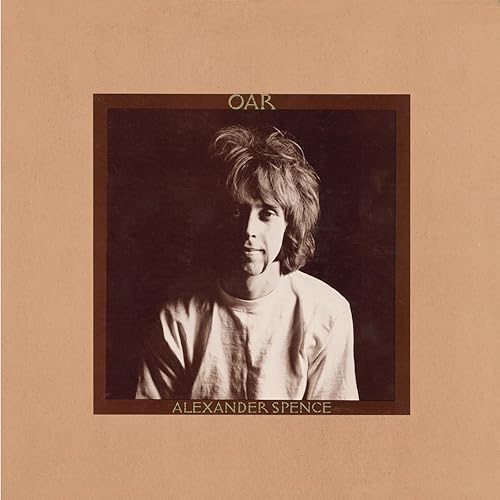
Alexander “Skip” Spence: War In Peace
[purchase]

I know that many people—and not only people in the 50+ demographic—think that the best era for music was the late 1960s-late 1970s. I’m not going to debate that now, but there’s certainly an argument to be made. And I think that there are those who would argue that much of the best music from that era was created because of, or enhanced by, the use of drugs. Yet, we also know that drugs also had negative effects—think of all of the great musicians from that era who died young from overdoses, or in other ways  directly or indirectly related to their addictions.

Then, there’s the group of musicians who stayed alive, but whose careers were cut short, or hampered, by drug related mental illness (although in many cases, the causal link between the drug use and the mental illness isn’t certain).

One such musician, who has been mostly forgotten over the years, is Alexander “Skip” Spence, who was briefly a guitarist in Quicksilver Messenger Service, then became the drummer in Jefferson Airplane, departing after their first album, in part because he wasn’t a drummer, to become a founding member of Moby Grape. But by 1970, his musical career was effectively over.

By most accounts, Spence was an excellent musician (on guitar and other instruments, including the drums that he learned to join the Airplane) and songwriter (writing, among other songs “You’re My Best Friend,” which appeared on Surrealistic Pillow, released after he left the Airplane, and Moby Grape’s “Omaha,” later covered by The Golden Palominos, with Michael Stipe on vocals). If you read about Moby Grape, you’ll find quotes from contemporary critics saying that they were the best band from the San Francisco area during that era—better than the Grateful Dead and Quicksilver and the Airplane. But despite the quality of Moby Grape’s debut album, a bunch of record company missteps and a disappointing second album, among other things, led to the band never breaking through.

Among those other things was Spence’s increasingly erratic behavior. While working on the band’s second album in New York, Spence, under the influence of LSD, and maybe other substances, took a fire axe and attempted to break down the hotel room doors of band mates Don Stevenson and Jerry Miller. He then went to the studio at the CBS building, where he was disarmed and wrestled to the ground. The album’s producer, David Rubinson, pressed charges, and after a brief period in jail, Spence was sent to Bellevue Hospital where he was diagnosed with schizophrenia.

During his six months in Bellevue, and despite not having access to a guitar, Spence had written a number of songs, and on his release, he was met by Rubinson (the same guy who pressed charges). Spence implored Rubinson to get him to a studio so that he could record the songs while they were still fresh in his mind. Showing how different the record business was in those days, Rubinson negotiated an advance from Columbia Records the next day, and Spence went to Nashville, on a motorcycle, to record the songs. Within six days, Spence cut nearly 30 songs, playing all of the instruments, singing all of the vocals and doing the arrangements himself. At this point, he was all of 23 years old.

Whittled down to 12 songs, the album, titled Oar, was released in May, 1969. Utterly unable to figure out what to do with its strange and eclectic music, Columbia simply ignored it, and it sold very few copies—it is often referred to as the worst selling album for the label to that point. (Hey, Richard Thompson’s first solo album, Henry The Human Fly, was considered the worst selling album at Warner Brothers Records, so that doesn’t necessarily mean that it is crap.) “When the people at Columbia heard it, Oar made no sense to them at all,” remembers Rubinson, who had sifted through the reels of tape, mixed the album and sequenced its dozen tracks. “It was so honest and real that the record company couldn’t relate to it. Neither could radio or critics. So they put it out, barely, and it sank without a trace.” To some, the album was the soundtrack to Spence’s mental illness, but to others, it was evidence of his emergence from it.

Over time, Oar gained admirers (and two reissues, with bonus tracks), including Robert Plant, Jeff Tweedy, Beck, Tom Waits, Robyn Hitchcock, Julian Cope, Chrissie Hynde, Mark Lanegan, and Jay Farrar (many of whom appeared on a tribute album, More Oar: A Tribute to the Skip Spence Album) and it appears in a number of “Best Album” lists.

“War in Peace” isn’t the best song on Oar, or the strangest, and it is actually quite listenable, if you aren’t concerned about understanding the lyrics. There’s some good electric guitar, including a bit at the end that is generally acknowledged to be an homage to (ripoff of?) Cream’s “Sunshine of Your Love.”  

Oar was Spence’s last album. He contributed a little to Moby Grape reunion albums and appeared sporadically at live shows both with Moby Grape and other bands, and he recorded a song (which was not used) for the X-Files soundtrack but his mental illness, drug and alcohol addictions and related physical health issues, prevented him from having any sort of a music career. At times, he was committed to mental hospitals, was homeless, and, for a time, was living in a house provided by his former Moby Grape band members, who appear to not to have held a grudge for that whole fire axe incident. Robert Plant helped with medical bills at times.

Spence died in April, 1999, of advanced lung cancer, at the age of 52. The last music he heard was a copy of the More Oar tribute album, which featured a cover of “War in Peace” by Mudhoney.

Saturday, May 23, 2020

Mayday/Danger: Danger Zone


purchase [sound track version from Top Gun ]

If no one wants to record for your film, does that put you in the Danger Zone? Is it dangerous to record a song that other artists steer clear of? Is it a danger to earn a Grammy for that song?

Kenny Loggins has been widely panned for this one, and by some, for a lot of whatever else he has done. One NYT review includes <no defined public image, unfocused and ingenuous> as descriptors.

I'm of the age that Loggins and Messina's 1970s hits were heavy rotation on my FM radio: Your Mama Dont Dance, Angry Eyes, House at Pooh Corner among them. And they rightly belong somewhere in the pantheon of rock music.

Danger Zone is a step away from the folk-pop of his 70s hits, but this harder rock is one of the driving/defining pieces used in the Top Gun movie and even picked up a Grammy. It ended up being one of Loggins' biggest hits. The song did get listed as a Billboard Top Pick (the same weekly list that included Peter Gabriel's Sledgehammer - now there's something dangerous allright)

Loggins has recorded a number of movie favorites but the internet questions at what expense to his image. Bryan Adams, REO Speedwagon, possibly Toto and Berlin - they all turned down or missed  the chance to be the ones to record for the studio, some of them citing their reticence at singing for war.

Friday, May 22, 2020

MAYDAY: SIR CASEY JONES/EIGHTEENTH DAY OF MAY

Trying for a double whammy, associating both the song and the performer with the theme, doncha know! Well, no, not as it turns out. And, anyway, a song about a runaway train would sit awkwardly alongside the usual culprits occupying the songs of this short lived and single album-ed band. Yes, but I still suspect a tongue may well have been twixt tongue and cheek as the name for the song's main man came to be chosen. With a nod, I feel, more to the Grateful Dead than to the old west.

Sir Casey Jones/Eighteenth Day of May (2006)

Eighteenth Day of May were a glorious anachronism, a potent mix of folk-rock UK and folk-rock US, the first a post Fairport plunder of trad. arr., the second a Byrdsian singer-songwriter jangle. Here but for a brief blink in the spotlight, emerging first in 2003, all burnt out by the end of 2006, they left behind them a legacy of only one completed full length recording and a lot of lingering expectation.
Initially an acoustic trio, Alison Brice on consummate Denny-esque vocals and flute, with guitarists Ben Phillipson and Richard Olsen, each capable on a range of stringed instruments. With a mission statement based about the Incredible String Band, they seemed thirty years plus late for the game. However, following the vibe of many a folkie before and since, they embraced Judas and went electric, adding bass and drums. And, more importantly, viola, in second female member, Alison Cotton. A serendipitous appearance on a magazine cover disc led to to their catching the ear of Hannibal records supremo, Joe Boyd. That Joe Boyd, the same as had fostered loving care and attention on the early Fairport Convention, recognising here some kindred spirits. There's a neat interview with them round about that time.

Lady Margaret/Eighteenth Day of May (2006)

The eponymous LP, which came out in 2005, received probably more praise than plaudits, a critics favourite rather than causing any great bother to the charts. Little else in 2005 sounded quite like this, perhaps a reason why it has lasted so well, exuding a timeless charm. As a card carrying lover of this style of musical alchemy, it has remained a thing of wonder to me and not small number of like-minded chums. So imagine my joy as I read of an expanded re-release of the debut, along with various other bits and bobs that would have potentially made up the second album, had they managed to gel that long. And imagine my dismay as it came and went, obviously released on the 18th of May, a limited 600 copy release, on vinyl, now already available only for silly money. Shame, but I live in hope of a further release, perhaps on CD next time, please. Hell, even a download would do.

Sir Casey Jones/Eighteenth Day of May: Live at Green Man festival, 2006

Since the demise of the band there have been flickerings from ex-members, predominantly Olsen and Cotton. Cotton actually stayed for a while with Phillipson and the rhythm section, with a near Eighteenth Day of May part two ensemble, Trimdon Grange Explosion, but they too only managed a single eponymous LP. So far, at least. For something a little more avant garde, she also has a developing solo career of drones and loops, voice and viola to the fore. Olsen I had heard no more of until I was alerted to the similarly jangly sounds, if with a more country-rock bent to them, of Hanging Stars. With three releases to their name, bubbling under the surface of the small pond of music styles tending to attract little current mainstream favour, they are right up my proverbial, echoes of the Flying Burrito Brothers and Love imbuing their sounds. I hadn't even realised their frontman was the one and same Richard Olsen, that knowledge somehow adding buckets of kudos to my enjoyment.

The Bonnie Banks of Fordie/Trimdon Grange Explosion (2019)

Honeywater/Hanging Stars (2017)

So, turning full circle, on this 22nd day of May, a few days late, please investigate these three strands,  each straggling from the premise and promise that there is no such thing as out-dated musical styles, just buttoned down ears afraid to tempt fate.

Eighteenth Day of May
Trimdon Grange Explosion
and
Hanging Stars.

Saturday, May 16, 2020

MAYDAY/DANGER: DANGEROUS MAN/DWIGHT YOAKAM

I was going to go off on one again, lambasting and/or lampooning the various bouffant topped orange faced men leading the free(!) world, but, no, the targets too easy and all that. Plus our own UK mini-me version is looking decidedly pasty of late.....

Dangerous Man

So it is to Dwight Yoakam I turn, even if the lyrics of this song seem oddly prescient for the folk I am shunning in this post. Dwight is a maelstrom of a country maverick, and a conundrum, in that is he is or his he ain't? Is he a bona fide retro country-rockabilly honky-tonk throwback, or is he a polished opportunist with an eye for a gap in the market, seizing the niche between rock ('n'roll) and country, his break through coming at a time when Nashville was all smooth-croonin' "hats"? I incline toward the latter. For a start, as a born Kentuckian, the style he gravitates to is 100% true to that state, even if he was brought up largely in Ohio. He staked an initial claim in Nashville, ahead of slinking away to the West Coast, deemed far too rowdy for the dishes of the day. L.A.'s heady mix of cultures and countercultures was ideal for his energy, performing alongside acts as diverse as X, The Blasters and Los Lobos. Much as, in a way, had George Frayn's Commander Cody a decade before.


Of course, he looked the look, impossibly tight jeans, sometimes of leather, encasing his stick thin legs, a denim jacket and a permanently welded on 10 gallon hat. Yet, rather than aligning him with the dreary Nashville sludge in similar headwear, intriguingly this set him apart. I bought his debut, Guitars, Cadillacs, etc, etc, the expanded vinyl of the original EP, much as soon as I became aware of him: as ever I suspect was probably a piece in New Musical Express or a slot on TV's Old Grey Whistle Test, neither verifiable today, that had alerted me. This was 1986 or 7, and i was ever vigilant for crossover fertilisations, loving equally, if confusingly, folk, country and punk. The Joe Ely association with the Clash had earlier been a huge fillip to the validation of my tastes. And what a buy it was, one part rollicking roustabouts, one part beery country weepies and one part classic covers. Yoakam's yelping delivery, a yodel seeming only ever a hiccough away, was one part of the draw, the other being the searing guitar and arrangements of right hand man (and producer) Pete Anderson. More of him later.

It Won't Hurt

It would have been maybe five years later before I could catch him live, his appearance in an early afternoon slot at Glastonbury being a highlight of that years festival. By now I was expanding my interest in and expanding my collection of cover songs. Yoakam had already made for a credible presence on the Grateful Dead tribute, Deadicated, and I was then lucky enough to chance upon a copy of Croix D'Amour. This does not appear in all of his discographies, being a non U.S. release only, and, not that I realised it then, a compilation of earlier released tracks, including his alluded to version of Truckin'. With eight of the twelve songs being covers, I was in clover. He remains the only person ever able to instil any joy into the anodyne formulaicism of Queen.

Crazy Little Thing Called Love

Over the years I have continued my watch on him, spotting his appearances in not a few films and TV shows, broadly playing versions of what I imagine to be himself. He has released a regular outpouring of recordings, sometimes his own work, often more covers projects, including covering the work of his musical inspiration, Buck Owens, and several repackagings and reworkings, notably his acoustic and near solo dwightyoakamacoustic.net. In all of this one might forget quite what a great songwriter he is in his own right. Chris Isaak, no slouch himself, cites Yoakam "as good a songwriter as ever put a pen to paper". At the time of writing he continues to remain an active force for good, even if current tour dates are banjaxed. But, if you can't hear him play live, at least you can eat his biscuits, something you can't say for all your favourite stars!

Close Up the Honky-Tonks

Finally a brief word, as promised, about Pete Anderson, by Yoakam's side as rudder, between 1986 and 2002. This extraordinary multi-instrumentalist has become, through his sheer ubiquity, a guarantor of quality across the varied boards he treads. Think of all those guitar runs across most of the songs featured here, all him, the hickory smoke to Yoakam's BBQ wings. Scan this list of all his other projects and prostrate yourself. Here too is a good interview, covering, in part, the years the pair worked together.

Light blue touch paper.....


Thursday, May 14, 2020

Mayday/Danger: Help Me


Joni Mitchell: Help Me
[purchase]

If you believe Wikipedia, the use of the word “Mayday” as a distress signal began in 1921, when a radio officer at Croydon Airport near London was asked to come up with an appropriate word, and because much of the air traffic then came from Paris, he settled on “Mayday.” derived from the French word m'aider ('help me'), a shortened form of venez m'aider (“come and help me”).

So, it is appropriate that we discuss Joni Mitchell’s song “Help Me,” from the great Court and Spark album (which also includes “Free Man in Paris,” which doesn’t appear to relate to air traffic, but which did supply this blog with its name). A breezy, jazzy tune, it was written and produced by Mitchell, using the fusion band L.A. Express as the backing musicians. “Help Me” was Mitchell’s highest charting hit—at No. 7 on the Billboard Hot 100, it was her only top 10 hit, and it topped the easy listening chart. Joni considered “Help Me” to be “a throwaway song, but it was a good radio record. My record companies always had a tendency to take my fastest songs on albums for singles, thinking they'd stand out because they did on the LPs. Meantime, I'd feel that the radio is crying for one of my ballads!”

Not to turn this into some sort of treatise on sexual mores, but as one commentator noted:

Like the erotica of Anais Nin, the songs of Joni Mitchell have been a move, in a world generally dominated by men, to express the experiences of physical and spiritual love solely from a purposeful woman's vantage point. Through an often-angry admission of her emotional weakness for and dependence on the opposite sex, of her foolhardy miscomprehensions and unrewarded acts of faith, and of her ability, however imperfect, to make the process of self-love and the search for romantic fulfillment compatible, she has forged a fresh image of the autonomous female artist. It is not a political representation, tied to trends or to movements like Women's Liberation, but a forceful announcement of her own singularity. She began by embodying the archetypal fair-haired hippie-chick singer, ornamenting the male folk-rock enclave, taking lovers (Graham Nash, James Taylor) from among her associates, yet making it plain that they were her peers, that she claimed co-ownership of the experiences, and that she reserved the right to think out loud about them. Mitchell, like the rest of the obstinate rock and roll community, was on the way to satisfying herself, and she made no bones about it. 

I note that this excerpt, from the 1988 book Rock Lives, by Timothy White, appears on Mitchell’s personal website, and probably wouldn’t be there if Joni thought it was hogwash. And it is clear that Mitchell’s love life was quite varied. This 2017 Washington Post review of David Yaffe’s biography of Mitchell, Reckless Daughter, which also appears on Mitchell’s website, points out:

Mitchell's list of lovers boggles not because of its quantity but its quality: Leonard Cohen, David Crosby, Graham Nash, James Taylor, Jackson Browne, John Guerin, Sam Shepard, Jaco Pastorius, Don Alias and Larry Klein, among others. Many of her songs reference those lovers - "A Case of You" is about Cohen; "Coyote" about Shepard - and seldom in flattering ways. 

But the question to me is Mitchell really asking for help? The song’s first line, “Help me, I think I'm falling in love again” doesn’t register as a true plea for assistance, but instead a recognition of “here we go again.” She knows that the love affair is doomed—he’s “a rambler and a gambler and a sweet-taIking-ladies man.” But, she acknowledges that as much as she loves their “lovin’” they both love their freedom more:

I think I'm falling
In love with you 

Are you going to let me go there by myself 
That's such a lonely thing to do 
Both of us flirting around 
Flirting and flirting 

Hurting too 
We love our lovin' 
But not like we love our freedom 

True, long lasting, relationships require, I think, giving up some of your freedom in exchange for the other stuff—the “lovin’” the “sitting there talking/Or lying there not talking.” Which Mitchell, assuming that this song was at least in part autobiographical, wasn’t willing to do.

Somehow, this makes me think of how these days we have to give up some of our freedom—to get haircuts, see friends and family, eat in restaurants, see concerts, and wear masks—in exchange for the other stuff—like not infecting people with a potentially deadly disease.

Sunday, May 10, 2020

MAYDAY/DANGER: WRECK OF THE CARLOS REY

Wreck of the Carlos Rey

Mayday always seems to me the cipher for maritime disasters, despite it being anything but exclusive thereto. But it has therefore be to sea I stare for my first post under this theme. There are quite a few shipwreck songs, often in the broadsheets of trad. arr., but I bet there aren't many that arise from the mean streets of East Los Angeles.

Los Lobos have a rightly celebrated reputation across their tranche of multi-faceted modern american music, embracing many genres from rock (and roll) through to traditional mexican ballads, via country, blues and polka. I love 'em. This song comes from their 2004 release, The Ride. Part of the early vogue for the now commonplace vanity of cramming in as many guests as you can, this has a stellar cast across the areas they inhabit and invoke. So we get Mavis Staples, we get Elvis Costello, we get Rueben Blades, we get Tom blimmin' Waits and more. But, insofar as this song and piece is concerned, we get fellow (then) L.A. resident, Richard Thompson. It is his trademark guitar that creeps around that of Divid Hidalgo, and he gets to sing a verse or two.


Not an old folk song, it is nonetheless the oft told tale of the long distanced sweetheart, toiling far away, finally returning home for the anticipated reunion. But the ship, the Carlos Rey (King Charles) went down. Was there such a ship? If so, I can't find reference to one online, although there was a galleon that plied the seas of the Gulf of Mexico of that name. However, the lyrics suggest this a far smaller vessel, with fifteen migrant workers going down as they left their Californian work camps for their bodegas back home.


But how/why Richard Thompson? (And, yes, of course the earlier linked song, in the opening paragraph, is no accidental coincidence.) The casual listener might see little connection between the anglo-scots ex-Fairport "folkie" and the Angeleno conjunto and tex-mex fusions. Probably the same listeners with no ear to the 40 plus years post Fairport career this unassuming guitar maverick has had. His blistering lead guitar segues seamlessly alongside that of Hidalgo. Plus, the band have made no secret of their admiration for Thompson, with and without his old bandmates. They appeared on his 1995 tribute, Beat the Retreat with plaintive Down Where the Drunkards Roll.

 Down Where the Drunkards Roll

For something a tad livelier (aka louder), on the EP that later followed The Ride, Ride This, here's another Lobos do Thompson. Sadly, I can find no evidence of the compliment returned, but I wouldn't put it past him. Maybe someone should submit a request to his fabled all request shows?

Shoot Out the Lights

Finally, by way of a palate cleanser, and returning to the Carlos Rey and its watery demise, here's a bluegrass cover from the hallowed Pickin' On stable....

Wreck of the Carlos Rey

Risk a Ride on the Carlo Rey?