Thursday, October 12, 2017
True Stories: The Way
Posted by Andy La Raygun at 1:01 AM View Comments
Labels: Fastball, missing persons; mysterious disappearance, The Way; Raymond and Lela Howard; Texas, True Stories
Sunday, October 8, 2017
True Stories: The Death of Silas Deane
Pinataland: The Death of Silas Deane
[purchase]
Pinataland is a musical project headed by songwriter Dave Wechsler. Wechsler seeks out historical curiosities for his song subjects. The Death of Silas Deane is a fine example. Silas Deane is a largely forgotten figure in the history of the American Revolution. That is probably not fair in light of what he accomplished. Deane was sent by the Continental Congress on a secret mission to France, to obtain supplies and funding for the revolutionary cause. Officially, he was sent as a private merchant, because France could not openly deal with a nation that did not exist yet. So you could call Deane a spy in that sense. He was successful, and the support he obtained was vital to the victory in the battle of Ticonderoga. Along the way, however, Deane befriended Benedict Arnold before he turned traitor, and Deane also acquired a powerful enemy named Arthur Lee. Eventually, Lee was able to exploit the connection to Benedict Arnold and the secrecy of Deane’s dealings to ruin Deane’s reputation. By the time Deane embarked for the last time for his home in the United States, he was in failing health, and he died on board the ship not long after it departed.
This is where it gets interesting. Most historical accounts cite Deane’s failing health as the cause of his death, but it was also the subject of what may have been an early American conspiracy theory, which alleges that Deane was poisoned. Pinataland take the uncertainty over the cause of death as the starting point for their song. Wechsler imagines a dying Deane wondering what may be killing him. The lyrics also reference the fact that Deane accomplished his mission without knowing a word of French. The whole thing is given a musical setting that I would call carnival Americana. A mostly acoustic rock foundation is decorated with occasional bursts of gypsy jazz and even klezmer. It sounds like it should be chaotic, but the band not only makes it into a coherent whole, but they also succeed in making it work emotionally. The song honors the seriousness of its subject, but it never musically succumbs to despair.
Posted by Darius at 4:46 AM View Comments
Labels: Pinataland, Silas Deane, True Stories
Saturday, October 7, 2017
TRUE STORIES: BACK O' THE NORTH WIND/BRIAN McNEILL
True Stories inevitably conjures up, at least to me, the wide and wonderful world of trad.arr., of broadsheet ballads and bards, distributing the events of the day in song, all the news that's fit to sing. OK, I accept that veracity may on occasion be debatable, particularly if the spirit world is involved, maidens becoming ravens and back again, fairies chasing fleeing horsemen, all of that, but a lot are based on the received wisdom of the day.
Brian McNeill I have mentioned the once, seemingly his only appearance in these pages, one-time fiddle (and other stringed instrumentation) powerhouse of Scotland's mercurial Battlefield Band. During and since his time with said band: he left in 1990, he has been far from idle, writing a couple of detective novels, putting out 12 largely solo records, as well as a handful with and as a member of fiddle supergroup, Feast of Fiddles. O, and lest I forget, the short-lived Clan Alba, the 2 drummer, 2 (bag)piper, 2 harps, bass, fiddle and guitar behemoth, set up by Dick Gaughan and doomed to near obscurity, courtesy the odd behaviour of their distribution company, the story of which would make a song in itself.
Back o' the North Wind was McNeill's 4th solo project, and the 1st after leaving Battlefield. It is a song cycle based on telling the true tales of those scots who elected to seek their way across the atlantic, seldom by choice. In his own sleeve notes he writes:
"Over the centuries they (the scottish people) seem to have been prey
to a perpetual outward force, pushing them to all parts of the globe.
If it's a wind, then it's one that has many names, some harsh -
poverty and persecution - and some hopeful- betterment, restlessness,
a desire to know what's over the next hill, the next ocean."
And thus, in a variety of styles are portrayed the true stories of the celebrated and those not, from Bonnie Prince Charlie's saviour, Flora McDonald to McNeill's Uncle Jim, from John Muir, conservationist and founder of Yosemite, to Andrew Carnegie. Here's the song about John Muir:
I remember thinking this a wonderful album when it came out, in 1991, thinking it would make a great show. I was thus both delighted (and disappointed) to learn that it had become such, an audio-visual show, of which I had been earlier unaware.
McNeill is still out there and on the road. He has for some years curated saturday afternoons at the venerable Cambridge Folk Festival, in a showcase for new scottish artists and any other of the performers passing by at that time. I recall a phenomenal set in which he played alongside Larry Campbell and David Bromberg, trading acoustic licks at 100mph. He is unimposing figure, greying now, his noteworthy girth barely contained by his trademark braces, just, I think, visible in this clip, which shows his gentler side and the mastery of one of his many instruments.
For a more detailed background to this hero of mine, here's a an excellent documentary/showcase in the From the Artists Studio series.
Get Back O' The North Wind here
Posted by Seuras Og at 5:22 AM View Comments
Labels: Back O' The North Wind, Battlefield Band, Brian McNeill, Clan Alba, Feast of Fiddles, True Stories
Friday, October 6, 2017
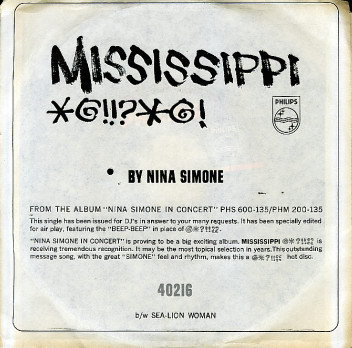
True Stories: Mississippi Goddam
Nina Simone: Mississippi Goddam
[purchase]
When I decided to write about this song, I had no idea that a couple of days later, Nina Simone would be nominated for the Rock and Roll Hall of Fame. Simone is one of those prodigiously talented artists who is widely influential, but has, I think, sort of fallen out of the conversation because of the course of her career, and her long illness and death back in 2003. I’ll admit that I was one of those who had heard her name, was familiar with a few songs, but really knew very little about her until I watched the 2015 documentary about her, What Happened, Miss Simone?
What happened was a sad combination of being an outspoken, black civil rights activist a few years before it wasn’t a career killer, mental illness, spousal abuse and poor advice, which resulted in Simone leaving the public eye for years, just when her music and message would probably have been successful. And it is likely that “Mississippi Goddam” was the turning point in her career, for better and for worse. I recommend reading her bio somewhere, or seeing the movie (or one of the other movies about her that are out there).
The song was written by Simone, reportedly in an hour, as a reaction to both the killing of Medgar Evers in Jackson, Mississippi and the bombing of the 16th Street Baptist Church, in Birmingham, Alabama, about three months apart in 1963.
Evers, a World War II veteran, became a leading civil rights activist, ultimately becoming the NAACP field secretary for Mississippi, where he led efforts to desegregate schools, beaches, parks, buses and the state fair, while also leading voter registration drives. He became a particular target of the White Citizen’s Council, and Evers survived two assassination attempts in May and June 1963 before being gunned down in his driveway. He was taken to a white hospital, where he became the first African American patient admitted to an all-white hospital in Mississippi, but he died within an hour of admission.
Byron De La Beckwith, a member of the White Citizen’s Council, and later on, the KKK, was arrested and charged with the murder, but all-white juries would not convict the piece of crap. It was not until 1994 that he was convicted and imprisoned, and he died behind bars in 2001, at the age of 80.
Evers has become a member of the pantheon of civil rights martyrs, and in addition to Simone, songwriters such as Bob Dylan, and Phil Ochs have written songs about him (one of which, I featured in the second piece I ever wrote for this blog). He has a college named after him, statues of him have been erected, and stories, books and films have chronicled his life and death.
A few months after Evers’ shooting, some KKK cowards dynamited a black church in Birmingham, killing four girls, Addie Mae Collins (age 14), Carol Denise McNair (age 11) (a friend of Condolezza Rice), Carole Robertson (age 14), and Cynthia Wesley (age 14) and injuring 20 more. The death of these four young girls has been credited with opening the eyes of many to the need for change. That being said, although the FBI had identified suspects, J. Edgar Hoover blocked any prosecutions at that time. Three of the four murderers were convicted much later, one in 1977, one in 2001 and one in 2002. The fourth escaped prosecution by dying in 1994. Not surprisingly, this incident has been memorialized in song, writing, sculpture and film.
Simone’s song was first released in a live version, recorded at Carnegie Hall in 1964. While the music is jaunty, its lyrics are not, and the performance includes a few pointed asides from Simone. Although the song became an anthem for the civil rights movement, Simone believed that it damaged her career, and that the music industry turned against her. It isn’t one of those songs that singers trot out anymore when they want to hearken back to the civil rights era, maybe because it isn’t a great sing along, and that’s too bad.
I heard “Missisippi Goddam” on the radio the other day in the car, and I was struck by how Simone married what sounds like happy music with such angry lyrics. It wasn’t the impetus for this theme, but when I realized that it fit, I had to write about it.
Posted by Jordan Becker at 8:30 AM View Comments
Labels: Nina Simone, True Stories
Wednesday, October 4, 2017
True Stories: Frankie and Albert
Back when I was first learning how to play on stage, one night a friend of mine showed up with a friend of his and they played an impromptu version of Frankie and Albert. My guitar playing friend was good enough to manage on a one-man show. His friend, no less - he covered the rhythm section on a book - beating on the cover with a pencil and slapping it closed from time to time.
This is that kind of a song - so down to the "roots" that that all it needs to get its message across is the basics, and the story itself.
The provenance of the song appears to be muddy: credited to Bill Dooley and then Hughie Cannon and then made famous by Mississippi John Hurt, Leadbelly and [phew] ... go check the excellent and extensive link from planetslade below.
It's been covered all over the place - maybe best by Taj Mahal.
But is it a True Story? What is it's historical basis?
The song goes back to the early days of the blues, so I always assumed it must be based on some true account. The story is too elemental not to be so: the story of how he done her wrong ...
The panetslade site seems to have a pretty complete coverage of the history. They sez that the song about Frankie and Albert and the song Stagger Lee have tended to get mixed together - both based on <True Stories>. Do see the site by clicking the link above for their informative and entertaining details. It's extensive.
Some alternative versions
Posted by KKafa at 1:42 PM View Comments
Labels: Frankie and Albert, Leadbelly, Taj Mahal, True Stories
Sunday, October 1, 2017
True Stories: The Wreck of the Edmund Fitzgerald
Gordon Lightfoot: The Wreck of the Edmund Fitzgerald
[purchase]
I have enjoyed all of the hit songs I have heard by Gordon Lightfoot, but many have a 1970s commercial sheen in the production that has kept me from exploring his work further. My research for this post has me rethinking that position. Certainly, from the sound of the song, you can tell that this was released on a major label. There are no quirks or mistakes that can either ruin or give an intimate and personal quality to an independent recording. Still, The Wreck of the Edmund Fitzgerald is a song whose haunting quality grabbed me when I first heard it when it is was new, and the years have not changed that. What I found in researching the song is that many artists have tried and failed to create a quality cover of the song. I found folk versions that overdo the subtlety and lose the song’s haunted sound as a result. I found punk and hard rock versions that lose the song’s empathy by overdoing the drama. And there are jam band versions that lose track of the song altogether. Also, Gordon Lightfoot’s words have power, so instrumental versions exist for no reason that I can understand.
Our new theme is True Stories, and yes, there was a wreck of a ship called the Edmund Fitzgerald. Over the next two weeks, we may hear songs on happier topics, but some of the greatest tragedies in history have inspired great songs, so I am sure there will be more of those as well. The Edmund Fitzgerald sank, with all 29 hands lost, on November 10, 1975. You can find a great account of the incident here. Newsweek had a report of the wreck in their issue of November 24 that year, in which they misspelled the name of the ship, as the Edmond Fitzgerald. Gordon Lightfoot has said interviews that he felt this dishonored the men who died in the wreck and that this was why he wrote the song. The song must have come to him almost fully formed, because he recorded it in December of the same year. Lightfoot spelled the name of the ship correctly, but the song scanned and rhymed better when he changed the ship’s destination from Detroit to Cleveland. The old cook in the song was a Lightfoot invention, and some of the dialog in the song was not part of any official record. But the bottom line is this: Lightfoot’s song is the reason the wreck of the Edmund Fitzgerald is still remembered today, forty years later. And as popular as the original song was, no one has had even a minor hit with a cover in all these years. You have only to think of all of the other hits that have been covers in that time to realize how remarkable that is.
Posted by Darius at 4:51 AM View Comments
Labels: Gordon Lightfoot, True Stories
Thursday, September 28, 2017
Down: Down Where the Drunkards Roll
Richard and Linda Thompson: Down Where the Drunkards Roll
I wish I could tell you that I own and know intimately the contents of every album containing every song I post here. Alas, no. So when this theme was announced, I immediately thought of Down Where the Drunkards Roll. But I was expecting it to be by Tom Waits. Indeed, the song is about the kind of people Tom Waits loves to write about, those down on their luck. Like Waits, the actual songwriter Richard Thompson does not ask for pity; rather, he finds beauty in lives most would dismiss. But, where Waits would have chosen a character, and presented his view of things, Thompson instead evokes a powerful sense of place. Thompson finds both depravity and madness here, but what he asks us to notice is that this place makes all of us equal. No one is judged, and some can return to their normal lives without consequence when the leave here.
Down Where the Drunkards Roll is also a wonderful vehicle for Linda Thompson. The song comes from a time when Richard and Linda were a couple, and at their creative peak together. Richard Thompson wrote here a perfect song for Linda Thompson’s voice, and she delivers the goods. While we are talking about the sound of the song, I believe the stringed instrument featured here is an autoharp.
Posted by Darius at 3:09 AM View Comments
Labels: Down, Richard and Linda Thompson
Wednesday, September 27, 2017
Down: Geese
Camel: The Flight of the Snow Goose
Anthony Phillips: The Geese and The Ghost
[purchase The Snow Goose]
[purchase The Geese and The Ghost]
One of the joys of a theme-focused blog is that it gives you a challenge to wrack your brain and try to think of a related topic. And it can be fun to take the theme to an unexpected place. Clearly, the obvious way to interpret “Down” is consistent with the thumbnail being used to illustrate the theme—“toward or in a lower place or position.” But the word has other meanings, including certain feathers of a bird used for insulation, often from a goose. So, here we are.
Camel is one of those English prog-rock bands from the 70s that had some success, both critically and commercially, but aren’t generally grouped in the top tier of the genre’s acts. Nevertheless, they released a bunch of good albums and have continued to perform and record until the present day, with a dizzying revolving door of members surrounding founding member Andrew Latimer.
After releasing two albums with minimal success, the band decided to try a concept album. Rejecting a few novels to base their work on, they ultimately decided to attempt to create a work based on a 1941 novella by Paul Gallico (a prolific writer probably best known for The Poseidon Adventure), titled The Snow Goose. It tells the very sentimental story of the friendship and love between Philip Rhayader, a disabled artist living in a remote lighthouse in Essex, England, and a local girl, Fritha. A wounded snow goose is nursed back to flight by Fritha, whose friendship with Rhayader grows, while the goose returns over the years to the lighthouse. Rhayader uses his sailboat to rescue hundreds of soldiers in the Dunkirk evacuation, but is lost. The goose finds Fritha on the marshes, which she interprets as Rhayader’s soul leaving her, and she realizes her love for the lost man. The lighthouse is leveled by German aircraft, destroying all of Rhayader’s work, except for a portrait of Fritha, as a child, holding the injured snow goose.
The story struck a chord, and the book won an O. Henry Prize in 1941. It was read on the radio in 1944, turned into a BBC TV movie in 1971 featuring Richard Harris (as the goose—just kidding), and that won a Golden Globe and was nominated for both a BAFTA and Emmy. When Camel announced that it planned to release their musical adaptation of the book, Gallico gallantly threatened to sue the band (yay, lawyers!), so they were forced to call the album Music Inspired By The Snow Goose, and they had to abandon the idea of using lyrics based on the text, rendering the album fully instrumental. Despite these obstacles, the album, released in 1975, was both a critical and commercial success.
It is a beautiful, moving work, featuring rock instrumentation along with the London Symphony Orchestra (and, on one song, a duffle coat, used to simulate the flapping of wings). It is hard to pick a favorite song, but to be theme-appropriate, I picked “Flight of the Snow Goose,” which starts off slowly, but builds to a triumphant end.
In doing my research for this, I found a review which claimed that the Gallico novella also inspired another song, Anthony Phillips’ “The Geese and The Ghost.” Turns out, that isn't true. In fact, the title derives from two sounds on the ARP Pro-Soloist synthesizer which was used on the album.
Phillips was the original guitarist in Genesis, but left after recording their second album, Trespass, ultimately being replaced by Steve Hackett. Phillips left due to a combination of stage fright and other health reasons, and an aversion to being in the public eye. After leaving Genesis, Phillips decided to study music, and didn’t record anything for a number of years. His solo debut, The Geese and The Ghost, featuring some music that he had worked on while still in Genesis with friend and former schoolmate Mike Rutherford, and solo compositions, was released in 1977. In addition to Rutherford, Phil Collins provided some vocals (recorded before he succeeded Peter Gabriel as Genesis’ singer) and Hackett’s brother John added flute.
In general, the album is somewhat folky, with orchestral flourishes, and the title track is beautiful. Genesis fans could definitely hear a kinship to some of the quieter moments of Trespass. Phillips went on to release music to little commercial success, more successfully create “library music” for use in films and TV shows, and appear on other artists' albums playing guitar and keyboards.
In fact, in 1982, Phillips appeared on Camel’s album The Single Factor, and co-wrote a song with Andy Latimer. That album is utterly devoid of any goose-related material (which unfortunately cannot be said of our local athletic fields).
Posted by Jordan Becker at 8:30 AM View Comments
Labels: Anthony Phillips, Camel, Down, Genesis, Mike Rutherford, Peter Gabriel, Phil Collins, Steve Hackett
Tuesday, September 26, 2017
Down: The Pogues, Down All the Days
Posted by Andy La Raygun at 12:36 AM View Comments
Labels: Christy Brown, Down, Down All the Days, Ireland, My Left Foot, Shane MacGowan, The Pogues
Saturday, September 23, 2017
DOWN: ALL FALL DOWN: LINDISFARNE
The band, named after the almost-island off the Northumberland coast of England, were slow to meet overnight success, the first record, o so aptly entitled 'Nicely Out of Tune', almost slipping by unnoticed, until, ironically, their 2nd release, 'Fog on the Tyne' was released. This was, astonishingly, the surprise biggest UK selling album of 1972, its lead single, a song by bassist Rod Clements, 'Meet Me on the Corner', becoming a number 5 single success. 'Lady Eleanor', the earlier single from that first record was released a 2nd time, surpassing that and reaching number 3, buoying the parent LP up the charts behind it, the melancholic mandolin of Ray Jackson, also the harmonica player for meet 'Me on the Corner', no small part of the either songs attractiveness. The other 2 members of the band, Simon Cowe, on guitars and the biggest pigsty hairstyle ever, and Ray Laidlaw on no nonsense drums, each added to the whole. 'Dingley Dell' was a much more ambitious pice, and, in retrospect, was perhaps a step too far for their fanbase, that version of the band then breaking asunder, as their success faltered. I remember buying it, on the day of release, being both delighted and disappointed, variously, by the changes in and widening of direction. Two factions, Hull, Jackson and new members, lurched on as Lindisfarne, but it was never quite the same. The other 3 formed the rather more folk influenced 'Jack the Lad', with likewise limited favour, outside, at least, my ears. The original 5 reformed together in 1976, with a further hit single, 'Run For Home', but times had changed and their style was now out of vogue, hindered by the material promising, ultimately, more than it could deliver. More was to be gained from their famed yearly Christmas gigs at Newcastle City Hall, which were fuelled more on past glories than new. At least once a year, the fog on the tyne was, surely, theirs. Alan Hull had also a solo career alongside these later years, with greater acclaim, particularly in retrospect, than with his concomitant band work, ahead of a way too early demise, in 1995, aged 50, from a heart attack. In 2012 a plaque was unveiled in Newcastle to his memory.
Since then, as is seemingly now compulsory of bands from the last century, the band lurches on, various original members slipping in and out, often one replacing the other, as when Ray Jackson 'retiring' in 2015, to be 'replaced' by Rod Clements. Sadly Simon Cowe died in 2015.
Search further: this is the best of from their first 3 (and best 3) recordings, which were each on the quirky UK Charisma label, also an home to Genesis, the 2 completely different bands going out on tour together on one occasion, to the possible bemusement of the fans of each.
Posted by Seuras Og at 6:34 PM View Comments
Labels: Alan Hull, All Fall Down, Down, Lindisfarne
Wednesday, September 20, 2017
Down: Way Down In The Hole
Tom Waits: Way Down In The Hole
[purchase]
[purchase The Wire soundtrack, with 4 of the 5 versions used in the credits]
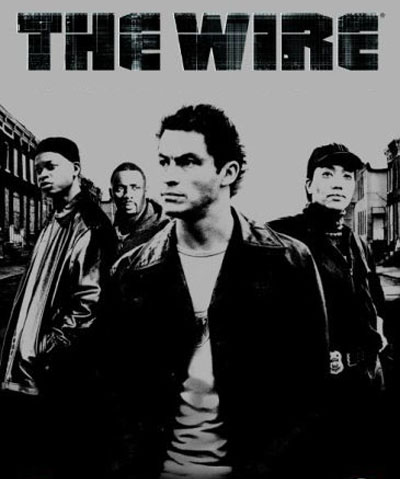
This year, it seems like I’m writing more about television related music. I watch an enormous amount of television, and I do think that there is so much great stuff to watch these days. In fact, there’s a ton of shows out there now that I would like to check out, but there are just so many hours in the day. In addition, there are a bunch of older shows, often considered to be among the medium’s best, that I have never seen. Some, I’m not interested in, like Game of Thrones, but mostly it is because I didn’t start watching them during their initial run, such as The Sopranos (80 episodes), or Mad Men (92 episodes), or Breaking Bad (62 episodes, plus I’d have to watch Better Call Saul), and their multi-season runs make binge watching difficult.
A few years ago, when I started my own practice, there wasn’t much work right away. I decided to binge watch one of the shows that I had missed, and hit upon The Wire. It was only five seasons (and 60 episodes), it was supposed to be great. Also, I was a big fan of Homicide: Life On The Streets, which shares significant creative DNA with The Wire. And my wife wasn’t interested in it. Perfect. (I also watched the 24 episode British show The Thick of It, which was amazing, and easily the most profane program I have ever watched).
The Wire was, in fact, great, and harrowing, and depressing and brilliant. The way that it dissected the Baltimore of its era by focusing on the decay of its major institutions—the police, the unions, the government, the schools, the press, and even the street gangs—was remarkable. The narrative style was groundbreaking, and the performances, by actors who rarely, if ever, have reached the same level of quality since, were stunning. And there was Omar.
But, as I so often have to remind myself, this is a music blog. The credits for the first season ran over a cover of Tom Waits’ “Way Down In The Hole,” recorded by the Blind Boys of Alabama. At the time, I didn’t know that it was a cover, because I’m not that big a Waits fan. The second season, they used the original. For season three, it was a Neville Brothers cover, and in season 4, they commissioned a version, credited to DoMaJe, sung by Baltimore middle schoolers, which related to the season’s focus on the public schools. The final year, they used a cover by Steve Earle, who also acted in the show. Here are all of the credit sequences, conveniently edited into one video:
If you’d like to read more about the credits, go here.
David Simon, the creator of The Wire, followed up that show with a number of well-received television projects. Generation Kill, which I haven't seen, was about the 2003 invasion of Iraq. Tremé, which I loved, taught me an enormous amount about post-Katrina New Orleans, and that amazing city's culture, particularly its music. After that, he adapted my friend Lisa Belkin's book Show Me A Hero into a gripping miniseries about zoning (cheap joke--it was about race, and politics and ambition and much more). A couple of weeks ago, his new show, The Deuce, focusing on the sex and pornography industry in New York in the 1970s, debuted to critical acclaim. So far, I think it is good, but, and I bet Simon gets tired of hearing this phrase, it isn't The Wire (but is it more like that show than the other Simon projects?).
Posted by Jordan Becker at 8:36 AM View Comments
Labels: Blind Boys of Alabama, DoMaJe, Down, steve earle, The Neville Brothers, The Wire, Tom Waits
Down: Burning Down, by REM
Going further back, to classic REM,“Burning Down” was actually born as a different track, “Ages of You”, and both songs can be found on REM’s B-sides collection Dead Letter Office. “Ages of You”, though meant to originally be released on the EP Chronic Town, was left off. Later, continuing its life-cycle as an unwanted stepchild, it was left off the full length Reckoning, as well. As quoted in the liner notes of Dead Letter Office, Peter Buck describes the strange duality of the song’s history: “When we got tired of ['Burning Down'], we kept the two pieces that we liked and rewrote the rest to come up with 'Ages of You'. We got tired of that one, also.”
![]() |
| That t-shirt... |
Posted by Andy La Raygun at 12:58 AM View Comments
Labels: Burning Down, Down, It's the End of the world as we know it (And I feel fine), REM
Tuesday, September 19, 2017
Down: All That You Dream
purchase [The Last Record Album]
I hadn't intentionally pre-planned continuity from my last post to this one, but - as the "responsible" for this theme, I do wonder if my eventual theme choice wasn't at least subliminal (I think that applies). I mean, going from Little Feat's Can't Stand the Rain >> Little Feat's All That You Dream. <Entre paranthese> I have to give a tip of the hat to the comment from Dead_Elvis, Inc for the correction in the comments [right side]. But beyond, the theme offers up the possibility of pursuing Little Feat's <Down on the Farm>, notable for little except being the final album to which Lowell George contributed [a little because he was giving his time to <Thanks, I'll Eat It Here> as referenced by Dead_Elvis, Inc.]
There's something similar about the way that Little Feat's (and Steely Dan's- [RIP Walter Becker]) music affects me. Technically, I think I've got it right if I say they both incorporate somewhat complex structures that combine "California pop" with jazz. I'm talking catchy/pop-ish tunes with a twist away from the standard R&B I-IV-V chord structure. Add in lyrics that generally go a little beyond "She loves you yeah, yeah, yeah.." and you've got me on board. (Spyro Gyra and even into a lot of the ECM music from the mid 70s)
Yes, I confess, I am stuck back in the past. There isn't a lot from the present that I listen to. Most everything that comes to mind for a <Down> theme goes back to before the 90s. Heck, most everything I have ever posted here goes back to before the 90s. Not all. Most.
It seems to me that this is a song that sings about a better future, or at least the hope for better. Certainly regret and acknowledgement that things aren't what we wished they would be, but also a desire to improve:
All of the good times were ours ...
Rainy days turn to sunny ones ...
Can't be 'round this kind of show no more
Worth considering that the song isn't credited to Lowell George, but it is among the last that he was here for. Possible premonition because he wasn't around for too many more shows? Online sources say it is he doing the vocals (sounds right).
Also worth considering -from my perspective- is that the song doesn't bring me down. There are songs that do, but the tempo and harmony here aren't sad despite the lyric word choices (clouds, rain, wash away ...)
While you are here, also see Darius' long ago related https://sixsongs.blogspot.com.tr/2012/01/on-air-on-your-way-down.html
Posted by KKafa at 12:29 PM View Comments
Labels: Down, little feat
Friday, September 15, 2017
Incompetent/Can't : Can't Stand the Rain
purchase [I Cant Stand the Rain]
Maybe we have had enough of the rain. Maybe some of the news pundits are right about how the main stream media tried to make the most of the Carib weather - to the extent that it has surpassed overload and caused unnecessary fears. And maybe J David is right that we have exceeded the "Can't" threshold when we could have been looking at other aspects of the Incompetence/Can't theme.
If you are a regular here, you likely know I have an enduring affinity for the slide guitar, as embodied in such impresarios as Mr Ry Cooder, Ms Bonnie Raitt, Mr Duane Allman and Mr Lowell George. (There are others, but these are among my main staples)
As JDavid pointed out, there are various avenues one can pursue from a theme of Can't - primarily personal incompetence. I don't think that <I Cant Stand the Rain> falls into this category - the weather is beyond our control, and most likely the lyrics transcend the weather, rather, here, a metaphor for other aspects of the singer's life. You know ... rain is wet and sad and brings you down, especially if you get caught out in it unprepared like...
In my ignorance, I had assumed that this was a Little Feat original. No small amount of their output was original. However, not this.
The song is credited to someone I had never heard of before: a certain Ann Peebles. And while I was only aware of the Little Feat version, there are all sorts of others who have done theirs and you can find many of them at YouTube.
A few of them:
Posted by KKafa at 10:11 AM View Comments
Labels: Ann Peebles, Humble Pie, Incompetent/ Can't, little feat, Seal, Tina Turner
Tuesday, September 12, 2017
Incompetent/Can’t: You’re No Good
Linda Ronstadt: You’re No Good
[purchase]
So far, it seems like all of our posts on this topic are self-critical—I can’t dance, I can’t stand up, I’m a simpleton, etc. But in reality, isn’t it usually someone else that raises the issue of someone’s incompetence? Most of us, I think, have enough of an ego to think that we are at least competent, if not even better than average, but there is someone—a boss, a (former) significant other, a stranger—who tells you, in no uncertain terms, that you suck. [WARNING--link is NSFW]
Over at one of my other blogging homes, Cover Me, there is a relatively new feature, “That’s a Cover?” in which we write about songs that are so well-known that many people might not know that it is a cover. For example, I wrote one a few months ago about The Youngbloods’ iconic 60s tune “Get Together,” which was at least the fourth version of the song. Linda Ronstadt’s cover of “You’re No Good,” also falls into that category.
Not to mention, the song makes it pretty clear that the singer believes the subject to be incompetent:
You're no good, you're no good, you're no good
Baby, you're no good (you hear what I say)[original lyrics—later versions used “I’m gonna say it again"]
You're no good, you're no good, you're no good
Baby, you're no good.
Although admittedly, later on, the singer inevitably (at least for this theme) criticizes herself.
Written by Clint Ballard, Jr., the song was first recorded in 1963 by Dee Dee Warwick (Dionne’s little sister), and produced by Lieber & Stoller.
This version stalled on the singles chart at #117. Warwick had a moderately successful career, although not as much as big sister Dionne, and she struggled with addiction and health issues before passing away in 2008.
The first “hit” version of “You’re No Good” was by Betty Everett, also in 1963, A bit more soulful (and featuring Maurice White, later of Earth, Wind & Fire, on drums), this version topped out at #51 on the singles chart, and was more successful on R&B charts.
Everett’s next song, "The Shoop Shoop Song (It's in His Kiss)" made it to #6 on the singles chart, and although she did have a few more hits, her later career was not as successful, and she passed away in 2001.
The Swinging Blue Jeans, a now pretty much forgotten Merseybeat band, did a gender-reversed version of the song in 1964. It was quite successful in England and France, and even hit #97 on the US charts. It sounds like a version from a now pretty much forgotten Merseybeat band:
The SBJ’s had a few more cover hits, but eventually, as their Wikipedia entry sadly notes, “The band eventually retired to the cabaret circuit.”
There have been many other covers of the song, some in other languages (and even by Van Fucking Halen), but none have had the durability or success of Linda Ronstadt’s version.
Ronstadt began performing the song during 1973, and recorded it with producer Peter Asher (whose sister Jane dated a member of a well-remembered Merseybeat band that Peter also worked with) for her breakthrough album, Heart Like a Wheel. Her version, which became a #1 hit in the US, showcases Ronstadt’s powerful, soulful vocals, and has a great arrangement. Interestingly, Ronstadt has said:
I thought the production on "You're No Good" (her 1974 breakthrough No. 1 single) was very good, but I didn't sing it very well. As a song, it was just an afterthought. It's not the kind of song I got a lot of satisfaction out of singing.
You could have fooled me. Because she’s so good.
Posted by Jordan Becker at 9:00 AM View Comments
Labels: Betty Everett, Dee Dee Warwick, Dionne Warwick, Incompetent/ Can't, Linda Ronstadt, Peter Asher, Swinging Blue Jeans, van halen
Sunday, September 10, 2017
Incompetent/Can't: Can't Let Go
Print: "Lucinda Williams, Car Wheels on a Gravel Road", from Church of Type, by artist Kevin Bradley, "...one of America's most prolific letterpress printmakers." According to his amazing website, "The Church of Type is a full-custom art and design studio working exclusively in the sweet science of authentic handset letterpress."
I've got my credit card in hand as I write this--really amazing stuff.
Posted by Andy La Raygun at 1:20 AM 0 comments
Labels: Car Wheels on a Gravel Road, Church of Type, Herman Melville, Incompetent/ Can't, Kevin Bradley, lucinda williams, Moby Dick, Rolling Stone Magazine
Thursday, September 7, 2017
Incomptetent/Can't: Mayor of Simpleton
XTC: Mayor of Simpleton
[purchase]
In response to Darius' question about the theme, as the guy who suggested it back in February, it was originally "Incompetence," in "honor" of our then-new President. Who knew how bad it would get. Our current moderator, known in these pages as KKafa, although that’s not what his parents named him, felt that was too difficult, and added the related concept of “Can’t.” And so far, that’s where the posts in this theme have gone.
So, I’m going to try to steer it back to my original concept, although, as so often happens with XTC’s music, the lyrics are somewhat tongue-in-cheek.
Unlike our current President of Simpleton (or Dementia, or Narcissism, or Egoism, or Delusion, or whatever), who seems blissfully unaware of his shortcomings, the titular Mayor lists all of the things that he lacks competence in:
- Learning
- Weighing the Sun
- Mathematics
- Reading profound books
- Writing a big hit song
- Solving crossword puzzles
- Unraveling riddles, problems and puns
- Operating a home computer (note—this song came out in 1989, so having one was not common)
- Converting pounds to tons
- Winning Nobel Prizes (If this was an impediment to love, there’d be a lot of single people)
- He loves her
Unfortunately, XTC never recorded a sequel, so we don’t know whether this plea led to “Sorry, Mayor of Simpleton, I’m Not Interested,” or “I Love You Too, Dummy.”
Posted by Jordan Becker at 9:00 AM View Comments
Labels: Incompetent/ Can't, XTC
Tuesday, September 5, 2017
INCOMPETENT/CAN'T: I CAN'T DANCE
That much is true, and I have tried, Lord, I have tried. Indeed there have been times when I tried so hard, I thought I could, the joy and sweat both unbridled as the floor emptied about me. In fact, my dancing years can be contained within 3 succinct eras. But first the song:
This song, originally by Tom T. Hall, nails many of my feelings, even rationalisations, on the subject, and is written from the position of the lovelorn and forlorn dancehall wallflower, forever watching from the periphery, unable to get his girl on account his "affliction." Tom T. makes it matter of fact in his country boogie shuffle, but Gram imbues an extra poignancy and urgency into his cover, which, incidentally, is pegged up a pace or two, into a somewhat clumsy rhythm that is actually well nigh impossible to dance to. Even if you could.
So how did I deal with this, in phase 1, my youth? Luckily, it being the late 60s and early 70s, with the birth of the underground scene and prog, I could pin my flag to those genres. Sitting cross-legged, head bowed forward, shaking in, or slightly out of, time with the stop-start rhythms of Yes, King Crimson and E.L.P. warranted no knowledge of dancing. Dancing music: soul, r'n'b and disco, was for fools, whether they got the girl, and they usually did, or not.
Stage 2 was an awkward amalgam of conflicting pulls on my position. Punk arrived, and the demolition of all before it, including any orthodox styles of dance. And, yes, I could pogo, I discovered. And, with new wave, that slo-mo running beloved of, predominantly, Sting, came within my canon. But there was also the increased importance of Folk-Rock to me during these years, as I, simultaneously to the Clash and Costello, immersed myself deeper in all things trad.arr. I joined a Morris Dance side. There I had to discipline myself into the rigidity of 4/4 rhythmic movement. Like this:
It was hard, it was difficult, but I nailed it, albeit barely competently. It was bliss. Our side would convene once weekly for practice, and meet at weekends to give displays at school fairs and village fetes. Possibly as a result of this confidence, or probably the women I was taken with, I suddenly "got" the dance floor, hoovering up Motown and Stax into my record collection. I had the confidence of a dyspraxic Travolta and hurtled around equivalently. And for all the toes I trampled and ribs I barged, I apologise. Unreservedly.
For now, phase 3, I know I really can't dance. It is a pity, as my wife loves to and is an avid aficionado of electronica/dance. I love it too, but confine myself to listening in the car. As I drive. Occasionally thumping the windscreen repeatedly with my fist if particularly carried away. Just in case, at the age of 60 I have again joined a morris side, but I know I probably fool myself. And the moves are so much harder than they ever were.
A final reflection comes from proggers turned poppers, Genesis, originally just the sort of anti-dancing music I delighted in, all those phase 1 years ago, latterly topping all sorts of charts with dance worthy tunes. Although I tell myself I shouldn't, I quite like this change in their style and fortunes, this song demonstrating that they too are not entirely unaware of the irony. So, like this song, maybe this dancing lark is my guilty pleasure.
But don't buy them, buy this
Posted by Seuras Og at 11:33 AM View Comments
Labels: Ashley Hutchings & John Kirkpatrick, Genesis, Gram Parsons, I Can't Dance, Incompetent/ Can't, Morris On, Tom T Hall
Monday, September 4, 2017
Incompetent/Can't: I Can't Stand Up
purchase [Get Happy]
There was a time - about 20 years back - when Elvis Costello and Talking Heads were what I mostly listened to. Both kind of quirky (as opposed to mainstream pop), but both very much in favor with the college-type crowd (which I had long since graduated from - but maybe couldn't leave behind?).
I'm pretty sure that among the things that attracted me to both were (a) the slightly-off the standard I-IV-V chord structures of their songs and (b) the near-poetic lyrics - enough that the words frequently caused me to take a minute or more to ponder their relevance to my current frame of mind. Oh, yes, and neither appeared terribly normal in the MTV videos I saw.
Now, at about the time that <Get Happy> (the album containing Can't) was released, Costello was in hot water on account of his multiple uses of "the n word". He had drunkenly referred to Ray Charles as such, and his "Lover's Army" includes lyrics to the effect "one less white ..n.".
As a result, there are those who believe that his choice of "I Can't.." is a form of either apology or appeasement - because the song comes from the legendary Sam and Dave, who recorded it in a rather slower, more soulful tenor back in the mid 60s.
As for Costello, this song stands in contrast to his earlier dark, angry, vengeful style: granted, the pace - as compared to Same and Dave's slower soul - still rubs a bit the wrong way (also see his dis-jointed dancing on the vid), but you can almost sense that Costello is onto something new, and in fact, from here, it lead to a breakthrough in his career (and puts his racial slur gaffe more or less behind him)
We've got the "Can't" covered pretty well just in the title itself. But how about the "Incompetence"? Well, there's no requirement in SMM's current theme that any single post cover both terms - and in fact they do appear to be linked - if you're incompetent, you can't ... something. But, is there something about Costello or the song that encompasses <Incompetent> as well?
Judging from where Costello went from after this output, I would say: no sign of incompetence on his part.
Your thoughts?
Posted by KKafa at 12:18 PM View Comments
Labels: Elvis Costello, Incompetent/ Can't, Sam and Dave
Sunday, September 3, 2017
Incompetent/ Can’t: Can’t Find My Way Home
Blind Faith: Can’t Find My Way Home
[purchase]
I have not been the moderator here for quite some time now. Usually, that doesn’t make much difference, but it does with regards to our new theme. I have some ideas about how to treat the “Incompetent” part, and I will be presenting at least one of those as we move on. But I am not sure what was intended. Perhaps it is better not to know, but rather to put forward one’s own interpretation, which should make this a fascinating theme. But the “Can’t” part is easy enough. Can’t Find My Way Home immediately came to mind, and no wonder. The song is almost fifty years old now, and it continues to be covered in new and interesting ways. That is a fine definition of a classic.
You could say that the song deserves to be obscure. The lyric is barely there, consisting of only one verse and a chorus. The words express a sense of helplessness, and there is no resolution to this, no solace offered. But that is, in a way, the point. For all the idealism of the hippies who embraced the song and made it a hit, there was always a sense that they were fighting something they could not stop, something that was just too big for them. Of course, it did not hurt that the song was by a new supergroup. Blind Faith featured Steve Winwood from Traffic and Eric Clapton and Ginger Baker from Cream, and both of those groups had just broken up. Only bass player Rick Grech, then with the group Family, was relatively unknown. But Blind Faith was not popular just because of their lineup, nor was it simply the fact that they were one of the first supergroups. The talent that came together for this project delivered the goods, and it is ultimately the performance of Can’t Find My Way Home that makes it work, and has made the song an inspiration to musicians ever since. The song has brought together unlikely groupings of musicians for some great performances, so I wanted to include some of those.
Bonnie Raitt with Lowell George: Can’t Find My Way Home
[purchase]
In 1972, Bonnie Raitt was making wonderful blues-based music, but she was far from well known. Lowell George and his band Little Feet were just getting started themselves. Raitt would record her own solo version of Can’t Find My Way Home, although I couldn’t find it on any of her albums. But this version comes from a radio broadcast in New York City. Either Raitt or George could be playing the acoustic guitar or the slide guitar on this one, and there is also an acoustic bass part played by Freebo. This spare treatment really brings out the emotion of the piece.
Allison Krauss and Union Station: Can’t Find My Way Home
[purchase]
Allison Krauss and Union Station are known as a bluegrass group, but that label does not fully describe their artistry. This version of Can’t Find My Way Home honors the song’s roots in blues rock, while also updating the sound in brilliant ways. The recording was done for the TV show Crossing Jordan.
Sheryl Crow with Warren Haynes and Trombone Shorty: Can’t Find My Way Home
[Not Available for Purchase]
As seen here, Sheryl Crow and her band are a part of the jam band scene. She invites Warren Haynes and Trombone Shorty to join them on stage for this one, and Crow’s band supports them ably, with very satisfying results. Crow and her band do not show the elasticity that allowed the Grateful Dead to, for example, segue from Scarlet Begonias to Fire on the Montain, but this is still a strong performance. It makes me wonder why Sheryl Crow has not so far put Can’t Find My Way Home on any of her albums.
Posted by Darius at 6:01 AM View Comments
Labels: Allison Krauss, Blind Faith, Bonnie Raitt, Incompetent/ Can't, Lowell George, Sheryl Crow, Trombone Shorty, Warren Haynes