Showing posts with label Leaves. Show all posts

Sunday, December 2, 2018

LEFTOVERS: LEAVES: TEA


Let's get this straight, tea is so not my cup of tea. I can't stand the stuff, being an avowedly (instant) coffee man. Yet it is an enduring image in the world of popular song, often used to evoke a peculiar englishness that has, bar the drinking of it, gone. But it gives me the opportunity for a list post, which, in the leftovers pile, will at least avoid any flak for using up "all the ideas" Thus, in time honoured, please warm your pots.......


Cup of Tea/Shack. Lovely peaceful vibes, with a hint of ye olde psychedelia which belies its youth, the song being barely a decade old. Given that it stems from the never more aptly named Head brothers, arguments might exist as to whether this song is about assam or darjeeling. Or indeed anything more exotic, but it has a timeless, restful quality I can drown in.


Penny Royal Tea/Kristin Hersh. I know, I know, it's a Kurt song, but I prefer this version to the original, excepting the Unplugged performance. I wondered quite what Penny Royal tea was, thinking it may even be a brand of teabags available in Walmart or some such, then that the song may have been a play of words, bemoaning the pitiful returns on his song publication rights: royal tea/royalty, right? As ever, wiki is my friend, and it is apparently an often unsuccessful chinese abortifacient...


Tea and Sympathy/Janis Ian. Beautiful string arrangement with typically understated Ian vocals, a wry reflection on loss. And at last a song about tea tea. I would politely endure a cup of tea under the circumstances described, and traditionally have about one cup a year, usually with aged relatives. And similar references, no doubt.


Tea For One/Led Zeppelin. Not an entirely dissimilar concept as above, portrayed and presented a little differently, it's true. Percy missing his missus, tea for one being the metaphor for alone. Whilst I can't imagine vintage Zeppelin drinking anything but (vintage) champagne, OK, maybe brown ale for Bonzo, strangely the idea of the current Plant drinking a mug of tea, probably in a Wolverhampton Wanderers mug, seems entirely apposite.


Tea Leaf Prophecy/Herbie Hancock featuring Joni Mitchell. Her song, mind, but this version has always appealed more, the original still displaying residual vestiges of a folk tendency within this, as we later learnt, decidedly jazz singer. It is also good to have a salient reminder of the erstwhile bonus in every olden days cuppa, that of having your fortune made available courtesy the leaves left in the base of the cup. Try doing that with a teabag, Mr Lipton!


Tea Stain/Tindersticks. Cripes, I love(d) this band. As an instrumental this isn't perhaps the most representative of their output, but does give the european arthouse soundtrack quality they inhabit so well. It's a pity as I can picture their lugubrious singer, Stuart Staples, finding it only too easy to imagine him with old tea stains down the front of a crumpled white shirt. (You wanna hear him sing? Sadly I can find no further tea references, Will coffee do?)


Tea For The Tillerman/Cat Stevens. Bit of vintage Cat when he was still Cat, rather than Yusuf realising he didn't sell so well without a bracketed reminder. This album and the follow up, Teaser and the Firecat, soundtracked my miserable teens, the angst and ennui of his vocals hitting a chord with lonely adolescents everywhere. There seem to be a lot of websites arguing the meaning of the phrase, but I think the picture says it well enough, whether the jovial beardy is the man who tills the soil or pulls the tiller. Personally I think the 1 minute version on the album is probably better.


Tea Leaves/The Snails. I'll be honest. This isn't the song I wanted to include, hoping that a song of equally little-known band UK The Scaremongers might be available on YouTube. It wasn't, but I encourage you look for the song, part of the Sound of Mature Huddersfield as they style themselves.
This song? It OK.

So, that's yer lot. Eight, as anything more might be seen as hogging it, seeking vaingloriously too wide a demographic where at least one song might appeal. (Memo to self, what do they drink in Tarrytown?) No room even for this......

Explore!


Wednesday, October 10, 2018

Leaves: Headstones and Dead Leaves


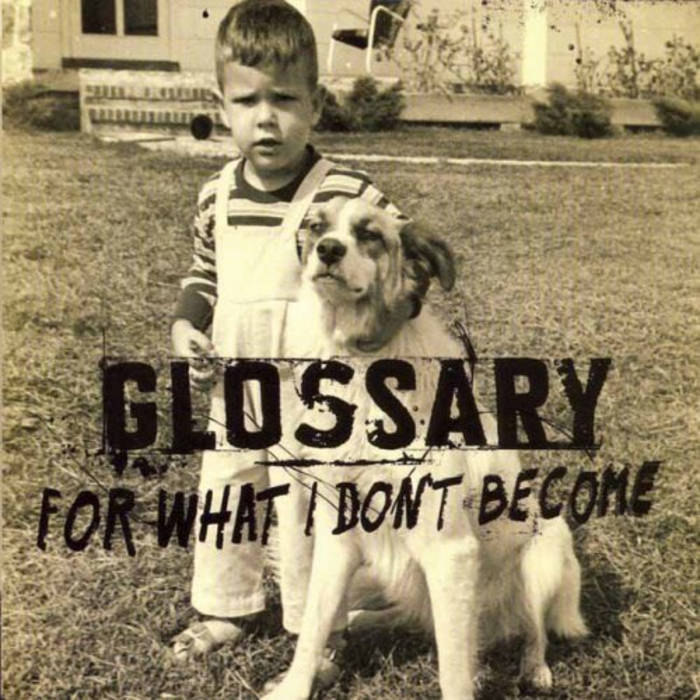
Glossary: Headstones and Dead Leaves
[purchase]

I’m trying hard to write about bands that I haven’t written about before, and this is a bonus, because it seems that Glossary has never been written about on this site. I can’t be sure, but there’s a good chance that I heard about the band from a now defunct blog called Nine Bullets, which was founded back in 2006 by a gentleman who went by the name Autopsy IV, who championed the kind of Americana roots rock that Glossary played so well. (Longtime readers of this site may remember that Autopsy IV was a contributor here back in 2008-2009).

Often compared to Lucero (with whom they have toured, and shared members and a record label) or Drive-By Truckers, because they actually do sound like those bands, Glossary, from Murfreesboro, Tennessee, had their own style, and released a handful of albums from the late 1990s through the 2010s, all of which are worth checking out. Led by legally blind singer/songwriter/guitarist Joey Kneiser, Glossary focuses on character-driven and personal songs that are well-written and well-played, often featuring harmony vocals from Kneiser’s now ex-wife Kelly (with whom he continues to perform).

“Headstones and Dead Leaves,” from 2006’s For What I Don’t Become, is a perfect song for the theme, and for this time of year, as we head into the Halloween season, although despite its title, it is a hopeful song. The singer tells his partner that he doesn’t want her to die for him, or give up anything for him, because the world is cruel enough. He continues:

And headstones and dead leaves 
Are just reminders of 
What happens to living things like us 

In the end, though, he says that together, they can bury their regrets and “walk away alive.”

It appears that Glossary went on hiatus in 2013, when its drummer hurt his shoulder, but reformed in 2017 for some anniversary shows. Kneiser has released some fine solo albums, some more music with Kelly (now) Smith, and tours as a solo and duo act.

Bottom line—if you like this sort of music, Glossary is one of those bands that you might have missed, but it is never too late to catch up.

Monday, October 8, 2018

Leaves: Autumn Leaves

Cannonball Adderley: Autumn Leaves

[purchase]

During this theme, there has already been a mention of “the elephant in the room.” To me, the phrase refers to an obvious choice that everyone is ignoring. Indeed, it sometimes seems to me that one of our themes is more difficult than it needs to be, because everyone is rejecting a song as too obvious, My rule is that the first song that comes to mind is first for a reason: its quality. So here is my post of Autumn Leaves.

I know the song as a jazz standard. Cannonball Adderley’s version was released in 1958, one of three versions that year that established the song as a jazz classic. The passionate playing here of especially Miles Davis and Adderley show why. Although the song would become one of Davis’ signature tunes, available in at least four different live versions dating from 1958 to 1966, this is the only studio version of it that Davis made. Davis introduces the song, and his soloing stays close to the melody. This allows Adderley to make his entrance soloing, without restating the melody at all. So this version becomes a showcase for Adderley, which would explain why it is on his album, not Davis’. But make sure to listen all the way through to this one, for Hank Jones’ startling second solo near the end.

Yves Montand: Les Feuilles Mortes

[purchase]

In researching this post, I discovered something I never knew: Autumn Leaves has words! In fact, it has two sets of words, in French and English. The French lyric is the original. It started life as a poem, Les Feuilles Mortes by Jacques Prevert, and it was set to music by a Hungarian, Joseph Kosma. Yves Montand was the first to record it, in 1945. The French poem is quite different from the English lyric. Here is one translation I found:

Oh I would like you so much to remember/ The joyful days when we were friends./ At that time, life was more beautiful/ And the sun burned more than it does today.

Fallen leaves can be picked up by the shovelful/ You see, I have not forgotten…/ Fallen leaves can be picked up by the shovelful,/ So can memories and regrets./ And the north wind takes them/ Into the cold night of oblivion.

You see, I have not forgotten/ The song you used to sing me./ This song is like us./ You used to love me and I used to love you/ And we used to live together/ You loving me, me loving you./ But life separates lovers,/ Pretty slowly, noiselessly,/ And the sea erases on the sand/ The separated lovers’ footprints

Karrin Allyson: Autumn Leaves

[purchase]

Karrin Allyson’s Autumn Leaves is the only version I could find sung in both languages. Allyson takes the French lyrics in the original tempo, and then switches to double time for the English lyrics. At both speeds, she finds all of the emotional power of the song. The English lyric is almost a new song. Johnny Mercer wrote it in 1950, and his wife at the time, Jo Stafford, was the first to sing it. There is, in my mind, no good name for the musical genre that Stafford worked in. I have heard it called “Standards”, but that term can refer to any song that is performed by multiple artists. I have also heard it called “pop music”, but again the term has broader application. At any rate, I am referring to the musical genre where the singer performs with a full orchestra, and the arranger is just as important as the singer. Frank Sinatra and Nat King Cole are examples of artists in this genre, and both would record their own versions of Autumn Leaves. Whatever this genre should be called, it is one of my least favorites, which is why I did not include Jo Stafford’s Autumn Leaves in this post.

Paula Cole: Autumn Leaves

[purchase]

In the jazz world, there are two ways to perform Autumn Leaves, fast and slow. Karrin Allyson does both, but I wanted to conclude with a great slow sung version, and Paula Cole of all people nails this one. Actually, the choice of Cole for this one makes more sense than I expected. I knew Paula Cole as a major label artist who had sung with Peter Gabriel and then had solo hits with Where Have All the Cowboys Gone? and I Don’t Wanna Wait. But it turns out that Cole was jazz singer before any of that happened. She records on her own label these days, using Kickstarter for funding, and her most recent album, Ballads, marks a return to her roots.

Friday, October 5, 2018

Leaves: All I Want Is To Be (Is By Your Side)


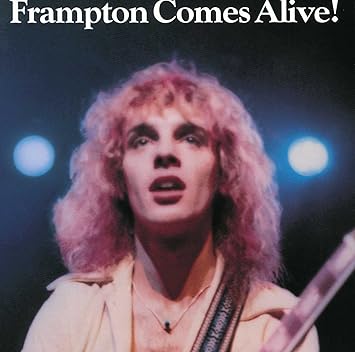
Peter Frampton: All I Want Is To Be (Is By Your Side)
[purchase]

It is far from an original thought to note that Frampton Comes Alive! came out of nowhere. Up until its release, Frampton, a talented guitarist, a passable singer, and a good looking guy with great hair, had experienced some minor fame with various bands, notably The Herd and Humble Pie, and as a sideman, but his pre-Comes Alive! solo career was generally underwhelming. A&M co-founder Jerry Moss had signed Frampton to the label when he was 19, because "He had a cool face, he didn't mind working, and he had a great attitude.” Frampton toured relentlessly and was one of those artists whose songs seem to work better live than on vinyl. And there was the talk-box effect.

So, when he recorded a live album, mostly at the Winterland in San Francisco, but also at the Long Island Arena and SUNY Plattsburgh, there really wasn’t much expected—it was released in January, 1976, after the holiday buying season—and A&M had its collective fingers crossed that it might sell half a million copies and be certified as a gold record. Instead, the album turned into the ultimate “grower.” It charted at No. 51 its second week, then rose to No. 22, No. 6, No. 4 and No. 2, where it stalled throughout March, before hitting No. 1 in April. And it showed staying power, bouncing around the top 10 for the rest of 1976, logging a total of 10 weeks at No. 1, and selling a shocking 6 million copies, which broke Carole King's sales record for Tapestry. Ultimately, it has sold more than 11 million copies worldwide.

Why? I’m not really sure. It is not a great album; much of it is really pretty ordinary (which is why his prior solo albums were not big hits). There are a handful of really good rock songs on the album—songs that rocked hard enough, but not too hard to be offensive—filled with hooks and tight playing. As a high school student in 1976, I can tell you that rock radio played the crap out of the record, and it certainly was a part of the soundtrack of my high school years. Mostly, we heard the singles: "Show Me The Way," "Baby, I Love Your Way," and "Do You Feel Like We Do," but some stations went a couple of tracks deeper than that. So, it might just have been a case of the right album at the right time—a solid product, well promoted, that probably became discussed as one of those things that you had to buy, because everyone was buying it--sort of a pre-Internet version of going viral.

In addition to the rockers, a number of the songs on the live album were acoustic, which were included at Moss’ insistence.  They showcased Frampton’s fine playing and made for a nice contrast from the heavier tracks. One of the best of these is “All I Want To Be (Is By Your Side),” originally from his debut solo album. It’s a nice, bluesy, love song, although I find the lyrics a bit confusing—“I don't care if they cut my hair/All I want to be is by your side.” Huh? But it satisfies the theme by being one of approximately a billion songs that mention four leaf clovers. Yeah, I could have gone with the Old 97’s, but I’m trying to write about artists that I haven’t featured before.

Comes Alive! was, by far, the pinnacle of Frampton’s career. His next album, rushed out to capitalize on his new-found superstardom, was generally substandard, marred by a cheesy, cheesecake album cover and a truly sappy title track. It sold reasonably well, but was generally mocked, including by Frank Zappa. He then starred in the critically panned Sgt. Pepper's Lonely Hearts Club Band film, and was in a serious car accident. A few years later, all his guitars were believed to be destroyed in a cargo plane crash that killed three people, including the black Les Paul Custom that appeared on the cover of Comes Alive! (although it was found years later and returned to him).

Since then, Frampton has released albums, toured with his childhood friend David Bowie (who had been an art student of Frampton's father) and others as a sideman, released an unsuccessful Frampton Comes Alive! II, and has generally stayed active musically, even if most people don’t realize it.  And, like many of us, he no longer has great hair.

I think that it is fair to say that if the universe hadn’t aligned to give Peter Frampton one of the bestselling albums of his era, he’d probably have continued, putting out a series of albums that would have bubbled under the radar of most listeners, maybe occasionally having a radio hit, before being pushed aside from the public consciousness by new generations of musicians, like, say, Foghat, or Pat Travers. That certainly doesn’t mean that they are not good—to the contrary, such artists, including Frampton, are fantastically talented, but still, the incredible, massive,  success of Comes Alive! is an anomaly.

LEAVES: Leaf and Stream/Wishbone Ash

There is always going to be an elephant in the room of this theme, what with the sort of leaf and leaves seeming to be of, um, such appeal to musicians and music lovers. And I don't mean tea. So I have deliberately looked away and have not inhaled today, celebrating the more pastoral side. As in ain't nature wonderful, which, of course it is. This too has also provided a rich vein of inspiration, especially in my home land and especially in the more whimsical days of the hippy/folk/prog interface. Wishbone Ash, who would have hated any of those epithets alone, let alone collectively, actually and amply epitomise this union. Songs about a mythical mystical past? Check. Gentle melodies sweetly sung? Check. Rippling, dual lead guitars, playing tunes rather than shredding the notes. Check, double check. All so Game of Thrones, but without any of the troublesome cussing or titties.


Wishbone Ash were the cool band to have an album of tucked under your arm. 'Argus', from which this song is plucked, and/or 'Pilgrimage' seemed to be the peak of teenage dudedom in the early 70s, at least at my school. Not too popular or chart-bothering, a little bit niche, certain to pop up on the Old Grey Whistle Test TV show or in NME, the inky weekly hipster's bible . Yup, I fell for all of this, hook, line and sinker until the great awkwardness of the punk wars came along, sweeping all with hair and melody away in the tsunami of year zero. Which I also loved, transferring my passions, cutting my hair and narrowing my trousers. I don't suppose I ever listened to anything of theirs again. But they didn't go away. Nobody did: they all play on and probably at a theatre near you soon. Ash, as their faithful called them, did better, or was it worse, musical differences, always musical differences, causing them to become 2, or is it 3, bands, each with some claim to the name. Ugliness and the courts intervened and so there are currently at least 2 versions on the road, Wishbone Ash, featuring one original member, Andy Powell, and Martin Turner's band notallowedtobecalledWishboneAsh (which they probably wouldn't be allowed to be called either), which contains, ironically not only Turner, who actually founded the original band, but often also another original member, (no relation) Ted Turner and the long serving drummer of those epochal recordings, Laurie Wisefield. The Powell helmed band have continued to release new material, the Turner version ploughing the classic furrows of yesteryear. Such is life, and I would probably see either band as having equal right to the name and to perform, without, to be fair, me taking the time and trouble to seek out either. (Would either, could either surpass the records?)

Here's the nearest thing to making that decision, a near-unplugged from the official Ash, in 2017, Andy Powell sadly not wielding the flying V that was as much their trademark* as anything else, but it is visible behind him, stacked against the drum podium. (*And maybe why the courts gave him the band?)


And here, from the year before, is Martin Taylor's.


Buy the original, when all is said and done, it is a beautiful song.

Tuesday, October 2, 2018

Leaves: Simon and Garfunkel: Leaves That Are Green


purchase [ Leaves ]

As the theme generator, I fuss with the Blogger tools to check previously-used themes. I keep my own Excel file of used/unused themes which I try to keep up to date. [It's hard after 20 years]

That means decisions about <fall> or <autumn> or, this time, <leaves> as a substitute to fall, since that is the season.

That said, the first song that came to mind for the <Leaves> theme (considering my age and time-frame) was: Leaves That Are Green, a classic <folk> hit from the 60s that almost qualifies for "pop", but not rock.

The Simon and Garfunkel duo made millions (I trust) from their 60s albums that blurred the boundaries between "[pop] songs your Mom approved of" and the simultaneous raucous rock that was brewing underneath. Theirs was a kind of acceptable pathway to the inevitable cacophany of the latter half of the 70s: "Pop is not so bad/probably OK. If moderated."

I don't mean to take away from their later forays: Garkunkle's <My Home Town> has its high points and verges away from their <folk> format, to some extent.

Simon has done some very positive expositions of alternative [African] vibes - to everyone's benefit. But they [individually and combined] are generally relegated to a status less than they really deserve for what they have given/left us.

I cannot re-create the atmosphere of the mid-60s for you, a time filled with Motown, emerging Stones and Beatles, short-lived acts like Manfred Man, the Monekeys and more.
 
However, Simon and Garfunkel kept it up - both through the psychedelia (without going down that path) and then for at least another generation ... well a decade or two ..., each in their own way.

Leaves That Are Green .. somewhere between rock and the future ....

Simon & Garfunkel go back far enough that there are visual/video records of their first appearances, and there is one of their earliest <Leaves That Are Green> shows available online.


And .. summer moving into fall - we've got green going to brown.

Enjoy ...