Saturday, April 20, 2019

WHAT!? : O WOT A DREAM/KEVIN AYERS

And so I move, seamlessly, from one Soft Machine alumnus to another, from Robert Wyatt to Kevin Ayers, together the rhythm section in the original line-up. Kevin is no longer with us, my buddy J.David penning some words at the time of his demise, but he is a fella that gave me great teenaged pleasure, with his uber-cool image, his prog credentials, so important to me at that time, but mainly, through his gloriously quirky and quixotic songs, often exhilaratingly bonkers, as indeed is this. Duck call percussion?


I came to Ayers a little behind the loop, via the teenage prodigy he had earlier hired on bass for his band, The Whole Wide World, one Mike Oldfield. Soft Machine were too clever and a bit old for me, but Tubular Bells was a sensation for me, upon its 1973 release, introducing me to any number of connections, as I perused the back story and looked at the names of his address book, mustered together for the live performances. Whilst I don't think Ayers was involved in the latter, I was particularly taken with his peculiarly english style of singing, espousing the usual transatlantic twang, then and now still so prevalent. It reminded me of another very english vocalist, early Pink Floyd focal piece and front man, Syd Barrett, exemplarised in this later solo track.


What I didn't know was that 'O Wot a Dream' was actually about Barrett, and that, after Barrett's lysergic exit from Pink Floyd, the two actually performed together on the above clip, 'Singing a Song in the Morning (Religious Experience)', the compelling guitar calisthenic being performed by Barrett, I have to say somewhat against the myth around his having entirely lost it. Still, the record company still saw fit to cut the end coda from the original cut, it taking until a re-release for it to see light of day. In this brief interview, a looking seriously out of it Ayers mentions the relationship at the very end of the clip, about 5.25.

As arguably an ill-fitting tribute to both, here is a poor quality recording of a less than 100% Ayers performing 'O Wot a Dream' at a 2007 Syd Barrett memorial concert. I think I probably prefer the duck call on the studio version to the jaw's harp. Finally, in case any might wonder, why the spelling, wy the wot, if you will? Personally I think this just adds to the overall anglocentricism of the song, but, who knows, maybe it was to avoid any confusion with this.

Wy not?

Thursday, April 18, 2019

What?!: What Are Their Names


purchase [If Only I Could Remember My Name]

Wikipedia tells us that Crosby's 1971 first solo album <If Only I Could Remember My Name> was selected for the Vatican's top pop 10 albums of all time list. What? David Crosby? The Vatican?
Said Crosby: It baffles me as much as it baffles you, man.

If Only I Could Remember My Name came on the heels of Deja Vu and was Crosby's solo album that coincided with the solo albums from each of the rest of CSNY.

The album seems rather raw to me. Others have labeled it as experimental. That is certainly true of this piece: the lyrics don't even kick in until the song is more or less finished, and up until that point, we listen to what I would call a rather wandering guitar. Very much <a la Jerry Garcia/Grateful Dead>. No surprise then to learn that Garcia helped to arrange and produce the album.

A news article in a recent Guardian noted that 1 percent of Brits own virtually all the land in the country. Although Crosby was probably more focused on the US, this song rifs on that theme.
What are their names? What do they care about you? About the state of the world beyond their wealth?  What does their "charity" mean for the future of the planet (like rebuilding Notre Dame)?

The entire lyrics aren't long and the "choir" singing it includes most of the Airplane, the Dead, Joni Mitchell and CSNY

I wonder who they are
The men who really run this land
And I wonder why they run it
With such a thoughtless hand
What are their names
And on what streets do they live
I'd like to ride right over
This afternoon and give
Them a piece of my mind
About peace for mankind
Peace is not an awful lot to ask


What?!: Be Thankful For What You Got


William DeVaughn: Be Thankful For What You Got
[purchase]

Sometimes, when there’s a theme with almost limitless possibilities, the best course is to jump on the first song that jumps into your head. If that were the case here, I’d be writing about The Buzzcocks’ “I Don’t Know What To Do With My Life.” But I’m not (yet, at least). My second thought was “(What’s So Funny) ‘Bout Peace Love and Understanding,” since I heard Nick Lowe sing that live the other day. But I have already written about that song in detail at Cover Me. (Did you know that Cover Me has a Patreon site? Check it out!)

Scrolling through the official J. David iTunes library (yes, I still have one. And an aol.com email address. Proves I’m an early adopter), I came across a bunch of possibilities, but stopped cold when I came to “Be Thankful For What You Got.” You know, that great, smooth, 1970s soul song, with the memorable line, “Diamond in the back / sunroof top / digging the scene with a gangster lean," sung by….by….Curtis Mayfield? Nope. The singer is William DeVaughn, who wrote the song, originally as “A Cadillac Don’t Come Easy,” while working full-time as a government draftsman.  Luckily, he changed the title, or I couldn’t be writing about it here.

DeVaughn took the song to Omega Sound in Philadelphia, maybe a step above a vanity studio, and paid $900 of his own hard-earned money to record it. Omega Sound, however, had connections with members of the MFSB group of studio musicians, who backed up many great acts, including Harold Melvin & the Blue Notes, the O’Jays, the Stylistics, the Spinners, Wilson Pickett, and Billy Paul, and had hits on their own, notably “TSOP (The Sound of Philadelphia).” MFSB sax player John Davis liked the song, suggested a jazzy, smooth, soulful arrangement, booked Sigma Sound Studios and enlisted some of his fellow MFSB members to play on the track.

What they created was something truly special, a song that became a huge crossover hit, and which has been covered, referenced and sampled by artists as diverse as Parliament-Funkadelic, N.W.A., Rumer, Gabor Szabo, Arthur Lee and Love, Rihanna and Massive Attack.

DeVaughn, a Jehovah’s Witness, had a couple of minor hits after “Be Thankful,” but appears to have not fully committed to a music career. Which is a shame, because he has a great voice, and could really write a song.

Sunday, April 14, 2019

WHAT?! : .........A WONDERFUL WORLD


I absolutely loathe this song. Or at least in the iteration it is best known, the version that ruined weeks and weeks and weeks of my childhood, spoiling my Top of the Pops viewing by being number one forever, or seeming to be. Louis bloody Armstrong, gurning away to the camera, all grimaces and duff notes, perpetually mopping his brow. How could anyone sweat that much? And as for the "woahhhhh yeaaaaaah" at the end. Dreadful, and still able to bring me out in hives. Now, don't get me wrong, I was probably about 10 years old, how was I to know that this buffoon was one of the seminal voices of jazz, albeit via a trumpet than his frayed vocal cords? I know all that now and respect the dude but still cannot allow myself much to like him. (And don't get me started on 'Hello Dolly'........)

But you know, it isn't actually a bad song. Or at least is capable of being made into quite a good song. There have been very many covers, many of which are clearly tributes to the original and, broadly, unnecessary. Then there are the standard make-overs in the idiom of the day. And others that are just downright odd. As in, what were they thinking? (I think a look in the eyes of the performers might just answer that question.)

But here are trio that, I believe, pass muster.


You could say this is just another idiom of the day offering, but you will have to understand the amount of love I have for this venerable performer, the sadly late Rico Rodriguez. This pillar of reggae trombone delighted me for many of his decades of activity in music. I probably first came across him on, again, Top of the Pops, he always present, alongside sidekick Dick Cuthell, on flugelhorn, whenever the Specials had a song in the chart. I later understood he had been an original in the early days of ska and reggae, in Jamaica, associated with the Skatalites, ahead of becoming an occasional member of Georgie Fame's Blue Flames in the 60s. His latter days were spent as a focal member of Jools Holland's Rhythm and Blues Orchestra, his solo spots always getting fond applause, even if eventually did little other than hold his trombone and sing a little. (Come to think of it, were I to witness, as a 10 year old, these performances, him as a grey bearded ancient, I wonder too whether I would have a similar opinion as I do now of Satchmo?)


Mac Rebennack, aka Dr. John is a serious fan of Armstrong and his legacy, producing a whole album in tribute to him. And it is a corker, start to finish, all tempered with the loose N'Awlins swing for which Rebennack is rightly lauded. This version also featured the Blind Boys of Alabama, vocal staples of a gospel and r'n'b sensibility since the cusp of the 40s. Having started off as a session man, a member of the fabled Wrecking Crew, Dr John invented himself as voodoo shaman, the Night Tripper, in 1968. However, he has perhaps become now more associated as a custodian and standard bearer for the musical pot-pourri that is his home city, often working with other vintage names from the heritage of New Orleans. His live shows remain a thing of wonder.


Finally I offer the majesty that is the vocal of Robert Wyatt. I apologise for each of my three choices having grey and grizzled beards; such now is the territory of musical iconography. Wyatt is another with a long lineage harking back into the 60s, initially as the drummer for proto-jazz-proggers Soft Machine and then his own band, Matching Mole. Following a terrible accident, in which he broke his back, he has become an elder statesman of a politically-hued brand of often unclassifiable blends of jazz, latin and all else available, both on his own and in any number of collaborations. And the odd hit single. This version of the song is the closing track on a wonderful 3 hander, alongside saxman, Gilad Atzmon and violinist Ros Stephen. This distils all the kitsch out of Armstrong's version, leaving a lighter sweetness that doesn't cloy on repeated. I love it.

Rico
Rebennack
Robert

Monday, April 8, 2019

Fake Bands: Ming Tea

[purchase]

I’m not exactly sure why KKafa took offense at my characterization that The Monkees were a fake band—in fact, as I wrote, some would argue that they turned into a real band. And argue he did. It isn’t a bad argument—although initially The Monkees didn’t, for the most part, write their own music or play their own instruments, as time went on, they did do more of both.

But I’m writing about a band that sort of evolved in the opposite way—starting out as sort of a real band, then gaining fame because they were in a movie. When Mike Myers left Saturday Night Live he formed a band with Matthew Sweet and ex-Bangle Susanna Hoffs to play 60s style music, which they called Ming Tea, after a fake company from the 1965 Ursula Andress movie, The 10th Victim. They decided to perform under pseudonyms: Sweet as Sid Belvedere, Hoffs as Jillian Shagwell and Myers as Austin Powers. I think you can see where this is going.

Myers’ wife at that time was Robin Ruzan (whose mother, Linda Richman, was the inspiration for Myers’ “Coffee TalkSNL sketches, suggested that Myers write a film based on this new “Austin Powers” character. And thus was born Austin Powers: International Man of Mystery. Keeping things in the family, Myers asked Hoffs’ husband, Jay Roach (who had directed one movie at that point) to direct the film. This launched Roach’s career, as well as vaulting Myers’ into movie stardom.

Ming Tea appeared throughout the film, augmented by actor Stuart Johnson as Manny Stixman (on drums, of course) and songwriter Christopher Ward as Trevor Aigburth, the lead guitarist. And they played “BBC” over the closing credits. The band performed on some talk shows to promote the film, and in the second sequel, Austin Powers in Goldmember, they performed “Daddy Wasn’t There.”

There appears to be some evidence on the interwebs of some later gigs, but no video. Sweet and Hoffs went on to do a series of cover albums together, among other things, and there are rumors of another Austin Powers sequel, so we may get another serving of Ming Tea. And that would certainly be groovy.

Saturday, April 6, 2019

FAKE BANDS: THE WOMBLES


It is becoming clear to me that there is a Roxy Music connection to all fake bands. Or at least the ones I am choosing. See if you can guess what it is with this band, who despite being made of felt, foam and cloth, sustained a number of hits through the 1970s, and a brief comeback in the late 90's, from which time the above clip is from.

At the time, of course, I thought it all tawdry nonsense, coming latterly, only now, to a sort of grudging respect. OK, the lyric will never win a Nobel prize and the tune, well, the less said the better. To this day, the writer and musical arranger, Mike Batt, has had to live with the derision this work has brought him, despite a long and illustrious career with songs and artists you will know. And some that will surprise. Did you know, for instance, that he signed grizzled blues-rockers The Groundhogs, producing also their first LP?


With skills mainly in the arrangements, of brass and strings, added to embellish more simplistic fare, he became an in demand name by the shrewd move of writing the theme tune to the TV series based about the mythical litter cleaning Wombles, who lived underground at Wimbledon Common, based upon the childrens books of Elizabeth Beresford. Instead of a flat fee, he asked instead for the musical rights to the characters, with the subsequent ker-ching of 8 hit singles and four gold albums.

Producing venerable folk-rockers Steeleye Span came next, arguably making their name with his retexturing of their sound, a move which appalled their die-hard fans, yet gave a huge boost to their finances, with a top ten hit record. I still loathe it, the arrangement seemingly one and the same as used for the Wombles.


As I write I realise upon quite how shaky the ground my 'respect' for Batt might be, but a soft spot does remain for his next project, the Art Garfunkel sung 'Bright Eyes', from the original animated version of 'Watership Down'. Thank goodness this wasn't ruined by tacky ching-kaching guitar riffing, but I bet there is somewhere a version in the vaults.....


Space (hooray) forbids me a further blow by blow, of how he discovered Katie Melua, how he orchestrated Justin Hayward, how he wrote innumerable projects with and for the Royal Philharmonic Orchestra and so on. But it is to space I return, as, astonishingly, last year saw a most unexpected coupling, an album and tour with Hawkwind, as they orchestrated their back catalogue to celebrate 50 years of their being space-rock gypsies of the counter-culture.


So, were the Wombles his serial high point or his low water mark? Arguably both. Or neither. But, far more important, what's the Roxy link? Right then, scroll back up to the top clip, the Wombles,  wombling free on Top of the Pops. See the one, Wellington, that is, with the flying V guitar? That's Chris Spedding, guitar for hire and session man extraordinaire, a latter day guitarist with the 2001 reformed version of Roxy Music, staying on to be the current guitar foil for Bryan Ferry. And still with the same guitar.

Remember you're a Womble!

Friday, April 5, 2019

Fake Bands: The Monkees


purchase [I'm a Believer ]


Despite what J. David says about the Monkees (or maybe in spite of what he says), they appeared to me as a real band. I had at least one of their albums. Actually, I had to do some searching to recall which one it was that I spent my allowance on, and it appears to have been not just one, but the first two albums! Aw, come one now- one hit from each: <Last Train to Clarksville> and <I'm a Believer>. Great Pop. For those days.

It must have been PR/chart appearances that did it for me. At that time, my musical selection was "guided" by AM radio hits - and that they had. I didn't have no older brother to set me straight, and - I confess - it appealed to some part of my adolescent psyche. We are talking late-mid 60s here and I was all of about 12 year old. The ideal demographic for their output.

It wasn't until a few years later, when someone more informed than myself shared Crawdaddy magazine with me, and I began to get a sense of the music industry's perfidies. The Monkees were a joke. That made money off of pre-teen dupes like myself. And they weren't the only industry that followed this curve by any means.

That said, we need to expose the fake-ness:
The Monkees were very real to me in 1967:  hey ... top of the charts is real enough. Seems it wasn't as real underneath- what was presented to the public:
Time magazine said> The Monkees are about as real as a fake band can get.

Fact is, it blew up: they really wanted to be real.

Again, as Time says > it’s hard to tell where the actors ended and the real band began.


Wednesday, April 3, 2019

FAKE BANDS: THE LITTLE LADIES (ROCK FOLLIES)


So it is just me then. Again. Rock Follies? TV show, in the 70s? It was shown stateside, I gather, possibly late at night, probably on PBS, but that wasn't, obviously, where I saw it. I was in my mid to late teens when this first appeared, a series set in the somewhat seamy setting of 70s London, following the aspirations of 3 women and their vainglorious journey towards rock stardom. Or not. Catnip to me, of course, embarking on my infatuation with music and the inkies, and featuring slinky and sultry women, together with the talents of Roxy Music sax and oboe meister, Andy Mackay.


If I am honest it was a better idea than a reality, the storyline somewhat predictable, the songs never quite good enough, maybe too broadly based for a true believer, pitched perhaps a bit lower to sustain the more casual viewer and to not frighten their possibly more civilian musical tastes. But it was there, and there wasn't much else of this ilk around. There was even a second series, rather more surreal and exotic, albeit no little kiboshed by a TV strike that took most shows off air for a while, the momentum lost as it returned. I also seem to recall some parental criticism as to it being 'unsuitable' viewing, missing entirely the exact reasons I may have been tuning in, but that's another tale.

What of the cast and after? The three leads, Rula Lenska, Charlotte Cornwell and Julie Covington, had mixed success. Despite the LPs from each series doing very well, an instant UK number one album for the first, only Covington was ever really much of a singer. Indeed, some may call the controversy later, when having provided the singing for the original recordings of 'Evita', by the time it opened in London on stage, she had been replaced by Elaine Paige, itself clearly long before Madge took the part in the film. This was not through her being in any way the worse singer, much, much better to my ears, but, in my suspicion, that she was a somewhat spiky figure, as compared to the altogether mumsier persona of Paige, who was, by coincidence, I am sure, the long time mistress of lyricist Tim Rice. (I should point out I have learnt subsequently that Covington actually turned down the stage role.) As well as continuing an acting career, Covington also made a fabulous LP, helmed by and featuring Richard Thompson, with the Island records folk-rock mafia of the day producing most of the backing musicianship. As well as an exemplary version of Thompson's '(I Want to See the) Bright Lights Tonight', this also included the UK hit single version of 'Only Women Bleed', surely the oddest and most atypical song written by Alice Cooper.


Cornwell never really seemed to make much headway thereafter, now more famous for being the half-sibling of spy author, John LeCarre. Meanwhile, Lenska, aside from shampoo adverts, settled into a career of providing exotic eastern european eye-candy into any number of british TV shows, arguably fitting as a descendant of Polish royalty.

I hesitate toward pointing toward either of the records, one from each series, but, nonetheless, if you are feeling brave, look further below...... Far better you come right up to date with Andy Mackay, a man seemingly never finding a niche outwith his time within the two periods of Roxy Music. In fact, he has produced a fair body of music aside and apart from that band, if none making any huge impact. But last year saw an ambitious project, '3 Psalms', come to fruition, an amalgam of his many influences, but notably drawing on his classical training and religious leanings; in 1991 he graduated as a Bachelor in Divinity. A setting of three biblical psalms, and an interlude, featuring orchestration, choirs, electronica and rock instrumentation, one track (one psalm) with erstwhile Roxy buddy Phil Manzanera on distinctive guitar, I can recommend it.


If you must.

Monday, April 1, 2019

Fake Bands: The Wonders


The Wonders: That Thing You Do
[purchase the film’s extended cut in which it seems that Hanks’ character might be gay]
[purchase the soundtrack]

I’ve written about, or at least mentioned, a bunch of fake bands, including The Archies, The Monkees (which some would argue turned into a real band), The Commitments, Spinal Tap, The Blues Brothers, and The Rutles. But never The Wonders.

In 1996, Tom Hanks was one of the biggest stars in Hollywood. He had recently done A League of Their Own, Sleepless in Seattle, Philadelphia, Forrest Gump (a move that I found to be overrated and uncomfortable to watch), and Apollo 13. And many of these roles won him Oscars, Golden Globes and other awards. But Hanks, like many actors, it seems, wanted to write and direct a film. While doing the lengthy publicity tour for Forrest Gump, Hanks became tired of talking about himself, and banged out a screenplay in 30 days, which 20th Century Fox agreed to produce it as long as Hanks agreed to star in it (which he did, as a record company executive).

Hanks, who had a love for early 60s music (particularly the Dave Clark Five, who he inducted into the Rock & Roll Hall of Fame That is Missing Many Great Acts and Includes Some Terrible Ones), wrote a story about a 60s band’s rise and fall, and even wrote much of the music for the soundtrack. The film, That Thing You Do! was filled with then-unknown actors, many of whom later became stars, including, in rough order of future fame, Charlize Theron, Liv Tyler, Tom Everett Scott, Giovanni Ribisi, Steve Zahn, Ethan Embry and Johnathon Schaech (and many of Hanks’ family and friends in smaller roles or cameos). And it was a charming, fun movie that was well received by both critics and the general public.

But one song that Hanks did not write was the title track, “That Thing You Do” (without the exclamation point). It was written by Adam Schlesinger, who wrote it at roughly the same time as his band, Fountains of Wayne, was working on its great debut album. Schlesinger (who I just found out is a cousin of Jon Bernthal, TV’s “The Punisher”) had just gotten his first publishing deal, and someone from the company told him that there was a call out for a song that would sound like something that an American band in 1964 would write, after being blown away by the Beatles. Schlesinger, who considered it a writing exercise, wrote a bouncy pop song, and recorded a demo, with Mike Viola, of The Candy Butchers, singing lead vocals because, as Schlesinger later stated, “He’s just a much better singer than me.” He got the gig.

In the film, “That Thing You Do” is originally a ballad, but when the band’s new drummer joins, he plays the song faster, and it becomes a hit. In the movie, the song hits #7, and the liner notes to the soundtrack album state that it peaked at #2. But, spoiler alert, the band breaks up before any more of their songs become hits. The real world also liked “That Thing You Do.” It had moderate chart success in the United States and overseas. Schlesinger was nominated for both an Oscar and Golden Globe for the song, losing out to a tear-jerker from Evita sung by Madonna.

The version of the song that appeared in the film was not played by the actors, who nevertheless learned to play their instruments so that it looked convincing, but instead was a re-recorded version of the demo. In 2017 three of the four actors got together and performed the song live—missing was Steve Zahn, who was the lead guitarist and who was replaced by someone else wearing a Zahn mask.  Ethan Embry, who played the bass player, and in a running gag, was never named (and whose character was listed in the credits as "T.B. Player), did perform.

Remarkably, the song has been covered a number of times, including by another Beatles’ influenced band, The Knack (although it failed to make my piece on their covers), and by ‘NSYNC.

Friday, March 29, 2019

AUSTRALIA(N): MARTY WILLSON-PIPER

So another non-australian, eh? Well, at least I'm consistent and, asked to bet on it, most familiar with the name will assume his nationality as australian, predominantly as his most active service has been with long-running Oz jangle-meisters, the Church. But he has had a long and varied outside his tenure with this still active band. (Indeed, I had toyed with they being the theme for this piece, but I felt some variety might be of wider interest, plus I had recently had to kick myself for missing a rare recent low-key solo gig by the man himself.)

The Church would be the place to start, by now a near Sydney, NSW, institution, since their formation in 1980. Briefly a 3-piece, Willson-Piper chanced upon them playing in a bar, he having recently arrived in the country, promptly inviting himself/being invited aboard, remaining a constant for 33 years. An unashamed guitar band, riding the crest of new-wave, but with a host of other influences bursting through, evolving constantly. I always saw them as a cross between the Byrds and Television, nothing shabby about either band, with gradual neo-psychedelic shades creeping in, echoes of Paisley Park both stylistically and sonically.

                                                   'Under the Milky Way'/The Church

There were always tensions within the band, notably between W-P and the other guitarist, main singer and songwriter, de-facto leader, Steve Kilbey, with minor flounces and prolonged hiatuses from and of  the band regularly taking place, during which other projects were avidly pursued. With getting on for 20 records released in the years he was with the band, it is difficult which best to commend, it possibly being best to start with any of several greatest hits packages. However, a different approach might be to pick up 2005s 'El Momento Descuidado', billed as an acoustic album,  mix of new and re-visited. His guitar play is  electric therein, even minus the electricity. In 2007 he left the band, relocating to Sweden, where he still resides.

During a couple of prolonged lay-offs from the Church, W-P became involved with UK folk-goths, 'All About Eve', as a replacement for their original guitarist, staying for their 3rd and 4th records, and al later re-union tour.

                                                        'Hide Child'/All About Eve

Solo work has often been in collaboration with long-term associate Andy 'Dare' Mason, as Noctorum, 4 albums appearing under that name. No transformation here into techno or C&W, the ambience is still of well-structured guitar based songs, emphasising the full use of the capabilities of a guitar, from melodic leads to high in the mix picking and strumming.

                                                  'Picadilly Circus in the Rain'/Noctorum

In between all of this, he has popped up in all manner of guises, often as a cameo role or even uncredited. This has included work with Aimee Mann, Tom Verlaine, 'Wedding Present'-er Dave Gedge and, a compulsory mention, given this fortnight's theme, aussie punk veterans, the Saints. Currently he is involved with swedish prog band, Anekdoten, still finding time to tour with his wife, the show I missed. Apparently it was a corker. Here's some footage from the actual gig, playing an old Church number, his wife, Olivia, on violin.

For further background, here is a fabulous recent interview. I also felt some readers may be interested in his crate-digging enthusiasm, he, as well as playing on all manner of records, collects the damn things to.......

Start?


Tuesday, March 26, 2019

Australia: Jo Jo Zep & The Falcons/Hit and Run


Jo Jo Zep & The Falcons: Hit and Run
[purchase]

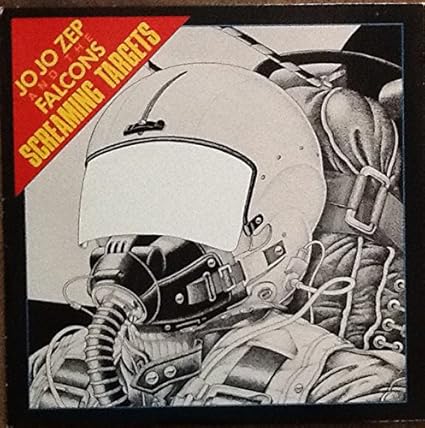
When I saw the album, Screaming Targets by Jo Jo Zep & The Falcons described by the WPRB reviewer as being from the “Australian Graham Parker,” I was certainly intrigued. I had become a huge Parker fan after the release of Squeezing Out Sparks, and used my access to the record library in the basement of Holder Hall to investigate his back catalogue. And the reviewer wasn’t wrong—there was a definite Parkeresque feel to Screaming Targets, whose songs included the rock, blues, soul and reggae influences that were all included in Parker’s work. “Hit and Run,” is a fun tune with a reggae feel, and my other favorite from the album, “Only The Lonely Heart,” is more of a straightforward rocker.

Of course, calling someone the Australian Graham Parker is unfair both to Joe Camilleri and Parker—both are unique artists with individual sounds. I remember how much fun David Letterman (him, again) had bringing performers on his show that were, say, the Elvis Presley of Uruguay, or the Frank Sinatra of Hungary (I’m making those up—I can’t find the real ones online), and while they certainly were reminiscent of whoever they were supposed to sound like, it did sort of diminish their own talent.

But Jo Jo Zep & the Falcons was a fine band in their own right. Formed in 1975 in Melbourne as Jo Jo Zep and His Little Helpers to record a cover of the Chuck Berry holiday classic, “Run Rudolph Run,” it took its name from Camilleri’s Maltese-derived nickname. The band began gigging, cycled through members and renamed itself before releasing their first single in 1976, sung not by Camilleri, but by then-guitarist Wayne Burt. After releasing their debut, Burt left, and the band focused more on R&B and blues music. By their third album, released in 1978, they had achieved popularity in Australia, as well as fans overseas, such as Parker and Elvis Costello, who covered the band’s “So Young.”

Screaming Targets, the band’s first U.S. release, spawned a world tour, but apparently, it led to tensions among the members. After another album, which was pretty good, but not as good as Screaming Targets, was unsuccessful, the band began to break up, and the “Falcons” name was jettisoned. A move to include salsa music in Jo Jo Zep’s sound led to “Taxi Mary,” a hit in Australia, a few more releases, and the end, before a reformation in 2003 and the occasional one-off performance.

Jo Jo Zep & The Falcons were inducted into the Australian Recording Industry Association (ARIA) Hall of Fame in 2007. Were they a great band? I don’t really know, because my familiarity with them is really limited to two albums, one of which was excellent, but I don’t really think so. But as Camilleri stated in an interview before the induction, "I'm chuffed. I think the Falcons did play a part in the Australian music explosion ... I'm happy it's been acknowledged. The Falcons were a band out of time. What we played wasn't what was being played. It was an R&B/reggae sound in the time of flares and funk and pop music. Somehow we slotted in."

Thursday, March 21, 2019

AUSTRALIA(N): GEORGE YOUNG

No brainer this one, the opportunity to showcase this fairly recently deceased legend of oz rock, George Young. Who he? Shame on you, but you know his work, even if, latterly, you know his brothers better. But here's a thing, by quirk of fate, chance or whatever, George Young just happens also to be the same name as mine, albeit if translated into the english.

Like many famous australians, see also the brothers Gibb and the fella from Men at Work, Young was born in the UK, but it was in his adopted home that he became famous. First came The Easybeats, with him teaming up with Harry Vanda, another scion of an immigrant family. Even if they/he were remembered for but one song, the timeless 'Friday On My Mind', that would be more than enough to celebrate, a massive worldwide hit in 1967. They actually then relocated to the UK in attempt to consolidate on this, breaking up a couple of years later.


Young thereafter returned home, along with Vanda, becoming hired guns for any aussie band seeking a writing/production team. Whilst they never achieved quite the same success, his younger brothers, Angus and Malcolm, were growing up, were also seeking to make a name in the music business. Big bro George was conveniently on hand to light that fuse, the duo producing their first few records, with Young initially playing the bass guitar as well. That band went on to make quite a name for themselves. You may have heard of them......


I have to freely confess AC/DC were and are my worst nightmare, a generic 'rawk' thrash of limited merit, but many beg to differ. I was much happier when the Vanda/Young team returned to their own projects, notably with another worldwide one hit wonder, 'Waiting on a Train', in 1982, by the curiously named Flash and the Pan. (I am uncertain which was which.) F&tP actually had a number of recordings but this was the prime cut, demonstrating that, on the right day, the pair had an undoubted knack with smithing a song. Grace Jones' 1981 'Walking in the Rain', was a cover of one of their songs. Earlier 1977 ear worm, 'Love is in the Air', taken to the heights of charts all over, was also one of theirs, albeit ahead of F&tP. (John Paul Young was unrelated.)


George Young died in 2017.
Friday.
Flash.

Tuesday, March 19, 2019

Australia(n): Men At Work/Down Under


purchase [Down Under]

There really isn't anything more Australian in this genre than Men at Work's <Down Under>.
I've checked the SMM records: surprisingly, there's no record of either Men at Work nor Down Under!

Maybe that's not such a surprise: the group had but a single major hit (some lesser hits, OK). But this song is the first that comes to [my] mind when you say "Australia". No?

Back in 1982, I used to record MTV to VHS tapes so that I could watch these hits again and again 10,000 miles away at any time I wished.

The SongFacts web site provides some depth to the bottle-clanging in the official video for the song:
>It was just a little bass riff with some percussion that he played on bottles which were filled with water to varying degrees to get different notes. It was a very intriguing little groove.
I really loved it, it had a real trance-like quality to it. I used to listen to it in the car all the time.<


Avicii & Men at Work above (more Avicii here)

Australia: Midnight Oil/Blue Sky Mining


Midnight Oil: Blue Sky Mine
[purchase]

There are many great bands and musicians from Australia, and I hope that we get to a bunch of them over the next two weeks. I’m going to start off with my favorite, Midnight Oil. Like most Americans who have heard of Midnight Oil, I first became aware of them with what is still probably their most famous song, “Beds are Burning,” from 1987’s Diesel and Dust (released in the US in 1988). It is a great song, highlighting the claims of indigenous Australians to their historic land. And the album raised other concerns of indigenous Australians and environmental matters (and had another great single, “The Dead Heart.”)

Not surprisingly, there was a bit of a backlash about a bunch of white guys raising these issues, but it seems that the band did all of the right things (like donating their royalties to indigenous organizations and touring with indigenous bands), and it seems that eventually, most people appreciated the fact that Midnight Oil’s popularity raised the profile of these issues.

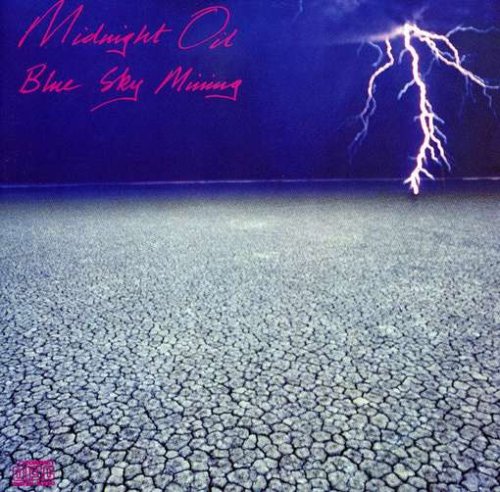
It was the band’s next album, 1990’s Blue Sky Mining, that made me a confirmed fan—in fact to this day, it remains one of my favorite albums, and is included in any conversation about my “Desert Island Discs.” I think that while it lacks a single track that has the staying power of “Beds are Burning,” each of Blue Sky Mining’s 10 songs are strong, and the album holds together from the opening sorta title track, “Blue Sky Mine,” about the experiences of workers at the Wittenoom blue asbestos mines, to the environmentally focused closer “Antarctica.”

The band decided to both make their music a little more accessible and make their message even more political, and it worked. Not to mention that the success of their prior album gave them the opportunity to work at a better studio, so the sound of the album is much cleaner. There are songs about the need to remember and examine Australia’s difficult history, corrupt politics, divisiveness, and other environmental and political issues. Damn—all of these issues are still problems in the world. Here’s a nice article about the album, including an interview with guitarist Jim Moginie and producer Warne Livesey, looking back on it after 25 years.

Midnight Oil’s environmental and political emphasis was not just empty rhetoric. On the tour supporting Blue Sky Mining, the band, in New York to play at Radio City Music Hall, pulled up on a flatbed truck at Exxon’s nearby headquarters, unfurled a banner that read “Midnight Oil makes you dance, Exxon oil makes us sick” and played a 30-minute lunch-hour set to protest the prior year’s Exxon Valdez spill. Peter Garrett. the band’s 6’4” shaved-head frontman was the President of the Australian Conservation Foundation in 1989–1993 and 1998–2002, and during 1993–1998 he was on the International Board of Greenpeace. He also served in the Australian House of Representatives and in the Cabinet as Minister for the Environment, Heritage and the Arts and later as Minister for School Education, Early Childhood and Youth.

David Letterman loved Midnight Oil, and I loved Dave. He usually introduced them with some crack about how Garrett scared him, and referred to them as “bushmen,” which seemed funny at the time, but hasn’t really aged well. Here’s a video of their performances on his show, and in the last one, you can hear some of Dave’s comments.

Being who I am, I did go back and get copies of most of the band’s albums before Diesel and Dust, and they didn’t totally grab me, and I didn’t listen to them much. They seemed to be searching for a style, mixing punk, pop and even prog influences that really came together in a trio of albums that started with Diesel, continued with Blue Sky and ended up with its successor, Earth and Sun and Moon (with a fine live set that was released during this period). After that, although they put out some good music, to my ears they never again reached the peak of that three album run. They are a band that I have never seen live, and regret it.

Midnight Oil disbanded in 2002, when Garrett left the band, although they reformed intermittently for benefit shows. They reunited for a world tour in 2017 (somehow, I missed their NY dates) and are touring Europe and the UK later this year.

Saturday, March 16, 2019

Lion/Lamb: Leo Kottke


purchase some essential [ Leo Kottke  ]

Seems to me that the jump from Lion/Lamb to Leo is perfectly reasonable for our current theme, considering the derivation of the two.

Leo Kottke has always held me in awe since I first heard him back in the 70's.
There is something different about his style - a not necessarily visible "attack" to the strings of his guitar. An approach more felt than seen. Not quite as removed from a standard chord progression as John Fahey's way out there style, but still verging in the same dissociation from the expected. He hits notes unexpected, but they fit in in their own way.

Kottke has influenced no small number of musicians. It's hard to have heard him and not been affected by his style: the ring of the strings, the repetition ...

One of my favorites of Kottke's works is his interpretation of Bach's <Jesu Joy>.
I took a moment to go off on a tangent from this, remembering that Bach has various references to sheep in his work (You know .. Jesus as pastor of his flock.  And in fact, there are Bach "lyrics" of that sort:  ... while we like sheep ...

But I couldn't locate any Kottke video to back this up.

Friday, March 15, 2019

LION/LAMB: MOSES & THE LAMB/THE WAIFS

Uncertain whether I would be lion enough to manage this, given I have spent the last five days driving from my home, in the middle of England, to Sweden, via (a ferry to) Holland, Germany and Denmark. And now, a return journey. No, not escaping the shitstorm of Brexit, even if I'd like to, delivering instead my son to his girlfriend, and a new life, in Malmo. But, no lamb me, here I sit, in the cold, literally, light of early morning, tapping away, making me feel, in the middle of Westphalia, quite the adventurer. Which is a clunky way of introducing this tune and the band that play it, Australia's the Waifs, australians seeming always the most inveterate of travellers. (As they display with this early number.)


This song is from their sixth album, 'Temptation', in 2011, by which time they had moved from becoming world famous in their homeland to slightly known elsewhere. A support slot with Bob Dylan clearly did no harm, transporting them from his 2003 tour of Oz to the north american continuation thereof. I had come across them from appearances on the UK festival circuit around that time, liking the rootsy sounds, amalgamating bits of folk with blues and country. Consisting of two sisters, growing up with their dad's record collection, and a busker they met, asking him to join their band within hours, or so the story goes, a name was steadily built.

What's it about? I guess it sounds a standard gospel/blues standard; indeed, I thought it was. Actually it was penned by Josh Cunningham, the aforesaid busker, and stems from his becoming a born-again christian. Round about the same time, one of the sisters, Donna Simpson, got sober, with some of the other songs recounting that journey. I have no record of what the other sister/other member Vicki Thorn was going through at the time, but it is a fine, if sometimes galling, record.

Two records have followed, in 2014 and 2017 respectively. The title track of the latter, 'Ironbank', effectively offers an explanation of how and why they still exist. I'm glad they do.


Moses & the Lamb, here

Tuesday, March 12, 2019

Lion/Lamb: Mary Had a Little Lamb


Stevie Ray Vaughan and Double Trouble: Mary Had A Little Lamb
[purchase]

Ultimately, what underlies this blog, over its long history, is recorded music. And while Edison may not have been the first person to figure out how to record stuff that could be played back (that achievement is currently credited to Édouard-Léon Scott de Martinville, who invented the phonoautograph in the mid-1850s, but never profited from it), he was the one who popularized it, and in the technology world, the glory often goes not to the first, but to the best or luckiest marketer.

The first thing that Edison recorded in 1877 was the nursery rhyme, “Mary Had a Little Lamb.” That original recording has been lost, but a recording of the rhyme on an Edison machine in 1878 by Thomas Mason, a St. Louis newspaper political writer, still exists, and you can hear that here, after some music.  (It is wrongly attributed to Edison, as you can read here.) In 1927, at the Golden Jubilee of the Phonograph ceremony, Edison recalled that fateful day, and you can hear that here. And if you are interested in the disputed history of the writing of the original rhyme, the Wikipedia article is here.

Although there’s sort of a sing-song tune that goes along with the rhyme, we are not going to discuss that, even though it is probably already lodged in your brain right now.  Sorry.  Instead, we will jump ahead to 1968, and an album by soon to be Blues Legend Buddy Guy, A Man and the Blues, on which he recorded a fun, bluesy version of “Mary Had a Little Lamb,” throwing in a little “A Tisket, A Tasket,” for good measure.. (In 1990, when my son was all of two months old, my wife and I brought him to Central Park to a free Buddy Guy show. We did stand in the back—somewhere in this picture, maybe--but Buddy jumped off the stage and ran through the crowd playing, and came right up to us. Begging the question whether we were very good or very bad parents. I don’t recall whether he played “Mary” that day, because I was enthralled by his playing, and was worried about my infant son and his mother, considering that I had been a father for all of two months and had no clue what I was doing.)

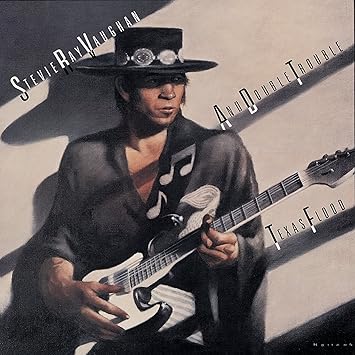
Frankly, though, I first became aware of the tune from Stevie Ray Vaughan’s version on his debut album from 1983, Texas Flood, which spawned the better known singles "Pride and Joy" and "Love Struck Baby," and the great live version on Live Alive. There’s really not much more to say about it—it was clearly a goof when Guy recorded it (if brilliantly done), and Vaughan seemed to regard it similarly, but also as another showcase for his incendiary guitar playing.

OK—one more thing. This article, which discusses the song, posits that Guy swiped the song, knowingly or not, from Freddie King’s instrumental “Just Pickin',” which itself may have been nicked from another bluesman, Earl Hooker, whose song “Two Bugs and a Roach” sounds similar. Who knows?

No one, though, seems to have sued anyone over the royalties.

Saturday, March 9, 2019

LION/LAMB: THE LION & THE UNICORN/THE MEN THEY COULDN'T HANG


Ever vigilant in my aim to extend my often anglocentric peccadilloes to a wider audience, I dare say The Men They Couldn't Hang may be an unknown quantity to many readers. Which is a pity. Indeed, they are probably also fairly niche on these shores, despite recently ratcheting up a 35th year of performing. Arising out of the short-lived UK cowpunk movement of the 80s, which also produced the Pogues in their earliest incarnation, as well as lesser known names as the Boothill Foot-Tappers. (I know, I can hear the yells from Distressed, Arkansas, chiding me for using the term cowpunk, a term that, a little later, became the term for a more aggressive and electric ragged country sound in the US,  a sort of americana before it was called americana, but, much as I like that too, we used it first and, hey, I'm writing. My guys were a little gentler and used a little more acousticity.)

Pulling tropes from folk music, country and punk, TMTCH always had a strong sense of history, and, hailing from the naval garrison town of Portsmouth, often this was maritime history, encompassing anything from smuggling to the Napoleonic wars. I was drawn in early, finding their rough hewn melodic jangle very much to my ears. A flurry of records appeared between 1984 and 1991, when they first threw in the towel. But no band ever really breaks up these days, do they? In 1996, buoyed by a few interim reunion, they officially reformed, or at least the dominant front line of singer/songwriters Paul Simmonds, Phil 'Swill' Odgers and Stefan Cush, backed by a varying line-up in the rhythm section of guitar, bass and drums, with, often, the additional services of Bobby Valentino, fiddler extraordinaire and Clark Gable lookalike. In the intervening 20 years they have kept up a credible presence, alternating full band tours with individual projects, albeit often with one or other of them tagging along. I have seen them twice, in about 1990 and then again last year. (Here's what I thought.)


So how about the song? And what of lions and unicorns? Actually, a timely moment to consider, 20 odd days ahead of the UK 'regaining' its sovereignty and bouncing out of europe. Or at least the EEC. At the time of writing, no deal yet forthcoming, it looks and feels as comforting as a poke in the eye. The lion and the unicorn are the heraldic emblems on the country's coat of arms. If the lion is a symbol of fierce steadfastness, the unicorn is a symbol of fantasy. I know which feels the more realistic.

How prophetic are these words, penned by Paul Simmonds in 1990, describing his then perception of the status of this nation. I would hate for history to become literally the only future.


'Welcome friends from overseas
I'm your guide I aim to please
I know what you want from me
Sights and smiles and history
I'll take you down to the Underground
Tha's where the spirit of the Blitz is found
Hear those sirens over your head?
See that platform, thats your bed

(Chorus)
Who went mad, who drowned in drink?
Who's in a cage and who's extinct?
Who ended up in a uniform?
The Lion and The Unicorn

Here's the church there's the steeple
Open it up where are the people?
Thinking up ways to take your dough
By deal or scheme or unseen blow
Now out to the shires where the towns are quaint
We spruced them up with a coat of paint
That white paint don't cover up dirt
Bandages don't cover up hurt

(Chorus)
I'll tell you tales of kings and sailors
Puritans, outlaws, thieves and traitors
Show you round the land we made
Whisper something we betrayed
So where's the hope, where's the reason?
Poisoned by the years of treason
Where's the justice where's the grace?
Disappeared without a trace'

Here is a live version.

Friday, March 8, 2019

Lion/Lamb: Mbube/The Lion Sleeps Tonight

[purchase]

On the one hand, trying to write about the history of this song seems to be biting off more than I want to chew, and yet, despite the popularity of the song, and the publicity about its twisted backstory, it may not be known to all of the readers of this blog.

If you are interested in more than this summary, check out this, or this, or this.

The song that we know now as “The Lion Sleeps Tonight” was originally written by Solomon Linda, an illiterate black man born in the Zulu lands in South Africa in 1909. He led an a capella band, the Evening Birds, and wrote a song for them called “Mbube,” which means lion in Zulu. It was inspired by Linda’s childhood work as a cattle herder, who had to protect the flock from hungry mbube.

The song, and its style, were so popular that its title became the name for the style. Its release in 1939 by Gallo Records was a success and the song became popular in Europe during the 1940s, ultimately selling over 100,000 copies, despite, you know, World War II, making it the first African record to reach that level of sales. The great ethnomusicologist Allan Lomax played a copy of Linda’s record for his buddy Pete Seeger in 1949. Mishearing the lyrics as “Wimoweh” (a not unreasonable position if you listen to it), ultimately Seeger arranged the song for the Weavers (and a full orchestra).

Linda, poor and likely unaware of the burgeoning popularity of his song, sold the rights for pennies to the studio (and also took a job at the company’s packing plant). And Seeger, who apparently believed the song to be a “traditional” song (note that the label of the 78 in the video above doesn’t credit a writer), credited his version of the song to "Traditional", with arrangement by "Paul Campbell,” a pseudonym that the Weavers used to get writing royalties, thus meaning that Linda (or the company he sold the rights to) got nothing.

“Wimoweh” became a big hit for the Weavers, and a part of their standard repertoire, including in a famous performance at Carnegie Hall. It also became a popular song for other folk groups to record, including the Kingston Trio (who credited the song to the fictional Campbell and the real Linda). South African singer Miriam Makeba recorded the song in 1960 as “Mbube,” and credited it to “J. Linda” (and she sang it at JFK’s birthday party, right before Marilyn Monroe’s more famous performance.)

The next year, George David Weiss was hired to arrange a pop version of “Wimoweh,” and he wrote the lyrics for what became known as “The Lion Sleeps Tonight,” which was released by the Tokens, and became a No. 1 hit. The song was credited to “Albert Stanton,” a pseudonym for Al Brackman, who was the partner of Howie Richmond, Pete Seeger’s music publisher. There have been hundreds of covers of the song, in all of its various guises, over the years--even by Brian Eno--and it has been used in movies and plays, most notably the productions and soundtracks of The Lion King.

In a just world, this money would have gone to Solomon Linda, or his descendants. Of course, this is music publishing, so you know that didn’t happen. It appears that Eric Gallo, who bought the rights to the song from Linda, had cut a (bad) deal with Richmond, exchanging the rights to the song for the right to administer it in South Africa and other small markets. Seeger eventually discovered that Linda was the original writer of the song, and wanted his share of the royalties to go to him. He entered into a contract with Linda for this purpose, and directed his publishers to keep sending Linda his share of any royalties. It appears, though, that this didn’t really happen. Seeger later pleaded ignorance, saying, “I didn’t realize what was going on, and I regret it. I have always left money up to other people. I was kind of stupid.” Not only that, but it appears that Linda and his heirs were basically shut out from royalties from “The Lion Sleeps Tonight.”

In 1991, there was an arbitration among some of the rights holders to the songs, at the end of which, the Linda family is awarded 10% of writers’ performance royalties. So very little of the money generated from the song’s huge Lion King popularity made it to them, and they continued to live in poverty.

But, like the popularity of the song, the story wasn’t over. A South African writer, Rian Malan wrote an article in Rolling Stone, which is linked above, explaining in detail the sordid details summarized above. That article spawned an Emmy winning documentary, A Lion’s Trail. Which led to a lawsuit. That lawsuit, however, was not a sure thing—Linda had sold the rights to “Mbube,” and his wife and daughter each did the same. But Disney, the defendant, decided that it didn’t want the bad publicity, and settled the case, confidentially, as is common in such settlements, but which required them to pay certain royalties, both back and going forward, to the Linda family.

So, while justice was not really served, significant injustice was mitigate.

Friday, March 1, 2019

TITLES & HONORIFICS: WE THREE KINGS.........

So many titles, so little time, so I thought I would cheat and sling in a threefer, three for the price of one, choosing three heads of royalty of differing style and background. Of course, there are many Kings in music, even if we discount those with the surname King. So no Albert, Ben E. or B.B. And I thought I would stick to titles rather than honourifics, so no Kings of Pop, Delta Blues or even the.


King Curtis may be an unfamiliar name to many, albeit probably not here, but the diversity of his career and the broadness of his legacy surpasses many better known names. His given name, Curtis Ousley is even less well known. As a child in the sixties, and teen in the seventies, my first awareness of him was his raw honking on John Lennon's Imagine album, especially on 'It's So Hard'. Subtle it ain't, and though he became best known for his aggressive and rasping sound, it wasn't always so. His early influences were in jazz, with his joining Lionel Hampton's band instead of taking up a music scholarship, before branching into sessions. One early piece of work was with Buddy Holly, 'Reminiscin'', for which Holly gave him the songwriting credit. Mixing his own work, with several successful singles of his own, alongside working as a bandleader for, amongst others, Aretha Franklin, he continued still to find plenty of session work. Tragically he was killed in 1971, being stabbed in a fracas with a couple of dealers he heard arguing outside his front door. The song below, made before his death, gave him a grammy for best R&B instrumental, featuring also the late Duane Allman on guitar.


King Tubby is a name associated more as a producer and re-mixer, that being his metier. Unarguably one of the fathers of dub, that studio process of vast and sudden echoes and repeats clattering around a soundscape, entire instruments dropping randomly in and out, all underpinned by subterranean basslines. I bloody love it and, the older I get, so I can't get enough. (Plus it is the golden guarantee of getting a crying baby off to sleep, rocking in your arms to some of Kingston's finest.) Tubby or Neil Fraser as he was known to his mother, is seen largely the instigator of this style, working out of his studio from the late 50s, evolving the format over the next decade or so. Principally derived within and from reggae, in more recent times it has become a much loved tool of re-mixers, some of Tubby's disciples, notably the Mad Professor applying the same techniques to dance and electronica. Here, another of his acolytes, Scientist, explains the roots of dub. Sadly, and worryingly for my 3rd King, Tubby was also murdered, this time shot, and also on his front porch.


So we have had some gold and some frankincense. So it must be creosote time. Or King Creosote, aka Kenny Anderson, from the Kingdom of Fife, in Scotland. An astonishingly busy career has seen him start and run his own record label, produce and collaborate with any number of other artists and release over 40 recordings of his own, all by his half-century. Most has, however, been under any mainstream radar, however world famous in his own backyard.  Through his Fence Collective he was able to nurture local talent and one famous graduate of that scene is K.T. Tunstall. Other names such as James Yorkston and onetime business partner, Johnny Lynch, aka Pictish Trail, have also had some wider exposure. Creosote himself gradually has become more widely known, in part through his soundtrack work, notably 'From Scotland With Love', and through his work with electronica artist Jon Hopkins. More recently still, his last record, 'Astronaut Meets Appleman', in 2016, featured in many best of year lists, including my own, his mix of a whimsical and emphatically scottish folk sensibility with a motorik rhythm, effortlessly crossing many a barrier of genre. Here's my review of him live in 2017. Give him some eartime and spread his word wider. (Plus he is still alive!)


Curtis.
Tubby.
Creosote.