










Woah, this might cause some ruffles, SMM being often/usually/mostly a rap and hip-hop free zone, with the name above capable of causing resonating ripples of fear amongst our faithful readership. (Hi, Mom!) Panic not, whilst I have heard of the Bobby Valentino, mainly through search engine malarkey, I am unfamiliar with his body of work. And I am told body is the correct word. In the plural. O, go on, then.......
I refer to the other Bobby Valentino. I dare say you may have seen him, on videos, perhaps more often than necessarily known who he is. A staple on the UK scene for 30 odd years, he has popped up on many a bands output, whenever violin is required to give some additional flavour. Thus, if you remember the the Bluebells, Style Council, Big Country and the Christians, whenever you hear fiddle, chances are it's him. He has also appeared with artists as diverse as Tom Petty and Mark Knopfler. The brother of notable arranger and member of the Art of Noise, Ann Dudley, he is probably best known for his part in the UK top 10 single, 'Young at Heart', by the Bluebells, from which he belatedly received a writing credit, having successfully convinced a judge of the integral part of his violin part. Used extensively in a VW worldwide advert, which gave an even more successful return hit, this income has probably kept him in 'tache wax and hair oil ever since.
Yes, it is also his distinctive appearance, a Clark Gable lookalike, that has arguably as much kept him in the limelight as his playing, although, to be fair, he is no slouch, able also on guitar and mandolin, posessing a delightful baritone croon. I have caught a fair amount of his lesser known and more full-time musical activities, being an acknowledged fan of pedal-steel maestro and maverick, B.J. Cole. Valentino and Cole have had a long running involvement together, first as members of Hank Wangford, the singing gynaecologist's band(s), secondly in their own intermittent country-rock band, Los Pistoleros, with ex-Graham Parker and the Rumour guitarist, Martin Belmont. They are an absolute hoot live, and still gig from time to time, other commitments willing. Valentino has also made a trio of solo recordings, or perhaps the same one thrice, as many of the songs are duplicated across each of them, as well as on Pistoleros recordings. I'll forgive him for this as I am a fan. He has also been a longterm occasional member of another favourite band of mine, The Men They Couldn't Hang, featured here. In fact, I have just bought a ticket for a duo gig, Valentino with Phil 'Swill' Odgers, one of the lead singers/writers of said band.
As an afterword, perhaps buoyed by his earlier success, he took the Bobby Valentino I haven't discussed to court, enforcing the once named Bobby Williams to change his stage name to Bobby V. (I wonder what this fella would have had to say about that?)
You're in the groove, Jackson, is his best record!
So which Jones do you want? Mick, Mick(e)y, Mike or Michael? And which do you expect?
Let's be honest, Jones isn't such an unusual name, to the extent potential siblings David and Thomas may turn up in related contributions, but with Jones, M, we really are spoilt for choice. But I am not going to touch on the Micks of that ilk, too obvious, so how about a brace of Mickys, additional e optional.
I don't know so much about Mickey Jones beyond his being the drummer in the Dylan goes electric tour of 1966. Yup, me too, I had always assumed that Levon Helm had that seat, but he had quit the transitional Hawks --> Band shortly beforehand. Jones, having been drumming for other giants of the counter culture like Trini Lopez, was hired, staying until the fabled motorbike crash that took Dylan off the boards for a while. Jones took the opportunity for a change in career, via a short spell with Kenny Rogers and the First Edition, yes, playing on that song. He then spent the remainder of his career playing bit parts in films memorable and unmemorable, playing characters credited and uncredited, like 'Burly Miner' in 'Total Recall' and 'Mechanic' in 'National Lampoon's Vacation'.
Micky Jones, however, was possibly instrumental in one of the best and most long-standing Jam bands these islands have produced, and certainly the best from Wales, being that principalities version of the Grateful Dead. What do you mean you have never heard of Man?
Man formed out of the ashes of a not entirely unsuccessful 60s band, the Bystanders, who had some minor chart success and were regulars on the radio, when 'needle time' restrictions required there to be bands willing to play live, often performing cover versions of chart hits. However as the dawn of the 70s approached, a core of that band, principally Micky Jones, on guitar and vocals, wished to try a new direction, having been vitalised by some of the music outpouring fro the West Coast of the U.S, Moby Grape, Quicksilver Messenger Service and the Dead, guitar bands with well-honed improvisational skills, able to freewheel a 3 minute LP track into a 10 -20 minute live behemoth, sometimes longer. Initially more popular in mainland Europe, particularly Germany, the style of gigging there, involving multiple sets over a single evening, on successive nights, as a 'residency', ring any bells, assuring their jamming competencies were put to the test. A test they passed and surpassed. A regular line-up was never quite achievable, as Jones apart, there seemed almost a revolving door policy on several members, leaving or being sacked and being recruited on several occasions. One famous member was Deke Leonard, known in his own right, left and joined again on at least 4 occasions. Perhaps best known, in his later, sometimes contemporaneous bands, was drummer Terry Williams, later of Rockpile and Dire Straits.There always seemed someone available, old or new, able to dep at moments notice, their myriad live recordings bearing witness to an astonishing array of recruits, including one John Cipollina, erstwhile member of Quicksilver Messenger Service, a case of influence joining influencee. I got to hear the band at their peak period, the early 70s, during which the most characteristic studio recordings were made. 'Be Good to Yourself at Least Once a Day' exemplifies both their style and their attitude. Coming out in 1972, this record had 2 tracks on each side, each a free wheeling extemporisation around fairly simple themes. Live, of course, only the stag curfew held any limit. It was no secret they were fans of the weed, their best known song, 'Bananas', being a celebration, in its short vocal interlude, to cannabis sativa and why. The album also gives a good potted history of Welsh rock which, despite his having been in one of his 'between' (sacked) periods, was penned by Leonard.
Bananas 1972
Between 1977 and 1983 the band retired itself, the flavour of the day no longer being for long hair, dope and guitar solos. But you can't keep a good man (ouch, sorry) down and they lurched back into life, still very much under the de facto leadership of Micky Jones. Recruiting, yet again, Leonard/ also on guitar, and longterm bassist Martin Ace, together with an only once changing drummer, this line-up lasted an astonishing 9 years, ahead of then recruiting a keyboard player back into the fold. Health issues then began to arise. Jones developed signs of a brain tumour in 2002, having to leave for treatment. Intriguingly, given the title of this piece, his place was taken by his son, George. Clearly not that one. When Jones Sr. returned, Leonard again left, so George stayed on. A further deterioration meant another absence, with Martin Ace's son, Josh, replacing Micky, until the band eventually split, in 2006. Micky Jones had further tumours and eventually died as a result, in 2010. Leonard had a number of strokes and died in 2017. Various other band members have also died, often of respiratory related conditions such as lung cancer or emphysema, should all that heavy duty spliffage leave you to draw any conclusions. End of the story?
Of course not! Man continue to play, now under the helm of last man standing Martin Ace, along with his son, and Micky's son, the latter 2 having spent a spell playing under the 'Son of Man' name, ahead of becoming absorbed back into the mothership. Sort of son is the father of the man, man!
Bananas 2017 Here, should this extraordinary history entice, is a greater historical detail, from the band's own site. Meanwhile, as the band have always said, quite whatever it means, keep on crinting!!!
I like to eat bananas 'Cos they got no bones I like marijuana 'Cos it gets me stoned
Surprisingly, there are a few Ian McDonalds or MacDonalds who are prominent in British music, although maybe it isn’t all that surprising, since I bet it is a pretty common name over there (and here, for that matter, according to Google). And there are some connections among them. So, you need to pay close attention here, or you might get lost.
Let’s start with multi-instrumentalist Ian McDonald, born in 1946 in Osterly, England, best known for his woodwind playing. This McDonald participated in sessions in 1968 with Michael and Peter Giles, Robert Fripp and McDonald’s then-girlfriend, Judy Dyble (who had recently been replaced in Fairport Convention by Sandy Denny). After some personnel shifting, the nucleus of Fripp, Michael Giles and McDonald, along with Greg Lake, became King Crimson, releasing the classic In The Court of the Crimson King. He left the band after that record along with percussionist Michael Giles, and recorded an album as McDonald and Giles (although Giles also appeared on King Crimson’s second album as a session musician).
McDonald became a session musician playing on, among other songs, T. Rex’s “Bang a Gong,” before guesting on King Crimson’s great Red album, with plans to rejoin the band, until Fripp (temporarily) disbanded it. Moving from the sublime to the ridiculous, he became a founding member of Foreigner (with one of the Mick Joneses), forcing me to mention that execrable band (Note—it is hard to type while holding your nose).
Thereafter, he was a member of the 21st Century Schizoid Band, essentially a Crimson cover band featuring mostly former (and future) members of King Crimson, has backed a number of other musicians, including former Genesis guitarist Steve Hackett, former King Crimson singer/bassist John Wetton, Dyble, and others, and has guested with Asia.
Moving on to Ian Matthews MacDonald, also born in 1946 (9 days before the guy above), in the delightfully named Barton-upon Humber, England, although he later moved to the not delightfully named Scunthorpe. In 1967, this MacDonald was recruited to join Fairport Convention, and sang on their first two albums, the first of which included Judy Dyble. At some point, he changed his name to Ian Matthews, to avoid confusion with the King Crimson McDonald.
When Fairport Convention began to move away from American folk/rock music and toward British folk, Ian found himself not invited to recording sessions, and quit/was fired before the release of Fairport’s great Unhalfbricking album.
Matthews then formed Matthews’ Southern Comfort, an essentially Americana album, initially featuring a number of members of Fairport and their circle—his second album spawned a hit cover of Joni Mitchell’s “Woodstock.” After that, he was in and out of various bands and released solo albums with very occasional commercial success, and changed the spelling of his first name to Iain.
British music critic Ian MacCormick changed his name to Ian MacDonald and is best known for a book, Revolution in the Head, a critical history of the Beatles. But this MacDonald was also a musician, providing lyrics to the band Quiet Sun, which featured his brother Bill MacCormick and future Roxy Music guitarist Phil Manzanera. He sang backup on Quiet Sun’s excellent “reunion” album Mainstream. Maybe he is on this song. Sadly, he committed suicide in 2003 after suffering for years with depression.
There’s also an American actor named Ian MacDonald (born Ulva Pippy in 1914), possibly best known as villain Frank Miller in High Noon(although in 1949’s Come to the Stable, he played Mr. Matthews). I have no idea if his character’s first name was Ian, or Iain, for that matter.
I like Mark Knopfler. I mean .. I don't know him to like him in that sense, but from back in the
days of <Sultans of Swing> and <Money For Nothing/I Want My MTV>, and through his collaboration with Chet Atkins (one of my favorites), film sound-track work, various session work and further projects with Clapton, the man has retained my respect. Respect for his musicianship,
respect for what I can sense of his personality. Respect for cutting out when he deemed he'd had enough of the kind of lime-light that Dire Straits must have brought upon his head.
It appears that he commands a similar like-ability/respect from fellow musicians: the list of people
his has collaborated with is best seen at Wikipedia:
Even with the relative <drive/rock fury> of Dire Straits, I think you can sense a certain laid-backness to the man/his style. Maybe that is why he seems to fit in so well with other musicians (with a like mind?)
As in they coulda/woulda/shoulda, Trees were the band Fairport Convention could have been if Dave Swarbrick hadn't been knocking about, a heady infusion of psychedelia and trad.arr. Contrary to current accepted dogma, Fairport weren't the sole progenitors of ye olde folke-rocke, merely the ones who took it first and foremost into their entire modus operandi, for 'Liege and Lief', having really only dipped their toes in and out before, gradually mingling elements of a folk tradition into their initially more american singer-songwriter palette. Trees were arguably ahead of them at that moment, with a potent stew of their own songs, a mix of meandering guitar based whimsies and folk club standards, applied with the same patchouli scented rhythmic brush. Plus, without a fiddle, they could resist the temptation of a jig and reel based sensibility, which would later give the genre a bad name. There was a slew of similar bands, vying for attention alongside, most, too, cast to the ranks of also-rans. I'm thinking Comus, Dando Shaft, Mellow Candle and Tea and Symphony. (Deliberate non-mention of Dr Strangely Strange and the Incredible String Band, each worthy of pieces of their own.)
The Garden of Jane Delawney
She Moves Through the Fair Both from 'The Garden of Jane Delawney', 1970
Coming together in 1969, a collection of friends and acquaintances, loosely related to the UK University of East Anglia. A 5 piece of 2 guitars, one each of acoustic and searing electric, bass and drums, vocals were provided by Celia Humphris, the friend of a friend, who was auditioned predominantly as none were otherwise strong enough in that department. Here's a pretty good interview with Humphris. (Don't panic, the translated article follows directly the italian!). Record companies were eagerly recruiting in these days, and multi-record deals were plentiful to any possible contenders, so, within months, the relatively inexperienced ensemble were signed to CBS. Whilst they perhaps failed to deliver the promise on the front of success, the critics loved 'em and the plaudits were plentiful. As so often the way, radio DJ John Peel played no small part in bringing their name into the open, citing that he wished he could devote a whole show to their music. But fame wasn't beckoning, good reviews failing to translate into sales, and so, after two records, they folded, a lifespan of barely 3 years. A 2nd version launched briefly, this time adding the by now de rigeur fiddle, although Humphris was the sole remaining original member.
Fool
Polly on the Shore
Both from 'On the Shore', 1971
Remarkably for a band of it's time, there have been, as yet, no re-unions, no reformations, possibly adding to the mystique. Performances have occasionally been mooted, without ever quite taking off. But the recordings have remained in print, slowly and steadily selling, buoyed by re-issues and helped by the odd stroke of luck: of all bands, Gnarls Barkley, maverick soul/electronica duo, sampled their song, 'Geordie', on the song 'St Elsewhere', the opening and title track of their 2006 debut.
Tom of Bedlam: 'Trees Live', 1973 (later line-up)
I would say the time period 1968 - 1972 was as fertile a period in music as any before or since. The fact that it coincided with my formative years was a wonderful stroke of luck, if perhaps explaining my opinion. And whilst I have loved music since that time and discovered music from before, if not necessarily to the actual recordings, it is often to the musicians who then first paid their dues that I most frequently return.
It has been a while since I’ve written about prog rock, and I initially considered writing about two songs from one of my favorite Genesis albums, Selling England By The Pound, “The Battle of Epping Forest,” based on a real gang war, because “forest,” and/or “I Know What I Like (In Your Wardrobe),” about a groundskeeper who says, “Me, I'm just a lawnmower/You can tell me by the way I walk.”
But no, let’s go deeper into the prog rock weeds.
Prog, at least back in its heyday of the early/mid 70s was really a European thing. Most of the famous bands associated with the genre are English, German, French, Italian, etc. But there were American prog bands. Back in 2015, Rolling Stone published a list of the 50 Greatest Prog Rock Albums of All Time, and fittingly, most were from European bands, most of which you have probably heard of (including the aforementioned Selling England By The Pound, at No. 6. The highest ranked U.S. album was from Frank Zappa and the Mothers of Invention, One Size Fits All (Canadians Rush, though had albums ranked 3 and 11.)
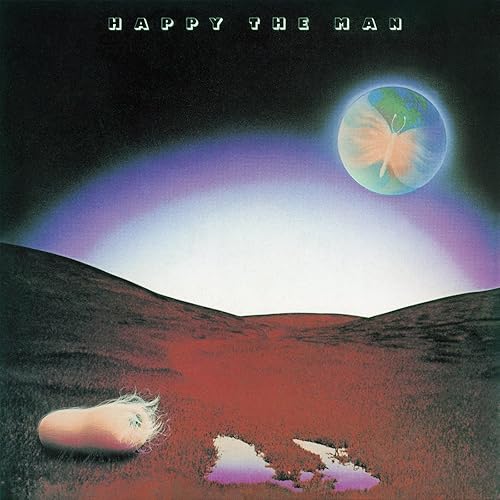
Bringing up the rear, at 50, was the self-titled debut album from a band that many consider the greatest American prog band of them all, Happy The Man, maybe, the greatest band that you’ve never heard of.
Formed in and around James Madison University in Virginia in 1973, the band predictably went through lineup changes before settling down, moving to Washington, D.C., and becoming well-known enough that Arista Records signed them. And at about the same time, the newly solo Peter Gabriel met with the band and demoed a couple of songs, before Gabriel decided to go in a different direction for his first album. I kind of wish he had stuck with HTM, though, because it probably would have been great.
These guys could play, with complex songs mixing Zappa, Gentle Giant and Canterbury Scene type songs with more Genesis like ballads. What they really couldn’t do was sing, or write lyrics (often an issue with bands of this type). But if you stick to the instrumentals, you will be blown away.
“Stumpy Meets The Firecracker In Stencil Forest” is a great, knotty instrumental, featuring great guitar, sax and synth playing, and if the often excessive length of prog songs turns you off, it is a compact 4:16. (And look, just because the title references a “stencil forest,” that doesn’t mean that it doesn’t have trees. The Black Forest isn’t black, and is filled with trees. Rain forests aren’t made of rain. Bighorn National Forest isn’t filled with sheep. Just saying.)
After releasing their debut, Happy The Man toured around the country, opening for bands as diverse as Renaissance and Hot Tuna, and recorded and released a second just slightly less amazing album, Crafty Hands. Neither album sold at all, and Arista dropped them. A third album was recorded in 1979, but not released until 1983 (I’ve never heard it), and keyboard player Kit Watkins left to join the somewhat more famous British band Camel. Other members of HTM formed and played in obscure bands or as solo acts over the years, and there was a brief reunion in the early 2000s.
If you like this genre of music and haven’t heard of Happy The Man, check out this song, and their first two albums (feel free to skip the three songs with vocals, but they do have some merit).
(It's extraordinary the things you discover in this job, one being the difference a space between 2 words can make. And the similarity. 'Dead Grass' is the name of an album by the late great fidler extraordinaire Vassar Clements, of whose music I have been a fan since I was 15. 'Deadgrass' is the name of a band who peddle the self same concept as did that album, albeit as a current working live band. And whose bio seems resolutely to avoid any reference to the earlier. Funny that.)
So, 'Dead Grass', then? More or less as it says on the tin, the music of the Grateful Dead through a bluegrass filter. Arguably not as great a leap as it sounds, Garcia's pre-Dead background in jugbands and his lifelong love of and sidetracking into banjo based acoustic hillbilly music being well known. I have racks of this stuff from Old and in the Way, through myriad duet sets with David Grisman, a celebrated mandolin player, also a member of OaitW. Vassar Clements, himself no stranger to Garcia and the band, having played on 'In the Wake of the Flood' and been also a 3rd member of OaitW, was, or certainly looked, much older school than his cohorts, and had an interesting life.
Born in 1928 and self-taught on the fiddle, he soon came to the attention of Bill Monroe, joining his Bluegrass Boys, barely as he turned 20. After a few years live experience he was ready for greater recognition, spending time with many of the bluegrass giants, including playing, alongside Lester Flatt and Earl Scruggs on this masterpiece. However, the middle of the 60s saw him fall prey to the bottle, and it seemed it had fully let him down, he scraping by in dead-end jobs.
Newly sober and developing a new name for himself, in sessions, he was fortunate enough to find himself swept up into the commotion of a groundbreaking moment in american music, The Nitty Gritty Dirt Band's 'Will the Circle Be Unbroken', in 1972.
This fabulous collaborative piece of work was the idea of the Dirt Band and their then manager, to team up their no mean talents with those of the generation behind them, putting a bunch of longhaired hippies into the room with a bunch of distrustful short-back-and-sides elder statesmen, like Roy Acuff, Jimmie Martin and the aforementioned Scruggs. Astonishingly it gelled, the recorded between song dialogue reflecting the initial suspicions. Clements featured heavily, arguably, alongside Doc Watson, the blind guitar-picking maestro, coming off the best of an impressive roster. From there, his second wind was off, Grateful Dead sessions, work with an immediately post Allman's Dickey Betts and a solo career. As mentioned earlier, he joined up with Jerry Garcia, Dave Grisman, bass player John Kahn and another ex-Bluegrass Boy, Peter Rowan, on guitar, to form Old and in the Way. With Garcia on banjo, they had a modus operandi of playing both traditional songs and grassed up covers of contemporary songs. Whilst no Dead songs made it on to any of their records, I would think it strange if they didn't sneak the odd one into their live sets, no doubt fuelling the idea for 'Dead Grass', which appeared in 2000, arguably helped along by the 'Pickin' On' series. For me, 'Dead Grass' has the greater whiff of authenticity, Clements being a tangible link to the band, the songs remaining songs, proper songs with vocals, rather than the slight sterility of meticulously rehearsed instrumentals.
In the intervening years Clements had remained busy, taking forward his concept of Hillbilly Jazz, a freewheeling amalgam of blue grass, western swing, jazz and old-times standards. The similarly entitled 1975 album is a thing of some wonder. Seldom ever can Bob Wills and Benny Goodman have sat alongside each other in the song credits. Very much Clement's project, backing musicians included David Bromberg and longtime Elvis drummer, D.J. Fontana. I remember reading about this record a year or two after 'Will The Circle', never ever seeming to be able to find a copy. I finally remedied that about 15 years ago, about the time Amazon were becoming a player, and from whom you could get anything. A joy better late than never.
There were a few more similar recordings, but the ever itchy fingered Clements kept stretching his boundaries, including a fascinating duet live recording with Stephane Grappelli, their styles seemingly poles apart, the Hot Club de Paris translated to a log cabin in the Appalachians. It shouldn't, but it works, believe me. Towards the end of his life; he died in 2005, he was exploring the blues, his final recording being 'Livin' With the Blues', another belter, alongside the likes of Elvin Bishop, Maria Muldaur and likeminded genre-defining harmonica man, Norton Buffalo.
I love fiddle music and how it can touch any style. If my top three exponents include Sugar Cane Harris and Dave Swarbrick, Clements is surely the king.
<Green, Green Grass of Home> may well be the first Trees/Grass song that comes to mind for people my age. Possibly followed by <Tie a Yellow Ribbon>. I cannot say that either of them does much for me besides bring back memories - we were severely exposed to both as they sat atop the charts for longer than I would have placed them there.
For me, Green, Green Grass was a Tom Jones hit. I've brought this next point up before, but since we are talking memories... My pop music exposure during Tom Jones' Green Green Grass period was via a short-wave transistor radio connection to pirate radio Radio Luxembourg, more than 1,500 miles away. This meant that the signal came and went such that you mostly caught snippets of the song.
In perusing the Wikipedia article for the song, I was struck by the number of known covers of the song beyond Tom Jones: Johnny Darrell and Porter Wagoner, credited with the first public exposures, and then Jerry Lee Lewis, Joan Baez, Elvis, Nick Cave, Kenny Rogers - and believe it or not, the Grateful Dead.
I also had not fully focused on the lyrics - certainly registering the general melancholy, but ascribing that to an aspect of what I assumed Country music was like. And perhaps not totally wrongly - there are no few songs that lament the state of some po' boy on Death Row, for that's the story the song tells. If you hadn't noticed:
There's a guard, and there's a sad old padre, Arm in arm, we'll walk at daybreak Yes, they'll all come to see me in the shade of that old oak tree, So they lay me 'neath the green, green grass of home
This one appears to be a classic in its own realm, but - judging from the fact that several others have covered it - not so far out of the mainstream.
Back when I was an undergraduate student at "Camp Gitchie Goomie" (bonus points if you can provide its real name), the school hosted a group known as Martin, Bogan & Armstrong. From their album Martin, Bogan & Armstrong (maybe their only album?), here's a song that kinda pushes the limits of our current theme.
I mean, grass ... as in "weed"- of the once/still(?) semi-legal variety.
<If You'se a Viper> was written back in the '30s (soon we'll need to clarify that as the <19>30s!), and there are various interpretations of the song.
The title possibly refers (not reefers) to the sound that emanates from "toking" on a doobie: a hiss, not unlike one that a snake might make?
The song is credited to Snuff Smith (and that's another path worthy of following...).
In the 1920s/30s, a lot of jazz musicians smoked grass. There's a fair amount about the inter-twining of the song itself and the US/WWII era in the Wikipedia article that is fairly entertaining and informative. If the subject interests you, it is worth a read.
There are takes from Fats Waller, The Manhattan Transfer and Jim Kweskin.
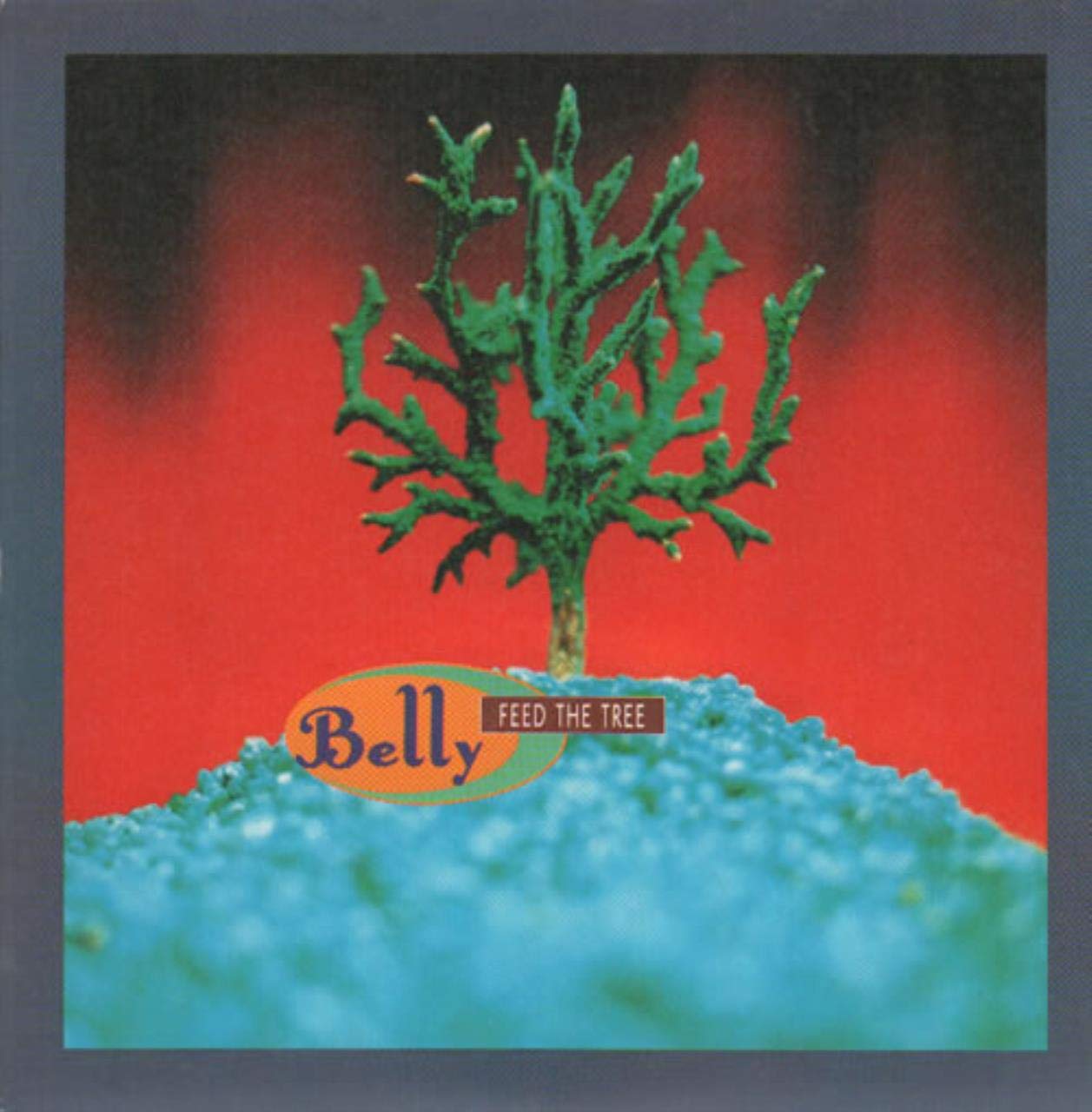
Belly was a band formed by Tanya Donnelly, who had been in Throwing Muses and The Breeders. They put out a great album in 1993, a less great album in 1995, broke up in 1996 and have recently reformed.
The big song off the great album (Star), “Feed The Tree,” was both dreamy and propulsive, with a great hook. It became a big hit on MTV when that was a thing, topped the Billboard Modern Rock chart, and broke into the Hot 100. I didn’t quite know what the song meant when I was blasting it back in the 90s, but later understood it to from the perspective of a dead person, buried under a tree, talking to a visiting mourner.
Googling the song before writing, I found a much repeated quote from Donnelly (although I haven’t been able to find the primary source, which probably would have annoyed my senior thesis advisor) in the Illinois Entertainer, in which she said that the song is about commitment and respect. The metaphor is the tree that would be planted on large farms as a point of reference to getting around (the only tree sometimes). Because nothing would grow under the large tree, the family would be buried under it.
My father-in-law died last week. He loved classical music and jazz, and some folk, but I suspect that he would not have been particularly fond of Belly, or the song. But he did love trees. In fact, he loved all beautiful things—he was an architect with an incredible eye, a remarkable photographer, a devoted college professor, and an artist and a lover of art, who, with my mother-in-law, turned an ordinary house into a sanctuary filled with art—including his photographs (and my wife’s), his drawings and other projects, works purchased from artist friends and acquaintances, and items picked up on their travels around the world—most notably museum-quality African sculpture.
The house is surrounded by acres of woods, in which they (until he was unable to walk easily) spent many hours walking, admiring the forest, and cleaning up the inevitable debris in an attempt to improve on nature. Back when my kids were little, we would go into the woods and choose one of the small pine trees that he had identified and nurtured during the year to use as a Christmas tree. As someone who grew up without a tree during the holidays, I enjoyed the tradition, too.
My mother-in-law, in her late eighties, still scampers through the woods more nimbly than people decades younger (like me, who has referred to these nature walks as “forced marches”). And just recently, they acted on a long-discussed plan, donating the bulk of the property to the local land conservation trust, so that others can enjoy the trees (and the two brooks), freely, and without fear of development.
There is also a beautiful katsura tree on their property (on the part they didn’t give away) that always seemed to bring him enormous joy. It is a beautiful tree, which has leaves that change color from reddish-purple, to blue-green as they mature, and then yellow in autumn. He loved that tree.
My in-laws have donated their bodies to the University of Connecticut Medical School, so for the short term, his body will be used to train doctors, and then cremated, so he won’t be feeding any trees after death. But during his life, he fed many trees. And minds, and hearts, and eyes, and brains.
I am never quite sure whether I prefer New Order as a sound or as an idea. If it is the former, it is definitely the spindly treble of the bass that is a major component. If the latter it is the ridiculous posturing of Peter Hook, bass guitar round his knees, legs akimbo, somehow still managing to make contact with his strings.
In the day, I never really got baggy and Mad-chester; I think I was already too old, finding all the druggy Hacienda nonsense outwith my taste. But I liked the idea of Anthony Wilson and the whole Factory Records conceit. And I absolutely loved Fac. 73, otherwise known as 'Blue Monday'. (Factory records famously gave a catalogue number to much more than just their recorded releases, so that the aforementioned Hacienda nightclub was Fac. 51, its resident cat Fac.191 and Wilson's eventual coffin Fac.501.) Blue Monday was the single from the 2nd album by New Order, 1983's 'Power, Corruption and Lies'. I had been vaguely aware of the band, predominantly down to the acclaim and coverage given the earlier Ian Curtis helmed version of the band, 'Joy Division', ahead of his suicide. Much as I tried, I could never find any love for this band, expecting New Order to be the same. Probably through the addition of Gillian Gilbert's keyboards and programming, I found to my delight their electronica/dance influences far easier to swallow than the post-punk agitated spiky guitars and epileptiform (I know) ticcing of JD.
There are apparently abundant reasons why Hook developed his idiosyncratic style of, if you will, lead bass guitar. Firstly it was the allegedly dodgy equipment used, wherein the amplifier and speakers couldn't manage lower registers. However the second reason arose mainly from the sequencer and synthesizer driven patterns underpinning so many of the songs. Add that to the fact the guitar was almost a purely rhythmic instrument and it becomes apparent of the spaces left, crying out for counterpoint. Strangely I find the comparison is with the blues, say with B. B. King, his guitar replying in call and response to the vocal, so too does Hook use his bass to answer both the vocals and the main thrust of the the electronica. A human heart within the machine.
'Blue Monday' apart, I was probably fairly lukewarm about their offerings until the swansong, both with and of Factory. This was 'Republic', and the run of singles emanating therefrom, notably 'Regret'. I adored this. At which point they split for 8 years. But, in no small part due to the flurry of re-releases and remixes released in the interim, back they bounced, in 2001, with my 2nd favourite, 'Get Ready'. Even with a slight return to the more guitar driven earlier style, still Hook's bass remained as high in the mix as it sat low on its strap.
I sort of lost interest after that. That line-up seemed to peter out, even as the size of the by now stadium gigs became larger. It is clear there were internal frictions, predominantly between guitarist/ singer and self-appointed leader, Bernard Sumner, and Hook. Each have written about this extensively in the wake of Hook leaving the band, and the subsequent lawsuits as he tried to get some degree of payout for his participation in the sound, before, during and after. Involved in a number of side projects over the years, of late he has concentrated on his own band, Peter Hook and the Light, effectively a New Order tribute and covers band, albeit with his one vital and authentic ingredient. I have never seen New Order live, regretting that point, as, even as they continue to exist, somehow, for me, the focus has been lost. I would love, however, to see Peter Hook and the Light, and I hope I will.
Ryland P Cooder has always gone out of his way.
Gone out of his way to promote music that most others would not. See his JAZZ album that includes non-traditional instruments such as: cimbalo, tuba ... See various songs from Into the Purple Valley, Paradise and Lunch, Chicken Skin Music, Bop Till You Drop
Gone out of his way to bring back music that others forgot. Hawaii, Carribean ...
Gone out of his way to speak up for others who had only a small voice. (How's about Down in Hollywood, for that perspective?) Then there's the Buena Vista Social Club project that - in and of itself -revived an entire genre of music.
Among the issues he has raised (because raising issues through his music is what he does) is the <Chavez Ravine> story.
Now .. you're about to ask what the relation to the theme is?
<3rd Base, Dodger Stadium> is about BASEball, because the Chavez Ravine area was torn up by eminent domain in order to build the baseball stadium, and its mostly Latino residents were left out in the open - the land eventually ending up as the ball park.
Cooder's song highlights one of the displaced residents who eventually ends up with a job tied to the new ball park venue: parking cars around the stadium. (His house was 3rd base, folks!) But, at least in Cooder's version he takes it with a grain of salt, without the kind of chip on his shoulders that you and I might have had...
The song relates how his home was located at the spot where 3rd base ended up. He lost his home, but found work right there all the same.
I have so long wanted to do this post, the bassline, or is it the baseline, of the Stranglers being such a glorious sound. For about 10 years, 1977 - 1987, they were avowedly my favourite band, in no small part due to the bass guitar of Jean-Jacques Burnel. OK, as a only ever a pretend punk: ex-public schoolboy at medical school perhaps not being core demographic, they hit all my buttons, being slightly older and keyboard based, with no small nod to the Doors and a guitarist at school with and in his first band with Richard Thompson. (I have covered this ground before.)
It was only later I learnt the unique bass timbre was anything but, with yet another frisson of joy when I heard this, by another even earlier favourite band, the Move. Roy Wood, leader of the band, decided he disliked the bass parts on 1971's 'Message to the Country' so much as to remove them and do them himself. Title track below.
But this post is to celebrate J.J., from the unmistakable dum der dum of 'Peaches' to the later more melodic gallic noodling of 'La Folie'. My favourite bit of Burnel is actually from their first release, the last track from 'Rattus Norvegicus', 'Down in the Sewer', with, at about 6min.30, a beautiful countermelody within the instrumental finale to the song. Listen to it, above. But what about his other stuff? Always a more complicated figure than the lampoon of he being the inchoate muscle to Cornwell's lofty intellect, he has been de facto leader of the band since Cornwell left, dismissing his erstwhile bandmates, as so did many, as a spent force. It may have taken many of the subsequent near 30 years, but it is arguable that they now have a bigger fanbase than at their 80's peak, and can put out material to critical assent, touring near constantly, way, way more than merely as a greatest hits machine. (Perversely, this is arguably what Cornwell has become, albeit in his way, satisfying the undoubted hunger to hear all those songs in his voice.) Here's an enlightening interview with Burnel from not so long ago.
Burnel has also produced 3 albums of his own, together with one alongside keyboard Strangler Dave Greenfield. These underline his avowedly franco-european heritage, the first, in 1979, 'The Euroman Cometh', addressing a future wherein a president of the united states of Europe is necessary to see off the dual threats of a american values and soviet subversion. Just, perhaps, the sort of thing the potentially disintegrating Europe of today, fuelled by my country's dismal performance, needs? I somehow doubt JJ is a Brexiteer. The lyrics start by commenting on any modern european having to contend with the shared lineage of Charlemagne, Oliver Cromwell and Hitler, so not exactly moon in june. Not entirely successful in the intent to fuse electronica with rock, it makes for interesting, if dated, listening.
Perhaps less portentous, and more accessible came 'Un Jour Parfait', echoing very much the sound his day-job was beginning to investigate at around the same time, possibly why, give or take a later soundtrack album (for a japanese anime version, set in the future, of the Count of Monte Cristo, 'Gunkutsuou'), solo work became superfluous. He had a band to keep on the road. So, what better, given it his basslines we are here to celebrate, than a track from the Stranglers, 21st century style:
'Time Was Once on My Side', 2012, with it's near lead bass motifs, has a clear back reference to their original style. Maybe I, like so many who lapsed, should give them a go again and I feel I might.
I have generally worked with the assumption that most basic (pop) songs are based on the the I-IV-V progression. And it's true: songs such as She Loves You, Twistin' the Night Away and If You're Happy and You Know It are all essentially variations of the I-IV-V standard.
And then, just the other night, I watched a performance from a group of exceptionally talented vocalists, who maintained a I-I-I progression (if progression it can be called) for minutes on end.
That's essentially a "drone" - and what became apparent to me- in terms of viability/interest - was what the musician overlays the "static" backup with - for example, a soaring solo in the same key - is what really makes the song.
There would seem to be a major element of jazz/experiment behind this: classic pop, it's not.
Unless the song becomes a (popular) hit.
So ... How to work in the role of a basic bass line that moves around, but is limited to a single note/<chord> and is part of a major hit?
A bit of a quandary. But it's been done. More than once. Aretha's "Chain of Fools" is one such.
Here's another: kind of the epitome of making the most of what (little) you got: a single chord.
But it works perfectly well. Makes me wonder if the Doors didn't do something similar?
When I read the theme announcement the other day, I thought, how about writing something that discusses how overused the phrase "the base" is in political discussions. You know, how commentators are always saying that "Trump is playing to his base" or "The Democrats are pandering to their base."
And then I remembered that I already wrote that, back in February, at my personal blog, Another Old Guy. Yes, I'm not afraid to shamelessly cross-promote. And if you click on this link, you can read the piece there, and also find out what J. David's real name is.
I promise to write something original at some point during the run of this theme, and I promise that it won't be about bass fishing, Lance Bass, or BASE jumping.
Well I made a right pig's ear of that, didn't I? Did all my jiggery-pokery and pressed send, only to realise buddies KKafa and J.David had already put out on that day. So I pulled back in for an edit/revision, aka delaying tactics. 48 hours grace and re-press send. And it's in the same bloody place........... More complicated than it looks, this blogging, innit?
So, mis amigos, amends necessitates (yet) another toothsome foursome for your delectations.
The late, great Gregg Allman probably needs little introduction here. Indeed, it wasn't so long I was bemoaning his passing, and I still find myself reaching back into his back catalogue, and that of the he and his sibling entitled band, when in need of spiritual succour. Like me, do you find there is little more uplifting than a slice of melancholia? Strange but true. This song, 'Rolling Stone', is from his later days, having put the band on another temporary hold, and finding himself back in the critical good books, the days of his "disgrace" long distant. (Did you see where I pulled that link from, btw. Hold that thought.) The voice still as searching a beacon as when I first encountered him, back in ages ago, this LP, 'Low Country', as memorable as 1973's 'Laid Back'. The song a plaintive lament, most of his are, to the plight of a man, left by a woman, for a change she being the rolling stone. Obligatory THE Rolling Stones reference, erstwhile alumnus in the Allman Brothers Band, Chuck Leavell has been main keyboards man for the Stones since 1982.
Well, that thought from above didn't need holding that long, did it? I am surprised this theme hasn't yet overtly picked up on the onetime de rigeur bible of the counter-culture, but time to remedy that. It is funny to think that Dr Hook, later doyens of a smooth cocktail cowboy kitsch, were, at the time of this song, about as raggedy-assed hippie country redneck longhairs as you could find. I don't think they ever actually did make, as the song is called, 'The Cover of the Rolling Stone'. But, OMG, I loved them and their songs, often penned, as was this, by the 'Playboy' cartoonist Shel Silverstein. Here's a BBC TV appearance they did at their dumbest. And that's good dumbest. Dennis LaCorriere, their more usual singer, is still on the road, billed often as Dr Hook, his eye-patched side-kick Ray Sawyer and he having fallen out aeons ago, and whom is, anyway, now deceased, with a tour this summer to celebrate 50 years since 'Sylvia's Mother'. I am thinking of going. (Or was: get well soon, Dennis.) RS reference: How many times were the Rolling Stones on the cover of Rolling Stone? Who better to tell?
Brother Jack McDuff, alleluia, now there is one righteous dude we don't seem to hear enough of. Prominent in the more soulful area of bebop, with the hammond organ his instrument of choice, he would have fitted into the later acid-jazz scene of the 90s like a silk sock in an alligator-hide and cuban-heeled chelsea boot. Indeed, George Benson, who, with similar jazz leanings, arguably and eventually did, was given his first break with McDuff. I have always revelled in the sound of the hammond; Emerson, Lake and Palmer were my first love, my brother in law then tipping me off to the delights of Jimmy Smith. But McDuff seemed more effortless than either of these titans, and is one to whom I return more often. Any RS link here has proved more problematic than I thought, assuming any number of crossovers in covered material, not necessarily the whole band, but within Keith's many and varied works on the side. But, by leaving no stone unturned (groan!), here's a song done by McDuff, a Ray Charles standard also covered by Bill Wyman project, Willie & the Poor Boys.
Finally, one you most certainly may have missed, unless you traipse through the less worn corridors of niche musical combos. One might be the Alabama 3, rightly revered for this, their claim to fame with Tony Soprano and his mob. But, into near 25 years of existence, not only have they never stopped performing and putting out new material, so there has been time for the odd side-project. O'Connell and Love is one such, featuring Larry Love aka Rob Spragg aka Robert Love, their elegantly wasted frontman, in a (slightly) more laidback guise, alongside Brendan O'Connell, a longtime friend, with whom Love's nominally earlier solo album had also been written. Think beer-soaked saloons and maudlin whisky bars, punters alternately weeping into drinks and dancing on tables. Sharing a title with the quite different piece in the companion to this post, 'Love is Like a Rolling Stone' just says it how it is. The title's enough. A RS link? Forgive the contrivance, but, if we invoke up again the voice of Alabama, I am sure 3 of the featured stories would be enough to spike some interest.
Maybe "Stones That Rock" instead of "Stones That Roll"?
I mean .. get up and dance (when the rhythm really kicks in).
I had more or less forgotten about Santana's Caravanserai album until I started digging for <Stones that Roll> songs. And then I kept mis-spelling Kervanseray as I wrote - and should have known better. Modern Turkish, my home-turf, still includes in its [govt sanctioned dictionary] kervan (travelling group) and saray (palace) in its vocab.
My loss for forgetting about Santana: this album includes so much that could be played over and over again. (The grooves of which album I wore down to their nubs back in '73 or so.) IMHO Santana, especially Santana before about 1980, could be played on auto-repeat. Even today. Caravanserai might well be the best of their work.
Although 1972 doesn't "seem like yesterday" any longer, Santana's music from '72 is no less viable today. <Stone Flower> is actually pretty standard Santana from that era: a loose jazzy progression that builds up over time and then explodes into full song.
Wikipedia notes that the album was a major departure from the band's previous style: I'm not sure I agree. Seems to me like a natural expansion from where they were: maybe a little more salsa and jazz, but that was already their apparent trajectory. But also the same era that the man was associating with Mahavishnu John... Hmm....
Then again, the intro to <Stone Flower> IS rather prolonged.
The song itself is actually an Antonio Carlos Jobim piece. And that album, from a few years before the Santana version, includes names I haven't seen in a few decades: Ron Carter, Airto Moreira. (And I once had an extensive ECM record label collection of 33RPMs, but there's reasons I haven't seen the names beyond the years between.)
I guess it's no surprise that there are more versions of this song than you can shake a stick at: it first came out about 60 years ago, so that gives us a few years for cover versions to appear.
The original date is '71-'72, but I would have put it a bit earlier, mostly based on the style: it's not a major advance in musical style, like ...say .. <Songs in the Key of Life> was 4 year later. It's considered to be in the "classical" style.
Originally a Motown hit for a group called Undisputed Truth (bonus points to you if you ever heard of them), better known is the version from the Temptations, but there are many more to choose <the best> from.
The story of the lyrics is one that crops up from time to time in the news: the family without a father - or a father who rolls in and out of the picture- but left his family with little more than vague memories.
Me? I'm going to vote for the Rare Earth version, above.
But, included in the list of viable versions:
Avicii interpretation (above)
Temptations version above
Undisputed Truth version (check out how the sounds "scroll" left to right - a relatively new sound innovation at that time (CF: Jimi Hendrix)
It seems apt that in the week the new Richard Curtis/Danny Boyle film arrived, to continue this thread in the same vein. So, just as 'Yesterday' imagines a world bereft of the Beatles, Curtis himself imagining a world denied 'Goodnight Sweetheart', this post studiously attempts to ignore any band with a name referenced in the title. (It fails.) Instead I offer a toothsome foursome of songs you may not have heard, although I suspect the writer of at least one of them may be passing a sly nod toward the band of that name. (Indeed, I understand the full title of the last track, added in parentheses, was Try a Family Man Instead. Or maybe it didn't.)
Yep, a bit of scottish folk music, 'Like Another Rolling Stone', albeit by one of the finest exponents thereof, the mighty Ceolbeg, most active in the final two decades of the last century. Roughly translated from the gaelic, Ceolbeg means small music, something they never knowingly produced, the name being more to emphasise the more gentle aspects of the scottish musical lineage, with fewer full on reels and jigs, and more songs, using bagpipes for texture rather than naked assault. In this song, it is the scots lowland pipes that provide the main counterpoint to the gorgeous vocal of the late Davy Steele. (For whom, on his death, this glorious tribute was written, by Kate Rusby.) Whether the stone in the lyric was Mick seems unlikely, it seeming more in line with the Dylan song, but it is still a doozy. In Scotland a pint of Mick is what you might ask for in a pub, rhyming slang for lager, Jagger rhyming with lager if you have a glaswegian accent.
Y'know, shut your eyes and try and imagine this sung by a group of Sarf Lahndon white boys, holed up in a chateau somewhere in France and, yes? It works, doesn't it. The Pointer Sisters really had a way with rock songs, somehow making them still sound intrinsically motown, if with more attitude. This song, 'Love is Like a Rolling Stone', comes from the 2009 re-release of their breakthrough album, 1978's 'Energy', the song originally penned/played by Brian Cadd's Bootleg Band. (No, me, neither.) I am not sure I would want love to be like Charlie, would you, but, wait a minute, take stock: solid, steady, reliable. Not so shabby, actually.
'The Lord Loves a Rolling Stone' sings Spooner Oldham on this glorious Muscle Shoals production, a track from his only solo record, from 1972. And you would think he would know, even if I can't find any evidence of his having ever played with, you know, the band I can't mention, but he does play on this, on their guitarists last solo record. Present on as many classics as you could or can ever imagine, his talents continue to grace many a more modern band seeking gravitas and credibility, like the Drive-By Truckers, who also, incidentally, play that song. Here's a great synopsis of his worth, played out in an interview I dug up.
By contrast, the wild-tonsilled erstwhile singer for Family, Roger Chapman, gives some probably sound advice, 'Never Love a Rolling Stone', advice many a mother may have given her daughters in the 60's. And 70's. And 80s etc. The lyric here, ostensibly about a carney on the fairs, suggests that advice was not neglected here, except perhaps in a purely physical way. Which, perhaps, is how he earlier came to be singing this song, after Family but before his solo years, in the Chapman-Whitney Streetwalkers. Having so far contrived references above to Mick, Keef and Charlie, all I can muster is that both Chappo and Ronnie Wood have names beginning with R.
Of all of the Rolling Stones songs out there (and eventually, we had to get to them on this theme, amirite?), I chose this one for a few reasons. First, because of the title, which gives me a double dip at the theme, second, because I happened to hear it on the radio the other day, third, because it is a kick ass song, fourth, because my favorite Rolling Stones lineup included Mick Taylor, and finally, because a horn section makes any song better.
“Rocks Off” is the opening track from Exile on Main Street, an album many consider the Stones’ best work, although apparently Mick Jagger doesn’t agree. The album was recorded mostly in a villa in the south of France in 1971 (with some songs and overdubs recorded later in Los Angeles), and the recording process was notoriously chaotic, as a result of significant indulgences in bad habits and a corresponding lack of diligence on the part of all involved. Thousands of pounds of heroin reportedly made their way to the villa each week, and because of rampant absenteeism, many songs were recorded with session musicians or people playing different instruments than usual.
Whether by intention or not, “Rocks Off” is the perfect opening track for an album that was born from the Stones’ darkest behavior. It rocks like crazy, is terribly recorded, sounds murky, has vocal and instrumental parts that sort of meander in and out of the mix, is sexually suggestive, but also filled with dread and ennui, and it includes one of the great lyrics of all time—and one that seemed to exactly typify the state of mind of the band at the time: “the sunshine bores the daylights out of me.”
Most people don’t live the “rock and roll lifestyle,” and that is probably a good thing. Most of us live pretty conventional lives—we go to school, go to work, raise a family, whatever. Obviously, that’s not true about everyone, and most of us have had our periods of less than stellar behavior, but I think it is fair to say that the levels of debauchery that the Rolling Stones engaged in during the late 60s into the 70s is well beyond the levels that most people experience (or survive). And that is, probably, the reason why we mythologize the substance abusers, the hotel destroyers, the sexual experimenters, and the other outlaws of rock and roll, despite the fact that much of their behavior is, on its face, unworthy of such treatment. I find it hard to imagine, for example, any parent saying to a child, “here’s a guitar and some heroin, and if you work hard at both, someday, you might be as great as Keith Richards.” But we do lionize these performers not only because many of them create the music that we love (although some are just horrible), but also because of the vicarious thrills we get from them. Like why riding a roller coaster is so much fun—you get the excitement of danger, without the actual danger (for the most part).
Would I like to have spent months in a villa in the south of France recording an album with the Rolling Stones? Sure, although lacking any actual musical talent, I’m not sure why I’d be there. But would I have liked to spend the time drugged, debauched, frustrated and exhausted? Definitely not. But am I glad that the Stones, their sidemen, and crew did, so that I could listen to Exile on Main Street? You’re damn right I am.
Star Maker Machine does not accept music submissions from artists or promoters. However, most of the contributors here do accept submissions for our own blogs, listed below. Please visit our blogs, take the time to listen to what we post, and then feel free to contact us if you feel that your music would be a good fit.