Way the world's going, what we need and what we need now is some head's down, no nonsense, mindless boogie. (No, not that one.) After a disastrous start, UK has begun to vaccinate itself to a state of current easing, but large parts of the rest of the world are daily scuttling ever more perilously to the edge of wipe-out. How to, what to, why to? None of this I know any more, but, in the avoidance of the harsh and bleak, new variants willing, grant me a couple of minutes of escapism.
Brinsley Schwarz were and are a staple of my listening pleasure. Actually the name of one of the guitarists, the name became that of the band, bastions of the burgeoning UK pub-rock scene, that pre-punk escape from the scourge of prog pomp posturing, embracing flavours of country, blues and soul into short punchy songs. Nick Lowe was the most lauded member, going on, via Rockpile, to build himself a healthy solo career that runs to this day. (Not all healthy: down on his luck in the early 90's, the chance pick up of one of his songs for Hollywood blockbuster, The Bodyguard, was said to have led a cheque, for a seven figure sum, dropping into his postbox. Which must have been nice.) Other members later found their way into Graham Parker's Rumour. BS, the band, were as famous, at the time, for a disastrous promo exercise, going disastrously wrong, whereby they were flown to the Fillmore East, NYC, for a showcase gig in front of a throng of top music biz journos. Late on arrival, unpractised and under-rehearsed, with pick-up kit, it was a fiasco, with them laughed out of town and pocket. Astonishingly, rather than throwing in the towel, they picked themselves up and built themselves a strong grassroots following, back from the bottom, producing a run of well received records. This is typical of their style, a bucolic mix of keyboards and choogling rhythm. But, never enough a concern to make their fortunes, and they folded their four year career in 1974. The song comes from their 1973 album, 'Please Don't Ever Change', and was written by Lowe.
Ironically, shortly before they split, one of their final gainfully was to back Welsh retro-rocker Dave Edmunds on tour. Edmunds and Lowe hit it off and the next step was the formation of Rockpile. Initially, again, Edmunds' group but they gradually became co-pilots, the band then backing each other on each of their then solo output recordings, and then a specific Rockpile as a band album release, 'Seconds of Pleasure'. The band, a four piece, with later 2nd generation Pretender Billy Bremner on additional guitar and vocals, and later Dire Straiter Terry Williams on drums. I really expected huge things for them, but the honeymoon bubble burst, and they split, their legacy hidden as much in those solo albums, and that of Lowe's then wife, Carlene Carter. (Yup, that one, Johnny Cash's step-daughter!) Their version of the featured song eschews some of the melodic swagger for an altogether more muscular take, guitars to the fore and no piano. But no less pleasurable. (And, special credit clearly must here go to the video, one of several made by Garren Lazar, all featuring the Peanuts Gang giving their best to a whole host of songs, culled from all genres and all decades.
But the song was not dead, and it took Nashville country-rockers BR549 to kick some yee-haw sawdust in the face of the song, adding some fiddle and altogether western swing flavours that give yet more zest than the versions before. From their 3rd 2001 album, 'This is BR549', this has them perched between a traditional country take and some of the more populist hat act territory of the time. This song bestrides that fence perfectly.
That's it, no message, no preaching. That is beyond, if and when in doubt, Play That Fast Thing One More Time!!
This is my third piece in a row focusing on a Black woman. I’m not sure why, but I realized the other day that my wife and I have, over the past few months, watched five movies/TV shows (it is hard to tell the difference these days) about legendary Black women singers—Ma Rainey’s Black Bottom, Aretha, The United States Against Billie Holliday, Tina, and Mahalia. (Plus One Night in Miami, in which one of the main characters is a Black male singer). How much of the fact that so many fine films featuring mostly Black casts is a result of the agitation about the whiteness of the Oscars? And how much did the fallout from the George Floyd killing, and the other killings of Black Americans over the past year, convince studios to release, and people like me to watch, films like this?
So, once again, I’ve forced potential readers to wade through a paragraph that is, basically, unrelated to the song I’ve chosen to discuss. Maybe that’s why I write these things for fun and not money (not that anyone’s offering), because it allows me to go off on tangents. Like I just did there, again.
But let’s get to the meat of the topic.
Tracy Chapman’s 1988 song “Fast Car,” from her self-titled debut album is an amazing song on so many levels. It is so good, in fact, that one writer declared that it “essentially revived the singer-songwriter movement.” I’m not sure I’d go that far, but it didn’t hurt—and the fact that Chapman was Black, which was unusual in a genre that had become pretty white by that point, was another reason that the song was noticed.
The song also has a great “discovery” story. Shortly after her debut album was released, Chapman was part of a megastar-studded bill for the Nelson Mandela Birthday Concert in 1988 at Wembley Stadium. She had completed a three-song set and cleverly stuck around. When Stevie Wonder went to perform, he discovered that the hard disk for his Synclavier was missing, and he walked off the stage in tears (he did, eventually, return using borrowed equipment). Chapman was asked to go again, and she agreed, doing two songs, including “Fast Car.” It went over big.
But the real reason that the song became a hit (No. 6 on the Billboard Hot 100), and got a Grammy for Best Female Pop Vocal Performance (and another for Chapman as Best New Artist and the album for Best Contemporary Folk Album) and MTV Video Music Award nominations, is that it is an incredible piece of songwriting, delivered brilliantly by Chapman in her rich contralto voice.
“Fast Car” is, however, a pretty depressing song. The first stanza describes the singer’s desperation:
You got a fast car
I want a ticket to anywhere
Maybe we make a deal
Maybe together we can get somewhere
Any place is better
Starting from zero, got nothing to lose
Maybe we'll make something
Me, myself, I got nothing to prove
We learn why she wants out in the next few stanzas—she’s working at a convenience store, had to drop out of school to care for her alcoholic father after her mother left him. But it’s not only the car—it’s the owner, who when they drove, made her feel like she belonged and could be someone. It’s a dream that dies all too quickly—she works, he stays out late, drinks and ignores their kids—and she sees no future.
And in the last stanza, she lays it out:
You got a fast car
Is it fast enough so you can fly away?
You gotta make a decision
Leave tonight or live and die this way
Anybody want to wager on whether or not they left?
As I read Jordan's last piece, erudite and informative, it got me a'thinking around the other taboo subject in popular song, seemingly equally common a subject matter as rumpy pumpy, namely drugs, the paths of blues and jazz as awash with as much reliance, if not more, upon uppers, downers and in-betweeners as more recent times. The censor was seldom enthusiastic about such, and remains still a little averse today, worried about the corruption of young and fertile minds. Thus the need to disguise in simile and metaphor. (Here I feel I should add, having delved deep into the subcultural yearnings put my way over 50 plus years of enjoying the devil's music, never have I felt it necessary to partake, give or take the odd jazz cigarette as a teen and young adult. Never did anything beyond make me cough, together with a need to poo (TMI), however many times I listened to Paul McCartney.)
The BBC were notoriously eagle-eared for references, frequently banning anything that could be possibly construed as smacking of, well, smack or, indeed, anything else. So as well as the ex-Beatle's paean to hot air ballooning, so too were songs by myriad other acts struck from air-play. So alongside anything overtly sexual, anything that contained the name of a commercial product, the list of presumed drug songs deemed unsuitable included other, earlier songs involving the very same perverter of the young, Paul McCartney*. None of these could really be classed double entendres, as, bizarrely, colour your reference in the imagery of food or, more commonly, candy, much as with sex, and you could take the arbiters of taste on quite a trip. Or references to literature, the classics being drug free zones, right?
Ice cream is frequently invoked as a euphemism for narcotics, and has been since forever. In part the idea of a special treat and part the network of delivery outlets. For, as well as being for sale in shops and restaurants, there is the time hallowed ice-cream man in his, or her, ice-cream van, bring his product to a curb side near you. I used to think this purely a British phenomenon, but John Carpenter and Jonathan Richman have taught me different. (Richman's Ice Cream Man, despite the lyrics, a give away in any other hands, is arguably one of the few where you can feel some confidence that it really is a Mr Whippy he sings about.)
Heroin has been a scourge of the central belt of Scotland for decades, the combination of grim concrete estates, with populations transplanted from slum squalor to out of town desolation, built with little thought of leisure and recreation factored in by town planners. Add the Scottish love of sweet things and, particularly of ice cream, no Scottish town without a family of Italian emigres, with cafes and ice-cream emporia, resident since the early part of the twentieth century, and any business brain can begin to see a hole in the market. For the hole in Daddy's arm every bit as much as the hole in his kids tummy. Even genuine ice-cream vans initially became subject to vicious turf wars, but it wasn't too long before the rinky dink tone of Greensleeves denoted that something else was there for the buying.
Mary Coughlan is a terrific singer, with a smoky voice at as much ease in folk and blues as she is in rock and jazz, ploughing her idiosyncratic fare for 35 years. I see I wrote about her in 2013. The featured song for this piece comes from her second album, Under the Influence, in 1987. That title too might be a broad hint, but my suspicions and her admissions point to towards her own poisons being largely booze. But there are two songs about ice-cream, two in a row, tracks two and three on side one. OK, the second is a brief instrumental, but the first, by Johnny Mulhearn, is sung through the eyes of a housewife, hooked on the scag brought to her and the other women on the street by the same van selling cones and wafers to her children. Based on a both a true story, one with a happy ending, in that the dealer was arrested and imprisoned, with a good deal of anecdata from The Glasgow ice-cream wars, as mentioned above. She mentions the song in this interview.
When I purchased my own first "stereo" back in '71, the merchant included a copy of "Who's Next" in the deal. I have mentioned this before here. Andy La RayGun has also brought it to our attention
Always a fan of the Who/Pete Townsend, I have tried to keep up as he has done side gigs, the NFL Superbowl (however difficult with the group at that age) and more.
The album <The Who By Numbers> includes this piece that might fit the current theme: Squeeze Box.
Ostensibly, a squeeze box is an accordion: you know, the player pulls and pushes/squeezes the box to produce the musical sounds. That doesn't appears to be the actual subject of the song:
Mama's got a squeeze box she wears on her chest
.. [daddy] never gets no rest
Yes, the accordion usually rests on the players chest. But more:
She goes in and out and in and out ... [Hmm...meaning what?]
... Come on and squeeze me ...come on and tease me ... [Hmm.. tease the accordion?]
There’s a long history in music of songs with double entendre lyrics. Now, Cardi B. and Megan Thee Stallion can go on network TV and sing about their WAP (although it appears that they bleeped out the word “pussy” at the Grammys), and that song, and other sexually explicit ones, are played on the radio, streaming, and wherever popular music is found. But there was a time when sexually explicit songs had to be couched in innuendo and double entendres.
The benefit of this approach is that the song could get wider distribution, those who got the references, felt that they were in the know, and the artist could feel like he or she got over on authority. I understood this well back when I contributed to halftime shows for the Princeton Band, which were censored by the University, and we used to joke that if we ever wanted to play a particular famous folk song, we’d have to call it, “She’ll Be Arriving Around The Mountain When She Arrives.” So we slipped a lot of references past the censors—the first joke I wrote as a freshman was about freshman male social life, and had the band form a shower with water shooting from the spout, as we played "He’s Got The Whole World By The Hand." It was fun, we had lots of laughs, and eventually got in trouble with both Princeton and the United States Army…
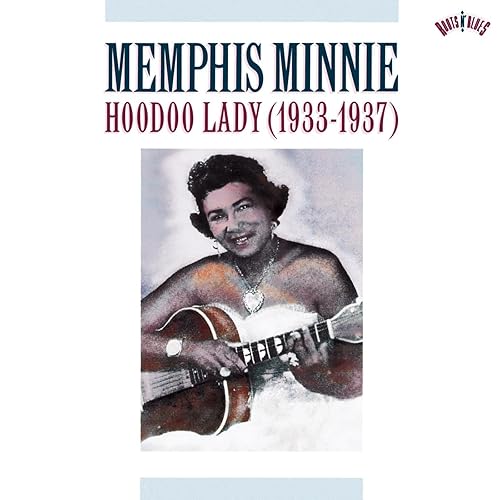
This theme, like many I’ve suggested here, was inspired by a song I heard in the car. This time, I had on the B.B. King’s Bluesville station and I heard “My Butcher Man,” by Memphis Minnie, with her then-husband, Kansas Joe McCoy. It became pretty clear that Minnie was not really singing about the man’s butchering skill. The song includes lines such as:
I’m going to tell everybody I've got the best butcher man in town
He can slice your ham, he can cut it from the fat on down
He slice my pork chops and he grinds my sausage, too
Ain't nothing in the line of butcherin' that my butcher man can't do
Butcher man, in the morning, won't you please stop by my house
I've got enough butcherin' for you to do if you promise me you just only hush your mouth?
And finally, if the references weren’t clear enough:
If anybody asks you, "Butcher man, where have you been?"
Show 'em that long-bladed knife, tell 'em you been butchering out in the slaughter pens
Let's go, butcher man, for me
Memphis Minnie was born Lizzie Douglas in 1897 in New Orleans, She ran away from home at the age of 13, and started playing on street corners, eventually moving up touring with the Ringling Bros. Circus and then as a singer and guitarist in the Beale Street blues scene. She was, by all accounts, a tough, street smart woman. One observer remembered: ”Any men fool with her she’d go right after them right away. She didn’t take no foolishness off them. Guitar, pocket-knife, pistol, anything she get her hand on she’d use it.” Apparently, the blues business wasn’t sufficiently lucrative, so Minnie’ reportedly subsidized her income with prostitution, charging the relatively large sum of $12 for her services. Minnie also gained a reputation for partying and gambling. She was an early adopter of the electric guitar, and didn’t shy away from guitar contests against the likes of Big Bill Broonzy, Tampa Red and Muddy Waters, sometimes winning.
Minnie recorded over 200 songs, and wrote many of them, including “My Butcher Man,” “Me and My Chauffeur Blues,” (another song filled with double entendres, originally credited to someone else, and was later recorded by the Jefferson Airplane, who credited yet another different person), and “When The Levee Breaks,” (with Kansas Joe, later re-worked by Led Zeppelin, who actually gave Minnie a writing credit without litigation).
This genre of music was sometimes called “Dirty Blues,” and often featured double entendres. In researching this piece, I found a fascinating article written in 1927, a few years before “My Butcher Man” was written, by Guy B. Johnson, a white “scholar of black culture and longtime advocate of improved race relations,” as his obituary in The New York Times stated when he died at 90, in 1991 (and whose last name, itself, is a double entendre….). One of Johnson’s observations was
that
the majority of the expressions in the blues relating to the sex act are sung from the point of view of woman and are mostly concerned with the quality of the movements made by the mail during coitus.
He then goes on to describe many examples, proving clearly that academic writing, even about sex, can be bone-dry.
Johnson concludes,
Double meaning in secular song is after all nothing new. Folk song students know that many standard folk songs have come up out of the slime. But it is doubtful if any group ever has carried its ordinary vulgarities over into respectable song life so completely and successfully as the American Negro. And the ease with which the Negro has put this thing over leads one to suspect that the white man, too, enjoys seeing “the other meaning.”
....you'd probably barf, that certainly being also my reflex response to this nadir of kitsch, a song so ghastly I cannot bring myself to say the whole title out loud. So, then, the Bellamy Brothers, what can you possibly say, how can you possibly defend this massively selling worldwide hit, a Billboard country chart topper in 1979, and 39 in the entire reckoning? Hell, it hit a national number 2 in the UK, seemingly on the back of it's initial success amongst the record buying public of Northern Ireland. Apart from offering your gratitude, that is, to all of those with such execrable taste.
Harsh? Well, maybe, but please understand where I was at the cusp of the 1970s into 80s. I was possibly alone amongst my chums in having a penchant for country music. By which I mean country-rock, I should explain, never "& western", not that dreck, no sir. So the Burritos, Pure Prairie League, New Riders, Poco and all their kindred steel-tinged spirits. And my friends and family would know that, themselves suspicious and wary even of whenever Bernie Leadon took centre stage in the Eagles, who were as country as their mainstream ears could ever stray. A little beyond, in truth. But, bless them, they would look out for me and point me in the direction of where they construed my taste to lie. Which meant the fecking Bellamy Brothers. The chances were that they would themselves like it, the o so witty play on words, the clever chat up line to trot out at the disco's close. They would make an exception to the genre on that occasion, maybe thinking I wasn't so strange after all. No, no, no.
It was only as I recalled my full unadulterated hatred of this song that I remembered there had been a time when their name had not led me to rage, with their earlier and other hit single, 1976's 'Let Your Love Flow', a pleasant enough ditty, if a little anodyne. So they weren't necessarily all bad, although I discover today that song was written not by them, but by one of Neil Diamond's roadies, something that would have, had I known then, immediately flagged up another of my instant red flag prejudices. You can stuff Diamond's reappraisal and Rick Rubin helmed rehabilitation. Still irredeemable nonsense. But, it set me to thinking, given the theme of this piece, and the brothers appropriation of the, in his hands, mildly amusing Groucho Marx line, who knows how they could have taken the title themselves? Eeeow, Richard Hell, eat your heart out.....
Of course, I know nothing much about the Bellamys, and am sure they are decent enough coves. Indeed I suspect they are still going, with a no doubt popular move into Christian music along the way, possibly necessitating a humble apology as they drag out the old warhorse, with sly and knowing glances being exchanged across the probably line dancing audience. I hope they promise, beyond that ill-considered lapse in taste, part of their hot-headed youth, and to stick to more wholesome fare, and to single entendres. Like this:
So, fast forward forty years, and I find myself quite liking the "& western", classic Grand Ol' Opry being now something I can derive pleasure from, especially mawkish country weepie duets. Of course, I still love all the old stuff I did back then too, and also keep my ear to the ground for newer flavours of country, from banjo jam band fusioneers like Leftover Salmon to sassy songstresses like Margo Price. I guess you are expecting me now to now offer my respect, grudging or otherwise, to the Bellamy Brothers and similar "Hat" acts?
Not.
A.
Bloody.
Chance.
If I said your song was a crock'o'shite, would you hold it against me?
Yup, can't resist, the elephant in the room, or rather the dead elephant in the room, as passed over always has me reaching for the reflex, however thoughtful or thoughtless, sorry for your loss. It isn't a phrase that sits neatly in my lexicon, smacking of euphemism and a coy avoidance of the reality. So and so has passed over, so and so has passed on, all of that. To where says the passive-aggressive agnostic inside me? The other side isn't exactly helpful and arguably is also somewhat unrealistic. Mind you, I'm not keen on rest rooms or comfort stations either, and you can blame my earthy medical anglo-saxon roots for that, where folk die and go to the toilet, or even, sometimes, even the other way round.
Death songs then, a surprisingly large and popular canon from time immemorial, the annals of trad. arr. littered with maidens killing and being killed. But that's too easy, here I want to explore those songs written from the viewpoint of the slain. I love 'em. Here are five of the best.
Long Black Veil has to be one of the best, the happy little tale of how the honour of the canoodling was preserved, the song's protagonist taking the rap for a murder, as his only alibi would have to have been his paramour, his neighbour's wife. So that's all right then, is it? She gets off scot free, if then still leaving the neighbour wondering quite why, or where, his wife gets the penchant for going out of a rainy night, dressed in black and howling at the moon. One of many versions, this one, by the Band is the best, the lead vocals, all of the exquisitely ragged vocals for that matter, sounding distinctly of the grave. Which, sadly, is indeed now the case.
To follow, a beautiful song, set within a glorious string setting, coming from John Wesley Harding, aka Wesley Stace, initially a skinny tie "noo wave" singer, with hints of Costello in his style and timbre, to, now, an increasingly folky solo troubadour, an artist I have much time for. The song weaves a story of come uppance with a real sting in the tale and stunned me to silence the first time heard it. A warning to any uxoricidal maniacs out there, it certainly gave me pause for thought.
The sort of song perhaps older readers will remember from their parent's collection, the old Marty Robbins chestnut, with The Old 97s giving it a good kicking, providing a bit more of the adrenaline that a real gunfight might provide, the momentum giving credence to that apparent sense of disbelief that seems to arise after a wound sustained in the heat of skirmish.At least, that's what happens in films. The Old 97s have an intrinsic knack for polishing up old tropes and giving them a modern sheen.
Neither a judiciary death nor a killing, is this one about a natural death? Of course, with the way Elvis writes his songs, the whole thing may be an allegory. But irrespective of such musing, I like the way it is the first to offer a view of the life beyond the threshold. Rather than a wraith stranded here on this earth, here the protagonist offers a description of a disappointed creator, rueing his creation. Am I alone if feeling some hope in that? It is certainly preferable to the burning pit of hell, but is it heaven? Costello has always struck me as a man who thinks deeply about the human condition, his songs often offering the sour aftertaste of catholic guilt.
Hell, you say, you mean like this? And you can always trust the Pet Shop Boys to offer an acerbic and wry view of proceedings. So maybe this song doesn't, as actually did neither the last, overtly explain how the observer came to be where they were, and in this one there is even no reference per se to anyone dying. But, surely, any accurate reportage would require the ability to be there and even Bill and Ted had to die to get there, yes? So I have to assume the witness is deceased, my column and all that. Ex-journalist Neil Tennant effortlessly lists the names of the mad, the bad and the dangerous to know as being the main occupancy, which I suspect is a little hopeful. My hell would be full of people I know.
My wife and I just finished watching the eight part NatGeo (!) series, Genius: Aretha Franklin. Season 1 was about Einstein, and season 2 was about Picasso, which puts Franklin, deservedly, into pretty lofty company. The series tells the life story of Franklin, who was notoriously private during her lifetime, and how she was able to deal with the benefits and burdens of her prodigious musical talent. It isn’t always a pretty picture—her father, well-known minister C.L. Franklin, was a controlling, philandering probable alcoholic who took Aretha out on the gospel circuit as a young teenager and appeared to have let her run around unsupervised, leading to two pregnancies at 12 and 13, and who himself impregnated a 12 year old. Aretha herself could be both cruel and supportive of her two sisters, Carolyn and Erma, fine singers in their own right, whose solo careers paled in comparison, but who regularly worked as background singers (and songwriters) for their sister. And she also made career judgments that, in retrospect, seem suspect. On the other hand, her singing, piano playing and arranging (despite not being able to read or write music), were extraordinary, and her ultimate insistence on producing credits and control over her music, was groundbreaking. Definitely worth the watch, and Cynthia Erivo’s performance as Franklin, is great.
In 1972, coming off of one of her most successful albums, the politically charged Young Gifted and Black, Franklin suggested a return-to-her-roots gospel album. Ultimately, it was decided that Aretha would perform in a church, featuring the Southern California Community Choir, led by James Cleveland, the great gospel musician and singer, who had, in Aretha’s youth, led the choir at C.L. Franklin’s church. The TV series shows C.L. firing Cleveland because Cleveland failed to tell him about Aretha’s second pregnancy, and thus made Franklin’s decision to perform with him, and not at C.L.’s church, a deliberate slap in her father’s face. I don’t know if that is true, but it did make for good television.
They decided to film two performances, and hired Sidney Pollack, still relatively early in his career, but with an Academy Award nomination under his belt, to direct.
The performances, mostly by Franklin, but also by the choir and Cleveland, were incredible, and the word spread so that the second night became an event, and was attended by Mick Jagger and Charlie Watts, who were in Los Angeles working on Exile on Main Street (and the gospel touches on that album are often attributed to their attendance that night). C.L. Franklin showed up, too (uninvited, according to the show), and sermonized a bit.
But when they went to get the film ready for release, a failure to use the traditional clapperboards made it impossible to synchronize the sound with the video under with the technology of the time. So, the film was put in the vault. An album including excerpts from the two nights, also named Amazing Grace, was released to both massive commercial and critical success.
In the early 1990s, Jerry Wexler, the producer who essentially navigated Franklin to stardom after a lackluster start at Columbia Records, told a staff producer at Atlantic Records, Alan Elliott, about the footage, and they eventually discussed it over a period of years. Pollack, who was dying of cancer in 2007, encouraged Elliott to finish the movie, and he bought the rights from Warner Brothers and began the painstaking process of using digital technology to sync the music and film. It was scheduled for release in 2011, but Franklin sued to prevent its release without her permission. A few years later, the original contract that Franklin signed was found, and another release was scheduled, but Franklin sued again to prevent release. Whether her reluctance was based on a demand for money, or because her bad health prevented her from promoting the film, or out of her frustration over not ever having an acting career, or other reasons, it wasn’t until after Aretha’s death in 2018 from pancreatic cancer that Elliott was able to get her estate’s permission to release it.
My wife and I had a chance to see the movie in 2019 at the great Jacob Burns Film Center in Pleasantville, back when people still went to movies, and it was mind blowing. It is, in many ways, very minimalist—there is no narration to speak of, no talking heads, just music (and a little preaching). Franklin is literally a force of nature, as she leaves nothing behind in singing songs that clearly have deep meaning to her, which you can see not only from her effort, but from the sweat pouring from her face
You can hear the 10 minute plus version of “Amazing Grace” in the video above. It is pretty much unbelievable. What you can’t see in the video, and you really should watch the movie--it is streaming on Hulu as this goes to press—is how the music affected everyone in the church—Franklin, the audience, the choir and the other performers. As described in an NPR piece about the movie:
Near the end of the song "Amazing Grace," for which Cleveland has been accompanying Franklin on the piano, he slides off the piano bench, giving his space to [Alexander] Hamilton [the assistant choir director], and surrenders to shoulder-heaving sobs, rocking himself back and forth in a congregational seat. He's not the only one — by this point, audience and performers alike are wiping tears from their faces — and when Franklin herself sinks down into a seat at the song's conclusion, she well may be weeping, too. But her face is so sparkling with perspiration, it's impossible to tell for sure.
And when they recreated a portion of it in the TV show, Erivo’s version was powerful enough to move us to tears, which is pretty amazing when you think about it.
No, don't panic, Superlungs hasn't passed, this is the tale around how he coulda/mighta/shoulda "been" Robert Plant, were it not for bad luck, being unwilling to let down an earlier booking and having impeccable taste in suggesting an alternative. Lesser mortals might have thrown in the towel as the years of critical fame and public indifference combined to leave him an also ran, a bit player on the sidelines and in smaller venues. Embittered? It seems not, presumably making some sufficient livelihood from the circuit of pubs and clubs.
So what was the story and how does it stack up. Reid, born in Huntingdon, UK, just four years after the second world war ended, a world where rationing was still part of the wartime legacy. From his first band, the Redbirds, he was spotted by Peter Jay, a local bandleader, and enlisted, age 15, upon leaving school, with Peter Jay's Jaywalkers. A name lost in the mists of time, but they actually snarfed a Rolling Stones support slot in that band's 1966 tour of the UK. The high spot of that tour was a prestigious gig at the Royal Albert Hall. Falling into conversation with Graham Nash, as you do, then of the Hollies, it was recommended the group should seek a recording contract. The Hand Don't Fit the Glove was not much of a hit, and was a fairly standard soul-inflected pop single, but shows some room for growth, especially as he begins to let rip in some of the verses.
The Hand Don't Fit the Glove/Peter Jay & the Jaywalkers
They disbanded and Reid then fell into the hands of pop impresario Mickie Most, famous for nurturing the Animals and Herman's Hermits, as well as, later, Suzi Quatro and Hot Chocolate. He was in partnership, at that time, with the later to be notorious Peter Grant. The first blast on his solo career was the oddly entitle solo album, Bang Bang, You're Terry Reid. (I could get that if either Reid or Most had hailed from Glasgow, but any rhyming argot is lost in the home counties english they both spoke.) A US tour as support with Cream and a slightly more successful single, Better By Far, and it looked as if he was on a roll.
Better By Far
Peter Grant, no longer in cahoots with Most, was by now the manager of the New Yardbirds, a band being set up by ex-Yardbird and session wunderkind Jimmy Page, along with equivalently feted bassist John Paul Jones. Page had wondered as to the suitability of Reid as their singer, using Grant to liase with him. Not many people were able to avoid the coercive "charm" of Grant, an ex-wrestler who had little charm and lots of coercion, but Reid somehow managed, citing his loyalty to the gigs he had already signed up for. OK, he offered that a financial settlement that could have been made to Cream and the Stones, but that never materialised and off he went on tour. Before leaving he also dropped the name of someone else that Page and Grant might consider, a young lad he had been impressed by, whose band, Band of Joy, had supported Reid at a Birmingham gig. That young man was Robert Plant, with he and the drummer, soon both ensconced in Page's band, now newly entitled Led Zeppelin. And you know the rest.
Reid, meanwhile, continued to plug away as a well respected support act, notching up tours with Fleetwood Mac mark one, Jethro Tull and Jimi Hendrix. With Most trying to pull him into a more commercial and ballad led direction, he rebelled, with the inevitable legal implications of then falling out with a manager. Unable to cut much ice at home, he had to rely on the effervescent US market and touring arena to keep him afloat, as he flitted from label to label, manager to manager, turning up a perennial on numerous filmed happenings of the time, from the first Isle of Wight festival, the Atlanta II festival and the first Glastonbury "Fayre". Even his 1971 signing by Atlantic mogul, Ahmet Ertegun failed to hit pay dirt, and he seemed destined to remain a critics favourite rather than a superstar. Not that he wasn't producing perfectly good music, as the following few, in no contemporaneous or particular order, demonstrate, just the favourites that come to mind.
To Be Treated Rite
Seed of Memory
River
Rogue Wave
These are all his own songs, but bear in mind, his gift is as much in interpretation, and there being many a cover version across his output: so, take your pick, do you want Left Banke, the Everleys, or maybe some of this?
Stay With Me, Baby
Since the turn of the century, he has visited the UK more frequently, for a while taking up yearly residencies at Ronnie Scott's club in London, one of few non-jazz artistes getting that opportunity, as well as prestige gigs at festivals, where he became quite a draw, a heritage artist to tick off a list. Sometimes he has performed with bands, but, as often as not, he has appeared in smaller group settings, in a duo or trio. The re-release of his early recordings also helped keep him in ear. I was lucky enough to catch him, five or so years back, as part of a duo, the only accompaniment to his voice and his guitar being B.J. Cole on pedal steel. It was good that night to see how just how well he and his "sponsor" remain on good terms, local black country boy Robert Plant turning out to show lively support from the smallish audience. Plant says of him that he remains "the outstanding voice of his generation." It's true, I was mainly there for Cole, but left a far greater fan of Reid than I had been.
So, what's he up to now? Clearly no shows at the moment, but don't write him off. And, whatever you do don't ask him that 'what if' question......
As a closer, here he is on British TV in 2018.
To Be Treated Rite
And a TV interview from November, barely five months ago.
P.S. An afterthought has me minded of this song, which managed an extraordinary and gradual metamorphosis. A song he wrote, apparently at the age of 7, he first put it out as Without Expression, old chum Graham Nash then taking it to the Hollies, as Man of No Expression, and then again, to Crosby, Stills & Nash, as Horse Through a Rainstorm. (It's in the lyric!) Finally, REO Speedwagon gave it a further and fourth leash of life, entitled once more as Without Expression. Given the CSN version had been pencilled in as the opening track of CSN(&Y)s Deja Vu, ahead of being trumped by Carry On, is this another example of Reid's famed luck showing through?
In the bi-weekly notice to the SMM team for this theme, I jokingly threatened to include something Turkish. A remark from Seuras about the paucity of posts this time around prompts to me follow through with the challenge - even if it is my second post of the day and it doesn't really make up for my slacking off for two weeks. But hey ... the more the merrier, and this one is kind of merry - in a kind of out-of-the-box way, as someone suggested might be appropriate here.
Not too many Turkish musicians make a dent in the international music scene. Baris Manco did (and I use the anglicized spelling without Turkish characters that would confound your screen - it would be phoneticized as barish mancho). You can Wikipedia him yourself, but the essentials are that (a) he's sadly no longer with us ('43-'99), (b) was a prolific composer primarily of a genre known as Anatolian rock and (c) his songs have been translated into more languages than you can shake a stick at. Oh, yes, and since I have been here most of my life, I have been listening to his music since I started listening to rock (and there aren't many Turkish musicians that I relate to that well.)
There's a folky style to his "rock" that you may not fancy. I assure you that millions of Turks do - to this day. It helps if you have references that help you relate, and that, his songs do. This one in particular incorporates the sing-song (if not pitter-patter) of vendors who ply the streets of Turkey's cities even to this day. Singing the names of their wares as they cruise the neighborhoods slowly in their pickup trucks loaded with fruit and vegetables brought to the street in front of your house, in this case: "tomatoes, peppers, eggplants".The Turkish for eggplant/aubergine being PATlican (the Turkish letter c is pronounced like the J in John).
The term “record label” has almost become irrelevant.
As we consume more and more of our music in digital format, record labels as
such have become more or less invisible or irrelevant to the consumer. Not so
50 years back. Musicians we both tied to and touted by the labels. If you were
purchasing music in the 60s and 70s, you knew what to expect from a Tamla, an
Atco, a Polydor. You knew what you were likely to get if the label was ECM.
I knew ECM was European, north European. I knew
it was independent. I knew it meant progressive Jazz. I didn’t know it was short
for Edition of Contemporary Music. I knew the label included among its artists Keith
Jarrett, Jan Garbarek, Chick Corea, Eberhard Weber, Ralph Towner and John
Abercrombie because I no small part of my LP collection included them. My
collection also included a bit of Pat Metheny.
I tend to skew more toward the guitar than piano
or sax, and a number of the above fit my prefs. Although Metheny started out
solo (supported by some of the ECM crowd), he is mostly associated with the
self-named Pat Metheny Group, which was releasing records up until about 10
years ago. He released an album titles From This Place about a year ago, and
then Road to the Sun a couple of weeks ago (March 2021). And speaking of record
labels, it caught my attention that most recently, his music has been appearing
on the Nonesuch label, which I knew as a kid because a lot of my parents’
classical collection was on that label (a budget classical label in the 60s
that has :developed into a label that records critically acclaimed music from a
wide variety of genres” –Wikipedia)
When I suggested this theme, I was trying to think of a St. Patrick’s Day theme that didn’t fall back on some variation of Irish music, so it is kind of funny that I’m writing about a guy named Patrick O’Hearn (although it sounds Irish, it turns out that it may more likely be English).
Frankly, what I knew about Mr. O’Hearn before starting this piece was that he was once in a band that I liked back in the 80’s called Group 87, but I didn’t even know what instrument he played. The band put out a self-titled album in 1980 that was given pretty heavy airplay at WPRB, but I’m guessing that most people reading this have never heard of it.
Group 87 is an instrumental album that mixed rock, jazz, fusion, and what would eventually be called new age music, and it was really well done (it rocks more than it “new ages,” if that’s a phrase, and we all know it isn’t). Considering the style, and the time, it isn’t surprising that the album went nowhere, and the band was cut by Columbia Records, only to re-emerge in 1984 with a second album on EMI that I have never heard. All because the same A&R guy who signed them at Columbia had moved to EMI—Bobby Colomby, who had been the drummer for Blood, Sweat & Tears.
But it turns out that O’Hearn, and the rest of Group 87 have had pretty interesting and fairly successful careers, pretty much off of the Jordan Becker radar. Group 87’s trumpeter was Mark Isham, who had played with, among others, Van Morrison, before becoming a new age and soundtrack star and in-demand session musician. The guitarist, Peter Maunu, is also a prolific session musician, with credits that range from Jean-Luc Ponty, and The Commodores. And while not an official member of the group, the drums on their debut were played by Terry Bozzio, who had played with Zappa and U.K. before forming Missing Persons with, among others, his wife Dale Bozzio and other former Zappa band members.
But this is about O’Hearn, who started as a bass player, and began playing professionally at 15. Moving to San Francisco, he played mostly jazz, playing bass for well-established artists such as Charles Lloyd, Joe Henderson, Dexter Gordon, Joe Pass, Woody Shaw, Eddie Henderson, and Bobby Hutcherson, as well as musicians who were his contemporaries, and eventually joined Frank Zappa’s band, where he began experimenting with synthesizers.
In 1979, he joined friends Isham, Maunu (and Bozzio) to form Group 87.
Bozzio then recruited O’Hearn to move into the new wave world, joining Missing Persons, where he played both synthesizer and bass, and hopefully cashed in on their popularity. When that band broke up in 1986, O’Hearn eventually started a solo career in the new age and ambient genres, where he has been quite successful, as well as working on soundtracks. To date, he has released 13 solo albums. And, in another genre-bending move, he played bass with John Hiatt on tour from 2007-2010 and in the studio through 2012 (so he wasn’t there when I saw Hiatt at the Tarrytown Music Hall in 2014).
Although one of the things I like about writing these little blog posts is that I get to write about stuff that I know, the best part is finding out things that I didn’t know.
Mindful there has not been too much a pitter-PATter of posts arriving under this banner, time to think out of the box. And what could be better than a cake box, something that may have me awarding me a pat, SWIDT, on the back for inspiration. Of course, Cake are no strangers here, usually courtesy their way with quirky covers, enough to endear themselves to me bigtime. But they are more than just novelty revisionings, having a wealth of their own penned material on hand as well. As I have discovered.
With a modus operandi of always avoiding the obvious, this was apparent from the start by the prominence of trumpet, lead trumpet even, an instrument more reviled than revered in rock and pop, delegated, where I thought it should be, to old man's music like jazz or, within reason, the unison brass parts of soul music. I had utmost suspicion of the instrument, feeling it as uncool as short hair and straight trousers. Until then, just to damn my eyes, short hair and straight trousers came back in. My version of punk coasted into post-punk and an enduring love of Chumbawamba, another band with trumpet, forcing me to swallow my prejudice, luckily also coinciding with the astonishing discovery that jazz was OK too. (And that I preferred jazz trumpet solos to saxophone solos, despite sax being just about allowed a seat at the table of my earlier rockist tastes. And since you ask, Chet more than Miles.)
Rock'n'Roll Lifestyle/Motorcade of Generosity (1994)
Cake I first heard through their astonishing de- and reconstruction of I Will Survive, reeking so of mariachi I had to go and gather that whole style into my body of required and allowable listening. It has been touched on here. I bought the parent record. The second single from their second album, it came out in 1997 and made the indie charts at home, managing a 29 in the UK, and higher in some other european countries. Given their first album was all originals, and largely damned either by faint praise, or just plain damned, this left the band with a dilemma, one that never quite lost them, continuing arguably to be better known for their covers, despite barely doing any others over the next few records. (Having a self-penned song called Jolene on their debut arguably didn't help, allowing the lazy to make assumptions: I certainly downloaded the track on that basis!!)
The Distance/Fashion Nugget (1996)
Never There/Prolonging the Magic (1998)
In researching this piece I was, therefore a little surprised to see their last record, 2011's Showroom of Compassion actually hit the coveted Billboard #1 slot, if only for a week, albeit based on the then lowest sales to attain that slot. And not a cover in sight. (Well, one, actually.) Also that all the four ahead of that had entirely satisfactory sales, with only the very first failing to make any splash, so bang goes my assertion. But maybe the fact they refused a greatest hits, and released instead the only other record of theirs I own, b-sides and Rarities, which is nearly all cover versions, explains my fallacy.
Comfort Eagle/Comfort Eagle (2001)
Sick of You/Showroom of Compassion (2011)
Scattered through this prose are a few of their finest. If you are unfamiliar, listen. If you know them, re-aquaint. The trumpet of Vince DeFiori is certainly not the only cause to celebrate, the caustic and conversational singing of John McCrea, also the main songwriter, being a joyful characteristic of the sound. These two are the sole permanently present members of the band, as they seemed to get through a slew of rhythm sections along the way. Just two lead guitarists, though, with a special mention for Greg Brown, no, not that one, there from the start, who left in 1997, if still making later guest appearances, his spiky playing adding to the overall counter-intuiveness of the whole. But for the last ten years there has been little sight or sound. There was promise of new material as far back as 2018, with only a single video, below, sneaking out. A demo leaked in January this year, so maybe we haven't quite had all our Cake yet.
Did Green Day derive their name from the Green Day of March 17? And I know I am a day or two late in nailing it, but it is one of many questions I don't plan to investigate too deeply, because it wasn't, but it's as good a place to start as any. It seems strange to me how St Patricks Day has become such a big thing in the U.S., certainly compared to his supposed homeland of Ireland. Even if, in the same way life imitates artifice, it is now catching up. I'm not sure the Liffey has ever been dyed green like Chicago's Chicago River, but it wouldn't surprise me if it were for the future. Not this year mind, but in the same way that Irish bars have become such a big thing all over the world, what the US identifies with as a merchandising exercise today, catches on, well, everywhere, in due course. Hell, even Thanksgiving is becoming a thing over this side of the pond, which seems more than a little counter-intuitive.Too much like turkeys celebrating Christmas. (Which is when turkey is supposed to be eaten, I should add.)
But it is St. Pat of Paddy's Day we are here to blether about, and the abiding myths and legends seem as good a place to start.
Paul Brady is, for me, the consummate Irish performer, and I would place him above Van Morrison, Christy Moore, Phil Lynott, Bono, any of them. A soaring and piercing voice, a human equivalent of uillean pipes, and capable of bringing forth similar tearful emotions, allied to a masterful guitar technique and, if his majesty with the traditional canon isn't enough, a glorious songwriter to boot. This traditional lament has been covered by him at many stages of his career, but it is this version that is the best, from his first solo album, and also his last to fully feature only trad.arr. Shamrocks were said to have been an essential part of St. Patricks preaching, using the three leaves as a metaphor for the Holy Trinity. It may also have been that pagan Ireland already held sacred this plant, and so used that regard as a link between old divinities and the new. It seems plausible, and probably why this plucky little plant is the national emblem of the land. But, tell me, does the shamrock ever have four heads, or is that a clover led question?
Let's stick with Irish artists to tackle the next topic, the tale of how St. Patrick rid Ireland of snakes. It seems that, whilst meditating and fasting, he was disturbed by one, and was so outraged that he henceforth banished all snakes and drove them into the sea. This strikes me as an ultimately dodgy story, and seems hard to swallow. That was, however, ahead of my appreciating that neither are there snakes in Iceland, Greenland, Hawaii or New Zealand. And never were, at least once they became islands. So unless Saints Thorlak, Arnaldur, Damien or the Virgin Mary were responsible for a similar banishment in those countries, I suspect it pure supposition. There are snakes, of course, in Ireland, but only in zoos and as pets. (What if one, or two, I suppose, escaped?) Shane McGowan is a learned and erudite soul around all things Irish, his songwriting awash with imagery and legend. The snake here is a ring, but one feels a whole lot more too. This is from McGowan's post (and between) Pogues project, the Popes, after he had become too unreliable for his bandmates, but before his muse had succumbed entirely to the ravages of his lifestyle.
So this is the one where St. Patrick's staff takes root and grows into a tree. I think we have all been to church services where the sermon has gone on so long that that would seem an entirely expected phenomenon, but I am not sure that is the message the legend imparts. The staff was made of ash, I gather, and, rather than down to the length of the discourse, was about the length of time the locals took to latch on to this Christianity lark. There are lots of songs about trees, especially in the folk idiom, and the piece chosen is only part provided by an Irishman, the wonderful uillean pipes prodigy and singer, Jarlath Henderson. With a vocal tone not dissimilar from that of Paul Brady, he combines a career as a musician, often in cahoots with fellow gael, the Scottish piper and whistler player, Ross Ainslie, with qualifying and working as a medical doctor. (Here is the duo with another song, an instrumental of the same name, from when they were both teenagers.)
The final story is how St. Patrick apparently met with two ancient Irish warriors, Oisin and Cailte Mac Ronain, who had somehow managed to survive the centuries and be there for him to try and convert from their pagan ways. They didn't get on, it seems, and it all gets very complicated as to why they met, other than for him to contrast the sunny lit uplands of the calm and Christian life, as compared to their roustabout fighting and brawling. St. Patrick seems to have prevailed as, given their great age, they died and he lived. It all sounds like the later episodes of TV boxset Vikings, which became progressively less fun as Heaven overtook Valhalla as final destination of choice. And there couldn't be a better illustration of pagan irish ways than by Horslips. The track above comes from The Tain, their 1973 musical re-telling of the legend of Finn MacCool, from whose warrior clan came the two elderly relics who met up with St. Patrick.
You could read about yourself if you don't already know but I'll save you the effort: back in '64, a radio DJ called Otis Redding "Mr. Pitiful" on account of the sound of his voice. Steve Cropper, Redding's guitarist (I want to say "long-time collaborator", but sadly it wasn't very long since he died about 2 years later in a plane crash on his way to a concert) came up with the song, which they recorded more or less in a flash.
None of his work is pitiful. In fact - reading I have done this week repeatedly reminds me that even the lowliest life is not pitiful. Pitiful is a mind-set. Sure, from the outside, it ain't hard to categorize another [wo]man's life as pitiful ( defineiton here), but that's a perspective filled with bias: how you view it may not be the whole story.
I did not know (but now do) that Steve Cropper was a member of a Stax backing band that did their thing for a number of known show-names (the Mar-Keys). Known as <the Colonel>, he fronted and was a member of other bands including Booker T and the M.G.'s He was also a member of the Belushi/Aykroyd Blues Brothers Band.
Within 2 years, Redding was producing music that, as Rolling Stone magazine wrote, was impressive - a far cry from Mr Pitiful, even if his vocal style was emotional-: "fluttering horns and staccato guitar" at the Whiskey a Go Go. Songs that hit the top of the charts even after his untimely death.
Etta James twisted the lyrics to "Miss Pitiful" from Mr to Miss.
Anyone with even the most cursory knowledge of this site will appreciate that there is likely little hip hop demographic within the reading or the writing. By way neither of apology or excuse, I guess this is a an age and colour thing, old white guys seldom experts outside their narrow zones of comfort. If I were younger, maybe a bit more: my son was a huge fan of the genre twenty odd years ago and certainly gave me limitless opportunity to absorb, wanted or not. And, I admit, largely not. But, as I peruse my i-tunes, I have rather more than I realised, and have no little grudging respect for certain artists, tending to prefer the melodic to the militant, the abstract to the angry. Like this, the contrast between the staccato delivery of the verses and the dreamy chorus grabbing my ears back then, even as I was scrubbing the graffiti off my son's bedroom walls.
Now, I guess I could now make this a hastily regurgitated precis of the life and times of the band, OutKast, or the duo, as they were, but I fear my sources would be obvious. Plus, we can all read wikipedia for ourselves, but I hadn't realise that the song relates to the relationship of Andre 3000, one of the pair, with singer Erykah Badu, or more specifically with her mother, the Ms "Jackson" the lyrics are addressed to. Whilst not necessarily a fan of the individual, she apparently loved the song, a fair bit more, in fact, than her daughter, who found it a little close to the bone. So, nearly avoiding also any clumsy link to the other OutKast song in my collection, lets celebrate a couple or so other Ms Jacksons...
Wanda Jackson isn't either actually quite my demographic, this little ditty hailing from the year of my birth, and comes from days when cultural sensitivities were, shall we say, less well honed. But, as a piece of rough hewn rockabilly, it certainly has some pizazz and she has continued ploughing that field right up until, astonishingly, as recently as 2012, that being when her last record was released. Little had changed.
So which one's Luscious, you ask? And given the Lucious, no s, Jackson was a male basketball player, and after whom this all-girl band named themselves, does this fit the strict criterion I apply to all my nonsense. Hell, no, but it's my post, and I like the band, as much for being there as for the music they produced.
Jade Jackson is/was 'One of 10 New Country Artists You Should Know", according to Rolling Stone in 2017, and has a bit more balls than many of the winsome souls who that sort of category might have you bringing to mind. In fact, she has me thinking more of a modern day Wanda. I know little of her beyond this song, but I like it. In fact, I may go check out some of her other work.
From the present back to the past I tread, desperately trying to bypass the Ms Jackson that is Janet, Mahalia being one I cannot possible exclude, a truly majestic vocal presence that lingers to this day. Whether gospel is or not your thing, I defy you to ignore the power and presence displayed. No wonder that Sinead O'Connor chose to revisit just this song for her latest come-back.
Is "misstra" a variation on Mr.? - and thus a viable choice for this theme?
The word <misstra> is pretty much undocumented. The intranet provides clues but no real answer: It appears that Wonder was referencing Nixon (he could as well have been referencing our ex. )
THE internet also tells us that <Misstrah> is likely not "kind" - possibly a mix of "massah" and mister?
"Playin' hard, talkin; fast ... He's the coolest one with the biggest mouth...and "if we had less of him, don't you know we'd have a better land .."
I guess I've tipped my hand (who plays hard and fast with a big mouth?)
But ... you are here for the music. And so ... Innervisions.
Innervisons, in that Wonder can only see inside? Innervisions, in that we should all be so gifted to see so much inside. Innervisions, in that something awoke inside Stevie Wonder that moved him for the formulaic Motown that I witnessed on stage in Seattle in 1969 as "Little Stevie Wonder". (Admittedly valuable for its time and space) to the post-Innervisions that produced this and his later work.
There are actually several points in the song where Stevie Wonder progressivly amps it up; you can hear the background vocals doing an increasingly urgent "yeah ..yeah" early on, but at about 2:30 we get a major shift that builds to that point in the song [3:00] where Stevie Wonder very meaningfully switches/ramps up the tempo to emphasize his point. The tempo seems to jump - and at least the emotion jumps - as we hear the hand claps and "growls" that signal a message change-
Finally he says: "You talk too much, you worry me to death .." Point well made - please, let's move on.
Chuck Schumer's playlist [100 days of tr**] on Spotify includes this song for some reason (no the reason is clear, me thinks)
If you’ve been reading my work on this site since 2011 (!), you might notice that I often discuss why various artists aren’t as famous as I (or others) think they should be. That isn’t the problem this time, since our featured song was written and performed by James Taylor, who was, and still is, pretty famous.
Today, we’re looking at a song written from the perspective of someone who achieved fame, and is maybe not all that happy about it.
Taylor’s path to stardom is pretty well known. Born into a prosperous family, he was a sensitive musical child who eventually struggled with both mental illness and drug abuse. After his first “real” band, the Flying Machine, which also included his longtime friend and future collaborator Danny Kortchmar, failed to take off (sorry—I’m guessing that I’m not the first person to make that joke), he moved to England. Through Kortchmar, Taylor connected with Peter Asher, who at the time was running A&R for Apple Records, and Asher played Taylor’s demo for McCartney and Harrison, who loved it. Taylor was the first non-British act signed to Apple Records.
Taylor’s self-titled debut, despite positive reviews, and a fine single, “Carolina On My Mind,” failed to sell well, in part because Taylor couldn’t promote the album because he was again in rehab. Upon his release, Taylor was unable to maintain the momentum from enthusiastic crowds at live shows, including the 1969 Newport Folk Festival, because he broke his hands and feet in a motorcycle accident.
Signing with Warner Bros. Records, Taylor moved to California and recorded his next album with a big assist from Carole King (and Asher and Kortchmar). That album, Sweet Baby James, was justifiably a smash hit, garnering both critical and popular acclaim. This led to high profile concerts, benefit shows, TV appearances, and Time magazine’s declaration that he was the “face of new rock.” Let’s take a brief digression here to remind our readers who were not alive in 1971 that this was not at all as strange at the time as it sounds today.
As often happens, the followup to the big hit album pales in comparison. That’s not to say that Mud Slide Slim and the Blue Horizon was a bad album—it just wasn’t Sweet Baby James. Despite that, the album did spawn Taylor’s only Billboard No. 1 hit, a cover of King’s “You’ve Got a Friend,” featuring Joni Mitchell on background vocals, as well as Kortchmar and the crack rhythm section of Leland Sklar and Russ Kunkel.
Also on Mud Slide Slim is “Hey Mister, That's Me up on the Jukebox,” in which the singer, presumably Taylor, is pointing out to the titular Mister that it is, in fact, he who is singing the sad song on the jukebox. On the one hand, there has to be some pride in that, but there’s also a little shock, and some sadness about the fact that:
I have wasted too much time just to sing you this sad song And I've done been this lonesome picker a little too long
Taylor has said that the song “is basically a way of dealing with the shock of being a private person going public.” When asked if he found it jarring, Taylor responded:
Yeah. I found it - you know, of course, it's exactly what I wanted. I wanted to be successful. And I wanted to get people to hear my music. I wanted my music to make a difference to people. But at the same time, you know, making yourself the product, it's very distracting.
Coincidentally, not long before starting to write this, I got to see my daughter experience a small amount of similar weirdness, although without the corresponding ambivalence (or, so far, massive commercial success). I may have mentioned before that she’s a standup comedian in Barcelona, and for a few months has been appearing semi-regularly on a TV show there, The Weekly Mag, designed to help locals practice their English. I stumbled across her IMDB page, listing her one credit, and she was shocked when I sent it to her. No, it’s not the same as what JT went through, but it is a cute story, and it allows me to make this piece a little more personal than just a discussion of the early career of James Taylor.
Anyway, despite decades of fame, Taylor has always seemed to have a certain ambivalence about his place in the public spotlight consistent with “Hey Mister’s” lyrics, even as he has continued to record and perform, be a political and environmental activist, have a high profile marriage and divorce from Carly Simon, and a second marriage to actress Kathryn Walker (and another divorce). However, he seems to have settled into a quieter third marriage, to Kim Smedvig (who my wife, a huge Taylor fan, would point out is a Smithie), a comfortable recording and performing (pre-COVID) career, and maybe, finally, happiness.
It's thursday night, it's 7.30, so it must be Top of the Pops, that covering most of my youth, from as early as I can recall, possibly aged five or so, and progressing much into middle youth, my twenties and thirties. I think I probably came off the bus in the '90s, as anonymous dance acts pretended to play, and it only took a couple of dozen sales to get in the chart, with the programme eventually running itself out of steam in the noughties. True, the time slot varied a bit, as did the length of the programme, but it was always, between those years, essential viewing, even when it was a family cringe-fest, ma and pa jutting in with their opinions, often broadly unhelpful, and requiring many Judas moments of denial that I liked that sort or thing. Or worse, if I actually did.
This song I shouldn't have liked at all, it being a novelty instrumental, a one hit wonder at that. But listen. It's actually very well played, and so it should have been, given the players. To be fair, I am wondering how much I did like it at the time, 1970, and how much it is the nostalgic feel good filter of rose-tinted earbuds. Be that as it may, I think it's a corker now.
It is actually a cover, the tune first cropping up, as above, a b-side of an already pretty hard to harvest band, Wind, who certainly evoke a me, neither response to anyone I know. They were a backing band for Tony Orlando, actually during the time he was better known for performing with Dawn. I guess Tony Orlando with Wind might prove a tad close to the bone, this instrumental the flip of Make Believe, a 1969 hit, seemingly, if not my side of the pond. Anyhow, it was picked up by Steve James of Dick James Music (DJM), then the record label for, amongst others, Elton John. Unable to pick up the rights to release the original, he picked a selection of artists available to him to recreate it. Elton allegedly played on the pilot project, but was ditched for a version with a Zack Laurence on the piano, the distinctive harmonica part possibly played by a Harry Pitch. However, by the time it came to Top of the Tops, the harmonica was being played by an Ian Duck. None of those three have any lasting backstory, but the rest of the band did, being, essentially, Elton's then backing band, later to become Hookfoot, with Dee Murray on bass, Roger Pope on bass and Caleb, brother of Finley, on guitar. A fairly huge hit, peaking at number two, courtesy the alongside presence of Mungo Jerry's In The Summertime. It then remained in the charts for eighteen weeks, and longer in the clubs, it fitting well into the then Northern Soul craze filling the dancehalls of northern England.
There were follow-ups, none successful. On the back of the UK success, Wind had their version re-released in the US, as and a-side, this time credited under the slightly safer band name Cool Heat. There have been the odd subsequent cover version, some very odd. Perhaps the oddest, and the least necessary, was by the Associates, the band the of maverick Scottish singer Billy McKenzie, more usually defined by his extraordinary vocal range and lifestyle choices. But, for posterity, I feel I should include it here.
Star Maker Machine does not accept music submissions from artists or promoters. However, most of the contributors here do accept submissions for our own blogs, listed below. Please visit our blogs, take the time to listen to what we post, and then feel free to contact us if you feel that your music would be a good fit.



























:format(jpeg):mode_rgb():quality(90)/discogs-images/R-5947127-1435056219-4942.jpeg.jpg)




:format(jpeg):mode_rgb():quality(90)/discogs-images/R-1500629-1616520755-9881.jpeg.jpg)


:format(jpeg):mode_rgb():quality(90)/discogs-images/R-597426-1455116282-5215.jpeg.jpg)


