The band named Boston doesnt seem to have been dissected much here and maybe that's not such a surprise. Most folks - if they know the band at all - probably associate them with this, their best-known song.
Like the 17 million other people who purchased Boston's first album, I still love this song. Like an apparently large number of that number, I feel a twang of guilt for loving a song that is almost corny; it has been a staple of FM radio ever since it came out. If you're one of these, rest assured: most music critics note that aside from the song being included in most lists of "bests", they also commend the song on many counts. From Rolling Stone critic Paul Evans: "an uncommonly resonant emotional note", and from Cash Box: "a sophisticated melody that makes good use of minor chords".
There is a lot about the song that seems familiar (and some that actually is more or less picked from other sources - but what music isn't?). But again, there are no pending legal issues related to the song. See Joe Walsh/James Gang and The Left Banke for inspiration.
It's a Tom Scholz composition that took him several years to finalize. Apparently, that is kind of typical of his methodology (it takes him years to get something to the point where he is ready to release it).
Tom Scholz himself is worth a study in and of itself. MIT student who then built his own music studio, tried again and again to get the music inuistry to take him on, eventually succeeded, and then for most every album after had to butt heads. Rarely credited as more or less the sole driving force behind is band and the only remaining original member, his last name ought to be Boston.
My blogging lately has really slowed. Typically, around this time every year, I tend to take time off to recharge my batteries, but I’m going to try to keep going this year without a true “blogcation,” to coin a very bad phrase. Since this is a labor of love, I do it in my spare time, and lately, that spare time has been occupied by work relating to my 40th college Reunion, which took place a couple of weeks ago. I was on the organizing team, and I’m also my class secretary, a job which I’ve somehow expanded to such a point that I’ve been swamped lately, creating video slideshows and other content for my classmates. It’s another labor of love, but I hope that the extra work I created for myself is winding down, and I can try to get back to regular writing here. And maybe even elsewhere.
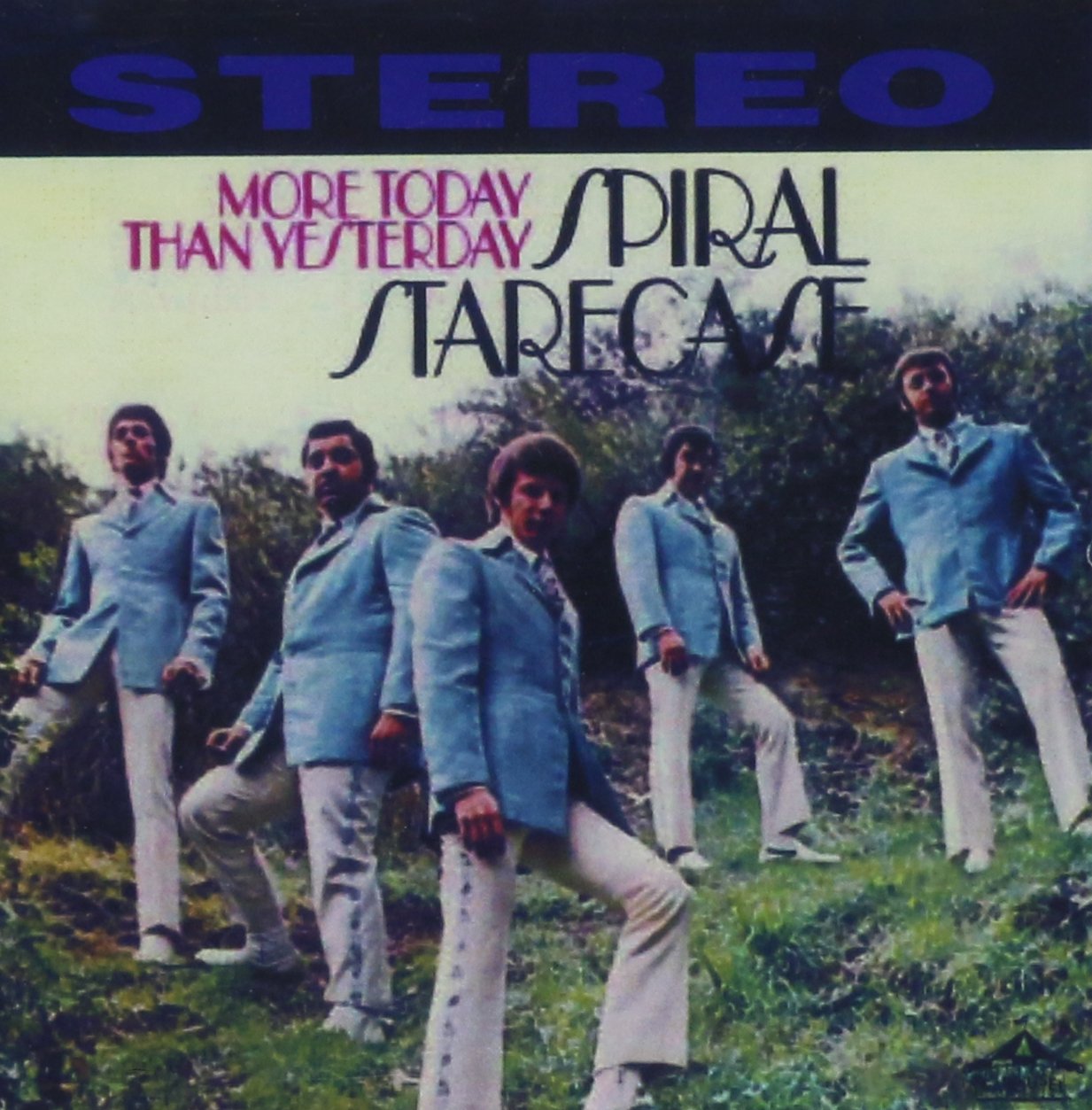
I havewrittenbefore that 1969 really was the year that I started listening to music, and it was that year that Spiral Starecase released their one hit, “I Love You More Today Than Yesterday,” a bouncy, fun, maybe even a little sappy profession of love. I think that the comment in the Allmusic bio of the band about their “one-hit wonder” status is great: “The Spiral Starecase may be a one-hit wonder group, but if you're only going to be allotted one, then their “More Today Than Yesterday” is the type of solitary charter you want as your lasting legacy.” And it is true. It’s a song that I remember hearing constantly over the years. It’s been covered by artists as diverse as Sonny and Cher, Lena Horne, Nick Carter, Diana Ross, Kermit Ruffins, the 2012 version of Chicago, and Goldfinger. And many others.
The Spiral Starecase was formed in the early 1960s in Sacramento as the Fydallions, and featured lead singer Pat Upton, who has a great voice. Columbia Records strongly suggested that they change their name before signing them, and they made a small spelling change to the title of an old movie, and voila, they had a name. And maybe that sort of misspelling was considered cool in the psychedelic era, not that the band was at all psychedelic.
They had a couple of regional hits in the Phoenix area, but when working on their first album, Upton was encouraged to write, and contributed the feature song, which he had written while the band was playing at the Flamingo in Las Vegas. And there is a little bit of Vegas lounge singer in the song, isn’t there?
Despite the quality of the tune and its longevity, it only reached 12 on the Billboard Hot 100, although 1969 was a great year for singles.
Due to the dynamic duo of musical failures, poor management and disputes over finances, the band disbanded after the release of one album and a few more singles (somehow they escaped the third reason that good bands fail—problems with the record label).
An Upton-less version of the band toured in the 70s and 80s, proving that you can be successful with one famous song, even if the original singer isn’t singing it.
Upton became a session musician, eventually hooking up with Ricky Nelson as a backup singer, and in 1985 declined to get on the flight that killed Nelson, five members of his band, and others. He died in 2016, at the age of 75.
Huh, me and my headings, eh, always the smart arse..... But, y'know, I think the performers of this song would want that, being ineffably smart, as they arse around, enjoyment their gift to listeners. So then, is this the debut of the Wonder Stuff to SMM? It sure looks that way. Let's hear the song.
Give, Give, Give Me More, More, More
Anyone familiar with the term "Grebo"? Actually a word that is better known as a word rather than necessarily for its meaning, let me here explain. Or, let the Guardian explain. I like Stourbridge. It isn't that far away from me, a good deal nearer when I lived in Birmingham, the U.K. one. In fact the brother of an ex-squeeze lived there, owning a parrot that pecked a big hole in one of my fingers, but that's another story. A fading town on the edge of the Black Country, the old heartlands of the Industrial Revolution, smog and smoke the rationale for the soubriquet, rather than the influx of afro-caribbeans and asians across the West Midlands in the '60s and onward. Which is what the latter-day ignorant have tended to think. Actually, and I apologise to anyone resident reading, it was much less a hub for newcomers than its neighbours, thus retaining a good old sheen of white trash, which contrasted with the relative affluence of the town, at least compared to other towns nearby. It even has a posh grammar school, attended by Robert Plant. But the main clim to fame of late has been the residency of the bands mentioned in that article and, for the purposes of this piece, The Wonder Stuff. For it is they who wrote and sang the featured song.
Size of a Cow
The Wonderstuff, arguably the brainchild of main songwriter and singer, Miles Hunt, came together in 1986, in, of corse, Stourbridge. A traditional four pice, guitar, guitar, bass and drums, at least to start, they kicked off with a flourish, releasing a slew of singles, including the featured song. Debut album, The Eight Legged Groove Machine, collated these and more, and stamped their mark on a interested market. If none of the songs actually broke the charts wide open, it was enough to establish a headlining tour. No shortage of material, with 15 trucks, rising to 19 on a later re-release, rising to 24 for the 20th anniversary re-re-release. Second album, Dup, has them first breach the top 20, with lead single, Don't Let Me Down Gently. More to the point, for this listener, the album added fifth member, Marin Bell, on fiddle and banjo, both instruments guaranteed to spark my enthusiasm. By the time album three came along, led by the single, Size Of A Cow, I was hooked. This their peak period, although a fourth album appeared, it never quite hit the same heights. The band split in 1994.
Welcome to the Cheap Seats
I was disappointed never to catch them live, maybe a little wary of their reputation for a well-lubricated and lively fan base; in the 90's I was still pretty much Mr. Straight. I didn't even catch the first of their inevitable reformations, Hunt never quite able to replicate the mood and memory of the band on his own or in subsequent projects. However, after their second, possibly third break up, I did catch Hunt as part of a duo. In around 2005, Martin Bell left the still extant Wonderstuff, leaving the fiddle position open. Erica Nockalls, a violin prodigy trained at Birmingham's Conservatoire, was spotted busking in Stratford-Upon-Avon, and was in, albeit to a band that was about to fizzle out once more. Hunt and Nockalls then toured considerably, as a duo, performing both old hits and new stuff, and it was they I caught. The acoustic guitar and violin arrangement suited the material, with Hunt's self-deprecating sneer foiled by the charm and skill of Nockalls. Since then the duo and a version of the band have continued, in turns, to tour and, intermittently, release new material, the duo often touted as Wonderstuff Acoustic.
Dum dum da dooby dum dum, is that how it goes? You know it does, of course, one of those terific songs that, no matter your age, evokes simpler times, perhaps in black and white, quiffs, brylcreem and big collars over the top of suit lapels. These are tend to be vague and somewhat inaccurate tropes, for, even I am too young to have been a teen in the Big O's prime. (Or should that be first prime?) But listening to his creamy voice makes me imagine I was.
I wasn't, growing up in the sixties, a big fan of rock and roll. in fact, give or take very early Elvis and Jerry Lee at his hair shaken forward all over his face peak, I found it all a little ludicrous. Bill Haley? Pur-leease. I sorta got Chuck Berry as I grew older, perhaps as the bands I did like covered so much his stuff, but have never taken to Little Richard. Again, I could appreciate the rockabilly styles of Eddie Cochran and Gene Vincent, but not so much the choreographed oddness of Buddy Holly, whom I thought looked a bit of a geek. (It took me decades to realise he was actually rather good...) But Roy Orbison, perhaps not really a rocker, in that grey area when the aggression of the late 50's was morphing into the schlocky easy listening balladeers of the early 60's, something about his shtick appealed to me, and, even aged in single figures, I was happy to sing along with his mellifluous melasma. He looked different, too, with the dark glasses, an air of mystery to the extent I thought him probably blind. (He wasn't, but looked way better in shades than without them, when he resembled a bewildered owl.) Plus he had the tragic side story of his real life, something that even endeared him to my mother, who seemed to want to mother him, and, unusually for her, had an opinion about him, unlike virtually any other performer beamed into our Thursday evenings, via Top of the Pops. (Positive opinion, that is, she having plenty to say about the Stones and the Who!)
I was three when 'Only the Lonely' was first a hit, so my memory is likely subliminal at best, later probably reconstructed as I grew. A number one in the UK, a place above its US pinnacle, it was said to be Orbison's longest lasting tenure in the hit parade. Not bad, when you consider he was also packing 50% of the royalties, it being a co-write of his with Joe Melson. Intriguingly, the idea had initially been to flog it to Elvis, or the Everly Brothers, Orbison only recording it as they turned it down. More fool they? It is astonishing, looking back at this run of hits, throughout the '60s, how big a star he then was, it hardly surprising that, as he dropped out of view and, perhaps, favour, to realise quite how influential he was with the next generation of performers.
Bruce Springsteen was never shy of his admiration, as the song 'Thunder Road' showed, the reference to Orbison a delight for those listening, themselves possibly already in thrall to him. Then, in 1988, came two momentous reawakenings. Firstly the possibly initial shock that greeted the formation of the Travellin' Wilbur's, the faux band of brothers, aka supergroup of George Harrison, Bob Dylan, Tom Petty and Jeff Lynne. And Roy Orbison. Who? That old fart, thought the world, ahead of having him blow off their socks with the power of his vocals and his understated and charismatic presence. And listen to what he actually sings in 'Handle me With Care'! (Me, I thought Jeff Lynne the nipple in the woodpile, but hey, his compadres seemed to like his execrable production style.) As Lefty Wilbury, Orbison made that album for me, he then moving straight on, or seeming to, to the Black and White Night video and album This was from an HBO TV special, actually shown the year before, making it chronologically ahead of the Wilbury's, but I did not know that then. Now, this really was a superstar session, with respect to Otis, Lucky, Nelson and Charlie T. Jr., with Orbison running through a stack of his hits and more. With Presley's old TCB (takin' care of business) band, aka, later on, Emmylou's Hot Band behind him, James Burton, Jerry Scheff, Ronnie Tutt and Glen D. Hardin, how could it not sound great? Add in guests of the calibre of the aforesaid Springsteen, Elvis Costello, Tom Waits and Jackson Browne, and this was catnip to me. Hell, even the girly singers were Bonnie Raitt and Jennifer Warnes. Shot in black and white, this is a wonderful recordd of what must have been quite a night, and one that still bears repeated plays today.
All to suddenly, the Big O's renaissance ended. In December 1988, having been touring and needing downtime ahead of a trip to London to record some Wibury videos, he retreated to his home, dying, on the 6th, at his mother's house, of a massive heart attack. Astonishingly, in this age of octogenarian rockstars, plus my then thinking him unspeakably ancient, he was only 52. A generation ahead of his fellow Wilbury's, he was barely any older.
Finally, given the theme, and for completeness, here is another Only song he made. This one came from his last album, another posthumous release, Mystery Girl, coming out in 1989, and actually completed a month before he died. Even the Jeff Lynne production cannot hide the quality of the performance. 'The Only One' it is called, and he was, really, wasn't he?
Bonnie Raitt ranks very high among my favorite musicians, slide players and vocalists, but I have said that again and again here.
50 years since her first album, this past April she released her latest album <Just Like That> which her website says is her 21st, and is back on the road - in TN and NC the week of this posting. Again, from bonnieraitt.com, it appears that the new album and "Made Up Mind" are finally bringing her the kind of recognition she desereves beyond people like ourselves who already know how good she is. There is an interview with her in April's Variety where she notes that some of the intention behind the album was to share music of/by/with musicians who may not be around all that much longer. (see Living For the Ones)
When we decided this theme, I had not cheked to see if in fact the songs of choice had aready been covered here. At the time my thoughts were more back with Dave Mason's Only You Know and I Know, which kind of acts as a bridge to the theme. Oh, and also a question in the back of my mind:
why do we pronounce one as wən but only as ˈōn-lē. And why do we combine them in the saying "one and only"? If, like myself, words interest you as much as music, have a quick look at some etymology here.
But this is off the track we should be on: the song Not the Only One, one of a couple of songs from 1991's Luck of the Draw by Paul Brady. And Paul Brady is a musician whose history is worth a trip down this link to learn more:
Brady appears to have released the song back in 1983.
Here it is with Brady together with Raitt
pretty much not on topic but - hey it's got the one and only bonnie, it's live and it's a great collaboration with the one and only Keb Mo'
If you are a regular, and long-time, reader of Cover Me, this piece may seem a little familiar. But I don't think that it counts as plagiarism if I steal from myself. Think of it as an "adaptation," OK? And this is a song that deserves a post on this blog, too.
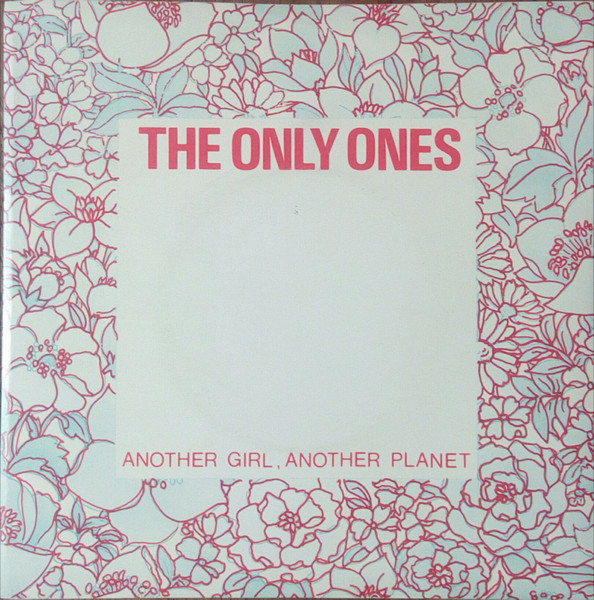
It is somewhat ironic that most people know only one song by the Only Ones—
“Another Girl, Another Planet.” Originally released in 1978, it
received minimal airplay and attention (but it was pretty regularly played on WPRB during my time there), but its reputation has grown
exponentially over the years. The Allmusic review of the song
asserts that it is “arguably, the greatest rock single ever recorded.”
Of course, people will “argue” about anything, and choosing “Another
Girl” as the greatest rock single ever is a bit of a reach, but you have
to give the reviewer his due for taking a stand. It is a great song,
and it is fitting that it ultimately received the acclaim that it
deserved.
The Only Ones formed in London in 1976, led by distinctively
anguished vocalist and songwriter Peter Perrett joined by
guitarist/keyboard player John Perry, Alan Mair on bass, and drummer
Mike Kellie. Featuring strong songwriting by Perrett and surprisingly
(for punks of the era) competent playing by the band, they self-released
a single, “Lovers of Today.” It sold well enough that a bidding war broke out among major labels looking for the next big thing.
While the label battles raged, the band took refuge at Escape Studio,
run by producer John Burns, to record some tracks. The unlikely
marriage of Burns – who had started in the industry engineering albums
by bands like King Crimson, Jethro Tull, and Humble Pie, and who had
co-produced three decidedly not-punk Genesis albums – and the Only Ones
somehow worked. They finished their efforts at Escape with three
16-track demos, including “Another Girl, Another Planet.” In fact, after
signing with CBS Records, and re-recording “Another Girl” at a bigger,
fancier, 24-track studio, it ultimately became clear that the “demo” was
the right version, and it is the one that was released (with a bit of
additional overdubbing to take advantage of the additional tracks).
Despite the quality of the song, it encountered resistance, in part
because it was not punk enough for the purists and too punk for
mainstream play, but also because the song was perceived to be about
drugs. It wasn’t. As Perrett stated in a 2015 interview:
It was inspired by this girl from Yugoslavia. I didn’t go out
with her, but she was like a total space cadet, which when I was really
young I found interesting. She was just a bit weird – she’d say crazy
things, and it just got me thinking that every girl has something
different to offer.
As for the drug imagery? Perrett explains:
I put in drug-related imagery, but it wasn’t about drugs. At that
time I was more addicted to sex and infatuation than I was to drugs.
Although the band’s three studio albums were generally well received,
and they even opened for the Who, by 1982 the Only Ones had disbanded,
in large part due to Perrett’s drug problems. When Johnny Thunders
(who later, sort of, covered the song) suggests
that you need to clean your act up, you know you are messed up. There
was a short-lived reunion in 2007, and another in 2014. Perrett
released an album, How The West Was Won, in 2017 to excellent reviews, and is touring (although his US and Canada dates were cancelled due to visa problems).
Despite its lack of chart success, “Another Girl, Another Planet” has
become a regular part of Best Of lists, compilation albums, box sets,
and soundtracks over the years, and has become an often covered song. And if you want to here Five Good Covers of the song, and links to a few more, check out the Cover Me link above.
My life is going through some major changes, but that's not where this ostensibly expired theme came from. Those life changes, however, are why this post is squeezing in after the expiration date of the theme: as I wrap up what was my initial draft, I see that I set "pen to paper" on this on May 1st. Good intentions.
Having just returned from a second trip to the US in a month and on my way to pick up our dog from the kennel, what to my wondering ears should "appear" from the car entertainment system - but 3 tracks from Dave Mason's <Alone Together>. Now that's a coincidental guilty reminder to finish what I started if I ever "saw" one.
So, here I am in the car listening to the song I was going to post almost 3 weeks back, and I am listening to it with different ears.
The cue list on the car system is ostensibly random. In fact, alphabetical. So, here comes Traffic's Glad. (Dave Mason cues up after the letter T because the recording was downloaded from YouTube using a site that appends "yts" to all file names.) So, the order is Traffic, some Dave Mason, followed by Clapton 461 Ocean.
Now, by the time Traffic came out with JohnBarleycorn, Mason had moved on to his first solo album. At about the same time that Clapton had also moved on to solo work. The year is 1970.
As I listen to the tracks I have saved - noting the guitar playing in particular, I find myself questioning if that isn't Clapton's guitar I am hearing on Alone Together. It's not, but there's an awful lot that's similar: tone and riffs. When I check the list of musicians, I remind myself that there is in fact a fair amount of cross-over with Clapton associates of that era: Bonnie Bramlett, Rita Cooldige, Jim Gordon, Leon Russell, Carl Radle .. And of course, there's Clapton's later work with Traffic-man Steve Winwood.
And I note that while Mason's vocals are plenty fair enough on World in Changes - and his guitar work fairly comparable to Clapton's, I see that Alone Together is rock that's just Good Enough rocking.
So, here's a more recent variation on the 1970 original:
Well, there's a thing, there I am, trying to see if I have it in me to squeeze out a second post, appreciating the wire is close. So, as per my usual, in goes CHANGE to my i-tunes search, and, bloomin' heck, there's another one. Another one? Well, my last post was very much affirmative related, never realising for a second that there was also the later song.
And despite my mardy earlier remarks, it's OK. So, it's not great but it bears a listen, and, apropos their post punk M.O', it is quite catchy and could cut some rugs. Changes, it is called, By now the band, for it is 1993, and, thus, recent days, consists of, as you can tell, as he doesn't sing lead, Jon Anderson and Chris Squire. Tony Kaye (yay) is back on keyboards, with Alan White on drums, turning out to be their longest sitter on the drum stool. Trevor Rabin is on guitar, as Steve Howe was probably in a huff. The production, obvious in hindsight, is from Trevor Horn, himself an alumnus of the earlier band. Rabin, previously of South African band Rabitt, had a 13 year membership with Yes, and then, with Howe back in his place, with various counter-Yes spin-offs. (No's?) It is basically his song, with additional credits taken by White and Anderson, for later audio fripperies ahead of the album being made. For what it is worth, Rabin later put out versions that "removed" their additions.
And then again, here's Yes featuring Anderson, Rabin, Wakeman, in 2017. Which was as opposed to Yes, the band, which didn't........
As my friend and multi-site blogging colleague Seuras pointed out, I do fly the prog rock flag often in this space, and I also write regularly about Americana music (which is what I seem to listen to mostly these days), and 70s-80s punk/new wave, not to mention a bunch of pieces about TV. But another genre that I’m a big fan of is power pop, which, I guess, tries to rehabilitate the uncool “pop” genre by adding the word “power” to it. And I have focused on its purveyors here before, but never about the dB’s.
The dB’s seem exactly like a band that I would have been deeply into when they started in the ‘80s. Their first album, Stands for Decibels, came out in 1981, while I was working at WPRB, and its power pop crossed with jangle sound would have fit right into my playlists then, but I really don’t remember it at all. Nor do I remember their second album, which came out in 1982 at some point. After college, when I started to become a big fan of R.E.M., and the band led by their producer, Mitch Easter, Let’s Active, I somehow became aware of the dB’s, led by Peter Holsapple and Chris Stamey, who was a childhood friend and former bandmate of Easter’s, although I similarly have no recollection of their third album.
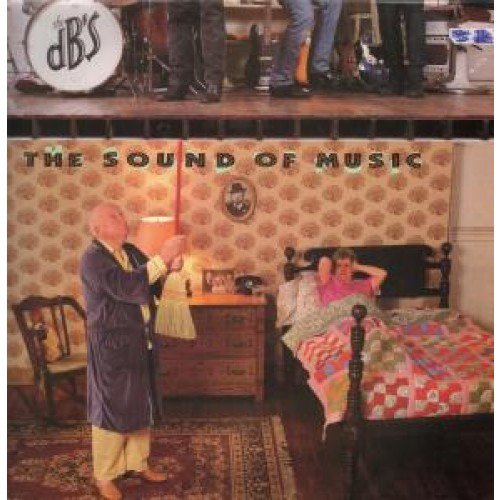
In 1987, at a time when I was starting out as a lawyer, and making real money for the first time, I was comfortable taking a flyer on a CD, and I remember getting the dB’s album The Sound of Music, probably after hearing something from it on the radio, probably WFUV. And it was good. It was filled with great, catchy songs, but my favorite then, and now, was “Change With The Changing Times,” which also featured Benmont Tench, from Tom Petty’s Heartbreakers, on organ (but not founding member Stamey). It’s a song about a man worrying that if he doesn’t keep up with his love’s changing interests, he’ll lose her. And it is catchy as hell.
Here's the part of the blog post where I should pivot from writing about the song, to commenting about how, considering the leaked Alito opinion on abortion, America is about to change, and wondering how we will change with the changing times. But, honestly, I’m so sickened by the fact that we stand on the brink of seeing a Supreme Court packed by politicians who represent a minority of Americans strip a broadly popular constitutional right from women, with an opinion that might have well simply been a picture of Alito raising his middle fingers at most of the country, and which leaves open the actual risk of rolling back other constitutionally-guaranteed rights, ranging from marriage equality, contraception, sexual privacy, and even public school funding, that I really don’t want to go there. Any more than I just did.
In a move that feels akin to eating out of Jordan's lunchbox, I'll be quick before he notices I have encroached upon his sole operator territory of the golden age of prog. But ain't this an absolute banger? You see, I too was there, the SMM home for distressed elderly muses a port of solace for me as well, courtesy my life misspent in record shops.
The Yes album was the pinnacle of this venerable band, one of those uber snobby remarks for which I am famous, especially when you consider it was only number 3 in their 22 and still counting number of studio recordings. (And more so if you consider I have never felt it necessary to listen to either of the two albums that preceded it.) The Yes album came to me fully formed, with neither need to get the back story and, even, not that much to take the story further forward. OK, in true I-am-not-that-much-of-a-fan style, I probably only have a handful of their other records: Fragile, Close to the Edge, Yessongs (live) and the Ultimate Yes, the 35th anniversary compendium, the latter being mainly to ensure CD versions (aka unscratched) of the songs I most enjoy. I think it is the relative simplicity of the album I so love, that word, of course, within the context of Yes, relative. So the guitar is noodling majestically all over, especially when Steve Howe picks up acoustic stylings, the bass in challenging, the drums all of a clatter, but the keyboards, c/o Tony Kaye, are pure meat and potatoes. None of yer synthesisers and mellotrons, or very little, so soon to become the band's stock in trade. Largely organ, and a rhythmic punch rather than the look at me bombast that later players brought to the role. Despite being a fan of the Keith Emerson school of keyboard play, I never took to to Kaye's replacement, Rick Wakeman's octopoid filigrees.
Live in 2000
Perpetual Change is the song that highlights both this iteration of Yes and, thus, for me, the band as a whole. But it is also a good marker for the apparent MO of the band, given the, at best, impermanence of the ranks. With at least 19 members, with, give or take, an additional 4 for live performance, that isn't bad going for a 5 piece band. OK, the countered excuse is their longevity: 53 years on the road now, together with the unhelpful ravage of the grim reaper, taking founder member and pivot, Chris Squire, in 2015, who would almost otherwise still be in the fold. (Altho', to be fair, he did have 4 years out, when the band had a "hiatus", 2004 - 8). The only other "original", which he wasn't, would be Steve Howe, the guitarist, and he looks to have had some rests in the '80s and '90s. Which means there has been no single presence from start to finish. The fact that the members clearly weren't chums didn't help, not least after decades of touring together, with the presence, often at the same time, of bands that had as much claim to the name as the official version, and certainly played the same songs. So, I give you Anderson Bruford Wakeman Howe, who ploughed a parallel furrow, between 1988 and 1990, and arguably with more of the classic line-up than the baton toting newcomers. Or there was the time when there was not only Yes, but Yes featuring Jon Anderson, Trevor Rabin and Rick Wakeman. Complicated and complicating. Wiki here have a good go at trying to unravel it. It is also worth having a look again at Tony Kaye, ousted, after the Yes album. Would that be the end of his career? Well, far from it, but if he was never quite as successful with his own bands, even if Flash also contained another ex-Yesser, in Pete Banks, who preceded Howe in Yes, on guitar, Yes were still there to welcome him back in the fold, 1982 - 1985, his less cluttered style perhaps ideal for their 2nd chart bothering round of hits, as singles became a surprising late string to their bow. (Even if an earlier recumbent of his seat had the fifth of writing credit he might have had. (That fifth was, for me, the most extraordinary ever Yes man, one Trevor Horn, the erstwhile Buggle and later producer of Fairlight heavy magnum opuses for the likes of Frankie Goes To Hollywood and Seal. True, his associate Buggle, Geoff Downes had also joined up, but has gradually become more subsumed into standard erudite muso mode, by re-joining the band again at later date, where he currently remains.)
Live 2018 (and not the official Yes, being the "featuring Anderson, Rabin, Wakeman.)
I have to say I would not probably cross the road now to see Yes perform, even if it were in my own local Darwin Park, in Lichfield, which I think might, anyway, be a stretch and unlikely. I can sort of get the fact that bass and drums are dispensable within their sound: all the players have been good, even if some better. Despite my above comments, I would accept other than Tony Kaye, and, indeed, the one time I did see the band live, it was Rick Wakeman, who makes for a good show live, even if his flourishes and fandangoes became essentially annoying. I can't really speak for the other myriad keyboard players, but Patrick Moraz had form, replacing Keith Emerson in the Nice (or sort of), ahead of becoming a Moody Blue. (Which, for me, I am afraid, is a minus point.) Singing? Well, why, I wonder, would you even entertain it not being Jon Anderson. It is true I haven't even bothered to find out if Benoit David or Jon Davison cut the mustard, apart from any clip appearing here. I mean, they found David in a tribute band, smacking of how Judas Priest go about replacing singers....
Also 2018, the "official" Yes.
Who, like me, thought that last the weakest by a mile? Anyhoo, me? I'm off to play my 1971 original vinyl of the Yes Album......
How to return Seuras' favor? The themes are often my choice - with some co-conspirators' support (but the bloomers mention was an aside, and he dodged it very well , I admit.)
Where ...beyond bloomers ... can you go with this theme? Ostensibly geared to the current season; things that bloom. Howsomever, suffering from the fact that SMM has covered the season(s) inside and out, and facing the fact that more or less anything "pop" has its roots in blooming love ... entertain this post.
Myself? Zappa's Overnight Sensation happens to be a favorite: I avere that I know every line of lyrics and find the "dirty love" perfectly suited to my taste. Rancid bloomers included. I mean theZappa-esque, nasty image rather than the bloomers themselves, of course.
Known to occur in spring or as a summer emotion most commonly associated with those of school age, love is said to bloom. Sometimes personified as a flower that does the same?
Love (or love in full bloom) is, after all, a major theme of much music - classical (perhaps extoling a love of Jesus), Broadway (Porgy and Bess), and countless pop hits (Love Me Do).
Some are much more accessible to a general audience - catchy and kinda ditzy as they aim to achieve mass-market popularity, demanding little of the listener as they trip along through the babbling lyrics and the pro-forma I-VI-V chord structure of most pop music.
Build Me Up Buttercup: (Love could be in bloom .. and why this song of all possible love in bloom songs? Well... it means something to me. Maybe like "puppy love"]
Others are considerably less accessible, requiring a concerted effort to appriciate or replicate. The "love" here is often that of a higher power of the sort John Coltrane claimed was his driving inspiration.
A Love Supreme - John Coltrane
Coltrane aside, there is something about Carlos Santana's signature sound that always makes me feel alive. Nay, blooming, I would say. There is a life force/energy that emanates from his fingers that is like a flower in bloom. Like a love supreme. Great respect for John Coltrane, though he is not a musician that I normally listen to. On the other hand, the same song by Santana and McLaughlin:
I may be six weeks or so early, or, then again, actually I guess I'm really six weeks shy of a century late. 06/06/1922, a date that scans both, coveniently, to both UK and US readers. The 6th of June is the momentous day that spirals out in James Joyce's sprawling Ulysses. Whether the day was actually in 1922 is uncertain*, but, given it that the year the book was first published, that is the shorthand I am applying, and one, no doubt, that will be used when that date comes around this year. So who's read it?
No, I confess, me neither, but it is on a perpetual longlist of books I must get around to in due course. As is War and Peace, I guess, and a number of others that somehow always have me picking up something, um, easier, as I go to the book shop. Because it has this reputation, those knowing aficionados nodding sagely, as the lightweights like me admit their reticence.
Molly Bloom is the main female character in Joyce's book, the free spirited wife of the main protagonist, Leopold Bloom. I bet you didn't know she was based the character of Penelope, in Homer's Odyssey, wife to Odysseus, or Ulysses, in the Roman iteration. With one core difference, in that Penelope was unfailingly faithful to her errant spouse, Molly is unfailingly promiscuous, or, at least, unprepared to accept sexlessness within a stagnating marriage, as she conducts an affair with Hugh "Blazes" Boylan. (Reading that character's name, so wilful is the sheer Irishness of it, becomes one yet further nail in the decison-making coffin about reading the tome.) The final section of the book is famous for being a free-form and unpunctuated stream of consciousness: Molly's soliloquy. One of the eight sentences contains what used to be the largest number of words in any one literary sense, 4,391 words. (What would Blogger dashboard make of that, I wonder, as it automatically critiques my own bizarre constructions?)
She has provoked a number of songs and tunes over the years, or should I say inspired. The first is an instrumental written by Alan Munde, the banjoist, sometime Flying Burrito Brother and member of Country Gazette. It is a delightfully brisk construction, best shown by the dual guitar play of Norman Blake and Tony Rice, although his own version also has merit.
Tom Paxton, the venerable folk singer, around and influential forever, included a paean to her in his 1970 Tom Paxton 6, a joyous blast of strummed banjo and kazoos, the lyric concentrating on her potty mouth, the irresistible lure of a sweary woman something of no small wonder.
But the main song here today comes from Kate Bush, the by now near recluse, living out her life quietly in the country, rarely breaking out into the limelight, despite the clamours of her never more loyal fanbase. The song The Sensual World, from the album of the same name, was released in 1989. Bush fills the album with a plethora of world music influences, from the uillean pipes of Davy Spillane to the exotic open throated vocals of Trio Bulgarka. A wonderful record, I remember buying it, it being the moment I finally "got" the artist, and, I confess, also, the last moment I found myself in that moment, give or take her wondrous play on Sexual Healing.
What I hadn't then realised was how this title track was based on Molly's soliloquy, her manager possibly talking her out of her original plan, to use only words from Molly's mouth in the words of the song, perhaps fearing an assault from Joyce's estate. So, 22 years later, in 2011, on her Director's Cut revision, rewritings and remixes album, it was a treat to hear it as originally planned, lyrics all Joyce, the re-recorded vocal also benefitting from the more lived in and world weary timbre of her vocals.
Finally, I guess i should get back to the main theme of this piece, as in Bloomsday, the international day of recognition and remembrance for James Joyce and this most celebrated of his works. Biggest, understandably, in Ireland and the U.S., it has taken on legs across the world. I actuall took part in one such celebration, in about 2003, as a then member of Birmingham's Buckland Club, so named after Frank Buckland, a 19th century surgeon, zoologist and naturalist, who had the aspiration and ambition to eat his way through the entire plant and animal kingdoms. The club celebrated Bloomsday that year by a peripatetic feast, each course at separate venues across the city. Much as I would like to give a bite by bite account, I fear I am unable, possibly as much as a result of the necessary imbibing as to the food. But, what I do recall is the kidney starter, included as a celebration of Joyce's exquisite description of how the offal should be best served:
“Mr Leopold Bloom ate with relish the inner organs of beasts and fowls. He liked thick giblet soup, nutty gizzards, a stuffed roast heart, liverslices fried with crustcrumbs, fried hencods' roes. Most of all he liked grilled mutton kidneys which gave to his palate a fine tang of faintly scented urine.”
I discover that there are two songs also around this important date, each by giants of the Irish rock aristocracy, so I leave you with each, U2 and then Fontaines D.C.
* Date unknown? What tosh, the "original" Bloomsday was in 1904, the date Leopold Bloom is reminiscing about during Joyce's 1922. Which makes it highly likely my Buckland Club jolly was in 2004, not 2003.
You might have noticed that I’ve long been a fan of prog rock and have often filled this space with discussions of it. You also might have noticed that I’ve never written about one of the most well-known prog bands, Emerson, Lake & Palmer (although, I have mentioned their bassist/vocalist Greg Lake, mostly in the context of his work with King Crimson, which I have written about probably too many times). And that’s because I was never that big a fan of ELP. Although there are a handful or so of their songs that I’ve liked, and I appreciated their musical virtuosity, I don’t think that I have ever bought a full ELP album in any format. There was always something about their music that left me a little cold, while I think that the more emotional music of their contemporaries Genesis and Yes appealed to me more.
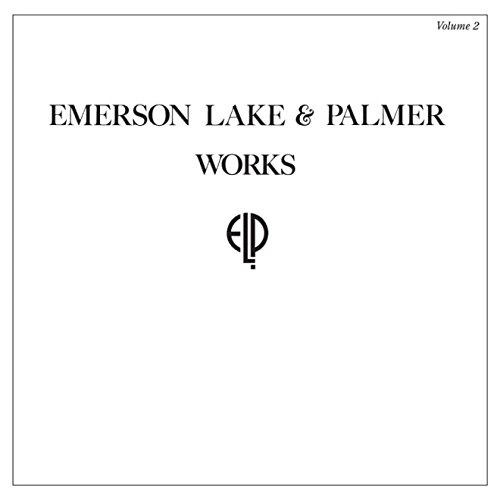
Despite a run of popular and well-received (except by the prog-haters) albums in the early 1970s, it seemed that by the middle of the decade, as the genre began to lose favor, ELP also appeared to lose creativity and cohesiveness. Their 1977 album, Works Vol.1 was a double album, with each member of the band getting one side, and the fourth side was collaborative. Although it sold well, it really wasn’t good, although the band’s version of Aaron Copland’s “Fanfare For The Common Man” was fun (and is on my list of ELP songs that I like). Later that year, they released Works, Vol. 2 which was essentially an odds and ends compilation of B-sides and unreleased tracks. Since most of these came from an earlier period when ELP was firing on all creative cylinders, it has more good stuff on it, including our feature song.
“When The Apple Blossoms Bloom In The Windmills Of Your Mind I’ll Be Your Valentine” is a relatively short song for ELP, clocking in at just under 4 minutes, with a title that takes almost as long as that to say. (but if you want long titles, check out the Red Sparowes). It’s an upbeat and relatively unpretentious (by ELP standards) instrumental that may well have started as a jam. You can hear the musical talent of the three musicians and enjoy their playing on this track. It was recorded during the Brain Salad Surgery sessions and was released as the B-side to the “Jerusalem” single.
Works, Vol. 2 was less commercially successful than its predecessor, which is probably what economists call a lagging indicator. But it also pretty much the end for ELP. Their next album, the contractually required Love Beach, which features the band members posing with mostly open shirts near a beach, appeared to be an attempt to pivot toward more pop-oriented music, much as Yes and Genesis were doing in this period, but without any real conviction. Moreover, the band was breaking apart even more, with Lake and Palmer recording their parts and fleeing the studio, leaving Emerson to finalize the album. It sold OK, but was not well received by critics, even those who still liked the genre.
Other than a few live releases, a few partial reunions that included other musicians replacing absent core members, and a brief full reunion in the 90s, that was pretty much it for ELP. Emerson died in 2016 of a self-inflicted gunshot, and Lake died of cancer the same year.
Us crack team of world weary scribes often have a little virtual chat around the introduction of each new theme. For this one, as the (currently*) token Brit, the newsroom wondered whether I would be taking on bloomers under this portmanteau. As someone who never discusses taking off bloomers, again a British "thing", I somehow have found myself delivering a post about voluminous panties. Well, someone has to!
And you know, I discovered how few songs there are on the subject. Indeed the only one that I could instantly think of, is one I can't stand. Perspective. When I were a lad, inky fingered from addiction to the musical press, I read more about music that had opportunity to listen. Thus, I liked a lot of artists long before I ever heard a note they played, purely on the basis of the enthusiastic coverage in New Musical Express and in Melody Maker. Frank Zappa and his Mothers of Invention were one such, as was his acolyte and erstwhile friend, Captain Beefheart. They looked such outrageous reprobates, not just dirty hippies, but filthy dirty hippies (or so my naive mind wandered). This admiration would take a logical step into afternoons misspent in the record shop, cans on, rifling through the records available. By good luck, it was Hot Rats that I first got my ears around, a record I love to this day, and can whistle still every nuanced guitar solo. It's true, I didn't much like the Beefheart vocals in Willie the Pimp, overly mannered and affected. (It's why my vinyl copy has a deep ridge in the grooves, as I tried, clumsily, always to skip them, as the guitar calisthenics that followed were and remain phenomenal. It sort of went downhill after that. OK, forgive me, I bought Live At The Fillmore, snickering at mud shark misdemeanours and other such low brow schoolboy humour; hell, I was a schoolboy. It has remained unlistenable for years since, bar the lift of Flo and Eddie reprising the Turtles' Happy Together, which I used to add to mixtapes. Showing how long, that too, was. (Of course I knew they were the Turtles before they were Flo and Eddie, should anyone be tempted to pass comment. You might anyway, as it has been so long that any of us had a comment that you could wonder if we write merely for ourselves.)
Fast forward, what, a couple of years, and I was sharing a study with someone with an even more over-attuned sense of hip than I. We shared our admiration of Zappa, and one fine day he unleashed his latest purchase, Overnite Sensation, playing it loud, on rotation, for several hours. I got to know the songs well, the lyrical drift imprinting on my brain like a bad smell. What was this dreck, this drivel? Even as I tried to concentrate on the instruments, all I could get was his insufferable baritone, smirking and smutting. In a crash of lightning it came to me, Zappa was shite, a charlatan. And, Hot Rats aside, there he has remained. I still think that a work of genius, so much so, in fact, as when his son, Dweezil, recently came over and played the album as the modus operandi of a tour and album, I had to go. And, when he had played the album, consummately, I should add, with his band, again I had to go, as he started the second half by cranking straight up into fecking Dina Moe..... Which meant I was home and tucked up in bed, probably before the encores. (Note, the review is not mine, but the first comment is.)
So, having written off both Zappa, largely, and Beefheart, totally, as pants, SWIDT, what more is there for me to do here? Well, how about the only Beefheart song I can abide.
That his most hardcore fans wrote this late commercial phase as a sellout and a sham probably tells you as much about them as it does about me. Me, I blooming' love it.
(*currently as in still here, but additional limeys still deemed eminently welcome, as indeed all citrus. Wanna write here? As it says in the top right hand corner: "Star Maker Machine is always open to new bloggers joining our ranks. Send an email to learn more: smmmod2000@gmail.com )
Another rabbit warren of antique archaicism to fall down today, as we grasp at the few straws offered by Tin Pan Alley to the Pauls of this world. Johns, and Johnnys are, of course, two a penny, and even Williams get more action, if more frequently foreshortened to Billy. So, then, pop pickers, who remembers “Tall Paul”? Don’t worry, I don’t either, but it was 1959 when Annette Funicello took it to the Billboard chart, where it reached number 7.
There’s a nice tale about the song, suggesting it was written for Paul Anka, not least as he and Funicello were briefly an item. Anka responded vigorously to deny this, citing he was not remotely tall, an inescapable truth. Funicello was an erstwhile Mousketeer for the Mickey Mouse club, long before, I should add, any more recent incumbent, and the song was written by the Sherman brothers, Robert B. and Richard M., who specialised in writing for Disney, and penned most of the soundtrack for Mary Poppins. The song? Well. It ain’t up to much, typical fare for the times, but it did provoke a response.
The tradition of a song producing a response, unrelated, from another group or singer is long and celebrated. Possibly the best example would be the songs traded between the star crossed squeezes, Neil Sedaka and Carole King. “Oh, Carol” was a massive hit for the former, and “Oh Neil”, her reply, was not, perhaps explained by her, in the interim, having married Gerry Goffin. More recently there was the somewhat more nuanced bromance between Morrissey and Billy MacKenzie. The Smiths brought out “William, It Was Really Nothing”, the seemingly somewhat a little infatuated Associates singer, with the explosive H bomb of a voice, riposted with “Stephen, You’re Really Something.” Probably more a little bit of celebrity one-upmanship, it makes for a great tale, if largely and likely apocryphal.
Anyway, “Tall Paul” too garnished a reply, from a songwriter, Ray Hildebrand, who elected to give it a duet status, enrolling the niece of his landlord, Jill Jackson, to help him sing it. Picked up by showbiz mogul and producer, Major Bill Smith, who, despite outranking Colonel Tom Parker, was in an entirely different league. He gave Ray and Jill the name Paul and Paula, and a hit was born, hitting the number 1 spot in 1962. I was confident that was that, but it appears they went on to have a career of sorts, with further hits and a few albums, ahead of Hildebrand quitting the glitz, returning to college and embracing the Church. A later “Dear Paula” did not chart.
Coming soon, in a future theme entitled Bernard, will be more enticing tales of derring do, but, until then, grab ‘em while you can……
When a musician leaves the stage and heads into the crowd, you never know what is going to happen. That’s probably why you don’t really see it very often, and when it does happen, there’s usually a phalanx of security guards to protect the musicians from bodily harm. I’ve written about one time that I saw The Decemberists leave the stage in Amsterdam to reenact the 1667 Battle of Chatham, and another time that Buddy Guy jumped off the stage in Central Park and eventually approached my wife and I, and our two-month-old son, who was at his first concert (not including a couple he attended in utero). And I recall seeing the Blind Boys of Alabama do it, also in Central Park. I’m sure there are more examples, but the only other one that I can specifically recall was when I saw St. Paul & The Broken Bones at the Capitol Theatre in 2019. Although I feel like that is something that Bono has done on occasion, and we all know what his real first name is, right?
I’ve mentioned in passing before that I occasionally blog about shows at the Capitol Theatre, the storied venue in Port Chester, New York. When they announce shows, I can request a ticket, and if I am chosen, I get to go for free, and write about the show. They then post what I wrote, usually with a bunch of nice pictures taken by a professional photographer, on their website, in a section called the “Squirrel Blog.” Squirrels are important to the Cap. I blogged that show, so let me borrow from what I wrote back then, when it was fresh in my memory:
After Janeway introduced and thanked the band, they launched into the emotional “Broken Bones & Pocket Change,” as Janeway plunged into the crowd before walking upstairs, singing from the side boxes, traversing and nearly climbing off the balcony, and ending the show from the boxes on the other side.
You can see a video of that part of the show here.I don't think you can see me in the video, but I'm standing in front of the soundboard, because someone once told me that it was the best place to stand.
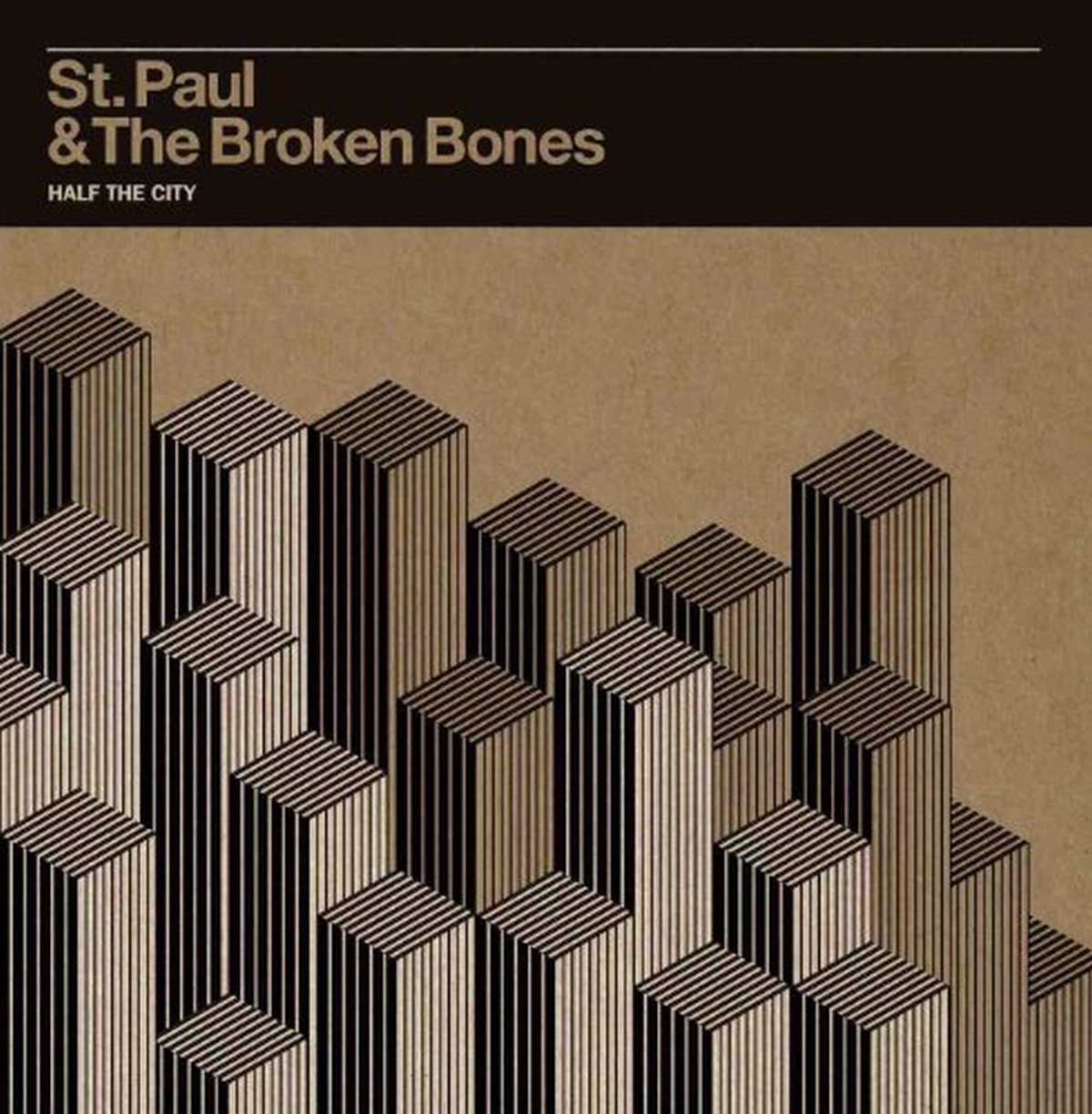
The “Janeway” that I referred to is Paul Janeway, the titular "St." Paul, who had trained as a preacher before eventually turning to music. The band’s name came from our featured song, the first that Janeway wrote with bassist and co-founder Jesse Phillips. They formed the group in 2012 in Birmingham, Alabama, and soon became an 8-piece soul band that included guitarist Browan Lollar, who had been part of Jason Isbell’s band The 400 Unit and keyboard player Al Gamble (whose brother Chad is the drummer in the 400 Unit). Their first full album, Half The City, which contained our featured song, was released on Single Lock Records, which I only mention because one of the owners is John Paul White (of The Civil Wars), and then, only because we are focusing on “Pauls.”
Here's how I described their performance that night:
Janeway regally commanded the stage, a shiny cape over his shoulders like Solomon Burke, and the crowd was in his hands from the start.
Good performers feed off the energy of the crowd—great ones take that energy and send it back, magnified, and that’s exactly what Janeway and the band did, holding nothing back through the hour and a half set. His voice is a freak of nature, rich and soulful—think Al Green or Otis Redding—with an otherworldly falsetto that thrilled the crowd.
It was a great show, I got to see it for free, the lead singer left the stage and climbed into the balcony, and nobody got hurt. If that's not a great night, I don't know what is.
Star Maker Machine does not accept music submissions from artists or promoters. However, most of the contributors here do accept submissions for our own blogs, listed below. Please visit our blogs, take the time to listen to what we post, and then feel free to contact us if you feel that your music would be a good fit.