There is a programme on UK television called QI, a comedic panel show where guests have to respond to clues with explanations, which, if falling too far within cliche or to fulfil urban mythology, it causes a klaxon to blare. (Yeah, I'm selling it, aren't I but here's the gist.) Anyhoo, for me to answer this theme with this song would surely fire that klaxon. But who cares, it's a great slab of cheesey kitsch and I love it. I even bought the single. Of course, it has nothing to do with punk in the later better received sense of the word, no spiky cuts and spitting, being very much an amalgam of poodle rock and near Jim Steinman grand guignol. The punk reference is more hollywood american, c'mon, punk, make my day, cataloguing the nonsenses when rich kids go slumming in L.A. dives in the search of sex, drugs and rock and roll. I recall the video, all grotesques on enormo-heels, or were they stilts, and with huuuuuuge hair. Staying up late by myself, watching Whistle Test, it certainly rattled my enthusiasms for living a life more wasted. I didn't, needless to say, but I could dream.
The Tubes didn't really, for me, ever have much else up their sleeve. OK, they made a slew of discs and were able to notch up different Greatest Hits collections on different labels. I suspect hit was maybe a loose description, or thought so until I checked. They seem to have shifted a ton of product in those hinter years pre (real) punk, either in the Ramones/Blondie CBGBs sense or the Clash/Pistols british "invasion" sense of the word, as adult oriented rock was running out of ideas. (I know, this is rose-tinted whimsy; did punk ever mean for much on your side of the pond, other than for media frenzied s(c)h(l)ock-rock portrayals? ) I know I bought one of those hits compilations, played it once and never needed to bother my ears with it again, but the single, both sides, I kept on playing. Remarkably, neither song featured on that hits collection. (Actually, thinking back, I have a sneaking there were two songs on the flip, but I only remember one, another right up there stone cold classic. And of course I'm going to give it you.)
Wow, I just read their wiki page. They really were huge, weren't they? And I could have seen them only last year, supporting fellow ghoul Alice Cooper, a match made in purgatory, on their/his tour of Europe last year. And front focus Fee Waybill, one of the great, possiblynothisreal, names in the industry, still at the helm. No, I couldn't and wouldn't. And didn't. I caught Cooper in about 1984 and he was already older than the collective combined of the audience; seeing kids singing along to 'I'm Eighteen', a song they weren't even born as Alice first sang it. I digress. So, back to the Tubes, and as they grew into any number of images, wretchedly they failed then and now to catch my enthusiasm. Hell, they didn't need to. Why spoil my reality with the truth? I'm off to play my vinyl. Loud.
And, for a change, I really do want you to get that single, for only 75p of my money. And there were/are three songs.
I'm not particular about the genre of music I pick - kind of the opposite of the Ry Cooder line, "I used to be particular ...". And I can generally classify what I hear as being in one or another of several major categories, but there are some labels that seem arbitrary: Pop-Rock? Folk-Rock? Where do you place Springsteen? And does it matter?
I confess I never really <subscribed> to punk. Maybe it's the connotations I ascribe to the word: "punk" sounds pejorative for some reason. If you had asked me a week ago, "Do you like punk?" I would likely have said, "Not especially. Never really paid it much attention."
Checking out one online list of all time best punk hits, I see that there are many that I (inadvertently) enjoyed without having them labeled as punk.
There are equally many bands in that top list that I never (wrongfully) paid much attention to: the Sex Pistols, Blondie, the Ramones ... all certainly known to me (as in "they exist and make profitable music") but I still couldn't tell you much about them.
But among that top <punk> hits list I was working off, one stuck out partly because I had never pegged the band as punk (but as a result of this awareness, can now sort of profess a better sense of what is punk/what punk is)... and that is Elvis. Costello, that is.
His outre look -a sort of <I don't give much of a f*** about what you think I look like... my lyrics are my lyrics and make of them what you will>...and music that may come across as discordant (but isn't). I think that partially describes the punk genre.
And I love/loved Elvis. The lyrics always seemed to vie with the best (as in Bob Dylan). The music? - not at all as monotonous as your standard I-IV-V. And catchy - many of the Costello songs got stuck inside my head to the point that they "ran" all night through my sleep. Kept me away going round and round.
It is a complete coincidence that our Punk theme follows our Jokes, Pranks & Fools theme, since one of the meanings of being punked is being the victim of a prank. Although people may go there, I suspect that most of the posts over the next couple of weeks will be about punk music (or songs with the word in the title).
As I think I’ve mentioned somewhere before, when I showed up in college in 1978, I had begun to dip my toes into “New Wave” music, but found “punk” music, such as The Ramones and The Sex Pistols, to be basically unlistenable. It didn’t take too much time working at WPRB before I did a full 180 on that, and began to appreciate much of what is called punk. That being said, my tastes have always leaned toward punk bands that could write good tunes, and still have problems with some of the more hardcore bands that sound like a bunch of screaming. But that’s me.
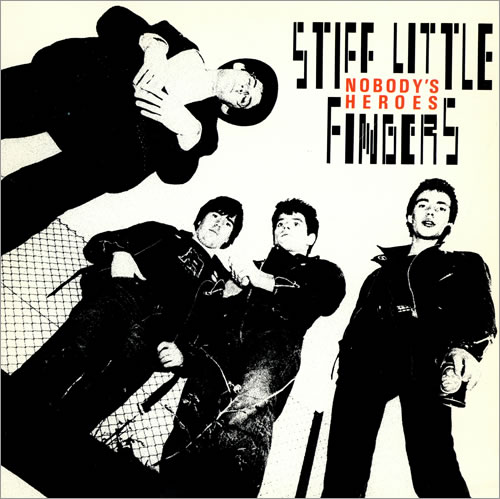
Stiff Little Fingers was a band that I fell hard for, and fast. My introduction to them was their second album, Nobody’s Heroes, which came out in 1980. It was only later that I discovered their excellent debut album, Inflammable Material, and the song that vaulted them to prominence, “Alternative Ulster.” It was clear that SLF were a political band—the first album was mostly about the “Troubles” in their native Belfast, and I learned, much later, that the advance that they got from Chrysalis Records before recording Nobody’s Heroes allowed most of the members to flee to the relative safety of London.
“Fly The Flag” was the song that stuck out to me then, and I still like it today, despite the fact that it doesn’t seem to be one that gets mentioned much in discussions of the band or its music (and it doesn’t even make some of their “best of” collections, which is crazy). It is anthemic and stirring, but its energy, and singer Jake Burns’ gruff vocals, place it clearly in the punk style. The song is also, from start to finish, sarcastic. It appears to be sung from the viewpoint of an ultra-conservative super patriot, similar to the rhetoric advanced by the fascist National Front in Britain at the time. But because the message of the song seemed so contrary to the band’s other music, it was clear that they were mocking that position, not supporting it. (You had to be careful, because other punks at the time did support racist and nationalist policies). If anything was a giveaway, though, it was the repeated “gimme gimmes” that made it clear that they were pointing out the selfishness of the ostensible narrator and his ilk.
Burns has written that the song was a response to the Thatcher generation, and “the whole ‘me, me, me’ attitude and the naked greed that was around at the time.” But he was horrified when National Front supporters took the song at face value.
When I started writing this, I just wanted to discuss a band that I haven’t written about, and a song that I like. But when I listened to it again, it struck me that it works today (with a minor change of venue) as a satire of Trumpism, with its cruel anti-immigrant and nativist sentiment, its greedy social Darwinism, and mocking of the “helpless.” I mean, here are just some of the lyrics:
Gimme a nation where people are free Free to do and free to be Free to screw you before you screw me
And
Gimme a Britain that's got back the Great A race of winners not cramped by the State And only the helpless get left at the gate.
SLF put out an excellent live album and another studio album, both of which I played the crap out of on the radio. They released one more studio album in late 1982, which I have no recollection of, before disbanding. They reformed in the late 1980s, with former Jam bassist Bruce Foxton replacing original member Ali McMordie, and have put out albums and toured, with some lineup changes, on and off since then. I admit to not being aware of any of this music.
Your perception of the fool may range from the benign to the malevolent - no names mentioned.
Praise be, you have a wide selection to choose from. You can start at the low end of the chart with your least favorite SMM blogger or move all the way up to your least favorite Tweeter - your choice. Especially in the Internet age -the fool just types away - often without considering th repercussuions. Once done, your foolishness might as well be everywhere.
My choice of the Doobie Brothers. .. Doobie... a what?
I wonder if I would have chosen that as my band's name? Maybe so? Maybe not. Maybe they wanted to make a statement 40+ years ago. Maybe they weren't such a bunch of fools,because they saw the future of the doobie.
Heck .. I don't know ... but doobie people are generally portryed as ... well ... fools who are wasting their lives.
But compared to you and me, Jeff Baxter, Michael McDonald, Kenny Loggins and the rest wouldn't be portayed as wasting their lives away - doobies aside or not.
It is astonishing to believe the video above and the one below are the same singer, separated, as they are, by nearly three decades. And more so that the first one represented the band, the Bee Gees, then already in their first stride, a full decade before they became near ubiquitous for disco falsettos and windblown hair. In this, their first heyday, they were producing intelligent and sensitive ballads, often, as this, with quirky lyrics that actually are worthy of some thought. Perhaps also astonishing is the fact that the 2nd clip (below), is itself already two decades old, the band now well into their post Saturday night Fever zeitgeist, able to call on songs from all their careers. Now I am no fan of their 70s fame and fortune, only with the passage of enough time able and willing to admit I was a fan of theirs, as a boy, in the 60s. Indeed, I remember singing this very song, into a hairbrush, standing on my bed, for the benefit of my cohort of fellow school chums. (Yup, dormitory days in the UK private school system.......) Robin Gibb, for it is he, was always my top Bee Gee. He always seemed to have a little more grit than his brothers Barry and Maurice, escaping them for a brief moment in '69 through '70, with his solo hit, 'Saved by the Bell', another part of my youthful repertoire.
Joke was the 2nd single from the 1968 album 'Idea', and went top ten across most markets. Written by all three brothers, it was primarily a vocal showpiece for Robin, who described it as a "very spiritual song". Big brother Barry was a bit less serious, citing it as an example of how you could write almost anything in those psychedelic days and then someone would be able to find a meaning for it. It was possibly peak period for their early career as, although they continued to produce a stream of fairly successful records thereon, they were ultimately beginning to fade from view until 1975's Jive Talking'. Which was my cue to lose interest.
Over the years the song has popped up in a number of cover versions, often prompted by film soundtracks. Most well known, perhaps, have been the ones by Faith No More and by Low. My favourite, sneaking out on a single b-side, was by The Beautiful South, the quirky and melodic band fronted by Paul Heaton, who lightened up the UK charts in the 90s and noughties.
Barry Gibb remains the only living brother Gibb, Robin having died in 2012, aged 62, 9 years after his twin brother Maurice. It seems only now that the majesty of their first decade seems to be rising to the top of their canon. 'Odessa', from 1969, is now seen as a masterpiece to go alongside the Beatles'
'Sgt Pepper'. If that is the case, 'Idea', with the track here featured, must surely be a 'Revolver'.
I really wanted to write about a prank, but the only two musical pranks that I could think of were “Paul is Dead,” which would require essentially regurgitating the stuff that I linked to in this, and “Rickrolling,” which I really don’t find interesting. I also thought about going to the Monty Python well again, but decided against it. But this is a good song, by an artist that I’ve never written about, so here we go.
Elvin Bishop has had a long career as a blues guitarist, after he decided not to finish his degree in physics at the University of Chicago and join the Paul Butterfield Blues Band in 1963. He formed his own band in the 70s, and had a minor hit with the song “Travelin’ Shoes,” from an album on the Allman Brothers’ label, Capricorn Records, that featured contributions from Dickey Betts, Charlie Daniels, and Sly Stone, among others. The follow up to that album was almost finished, but the producer said that they needed one more song. Bishop suggested “Fooled Around And Fell In Love,” but they were all unhappy with the way Bishop’s vocals sounded. In all of the interviews that I’ve read about the song, Bishop is incredibly self-deprecating about his voice, which he considers to be average, at best—although he believes that this has forced him to write better songs.
Bishop suggested that his backup singer, Mickey Thomas, who he acknowledged had an incredible voice, give it a whirl, and rock and roll history was made. “Fooled Around” was a #3 hit on the Billboard charts, and has been a staple on FM radio, and on soundtracks, maybe most notably Guardians of the Galaxy. It is also regularlycovered.
After that, Mickey Thomas left Bishop’s band, tried some solo work, and became the lead singer of Jefferson Starship, recording one pretty good album, and a series of less good albums, ultimately (after litigation) dropping the “Jefferson” and recording something that is regularly on lists of the worst song ever recorded. (My Cover Me piece here links to a couple of such lists). Interestingly, the drummer on “Fooled Around,” Donny Baldwin, later also joined Jefferson Starship, but in 1989, in Scranton, PA, he attacked Thomas, who needed reconstructive surgery. Attacking your lead singer is generally a bad idea, and Baldwin was fired, but as history has shown, the Airplane/Starship revolving door is always turning, and Baldwin rejoined a Mickey Thomas-less version of the band in 2008.
Bishop, on the other hand, returned to the relative obscurity of the blues world, continuing to record and tour both as a leader and sideman. When he performs the song these days, he either does it as an instrumental, or with his background singers stepping forward—and occasionally with Thomas. (who also performed the song with Starship). He’s had a couple of Grammy nominations, in the Best Traditional Blues Album category, losing out to B.B. King and The Rolling Stones (no shame there), and is in the Rock and Roll Hall of Fame, as a member of the Paul Butterfield Blues Band. And, one can assume, Bishop continues to cash royalty checks for “Fooled Around,” demonstrating that he is nobody’s fool.
And, indeed, those who bought this as a single, in it's first incarnation, in 1978, could indeed be deemed as potential fools if they then thought the tousle-haired soul-lite balladeer would still be at it a full 40 years later. Number 12 in the U.S. Billboard chart that year, with 3 weeks at the top of the (do they still call it that) Adult Contemporary Chart, bagging a grammy the following year. That was his peak stateside, but he has gone on to have a number of careers in different markets, different genres even, as the years have rolled by. Ironically, for what he states is still his only song not performed on the guitar, he was pitched headlong into the Elton John/Billy Joel marketplace, a place he has never quite fitted. When the next 2 or 3 albums flopped, he was dropped.
Not that you could tell from the featured song, his first love was actually the blues, the real delta bottleneck variety, Charlie Patton through Howlin' Wolf. Born in Middlesborough, in England's industrial north east, his first band was alongside later rock screecher David Coverdale. Rea only began to sing when the singer failed to show for a gig. In some debt to his record company, he then had a surprise hit in europe, I Can Hear Your Heart Beat, which displays his gradual transition into a (slightly) rockier style, albeit with a retained pop sensibility. Building on this momentum, he then toured constantly, gaining an especially big fanbase in Germany. His home country took a few years yet to catch his drift, with 1985's Shamrock Diaries, which broke him on the back of the success of the song Stainsby Girls, a paean to the girls, his wife included, of his (Stainsby, north Derbyshire) youth. This is where I first caught sight of him, and remains my favourite of his songs. This album, and the next 2 each sold over a million and, buoyed by a run of further hit singles, finally allowed him to repay his initial advance to the record company of 10 years earlier.
It took his next album, New Light Through Old Windows, to break him back into the U.S. market. Then a relatively unusual step, now much more commonplace, this was the trick of re-reording and reprising his back-catalogue, principally the hits, thus gaining control of his own songbook. The 2nd version of Fool, above, is lifted from that and, whilst broadly similar, shows the more gravelly tones he is now more recognised by, with a little more oomph in the rhythm track. Singles found themselves back in the Adult Contemporary and, yay, finally the Rock Mainstream charts. (Who defines these genres?)
For several years he could do no wrong, albeit still a greater pull in Europe and the U.K., each record getting greater sales and accolade until the early to mid 90s. Whilst The Road to Hell gave him his biggest hit in 1989, an ill-conceived Part 2 a decade later, signed the end of this second wind. This was an unexpected foray into sax'n'electronica . The less said.
In 2001 he was diagnosed with pancreatic cancer, an illness with a dire reputation that is generally well onto the killing of you before its discovery. He was lucky, caught early he had a Whipple's procedure, massive surgery to remove the pancreas and much of the gut, transforming you instantly into being dependent both on insulin and the need to take extra digestive enzymes to manage any sort of normal diet. Promising himself that, should he survive, he would espouse his more commercial persona and return to his blues roots, this is exactly what he has done. Setting up his own label and distribution, and often a sidesman and/or producer, allowing other musicians the limelight, he released a number of largely instrumental albums. building up to his major opus of 2005, Blue Guitars, an 11(!!) cd set featuring 137 tracks. Each disc covered a separate theme, to include Chicago blues, Texas blues, electric Memphis blues, country blues etc etc. (The featured selection is from electric Memphis blues. He also painted the cover.
Since then he has produced further and similarly ambitious pieces and tried to get back on the road, albeit dogged by poor health, suffering a stroke in 2016. At the time of writing his last tour remains unfinished, an onstage collapse in December 2017 possibly calling an end to any such further plans. But with all his luck, good and bad, you'd be a fool if you thought him over.......
So, wait: we're doing a "steps and stairs" themed set here and no one's gonna talk about the most obvious choice there is? Led Zeppelin's "Stairway to Heaven"?
Yeah, I get it--I wouldn't write about it, either. Given that the song is one of the biggest epics in the history of rock 'n roll, and growing up I think I heard it more than any other song, by many, many listens, it's odd that "Stairway" has such an odious reputation.
Perhaps, as this great piece from GQ elucidates, we all hate "Stairway" because, like "Smoke on the Water", "Back in Black" or "Iron Man", it's the first song anyone learns to play and thus, not only did rock radio run the track on a near non-stop loop, every kid we've ever known who plays the guitar started by playing "Stairway" (well, the opening riff, at least). And made you listen as he fumbled and plucked his way through it. Over and over.
Or maybe, we just got tired of it, despite Led Zeppelin's best efforts to keep their music from being overexposed and overused. Zeppelin are famous for refusing licensing of their music, and from what I can recall, Cameron Crowe's Almost Famous and Jack Black's School Of Rock are but a tiny handful of films to feature a Zep tune. I suppose it's a question of integrity. Which is fine. Nothing wrong with trying to preserve the sacred in your artwork. This makes sense when you think about this: perhaps the band's greatest, or at least most monumental song is also their most maligned. I mean, we haven't reached "Mmmmbop" or "Boyfriend" levels of hatred, but if there is one joke about Led Zeppelin that persists, it's the "No Stairway" one. I know growing up, it was an absolute staple of the FM rock stations I listened to, and I easily heard it once a day, for many years in a row. So, Led Zeppelin has tried to maintain some control where they can. The surviving band members charge a lot of money to use their songs in movies (somewhere in the seven figures), if they relent at all, and have only recently been loosening up and allowing their music to be used. Hence, the famous little easter egg story of where I took the title of this post from: when Wayne goes to play "Stairway" in a scene from Wayne's World, the filmmakers were not allowed to use the actual song. They were allowed to use about three notes before they were in violation of the copyright, so what Wayne (Mike Myers) actually plays is in no way "Stairway." Yet, the scene illustrates the point: people love the song, but never really want to hear it again.
But, what I find funny is this: for as much ill will that "Stairway" generates, it really is epic--I'd bet it's often the first "blow your mind" rock track young kids hear, and I'd bet on the odds that "Stairway" has been a stadium's worth of fans gateway song to a lifetime of rock music addiction. And it has the power and the majesty to continue to amaze those who are just coming to rock music. So, like anything we love and overuse, "Stairway to Heaven" will always be a song whose value and worth remain high, though the song itself will maintain a quiet presence. Dust it off every few years, but for the most part, let it rest.
<One Step Over the Line> is not to be confused with the better known <One Toke Over the Line> despite the fact that the syllabication and hence - to some extent the application to a musical format -is pretty similar.
The latter by Brewer and Shipley, the former by John Hiatt.
But the choice for the theme is John Hiatt (and Rosanne Cash) performing with the Nitty Gritty Dirt Band.
The Dirt Band first appeared mid 60's doing Mr Bojangles among other pieces. And then they sort of faded into the background until they came back with their <Will the Circle Be Unbroken> albums, the 2nd of which includes this piece.
I read somewhere that the Nitty Gritty Dirt Band was the group that made country music appeal to rock music fans.
That's certainly true for me (although I do like Country music of a certain style with or without the Dirt Band).
This song seems to appear most often with a female backup vocal. Rightly so. John Hiatt has an inimitable style, but his crooning improves with a female side-kick on vocals.
When Joe Jackson released his debut album, Look Sharp! in 1979, he was usually lumped in with Elvis Costello and Graham Parker as “angry young men,” and that comparison was not terrible, at the time. And while Look Sharp! and it’s similar successor, I’m The Man were filled with intense, uptempo rockers that fit with the narrative of the emerging New Wave style, there were hints that there was more to Jackson, that his musical palette was broader.
What I certainly didn’t know at the time was that Jackson had been, from his youth, a multi-instrumentalist, a lover of classical music, jazz and progressive rock, and had studied composition at the Royal Academy of Music in London, on scholarship. (Also, his first name is really David). Or that he was in a band named, variously, Edward Bear, Edwin Bear, and Arms and Legs, before becoming the pianist and musical director at the Playboy Club in Portsmouth.
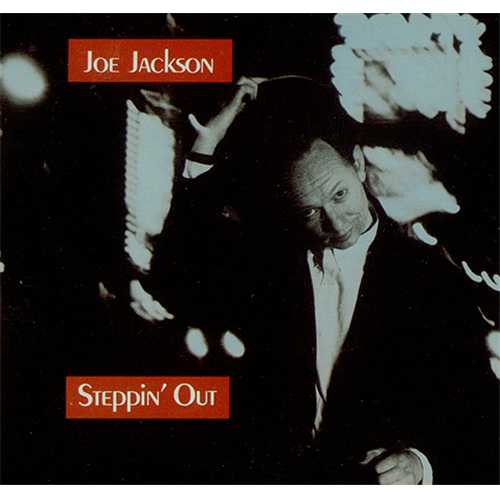
Beat Crazy, Jackson’s third album, began to meld more styles, including reggae, dub, and soul to the formula, and it was followed, seemingly out of nowhere, by the swing and jump blues cover set, Jumpin’ Jive. By this time, it was clear that Jackson could no longer be pigeonholed. But when he released the Cole Porter and Gershwin influenced Night and Day, filled with Latin and other decidedly not-New Wave rhythms and sounds, it was a bit of a sensation. The album went high on the charts, and the first single, “Steppin’ Out,” a sleek, synth and piano driven tune about, yes, going out, promoted by a modern-day Cinderella themed video, was also a hit.
Whenever we hear it, or even when it is discussed, my wife says, “I love that song.” Because, she does. The album was released as we were graduating from college in 1982, and not only was it on the radio and on MTV all of the time, it was a time when she, and most of us music lovers, still listened to whole albums, and this whole album was filled with good music. So, I’m guessing that my wife heard “Stepping Out” approximately a zillion times over the next year or so, and maybe a gazillion times since then. And that’s OK, because it is an excellent song.
Jackson has continued his eclecticism, releasing albums that would be generally considered to be rock, soul, jazz, classical, pop, New Wave(ish), and has written soundtracks, to mixed reviews since Night and Day (even releasing a sequel to that album). It is fair to say, though, that Night and Day and “Stepping Out” represented Jackson’s commercial peak. The song is, because of its appeal to both fans of rock, and fans of less manic music, likely to remain part of the “classic rock” pantheon as long as there is such a thing.
I recently read a poignant piece about fire-fighters ( The Perfect Fire) in which stairs played a major role. Obviously, a lot of the work of firefighters involves stairs, multiple flights of stairs in dark, smokey and deathly conditions. Granted, they are trained for these conditions, but there are always surprises and the job isn't one most people would likely choose off hand.
The article covers the story a multistory fire in Worcester, MA back in '99.
In a large multistory building, it's pretty crucial that the firemen keep precise track of their location. They've got tools: GPS locators, "squawkers" that emit sounds and live wireless/walkie-talkies as well as a lot of primitive [Hagar the Horrible] tools.
But sometimes that whole collection isn't enough.
When a fireball comes at you, none of the above may suffice to save you on its own. And so, sadly, in the case of [The Perfect Fire] - a more or less abandoned warehouse.
Fire-fighters may be the epitome of the working "man" - a thankless job without which society would be more or less paralyzed - kind of like the McDonald's employee? And Springsteen has always been a man pretty much in tune with the working man. He has sung <Factory>, <Working on the Highway>, <Jack of All Trades> ...
<Into the Fire>, from Springsteen's 2002 album The Rising is an anthem about these heroes. The album has been widely ID'ed as Springsteen's "response" to 9/11, with songs titled <Empty Sky> and <City of Ruins>, the claim seems pretty obvious. But there is much more than "the people who put out fires" in his lyrics and equally in his voice:
It's a song about sacrifice.
If I am not reading too much into the song, there's also a cross-over between an actual fire and the emotional/physical fire some may feel from some kinds of love - Love can burn and empower at the same time. Although not explicitly stated in the lyrics, it seems pretty clear that the fire-fighter referenced is a woman.
He sings:
It was dark, too dark to see, you held me in the light you gave
You lay your hand on me
Then walked into the darkness of your smoky grave
Somewhere up the stairs into the fire
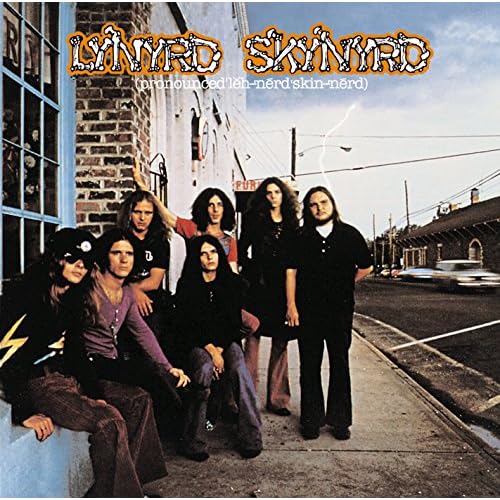
A few years back, I wrote a piece for Cover Me that was timed to run on the anniversary of the plane crash that killed three members of Lynyrd Skynyrd, Ronnie Van Zant, Steve Gaines, and his sister Cassie Gaines, along with the pilot, co-pilot and the band’s assistant road manager. The rest of the band, manager and crew all suffered serious injuries. I melded the blog’s In Memoriam series with a Full Album treatment, focusing on the band’s debut, Pronounced ‘Lĕh-‘nérd ‘Skin-‘nérd. One of the things that struck me as I was writing it was that a number of the songs were drawn from the remarkably colorful life of singer Ronnie Van Zant, including “I Ain’t The One,” meaning “the father,” "Tuesday's Gone," about the change in his life following a major label deal, and, most amusingly, “Gimme Three Steps.”
The song recounts a true incident when Van Zant used a fake ID to enter a bar in Jacksonville, Florida and made the mistake of dancing with another man’s wife or girlfriend. When the aggrieved gentleman appeared to be reaching for a gun, Van Zant told him: "If you're going to shoot me it's going to be in the ass or the elbows... just gimme a few steps and I'll be gone." He ran out of the bar and back to the truck where his bandmates Gary Rossington and Allen Collins were waiting. They reportedly wrote the song that day, possibly in the truck. It is unclear whether that bar was The West Tavern, later known as the Pastime, or another bar called The Little Brown Jug, whose name conveniently allowed them to rhyme it with “cutting the rug,” but it hardly matters. In addition to being a great tune, what makes the song a classic is Van Zant’s presence of mind to ask for a head start, then beating a hasty, panicked retreat when circumstances resulted in his getting that lead preventing him from getting shot. Because, if nothing else, if he had been killed in that bar, not only wouldn’t we have “Gimme Three Steps,” but the last song on Pronounced would never have been recorded, and concertgoers would have nothing stupid to yell out.
If you have read any of my stuff here, there, or there, you know that I’m a huge fan of the Drive-By Truckers, and the album that broke them to a wider audience, Southern Rock Opera, is filled with Skynyrd references and allusions. They’ve even been known to work a little “Gimme” into one of their songs, live. And here’s something I just found, a Village Voice article from 2002 about the Truckers, after the release of Southern Rock Opera, entitled "Gimme Three Stepsisters," which gets into some of the Skynyrd stuff. (Not a bad article, despite getting the drummer’s name wrong).
And, if you read my stuff here, there or there, you also know that I’m a big fan of Uncle Tupelo (and the bands that formed from its demise). Their last gig ever ended with a sloppy cover of “Gimme Three Steps” featuring Bottle Rockets singer (and former Uncle Tupelo roadie), Brian Henneman, on lead vocals.
Unlike esteemed colleague Darius, I have no such qualms about steps over stairs, enjoying the smorgasbord of songs available. Many refer to the concept of going forward only then to go back a greater distance. (Indeed, as I scribble I wonder as to whether any reference the opposite journey?) This is one of my favourites, which might conceivably also reference the career of it's author, the mercurial Chris Hillman.
Hillman has had a long and still unfinished career, starting off in bluegrass as a Scottsville Squirrel Barker, before being head-hunted to join the Hillmen, which featured later country star, Vern Gosdin. His instrument of choice was then mandolin, and early namechecks have him as Chris Hardin, a fiction to conceal his being to young to be in the sort of venues they made their living in. So far two steps forward, until, in 1965, a massive leap ahead into the Byrds. Now toting bass guitar, albeit probably not playing on their worldwide breakthrough smash, he was undoubtedly major league.
(Indulge me for the contrivance of a reprise of this song, used merely for the caption which calls it Mr Spaceman Quickstep. And, ha, by the Birds!)
After six albums with them, gradually introducing the country influences he had ingrained in him, magnified by the short sojourn of Gram Parsons, there came his, arguably first step back, although aficionados like me might cite the opposite. In the hiatus around a projected tour of South Africa, first Parsons and then, swiftly, Hillman peeled off into The Flying Burrito Brothers, a full blown headfirst immersion in the country music tropes the Byrds were now starting to more fully embrace. As main co-writer with Parsons, the Burritos had a golden period of doing no wrong, if earning little money or acclaim at the time.
(My somewhat contrived link here is in the lyric, as, assuming the lift is broken, how else are you going to get to the 31st floor?) Hillman was now also firmly ensconced as a reliable two-part harmony vocalist. Unfortunately the lifestyle of Parsons was getting a tad chaotic, and he had to go, Hillman now effectively band leader. The band carried on for a couple of more albums, Hillman de facto leader and main vocalist, recruiting first Rick Roberts and then, more or less, the whole of bluegrass band, Country Gazette. Then, following terrific live album, Last Of the Red Hot Burrito's, Hillman jumped ship. (And, as is always the way, it wasn't the last of them, and a version of the band limps on, probably to this day....)
I am similarly uncertain if Hillman's next guise was a step forward or back. Recruited as right hand man to Stephen Stills in the latter's Manassas band, I am sure he welcomed the regular pay checks.
(I guess my use of the above track, Down the Road, gives away my opinion.......) In 1973 he again moved on and, via a brief reprise of the original Byrds line-up, took a definite step back. As was compulsory, the name of his new grouping was the imaginatively titled Souther Hillman Furay band. Despite the auspices and expectations, the band never really took off and were almost clunky in their attempts to out-Eagle that nascent band.
(On the Line can suggest he was now back where he started?) A couple of solo records and the lure of the old band again became strong, with a trio of he, (Roger) McGuinn and (Gene) Clark, ex-Byrds all, and then just he and McGuinn touring and putting out a record as the membership further tumbled. Overall still heading backward, I feel.
After further solo records, which introduced the now longstanding musical kinship with ex-Dillard Herb Pederson, before 1987 saw the definite several steps forward Desert Rose Band. Definitely now country more than country rock, let alone rock, with seven albums and a slew of singles all hitting country pay dirt. The band lasted until 1994, but has stood a reunion in 2008. Most of the intervening and subsequent years have seen Hillman take a largely quieter background role, popping up infrequently as a solo artist, in tandem with Pederson, or guesting on the albums of others. However there was still an acronym ready and waiting in the wings, the fully bluegrass Rice, Rice, Hillman & Pederson, who had some brief success.
(Again, this song title enables you to draw your own conclusions as to where on the road he now was. Actually I feel this has weathered perhaps better than the earlier DRB, on account of the clunky rhythm section production, so 80s/90s, on the latter.)
Nearly up to date, to all intents and purposes it seemed Hillman had retired. He has said as such himself. But it seemed, and I apologise, he was only Biding (his) Time, as a surprise invitation came from Tom Petty to do a record for him, duly released last year and pretty damn good it was too, a definite step forward from wherever he had been lurking. Sadly the death of Petty may have put future work out of range, but we shall see.
You can read more about Hillman's glory days in the Burrito's, if such, in this excellent book, co-written by Hillman, with John Einarson. In many ways Hillman might fill the description, apropos George Harrison's role in the Beatles, as the "quiet" Byrd. Never as much a self-publicist as others in the band he has quietly got on with letting his writing, his singing and his musicianship talk for him. Long may he step.
I have to admit that the announcement of our new theme did not bring any songs immediately to mind. I was being stubborn, I suppose, wanting to focus on the “stairs” part. The word “steps” has many metaphorical meanings that have nothing to do with stairs, and therefore gives us an out for this theme. But I had to do things the hard way. So, stairs it is.
I might have known that the notion of a room at the top of the stairs would appeal to country song writers. It suggests a gloomy attic, and begs the question of why anyone would be found there. Both Eddie Rabbit and Cal Smith, in separate songs with this title, find this hidden room to be the perfect location for an affair. But Ralph Stanley has this third song with the same title, and he sees the room as a refuge from a world that has treated his heroine unkindly. I like the fact that this song depicts a pair of lovers who are at least middle aged. The young love that is the subject of so many pop and country songs is the back story here, and it did not go well. But Stanley’s narrator wants more than anything to make up for that. Being a mature love song, we do not learn if he succeeds. Stanley’s narrator wants to win this lady’s heart, but his maturity means he has the wisdom to not try to force the issue.
It does not hurt that this is a fine example of bluegrass at its best. That is just what we would expect from Ralph Stanley. This one features some fine guitar work in particular. I can’t resist closing with another version of the song. This one is from a television appearance in 1990. Stanley would have been 63 that year, and 44 years into his legendary career. Many of his bandmates in this version might not have even been born in 1946, when Stanley made his first professional appearance. So this clip was probably chosen to close the show because it shows the passing of the musical torch from one generation to the next. It is probably true that none of Stanley’s band mates seen here are as well known as he was, but they are certainly worthy heirs.
Fleetwood Mac goes back to the mid 60s in one incarnation or another.
At first, without any women. Except for one: Black Magic Woman (yes, that one) was written by Peter Green - at that time an integral part of the band.
In 1970, Christine Perfect married bassist John McVie, and Fleetwood Mac had a female band member. Among their albums was Future Games, which included a track called Woman of a 1000 Years:
In 1974 Stevie Nicks joined the band to make up one of the most successful bands ever, including a hit named Gold Dust Woman.
KISS is many things: the personas and the makeup and the costumes are just a small part of the idea. The constant touring, the myriad promotions--from lunch boxes to coffins--the legends of debauchery and all sorts of stuff about the devil, the individual shtick for each member, their extremely devoted legion of fans...So, to be honest, one thing KISS has never really struck me as was anything at all about the music. At least not past the 1970s, when their bottom heavy, thundering riff rock songs mattered. What have they been since? Other than a constant money-making machine?
One thing that always did strike me about KISS was their strange ability to buck genre and deliver a song so far out of their supposed range that it was almost...good.
Take for instance "Hard Luck Woman", off of 1976's Rock and Roll Over . It was, as far as I know, KISS's one venture into country, and it sounds more like a Garth Brook's song than Garth Brooks. In fact, Brooks himself covered it for KISS tribute album, Kiss My Ass. It is hard to tell the difference. "Hard Luck Woman" is a great tune, plain and simple, one of my few favorites by the band. I'd say it's great because it's just a good song, a sweet 12 string guitar melody and their best vocal harmonies, multi-layered and liquid smooth, led by Peter Kriss. But, really, when it comes to KISS, what makes the track great is how it defies KISS's own self-made genre. Just like people loved "Beth" for the very same reason, "Hard Luck Woman" is great because it was a surprise. And after the bolt of "What, that's Kiss?" wears off ,"Hard Luck Woman" easily stands on its own. That it wasn't a bigger it has always surprised me, but then, KISS was famous for spitting blood and fire and hiding their identities, so I guess a great song really doesn't stand up to the spectacle of hype that always accompanies our pop music.
To some extent, this is a tricky theme for a blog that currently appears to have only male writers. In light of years of feminists correctly clamoring to end objectification of women, and in the immediate post #MeToo era, stuff that we used to take for granted is, properly, subject to stricter scrutiny. These days, what one says, or does, to or with or about a woman could be damaging, and for the most part, I have to say, the additional care and thought is a good thing. Of course, if you can pay for a nondisclosure agreement, you can get away with misbehavior.
Maybe.
So, after nearly two weeks of scanning my library for a theme-appropriate song, why did I finally land on Adrian Belew’s “The Ideal Woman,” a song that is clearly an objectification of women? Part of it, of course, is that the song is from 1983, which doesn’t sound like it was so long ago, but both of my kids are now older than I was in that year, so maybe it was a long time ago. And because times have changed significantly since then, although there’s still all sorts of misogyny and objectification in the music world. Part of it, too, is that I really like Adrian Belew, having written about his solo work, his time with King Crimson and his work with Talking Heads. (Although I’ve sort of lost track of his career in recent years.) In addition to his music, I think he also has a sense of humor, and it seems like this song is more than a little tongue in cheek.
I have to believe that all of us have some idea of what an ideal partner would be. It was not too long ago that I would have written that sentence using the phrase “opposite sex,” but you can’t have Smithies in your family, or spend as much time at the Athena Film Festival as I have, without learning that the phrase is really useless. Maybe you’re not as specific in your specifications as Belew is in the song, and even he gives himself some leeway, at least with height—he waffles between 5’6,” 5’8” and 5’9”—and there are some contradictions—he wants a woman both independent and controllable, whatever that means. But definitely blonde. As someone whose ideal woman is many of these things (including beautiful, independent and blonde, but not all of them--she's 5'10"), maybe that’s what drew me to the song.
I always think Squeeze songs sound better in black and white, invariably invoking the british film industry of the early 60s, wherein kitchen sink drama was all the rage, grimy settings of headscarves, rain and tears. So many of the Difford/Tillbrook milieu pan out in such settings, and this is no different, an upbeat paean to the lot of the neglected wife. Like long running UK soap opera Eastenders, there seem to be but two sort of women, the survivor and the victim. (Men, of course, are always the perpetrators, as even the actions of the hardest-hearted villainess are attributable to the actions of the male abuser in her past.) Chris Difford know this, and, arguably and loosely, has lived this world: his autobiography sounds like he inhabited the songs he later wrote.
So here is a simple 3 part guide to the Squeeze version of, possibly, neo-paganism: the Maid, the Mother and the Crone.
The Maid:
The Mother:
The Crone:
Bleak or what? The combination of these tragic stories and the keening plaintiveness of singer (and tunesmith) Glenn Tillbrook, with the always solid musicianship of the often changing band, this has always had me hooked, from the late 70s to even now. I have seen and followed this band consistently, seeing them perhaps a dozen times between 1980 and 2016. So maybe I am really up the junction? Cheer yourself up!
I come from a generation where Lennon/McCartney was impossible to beat: I'm pretty sure the first "Rock 'n Roll" I heard was the Beatles. Must have been '65.
So it was with some dismay that I learned of the Beatles' rancor and breakup around the time of <The White Album>. But that was combined with an awakening to the fact that the world and relationships include change - as in trips to India that expanded your mind. As in girl friends that are no longer.
By the time of their breakup and Lennon's many year silence - well beyond the <White Album>, I had been enured to the mystique: people do things beyond your control/expectations. So it was with a fair amount of joy that I went out and bought Double Plastic on cassette tape for my SONY Walkman back in the early 80s. Yes, a legal copy when I could have easily made a copy of the tape.
As for Double Plastic (which I do love), there's an entirely valid argument about whether Yoko Ono deserves credit as a musician (I won't argue "artist", because art is what you define it as) The album was conceived as a back-and-forth between Lennon and Ono (one song his, one hers), but it is the Lennon songs that stay with me (and none of the Ono)
It's funny, my usual approach is to tap the theme into my iTunes search and see what comes up. No shortage with this one, both woman and women liberating dozens of possibilities. However, at just gone International Women's Day, neither honky tonk nor rainy day women seemed to be appropriate, as neither those toting black magic or those, when younger, with sturdy posteriors. In fact, finding a worthy song was harder than I thought, especially when I discovered Alice Cooper was a man. (Apologies if any of my colleagues were about to post said song, but, in hindsight, however many good versions I have of it, mainly by female artists, it is, isn't it, just a tad patronising?)
So, I did what anyone should do, and enquired of my soul. That is, my soul music collection. And Aretha had the answer. She usually does, even if the advice is written by a man.
And quite a man at that. Dan Penn. To be fair, it was a co-write, with Chips Moman, but it is Penn everyone recalls, a man better known for his writing and production skills than for his singing. Strangely, as he is no slouch in that department himself either. Here's a pretty good interview with him, and longtime jousting companion, Spooner Oldham, which gives a synopsis or his, and their, place in the world. And below the pair of them together, just playing the song.
I know I am missing a point here, what with it being a post supposedly celebrating women and to note the recent International Women's Day, and here am I putting up a paean to a man from Alabama. What can I say? I'm just a bloke. But when so many song lyrics in this genre are so straightforwardly sexist, including many sung by women, isn't it a change to have one which, despite a title that sounds like an instruction, is, on greater listening, not so bad a suggestion after all. Take me to heartAnd I'll always love youAnd nobody can make me do wrongTake me for grantedLeaving love unshownMakes will power weakAnd temptation strongA woman's only humanYou should understandShe's not just a playthingShe's flesh and bloodJust like her manIf you want a do rightAll days womanYou've gotta be a do rightAll night manYeah, yeahThey say that it's a man's worldBut you can't prove that by meAnd as long as we're together babyShow some respect for me
Get it here and here.
Oleta Adams has a great voice that too few people have heard. In fact, it took a fairly remarkable break for her to finally get her chance at stardom at age 37, and even then, her career never went as far as her talent possibly deserved. Adams learned to sing in church, and added jazz to her repertoire as she went along. In the late 1970s, she recorded a demo that she shopped to major labels, but they wanted disco divas if they signed a black woman at the time, so Adams got no offers. By the early 80s, Adams decided to make a brave move and released two albums on her own label. Remember that there was no internet at the time to allow a self-releasing artist to promote herself. There were independent labels at the time, even small ones, that were having some success with punk, new wave, and early rap, but Adams did not fit any of those categories. By 1985, she had moved to Kansas City, where she was doing a gig at a local hotel. That was where her moment happened. Curt Smith and Roland Orzabal, aka Tears for Fears, came through town during their tour for their smash album Songs From the Big Chair, and they happened to stay at her hotel. It took two years for that to turn into an offer to join their band to record and tour for the follow-up album The Seeds of Love, and the album wasn’t released until 1989. But Adams played piano and sang backup on the first single and title track.
The second single was her moment. Woman in Chains is a duet, and the overlapping vocals by Roland Orzabal and Oleta Adams blend magically. Hearing this, it is hard to guess why they didn’t do more work together. In the event, Tears for Fears signed Adams as a solo artist to their vanity label within their major label, and her first two major label releases were hits, especially in the UK. Over the years, Adams has had the occasional chance to record some jazz, including one song with Antonio Carlos Jobim. But her albums, to my ear, have played it safe with smooth R&B. She does it well, but I can’t help wondering what might have happened if she had taken some chances artistically.
Woman in Chains is a long song, but the lyrics fit comfortably on a napkin. They leave a lot of space for the listener to fill in. It is almost as if the song was conceived alongside its video. Together, they paint a picture of an abusive relationship between a pole dancer and a boxer. The version I have chosen is not the album version, and this is not the official video. Instead, I found a live version that has a more muscular arrangement, and shows off Adams’ voice to even better advantage than the original. The video seen here uses enough of the original footage to tell the full story, but the performance portion of the original has been replaced with new concert footage.
Purchase: March of the Pigs, from Nine Inch Nail's The Downward Spiral
Maybe it's coincidence, maybe it's the magic of serendipity. Life doesn't always imitate art as much as it does take direction from what we see, hear, read and listen to. Or look at. Take for instance this: I'm teaching Harper Lee's classic novel, To Kill a Mockingbird right now, and focused heavily on one of the novel's most moving scenes, where Scout, through innocent determination unwittingly faces an angry mob back and causes at least a few of them to reflect, then turn back on their own murderous behavior after witnessing and being subject to the non-accusatory innocence of a child who doesn't know much more than right and wrong. One of my students brilliantly pointed out to me that this scene, so famous now, so ingrained in our memories of both the book and the film, was just like what is happening in Parkland, Florida: teenager victims and witnesses of the horrific mass murder at Stoneman High School are refusing to back down to the intimidations and insults NRA and inaction of their own state legislators to affect perhaps the most significant change to gun control policy in our country. Ever.
"Kids can change the world, sir." That is what this student told me, free of self-consciousness or irony. I was amazed, not only for the fact that she was right, but that once again, the art form I've dedicated my life to working with--literature--really and truly is the reflective authority on how to understand the world.
Now, off to less noble analogies: I've been reading the Vincent Bugliosi's 1974 bestseller, Helter Skelter. Helter Skelter is a true crime account of the 1969 Manson Murders, an event ingrained in our American folklore and artistic, sociological and artistic identity for numerous reasons, many I am trying to fathom as I read the book. I have read that the Mason murders marked a true end to the optimism of the 1960's flower power movement and the feel-good vibes of the hippies--the positive spin on the generational gap that blew wide open in the 1960s and the blossoming of the alternative culture and the wider acceptance of freer, less rigid values and a consenting to a wider, more interpretative moral code. Which was the nice part of the 60s, the pretty, techni-color expansiveness. Not the darker, grittier reality of drugs, a war that killed an untold number or people, an ushering in of a mistrust of our government and a righteous anger at the moral spiritual failings of our leaders. While not a new concept in history, it seems at least for America, that finally, the dishonesty, greed, self-preservation, perfidy and self-centered nature of our politicians had been brought into the open and I don't think we've forgiven any of it yet. Why would we? The corruption of the 1960s has given way, in a flood rather than a trickle, to an ever unprincipled, unethical and dishonorable parade of corrupted leaders and the havoc that they, and we, have unleashed on the world... But, I digress: history is a nightmare panoply of war and suffering--our current situation is nothing new, we just get to watch it unfold in an unending techno-digital stream..."all day, all night, MTV..."
The book itself is frightening in its clinical precision--the first chapter brings the Tate and Labianca murders into sharp, frightening focus, even if we only get to see the aftermath. I'm not too deep into the book yet, and I'm not sure why I'm reading it--after all, I know what happened, and truthfully, I could ask: do I really need anymore 'horror' in my life? Not that my life is filled with anything awful, but we seem to be at a premium of bad goings on, trouble times, waters on the rise and all the portents of evil rising in the darkening sky. We live in a Grimm's Fairy Tale landscape, and there's no real brightness to light us to a better way. Why I'd invite more of that darkness into my life, I'm not sure.
And while life in 2018 is more often a Ingmar Bergman film than it is a Will Ferrell one, there is something to be said in reveling in the depictions of out darker tendencies. You can't laugh at everything, and sometimes being inured to the gruesome and the ugly comes only from seeing enough to develop the think kind of skin that resists the lash. Hence, our thrill at being spooked by a horror film or, as is the case with me, fascinated with the real-life stories that inspire the horror genre. I'm not talking werewolves and vampires and the shambling dead come to life, but the real boogey men who populate the shadows of our waking world, playing the worst trick possible: denying us the enduring belief in the goodness of our fellow human. So, tales of serial killers and true crime documentaries, about fraud and kidnapping and crimes of passion, tales of mental disturbance that drive a seemingly normal human to give up their humanity in awful ways and at the expense of others, are an ever booming industry. Though it's a stretch to use the Manson murders to prove how life and art commingle in a strange, back and forth origin myth simply because there's so many similar stories in the world that all life and all art have blurred into one big mess, I can't deny the fascination of delving into those real stories, the stories who breathe a strange whisper into your ear, or run up the back of your neck for how close they are to the life you live, how easily they could become your story, if only, if just, thank god I've never been...
Trent Reznor's Nine Ince Nails has always struck me more as a project than a group, and his erratic, eclectic output over the past few years has done nothing but deepen the enigma that is NIN, while at the same time, further cement Rezonr's role as the composer of the soundtrack to our dark, tumultuous days. 1989's Pretty Hate Machine was a brutally loud and pulsing sonic message from the future--and it detailed a dark place. Flash forward, and Reznor gives us 1994's The Downward Spiral, which while leaping forward a few sonic decades, was also a step back into the past. The rhythms and the noise that make up this blood and wire and glass and tangle of wire and electricity collections of songs was wholly new and a throwback at the same time. The Downward Spiral is pure industrial--grinding machines at work to create pounding rhythms, giving way to static, broken reception, and sometimes soft, gentle piano and vocal brush strokes, butterfly wings, flitting dangerous about the chaotic, grinding of the gears. The music is big--it's close and claustrophobic and roaring, as well as open and expansive, sometimes as quiet as it once was raging. The Downward Spiral was a critical and commercial success: "March of the Pigs" and "Closer" charted; "Hurt" was an MTV staple that still haunts me today, even if it is soon to rival Leonard Cohen's "Hallelujah" for an auditory cue to get ready to cry now because the movie or TV show you are watching is now giving you a deep, serious, contemplative montage which to cry over.
"March of the Pigs", the third track on the album, is a furious mix of punishing guitar and overdrive, factory belt drums, but like much of the album, in deals in great dichotomy: the bashing, angry beats gives way multiple times to a strange little coda of a piano ditty, that sounds like a tag line from a commercial for cleaning products. Reznor quiets the storm of music to ask you, all innocence implied, "Doesn't it make you feel better?" I can't decide if it's theater or kind of like one of those NBC "The More You Know" PSA's from the 90s...The song and its little break is trippy and strange, and utterly misplaced, but somehow very natural to the lifeblood that gushes through the song and the album as a whole.
And, now, lest you think I forgot, to the thematic connection: The Downward Spiral got a lot of press not for the brilliance of the music, but the morbid nature of its creation, particularly the place it was recorded. Reznor rented the property at 10050 Ceilo Drive in Benedict Canyon, Los Angeles. This is better known as the site of the first of the infamous Manson murders. Sharon Tate, the pregnant wife of film director Roman Polanski was among the four victims who were brutally slain during the late night hours. So much surrounds the case, so much myth and strange symbol making, and Reznor invoked some of the more well known crime scene imagery of the scene, in particular the killers invective "Pigs", which the scrawled in blood on the front door of the home. I haven't gotten too far into the book, so I'm not going to analyze the use and meaning of the word as part of the killers' signature, but I do know that the album traffics in the sounds and the word in multiple places. Aside from song titles, there are pig squeals peppered throughout the music. This wouldn't stand out normally--it might just be a bit more of the edgy racket, meant to put the listener further on edge. Or, maybe not. Perhaps Reznor was just indulging his morbid streak. He was living in the place of and making full emblematic use of a horrific murder. But then again, the album was meant to be abrasive, destructive to the listener and comment upon said destruction, and our dwindling sense of humanity. It is a downward spiral, after all. One wonders what the album might sound like, and say, if was recorded now, or perhaps closer to the events of September 11, 2001. I have to say, the 90s look right quaint and soft when compared to the shit-storm world we have inherited.
So, a roundabout way to get back to...history? No, life imitating art? Perhaps. I've lost the thread, to be honest. I think what I meant to say is that, good or bad, dark or light, devastating or uplifting, art, especially music, is a great lens with which to inform and be informed. Music for me is an ever-evolving soundtrack and sound accompanies me in every physical and spiritual endeavor. Our feelings toward what surrounds us and effects us might change, going from sad to happy, the entire panoply of emotions, but I feel better knowing I have music to accompany me. With that kind of artistic grace, one can take the worst life has to offer hopefully make it make sense. Books teach you; painting and sculpture remind and show you; music guides you and softens the blows.
Bollywood is probably not at the top of your list for music files. Then again, with ~ 1 billion listeners, maybe you shouldn't discount the genre. More than once I have pushed music from Turkey - far from main-stream but perfectly/musically viable - if only we were more in tune or open to alternatives. Bollywood is only a few borders away.
The 3 letters <mar> may not signify what you think they do. It depends on your language, doesn't it? It's "sea" in Spanish (but you probably know that). My concerted efforts to translate this (what I think is Hindi) to English produce the result that "mar" resolves to "die", so Latif Aslam singing "Mar Jayeen" - is liberally translated as ?! Die In.
Sting made pretty good use of a similar style with his Morocco explorations/Desert Rose back about the turn of the century, and while there's a lot to be said for expanding your horizons, you'll likely sense that that expansion is also shrinking as "popular" music becomes more universal. (Star Wars' Cantina Band that sound like Earth music?)
Atif Aslam, Pakistan born, has played all over parts of the world.The Wiki page for him is full of praise - as I think you might be after listening. It appears that he had an international education: Kimberly Hall School & St. Paul's Cambridge School (both in Pakistan - but that's not as unusual as you may imagine, I know from personal experience). But beyond his upbringing, he's made a name for himself in the music world (Beyond the Western World's limited perspective)
But ... musically, it doesn't so much matter what his Hindi lyrics translate to - more better that you listen and read the "lyrics" without needing to focus on the meaning;
Har lamha dekhne ko
Tujhe intezaar karna
Tujhe yaad karke aksar
Raaton main roz jagna
Badla hua hai kuch toh
Dil in dino yeh apna
Kaash woh pal paida hi naa ho
Jis pal mein nazar tu naa aaye
Kaash woh pal paida hi naa ho
Jis pal main nazar tu naa aaye
Gar kahin aisa pal ho
Toh iss pal mein mar jaayen https://www.musixmatch.com/lyrics/Atif-Aslam/Mar-Jaayen/translation/english
Star Maker Machine does not accept music submissions from artists or promoters. However, most of the contributors here do accept submissions for our own blogs, listed below. Please visit our blogs, take the time to listen to what we post, and then feel free to contact us if you feel that your music would be a good fit.































:format(jpeg):mode_rgb():quality(90)/discogs-images/R-870728-1512777963-8216.jpeg.jpg)