Saturday, May 13, 2017

Songs From Movies About Musicians: Anvil, Metal on Metal


Purchase Anvil, Metal on Metal from the documentary, Anvil: The Story of Anvil.


OK, I’m going to start this the wrong way, like some apologist whose nothing but guilty of the thing he’s apologizing for…what do they call that, when someone effusively apologizes for something in order to make it seem as if they aren’t guilty of the exact thing they are expressing shame about… hypocrisy?

And what exactly will I be protesting? That I don’t like Metal. I really don’t. I did. But that was a long time ago. I’d rather you not know that. But, now that I’ve written it, let’s leave it where it is.

I’m a little embarrassed at the fact that I used to think the likes of Poison, Cinderella, Dokken, et al were the shit. Big S Shit. I wanted desperately to be able to grown my hair long. I wore a torn and frayed denim jacket, festooned with as many patches as I could fit on it: Def Leppard, Van Halen, Judas Priest, et al. The main back patch was of Iron Maiden’s Eddie, dressed a British infantryman from their greatest song, “The Trooper.”  I wore wrester’s high-top shoes (I don’t know where that came from, but it was the metal thing to do). I wore a mullet since my hair is naturally curly and the only part that would grow reasonably straight was the back. I looked like a tool. 

I was abruptly pulled out of my teenage haze of hairspray and spandex and Ibanez guitars when someone introduced me to R.E.M. It was a simple change over, like a trigger pull. I went from listening to bad music, because that’s what everyone else was listening, to being a music snob. Someone who listened to good music.  Someone who was openly critical of other’s musical tastes.  I would hazard that a lot of you were/are the same…you know who you are. It’s OK; music appreciation is part intellectual, part tribal, and all an affair of the heart. My development of said musical appreciation  is a long history, of which I gone into at varying degrees in my writing for this blog, so I won’t digress too deeply into my own tutelage and history.  Except to say: sometimes your past isn’t at as far a remove as you’d like to think.

Exhibit A: My Spotify library has many of Iron Maidens albums
Exhibit B: I have an ipod playlist called “Hair Metal Faves”
Exhibit C: my obsession with the documentary Anvil: The Story of Anvil

Directed by their former roadie, this film is a documentary about Anvil, a little known metal band, and, is simply put: brilliant. It is both heartbreaking and hilarious, but in the end, as uplifting a human story as I’ve ever seen. The “tragedy” of the band fuels the emotional drive of the story, and in a sense proves that the tragedy need not be one that moves us to despair to raise the spirit to a place one finds a sense of thankfulness or self-perspective.  To get a sense of the film, you should know: Anvil are a Canadian metal outfit that put out an album in 1982 that is considered by most metal luminaries as singularly influential. Metallica and Anthrax, Slash, Lemmy, Slayer all fill the film with stunning testimony to the energy and excitement that Anvil brought to the stage and how they seemed poised to reach the very pinnacle of metal triumph.

And then…nothing. Anvil disappeared from the main stream and seemingly into the lore of bands that “might of.” But, they never really went away. The film details the story of how mainstays Steve “Lips” Kudlow (lead vox) and drummer Robb Reiner toiled through decades of obscurity and all the inglorious humiliations of being a band that had tasted success but never quite made it. Nor ever quit. There’s a lot to this film that makes it great. It is a meditation of youthful ambition, on failure and will. It is about friendship and family, but mostly it’s about grit. About never giving in and never giving up. The movie is at times heartbreaking, but in the end, it’s an important film—the message is powerful:  stick to what you know you want and what you’re capable of, despite what happens along the way and all the people who will tell you that you can’t.

I started off talking about how I was embarrassed to admit I used to be into metal. I’m not saying that Anvil was an amazing band—at least not by my standards. I don’t really see the “influence” that the people in film talk about. But, their story, their singular story, is inspiring, fable-like, joyously uplifting. You don’t have to like metal to hope the members of Anvil have achieved success, finally, and the kind of happiness that would bring. You don’t have to like metal to cheer them at the end of the film, maybe even bang your head, if just a little. Because, despite their “tragic” career arc, what you come away from this film is that Kudlow and Reiner are happy, are capable of being joyful, despite the near surreal oddness and frustration of their band’s story. And that is where the sheer brilliance of this movie, and their story, come to the fore: rarely will you ever see a lesson of determination illustrated and perfectly as than in the story of Anvil.

If you haven’t seen Anvil yet, go get it now. The film will stay with you and you just might get their signature tune, “Metal on Metal”, stuck in your head. Which will be a good thing, especially if you need to get off your ass and do something.


Friday, May 12, 2017

Songs From Movies About Musicians: Help!


purchase the film [Help!]
purchase the album [Help!]

You've heard the adage "Good thing come to those that wait." I certainly did because I was brought up the child of missionaries - plenty of Christian mores.

The statement applies here because I have been looking at the Beatles' Help! film as a possible posts, and today's Guardian includes an article about the making of the film. The Guardian article leads off with the comment that the film has been "lost" for 50 years. There are screen shots from the film and some info about the process in the news article, but the [unseen] video itself is up for sale - if you've got $50,000 or so.


Help! from the Beatles comes pretty close to fitting the <Movies About Musicians> theme. It is their second (aiming to build on their success -both after the Hard Days Night film, and their back to back album successes) - but today, the film comes across as almost pathetic .[How the years affect perceptions] What seemed "must view" back in the 60s is now so trite you can hardly watch unless you bring historical perspective glasses with you.


That said  ... Help! has value. The album itself has several classics: Help (of course), Ticket To Ride and You've Got To Hide Your Love Away.


Bootleg Beatles:

Songs From Movies About Musicians: Gimme Shelter

[purchase 20 Feet From Stardom]

One of the best documentaries about musicians was 2013’s 20 Feet From Stardom, which focused on the background singers that we all have heard, but often don’t recognize by name. Not only was it interesting and filled with great music, the film addresses one of my regular writing subjects—why are some incredibly talented musicians not as famous as they probably should be. 20 Feet discusses many of the reasons—bad advice, bad luck, bad decisions, and even a lack of that certain something that allows you to traverse that 20 feet. I’ve mentioned the film before, in my piece about Darlene Love, who is probably the most famous of the singers featured in the film.

But maybe the most famous vocal discussed in 20 Feet, and for me the most memorable segment, was about Merry Clayton’s searing “rape, murder” vocal part in the Rolling Stones’ “Gimme Shelter.” Luckily, I don’t have to describe the scene in detail, because the video above is a clip from the movie, in which Clayton and Mick Jagger discuss the circumstances. But if you can’t watch the video, in short strokes, Clayton was called out of bed to sing for a band that she hadn’t heard of, was whisked to the studio, pregnant and in her pajamas, to add a searing and unforgettable part to what would become a classic song. Not only are the vocals powerful, the way her voice cracks only adds to the emotional impact of the part. In the video above, you can hear the isolated vocal tracks, which is cool. Here’s Clayton’s cover of “Gimme Shelter,” featuring occasional Stones sideman Billy Preston:


Clayton, born on Christmas Day (which led to her name) in New Orleans, was a veteran singer by the time the Stones roused her from bed. Her powerful vocals were also featured on, among other songs, Neil Young’s “The Old Laughing Lady,” and Lynyrd Skynrd’s “Sweet Home Alabama” (reluctantly). While Clayton never covered “Sweet Home,” she did do a great, soulful version of the song that it responded to:


In addition, she has had an acting career, both musically—Clayton was the Acid Queen in the first London stage production of The Who’s Tommy—and in movies and TV. More recently, she contributed vocals to albums by G. Love & Special Sauce and one of my least favorite bands, Coldplay.

Unfortunately, in 2014, Clayton was in a serious car accident that led to her having both legs amputated at the knees. She returned to the public eye in 2015, receiving an award from the Jazz Foundation of America (where Keith Richards performed "Gimme Shelter" in her honor with, among others, fellow 20 Feet star Lisa Fischer, who sang the song for years on tour with the Stones) and supporting Obamacare and the MusicCares charity that installed a chairlift in her home, and reportedly is working on a new album.

Wednesday, May 10, 2017

SONGS FROM MOVIES ABOUT MUSICIANS: WILL YOU?


It was hearing this on the radio today that gave me the prompt, on a request show fronted by, of all people, Kim Wilde, adding to the 80s exotica of it all. I should add that I hadn't sought to seek this radio station, it was being played in the cab I was traveling in, as most of the other selections were shite. In respect of the station concerned, I won't mention its name, other than to say it was neither Liver FM nor Lungs FM, but in that general territory. I don't even know whether the song(s), the parent film, or the actress/singer, Hazel O'Connor, is known outside of the UK. I suspect not, somehow, give or take the parts of europe she has variously lived in. And even then, again outside this film, her appeal has been somewhat limited. A bit like a substitute Toyah Wilcox, whom she interestingly beat to get the part in the film. (Toyah Willcox? That's a whole other post, preferably by someone who can stand her.)

So, like the majority of films about musicians, it is a fame to fortune fairy tale, this time with sufficient Brothers Grimm downside to add some grit, as her subsequent fall from fame is graphically displayed as well. Scarcely original, but entertaining. "Breaking Glass" it is called, nothing to do with Nick Lowe, and contains enough of the stereotypes to allow those who lived through the music scene of the late 70s to feel comfortably at home. Austerity had real balls in those days, so this is the world of power cuts and strikes, of anti-establishment benefit gigs being big business, of the emergence of a neo-nazism, blunt and crude enough as to make the current versions seem pussies, if no more or less dangerous. There are drugs, drink, violence, mental breakdown, crooked promoters, crooked managers and a shedload of cameos from musos and thesps a little ahead of their current ubiquity. Likewise some behind. So, as well as O'Connor, there is Phil Daniels, of Quadrophrenia and Park Life fame, erstwhile Roxy and Adam Ant bassist Gary Tibbs and, most notably, Jonathan Pryce, the Jonathan Pryce, in an extraordinary exposition of the bleeding heart cliche of damaged goods musicianship. Also, blink and you miss them, 60s legend, George "Zoot" Money, and the late "Rock and Roll Kids'" Gary Holton. No further spoilers as I actually commend the film as being worth a watch, almost as documentary.

Although there is quite a lot of music in the film, not a lot cuts the mustard, somewhat bombastic 80s, just, glam-punk. But the song I feature is quite different, a delightful ballad, notwithstanding the mawkish lyric, with one of the saxophone riffs of the day, the other being on "Baker Street". Played by the magnificently named Wesley Magoogan, scroll down, it lifts the song and makes it immediately memorable. For this one song alone I forgive all the excesses poured forth elsewhere. And it is still the highlight of her set.


Get the film or get the song, but you will have to get the whole album.

Monday, May 8, 2017

songs from movies about musicians: Purple Rain


purchase [Purple Rain]

I  started out on the wrong foot for this theme and it has taken me a few days to get back on track: Musicians in Movies. My belated choice: Purple Rain)
YouTube actually appears to have a copy of the full film:


Purple Rain dates back to the days when I didn't have much in the way of Internet access. More or less nobody did. (Actually, I had X.25 if you want to go down that path.) WWW was invented in 90 or so, but there were direct dial connections to Bulletin Boards such as AOL/Compuserve.  Neither did I have main-stream TV access, being outside the USA. And by this time, MTV had become main-stream for many (USA) people. So .. my access to music videos was limited to what people sent me (USPS VHS packages) or what I could grab on a once a year visit to the US.


Back at about that time, I was teaching a class called "Film & Lit" - as the name implies, a study of film and literature. At that time (while still developing the course) our topics included historical films (Great Train Robbery, Citizen Kane, etc) and only near the end of the course moved on to more modern examples. I never braved Purple Rain - but I wish I had.


My resource(s) for film reviews were limited to the Compuserve film review "channel". No small hassle considering the state of the Internet. On my ocassional visits to the US, I would video-tape anything I could get my hands on. And at some point in the 80's, that included nabbing a copy of Purple Rain.


Vaguely aware that there are autobiographical aspects to the film and newly aware of the phenomena of the artist called Prince (at that time), I/we watched Purple Rain many, many times - this was clearly a different kind of film. Not like Singing in the Rain or even Clockwork Orange - something much more visceral here. But-  keep the '84 date in mind - tech levels on all fronts were pretty limited. Certainly no such option as personal computer video editing, and anything else for video editing on the market cost 10s or 100s of thousands - check out I Want My MTV with a critical eye if you want to see state of the art video editing.


Purple Rain has its flaws. Several. It is supposedly semi-autobiographical, but hopefully not in terms of the male<>female attitudes/roles.(We may never know.) And it's probably not a thematic model to espouse -it's male brutal in many places. But most critics seem to agree that it was seminal - opening up a genre that hadn't been explored before. And the music is [now] classic.


Beautiful Ones from the same fılm/album strikes me as even more seminal/powerful than those songs that became popular. (Sorry, this copy appears to have built-in jitters, but it is still worth your time)


Thursday, May 4, 2017

Songs From Movies About Musicians: Girlfriend is Better

Talking Heads (from Stop Making Sense): Girlfriend is Better

[purchase CD]

[purchase DVD]

Director Jonathan Demme died last week, so it is only fitting that we include him in this theme. Demme could almost be the subject of his own theme here. He directed fictional films such as Something Wild, which made brilliant use of music. Bruce Springsteen won an Oscar for his song from Demme’s film Philadelphia. Demme also made music videos. But here I turn my attention to another form that Demme excelled in: the concert film.

Talking Heads and their leader David Byrne were great subjects for Jonathan Demme. The band came together in art school, and they always had a strong visual sense. Early in the movie, we see David Byrne in normal clothing. He looks skinny, almost emaciated, but man can he move! Girlfriend is Better is a dramatic moment in the film, because it is our first glimpse of the big suit. Demme shows it to us first in the form of a menacing shadow, and then lets us see the man casting the shadow. Suddenly, David Byrne is transformed into something other. When I saw the film in 1984, I did not know that Byrne was on the autistic spectrum, and if I had known, I would not have understood at the time. Now I know that people on the spectrum often feel that they are “other”, that they don’t quite fit in with a neurotypical society. They do however have much of value to contribute. To me now, the arrival of the big suit in the movie is a great visual expression of all of this.

I don’t want it to sound like the movie Stop Making Sense is some kind of manifesto. Taken as a whole, the movie is first of all a record of a great show. Beyond that, it is also a generous film that makes time not just for the music of Talking Heads, but also for spotlights on solo projects by members of the band, including Tina Weymouth and Chris Franz’ side project the Tom Tom Club. Even when David Byrne is on stage, Jonathan Demme’s camera finds other permanent and guest members of the band, and lets us get to know them through their performances. There was talk in the music press at the time of strains in the band, but the film shows a large group that knew how to be in perfect synch for their performances.

Wednesday, May 3, 2017

Songs From Movies about Musicians: Backbeat


Purchase: Backbeat Original Motion Picture Soundtrack

Backbeat, a bio-pic about the earliest iteration of The Beatles—well, The Silver Beatles, actually—came out in 1994, and at the time, I remember thinking: wow! What a movie! So cool, so uber-hip as to be so different from what was happening at the time. I’ve re-watched it since and all I can really say is, in deference to the aging process, the accents are good, especially the guy who played George Harrison. In fact, all the portrayals are good: Lennon is brooding and nasty, Paul is smiley, yet focused. George is quiet. Then there’s Pete Best, the world’s unluckiest drummer, but the focus of the film, Stuart Sutcliffe, the “lost Beatle” or the “5th Beatle”, who left the band to become a painter and then tragically died from an intracerebral hemorrhage is the central story. The injury was the possible result of a vicious beating he took, and a kick to the head, in one of the Beatle’s many misadventures in Hamburg, Germany, where they cut their teeth as a bar band pre-1964 and their history-making splashdown in America to start the British Invasion. The film’s focus is on those wild times, as the Beatles sorted out just exactly who they were, and the irony of seeing them portrayed as pre-icons, unaware of what was to come, makes for interesting watching.  And the fact that the film devotes most of its image making to Sutcliffe and his relationship with photographer Astrid Kirchher, lends to the air of mystery around just who the Beatles were before they become the biggest celebrities in history.

Sutcliffe died a year after leaving the band, at the age of 21, after having secured a scholarship to attend the Hamburg School of Art. Pete Best was replaced by Richard Starkey…the rest is history.

It’s sad to think of what could have been when one discusses Sutcliffe (or Pete Best, for that matter). An artist first, Lennon convinced him to join the band and play the bass, which Sutcliffe had absolutely no talent for whatsoever. But, he looked cool, and in a band as image-conscious as this, that counted for a lot. In fact, it was arguably Sutcliffe that inspired and invented the Beatle’s image—point in fact: he was the first to wear a mop-top; the others were copying him. Same with the Beatle boots and the duds. But, with Lennon, McCartney and Harrison being as talented as they were, tensions were bound to arise—the looks would only get them so far. Seriously, think about it: The Beatles started out like any other pop outfit: thriving, rocketing to fame on their carefully cultivated image and the devastating good looks. But, they surpassed the look and did something as yet really unachieved at that time in pop/rock music, which was make music. 

Music, as in italicized music, asterixed music, real music*.  

The level of talent, of song writing and composition skills, has rarely, if ever, been matched since by a pop band. So, good looks, mop top haircuts, and those Chesterfield suits with the velvet collars and the drainpipe pants, would have only taken The Beatles so far if not for the god-given musical talents. Imagine a history where the Beatles were a relegated to a few oldies hits, dusted off on classic rock radio, never achieving Abbey Road, or Sgt. Pepper’s, because they were kind of Justin Beiber, or something even less, a factory made hit, here and then gone. Pop music is more flash than it is bonfire. The Beatles remain an ever-growing phenomenon not because they were among the first, but because they deserve, perhaps, had to be that. 

The movie itself, as I said, is…OK. It’s a nice period piece, full of authentic sets, haircuts, and great wardrobe. It shows the tensions in the band, defines the personalities that would go on to be more legendary the real, and depicts Paul’s anger and dislike of Sutcliffe, knowing he was better on bass than the aspiring art-school aesthete.  

But, it is the soundtrack that we will end on. Produced by Don Was, and featuring a veritable all-star line up including Dave Priner of Soul Asylum (huge at the time the movie came out); Greg Dulli of the Afghan Whigs; Mike Mills of REM; Thurston Moore of Sonic Youth; and a young kid named Dave Grohl from a little band called Nirvana. The album is a vanity project of sorts, with ace musicians, wildly popular at that particular juncture, covering, in a most un-ironic way, their roots. The music that Beatles started out with was and remains some of the most enjoyable ever written: 2-minute, whip crack rockabilly and soul numbers that really, though covers themselves at the time, were the very earliest traces of rock n roll. The DNA of the genre, if you will—what made rock n roll a cultural force, and not just a local southern radio oddity named after a slang term for sex, with a fast backbeat and a quicker guitar riff and shuffle.

This modern day crew cuts a fantastic, hyped up and warp-speed collection of such tunes as Little Richard’s “Long Tall Sally” and “Good Golly Miss Molly”, “Twist and Shout”, Chuck Berry’s “Rock ‘n’ Roll Music” and “Carol” and the Berry Gordy penned, “Money”, perhaps the most recognizable of the later Beatle’s hits.

The soundtrack is well done, recorded crisply and full of a buoyant, joyous energy. And like its predecessors, it clocks in at under a half-hour—those 2-minute pop classics, all jangle guitar, shotgun snares and ripping vox are a thing of the past, sadly.  I remember thinking of the album as a nice little novelty, a different kind of sound from musicians who I loved at the time, doing far different sounding music than what was popular (Greg Dulli, in particular, is in excellent form—but, then, the Afghan Whigs were really just a hyped up, angry soul band…). 

For me, having grown up on The Beatles and studied them deeply well before I even got out of middle school, the soundtrack was a lark, a fun reinterpretation. But, for a lot of people my age, in the confused post-Nirvana (Cobain committed suicide just about a week after the soundtrack came out), still growing grunge and alterna-revolution, the soundtrack to Backbeat was kind of a text book, a primer for what came before and laid the groundwork for the rock ‘n roll that was happening now (well, then actually…).  

The thing itself, rock ‘n ‘ roll, is constantly changing, but its roots, as open to debate of ownership and origin as they are, remain solid. The place rock music came from is sacred, a spring or an oracle, still able to mystify. Going back, regardless for the reason, proves, like all good art, that reinterpretation, not necessarily reinvention, will keep the thing perpetually alive. And kicking. Hopefully to a kicking backbeat…


Tuesday, May 2, 2017

Songs From Movies About Musicians: Tiny Dancer

Elton John w/ Stillwater: Tiny Dancer

[purchase]

By conceit and definition, Cameron Crowe's 2000 semi-autobiographical timepiece Almost Famous uses a quite specific, carefully curated set of older songs as soundtrack fodder, the better to establish and maintain both the innate historicism of the cinematic summer of '73 it depicts, and the tonal tension of just-out-of-reach coolness that the film explores as it meanders through the intimate and often hilariously naive tour bus chronicles of reputation-on-the-verge and be-true-to-thyself challenges through the perspective of a 15 year old budding music journalist who misrepresents himself to Rolling Stone to garner an all-expenses-paid journey through America alongside fictional band-on-the-rise Stillwater. Indeed, the music used is so inherently integral to the film, it's no surprise to find that the official soundtrack was awarded the 2001 Grammy Award for Best Compilation Soundtrack Album; though the published product includes less than a third of the songs heard throughout the movie, the 17-track result offers stunning capture of time, tone, and topic in ways that befit the movie majestically.

But unlike most of the other songs in the film, Elton John's Tiny Dancer - at over six minutes, the longest song on the soundtrack, and arguably the one with the longest screen time and significance as well - also serves the narrative explicitly, in multiple ways. Lyrically, it's a perfect match: the song is directly about a groupie, a seamstress for the band who loves the music man, and sings along to the words from the crowd in performance as if they were poetry for her alone. And in many ways, the song provides the emotional climax of the film itself, serving to prompt a slow-build highway sing-along that doesn't so much resolve the building tensions of the groupies and musicians that storm around our narrator as it releases those tensions to the wind, trading them for the unifying factor that transcends and bonds the group - which is to say, the shared love of song and subject, which must be experienced in the heart and in the moment always.

I'm sure there's a word for soundtrack songs which the characters can hear, and react to - as distinct from songs which merely accompany the story, and lend their layers of meaning from overhead. But even if there isn't, this moment, which Rolling Stone Magazine lists as #11 on its list of the The 30 Greatest Rock & Roll Movie Moments (and, I suspect, only rates so low because it would seem smug and self-centered for RS to place a cinematic milestone about its own magazine at the top of the list), provides the prototype, the idealized incidence of how to do it right. And so today we share the song with context: the scene itself, with a tip of the hat to Crowe for making sure the music matters, and still does...and a bonus coversong, for those who want to hear every note, done live and lovely by tender geekpop sentimentalist Ben Folds, recorded just a year or two after the film was released, and thus perhaps at least partially in homage to the movie itself.


Monday, May 1, 2017

SONGS FROM MOVIES ABOUT MUSICIANS: EXPRESSO BONGO


This I can't resist, a timely tribute to the humming music scene of that there London on the cusp of the 1960s. Actually made first as a play for the West End in 1958, it was the 1959 film that remains the slightly less dusty memory. The plot mirrors any of the many true rags to ritual stories of the day, shady entrepreneur snaps up backstreet working class crooner, 'I'm gonna make you a star', gives the kid a new name and a new suit and the rest is cliche. Here is actually what George S. Davies in ImDB has to say:

"Johnny Jackson, a sleazy talent agent, discovers teenager Bert Rudge singing in a coffee house. Despite Bert's protestation that he really is only interested in playing bongos, Johnny starts him on the road to stardom. The deal they cut, however, is highly exploitative of the young singer, and their relationship soon begins to go bad."

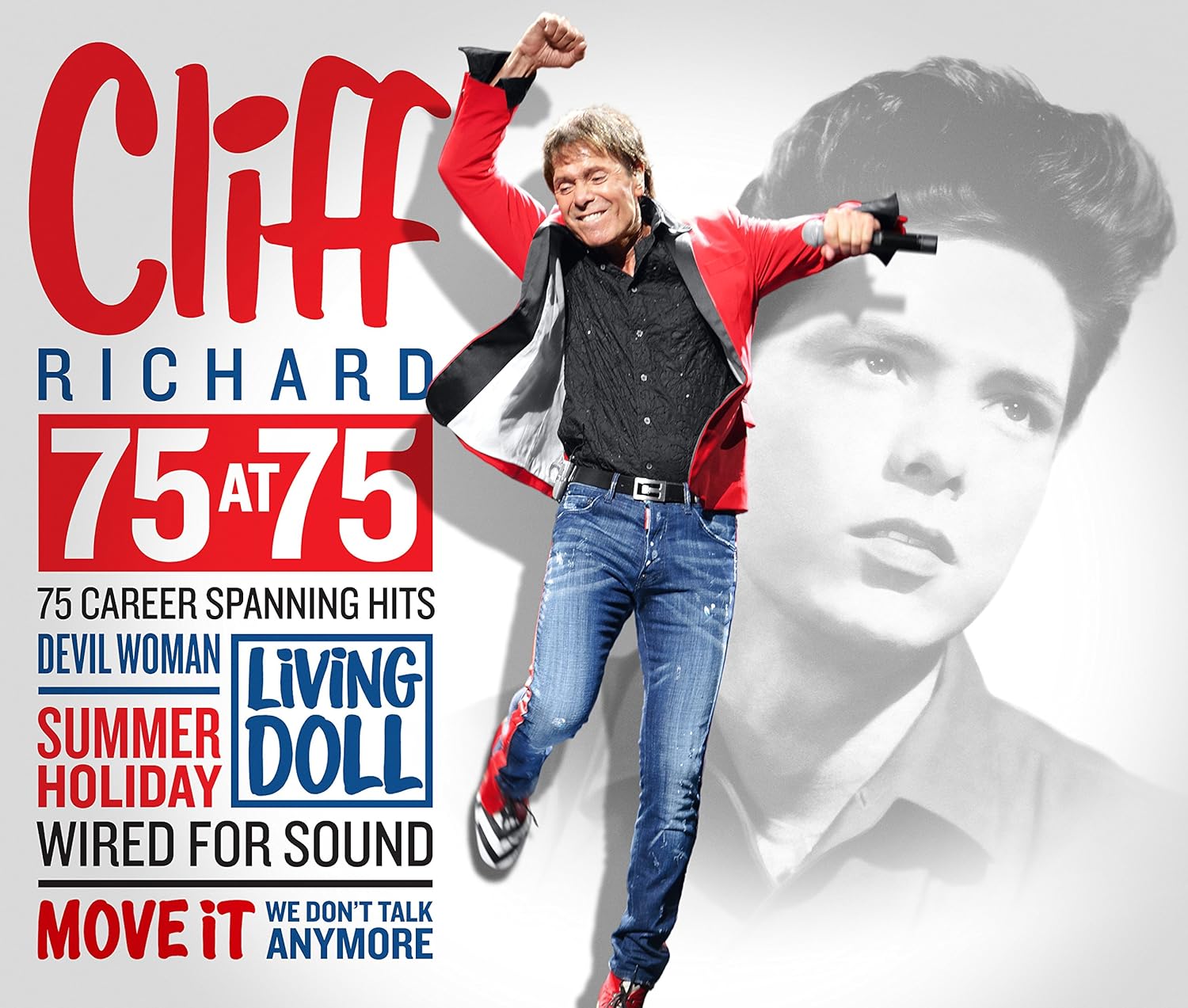
Sound familiar? Try this. Harry Webb, young skiffle band enthusiast, is spotted by small-time mogul Harry Greatorex. He persuades him to change his name and sends him on the road to stardom. Much as I would love to report a reality as played out in the film, (un?)fortunately the newly named Cliff Richard, for it was he, went on to become a somewhat iconoclastic figure in UK pop, pop that is, rather than the rock he was originally deigned and designed to produce. I am prompted to this post by seeing adverts promoting his new album, 75 at 75, featuring the ridiculously 'youthful'© singer bouncing up and down on the cover. And, yep, quite a legacy of work it is, with at least 5 or 6 I can bear. Sorry, it's true I am no fan of the old bugger, sorry, blighter, lest any confusion occur. (Pity really, as his erstwhile backing band, or at least the guitarist, one Hank B. Marvin (real name Brian Rankin), is an acknowledged influence on legions of plank-spankers from Neil Young to Mark Knopfler.) So why the hell am I wasting your, his and my time with this piece? Easys: the stage name chosen for the fictitious Bert Rudge.........
(Drumroll)
Ladies and Gentlemen, I offer you Bongo Herbert:


Of course Cliff went on to appear in a myriad of movies, mostly, to be fair, as dire as the similar works of his onetime role model, Elvis Presley. From 'The Young Ones' to 'Summer Holiday' and beyond, ahead of various saturday evening TV variety shows, Cliff Richard seems always to have been in the background of my youth. And, in one instance, actually there. I was perhaps 7 or 8, on the tiny isle of Herm, in the Channel Islands, just off the french coast. For some reason the ferry back to St Peter Port was delayed. Amongst the stranded day-trippers was Cliff, uber-tanned and sporting a splendid pair of budgie-smugglers*. My elder sister was entranced, as everyone tried to get closer to him, without ever formally acknowledging his presence, in a masterclass display of british stiff upper lip. I am uncertain whether he even acknowledged his presence, thankfully sparing us the now ritual response to rain at the Wimbledon tennis tournament.

(As I review this, 'cos yes I do, believe it or not, I feel somehow a little churlish, belittling this pillar, this crown jewel of the establishment, indeed still hugely popular with many a blue-rinsed matron, so as recompense, have a Cliff and a Hank, together in their prime:


*

Buy the film or if you dare...

Sunday, April 30, 2017

Movies About Musicians: Old Joe’s Place

The Folksmen (From A Mighty Wind): Old Joe’s Place

[purchase]

For our new theme, we will be posting songs from movies about musicians. This is a deceptively rich theme that should yield some interesting approaches and results. We can choose, it seems to me, from any of the following: fictional films; documentaries about music and musicians; or concert films. To get the ball rolling, I have decided to start with a movie that could be said to fit all of these categories: A Mighty Wind. A Mighty Wind is a documentary about the making of a tribute concert for the folk music promoter Irving Steinbloom. In the film, Steinbloom may not have been the finest human being, but he did play a key role in the launching of the folk music revival of the late 1950s and early 1960s. Don’t feel bad if you never heard of Steinbloom; the film as actually a brilliantly executed satire of that revival, and the story and characters are fictional. The satire is gentle and loving, with many of the groups featured having obvious real world models. The Folksmen, for example, are based on pop folk groups of the actual revival, such as the Limelighters and the Kingston Trio, and the impression is spot on.

The Folksmen are played by actors Christopher Guest, Michael McKean, and Harry Shearer. They made their first appearance on a sketch in a 1984 episode of Saturday Night Live, and would later appear as the occasional opening act for the also fictitious metal group Spinal Tap. Astute readers may notice that both groups share the same lineups. Spinal Tap also were featured in a mock documentary, this one called This is Spinal Tap, and both films were directed by Guest. All of the songs were written by cast members.

Saturday, April 29, 2017

motown 70s: I want you back


purchase Jackson 5 [I Want You Back]

A last minute post for the Motown 70s theme. Actually several days in gestation - paragraphs written and deleted (talk about Berry Gordy? Yes. No.)

And so, before the theme expires, at least to share some of the music that cropped up.

I loved the evolution of the Jackson five as seen in this collection of clips. First off,-  above -  we've got Jermaine as the definite front man of the group) Jermaine's name is all over the backdrop. The full clip has the MC talking to Jermaine about "his" group.

Fast forward a few years - same band/different front man (no surprise!)


And then a couple of covers to round it out. Starting with Cheryl Crowe at the White House
 
Janelle Monae at the Nobel Peace Prize 2011


And in case you need one more (but do not miss this one!) The Piano Guys.


Friday, April 28, 2017

70s MOTOWN: Machine Gun


Just a couple more days in this unravelling relay of revolt, and should I be looking for some Stax in the 60s or some Atlantic in the 80s? And why be restrained by genre; a country ballad or a folky dirge might be just what this thread is searching for?
Nah, can't do it.
Time to play nicely and, in order so to do, I have to take myself back to 1975 and the School House 6th Form Disco. 6th form in the UK is the last grade at school, ahead of university. I was newly 18 and this was a supervised, inevitably, dance for the seniors of my all boys house and the girls of the all-girls house. I had managed to wangle the role of DJ for the evening, the physics teacher astonishingly having the kit, a twin deck and microphone, to fade in between discs of the day. And we are talking discs of black plastic. However I had to share this role with a classmate, the exotically named George Panda. My selections were all current and recent chart hits, with the odd left field choice thrown in for luck. (Kevin Ayers?) All lapped up in the frenzied novelty of the evening. George tempered this, as his african heritage expected of him, with oodles of soul and reggae. And of course we fought to inflict our tastes on our victims, sorry, audience, each ahead of the other, belittling shamelessly each others choices, champing at the bit for our turn. His selection, clearly and obviously was rubbish, it being only with considerable hindsight that I have come to realise he actually had some corkers on show. And this was one of them:


Machine Gun, the single, title and best known track from the Commodore's debut of only a year earlier, 1974. On Motown records. I remember George had the eponymous album, and had insisted on playing it during the set-up period before the shindig. It was a revelation. I was not used to all that funky music (white boy) and it captured both my interest and my feet, however hopelessly arrhythmically they failed to meet the beat. At that stage of the career the Commodores were a very different beast to their later incarnation. Not a sappy ballad in sight, Lionel Richie was mainly occupied with a saxophone rather than at the microphone: horn not foghorn, although, to be fair, he does sing a bit. Fabulous LP and recommended still, although the lyrics are often, shall we say, of their day. Next album and it was all downhill, Easy on the bank balance, his and theirs anyway, less so on my jaundiced ears.

Get it here.

And, George, if you are reading, thanks!

70s Motown: Tears of a Clown

The English Beat: Tears of a Clown

[purchase]

This is the first song I thought of when I saw our new theme, but then I saw that “70s” sitting there. I considered sneaking it in anyway. I could have told you that the original and classic Tears of a Clown wasn’t released in England until 1970. That’s true, but pretty feeble since I am American. But when even your moderator has broken decade, it’s time to acknowledge that our theme has, unofficially at least, become just Motown. So I had a couple of ideas for more 70s material, but this is better. If others put up at least two or more posts before then, I may do a 70s mop-up post on Saturday, but right now, I’m going to get this out of my system.

The English Beat were part of the Two Tone explosion of British ska in the late 70s. This song established a tradition of new ska bands establishing their credentials with a cover of a classic soul or R&B tune. At the time, The English Beat were otherwise doing original material, and other Two Tone bands were doing a mix of originals and covers of 60s ska from Jamaica. But the term ska reflects the fact that the Jamaicans who pioneered the style saw the music as a mix of soul and calypso. That mix done differently would also later give the Soca style its name. Many of the Jamaican pioneers of ska did covers of the R&B hits of the day, with varying results. At any rate, I could probably find a ska version of any Motown hit by this time with a bit of work, but this was one of the first of the new wave of ska, and still one of the best. This song and the original Mirror in the Bathroom immediately put the English Beat at the top of the Two Tone ska world. And no wonder. Tears of a Clown is what a cover should be. If you know their style, this song is instantly recognizable as the English Beat. They truly made the song their own.

There may be some doubters out there, who don’t believe you could find a ska version of any Motown hit. For them, I offer this to close. It may not be the best ska, but I think goes a ways to prove my point:

Thursday, April 27, 2017

70S MOTOWN: CAN'T HURRY LOVE


purchase [Phil Collins]
purchase [The Supremes]

Like more than one of my fellow bloggers, I am going to stretch the bounds of the theme - with an original from the 60s and its cover from the 80s - in essence, spanning the 70s.

While the end of the 60s brought us some major transformative musical trends -  consider the move away from the accepted AM radio 3-minute format, various musical styles that tore apart the standard I-IV-V chord structure that rock and blues were built on, musical instruments that expanded the choice of sounds that could be produced and recording studio improvements that changed the sound envelope that was possible before 1970 -  Motown headed into the 70s doing more or less  what they did in the 60s. Whether this can be called decline or just stasis in the face of all the changes happening around them is a point for debate. 


Apparently, Motown was aware that they couldn't go on peddling "Little" Stevie Wonder much longer - in 1970, he was 20 years old. I recently read an obit for Slyvia Moy, who is credited with "taking on" the project of (successfully) revamping Wonder's output. 


I refer to Stevie Wonder partly because he was the subject of my last post, so I was still stuck back there, but also because his situation was somewhat indicative of the Motown predicament at the time.


Can't Hurry love - originally by the Supremes (renamed Diana Ross and the Supremes the year after releasing the song - and then back to just The Supremes a few years later) - made it to the top of the charts in 1966. It hit the top of the charts again in 82/83 when Phil Collins re-made it.


Collins explains that one of his goals in the 80s version was to try to recreate a similar sound with studio equipment that had gone through 15 years of updates - he terms it a "remake".


One more cover, from the Dixie Chicks:


Monday, April 24, 2017

70s MOTOWN: (I HEARD IT THROUGH) THE GRAPEVINE

OK, I admit it. I last posted a track in this series that was released on Epic records, and now, in further blatant disregard, here I am posting a song from 60s Motown. My excuse? Hell, it was a long time ago and no-one will really remember, except those annoying pedants who always delight in the elementary nature of my errors. So, screw you, cos this is the ultimate Motown, and my bete noir of the label, keeping my teenage tastes in music off the number 1 slot for nearly as long as the Good, the Bad and the Ugly. Lord, Mr Marvin Gaye, did I hate you when I was, um, 10, many years of (sexual?) healing having to occur before I could take you to my, um, bosom. But, time, as ever, is the wiser, and 1967's I Heard it through the Grapevine is really an absolute corker, one of a playlist I will always include one or other version of within.

So Gaye's version is pretty unbeatable? (You've heard it, right?) Hmm, maybe so. But there are a whole lot more inventions around that theme. So here's a trio that each dismantle, each reconfigure and each extrapolate way beyond the vision of Norman Whitfield, the producer. But did you know that it wasn't even the first choice Motown recording, with both Smokey Robinson's Miracles and Gladys Knight and the Pips having first dibs on the song?

Creedence Clearwater Revival always had a thing about soul, or was it that soul always had a thing about CCR. Fairly hot on the heels of "their" Proud Mary, covered so memorably by Ike and Tina Turner, 1970 saw their mammoth take on Grapevine.


In truth it adds little, beyond Fogerty's extraordinary diction, "hoyaid" it thru' the grapevine etc. A more extensive demolition/remolition had to wait until 1979 for the Slits. It is true that the vocals need a little tolerance on behalf of the listener to accept their dystonality, but, that apart, the arrangement is stunning, a spiky and skanky guitar, some frantic drums and a dub baseline, itself courtesy producer, UK reggae giant Dennis Bovell. I loved it so much I made the mistake of buying the album.


A completely different approach was taken by the UK folk club darlings of the mid 80s, Clive Gregson and Christine Collister, whose ballsy live take, on single acoustic guitar and voice was beefier than many a full blown orchestrated and/or electric version. A high point of their then shows, Gregson's masterclass guitar could double or triple the length of the song, spinning subtle excerpts of other songs mid picking. I still find this version astonishing. (There is talk of his reprising much of this much missed duo's work, with singer Liz Simcock, during this summer. Meanwhile Collister is back on the boards with Richard Thompson, for a special at this years Cropredy festival.)


So, dare you really say this wa s song unworthy of inclusion, if only for reason of accuracy? Shame on you.

Gaye, CCR, Slits or Gregson & Collister? Take your pick!

Sunday, April 23, 2017

70s Motown: Smiling Faces Sometimes

Rare Earth: Smiling Faces Sometimes

[purchase]

70s Motown strikes me as a curious choice for our theme, although there are great riches to share. We have heard some of that already, and there is much more to come. But the 1970s were a period of decline for Motown. Starting in the 1950’s, and lasting all through the 1960s, Motown was a music industry leader. The label perfected a distinctive sound, and other labels scrambled to catch up. By the end of the 70s, however, Motown had become a follower. They caught on first to funk and later to disco after their rivals had begun to move into the same space. Motown’s 70’s efforts to innovate largely failed to catch on with the masses. Oh, sure, there were still individual artists making vital new music on Motown, but the label overall would never again be the trend setter it had been in its heyday.

The song I am featuring here, Smiling Faces Sometimes, shows how Motown tried to stay relevant in the 70s. The song was written by Norman Whitfield and Barrett Strong in 1971. The two were Motown in-house writers, and it was standard practice at the label to record versions of the same song with different artists. So Smiling Faces Sometimes was first given to the Temptations, and then, later in 1971, was a hit for The Undisputed Truth. Both versions were produced by Whitfield. By 1973, Motown was trying to adapt to a changing musical marketplace, so they launched a rock label. Their first signing to this new imprint was a band whom they asked for a suggestion of what to call the new label. As a joke, the band suggested that Motown name it after them, and they were quite surprised when Berry Gordy said yes. Both the band and the new imprint were Rare Earth. For Rare Earth’s 1973 take on Smiling Faces Sometimes, Norman Whitfield once again produced. This version was never a hit, but I like the sparseness of the production compared to the earlier versions. What you hear is just the instruments played by the band itself, without the lush arrangements of the older takes. But whoever heard this version at the time did not see it that way. Motown did not become a power in rock music, and the Rare Earth imprint was eventually shut down.