












Friday, October 5, 2018

Leaves: All I Want Is To Be (Is By Your Side)


Peter Frampton: All I Want Is To Be (Is By Your Side)
[purchase]

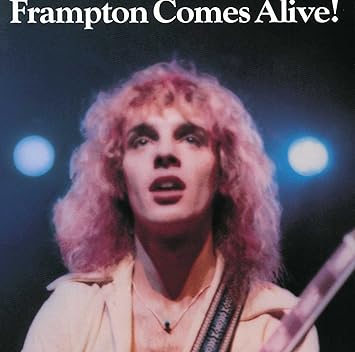
It is far from an original thought to note that Frampton Comes Alive! came out of nowhere. Up until its release, Frampton, a talented guitarist, a passable singer, and a good looking guy with great hair, had experienced some minor fame with various bands, notably The Herd and Humble Pie, and as a sideman, but his pre-Comes Alive! solo career was generally underwhelming. A&M co-founder Jerry Moss had signed Frampton to the label when he was 19, because "He had a cool face, he didn't mind working, and he had a great attitude.” Frampton toured relentlessly and was one of those artists whose songs seem to work better live than on vinyl. And there was the talk-box effect.

So, when he recorded a live album, mostly at the Winterland in San Francisco, but also at the Long Island Arena and SUNY Plattsburgh, there really wasn’t much expected—it was released in January, 1976, after the holiday buying season—and A&M had its collective fingers crossed that it might sell half a million copies and be certified as a gold record. Instead, the album turned into the ultimate “grower.” It charted at No. 51 its second week, then rose to No. 22, No. 6, No. 4 and No. 2, where it stalled throughout March, before hitting No. 1 in April. And it showed staying power, bouncing around the top 10 for the rest of 1976, logging a total of 10 weeks at No. 1, and selling a shocking 6 million copies, which broke Carole King's sales record for Tapestry. Ultimately, it has sold more than 11 million copies worldwide.

Why? I’m not really sure. It is not a great album; much of it is really pretty ordinary (which is why his prior solo albums were not big hits). There are a handful of really good rock songs on the album—songs that rocked hard enough, but not too hard to be offensive—filled with hooks and tight playing. As a high school student in 1976, I can tell you that rock radio played the crap out of the record, and it certainly was a part of the soundtrack of my high school years. Mostly, we heard the singles: "Show Me The Way," "Baby, I Love Your Way," and "Do You Feel Like We Do," but some stations went a couple of tracks deeper than that. So, it might just have been a case of the right album at the right time—a solid product, well promoted, that probably became discussed as one of those things that you had to buy, because everyone was buying it--sort of a pre-Internet version of going viral.

In addition to the rockers, a number of the songs on the live album were acoustic, which were included at Moss’ insistence.  They showcased Frampton’s fine playing and made for a nice contrast from the heavier tracks. One of the best of these is “All I Want To Be (Is By Your Side),” originally from his debut solo album. It’s a nice, bluesy, love song, although I find the lyrics a bit confusing—“I don't care if they cut my hair/All I want to be is by your side.” Huh? But it satisfies the theme by being one of approximately a billion songs that mention four leaf clovers. Yeah, I could have gone with the Old 97’s, but I’m trying to write about artists that I haven’t featured before.

Comes Alive! was, by far, the pinnacle of Frampton’s career. His next album, rushed out to capitalize on his new-found superstardom, was generally substandard, marred by a cheesy, cheesecake album cover and a truly sappy title track. It sold reasonably well, but was generally mocked, including by Frank Zappa. He then starred in the critically panned Sgt. Pepper's Lonely Hearts Club Band film, and was in a serious car accident. A few years later, all his guitars were believed to be destroyed in a cargo plane crash that killed three people, including the black Les Paul Custom that appeared on the cover of Comes Alive! (although it was found years later and returned to him).

Since then, Frampton has released albums, toured with his childhood friend David Bowie (who had been an art student of Frampton's father) and others as a sideman, released an unsuccessful Frampton Comes Alive! II, and has generally stayed active musically, even if most people don’t realize it.  And, like many of us, he no longer has great hair.

I think that it is fair to say that if the universe hadn’t aligned to give Peter Frampton one of the bestselling albums of his era, he’d probably have continued, putting out a series of albums that would have bubbled under the radar of most listeners, maybe occasionally having a radio hit, before being pushed aside from the public consciousness by new generations of musicians, like, say, Foghat, or Pat Travers. That certainly doesn’t mean that they are not good—to the contrary, such artists, including Frampton, are fantastically talented, but still, the incredible, massive,  success of Comes Alive! is an anomaly.

LEAVES: Leaf and Stream/Wishbone Ash

There is always going to be an elephant in the room of this theme, what with the sort of leaf and leaves seeming to be of, um, such appeal to musicians and music lovers. And I don't mean tea. So I have deliberately looked away and have not inhaled today, celebrating the more pastoral side. As in ain't nature wonderful, which, of course it is. This too has also provided a rich vein of inspiration, especially in my home land and especially in the more whimsical days of the hippy/folk/prog interface. Wishbone Ash, who would have hated any of those epithets alone, let alone collectively, actually and amply epitomise this union. Songs about a mythical mystical past? Check. Gentle melodies sweetly sung? Check. Rippling, dual lead guitars, playing tunes rather than shredding the notes. Check, double check. All so Game of Thrones, but without any of the troublesome cussing or titties.


Wishbone Ash were the cool band to have an album of tucked under your arm. 'Argus', from which this song is plucked, and/or 'Pilgrimage' seemed to be the peak of teenage dudedom in the early 70s, at least at my school. Not too popular or chart-bothering, a little bit niche, certain to pop up on the Old Grey Whistle Test TV show or in NME, the inky weekly hipster's bible . Yup, I fell for all of this, hook, line and sinker until the great awkwardness of the punk wars came along, sweeping all with hair and melody away in the tsunami of year zero. Which I also loved, transferring my passions, cutting my hair and narrowing my trousers. I don't suppose I ever listened to anything of theirs again. But they didn't go away. Nobody did: they all play on and probably at a theatre near you soon. Ash, as their faithful called them, did better, or was it worse, musical differences, always musical differences, causing them to become 2, or is it 3, bands, each with some claim to the name. Ugliness and the courts intervened and so there are currently at least 2 versions on the road, Wishbone Ash, featuring one original member, Andy Powell, and Martin Turner's band notallowedtobecalledWishboneAsh (which they probably wouldn't be allowed to be called either), which contains, ironically not only Turner, who actually founded the original band, but often also another original member, (no relation) Ted Turner and the long serving drummer of those epochal recordings, Laurie Wisefield. The Powell helmed band have continued to release new material, the Turner version ploughing the classic furrows of yesteryear. Such is life, and I would probably see either band as having equal right to the name and to perform, without, to be fair, me taking the time and trouble to seek out either. (Would either, could either surpass the records?)

Here's the nearest thing to making that decision, a near-unplugged from the official Ash, in 2017, Andy Powell sadly not wielding the flying V that was as much their trademark* as anything else, but it is visible behind him, stacked against the drum podium. (*And maybe why the courts gave him the band?)


And here, from the year before, is Martin Taylor's.


Buy the original, when all is said and done, it is a beautiful song.

Tuesday, October 2, 2018

Leaves: Simon and Garfunkel: Leaves That Are Green


purchase [ Leaves ]

As the theme generator, I fuss with the Blogger tools to check previously-used themes. I keep my own Excel file of used/unused themes which I try to keep up to date. [It's hard after 20 years]

That means decisions about <fall> or <autumn> or, this time, <leaves> as a substitute to fall, since that is the season.

That said, the first song that came to mind for the <Leaves> theme (considering my age and time-frame) was: Leaves That Are Green, a classic <folk> hit from the 60s that almost qualifies for "pop", but not rock.

The Simon and Garfunkel duo made millions (I trust) from their 60s albums that blurred the boundaries between "[pop] songs your Mom approved of" and the simultaneous raucous rock that was brewing underneath. Theirs was a kind of acceptable pathway to the inevitable cacophany of the latter half of the 70s: "Pop is not so bad/probably OK. If moderated."

I don't mean to take away from their later forays: Garkunkle's <My Home Town> has its high points and verges away from their <folk> format, to some extent.

Simon has done some very positive expositions of alternative [African] vibes - to everyone's benefit. But they [individually and combined] are generally relegated to a status less than they really deserve for what they have given/left us.

I cannot re-create the atmosphere of the mid-60s for you, a time filled with Motown, emerging Stones and Beatles, short-lived acts like Manfred Man, the Monekeys and more.
 
However, Simon and Garfunkel kept it up - both through the psychedelia (without going down that path) and then for at least another generation ... well a decade or two ..., each in their own way.

Leaves That Are Green .. somewhere between rock and the future ....

Simon & Garfunkel go back far enough that there are visual/video records of their first appearances, and there is one of their earliest <Leaves That Are Green> shows available online.


And .. summer moving into fall - we've got green going to brown.

Enjoy ...

Wednesday, September 26, 2018

AMAZE: WOW/KATE BUSH


For someone who barely dented America until fairly late in her her career, KB has certainly had her fair share of posts here over the years. Which is amazing. And amazing is the word that comes to mind whenever I think of her, although not perhaps for the reasons the by now middle aged matriarch would necessarily wish. And it isn't for that picture either!


Poor Kate was an easy target. With her speaking voice as individual as her singing voice, and a tendency to describe all in superlative led to her becoming fair game for parody. The parody above has not aged as well as the original, I suspect, but the clip shown displays her "incredible" and, of course, her "amazing". (Pity the poor woman, mind, where an appearance on TV is more to discuss some 3rd rate telly rather than her own work.....) I was sure she was also bestowed the honour of a Spitting Image puppet, but was unable to find any proof of this, so you will have to make do with this, which lampoons the ridiculous age, 20-30 years ago, of several then active rockers.

Anyhow, there is actually purpose to this meandering reminisce of time bygone, namely the song, lyrically rammed with the archetypical.


What I hadn't realised at the time was the content of the song, I now musing as to possibly any autobigraphical content to the description of the proximity to the "amazing" performer portrayed. I note also that there seems to have been an air-brush of the final line of the song, a sly reference to presumably more than the capability of vaseline to just prevent chapped lips. I read of a sly pat to her buttocks as that line was sung, but cannot find it, the BBC having censored that aspect for broadcast, it seems.

"We're all alone on the stage tonight
We've been told we're not afraid of you
We know all our lines so well, uh-huh
We've said them so many times
Time and time again
Line and line again

Ooh, yeah, you're amazing! 
We think you're incredible
You say we're fantastic
But still we don't head the bill

Wow! Wow! Wow! Wow! Wow! Wow! Unbelievable! 

When the actor reaches his death 
You know it's not for real, he just holds his breath 
But he always dives too soon, too fast to save himself 

He'll never make the screen
He'll never make the Sweeney
Be that movie queen
He's too busy hitting the Vaseline......."

Actually that was quite amazing for 1979. Who do you think it might be?

Buy it here.

Tuesday, September 25, 2018

Amaze: Awesome John


purchase [ Nazar Degdi]

Taking some liberalities with the theme, I replace Awesome with Amazing. (Hey... J. David said as much: relatively slim pickins for the current theme.)

However, the theme does leave us open to post songs that have some aspect - by the blogger's definition - of amazing to them, and this fits the bill by my definition.

I have previously taken the liberty to flog Turkish musicians which few of you are likely to have encountered.

So, here's another.

Nigh on 20 years ago, a celebrity to Turks (but essentially unknown outside) made the decision to return from a life in the U.S. to ostensible fame in his home country. Initially, he was feted at home: his own TV show, DJ gigs and some stage time playing guitar. But it never really panned out to the big time. Yeah, his son has since made some millage from the father's name - but more on his own credits (aside from the inherited name & fame)

The man's name: Asim Can Gunduz.

Few of you are likely know him. Fewer still are aware that he played Jimi Hendrix in <Jimi and Janis Together> on Broadway, as well as playing various NY bands, including Concrete Sky and Katawba, playing the Bottom Line and as an opening act for Deep Purple, Leslie West, Billy Cobham and more.

You might be amazed that Turkey produced someone as amazingly talented as Asim Can - 20 plus years ago.


Now, Internet ASCII character representation makes it hard to display the Turkish undotted i, and pronunciation guides don't help a lot, but this musician's moniker "Awsome John" helps sort it out. The undotted Turkish i in his name makes the two words (Asim and Awesome) sound very similar. It's up to you to decide if he is in fact awesome.

One of the most accessible YouTube videos for the man (died 2016 age about 60) is an original called Boku Yedik, clearly translated as "We ate S*#t", or "we've been had".


Asim Can's son continues his father's musical tradition - granted, in his own style.

Monday, September 24, 2018

Amaze: We’re Gonna Win The Series

[purchase]

I know that I write about the Mets way too often, most recently a few weeks ago, but whether they are good or bad, they have long been an important part of my life. In fact, I’ll be going to an otherwise meaningless game later this week, with my wife, son, daughter-in-law, and her parents (giving me yet another opportunity to mention that English lacks a word for your child’s in-laws, which at least Yiddish and Spanish do), because it is likely to be the last game that David Wright will play in. It tells you something about the Mets that Wright, probably the greatest non-pitcher in team history, is probably not even a Hall of Famer, but he was a great player for the Mets for a long time, until a series of debilitating injuries essentially ended his career in 2016. He has fought back to be able to have a cameo at the end of an otherwise forgettable season, and it will be a very emotional game for us. Wright, who never played for any other organization, and grew up a fan of the team, has been a great servant to the Mets, as the English football commentators say.

In addition to watching the team most nights, at least for some of the game, for the past year or so I have been privileged to have assisted my friend Wayne Coffey, a sportswriter generally referred to as “award winning” or “New York Times bestselling,” who has been writing a book about the 1969 Mets. As good a writer as Wayne is, and he is a very good one, he is an even better person. The book, They Said It Couldn’t Be Done, is coming out next March, keyed to the 50th anniversary of the team, dubbed the “Amazing Mets,” winning the World Series. You can order the book here.

Wayne did all of the hard work, doing the research and the writing, while I’ve been a sounding board (I’m pretty sure the title was my idea, but it is hard to remember), I’ve connected him to people to interview, and most interestingly for me, I’ve reviewed many drafts, from early to pretty much final, making all sorts of suggestions, and occasionally doing research, some of which actually made the book. As an amateur writer, it has been really fun to see how the pros do it, to get a peek behind the curtain at the process of writing what I hope will be another New York Times bestseller. So, I can tell you, from having read the thing many, many times, that it is very, very good. Did I mention that you can order the book here?

My involvement with the book has also been a great opportunity to reconnect with Wayne, who used to live across the street, but moved to the next town, making our connection somewhat more tenuous. The period of working on the book has coincided with Wayne’s younger daughter, an amazing soccer player (and an incredible young woman), attempting to make the United States Under 20 Women’s World Cup Team, and just falling short. The team disappointingly (maybe not to everyone….) crashed out of the tournament much earlier than expected, in part because it lacked certain qualities that Wayne’s daughter has in abundance. As I write this piece, she is currently leading NCAA Division I in assists and is in the top 10 in total points (and yesterday, her team defeated the No.7 team in the country). So, maybe the U.S. coaches made a mistake. I’ve watched her play for the National Team and for her college, and then Wayne and I discuss the games, adding to our connection.

One thing that Wayne was adamant about was not to use the word Amazing (or Amazin’) or Miracle in the title of the Mets book, because that team won because they were very good, and deserved to win, not because of some miracle (although Wayne and I disagree about what does constitute a miracle). Using those words are easy clichés, and Wayne’s book is more than just a rote recounting of the season. Maybe it is also because the Mets were originally dubbed “Amazing” by their first manager, Casey Stengel, when they were one of the worst teams in the long history of baseball, and Casey’s diverting circumlocutions known as “Stengelese” distracted from the bad play. So, why would you want to connect an excellent baseball team with a mocking superlative?

But you cannot argue that the Mets were World Champs in 1969. As Casey would say, “you could look it up.” And, for some reason, someone convinced the members of the team, and their coaches, to record an album the day after they clinched the National League East championship. The night before, the team was drinking champagne in the locker room, as you can see here and here. And who knows what they did after the cameras stopped rolling and they headed out into the night. But record an album they did. It’s a bunch of standards, mostly rewritten to relate to the Mets, and is very silly, but not terrible. As was the fact that the album cover billed the performers by their legal names, such as Darrell Harrelson, Frank McGraw, and Lawrence Berra, better known, of course, as Bud, Tug, and Yogi.

Our featured song is a rockin’ and prophetic “We’re Gonna Win The Series,” set to the song “Kansas City,” by Lieber & Stoller, first made famous by Wilbert Harrison, and covered by pretty much everyone. (And unrelated to the fact that the Kansas City Royals beat the Mets in the 2015 World Series, much to my chagrin).

Shortly after winning the Series, the team assembled on the Ed Sullivan Show to sing “Heart,” (from the musical Damn Yankees, a sentiment I utterly agree with) mostly looking young, earnest, and uncomfortable, except for a couple of the jokers (I'm looking at you, Frank McGraw), and a very unhappy looking Nolan Ryan. As Casey would have said, “Amazin’, Amazin’, Amazin, Amazin’….

Thursday, September 20, 2018

AMAZE: AMAZING GRACE (USED TO BE HER FAVORITE SONG)/AMAZING RHYTHM ACES


Two for one here, a band with amazing in their title and amazing in the song, which is, um, amazing. And my "research", the search button in the top right of this page, suggests they haven't been here before, surprising if they are indeed up to their modest entitlement. And are they? Let's see.....

I was a bit of a country nerd in the early 70s, or country rock more accurately, that hybrid of long hair and pedal steel, disowned, largely, by each of its parents at the time, yet proving enormously resilient and robust. Now given I was living and raised in East Sussex, in the south of England, my cowboy credentials were pretty slim, but I dug hard and deep to nail my colours to the (confederate?) flag. So it was way more than the Byrds or Burritos for me, more, much more than the New Riders and Poco. I would rifle through the vinyl at record shops for hours until I could find something yet more arcane. And there were a host of trinomials, bands with 3-word names, Atlanta Rhythm Section, Pure Prairie League and these guys, but I could never remember which was which and who sang what. Indeed, I still had to look as listening was no great differentiator. The League I thought were great, ARS were a little bland, with the Aces somewhere in between. The featured song, their sole chart botherer of any great note, is typical of their style, a 4:4 harmonied croon with appropriately wailing steel and lyrics about drinking and crying. It's actually held up quite well, I think. It comes from their 1975 debut, "Stacked Deck", which is probably the best introduction to the band. It contains also another song you may recall, especially if you are Canadian, the number one in Saskatchewan hit, Third Rate Romance, which has dated terribly, the product of when other influences get chucked into the pot. They lasted until 1980, successive albums producing limited returns. (They reformed in the mid to late 90's but that need not trouble us here.)

More interesting to me is what happened to the erstwhile piano tinkler, James Hooker, not realising he had been in the band. A decade or so on from crate digging in dusty record shops, I was married and living, by chance and to my glee, next door to another country rocker, although Paul was slightly more attuned to the country than the rock. He had a bigger collection than me and introduced me to many an act I hold dear to this day, Steve Earle and Nanci Griffith, to name but two. Back then Earle was only beginning to revive his career after his drug habit had led to incarceration. But Nanci was in her prime and, being someone with a bigger european audience than at home, toured the UK regularly. I just have seen her play half a dozen times in those late 80s, always with faithful Hooker alongside, playing piano and leading her band, the Blue Moon Orchestra, which would also showpiece whichsoever hip young guitar slinger she had unearthed in the country & irish clubs of Dublin. Her shows were a delight and could have me alternately yelping and weeping, not least in the song below, co-written with Hooker, the much covered Gulf Coast Highway. Live, Hooker was always given due credit for his overall role in the Griffith sound, he seeming quiet and unassuming, smiling in embarrassment as attention was drawn to his pivotal position and exquisite playing.


Life intervened in so many ways and Paul and I lost contact. I stopped going to Nanci Griffith and indeed any shows for actually quite a long time, picking up again roughly 15 years ago. Hooker had however kept busy, and I was astonished to see he had worked with and was on so many records I love. Like John Hiatt's "Slow Turning"and ex-Brinsley Schwarzer Ian Gomm's "Rock'n'Roll Heart", both as organist. Also that he had, full circle into and within my trajectory toward the Rhythm Aces, been a latter day Flying Burrito Brother, or at least appeared on a couple of albums, albeit far from their heyday. (And, fact fans, original Rhythm Aces drummer, Jeff 'Stick' Davis, was a member of the 'Sneaky' Pete Kleinow/Garth Hudson collaboration, Burrito Deluxe.)

Hooker is now seemingly retired and was certainly never a returning Ace. As I look back over my years of gigging, he has certainly always seemed one of the good guys. And, through appreciating his later work, suddenly I find myself listening to 'Stacked Deck' with a whole lot more enthusiasm.

Stack yours!


Wednesday, September 19, 2018

Amaze: I'm Amazed


Purchase My Morning Jacket's "I'm Amazed"

I have to be honest: I don't really get My Morning Jacket. I like what they do; I appreciate the wide-ranging canvas they use and the infinite mixture of texture, sounds and compositions they spread across it. But, I've never been able to pin down who they are, or more distinctly, what kind of band My Morning Jacket actually can be labeled as or named. Are they folk, are they rock--no, too simple. Are they a jam-band? Are they progressive? Are they...I don't know what to call them.

Then, someone told me: "Man, MMJ is neo-psychedelic. That's all you need to know."

This bit of information came during the lead up to a Pearl Jam gig in Camden, back in 2008. Outside the show, gathering with the faithful in the parking lot, someone was playing MMJ and rather then wonder why he wasn't playing Pearl Jam, my curiosity was piqued. The sound was interesting, the descriptor, more so.

I can agree with that classification. And, strangely, I have since listened to MMJ with a lot more understanding. Neo-psychedelic is a freeing idea, and trying to define what doesn't fit into my readily categorized listening ideals (punk, hard-core, pop-country, metal, hair-metal, etc...) can be more rendered, annotated and analyzed with the addition of that all-encompassing and opportunistic prefix, neo. Attributing the unknowable or category-defying with the label of neo helps the sound make sense, essentially blending the  misunderstood into the realm of "hard to figure but still cool, because, you know, it's "Neo, man. You don't need to understand it; just go with what you feel." And remember, because it's new, it doesn't need to make sense.

Or something along those lines. There's a freedom that comes from ignoring definitions and genre. Music can be tribal, just like politics, fetishes, area codes or passports. It's fun to defy boundaries and traditions, even if the results are confusing. But with music, sometimes confusion leads to the delight of discovery. Or, amazement. As in: amazement at new sounds and the way a band creates a fresh, aural landscape, unlike you've ever traveled through.

I'll admit again, I'm very light on knowledge of MMJ. I haven't gone over the brochures or read the maps closely yet. I'm an unseasoned traveler. And those of you who count yourselves among their (very, very) faithful, I'm probably coming across as a bit of an apostate. My apologies; I'll get there, I promise. There's a lot of ground to cover, so give me some time.

Yet,  as undereducated as I am, I do love MMJ's "I'm Amazed", off their 2008 release, Evil Urges. I saw them perform this on Letterman and was...amazed by the song. There was a great energy to the song, anthemic and urgent, stadium-ready. Up until then, I'd only known one thing about MMJ: they had done an epic cover of the Who's own mini-epic, "A Quick One While He's Away" while touring with Pearl Jam. That version, recorded live in Italy, with Eddie Vedder sharing vocals with MMJ's Jim James, was fervent and faithful to the original and glorious in its celebration of sound, rhythm and movement. When I told a friend (ever allegiant to The Who, as one should be) that I thought MMJ's version of "A Quick One" was actually superior to the original, he refused to pay for the beer he had just said he'd buy me. I admire him for his loyalty, and for sticking to his principles.

There's a familiar sort of giddiness to "I'm Amazed" and the soaring chorus, and equally angelic vocal delivery that revels in the highs and joyful proclamations, down to the vigorous power chords and church organ melody line. It's a great song, the kind that needs to be turned up loud, equally brilliant on the car stereo as it would be live and loud. And what makes the song all the more brilliant is the irony of the lyrics. While the huge-tempo, upbeat major chords would lend a natural happiness to your head bobbing and foot stomping, the song is really about being amazed by the frustrating behaviors of others: the lies we take in without thinking for ourselves, the hypocrisy we swallow from our leaders; the division of our united nation; our misguided devotions and "the lack of faith" and the "love that we're rejectin'." The song traffics in disbelief and incredulity more than the traditional joyousness of amazement. MMJ is using irony of connotation and like the best writing, the title tricks us towards one belief, but  asks the listener to accept a truth that might not be as easily accepted. For a song that came out 10 years ago, it not only sounds fresh, but the sentiment of disbelief at our national discourse and seeming inability to ease our grip on the ideas (anger) we cling to and allow to separate us, is more than pertinent. A simple sentiment, delivered with a deceptively joyful sound.  But sometimes simple is what you need.


Tuesday, September 18, 2018

Amaze: Amazing Grace


The Dirty Dozen Brass Band: Amazing Grace
[purchase]

I feel like I need to hurry if I want to write about this song for this theme, because it seems like a pretty obvious choice—and I can’t think of too many other relevant songs to write about. And hey, if other writers want to feature the song, have at it, and I’ve already handled the history for you.

“Amazing Grace” is a hymn, and the lyrics were written by the English poet and Anglican clergyman John Newton, way back in 1772 or 1773. Before Newton had those highfalutin’ gigs, he was a seaman. In fact, in 1743, he was pressed into naval service by the Royal Navy—think, walking down the street, being kidnapped and tossed onto a ship.

During his service, he was flogged, recovered, and was transferred to a slave ship. He was so disliked by the crew that they left him in West Africa, with a slave dealer, who turned Newton over to his wife, a Princess of the Sherbro people, in what is now Sierra Leone. She promptly enslaved Newton. After three years of abuse and servitude, Newton was rescued by a captain who had been asked by Newton’s father to find him.

During his trip back to England, Newton had a “spiritual conversion,” because he believed that his prayers convinced God to save his ship from a storm. From March 10, 1748, Newton “avoided profanity, gambling, and drinking.” However, when he got back on dry land, he quickly returned to sea on a slave ship, apparently not recognizing irony in any form. Newton continued to become more religious, and continued to work in the slave trade until 1754, when, it appears, God intervened by giving him a stroke, keeping him from trading in humans. Although he did invest in slaving ventures.

In the late 1750s, he ecumenically applied to be a minister in the Anglican, Methodist, Independent, and Presbyterian churches, before being ordained as an Anglican priest in 1764. It seems as if he was a pretty good one, too, and not adverse to non-Anglican views. In 1788, he publicly admitted that the whole slave thing was bad, and supported ending the trade, which England finally got around to doing in 1807 (about the same time as the US did, although as we know, that was small comfort to those already in bondage).

Newton’s hymn, based on his own life experiences, "1 Chronicles 17:16–17, Faith's Review and Expectation" led off with the killer opening stanza:

Amazing grace! (how sweet the sound) 
That sav'd a wretch like me! 
I once was lost, but now am found, 
Was blind, but now I see. 

The hymn failed to chart in Britain, but was a smash hit on this side of the pond, especially during the Second Great Awakening in the early 19th Century, and has become a standard African American spiritual song and was a civil rights anthem.

Nobody knows what, if any, music was used when Newton first led his congregation in the hymn, and there were many different tunes that were used over time, before “New Britain” stuck, and has become the standard version. Although “House of the Rising Sun,” works pretty well, too (better than the theme to Gilligan’s Island).

For reasons that are quite boring, today, I’ve been thinking of my father, who for some reason often remarked that he wanted a New Orleans-style funeral when he died. I wonder if that is where I got my love of New Orleans brass band music, although I doubt it, because I never remember him actually listening to any of it.

Not too long before he died, I bought a copy of The Dirty Dozen Brass Band’s album Funeral for A Friend, which includes many of the songs that are played at New Orleans funerals—in fact, the album is dedicated to the memory of founding member Anthony "Tuba Fats" Lacen, who passed away shortly after its completion. To quote Allmusic at length, because reviewer Thom Jurek nails it, stating that the album:

is resolved in the celebratory gratitude for mercy in "Amazing Grace." But this review does nothing, literally, to describe the sheer power of the transference of emotion that Funeral for a Friend does. This is easily the most heartfelt, honestly rendered, and stunningly captured moment of the DDBB's recording career; it belongs in every household where the celebration of life and its transition from the sorrow of death to the eternal afterlife is honored. It is not only a classic in the genre, but will come to be regarded as a jazz classic, period. 

I’d note that the version is instrumental, so it really is “New Britain,” but that’s being picky.

In lieu of the full on procession, we played the album as people entered into the celebration that we had for Dad’s life, and I think he would have been fine with that.

Sunday, September 16, 2018

Amaze: McCartney- Maybe I'm Amazed


purchase -[Maybe I'm Amazed]

I recently came across a lengthy interview with Paul McCartney in GQ mag (Untold Stories of Paul McCartney) that added perspective to the post that I had already decided would fit my choice for the new <Amazed> theme: Maybe I'm Amazed

The original recording, appearing on 1970s McCartney (the one with the cherries bowl on the album cover), was very much a home-studio effort, but was later incorporated into the Wings collection in a more elaborate production.

For me, it is the home quality of that entire McCartney album that endears it to me: pure McCartney in many ways. End of the Beatles, but an indication of what the man is capable of - even in a home studio.

But as for Maybe I'm Amazed, it is supposed to be a paen to Linda, who helped him make it through the Beatles break-up. "In the middle of something he doesnt really understand ..."

It's as good as any of McCartney's Beatles work: lyrics, harmony, timing.

Saturday, September 15, 2018

WIne: Cream-Sweet Wine


purchase [  album ]


purchase [  album ]

For me, Fresh Cream was seminal and gound-breaking music, but mostly in hind sight. I came across Disraeli Gears before I heard Fresh Cream. By that time, Cream had already made its name, so my purchase was essentially filling in the blanks of the Cream repertoire.

Fresh Cream was Eric Clapton moving on from his roots in the Yardbirds and John Mayall. But the album established  Cream as a band to be reckoned with. We're talking mid-to-late 60s and their style of music was pushing the limits of what most people listened to (Soon to come: Jimi Hendrix, who blew it all open, way beyond run of the mill Top of the Pops, which generally would not include Hendrix and Cream until a few years later, under popular pressure)  I was there, listening, and I can attest that it was nothing like you had ever heard, Fresh Cream included. Cream (and Hendrix)  took rock to a new level.

Cream (see my last post) was one of the bands that moved popular music from its "more or less acceptable if dubious" status position to money-making and hence acceptable endeavors. Fresh Cream - in retrospect- had what it takes too move the rock genre forward, but it was both a bit early and not as well marketed as it might have been.

This video is from nigh on 50 years after the real Cream, but it includes the essence of the original - with modernization of Clapton's evolution.

Friday, September 14, 2018

Wine: Champagne Supernova

[purchase]

Another Champagne song, but what the hell is a “Champagne Supernova?” They are words that make no sense together, and even Noel Gallagher, who wrote the damn thing, has no idea what the song means. (Strangely, I’ve recently written elsewhere about an album titled Kilonova, which is not as bright as a supernova, but is still kind of a big deal, despite not being wine related).

Nevertheless, the Oasis song is a great singalong, as the best Oasis songs are, but I’m not posting that version. Instead, the video above is a cover by Scala & Kolacny Brothers. Scala is a Belgian girls choir conducted by Stijn Kolacny, and arranged and accompanied on piano by his brother Steven Kolacny. Starting in the early 2000s, they decided to move away from the classical repertory and into rock covers, garnering way more fame than would be expected from a Belgian girls’ choir singing rock covers.

Their cover of Radiohead’s “Creep” was used in the trailer for the movie The Social Network, and other songs were used in trailers for Downtown Abbey, and for other movies and in TV shows. They have released a bunch of albums, mostly of covers of songs from pretty much every genre, in English, French and German, and, of course, a Christmas album (which includes a cover of one of my favorite holiday songs), so, if this kind of thing interests you, I’m sure you can find something that turns you on.

Wednesday, September 12, 2018

WINE: GIVE BOOZE A CHANCE/BONZO DOG DOO-DAH BAND


I suspect the Bonzo's didn't really translate that well across the pond to the USA, that second of two nations divided by a single language. Indeed, apart from a cult of ageing sex- and septuagenarians, I've never been sure whether they actually meant so much over here, their one slab of chart action being produced by one Paul McCartney, often mistakenly thought to be also written by him. But this glorious parody never fails to make me smile, even as I repeatedly play it to my bemused, and unamused, wife. Nonetheless, it seems, in a fortnight of songs about wine, perhaps to give a thought about the downside. And this is probably best appreciated within the context that Vivian Stanshall, the singer and frontman of this anarchic ensemble, died arguably not indirectly from his giving booze one hell of a chance, in a fire on his houseboat, in no small part contributed to his prodigious alcohol consumption. Details vary.


The Bonzo Dog Doo-Dah Band had no right being a success, but, in a small way, a success they were. Formed in about 1962, the aim was to provide a dada-ist counterpoint to the then trad-jazz revival of its day, which involved the deadpan recreation of the often absurd and very english approach to dixieland. Take "Hunting Tigers out in Indiah", which might be considered one such example, their recreation of an original song dating from the '30s. By this stage they were in transition from an all brass and banjo line-up, beginning to introduce more conventional, for the '60s, instrumentation. Helped in no small part by a resident spot on children's TV programme, "Please Do Not Adjust Your Set", they gradually morphed into a slightly broader parodic approach to all styles of popular music. Should you pursue the clip, it shows also the nascent beginnings of "Monty Python's Flying Circus", with all but John Cleese present. I was a child of that time, and took to this nonsense with ease, able to effortlessly assimilate the Bonzo's into my developing musical palette. (And no surprise that, as I grew older, so could become the peak audience for Python.)

Come 1967 and they had formally ditched most of the jazz, and many of the members who had played that style. A further boost was when Paul McCartney secured them a place in the Beatles' "Magical Mystery Tour". Here's some outtakes of their included song "Death Cab For Cutie", should you wonder where Ben Gibbard came up with the name. It was still hardly rock and roll in any conventional sense, they somehow still finding favour on the gig circuit and, especially, at festivals. They did manage one tour to the US, as support to the Kinks, themselves perhaps on a revers journey from rock to vaudeville. It was a disaster. They lurched on for a few more tours and a few more albums, shedding members, yet retaining a hard core of Stanshall, later Rutles mastermind Neil Innes and tap-dancing drummer, "Legs" Larry Smith, alongside saxophonists Rodney Slater and Roger Ruskin Spear, inventor of ever more Heath Robertson wind instruments. Acclaim did not, however, translate into sales.


After dissolution in 1970 they had a couple of short-lived reunions. Stanshall descended into ever more eccentric behaviours, ricocheting between drunken japes with Keith Moon and writing a body of works around fictitious upper class gentleman explorer, Sir Henry Rawlinson: "Sir Henry at Rawlinson End", initially as spoken word projects, later a series of books and a radio piece, even a film, with Trevor Howard, no less!. He died in 1995. Innes, ahead of the Rutles, went on to be the resident musical go-to for the Monty Python team, often appearing in their live concerts. Between 2006-8 a final official reunion took place, with Stanshall replaced by comedians/actors Phill Jupitus and Ade Edmondson, playing to nostalgia hungry audiences of (very) ageing schoolboys.

I confess I always found the band to be a better idea than a reality. You probably had to be there, recorded material having dated dreadfully. But for that idea I am grateful. And, for a short time, back in the dim and distant, glad also that I was there. Surely that is worth raising a glass to.

Give booze a chance.


Friday, September 7, 2018

WINE: ALL THE WINE/THE NATIONAL

As with so many acts these days, I came late to the National, somehow thinking for ages they were were yet another set of blue-collar Jersey rockers, thrift shop Springsteensalike. Indeed I didn't let them trouble my ears until an otherwise unfettered weekend had me perusing the streams from last years's Glastonbury Festival, a TV highlight over here. This is all that is left still on-line. I think it fair to say that the National made a fair old impression, not just on me but the armchair revellers of the UK in general. I thought that show terrific, hoovering up their back catalogue. Thus, when the opportunity came, as it did, in the early summer to catch them, headlining at All Points East, a new festival, or series of day festivals, in London's east side, I was there. Here was my review, penned elsewhere.


Wine seems apt in association with the National, or at least in connection with the often exuberant front man, honey-tonsilled baritone Matt Berninger. His performances often contain as much wine as his lyrics, bottles seemingly downed, empties hurled who knows where, as an adjunct to finding his acceptable level of muse. (Strangely, when I saw him he was strangely euthymic, water seemingly by his side and in his hand.)

The song I feature comes from, arguably, their breakthrough album, the 3rd, 'Alligator', when they moved from being part time hobbyists to full time musos. This was 2005, but the earlier year has seen the song also featured on a EP, 'The Cherry Tree'.


As to whether the studio versions are the same is harder to know. Maybe in the mix? It gained some discussion on the bands own forum on their website, the confusingly entitled American Mary. (It's a song on their debut.) So, seeing as this "other" version gets a mention, you may as well be the judge.


As to what it all means? Me, I just like the play on words, the cadence of syllables, the meaning of lesser import. It is, after all, only rock and roll. But there are websites devoted to such ephemera, did you know? Maybe I speak to the converted but here is a snatch from one.

I don't know what it is about the band I like so much. I think it is probably the mix of the cerebral and  the bacchanal. And, importantly for an old guy like me, they are clearly no callow boys off some svengali's floor, or raw garage busboys bringing in a new wave of youth rebellion, frightening the horses of my generation. The sound is meticulous, hewn from experience and talent, technique with an additional bravadaccio that boasts both the library and the taproom as sources of inspiration. Charles Bukowski with a eng. lit. major, perhaps? And as apt for the live experience as at home with, yes, definitely, a glass of wine.

Get the song.
And some wine.


Wine: (Have Some) Madeira M’dear

Flanders and Swann: Madeira M’dear

[purchase]

The Limeliters: Have Some Madeira M’dear

[purchase]

Have Some Madeira M’dear is a song that I married into. It was a favorite of my late father-in-law, and I had never heard it until my wife introduced me to it. My father-in-law had a fine sense of humor, and this one also appealed to his lecherous tendencies. The Limeliters were the nearest rivals in popularity to the Kingston Trio and Peter Paul and Mary. These three were at the top of what I think of as the pop-folk genre. For a great gentle satire of the excesses of that genre, find and watch the movie A Mighty Wind. Still, pop-folk did include some very talented musicians, and that certainly included the Limelighters. Have Some Madeira M’dear is a song that I hope will not offend any of our readers and listeners. It describes in a humorous way something which certainly is not humorous in real life: date rape. But the song is not meant to be real life at all. It is a send up of Edwardian social mores, and the genteel way in which it describes something I feel sure the songwriters would not have approved of is the joke, certainly not the act itself.

I only discovered in researching this post that The Limeliters were not the songwriters on this one, but I might have known. Now that I do, it seems obvious that this one must have been written by British artists, in this case the duo of Flanders and Swann. Michael Flanders and Donald Swann were a musical and comedy duo active roughly from the end of World War II until the mid 1960s. During their career, they would even write operettas. But Madeira M’dear, as they titled the song, is probably their best known song nowadays. You may also know the Hippopotamus Song. That’s the one that has the chorus that starts with “Mud, mud, glorious mud…” I had not remembered that there were verses until I worked on this post.

Thursday, September 6, 2018

Wine: Bottle of Red Wine


purchase [ Eric Clapton]


I confess that I am a die-hard Clapton fan: one of the first albums I bought was Disraeli Gears. Not too long after, I had the chance to see Blind Faith live in Seattle.  But probably one of my favorite/top albums is the eponymous Eric Clapton first solo album from 1970. To me, it seems to embody/include the best vibes of the John Mayall/Yardbirds era with the harmonic vibrancy that has infused Clapton's later music.

The album - to my recollection - came out at about the same time as McCartney was starting on his solo career: Wings and such, and they both had a transformative effect on me - band-based musicians that had broken free and could produce substantially better music than they were capable of under the constraints of working together with other band members.

Eric Clapton first solo album shows-cases a style that blends Clapton's transition from the harder/rougher (Slwabyr? is what?) to the more melodic tones we hear when he picks up the Steve Winwood influence of Blind Faith, Delaney and Bonnie and beyond.
There's a certain amount of John Mayall influence in this album, a certain amount of Cream - but more of what later turns out to be really inside the man: more melodic tunes.

I can't say that Bottle Of  Red Wine is my favorite track from the album: my choice would be a toss-up between Slunky, Easy Now, Let It Rain and After Midnight (and that comprises most of the album).

I do wonder why Clapton might focus on wine when there was so much else of the mind-bending substances going on around him at that time (see my last post about West Bruce & Laing). You could take a minute to consider the lyrics:
I went to an all-night get together
And everyone I knew was there.
Had the love that would last forever.
Everywhere I looked, I saw you standing there.

Get up; get your man a bottle of red wine.
I can't get up out of bed
With this crazy feeling in my head.
I said get up right now, oh oh.
I said get up right now.
In digging around for copies of songs for Eric Clapton's Bottle of Red Wine, I came across a series of clips that I wanted to share from a guy who does a very decent cover of most of the album. He's doing what I myself have also started in on: guitar on top of backing tracks (it's a great way to perfect your chops)


Wednesday, September 5, 2018

Wine: Killer Queen


Queen: Killer Queen [purchase]

Like many people, A Night At The Opera, and particularly, “Bohemian Rhapsody” was my gateway to Queen. That album came out in 1975, when I was in high school, and it really was not like anything else I (or most people) had heard. My love for that album led me to look at their prior albums, which at that point consisted of their self-titled debut from 1973, and Queen II and Sheer Heart Attack, both (!) released in 1974.

What made Queen so fascinating was that they were one part heavy metal, one part prog, one part vaudeville and music hall, and one part pop, but elevated above the pack by Freddy Mercury’s other worldly voice, Brian May’s distinctive guitars, and a strong rhythm section. Mercury, who has been scientifically proven (!) to have been the world’s greatest singer, would have turned 72 today, had he not died in 1991.

While Queen’s debut may have tilted toward metal, and their second, filled with tales of fairies and black and white queens, might have been more proggy, Sheer Heart Attack, was, as its title hinted, more straightforward hard rock. But not completely.

In fact, the big hit single from the album—their first international hit that made it to No. 2 on the UK charts and No. 12 on the US charts, was “Killer Queen,” a song that Mercury stated was not the hard rock that people expected from Queen, but was more like a song that Noel Coward might have sung. In addition to using a grand piano, Mercury overdubbed it with an upright, to give it a vaudeville feel. And May’s multitracked guitar solo is excellent (and one of his favorites)—he added it late in the recording process because he had been in the hospital with hepatitis and a stomach ulcer.

“Killer Queen” is a song about a high class call girl, and the lyrics set this up by informing us, at the song’s very start:

She keeps Moët et Chandon
In her pretty cabinet.

Moët et Chandon, is, of course, a famous maker of champagne, whose history goes back to 1743, and its prestige made it a perfect signifier for the expensive (if not quite Dom Pérignon-level) tastes of the person who Mercury was describing in the song.

One problem, though—he pronounced it wrong.

Sunday, September 2, 2018

Wine: Drinking Wine Spo-Dee-o-Dee

Wine is a theme that is rich with possibilities. I hope it will allow us to make a strong comeback from our last theme. This one differs from our old Drinking Songs theme in two important ways. First, we are limited here to Wine. I thought of opening with something by Tom Waits, but his drinkers go for the hard stuff. Beer is also right out. But the second difference should open things up quite a bit. Yes, wine can get you drunk, but many songs about it describe a gentle glow, rather than a full-on drunken stupor, so I hope we will see some examples of that as we go along. I am afraid, however, that that is not the case here. I went with the first song that came to mind, and it is definitely a drinking song.

I was prepared to keep looking. I knew that Drinking Wine Spo-Dee-o-Dee became one of Jerry Lee Lewis’ signature tunes, and I wasn’t looking to feature him. But it turns out that he wasn’t the original artist or writer. In fact, the song had been around for twelve years and numerous other covers before Lewis recorded his version in 1959. Let’s have a look.

Sticks McGhee: Drinking Wine Spo-Dee-o-Dee

[purchase]

Drinking Wine Spo-Dee-o-Dee was written by Sticks McGhee, who first recorded a solo acoustic version in 1947 that went nowhere. But two years later he signed with Atlantic and recorded a new version, heard here, that became Atlantic’s first hit. McGhee is one of several artists in this post who could have been featured in our Forgotten theme. He was the brother of the great bluesman Brownie McGhee, and Sticks had several other hits on the R&B charts before the era of rock and roll dawned. That he is not better known probably has everything to do with him arriving on the scene too early.

Lionel Hampton with Sonny Parker: Drinking Wine Spo-Dee-o-Dee

[purchase]

Lionel Hampton certainly has not been forgotten, but the great singer heard here, Sonny Parker, has been. In his case, it had everything to do with the shortness of his career. Parker was just establishing himself in 1949 when he recorded this hit with Hampton. His career would only last until 1957, when he died of a brain hemorrhage. Based on this evidence, I for one would like to know more.

Wynonie Harris: Drinking Wine Spo-Dee-o-Dee

[purchase]

As I said earlier, Sticks McGhee’s hit version of Spo-Dee-o-Dee came out in 1949. It was the custom of record companies in those days to rush to record and release new covers of current hits. So it was still 1949 when Wynonie Harris had his own hit version. McGhee gave us an acoustic blues-based treatment, Hampton jazzed it up, and now Harris gave the song a full blown R&B treatment. What else was there to do with it?

Loy Gordon and His Pleasant Valley Boys: Drinking Wine Spo-Dee-o-Dee

[purchase]

Actually, I’m glad you asked. How about a western swing version? This one is also from 1949, and technically the musical genre here is something called bopping hillbilly music, but it sounds to me like a very close cousin to western swing. Loy Gordon and His Pleasant Valley Boys are a truly forgotten act. I could find nothing about them except for this song, but it’s a good one. If anyone has more information about them, please add it in the comments.

Jerry Lee Lewis: Drinking Wine Spo-Dee-o-Dee

[purchase]

And so it went for the next ten years. Every year, a new artist or three released their version of Spo-Dee-o-Dee, with varying degrees of commercial and artistic success. I invite the reader to seek out for themselves some fine rockabilly versions from this time. But gradually, it became more difficult to add anything new to the conversation. There are many versions that simple rehash what previous artists had done. So Jerry Lee Lewis in 1959 deserves a lot of credit for his version. He took the song and made it one of his piano-based rockers that couldn’t possibly be anyone else.

Larry Dale: Drinking Wine Spo-Dee-o-Dee

I couldn’t resist closing with one more. Larry Dale’s version is so forgotten, I couldn’t even find a purchase link. But that is a shame, because this one really cooks. Even after Jerry Lee Lewis had claimed the song as his own, Dale could still find life in it. That is a process that continues to this day, as the song has become a rock standard. I’ll drink to that.

Saturday, September 1, 2018

TRIO: West, Bruce & Laing


purchase [Whatever Turns You On ]


When SMM checked into the Trio theme back in 2010, Darius wrote up Strange Brew by Cream. After the Cream trio broke up, Clapton and Baker moved on to Blind Faith, which included Steve Winwood.

Jack Bruce teamed up with two members of Mountain to form a band called West, Bruce & Laing. West, previously from Mountain, [Nantucket Sleighride]  apparently earned the <Mountain> moniker on account of his rather large size.

Ostensibly one of the famed late 60s super groups, WBL produced a trio of albums between '72 and '74 before folding;  a trio of albums in a trio of years. As a super-group, they signed the largest contract of the time - a $1 million deal with CBS for the three albums. As with much of Mountain's repertoire as well as a fair amount of Cream's, the music a pretty heavy. And it wasn't just their music that was heavy.

Their first album, Why Dontcha did reasonably well, but by all accounts their heavy use got in the way of potentially better quality work. The posted song is from the second of their studio albums but as far as I can tell it is from the much later reincarnation of the band with Jack Bruce's son.

Monday, August 27, 2018

TRIO: SHOW of HANDS


I'm just back from a Folk Festival. As many of my posts might reveal, I am quite a fan of trad.arr. and enjoy an occasional immerse in it. Towersey is a small village in Oxfordshire that has been having such a shindig for over 40 years, this being the 45th. I hadn't been since the 25th or thereabouts, since which time it has moved a little down the road, to an agricultural show ground near Thame, named, I guess, after the river. Like many things, the definition of folk is a an increasingly broad church; the economics of these events require bigger names than any purist folkie might want to expect, which is fine by me, so this weekend included Big Country, Beth Orton and the Proclaimers, who filled the big tents, whilst the more hard core material filled in the gaps at smaller stages. (For the record, of those three names, Big Country were dire, arguably unsurprisingly as their lead singer and songwriter took his own life over a decade ago, I gave the Proclaimers a wide berth, if not far enough to avoid the massed du-de-du-dus bleeding into my beer, across the other side of the site, and Beth Orton was charming, a gauche elfinesque figure with an acoustic guitar and an intense electric guitarist to her side, revelling in his effects pedals.) There was also a fine set by the Richard Thompson Electric Trio, which could have been my theme today but, sorry, it isn't.

Which is all a very long preamble to what is, a celebration of possibly the biggest band on the folk circuit proper. Who weren't even playing. And aren't a trio. Or weren't.


Show of Hands have ascended, modestly, to folk royalty during their 31 year career, starting off as a showpiece for Steve Knightley's songs, aided and abetted by ex-Albion Band alumnus, Phil Beer, on anything with strings and second vocal. However, knowing they needed to get in on the folk club circuit, they added enough traditional songs to get their foot in the door. Avowing a deliberate punk DIY ethos, they started as they meant to go on, turning up with their own P.A. and  lighting, avoiding agents and booking fees, arranging their own gigs for a take of the door. A model that has since become far more widespread, giving both control and consistency, with the next step being ownership of their own publishing and, in turn, their own label. Starting off with cassettes and an honesty box, a loyal following has seen these acorns grow, if not overnight, certainly surely and steadily, until now having sold out the fabled Royal Albert Hall on at least 5 occasions, and with 25 albums behind them, ranging from new songs to old songs, instrumentals, covers and collaborations, they can, literally, call their own tune. Adding Miranda Sykes, on double bass and 3rd vocal, in 2004, she has added both a top and bottom end to their sound,  and they now tour and play more often as three than two.

You'll be wanting some music, I suppose. It is difficult to choose, so wide and varied their output. I have seen them play perhaps a dozen times, impressed always by Knightley's strong vocals and his ability to pen a keenly political take on country matters, whether the c be in capitals or otherwise. More than once his espousal of rural concerns, such as the pricing out of locals from living in their own villages, have led to front page controversy. Phil Beer just leaves me gobsmacked, such is his mastery on fiddle, guitar or mandolin, often all in the same song. (And, fact fans, as well as his sterling work as Ashley Hutching's aide de camp in the 80s Albion Band, it is also he who plays fiddle and mandolin on the Rolling Stones' "Blinded by Love". ) I confess I didn't at first see why Hart was needed until my most recent sighting of the band, earlier this year at another festival, the rather more and decidedly grungy Bearded Theory, where they went down an absolute belter with the audience of grizzled ex-punks and crusties. Hart gave a sufficient and robust solid anchor to allow Knightley and Beer to individually, vocally and instrumentally, soar. Here are 4 songs, from various stages of their existence, 3 originals, 1 cover, it being their masterful transplantation of Don Henley's "Boys of Summer" from the west coast to the west country.


"Galway Farmer" was actually written by Steve Knightley, but, so ubiquitous has it become on the folk club circuit, it has made it's way into a songbook of "traditional" irish ballads!


"Country Life" gained the band a fair amount of notoriety for the no holds barred lyric, but little compared to that of the song below, "Arrogance, Ignorance and Greed." Can you guess what it is about?


Though not, I believe in the above clip, when playing this song live, the second verse mention of a 'Deadhead sticker' is often switched for a 'Bellowhead sticker', Bellowhead for a while being the biggest buzz in the UK folk scene. SoH have outlasted them.

If you like what you see and hear here, here is a bigger clip, a live streamed recording from 2016's Shrewsbury Folk Festival, where Knightley is also a patron.

And if you want more, go here or here.