I wish I could tell you that I own and know intimately the contents of every album containing every song I post here. Alas, no. So when this theme was announced, I immediately thought of Down Where the Drunkards Roll. But I was expecting it to be by Tom Waits. Indeed, the song is about the kind of people Tom Waits loves to write about, those down on their luck. Like Waits, the actual songwriter Richard Thompson does not ask for pity; rather, he finds beauty in lives most would dismiss. But, where Waits would have chosen a character, and presented his view of things, Thompson instead evokes a powerful sense of place. Thompson finds both depravity and madness here, but what he asks us to notice is that this place makes all of us equal. No one is judged, and some can return to their normal lives without consequence when the leave here.
Down Where the Drunkards Roll is also a wonderful vehicle for Linda Thompson. The song comes from a time when Richard and Linda were a couple, and at their creative peak together. Richard Thompson wrote here a perfect song for Linda Thompson’s voice, and she delivers the goods. While we are talking about the sound of the song, I believe the stringed instrument featured here is an autoharp.
One of the joys of a theme-focused blog is that it gives you a challenge to wrack your brain and try to think of a related topic. And it can be fun to take the theme to an unexpected place. Clearly, the obvious way to interpret “Down” is consistent with the thumbnail being used to illustrate the theme—“toward or in a lower place or position.” But the word has other meanings, including certain feathers of a bird used for insulation, often from a goose. So, here we are.
Camel is one of those English prog-rock bands from the 70s that had some success, both critically and commercially, but aren’t generally grouped in the top tier of the genre’s acts. Nevertheless, they released a bunch of good albums and have continued to perform and record until the present day, with a dizzying revolving door of members surrounding founding member Andrew Latimer.
After releasing two albums with minimal success, the band decided to try a concept album. Rejecting a few novels to base their work on, they ultimately decided to attempt to create a work based on a 1941 novella by Paul Gallico (a prolific writer probably best known for The Poseidon Adventure), titled The Snow Goose. It tells the very sentimental story of the friendship and love between Philip Rhayader, a disabled artist living in a remote lighthouse in Essex, England, and a local girl, Fritha. A wounded snow goose is nursed back to flight by Fritha, whose friendship with Rhayader grows, while the goose returns over the years to the lighthouse. Rhayader uses his sailboat to rescue hundreds of soldiers in the Dunkirk evacuation, but is lost. The goose finds Fritha on the marshes, which she interprets as Rhayader’s soul leaving her, and she realizes her love for the lost man. The lighthouse is leveled by German aircraft, destroying all of Rhayader’s work, except for a portrait of Fritha, as a child, holding the injured snow goose.
The story struck a chord, and the book won an O. Henry Prize in 1941. It was read on the radio in 1944, turned into a BBC TV movie in 1971 featuring Richard Harris (as the goose—just kidding), and that won a Golden Globe and was nominated for both a BAFTA and Emmy.
When Camel announced that it planned to release their musical adaptation of the book, Gallico gallantly threatened to sue the band (yay, lawyers!), so they were forced to call the album Music Inspired By The Snow Goose, and they had to abandon the idea of using lyrics based on the text, rendering the album fully instrumental. Despite these obstacles, the album, released in 1975, was both a critical and commercial success.
It is a beautiful, moving work, featuring rock instrumentation along with the London Symphony Orchestra (and, on one song, a duffle coat, used to simulate the flapping of wings).
It is hard to pick a favorite song, but to be theme-appropriate, I picked “Flight of the Snow Goose,” which starts off slowly, but builds to a triumphant end.
In doing my research for this, I found a review which claimed that the Gallico novella also inspired another song, Anthony Phillips’ “The Geese and The Ghost.” Turns out, that isn't true. In fact, the title derives from two sounds on the ARP Pro-Soloist synthesizer which was used on the album.
Phillips was the original guitarist in Genesis, but left after recording their second album, Trespass, ultimately being replaced by Steve Hackett. Phillips left due to a combination of stage fright and other health reasons, and an aversion to being in the public eye. After leaving Genesis, Phillips decided to study music, and didn’t record anything for a number of years.
His solo debut, The Geese and The Ghost, featuring some music that he had worked on while still in Genesis with friend and former schoolmate Mike Rutherford, and solo compositions, was released in 1977. In addition to Rutherford, Phil Collins provided some vocals (recorded before he succeeded Peter Gabriel as Genesis’ singer) and Hackett’s brother John added flute.
In general, the album is somewhat folky, with orchestral flourishes, and the title track is beautiful. Genesis fans could definitely hear a kinship to some of the quieter moments of Trespass.
Phillips went on to release music to little commercial success, more successfully create “library music” for use in films and TV shows, and appear on other artists' albums playing guitar and keyboards.
In fact, in 1982, Phillips appeared on Camel’s album The Single Factor, and co-wrote a song with Andy Latimer. That album is utterly devoid of any goose-related material (which unfortunately cannot be said of our local athletic fields).
From their 1989 masterpiece, Peace and Love, The Pogue’s “Down all the Days” is a tribute to Christy Brown. You will know Christy Brown from the award winning bio pic starring Daniel Day Lewis, My Left Foot. The title of the song is taken not from Brown’s seminal biography, but is the title of his first novel, Down all the Days, from 1970. It is a stream of consciousness reflection of Ireland and the Irish, much in the vein of the classic Irish style that James Joyce made so ubiquitous to the life and literature of the Emerald Isle.
Peace and Love is one of my favorite Pogues albums, though it is relegated in many’s opinion to one of the “lesser” efforts. Recorded at a time when drunken legend Shane MacGowan’s legendary drunkenness had finally started taking its toll on his musical and writing abilities, Peace and Love is a departure for two distinct reasons: one, it shies slightly away from the traditional Celtic-roots of the Pogues earlier albums and favors a broader approach, delving into rock, rock-a-billy, jazz and glorious pop. It is a manifold and expansive musical canvas the Pogues work with here and the diversity of sound enhances its strength rather than diminishes it.
The second reason Peace and Love is so different from the Pogue's all too small catalog is that this album saw major contributions from the other members of the band in terms of lyrical content and composition. This album features amazing songs from long-time Pogues conspirators Terry Woods, Gem Finer and Phil Chevron, who each penned tracks that are absolute classics, all of who stepped in to fill the gaps MacGowan's behaviors had left. MacGowan’s performance on Peace and Love has been described at “mush mouthed” and his lyrics as “markedly beneath his previous standards”, and sadly, that is true, but then part of being a fan of the Pogues is buying into MacGowan’s ridiculous drunken buffoonery.
It’s also appropriate to shake one’s head in disgust and sadness at what a squandered talent MacGowan has made of himself. But, then, that’s part of what the Pogues, as an institution, are about: greatness and what could have been. Characteristic of their significance and the pure exuberance of their total abandon into great music is the lingering sense of the tragic. MacGowan’s lyrical content has long focused on the darker side of love, politics and history, of bitterness, of defeat. The music is tinged with lament and a longing for better days, or at least getting a fairer shot in all of those arenas. Kind of like the Pogues themselves, all things could have been, and truly should have been, better. Like MacGowan’s seeming self-destruction: it took on greater dimensions of tragic when you realized how far it derailed this band's chances from being truly great. Burning stars rapidly arcing through the sky is a great metaphor, but the reality of the fact that the Pogues could have been a far more productive band, with a much longer and more varied catalog is a sad truth that only becomes more real with every listen to their music.
"Down All the Days" starts with an ethereal echo of a winding typewriter, being loaded, clicking and punching away, as if from behind a closed door, set to chiming strings. The songs winds up into a lilting spin of guitar, accordion, tin whistle, the typist still toiling away, the dinging bell of the approaching end of a line coming through in perfect timing. The lyrics vary between the voice of Brown himself mixed with an outside narrator introducing us to Brown as a “man renowned from Dingle to Down” but who was once merely a “clown about town.”Brown himself enters the narrative and entertains by talking about his life and bragging of his drinking prowess ( I can type with me toes and I suck stout through me nose—both of which were very true of Brown) as well as giving us a vague sense of who he might, or might not have, supported in the soccer pitch. The song winds itself towards a soaring chorus, an aural symbol of that typewriter itself leading to a burst of energy, a writer punching the keys in manic ecstasy as the words, words, words tumble forth. Such a wonderful, almost magical song, the multiple instruments in such chaotic tuneful euphony. Like all great Pogues songs, there’s a manic, barely contained energy and the tune doesn’t so much play as it does swirl and carry the listener away. At a running time 3:45, I always wanted it to last at least twice as long.
I’ve seen the Pogues live many times and there was always the kind of excitement in the venue that might accompany the apparition of a saint—hard to believe they were really there in front of you. And, while it’s bordering on morbid, and certainly a ridiculous cliche by know for music writers, MacGowan has continued to defy expectations and is still going. And by that, I mean he's still alive. Sadly, he’s not producing music, but, it’s good to know he’s still out there. Like The Pogues themselves, MacGowan is timeless in a strange way, and the music, even if there is precious too little of it, is and will be timeless as well.
Did Lindisfarne ever mean much in the U.S.? I have little idea and suspect not, but, for a brief window, early, early 70s, they were huge over here, contrarily atypical of anything else on the market at the time, too folk for prog, too ramshackle for folk, a glorious blend of mismatched voices and acoustic instruments, underpinned by a rock solid rhythm section, belting out tunes with all the measure of a McCartney. And those mismatched voices came together to give the uncanniest of ragged harmonies, the like of which would not be heard again until the heyday of the Jayhawks. Alan Hull, author and the main singer of most of the songs, had a knack to pierce through to your soul with his anguish and joy, his songwriting capable of both effortlessly crafted wordplay or of the tightest social comment, often in the same song. This song, the lead track from their 3rd record, 'Dingley Dell', is an example of the latter, a wistful lament to and of its times, the backing a beautiful blend of mandolins and a silver band.
The band, named after the almost-island off the Northumberland coast of England, were slow to meet overnight success, the first record, o so aptly entitled 'Nicely Out of Tune', almost slipping by unnoticed, until, ironically, their 2nd release, 'Fog on the Tyne' was released. This was, astonishingly, the surprise biggest UK selling album of 1972, its lead single, a song by bassist Rod Clements, 'Meet Me on the Corner', becoming a number 5 single success. 'Lady Eleanor', the earlier single from that first record was released a 2nd time, surpassing that and reaching number 3, buoying the parent LP up the charts behind it, the melancholic mandolin of Ray Jackson, also the harmonica player for meet 'Me on the Corner', no small part of the either songs attractiveness. The other 2 members of the band, Simon Cowe, on guitars and the biggest pigsty hairstyle ever, and Ray Laidlaw on no nonsense drums, each added to the whole. 'Dingley Dell' was a much more ambitious pice, and, in retrospect, was perhaps a step too far for their fanbase, that version of the band then breaking asunder, as their success faltered. I remember buying it, on the day of release, being both delighted and disappointed, variously, by the changes in and widening of direction. Two factions, Hull, Jackson and new members, lurched on as Lindisfarne, but it was never quite the same. The other 3 formed the rather more folk influenced 'Jack the Lad', with likewise limited favour, outside, at least, my ears. The original 5 reformed together in 1976, with a further hit single, 'Run For Home', but times had changed and their style was now out of vogue, hindered by the material promising, ultimately, more than it could deliver. More was to be gained from their famed yearly Christmas gigs at Newcastle City Hall, which were fuelled more on past glories than new. At least once a year, the fog on the tyne was, surely, theirs. Alan Hull had also a solo career alongside these later years, with greater acclaim, particularly in retrospect, than with his concomitant band work, ahead of a way too early demise, in 1995, aged 50, from a heart attack. In 2012 a plaque was unveiled in Newcastle to his memory.
Since then, as is seemingly now compulsory of bands from the last century, the band lurches on, various original members slipping in and out, often one replacing the other, as when Ray Jackson 'retiring' in 2015, to be 'replaced' by Rod Clements. Sadly Simon Cowe died in 2015.
Search further: this is the best of from their first 3 (and best 3) recordings, which were each on the quirky UK Charisma label, also an home to Genesis, the 2 completely different bands going out on tour together on one occasion, to the possible bemusement of the fans of each.
This year, it seems like I’m writing more about television related music. I watch an enormous amount of television, and I do think that there is so much great stuff to watch these days. In fact, there’s a ton of shows out there now that I would like to check out, but there are just so many hours in the day. In addition, there are a bunch of older shows, often considered to be among the medium’s best, that I have never seen. Some, I’m not interested in, like Game of Thrones, but mostly it is because I didn’t start watching them during their initial run, such as The Sopranos (80 episodes), or Mad Men (92 episodes), or Breaking Bad (62 episodes, plus I’d have to watch Better Call Saul), and their multi-season runs make binge watching difficult.
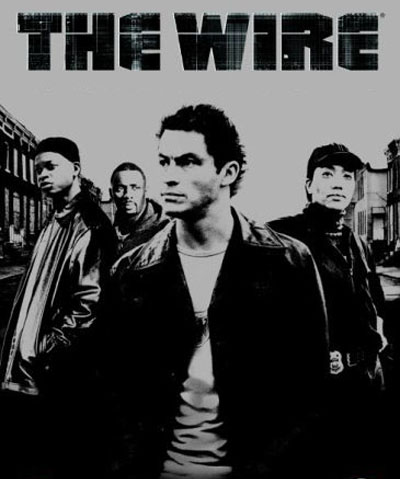
A few years ago, when I started my own practice, there wasn’t much work right away. I decided to binge watch one of the shows that I had missed, and hit upon The Wire. It was only five seasons (and 60 episodes), it was supposed to be great. Also, I was a big fan of Homicide: Life On The Streets, which shares significant creative DNA with The Wire. And my wife wasn’t interested in it. Perfect. (I also watched the 24 episode British show The Thick of It, which was amazing, and easily the most profane program I have ever watched).
The Wire was, in fact, great, and harrowing, and depressing and brilliant. The way that it dissected the Baltimore of its era by focusing on the decay of its major institutions—the police, the unions, the government, the schools, the press, and even the street gangs—was remarkable. The narrative style was groundbreaking, and the performances, by actors who rarely, if ever, have reached the same level of quality since, were stunning. And there was Omar.
But, as I so often have to remind myself, this is a music blog.
The credits for the first season ran over a cover of Tom Waits’ “Way Down In The Hole,” recorded by the Blind Boys of Alabama. At the time, I didn’t know that it was a cover, because I’m not that big a Waits fan. The second season, they used the original. For season three, it was a Neville Brothers cover, and in season 4, they commissioned a version, credited to DoMaJe, sung by Baltimore middle schoolers, which related to the season’s focus on the public schools. The final year, they used a cover by Steve Earle, who also acted in the show.
Here are all of the credit sequences, conveniently edited into one video:
If you’d like to read more about the credits, go here.
David Simon, the creator of The Wire, followed up that show with a number of well-received television projects. Generation Kill, which I haven't seen, was about the 2003 invasion of Iraq. Tremé, which I loved, taught me an enormous amount about post-Katrina New Orleans, and that amazing city's culture, particularly its music. After that, he adapted my friend Lisa Belkin's bookShow Me A Hero into a gripping miniseries about zoning (cheap joke--it was about race, and politics and ambition and much more). A couple of weeks ago, his new show, The Deuce, focusing on the sex and pornography industry in New York in the 1970s, debuted to critical acclaim. So far, I think it is good, but, and I bet Simon gets tired of hearing this phrase, it isn't The Wire (but is it more like that show than the other Simon projects?).
REM’s “Burning Down” is an interesting song with a patchwork history, and it stands out for two reasons. One, it’s classic early REM: arpeggiated chords, an all-over the neck bass line that was melodious than rhythmic and, most indicative of REM’s uniquely nascent sonic fabric, Michael Stipe’s unintelligible, mumbled, yet beautifully imagistic lyrics. Stipe’s vocal delivery was a turn-off for some back then—“I can’t understand what he’s saying!”—but was a badge of uniqueness and cause for devotion to REM’s earliest fans. Especially when the occasional intelligible phrase would break through the gauzy swirl of harmonies, and sit there, like some strange prophecy: “Running water on a sinking boat/Going under but they’ve got your goat…” A lot of it didn’t make sense, but it sounded amazing, so comprehension was secondary.
As a front man, Stipe set the band apart, with his mop of grecian sculpture curls, and he set a tone for fashion, and a model for navel-gazers who wanted to shuffle and mumble and bury ourselves in our poetry and hide behind our notebooks, in our thrift store chic uniform of flannel cords and wingtips. I’ve written about this before, but when I was coming of age, music and the bands I listened to were a tribal signifier and part of an intricate rite of passage. To identify by a band or a genre of music isn’t unique in itself, but the music—the sound, the bands, the labels and social mores of the actual artistic movement—helped more to create identity than any other source of influence.
For me, REM was the antithesis and antidote to the goofy, spandex-laden, hair-sprayed excess of 80s metal that we were all listening to. There was something indefinably cool and mysterious about REM and the “progressive” music of that era, and as I got older and finally accepted that I couldn’t grow my hair long, REM provided the kind of musical medicine I needed to help me nail down some kind of understanding of my ever-elusive teenage identity. I’m still looking, I know, but like any true devotee of music, I formed my coherence of self through music and identified as a fan, with a a capital F. In this case, REM was my first true badge, and I felt like some kind of indie legend walking the halls of my high school in my Document Work tour t-shirt. If you have your timelines in order, you might say: Hey, Document rang in the end of REM’s indie cult-status. And you’re right—sadly, I came to them slightly late, but I will say I was the first—the first!—to have Document and I had a personal mission to turn everyone on to a little song called “It’s The End Of The World As We Know It (And I Feel Fine).”
Going further back, to classic REM,“Burning Down” was actually born as a different track, “Ages of You”, and both songs can be found on REM’s B-sides collection Dead Letter Office. “Ages of You”, though meant to originally be released on the EP Chronic Town, was left off. Later, continuing its life-cycle as an unwanted stepchild, it was left off the full length Reckoning, as well.As quoted in the liner notes of Dead Letter Office, Peter Buck describes the strange duality of the song’s history: “When we got tired of ['Burning Down'], we kept the two pieces that we liked and rewrote the rest to come up with 'Ages of You'. We got tired of that one, also.”
Burning Down finally saw life as a European only B-side on the 7” and 12” for “Wendell Gee”, from Fables of the Reconstruction. A decidedly different musical contrast exists here, juxtaposing “Wendell Gee’s” maudlin, piano and banjo balladry to “Burning’s” earnest, chiming, sing-along anthemic drive.
Give both tracks a listen. Peter Buck refers to “Burning Down” as a “companion piece” to “Ages of You.” And for that distinction alone it deserves a critical listen. And if you haven’t listened to REM (classic REM) in a while, the track will remind you immediately of what was so great about the band, when you were still a kid, with goofy hair but cool shoes, and a whole world of disappointing disillusions yet to come. (That would be REM's Out of Time, not life in general...)
purchase [The Last Record Album] I hadn't intentionally pre-planned continuity from my last post to this one, but - as the "responsible" for this theme, I do wonder if my eventual theme choice wasn't at least subliminal (I think that applies). I mean, going from Little Feat's Can't Stand the Rain >> Little Feat's All That You Dream. <Entre paranthese> I have to give a tip of the hat to the comment from Dead_Elvis, Inc for the correction in the comments [right side]. But beyond, the theme offers up the possibility of pursuing Little Feat's <Down on the Farm>, notable for little except being the final album to which Lowell George contributed [a little because he was giving his time to <Thanks, I'll Eat It Here> as referenced by Dead_Elvis, Inc.]
There's something similar about the way that Little Feat's (and Steely Dan's- [RIP Walter Becker]) music affects me. Technically, I think I've got it right if I say they both incorporate somewhat complex structures that combine "California pop" with jazz. I'm talking catchy/pop-ish tunes with a twist away from the standard R&B I-IV-V chord structure. Add in lyrics that generally go a little beyond "She loves you yeah, yeah, yeah.." and you've got me on board. (Spyro Gyra and even into a lot of the ECM music from the mid 70s)
Yes, I confess, I am stuck back in the past. There isn't a lot from the present that I listen to. Most everything that comes to mind for a <Down> theme goes back to before the 90s. Heck, most everything I have ever posted here goes back to before the 90s. Not all. Most.
It seems to me that this is a song that sings about a better future, or at least the hope for better. Certainly regret and acknowledgement that things aren't what we wished they would be, but also a desire to improve:
All of the good times were ours ... Rainy days turn to sunny ones ... Can't be 'round this kind of show no more
Worth considering that the song isn't credited to Lowell George, but it is among the last that he was here for. Possible premonition because he wasn't around for too many more shows? Online sources say it is he doing the vocals (sounds right).
Also worth considering -from my perspective- is that the song doesn't bring me down. There are songs that do, but the tempo and harmony here aren't sad despite the lyric word choices (clouds, rain, wash away ...) While you are here, also see Darius' long ago related https://sixsongs.blogspot.com.tr/2012/01/on-air-on-your-way-down.html
Maybe we have had enough of the rain. Maybe some of the news pundits are right about how the main stream media tried to make the most of the Carib weather - to the extent that it has surpassed overload and caused unnecessary fears. And maybe J David is right that we have exceeded the "Can't" threshold when we could have been looking at other aspects of the Incompetence/Can't theme.
If you are a regular here, you likely know I have an enduring affinity for the slide guitar, as embodied in such impresarios as Mr Ry Cooder, Ms Bonnie Raitt, Mr Duane Allman and Mr Lowell George. (There are others, but these are among my main staples)
As JDavid pointed out, there are various avenues one can pursue from a theme of Can't - primarily personal incompetence. I don't think that <I Cant Stand the Rain> falls into this category - the weather is beyond our control, and most likely the lyrics transcend the weather, rather, here, a metaphor for other aspects of the singer's life. You know ... rain is wet and sad and brings you down, especially if you get caught out in it unprepared like...
In my ignorance, I had assumed that this was a Little Feat original. No small amount of their output was original. However, not this.
The song is credited to someone I had never heard of before: a certain Ann Peebles. And while I was only aware of the Little Feat version, there are all sorts of others who have done theirs and you can find many of them at YouTube.
So far, it seems like all of our posts on this topic are self-critical—I can’t dance, I can’t stand up, I’m a simpleton, etc. But in reality, isn’t it usually someone else that raises the issue of someone’s incompetence? Most of us, I think, have enough of an ego to think that we are at least competent, if not even better than average, but there is someone—a boss, a (former) significant other, a stranger—who tells you, in no uncertain terms, that you suck. [WARNING--link is NSFW]
Over at one of my other blogging homes, Cover Me, there is a relatively new feature, “That’s a Cover?” in which we write about songs that are so well-known that many people might not know that it is a cover. For example, I wrote one a few months ago about The Youngbloods’ iconic 60s tune “Get Together,” which was at least the fourth version of the song. Linda Ronstadt’s cover of “You’re No Good,” also falls into that category.
Not to mention, the song makes it pretty clear that the singer believes the subject to be incompetent:
You're no good, you're no good, you're no good Baby, you're no good (you hear what I say)[original lyrics—later versions used “I’m gonna say it again"] You're no good, you're no good, you're no good Baby, you're no good.
Although admittedly, later on, the singer inevitably (at least for this theme) criticizes herself.
Written by Clint Ballard, Jr., the song was first recorded in 1963 by Dee Dee Warwick (Dionne’s little sister), and produced by Lieber & Stoller.
This version stalled on the singles chart at #117. Warwick had a moderately successful career, although not as much as big sister Dionne, and she struggled with addiction and health issues before passing away in 2008.
The first “hit” version of “You’re No Good” was by Betty Everett, also in 1963, A bit more soulful (and featuring Maurice White, later of Earth, Wind & Fire, on drums), this version topped out at #51 on the singles chart, and was more successful on R&B charts.
Everett’s next song, "The Shoop Shoop Song (It's in His Kiss)" made it to #6 on the singles chart, and although she did have a few more hits, her later career was not as successful, and she passed away in 2001.
The Swinging Blue Jeans, a now pretty much forgotten Merseybeat band, did a gender-reversed version of the song in 1964. It was quite successful in England and France, and even hit #97 on the US charts. It sounds like a version from a now pretty much forgotten Merseybeat band:
The SBJ’s had a few more cover hits, but eventually, as their Wikipedia entry sadly notes, “The band eventually retired to the cabaret circuit.”
There have been many other covers of the song, some inotherlanguages (and even by Van Fucking Halen), but none have had the durability or success of Linda Ronstadt’s version.
Ronstadt began performing the song during 1973, and recorded it with producer Peter Asher (whose sister Jane dated a member of a well-remembered Merseybeat band that Peter also worked with) for her breakthrough album, Heart Like a Wheel. Her version, which became a #1 hit in the US, showcases Ronstadt’s powerful, soulful vocals, and has a great arrangement. Interestingly, Ronstadt has said:
I thought the production on "You're No Good" (her 1974 breakthrough No. 1 single) was very good, but I didn't sing it very well. As a song, it was just an afterthought. It's not the kind of song I got a lot of satisfaction out of singing.
Purchase: Lucinda Williams' "Can't Let Go", from Car Wheels on a Gravel Road Print: "Lucinda Williams, Car Wheels on a Gravel Road", from Church of Type, by artist Kevin Bradley, "...one of America's most prolific letterpress printmakers." According to his amazing website, "The Church of Type is a full-custom art and design studio working exclusively in the sweet science of authentic handset letterpress." I've got my credit card in hand as I write this--really amazing stuff.
Herman Melville’s Moby Dick has a strange distinction of being the book that all English majors can talk about while not having actually read it. The book is a titan of American Literature, one of the springs from which all that followed it had to flow. Lucinda Williams’ Car Wheels on a Gravel Road is a bit like Moby Dick—everyone’s heard of it, but few have actually read (or in this case, listened to) it. In the world of Alternative-Country music, Car Wheels is cited as a seminal influence by more singer/songwriters than I can name here and cracked the top 300 of Rolling Stone’s 500 Greatest Albums of All Time. It’s bonafides are bonafide; it’s accolades too many to count. Yet, for the casual listener, I wonder how many have given it more than a casual listen?
I’ve listened to the album many times, and chose to write about it for this post not because I am one of it’s true believing praise singers, but because I’ve never quite gotten my head around it.
It’s good, do get me wrong. What am I saying? It’s great. Amazing.
I’ve just never been able to figure it out: in plain terms, I’m not sure what it is supposed to be. Every track is different, and while it won a Grammy in 1998 for Best Folk Album, it is far from just a folk album. As a collection of songs, it defies definition—it has traces of folk, to be sure, but it dives into country, rock, blues—a sonic landscape as varied and wide-ranging as the subject matter of Williams’ poignant and elegiac prose-poem lyrics. Like many great albums, it marries genres. And like a great marriage, the music comes across as effortless, even when painful and challenging.
And that’s a good word to describe Car Wheels: a challenge. What to make of such a vast and wide-ranging collection? The songs range from cracking, bar room boogie, to traditional, gospel-tinged Nashville of country music’s heritage days. The moods are myriad, as are the producers (Rick Rubin, Roy Bittan of the E Street Band), and the players are a hall of fame guest list (Steve Earle, Charlie Sexton, Emmylou Harris). The album took six years to record, and Williams re-recorded it twice from scratch—like any piece of literature worth the paper it’s printed on, good work takes time, and not editing, but whole sale revision.And the reviews are stellar, on a historical level. Back at its 1998 release, and up until today, as it is such touchstone of an album, that Car Wheels still gets press. Much like how we started with a comparison to literature, Car Wheels garners the same sort of praise and asks for the same kind of critical analysis as a great piece of literature. Any collection of songs that covers as much ground musically, can delve as deeply into imagistic setting and character, deserves the copy.
The original review in Rolling Stone sang the praises of the album in verbiage befitting a literary masterpiece. Writer Robert Christgau waxes poetic about Car Wheels, but he sums up the thematic substance, the heart of the album, best near the end of the review, when he writes: “Whether it's the interrupted childhood memories of the title track, the imagistic shifts …Williams' cris de coeur and evocations of rural rootlessness — about juke joints, macho guitarists, alcoholic poets, loved ones locked away in prison, loved ones locked away even more irreparably in the past — are always engaging…And they mean even more as a whole, demonstrating not that old ways are best — although that meaningless idea may well appeal to her — but that they're very much with us.”
I suppose in the end, I’ve not been very clear about what ‘troubles’ me about Car Wheels. It’s not if I’m dubious on whether the album is good or not—I used the very lackluster adjective ‘great’ earlier to describe my feelings. That’s a poor, pale word for such an eclectic collection of aural story-telling. This is a collection of songs that, again like a great book, keeps me wondering and guessing at meaning and theme. What was Williams trying to accomplish with Car Wheels, aside from collecting memories, stories, emotions. And, as Christgau writes, Williams was working at capturing a mood of the past, an elusive zeitgeist of old times, grey ghosts on country roads, the voices of the greats rising up from the fog to stake a claim in the present tense that they so clearly can lay ownership upon. She captures moods here, many of them, yet none are so prevalent as to direct the record toward one central feeling. The motifs, the tangible, palpable imagery—all of it combines to tell a novel’s worth of story that never really ends. And that is where the album finally differentiates from the novel: there is no end, not to a song. It might fade out, but a collection as strong as Car Wheels never, ever stops telling its story.
Check out this bluesy snarl of a track, a little back porch stomp, called “Can’t Let Go”, which is about exactly like what it sounds. Williams might be tongue in cheek on the metaphors on this track, but this broken hearted blues lament on not being able to shake even the worst kind of love is raw and gets its hooks into you. Kind of like the man that the character of this song can’t let go of. A fitting track to introduce an album that, much like the song, gets a hook and won’t let go.
In response to Darius' question about the theme, as the guy who suggested it back in February, it was originally "Incompetence," in "honor" of our then-new President. Who knew how bad it would get. Our current moderator, known in these pages as KKafa, although that’s not what his parents named him, felt that was too difficult, and added the related concept of “Can’t.” And so far, that’s where the posts in this theme have gone.
So, I’m going to try to steer it back to my original concept, although, as so often happens with XTC’s music, the lyrics are somewhat tongue-in-cheek.
Unlike our current President of Simpleton (or Dementia, or Narcissism, or Egoism, or Delusion, or whatever), who seems blissfully unaware of his shortcomings, the titular Mayor lists all of the things that he lacks competence in:
Learning
Weighing the Sun
Mathematics
Reading profound books
Writing a big hit song
Solving crossword puzzles
Unraveling riddles, problems and puns
Operating a home computer (note—this song came out in 1989, so having one was not common)
Converting pounds to tons
Winning Nobel Prizes (If this was an impediment to love, there’d be a lot of single people)
On the other side of the ledger, though:
He loves her
One would like to think that love should win out over mere brains (a concept which Cheersmined regularly, particularly in its early years), and I think that we are all rooting for the Mayor in this song, because of his self-awareness and clever and heartfelt professions of love. And, so, is he really incompetent?
Unfortunately, XTC never recorded a sequel, so we don’t know whether this plea led to “Sorry, Mayor of Simpleton, I’m Not Interested,” or “I Love You Too, Dummy.”
That much is true, and I have tried, Lord, I have tried. Indeed there have been times when I tried so hard, I thought I could, the joy and sweat both unbridled as the floor emptied about me. In fact, my dancing years can be contained within 3 succinct eras. But first the song:
This song, originally by Tom T. Hall, nails many of my feelings, even rationalisations, on the subject, and is written from the position of the lovelorn and forlorn dancehall wallflower, forever watching from the periphery, unable to get his girl on account his "affliction." Tom T. makes it matter of fact in his country boogie shuffle, but Gram imbues an extra poignancy and urgency into his cover, which, incidentally, is pegged up a pace or two, into a somewhat clumsy rhythm that is actually well nigh impossible to dance to. Even if you could.
So how did I deal with this, in phase 1, my youth? Luckily, it being the late 60s and early 70s, with the birth of the underground scene and prog, I could pin my flag to those genres. Sitting cross-legged, head bowed forward, shaking in, or slightly out of, time with the stop-start rhythms of Yes, King Crimson and E.L.P. warranted no knowledge of dancing. Dancing music: soul, r'n'b and disco, was for fools, whether they got the girl, and they usually did, or not.
Stage 2 was an awkward amalgam of conflicting pulls on my position. Punk arrived, and the demolition of all before it, including any orthodox styles of dance. And, yes, I could pogo, I discovered. And, with new wave, that slo-mo running beloved of, predominantly, Sting, came within my canon. But there was also the increased importance of Folk-Rock to me during these years, as I, simultaneously to the Clash and Costello, immersed myself deeper in all things trad.arr. I joined a Morris Dance side. There I had to discipline myself into the rigidity of 4/4 rhythmic movement. Like this:
It was hard, it was difficult, but I nailed it, albeit barely competently. It was bliss. Our side would convene once weekly for practice, and meet at weekends to give displays at school fairs and village fetes. Possibly as a result of this confidence, or probably the women I was taken with, I suddenly "got" the dance floor, hoovering up Motown and Stax into my record collection. I had the confidence of a dyspraxic Travolta and hurtled around equivalently. And for all the toes I trampled and ribs I barged, I apologise. Unreservedly.
For now, phase 3, I know I really can't dance. It is a pity, as my wife loves to and is an avid aficionado of electronica/dance. I love it too, but confine myself to listening in the car. As I drive. Occasionally thumping the windscreen repeatedly with my fist if particularly carried away. Just in case, at the age of 60 I have again joined a morris side, but I know I probably fool myself. And the moves are so much harder than they ever were.
A final reflection comes from proggers turned poppers, Genesis, originally just the sort of anti-dancing music I delighted in, all those phase 1 years ago, latterly topping all sorts of charts with dance worthy tunes. Although I tell myself I shouldn't, I quite like this change in their style and fortunes, this song demonstrating that they too are not entirely unaware of the irony. So, like this song, maybe this dancing lark is my guilty pleasure.
purchase [Get Happy] There was a time - about 20 years back - when Elvis Costello and Talking Heads were what I mostly listened to. Both kind of quirky (as opposed to mainstream pop), but both very much in favor with the college-type crowd (which I had long since graduated from - but maybe couldn't leave behind?).
I'm pretty sure that among the things that attracted me to both were (a) the slightly-off the standard I-IV-V chord structures of their songs and (b) the near-poetic lyrics - enough that the words frequently caused me to take a minute or more to ponder their relevance to my current frame of mind. Oh, yes, and neither appeared terribly normal in the MTV videos I saw.
Now, at about the time that <Get Happy> (the album containing Can't) was released, Costello was in hot water on account of his multiple uses of "the n word". He had drunkenly referred to Ray Charles as such, and his "Lover's Army" includes lyrics to the effect "one less white ..n.". As a result, there are those who believe that his choice of "I Can't.." is a form of either apology or appeasement - because the song comes from the legendary Sam and Dave, who recorded it in a rather slower, more soulful tenor back in the mid 60s.
As for Costello, this song stands in contrast to his earlier dark, angry, vengeful style: granted, the pace - as compared to Same and Dave's slower soul - still rubs a bit the wrong way (also see his dis-jointed dancing on the vid), but you can almost sense that Costello is onto something new, and in fact, from here, it lead to a breakthrough in his career (and puts his racial slur gaffe more or less behind him)
We've got the "Can't" covered pretty well just in the title itself. But how about the "Incompetence"? Well, there's no requirement in SMM's current theme that any single post cover both terms - and in fact they do appear to be linked - if you're incompetent, you can't ... something. But, is there something about Costello or the song that encompasses <Incompetent> as well? Judging from where Costello went from after this output, I would say: no sign of incompetence on his part. Your thoughts?
I have not been the moderator here for quite some time now. Usually, that doesn’t make much difference, but it does with regards to our new theme. I have some ideas about how to treat the “Incompetent” part, and I will be presenting at least one of those as we move on. But I am not sure what was intended. Perhaps it is better not to know, but rather to put forward one’s own interpretation, which should make this a fascinating theme. But the “Can’t” part is easy enough. Can’t Find My Way Home immediately came to mind, and no wonder. The song is almost fifty years old now, and it continues to be covered in new and interesting ways. That is a fine definition of a classic.
You could say that the song deserves to be obscure. The lyric is barely there, consisting of only one verse and a chorus. The words express a sense of helplessness, and there is no resolution to this, no solace offered. But that is, in a way, the point. For all the idealism of the hippies who embraced the song and made it a hit, there was always a sense that they were fighting something they could not stop, something that was just too big for them. Of course, it did not hurt that the song was by a new supergroup. Blind Faith featured Steve Winwood from Traffic and Eric Clapton and Ginger Baker from Cream, and both of those groups had just broken up. Only bass player Rick Grech, then with the group Family, was relatively unknown. But Blind Faith was not popular just because of their lineup, nor was it simply the fact that they were one of the first supergroups. The talent that came together for this project delivered the goods, and it is ultimately the performance of Can’t Find My Way Home that makes it work, and has made the song an inspiration to musicians ever since. The song has brought together unlikely groupings of musicians for some great performances, so I wanted to include some of those.
Bonnie Raitt with Lowell George: Can’t Find My Way Home
In 1972, Bonnie Raitt was making wonderful blues-based music, but she was far from well known. Lowell George and his band Little Feet were just getting started themselves. Raitt would record her own solo version of Can’t Find My Way Home, although I couldn’t find it on any of her albums. But this version comes from a radio broadcast in New York City. Either Raitt or George could be playing the acoustic guitar or the slide guitar on this one, and there is also an acoustic bass part played by Freebo. This spare treatment really brings out the emotion of the piece.
Allison Krauss and Union Station: Can’t Find My Way Home
Allison Krauss and Union Station are known as a bluegrass group, but that label does not fully describe their artistry. This version of Can’t Find My Way Home honors the song’s roots in blues rock, while also updating the sound in brilliant ways. The recording was done for the TV show Crossing Jordan.
Sheryl Crow with Warren Haynes and Trombone Shorty: Can’t Find My Way Home
[Not Available for Purchase]
As seen here, Sheryl Crow and her band are a part of the jam band scene. She invites Warren Haynes and Trombone Shorty to join them on stage for this one, and Crow’s band supports them ably, with very satisfying results. Crow and her band do not show the elasticity that allowed the Grateful Dead to, for example, segue from Scarlet Begonias to Fire on the Montain, but this is still a strong performance. It makes me wonder why Sheryl Crow has not so far put Can’t Find My Way Home on any of her albums.
For those who remember 2012, I mentioned in a post that one of the first dates I went on with my now wife was to see the movie Bring On The Night, which was the Michael Apted-directed documentary about the creation of Sting’s first solo album The Dream of the Blue Turtles and the subsequent tour. We loved the movie, and I still have fond memories of seeing it, both because of the film and my date.
I enjoy learning about how music is created, probably because my love of music is not coupled with any real ability to make it. I’m jealous of those who can, so this movie was right up my alley. I was also a big Police fan and had heard, and liked, The Dream of the Blue Turtles. I know that Sting has gotten a reputation for arrogance and pretension over the years, but as someone who likes the often pretentious prog rock, it didn’t bother me that for his first solo album, Sting tried to move beyond the reggae flavors of the Police and try to push the boundaries a bit. As a brief aside, I had the chance to briefly interview Sting the summer before my senior year in college, backstage at an outdoor concert at Liberty Bell Race Track in Philadelphia. He was extremely genial and answered all my probably dumb questions, and readily recorded a station ID that we ran regularly — Stewart Copeland, on the other hand, had to be shamed into even doing a station ID for us. But he did two. You can hear them here.
In addition to wanting to expand his musical palette (which the Police had begun to do as time went on), Sting decided that his band wouldn’t be The Police Mark II (or III, for those few Henry Padovanifans out there), and instead chose young, hotshot jazz musicians. This isn’t as strange as it sounds — Sting’s earliest gigs were playing jazz and fusion music in Newcastle during his free time during college and while working as a teacher. Here's a jazzy tune from Sting's last pre-Police band, Last Exit—the melody of which was used in Blue Turtles' "We Work the Black Seam."
The people that he chose were all extraordinary musicians. Keyboard master Kenny Kirkland had played with Wynton Marsalis, bass player Daryl Jones had been in Miles Davis’ band, and Branford Marsalis, on sax, had been in Art Blakey’s Jazz Messengers, and played with his brother Wynton, Herbie Hancock and Dizzy Gillespie. Drummer Omar Hakim, who was in Weather Report (with Mino Cinélu), was the only member with significant rock credits, having backed Carly Simon, David Bowie and Dire Straits. In addition, Sting brought on veteran backup singers Janice Pendarvis (who was in another of my favoritedocumentaries, 20 Feet From Stardom) and Dolette McDonald (who worked with the Talking Heads, but was not in another of my favorite music films, Stop Making Sense, or on my favorite Talking Heads album).
The film shows how this mostly non-rock band fused with Sting to create a sound that was still identifiably rock, but had some elements of jazz. Maybe the easiest way to see what Sting was after is to compare the original Police version of “Shadows In The Rain,” a somewhat meandering, spooky dub track, with the studio version from Blue Turtles, which was reportedly based on the original demo that Sting wrote. Amusingly beginning with Marsalis asking frantically what key the song is in over a funky Hakim groove, a harsh voiced Sting enters, and the song turns into an exuberant, upbeat soulful and jazzy tune with solos from Kirkland and Marsalis.
Part of the tension in Bring On The Night, beyond the question of whether the whole concept would work, is that the band was scheduled to play some live shows on little rehearsal. As you can see from the video above, they had no problem with the performance, and the exuberance of the album track is even more apparent.
Another part of the tension in the movie is that it shows, in pretty graphic detail, the birth of Sting and wife Trudy Styler’s son Jake, who is now this guy.
purchase [Got Live If You Want It ] Various online sources note the horn section on the Stones' <Have You Seen Your Mother Baby>, arranged by Mike Leander and produced by Glyn Johns. But the use of the horns wasn't the only thing the Stones were experimenting with in 66. It could have been the guitar effects, it could have been their lifestyle, it could have been their public personas.
Would you let your daughter marry a Rolling Stone? The group was well into establishing their "bad boy" image, and one of the PR photos that goes with this has them dressed in drag. And that is kind of what this song is about - Various things in the shadows.
The song is a continuation of their (not just) lyrical provocations:, but think also: I Can't Get No Satisfaction, Let's Spend the Night Together, Get Off of My Cloud, Nervous Breakdown... you continue the list. Snipets of the lyrics suggest to me that they are asking the girl for more than sympathy, even as they sing
I'm all alone, won't you give all your sympathy to mine? We live in... glimpse through... hate in ...tear at ... the shadows.
There's a lot in the lyrics that isn't particularly clear and that's probably the intention. Do with it what you will. What you do in the shadows of your mind is your business.
Sometimes the opportunity of a theme is as maybe more around promoting an artist, as much, if not more, as is the song used to fit the purpose. This is one such. Lisa Gerrard the artist, if Pieter Bourke will forgive his no doubt integral part within the featured song. And it isn't, I guess, traditionally the usual fare of SMM, with echoes perhaps of medieval plainsong rather than the sprawl of rock and roll. But it is.
Lisa Gerrard was half of uber-goths, Dead Can Dance, who began life in Melbourne, Australia in the early 80s as a conventional if somewhat arty and, even, pretentious amalgam of, as their label described them: "drum-driven, ambient guitar music with chanting, singing and howling." Gerrard and her partner in vocals, Brendan Perry differed from the routine and ritual howlers of their day, in that each possessed vast and idiosyncratic ranges of tone, grand-guignol operettas with the shamanic underflow of the backing instrumentation. Each album became ever less conventional from the tropes of goth, a label they themselves espoused. Witness this, The Trial, from their debut, to the track below it, Emmeleia, from their 6th album, "Into the Labyrinth".
They broke up in 1998, each pursuing separate careers, with Gerrard further immersing herself in the capacious limits of her voice, alongside Pieter Bourke, producing the phenomenal LP, "Duality", that contained the titular piece for this scribble. But before this, with Dead Can Dance still a concern, she had produced, for me, her most astonishing work, 1995's "The Mirror Pool", with standout track, Sanvean being a reprise of an earlier DCD track. Witness a live version below. I challenge you not to weep.
DCD reformed for in 2005 and have performed intermittently in the years since, with a run of increasingly overwrought, in a good way, productions, whilst Gerrard has increasingly pursued a role as a collaborator within soundtrack music, largely independent cinema, but also in bigger blockbuster fare such as "The Insider" and "Gladiator." Solo records have also appeared, all of which I commend. I live in hope of her touring. Start here, don't stop!
Writing this, I have to say, I feel a bit like a shadow myself. Of myself? I don't know...
I haven't posted all summer: making a permanent household move between three countries (out of Turkey, back to the US, and then on to parts further), I haven't done much writing. Or listening. Or reading, or anything else for that matter. What precipitated this shadowy existence, this strange, disconnected half-life?
I gave up my computer and phone.
I know. I know. Don't ask--I'm not sure how I survived. You can find a lot of data on the benefits of giving up electronic devices, and yes, physically, mentally, et al, it does feel pretty good to go e-free. But, alas, the world turns at a new pace, sometimes speeding up by the day, and it's not really feasible to go entirely free of the web. It's kind of impossible, to be honest. But, then, if you have a smart phone, and try to do anything productive at all you already know that.
And, while I can acknowledge the benefits of unplugging, even though it felt as if someone pulled the plug on me (I'm talking that proverbial big 'plug') it feels good to be back..And honestly, I never want to leave the grid again.
On to our song topic: shadows. When I read Kafka's email to the writers announcing our theme, it is usually a fun, low-stakes game of free association. Often, I would never write about, nor publicly admit to, the first song that comes to mind. We all have guilty pleasure songs, and we all know phrases and snippets of tunes we would be mortified to share and worse, probably hate. Sound patterns, beats, phrases have a way of digging grooves into our subconscious and rising, specter-like, when we least want. Thus, the often agonizing phenomenon of waking up with a song stuck in your head. Is it ever a good song? One that you are happy to hear? (While writing this, I admit, the refrain of Taylor Dane's "Tell it to My Heart" is running on repeat in my head...). I'm not writing about Taylor Dane today, so just cool it...But, when I saw we were doing shadows as a theme, the jukebox in my head switched on and Tom Petty's "Shadow of a Doubt"immediately started playing. Writing about my first choice is a rarity. This is a happy one.
From The Heartbreaker's 1979 classic Damn the Torpedoes, "Shadow of a Doubt" has the true designation as a forgotten gem. But, that's a forgivable sin, because of the brilliance of this album. If Petty had never recorded again after Torpedoes, he'd still be popular. Torpedoes includes the mega-hits "Refugee", "Don't Do Me Like That", "Even The Losers" and of course the crowning jewel, "Here Comes My Girl". With that many great songs, of course there will be a few overlooked tracks, even with something that was released in the heyday of the 'album' age, whatever that means...(editor's note: it means, music used to be celebrated by artists releasing a thing called an album, which was a collection of songs that more or less fit on two sides of a disc (vinyl, cassette or CD) and if you wanted to buy a single song, you had to go to something called a record store, and depending on the year, pick up a 45 rpm piece of vinyl (or cassingle or again, CD), though you usually picked up both the full the LP and the 45. It was a strange time, when human beings had to leave their house to purchase music and took great enjoyment in perusing stacks, or rows, of music in one of the above-mentioned forms. Alas.) So, "Shadow of a Doubt" was as twangy bit of radio pop, with an earnest intro, and chuggy verse and a soaring course. With an almost new-wave (ish) polish and vox, "Shadow" is a set piece in an incredibly strong selection of Petty's most polished and expertly produced (thank you Jimmy Iovine) and genre-spanning music yet at that point in the Heartbreakers then short career. Torpedoes was their third, and by far, best album to date, a critical success and a full-on radio hit smash. It was kept from the # 1 spot on Billboard only by Pink Floyd's The Wall, which really, who could beat that album, on any level?
I discovered Petty in retrograde fashion: Around 1984, I was in 6th grade, and just starting to realize how important good music was. I was steeped in "classic" rock and developing a fine pedigree, in no small part due to what will always be to me great radio: DC 101, one of the longest running FM signals in the DC Metro area, was a rock n roll powerhouse and in no small measure responsible for much of my musical education. By the time Springsteen's Born in the USA, a truly seminal moment in my life, hit the airwaves, I considered myself a convert, eager to learn as much as I could. Luckily, without an allowance or a nearby record store, I had the radio to rely on. In the 1980s, the classification "classic rock" was a relatively new format designation, seeing as much of what I was listening to--Zeppelin, the Beatles, the Stones--had barely hit the 20 year mark. Add the Dylan tapes I'd inherited from an ex-hippie neighbor into that mix, already the grandfather of rock, and Tom Petty was sure to follow. Discovering music back then was both a joyful experience as well as one of simply connecting the dots. I loved listening to rock radio back when I was a kid--it was more of an experience, a passage, than it is now. Radio was more uniform, : classic rock was classic rock; there wasn't a need for cross-over to draw more audience. At least that's the way it seemed. But age and nostalgia bring on a brighter sense of things, a fonder, more pure memory than the reality. I know for me that listening to the radio was kind of like going to school, only I liked the learning, and no one made me sit in my seat and be quiet.
Speaking of nostalgia, Tom Petty and the Heartbreakers are on tour this summer, celebrating 40 years. I've heard the shows are fantastic. I haven't been able to catch one, as I believe the ticket prices are commensurate with the band's age and experience. And what I mean by that is: holy crap! tickets are expensive! I've never stopped listening to Tom Petty and his brilliant Heartbreakers. They are a radio staple and if you have XM/Sirius, you know that TP has his own channel, so a good tune is never far away. But, if you haven't done a deep dive into the back catalogue, check out "Shadow of a Doubt", and the rest of Damn The Torpedoes and revisit some of that once in a lifetime radio rock 'n roll. The kind that doesn't get made anymore...
It is possible to be a lesbian from Canada and still enjoy major success in the global music industry. Think of k d lang. But Ferron had these two strikes against her from the start, and she has never had the fame she deserves as a result. Canadian artists must either relocate to the United States before they begin their recording careers, (think Joni Mitchell), or, like lang, have an initial success that it is so big that it can not be denied. And I can not think of anyone who started out recording for a lesbian record label and went on to much wider success. In the case of Ferron, that is a great shame. She needs neither the lesbian nor the Canadian artist label; she is simply one the finest songwriters far too few people have ever heard of, and her appeal should transcend nationality or genre.
Shadows on a Dime is a fine place to start. The song presents a series of vignettes framed by a long train ride. Like the titular shadows on the surface of a dime, they are small things by themselves that add up to something greater. They are a series of thoughts and experiences that define an identity when taken together. That description may sound like new age mumbo jumbo, but the song is wonderfully alive and human.
The album Shadows on a Dime came out in 1984, and I was lucky enough to see her on tour in support of it. She came to Princeton NJ, and I was gently dragged by a group of friends to the show. As with many of my friendships over the years, shared musical tastes were important, so I didn’t really need much persuading. (By the way, I have always lived close enough to Princeton to listen to WPRB, and I was happily listening to our own J David’s show on the station at this time, but he was not part of this. Even now, we have never met in the flesh.) Ferron’s show was great, and I was immediately a fan. I still am, and all of the music I have heard from her in the subsequent 33 years is up to the high standard she was setting then.
Bitch might seem to be an unlikely champion for Ferron’s music. Hailing from Brooklyn NY, Bitch is an in your face songwriter whose songs are confrontational at times. She does possess a rich musical imagination, ranging from variants of folk to rock, club music, and funk, and always making whatever she does very much her own. Yet, when she met Ferron, there was reportedly an instant connection. The album Boulder is an attempt to introduce the music of Ferron to a new generation. Bitch recorded solo performances of some of Ferron’s best songs, and then traveled the country, asking musician friends to add backing tracks to fill out the sound. These included Ani DiFranco and members of the Indigo Girls and the Be Good Tanyas. On the new version of Shadows on a Dime, we hear Ferron in an intimate setting, with Bitch adding fiddle and gentle vocal harmonies. For Ferron, this album was intended to be her musical swan song. It was recorded in 2008, and she intended to do only occasional shows and no more recording. However, there was to be one additional album in 2013, Lighten-ing. This one was made to accompany a documentary about Ferron that used the Boulder album as a soundtrack and starting point. Lighten-ing is, I believe, a collection of new songs. Bitch was once again very involved in the recording, and helped put the band together. For the first time on Lighten-ing, Ferron’s voice sounds like that of a woman who has been doing this for close to forty years. Even so, this is a project that is well worth seeking out.
I’ve written about Gong before, a couple of times, and mentionedthemin passing. They are a band that I really enjoy, and nevertheless remain pretty obscure. You could probably get a doctorate in the band’s history—it has formed, splintered, reformed, renamed, and changed members more times than one can count. Nevertheless, there’s a website that tries to chronicle Gong's various changes and permutations (as well as other bands from the Canterbury Scene).
I got into Gong through its late 1970s-early 1980s incarnation as a fusion band led by Pierre Moerlen, featuring lots of mallet percussion. The original, spacy, psychedelic version of the band was less interesting to me—although there was brilliance, there was also lots of weird, hard to listen to stuff to wade through. For the most part, the Moerlen-led band was tight, had interesting songs with an unusual amount of percussion and, maybe most importantly, featured incredible musicians, including Allan Holdsworth on guitar. If you don’t know who Allan Holdsworth was (he passed away earlier this year), find his music on the Internet. Days before his death, a 12 CD box set of his solo albums from 1982-2003, entitled The Man Who Changed Guitar Forever, was released. The title was taken from a proclamation on the cover of an issue of Guitar Player in 2008, and it isn’t an overstatement. That’s not to say that there aren’t other guitarists who changed the way guitar was played, but he’s certainly one of them. He was the favorite guitarist of Eddie van Halen; Tom Morello and Frank Zappa, among others, have cited him as an influence.
But the main reason that I’m going back to the Gong well for this theme, which has many possible topics, is that I recently had a chance to meet another of the musicians who played on this song, percussionist Mino Cinélu. Cinélu later played drums for Holdsworth, was in Weather Report, played with, among others, Pat Metheny, Peter Gabriel, Miles Davis, Sting, Kate Bush, Herbie Hancock and Branford Marsalis, and led his own bands.
Mino participated in a panel that I attended recently about copyright law and music, which was led and organized by my friend Heather--who makes her second appearance in SMM--and also featured prominent lawyers and a musicologist who have been involved in some of the most well-known music copyright cases in recent years. Although I’m a lawyer, that’s not my field, and it was fascinating.
Afterwards, we, of course, repaired to the bar for drinks, and I had a chance to chat with Mino, mentioning that I was a huge fan of Gong (particularly the one album of theirs that he appeared on), and Holdsworth, and had participated in an interview with Pierre Moerlen when he, and another formation of Gong, played at Princeton when I was a student. He couldn’t have been a nicer guy, and we’ve been in contact a few times since, most recently to confirm that he, in fact, performed in the live version of “Shadows Of” from the video above, because the Internet shockingly had conflicting information.
It was recorded at the Reading Festival in 1976, and featured Pierre Moerlen and his brother Benoit, also a percussionist, Holdsworth, bass player Francis Moze, percussionist Mirelle Bauer, woodwind player Didier Malherbe and Cinélu. Although the sound quality isn’t great, the performance is, despite the fact that it lacks the amazing acoustic guitar solo of the original, which was a rarity for Holdsworth (or, for that matter, Malherbe's great flute solo).
The Reading Festival that year was a prog-fest, although not exclusively. Other performers included Camel, Phil Manzanera/801, and Brand X. Other non-prog acts included AC/DC (listed in very small type), Black Oak Arkansas, Rory Gallagher (both in very big type), Ted Nugent, and Manfred Mann’s Earth Band. And, as they say, many, many more.
Star Maker Machine does not accept music submissions from artists or promoters. However, most of the contributors here do accept submissions for our own blogs, listed below. Please visit our blogs, take the time to listen to what we post, and then feel free to contact us if you feel that your music would be a good fit.