Oleta Adams has a great voice that too few people have heard. In fact, it took a fairly remarkable break for her to finally get her chance at stardom at age 37, and even then, her career never went as far as her talent possibly deserved. Adams learned to sing in church, and added jazz to her repertoire as she went along. In the late 1970s, she recorded a demo that she shopped to major labels, but they wanted disco divas if they signed a black woman at the time, so Adams got no offers. By the early 80s, Adams decided to make a brave move and released two albums on her own label. Remember that there was no internet at the time to allow a self-releasing artist to promote herself. There were independent labels at the time, even small ones, that were having some success with punk, new wave, and early rap, but Adams did not fit any of those categories. By 1985, she had moved to Kansas City, where she was doing a gig at a local hotel. That was where her moment happened. Curt Smith and Roland Orzabal, aka Tears for Fears, came through town during their tour for their smash album Songs From the Big Chair, and they happened to stay at her hotel. It took two years for that to turn into an offer to join their band to record and tour for the follow-up album The Seeds of Love, and the album wasn’t released until 1989. But Adams played piano and sang backup on the first single and title track.
The second single was her moment. Woman in Chains is a duet, and the overlapping vocals by Roland Orzabal and Oleta Adams blend magically. Hearing this, it is hard to guess why they didn’t do more work together. In the event, Tears for Fears signed Adams as a solo artist to their vanity label within their major label, and her first two major label releases were hits, especially in the UK. Over the years, Adams has had the occasional chance to record some jazz, including one song with Antonio Carlos Jobim. But her albums, to my ear, have played it safe with smooth R&B. She does it well, but I can’t help wondering what might have happened if she had taken some chances artistically.
Woman in Chains is a long song, but the lyrics fit comfortably on a napkin. They leave a lot of space for the listener to fill in. It is almost as if the song was conceived alongside its video. Together, they paint a picture of an abusive relationship between a pole dancer and a boxer. The version I have chosen is not the album version, and this is not the official video. Instead, I found a live version that has a more muscular arrangement, and shows off Adams’ voice to even better advantage than the original. The video seen here uses enough of the original footage to tell the full story, but the performance portion of the original has been replaced with new concert footage.
Purchase: March of the Pigs, from Nine Inch Nail's The Downward Spiral
Maybe it's coincidence, maybe it's the magic of serendipity. Life doesn't always imitate art as much as it does take direction from what we see, hear, read and listen to. Or look at. Take for instance this: I'm teaching Harper Lee's classic novel, To Kill a Mockingbird right now, and focused heavily on one of the novel's most moving scenes, where Scout, through innocent determination unwittingly faces an angry mob back and causes at least a few of them to reflect, then turn back on their own murderous behavior after witnessing and being subject to the non-accusatory innocence of a child who doesn't know much more than right and wrong. One of my students brilliantly pointed out to me that this scene, so famous now, so ingrained in our memories of both the book and the film, was just like what is happening in Parkland, Florida: teenager victims and witnesses of the horrific mass murder at Stoneman High School are refusing to back down to the intimidations and insults NRA and inaction of their own state legislators to affect perhaps the most significant change to gun control policy in our country. Ever.
"Kids can change the world, sir." That is what this student told me, free of self-consciousness or irony. I was amazed, not only for the fact that she was right, but that once again, the art form I've dedicated my life to working with--literature--really and truly is the reflective authority on how to understand the world.
Now, off to less noble analogies: I've been reading the Vincent Bugliosi's 1974 bestseller, Helter Skelter. Helter Skelter is a true crime account of the 1969 Manson Murders, an event ingrained in our American folklore and artistic, sociological and artistic identity for numerous reasons, many I am trying to fathom as I read the book. I have read that the Mason murders marked a true end to the optimism of the 1960's flower power movement and the feel-good vibes of the hippies--the positive spin on the generational gap that blew wide open in the 1960s and the blossoming of the alternative culture and the wider acceptance of freer, less rigid values and a consenting to a wider, more interpretative moral code. Which was the nice part of the 60s, the pretty, techni-color expansiveness. Not the darker, grittier reality of drugs, a war that killed an untold number or people, an ushering in of a mistrust of our government and a righteous anger at the moral spiritual failings of our leaders. While not a new concept in history, it seems at least for America, that finally, the dishonesty, greed, self-preservation, perfidy and self-centered nature of our politicians had been brought into the open and I don't think we've forgiven any of it yet. Why would we? The corruption of the 1960s has given way, in a flood rather than a trickle, to an ever unprincipled, unethical and dishonorable parade of corrupted leaders and the havoc that they, and we, have unleashed on the world... But, I digress: history is a nightmare panoply of war and suffering--our current situation is nothing new, we just get to watch it unfold in an unending techno-digital stream..."all day, all night, MTV..."
The book itself is frightening in its clinical precision--the first chapter brings the Tate and Labianca murders into sharp, frightening focus, even if we only get to see the aftermath. I'm not too deep into the book yet, and I'm not sure why I'm reading it--after all, I know what happened, and truthfully, I could ask: do I really need anymore 'horror' in my life? Not that my life is filled with anything awful, but we seem to be at a premium of bad goings on, trouble times, waters on the rise and all the portents of evil rising in the darkening sky. We live in a Grimm's Fairy Tale landscape, and there's no real brightness to light us to a better way. Why I'd invite more of that darkness into my life, I'm not sure.
And while life in 2018 is more often a Ingmar Bergman film than it is a Will Ferrell one, there is something to be said in reveling in the depictions of out darker tendencies. You can't laugh at everything, and sometimes being inured to the gruesome and the ugly comes only from seeing enough to develop the think kind of skin that resists the lash. Hence, our thrill at being spooked by a horror film or, as is the case with me, fascinated with the real-life stories that inspire the horror genre. I'm not talking werewolves and vampires and the shambling dead come to life, but the real boogey men who populate the shadows of our waking world, playing the worst trick possible: denying us the enduring belief in the goodness of our fellow human. So, tales of serial killers and true crime documentaries, about fraud and kidnapping and crimes of passion, tales of mental disturbance that drive a seemingly normal human to give up their humanity in awful ways and at the expense of others, are an ever booming industry. Though it's a stretch to use the Manson murders to prove how life and art commingle in a strange, back and forth origin myth simply because there's so many similar stories in the world that all life and all art have blurred into one big mess, I can't deny the fascination of delving into those real stories, the stories who breathe a strange whisper into your ear, or run up the back of your neck for how close they are to the life you live, how easily they could become your story, if only, if just, thank god I've never been...
Trent Reznor's Nine Ince Nails has always struck me more as a project than a group, and his erratic, eclectic output over the past few years has done nothing but deepen the enigma that is NIN, while at the same time, further cement Rezonr's role as the composer of the soundtrack to our dark, tumultuous days. 1989's Pretty Hate Machine was a brutally loud and pulsing sonic message from the future--and it detailed a dark place. Flash forward, and Reznor gives us 1994's The Downward Spiral, which while leaping forward a few sonic decades, was also a step back into the past. The rhythms and the noise that make up this blood and wire and glass and tangle of wire and electricity collections of songs was wholly new and a throwback at the same time. The Downward Spiral is pure industrial--grinding machines at work to create pounding rhythms, giving way to static, broken reception, and sometimes soft, gentle piano and vocal brush strokes, butterfly wings, flitting dangerous about the chaotic, grinding of the gears. The music is big--it's close and claustrophobic and roaring, as well as open and expansive, sometimes as quiet as it once was raging. The Downward Spiral was a critical and commercial success: "March of the Pigs" and "Closer" charted; "Hurt" was an MTV staple that still haunts me today, even if it is soon to rival Leonard Cohen's "Hallelujah" for an auditory cue to get ready to cry now because the movie or TV show you are watching is now giving you a deep, serious, contemplative montage which to cry over.
"March of the Pigs", the third track on the album, is a furious mix of punishing guitar and overdrive, factory belt drums, but like much of the album, in deals in great dichotomy: the bashing, angry beats gives way multiple times to a strange little coda of a piano ditty, that sounds like a tag line from a commercial for cleaning products. Reznor quiets the storm of music to ask you, all innocence implied, "Doesn't it make you feel better?" I can't decide if it's theater or kind of like one of those NBC "The More You Know" PSA's from the 90s...The song and its little break is trippy and strange, and utterly misplaced, but somehow very natural to the lifeblood that gushes through the song and the album as a whole.
And, now, lest you think I forgot, to the thematic connection: The Downward Spiral got a lot of press not for the brilliance of the music, but the morbid nature of its creation, particularly the place it was recorded. Reznor rented the property at 10050 Ceilo Drive in Benedict Canyon, Los Angeles. This is better known as the site of the first of the infamous Manson murders. Sharon Tate, the pregnant wife of film director Roman Polanski was among the four victims who were brutally slain during the late night hours. So much surrounds the case, so much myth and strange symbol making, and Reznor invoked some of the more well known crime scene imagery of the scene, in particular the killers invective "Pigs", which the scrawled in blood on the front door of the home. I haven't gotten too far into the book, so I'm not going to analyze the use and meaning of the word as part of the killers' signature, but I do know that the album traffics in the sounds and the word in multiple places. Aside from song titles, there are pig squeals peppered throughout the music. This wouldn't stand out normally--it might just be a bit more of the edgy racket, meant to put the listener further on edge. Or, maybe not. Perhaps Reznor was just indulging his morbid streak. He was living in the place of and making full emblematic use of a horrific murder. But then again, the album was meant to be abrasive, destructive to the listener and comment upon said destruction, and our dwindling sense of humanity. It is a downward spiral, after all. One wonders what the album might sound like, and say, if was recorded now, or perhaps closer to the events of September 11, 2001. I have to say, the 90s look right quaint and soft when compared to the shit-storm world we have inherited.
So, a roundabout way to get back to...history? No, life imitating art? Perhaps. I've lost the thread, to be honest. I think what I meant to say is that, good or bad, dark or light, devastating or uplifting, art, especially music, is a great lens with which to inform and be informed. Music for me is an ever-evolving soundtrack and sound accompanies me in every physical and spiritual endeavor. Our feelings toward what surrounds us and effects us might change, going from sad to happy, the entire panoply of emotions, but I feel better knowing I have music to accompany me. With that kind of artistic grace, one can take the worst life has to offer hopefully make it make sense. Books teach you; painting and sculpture remind and show you; music guides you and softens the blows.
Bollywood is probably not at the top of your list for music files. Then again, with ~ 1 billion listeners, maybe you shouldn't discount the genre. More than once I have pushed music from Turkey - far from main-stream but perfectly/musically viable - if only we were more in tune or open to alternatives. Bollywood is only a few borders away.
The 3 letters <mar> may not signify what you think they do. It depends on your language, doesn't it? It's "sea" in Spanish (but you probably know that). My concerted efforts to translate this (what I think is Hindi) to English produce the result that "mar" resolves to "die", so Latif Aslam singing "Mar Jayeen" - is liberally translated as ?! Die In.
Sting made pretty good use of a similar style with his Morocco explorations/Desert Rose back about the turn of the century, and while there's a lot to be said for expanding your horizons, you'll likely sense that that expansion is also shrinking as "popular" music becomes more universal. (Star Wars' Cantina Band that sound like Earth music?)
Atif Aslam, Pakistan born, has played all over parts of the world.The Wiki page for him is full of praise - as I think you might be after listening. It appears that he had an international education: Kimberly Hall School & St. Paul's Cambridge School (both in Pakistan - but that's not as unusual as you may imagine, I know from personal experience). But beyond his upbringing, he's made a name for himself in the music world (Beyond the Western World's limited perspective)
But ... musically, it doesn't so much matter what his Hindi lyrics translate to - more better that you listen and read the "lyrics" without needing to focus on the meaning;
Har lamha dekhne ko
Tujhe intezaar karna
Tujhe yaad karke aksar
Raaton main roz jagna
Badla hua hai kuch toh
Dil in dino yeh apna
Kaash woh pal paida hi naa ho
Jis pal mein nazar tu naa aaye
Kaash woh pal paida hi naa ho
Jis pal main nazar tu naa aaye
Gar kahin aisa pal ho
Toh iss pal mein mar jaayen https://www.musixmatch.com/lyrics/Atif-Aslam/Mar-Jaayen/translation/english
Or Waters of March, the english translation of what has been called the all-time best Brazilian song, in a 2001 poll. Written by arguably the best and certainly the best-known of Brazilian composers, the king of Bossa Nova, Antonio Carlos ('Tom') Jobim, in 1972, it has sustained myriad versions over the years since. Unusually, both the portuguese of the original and it's translation were both written by Jobim. Bossa Nova seemed, in my youth, inescapably naff and forever attached to cheesy black and white travelogues. More recently it has seemed to attain a revisioned renaissance and sits well alongside other latin dance and music forms, thanks in part to the dance music attuned stylings of bands such as Bossacucanova, the translation of which even I can work out.
It was Jobim's stepfather who encouraged his playing, after the he and his mother moved to Ipanema, yes that one, starting his nascent career playing in clubs and bars. Although now deemed to side most closely with jazz, in fact early influences and passions were derived from the classical field. Already big in Brazil, courtesy his writing partnership with Vinicius de Moraes, a celebrated poet, his wider breakthrough came with, in 1963, his collaborations with Stan Getz and the husband and wife team of Joao and Astrid Gilberto, including that song from Ipanema. Writing most of the music over the two volumes of Getz/Gilberto ensured worldwide recognition and many awards. The bossanova craze was in full swaying swing.
Aguas de Marco, as a song, has had a fascinating history, starting life as the 70s brazilian equivalent of a cover disc: a free and probably flimsy vinyl distributed with O Pasquim, a magazine of the day. Thereafter it was picked up by Elis Regina, later to work closely and to collaborate with Jobim, appearing on her 1972 debut. Jobim himself didn't officially release his own version until a year later, with the additional english lyric now attached to the verses in portuguese. This was then reprised, by both of them, another year later, on the seminal 1974 album Elis and Tom. (See top clip above.) Since then there have been a flood of versions from artists as varied as Frank Sinatra, Art Garfunkel and David Byrne. Unarguably now a standard, it was also purloined by advertisers, no doubt for a fat fee, but never, for me, the real thing.
So what are the waters of march? March is the rainiest month in Rio, and the words, more a tone poem of images than any narrative, are said to represent the torrents of water flowing down the steep hillsides of the city, flooding the gutters with all manner of debris. I encourage you to sift through the floodwater of what can so often be so much supper club and hotel lobby flotsam and jetsam, looking for the class of what this much maligned music style has to offer. Tom Jobim will always rise to the top.
Kind of like J David said - from the start I planned to veer off into the Mar* option rather than the full <March>. He's already said that we've been there once before (without a lot of success). I hadn't specifically thought we were flogging a dead horse, but it is starting to appear that way.
This past weekend - once again, I was faculty-on-duty for a "Retro Night" student dance- along with several other faculty members. You probably went through more than one High School dance of this kind at some time in your past, but maybe not as a chaperone. This Retro Night was ostensibly 80s focused -a time these kids only know about as <history>. That's the time when I had turned adult (defined by: earn your own living. A concept apparently somewhat strange/difficult to some in the newer generations. Thank or criticize others than me for that.)
So....here we are in Retro Night (80s) and the songs don't include Olivia Newton-John. Nor Blondie. Nor Paul McCartney... and on and on. It's their perspective of what defines Retro, not mine. That said ... the theme's <Mar*> so I offer my perspective of Mar*, which goes to double or triple Retro because retro means going back.
Because I grew up overseas from the US = overseas from everywhere!, grabbing the sounds (literally had to stand by the radio dial and keep adjusting the short-wave frequency to keep the channel in tune), my perspective is skewed. But ... I didn't miss the Monkeys. Much like my friends in the US, I didn't miss Archie comics (the Archies) or Sad Sack(!!), we[a group of US expat teens] somehow managed to more or less assimilate to our US peers - by catching the crazes on a time -lag loop. And so I bopped to:
It took me a while to adjust to studying in college, because it was different from what I did in high school. The material was significantly more complex, there was much more of it, and my fellow students were almost uniformly incredibly smart. But one thing that was basically the same was that studying was a solitary act.
Law school, though, was another thing altogether. Heading into it, though, I had no idea that I needed a new approach, and fully expected that I’d continue in my accustomed manner. However, early in my first year, I was approached by a friend, who somehow knew that creating a study group was critical to success. And I’m so glad that I did. In some ways, the first year law experience, at least at Fordham Law School in 1983, was remarkably more like an elementary school or middle school experience than college. We were divided up into sections, alphabetically, and were given a set schedule, with no electives. All of my classes were with some combination of other sections, all of which were filled with classmates whose last name was from the first half of the alphabet, except for one class that was just for my section. Therefore, I didn’t really get to know anyone in the second half of the alphabet until second year, and was closest to the people in my section.
This sort of rigid scheduling was ideal for study groups, because we were all taking the same classes. And I quickly found that studying with Dave, A.J. and Bob was not only helpful in digesting and understanding the enormous mass of material that they throw at you first year, but they became my closest friends. We would meet periodically, order some sort of takeout (because we were in New York, and the choices were myriad), discuss our work, and, of course, other stuff. Sometime during second semester, Bob fell off the radar, distracted by his ultimate lack of interest in becoming a lawyer and the ready availability of college hoops at Madison Square Garden, but the rest of us continued to work together. As we approached our finals, we prepared outlines, quizzed each other, and pushed each other hard, while also becoming life-long friends.
I have a strong memory of showing up at a study group session at Dave’s apartment with a new copy of the Pat Metheny Group’s First Circle album—and by album, I mean a large slab of black vinyl. I’m pretty sure that I picked it up, discounted, at the Warner Entertainment company store. After graduating from college, I worked at Atlantic Records for the summer of 1982, which granted me access to the discounted records, books and other items that were in the employee-only store in the basement of 75 Rockefeller Plaza. By continuing to visit the store periodically even after my employment ended, I remained a familiar face to the security guards who still let me pass into the inner sanctum for a few years.
Metheny had been a favorite of mine since I was introduced to him at WPRB, and I’ve written about him a fewtimes here. I know that Dave, who played the guitar, was a fan (I don’t remember whether the others were, too). So, it was natural that when I showed up with the new album, in February, 1984, I would put it on Dave’s turntable, and that we were excited to hear it.
And on came “Forward March.” It was, and remains, a bit of a headscratcher. A dissonant, ragged march-like song, which eventually turns somewhat less weird, but never really sounding “perfect.” Sort of like the Portsmouth Sinfonia, or even the first rehearsal of an average high school marching band. Allmusicsuggests that it might be a parody “directed at a few silly skirmishes of the day (Grenada? the Falklands?).” Another blogger considered the fact that the band opened concerts on its tour with the oddity as showing that:
While the Pat Metheny Group are all serious musicians, this was no hardcore jazz purists’ band. They want to entertain you. They want you to smile (I’ve never seen a musician look as happy as Metheny does). For all its novelty, “Forward March” made its audience smile right from the word go.
But it seems that may well just be overthinking it. Metheny himself, in response to a fan question about the inspiration for “Forward March,” stated that the song is:
really just sound - there was a thing i was messing with with [sic] a new instrument for me at the time, the synclavier, where it was possible to scale the range of the guitar by large amounts - meaning that what would normally be read as an octave could be read as several octaves and the 12 notes in between that same octave were scaled along with the octaves into 12, but now across several octaves, thereby making an "octave ratio" larger than 1:1. this was fascinating to me at the time, and that piece was one of several that came from it. the only one that was recorded.
I’m really not sure how that really explains “Forward March,” but hey, Pat has never lied to me.
Anyway, the next song on the album is “Yolanda, You Learn,” a much more typical Metheny song. I’m sure that we listened for a while, then got down to studying whatever subject was on the docket, and maybe more importantly, eating whatever food was on the menu.
After first year, we were allowed to take electives, so the three of us weren’t always in the same classes—but when we were, we reconvened the group, and still remain good friends more than three decades later.
Sometimes, I like to pull the screen back and let you see what goes on in my mind when I choose what to write about. For me, when a theme is posted (or when I choose the theme), it immediately prompts me to think of a song and a personal story that ties to the song. Those are my favorite types of pieces. On other occasions, the theme leads me to a song, but I have no story, so I end up writing about the song, or the band. Those are fun, too, but less compelling. Then, you have themes, like this one, which prompt neither a song nor a story, and I’m reduced to scrolling through my iTunes library hoping for inspiration to hit. Those can be interesting, because this type of piece often pushes me to learn about a song or a band that I’m not all that familiar with. That’s what you are getting today.
Part of the problem is that in some ways, this is a repeat theme. Back in March, 2013, we did a “March” theme that was not particularly popular with our writers. Only four posts were written, two of which were by me. One was about my love for Monty Python, whose theme song was “The Liberty Bell March,” and the other was about Robert Randolph’s song “The March.” So, those were really the two songs that were foremost in my consciousness for “March,” interestingly neither of which related to the month.
Searching my library for ‘mar” led me ultimately to this song, “Rosie Flores Came to Town (Mar 1914)” from The Honeydogs. I know very little about this band, and the Internet is actually pretty stingy with information. I became aware of them initially because their original drummer, Noah Levy, played on GoldenSmog’s Down By The Old Mainstream album (credited as Leonardson Saratoga). They were an alt-country band who arose from the same Twin Cities scene as The Jayhawks, The Replacements, Soul Asylum and others. Led by Noah’s brother Adam, The Honeydogs released albums, often with critical praise, every few years since 1995, but with very little commercial success.
I’m not 100% sure what this song is about, though. It appeared on an album of unreleased tracks called Island of Misfits (released on September 11, 2001, maybe not the best day to have been putting out new music). To be honest, it sounds enough like “Gentle On My Mind” that the lawyer in me started wondering if there was a plagiarism claim available. In part, it seems to tie a missing child incident to a show by Rosie Flores, the great rockabilly singer and guitarist. But it is hard to say. I can’t find any lyrics online, it is hard to understand all of them from listening to the song, and I can’t find any articles about any such incident tied to an appearance by Flores. Nor can I figure out what the reference to March 1914 is, since Flores was born in 1950. Maybe it isn’t about that Rosie Flores at all. So, you’ll have to just enjoy the song, without much analysis. By the way, Noah Levy played drums on Flores’ 2013 album, Working Girl’s Guitar, more than a decade after he left The Honeydogs. Also, this is the second time I’ve discussed a song about when a musician “came to town.” But a very different musician.
As I said above, sometimes posts like this are interesting because they push me to find out more about a band that I don’t know much about. It turns out, that happened here, and it even ties into something tangentially semi-personal. In trying to find out more about the band, and specifically the featured song, I found out that Adam Levy’s son Daniel committed suicide in 2012. Daniel was essentially the same age as my son, and Daniel’s mother Jennifer Delton is a history professor at Skidmore College (and a Princeton Ph.D.), where my son and future daughter-in-law attended. Daniel, an artist, started college at the Minnesota College of Art and Design, but left after a year and a half, returning to Saratoga Springs, where he took classes at Skidmore. His suicide happened in Saratoga Springs, between semesters, just after my son finished taking Professor Delton’s class. However, neither my son, nor his fiancée, recall anything about this incident.
When this assignment was sent out, it was on the understanding that March might be too restrictive a heading, something the plethora, perhaps, of military band favourites will demonstrate as being a tad pessimistic. But are there many songs about March the month? April, July and September seem to have plenty, I have learnt, but few seem to acknowledge this month, variously either that of the roman god of war or of, largely, the zodiacal fish. Actually, there are a few about pisces. So what could be better than a song that actually references a date, a birthdate, even. (OK, a birthdate that follows, by a day or so, the end of this fortnight, but.......)
Mary Gauthier is somewhat of an unexpected success story, not writing a single song until she hit 35, and probably then never expecting to have an 8 album and counting career. All at the age of, do the math, 55, for March 11 1962 is her true birthdate, as well as being the title of the song above. The Foundling, from 2010, is an inherently autobiographical song cycle based upon her always less than mainstream life. Given up for adoption at birth, truly a foundling, she spent her childhood in the care of an italian catholic couple, from whom she ran, aged 15. Seeking, I guess, herself, she found little but drugs, alcohol and trouble, spending her 18th in jail. Via an abortive period studying philosophy, she learnt cooking and opened the restaurant she ran for 11 years, 'Dixie Kitchen', also the name of her first album, the sale of which funded her 2nd, and breakthrough album, 'Drag Queens and Limousines'. Her almost instantly recognisable drawled tones, imagine an even more raddled Lucinda, often portray tales of life between low and the gutter. Perhaps her most famous song is this, 'I Drink', featured in these very pages some years ago. Here's a link.
But that would do her disservice, to attribute her merits solely to a quasi-Tom Waitsian underworld of squalor and disappointment. Her songs can also lift the soul. Eagerly awaited as I scribble is her latest, a work in conjunction with U.S. army vets and their families, described here. Not out yet in my home country, she is over for a short tour later in the year. Never yet having caught her live, I hope to remedy that. And here is a song from the forthcoming.
Never cute, never gentle, always acutely precise and demanding of thought, here's to you, Mary, have a great 11th.
There is an old saying, that March comes in like a lion and goes out like a lamb. That may prove true of our new theme as well. For the “in like a lion” part, let me start things off with the March of the Men of Harlech. This song dates from at least 1793, and came close to becoming the Welsh national anthem. According to folklore, the song first was written to rouse the troops during a seven year long siege that ended in 1468 with the besieged Welshmen winning the day. The song became popular after its use in the 1946 film How Green Was My Valley, and it was also featured in Zulu in 1964. That last version had lyrics that were written specifically for the film. There are several sets of lyrics, in both Welsh and English, starting with published versions from the early 1800s, but there is no generally accepted text.
Men of Harlech is most often performed in one of three ways. It may be sung by a male chorus or a solo singer; Charlotte Church may be the best know artist to record it that way. There are any number of recordings of arrangements for brass bands. I tend to think the versions for harp are likely to be truest to the original. Some of the instruments in a brass band did not exist in the 1400s, and it seems telling to me that an instrumental version for harp was the first published version, with the rival lyrics beginning to appear in print later. Robin Huw Bowen performs a version that may be close to the original sound. Warfare was a much quieter affair in the 1400s than it is now, and the strains of the harp within the besieged castle would have done much to boost morale if played this way. But solo harp is an acquired taste for the modern listener, so I have also included the fuller arrangement by Dal Riada. Here, the harp is augmented by bodhran and flute for a beautiful group sound that honors the feel of the original song.
Dal Riada should not be confused with the folk-metal group Dalriada. Dal Riada, with the space, is an offshoot of the folk group Idlewild, led by David and Carol Sharp. They only recorded two albums as Dal Riada, possibly because of the similarity of band names.
Chicago's first two albums were great. Really great.They were one of a few bands that ever broke out with a double album as their first market appearance. The two albums included among other hits: Does Anybody Know What Time It Is Questions 67 and 68 I'm a Man 25 or 6 to 4 Where Do We Go From Here
After that ... not so sure. Not so strong starting with Chicago III, which was also a double album. The Internet tells us that they then went into a downward spin of sorts, probably related to their [perceived/expected] success and management.
The Internet also tells me that Chicago's "If You Leave Me Now" is primarily bass player Peter Cetera's song. There appears to have been some contention within the band/producers at that time related to the softer, more emotional Cetera style as opposed to the harder-driving original Chicago sound (heavier on blaring horns and Kath's guitar). Again, the Internet informs me that Cetera wrote the song around the melody. The song did quite well on the charts, which may have influenced the producers' direction: Cetera's compositions took on a more prominent role after this hit.
James William Guercio -the producer - is credited with acoustic lead. Also played bass for the Beach Boys at one time as well as working with Blood, Sweat & Tears.
Breakup songs generally sound like they are intended for an audience of one: the person being broken up with. The songs can express anger, heartbreak, or despair. They can express undying devotion, now unrequited. But the goal is often to make the case for why the breakup is happening. In truth, the singer is often trying just as hard to convince themselves that it is over as the current or former object of their affection. Coyote is not a typical breakup song, in that it depicts a relationship that the singer never intended to be permanent. But it shares this element of trying to convince both parties that it is over. This is a relationship that has already lasted longer than the originally intended one night stand. Joni Mitchell’s narrator must have originally intended to be gone the next morning without even a goodbye, and this seems to her to be a normal feature of a life on the road. It is a set of rules she thought both parties understood, but “Coyote” had other ideas. He collects women, and he treats them to a level of passion that draws them back like a moth to a flame. Mitchell’s character mentions that she can not and does not expect faithfulness here, but her main stated reason for going is simply that she belongs on the road, and can not be tied down. She is trying to convince both him and herself that what she would get back for this loss of freedom would not be sufficient compensation.
In my description above, I have referred to Joni Mitchell’s narrator. It is curious that the first Joni Mitchell song I thought of for our theme comes from her album Hejira. Mitchell was at this time trying to escape a reputation as a confessional songwriter. Her earlier brilliant relationship songs were certainly about herself, but she had made a break with that mode of lyric writing with her previous album, The Hissing of Summer Lawns. The songs on Hissing are told in the third person. They are stories about characters that Joni Mitchell invented, and they travel in worlds that Joni Mitchell clearly did not. Hejira is a trickier album to pin down. Even though Coyote is told in the first person, Mitchell asked her fans to not assume it was anything she had experienced; in particular, she didn’t want fans to speculate about the identity of any real life Coyote. I am sure they did anyway, and it would be one of the last songs Mitchell would record that could be construed as being about a recent event in her life. Her personal songs from later in her career tend to be about things that happened longer ago, and there are some great songs among them, but there is not the sense of immediacy that fans had come to expect, and that is found in Coyote.
When I was a kid, just getting into music, I mostly bought singles, or 45s, as we knew them, for the number of revolutions per minute (RPM) of the turntable, as opposed to LPs, played at 33-1/3 RPM. Some turntables also had a setting for 78, which was for old time records, and therefore was only used to play our stuff fast, making the singers sound like the Chipmunks, as a joke. The 45s had a big hole in the middle, requiring the use of an adapter. Why? This is a question that I have wondered about for decades, and for some reason only decided to Google while writing this post. Turns out, there were both commercial and scientific reason for the big hole, and if you are really interested, click here.
In those days, my father would get home from work in the city around dinner time, and in an era of limited TV offerings, after we ate, it was not uncommon for him to come into my room to listen to music with me. As I have noted elsewhere, my father, at that point in his life, was not really interested in rock music—or at least current rock music. He listened mostly to standards and oldies stations that played the doo-wop of his youth. But he was a good dad, and enjoyed spending time with me, listening to whatever I wanted to. We would lay on my bed, listen and talk. When I had kids of my own, I learned that the best way to find out what was going on in your children’s’ life was not to pepper them with questions, but to just talk, and the information would come out. Plus, it led to a strong bond that we maintained throughout his life. I doubt that my father learned this technique from a book; instead, I think it was just a parenting instinct, and it is something that I tried to emulate. Although, to a greater degree than my father, I actually learned to really like some of the music my children exposed me to.
But my father loved Harry Nilsson’s “Without You,” and we would spin my copy of the single (which looked exactly like the one in the picture above) on a regular basis. I remember that at the end, when the song was at its climax, Dad would often say something like, “and now, they are taking Harry Nilsson off the stage in flames,” because of the intense, theatrical emotion of the song. Although it started off with a simple piano backing the vocals, by the end, it sounded like an entire orchestra was playing, and Nilsson was wailing away.
We were not the only ones who loved the song—it was a Billboard #1 hit for four weeks in 1972, and in 1973, Nilsson won a Grammy for the song. As I was thinking about writing this piece, I was having trouble naming other Nilsson songs, and research reminded me of his cover of Fred Neil’s “Everybody’s Talking,” and the goofy “Coconut.” And, coincidentally, in the car the other night, WFUV played “Me and My Arrow,” which I recognized, but didn’t know was by Nilsson. The guy had a pretty prolific career, as a performer and songwriter, and spent some time, often drunk, with John Lennon, in the early-mid 1970s, before dying of heart failure in 1994 at the age of 52.
Another thing that I didn’t know until fairly recently was that the version of “Without You” that I listened to with my father was a cover of a Badfinger song. Co-written by Pete Ham and Tom Evans of the band, it merged two songs that they had separately worked on. The original is pretty uninspiring, and was not released as a single in the US or UK. But Nilsson’s hit version gave the song new life, and it has been covered more than 180 times, most commercially successfully (and with even more over the top emotion and unnecessary vocal flourishes) by Mariah Carey, and in other languages, including Cambodian.
Sadly, the success of “Without You,” led to tragedy. Pete Ham committed suicide in 1975, after it appeared that a business manager had defrauded the band and its label, leaving the members penniless. Tom Evans subsequently fought with guitarist Joey Molland over rights to perform as “Badfinger,” and specifically about the royalties earned from “Without You.” Following one heated argument, Evans hanged himself on November 19, 1983.
The break-up song, even the break-up album, is such a rite of passage for both performers and listener. For every song of love and fulfilment there are a legion of songs displaying dismay and despair. For every couple sharing "our tune", strip back the facade and each will have at least one song to recall their earlier disappointments in getting there.
But nobody, nobody, has better portrayed the randomness of the teenaged victim of cupid than Billy Bragg, about whom I have written before. And over a consummate acoustic guitar backing, by Johnny Marr, no less, playing a version of the Four Tops
classic, Bragg says all that ever needs to be said.
Breaking up is evidently hard to do here at Star Maker Machine, so let me get us off to a somewhat late start with this one. Mankind may have invented pop music as a type of mating ritual, with a man or woman singing the praises of the object of their affection, or boasting of all the reasons to “pick me”. The breakup song may have followed soon after. Here was a form that could allow you to plead for sympathy from your next intended conquest by showing how you were suffering, or simply blow off steam by venting your anger at how you were treated so badly. I have no doubt that I could, with a little digging, find a seventeenth century madrigal that would fit our theme, but there are many fine examples with a more recent vintage.
Dear Madam Barnum is a fine example of a venting or brushoff song. If anything, this kind of song is a warning to others not to get involved with the woman who has hurt the narrator. This one is indeed about a woman, but there are just as many warnings in pop music about mistreating men, and I am sure we will get to some of those as well.. While I don’t know the background of this song in particular, it would not surprise me to learn that it was addressed to the same woman as XTC’s Mayor of Simpleton a few years earlier. The older song has a narrator rushing headlong into a new romance with his blinders fully on. But now, he is thoroughly disillusioned. Some of the anger in Dear Madam Barnum may well be self-directed, wondering how he got himself into this situation in the first place. The clown metaphor was established in pop classics like Cathy’s Clown and Tears of a Clown, but those songs are pleas for sympathy. This is the only song I know of that takes that concept as the basis for a brushoff song. It works very well indeed, so I would have to think there are other examples. Perhaps we will hear some of those before this theme is done.
A last minute entry as we switch themes - on the assumption that any post is better than no post.
Songs in the Key of Life vies with Talking Book as my favorite Stevie Wonder album. Saturn is one of its least known songs.
The 1970s, when the album came out, were full of dreams of the opportunities that space presented us Earthlings: working forward from the 70s, we had Skylab and Mir and then the current ISS. In the 70s, NASA still had a fair amount of PR mojo - hype and hope for humans in space. It was hard not to be influenced by the vast possibilities open to us. Today we have Elon Musk and his cohorts.
The 70s mark a point in Wonder's career where he both changed management and musical style. Gone was the [limiting/limited] image of the somewhat coddled boy-wonder: here was a man in tune. Actually, a man leading a musical revolution. Talking Book matches chronologically with Exile on Main Street, Thick As A Brick, Close to the Edge, Ziggy Stardust, Eat a Peach, Can't Buy a Thrill - just to give you some perspective.
Nice picture, eh? Sort of a Phillip K. Dick-ian vibe, which in turn leads me on to discover that Electric Sheep is the name of a company that makes the fractal variations many computers have as their screen savers. Go take a look, it is fascinating. If nothing either to do with the picture. Or indeed the song. (And had you known or remembered that Bladerunner, the film, recently reprised as Bladerunner 2049, was based on the book in the link? Any excuse to have a bit of Vangelis.....)
OK, to business. Lamb. Lamb are a longstanding UK band of some 20+ years standing, with a blend of electronic styles leavened by the organic vocals of the singing, the mix of the pastoral with the pulsatile. An on-off existence has seen the duo, Andrew Barlow and Lou Rhodes, electronics and vocals respectively, break up innumerable times, always then seeming to find the incentive, or funds, to rise again like a phoenix. The last such 'final' performance, for they also tour and perform live, was towards the end of last year. I missed the London dates, but don't feel the chance gone forever. Plus, a bonus for me, as an out of the closet and unashamed folkie, as it allows Rhodes to pick up her solo career in the downtime, being more reflective of her upbringing in the world of folk clubs, the daughter of singer Annie Burton. Below is an example of her solo oeuvre, from 2006's solo debut, 'Beloved One'.
'Alien' is from the 2nd Lamb album, their highest charting release thus far, in 1999, hitting the lofty UK peak of 37. It captures the amalgam of drum and bass rhythmic with a more trip-hop dynamic overlying, perhaps why they have tended to blend more with the Bristol scene of Massive Attack and Portishead than of other Manchester bands, from where they hail. Probably the best known song by Lamb is below, 'Gorecki', a paean and tribute to the 20th century Polish composer, which samples his 3rd Symphony, perhaps helping to usher in the expanding respect for his work, especially within the neo-classical movement, enriched and fed by modern electronic composers such as Nils Frahm, Olafur Arnalds and Colin Stetson. (It seems almost facile to try and explain the wonder of Gorecki, the man and the composer, in a piece such as this. Forgive this feeble mention and explore elsewhere.)
Finally, with no apology, a brief redux of my opening para and 'Bladerunner', with it's memorable Vangelis soundtrack. The 2049 version has just as memorable and incisive a soundtrack, largely via Hans Zimmer, orchestrated by Benjamin Wallfisch, if that is the correct phrase. Here is an excerpt, the links between Vangelis, Zimmer and Lamb being all too apparent.
Aliens, UFOs, little green men in carbon zoot suits, come down to Earth to collect rocks, or kidnap people and probe them for info. Maybe probe our livestock, too...
What comes to my mind when the topic of aliens arises stems from the movies. I've never been much of a sci-fi reader, but I do love a good, ol' fashioned flying saucer flick. There's the old standbys, like Sigourney Weaver in her underwear and vicious little creatures pulsing out of chest cavities in a shower of gore. But, what else? What other little green men walk through the halls of my imagining? Invaders destroying everything they encounter with death rays, ala Mars Attacks!; strange, long fingered and round-eyed curiosity seekers, peeking through windows, like ET: The Extraterrestrial; or Donald Sutherland recognizing Veronica Cartwright upon exiting his pod and becoming part of the Invasion of the Body Snatchers...
And, my personal favorite, and original encounter with the wonders of R-Rated films, the spaced out aliens on their way to Earth via a blissed out Venice Beach, California, in a giant, smiley faced orb, from 1981's Heavy Metal... Heavy Metal, with its excessive cartoon gore and oversized, lampoon nudity, it's oddly-shaped plot and disconnected framing devices, devil's cabinet of bizarre characters, and overall bizarrely full blown technicolor beauty, was my first R-rated film. I saw it for the first time as one half of a double-feature on a sleep over, in a dark basement, under the snoring, un-watchful (probably snoring) noses of a friend's mom and dad (the other film was John Carpenter's The Thing).
And not to understate things, but at the first sign of cartoon boobs, zombie tail gunners, and the glowing green menace called the Loc-nar, among many, many more glorious oddities, I was pretty much hooked, for good. On comic books, nudie mags, and most of all rock n roll, and maybe heavy metal--the magazine and the sound. And, while the only real metal on the soundtrack was a cut from the Ronnie James Dio led Black Sabbath, the movie was a pulsing, stereo blast of day-glo guitar fever, a romp through the wildest kind of imaginings.
My memory of the film is tied directly to the sound: the imagery is forever tied to the music in the film that played over the scenes, a roving scoped-out freak show of atmospherics. Slashing guitars, thrumming, angry keys, phasing drums, Sammy Hagar's howling vox, Don Felder's space trip title track, a dobblering car horn from a UFO speeding past, and the strange incantations of Blue Oyster Cult's "Veterans of the Psychic Wars." But, by far the standout cut from the soundtrack is Cheap Trick's "Reach Out". The song is driven by a purely 80's inspired keyboard march, one that sounds like a bank of spaceship computers pumping out data and coordinates. It's powerpop at its finest, with soaring vocals and churning guitar, but the song is also a spaced out symphony of great early Cheap Trick, with ethereal melodies from a galactic orchestra, laying layers of sound over a staticky transmission.
Aural association is a potent force for me, and just a few seconds of a sound byte will send my imagination and my memory tumbling end over end to not only a movie, but the entire span of an era. The sounds of a song pulled from a memory come with all sorts of weight. And I love the impact, the immediate and and total sensation of nostalgia, when you hear a song from your past.
As I grow older, to continue the metaphor, I often feel alienated from my past--not the places or the people, but the emotional aspects of who I was. My sense of wonder, my curiosity, my willingness to be expansive and expanded by what I saw and heard, and the avenues of discovery I could wander so easily--this all before my psyche began to feel bent and worn down from taking on the weight of too many daily burdens. Hearing old music will especially take me back to being a less complicated, more easily awed kid, bowled over and blown away by all the oddness of the universe, rather than buried beneath the weight of it all.
I still scan the sky for UFOs, eager to catch a lift to places unknown. I signal with a flashlight, I signal with a lighter (Incubus), I dream of concerts on Mars, and I know that aliens can get Pearl Jam tickets a lot more easily than me (The Simpsons), and while I have many more alien references, I feel like I'm beating this metaphor into stardust...Sail on, space cowboys. I'll see you on the dark side of the moon...
EXTRA-CURRICULAR READING: A great write up on the soundtrack from Crave
Reading my music writing probably might give you the impression that I listen to prog rock all the time, but I don’t. More than anything, I listen to what would be classified as Americana music, but I am clearly an unrepentant lover of progressive rock. But just because I enjoy the music, that doesn’t mean that I can’t mock some of its excesses. And maybe the easiest things to make fun of about the 70s prog that I enjoy are the concept albums, with their often bizarre narratives. I mean, there are some pretty straightforward ones, like Rick Wakeman’s Journey to the Center of the Earth, essentially a dramatization of the Jules Verne novel, or Gryphon’s Red Queen to Gryphon Three, about chess (a hidden gem, by the way), or even Pink Floyd’s The Wall, basically a story about a person's difficult childhood and life.
But then there are the crazy ones, like Gong’s acid-fueled three album Radio Gnome Trilogy, or pretty much anything by Magma, or Genesis’ The Lamb Lies Down on Broadway, which purports to be about a Puerto Rican youth living in New York City, but turns surreal (and is one of my favorite albums, anyway).
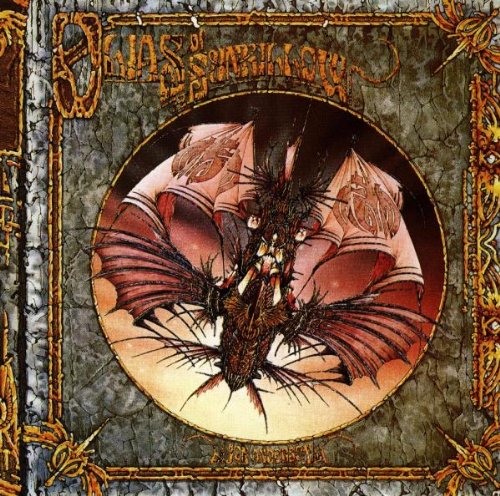
This genre of music, which is often tied up with fantasy and science fiction, is ripe for stories of aliens and interplanetary travel (although as we have seen, other genres go there, too.) And thus, we come to Jon Anderson’s Olias of Sunhillow, the Yes singer’s solo debut, released in 1976, after Yes released Relayer (an album that I have zero memory of) and before Going For The One (which I enjoyed more), during a period when the band’s members were all releasing solo albums. Wikipedia describes the album as telling:
the story of an alien race and their journey to a new world (the story printed in the LP jacket calls it "the earth", lowercase 'e') due to a volcanic catastrophe. Olias, the title character, is the chosen architect of the glider Moorglade Mover, which will be used to fly his people to their new home. Ranyart is the navigator for the glider, and Qoquaq (pronounced 'ko-quake') is the leader who unites the four tribes of Sunhillow to partake in the exodus.
Now, let me start off by saying that I like this album, and particularly the featured track, very much. Anderson is credited with all of the voices and instruments on the album, which took two years in conception, and 8 months of work, to record. There have long been rumors that Vangelis, who had unsuccessfully auditioned for Yes at that time, and who Anderson collaborated with, played some of the parts, but both men have denied this, and unless Devin Nunes has a memo to the contrary, I see no reason to dispute that (actually, if Nunes had such a memo, it might be more likely that I’d take a contrary position, but I’m going off the rails here).
If you want a chuckle, go ahead and read the whole elaborate story, which was printed on the inner album sleeve. And because most of you won’t buy the album, here’s a link to a website devoted to Olias of Sunhillow which contains the story, and more.
Meanwhile, it appears that Anderson has been working on a sequel to Olias since 2001, to be called The Songs of Zamran: Son of Olias, and as recently as 2014, Anderson confirmed that he is still working on it. Based on his comments over the years, it will be a multi-hour work, and possibly released as an app, including visuals. Here's a preview, from 2013. And why not, I say?
Leon Russell could have made our In Memoriam list this past year: he passed in November, age 74. I saw him once back in the 70s - must have been in Philly, just after I had arrived in the US of A. This would have been at the Spectrum, which has been through a number of name changes over the years.
I bring up the rather personal "just arrived in the US" because it leads into my choice for the Aliens theme. Now, I didn't fit the legal definition of an alien in the US, having been born with an American passport. But I had spent most of my first 15 years outside the US, so I certainly felt like an alien - I had virtually none of the prerequisite cultural references of my peers - except maybe music.
When I saw him back in the early 70s, it would have been about the time of Mad Dogs and Englishman. About the time that I heard him on Dave Mason's Alone Together - you know? the LP with the mad swirling vinyl? And then again in the Concert for Bangladesh. For 2-3 years, I followed him closely up until about the time of Carney - he was all over the musical charts, playing with anyone who was somebody.
So, while the song isn't about extraterrestrials, it is about being an alien. Well, actually, it's about seeing the world with a different, compassionate eye - and one that isn't all that pleased with what he sees.
Leaders take us far away from ecology With mythology and astrology Has got some words to say About the way we live today Why can't we learn to love each other It's time to turn a new face To the whole world wide human race
Stop the money chase Lay back, relax Get back on the human track Stop racing toward oblivion Oh, such a sad, sad state we're in And that's a thing
For me this was always the consummate Byrds track, given as it is one of the earliest outriders, 1966, for their later more overt country influences. Undoubtedly a yee-haw hayride of a tune, yet coupled with, literally, spaced out lyrics, it was ideal for the time; the Byrds still in their first flight of success, together with the race for the moon being in full pelt. Too 'and western' for the UK charts it bombed in my home-land, but did better at home, no little assistance coming from the phased psychedelia of the instrumental middle 8. Indeed it is still argued as to whether it was forerunner more of psychedelia or of country-rock. Both, say I.
The video represents it's first airing, on the Smother Brothers Show, with a 4 member band, the legendary rotating door of this band already in full swing. Whilst writer of the song and singer Jim (later Roger) McGuinn is clearly still present, along with Chris Hillman and Michael Clarke, on 12-string rickenbacker, bass and drums respectively, David Crosby is conspicuously absent for the first time. Especially as he was, arguably, the biggest space cadet and sci-fi freak in the band. And Gene Clark, in or out of the band depending on whether there was a plane trip expected, and who was nominally only a supporting musician for the recording, is there, pretending to play Crosby's guitar. It seems certain his is the key second voice in the harmony however, miming though they all are. A memorable tale from the time was that the band famously took out a million dollar insurance policy, with Lloyds of London, against being abducted by aliens. They didn't of course. And weren't. Although, with Jim to Roger, who's to say?
It remained a staple of live performances over the years, as members came and went, McGuinn the sole staple, but the style of the song fitting well with the directions driven by later members Gram Parsons and Clarence White. There is a nice video filmed in the desert featuring the former, but with the original recording still the one playing. Various reunions of the earlier line-up also featured it, as have various off-shoots of the original band, notably the equivalently ever changing Flying Burrito Brothers, who probably featured every other living Byrd, McGuinn apart, at some stage. McGuinn also trots it out at the drop of a hat, it often being the song chosen should he make a guest appearance, as he here does with Wilco.
Star Maker Machine does not accept music submissions from artists or promoters. However, most of the contributors here do accept submissions for our own blogs, listed below. Please visit our blogs, take the time to listen to what we post, and then feel free to contact us if you feel that your music would be a good fit.



























:format(jpeg):mode_rgb():quality(90)/discogs-images/R-4707642-1395932413-9078.jpeg.jpg)