Friday, May 11, 2018
May/Might: You Might As Well Pray
Jules Shear (w/ Amy Rigby): You Might As Well Pray
[purchase]
Jules Shear has had a pretty interesting life, for a musician who has never really become famous. He’s released more than 20 albums since 1976, most recently in 2017, as a solo artist and with others. He’s acknowledged as a top-notch songwriter, and has penned hits for Cyndi Lauper ("All Through the Night"), The Bangles ("If She Knew What She Wants") and has had written or co-written songs recorded by artists as diverse as Olivia Newton John, Iain Matthews, Aimee Mann, Art Garfunkel, Alison Moyet, and Roger McGuinn. He dated Aimee Mann, who wrote a song about their breakup. He’s worked with Todd Rundgren, Tony Levin, Elliot Easton, Rick Danko, Jimmy Vivino, Rod Argent, and Chuck Prophet, among many others. Shear was the inspiration for, and host of the first 13 episodes of MTV’s Unplugged. And yet, he is one of those musicians who have had a long career tarred by the phrase “critically acclaimed, but commercially unsuccessful.” Although I don’t know for sure, I’ll assume that Shear has been able to make financial go of it for all these years, but I bet it wasn’t always easy.
I remember seeing his second and third albums, as a member of Jules and the Polar Bears, released in 1978 and 1979, around the WPRB studios, but they made no musical impression on me. I have no recollection of having played them on the radio, but maybe the name was distinctive enough to stick in my brain. I’m also pretty sure that I don’t remember hearing any of Shear’s music until his 1998 album, Between Us. (I wasn’t watching MTV back when Unplugged was on). And I’m fairly certain that I heard songs from the album on WFUV.
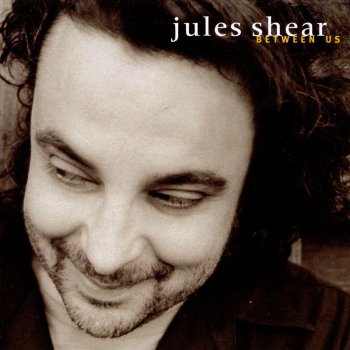
Between Us quickly became a family favorite. It is an album of 15 low-key duets between Shear and (mostly) female singers (and one instrumental duet with bassist Rob Wasserman). The songs are charming, interesting, and I remember listening to them in the car as my family sang along (and I kept my terrible voice quiet). Some of the highlights are his duet with Suzzy Roche (“On These Wheels Again”), complete with barking dog, “Who's Dreaming Who,” with Rosanne Cash, and “Betrayal Takes Two,” featuring Angie Hart (best known, I guess, as a member of Australian band Frente).
But another favorite from the album was his duet with Amy Rigby, the wistful “You Might As Well Pray.” I think that it is about a couple looking at the damage they have caused each other, yet hoping that just maybe, with divine intercession, they can work things out. I could be wrong, of course, because the lyrics are a bit vague, but as is common in a Jules Shear song, they are interesting and well chosen.
I’ve picked up a few of his albums over the years, both recorded before and after Between Us, and while I have enjoyed them, nothing of his has stuck with me as much as that album. It’s an interesting thing about music, isn’t it? As good an album as I think Between Us is, it is far from universally appreciated, even among Shear fans (and it doesn’t even appear to be available in downloadable form anywhere). But it was a combination of the music, and the time in my life when it came out, and the fact that my wife loved it (and still plays it from time to time), that has cemented it in my mind. With music, like comedy, sometimes timing is everything. There are times when I hear a song on the radio, and it does nothing for me, but it reminds me in some respects of stuff that I like, and I wonder if I might have felt different about the song if I had heard it, say, 20 years ago. Or conversely, whether music that I love would leave me cold if I heard if first today.
Posted by Jordan Becker at 8:30 AM View Comments
Labels: Aimee Mann, Amy Rigby, cyndi lauper, Jules Shear, May/Might, Roseanne Cash, Suzzy Roche, The Bangles
Friday, May 4, 2018
Punk: Proto-Punk - Velvet Underground
purchase [Velvet Underground ]
The second group of 10 albums I owned included Janis Ian's '68 record, <The Secret Life of J. Eddy Fink> and the Velvet Underground's '69 <The Velvet Underground>.
At that time I had a mentor who directed my music selections and was ahead of his time - he also turned me on to Hendrix at about this time ('69)
I was certainly aware that these musicians were outside the mainstream (that would have been the first 10 albums I bought: Sgt Peppers, Between the Buttons, Smokey Robinson, Simon and Garfunkle..).
To me, the Velvet Underground had something meaningful to say - something beyond "corn flakes floating in a bowl" - lyrics that gave pause, music that made you sit up and listen. Something like what Elvis Costello had to say 20 years later.
It seems like I was listening to "proto-punk" without realizing it. Of course, that nomenclature only came about after the fact. Back then, it was a reaction to main-stream rock.
The general perception of Punk is <hard driving>, but I think that isn't a given: take a listen to this anti-most and see if it fits the "proto-punk" genre.
Posted by KKafa at 2:17 PM View Comments
Labels: Proto-Punk, Punk, Velvet Underground
Thursday, May 3, 2018
Punk: Punky Reggae Party
Bob Marley & The Wailers: Punky Reggae Party
[purchase]
On the one hand, punk music and reggae don’t appear to have much in common musically—one is hard, fast, aggressive, and loud, the other, more laid back, slower, and mellow. I think that it is fair to point out that both styles arose as music of angry, rebellious, disaffected youth, making their philosophical connections more obvious than their musical connections. And yet we know that there has been a strong merger of the two styles, by bands like The Clash, the Two Tone bands, and in the ska-punk genre.
So, how did this marriage get arranged? Not having a clue, I turned to Google, which served me up this article that makes the case that the matchmaker was Don Letts.
Letts was born in England, of Jamaican heritage, and ran a London clothing store popular with musicians from both the punk and reggae scenes. He was able to meet Bob Marley after a gig, and they became friendly. When the Roxy nightclub opened, catering to the emerging punk scene, Letts became the DJ, and began to spin reggae and dub songs, along with punk music, in large part because the scene was so new, there weren’t that many punk records to play. Apparently, the punks enjoyed the music, including Joe Strummer of The Clash, and members of The Slits and The Sex Pistols.
Meanwhile, Letts convinced Marley, who appeared to have a negative feeling about punk based on sensationalist tabloid newspaper articles rather than from actually listening to the music, that it was worthwhile. According to Letts, he went to collect some money from Marley, dressed in punk bondage clothing, and Marley mocked him, to which Letts responded, “They ain't no crazy baldheads, they're my breddrin.” Shortly thereafter, inspired by the message and the music of punk rock (and by The Clash’s cover of the reggae song “Police and Thieves”), Marley wrote “Punky Reggae Party,” which referenced punk and New Wave, and namechecked The Clash, The Jam, The Damned, Dr. Feelgood (really more of a pub rock than a punk band, but whatever), as well as The Wailers and The Maytals. But even more importantly, Marley makes sure to point out that while all of those musicians would be at the party, “no boring old farts will be there.”
Letts went on to a career as a musician, most notably as a member, along with former Clash member Mick Jones, of Big Audio Dynamite, which mixed many genres of music, including punk and reggae where his role was, mostly, to supply audio samples to the songs. But he is best known as a filmmaker and video producer.
And the punk and reggae marriage remains strong to this day.
Posted by Jordan Becker at 8:00 AM View Comments
Labels: big audio dynamite, Bob Marley, Don Letts, Dr. Feelgood, Joe Strummer, Mick Jones, Punk, Rancid, The Clash, The Damned, The Jam, The Sex Pistols, the Slits, The Wailers, Toots and the Maytals, Two Tone Ska
Saturday, April 28, 2018
PUNK: WHITE PUNKS ON DOPE/THE TUBES
There is a programme on UK television called QI, a comedic panel show where guests have to respond to clues with explanations, which, if falling too far within cliche or to fulfil urban mythology, it causes a klaxon to blare. (Yeah, I'm selling it, aren't I but here's the gist.) Anyhoo, for me to answer this theme with this song would surely fire that klaxon. But who cares, it's a great slab of cheesey kitsch and I love it. I even bought the single. Of course, it has nothing to do with punk in the later better received sense of the word, no spiky cuts and spitting, being very much an amalgam of poodle rock and near Jim Steinman grand guignol. The punk reference is more hollywood american, c'mon, punk, make my day, cataloguing the nonsenses when rich kids go slumming in L.A. dives in the search of sex, drugs and rock and roll. I recall the video, all grotesques on enormo-heels, or were they stilts, and with huuuuuuge hair. Staying up late by myself, watching Whistle Test, it certainly rattled my enthusiasms for living a life more wasted. I didn't, needless to say, but I could dream.
The Tubes didn't really, for me, ever have much else up their sleeve. OK, they made a slew of discs and were able to notch up different Greatest Hits collections on different labels. I suspect hit was maybe a loose description, or thought so until I checked. They seem to have shifted a ton of product in those hinter years pre (real) punk, either in the Ramones/Blondie CBGBs sense or the Clash/Pistols british "invasion" sense of the word, as adult oriented rock was running out of ideas. (I know, this is rose-tinted whimsy; did punk ever mean for much on your side of the pond, other than for media frenzied s(c)h(l)ock-rock portrayals? ) I know I bought one of those hits compilations, played it once and never needed to bother my ears with it again, but the single, both sides, I kept on playing. Remarkably, neither song featured on that hits collection. (Actually, thinking back, I have a sneaking there were two songs on the flip, but I only remember one, another right up there stone cold classic. And of course I'm going to give it you.)
Wow, I just read their wiki page. They really were huge, weren't they? And I could have seen them only last year, supporting fellow ghoul Alice Cooper, a match made in purgatory, on their/his tour of Europe last year. And front focus Fee Waybill, one of the great, possiblynothisreal, names in the industry, still at the helm. No, I couldn't and wouldn't. And didn't. I caught Cooper in about 1984 and he was already older than the collective combined of the audience; seeing kids singing along to 'I'm Eighteen', a song they weren't even born as Alice first sang it. I digress. So, back to the Tubes, and as they grew into any number of images, wretchedly they failed then and now to catch my enthusiasm. Hell, they didn't need to. Why spoil my reality with the truth? I'm off to play my vinyl. Loud.
And, for a change, I really do want you to get that single, for only 75p of my money. And there were/are three songs.
Posted by Seuras Og at 7:29 AM View Comments
Labels: Punk, The Tubes, White Punks on Dope
Friday, April 27, 2018
Punk: Radio, Radio
purchase [Radio, Radio]
I'm not particular about the genre of music I pick - kind of the opposite of the Ry Cooder line, "I used to be particular ...". And I can generally classify what I hear as being in one or another of several major categories, but there are some labels that seem arbitrary: Pop-Rock? Folk-Rock? Where do you place Springsteen? And does it matter?
I confess I never really <subscribed> to punk. Maybe it's the connotations I ascribe to the word: "punk" sounds pejorative for some reason. If you had asked me a week ago, "Do you like punk?" I would likely have said, "Not especially. Never really paid it much attention."
Checking out one online list of all time best punk hits, I see that there are many that I (inadvertently) enjoyed without having them labeled as punk.
There are equally many bands in that top list that I never (wrongfully) paid much attention to: the Sex Pistols, Blondie, the Ramones ... all certainly known to me (as in "they exist and make profitable music") but I still couldn't tell you much about them.
But among that top <punk> hits list I was working off, one stuck out partly because I had never pegged the band as punk (but as a result of this awareness, can now sort of profess a better sense of what is punk/what punk is)... and that is Elvis. Costello, that is.
His outre look -a sort of <I don't give much of a f*** about what you think I look like... my lyrics are my lyrics and make of them what you will>...and music that may come across as discordant (but isn't). I think that partially describes the punk genre.
And I love/loved Elvis. The lyrics always seemed to vie with the best (as in Bob Dylan). The music? - not at all as monotonous as your standard I-IV-V. And catchy - many of the Costello songs got stuck inside my head to the point that they "ran" all night through my sleep. Kept me away going round and round.
Posted by KKafa at 1:36 PM View Comments
Labels: Elvis Costello, Paul McCartney, Penny Lane, Punk, radio
Thursday, April 26, 2018
Punk: Fly The Flag
Stiff Little Fingers: Fly The Flag
[purchase]
It is a complete coincidence that our Punk theme follows our Jokes, Pranks & Fools theme, since one of the meanings of being punked is being the victim of a prank. Although people may go there, I suspect that most of the posts over the next couple of weeks will be about punk music (or songs with the word in the title).
As I think I’ve mentioned somewhere before, when I showed up in college in 1978, I had begun to dip my toes into “New Wave” music, but found “punk” music, such as The Ramones and The Sex Pistols, to be basically unlistenable. It didn’t take too much time working at WPRB before I did a full 180 on that, and began to appreciate much of what is called punk. That being said, my tastes have always leaned toward punk bands that could write good tunes, and still have problems with some of the more hardcore bands that sound like a bunch of screaming. But that’s me.
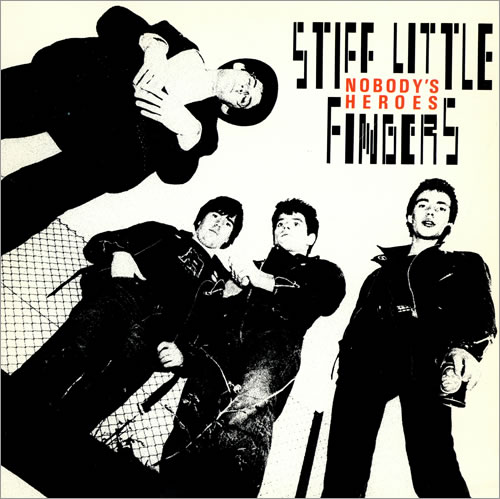
Stiff Little Fingers was a band that I fell hard for, and fast. My introduction to them was their second album, Nobody’s Heroes, which came out in 1980. It was only later that I discovered their excellent debut album, Inflammable Material, and the song that vaulted them to prominence, “Alternative Ulster.” It was clear that SLF were a political band—the first album was mostly about the “Troubles” in their native Belfast, and I learned, much later, that the advance that they got from Chrysalis Records before recording Nobody’s Heroes allowed most of the members to flee to the relative safety of London.
“Fly The Flag” was the song that stuck out to me then, and I still like it today, despite the fact that it doesn’t seem to be one that gets mentioned much in discussions of the band or its music (and it doesn’t even make some of their “best of” collections, which is crazy). It is anthemic and stirring, but its energy, and singer Jake Burns’ gruff vocals, place it clearly in the punk style. The song is also, from start to finish, sarcastic. It appears to be sung from the viewpoint of an ultra-conservative super patriot, similar to the rhetoric advanced by the fascist National Front in Britain at the time. But because the message of the song seemed so contrary to the band’s other music, it was clear that they were mocking that position, not supporting it. (You had to be careful, because other punks at the time did support racist and nationalist policies). If anything was a giveaway, though, it was the repeated “gimme gimmes” that made it clear that they were pointing out the selfishness of the ostensible narrator and his ilk.
Burns has written that the song was a response to the Thatcher generation, and “the whole ‘me, me, me’ attitude and the naked greed that was around at the time.” But he was horrified when National Front supporters took the song at face value.
When I started writing this, I just wanted to discuss a band that I haven’t written about, and a song that I like. But when I listened to it again, it struck me that it works today (with a minor change of venue) as a satire of Trumpism, with its cruel anti-immigrant and nativist sentiment, its greedy social Darwinism, and mocking of the “helpless.” I mean, here are just some of the lyrics:
Gimme a nation where people are free
Free to do and free to be
Free to screw you before you screw me
And
Gimme a Britain that's got back the Great
A race of winners not cramped by the State
And only the helpless get left at the gate.
SLF put out an excellent live album and another studio album, both of which I played the crap out of on the radio. They released one more studio album in late 1982, which I have no recollection of, before disbanding. They reformed in the late 1980s, with former Jam bassist Bruce Foxton replacing original member Ali McMordie, and have put out albums and toured, with some lineup changes, on and off since then. I admit to not being aware of any of this music.
Posted by Jordan Becker at 9:00 AM View Comments
Labels: Punk, Stiff Little Fingers, The Jam
Saturday, April 21, 2018
Jokes, Pranks & Fools: What A Fool ...
purchase [What a Fool ..]
Fools abound. Make your pick.
Your perception of the fool may range from the benign to the malevolent - no names mentioned.
Praise be, you have a wide selection to choose from. You can start at the low end of the chart with your least favorite SMM blogger or move all the way up to your least favorite Tweeter - your choice. Especially in the Internet age -the fool just types away - often without considering th repercussuions. Once done, your foolishness might as well be everywhere.
My choice of the Doobie Brothers. .. Doobie... a what?
I wonder if I would have chosen that as my band's name? Maybe so? Maybe not. Maybe they wanted to make a statement 40+ years ago. Maybe they weren't such a bunch of fools,because they saw the future of the doobie.
Heck .. I don't know ... but doobie people are generally portryed as ... well ... fools who are wasting their lives.
But compared to you and me, Jeff Baxter, Michael McDonald, Kenny Loggins and the rest wouldn't be portayed as wasting their lives away - doobies aside or not.
Song written by M McDonald and K Loggins.
Posted by KKafa at 2:32 PM View Comments
Labels: jokes pranks & fools, The Doobie Brothers
Tuesday, April 17, 2018
JOKES, PRANKS & FOOLS : I STARTED A JOKE
It is astonishing to believe the video above and the one below are the same singer, separated, as they are, by nearly three decades. And more so that the first one represented the band, the Bee Gees, then already in their first stride, a full decade before they became near ubiquitous for disco falsettos and windblown hair. In this, their first heyday, they were producing intelligent and sensitive ballads, often, as this, with quirky lyrics that actually are worthy of some thought. Perhaps also astonishing is the fact that the 2nd clip (below), is itself already two decades old, the band now well into their post Saturday night Fever zeitgeist, able to call on songs from all their careers. Now I am no fan of their 70s fame and fortune, only with the passage of enough time able and willing to admit I was a fan of theirs, as a boy, in the 60s. Indeed, I remember singing this very song, into a hairbrush, standing on my bed, for the benefit of my cohort of fellow school chums. (Yup, dormitory days in the UK private school system.......) Robin Gibb, for it is he, was always my top Bee Gee. He always seemed to have a little more grit than his brothers Barry and Maurice, escaping them for a brief moment in '69 through '70, with his solo hit, 'Saved by the Bell', another part of my youthful repertoire.
Posted by Seuras Og at 11:05 AM View Comments
Labels: Faith No More, I Started a Joke, jokes pranks & fools, Low, Robin Gibb, The Beautiful South, The Bee Gees, The Heebeegeebees
Thursday, April 12, 2018
Jokes, Pranks & Fools: Fooled Around And Fell In Love
Elvin Bishop: Fooled Around And Fell In Love
[purchase]
I really wanted to write about a prank, but the only two musical pranks that I could think of were “Paul is Dead,” which would require essentially regurgitating the stuff that I linked to in this, and “Rickrolling,” which I really don’t find interesting. I also thought about going to the Monty Python well again, but decided against it. But this is a good song, by an artist that I’ve never written about, so here we go.
Elvin Bishop has had a long career as a blues guitarist, after he decided not to finish his degree in physics at the University of Chicago and join the Paul Butterfield Blues Band in 1963. He formed his own band in the 70s, and had a minor hit with the song “Travelin’ Shoes,” from an album on the Allman Brothers’ label, Capricorn Records, that featured contributions from Dickey Betts, Charlie Daniels, and Sly Stone, among others. The follow up to that album was almost finished, but the producer said that they needed one more song. Bishop suggested “Fooled Around And Fell In Love,” but they were all unhappy with the way Bishop’s vocals sounded. In all of the interviews that I’ve read about the song, Bishop is incredibly self-deprecating about his voice, which he considers to be average, at best—although he believes that this has forced him to write better songs.
Bishop suggested that his backup singer, Mickey Thomas, who he acknowledged had an incredible voice, give it a whirl, and rock and roll history was made. “Fooled Around” was a #3 hit on the Billboard charts, and has been a staple on FM radio, and on soundtracks, maybe most notably Guardians of the Galaxy. It is also regularly covered.
After that, Mickey Thomas left Bishop’s band, tried some solo work, and became the lead singer of Jefferson Starship, recording one pretty good album, and a series of less good albums, ultimately (after litigation) dropping the “Jefferson” and recording something that is regularly on lists of the worst song ever recorded. (My Cover Me piece here links to a couple of such lists). Interestingly, the drummer on “Fooled Around,” Donny Baldwin, later also joined Jefferson Starship, but in 1989, in Scranton, PA, he attacked Thomas, who needed reconstructive surgery. Attacking your lead singer is generally a bad idea, and Baldwin was fired, but as history has shown, the Airplane/Starship revolving door is always turning, and Baldwin rejoined a Mickey Thomas-less version of the band in 2008.
Bishop, on the other hand, returned to the relative obscurity of the blues world, continuing to record and tour both as a leader and sideman. When he performs the song these days, he either does it as an instrumental, or with his background singers stepping forward—and occasionally with Thomas. (who also performed the song with Starship). He’s had a couple of Grammy nominations, in the Best Traditional Blues Album category, losing out to B.B. King and The Rolling Stones (no shame there), and is in the Rock and Roll Hall of Fame, as a member of the Paul Butterfield Blues Band. And, one can assume, Bishop continues to cash royalty checks for “Fooled Around,” demonstrating that he is nobody’s fool.
Posted by Jordan Becker at 9:00 AM View Comments
Labels: elvin bishop, Jefferson Starship, jokes pranks & fools, Mickey Thomas, Paul Butterfield
Tuesday, April 10, 2018
JOKES, PRANKS & FOOLS: FOOL (IF YOU THINK IT OVER)/Chris Rea
And, indeed, those who bought this as a single, in it's first incarnation, in 1978, could indeed be deemed as potential fools if they then thought the tousle-haired soul-lite balladeer would still be at it a full 40 years later. Number 12 in the U.S. Billboard chart that year, with 3 weeks at the top of the (do they still call it that) Adult Contemporary Chart, bagging a grammy the following year. That was his peak stateside, but he has gone on to have a number of careers in different markets, different genres even, as the years have rolled by. Ironically, for what he states is still his only song not performed on the guitar, he was pitched headlong into the Elton John/Billy Joel marketplace, a place he has never quite fitted. When the next 2 or 3 albums flopped, he was dropped.
Not that you could tell from the featured song, his first love was actually the blues, the real delta bottleneck variety, Charlie Patton through Howlin' Wolf. Born in Middlesborough, in England's industrial north east, his first band was alongside later rock screecher David Coverdale. Rea only began to sing when the singer failed to show for a gig. In some debt to his record company, he then had a surprise hit in europe, I Can Hear Your Heart Beat, which displays his gradual transition into a (slightly) rockier style, albeit with a retained pop sensibility. Building on this momentum, he then toured constantly, gaining an especially big fanbase in Germany. His home country took a few years yet to catch his drift, with 1985's Shamrock Diaries, which broke him on the back of the success of the song Stainsby Girls, a paean to the girls, his wife included, of his (Stainsby, north Derbyshire) youth. This is where I first caught sight of him, and remains my favourite of his songs. This album, and the next 2 each sold over a million and, buoyed by a run of further hit singles, finally allowed him to repay his initial advance to the record company of 10 years earlier.
It took his next album, New Light Through Old Windows, to break him back into the U.S. market. Then a relatively unusual step, now much more commonplace, this was the trick of re-reording and reprising his back-catalogue, principally the hits, thus gaining control of his own songbook. The 2nd version of Fool, above, is lifted from that and, whilst broadly similar, shows the more gravelly tones he is now more recognised by, with a little more oomph in the rhythm track. Singles found themselves back in the Adult Contemporary and, yay, finally the Rock Mainstream charts. (Who defines these genres?)
For several years he could do no wrong, albeit still a greater pull in Europe and the U.K., each record getting greater sales and accolade until the early to mid 90s. Whilst The Road to Hell gave him his biggest hit in 1989, an ill-conceived Part 2 a decade later, signed the end of this second wind. This was an unexpected foray into sax'n'electronica . The less said.
In 2001 he was diagnosed with pancreatic cancer, an illness with a dire reputation that is generally well onto the killing of you before its discovery. He was lucky, caught early he had a Whipple's procedure, massive surgery to remove the pancreas and much of the gut, transforming you instantly into being dependent both on insulin and the need to take extra digestive enzymes to manage any sort of normal diet. Promising himself that, should he survive, he would espouse his more commercial persona and return to his blues roots, this is exactly what he has done. Setting up his own label and distribution, and often a sidesman and/or producer, allowing other musicians the limelight, he released a number of largely instrumental albums. building up to his major opus of 2005, Blue Guitars, an 11(!!) cd set featuring 137 tracks. Each disc covered a separate theme, to include Chicago blues, Texas blues, electric Memphis blues, country blues etc etc. (The featured selection is from electric Memphis blues. He also painted the cover.
Since then he has produced further and similarly ambitious pieces and tried to get back on the road, albeit dogged by poor health, suffering a stroke in 2016. At the time of writing his last tour remains unfinished, an onstage collapse in December 2017 possibly calling an end to any such further plans. But with all his luck, good and bad, you'd be a fool if you thought him over.......
Fill yer boots.......
Posted by Seuras Og at 5:48 AM View Comments
Labels: Chris Rea, Fool (if you think it over), jokes pranks & fools
Sunday, April 8, 2018
Steps and Stairs: "No Stairway. Denied!"
So, wait: we're doing a "steps and stairs" themed set here and no one's gonna talk about the most obvious choice there is? Led Zeppelin's "Stairway to Heaven"?
Yeah, I get it--I wouldn't write about it, either. Given that the song is one of the biggest epics in the history of rock 'n roll, and growing up I think I heard it more than any other song, by many, many listens, it's odd that "Stairway" has such an odious reputation.
Perhaps, as this great piece from GQ elucidates, we all hate "Stairway" because, like "Smoke on the Water", "Back in Black" or "Iron Man", it's the first song anyone learns to play and thus, not only did rock radio run the track on a near non-stop loop, every kid we've ever known who plays the guitar started by playing "Stairway" (well, the opening riff, at least). And made you listen as he fumbled and plucked his way through it. Over and over.
Or maybe, we just got tired of it, despite Led Zeppelin's best efforts to keep their music from being overexposed and overused. Zeppelin are famous for refusing licensing of their music, and from what I can recall, Cameron Crowe's Almost Famous and Jack Black's School Of Rock are but a tiny handful of films to feature a Zep tune. I suppose it's a question of integrity. Which is fine. Nothing wrong with trying to preserve the sacred in your artwork. This makes sense when you think about this: perhaps the band's greatest, or at least most monumental song is also their most maligned. I mean, we haven't reached "Mmmmbop" or "Boyfriend" levels of hatred, but if there is one joke about Led Zeppelin that persists, it's the "No Stairway" one. I know growing up, it was an absolute staple of the FM rock stations I listened to, and I easily heard it once a day, for many years in a row. So, Led Zeppelin has tried to maintain some control where they can. The surviving band members charge a lot of money to use their songs in movies (somewhere in the seven figures), if they relent at all, and have only recently been loosening up and allowing their music to be used. Hence, the famous little easter egg story of where I took the title of this post from: when Wayne goes to play "Stairway" in a scene from Wayne's World, the filmmakers were not allowed to use the actual song. They were allowed to use about three notes before they were in violation of the copyright, so what Wayne (Mike Myers) actually plays is in no way "Stairway." Yet, the scene illustrates the point: people love the song, but never really want to hear it again.
But, what I find funny is this: for as much ill will that "Stairway" generates, it really is epic--I'd bet it's often the first "blow your mind" rock track young kids hear, and I'd bet on the odds that "Stairway" has been a stadium's worth of fans gateway song to a lifetime of rock music addiction. And it has the power and the majesty to continue to amaze those who are just coming to rock music. So, like anything we love and overuse, "Stairway to Heaven" will always be a song whose value and worth remain high, though the song itself will maintain a quiet presence. Dust it off every few years, but for the most part, let it rest.
Posted by Andy La Raygun at 12:59 AM View Comments
Labels: Led Zeppelin, Stairway to Heaven, Steps and stairs, Wayne's World
Thursday, April 5, 2018
Steps & Stairs: Nitty Gritty Dirt Band - One Step Over the Line
purchase [One Step Over the Line]
<One Step Over the Line> is not to be confused with the better known <One Toke Over the Line> despite the fact that the syllabication and hence - to some extent the application to a musical format -is pretty similar.
The latter by Brewer and Shipley, the former by John Hiatt.
But the choice for the theme is John Hiatt (and Rosanne Cash) performing with the Nitty Gritty Dirt Band.
The Dirt Band first appeared mid 60's doing Mr Bojangles among other pieces. And then they sort of faded into the background until they came back with their <Will the Circle Be Unbroken> albums, the 2nd of which includes this piece.
I read somewhere that the Nitty Gritty Dirt Band was the group that made country music appeal to rock music fans.
That's certainly true for me (although I do like Country music of a certain style with or without the Dirt Band).
This song seems to appear most often with a female backup vocal. Rightly so. John Hiatt has an inimitable style, but his crooning improves with a female side-kick on vocals.
Posted by KKafa at 11:50 AM View Comments
Labels: John Hiatt, Nitty Gritty Dirt Band, Steps & Stairs
Wednesday, April 4, 2018
Steps & Stairs: Steppin’ Out
Joe Jackson: Steppin’ Out
[purchase]
When Joe Jackson released his debut album, Look Sharp! in 1979, he was usually lumped in with Elvis Costello and Graham Parker as “angry young men,” and that comparison was not terrible, at the time. And while Look Sharp! and it’s similar successor, I’m The Man were filled with intense, uptempo rockers that fit with the narrative of the emerging New Wave style, there were hints that there was more to Jackson, that his musical palette was broader.
What I certainly didn’t know at the time was that Jackson had been, from his youth, a multi-instrumentalist, a lover of classical music, jazz and progressive rock, and had studied composition at the Royal Academy of Music in London, on scholarship. (Also, his first name is really David). Or that he was in a band named, variously, Edward Bear, Edwin Bear, and Arms and Legs, before becoming the pianist and musical director at the Playboy Club in Portsmouth.
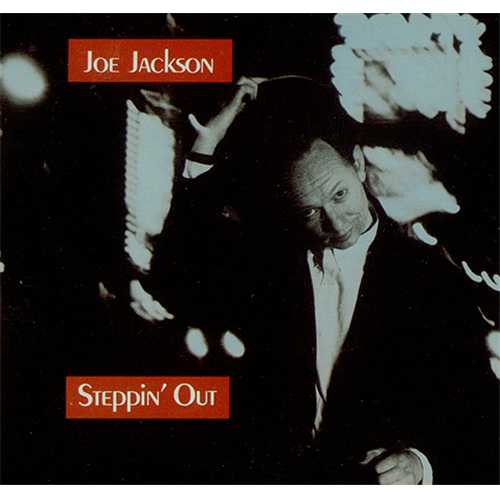
Beat Crazy, Jackson’s third album, began to meld more styles, including reggae, dub, and soul to the formula, and it was followed, seemingly out of nowhere, by the swing and jump blues cover set, Jumpin’ Jive. By this time, it was clear that Jackson could no longer be pigeonholed. But when he released the Cole Porter and Gershwin influenced Night and Day, filled with Latin and other decidedly not-New Wave rhythms and sounds, it was a bit of a sensation. The album went high on the charts, and the first single, “Steppin’ Out,” a sleek, synth and piano driven tune about, yes, going out, promoted by a modern-day Cinderella themed video, was also a hit.
Whenever we hear it, or even when it is discussed, my wife says, “I love that song.” Because, she does. The album was released as we were graduating from college in 1982, and not only was it on the radio and on MTV all of the time, it was a time when she, and most of us music lovers, still listened to whole albums, and this whole album was filled with good music. So, I’m guessing that my wife heard “Stepping Out” approximately a zillion times over the next year or so, and maybe a gazillion times since then. And that’s OK, because it is an excellent song.
Jackson has continued his eclecticism, releasing albums that would be generally considered to be rock, soul, jazz, classical, pop, New Wave(ish), and has written soundtracks, to mixed reviews since Night and Day (even releasing a sequel to that album). It is fair to say, though, that Night and Day and “Stepping Out” represented Jackson’s commercial peak. The song is, because of its appeal to both fans of rock, and fans of less manic music, likely to remain part of the “classic rock” pantheon as long as there is such a thing.
Posted by Jordan Becker at 9:00 AM View Comments
Labels: Joe Jackson, Steps & Stairs
Friday, March 30, 2018
Steps & Stairs: Springsteen/Into the Fire
purchase [The Rising]
I recently read a poignant piece about fire-fighters ( The Perfect Fire) in which stairs played a major role. Obviously, a lot of the work of firefighters involves stairs, multiple flights of stairs in dark, smokey and deathly conditions. Granted, they are trained for these conditions, but there are always surprises and the job isn't one most people would likely choose off hand.
The article covers the story a multistory fire in Worcester, MA back in '99.
In a large multistory building, it's pretty crucial that the firemen keep precise track of their location. They've got tools: GPS locators, "squawkers" that emit sounds and live wireless/walkie-talkies as well as a lot of primitive [Hagar the Horrible] tools.
But sometimes that whole collection isn't enough.
When a fireball comes at you, none of the above may suffice to save you on its own. And so, sadly, in the case of [The Perfect Fire] - a more or less abandoned warehouse.
Fire-fighters may be the epitome of the working "man" - a thankless job without which society would be more or less paralyzed - kind of like the McDonald's employee? And Springsteen has always been a man pretty much in tune with the working man. He has sung <Factory>, <Working on the Highway>, <Jack of All Trades> ...
<Into the Fire>, from Springsteen's 2002 album The Rising is an anthem about these heroes. The album has been widely ID'ed as Springsteen's "response" to 9/11, with songs titled <Empty Sky> and <City of Ruins>, the claim seems pretty obvious. But there is much more than "the people who put out fires" in his lyrics and equally in his voice:
It's a song about sacrifice.
If I am not reading too much into the song, there's also a cross-over between an actual fire and the emotional/physical fire some may feel from some kinds of love - Love can burn and empower at the same time. Although not explicitly stated in the lyrics, it seems pretty clear that the fire-fighter referenced is a woman.
He sings:
It was dark, too dark to see, you held me in the light you gave
You lay your hand on me
Then walked into the darkness of your smoky grave
Somewhere up the stairs into the fire
Posted by KKafa at 10:49 AM View Comments
Labels: Bruce Springsteen, Steps & Stairs
Wednesday, March 28, 2018
Steps & Stairs: Gimme Three Steps
Lynyrd Skynyrd: Gimme Three Steps
[purchase]
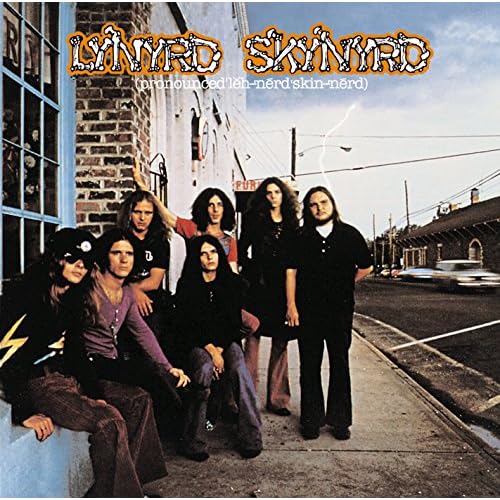
A few years back, I wrote a piece for Cover Me that was timed to run on the anniversary of the plane crash that killed three members of Lynyrd Skynyrd, Ronnie Van Zant, Steve Gaines, and his sister Cassie Gaines, along with the pilot, co-pilot and the band’s assistant road manager. The rest of the band, manager and crew all suffered serious injuries. I melded the blog’s In Memoriam series with a Full Album treatment, focusing on the band’s debut, Pronounced ‘Lĕh-‘nérd ‘Skin-‘nérd. One of the things that struck me as I was writing it was that a number of the songs were drawn from the remarkably colorful life of singer Ronnie Van Zant, including “I Ain’t The One,” meaning “the father,” "Tuesday's Gone," about the change in his life following a major label deal, and, most amusingly, “Gimme Three Steps.”
The song recounts a true incident when Van Zant used a fake ID to enter a bar in Jacksonville, Florida and made the mistake of dancing with another man’s wife or girlfriend. When the aggrieved gentleman appeared to be reaching for a gun, Van Zant told him: "If you're going to shoot me it's going to be in the ass or the elbows... just gimme a few steps and I'll be gone." He ran out of the bar and back to the truck where his bandmates Gary Rossington and Allen Collins were waiting. They reportedly wrote the song that day, possibly in the truck. It is unclear whether that bar was The West Tavern, later known as the Pastime, or another bar called The Little Brown Jug, whose name conveniently allowed them to rhyme it with “cutting the rug,” but it hardly matters. In addition to being a great tune, what makes the song a classic is Van Zant’s presence of mind to ask for a head start, then beating a hasty, panicked retreat when circumstances resulted in his getting that lead preventing him from getting shot. Because, if nothing else, if he had been killed in that bar, not only wouldn’t we have “Gimme Three Steps,” but the last song on Pronounced would never have been recorded, and concertgoers would have nothing stupid to yell out.
If you have read any of my stuff here, there, or there, you know that I’m a huge fan of the Drive-By Truckers, and the album that broke them to a wider audience, Southern Rock Opera, is filled with Skynyrd references and allusions. They’ve even been known to work a little “Gimme” into one of their songs, live. And here’s something I just found, a Village Voice article from 2002 about the Truckers, after the release of Southern Rock Opera, entitled "Gimme Three Stepsisters," which gets into some of the Skynyrd stuff. (Not a bad article, despite getting the drummer’s name wrong).
And, if you read my stuff here, there or there, you also know that I’m a big fan of Uncle Tupelo (and the bands that formed from its demise). Their last gig ever ended with a sloppy cover of “Gimme Three Steps” featuring Bottle Rockets singer (and former Uncle Tupelo roadie), Brian Henneman, on lead vocals.
Posted by Jordan Becker at 9:00 AM View Comments
Labels: Bottle Rockets, Drive-By Truckers, lynyrd skynyrd, Ronnie Van Zant, Son Volt, Steps & Stairs, Uncle Tupelo, wilco
Monday, March 26, 2018
STEPS & STAIRS: ONE STEP FORWARD/Desert Rose Band
Unlike esteemed colleague Darius, I have no such qualms about steps over stairs, enjoying the smorgasbord of songs available. Many refer to the concept of going forward only then to go back a greater distance. (Indeed, as I scribble I wonder as to whether any reference the opposite journey?) This is one of my favourites, which might conceivably also reference the career of it's author, the mercurial Chris Hillman.
Hillman has had a long and still unfinished career, starting off in bluegrass as a Scottsville Squirrel Barker, before being head-hunted to join the Hillmen, which featured later country star, Vern Gosdin. His instrument of choice was then mandolin, and early namechecks have him as Chris Hardin, a fiction to conceal his being to young to be in the sort of venues they made their living in. So far two steps forward, until, in 1965, a massive leap ahead into the Byrds. Now toting bass guitar, albeit probably not playing on their worldwide breakthrough smash, he was undoubtedly major league.
(Indulge me for the contrivance of a reprise of this song, used merely for the caption which calls it Mr Spaceman Quickstep. And, ha, by the Birds!)
After six albums with them, gradually introducing the country influences he had ingrained in him, magnified by the short sojourn of Gram Parsons, there came his, arguably first step back, although aficionados like me might cite the opposite. In the hiatus around a projected tour of South Africa, first Parsons and then, swiftly, Hillman peeled off into The Flying Burrito Brothers, a full blown headfirst immersion in the country music tropes the Byrds were now starting to more fully embrace. As main co-writer with Parsons, the Burritos had a golden period of doing no wrong, if earning little money or acclaim at the time.
(On the Line can suggest he was now back where he started?) A couple of solo records and the lure of the old band again became strong, with a trio of he, (Roger) McGuinn and (Gene) Clark, ex-Byrds all, and then just he and McGuinn touring and putting out a record as the membership further tumbled. Overall still heading backward, I feel.
After further solo records, which introduced the now longstanding musical kinship with ex-Dillard Herb Pederson, before 1987 saw the definite several steps forward Desert Rose Band. Definitely now country more than country rock, let alone rock, with seven albums and a slew of singles all hitting country pay dirt. The band lasted until 1994, but has stood a reunion in 2008. Most of the intervening and subsequent years have seen Hillman take a largely quieter background role, popping up infrequently as a solo artist, in tandem with Pederson, or guesting on the albums of others. However there was still an acronym ready and waiting in the wings, the fully bluegrass Rice, Rice, Hillman & Pederson, who had some brief success.
(Again, this song title enables you to draw your own conclusions as to where on the road he now was. Actually I feel this has weathered perhaps better than the earlier DRB, on account of the clunky rhythm section production, so 80s/90s, on the latter.)
Nearly up to date, to all intents and purposes it seemed Hillman had retired. He has said as such himself. But it seemed, and I apologise, he was only Biding (his) Time, as a surprise invitation came from Tom Petty to do a record for him, duly released last year and pretty damn good it was too, a definite step forward from wherever he had been lurking. Sadly the death of Petty may have put future work out of range, but we shall see.
You can read more about Hillman's glory days in the Burrito's, if such, in this excellent book, co-written by Hillman, with John Einarson. In many ways Hillman might fill the description, apropos George Harrison's role in the Beatles, as the "quiet" Byrd. Never as much a self-publicist as others in the band he has quietly got on with letting his writing, his singing and his musicianship talk for him. Long may he step.
Way more than twelve steps here
Posted by Seuras Og at 8:10 AM View Comments
Labels: Chris Hillman, Desert Rose Band, Herb Pederson, Manassas, One Step Forward, RRH&P, Souther Hillman Furay Band, Steps & Stairs, The Byrds, The Flying Burrito Brothers
Sunday, March 25, 2018
Steps & Stairs: Room at the Top of the Stairs
Ralph Stanley: Room at the Top of the Stairs
[purchase]
I have to admit that the announcement of our new theme did not bring any songs immediately to mind. I was being stubborn, I suppose, wanting to focus on the “stairs” part. The word “steps” has many metaphorical meanings that have nothing to do with stairs, and therefore gives us an out for this theme. But I had to do things the hard way. So, stairs it is.
I might have known that the notion of a room at the top of the stairs would appeal to country song writers. It suggests a gloomy attic, and begs the question of why anyone would be found there. Both Eddie Rabbit and Cal Smith, in separate songs with this title, find this hidden room to be the perfect location for an affair. But Ralph Stanley has this third song with the same title, and he sees the room as a refuge from a world that has treated his heroine unkindly. I like the fact that this song depicts a pair of lovers who are at least middle aged. The young love that is the subject of so many pop and country songs is the back story here, and it did not go well. But Stanley’s narrator wants more than anything to make up for that. Being a mature love song, we do not learn if he succeeds. Stanley’s narrator wants to win this lady’s heart, but his maturity means he has the wisdom to not try to force the issue.
It does not hurt that this is a fine example of bluegrass at its best. That is just what we would expect from Ralph Stanley. This one features some fine guitar work in particular. I can’t resist closing with another version of the song. This one is from a television appearance in 1990. Stanley would have been 63 that year, and 44 years into his legendary career. Many of his bandmates in this version might not have even been born in 1946, when Stanley made his first professional appearance. So this clip was probably chosen to close the show because it shows the passing of the musical torch from one generation to the next. It is probably true that none of Stanley’s band mates seen here are as well known as he was, but they are certainly worthy heirs.
Posted by Darius at 5:36 AM View Comments
Labels: Jerry Douglas, Mark O'Connor, Ralph Stanley, Steps & Stairs
Saturday, March 24, 2018
Women: Fleetwood Mac's Women
purchase [ Future Games ]
Fleetwood Mac goes back to the mid 60s in one incarnation or another.
At first, without any women. Except for one: Black Magic Woman (yes, that one) was written by Peter Green - at that time an integral part of the band.
In 1970, Christine Perfect married bassist John McVie, and Fleetwood Mac had a female band member. Among their albums was Future Games, which included a track called Woman of a 1000 Years:
In 1974 Stevie Nicks joined the band to make up one of the most successful bands ever, including a hit named Gold Dust Woman.
Posted by KKafa at 1:17 PM View Comments
Labels: Fleetwood Mac, Women
Women: Hard Luck Woman
Purchase Kiss, "Hard Luck Woman"
KISS is many things: the personas and the makeup and the costumes are just a small part of the idea. The constant touring, the myriad promotions--from lunch boxes to coffins--the legends of debauchery and all sorts of stuff about the devil, the individual shtick for each member, their extremely devoted legion of fans...So, to be honest, one thing KISS has never really struck me as was anything at all about the music. At least not past the 1970s, when their bottom heavy, thundering riff rock songs mattered. What have they been since? Other than a constant money-making machine?
One thing that always did strike me about KISS was their strange ability to buck genre and deliver a song so far out of their supposed range that it was almost...good.
Take for instance "Hard Luck Woman", off of 1976's Rock and Roll Over . It was, as far as I know, KISS's one venture into country, and it sounds more like a Garth Brook's song than Garth Brooks. In fact, Brooks himself covered it for KISS tribute album, Kiss My Ass. It is hard to tell the difference. "Hard Luck Woman" is a great tune, plain and simple, one of my few favorites by the band. I'd say it's great because it's just a good song, a sweet 12 string guitar melody and their best vocal harmonies, multi-layered and liquid smooth, led by Peter Kriss. But, really, when it comes to KISS, what makes the track great is how it defies KISS's own self-made genre. Just like people loved "Beth" for the very same reason, "Hard Luck Woman" is great because it was a surprise. And after the bolt of "What, that's Kiss?" wears off ,"Hard Luck Woman" easily stands on its own. That it wasn't a bigger it has always surprised me, but then, KISS was famous for spitting blood and fire and hiding their identities, so I guess a great song really doesn't stand up to the spectacle of hype that always accompanies our pop music.
Posted by Andy La Raygun at 6:10 AM View Comments
Labels: Garth Brooks, KISS, Women
Friday, March 23, 2018
Women: The Ideal Woman
Adrian Belew: The Ideal Woman
[purchase]
To some extent, this is a tricky theme for a blog that currently appears to have only male writers. In light of years of feminists correctly clamoring to end objectification of women, and in the immediate post #MeToo era, stuff that we used to take for granted is, properly, subject to stricter scrutiny. These days, what one says, or does, to or with or about a woman could be damaging, and for the most part, I have to say, the additional care and thought is a good thing. Of course, if you can pay for a nondisclosure agreement, you can get away with misbehavior.
Maybe.
So, after nearly two weeks of scanning my library for a theme-appropriate song, why did I finally land on Adrian Belew’s “The Ideal Woman,” a song that is clearly an objectification of women? Part of it, of course, is that the song is from 1983, which doesn’t sound like it was so long ago, but both of my kids are now older than I was in that year, so maybe it was a long time ago. And because times have changed significantly since then, although there’s still all sorts of misogyny and objectification in the music world. Part of it, too, is that I really like Adrian Belew, having written about his solo work, his time with King Crimson and his work with Talking Heads. (Although I’ve sort of lost track of his career in recent years.) In addition to his music, I think he also has a sense of humor, and it seems like this song is more than a little tongue in cheek.
I have to believe that all of us have some idea of what an ideal partner would be. It was not too long ago that I would have written that sentence using the phrase “opposite sex,” but you can’t have Smithies in your family, or spend as much time at the Athena Film Festival as I have, without learning that the phrase is really useless. Maybe you’re not as specific in your specifications as Belew is in the song, and even he gives himself some leeway, at least with height—he waffles between 5’6,” 5’8” and 5’9”—and there are some contradictions—he wants a woman both independent and controllable, whatever that means. But definitely blonde. As someone whose ideal woman is many of these things (including beautiful, independent and blonde, but not all of them--she's 5'10"), maybe that’s what drew me to the song.
Posted by Jordan Becker at 9:00 AM View Comments
Labels: Adrian Belew, king crimson, Talking Heads, Women


:format(jpeg):mode_rgb():quality(90)/discogs-images/R-870728-1512777963-8216.jpeg.jpg)