Saturday, May 16, 2020

MAYDAY/DANGER: DANGEROUS MAN/DWIGHT YOAKAM

I was going to go off on one again, lambasting and/or lampooning the various bouffant topped orange faced men leading the free(!) world, but, no, the targets too easy and all that. Plus our own UK mini-me version is looking decidedly pasty of late.....

Dangerous Man

So it is to Dwight Yoakam I turn, even if the lyrics of this song seem oddly prescient for the folk I am shunning in this post. Dwight is a maelstrom of a country maverick, and a conundrum, in that is he is or his he ain't? Is he a bona fide retro country-rockabilly honky-tonk throwback, or is he a polished opportunist with an eye for a gap in the market, seizing the niche between rock ('n'roll) and country, his break through coming at a time when Nashville was all smooth-croonin' "hats"? I incline toward the latter. For a start, as a born Kentuckian, the style he gravitates to is 100% true to that state, even if he was brought up largely in Ohio. He staked an initial claim in Nashville, ahead of slinking away to the West Coast, deemed far too rowdy for the dishes of the day. L.A.'s heady mix of cultures and countercultures was ideal for his energy, performing alongside acts as diverse as X, The Blasters and Los Lobos. Much as, in a way, had George Frayn's Commander Cody a decade before.


Of course, he looked the look, impossibly tight jeans, sometimes of leather, encasing his stick thin legs, a denim jacket and a permanently welded on 10 gallon hat. Yet, rather than aligning him with the dreary Nashville sludge in similar headwear, intriguingly this set him apart. I bought his debut, Guitars, Cadillacs, etc, etc, the expanded vinyl of the original EP, much as soon as I became aware of him: as ever I suspect was probably a piece in New Musical Express or a slot on TV's Old Grey Whistle Test, neither verifiable today, that had alerted me. This was 1986 or 7, and i was ever vigilant for crossover fertilisations, loving equally, if confusingly, folk, country and punk. The Joe Ely association with the Clash had earlier been a huge fillip to the validation of my tastes. And what a buy it was, one part rollicking roustabouts, one part beery country weepies and one part classic covers. Yoakam's yelping delivery, a yodel seeming only ever a hiccough away, was one part of the draw, the other being the searing guitar and arrangements of right hand man (and producer) Pete Anderson. More of him later.

It Won't Hurt

It would have been maybe five years later before I could catch him live, his appearance in an early afternoon slot at Glastonbury being a highlight of that years festival. By now I was expanding my interest in and expanding my collection of cover songs. Yoakam had already made for a credible presence on the Grateful Dead tribute, Deadicated, and I was then lucky enough to chance upon a copy of Croix D'Amour. This does not appear in all of his discographies, being a non U.S. release only, and, not that I realised it then, a compilation of earlier released tracks, including his alluded to version of Truckin'. With eight of the twelve songs being covers, I was in clover. He remains the only person ever able to instil any joy into the anodyne formulaicism of Queen.

Crazy Little Thing Called Love

Over the years I have continued my watch on him, spotting his appearances in not a few films and TV shows, broadly playing versions of what I imagine to be himself. He has released a regular outpouring of recordings, sometimes his own work, often more covers projects, including covering the work of his musical inspiration, Buck Owens, and several repackagings and reworkings, notably his acoustic and near solo dwightyoakamacoustic.net. In all of this one might forget quite what a great songwriter he is in his own right. Chris Isaak, no slouch himself, cites Yoakam "as good a songwriter as ever put a pen to paper". At the time of writing he continues to remain an active force for good, even if current tour dates are banjaxed. But, if you can't hear him play live, at least you can eat his biscuits, something you can't say for all your favourite stars!

Close Up the Honky-Tonks

Finally a brief word, as promised, about Pete Anderson, by Yoakam's side as rudder, between 1986 and 2002. This extraordinary multi-instrumentalist has become, through his sheer ubiquity, a guarantor of quality across the varied boards he treads. Think of all those guitar runs across most of the songs featured here, all him, the hickory smoke to Yoakam's BBQ wings. Scan this list of all his other projects and prostrate yourself. Here too is a good interview, covering, in part, the years the pair worked together.

Light blue touch paper.....


Thursday, May 14, 2020

Mayday/Danger: Help Me


Joni Mitchell: Help Me
[purchase]

If you believe Wikipedia, the use of the word “Mayday” as a distress signal began in 1921, when a radio officer at Croydon Airport near London was asked to come up with an appropriate word, and because much of the air traffic then came from Paris, he settled on “Mayday.” derived from the French word m'aider ('help me'), a shortened form of venez m'aider (“come and help me”).

So, it is appropriate that we discuss Joni Mitchell’s song “Help Me,” from the great Court and Spark album (which also includes “Free Man in Paris,” which doesn’t appear to relate to air traffic, but which did supply this blog with its name). A breezy, jazzy tune, it was written and produced by Mitchell, using the fusion band L.A. Express as the backing musicians. “Help Me” was Mitchell’s highest charting hit—at No. 7 on the Billboard Hot 100, it was her only top 10 hit, and it topped the easy listening chart. Joni considered “Help Me” to be “a throwaway song, but it was a good radio record. My record companies always had a tendency to take my fastest songs on albums for singles, thinking they'd stand out because they did on the LPs. Meantime, I'd feel that the radio is crying for one of my ballads!”

Not to turn this into some sort of treatise on sexual mores, but as one commentator noted:

Like the erotica of Anais Nin, the songs of Joni Mitchell have been a move, in a world generally dominated by men, to express the experiences of physical and spiritual love solely from a purposeful woman's vantage point. Through an often-angry admission of her emotional weakness for and dependence on the opposite sex, of her foolhardy miscomprehensions and unrewarded acts of faith, and of her ability, however imperfect, to make the process of self-love and the search for romantic fulfillment compatible, she has forged a fresh image of the autonomous female artist. It is not a political representation, tied to trends or to movements like Women's Liberation, but a forceful announcement of her own singularity. She began by embodying the archetypal fair-haired hippie-chick singer, ornamenting the male folk-rock enclave, taking lovers (Graham Nash, James Taylor) from among her associates, yet making it plain that they were her peers, that she claimed co-ownership of the experiences, and that she reserved the right to think out loud about them. Mitchell, like the rest of the obstinate rock and roll community, was on the way to satisfying herself, and she made no bones about it. 

I note that this excerpt, from the 1988 book Rock Lives, by Timothy White, appears on Mitchell’s personal website, and probably wouldn’t be there if Joni thought it was hogwash. And it is clear that Mitchell’s love life was quite varied. This 2017 Washington Post review of David Yaffe’s biography of Mitchell, Reckless Daughter, which also appears on Mitchell’s website, points out:

Mitchell's list of lovers boggles not because of its quantity but its quality: Leonard Cohen, David Crosby, Graham Nash, James Taylor, Jackson Browne, John Guerin, Sam Shepard, Jaco Pastorius, Don Alias and Larry Klein, among others. Many of her songs reference those lovers - "A Case of You" is about Cohen; "Coyote" about Shepard - and seldom in flattering ways. 

But the question to me is Mitchell really asking for help? The song’s first line, “Help me, I think I'm falling in love again” doesn’t register as a true plea for assistance, but instead a recognition of “here we go again.” She knows that the love affair is doomed—he’s “a rambler and a gambler and a sweet-taIking-ladies man.” But, she acknowledges that as much as she loves their “lovin’” they both love their freedom more:

I think I'm falling
In love with you 

Are you going to let me go there by myself 
That's such a lonely thing to do 
Both of us flirting around 
Flirting and flirting 

Hurting too 
We love our lovin' 
But not like we love our freedom 

True, long lasting, relationships require, I think, giving up some of your freedom in exchange for the other stuff—the “lovin’” the “sitting there talking/Or lying there not talking.” Which Mitchell, assuming that this song was at least in part autobiographical, wasn’t willing to do.

Somehow, this makes me think of how these days we have to give up some of our freedom—to get haircuts, see friends and family, eat in restaurants, see concerts, and wear masks—in exchange for the other stuff—like not infecting people with a potentially deadly disease.

Sunday, May 10, 2020

MAYDAY/DANGER: WRECK OF THE CARLOS REY

Wreck of the Carlos Rey

Mayday always seems to me the cipher for maritime disasters, despite it being anything but exclusive thereto. But it has therefore be to sea I stare for my first post under this theme. There are quite a few shipwreck songs, often in the broadsheets of trad. arr., but I bet there aren't many that arise from the mean streets of East Los Angeles.

Los Lobos have a rightly celebrated reputation across their tranche of multi-faceted modern american music, embracing many genres from rock (and roll) through to traditional mexican ballads, via country, blues and polka. I love 'em. This song comes from their 2004 release, The Ride. Part of the early vogue for the now commonplace vanity of cramming in as many guests as you can, this has a stellar cast across the areas they inhabit and invoke. So we get Mavis Staples, we get Elvis Costello, we get Rueben Blades, we get Tom blimmin' Waits and more. But, insofar as this song and piece is concerned, we get fellow (then) L.A. resident, Richard Thompson. It is his trademark guitar that creeps around that of Divid Hidalgo, and he gets to sing a verse or two.


Not an old folk song, it is nonetheless the oft told tale of the long distanced sweetheart, toiling far away, finally returning home for the anticipated reunion. But the ship, the Carlos Rey (King Charles) went down. Was there such a ship? If so, I can't find reference to one online, although there was a galleon that plied the seas of the Gulf of Mexico of that name. However, the lyrics suggest this a far smaller vessel, with fifteen migrant workers going down as they left their Californian work camps for their bodegas back home.


But how/why Richard Thompson? (And, yes, of course the earlier linked song, in the opening paragraph, is no accidental coincidence.) The casual listener might see little connection between the anglo-scots ex-Fairport "folkie" and the Angeleno conjunto and tex-mex fusions. Probably the same listeners with no ear to the 40 plus years post Fairport career this unassuming guitar maverick has had. His blistering lead guitar segues seamlessly alongside that of Hidalgo. Plus, the band have made no secret of their admiration for Thompson, with and without his old bandmates. They appeared on his 1995 tribute, Beat the Retreat with plaintive Down Where the Drunkards Roll.

 Down Where the Drunkards Roll

For something a tad livelier (aka louder), on the EP that later followed The Ride, Ride This, here's another Lobos do Thompson. Sadly, I can find no evidence of the compliment returned, but I wouldn't put it past him. Maybe someone should submit a request to his fabled all request shows?

Shoot Out the Lights

Finally, by way of a palate cleanser, and returning to the Carlos Rey and its watery demise, here's a bluegrass cover from the hallowed Pickin' On stable....

Wreck of the Carlos Rey

Risk a Ride on the Carlo Rey?

Wednesday, May 6, 2020

MUSICAL MYSTERIES: WHO DO YOU LOVE?

This is becoming topical, as the thoughts of our leaders turn to whether we, the great unwashed, albeit with very clean hands, can or should be crushed by the restarting wheels of industry. Which is more important, survival of the species or of the economy? With, as ever, the failure to appreciate the fairly solid link between the two. Maybe by both sides, but I am simply a medic, not a businessman. As I start writing, the Observer Sunday newspaper over here, the U.K., has published an opinion poll, stating a 4/5 majority wanting to err on the side of caution and to maintain the lockdown. However, many of the politicians are in the smaller subset, it seems and feels, with Boris uncharacteristically unforthcoming, with perhaps his throw of the dice having given him an unwelcome perspective, absent ahead of his hospitalisation. Anyway, one of the ideas out of lockdown is a concept of family 'bubbles', a named small list of family/friends with whom you may consort. So, who do you love? Enough?

The song is by Bo Diddley, the owlish rocker with glasses, often a bowler hat, funny shaped guitars and an unshakeable self-belief. Always looking for ways to aggrandise himself against his peers, the idea came to him as he witnessed a group of kids trying to outbrag each other. Full of arcane images to conjure up dread and a sense of mystery: rattlesnakes, skulls and graveyards, by showing he is the biggest baddest Daddy of all, he begs the question of his lover: Who do you love? With but one expected answer. Covered so many times over the years, I am sure we all think we know it, so the original may come as some surprise:

Bo Diddley

It doesn't even carry much of the trademark Diddley shuffle. That would come later. And it wasn't even a hit, at least for Bo. It took Ronnie Hawkins, the journeyman Canadian rocker, to get it charting, admittedly in his home country. The vocal is all swagger, dipping into a manic frenzy at each verse/chorus end. Not bad for 1963. Name mean anything? Ronnie Hawkins. And the Hawks. Yup, I can see that glimmer of recognition. Those Hawks, later the Band, with incendiary guitar from Robbie Robertson.This they reprised, with Hawkins, at their own zenith, for The Last Waltz.

Ronnie Hawkins & the Hawks

Fast forward another five years, and we are in San Francisco. Local hipsters the Quicksilver Messenger Service were so taken with the song it became the entire second side of their second album, extends and interpreted into six separate "suites, blending live performance with studio work-outs. Indeed, so keen were the band on Diddley, they included another of his songs, Mona, on the flip.   With twin lead guitars and access to all sorts of stimulants, this was a heady and ambitious project. Arguably no small amount of pretension but, hey, it was 1968.

Quicksilver Messenger Service

I confess I knew none of these versions as they dropped, my first exposure being via short-lived UK rockers, Juicy Lucy. I was 12 and found their 1969 rendition, as ever on Top of the Pops, sinister and exciting. This group were unusual for this country in that they included pedal steel guitar, via one Glenn Campbell, not that one and no relation. Sadly it has dated badly, and my rifle back into their catalogue prove disappointing likewise.

Juicy Lucy

Now I am all grown up, my tastes have broadened and I especially love covers. So, rather than penning words, here's some of my favourites, not all from expected sources.

Townes Van Zandt

Tom Rush

Carlos Santana (with the Fabulous Thunderbirds)


Dr. Feelgood

Dion DiMucci

So, decision time, who do I love? Who's going to be in my bubble? And how do make it happen?

Who?


Tuesday, May 5, 2020

Musical Mysteries: What’s The Frequency, Kenneth?


R.E.M.: What’s The Frequency, Kenneth?
[purchase]

I know that my chosen song for this piece asks a question, but the answer to the question isn’t the mystery. In this case, it is the question itself, and the context in which it became famous, that is the mystery, albeit one that was solved years after the precipitating event, and the release of this song.

On October 4, 1986, newscaster Dan Rather was walking on Park Avenue in New York to his apartment after having dinner with a friend, when he was attacked and beaten by two “well-dressed” men, one of whom kept demanding, “Kenneth, what was the frequency?” Why Rather was attacked, why the assailant demanded to know the “frequency,” and kept calling Rather “Kenneth” were mysteries. Rather was quoted as saying, "I got mugged. Who understands these things? I didn't and I don't now. I didn't make a lot of it at the time and I don't now. I wish I knew who did it and why, but I have no idea." The New York Times article about the incident referred to the motive as a “mystery,” so I guess this officially validates my choice of subject.

The phrase, “What’s the frequency, Kenneth,” became part of popular culture afterwards, and in October, 1993, about 7 years after the event, R.E.M. recorded a song with that title, and included it on the 1994 album, Monster. According to Michael Stipe, the song isn’t directly about the Dan Rather incident, but is about the Generation X phenomenon in contemporary mass media, sung in character as an older critic whose information consists exclusively of media products:

I wrote that protagonist as a guy who's desperately trying to understand what motivates the younger generation, who has gone to great lengths to try and figure them out, and at the end of the song it's completely fucking bogus. He got nowhere.

Rather actually performed the song with R.E.M. on the Late Show With David Letterman. Based on that clip, it is no mystery why Rather did not pursue a singing career.

In 1997, the mystery was solved.

Just prior to the release of Monster in 1994, William Tager shot and killed an NBC technician, Campbell Montgomery, outside the sound studio of the Today Show. Tager had tried to enter the the studio with an assault rifle, and Montgomery died in an attempt to block him. Tager was arrested and reportedly told police that the television network had been monitoring him for years and beaming secret messages into his head. He apparently came to NBC looking for a way to block those transmissions.

Tager was convicted of murder and sentenced to 25 years in Sing Sing prison, not far up the road from where I’m sitting right now, and later told a psychiatrist that he was a time traveler from a parallel world in the year 2265. A convicted felon in the future, Tager said he was a test-pilot volunteer in a dangerous time travel experiment. If he was successful on his mission, his sentence would be overturned and he would be set free. The authorities in the future kept tabs on him via an implanted chip in his brain. During the examinations, Trager also confessed that he had attacked Dan Rather because he mistook him for the Vice President of his future world, one Kenneth Burrows. When Rather saw a picture of Tager in the newspaper, he identified him as the man who attacked him.

Of course, Dan Rather’s career took off after his coverage of the assassination of JFK in 1963, an event which some believe has never been properly solved. They’re wrong.

Sunday, May 3, 2020

musical mysteries: Why don't we do it in the road?


purchase [White Album]

If we are talking about questions, I suppose the question word <why> is at the fore of this theme. What better choice then, than a song that asks that self-same question: why?

Without any previous background knowledge, I would have posited that the Beatles' <Why Don't We Do It In The Road?> was a Lennon composition. You know? Free Love ... Push the limits...

To my surprise, I learn that it is a McCartney piece with Starr's assistance and that - to top it off - Lennon is said to have been hurt that he was not included.

By the time the <White Album> came out, the band was all but defunct. As opposed the the relative conformity/sequence/progression of songs on <Revolver>, <Sgt Peppers>, <Magical Mystery Tour>, the <White Album> is disparate, disjointed in terms of theme.

Granted, there is a certain amount of non-sense coming in from time to time starting earlier. Earliest Beatles songs were very muchly boy/girl themed, and then we start getting things like "We all live in a yellow submarine". WTF? I mean, I can kind of see "We're Sgt Peppers Lonely Hearts Club Band" in terms of lyrics, but by this point in time, we've gone a bit off the rail - in terms of what AM radio thrived on.

And then there's "why dont we do it in the road?"

I suppose there's the distant possibility that what we could be doing in the road is scat, but that's not much more sociologically acceptable than the actual, more obvious notion behind the song.

McCartney apparently witnessed 2 monkeys in the act in the streets of India. But as I said, this seems much more the kind of question that Lennon would have raised - delving into and questioning the social stigmas that define our behaviors. You know: if love is so beautiful/the answer to all our troubles, then why don't we do "it" in the road?


Friday, May 1, 2020

MUSICAL MYSTERIES: QUESTION/THE MOODY BLUES


If you are a fan of the Moody Blues, frankly, I would, in the words of their best song, (which they didn't even write) , Go Now, my musical mystery being around why? It isn't, of course, ever that simple, and they have had one or two toe-tappers in their repertoire, the featured song being possibly one.

Question 

Given the whole song is based around the lack of any answers to the big questions of life and death, and is asking quite why there are no answers to the big questions of life and death, I struggle to fully understand the thrust. So we get the bombastic orchestral faff at the beginning, oohs and aahs resplendent, then the frantic strumming guitars enveloping the questions, followed by the slow interlude of justification, explaining the interrogation being only for the want of someone to understand the inquisitor. And change his life. I think. And then it all goes off again, onward to the fade. It was actually quite a big hit single here in the U.K. and I remember noting this was a bit different, pricking up my ears when they did a turn on chart show, Top of the Pops. And, being the precocious nerd I was (am?), because they were deemed serious and proggy, I decided that I liked it, even. Indeed, for a while, because I had also liked Go Now and, hell, yeah, I loved Nights in White Satin, that perennial last number at innumerable sad school discos, I thought I liked the Moody Blues. A deeper look into their catalogue saw me wisely back away, discovering unforeseen depths of symphonic dreck. (With, actually, NiWS, no different........)

Nights in White Satin

But let's look at the evidence. What was good in this song? Actually, revisiting it as I write, I love the bass, loping nimbly along in the slipstream of the thrashing acoustics. I like, nay admire, the drums, especially when they come tap-tapping at the door. (The drummer, Graeme Edge, also went up in my estimation when he entitled his solo album, Kick Off Your Muddy Boots, Muddy Boots being his play on the band's name. Mine was/is Bloody Moos, not that that adds anything here.) The then keyboard player, Mike Pinder, looked the height of cool, the teenaged me admiring the beard and bald combo that also endeared me, poor idiot that I was, to the 1970s look of Mike Love. I think that's about it. The rest of the band, especially with hindsight, had clearly invested in too much in all that white satin, it encasing their torsos just a tad tighter than history will forgive.

I should really here report some epiphany, some damascene moment of the scales falling from my eyes, the older me of the 2020s belatedly acknowledging the debt modern music owes to their groundbreaking ouvre. But I can't. Still symphonic dreck. And as for the album titles..... But, you know, there is one song that is so wretched I love it. Really love it. Lyrics so crass that even if they were believable, the lumbering arrangement effectively denies the statement any credibility at all, the choral vocals startlingly oxymoronic. Yet, somehow, and I don't understand this, it works. How? Now that, ladies and gentleman, really is the question.....

 I'm Just a Singer (in a Rock'n'Roll Band)

What?

Thursday, April 30, 2020

Musical Mysteries: The Boys Are Back In Town


Thin Lizzy: The Boys Are Back In Town
[purchase]

Like many of the themes that we use on Star Maker Machine, this one came to me when I was driving in my car, listening to the radio, and the song that prompted this particular theme was Thin Lizzy’s hard rock classic, “The Boys Are Back In Town.” Now, there have been many musical mysteries throughout history, and even if you limit it to the “rock era,” there are some really fascinating ones. I have to admit that “The Boys Are Back In Town” didn’t crack any of the lists that I found when I Googled “musical mysteries.” And yet, to me, it is deeply mysterious. Let’s delve right into the lyrics:

Guess who just got back today? 
Them wild-eyed boys that'd been away 
Haven't changed, had much to say 
But man, I still think them cats are crazy

OK, who got back today? Where did they come back to? Where have they been? Why did they come back? And what makes them crazy?

In doing some research about the song, which was in part inspired by the hard-drinking, working class fans of the band, it appears that singer/songwriter/bassist Phil Lynott’s mother Philomena ran the Clifton Grange Hotel (subject of an earlier Thin Lizzy song) with an after-hours bar in Manchester, England, which was frequented by the Quality Street Gang, a group of Manchester criminals and Manchester United supporters, as well as entertainers and footballers (which may have overlapped). So, it may be that some of these mysteries, but not all, have plausible answers. But not all of them. We still don’t know where they came from, and why they returned.

They were askin' if you were around 
How you was, where you could be found 
Told them you were livin' downtown 
Drivin' all the old men crazy 

Presumably, this is a about a woman (since at the time this was written, it was not likely that Lynott would have referred to a man who drove “old men crazy”). But who is the woman? And was it only old men that she drove crazy?  What effect did she have on younger men, if any?

The boys are back in town (The boys are back in town) 
I said, the boys are back in town (The boys are back in town) 
The boys are back in town (The boys are back in town) 

Yes, we know. The boys are back in town. But we still don’t know why. Or where they came from.

You know that chick that used to dance a lot 
Every night, she'd be on the floor, shakin' what she's got 
Man, when I tell ya she was cool, she was red hot I mean she was steamin' 

Is this about the same girl who was driving the old men crazy? Or a different one? What's she "got?" (I think we can make an educated guess.)  Is this town filled with beautiful women? Or just one (or two)?

And that time over at Johnny's place 
Well, this chick got up and she 
Slapped Johnny's face 
Man, we just fell about the place 
If that chick don't wanna know, forget her 

Where’s Johnny’s place? What did Johnny do to incite a face slap? (Although we can probably guess.) And why did everyone appear to find it so amusing? Is it sort of a slapstick thing? What is it that this woman doesn’t want to know? And is not being curious a sufficient excuse to forget her?

If you believe the Manchester story, then it is likely that “Johnny” refers to “Johnny The Fox,” a member of the Quality Street Gang, who is also the subject of the later Thin Lizzy song, “Johnny The Fox Meets Jimmy The Weed,” from the Johnny The Fox album. Of course, Johnny is a pretty common name, so we can’t really be sure.

The boys are back in town 
I said, the boys are back in town 
The boys are back in town 

Yep. They’re baaaaaaaaaaack!

Spread the word around guess who's back in town 
You spread the word around

Why is it necessary to publicize the arrival of the “boys?” Is it a warning, or an enticement? Or both?

Friday night they'll be dressed to kill 
Down at Dino's bar and grill 
The drink will flow, and blood will spill 
And if the boys wanna fight you 
Better let 'em 

Where’s Dino’s? Why will blood spill? And why should we let the boys fight?

Dino’s also appears to have been a different bar in Manchester, possibly "Deno's," a Greek/Cypriot place with a reputation for debauchery. Why it seems appropriate to condone fighting and violence remains a mystery.

That jukebox in the corner 
Blasting out my favorite song 
The nights are gettin' warmer 
It won't be long 
Won't be long 'til summer comes 
Now that the boys are here again 

What’s his favorite song? And why is the return of the “boys” a harbinger of summer? Are they like migratory birds?

Another mystery about this song is that the band originally didn’t want to include it on the Jailbreak album, or release it as a single, but two DJs in Louisville, Kentucky, latched on to the song and played it so much that it became a viral hit, and probably saved the band’s career.

And yet another mystery about this song is why the Republican Party thought that it was a good song to use at their convention in 2012 when failed House Speaker and failed Vice Presidential candidate, and alleged “policy genius,” Paul Ryan took the stage. Philomena Lynott was quoted afterwards as saying that son Phil, who died in 1986, would have disagreed with Mitt Romney and Paul Ryan on issues including gay marriage and taxes:

As far as I am concerned, Mitt Romney’s opposition to gay marriage and to civil unions for gays makes him anti-gay – which is not something that Philip would have supported. He had some wonderful gay friends, as indeed I do, and they deserve equal treatment in every respect, whether in Ireland or the United States.

It is, of course, mysterious, that in 2016, this country elected a Republican president who makes Romney look good by comparison.

Saturday, April 25, 2020

ELECTRICITY: BRITISH ELECTRIC FOUNDATION


Well, this was a link-up too good to miss, Human League-r Phillip Oakey's Together in Electric Dreams with Giorgio Moroder, and, now, the ones that got away with their own side project. I'm not going to revisit the League backstory two posts in a row, but, take it from me, Martyn Ware and Ian Craig Marsh were the two to watch on their escape from that band, being the musical brains to Oakey's brawn. And the B.E.F., for a while, were their only project, the only release coming out of cassette, in 1980. This was Music for Stowaways, the "stowaway" being the original name given Sony's Walkman in the UK, listening to music on the move being then a novelty and in its infancy. Tell me then about mp3 streaming on a telephone, which doubles as a camera, and I'd laugh in your face.

Decline of the West/B.E.F. (Music for Stowaways)

Heaven 17, the band, were initially just part of B.E.F., Glenn Gregory merely one of the circus of singers used for their next record, Music of Quality and Distinction, Volume 1, although, confusingly, H17, the band, had hit the ground running first. Music of Quality and Distinction was an ambitious covers project featuring a mix of singers drawn from disparate backgrounds, tacked to the electronic production techniques Marsh and Ware were also liberally applying to individual recordings by such as Tina Turner and Terence Trent D'Arby. Gregory was a photographer friend who had been involved with an early incarnation of Wang Chung, and had the sort of voice they were looking for, ironically not a million miles removed from that of Phil Oakey. Other participants were 60's popstrel Sandie Shaw, the yet to be disgraced and denounced Gary Glitter and the aforesaid Tina Turner, alongside more contemporaneous names as Billy McKenzie and Paula Yates, the now deceased ex-wife of Bob Geldof, better then known as a TV face on breakfast television.

Perfect Day/B.E.F. feat. Glenn Gregory (MoQaD V1)

The project seemed to be then put aside, as H17 built themselves a sturdy and reliable name. But, following a nine year gap, a second volume appeared, reprising the appearances of Gregory, McKenzie and Turner, and introducing the likes of Green Gartside (Scritti Politti), Mavis Staples and Lalah Hathaway to the team, the latter providing them with a welcome hit single.

Family Affair/B.E.F. feat. Lalah Hathaway (MoQaD V2)

You would think that would have been that, not least as Marsh formally quit working with Ware in 2006, surely signifying the end of both H17 and B.E.F.. However, both projects continued, but given Heaven 17 were also using additional vocalists, notably Billie Godfrey, and performing cover versions, it would sometimes now become difficult to see where one project began and the other ended. This schizophrenia expanded further as a third B.E.F. project slipped out, Volume Three (aka Dark), in 2013, with the likes of Boy George and Kim Wilde entering the fray, each long after their 80s heydays. In 2016 the two projects even toured together, an array of guests plumping out the B.E.F. catalogue ahead of an array of guests plumping out the H17 catalogue. Confused? Here's their website to explain it all again.


God Only Knows/B.E.F. feat. Shingai Soniwa (MoQaD V3)

As of 2020, lockdown has significantly hampered their 40 years anniversary tour, although dates are rescheduled for late in the year, all things equal. I am planning to catch Ware and Gregory as whomsoever/whatsoever they are in December, hoping for some B.E.F. to slip into a nominally H17 celebration.

Switch on!


Friday, April 24, 2020

electricity: ELO galore


purchase [ole ELO compilation ]

As should be expected for any band that has been around for that long, Electric Light Orchestra has been through personnel changes. In fact, today's incarnation is officially Jeff Lynne's ELO and the only other original member of the 70's band who particiapted on the 2019 album is keyboardist Richard Tandy. Original members Roy Wood and Bev Bevan appear to still be involved in music one way or another.

ELO seemed like a logical choice for the theme. I mean, how many bands are there with the word <electric> in their names? More than I thought. Electric Prunes, Electric Toilet, Electric Express, Electric Elves and more.

Seems likely that most folk born after about 1990 wouldn't have many reference points for ELO, but throughout the 70 and some of the 80s, ELO was big - coming out with something like 10 top albums. Jeff Lynne is the name you would associate with the band, primarily vocals and guitars.

Wikipedia notes that when Lynne and Roy Wood started out, they aimed to mix rock and classical. The live version of Chuck Berry's <RollOverBeethoven> is a pretty good example: starts off VERY classical & essentially follows Berry's main style and showcases Lynne's abilities.


But most of ELO's hits were more melodic.
Their highest chartings were <Evil Woman>,


<Can't Get It Out of My Head>,


<Strange Magic>


and  <Sweet Talkin' Woman> - all from the mid-70s. All "pop melodic" verging on the dominant style of the decade: disco.


That said, they never made it into Rolling Stone magazine's list (and there are folks that pan the list as a result. Maybe so. I mean, they were all over the charts: 27 Top 40 songs in the UK/20 in the US)

I hadn't been following Electric Light Orchestra recently, so it comes as a kind of vindication of my choice for this theme: ELO's 2019 <From Out of Nowhere>  posted a top of the charts position at the end of 2019 - something like 35 years after their 1970's heyday. And you thought they were done for?
Lynne of course has done stints both as a sought-after producer and a member of the Travelling Wilburys

Electricity: Magnolia Electric Co.


Magnolia Electric Co.: The Dark Don’t Hide It
[purchase]

Back in 2013, a few months after Jason Molina died at the age of 39, of “alcohol abuse-related organ failure,” I wrote about one of his songs for the “Punctuation” theme. The song, “John Henry Split My Heart,” was credited to Songs:Ohia, from an album called Magnolia Electric Co., and I noted that there’s some dispute over whether or not this album was the last Songs:Ohia album or the first Magnolia Electric Co. album.

Today’s song, though, is from What Comes After The Blues, which is definitely a Magnolia Electric Co. album, and it’s a good one. It’s kind of obligatory to refer to Neil Young when discussing Molina’s music, and it’s definitely there in this one—feedback laden guitars, heartfelt, quavery singing, and dark songwriting demonstrate Molina’s debt to Young. But it’s far from a ripoff, and probably more than an homage, because Molina’s music sounds like Molina.

As I noted in my prior piece, I’m not incredibly familiar with all of his work, but most of the songs that I have heard have grabbed me, and none moreso than “The Dark Don’t Hide It,” which might have been the first Molina song that I ever heard. Although I’m not sure where (but WFUV would be a good guess). There’s definitely some Neil in the intro, but it also reminds me a bit of the Jayhawks’ “Waiting For The Sun,” and the song is elevated by female harmony vocals from Jennie Benford.  The lyrics are clever, but dark, for example:

Now the world was empty on the day they made it 
But heaven needed a place to throw all the shit 
Human hearts and pain should never be separate 
They’d tear themselves apart just trying to fit 

Magnolia Electric Co. released only three more albums after What Comes After The Blues, including Sojourner, a box set, which in its full incarnation included three full-length albums, one four-song EP, one documentary movie on DVD, a celestial map and a medallion, enclosed in a wooden box. All of the releases are worth checking out.

Saturday, April 18, 2020

ELECTRICITY: TOGETHER IN ELECTRIC DREAMS/PHILLIP OAKEY & GIORGIO MORODER


Let's not forget the full glory of the title, not least as it is the how and why they happened to be together that underlines this piece. Hearing a snatch on the radio, I rather guess most civilians assume this to be the Human League, so similar it is to the template already riding high the charts. Indeed, wise to that, the record company contrived to include the song on 1988's Greatest Hits collection of that band. But it wasn't, it arising purely from the serendipity of movie producer Steve Barron rejecting Giorgio Moroder's original choice of singer for a tune he had been hired to write.


Electric Dreams was a film made by Barron, earlier better known as the director of innumerable music videos, such as Take On Me/Aha and Money For Nothing/Dire Straits. In truth, that is as much as you need to know about the film, it being somewhat lightweight tosh, with a soundtrack album, Electric Dreams, featuring many of the great and the good of the day. As I look back at this, Jeff Lynne jostling with Culture Club, plus a couple of Moroder instrumentals, it is remarkable how little else has stuck. It is, really, only the Oakey/Moroder collaboration I can recall. Or anyone else recalls. Room for confusion arises in that the duo produced an album called Electric Dreams. The song and several more they cooked hastily together. Again, only the title track has had any real posterity.

Be My Lover Now/Oakey & Moroder

Moroder seems an interesting guy, and certainly lucky to be in the right place at the right time. Whilst his website might describe him as the founder of disco, a claim he seems on shaky ground with, it correctly asserts he was a trailblazer of electronic music, seeing the more popular opportunities in synthesisers , still then more the domain of serious prog-rockers. I had not before appreciated that the song, Son of My Father, taken to the UK chart by band Chicory Tip, was one of his writes. Pretty slim fare, it's true, but it was certainly the first synthesiser led track I can recall on Top of the Pops. As a producer and studio mogul, Moroder pumped out a slew of singles, embracing the twin idioms of disco and electronica. If by attrition alone, some of these had to be hits, with Donna Summer's I Feel Love being his biggest and best known breakthrough. If many of his themes and backing tracks sounded the same, that seemed no bad thing, and he took the launch into film scores. Here, Midnight Express was clearly his high water mark, but the list of his other involvements is immense, from work with David Bowie and Blondie. And Electric Dreams, of course.

The Chase (Midnight Express)/Giorgio Moroder 

A couple of decades silence and he was again suddenly the rage, taken up by Daft Punk and celebrated once more, delighting in being able to remind the world of his modest contributions to music.....

Giorgio by Moroder/Daft Punk

Phil, or Phillip, as he now prefers, Oakey, has also made the most of his opportunities. As lead singer for Sheffield electronic noise terrorists, The Human League, beleaguered and embattled by lack of success, he was left high and dry when the musicians in that band left for Heaven 17,  alone, with only the name of the band. By some enormous quirk of fate he hired a couple more players, added in two schoolgirls he had seen dancing at a club and they were huge. And rightly so. Dare, courtesy some fabulous songs, strident yet simple synth melodies, Oakey's shaky stentorian voice and the glorious naffness of the girls, leapt into the charts as an album, the singles vying with each other to get higher and higher than the one before. Culminating, inevitably, with the joy of Don't You Want Me, number one forever over the Christmas and New Year of 1981 into 82, buoyed by a never more memorable video. If their pinnacle, it certainly wasn't all they had, that line up managing a decent follow-up ahead of creeping personal differences. Another rebirth, as Jam and Lewis picked up the band and gave them a shake, and provided much of the material, with Human shaking the rafters worldwide. Since then they plod on, Oakey, the girls and whomsoever, surviving on the oldies market and the flurries of hope that each new release provides. I think I would certainly still cross the street to see them live.

Never Let Me Go/The Human League

So, the actual song? Well, as described, Barron suggested Oakey and, seemingly, ten minutes in the studio and it was the first take that was used, achieving a 1984 number 3 hit in the UK, but only featuring in the Billboard Dance Chart, if still a not unhealthy 20. In their (electric) dreams, not.

Together?

Friday, April 17, 2020

Electricity: Are ‘Friends’ Electric?


Gary Numan/Tubeway Army: Are ‘Friends’ Electric?
[purchase]

I suggested this theme a while ago, and when it was finally chosen, my first thought was to write about this song. We chose this theme to get away from things like “Alone” that relate to the “current situation” in which many of us are under various degrees of “stay at home” orders. So, of course, in doing my research of the song, I found out that in some ways it relates exactly to the current situation—even though it was released back in 1979.

Gary Numan’s band, Tubeway Army, was a punk band that had released a couple of singles in 1978 with a fairly standard guitar/bass/drum sound, and featuring Numan’s distinctive vocals. However, when in the studio recording their self-titled debut album, they found a Minimoog synthesizer. As Numan told Rolling Stone:

I remember it clearly. I had been sent to a studio by [my label] Beggars to record my first album. It was going to be a punk album and we were going to play the songs live. But as soon as I walked into the control room, there was a mini Moog. I had never seen one before. I just thought it was the coolest looking thing, just fantastic. Quite, quite small. 

Apparently, a company was going to come pick it up but the man said I could try it out until they came to collect it but they never turned up! I had this thing for the whole day and it was the most amazing experience. Very luckily, it had been left on that sound which had become famous: a huge big bottom bass roar. It was just huge. I didn't know how to set it up. All I did was press a key and the room shook! And I just thought, "F--k me! That's the most amazing thing I'd ever heard! The power!' Imagine, if the sound had been something that went ping!, I would've thought, 'This is rubbish' and none of this success would've ever happened to me. So much of this was luck. 

The Tubeway Army album mixed the standard punk sound with synthesizer, but by the time they recorded their next album, Replicas, the sound had become mostly synth-based, including “Are ‘Friends’ Electric?” As Numan told The Guardian:

All my early songs were about being alone or misunderstood. As a teenager, I'd been sent to a child psychiatrist and put on medication. I had Asperger's and saw the world differently. I immersed myself in sci-fi writers: Philip K Dick, JG Ballard. The lyrics came from short stories I'd written about what London would be like in 30 years. These machines – "friends" – come to the door. They supply services of various kinds, but your neighbours never know what they really are since they look human. The one in the song is a prostitute, hence the inverted commas. It was released in May 1979 and sold a million copies. I had a No 1 single with a song about a robot prostitute and no one knew. 

So, here we are, 41 years later, and we are stuck at home, with many, if not all, services, being delivered to our homes, although not by robots. And, at least as far as I know, we don’t have robot prostitutes, but the “current situation” has, by some accounts, led to an explosion in online porn, which is even easier to hide from your neighbors.

Saturday, April 11, 2020

ALONE: I SLEEP ALONE/RICHARD HAWLEY

Richard Hawley has a dark golden voice, built for solitude, a deep beacon of emotions dug deep from experience. A voice not always made for the cutting edge of modernity, his flair for melody, and for holding the tune perfectly around that melody, harking back to simpler times, at times more reminiscent of the early 1960's, behind the wave of rock'n'roll and ahead of beatlemania. A time where the Bobby's Darin and Vee could hold sway, songs of lovelorn romantics and bashful innocents filling the radio waves.

I Sleep Alone/Cole's Corner (2005)

Sheffield is a city that has always held a rich musical heritage hitting well above it's weight: Joe Cocker, the Human League and Pulp all come/came from there, Hawley one of the group of musicians linked with the latter band, at one time a tour member on guitar, at the behest of old friend Jarvis Cocker. But he had been beavering away long before then, as a member of onetime tipped for the top britpoppers, Longpigs. Combining a career as a band member with his solo work, he had already put out a couple of individual records before Longpigs broke up, each well received if breaking few waves. As the son of local legend, Dave Hawley, huge on the local pub circuit, he looked destined, like his dad, to be only world famous in Sheffield.

Lonely Night/Late Night Final (2001)

But it was when he moved to Mute records that things started to take off. Cole's Corner, issued in 2005, began a momentum, reaching the album chart top 40, hitting a chord with many critics. I Sleep Alone, the featured track for this pice, comes from this recording and is typical thereof. I remember being initially a little wrong-stepped by it, so redolent was it of that era so usually reviled for being of little value. Indeed, it took me back to revisiting some of the songs of the early 60s, the time my parents first invested in a record player, and the pile of singles that came with it and that I still have. But any lingering doubts were totally dispelled by the next one, Lady's Bridge, which took the template to another level, going gold in the process. Together with another "alone" track.

Lady Solitude/Lady's Bridge (2007)

This could have become both cloying and cliche were it all he had to offer. Truelove's Gutter risked that, albeit with a degree of archness to the arrangements, offering some sourness to the earlier sweet. And then, with Standing at the Sky's Edge, a complete volte face, embracing the full force of squalling guitars, a heavy psychedelia. The critics largely went with him for this journey, but naysayers, however complimentary, wondered quite why. (Struggling to find an "alone" track to demonstrate, I am having to invoke the old why did the skeleton go to the party alone story........)

Leave Your Body Behind/Standing at the Sky's Edge (2012)

Perhaps a little cornered as to know quite now how to proceed, his next album Hollow Meadows was a bit of a stop gap, Hawley hindered by health issues, and was little more than ungarnished demos. Thankfully, his latest, last years Further, was both a return to form and to consistency. The vocals were again the rich warming broth, the backing now evoking, slightly, a hint of the Wall of Sound production values of Phil Spector. And of course there is an "alone" track.

Alone/Further (2019)

Are you ever really alone with a Richard Hawley record?

Thursday, April 9, 2020

Alone: One


purchase [Nilsson Schmilsson ]

I'm old enough that I remember when this was a hit ("before your mother was born..."?). I for one always assumed it was a Three Dog Night original. Even as I checked to be sure there was copy I could post together with my remarks this week. I noted that there were other versions (perhaps with a slightly different title, but the same lyrics), including one from Harry Nilsson. Cool. I have already had a bit of an uninformed soft spot for Nilsson. I mean "Coconut" and "Everybody's Talkin", c'mon.

To me, about as well-known as Three Dog Night's "Shambala" and "One is the Loneliest Number". I'll use the Nilsson version as an extra for this post.

Fact is, there are many. Versions, that is.

I've said it before: this is where I get off doing this. Most weeks I end up a little wiser than I was.
As you either already knew or have gleaned from my trajectory, in the process of digging (in this case merely scratching the surface) I realized that Three Dog Night didn't write the song.

Fact is, there are many. Versions, that is.The Wiki notes that Al Kooper came out with a version in '69. Musicians on that - his first - include a handful of musicians I have previously brought up here: Steve Winwood and Jim Capaldi among others.

As to the premise of the song - the assumption that 1 is lonely - it seems to me that the issue is more a state of mind. 1 is how you meditate. Alone in tune with yourself and with the rest of whatever is out there. 1 is lonely when you feel the need for more than 1, but that is definitely not always the case. "Give me a break", "Leave me alone" ... Nilsson says as much:
Two can be as bad as one
One is the number divided by two
[say what?]


Wednesday, April 8, 2020

ALONE: ALONE WITHOUT YOU/KING

King? So what ever happened to King? Here one moment, huge for a minute and then gone. Can you even remember them? Were they purely eurocentric, UK even? No, not King King, the brilliant bekilted blues juggernaut, channeling more Free than seems even possible, if to tinier audiences still, more's the pity, I mean King, rainbow Doc Martens and cockatiel hair, yes?

Alone Without You

So King were actually around for more than a moment, two years and two albums. Centred around charismatic frontman Paul King, on vocals and never more 80s mullet, they burst out of Coventry on the tail end of the Two Tone ska phenomenon that rose out of this gritty midlands landscapes. This was 1984. Wondering if a ska band calling themselves the Reluctant Stereotypes might be too much of, um, a stereotype, filtered from the title of a song by genre breakthrough leaders, the Specials, some serious rebranding was required. Arguably again lifting an idea from the local scene, the concept of Multi Tone was imagined. Again, so far, so meh, but luckily, the songs were there. Or some were. A brief tenure as the Raw Screens faltered and so, like many a band leader before or since, the realisation that a surname could suffice as a band and brand name dropped, both convenient and aspirational. The look and image was allegedly based on the Child Catcher from children's book and film, Chitty Chitty Bang Bang, actually not so much a bad idea given the mission statement of the music biz in general: capture the youth and harness their spending power!


Alone Without You was the 4th single, and the first from their second album, so we are ahead of things. So, rewinding a bit, their first album, Steps in Time appeared in 1984 and proved to be a slow burner. The debut single, Love and Pride barely dented the charts in the UK,  number 84 with a squib. Follow-ups Soul on My Boots and Won't You Hold My Hand Now didn't even manage the top 100. Love and Pride came out a second time and, courtesy the active promotion of CBS records, this time found its public. Number 2 this time, translating equivalently across Europe, and even causing a slight splash across the pond, their only chart recognition in the US, with a Billboard 55. On that momentum back out came Won't You Hold My Hand Now, now to a UK 24. In truth these were the only outstanding tracks of the debut, the rest being somewhat lumpen fodder, often with lyrics obtusely impenetrable, backed with glossily produced tunelessness. (What, pray, is I Kissed the Spikey Fridge all about?)  But they looked good and had the zeitgeist.

Love and Pride

With no time to waste, 1985 saw the second album, Bitter Sweet, a somewhat rushed release. Again the singles were the standouts, although becoming a story of diminishing returns. Alone Without You gained a creditable 8 and hopes were high for the next single. The Taste of Your Tears was and still is a terrific song; a classic slow weepy for the dance floor, peaking at 11. There was a 3rd single but I confess to no memory of it whatsoever. And that was just about that. I am not sure they even ever toured. If they did, it maybe accelerated their demise, as they were no more by mid '86, the entire span of the group being less than two years. Maybe they were just a manufactured contrivance for teen stardom, and yet, no teenager myself, or by any means, they rang some sort of bell in my head and I always wanted them to be better than they were, to be more than four good songs and spray painted footwear, however much bouncy bass is in the mix. I don't think that was what even Paul King had sought, perhaps also why their reign was cut short.

The Taste of Your Tears

Paul King tried the de rigeur solo go it alone route, sinking sufficiently deep as to throw in the towel altogether. I don't think I have ever heard his solo album, or hadn't until this piece. MTV, then the big player in music, videos becoming the only way to break an act, and who had, in all probability, had the most to do with King, the bands, success, became the unlikely get out of jail card for King, the singer. This may be where you remember the name, as, de-mulleted and greying elegantly at the edges, he became one of a new breed, the 'veejay', continuity man for the new age, where he spent the next few years, ahead of then taking the same gig for VH1, the MTV for slightly older children.

I Know (from Joy/Paul King)

Crowning glory?

Monday, April 6, 2020

Alone: Tired of Being Alone


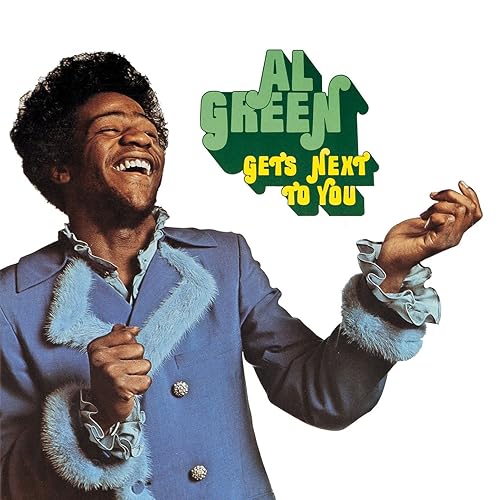
Al Green: Tired of Being Alone
[purchase]

I’ve already lost count of how long I’ve been stuck at home—the few times I've gone out to get provisions or walk doesn’t really relieve the feeling of confinement—and it is getting tiresome. Other than the fact that the “current situation” has left us with nothing to look forward to—concerts are canceled, vacations are canceled, reunions are canceled, even our family seders are canceled, and I suspect that my daughter’s trip home this summer will be canceled—the hardest thing to deal with has been the isolation.

Don’t get me wrong—I’m generally an introvert—what I guess is considered a social introvert, meaning that I’m more comfortable in small social settings, enjoy being alone, and can appear to be more extroverted in some situations (my “Reunions Dad” personality), but then require some alone time to recharge. So, in theory, this whole staying home thing is not far from my wheelhouse. (But I’m not a hermit or a hoarder). And, luckily, I have my wife with me, so I’m far from really alone.

But since this whole thing started, as I mentioned in my last piece, I’ve thrown myself into connecting on social media and with my college classmates. We did that large Zoom gathering, and another one yesterday with about 100 people, which included a remarkable coronavirus panel, which I'd argue equaled anything that you can see on cable news.  Plus, a yoga demonstration. And as part of the planning process, I’ve been in contact by email, Facebook, Facebook Messenger, Slack, and even telephone with classmates (and an actual face-to-face meeting with one who lives around the corner, from a safe distance), and there’s always some personal catching up, even with people that I was never really close with. Even on work calls, with clients, co-counsel and even opposing counsel, there’s often a discussion of “how are you doing?" And like many others, we are using Zoom to have family calls and hang out virtually with friends. Just over two years ago, I wrote a piece on my personal blog called “In Praise of Social Media,” during a period when Facebook and other platforms were being rightly criticized for their flaws. But I saw the value in the connections that I made and maintained online, and if anything, it is more important right now. As someone with my personality type, this sort of social interaction from a distance is really perfect.

Al Green is, of course, one of the all-time greats, and his song “Tired of Being Alone” is, of course, on one of my many COVID-82 playlists. Released in 1971, it reached #11 on the Billboard Hot 100 and # 7 on the Hot Soul Singles Chart, and continues to be popular today. Because it is a great song. Of course, it isn’t about being forced to shelter in place, but about a lost love, because you don’t write great soul songs about being stuck in your house alone, living in sweatpants and bingeing Netflix. Although many musicians finding themselves with time on their hands are writing songs for the “current situation”—let me recommend Dan Bern’s new EP, Quarantine Me if you want to hear some good ones—I doubt that they will ultimately have the lasting appeal of “Tired of Being Alone.”  Green also has covered the great Hank Williams song, "I'm So Lonesome I Could Cry."  So, yeah, he's lonely.

Speaking of musicians stuck at home, how long will it be before there’s a genre of “how hard it is to be at home” songs to rival the many, many “how hard it is to be on the road” songs?

Friday, April 3, 2020

ALONE: ALONE IN THE DARK/JOHN HIATT

John Hiatt is just terrific, one of the best, if not in sales, certainly in terms of influence and output, up there, in my book, with Neil Young and Bruce Springsteen. When he's good, he's very, very good and when he's bad, well, I haven't encountered that yet. And Bring the Family, the album from which this song comes, is possibly one of his best, positively enhanced by the backing band on hand. Backing band? O, just Ry Cooder, Nick Lowe and Jim Keltner. And yet it was born out of near desperation, a banknote or so away from ruin. Alone in the Dark, the feature song of this piece, epitomises the tight but loose feel of the disc, and is often overlooked amongst some of the other goodies on board. The lyrics may reflect a differing loneliness and a differing dark from these dangerous days, but the mood sure fits.


Ahead of this time, Hiatt had been a slogging workaday singer-songwriter, starting his career as a pen for hire. When Three Dog Night hit the top 40 with one of his, a recording contract beckoned, although, over the ensuing seven discs, scattered across various labels, more money came from royalties recouped, as the likes of Roseanne Cash and Willie Nelson recorded his songs, than he made from his own originals. Even the mighty Geffen label tried and failed to break him. This was arguably not helped by Hiatt being a drunken cuss who hadn't endeared himself to label bosses. So, newly sober, with a bunch of songs he had lost faith in, straits were indeed dire. Luckily the maverick UK label Demon still believed in him, and could offer a threadbare budget to record them. (The story of Demon makes for interesting reading, established by the earlier team behind Stiff records, Radar and F-Beat.)


Bring the Family, released in 1987, is a joy, from start to finish, the four musicians laying down a lean muscle honed from their collective road and studio experiences, Hiatt's holler a celebrant to his limited range: who needs more notes when you can do this much with these? Plus the songs, ten gems that can crack open a smile just from memory. Even if you don't know them, you know them, and even if you do, even over know them from the myriad cover versions of many, the freshness and vitality of the originals stand head and shoulder over most of those. It is hard to believe the whole project took only four days, Lowe sharing a motel room with Hiatt to keep costs down, Cooder delaying his departure a few hours as the final song was hastily written.


Neither the schedules of the four musicians, nor, then, the budget could allow this line-up any time on  the road. True, Hiatt rounded up some likely culprits, including perhaps the only man who could reasonably ever deputise for Cooder, bayou slide master, Sonny Landreth, and they hit the trail.  Following in the slipstream of Bring the Family, this crew, the Goners, produced a second deal breaking LP for Hiatt, Slow Turning, only a whisker away from being as good as its predecessor, being merely excellent. Hiatt was on a roll, with these and his next seven records all making substantive waves in the Billboard chart.


But the dream team were not done. In 1992 the diaries of Hiatt, Lowe, Cooder and Keltner finally realigned, and they went back into the studio. This time a band, Little Village, also the name of the sole studio offering, having ditched the earlier, and better, working title of Hiatus, and this time a pooling of resources, rather than just a backing band for Hiatt. The songs were all co-writes between the four, and whilst Hiatt sings the majority, Lowe took lead on two, Cooder on one. Perhaps there was too much hope, but the lightning failed to strike twice, and it was a deeply disappointing set. Nick Lowe later said they were given too much time. The subsequent tour was a little better, live sets testifying to that, allowing a presentation of some Bring the Family favourites, as well as scattering of Cooder's solo repertoire. One could sense a simmer of "sibling" rivalry, maybe some resentment that Hiatt was drawing more focus over Cooder's own sense of entitlement. It all ended, apparently, in tears.


Hiatt remains on the road, as do his former compadres, occasionally sharing a bill with one or another, all now senior statesmen and rightly so. Hiatt's recent work is, in my opinion, still of top quality and can stand close to the height of this period. Give him a go.