Wednesday, March 31, 2021

Passed Over: Aretha Franklin/Amazing Grace

[purchase the Complete Recordings]
[purchase the DVD of the film

My wife and I just finished watching the eight part NatGeo (!) series, Genius: Aretha Franklin. Season 1 was about Einstein, and season 2 was about Picasso, which puts Franklin, deservedly, into pretty lofty company. The series tells the life story of Franklin, who was notoriously private during her lifetime, and how she was able to deal with the benefits and burdens of her prodigious musical talent. It isn’t always a pretty picture—her father, well-known minister C.L. Franklin, was a controlling, philandering probable alcoholic who took Aretha out on the gospel circuit as a young teenager and appeared to have let her run around unsupervised, leading to two pregnancies at 12 and 13, and who himself impregnated a 12 year old. Aretha herself could be both cruel and supportive of her two sisters, Carolyn and Erma, fine singers in their own right, whose solo careers paled in comparison, but who regularly worked as background singers (and songwriters) for their sister. And she also made career judgments that, in retrospect, seem suspect. On the other hand, her singing, piano playing and arranging (despite not being able to read or write music), were extraordinary, and her ultimate insistence on producing credits and control over her music, was groundbreaking. Definitely worth the watch, and Cynthia Erivo’s performance as Franklin, is great. 

In 1972, coming off of one of her most successful albums, the politically charged Young Gifted and Black, Franklin suggested a return-to-her-roots gospel album. Ultimately, it was decided that Aretha would perform in a church, featuring the Southern California Community Choir, led by James Cleveland, the great gospel musician and singer, who had, in Aretha’s youth, led the choir at C.L. Franklin’s church. The TV series shows C.L. firing Cleveland because Cleveland failed to tell him about Aretha’s second pregnancy, and thus made Franklin’s decision to perform with him, and not at C.L.’s church, a deliberate slap in her father’s face. I don’t know if that is true, but it did make for good television. 

They decided to film two performances, and hired Sidney Pollack, still relatively early in his career, but with an Academy Award nomination under his belt, to direct. The performances, mostly by Franklin, but also by the choir and Cleveland, were incredible, and the word spread so that the second night became an event, and was attended by Mick Jagger and Charlie Watts, who were in Los Angeles working on Exile on Main Street (and the gospel touches on that album are often attributed to their attendance that night). C.L. Franklin showed up, too (uninvited, according to the show), and sermonized a bit. 

But when they went to get the film ready for release, a failure to use the traditional clapperboards made it impossible to synchronize the sound with the video under with the technology of the time. So, the film was put in the vault. An album including excerpts from the two nights, also named Amazing Grace, was released to both massive commercial and critical success. 

In the early 1990s, Jerry Wexler, the producer who essentially navigated Franklin to stardom after a lackluster start at Columbia Records, told a staff producer at Atlantic Records, Alan Elliott, about the footage, and they eventually discussed it over a period of years. Pollack, who was dying of cancer in 2007, encouraged Elliott to finish the movie, and he bought the rights from Warner Brothers and began the painstaking process of using digital technology to sync the music and film. It was scheduled for release in 2011, but Franklin sued to prevent its release without her permission. A few years later, the original contract that Franklin signed was found, and another release was scheduled, but Franklin sued again to prevent release. Whether her reluctance was based on a demand for money, or because her bad health prevented her from promoting the film, or out of her frustration over not ever having an acting career, or other reasons, it wasn’t until after Aretha’s death in 2018 from pancreatic cancer that Elliott was able to get her estate’s permission to release it. 

My wife and I had a chance to see the movie in 2019 at the great Jacob Burns Film Center in Pleasantville, back when people still went to movies, and it was mind blowing. It is, in many ways, very minimalist—there is no narration to speak of, no talking heads, just music (and a little preaching). Franklin is literally a force of nature, as she leaves nothing behind in singing songs that clearly have deep meaning to her, which you can see not only from her effort, but from the sweat pouring from her face

You can hear the 10 minute plus version of “Amazing Grace” in the video above. It is pretty much unbelievable. What you can’t see in the video, and you really should watch the movie--it is streaming on Hulu as this goes to press—is how the music affected everyone in the church—Franklin, the audience, the choir and the other performers. As described in an NPR piece about the movie: 

Near the end of the song "Amazing Grace," for which Cleveland has been accompanying Franklin on the piano, he slides off the piano bench, giving his space to [Alexander] Hamilton [the assistant choir director], and surrenders to shoulder-heaving sobs, rocking himself back and forth in a congregational seat. He's not the only one — by this point, audience and performers alike are wiping tears from their faces — and when Franklin herself sinks down into a seat at the song's conclusion, she well may be weeping, too. But her face is so sparkling with perspiration, it's impossible to tell for sure. 

And when they recreated a portion of it in the TV show, Erivo’s version was powerful enough to move us to tears, which is pretty amazing when you think about it.

Tuesday, March 30, 2021

PASSED OVER: TERRY REID

No, don't panic, Superlungs hasn't passed, this is the tale around how he coulda/mighta/shoulda "been" Robert Plant, were it not for bad luck, being unwilling to let down an earlier booking and having impeccable taste in suggesting an alternative. Lesser mortals might have thrown in the towel as the years of critical fame and public indifference combined to leave him an also ran, a bit player on the sidelines and in smaller venues. Embittered? It seems not, presumably making some sufficient livelihood from the circuit of pubs and clubs.

So what was the story and how does it stack up. Reid, born in Huntingdon, UK, just four years after the second world war ended, a world where rationing was still part of the wartime legacy. From his first band, the Redbirds, he was spotted by Peter Jay, a local bandleader, and enlisted, age 15, upon leaving school, with Peter Jay's Jaywalkers. A name lost in the mists of time, but they actually snarfed a Rolling Stones support slot in that band's 1966 tour of the UK. The high spot of that tour was a prestigious gig at the Royal Albert Hall. Falling into conversation with Graham Nash, as you do, then of the Hollies, it was recommended the group should seek a recording contract. The Hand Don't Fit the Glove was not much of a hit, and was a fairly standard soul-inflected pop single, but shows some room for growth, especially as he begins to let rip in some of the verses.

The Hand Don't Fit the Glove/Peter Jay & the Jaywalkers

They disbanded and Reid then fell into the hands of pop impresario Mickie Most, famous for nurturing the Animals and Herman's Hermits, as well as, later, Suzi Quatro and Hot Chocolate. He was in partnership, at that time, with the later to be notorious Peter Grant. The first blast on his solo career was the oddly entitle solo album, Bang Bang, You're Terry Reid. (I could get that if either Reid or Most had hailed from Glasgow, but any rhyming argot is lost in the home counties english they both spoke.) A US tour as support with Cream and a slightly more successful single, Better By Far, and it looked as if he was on a roll.

Better By Far

Peter Grant, no longer in cahoots with Most, was by now the manager of the New Yardbirds, a band being set up by ex-Yardbird and session wunderkind Jimmy Page, along with equivalently feted bassist John Paul Jones. Page had wondered as to the suitability of Reid as their singer, using Grant to liase with him. Not many people were able to avoid the coercive "charm" of Grant, an ex-wrestler who had little charm and lots of coercion, but Reid somehow managed, citing his loyalty to the gigs he had already signed up for. OK, he offered that a financial settlement that could have been made to Cream and the Stones, but that never materialised and off he went on tour. Before leaving he also dropped the name of someone else that Page and Grant might consider, a young lad he had been impressed by, whose band, Band of Joy, had supported Reid at a Birmingham gig. That young man was Robert Plant, with he and the drummer, soon both ensconced in Page's band, now newly entitled Led Zeppelin. And you know the rest.

Reid, meanwhile, continued to plug away as a well respected support act, notching up tours with Fleetwood Mac mark one, Jethro Tull and Jimi Hendrix. With Most trying to pull him into a more commercial and ballad led direction, he rebelled, with the inevitable legal implications of then falling out with a manager. Unable to cut much ice at home, he had to rely on the effervescent US market and touring arena to keep him afloat, as he flitted from label to label, manager to manager, turning up a perennial on numerous filmed happenings of the time, from the first Isle of Wight festival, the Atlanta II festival and the first Glastonbury "Fayre". Even his 1971 signing by Atlantic mogul, Ahmet Ertegun failed to hit pay dirt, and he seemed destined to remain a critics favourite rather than a superstar. Not that he wasn't producing perfectly good music, as the following few, in no contemporaneous or particular order, demonstrate, just the favourites that come to mind.

To Be Treated Rite

Seed of Memory

River

Rogue Wave

These are all his own songs, but bear in mind, his gift is as much in interpretation, and there being many a cover version across his output: so, take your pick, do you want Left Banke, the Everleys, or maybe some of this?

Stay With Me, Baby

Since the turn of the century, he has visited the UK more frequently, for a while taking up yearly residencies at Ronnie Scott's club in London, one of few non-jazz artistes getting that opportunity, as well as prestige gigs at festivals, where he became quite a draw, a heritage artist to tick off a list. Sometimes he has performed with bands, but, as often as not, he has appeared in smaller group settings, in a duo or trio. The re-release of his early recordings also helped keep him in ear. I was lucky enough to catch him, five or so years back, as part of a duo, the only accompaniment to his voice and his guitar being B.J. Cole on pedal steel. It was good that night to see how just how well he and his "sponsor" remain on good terms, local black country boy Robert Plant turning out to show lively support from the smallish audience. Plant says of him that he remains "the outstanding voice of his generation." It's true, I was mainly there for Cole, but left a far greater fan of Reid than I had been.

So, what's he up to now? Clearly no shows at the moment, but don't write him off. And, whatever you do don't ask him that 'what if' question...... 

As a closer, here he is on British TV in 2018.

To Be Treated Rite

And a TV interview from November, barely five months ago.


P.S. An afterthought has me minded of this song, which managed an extraordinary and gradual metamorphosis. A song he wrote, apparently at the age of 7, he first put it out as Without Expression, old chum Graham Nash then taking it to the Hollies, as Man of No Expression, and then again, to Crosby, Stills & Nash, as Horse Through a Rainstorm. (It's in the lyric!) Finally, REO Speedwagon gave it a further and fourth leash of life, entitled once more as Without Expression. Given the CSN version had been pencilled in as the opening track of CSN(&Y)s Deja Vu, ahead of being trumped by Carry On, is this another example of Reid's famed luck showing through?


Saturday, March 27, 2021

Pat: Baris Manco


purchase [ choose one  ]

In the bi-weekly notice to the SMM team for this theme, I jokingly threatened to include something Turkish. A remark from Seuras about the paucity of posts this time around prompts to me follow through with the challenge - even if it is my second post of the day and it doesn't really make up for my slacking off for two weeks. But hey ... the more the merrier, and this one is kind of merry - in a kind of out-of-the-box way, as someone suggested might be appropriate here.

Not too many Turkish musicians make a dent in the international music scene. Baris Manco did (and I use the anglicized spelling without Turkish characters that would confound your screen - it would be phoneticized as barish mancho). You can Wikipedia him yourself, but the essentials are that (a) he's sadly no longer with us ('43-'99), (b) was a prolific composer primarily of a genre known as Anatolian rock and (c) his songs have been translated into more languages than you can shake a stick at. Oh, yes, and since I have been here most of my life, I have been listening to his music since I started listening to rock (and there aren't many Turkish musicians that I relate to that well.)

There's a folky style to his "rock" that you may not fancy. I assure you that millions of Turks do - to this day. It helps if you have references that help you relate, and that, his songs do. This one in particular incorporates the sing-song (if not pitter-patter) of vendors who ply the streets of Turkey's cities even to this day. Singing the names of their wares as they cruise the neighborhoods slowly in their pickup trucks loaded with fruit and vegetables brought to the street in front of your house, in this case: "tomatoes, peppers, eggplants".The Turkish for eggplant/aubergine being PATlican (the Turkish letter c is pronounced like the J in John).

Pat: Metheny


purchase  [ New Chautauqua ]

The term “record label” has almost become irrelevant. As we consume more and more of our music in digital format, record labels as such have become more or less invisible or irrelevant to the consumer. Not so 50 years back. Musicians we both tied to and touted by the labels. If you were purchasing music in the 60s and 70s, you knew what to expect from a Tamla, an Atco, a Polydor. You knew what you were likely to get if the label was ECM.

I knew ECM was European, north European. I knew it was independent. I knew it meant progressive Jazz. I didn’t know it was short for Edition of Contemporary Music. I knew the label included among its artists Keith Jarrett, Jan Garbarek, Chick Corea, Eberhard Weber, Ralph Towner and John Abercrombie because I no small part of my LP collection included them. My collection also included a bit of Pat Metheny.

I tend to skew more toward the guitar than piano or sax, and a number of the above fit my prefs. Although Metheny started out solo (supported by some of the ECM crowd), he is mostly associated with the self-named Pat Metheny Group, which was releasing records up until about 10 years ago. He released an album titles From This Place about a year ago, and then Road to the Sun a couple of weeks ago (March 2021). And speaking of record labels, it caught my attention that most recently, his music has been appearing on the Nonesuch label, which I knew as a kid because a lot of my parents’ classical collection was on that label (a budget classical label in the 60s that has :developed into a label that records critically acclaimed music from a wide variety of genres” –Wikipedia)


Thursday, March 25, 2021

Pat: Patrick O’Hearn

Group 87: Future of the City
[purchase

When I suggested this theme, I was trying to think of a St. Patrick’s Day theme that didn’t fall back on some variation of Irish music, so it is kind of funny that I’m writing about a guy named Patrick O’Hearn (although it sounds Irish, it turns out that it may more likely be English). 

Frankly, what I knew about Mr. O’Hearn before starting this piece was that he was once in a band that I liked back in the 80’s called Group 87, but I didn’t even know what instrument he played. The band put out a self-titled album in 1980 that was given pretty heavy airplay at WPRB, but I’m guessing that most people reading this have never heard of it. 

Group 87 is an instrumental album that mixed rock, jazz, fusion, and what would eventually be called new age music, and it was really well done (it rocks more than it “new ages,” if that’s a phrase, and we all know it isn’t). Considering the style, and the time, it isn’t surprising that the album went nowhere, and the band was cut by Columbia Records, only to re-emerge in 1984 with a second album on EMI that I have never heard. All because the same A&R guy who signed them at Columbia had moved to EMI—Bobby Colomby, who had been the drummer for Blood, Sweat & Tears. 

But it turns out that O’Hearn, and the rest of Group 87 have had pretty interesting and fairly successful careers, pretty much off of the Jordan Becker radar. Group 87’s trumpeter was Mark Isham, who had played with, among others, Van Morrison, before becoming a new age and soundtrack star and in-demand session musician. The guitarist, Peter Maunu, is also a prolific session musician, with credits that range from Jean-Luc Ponty, and The Commodores. And while not an official member of the group, the drums on their debut were played by Terry Bozzio, who had played with Zappa and U.K. before forming Missing Persons with, among others, his wife Dale Bozzio and other former Zappa band members. 

But this is about O’Hearn, who started as a bass player, and began playing professionally at 15. Moving to San Francisco, he played mostly jazz, playing bass for well-established artists such as Charles Lloyd, Joe Henderson, Dexter Gordon, Joe Pass, Woody Shaw, Eddie Henderson, and Bobby Hutcherson, as well as musicians who were his contemporaries, and eventually joined Frank Zappa’s band, where he began experimenting with synthesizers. 

In 1979, he joined friends Isham, Maunu (and Bozzio) to form Group 87. Bozzio then recruited O’Hearn to move into the new wave world, joining Missing Persons, where he played both synthesizer and bass, and hopefully cashed in on their popularity. When that band broke up in 1986, O’Hearn eventually started a solo career in the new age and ambient genres, where he has been quite successful, as well as working on soundtracks. To date, he has released 13 solo albums. And, in another genre-bending move, he played bass with John Hiatt on tour from 2007-2010 and in the studio through 2012 (so he wasn’t there when I saw Hiatt at the Tarrytown Music Hall in 2014). 

Although one of the things I like about writing these little blog posts is that I get to write about stuff that I know, the best part is finding out things that I didn’t know.

Wednesday, March 24, 2021

PAT: A-CAKE

Mindful there has not been too much a pitter-PATter of posts arriving under this banner, time to think out of the box. And what could be better than a cake box, something that may have me awarding me a pat, SWIDT, on the back for inspiration. Of course, Cake are no strangers here, usually courtesy their way with quirky covers, enough to endear themselves to me bigtime. But they are more than just novelty revisionings, having a wealth of their own penned material on hand as well. As I have discovered.

With a modus operandi of always avoiding the obvious, this was apparent from the start by the prominence of trumpet, lead trumpet even, an instrument more reviled than revered in rock and pop, delegated, where I thought it should be, to old man's music like jazz or, within reason, the unison brass parts of soul music. I had utmost suspicion of the instrument, feeling it as uncool as short hair and straight trousers. Until then, just to damn my eyes, short hair and straight trousers came back in. My version of punk coasted into post-punk and an enduring love of Chumbawamba, another band with trumpet, forcing me to swallow my prejudice, luckily also coinciding with the astonishing discovery that jazz was OK too. (And that I preferred jazz trumpet solos to saxophone solos, despite sax being just about allowed a seat at the table of my earlier rockist tastes. And since you ask, Chet more than Miles.)

Rock'n'Roll Lifestyle/Motorcade of Generosity (1994)

Cake I first heard through their astonishing de- and reconstruction of I Will Survive, reeking so of mariachi I had to go and gather that whole style into my body of required and allowable listening. It has been touched on here. I bought the parent record. The second single from their second album, it came out in 1997 and made the indie charts at home, managing a 29 in the UK, and higher in some other european countries. Given their first album was all originals, and largely damned either by faint praise, or just plain damned, this left the band with a dilemma, one that never quite lost them, continuing arguably to be better known for their covers, despite barely doing any others over the next few records. (Having a self-penned song called Jolene on their debut arguably didn't help, allowing the lazy to make assumptions: I certainly downloaded the track on that basis!!) 

The Distance/Fashion Nugget (1996)

Never There/Prolonging the Magic (1998)

In researching this piece I was, therefore a little surprised to see their last record, 2011's Showroom of Compassion actually hit the coveted Billboard #1 slot, if only for a week, albeit based on the then lowest sales to attain that slot. And not a cover in sight. (Well, one, actually.) Also that all the four ahead of that had entirely satisfactory sales, with only the very first failing to make any splash, so bang goes my assertion. But maybe the fact they refused a greatest hits, and released instead the only other record of theirs I own, b-sides and Rarities, which is nearly all cover versions, explains my fallacy. 

Comfort Eagle/Comfort Eagle (2001) 

Sick of You/Showroom of Compassion (2011)

Scattered through this prose are a few of their finest. If you are unfamiliar, listen. If you know them, re-aquaint. The trumpet of Vince DeFiori is certainly not the only cause to celebrate, the caustic and conversational singing of John McCrea, also the main songwriter, being a joyful characteristic of the sound. These two are the sole permanently present members of the band, as they seemed to get through a slew of rhythm sections along the way. Just two lead guitarists, though, with a special mention for Greg Brown, no, not that one, there from the start, who left in 1997, if still making later guest appearances, his spiky playing adding to the overall counter-intuiveness of the whole. But for the last ten years there has been little sight or sound. There was promise of new material as far back as 2018, with only a single video, below, sneaking out. A demo leaked in January this year, so maybe we haven't quite had all our Cake yet. 

Sinking Ship (2018)


Eat some!


Thursday, March 18, 2021

PAT: SHAMROCKS, SNAKES, STAFFS & SPEAKING WITH THE PAST


Did Green Day derive their name from the Green Day of March 17? And I know I am a day or two late in nailing it, but it is one of many questions I don't plan to investigate too deeply, because it wasn't, but it's as good a place to start as any. It seems strange to me how St Patricks Day has become such a big thing in the U.S., certainly compared to his supposed homeland of Ireland. Even if, in the same way life imitates artifice, it is now catching up. I'm not sure the Liffey has ever been dyed green like Chicago's Chicago River, but it wouldn't surprise me if it were for the future. Not this year mind, but in the same way that Irish bars have become such a big thing all over the world, what the US identifies with as a merchandising exercise today, catches on, well, everywhere, in due course. Hell, even Thanksgiving is becoming a thing over this side of the pond, which seems more than a little counter-intuitive.Too much like turkeys celebrating Christmas. (Which is when turkey is supposed to be eaten, I should add.)

But it is St. Pat of Paddy's Day we are here to blether about, and the abiding myths and legends seem as good a place to start.

Paul Brady is, for me, the consummate Irish performer, and I would place him above Van Morrison, Christy Moore, Phil Lynott, Bono, any of them. A soaring and piercing voice, a human equivalent of uillean pipes, and capable of bringing forth similar tearful emotions, allied to a masterful guitar technique and, if his majesty with the traditional canon isn't enough, a glorious songwriter to boot. This traditional lament has been covered by him at many stages of his career, but it is this version that is the best, from his first solo album, and also his last to fully feature only trad.arr. Shamrocks were said to have been an essential part of St. Patricks preaching, using the three leaves as a metaphor for the Holy Trinity. It may also have been that pagan Ireland already held sacred this plant, and so used that regard as a link between old divinities and the new. It seems plausible, and probably why this plucky little plant is the national emblem of the land. But, tell me, does the shamrock ever have four heads, or is that a clover led question?

Let's stick with Irish artists to tackle the next topic, the tale of how St. Patrick rid Ireland of snakes. It seems that, whilst meditating and fasting, he was disturbed by one, and was so outraged that he henceforth banished all snakes and drove them into the sea. This strikes me as an ultimately dodgy story, and seems hard to swallow. That was, however, ahead of my appreciating that neither are there snakes in Iceland, Greenland, Hawaii or New Zealand. And never were, at least once they became islands. So unless Saints Thorlak, Arnaldur, Damien or the Virgin Mary were responsible for a similar banishment in those countries, I suspect it pure supposition. There are snakes, of course, in Ireland, but only in zoos and as pets. (What if one, or two, I suppose, escaped?) Shane McGowan is a learned and erudite soul around all things Irish, his songwriting awash with imagery and legend. The snake here is a ring, but one feels a whole lot more too. This is from McGowan's post (and between) Pogues project, the Popes, after he had become too unreliable for his bandmates, but before his muse had succumbed entirely to the ravages of his lifestyle.

So this is the one where St. Patrick's staff takes root and grows into a tree. I think we have all been to church services where the sermon has gone on so long that that would seem an entirely expected phenomenon, but I am not sure that is the message the legend imparts. The staff was made of ash, I gather, and, rather than down to the length of the discourse, was about the length of time the locals took to latch on to this Christianity lark. There are lots of songs about trees, especially in the folk idiom, and the piece chosen is only part provided by an Irishman, the wonderful uillean pipes prodigy and singer, Jarlath Henderson. With a vocal tone not dissimilar from that of Paul Brady, he combines a career as a musician, often in cahoots with fellow gael, the Scottish piper and whistler player, Ross Ainslie, with qualifying and working as a medical doctor. (Here is the duo with another song, an instrumental of the same name, from when they were both teenagers.)

The final story is how St. Patrick apparently met with two ancient Irish warriors, Oisin and Cailte Mac Ronain, who had somehow managed to survive the centuries and be there for him to try and convert from their pagan ways. They didn't get on, it seems, and it all gets very complicated as to why they met, other than for him to contrast the sunny lit uplands of the calm and Christian life, as compared to their roustabout fighting and brawling. St. Patrick seems to have prevailed as, given their great age, they died and he lived. It all sounds like the later episodes of TV boxset Vikings, which became progressively less fun as Heaven overtook Valhalla as final destination of choice. And there couldn't be a better illustration of pagan irish ways than by Horslips. The track above comes from The Tain, their 1973 musical re-telling of the legend of Finn MacCool, from whose warrior clan came the two elderly relics who met up with St. Patrick.

Slainte!

Brady, McGowan, Henderson, Horslips.

Saturday, March 13, 2021

MR/MISS: Pitiful


purchase [Mr Pitiful]

You could read about yourself if you don't already know but I'll save you the effort: back in '64, a radio DJ called Otis Redding "Mr. Pitiful" on account of the sound of his voice. Steve Cropper, Redding's guitarist (I want to say "long-time collaborator", but sadly it wasn't very long since he died about 2 years later in a plane crash on his way to a concert) came up with the song, which they recorded more or less in a flash.

None of his work is pitiful. In fact - reading I have done this week repeatedly reminds me that even the lowliest life is not pitiful. Pitiful is a mind-set. Sure, from the outside, it ain't hard to categorize another [wo]man's life as pitiful (  defineiton here), but that's a perspective filled with bias: how you view it may not be the whole story.

I did not know (but now do) that Steve Cropper was a member of a Stax backing band that did their thing for a number of known show-names (the Mar-Keys). Known as <the Colonel>, he fronted and was a member of other bands including Booker T and the M.G.'s He was also a member of the Belushi/Aykroyd Blues Brothers Band.

Within 2 years, Redding was producing music that, as Rolling Stone magazine wrote, was impressive - a far cry from Mr Pitiful, even if his vocal style was emotional-: "fluttering horns and staccato guitar" at the Whiskey a Go Go. Songs that hit the top of the charts even after his untimely death.

Etta James twisted the lyrics to "Miss Pitiful" from Mr to Miss.


Taj Mahal recorded a version.


The Stones have played it on ocassion.


Friday, March 12, 2021

MR/MS: JACKSON

Anyone with even the most cursory knowledge of this site will appreciate that there is likely little hip hop demographic within the reading or the writing. By way neither of apology or excuse, I guess this is a an age and colour thing, old white guys seldom experts outside their narrow zones of comfort. If I were younger, maybe a bit more: my son was a huge fan of the genre twenty odd years ago and certainly gave me limitless opportunity to absorb, wanted or not. And, I admit, largely not. But, as I peruse my i-tunes, I have rather more than I realised, and have no little grudging respect for certain artists, tending to prefer the melodic to the militant, the abstract to the angry. Like this, the contrast between the staccato delivery of the verses and the dreamy chorus grabbing my ears back then, even as I was scrubbing the graffiti off my son's bedroom walls.

Now, I guess I could now make this a hastily regurgitated precis of the life and times of the band, OutKast, or the duo, as they were, but I fear my sources would be obvious. Plus, we can all read wikipedia for ourselves, but I hadn't realise that the song relates to the relationship of Andre 3000, one of the pair, with singer Erykah Badu, or more specifically with her mother, the Ms "Jackson" the lyrics are addressed to. Whilst not necessarily a fan of the individual, she apparently loved the song, a fair bit more, in fact, than her daughter, who found it a little close to the bone. So, nearly avoiding also any clumsy link to the other OutKast song in my collection, lets celebrate a couple or so other Ms Jacksons...

Wanda Jackson isn't either actually quite my demographic, this little ditty hailing from the year of my birth, and comes from days when cultural sensitivities were, shall we say, less well honed. But, as a piece of rough hewn rockabilly, it certainly has some pizazz and she has continued ploughing that field right up until, astonishingly, as recently as 2012, that being when her last record was released. Little had changed.

So which one's Luscious, you ask? And given the Lucious, no s, Jackson was a male basketball player, and after whom this all-girl band named themselves, does this fit the strict criterion I apply to all my nonsense. Hell, no, but it's my post, and I like the band, as much for being there as for the music they produced.

Jade Jackson is/was 'One of 10 New Country Artists You Should Know", according to Rolling Stone in 2017, and has a bit more balls than many of the winsome souls who that sort of category might have you bringing to mind. In fact, she has me thinking more of a modern day Wanda. I know little of her beyond this song, but I like it. In fact, I may go check out some of her other work.

From the present back to the past I tread, desperately trying to bypass the Ms Jackson that is Janet, Mahalia being one I cannot possible exclude, a truly majestic vocal presence that lingers to this day. Whether gospel is or not your thing, I defy you to ignore the power and presence displayed. No wonder that Sinead O'Connor chose to revisit just this song for her latest come-back.

Who's your favourite Ms Jackson?

Wednesday, March 10, 2021

Mr/Ms: He's Misstra Know-It-All


purchase [ Misstra Know It All ]

Is "misstra" a variation on Mr.? - and thus a viable choice for this theme?

The word <misstra> is pretty much undocumented. The intranet provides clues but no real answer:  It appears that Wonder was referencing Nixon (he could as well have been referencing our ex. )

THE internet also tells us that <Misstrah> is likely not "kind" - possibly a mix of "massah" and mister?

"Playin'  hard, talkin; fast ... He's the coolest one with the biggest mouth...and "if we had less of him, don't you know we'd have a better land .."

I guess I've tipped my hand (who plays hard and fast with a big mouth?)

But ... you are here for the music. And so ... Innervisions.

Innervisons, in that Wonder can only see inside? Innervisions, in that we should all be so gifted to see so much inside. Innervisions, in that something awoke inside Stevie Wonder that moved him for the formulaic Motown that I witnessed on stage in Seattle in 1969 as "Little Stevie Wonder". (Admittedly valuable for its time and space) to the post-Innervisions that produced this and his later work.

There are actually several points in the song where Stevie Wonder progressivly amps it up; you can hear the background vocals doing an increasingly urgent "yeah ..yeah" early on, but at about 2:30 we get a major shift that builds to that  point in the song [3:00]  where Stevie Wonder very meaningfully switches/ramps up the tempo to emphasize his point. The tempo seems to jump - and at least the emotion jumps - as we hear the hand claps and "growls" that signal a message change-

Finally he says: "You talk too much, you worry me to death .." Point well made - please, let's move on.

Chuck Schumer's playlist [100 days of tr**] on Spotify includes this song for some reason  (no the reason is clear, me thinks)

link

and ... James Morrison


Mr./Ms.: Hey Mister, That's Me Up On The Jukebox

James Taylor: Hey Mister, That's Me up on the Jukebox
[purchase]

If you’ve been reading my work on this site since 2011 (!), you might notice that I often discuss why various artists aren’t as famous as I (or others) think they should be. That isn’t the problem this time, since our featured song was written and performed by James Taylor, who was, and still is, pretty famous. 

Today, we’re looking at a song written from the perspective of someone who achieved fame, and is maybe not all that happy about it. 

Taylor’s path to stardom is pretty well known. Born into a prosperous family, he was a sensitive musical child who eventually struggled with both mental illness and drug abuse. After his first “real” band, the Flying Machine, which also included his longtime friend and future collaborator Danny Kortchmar, failed to take off (sorry—I’m guessing that I’m not the first person to make that joke), he moved to England. Through Kortchmar, Taylor connected with Peter Asher, who at the time was running A&R for Apple Records, and Asher played Taylor’s demo for McCartney and Harrison, who loved it. Taylor was the first non-British act signed to Apple Records. 

Taylor’s self-titled debut, despite positive reviews, and a fine single, “Carolina On My Mind,” failed to sell well, in part because Taylor couldn’t promote the album because he was again in rehab. Upon his release, Taylor was unable to maintain the momentum from enthusiastic crowds at live shows, including the 1969 Newport Folk Festival, because he broke his hands and feet in a motorcycle accident. 

Signing with Warner Bros. Records, Taylor moved to California and recorded his next album with a big assist from Carole King (and Asher and Kortchmar). That album, Sweet Baby James, was justifiably a smash hit, garnering both critical and popular acclaim. This led to high profile concerts, benefit shows, TV appearances, and Time magazine’s declaration that he was the “face of new rock.” Let’s take a brief digression here to remind our readers who were not alive in 1971 that this was not at all as strange at the time as it sounds today. 

As often happens, the followup to the big hit album pales in comparison. That’s not to say that Mud Slide Slim and the Blue Horizon was a bad album—it just wasn’t Sweet Baby James. Despite that, the album did spawn Taylor’s only Billboard No. 1 hit, a cover of King’s “You’ve Got a Friend,” featuring Joni Mitchell on background vocals, as well as Kortchmar and the crack rhythm section of Leland Sklar and Russ Kunkel. 

Also on Mud Slide Slim is “Hey Mister, That's Me up on the Jukebox,” in which the singer, presumably Taylor, is pointing out to the titular Mister that it is, in fact, he who is singing the sad song on the jukebox. On the one hand, there has to be some pride in that, but there’s also a little shock, and some sadness about the fact that: 

I have wasted too much time just to sing you this sad song
And I've done been this lonesome picker a little too long
 

Taylor has said that the song “is basically a way of dealing with the shock of being a private person going public.” When asked if he found it jarring, Taylor responded: 

Yeah. I found it - you know, of course, it's exactly what I wanted. I wanted to be successful. And I wanted to get people to hear my music. I wanted my music to make a difference to people. But at the same time, you know, making yourself the product, it's very distracting. 

Coincidentally, not long before starting to write this, I got to see my daughter experience a small amount of similar weirdness, although without the corresponding ambivalence (or, so far, massive commercial success). I may have mentioned before that she’s a standup comedian in Barcelona, and for a few months has been appearing semi-regularly on a TV show there, The Weekly Mag, designed to help locals practice their English. I stumbled across her IMDB page, listing her one credit, and she was shocked when I sent it to her. No, it’s not the same as what JT went through, but it is a cute story, and it allows me to make this piece a little more personal than just a discussion of the early career of James Taylor. 

Anyway, despite decades of fame, Taylor has always seemed to have a certain ambivalence about his place in the public spotlight consistent with “Hey Mister’s” lyrics, even as he has continued to record and perform, be a political and environmental activist, have a high profile marriage and divorce from Carly Simon, and a second marriage to actress Kathryn Walker (and another divorce). However, he seems to have settled into a quieter third marriage, to Kim Smedvig (who my wife, a huge Taylor fan, would point out is a Smithie), a comfortable recording and performing (pre-COVID) career, and maybe, finally, happiness.

Sunday, March 7, 2021

MR/MS: BLOE, GROOVIN' WITH


It's thursday night, it's 7.30, so it must be Top of the Pops, that covering most of my youth, from as early as I can recall, possibly aged five or so, and progressing much into middle youth, my twenties and thirties. I think I probably came off the bus in the '90s, as anonymous dance acts pretended to play, and it only took a couple of dozen sales to get in the chart, with the programme eventually running itself out of steam in the noughties. True, the time slot varied a bit, as did the length of the programme, but it was always, between those years, essential viewing, even when it was a family cringe-fest, ma and pa jutting in with their opinions, often broadly unhelpful, and requiring many Judas moments of denial that I liked that sort or thing. Or worse, if I actually did.


This song I shouldn't have liked at all, it being a novelty instrumental, a one hit wonder at that. But listen. It's actually very well played, and so it should have been, given the players. To be fair, I am wondering how much I did like it at the time, 1970, and how much it is the nostalgic feel good filter of rose-tinted earbuds. Be that as it may, I think it's a corker now.


It is actually a cover, the tune first cropping up, as above, a b-side of an already pretty hard to harvest band, Wind, who certainly evoke a me, neither response to anyone I know. They were a backing band for Tony Orlando, actually during the time he was better known for performing with Dawn. I guess Tony Orlando with Wind might prove a tad close to the bone, this instrumental the flip of Make Believe, a 1969 hit, seemingly, if not my side of the pond. Anyhow, it was picked up by Steve James of Dick James Music (DJM), then the record label for, amongst others, Elton John. Unable to pick up the rights to release the original, he picked a selection of artists available to him to recreate it. Elton allegedly played on the pilot project, but was ditched for a version with a Zack Laurence on the piano, the distinctive harmonica part possibly played by a Harry Pitch. However, by the time it came to Top of the Tops, the harmonica was being played by an Ian Duck. None of those three have any lasting backstory, but the rest of the band did, being, essentially, Elton's then backing band, later to become Hookfoot, with Dee Murray on bass, Roger Pope on bass and Caleb, brother of Finley, on guitar. A fairly huge hit, peaking at number two, courtesy the alongside presence of Mungo Jerry's In The Summertime. It then remained in the charts for eighteen weeks, and longer in the clubs, it fitting well into the then Northern Soul craze filling the dancehalls of northern England.


There were follow-ups, none successful. On the back of the UK success, Wind had their version re-released in the US, as and a-side, this time credited under the slightly safer band name Cool Heat. There have been the odd subsequent cover version, some very odd. Perhaps the oddest, and the least necessary, was by the Associates, the band the of maverick Scottish singer Billy McKenzie, more usually defined by his extraordinary vocal range and lifestyle choices. But, for posterity, I feel I should include it here.


Don't bloe it!

Wednesday, March 3, 2021

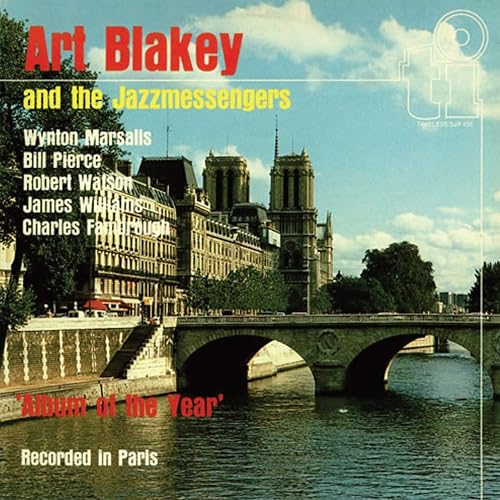
Mr./Ms.: Ms. B.C.

Art Blakey and the Jazz Messengers: Ms. B.C.
[purchase

When you’ve been a theme-oriented blog for as long as Star Maker Machine, it is not surprising that we occasionally repeat themes, or in this case, have a theme that nudges up against an earlier one. Almost exactly two years ago, for our “Titles and Honorifics” theme, I wrote about Fela’s “Mr. Follow Follow,” which would work for this theme (although my colleagues seemed to write mostly about doctors or royals, which itself was another theme….) 

But it isn’t so much the theme that matters, but the music, and the writing, right? 

I like jazz, but I don’t know an enormous amount about it because there’s only so much time in the day, and most of my music listening is more in the rock genre. To some extent, I’ve found learning about jazz to be intimidating, but listening to the music can be amazing. I’ve written about non-fusion jazz a bunch of times, but considering my lack of deep knowledge, I’ve mostly focused on big names, unlike my rock or folk posts that often focus on lesser known artists. And I’m OK with that. 

We’ll continue in that vein today, with a song, “Ms. B.C.” by Art Blakey and the Jazz Messengers. Blakey was one of the great jazz drummers, with a career that started in the big band era. In the 1950s, Blakey and pianist Horace Silver formed the Jazz Messengers, and over the next 35 years it became a primary incubator of talent, with nearly every famous jazz musician spending time learning from Blakey. In the late 1980s, there was a small jazz club, Mikell’s, on 97th and Columbus in Manhattan, just down the street from my apartment, and my wife and I and some friends went there a few times—but not nearly enough. One night, we saw one of the last, if not the last, version of the Jazz Messengers. While I don’t remember who was in the band that night, it was pretty amazing. 

“Ms. B.C.” appeared on a 1981 album, modestly titled, Album of the Year, featuring Blakey, alto sax player Bobby Watson, Billy Pierce on tenor, James Williams on piano, bassist Charles Fambrough, and a barely 20 year old Wynton Marsalis. Written by Pamela Watson, wife of Bobby, and a composer, arranger, pianist, singer and music educator, it was dedicated to Betty Carter, a singer who, like Blakey, had a reputation for discovering and nurturing young jazz talent.   It's pretty great.

And just because, here’s an intense version recorded at the Village Vanguard in 1982, with most of the same band, but with Branford Marsalis on alto and Donald Brown on piano:

Sunday, February 28, 2021

MR/MS : JONES

Have you ever realised how many Jones's there are in music. And I don't mean performers, I mean in the material. Is it the commonest surname in song? (Answer: Possibly. Unless Mr and Mrs Postman of Poughkeepsie beg to differ.) So why is that, do you think? Is it because of the pervasive influence of the Welsh, creeping into all our genepools? Extensive research (wikipedia) tells me that, after Smith, Jones is one of the seven commonest names in the US and, again after Smith, the second commonest name in the UK. Plus it's short, it's anonymous by virtue of its ubiquity and it rhymes with bones. (I made that bit up. I mean, sure, it does rhyme with bones, but that may not be the reason for the popularity. But consider the possibility.)


Let's agree the above is the best Jones, a song I have adored these long 18 years since it became a staple on any mixtape song selection I have ever made. A glorious riot of teenage dreams for stardom, it is a true story. Or, at any rate, Mr Jones, singer Adam Duritz's buddy Marty Jones, and he did spend a night at the New Amsterdam, getting drunk and imagining how, if they were famous, they would get the girls they could only ogle. Funny thing fate, as, courtesy the song, Mr Duritz did become a big big star. As for Marty Jones, did he ever become someone just a little more funky? Sadly, that much I don't know.

So, back to Adam Duritz, and his wanting to be Bob Dylan. The Bob Dylan, above, I'm assuming, at peak mystique. As a boy I was, obviously, familiar with all the early hit singles, and bought Greatest Hits, an early step in my obsession with recorded music, and I remember two songs standing out in particular. Firstly, Rainy Day Women #12 & 35, because it was such utter shite, beyond the hey man, he said stoned schtick, and Ballad of a Thin Man, because it was just so damned cool. My views haven't changed, and the chunk out the vinyl just around track side 2 track 5 confirms that, it being the UK version, trainspotters, as well as revealing that Ballad of a Thin Man wasn't actually on the record. But you catch my drift.


When Mr Jones recovers from the shock of seeing his paramour in flagrante, he realises it was time to get him some cool. So off he shuffles, tail between his legs, possibly to the New Amsterdam, with the aim of smartening up his act. And, boy, can he shake his stuff. David Byrne could have been an archetypical Mr Jones, himself, almost the antithesis of hip, all nerdy shirts and mannerisms, yet somehow transcending all that and being just that figure he lampoons, but, hey, after all, "he is not so square". And that feisty arrangement, years before it became the thing, something to relish and wonder.


Mind you, it hadn't always been like that. Little did all those hipsters and hepcats know, but Mr Jones had a further backstory, the stuff of tragedy. Tragedy was, of course, de rigeur for the early Bee Gees, as their stage wear above demonstrates. (Nope, I'm not going to make a joke or insert a glib clip to any of their later work.) No wonder he had developed a little problem.....


That's right, too clever by half, here the neat insertion of a 'Jones' meaning a habit. OK, the lyrics aren't so subtle, but the song is OK in a non-threatening way, but it at least enable me to share my learning. So, if you have a 'jones' for something, we all know it is lifted from junkie slang for their fix, but, similarly, having a 'yen' for something comes from the exact same territory, 'yen' being a corruption of yan, meaning a craving, usually for opium. Well, I didn't know that.


So it's about time something turned good for our titular friend. So what better than a night out with the delightful Ms Winehouse. And before you smart alecs tell me she actually had quite a yen for a jones, it apparently refers to her, um, alleged friendship with the rapper Nas. (Actually me neither.) It isn't a bad song, even if it leads you into expecting something a bit more like this.


Finally, and to draw to a close the long and sorry saga of Jones esquire, and it's a rum old do, suggesting all sorts of shenanigans. I'm not too sure quite what Richard Butler, the lead Fur was thinking about here, but it seems, as fiction becomes fact and facts become fun, it refers to a real life Mr Jones. Sad, but true, my little scenario thus far is based upon little more than my fevered imagination. But Butler's Mr Jones, and possibly even Mrs Jones, refers to one David Jones. This one. I like to imagine all the Mr Jones' might also be. Try it.


Saturday, February 27, 2021

Main: Mainline Florida


purchase [461 Ocean Boulevard]


Main, to me, conjures up the Stones' Exile on Main Street, but let's that leave that aside this time around.

I very early on had a copy of Cream's Disraeli Gears. As well as a copy of Fresh Cream. And then I was extremely lucky to catch Blind Faith in Seattle at the tender age of 14. Lucky, because I didn't even live in the USofA. A year later, when I did move to the US for boarding school, out comes the eponymous Eric Clapton solo album of 1970. And then after Derek and the Dominoes, there's nothing for 3 years until 461 Ocean Boulevard.


I'm no historian, but I think I can hear  461 Ocean Boulevard as a turning point in the man's music style.  You can hear/sense a major change in guitar style but particularly his vocals.  The more melidious harmonies that had been percolating with Winwood and then Allman during the Dominoes period seem to have matured. Granted, Rolling Stone critic Ken Emeson was not impressed with Clapton's guitar on the album: hiding behind less capable musicians. Myself, I think the symbiosis with Yvonne Elliman on vocals is one of the strengths of the album.

Mainline Florida is credited to George Terry, who joined Clapton on guitar for the album and in later collaborations, including Lay Down Sally. I get the impression that it perfectly suits what must have been the atmosphere at the address near Miami in 1974.


Joe Bonamassa:


George Terry:


Tuesday, February 23, 2021

MAIN: LINE

So this mainline Jesus is on, right, what is it actually? I always thought it was about a train, especially with the world of gospel awash with songs about trains. Surely it must be God's preferred form of transport, such is the plethora of references, from the Staples Singers to the Carter Family, each espousing the sure-fire way to heaven is by locomotive. It's an odd idea, given how few were around in nothing A.D., but it seems a good idea. Plus it sort of fits that the journey in the other direction is more often by road, if only to please the optimist in me; more folk fit on a train than a car.

But then I got confused. Mainline is also a word associated with drugs and with addiction. Jesus doesn't have that mainline, does he? Scouring the literature, only a few are saying that. But it is interesting how the imagery continues, the tell-tale signs being also tracks. Few encapsulate it better than these guys. Even the rhythm sounds like a choo-choo. 

Pity we can't ask Lou how, or if, he got to Heaven, in the end, by train. Or did he take a car in the other direction. 

But it seems I got it all wrong. It seems Jesus was on the mainline as in telephone line. Or was, at least, available to take a call. With supportive evidence lobbied. Again it's a rum 'un, wondering how such discussions took place before Alexander Graham Bell. Written, I guess. 

Well, that cleared that up. Little else to say.

Trains or telephones. Or just plain Jesus.

Friday, February 19, 2021

Main: Mainstream

Quiet Sun: Mummy was an Asteroid, Daddy was a Small Non-Stick Kitchen Utensil
[purchase

For no particularly good reason, other than I like it, I’ve been listening to a bunch of fusion and prog-rock lately (I find it good to have on while working), which meant that coincidentally, I’ve heard a bunch of Chick Corea in the days before his death. That’s just an aside to the main point of this piece which is about an almost forgotten fusion album, Mainstream by Quiet Sun. 

I remember being introduced to Phil Manzanera’s music in college by someone at WPRB. Although aware of Roxy Music, I didn’t know the names of anyone in the band other than Bryan Ferry, but I learned that Manzanera was the guitarist, and that I liked his solo work better than Roxy. I’ve written about that, and about Manzanera’s background here—and even mentioned both Mainstream and our wonderfully titled featured song—so I won’t repeat myself too much. 

As I wrote there, when Manzanera booked studio time in 1975 to record his first solo album, Diamond Head, he reunited his school band, Quiet Sun, to record some music they had previously worked on, but never recorded formally, before the group disbanded in 1972. This was not just a bunch of kids bashing around in their garage, but a talented group of musicians influenced by the Canterbury Scene. In fact, bass player Bill MacCormick had befriended Robert Wyatt (the son of a friend of his mother’s), one of the stalwarts of the scene as a founder of Soft Machine. After Quiet Sun’s first disbanding, MacCormick joined Wyatt’s band Matching Mole, Manzanera joined Roxy Music, keyboard player Dave Jarrett became a teacher, and drummer Charles Hayward played with a number of different groups, including briefly with Gong. 

But Manzanera got the band back together in 1975, recording at night after the Diamond Head sessions were done, and working on improving their earlier music with what they had learned in the intervening years (and availing themselves of Brian Eno's synthesizers and treatments). What they turned out was exciting, interesting fusion, one of the most interesting of which is our featured song (and not just because of its title, which apparently was originally the more pedestrian “Dog,” derived from a prior title, “Mummy was a Maoist, Daddy was a running dog capitalist lackey of the bourgeoisie” that songwriter MacCormick’s brother, music journalist Ian MacDonald, revised in the studio). Remarkably, the complex song was reportedly recorded in one take. 

That was it for Quiet Sun, although some of the music from the album was later performed by 801, which was led by Manzanera, and included MacCormick. On the great 801 Live album, “Asteroid” was combined with a track from Diamond Head, “East of Echo,” and became “East of Asteroid.” It is also great.

Monday, February 15, 2021

MAIN: STREETS

"Main Street is a metonym used to denote a primary retail street of a villagetown or small city in many parts of the world. It is usually a focal point for shops and retailers in the central business district, and is most often used in reference to retailing and socializing."

Well, there's a thing. Metonym, I mean, a word previously outside my knowledge and vocabulary. And of course I love it and you can expect its casual drop into a future post real soon. But I felt I needed clarification of what quite an exile from main street might really mean. Sure, we know what the Stones meant, I think, but, to go all literal, surely it means they were strictly side streets. Or maybe back streets. But, anyway let's have a traipse around some main streets and see where we end up.


London is so big it would be invidious to classify which street is actually more main than any of the others, but, to apply the wiki description, certainly in terms of the main shopping drag and flagship stores, it probably fits the bill best. Plus, and essentially therefore, it has a song about it. A good one too, the output of early Everything But The Girl. Long before the drum and bass electronic clatter of Walking Wounded, they, married couple Ben Watt and Tracey Thorne, were offering delicate jazz tinged whimsy like this. With charm abundant.The lyrics explain perfectly why Oxford Street counts as main street: to those living outside the metropolis, coming in by train as a special treat, Oxford Street is exactly where you would head, if retail was your thing. And, let's face it, more people came to London to shop than to go to the museums. (I guess if you are already a Londoner, you may be more inclined to go to the West End or Brick Lane, depending on resources or requirements.)

Whilst there is a Main street in New York, most folk won't see it a go to, more a go through, so I think it's probably Fifth Avenue. Not everybody gets to pay the prices or even gain admission, so it's good to see the other side, Dylan LeBlanc's wry reflection on being a pauper in the glitz, a string drenched lament that sounds more (Best) western in style than the north east. Lovely song. Other contenders could be, for the more budget conscious, Broadway or Union Street.

OK, a bit of a cheat here, for Paris, but, hell, it was the obvious, right from the start of choosing the thematic approach, right? La belle Joni, peak folk becomes jazzier period, with the lyrically all over the place paean to, well, french kissing. Miles knew, however, that main street, Paris, equals Les Champs Elysees, another eye-waveringly temple to gratuitous wealth. Personally I always preferred Les Halles, the old market and, now, state of the art mall. Let's ask a local.

So where next on this whirlwind? Well, rather than a shuffle through the fleshpots further, the above is a lesser heard oddity from the touched by genius pen of Roy Wood, the Move, ELO and Wizzard man. A schizoid blend of the Glenn Miller sound, mixed with Brian Wilson, it is a delightful way to end this mosey up the main streets of Mammon.

Enjoy, and although the shops are all closed, you can still find all these goodies: EBTG, Dylan, Joni and Roy.

Monday, February 8, 2021

Walls/Obstructions: The Walls Came Down


The Call: The Walls Came Down
[purchase

If we were playing a game where I asked you to guess what band I was talking about, and the clues were: This band released their first album in the early 1980s. They wrote powerful rock anthems, with meaningful lyrics, sometimes with Christian themes, and performed them passionately and well, you very well might think I was talking about U2, which went on to become one of the biggest, most successful bands of all time. But of course, you saw the picture and read the title, so you know that I am talking about The Call, which, despite some success, did not go on to become one of the biggest, most successful bands of all time. 

OK, were they as good as U2? Not in my mind. But were they better than a lot of their contemporaries who went on to more fame and fortune? Definitely. 

The Call was formed in 1980 in Santa Cruz, and the leader and lead singer was Michael Been, who was born in Oklahoma, but moved to Chicago after high school. A performer from an early age, Been entered the Illinois state comedy competition (who knew that was a thing), coming in second, ahead of his friend John Belushi. 

After attending the University of Illinois in Chicago and playing in local bands, Been moved to the Los Angeles area in 1972, played in some bands, was a session musician, including on some Christian music albums, before relocating to Santa Cruz and, eventually forming The Call. Their first, self-titled, album was on a major label, was produced by Hugh Padgham, and had the Band’s Garth Hudson on a few tracks. I remember liking it a lot, and playing some tracks from it on WPRB. I wasn’t the only one. Peter Gabriel referred to the band as “the future of American music,” and recruited them to open for him. Gabriel later played on The Call’s third album, as did Simple Minds’ Jim Kerr and Robbie Robertson, and Bono appeared on their 1990 album Red Moon, as did T-Bone Burnett. Martin Scorsese cast Been in The Last Temptation of Christ, as the apostle John. Despite this appreciation, their success was limited and fleeting. 

The second album, Modern Romans, was released after I graduated from college, but I listened to it often, and loved our featured song, “The Walls Came Down.” A stridently anti-war song, it was inspired when Been saw the idealism of the '60s give way to more materialistic and militaristic mindsets of the Reagan years, including the Grenada and Lebanon conflicts. It uses the biblical imagery of Jericho’s walls coming down (without ever mentioning Jericho), and ends, though with the modern sentiment: 

I don't think there are any Russians
And there ain't no Yanks
Just corporate criminals
Playin' with tanks 

The band broke up after releasing Red Moon in 1990, and put out a reunion album in 1997, but that was it. Been played as a sideman for others, including Harry Dean Stanton, but for years acted as a sound engineer for Black Rebel Motorcycle Club, which featured his son, singer and bassist Robert Levon Been. (I haven’t been able to determine whether he was named in honor of two members of The Band, but it certainly makes sense). Been died of a heart attack in 2010, backstage at a music festival in Belgium, where BRMC was appearing. 

So, why did The Call not reach even half of U2’s fame? Were they too strident and angry? Was front man Been’s lack of classical good looks part of the issue? Read some of the tributes to Been and The Call here, and you get a sense that they were one of those bands that should have been bigger, but just never got there, and no one can really explain why.

Sunday, February 7, 2021

WALLS/OBSTRUCTIONS: BREAKING DOWN THE WALLS OF HEARTACHE

I actually remember this song as being a banger from the minute I first heard it. It's true, quite when that minute was I don't recall, but it must have been sometime in 1968, that being when it was a one-hit wonder in the UK charts. Or possibly in 1975, when it was re-released, but I like to think it the former. I even remember who it was by, the name Johnny Johnson and the Bandwagon indelibly inked on my consciousness. And no, it wasn't that Johnny Johnson, it was another one, whose real name was actually Johnny Mathis. And no, not that one either.

So what was the 11 year old me doing, grooving to Northern Soul? Well, I wasn't, no sir, I didn't even know what that was then. And I dare say a few readers may not now. No relation to Southern Soul either, not really. In 1968 I didn't even like soul music full stop, at least not the sort on Top of the Pops, which tended all to be Tamla Motown-ers, twirling and crooning in identical suits, with lots of crimplene and carefully asynchronised dancing. But I liked a good tune, with a good beat, this having both.

Some bio. Johnny Johnson/Mathis was a Floridian, raised in New York State. With three of his chums, BDtWoH was their first record, and it was a bigger hit over here than in his home, a creditable number four. Before long he and the Bandwagon had upped sticks and relocated, coming under the wing of the McCauley-Cook-Greenaway team, responsible for so many UK pop hits of that era.I say he and the Bandwagon, but the original Bandwagon stayed put, Johnson calling whomsoever present for shows and recordings as the Bandwagon, or even his Bandwagon. I also learn he/they weren't a one hit wonder, having a fair few lesser hits, lurching on for some time.

Meanwhile, in Wigan, and surrounding towns in the north west of England, a strange dance floor phenomenon was kicking off. I read about it in the music press, bemused by tales of all-night dances, boys in very baggy pants, shirtless and sweaty, performing extravagant dance routines from the minute they left work and until they returned back to work in the morning. Or so it seemed. This was Northern Soul, with playlists culled largely from obscure records of a decade before. The tendency was for a heavy backbeat and a fast tempo. Again, not quite my cup of tea then, although I see some greater appeal now, in my dotage. BDtWoH hit that bill just fine, and it's time came around again. Rather than this becoming a treatise, and rather than my awkwardly trying to explain the appeal of a movement I didn't understand, and movements I certainly couldn't do, here's a good song by Clive Gregson (with Christine Collister), describing and entitled Northern Soul. Gregson, the erstwhile singer and leader of band, Any Trouble, featured here, grew up in that neck of the woods, aware first hand of the subculture.

But, and there's always a but, the curtain didn't come down on the song then, it earning a well deserved pirates of encores in the 80s, first of all by SMM faves, Dexys Midnight Runners, themselves often and mistakenly labelled as one hit wonders as well. Actually, they had a slew of British his, both at 45 and 33rpm. And what better to put on the b side of their debut single than this song. Full of cheesy organ, brassy parps and strangled vocals, it is a corker. As an added bonus, feel free to grab a slice of this, from a solo covers album Dexys frontman Kevin Rowland, put out between iterations of the band. Concrete and clay being common staples of wall building.

Finally, from a similar time, ex-Motor Bram Tchaikovsky put out a somewhat power pop version with his eponymous band. If it starts a little anodyne, it is purely preparing you for the glorious chorus.


Bandwagon, Dexy's, Bram.